
Mejor software de marketing de influencers para BigCommerce

February 20, 2026
|
Publicado

October 6, 2026
|
Actualizada

14 Min
|
Lectura

Curso de marketing de resultados para influencers | Cupón: IMC100

Malena Gacia
| Author

Impulse el ROI con Influencers

Base de datos global de influencers
Plataforma TODO EN UNO
CRM, afiliados, UGC y más
Mejor software de marketing de influencers para BigCommerce
Ejecutar campañas de influencers en BigCommerce significa que tu tienda, catálogo de productos, códigos de descuento y datos de pedidos ya están estructurados. El desafío es conectar esos datos a tus flujos de trabajo con influencers: desde el descubrimiento y la divulgación hasta el gifting, el seguimiento de afiliados y la atribución de ingresos.
El mejor software de marketing de influencers para BigCommerce debe conectarse directamente a tu tienda, sincronizar datos de productos y pedidos, admitir el seguimiento de afiliados y descuentos, y facilitar la gestión de creadores sin agregar complejidad operativa.
En este artículo, desglosaremos cómo cada plataforma maneja la integración de BigCommerce, el seguimiento, el gifting y el ROI, para que pueda elegir la configuración que se ajuste a su equipo y etapa de crecimiento.
Los 10 mejores software de marketing de influencers para BigCommerce:
Cómo evaluamos el software de marketing de influencers para BigCommerce
Para crear esta lista, evaluamos plataformas de marketing de influencers en función de qué tan bien apoyan a marcas de eCommerce que utilizan BigCommerce. Los criterios se enfocaron tanto en la compatibilidad de integración como en la capacidad de ejecutar campañas de influencers impulsadas por el desempeño a escala.
Criterios de evaluación
- Integración y compatibilidad con BigCommerce: Qué tan bien funciona cada plataforma con tiendas construidas en BigCommerce, ya sea a través de integraciones nativas o flujos de trabajo compatibles que se ajusten a las operaciones de eCommerce existentes.
- Capacidades de campañas de influencers: La medida en que cada plataforma admite casos de uso de marketing de influencers, incluyendo descubrimiento de creadores, divulgación, gestión de relaciones, campañas de gifting y seeding, y colaboraciones basadas en afiliados.
- Seguimiento del desempeño e informes: La capacidad de rastrear el desempeño a nivel de influencer y campaña, incluidas conversiones, atribución de ingresos y ROI, que es esencial para equipos de eCommerce enfocados en resultados medibles.
- Automatización y eficiencia del flujo de trabajo: Qué tan efectivamente la plataforma automatiza tareas que requieren mucho tiempo, como divulgación, gestión de campañas, seguimientos e informes, especialmente importante para equipos reducidos que gestionan programas de influencers a escala.
- Facilidad de uso (UX/UI): La experiencia general del usuario, incluido el diseño del panel, la navegación, el proceso de incorporación y la curva de aprendizaje para equipos que ya operan en BigCommerce.
- Escalabilidad para marcas en crecimiento: Qué tan bien la plataforma admite el crecimiento, desde equipos pequeños que ejecutan sus primeras campañas de influencers hasta marcas DTC establecidas que gestionan cientos o miles de creadores.
- Precios y flexibilidad contractual: Transparencia de precios, disponibilidad de planes flexibles y si la plataforma admite programas en crecimiento sin obligar a compromisos a largo plazo demasiado pronto.
- Servicio al cliente e incorporación: Disponibilidad y calidad de recursos de soporte, incluida asistencia de incorporación, documentación, tiempos de respuesta y soporte continuo de éxito del cliente.
Mejor software de marketing de influencers para BigCommerce
Cada una de las herramientas a continuación se integra con BigCommerce de diferentes maneras. Algunas se enfatizan mucho en el seguimiento de afiliados. Otros están construidos para la gestión integral de campañas de influencers, incluido descubrimiento, gifting, automatización e informes de ROI.
La tabla a continuación le proporciona una descripción general rápida antes de desglosar cada plataforma individualmente.
| Plataforma | Ideal para | Precio desde | Diferenciador clave |
|---|---|---|---|
| Influencer Hero | Marcas DTC que desean un CRM completo de influencers + automatización conectada directamente a BigCommerce | $649/mes | Gestión de influencers de extremo a extremo con motor de automatización integrado e integración con BigCommerce a través de GoAffPro |
| Upfluence | Marcas con Shopify y Amazon priorizando la conversión de cliente a creador | $1,276/mes (plan anual) | Convierte clientes existentes en influencers con integración profunda de datos de eCommerce |
| impact.com | Marcas que ejecutan programas de afiliados, creadores y referencias en un mismo sistema | ~$30/mes (Edición Starter para BigCommerce) | Plataforma de asociaciones unificada con seguimiento de afiliados + influencers en un panel único |
| Afluencer | Marcas pequeñas y medianas enfocadas en la incorporación de influencers | $49/mes | Marketplace de influencers basado en colaboraciones con integración simple estilo Shopify |
| GRIN | Grandes marcas DTC que gestionan un alto volumen de creadores | $25,000/año | CRM de creadores nativo de eCommerce con regalos integrados y gestión de contenido |
| Aspire | Marcas de mercado medio que ejecutan campañas estructuradas de regalos + afiliados | ~$2,300/mes | Gran marketplace de creadores entrantes con integraciones de datos sociales de primera mano |
| CreatorIQ | Marcas empresariales que necesitan informes avanzados + escala global | $35,000/año | Análisis empresariales impulsados por API con paneles de informes personalizables |
| Cohley | Marcas enfocadas en UGC, reseñas y contenido seguro para marca a escala | Precios no divulgados públicamente | Marketplace de contenido impulsado por IA con gestión de derechos integrada |
| Traackr | Equipos empresariales enfocados en evaluación de ROI y optimización de presupuesto | $32,500/año | Análisis avanzados de eficiencia de costos y evaluación de marca Vitality Score |
| Refersion | Marcas de BigCommerce que lanzan o escalan programas de afiliados | $39/mes + % de ventas de afiliados | Seguimiento de afiliados de primera mano con pagos integrados y acceso al marketplace |
1. Influencer Hero
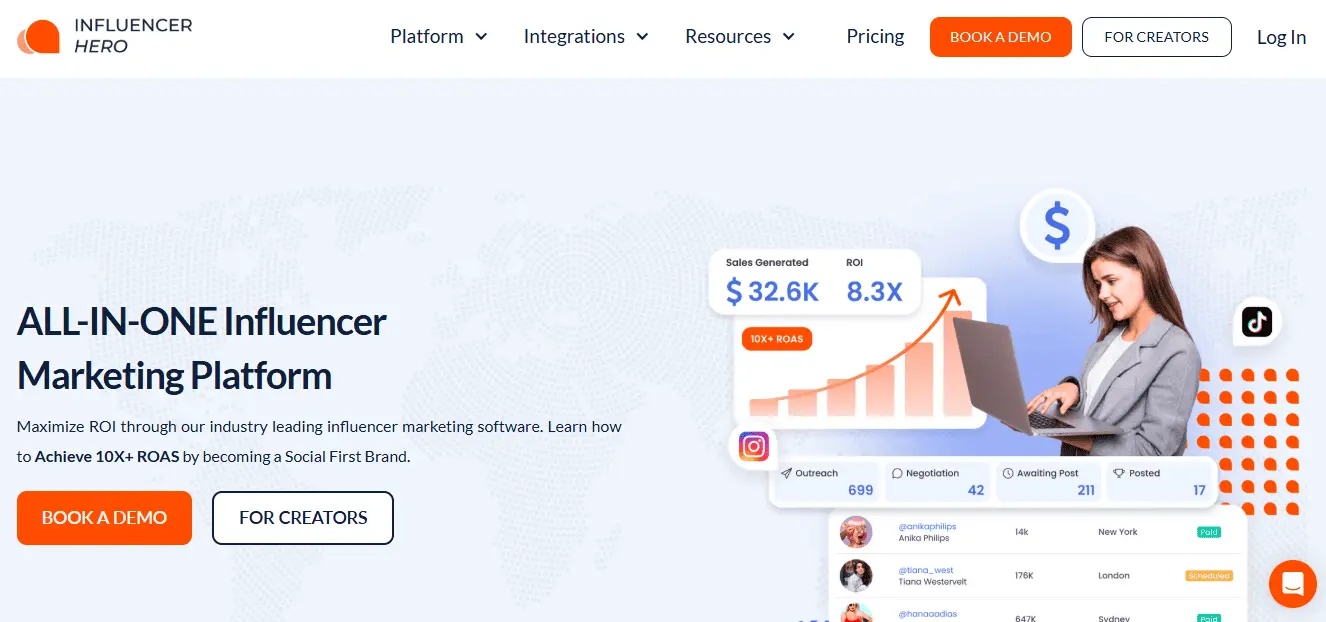
Influencer Hero es una plataforma integral de marketing de influencers creada para marcas de eCommerce y DTC que desean ejecutar programas de creadores con estructura clara, atribución confiable y menos trabajo manual.
Muchos equipos consideran que Influencer Hero es el mejor software de marketing de influencers para BigCommerce cuando necesitan tanto ejecución como seguimiento de desempeño vinculado a pedidos reales.
Ideal para:
Influencer Hero es ideal para marcas DTC y agencias que ejecutan programas consistentes de creadores y desean escalar sin contratar más personal. Funciona especialmente bien para equipos que gestionan múltiples campañas, grandes rosters de creadores y colaboraciones basadas en desempeño.
Cómo funciona con BigCommerce:
Influencer Hero se integra en una pila basada en BigCommerce vinculando sus flujos de trabajo de creadores al mismo sistema donde reside su fuente de ingresos: pedidos, clientes y compras repetidas.
Puede generar enlaces rastreables para páginas de productos de BigCommerce o landing pages, crear códigos de descuento específicos por creador e sincronizar automáticamente clics, pedidos e ingresos nuevamente en Influencer Hero.
Precios y Compromiso:
Influencer Hero ofrece planes que se escalan con el tamaño de su programa, con un compromiso de 3 meses.
- Plan Estándar: Comienza en $649/mes. Permite contactar hasta 1,000 creadores por mes.
- Plan Pro: Comienza en $1,049/mes. Permite contactar hasta 5,000 creadores por mes.
- Plan Empresarial: Comienza en $2,490/mes. Permite contactar hasta 10,000 creadores por mes.
- Personalizado y Agencia: Precios personalizados según sus necesidades de marca.
Facilidad de uso (UX/UI):
Influencer Hero es conocida por su interfaz intuitiva y fácil de usar, construida alrededor de un dashboard simplificado. La mayor parte del trabajo diario ocurre dentro de flujos de campaña claros y perfiles de creadores, con pasos automatizados para reducir el trabajo administrativo. Los equipos también pueden usar plantillas de correo electrónico personalizables para mantener la coherencia en el alcance mientras se sienten personales.
Atención al cliente:
La atención al cliente es una fortaleza central. Influencer Hero ofrece chat en vivo con humanos reales 24/7, soporte por correo electrónico receptivo y un Centro de Ayuda extenso con tutoriales escritos y en video. Todos los planes incluyen un gerente de cuenta dedicado desde el primer día, con consultas de estrategia opcionales para apoyar el crecimiento. Los usuarios del plan Pro también obtienen acceso a un canal de Slack privado para un soporte más rápido y continuo.
Características clave:
- Enlaces BigCommerce rastreables: Cree enlaces de seguimiento únicos para páginas de productos BigCommerce, colecciones o páginas de destino, luego asígnelos a creadores específicos. La actividad de clics y pedidos fluye de vuelta a los perfiles de creadores y vistas de campañas, por lo que el rendimiento está vinculado a resultados reales de la tienda.
- Códigos de descuento específicos del creador: Genere y asigne códigos de descuento para influencers directamente dentro de Influencer Hero, luego rastree cuándo se usan esos códigos en el checkout de BigCommerce. Los pedidos y los ingresos se sincronizan automáticamente, por lo que sus reportes y cálculos de pagos se basan en datos de pedidos verificados.
- Sincronización de pedidos e ingresos: Los datos de pedidos de BigCommerce (incluidos los ingresos) se cotejan con enlaces y códigos de creadores dentro de Influencer Hero. También ayuda a los equipos a evaluar la calidad del creador en función del valor del pedido y el comportamiento de clientes recurrentes, no solo en conversiones únicas.
- Automatización de flujo de trabajo vinculada a etapas de campaña: Influencer Hero incluye automatizaciones de flujo de trabajo que conectan etapas de acuerdo con acciones, para que su programa se mantenga organizado a medida que crece. Esto reduce pasos manuales y mantiene las campañas en movimiento sin verificaciones constantes.
- CRM construido para programas de creadores de alto volumen: El CRM de influencers centraliza el historial de alcance, etapas de acuerdo, entregables y rendimiento en un registro por creador. Esto es importante cuando está ejecutando múltiples campañas y necesita visibilidad clara de qué está sucediendo y qué viene después.
Limitaciones de Influencer Hero:
Debido a que las integraciones de BigCommerce pueden variar según la configuración de la tienda y cómo desee rastrear creadores (enlaces, códigos o ambos), algunas marcas necesitan orientación inicial para configurar el flujo de trabajo más limpio.
Si su programa tiene múltiples mercados, reglas de comisión complejas o una lista de creadores existente grande, la configuración puede requerir planificación, pero el equipo de éxito del cliente generalmente ayuda a mapear esto rápidamente para que funcione sin problemas a largo plazo.
2. Upfluence
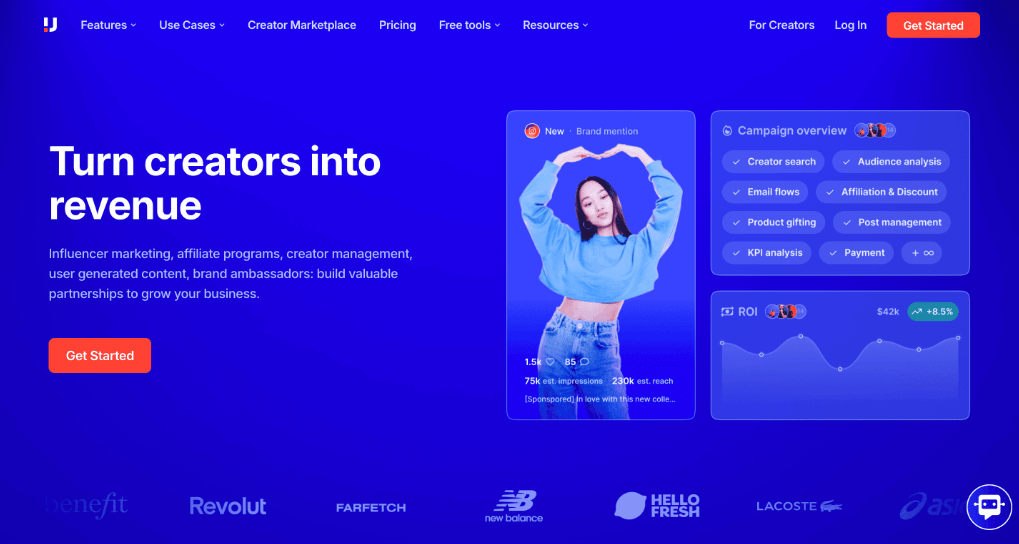
Upfluence es una plataforma de marketing de influencers y afiliados construida con un fuerte enfoque en marcas de eCommerce. Combina descubrimiento de influencers, alcance, seguimiento de afiliados y pagos en un sistema, con una fortaleza particular en convertir clientes existentes en creadores.
Mejor para:
Upfluence es mejor para marcas de BigCommerce que quieren identificar influencers dentro de su base de clientes existente y ejecutar campañas de estilo afiliado estrechamente vinculadas a los ingresos de la tienda.
Cómo funciona con BigCommerce:
Upfluence se conecta a su tienda de eCommerce para extraer datos de clientes y pedidos a la plataforma. Para marcas de BigCommerce, esto significa que puede identificar clientes que ya compran de usted y reclutarlos como influencers o afiliados. A partir de ahí, puede generar enlaces de afiliados y códigos de descuento, rastrear conversiones y atribuir ingresos a creadores individuales. El flujo de trabajo se centra en sincronizar datos de la tienda con campañas de influencers para que el seguimiento de ingresos ocurra dentro de un dashboard en lugar de distribuirse entre múltiples herramientas.
Precios:
Los precios de Upfluence comienzan en $1,276/mes en un contrato anual. Se requiere un compromiso anual. La plataforma permite la eliminación de ciertos complementos (como Pagos) según la configuración.
Facilidad de uso (UX/UI):
Los usuarios a menudo describen Upfluence como una plataforma rica en funciones pero compleja al principio. La interfaz centraliza descubrimiento, alcance e informes, lo cual es útil para equipos más grandes. Sin embargo, marcas más pequeñas a veces reportan una curva de aprendizaje durante la configuración inicial.
Soporte al Cliente:
Los comentarios sobre el soporte al cliente generalmente son positivos, especialmente durante la incorporación. Los usuarios mencionan gestores de cuenta receptivos y demostraciones estructuradas. Algunos señalan que debido a la amplitud de la plataforma, la incorporación práctica es importante para configurar correctamente los flujos de trabajo.
Características Clave:
- Identificación de Cliente a Creador: Upfluence puede analizar los datos de clientes de su tienda para identificar compradores que ya podrían tener influencia social. Esto permite a las marcas convertir clientes reales en creadores, reduciendo costos de adquisición. Es especialmente útil para programas de estilo embajador.
- Gestión de Enlaces de Afiliados y Códigos de Descuento: La plataforma genera enlaces de afiliados y códigos de descuento vinculados directamente a influencers. Las ventas se rastrean hasta los creadores, permitiendo a las marcas BigCommerce evaluar campañas basadas en ingresos en lugar de solo en engagement.
- Descubrimiento de Influencers Impulsado por IA: Upfluence ofrece una gran base de datos de influencers con filtros avanzados por nicho, tasa de engagement, datos demográficos e intereses. También proporciona precios estimados e insights de audiencia, ayudando a las marcas a evaluar el ROI potencial antes del alcance.
- Pagos en Plataforma: Las marcas pueden gestionar pagos directamente dentro del sistema. Esto reduce la reconciliación manual entre campañas de influencers y pagos de comisiones.
- Gestión de Campañas Multiplataforma: Soporta campañas de influencers en Instagram, TikTok, YouTube y más, mientras vincula el rendimiento nuevamente a los ingresos del comercio electrónico.
Limitaciones de la Plataforma:
Upfluence requiere un contrato anual, que podría no ser adecuado para marcas que están probando el marketing de influencers por primera vez. Algunos usuarios también mencionan que la profundidad de la plataforma puede parecer abrumadora durante la implementación inicial, requiriendo incorporación estructurada para aprovechar completamente sus capacidades.
3. Impact.com
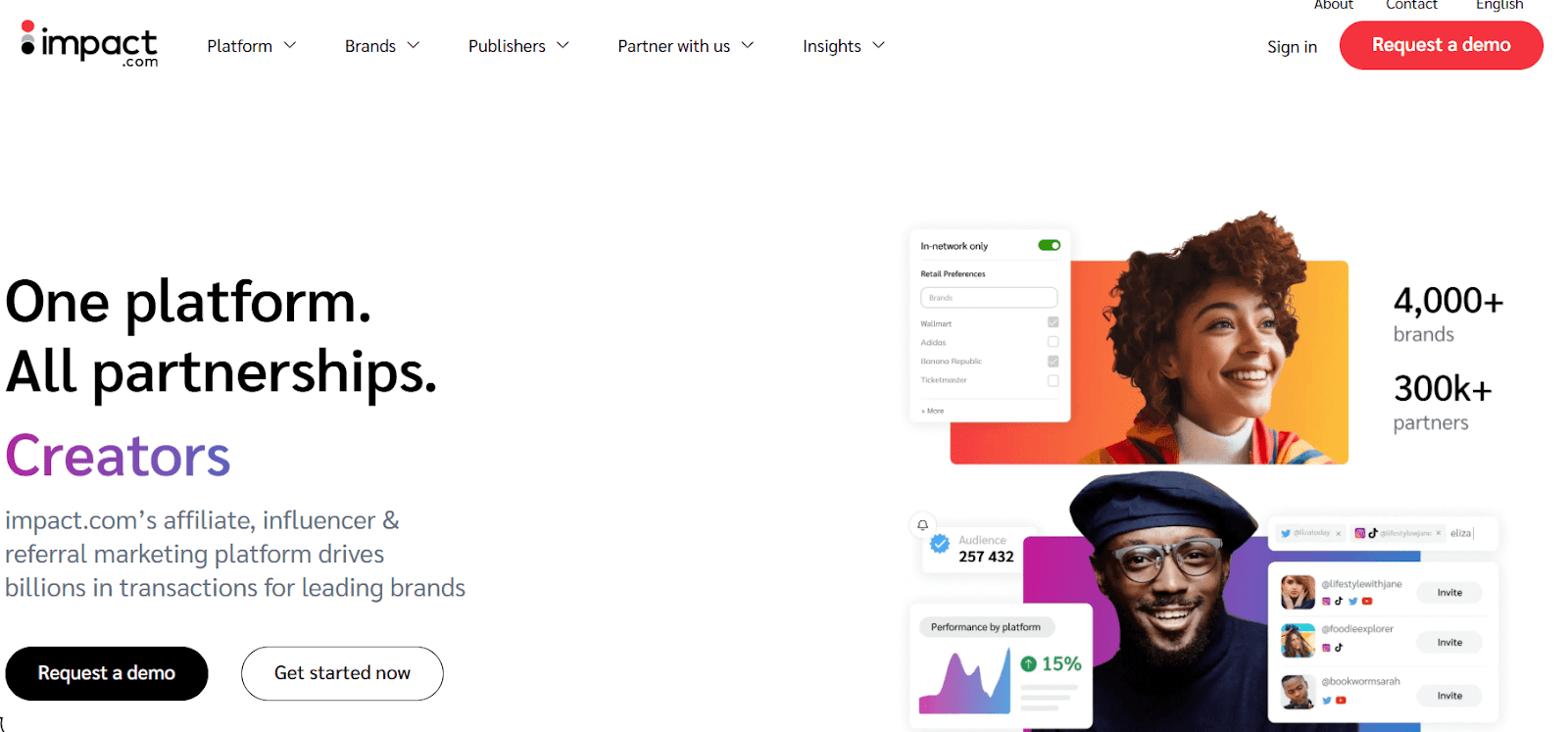
Impact.com es una plataforma de gestión de asociaciones diseñada para unificar marketing de afiliados, campañas de influencers y programas de referencia en un solo sistema. En lugar de enfocarse solo en la gestión de relaciones con influencers, Impact.com centra su propuesta de valor en asociaciones basadas en rendimiento y crecimiento de ingresos medible.
Mejor Para:
Impact.com es lo mejor para marcas BigCommerce que ejecutan programas estructurados de marketing de afiliados junto con campañas de influencers. Es particularmente adecuado para equipos que priorizan el seguimiento de comisiones, la atribución de ingresos y la gestión de asociaciones multicanal.
Cómo Funciona con BigCommerce:
Impact.com ofrece una integración nativa de BigCommerce que conecta su tienda directamente al sistema de seguimiento de asociaciones. Una vez instalado, los datos de pedidos de BigCommerce—incluyendo compras completadas y reembolsos—fluyen a Impact.com automáticamente, permitiendo a las marcas gestionar enlaces de influencers, códigos de afiliados y comisiones a nivel de SKU dentro de un solo panel.
El flujo de trabajo se enfoca en la verificación de ingresos primero, lo que significa que cada venta rastreada está vinculada a eventos de checkout reales en BigCommerce. Esto asegura que el marketing de afiliados y las ventas impulsadas por influencers se midan usando datos reales de la tienda en lugar de métricas estimadas.
Precios:
- Starter (Aplicación BigCommerce): $30/mes
- Essentials: Desde $500/mes
- Pro: Desde $2,500/mes
- Enterprise: Precios personalizados
Facilidad de Uso (UX/UI):
Impact.com a menudo se describe como sólida y lista para empresas. La interfaz ofrece paneles de informes detallados y herramientas de configuración de comisiones flexibles, lo que los equipos más grandes de marketing de rendimiento valoran. Sin embargo, algunas marcas más pequeñas mencionan que la plataforma puede parecer compleja si sus necesidades se limitan a la gestión básica de influencers.
Soporte al Cliente:
Las empresas suelen informar de un sólido apoyo en la incorporación y asistencia estructurada en la implementación. Las cuentas de tamaño medio generalmente reciben apoyo de gestión de cuentas, aunque las cuentas más pequeñas pueden experimentar niveles de soporte más estandarizados. En general, la satisfacción del cliente tiende a ser mayor entre las marcas que utilizan la plataforma a escala.
Características clave:
- Gestión unificada de afiliados, creadores y referencias: impact.com permite a las marcas gestionar el marketing de afiliados, campañas de influencers y programas de referencia de clientes dentro de un único sistema centralizado.
- Reversiones automáticas de comisiones: Si un pedido de BigCommerce se devuelve o se reembolsa, las comisiones asociadas se revierten automáticamente dentro de impact.com. Esto ayuda a los equipos de finanzas a mantener cálculos de pago precisos sin ajustar manualmente hojas de cálculo.
- Controles de comisión a nivel de SKU: Las marcas pueden asignar diferentes tasas de comisión a productos o categorías específicas sincronizadas desde BigCommerce. Esto es particularmente útil cuando los márgenes varían entre colecciones o cuando se priorizan ciertos SKU.
- Acceso al mercado de socios: impact.com proporciona acceso a un gran mercado de socios donde las marcas pueden descubrir afiliados y creadores. Esto reduce los esfuerzos de reclutamiento saliente y respalda el escalado eficiente de programas de asociación.
- Informes detallados de atribución de ingresos: La plataforma rastrea conversiones, valor de vida útil y ROI vinculados directamente a transacciones de BigCommerce. Los informes se centran en el impacto de ingresos medible en lugar de métricas de vanidad como el engagement.
Limitaciones de la plataforma:
impact.com está fuertemente orientado al rendimiento y puede parecer más una plataforma de marketing de afiliados que un sistema completo de gestión de relaciones con influencers. Las marcas que buscan características avanzadas de CRM de influencers, aprobaciones de contenido o flujos de trabajo de gifting automatizados pueden encontrar esas capacidades limitadas en comparación con herramientas dedicadas a influencers.
Además, la transparencia de precios fuera del nivel Starter es limitada y los contratos empresariales generalmente requieren compromisos anuales. Las marcas de BigCommerce más pequeñas que prueban campañas de influencers por primera vez pueden encontrar que la plataforma es más avanzada de lo necesario para programas en etapa inicial.
4. Afluencer

Afluencer es una plataforma de influencers enfocada en el reclutamiento diseñada para simplificar el proceso de conectar marcas con creadores. En lugar de ofrecer automatización a gran escala o atribución de ingresos profunda, Afluencer se centra en la colaboración entrante y las aplicaciones directas de creadores.
Mejor para:
Afluencer es mejor para marcas pequeñas y medianas de BigCommerce que lanzan programas de influencers y priorizan el reclutamiento de creadores sobre el seguimiento de rendimiento avanzado.
Cómo funciona con BigCommerce:
Afluencer admite colaboraciones de influencers que pueden conectarse a BigCommerce a través del seguimiento de estilo de afiliado y códigos de descuento administrados externamente.
Las marcas generalmente publican oportunidades de colaboración, aceptan solicitudes de influencers y luego distribuyen enlaces de seguimiento de BigCommerce o códigos de descuento por separado. El flujo de trabajo es de reclutamiento primero, lo que significa que Afluencer maneja el descubrimiento y la comunicación mientras que el seguimiento de ingresos de BigCommerce ocurre a través de su configuración de afiliados.
Precios:
- Plan VIP: $49/mes
- Plan Concierge: $99/mes
- Plan Boss: $199/mes
- Facturación mensual disponible.
Facilidad de uso (UX/UI):
Los usuarios frecuentemente describen Afluencer como intuitivo y fácil de navegar. La estructura basada en Collab reduce el tiempo de configuración y facilita la publicación de oportunidades y la revisión de candidatos. Debido a que la plataforma evita capas de automatización complejas, la incorporación generalmente es rápida.
Servicio al cliente:
Afluencer recibe comentarios positivos por su soporte receptivo y accesible. Los usuarios a menudo mencionan orientación útil en la incorporación y respuestas rápidas a través de chat y correo electrónico.
Características clave:
- Publicación de campañas basada en Collab: Las marcas crean colaboraciones
- anuncios que los influencers pueden solicitar directamente. Este modelo entrante reduce el tiempo de divulgación en frío y centraliza la contratación de creadores en una única interfaz.
- Perfiles de Creadores Verificados: Todos los perfiles de influencers se crean y verifican voluntariamente, lo que aumenta la confiabilidad de los datos. Las marcas pueden filtrar por nicho, cantidad de seguidores y ubicación para optimizar la contratación.
- Sistema de Mensajería Integrado: La comunicación entre marcas y creadores ocurre dentro de la plataforma. Esto mantiene las negociaciones organizadas y reduce la dependencia de hilos de correo electrónico externos.
- Modelos de Compensación Flexibles: Admite regalos, honorarios fijos y asociaciones basadas en comisiones. Esto permite que las marcas de BigCommerce prueben múltiples estrategias de compensación de influencers.
- Búsquedas Ilimitadas de Influencers: Todos los planes incluyen búsquedas de influencers y solicitudes ilimitadas. Esto hace que sea accesible para las marcas que construyen su primer equipo de embajadores.
Limitaciones de la Plataforma:
Afluencer no proporciona atribución de ingresos integrada ni sincronización automatizada de pedidos de BigCommerce. Las marcas deben gestionar el seguimiento del rendimiento, las comisiones de afiliados e informes de ROI por separado.
También carece de herramientas avanzadas de CRM, automatización de campañas y sistemas de pago centralizados. A medida que los programas de influencers se escalan, los equipos pueden superar su infraestructura ligera.
5. GRIN
GRIN es una plataforma de influencer marketing completa construida específicamente para marcas de eCommerce y DTC. Combina CRM de influencers, regalos de productos, seguimiento de afiliados, gestión de UGC e informes de ingresos en un sistema estructurado.
Mejor Para:
GRIN es mejor para marcas de BigCommerce establecidas que ejecutan programas de influencers de alto volumen, iniciativas de embajadores estructuradas y campañas impulsadas por el rendimiento en canales de comercio social como TikTok Shop.
Cómo Funciona con BigCommerce:
GRIN se integra directamente con BigCommerce para sincronizar catálogos de productos, gestionar flujos de trabajo de regalos, generar códigos de descuento para influencers y rastrear ingresos impulsados por afiliados. Los creadores pueden seleccionar productos de tu tienda BigCommerce, y los pedidos se etiquetan y rastrean automáticamente dentro de GRIN.
Las ventas, clics y comisiones se atribuyen a los creadores dentro del CRM, lo que permite a las marcas evaluar el rendimiento según los datos verificados de pago de BigCommerce.
Precios:
- Comienza en $25,000/año.
- Planes personalizados disponibles.
- Se requiere contrato mínimo de 12 meses.
Facilidad de Uso (UX/UI):
Los usuarios a menudo elogian el panel de control estructurado y centralizado de GRIN. El sistema está diseñado en torno a flujos de trabajo de eCommerce, aunque algunos informan de ocasionales ralentizaciones de la plataforma y una curva de aprendizaje más pronunciada durante la incorporación.
Atención al Cliente:
GRIN ofrece soporte de incorporación y estrategas de programas dedicados opcionales. Muchas marcas informan de una orientación estratégica sólida, aunque algunos mencionan experiencias inconsistentes de resolución de tickets a largo plazo.
Características Clave:
- Flujos de Trabajo de Regalos Nativos de eCommerce: GRIN se sincroniza directamente con BigCommerce para gestionar campañas de distribución de productos. Los pedidos se rastrean automáticamente y se vinculan a perfiles de creadores para un análisis de rendimiento preciso.
- Asociaciones Ilimitadas con Creadores: La plataforma permite a las marcas gestionar relaciones de influencers ilimitadas. Esto es beneficioso para programas de embajadores o iniciativas de afiliados a gran escala.
- Biblioteca de Contenido UGC: Todo el contenido generado por creadores se almacena en una biblioteca centralizada. Esto facilita la reutilización de activos para anuncios pagados, marketing por correo electrónico y listados de TikTok Shop.
- Herramientas Integradas de Comisión y Pago: GRIN admite seguimiento de afiliados y pagos basados en PayPal. Los ingresos de pedidos de BigCommerce se cotejan con creadores para el cálculo de comisiones.
- Descubrimiento de Influencers Basado en Clientes: GRIN puede identificar posibles influencers de tu base de clientes existente. Esto permite que las marcas activen compradores leales como creadores y reduzcan los costos de adquisición.
Limitaciones de la Plataforma:
GRIN requiere un compromiso anual sustancial, que puede no ser adecuado para marcas de BigCommerce más pequeñas o en etapa inicial. El alto precio de inicio puede hacer que la experimentación sea costosa.
Además, algunos usuarios informan de ocasionales errores, tiempos de carga lentos o inconsistencias en la carga de contenido. Las marcas que gestionan conjuntos de datos de creadores muy grandes pueden requerir supervisión adicional durante el escalado.
6. Aspire
Aspire es una plataforma de influencer marketing construida alrededor de programas de creadores impulsados por relaciones y gestión estructurada de embajadores. Combina descubrimiento de influencers, alcance, gestión de campañas, seguimiento de afiliados y aprobaciones de contenido en un sistema diseñado para marcas DTC en crecimiento.
Mejor Para:
Aspire es lo mejor para marcas de BigCommerce que construyen programas de embajadores a largo plazo y priorizan relaciones estructuradas con creadores sobre campañas transaccionales puntuales. Funciona bien para marcas que desean ingresos recurrentes de influencers vinculados a incentivos de afiliados.
Cómo Funciona con BigCommerce:
Aspire se integra con tiendas de eCommerce para admitir seguimiento de afiliados, creación de códigos de descuento y atribución de ingresos vinculada a transacciones de la tienda. Para marcas de BigCommerce, los enlaces de referencia de influencers y códigos pueden estar conectados a eventos reales de pago, lo que permite que los ingresos de campaña se rastreen dentro de Aspire.
La plataforma permite a las marcas gestionar alcance, contratos, coordinación de regalos, y seguimiento de afiliados en un solo lugar mientras usa BigCommerce como el sistema de registro para pedidos y comisiones.
Precios:
El precio de Aspire generalmente funciona con planes escalonados adaptados a las necesidades de su marca, por lo que los costos pueden variar según sus requisitos específicos.
- Plan Essentials: Comienza en $2,299 por mes en un contrato de 12 meses, totalizando $27,588 anuales, más una tarifa de incorporación única de $2,000, lo que lleva la inversión del primer año a $29,588.
Facilidad de Uso (UX/UI):
Aspire a menudo se describe como limpia e intuitiva, particularmente para gestionar programas de embajadores. El panel de control proporciona visibilidad clara de campañas, aunque informes más profundos y configuración pueden requerir incorporación estructurada.
Soporte al Cliente:
Aspire recibe comentarios generalmente positivos para incorporación y orientación de cuentas. Muchos usuarios mencionan gerentes de éxito de clientes útiles, aunque la profundidad del soporte puede variar según el nivel del contrato.
Características Clave:
- Infraestructura del Programa de Embajadores: Aspire está estructurado en torno a relaciones continuas con creadores en lugar de campañas puntuales. Esto la hace útil para marcas de BigCommerce enfocadas en ingresos recurrentes impulsados por afiliados.
- Reclutamiento del Mercado de Creadores: Las marcas pueden descubrir y reclutar influencers directamente dentro del mercado de Aspire. Esto reduce la dependencia del alcance en frío y acelera la construcción de rosters.
- Seguimiento de Vínculos de Afiliados y Códigos de Descuento: Aspire admite enlaces de referencia rastreables y códigos de descuento vinculados a transacciones de la tienda. La atribución de ingresos se puede monitorear a nivel de creador y campaña.
- Flujos de Trabajo de Aprobación de Contenido: La plataforma incluye canales estructurados de revisión de contenido. Esto ayuda a mantener la consistencia de marca antes de que el contenido del influencer se ponga en vivo.
- CRM Centrado en Relaciones: El CRM de Aspire enfatiza el seguimiento de comunicaciones y segmentación. Las marcas pueden categorizar creadores por nivel, campaña o desempeño.
Limitaciones de la Plataforma:
La estructura de costos de Aspire se posiciona hacia marcas medianas y grandes, lo que puede resultar costoso para negocios de BigCommerce más pequeños. La mayoría de los acuerdos están estructurados como contratos anuales, lo que puede reducir la flexibilidad para marcas que prueban programas de influencers por primera vez.
Además, aunque Aspire admite seguimiento de afiliados y atribución de ingresos, es más orientada a relaciones que automatización intensiva. Las marcas que buscan automatización profunda de flujos de trabajo, disparadores basados en reglas o sincronización de pedidos altamente granular pueden encontrar otras plataformas más enfocadas operacionalmente para escalar programas complejos de creadores.
7. CreatorIQ
CreatorIQ es una plataforma de marketing de influencers para empresas diseñada para marcas globales que gestionan ecosistemas complejos de creadores. Enfatiza el cumplimiento normativo, la gobernanza, informes a gran escala y la supervisión estructurada de campañas.
Lo Mejor Para:
CreatorIQ es lo mejor para marcas de BigCommerce empresariales que operan en múltiples regiones con equipos internos estructurados que gestionan programas de influencers a escala.
Cómo Funciona con BigCommerce:
CreatorIQ conecta datos de campañas de influencers con métricas de desempeño de comercio electrónico para proporcionar informes centralizados vinculados a los ingresos de la tienda.
Para marcas de BigCommerce, los enlaces de influencers y códigos de descuento pueden asociarse con datos de transacciones para atribución de ingresos de alto nivel. El sistema se enfoca más en informes ejecutivos y supervisión global que en la automatización operativa de campañas.
Precios:
El costo base comienza en $35 000 por año, con un complemento opcional de $15 000 para acceso al módulo "Creator Connect".
Facilidad de Uso (UX/UI):
Los usuarios describen CreatorIQ como poderosa pero compleja. Los equipos empresariales valoran su profundidad y características de cumplimiento, aunque los equipos más pequeños pueden encontrar la interfaz abrumadora.
Servicio al Cliente:
Los clientes empresariales generalmente reciben incorporación estructurada y equipos de soporte dedicados. La retroalimentación indica un fuerte soporte en gobernanza y cumplimiento para industrias reguladas.
Características Clave:
- Gobernanza de Datos Empresariales: CreatorIQ enfatiza el cumplimiento y manejo seguro de datos. Esto es valioso para grandes marcas de BigCommerce que operan en múltiples mercados.
- Base de Datos Avanzada de Influencers: La plataforma ofrece herramientas de descubrimiento de influencers a nivel global con información detallada de audiencia. Las marcas pueden segmentar creadores por región, categoría y datos demográficos de audiencia.
- Informes de Nivel Ejecutivo: Las métricas de ingresos y campañas se pueden centralizar en paneles ejecutivos. Esto respalda informes a nivel de junta directiva y liderazgo.
- Coordinación de Campañas Multimercado: Múltiples equipos pueden colaborar dentro de la misma infraestructura. Esto es útil para marcas de BigCommerce a nivel global.
- Seguridad de Marca y Detección de Fraude: La plataforma incluye herramientas para evaluar la autenticidad de la audiencia. Esto protege la inversión en influencers.
Limitaciones de la Plataforma:
CreatorIQ se posiciona principalmente para organizaciones empresariales, lo que la hace menos accesible para marcas de BigCommerce de nivel medio. Los precios no son transparentes y requieren participación directa de ventas.
La complejidad del sistema también puede conducir a cronogramas de incorporación más largos. Los equipos más pequeños pueden no utilizar completamente las capacidades avanzadas de gobernanza de la plataforma.
8. Cohley
Cohley es una plataforma de influencers y UGC centrada en contenido diseñada para generar activos creativos aprobados por marcas a escala. Combina activaciones de influencers con UGC estructurado y campañas de reseñas.
Lo Mejor Para:
Cohley es lo mejor para marcas de BigCommerce que priorizan la producción de UGC y la optimización de conversión impulsada por contenido en lugar de programas de influencers estrictamente basados en afiliados.
Cómo Funciona con BigCommerce:
Cohley respalda campañas de influencers y producción de contenido que pueden implementarse en tiendas de BigCommerce, anuncios pagos y páginas de productos.
Si bien no funciona principalmente como un sistema de seguimiento de afiliados, ayuda a las marcas a generar activos que impulsen mejoras de conversión vinculadas al desempeño de la tienda. Los resultados de la campaña se pueden evaluar luego con analíticas de BigCommerce para evaluar el impacto.
Precios:
Sin precios divulgados públicamente. Precios personalizados basados en volumen de contenido y alcance de campaña.
Facilidad de Uso (UX/UI):
Los usuarios a menudo elogian la interfaz visual de Cohley y los flujos de trabajo de contenido estructurado. El sistema de aprobación reduce la comunicación bidireccional durante la revisión de activos.
Atención al Cliente:
Cohley ofrece opciones de servicio gestionado junto con acceso a la plataforma. Las reseñas a menudo destacan una fuerte colaboración con los gestores de cuenta.
Características Clave:
- Motor de Producción UGC: Cohley permite a las marcas generar grandes volúmenes de UGC rápidamente. Esto respalda la optimización de PDP en BigCommerce y campañas de medios pagos.
- Activación de Campañas de Influencers: Las marcas pueden reclutar influencers para campañas de conciencia. Los datos de la campaña se pueden revisar para obtener información sobre el desempeño.
- Campañas de Generación de Reseñas: Cohley respalda la generación de reseñas de video y texto. Estos activos pueden incrustarse en tiendas BigCommerce.
- Optimización de Briefs Basada en IA: Los briefs creativos pueden optimizarse con recomendaciones de IA. Esto mejora la alineación del contenido.
- Biblioteca de Activos Centralizada: Todo el contenido generado se almacena en un sistema. Esto simplifica la distribución multicanal.
Limitaciones de la Plataforma:
Cohley se enfoca más en la generación de contenido que en la atribución directa de ingresos. Las marcas fuertemente enfocadas en el seguimiento de afiliados pueden requerir herramientas adicionales.
El precio también se basa en presupuesto personalizado y es menos transparente. Las marcas de BigCommerce más pequeñas pueden encontrarla más adecuada para campañas específicas en lugar de la gestión completa del ciclo de vida del influencer.
9. Traackr
Traackr es una plataforma de influencer marketing impulsada por datos enfocada en comparativas de desempeño y gestión estratégica de cartera. Enfatiza el análisis y la evaluación del valor del influencer sobre los mercados de reclutamiento.
Lo Mejor Para:
Traackr es lo mejor para marcas de BigCommerce que buscan evaluaciones estratégicas de influencers y visibilidad del desempeño entre mercados.
Cómo Funciona con BigCommerce:
Traackr alinea las métricas de desempeño del influencer con las tendencias de ingresos a nivel de tienda. Los datos de transacciones de BigCommerce se pueden analizar junto con las métricas de engagement del influencer para evaluar el impacto macro de la campaña.
Precios:
Comienza en $32,500/año. Se requieren contratos anuales personalizados para capacidades expandidas.
Facilidad de Uso (UX/UI):
Los usuarios describen Traackr como centrado en análisis y estructurado. Puede requerir tiempo de configuración dedicado para configurar paneles de control de manera efectiva.
Atención al Cliente:
Los usuarios empresariales reportan incorporación estructurada y soporte profesional. La plataforma está posicionada para equipos estratégicos en lugar de flujos de trabajo de operador diario.
Características Clave:
- Evaluaciones Comparativas de Desempeño del Influencer: Traackr proporciona modelos de puntuación comparativa. Esto ayuda a las marcas a evaluar creadores en campañas.
- Herramientas de Gestión de Cartera: Las marcas pueden gestionar rosters de influencers en mercados. Esto respalda la alineación estratégica.
- Paneles de Control de Reportes Avanzados: El impacto en ingresos se puede superponer en métricas de influencer. Esto respalda el reportaje ejecutivo.
- Herramientas de Análisis Competitivo: La plataforma proporciona información de evaluación comparativa contra competidores. Esto ayuda a contextualizar el desempeño de la campaña.
- Detección de Calidad de Audiencia: La plataforma incluye capacidades de detección de fraude y herramientas de IA para detectar seguidores falsos, ayudando a las marcas a evaluar la autenticidad del influencer antes de invertir presupuesto.
Limitaciones de la Plataforma:
Traackr se enfoca más en análisis que en gestión operacional de campañas. Las marcas de BigCommerce que buscan envíos automatizados o gestión directa de enlaces de afiliados pueden requerir sistemas adicionales.
La estructura de contrato anual y el posicionamiento empresarial pueden no ser adecuados para marcas más pequeñas o emergentes.
10. Refersion
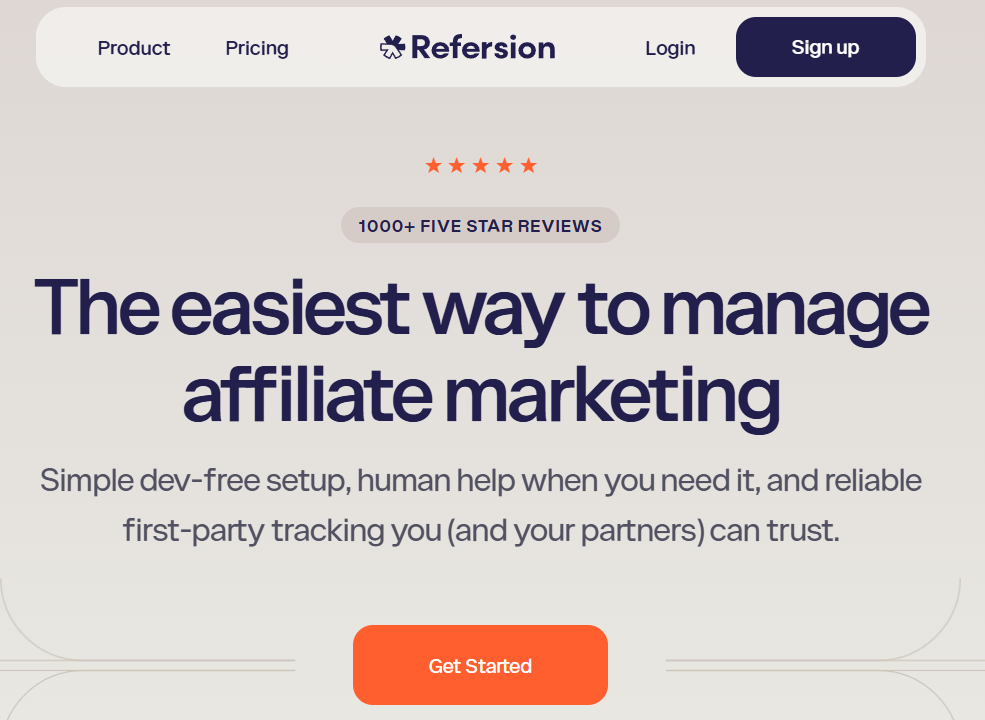
Refersion es una plataforma de seguimiento de afiliados e influencers construida alrededor de asociaciones basadas en comisiones. Se enfoca en el seguimiento confiable de primera parte y la gestión de programas de afiliados.
Mejor opción para:
Refersion es mejor para marcas de BigCommerce que priorizan programas de influencers y afiliados basados en comisiones sobre la gestión completa de relaciones con influencers.
Es especialmente adecuado para equipos que exploran formas estructuradas de pagar a los influencers según el desempeño, como comisiones porcentuales, tasas específicas de productos o pagos basados en suscripción vinculados directamente a ventas de BigCommerce.
Cómo funciona con BigCommerce:
Refersion se integra directamente con BigCommerce para rastrear enlaces de referencia, códigos de cupones y pedidos completados. Los pedidos se atribuyen automáticamente al afiliado o influencer correcto, y las comisiones se calculan dentro de la plataforma.
El flujo de trabajo se centra en marketing de afiliados y seguimiento del desempeño en lugar de gestión de campañas.
Precios:
- Listado en el Marketplace: Gratis
- Launch: $39/mes + 3% de ventas impulsadas por afiliados
- Growth: $129/mes + 2% de ventas impulsadas por afiliados
- Scale: A partir de $599/mes + 1% de ventas impulsadas por afiliados
Disponible prueba gratuita de 14 días.
Facilidad de uso (UX/UI):
Los usuarios frecuentemente describen Refersion como simple y directo. La configuración a menudo se completa en minutos sin participación de desarrolladores.
Atención al cliente:
Las reseñas destacan soporte receptivo y documentación útil. Las marcas más pequeñas aprecian la claridad de la guía de pagos.
Características clave:
- Infraestructura de seguimiento de primera parte: Refersion rastrea ventas impulsadas por afiliados vinculadas directamente a eventos de compra de BigCommerce. Esto respalda la atribución precisa de comisiones.
- Acceso al Marketplace de afiliados: Las marcas pueden listar ofertas en el Marketplace de Refersion. Esto respalda el reclutamiento de afiliados entrantes.
- Estructuras de comisiones flexibles: Admite comisiones basadas en porcentaje, tarifa fija, suscripción y específicas de productos. Esto proporciona flexibilidad a las marcas de BigCommerce.
- Sistema de pago unificado: Refersion admite múltiples opciones de pago. Esto reduce el trabajo de reconciliación manual.
- Gestión de afiliados ilimitados: Todos los planes permiten afiliados ilimitados. Esto simplifica el escalado de programas basados en comisiones.
Limitaciones de la plataforma:
Refersion se enfoca en el seguimiento de afiliados en lugar de la gestión completa del ciclo de vida del influencer. Las marcas que buscan características avanzadas de CRM o flujos de trabajo de contenido automatizados pueden necesitar sistemas adicionales.
Debido a que los precios incluyen tarifas de transacción vinculadas a ingresos impulsados por afiliados, los costos aumentan a medida que los programas se escalan. Las marcas de BigCommerce de alto crecimiento deben considerar esto en la planificación presupuestaria a largo plazo.
Cómo elegir el software de marketing de influencers adecuado para BigCommerce
Elegir la plataforma adecuada depende de cómo su tienda BigCommerce utiliza el marketing de influencers hoy en día y hacia dónde desea llevarlo a continuación.
- Si necesita seguimiento de todo el embudo y medición del desempeño: Busque una plataforma construida para programas de influencers impulsados por desempeño que conecte la actividad del creador directamente con pedidos, ingresos y datos de clientes recurrentes de BigCommerce. Estos sistemas priorizan la atribución, el seguimiento de comisiones y la presentación de informes de ROI sobre métricas superficiales, lo que los hace ideales para marcas que tratan el marketing de influencers como un canal de crecimiento medible.
- Si principalmente necesita descubrimiento de influencers y alcance: Algunas plataformas se enfocan principalmente en el reclutamiento de creadores y la comunicación. Estas herramientas son ideales para marcas que aún están construyendo su cartera de influencers o ejecutan colaboraciones ocasionales. Puede ser necesario combinarlas con herramientas de seguimiento separadas dentro de su pila de BigCommerce para medir el impacto en ingresos.
- Si está ejecutando programas de regalos o afiliados de influencers a escala:Las marcas que gestionan grandes rosters de creadores necesitan flujos de trabajo estructurados para seeding de productos, códigos de descuento y pagos basados en comisiones. En este caso, elija software que mantenga la gestión de creadores, la coordinación de gifting y los ingresos de afiliados alineados con las transacciones de BigCommerce para reducir la reconciliación manual.
Para marcas de BigCommerce que desean que el marketing de influencers esté directamente vinculado a los ingresos —no solo al engagement— una plataforma que combine descubrimiento, CRM, automatización y atribución a nivel de pedido en un único sistema típicamente ofrecerá la mayor claridad operativa.
Reflexiones Finales
Elegir el software de influencer marketing adecuado para BigCommerce depende de cómo su marca aborda las asociaciones con creadores. Algunas plataformas se enfocan principalmente en descubrimiento y reclutamiento, otras se especializan en marketing de afiliados, y algunas enfatizan la producción de contenido.
Para marcas de BigCommerce que se preocupan por el impacto de ingresos medibles, el factor más importante es si la actividad de influencers está directamente conectada a datos reales de la tienda: pedidos, conversiones y clientes recurrentes.
Si está buscando el mejor software de influencer marketing para integración con BigCommerce, Influencer Hero ofrece la configuración más completa para programas impulsados por rendimiento. Para ver cómo se adapta a su flujo de trabajo de BigCommerce, puede reservar una demostración hoy y explorar la plataforma en acción.
Resumen
Este es un texto dentro de un bloque div.
Este es un texto dentro de un bloque div.
Precios/mes
Reseñas de Shopify
Este es un texto dentro de un bloque div.
Este es un texto dentro de un bloque div.
Este es un texto dentro de un bloque div.
Este es un texto dentro de un bloque div.
Este es un texto dentro de un bloque div.
Este es un texto dentro de un bloque div.
Este es un texto dentro de un bloque div.
Este es un texto dentro de un bloque div.
Este es un texto dentro de un bloque div.
Este es un texto dentro de un bloque div.
Este es un texto dentro de un bloque div.
Este es un texto dentro de un bloque div.
Este es un texto dentro de un bloque div.
Este es un texto dentro de un bloque div.
Este es un texto dentro de un bloque div.
Este es un texto dentro de un bloque div.
Este es un texto dentro de un bloque div.
Este es un texto dentro de un bloque div.
Este es un texto dentro de un bloque div.
Este es un texto dentro de un bloque div.
Este es un texto dentro de un bloque div.
Leer más

Preguntas frecuentes
¿Cuál es el mejor software de marketing de influencers para BigCommerce?

El mejor software de influencer marketing para BigCommerce depende de tus objetivos. Si necesitas un seguimiento de todo el embudo vinculado directamente a los ingresos de tu tienda, las plataformas que sincronizan pedidos, códigos de descuento y enlaces de afiliados con datos de checkout de BigCommerce son ideales. Influencer Hero a menudo se considera una opción sólida para marcas que desean descubrimiento de influencers, CRM, automatización y atribución de ingresos en un solo sistema, mientras que alternativas como impact.com o Refersion se enfocam más en asociaciones de estilo afiliado.
¿Puede BigCommerce rastrear las ventas de influencers y la atribución de ingresos?
Sí, BigCommerce puede rastrear las ventas de influencers cuando está conectado a una plataforma de influencers o afiliados que admita el seguimiento de enlaces y códigos de descuento. Los pedidos realizados a través de enlaces de referencia específicos del creador o códigos pueden atribuirse a influencers individuales, lo que permite a las marcas medir el ROI de la campaña basándose en datos reales de pago en lugar de solo métricas de participación.
¿Necesito software separado para marketing de afiliados e influencer marketing en BigCommerce?
No necesariamente. Algunas plataformas se especializan únicamente en marketing de afiliados, mientras que otras combinan la gestión de relaciones con influencers con el seguimiento de afiliados. Herramientas como Influencer Hero integran CRM de influencers, gifting y seguimiento de ingresos de afiliados en un único flujo de trabajo, mientras que plataformas como Refersion o impact.com se centran más en afiliados y pueden requerir sistemas adicionales para la gestión completa de campañas de influencers.
¿Cómo pago a los influencers usando integraciones de BigCommerce?
La mayoría de plataformas de influencers compatibles con BigCommerce admiten pagos basados en rendimiento utilizando enlaces de referencia o códigos de descuento vinculados a las ventas de la tienda. Algunas plataformas también permiten tarifas fijas, regalos o modelos de compensación híbrida. Dependiendo de su configuración, los cálculos de comisión se generan automáticamente en función de datos de pedidos de BigCommerce verificados, lo que simplifica la reconciliación de pagos.
¿Cuáles son las mejores herramientas de influencer para BigCommerce para escalar un programa grande de creadores?
Las marcas que gestionan decenas o cientos de creadores típicamente necesitan flujos de trabajo estructurados, informes centralizados y atribución automatizada. Plataformas como Influencer Hero y GRIN admiten programas a gran escala con funcionalidad CRM y sincronización de pedidos, mientras que herramientas empresariales como CreatorIQ se enfocan más en gobernanza e informes entre mercados. La opción correcta depende de si su prioridad es la eficiencia operativa, el seguimiento de ingresos o la supervisión global.



Blogs más populares


¿Estás listo para lograr un ROI de más de 10 veces?
Programa una demostración con uno de nuestros expertos en medios a continuación.