

August 29, 2025

10 Min
Case Study: How Beau Bottles Drove $82K in Sales and Viral UGC Using Influencer Hero



.jpg)

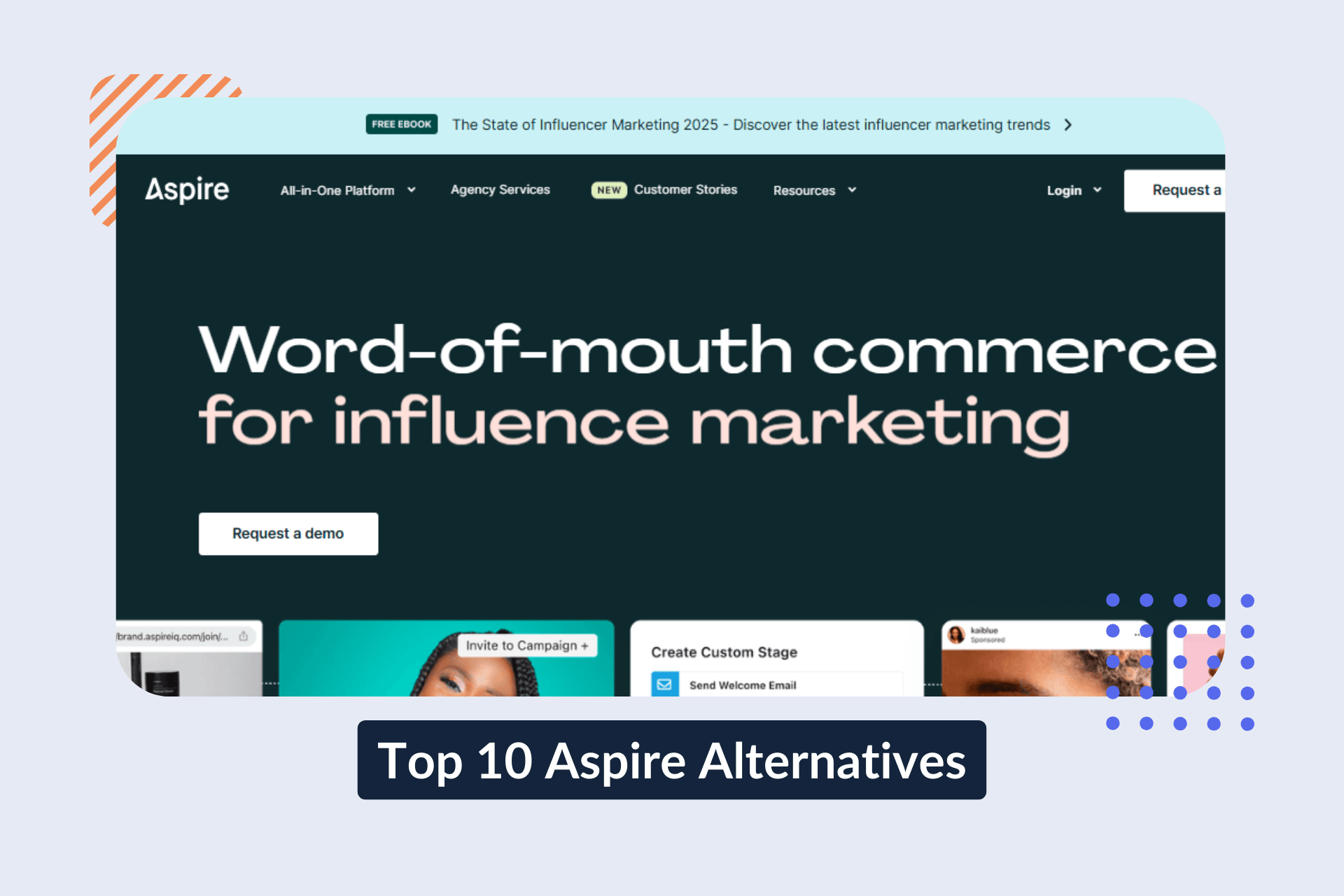
Aspire alternatives are becoming a common search for brands that want more flexibility, better pricing, stronger AI workflows, or broader platform coverage. While Aspire is a solid influencer marketing platform, its higher starting cost and focus on a few core social channels can make it less practical for some DTC brands and growing eCommerce teams.
A lot of marketers today are also looking for tools with deeper automation, better creator discovery, more customizable reporting, or stronger integrations beyond Shopify. Depending on your workflow, there are platforms that may fit your campaign style and budget better than Aspire.
In this article, we’ll compare the top Aspire alternatives in 2026: Influencer Hero, Modash, CreatorIQ, Captiv8, Later, HypeAuditor, Traackr, GRIN, Sprout Social, and Upfluence.
Don’t feel like reading? Watch this 2025 review of the best Aspire alternatives instead!
Aspire is a strong influencer marketing platform, but depending on your workflow, team size, and campaign volume, it may not be the best long-term fit for every brand.
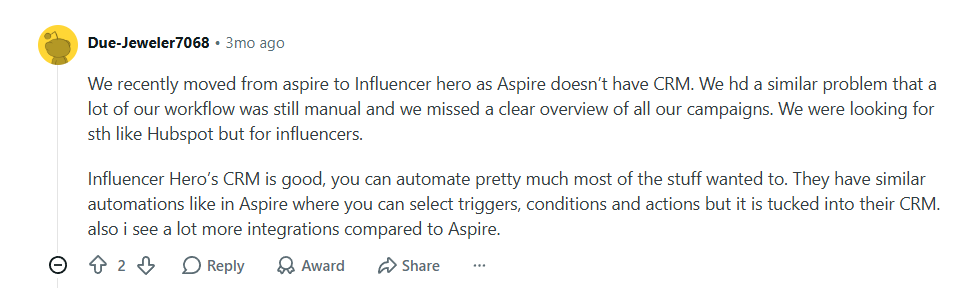
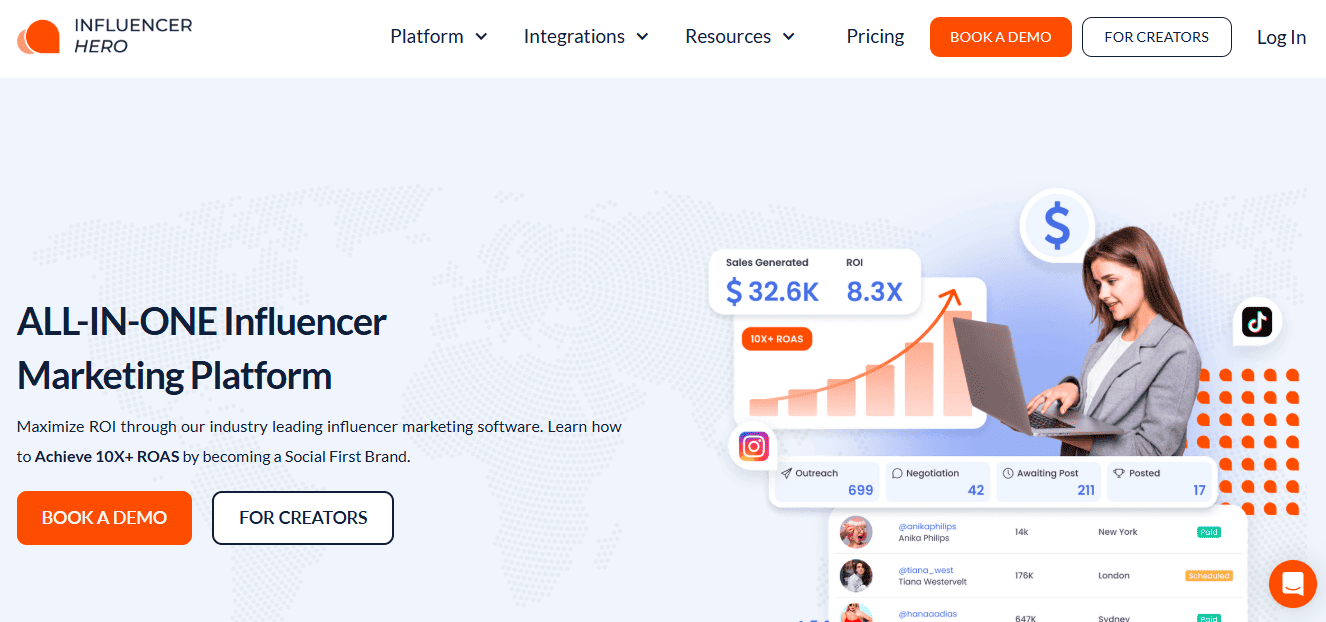
Influencer Hero is the best influencer marketing software built for DTC brands, eCommerce companies, and agencies that need to manage creator programs at scale. The platform combines influencer discovery, AI-powered outreach, CRM, gifting, affiliate tracking, automation, reporting, storefronts, and UGC management in a single workflow-focused system.
Best For: Brands and agencies looking to manage end-to-end influencer campaigns with advanced automation and centralized creator CRM workflows.
Aspire is strong for inbound creator applications and Shopify gifting workflows, but many teams still mention operational bottlenecks once campaigns begin scaling. Influencer Hero addresses this by offering a much more operationally-focused CRM and automation system built specifically for influencer marketing teams managing large creator pipelines. Instead of handling creator relationships across spreadsheets, email threads, and disconnected workflows, brands can centralize discovery, outreach, negotiations, gifting, affiliate tracking, approvals, and reporting inside one system.
Influencer Hero also offers broader platform coverage and a more flexible integrations ecosystem compared to Aspire. While Aspire is heavily optimized around Shopify and a smaller set of social channels, Influencer Hero supports additional platforms like Twitch, X/Twitter, and broader eCommerce environments.
Combined with AI-powered outreach personalization, automation triggers, and a CRM designed for high-volume creator management, it gives growing DTC brands significantly more flexibility as influencer programs scale.
Brief Description:
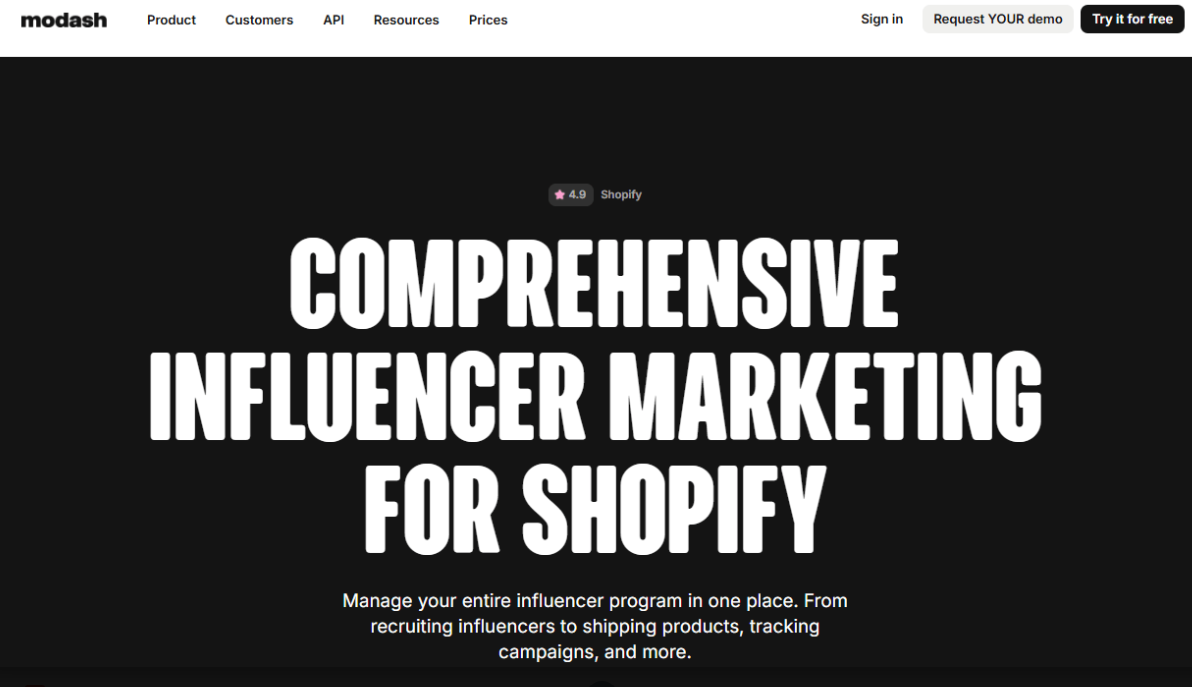
Modash is an influencer marketing platform focused heavily on creator discovery, outreach, and affiliate management for Shopify brands. It’s especially popular among DTC teams running high-volume gifting and affiliate campaigns that need large-scale creator sourcing without relying on influencer opt-ins.
Best For:
Brands running large-scale Shopify influencer and affiliate campaigns that prioritize creator discovery and outreach.
Modash can be a stronger fit for brands that care most about creator discovery and scalable outreach. Its massive database of 350M+ profiles gives teams far more flexibility when sourcing creators across niches, regions, and audience types. The platform’s AI visual search and “Find Your Fans” feature are especially useful for DTC brands trying to identify creators who already align naturally with their products.
It’s also significantly more affordable than Aspire, making it attractive for growing eCommerce brands that want strong discovery and affiliate tracking without committing to enterprise-level pricing. However, Modash is much more Shopify-centric, so brands operating on WooCommerce, Magento, or multi-platform ecosystems may find it limiting compared to more flexible alternatives.
Brief Description:
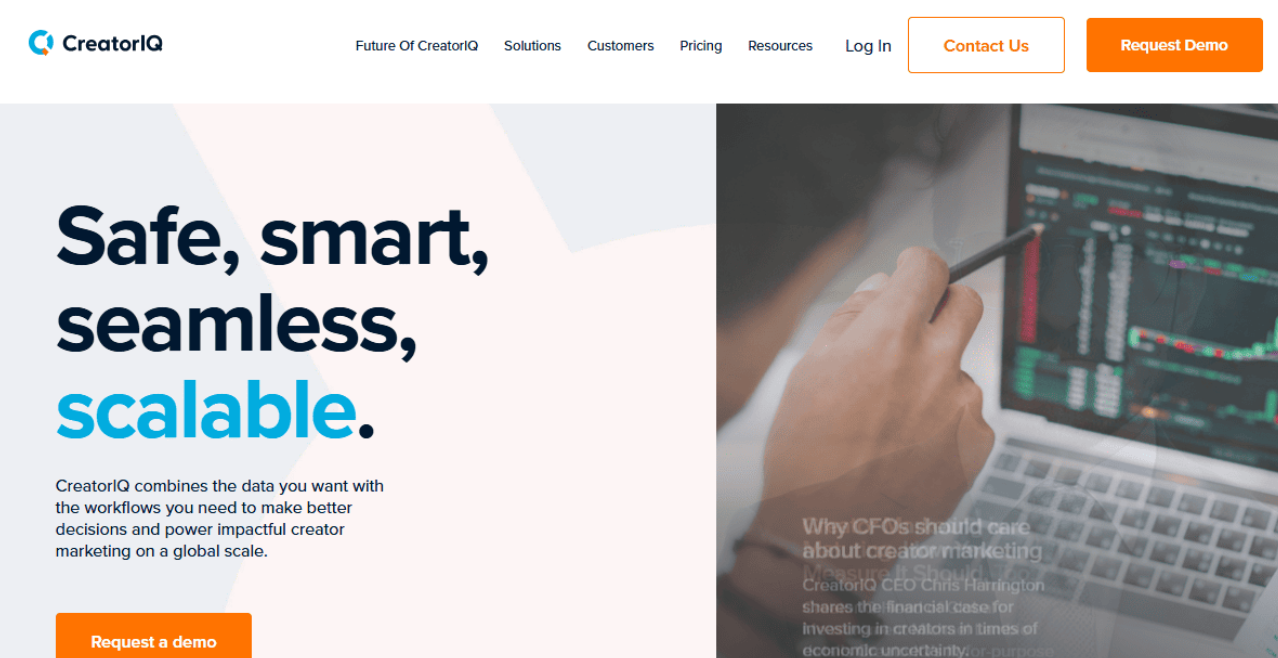
CreatorIQ is an enterprise influencer marketing platform built for large brands managing complex creator programs across multiple regions and teams. The platform focuses heavily on API-driven data accuracy, customizable reporting, and enterprise workflow management.
Best For:
Enterprise brands managing large-scale influencer campaigns that require advanced reporting, compliance, and API-level data accuracy.
CreatorIQ is often the better choice for enterprise organizations that need highly reliable first-party data and sophisticated reporting workflows. Its API integrations give brands direct access to platform-level metrics, which is especially important for global brands running large budgets and needing accurate reporting across teams and stakeholders.
The platform also stands out for operational scalability. Features like integrated payments, approval workflows, and highly customizable dashboards make it well suited for organizations with legal, finance, and executive teams involved in influencer campaigns. That said, CreatorIQ’s pricing and annual commitments make it less practical for smaller DTC brands or lean influencer teams.
Brief Description:
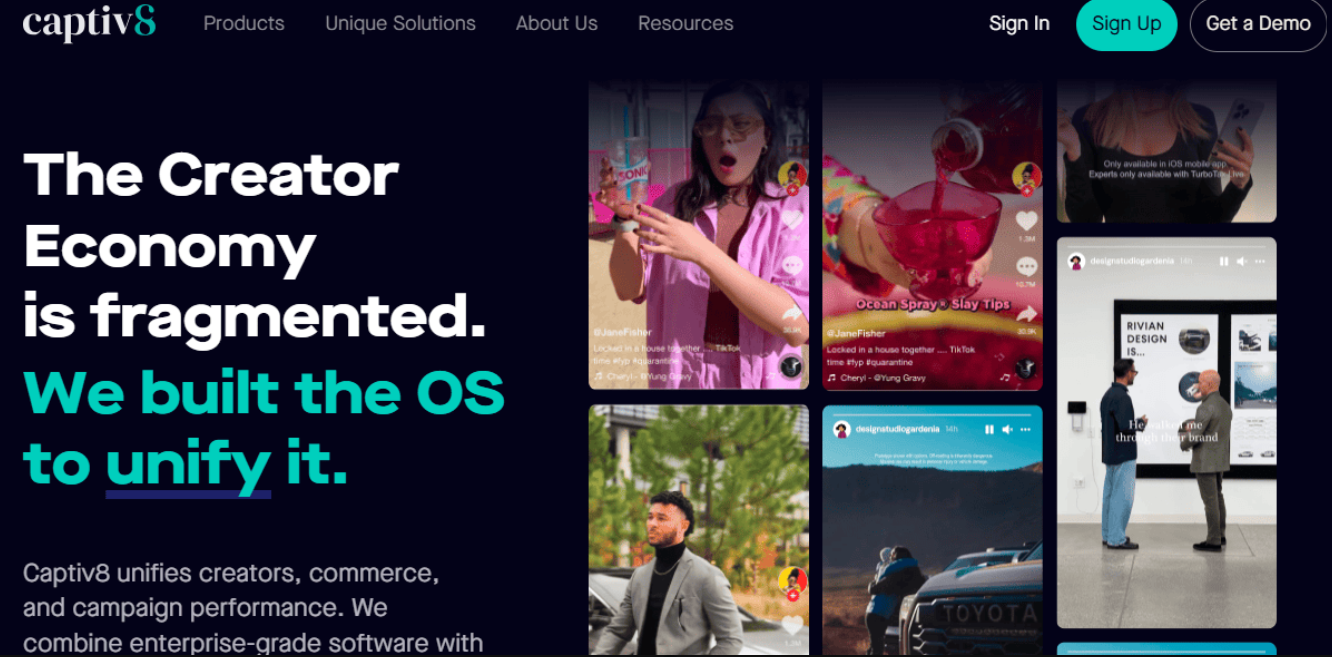
Captiv8 is an enterprise influencer marketing platform designed for brands running large creator campaigns with an emphasis on reporting, collaboration, and competitive intelligence. It’s commonly used by companies targeting younger audiences and managing multi-team campaign workflows.
Best For:
Enterprise brands targeting Gen Z audiences and needing advanced reporting and collaboration tools.
Captiv8 may be a better fit for enterprise brands that prioritize advanced reporting and competitive benchmarking over workflow automation. Its reporting suite goes deeper into campaign analysis than many platforms, including sentiment tracking, word clouds, competitor overlap analysis, and detailed ROAS visibility.
The platform is also useful for larger organizations with multiple stakeholders involved in campaign approvals and reporting. Public dashboards and collaborative workflows make it easier to share results across departments or agencies. However, the high annual pricing and onboarding fees make Captiv8 harder to justify for smaller brands focused primarily on scaling creator outreach efficiently.
Brief Description:
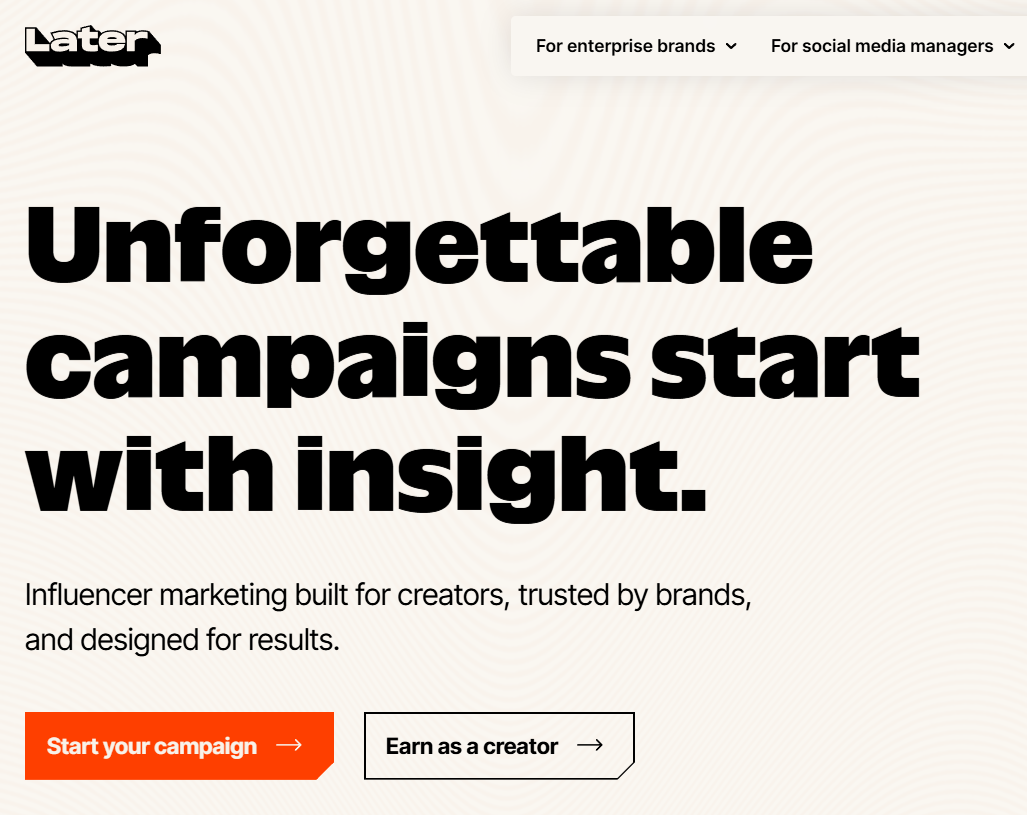
Later combines influencer marketing with social media management, helping brands discover creators, manage campaigns, and coordinate organic social content from one platform. It’s particularly useful for teams that want influencer marketing and content scheduling under the same system.
Best For:
Brands looking to combine influencer marketing with broader social media management workflows.
Later works well for brands that want influencer marketing tied closely to their broader social media operations. Unlike Aspire, which focuses more heavily on influencer workflows, Later combines creator management with publishing, scheduling, and social content planning in one ecosystem.
It’s also a strong option for teams wanting additional operational support. Brands can either manage campaigns internally or lean on Later’s sourcing and strategy services for extra help. This flexibility makes it appealing for lean marketing teams that don’t want to fully manage influencer programs alone. The tradeoff is a slower onboarding process and pricing that increases quickly once advanced automation features are needed.
Brief Description:
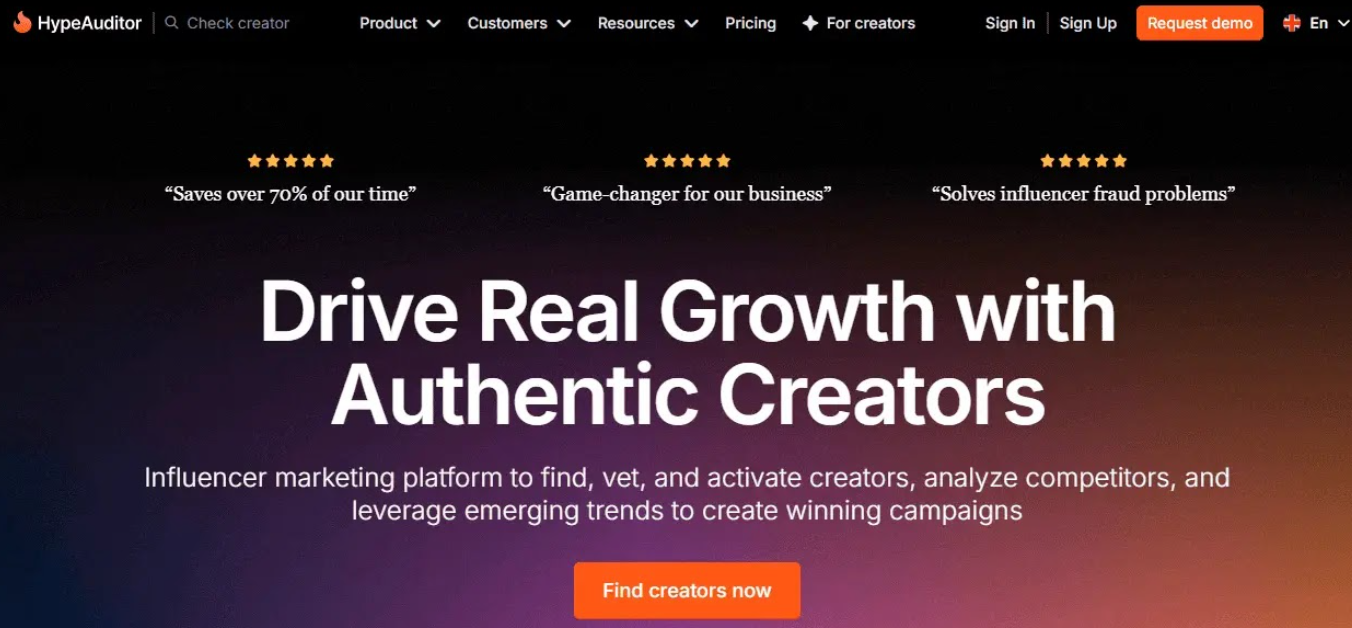
HypeAuditor is an influencer marketing platform focused heavily on audience quality analysis, fraud detection, and creator vetting. It’s commonly used by brands that prioritize influencer authenticity and detailed audience insights before launching campaigns.
Best For:
Brands focused on influencer vetting, audience quality analysis, and fraud detection.
HypeAuditor is often a stronger choice for brands that prioritize audience quality and influencer vetting before scaling campaigns. Its fraud detection capabilities and audience analysis tools go deeper than many platforms, making it useful for brands concerned about fake engagement or low-quality creator partnerships.
The platform also stands out for social listening and competitor tracking. Teams can identify creators already mentioning their products or competitors organically, helping uncover partnership opportunities that feel more authentic. While Aspire focuses more on automation and creator applications, HypeAuditor leans heavily into analytics, vetting, and campaign intelligence.
Brief Description:
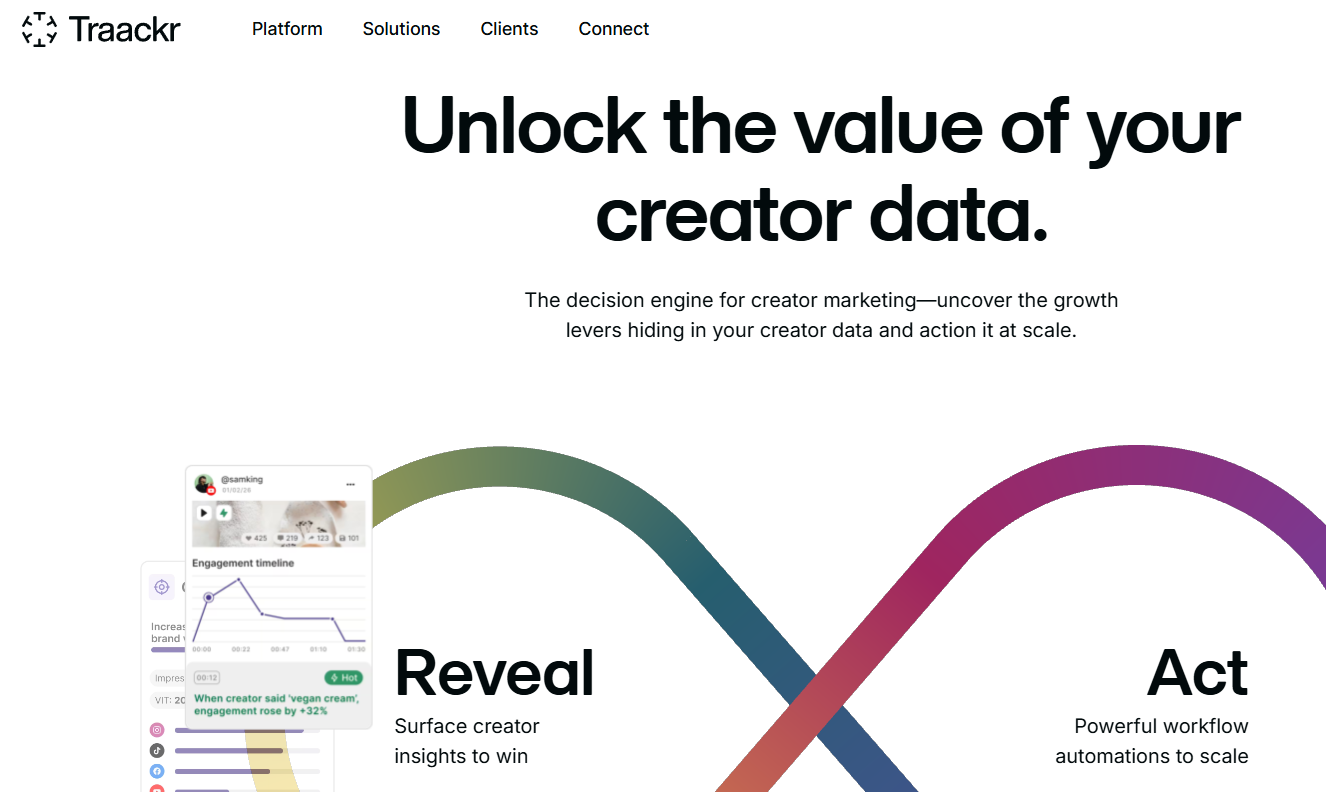
Traackr is an enterprise influencer marketing platform focused heavily on performance measurement, ROI analysis, and global campaign benchmarking. It’s designed for brands that need detailed reporting across multiple markets, regions, and social platforms while managing large creator programs at scale.
Best For:
Global brands and enterprises that prioritize ROI measurement, benchmarking, and data-driven influencer budget allocation.
Traackr is often a stronger alternative for enterprise brands that care deeply about campaign measurement and financial efficiency. Its reporting infrastructure goes far beyond basic engagement metrics by helping brands understand cost efficiency, benchmark performance globally, and predict the ideal creator budget allocation using historical data.
The platform is particularly valuable for companies running international campaigns across multiple teams and regions. Features like localization filters, live benchmarking, and advanced ROI dashboards help global marketing departments standardize influencer reporting at scale. However, its enterprise pricing and more analytical workflow may feel excessive for smaller DTC brands focused mainly on creator outreach and campaign execution.
Brief Description:
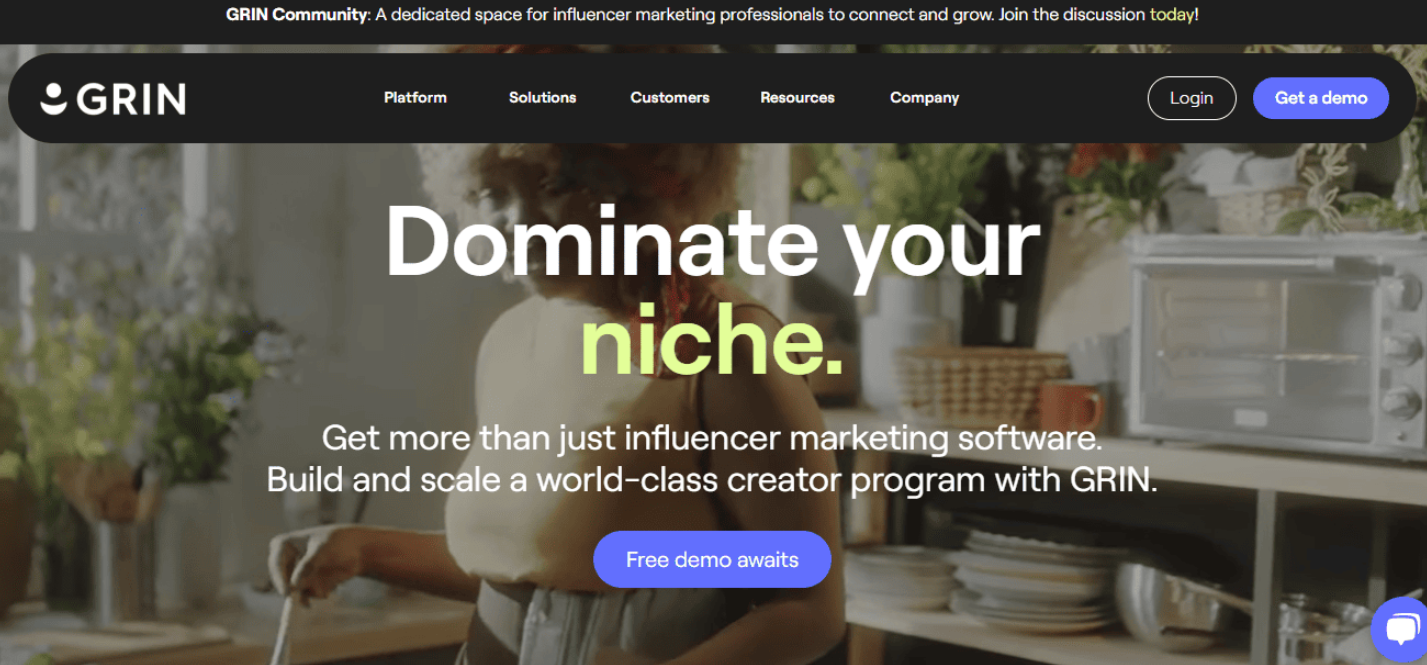
GRIN is an influencer marketing platform built specifically for eCommerce brands that want to manage creator relationships, product seeding, affiliate tracking, and payouts from one centralized system. The platform is especially popular among DTC brands operating heavily through Shopify, WooCommerce, and Magento.
Best For:
eCommerce and DTC brands managing large-scale product seeding, affiliate campaigns, and creator payouts.
GRIN is often the better fit for eCommerce brands that want tighter integration between influencer marketing and online store operations. Its ability to connect directly with Shopify, WooCommerce, and Magento allows brands to automate gifting, track affiliate sales in real time, and measure creator-driven revenue more accurately.
The platform also excels in operational management for product-heavy influencer programs. Features like creator dashboards, integrated payouts, and UGC collection make it easier to coordinate campaigns involving large numbers of creators and deliverables. While Aspire focuses heavily on creator applications and workflow automation, GRIN leans more into eCommerce infrastructure and product seeding management.
Brief Description:
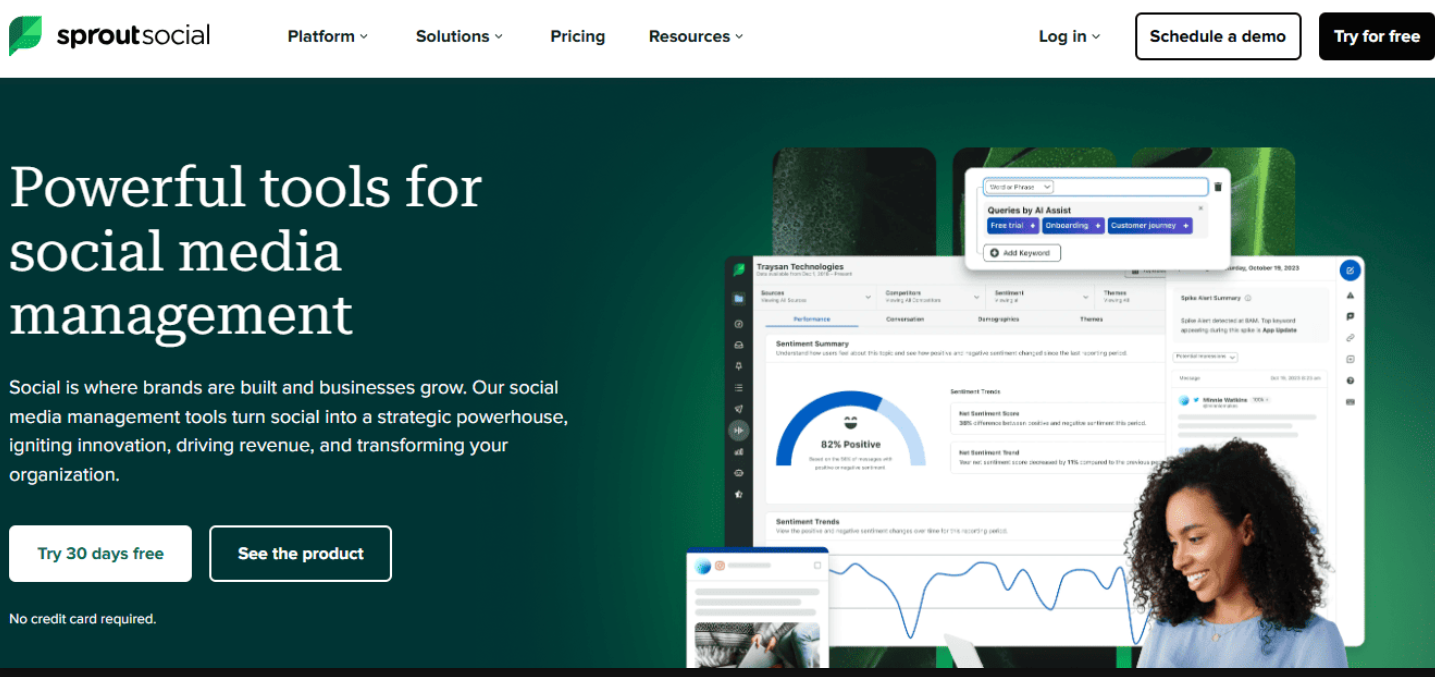
Sprout Social combines influencer marketing with enterprise social media management, helping brands coordinate creator partnerships, social publishing, approvals, and analytics from one platform. It’s particularly attractive for companies that want influencer campaigns integrated closely with broader social media strategies.
Best For:
Brands that want to combine influencer marketing with social media management, brand safety, and advanced content approval workflows.
Sprout Social can be a stronger option for brands that view influencer marketing as part of a larger social media ecosystem. Instead of operating influencer campaigns separately, the platform allows teams to manage creator partnerships alongside publishing calendars, social listening, and brand monitoring workflows.
It’s also particularly strong for brands concerned about brand safety and approval control. AI-powered brand fit analysis, draft approvals, and detailed reporting workflows make it useful for larger organizations where multiple departments need visibility into influencer content before it’s published. The downside is that pricing scales quickly with additional users, making it a significant investment for growing teams.
Brief Description:
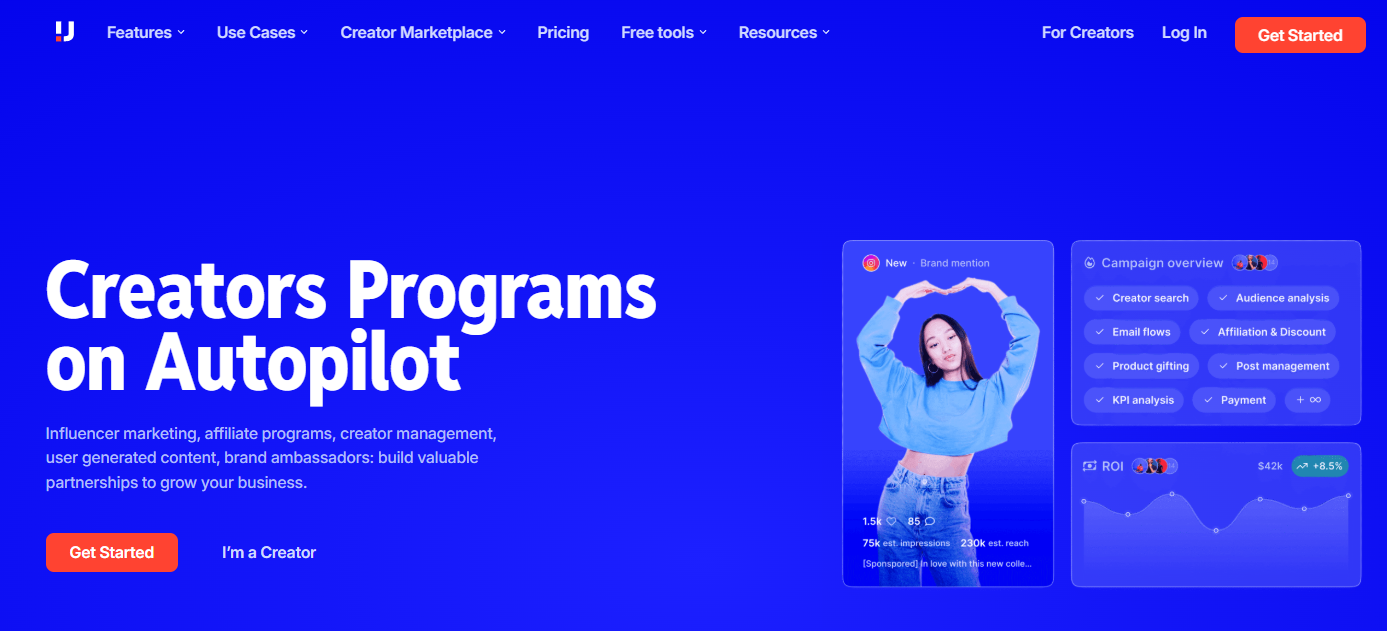
Upfluence is an influencer marketing platform built primarily for eCommerce brands looking to combine influencer discovery, affiliate management, customer identification, and AI-powered outreach in one system. It’s especially known for helping brands turn existing customers into creators and affiliates.
Best For:
eCommerce brands that want to identify influential customers and scale affiliate-driven creator campaigns.
Upfluence is often a stronger alternative for eCommerce brands focused heavily on affiliate marketing and customer-driven creator programs. Its ability to identify influential customers directly from Shopify and Amazon data gives brands a unique way to source creators who are already connected to their products and community.
The platform also appeals to teams looking for AI-assisted outreach and stronger eCommerce attribution tools. Features like Jace AI, affiliate tracking, and customer-influencer discovery help reduce manual campaign work while improving sales visibility. Compared to Aspire, Upfluence focuses more heavily on affiliate-driven workflows and eCommerce integrations rather than creator marketplaces and inbound applications.
Finding the right Aspire alternative ultimately depends on what your team is trying to improve. Some platforms focus heavily on influencer discovery and audience analytics, while others are better suited for enterprise reporting, product seeding, affiliate management, or social media integration.
Influencer Hero stands out as the best Aspire alternative for most DTC brands, eCommerce teams, and agencies looking to scale influencer marketing without increasing manual work. Its combination of influencer CRM, workflow automations, AI-powered outreach, gifting, affiliate tracking, and deep integrations makes it one of the few platforms truly built for end-to-end campaign management at scale.
Instead of relying on multiple disconnected tools, brands can manage discovery, communication, reporting, payouts, and creator relationships from one centralized system. Ready to streamline your influencer campaigns and scale faster? Book a Demo to learn more about it.


If you’re looking for a platform that goes beyond Aspire’s core focus on Instagram, TikTok, YouTube, and Pinterest, Influencer Hero is an excellent choice. It covers eight platforms, including Snapchat, Twitch, and X (Twitter), all in one place. This makes it ideal for brands that want a truly multi-channel influencer marketing strategy.
While Aspire plans typically start around $2,300/month on annual contracts, Influencer Hero offers more flexible packages starting at just $649/month, making it more accessible for small to mid-sized teams. Despite the lower starting point, Influencer Hero still delivers advanced features like AI-powered outreach, multi-platform gifting integrations, and a complete CRM to manage everything from discovery to payments.
Aspire has a robust discovery engine, especially with its inbound marketplace of creators applying to campaigns. However, Influencer Hero stands out with advanced AI-powered filters, lookalike recommendations, and even a Chrome extension that shows real-time influencer metrics as you browse social platforms. This makes shortlisting and vetting creators easier and faster.
Yes. While Aspire has strong workflow automation, Influencer Hero takes this a step further with AI-personalized outreach sequences that adapt based on campaign goals and engagement data. You can also create multi-step email campaigns that feel tailored to each creator, improving response rates without manual work.
Unlike many Aspire alternatives that either specialize in eCommerce integrations (like GRIN) or enterprise-level reporting (like Traackr), Influencer Hero balances everything—multi-platform support, automated outreach, gifting and affiliate tracking, AI suggestions, and dedicated account support—under one roof. It’s a top-rated, user-friendly platform that gives growing brands the same strategic tools as enterprise players, all while keeping budgets under control.
Schedule a Demo with one of our media experts below.