Mejor software de marketing de influencers para Shopify

February 19, 2026
|
Publicado

August 28, 2026
|
Actualizada

10 minutes
|
Lectura

Curso de marketing de resultados para influencers | Cupón: IMC100

María Vincenzini
I Author

Impulse el ROI con Influencers

Base de datos global de influencers
Plataforma TODO EN UNO
CRM, afiliados, UGC y más
Mejor software de influencer marketing para Shopify
Si diriges una marca en Shopify, tu programa de influencers no debería funcionar aislado. Para escalar sin duplicar tu carga de trabajo, tus datos de influencers deben sincronizarse directamente con tu tienda. Los pedidos, la logística de gifting, los códigos de descuento y los pagos de afiliados deben fluir a través de tu backend de Shopify para mantener las operaciones ágiles.
La mayoría de plataformas se enfocan en discovery, pero para una marca DTC en crecimiento rápido, el verdadero desafío es la sobrecarga operacional. Necesitas un sistema que automatice el gifting de productos, rastree las ventas de afiliados nativos y proporcione atribución clara de ingresos sin entrada manual de datos.
Esta guía desglosa los 10 mejores platforms de influencer marketing para Shopify, específicamente para equipos que necesitan que sus workflows se sientan como una extensión natural de su tienda.
Los 10 principales platforms de influencers para Shopify:
- Influencer Hero
- GRIN
- Shopify Collabs
- CreatorIQ
- AmbassadorFlow
- Modash
- Impact.com
- Refersion
- Traackr
- Upfluence
Cómo evaluamos el software de influencer marketing para Shopify
Para crear esta lista, evaluamos platforms de influencer marketing en función de qué tan bien respaldan marcas de eCommerce usando Shopify.
Los criterios se enfocaron en la compatibilidad de integración y la capacidad de ejecutar campañas de influencers impulsadas por desempeño a escala.
Criterios de evaluación
- Integración y compatibilidad con Shopify: Qué tan bien funciona cada platform con tiendas construidas en Shopify, ya sea a través de integraciones nativas o workflows compatibles que se ajusten a operaciones de eCommerce existentes.
- Capacidades de campañas de influencers: El grado en que cada platform respalda casos de uso centrales de influencer marketing, incluyendo descubrimiento de creadores, alcance, gestión de relaciones, campañas de gifting y seeding, y colaboraciones basadas en afiliados.
- Seguimiento de desempeño e informes: La capacidad de rastrear el desempeño a nivel de influencer y campaña, incluyendo conversiones, atribución de ingresos y ROI, lo cual es esencial para equipos de eCommerce enfocados en resultados medibles.
- Automatización y eficiencia de workflows: Qué tan efectivamente la platform automatiza tareas que consumen tiempo como alcance, gestión de campañas, seguimientos e informes — especialmente importante para equipos reducidos que gestionan programas de influencers a escala.
- Facilidad de uso (UX/UI): La experiencia general del usuario, incluyendo diseño del dashboard, navegación, proceso de onboarding y curva de aprendizaje para equipos ya operando en Shopify.
- Escalabilidad para marcas en crecimiento: Qué tan bien la platform respalda el crecimiento, desde equipos pequeños ejecutando sus primeras campañas de influencers hasta marcas DTC establecidas que gestionan cientos o miles de creadores.
- Precios y flexibilidad de contratos: Transparencia de precios, disponibilidad de planes flexibles y si la platform respalda programas en crecimiento sin forzar compromisos a largo plazo demasiado temprano.
- Soporte al cliente y onboarding: Disponibilidad y calidad de recursos de soporte, incluyendo asistencia de onboarding, documentación, tiempos de respuesta y soporte continuo de éxito del cliente.
Mejor software de influencer marketing para Shopify en 2026
Elegir el software correcto depende de la etapa de tu marca. Mientras que algunas platforms se enfocan intensamente en discovery, otras priorizan las operaciones "post-click" como gifting y seguimiento de ingresos.
La siguiente tabla proporciona una comparación de alto nivel de los platforms principales que actualmente dominan el ecosistema de Shopify.
1) Influencer Hero
Influencer Hero es una plataforma integral diseñada para centralizar descubrimiento, alcance y gestión de campañas en un único panel de control. Es ampliamente considerada la mejor solución de marketing de influencers para Shopify porque elimina la fricción manual de gestionar programas de influencers a escala.
Ideal para: Marcas DTC de rápido crecimiento y equipos de eCommerce que necesitan una forma escalable de gestionar programas de regalos y afiliados de alto volumen sin aumentar su plantilla.
Cómo funciona con Shopify: La integración conecta tu CRM de influencers directamente a tu tienda Shopify, permitiendo que ambos sistemas compartan datos en tiempo real. En lugar de cambiar entre pestañas, puedes importar tu catálogo de productos actual en tu alcance, generar automáticamente códigos de descuento únicos e iniciar órdenes de envío para regalos directamente desde la plataforma.
Precios y compromiso: Todos los planes requieren un compromiso de 3 meses y están diseñados para crecer con tus necesidades de alcance.
- Plan Standard: Comienza en $649/mes. Te permite contactar hasta 1,000 creadores al mes.
- Plan Pro: Comienza en $1,049/mes. Te permite contactar hasta 5,000 creadores al mes.
- Plan Business: Comienza en $2,490/mes. Te permite contactar hasta 10,000 creadores al mes.
- Custom y Agency: Precios personalizados según las necesidades de tu marca.
Facilidad de uso (UX/UI): La plataforma está construida con un diseño intuitivo que prioriza la eficiencia sobre la complejidad. Con un panel de control simplificado y flujos de trabajo automatizados, los equipos pueden configurar plantillas de correo personalizables y secuencias de seguimiento en minutos, asegurando que ningún seguimiento de creadores se escape.
Soporte al cliente: El soporte al cliente es un pilar fundamental de la plataforma, con chat en vivo de 24/7 con personas reales y un gestor de cuenta dedicado para todos los planes desde el primer día. Los usuarios tienen acceso a un Help Center completo con tutoriales en video, mientras que los usuarios de Pro y Business se benefician de bucles de retroalimentación aún más cercanos a través de canales privados de Slack y consultas estratégicas.
Características clave:
- Regalos automatizados e Integración de inventario: Conecta tu inventario de Shopify para procesar automáticamente sembrado de productos y rastrear el estado del envío sin entrada manual de pedidos.
- Seguimiento nativo de ROI e ingresos: Genera automáticamente enlaces de afiliados y códigos de descuento que atribuyen cada venta específica al creador en tiempo real.
- Contenido automatizado y Biblioteca de UGC: El sistema captura y guarda automáticamente cada publicación o historia en la que tus creadores te mencionan, creando una biblioteca de alta resolución para que tu equipo descargue y reutilice.
- Descubrimiento de cliente a influencer: Analiza tu propia lista de clientes de Shopify para identificar compradores influyentes que ya aman tu marca, convirtiéndolos en embajadores auténticos.
- Secuencias de alcance impulsadas por IA: Utiliza campañas de seguimiento automatizadas y personalización generada por IA para manejar el trabajo pesado de los seguimientos manteniendo un toque humano.
Limitaciones de Influencer Hero: La configuración inicial de la cuenta y la integración más profunda con Shopify pueden parecer técnicamente exigentes para equipos más pequeños. Aunque el equipo de soporte es muy proactivo en guiar a las marcas a través de este proceso, los usuarios deben esperar una curva de aprendizaje durante las primeras semanas para personalizar completamente su lógica de automatización.
2) GRIN
GRIN es una plataforma integral de gestión de creadores diseñada específicamente para marcas DTC de alto crecimiento. Está construida para funcionar como un "Creator CRM", enfocándose en el ciclo de vida completo de las relaciones con influencers en lugar de actuar simplemente como una base de datos de descubrimiento.
Ideal para: Marcas DTC de mercado medio y empresariales que gestionan cientos de influencers y necesitan un sistema robusto y centralizado para coordinar logística de alto volumen.
Cómo funciona con Shopify: La integración de GRIN está construida para imitar el flujo de trabajo de cumplimiento interno de una marca. Una vez conectada a Shopify, permite a los gestores importar su catálogo de productos actual en la plataforma. Cuando un influencer selecciona un producto para una campaña, GRIN crea automáticamente una orden de "cero dólares" en tu administrador de Shopify, activando tu almacén para enviar el artículo como una compra de cliente estándar, y luego rastrea ese pedido específico hasta que llega a la puerta del creador.
Precios: GRIN generalmente opera con base en contratos anuales. Aunque no publican precios públicos, los reportes de la industria y las reseñas de usuarios indican:
- Compromiso anual: Generalmente comienza alrededor de $25,000/año.
- Enterprise personalizado: Los precios se escalan según el número de creadores gestionados y requisitos de características específicas.
Facilidad de uso (UX/UI): La plataforma es frecuentemente elogiada por su interfaz limpia y moderna que resulta familiar para cualquiera que haya utilizado un CRM estándar como Salesforce o HubSpot. Los usuarios en G2 y Reddit destacan con frecuencia cómo el panel de control facilita visualizar dónde se encuentra cada creator en el "embudo", desde el contacto inicial hasta la aprobación de contenido.
Servicio al Cliente: GRIN es conocido por proporcionar soporte personalizado de alta calidad, que a menudo incluye un gestor de cuenta dedicado y un proceso de incorporación detallado. Los usuarios informan que el equipo de soporte es muy receptivo, aunque algunos mencionan que, como la herramienta es tan rica en funcionalidades, frecuentemente necesitas su orientación para dominar las reglas de automatización más complejas.
Funcionalidades Principales:
- Regalos Nativos para eCommerce: Automatiza la creación de pedidos en Shopify para seeding de productos, garantizando que los niveles de inventario se mantengan precisos y el envío se gestione a través de tus flujos de trabajo de almacén existentes.
- Centro de Comunicación Integrado: Se sincroniza directamente con tu correo electrónico (Gmail/Outlook) para que todas las conversaciones con creators se registren dentro del CRM, evitando que varios miembros del equipo envíen múltiples mensajes al mismo influencer.
- Gestión de Derechos de Contenido: Proporciona una forma simplificada de solicitar derechos de uso para contenido de influencers y almacena automáticamente medios de alta resolución para usar en páginas de productos de Shopify o anuncios en redes sociales.
- Automatización de Afiliados y Pagos: Genera códigos de descuento únicos en Shopify y enlaces de seguimiento, mientras también gestiona el lado técnico de pagos a creators y documentación fiscal (formularios 1099).
- Extensión de Chrome: Te permite "importar" creators directamente desde perfiles de redes sociales a tu CRM de GRIN con un solo clic, extrayendo automáticamente sus datos de engagement e información de contacto.
Limitaciones de la Plataforma: La restricción más comúnmente reportada por los usuarios es el alto precio de entrada y el compromiso anual obligatorio, lo que puede ser una barrera para marcas más pequeñas. Además, algunos usuarios han informado que el motor de descubrimiento ocasionalmente incluye información de contacto desactualizada, requiriendo verificación manual durante la fase de contacto.
3) Shopify Collabs
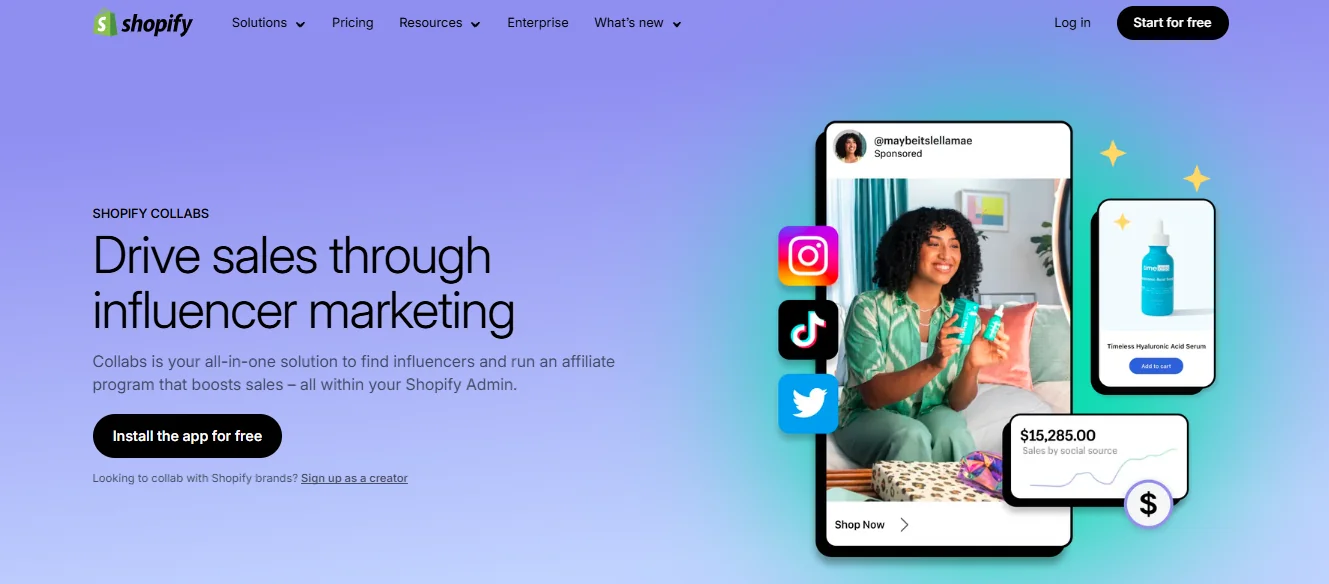
Shopify Collabs es la herramienta nativa de marketing de influencers de Shopify diseñada para cerrar la brecha entre marcas y creators directamente dentro del panel de administración de Shopify. Es ampliamente considerada la mejor potencia de "nivel de entrada" para marcas que desean ejecutar un programa basado en afiliados sin abandonar el ecosistema de su tienda.
Ideal Para: Marcas DTC ya en Shopify que desean una forma rentable de encontrar creators, automatizar ventas por afiliación y gestionar regalos sin pagar por una plataforma SaaS separada y costosa.
Cómo Funciona con Shopify: Como es una aplicación de primera parte, la integración es perfecta. Puedes convertir tus clientes existentes en "Collabs" colocando una página de solicitud directamente en tu tienda. Cuando un creator realiza una venta, Shopify Collabs calcula automáticamente la comisión e incluso puede gestionar los pagos a través de Shopify Bill Pay.
Precio:
- Instalación Gratuita: No hay cuota de suscripción mensual para usar la aplicación.
- Basado en Comisiones: Aunque la aplicación es gratuita para instalar, Shopify cobra una comisión del 2,9% en cada pago de comisión realizado a un creator.
- Limitaciones de la Aplicación: Algunas funcionalidades avanzadas (como regalos automatizados) están vinculadas a tu nivel específico de plan de Shopify (Básico, Shopify o Avanzado).
Facilidad de uso (UX/UI): La plataforma es excepcionalmente fácil de usar porque se ve y se siente exactamente como el resto del panel de administración de Shopify. No hay una nueva interfaz que aprender; gestiona tus creators junto a tus productos y pedidos.
Servicio al Cliente: Como parte del ecosistema de Shopify, el soporte se gestiona a través de los equipos de chat y correo electrónico 24/7 de Shopify. Aunque son expertos en la integración técnica, pueden ofrecer menos "estrategia" de influencer comparado con agencias especializadas.
Funcionalidades Principales:
- Directorio Público de Creators: Explora una base de datos de búsqueda de creators que han optado específicamente por trabajar con marcas de Shopify.
- Páginas de Solicitud Personalizadas: Crea una página de destino personalizada en tu tienda donde los creators pueden solicitar unirse a tu equipo.
- Regalos Automatizados: Envía productos a creators como "regalos" directamente desde tu inventario, con Shopify siguiendo automáticamente el envío y cumplimiento.
- Pagos de Comisión Instantáneos: Configura pagos automatizados para que los creators reciban dinero tan pronto como sus ventas por afiliación se verifiquen.
- Generación de Enlaces de Afiliado y Códigos: Genera automáticamente códigos de descuento únicos y enlaces de seguimiento para cada creator con el que te asocies.
Limitaciones de la Plataforma: Shopify Collabs es exclusiva para Shopify. Si alguna vez migras a WooCommerce o Magento, pierdes tu base de datos completa y flujo de trabajo. Además, su base de datos de descubrimiento es mucho más pequeña que los 350M+ perfiles de Modash, ya que solo incluye creators que se han registrado manualmente en la red de Collabs.
4) CreatorIQ
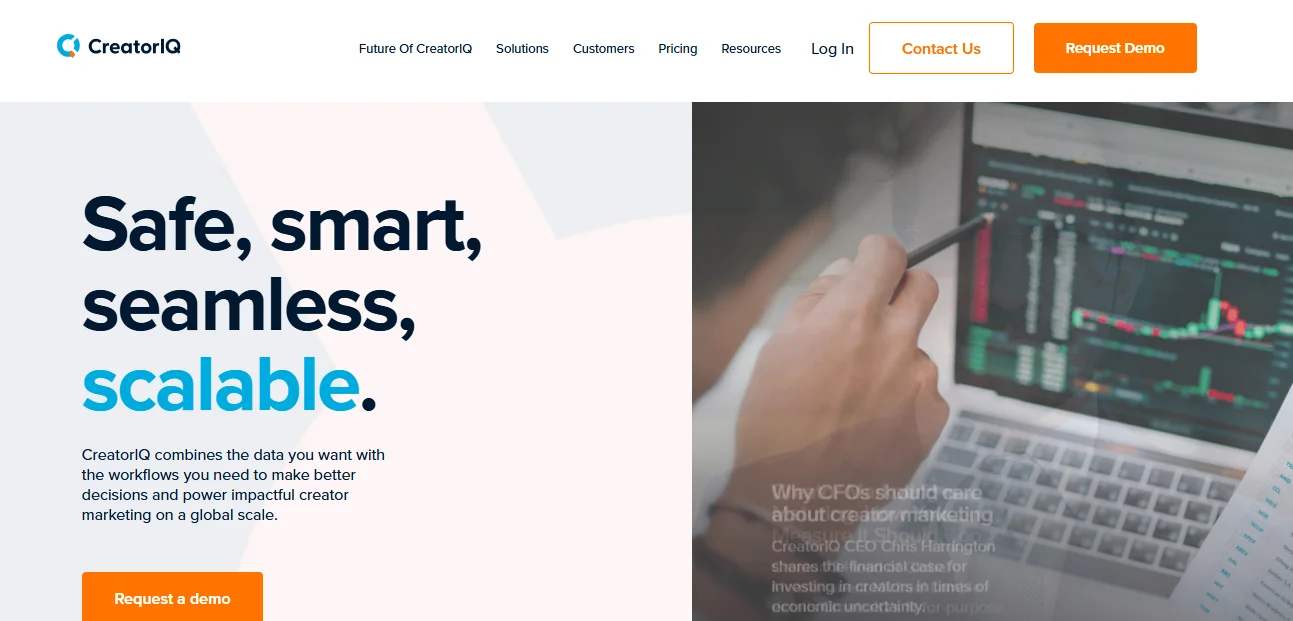
CreatorIQ es el "estándar de oro" para el marketing de influencers a nivel empresarial. Es una plataforma masiva y basada en datos, construida para organizaciones globales que necesitan gestionar portafolios de múltiples marcas con extrema precisión.
Ideal para: Empresas Fortune 500 y conglomerados DTC globales que necesitan seguridad avanzada de datos, reportes complejos y soporte multimercado.
Cómo funciona con Shopify: La integración de CreatorIQ con Shopify está diseñada para medición de "Full-Funnel". Conecta tus campañas de influencers con los resultados finales de tu tienda, proporcionando sofisticados reportes de "Conversion Lift". Esto va más allá de las ventas de afiliados simples para mostrar cómo el contenido de influencers impacta todo el viaje del cliente en tu sitio.
Precios: CreatorIQ es estrictamente una herramienta empresarial y no ofrece planes de bajo costo o mes a mes:
- Compromiso Anual: Típicamente comienza alrededor de $36,000/año.
- Empresa Personalizada: Los precios se escalan según el número de usuarios y requisitos de datos.
Facilidad de Uso (UX/UI): Debido a que la plataforma es tan poderosa, la interfaz es muy compleja. Está diseñada para equipos profesionales de marketing de influencers que pasan todo el día en la herramienta. Los usuarios frecuentemente reportan que requiere una cantidad significativa de entrenamiento e incorporación para usarla eficazmente.
Soporte al Cliente: A este precio, el soporte es de primer nivel. La mayoría de marcas tienen un "Gerente de Éxito Estratégico" dedicado que ayuda con todo, desde la configuración de campañas hasta revisiones de negocios trimestrales.
Características Clave:
- Reportes e Inteligencia Empresarial: Paneles avanzados que comparan el desempeño de influencers en diferentes marcas, regiones y períodos de tiempo.
- Seguimiento de ROI Full-Funnel: Se integra con Shopify y Google Analytics para rastrear cómo los influencers impulsan conciencia, consideración y, eventualmente, ventas.
- Redes Privadas de Creadores: Permite a marcas globales construir su propia base de datos "interna" de miles de creadores verificados con calificaciones personalizadas y notas de desempeño histórico.
- Seguridad Avanzada de Marca: Utiliza IA para escanear todo el historial de un creador en busca de contenido controvertido, asegurando que se alineen con estándares de cumplimiento corporativo global.
- Pago Automatizado y Cumplimiento Fiscal: Maneja pagos globales complejos en múltiples monedas asegurando que todas las leyes fiscales locales se sigan.
Limitaciones de la Plataforma: La pura complejidad y el precio masivo la hacen excesiva para el 95% de los comerciantes de Shopify. Está construida para un tipo muy específico de usuario "Empresarial" y puede ser frustrante para equipos más pequeños y ágiles que quieren moverse rápido.
5) AmbassadorFlow
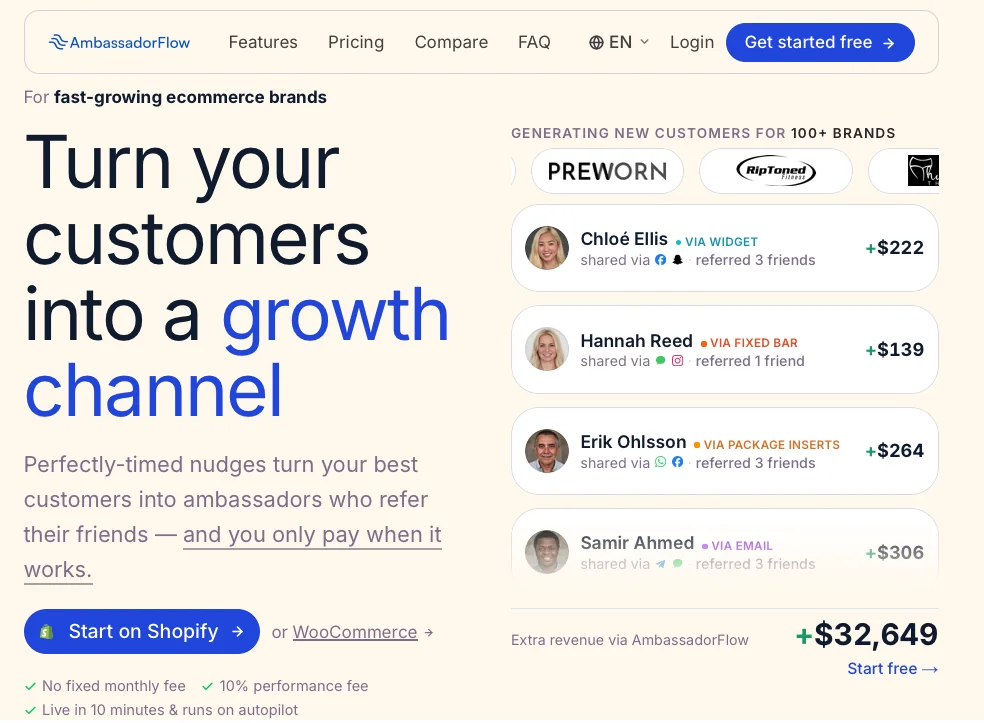
AmbassadorFlow es una aplicación de marketing de referencia y embajadores para tiendas Shopify y WooCommerce que convierte clientes existentes en promotores sin pagar — está construida alrededor del boca a boca, no del descubrimiento de creadores.
Ideal para: Marcas DTC de Shopify que quieren convertir clientes satisfechos en un canal de referencia sin reclutar o verificar un solo influencer externo — ideal para marcas que están comenzando su viaje con influencers, o aquellas que añaden ingresos de referencia encima de un programa existente.
Cómo funciona con Shopify: AmbassadorFlow se instala nativamente en Shopify (y WooCommerce) y detecta automáticamente el idioma, moneda, valor promedio de pedido y márgenes de la tienda durante la configuración. Despliega siete puntos de contacto integrados — página post-compra, email, SMS, widget en sitio, barra fija, nota de entrega e inserción en paquete — para alentar a los clientes a compartir un enlace de referencia personal generado automáticamente en el checkout.
Precios y Compromiso: Los tres planes incluyen una prueba de 14 días y sin contrato a largo plazo; las tarifas se aplican solo a ingresos de clientes nuevos traídos a través de la plataforma, nunca clientes existentes.
- Performance (Gratuito para comenzar): Sin tarifa mensual — 10% de ingresos de referencia verificados solamente, en los primeros 3 pedidos de cada cliente nuevo.
- Grow: $99/mes + 3% de ingresos de referencia, soporte prioritario.
- Scale: $199/mes + 1% de ingresos de referencia, incorporación dedicada.
Facilidad de Uso (UX/UI): AmbassadorFlow comercializa una configuración de "10 minutos" — conecta tu tienda, elige tus recompensas, activa los puntos de contacto — sin necesidad de desarrollador. Los revisores de la App Store de Shopify respaldan esto, llamándola "súper fácil de usar comparada con otras aplicaciones de afiliados".
Soporte al Cliente: Asistencia de incorporación personal gratuita en todos los planes; Grow añade soporte prioritario, Scale añade un contacto de incorporación dedicado. Sin chat en vivo ni SLA de tiempo de respuesta publicado.
Características Clave:
- Enlaces de Referencia Automáticos: Enlaces de referencia sin inicio de sesión generados automáticamente en el checkout.
- Detección de Fraude Multicanal: Bloquea auto-referencias y solo paga en compradores verificados que compran por primera vez, utilizando datos de pedidos, cookies y señales de IP, después de una retención de 10 días.
- Recompensas en Crédito de Tienda: Mantiene los ingresos de pago dentro de tu tienda, con recompensas de descuento fijo, producto gratuito o porcentaje para el amigo referido.
- Siete Puntos de Contacto Automatizados: Página post-compra, email, SMS, widget en el sitio, barra fija, nota de entrega e inserto de paquete — activos sin configuración manual.
- Integración Nativa con Shopify/WooCommerce: Detecta automáticamente el idioma y la moneda de tu tienda durante la configuración.
Limitaciones de AmbassadorFlow: AmbassadorFlow no tiene funcionalidad de descubrimiento de influencers, búsqueda o alcance — solo activa a los clientes que ya tienes, por lo que no te ayudará a encontrar nuevos creadores con quienes asociarte. También se basa en honorarios de uso en lugar de tarifa plana en dos de tres planes, así que el costo efectivo aumenta con los ingresos de referencia en lugar de mantenerse fijo. Y con solo un puñado de reseñas públicas hasta ahora, aún no hay un historial profundo en el que basarse a escala.
6) Modash
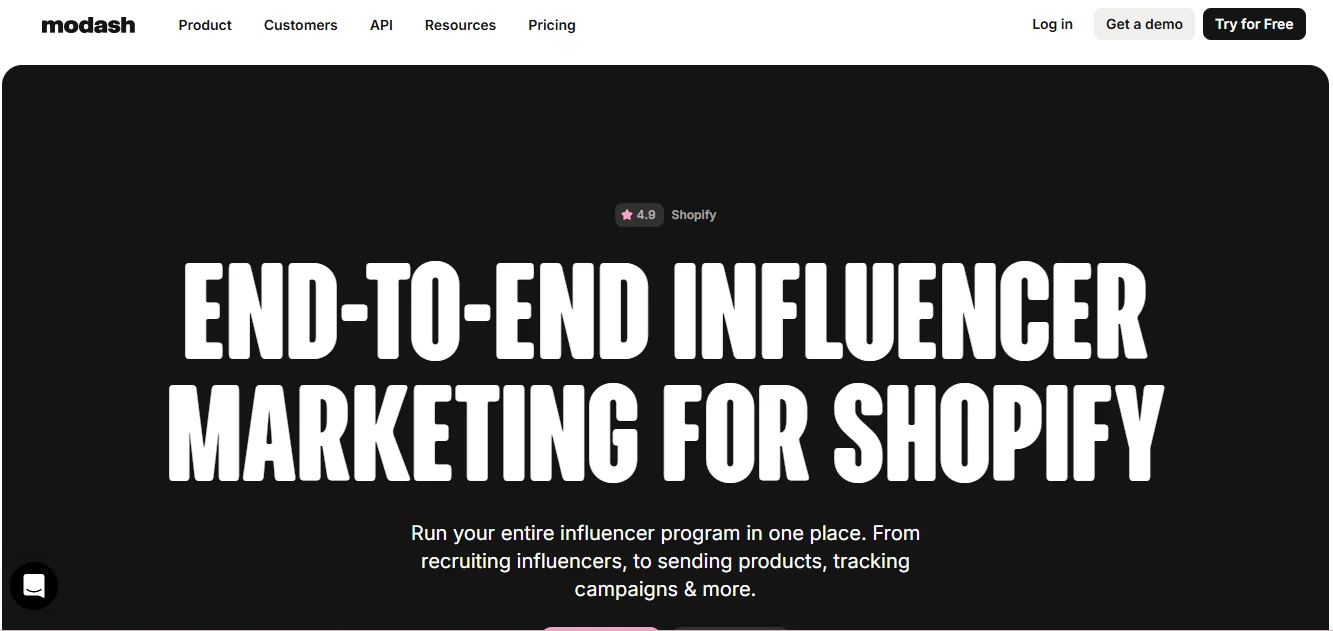
Modash es un motor de descubrimiento y evaluación poderoso que presume tener una de las bases de datos de creadores más grandes de la industria. Está diseñado para "marketers orientados al rendimiento" que necesitan encontrar y evaluar miles de socios potenciales rápidamente.
Mejor Para: Equipos DTC internos que se enfocan mucho en escala de micro-influencers y necesitan datos profundos para evitar influencers "falsos" y audiencias de bots.
Cómo Funciona con Shopify: Modash se conecta a Shopify para facilitar el seguimiento de afiliados y regalos de productos. Te permite crear códigos de descuento únicos en masa y sincronizarlos con tu tienda Shopify. Una vez que una campaña está activa, Modash extrae datos de ventas directamente de tu tienda para mostrarte exactamente cuántos ingresos está generando cada creador, proporcionando un ROAS (Retorno en Gasto Publicitario) claro para cada asociación.
Precios: Modash ofrece precios más flexibles y transparentes que muchos competidores empresariales:
- Essentials: $199/mes (facturación anual) o $299/mes (facturación mensual).
- Performance: $499/mes (facturación anual).
- Enterprise: Precios personalizados para equipos de alto volumen.
Facilidad de Uso (UX/UI): La plataforma es ampliamente reconocida por su diseño "sin rodeos". Los usuarios en Reddit y G2 elogian frecuentemente la rapidez del motor de búsqueda y lo intuitivos que son los filtros de evaluación, lo que permite construir una lista de 100+ creadores calificados en menos de una hora.
Soporte al Cliente: El soporte al cliente es un punto destacado para Modash, con usuarios mencionando frecuentemente la utilidad del soporte de chat 24/7. El equipo es conocido por ser proactivo, a menudo comunicándose para ayudar a los usuarios a optimizar sus filtros de búsqueda o plantillas de alcance para mejorar las tasas de respuesta.
Características Principales:
- Base de Datos de Descubrimiento Masivo: Acceso a más de 250 millones de perfiles de creadores en Instagram, TikTok y YouTube, con la capacidad de filtrar por intereses de nicho muy específicos.
- Evaluación Avanzada de Audiencia: Proporciona puntuaciones detalladas de "seguidores falsos" y desglose de datos demográficos de audiencia (ubicación, edad, género) para asegurar que los seguidores de un creador realmente coincidan con tu cliente objetivo de Shopify.
- Monitoreo de Contenido (Sin Requerir Registro): Rastrea y guarda automáticamente Instagram Stories y publicaciones de tus socios sin requerir que "inicien sesión" en una aplicación de terceros, manteniendo la experiencia del creador sin fricciones.
- Creación de Código de Descuento en Masa: Se sincroniza directamente con Shopify para generar y asignar miles de códigos de promoción únicos a la vez, ahorrando horas de trabajo administrativo manual.
- Paneles de Ingresos y ROAS: Informes en tiempo real que conectan datos de ventas de Shopify con costos de influencers, dándote una imagen clara de qué creadores son rentables.
Limitaciones de la Plataforma: Si bien Modash es excelente para descubrimiento y seguimiento, sus características internas de CRM/gestión de relaciones a veces se describen como menos "profundas" que herramientas como GRIN o Influencer Hero. Algunos usuarios también han señalado que aunque la base de datos de búsqueda es masiva, filtros muy específicos a veces pueden devolver perfiles que no han estado activos en los últimos 30 días.
7) Impact.com
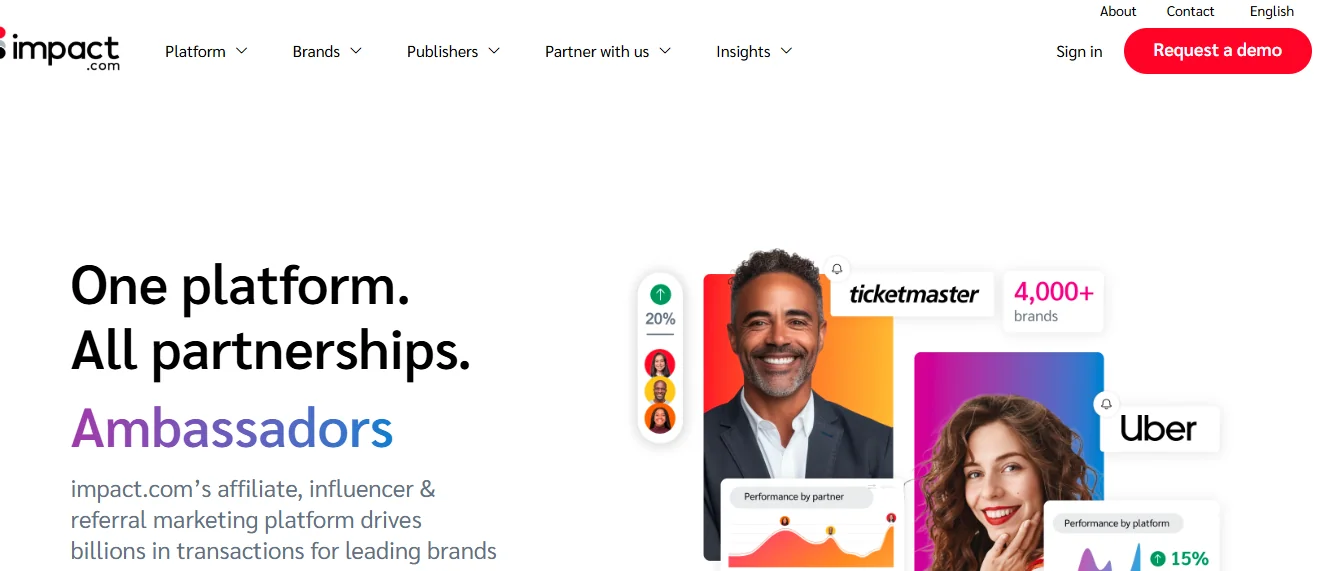
Impact.com es un líder global en automatización de asociaciones. Mientras que muchas herramientas en esta lista comenzaron con "influencers", Impact comenzó con "afiliados", lo que la convierte en la opción más robusta para marcas que tratan a los influencers como un canal de ventas impulsado por el rendimiento.
Mejor para: Marcas establecidas que desean gestionar influencers, afiliados tradicionales y socios de marca en un único sistema potente.
Cómo funciona con Shopify: La aplicación Shopify de Impact es una integración "plug-and-play" que se encarga del trabajo técnico pesado de la atribución. Instala un píxel de seguimiento en tu tienda que atribuye con precisión las ventas a socios específicos, incluso en diferentes dispositivos. También sincroniza tu catálogo de productos, permitiendo a los influencers crear "enlaces profundos" a productos específicos en tu tienda Shopify.
Precios: Impact ofrece una gama más amplia de niveles de precios que muchos competidores:
- Starter Edition: Comienza en $30/mes (más un pequeño porcentaje de ingresos de socios), diseñado para marcas más pequeñas.
- Pro y Enterprise: Típicamente comienza en $500/mes y aumenta significativamente según el volumen de socios y características necesarias.
Facilidad de uso (UX/UI): Debido a que está diseñado para gestores profesionales de partnerships, la interfaz es increíblemente detallada. Los usuarios nuevos a menudo reportan una "curva de aprendizaje pronunciada" debido a las opciones avanzadas de reportes y contratación. Sin embargo, una vez dominado, se considera uno de los dashboards más potentes de la industria.
Atención al cliente: Impact proporciona soporte escalonado. Los usuarios de Starter dependen principalmente del centro de ayuda y el chat, mientras que los usuarios de Enterprise reciben equipos de éxito dedicados. Las reseñas generalmente destacan el "profesionalismo" del soporte, aunque algunos usuarios más pequeños sienten que la plataforma está más orientada hacia sus clientes más grandes.
Características clave:
- Dashboard de Partnership Unificado: Gestiona influencers junto con sitios afiliados tradicionales (como RetailMeNot) y partnerships estratégicos de marca a marca en un solo lugar.
- Motor de Contratación Robusto: Crea estructuras de comisión altamente específicas (por ejemplo, paga más por clientes nuevos que por clientes recurrentes) que se sincronizan directamente con los datos de checkout de tu Shopify.
- Atribución Multi-dispositivo: Utiliza seguimiento avanzado para garantizar que los influencers reciban crédito por una venta incluso si un cliente hace clic en un enlace en su teléfono pero compra después en su laptop.
- Detección Automatizada de Fraude: Escanea actividad sospechosa de afiliados y "cookie stuffing" para garantizar que solo pagas por ventas legítimas impulsadas por tus creadores.
- Marketplace de Descubrimiento: Acceso a una red global de cientos de miles de socios pre-verificados, incluyendo influencers, editores de medios y aplicaciones móviles.
Limitaciones de la plataforma: La complejidad de la plataforma es su mayor obstáculo; a menudo se describe como "demasiada herramienta" para marcas que solo buscan hacer regalos de productos simples. Algunos usuarios también encuentran el modelo de precios de "porcentaje de ingresos" en el plan starter frustrante a medida que escalan.
8) Refersion

Refersion es una plataforma de marketing de afiliados dedicada que se enfoca en la simplicidad y el rendimiento. Es una herramienta "confiable" para marcas Shopify que desean una forma confiable de rastrear y pagar a sus embajadores sin florituras innecesarias.
Mejor para: Marcas DTC que utilizan principalmente un modelo de "solo comisión" y necesitan una forma sencilla de gestionar cientos de enlaces de afiliados.
Cómo funciona con Shopify: Refersion se integra profundamente con el checkout de Shopify. Permite a las marcas convertir a sus clientes en afiliados inmediatamente después de una compra mediante una ventana emergente de "post-compra". Todos los enlaces de seguimiento y códigos de cupón se sincronizan en tiempo real, asegurando que cuando un influencer realiza una venta, se registre instantáneamente tanto en Refersion como en la pestaña de "Pedidos" de Shopify.
Precios: Refersion ofrece precios escalonados directos:
- Professional: $119/mes (incluye seguimiento de hasta 50 pedidos/mes).
- Business: $299/mes (incluye seguimiento de hasta 200 pedidos/mes).
- Enterprise: Comienza en $599/mes para seguimiento ilimitado y características avanzadas.
Facilidad de uso (UX/UI): Refersion es conocido por ser extremadamente fácil de usar tanto para la marca como para el influencer. El "Portal de Afiliados" es limpio y simple, permitiendo a los creadores iniciar sesión, obtener sus enlaces y ver sus ganancias sin necesidad de conocimientos técnicos.
Atención al cliente: El soporte al cliente es un gran "pro" para Refersion. Son famosos por su incorporación guiada "Paso a Paso", y las reseñas de usuarios frecuentemente mencionan representantes de soporte específicos que los ayudaron a solucionar problemas de seguimiento o configurar correctamente sus configuraciones fiscales.
Características clave:
- Reclutamiento Post-Compra: Invita automáticamente a los clientes a convertirse en afiliados en la página de "Gracias" después de comprar en tu tienda Shopify.
- Pagos Automatizados: Se integra con PayPal y otras pasarelas de pago para permitir pagos de comisiones con "un clic", ahorrando horas de contabilidad manual.
- Portales de Afiliados Personalizados: Cada creador obtiene su propio panel donde puede ver sus estadísticas de ventas, próximos pagos y activos creativos (banners/imágenes) proporcionados por la marca.
- Seguimiento de Código de Cupón: Te permite rastrear ventas incluso cuando no se utiliza un enlace, simplemente atribuyendo la venta al código de descuento específico de Shopify asignado a ese influencer.
- Gestión Fiscal: Recopila automáticamente formularios W-9 y rastrea ganancias para simplificar el proceso de declaración de impuestos de fin de año para tu marca.
Limitaciones de la Plataforma: Refersion es principalmente una herramienta de afiliados, por lo que sus características de "descubrimiento de influencers" no son tan robustas como las plataformas orientadas al descubrimiento como Modash. Algunos usuarios también encuentran que el precio "por pedido" en los niveles inferiores es restrictivo a medida que su programa comienza a escalar.
9) Traackr
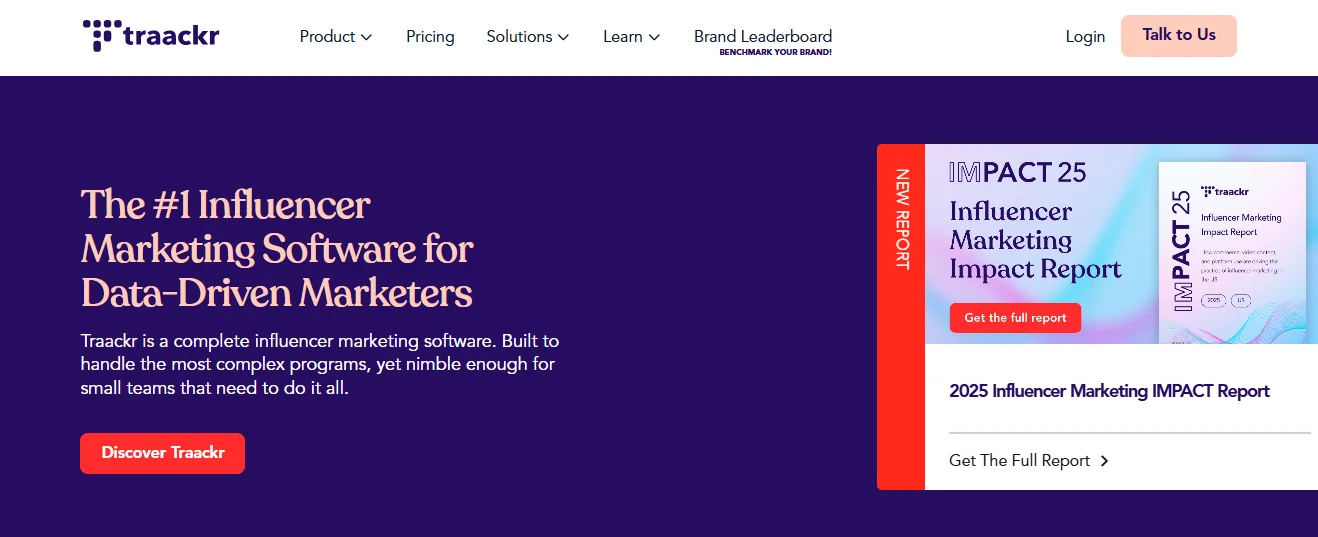
Traackr es una plataforma de marketing de influencers de nivel empresarial que se enfoca en la gestión de relaciones basada en datos y análisis de rendimiento. Está diseñada para actuar como un "sistema de registro" global para grandes organizaciones, permitiéndoles unificar sus datos de creadores y estandarizar la medición en múltiples marcas y regiones.
Lo Mejor Para: Empresas globales y equipos DTC grandes que priorizan benchmarking de ROI, optimización de presupuesto e inteligencia competitiva compleja en múltiples mercados.
Cómo Funciona con Shopify: Traackr se integra con Shopify para cerrar la brecha entre la conciencia del influencer y las ventas finales. La plataforma permite que los equipos generen enlaces de afiliados únicos y parámetros de seguimiento que se sincronizan con los datos de pago de Shopify, proporcionando seguimiento de conversión en tiempo real y atribución de ventas a nivel de SKU. También ayuda a prevenir promociones de productos agotados al conectarse a tu API de inventario de Shopify, asegurando que los influencers solo promocionen productos disponibles.
Precios: Traackr opera exclusivamente con contratos anuales, con niveles de precios basados en el número de usuarios y características requeridas:
- Growth: Comienza en $25,000/año (típicamente incluye 3 usuarios y análisis básicos).
- Standard: Comienza en $32,500/año (incluye benchmarking competitivo y hasta 5 usuarios).
- Plus: Comienza en $55,000/año (incluye integraciones personalizadas de API y hasta 10 usuarios).
- Enterprise/Agency: Precios personalizados para despliegues globales a gran escala.
Facilidad de Uso (UX/UI): Aunque la plataforma es elogiada por su diseño bien pensado y descripción general integral de los esfuerzos de influencers, a menudo se describe como que tiene una curva de aprendizaje pronunciada debido a su conjunto de características robusto. Los usuarios en G2 y Capterra señalan que aunque la interfaz es intuitiva una vez dominada, puede ser abrumadora para principiantes o equipos más pequeños que no están acostumbrados a herramientas de nivel empresarial.
Soporte al Cliente: El soporte al cliente es una de las características mejor valoradas de Traackr, con usuarios que destacan consistentemente la asistencia receptiva y exhaustiva que reciben. El equipo proporciona incorporación estructurada y recursos de capacitación, con muchos clientes empresariales beneficiándose de gerentes de éxito dedicados que ofrecen orientación estratégica durante todo el ciclo de campaña.
Características Clave:
- Puntuación de Vitalidad de Marca (VIT): Una métrica propietaria que compara el rendimiento social de tu marca con competidores midiendo visibilidad, impacto y confianza.
- Modelado de Honorarios Predictivos: Utiliza datos de rendimiento históricos para sugerir una compensación apropiada para creadores, ayudando a los equipos a optimizar sus presupuestos en función del compromiso y alcance esperados.
- Evaluación Avanzada de Audiencia: Proporciona información profunda sobre la autenticidad de seguidores, incluyendo porcentajes específicos de seguidores "sospechosos" o masivos, para garantizar que las marcas inviertan en creadores con influencia real.
- Paneles de Inteligencia Competitiva: Ofrece una "vista de pájaro" del panorama social, permitiendo a las marcas rastrear su participación de voz y ver qué influencers generan más valor para sus competidores.
- Coordinación de Campañas Global: Construida para manejar programas multilingües y multirregionales, con herramientas para estandarizar flujos de trabajo y marcos de medición en equipos globales.
Limitaciones de la Plataforma: Los usuarios reportan frecuentemente problemas técnicos como tiempos de carga lentos y retrasos en la recuperación de datos, particularmente al gestionar grandes conjuntos de datos. Además, hay limitaciones notadas con la integración de TikTok, donde el contenido a veces puede tardar 2-3 días en aparecer, creando vacíos en los informes en tiempo real para campañas de rápido movimiento.
10) Upfluence
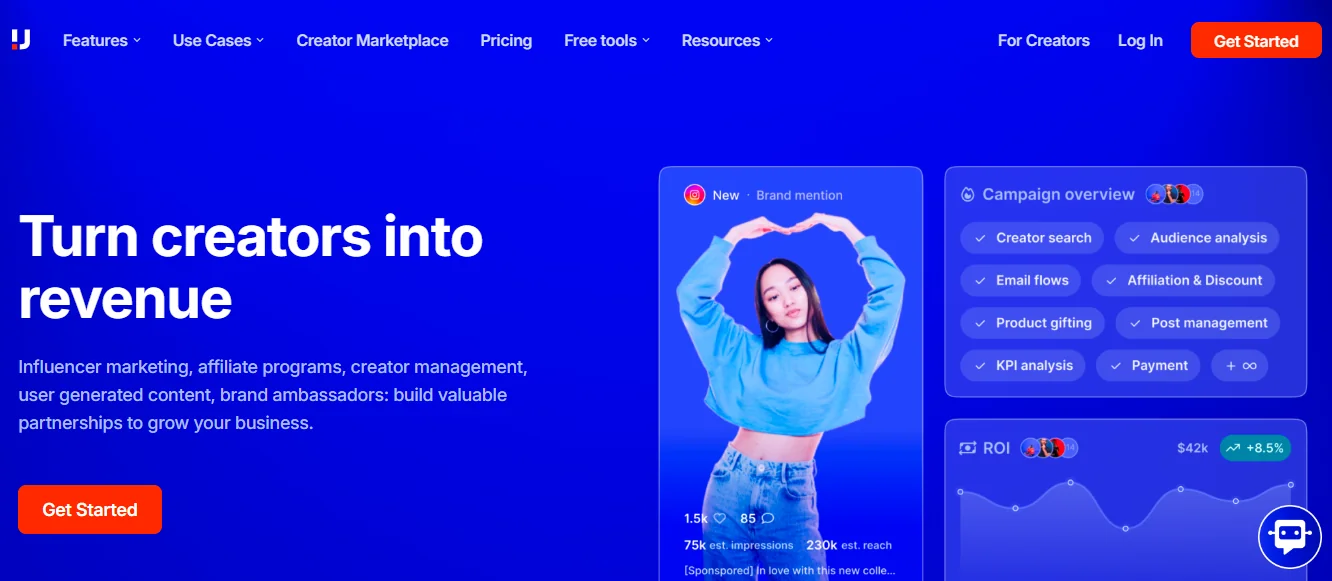
Upfluence es una plataforma de marketing de influencers impulsada por IA que se enfoca intensamente en "Live Capture", una característica que identifica personas influyentes que ya están comprando en tu tienda. Cierra la brecha entre el descubrimiento tradicional de influencers y la defensa de la marca.
Ideal para: Marcas de Shopify y Amazon que desean convertir su base de clientes existente y visitantes del sitio en un ejército escalable de embajadores de marca.
Cómo funciona con Shopify: Upfluence se integra con Shopify para analizar tus datos históricos de clientes. Realiza referencias cruzadas de tu lista de clientes con datos de redes sociales para identificar fans "de alto valor" que tienen un alcance social significativo. Esto te permite invitar a personas que ya aman tus productos a unirse a tu programa de influencers, lo que genera tasas de respuesta mucho más altas y contenido más auténtico.
Precios: Upfluence generalmente utiliza contratos anuales con precios que varían según el tamaño de tu base de datos y las funciones deseadas:
- Plan Growth: Reportedly comienza alrededor de $1,276/mes (facturado anualmente).
- Scale & Enterprise: Precios personalizados según el volumen de creadores y la profundidad del seguimiento de datos requerido.
Facilidad de uso (UX/UI): La interfaz se describe frecuentemente como pesada en datos pero funcional. Si bien proporciona detalles inmensos para la validación, algunos usuarios en plataformas como Capterra mencionan que la gran cantidad de datos y opciones de filtrado pueden crear una curva de aprendizaje más pronunciada para principiantes en comparación con herramientas más "plug-and-play".
Soporte al cliente: Los usuarios generalmente reportan experiencias positivas con el equipo de soporte de Upfluence, destacando su experiencia en ayudar a las marcas a configurar el seguimiento de atribución complejo. Sin embargo, algunos comentarios mencionan que los tiempos de respuesta del soporte pueden variar dependiendo de si tienes un gerente de éxito dedicado asignado a tu nivel.
Características clave:
- Live Capture e Identificación de Clientes: Escanea automáticamente tus clientes de Shopify mientras compran para encontrar influencers, permitiéndote reclutar personas que ya son fans genuinos de la marca.
- IA Jace Propietaria: Un asistente de IA que ayuda a redactar mensajes de alcance personalizados y resume perfiles de creadores para acelerar el proceso de validación.
- Seguimiento de Ventas a Nivel SKU: Va más allá de los ingresos totales para mostrarte exactamente qué productos están impulsando ventas los influencers específicos, ayudándote a refinar tu estrategia de regalos.
- Pagos Globales de Un Clic: Presenta un sistema de pago integrado (Upfluence Pay) que maneja pagos en múltiples monedas a creadores en todo el mundo, simplificando campañas internacionales.
- Escucha Social Avanzada: Rastrea menciones de marca en varias plataformas, incluso si el creador no etiqueta la marca, asegurando que nunca pierdas un contenido generado por el usuario orgánico.
Limitaciones de la plataforma: Upfluence puede resultar abrumadora para equipos que ejecutan campañas muy simples a pequeña escala debido a su naturaleza pesada en datos. Algunos usuarios también han notado que los términos del contrato de la plataforma son relativamente rígidos, con flexibilidad limitada para marcas que buscan opciones mensuales.
Cómo elegir el software de marketing de influencers adecuado para Shopify
Seleccionar la plataforma correcta depende de dónde se enfrenta actualmente tu marca a la mayor fricción en su flujo de trabajo de influencers. Diferentes herramientas priorizan diferentes etapas del embudo, desde el descubrimiento inicial hasta el seguimiento de rendimiento a largo plazo.
- Para marcas enfocadas en descubrimiento y alcance: Si tu desafío principal es encontrar nuevos creadores y gestionar secuencias de correo electrónico de alto volumen, busca plataformas con bases de datos masivas y buscables y características de seguimiento automatizado. Estas herramientas son ideales para marcas en las primeras etapas de la construcción de una red de creadores que necesitan llenar su canal rápidamente.
- Para programas de regalos y afiliados de alto volumen: Las marcas que gestionan seeding de productos a gran escala o estructuras de afiliados complejas requieren una integración profunda de backend. La mejor opción para estos equipos es una plataforma que pueda automatizar la creación de pedidos en Shopify y la generación nativa de códigos de descuento para eliminar el trabajo manual con hojas de cálculo.
- Para seguimiento y medición de rendimiento del embudo completo: Cuando tu objetivo es vincular la actividad del influencer directamente a los ingresos de tu tienda, necesitas un sistema que funcione como un "centro de control". Estas plataformas van más allá de métricas de engagement de nivel superficial al usar datos conectados de Shopify para proporcionar informes de ROI claros y atribución de ventas a nivel de SKU.
Para la mayoría de marcas de Shopify, el enfoque más sostenible es una plataforma que maneje todo el ciclo de vida: identificar clientes influyentes, automatizar el cumplimiento de productos y rastrear el rendimiento de ingresos en tiempo real en un flujo de trabajo centralizado.
Reflexiones finales
Escalar efectivamente un programa de influencers en Shopify requiere ir más allá de hojas de cálculo manuales y flujos de trabajo fragmentados. Al centralizar el descubrimiento, la divulgación y el seguimiento del rendimiento, las marcas pueden dejar de lado los obstáculos administrativos y enfocarse en construir relaciones auténticas y duraderas con creadores que impulsen un crecimiento medible.
Influencer Hero es ampliamente considerado el mejor software para integración con Shopify porque conecta tu CRM de influencers directamente a tu tienda, permitiendo que los sistemas compartan datos en tiempo real. Para marcas DTC listas para tratar el marketing de influencers como un canal de ventas de alto rendimiento, proporciona una solución robusta que automatiza todo, desde el envío de productos hasta la atribución nativa de ingresos.
¿Listo para automatizar tu programa de influencers en Shopify? ¡Reserva una demo hoy!
Resumen
Este es un texto dentro de un bloque div.
Este es un texto dentro de un bloque div.
Precios/mes
Reseñas de Shopify
Este es un texto dentro de un bloque div.
Este es un texto dentro de un bloque div.
Este es un texto dentro de un bloque div.
Este es un texto dentro de un bloque div.
Este es un texto dentro de un bloque div.
Este es un texto dentro de un bloque div.
Este es un texto dentro de un bloque div.
Este es un texto dentro de un bloque div.
Este es un texto dentro de un bloque div.
Este es un texto dentro de un bloque div.
Este es un texto dentro de un bloque div.
Este es un texto dentro de un bloque div.
Este es un texto dentro de un bloque div.
Este es un texto dentro de un bloque div.
Este es un texto dentro de un bloque div.
Este es un texto dentro de un bloque div.
Este es un texto dentro de un bloque div.
Este es un texto dentro de un bloque div.
Este es un texto dentro de un bloque div.
Este es un texto dentro de un bloque div.
Este es un texto dentro de un bloque div.
Leer más

Preguntas frecuentes
¿Qué hace exactamente la integración de Shopify con Influencer Hero?

La integración de Shopify conecta tu tienda de ecommerce directamente a tu flujo de trabajo de influencer marketing, lo que te permite gestionar el seeding de productos, generar enlaces de afiliados y hacer un seguimiento de los ingresos desde un único panel. En lugar de cambiar entre plataformas, puedes realizar un seguimiento de los pedidos de gifting utilizando tu inventario activo de Shopify. Esto reduce la entrada manual de datos y garantiza que tus operaciones de influencer marketing se mantengan organizadas a medida que tu programa escala.
¿Puedo rastrear las ventas de influencers y el ROI directamente a través de Shopify?
Sí, cuando utiliza una plataforma como Influencer Hero, puede rastrear métricas clave de desempeño como clics, conversiones e ingresos totales vinculados a creadores específicos. Al sincronizar los datos de ventas de Shopify con su CRM de influencers, obtiene una visión clara de qué asociaciones están generando el mejor retorno de inversión (ROI). Esto le permite ir más allá de las métricas de engagement superficiales y enfocarse en el desempeño real de su tienda.
¿Cómo gestiono el gifting de influencers y el seeding de productos sin hojas de cálculo?
Plataformas como Influencer Hero eliminan el "caos de hojas de cálculo" permitiéndole realizar pedidos de product seeding directamente dentro de la plataforma. Puede seleccionar variantes de productos específicos (tallas, tonos o paquetes) de su catálogo de Shopify y monitorear el estado del envío en tiempo real. Este flujo de trabajo automatizado le ayuda a enviar productos más rápidamente y evita errores comunes como enviar artículos incorrectos.
¿Cómo se crean los enlaces de afiliados de influencers y los códigos de descuento?
Con la integración de Shopify, puede crear en masa enlaces de afiliados específicos para creadores y códigos de descuento personalizados directamente desde su software de marketing de influencers. Puede configurar ofertas basadas en reglas, como un porcentaje de descuento en todo un pedido o "Compre X Obtenga Y", que se sincronizan automáticamente con su tienda Shopify. Esto facilita atribuir ventas a creadores individuales sin tener que configurar manualmente cada código en el administrador de Shopify.
¿Cuáles son las mejores alternativas a Shopify Collabs para escalar?
Si bien Shopify Collabs es un buen punto de partida para comerciantes nuevos, las marcas en crecimiento a menudo buscan alternativas más robustas como Influencer Hero, GRIN o Aspire para manejar volúmenes más grandes de creadores. Influencer Hero a menudo se cita como una opción principal porque combina automatización profundamente conectada con Shopify—como regalos automatizados y seguimiento de ROI nativo—con un CRM de embudo completo. Esto permite que las marcas gestionen descubrimiento, alcance e informes en un solo lugar en lugar de malabarear múltiples herramientas aisladas.





Blogs más populares


¿Estás listo para lograr un ROI de más de 10 veces?
Programa una demostración con uno de nuestros expertos en medios a continuación.