
Top 10 linkr Network Alternatives in 2026: Features, Pricing and Review

March 27, 2024
|
Published

September 6, 2026
|
Updated

14 minutes
|
Reading

Influencer Performance Marketing Course | VOUCHER: IMC100

Malena Garcia
| Author

Malena Garcia
| Author

Drive ROI With Influencers

Global Influencer Database
ALL-IN-ONE platform
CRM, Affiliate, UGC & More
Top 10 linkr Network Alternatives in 2026: Features, Pricing and Review
linkr Network is a Munich-based influencer marketing platform built for small and mid-sized brands, particularly Shopify and Shopware merchants running micro-influencer campaigns in European markets. Its strength is simplicity: discovery, chat, negotiation, product seeding and payments in a workflow a two-person team can operate without training.
The reasons brands look elsewhere are consistent. Features are split across four pricing tiers, so campaign management, eCommerce integration and API access each require a separate upgrade. The creator network is small compared with global platforms, coverage is concentrated in Europe, and reviewers repeatedly flag limited advanced analytics once programs move past simple gifting or barter deals.
This guide compares the top 10 linkr Network alternatives in 2026 on discovery depth, features, pricing and commitment, so you can match a platform to what your program actually needs.
- Influencer Hero
- Modash
- GRIN
- Upfluence
- Aspire
- HypeAuditor
- Sprout Social Influencer Marketing
- Meltwater Influencer Marketing
- Club (formerly Brandbassador)
- Captiv8
Why Look For linkr Network Alternatives in 2026
linkr does one thing well: it makes micro-influencer campaigns easy to launch at a low entry price. Four things push brands to look elsewhere.
Core Features Are Split Across Four Tiers
linkr's modular pricing keeps the entry price low, but it also means the entry plan is discovery and messaging only. Campaign management and influencer payments require the €349 tier, product seeding and commission tracking require the €699 tier, and API access sits exclusively on the €1,990 Whitelabel plan. A brand that needs gifting plus attribution is effectively looking at €699 a month, not €199.
A Small, Europe-Weighted Creator Network
linkr works within its own verified network rather than indexing the open social web. Reviewers consistently describe the network as small compared with larger platforms, and its strength is concentrated in DACH and wider European markets. For brands running campaigns in North America, Asia or emerging markets, the pool thins out fast.
Limited Advanced Analytics
The most common criticism in reviews is that reporting depth does not scale. linkr handles the basics well, but brands that move beyond gifting and barter into multi-channel programs, cross-platform attribution or detailed ROI reporting run into a ceiling. There is no earned media value modelling and no competitor benchmarking.
API Access Only at the Top Tier
If you need programmatic access to creator data, whether to feed profiles into your own dashboards, a data warehouse or an internal CRM, linkr only offers it on the €1,990 Whitelabel Enterprise plan. There is no standalone API plan, which makes integration an expensive jump rather than an incremental one.
Linkr Network Overview in 2026
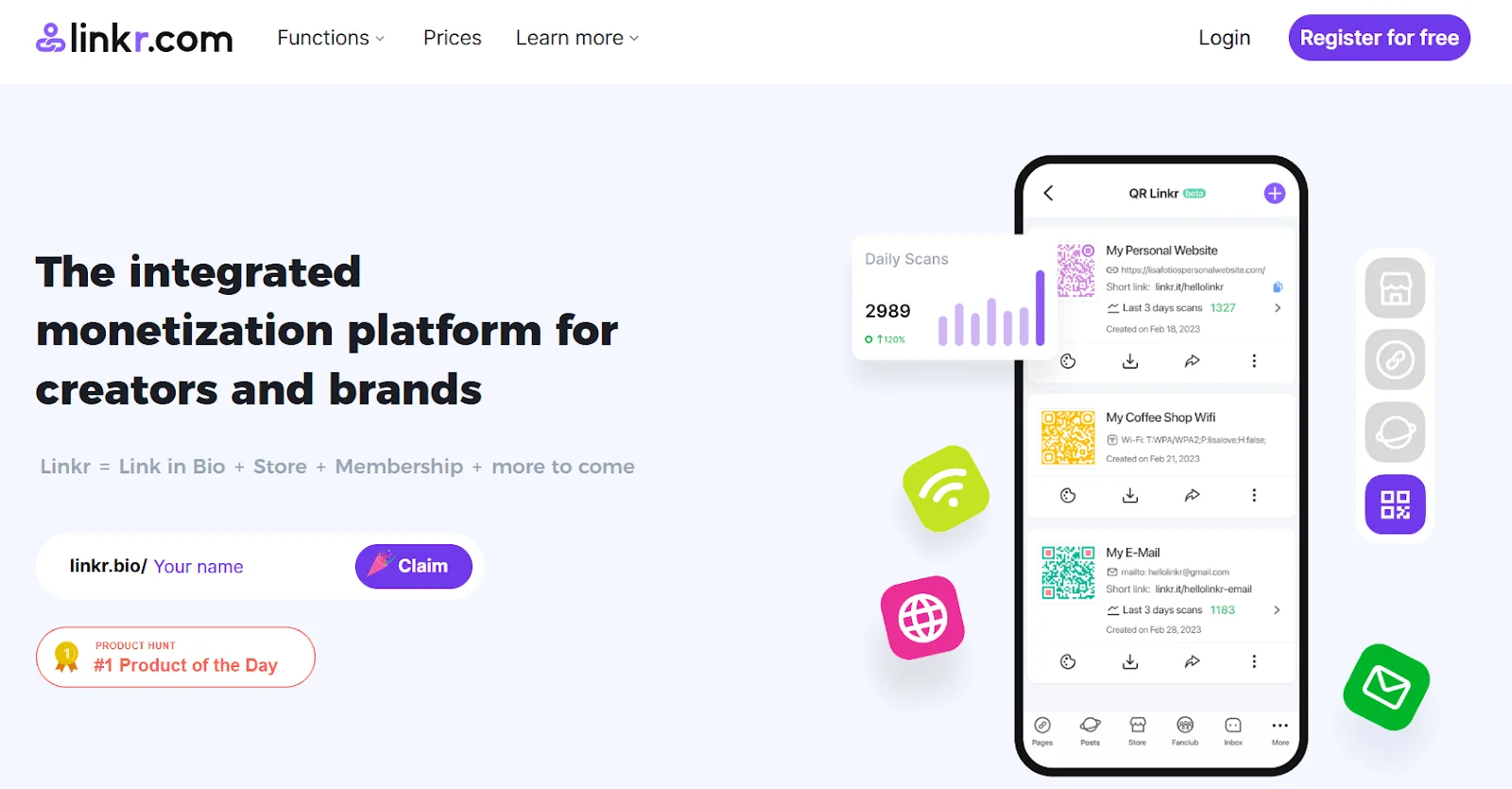
linkr Network is a Munich-based influencer marketing platform aimed at small and mid-sized brands and eCommerce businesses that want a structured way to manage creator collaborations. Its core strength is simplifying the end-to-end workflow with micro and nano influencers, from discovery through to payment, without needing a large marketing team. It is particularly popular with Shopify and Shopware merchants in European markets.
Best For: Small European DTC brands running micro-influencer gifting, barter and commission campaigns who want a low entry price and monthly flexibility.
Platform Coverage: Instagram, TikTok and YouTube within linkr's own verified network, with Shopify and Shopware eCommerce integration on the higher tiers.
Pricing & Commitment: Modular rather than tiered by volume, so each plan unlocks a different feature set. Annual billing saves 17% to 25%. All plans can be cancelled monthly except Whitelabel, and there is a 7-day free trial with no credit card required.
- Search & Communicate. €199/month, or €149/month annually. Unlimited search within linkr's network, advanced filters, list management, AI-powered daily recommendations and real-time chat. No payments, campaign management or product seeding.
- Influencer Relationship Management. €349/month, or €289/month annually. Adds campaign management, smart pricing suggestions, negotiation tools, influencer payments, automated invoicing and cooperation history.
- Product & eCommerce Integration. €699/month, or €559/month annually. Adds Shopify and Shopware inventory sync, automated product seeding, barter and performance-based compensation, discount codes, commission tracking and no platform fee on cooperation payments.
- Whitelabel Enterprise. €1,990/month, or €1,549/month annually. Custom branding and domain, multi-channel and multi-language configuration, a private influencer database, API access and a dedicated customer success manager.
Reviews: 4.6 / 5.0 (Shopify App Store), 4.8 / 5.0 across app stores
Ease of Use (UX/UI): Consistently praised for fast onboarding and an intuitive interface. Reviewers highlight how quickly a first micro-influencer campaign goes live, with one noting contact with over 30 influencers on day one.
Customer Support: Responsive, with the team willing to walk brands through their first campaign over Zoom. Priority support is included from the IRM tier upward.
Best Features
- Modular, Scalable Pricing. Pay only for the layer you need and add CRM, payments and eCommerce features as campaigns mature, which keeps upfront cost low for smaller teams.
- Flexible Compensation Models. Fixed price, barter and product-only, performance-based commission, bidding mode and hybrid variants, all inside one platform.
- Native Product Seeding. On the eCommerce tier, linkr connects to your Shopify or Shopware backend to automate sample orders and inventory syncing.
- Automated Discount Codes and Commissions. Personalised codes per influencer with commissions calculated in real time and paid out in one click.
- Real-Time Chat and Cooperation Management. Proposals, briefings and pricing negotiations happen in-platform rather than across email threads, keeping a clear record per creator.
Pros and Cons
For a full breakdown of what sits on each tier, see our linkr pricing review.
Quick Comparison: Top 10 linkr Network Alternatives in 2026
Top 10 linkr Network Alternatives in 2026
1. Influencer Hero
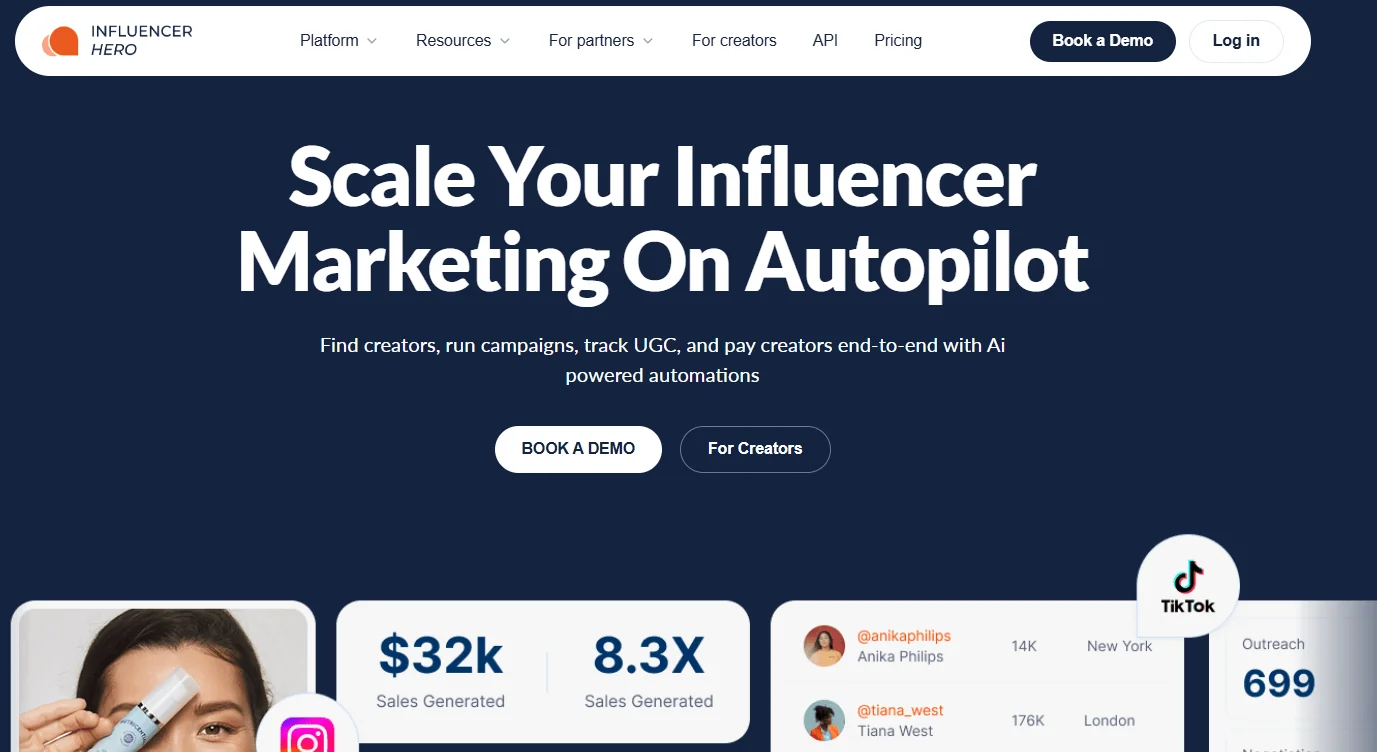
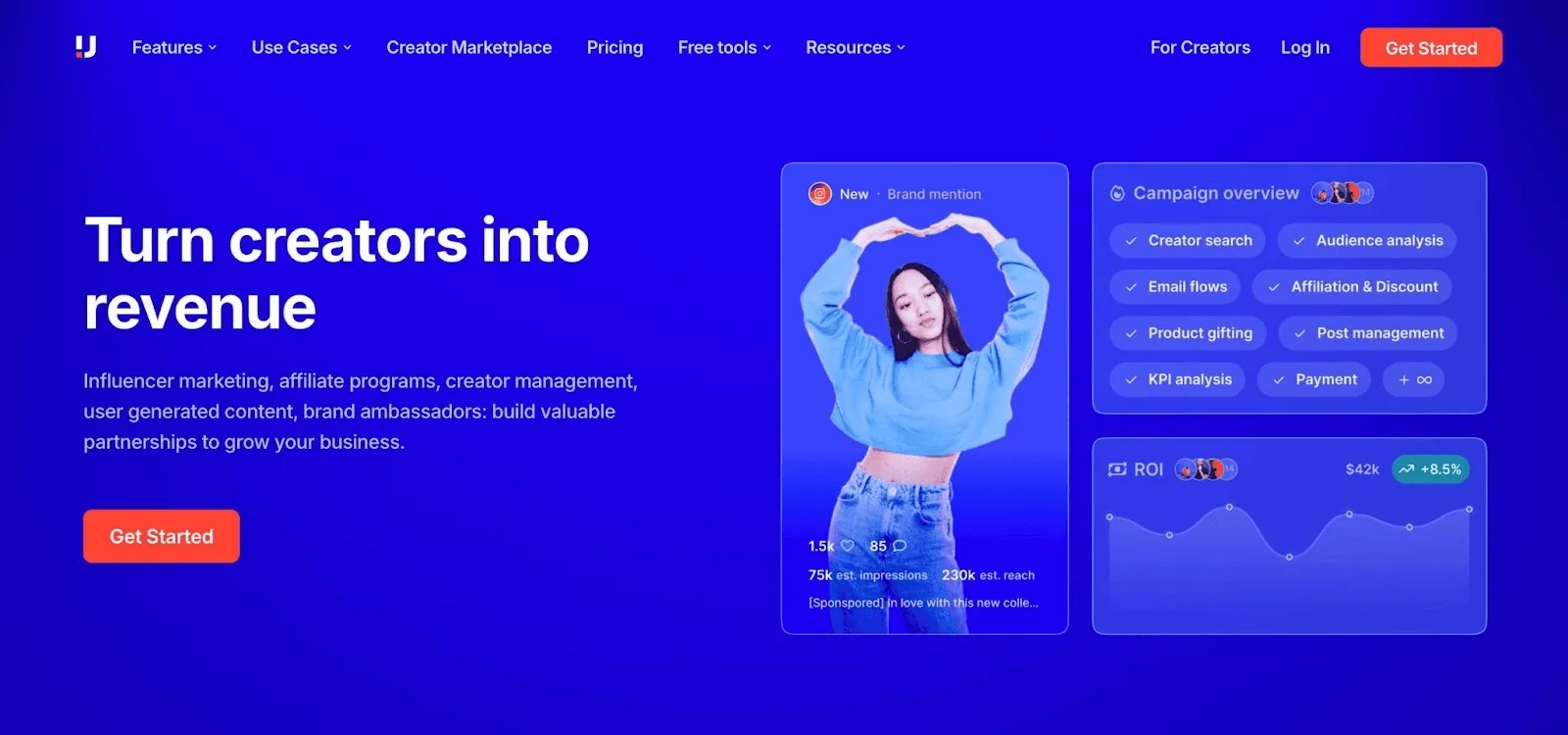
Influencer Hero is an all-in-one influencer marketing platform covering the entire creator lifecycle: discovery, outreach, CRM, gifting, affiliate, UGC, creator storefronts, application pages and reporting. Where linkr splits those capabilities across four pricing tiers, Influencer Hero includes the whole workflow on every plan.
Best For: Brands and agencies that want the complete workflow without unlocking features tier by tier, and open-web discovery rather than a curated network.
Platform Coverage: Instagram, TikTok, YouTube, Facebook, Pinterest, Snapchat, X and Twitch, with a 450M+ creator database across the open social web.
Pricing & Commitment: Published openly and billed monthly. Standard $649/month for up to 1,000 creators, Pro $1,049/month for up to 5,000, Business $2,490/month for up to 10,000, plus custom and agency plans. No annual lock-in.
Reviews: 5.0 / 5.0 (Capterra)
Best Features
- Open-Web Discovery Across Eight Platforms. Filter by niche, audience demographics, engagement quality and follower authenticity, with fake-follower detection and lookalike search, rather than working within one platform's verified network.
- AI Assistant for Outreach and Follow-Ups. Rewrite any email before it sends, set AI instructions at account or campaign level, and generate follow-ups built from the original thread rather than a static sequence.
- Everything on Every Plan. Campaign management, gifting, affiliate tracking, content review, invoicing and reporting are all included from Standard, not gated behind separate tiers.
- Lowest Payout Fees on the Market. Creator payouts at 0.1% to 0.5% against the 5% to 7% most platforms charge.
- Broad eCommerce Integrations. Shopify, WooCommerce, Magento, BigCommerce and custom setups, alongside Klaviyo, Omnisend and Mailchimp.
- API Access on Standard Plans. Discovery, Raw and AI Search APIs with published pricing, rather than being reserved for a top enterprise tier.
Pros and Cons
linkr Network vs Influencer Hero
The structural difference is bundling. On linkr, a brand that wants campaign management plus product seeding plus commission tracking is on the €699 tier, and API access means jumping to €1,990. Influencer Hero includes all of it at $649 a month.
Discovery is the other gap. linkr searches its own verified network, which is small and Europe-weighted. Influencer Hero indexes 450M+ creators across eight platforms on the open social web, so campaigns outside DACH are not limited by network coverage.
linkr remains cheaper at the entry point, and for a brand testing barter campaigns in Germany that matters. For anything past that, the feature gating is where the cost comparison actually lands. Book a Demo to see the full workflow on your own catalog.
2. Modash
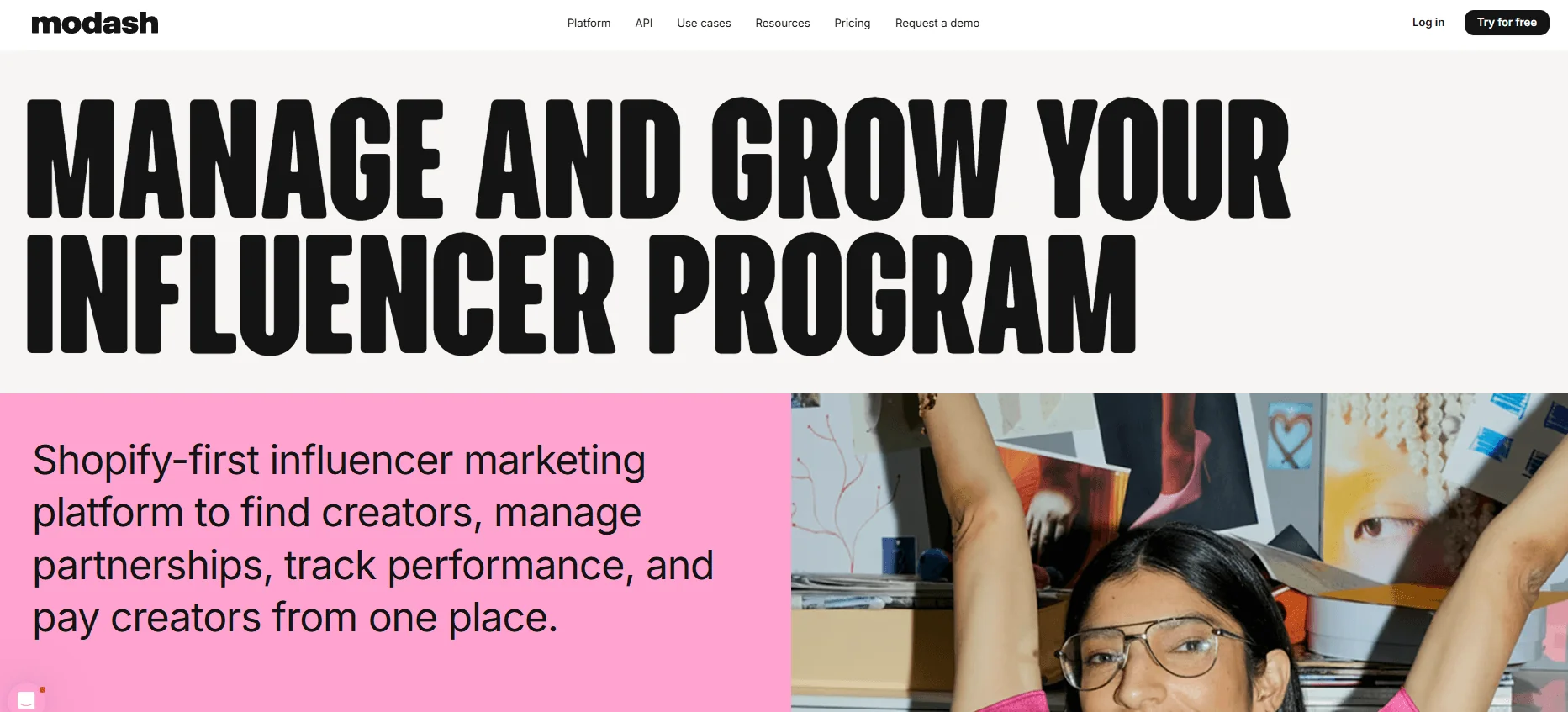
Modash is a discovery-first platform built around a 350M+ creator database spanning Instagram, TikTok and YouTube, with no opt-in requirement. Its Promoty acquisition added a proper CRM layer on top of what was originally a pure search tool.
It is the most direct answer to linkr's biggest structural limitation: a small, curated network.
Best For: Brands running global or multi-market programs that need discovery depth without an enterprise contract.
Platform Coverage: Instagram, TikTok and YouTube, with profile recognition for X and Snapchat. 350M+ profiles.
Pricing & Commitment: Essentials $299/month, or $199/month billed annually. Performance $599/month, or $499/month annually, adding the Shopify integration. Enterprise is custom, with public estimates from around $14,700/year. 14-day free trial with no credit card required.
Reviews: 4.9 / 5.0 (Capterra)
Best Features
- 350M+ Creator Database. Open-web discovery with no opt-in requirement, strong outside Europe where linkr thins out.
- Influencer CRM. Custom pipeline statuses, bulk actions, labels and notes for managing relationships at scale.
- Automated Email Sequences. Send from your own brand domain via Gmail or Outlook, with follow-ups that stop on reply.
- Find Your Fans. Surfaces creators who already follow and engage with your brand.
- AI-Powered Discovery. Describe the creator you want in natural language, or upload an image to find matches.
Pros and Cons
linkr Network vs Modash
Modash gives you the open social web instead of one platform's verified network, which is the single biggest thing a growing linkr user is missing. Coverage outside DACH is dramatically better.
On price the two are close. Modash starts at $199/month on annual billing against linkr's €199, and both offer flexible billing with a free trial, so this is not a budget versus enterprise mismatch.
What linkr keeps is the execution layer. Modash has no product seeding automation, no bidding or barter compensation models and no native invoicing, so it replaces linkr's discovery gap rather than its full campaign workflow. Compare the wider field in our Modash alternatives guide.
3. GRIN
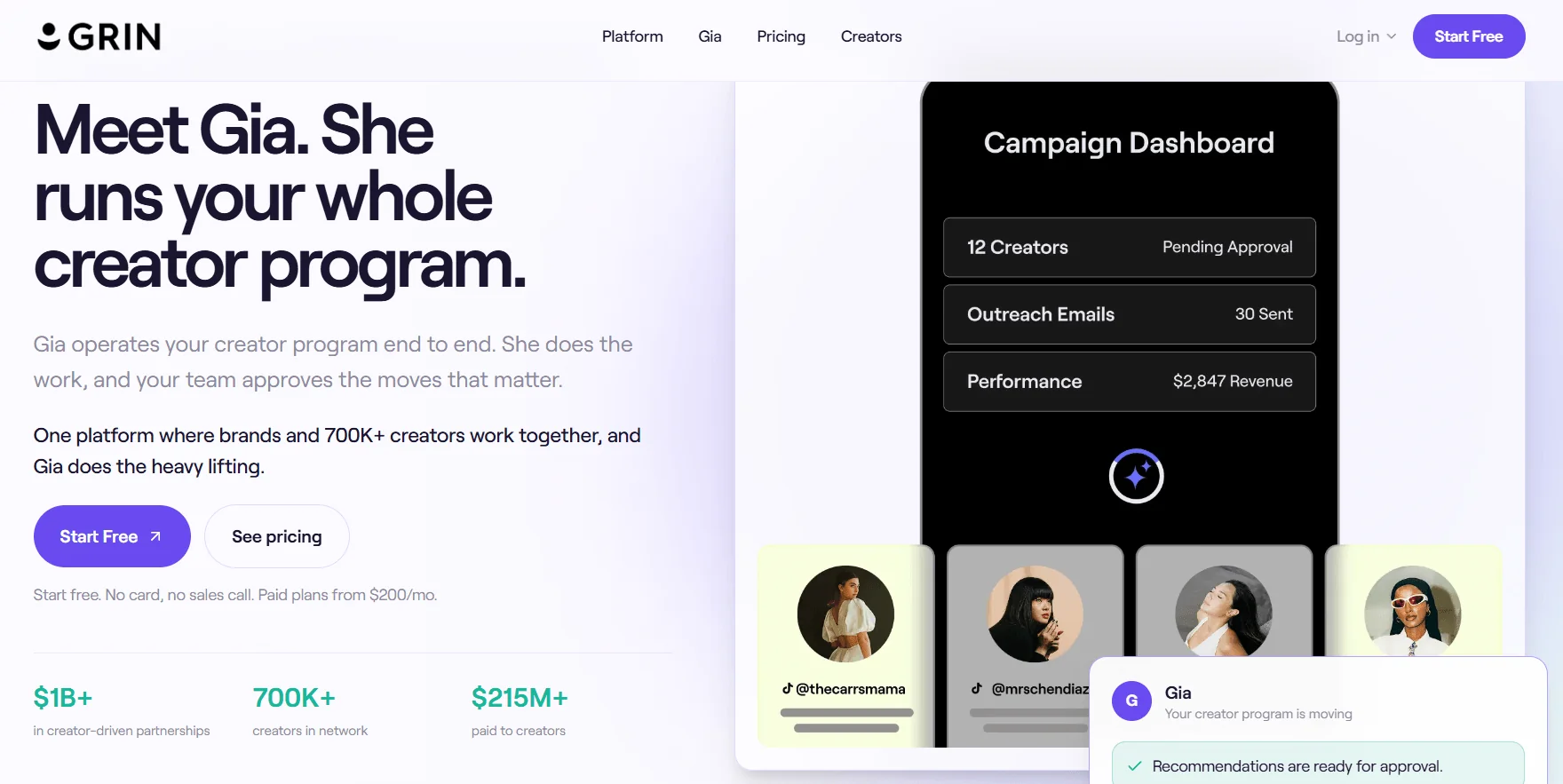
GRIN is a creator management platform built specifically for DTC eCommerce, used by SKIMS, Warby Parker and Rhode. It covers discovery, outreach, gifting, affiliate and full ROI reporting with deep Shopify, WooCommerce and Magento integrations.
Its 2026 overhaul introduced published self-serve pricing, month-to-month billing and a free tier, replacing the custom-quoted annual contracts it sold for years.
Best For: DTC eCommerce brands that want product seeding, affiliate infrastructure and a creator CRM in one place.
Platform Coverage: Instagram, TikTok, YouTube, X, Twitch and Snapchat, with a 190M+ creator database.
Pricing & Commitment: Five self-serve tiers billed monthly with no annual commitment: Free at $0 with 200 monthly credits, Starter $200/month with 2,000 credits, Growth $500/month for up to 100 active creators, Scale $1,000/month for up to 250, and Complete $1,500/month for up to 500. Metered by credits for Gia, GRIN's AI assistant. GRIN Classic, the creator workspace, comes from Growth upward.
Reviews: 4.5 / 5.0 (G2, 483 reviews) and 4.7 / 5.0 (Capterra)
Best Features
- Gia AI Assistant. Sources creators, drafts outreach and benchmarks fair compensation from GRIN's own campaign data.
- Deep eCommerce Integrations. Shopify, WooCommerce and Magento for seeding, discount codes and commission tracking.
- Automated Payment Workflows. Creator payments, bonuses and commissions with 1099 processing on higher tiers.
- Free Tier to Test With. A $0 plan with 200 monthly credits, no card and no sales call required.
- Branded Application Pages. Custom forms for scaling inbound creator interest.
Pros and Cons
linkr Network vs GRIN
GRIN is the closest functional match to what linkr's €699 eCommerce tier does, with product seeding, discount codes and commission tracking, but it adds open-web discovery and Magento support on top. It also lets you start free and cancel any month, so testing costs nothing against linkr's €199 entry.
The honest caveat is that GRIN's cheap tiers buy AI assistance rather than a workspace. The creator CRM most brands want starts at $500 a month, which sits between linkr's IRM and eCommerce tiers, and GRIN has no Shopware integration. We break the two down in our GRIN comparison.
4. Upfluence
Upfluence is an all-in-one platform built around eCommerce revenue attribution, with native Shopify and Amazon integrations and a customer-to-creator matching feature that identifies buyers who already have audience reach.
It is one of the few platforms that covers Amazon alongside Shopify, which matters for brands selling across both.
Best For: eCommerce brands focused on tracked revenue, particularly those selling on Amazon as well as Shopify.
Platform Coverage: Instagram, TikTok, YouTube, X, Twitch, Pinterest and WordPress blogs, with a 12M+ creator database.
Pricing & Commitment: Modular rather than tiered. The Search and Contact module starts at $478/month, and a full setup covering search, campaign management and Upfluence Pay comes to roughly $1,276/month for one seat, about $16,007/year. A required onboarding fee applies and the minimum contract is 12 months.
Reviews: 4.3 / 5.0 (Capterra)
Best Features
- Customer-to-Creator Matching. Surfaces customers who already have audience reach, usually 1% to 3% of your list.
- Native Amazon Integration. Rare in the category, where most competitors including linkr stop at Shopify.
- Jaice AI Assistant. Handles creator selection, messaging and follow-up personalisation at scale.
- Built-In Payments and Compliance. Multi-currency payouts, KYC verification, tax forms and invoicing in-platform.
- Social Listening. Track brand mentions, competitor activity and trending topics.
Pros and Cons
linkr Network vs Upfluence
Upfluence and linkr share a modular pricing philosophy, where you buy the layers you need rather than a single all-in plan. The difference is what each layer contains. Upfluence adds Amazon attribution, multi-currency payouts with tax compliance, and customer-to-creator matching, none of which linkr offers at any tier.
The catch is commitment. linkr can be cancelled monthly and starts at €199; Upfluence requires a 12-month contract with an onboarding fee and roughly $16,007 a year for a working setup, so it is a much heavier decision. Compare the field in our Upfluence alternatives guide.
5. Aspire
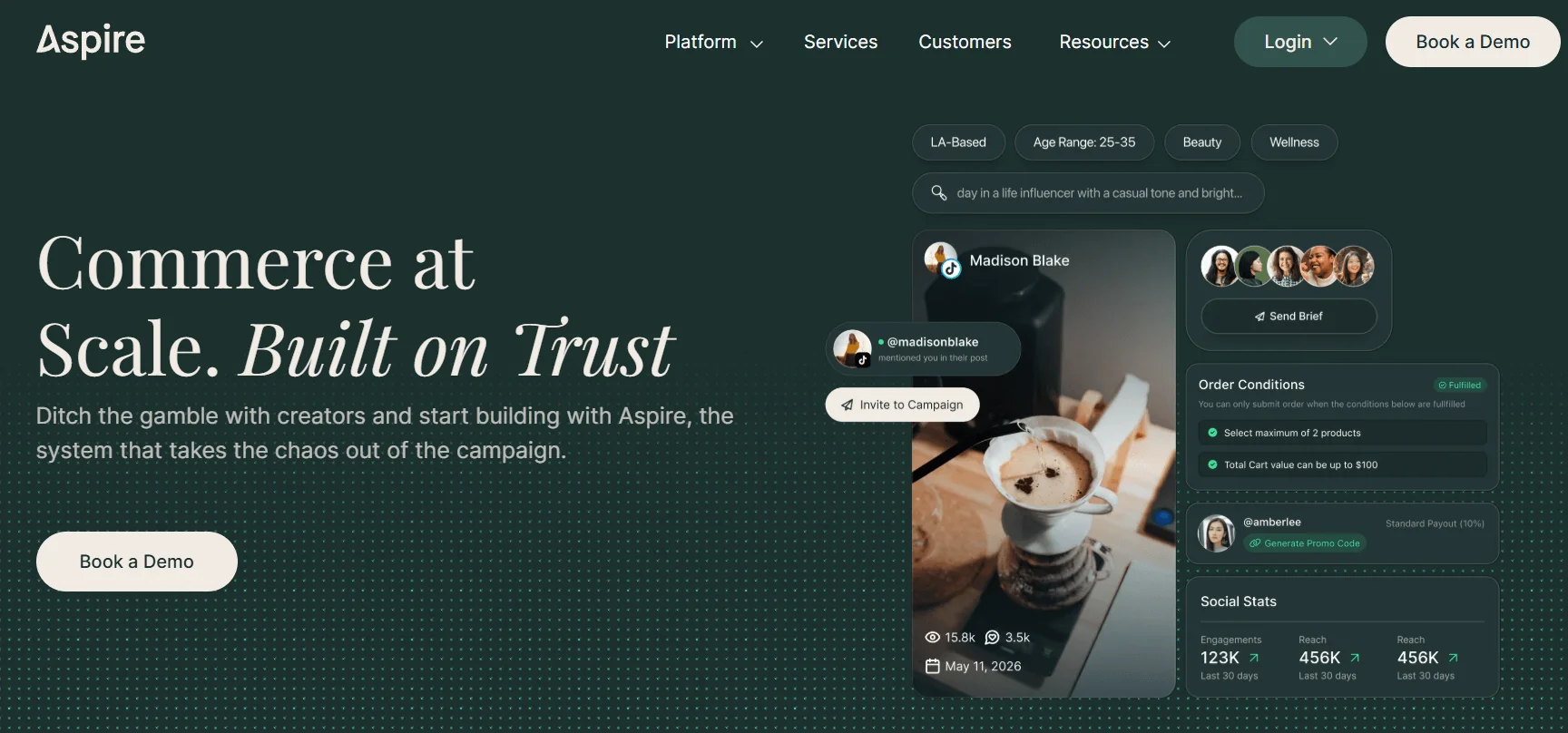
Aspire (formerly AspireIQ) combines outbound creator search with a marketplace of over a million creators who apply to campaigns, plus creator storefronts and built-in UGC licensing. It has paid out more than $150M to creators across 900+ customers.
It is built for mid-market brands running UGC-to-paid-ad workflows at volume.
Best For: Brands scaling influencer and UGC programs that want inbound applications and content rights handled in-platform.
Platform Coverage: Instagram, TikTok, YouTube, Facebook and Pinterest, with a 1M+ creator marketplace on top of outbound search.
Pricing & Commitment: Quote-based, typically starting around $2,300/month on a 12-month agreement plus a one-time onboarding fee. Reported annual minimums land near $29,588. Pricing is per user, so costs rise as the team grows. No free trial.
Reviews: 4.0 / 5.0 (Capterra)
Best Features
- Dual Discovery Model. Outbound search plus an inbound marketplace where creators apply to you.
- UGC Licensing with Term Sheets. Secures reuse rights automatically for paid-ad repurposing, which linkr does not offer.
- CreatorStores. Curated shoppable storefronts giving creators a reason to keep promoting.
- Shopify Gifting and Affiliate. Promo codes, gifting carts, affiliate tracking and payouts in one place.
- Social Listening and Affiliate Finder. Surfaces brand fans and high-performing partners using AI analytics.
Pros and Cons
linkr Network vs Aspire
Aspire's UGC licensing is the clearest gap it closes. linkr handles gifting and commission well but has no digital term sheets, so brands running creator content as paid ads negotiate rights manually every time. The inbound marketplace of over a million creators also solves the network-size problem from the opposite direction: creators come to you rather than you searching a small pool.
Cost is the barrier. At roughly $2,300 a month on an annual contract against linkr's €199 entry, Aspire only makes sense once your program is running at real volume. Browse the leading Aspire alternatives to compare marketplace-driven platforms.
6. HypeAuditor
HypeAuditor began as a fraud-detection tool and grew into a full discovery and analytics platform covering 227M+ profiles. Audience quality verification remains its core differentiator.
It is the strongest answer to linkr's limited analytics, and it has a genuinely free tier.
Best For: Teams that prioritise audience verification and campaign analytics before committing budget.
Platform Coverage: Instagram, TikTok, YouTube, Twitch, X and Snapchat, with 227M+ creator profiles.
Pricing & Commitment: A free tier covers media plans, campaign management and demo versions of the wider toolset, alongside 40+ free audit tools. The Basic plan starts at $299/month billed annually, with higher tiers quoted on data volume, seats and feature access.
Reviews: 4.8 / 5.0 (Capterra)
Best Features
- Audience Quality Score. The category benchmark for identifying fake followers and engagement pods.
- AI Scout. Describe your campaign and get a ranked shortlist of around 50 creators in seconds.
- Market and Competitor Analysis. Brand mention tracking and competitor creator activity, which linkr has no equivalent for.
- Snapchat Discovery. One of the few platforms covering Snapchat discovery and analytics tools.
- eCommerce Sales Tracking. Shopify, WooCommerce and Magento for promo codes, affiliate links and seeding.
Pros and Cons
linkr Network vs HypeAuditor
Limited advanced analytics is linkr's most-cited weakness in reviews, and analytics is precisely what HypeAuditor sells. Audience quality scoring, competitor benchmarking and campaign reporting all go considerably deeper. Its 227M+ index also dwarfs linkr's verified network, and the free tier makes it the cheapest way to add a verification layer to an existing workflow.
What linkr keeps is the execution loop. HypeAuditor vets and finds creators but does not handle barter deals, bidding or the automated product seeding linkr's eCommerce tier is built around. See the category compared in our HypeAuditor alternatives breakdown.
7. Sprout Social Influencer Marketing
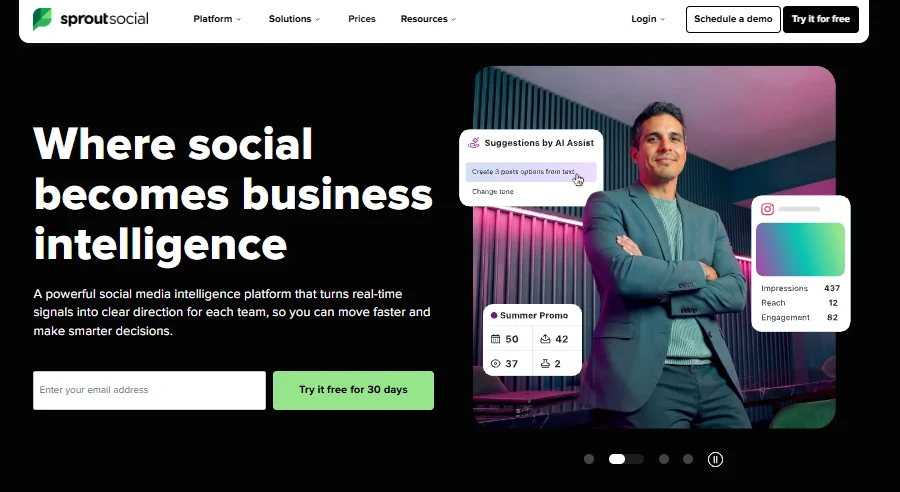
Sprout Social's influencer product, built on its 2023 Tagger acquisition and now fully integrated, is an influencer module inside a much larger social media management suite.
Note that Tagger no longer exists as a standalone product, which matters if you are comparing older reviews.
Best For: Marketing teams already running Sprout Social that want influencer workflows in the same environment as publishing and listening.
Platform Coverage: Instagram, TikTok, YouTube, Facebook, X, LinkedIn, Pinterest and Threads across the wider suite.
Pricing & Commitment: The influencer module starts at $1,599/month per user, with each additional seat at $600/month, sold separately from any base plan. The core Sprout Social platform is priced from $199 per seat per month. Annual contracts with auto-renewal and a 30-day cancellation window.
Reviews: 4.5 / 5.0 (Capterra)
Best Features
- Brand Fit and Safety Scoring. AI evaluates creator alignment with brand values and flags risky profiles.
- Content Approval Workflows. Review and approve every piece of creator content before it goes live.
- EMV and Benchmarking Reports. Earned media value tracking and competitor benchmarking.
- Recruit. Branded landing pages for inbound creator applications with automated vetting.
- Unified Social Stack. Influencer data sits next to publishing, listening and engagement.
Pros and Cons
linkr Network vs Sprout Social Influencer Marketing
Sprout brings the analytics depth linkr lacks, with EMV modelling and competitor benchmarking that no linkr tier offers, plus coverage of eight networks including LinkedIn and Threads. For teams already inside Sprout for social management, adding the influencer module avoids onboarding a second vendor entirely.
The gap is price and scope. At $1,599 per seat per month on a 12-month contract, a single Sprout seat costs roughly eight times linkr's entry plan, and there is no product seeding automation to replace linkr's eCommerce tier.
8. Meltwater
This is the platform formerly known as Klear. Meltwater acquired Klear in 2021 and folded it fully into Meltwater Influencer Marketing in an April 2024 consolidation, with the Klear name surviving mainly as Klear Connect, the campaign collaboration portal.
It is an influencer module inside Meltwater's enterprise media intelligence suite.
Best For: Enterprise brands and agencies already using Meltwater for PR or social listening.
Platform Coverage: Instagram, TikTok, YouTube, Facebook, X and blogs, indexing 30M+ creator profiles across 190+ countries.
Pricing & Commitment: No public rates. Third-party estimates put contracts around $33,100/year for three users, with a median near $25,000/year. Annual only, with auto-renewal and typically a 90-day cancellation notice.
Reviews: 4.0 / 5.0 (G2)
Best Features
- True Reach Analytics. Measures genuine audience rather than raw follower counts.
- Klear Connect. Relationship hub covering creator onboarding, messaging and payment.
- AI Topic Categorisation. Creators sorted across 60,000+ topic areas from Meltwater's media monitoring infrastructure.
- Integrated Social Listening. Influencer data sits next to brand mention and sentiment data.
- Two Years of Historical Data. Evaluate long-term creator performance rather than a recent snapshot.
Pros and Cons
linkr Network vs Meltwater Influencer Marketing
Klear is no longer a standalone product, which is the first thing to know if you are comparing it against linkr based on older reviews. You are buying into Meltwater's enterprise suite. Its analytics depth genuinely exceeds linkr's, with True Reach, topic categorisation and two years of historical post data, plus strong European coverage.
The terms are the opposite of linkr's though. Roughly $33,100 a year for three users, annual-only, with a 90-day cancellation notice, against linkr's €199 a month cancellable any time. For a small European DTC brand, this is not a realistic swap. Our Klear alternatives guide covers the wider field.
9. Club (formerly Brandbassador)
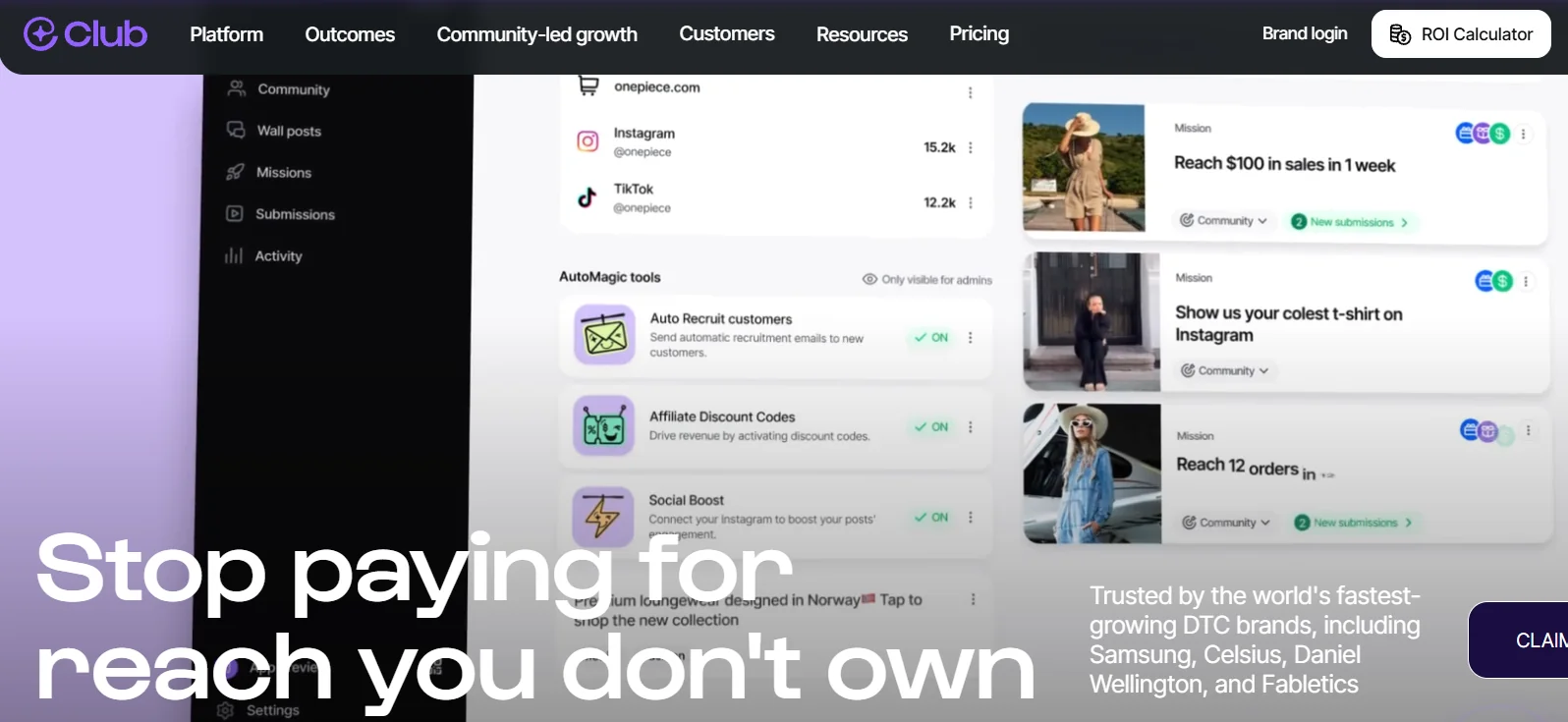
Brandbassador rebranded to Club in 2025, moving from brandbassador.com to club.co. The core product is unchanged: a gamified Missions engine where existing customers complete tasks in exchange for cash, points, gift cards or free product.
It is a community activation tool rather than a discovery platform.
Best For: DTC and eCommerce brands with an engaged customer base they want to convert into a structured ambassador community.
Platform Coverage: Instagram, TikTok, YouTube and Facebook, with eCommerce tracking through Shopify, BigCommerce and WooCommerce.
Pricing & Commitment: Quote-only across all three plans (Hub, Suite and Universe), with no public rate card and no free tier. Third-party reporting places most contracts between $500 and $3,000 per brand per month depending on ambassador count and add-ons.
Reviews: 4.5 / 5.0 (G2, listed as Club, formerly Brandbassador)
Best Features
- Gamified Missions. Set tasks for your community and reward completion with cash, points, gift cards or product.
- Unlimited Ambassadors. Scale the community without per-ambassador fees, unusual in a category built on creator caps.
- Automated Rewards and Payments. Payment processing and reward distribution run without manual admin.
- eCommerce Tracking. Custom discount codes and tracking links across Shopify, BigCommerce and WooCommerce.
- Full Community Control. Decide who joins and which ambassadors can access each mission.
Pros and Cons
linkr Network vs Club
Club and linkr solve different halves of the same job. linkr finds creators within its network and manages the collaboration; Club activates the customers you already have and keeps them engaged over time through gamification. Club's unlimited ambassadors and BigCommerce support go beyond what linkr offers, and its rewards automation is deeper than linkr's commission tracking.
What it does not do is discovery. There is no creator database at all, so it cannot replace linkr's core function. Pricing is also quote-only with no free tier, against linkr's published €199 entry and 7-day trial.
10. Captiv8
Captiv8 is an enterprise influencer and commerce platform with deep analytics covering earned media value, competitive benchmarking and real-time dashboards.
It was acquired by Publicis Groupe in May 2025 for a reported $150M and merged with Influential, giving the combined platform a network of 15M+ creators across 120 countries.
Best For: Enterprise brands and agencies running large-scale, multi-market programs that need competitive intelligence alongside execution.
Platform Coverage: Instagram, TikTok, YouTube, Facebook, X, Twitch and Snapchat, with 15M+ creators across 120 countries.
Pricing & Commitment: Enterprise pricing starting around $25,000/year on an annual commitment, plus a roughly $3,000 onboarding fee. Affiliate and storefront capabilities are add-ons priced separately.
Reviews: 4.6 / 5.0 (G2)
Best Features
- Competitive Intelligence. Analyse competitor creator partnerships, campaign sentiment and audience overlap.
- Custom Real-Time Reporting. Configurable live dashboards shareable externally via public links.
- Email and Instagram DM Briefing. Send campaign briefs through both channels.
- Social Commerce Suite. Branded storefronts, TikTok Shop partnerships and shoppable creator content.
- Publicis and Influential Network. 15M+ creators across 120 countries following the 2025 merger.
Pros and Cons
linkr Network vs Captiv8
Captiv8's analytics and competitive intelligence are in a different league from linkr's reporting, and its 15M+ network with 120-country coverage removes the European concentration problem entirely. For brands plugged into the Publicis or Epsilon ecosystem, the measurement integration is genuinely seamless.
For the brands linkr actually serves, it is overkill. At $25,000 a year plus a $3,000 onboarding fee, it costs roughly ten times linkr's most expensive Whitelabel tier, and the interface complexity is the opposite of linkr's main selling point.
Final Thoughts
Linkr Network earns its place as one of the easiest ways for a small European brand to start running micro-influencer campaigns. The €199 entry price, monthly cancellation, 7-day free trial and genuinely fast onboarding are hard to beat if barter and gifting campaigns in DACH markets are the whole job.
The limits are structural. Features are split across four tiers, so a brand that needs campaign management, product seeding and commission tracking is really looking at €699 a month. The creator network is small and Europe-weighted, analytics do not scale past simple campaigns, and API access requires the €1,990 Whitelabel plan.
For brands that want the entire workflow in one system without unlocking it tier by tier, Influencer Hero is the strongest all-round alternative in 2026. It covers 450M+ creators across eight platforms, AI-assisted outreach, a full CRM, content review, gifting, affiliate attribution and creator payouts at 0.1% to 0.5% fees, with pricing published from $649 a month and API access included on standard plans.
Ready to see how it handles your next campaign end to end? Book a Demo with the Influencer Hero team.
Summary
This is some text inside of a div block.
This is some text inside of a div block.
Pricing/Month
Shopify Reviews
This is some text inside of a div block.
This is some text inside of a div block.
This is some text inside of a div block.
This is some text inside of a div block.
This is some text inside of a div block.
This is some text inside of a div block.
This is some text inside of a div block.
This is some text inside of a div block.
This is some text inside of a div block.
This is some text inside of a div block.
This is some text inside of a div block.
This is some text inside of a div block.
This is some text inside of a div block.
This is some text inside of a div block.
This is some text inside of a div block.
This is some text inside of a div block.
This is some text inside of a div block.
This is some text inside of a div block.
This is some text inside of a div block.
This is some text inside of a div block.
This is some text inside of a div block.
Read More

FAQs
Which Linkr alternative offers the best all-in-one influencer marketing and creator monetization features?

Influencer Hero stands out with its AI-powered influencer discovery, automated outreach, built-in affiliate and payment tools, and robust campaign management—making it ideal for brands looking to streamline every step of influencer marketing.
Why might I want to explore alternatives to Linkr?
While Linkr is excellent for small teams and creators focused on easy collaboration and monetization, larger brands often seek alternatives with deeper analytics, advanced influencer search, and enterprise-level campaign workflows. Influencer Hero, for instance, combines scalability with user-friendly automation.
How do pricing options differ between Linkr and its competitors?
Linkr offers an affordable starting point at $99/month, perfect for startups and creators, whereas Influencer Hero and other alternatives provide tiered pricing plans starting around $649/month, catering to brands that need more sophisticated tools and flexible scaling.
Can I handle influencer payments and affiliate management within these Linkr alternatives?
Yes—Influencer Hero and several other platforms include native affiliate tracking and payout features, simplifying compensation and ROI tracking without relying on external tools.
Do these platforms support influencer content rights management and UGC licensing?
Many alternatives, including Influencer Hero, offer integrated rights management and licensing tools, helping brands secure permissions and repurpose influencer content legally and efficiently—features that Linkr currently does not provide.



Most Popular Blogs


Drive ROI With Influencer Marketing
Join 1,200+ brands and 150+ agencies scaling creator programs with Influencer Hero.