Top 10 Heepsy Alternatives: Features, Pricing and Review

March 4, 2024
|
Published

September 6, 2026
|
Updated

15 minutes
|
Reading

Influencer Performance Marketing Course | VOUCHER: IMC100

María Vincenzini
| Author
.jpg)
María Vincenzini

Drive ROI With Influencers

Global Influencer Database
ALL-IN-ONE platform
CRM, Affiliate, UGC & More
Top 10 Heepsy Alternatives: Features, Pricing and Review
More and more brands are bringing influencer marketing in-house in 2026, and Heepsy is often the first tool they try. It is cheap, easy to use, and gives you a searchable database with onboarding sessions and bulk outreach on the higher plans.
The catch is what the entry price hides. Heepsy's database sits at roughly 11M profiles, and it only indexes creators with 3,000 or more followers, so nano-influencers never appear in your results. Filters as basic as age, gender and audience location are not included on the paid Starter plan, and Shopify integration, affiliate links and sales tracking only unlock on Advanced at $369/month. We break the full tier structure down in our Heepsy pricing review.
Influencer Hero is a strong alternative because it removes both of those walls. Every filter is included on every plan, there are no per-profile caps, and the whole campaign workflow, from discovery through outreach, CRM, gifting, affiliate and reporting, runs in one platform.
Here's a look at the Top 10 Heepsy Alternatives to consider in 2026:
- Influencer Hero
- Modash
- Upfluence
- GRIN
- HypeAuditor
- Sprout Social
- CreatorIQ
- Aspire
- Traackr
- Later
We'll go over each platform's details so you can make an informed decision. Let's dive in!
Why Look For Heepsy Alternatives in 2026?
Heepsy is a solid platform for what it does, but it is not the right match for every brand. Here are the reasons marketing teams most often start looking elsewhere.
Ecommerce Tracking Only on the Top Plan
Heepsy offers Shopify and WooCommerce integrations that handle sales tracking, affiliate link generation and conversion analytics, but all of it sits on the Advanced Plan at $369/month. For smaller teams the real comparison is never the $89 headline price, it is the $369 you need to actually measure revenue.
A Small Database With a Follower Floor
At roughly 11M profiles, Heepsy indexes a fraction of what Modash (350M+) or HypeAuditor (227M+) hold. More importantly, it only lists creators with 3,000+ followers. If nano-influencers are part of your strategy in 2026, they simply do not exist inside Heepsy.
Core Filters Locked Behind Upgrades
Capterra reviewers repeatedly flag that age, gender and audience location filters are not available on the paid Starter plan. Starter also caps you at 15,000 search results, 50 profile analyses and 50 outreach emails a month, which covers one shortlist round rather than a campaign.
Payment Commission and a No-Refund Policy
Reviewers report a high commission on creator payments plus a blanket no-refunds rule, with one user denied a refund after emailing within half an hour of signing up. Several describe the way Heepsy monetises as poorly disclosed, which is worth knowing before you commit.
Limited Outreach Automation
Heepsy supports bulk outreach with follow-ups and pre-made templates you can customise, but there is no AI that writes genuinely personalised messages for you. Teams still spend hours drafting, and reviewers specifically mention weak creator engagement and a clunky chat interface for managing the replies that do come in.
Criteria for Selecting Heepsy Alternatives in 2026
Our comparison focuses on several key aspects:
- Social Media Platform Coverage: how many major networks each platform supports, including Instagram, TikTok, YouTube, Facebook, Pinterest, X, Snapchat and Twitch.
- Pricing and Commitments: what you actually pay, what is locked behind higher tiers, and whether a monthly option exists or an annual contract is mandatory.
- Reviews: ratings from G2, Capterra and Trustpilot, with review volume where it matters.
- Ease of Use (UX/UI): dashboard design, navigation and onboarding time, which matters most for lean teams without technical support.
- Customer Support: availability and responsiveness across live chat, email and onboarding, plus how fast billing and technical issues get resolved.
- Key Features: influencer discovery, outreach, CRM, reporting, gifting, UGC collection, affiliate and payments, storefronts, application pages and AI capabilities.
- Standout Features: the unique capabilities that differentiate each platform, such as AI creator matching, credit-based automation or inbound marketplaces.
Heepsy Brand Overview 2026
Heepsy is an influencer discovery and analytics platform founded in 2016 and headquartered in Loiu, Spain. It gives brands a searchable database of creator profiles with filters for location, category, follower count, engagement rate and audience demographics, plus a creator marketplace branded Moonio where brands post campaigns and creators apply.
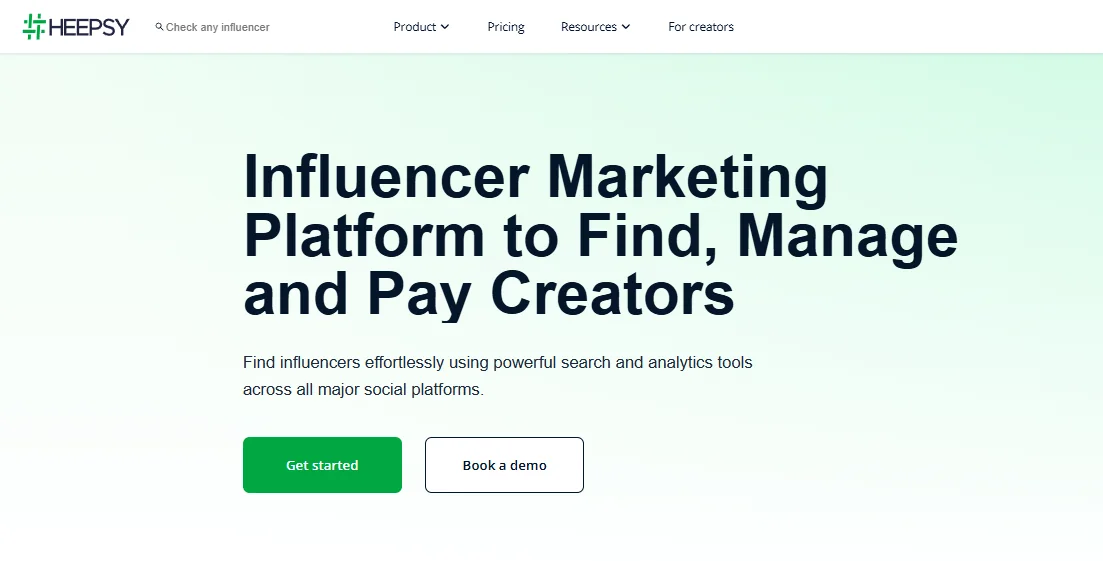
Best for: Small to mid-sized brands and agencies wanting affordable influencer discovery, especially in Spain and wider European markets.
Platform coverage:
- TikTok
- YouTube
Pricing & Commitment: There is a free plan plus three paid tiers, all billed monthly.
- Free Plan: basic search only. You can see that profiles exist but cannot act on them.
- Starter Plan: roughly $89/month (€69). Includes 15,000 search results, 50 profile analyses and 50 outreach emails. Advanced filters like age, gender and audience location are not included.
- Plus Plan: $249/month. Includes 40,000 results, 1,000 advanced profiles and 1,000 outreach emails, plus bulk email outreach, contact exports, media gallery and campaign reporting.
- Advanced Plan: $369/month. Includes 60,000 results, 3,000 profiles and 3,000 outreach emails, plus advanced filters, automated sales tracking, Shopify and WooCommerce integrations, product catalogues and promo code tracking.
Reviews: 4.5 / 5.0 (G2), 3.9 / 5.0 (Trustpilot)
Ease of Use (UX/UI): Heepsy is genuinely intuitive and easy to navigate, which is consistently its strongest review category.
Customer Support: Personalised onboarding sessions with email and chat support, though slow response times and billing confusion come up repeatedly across review sites.
Heepsy Best Features
- Influencer Database: 11M+ creator profiles worldwide, searchable by authenticity score, demographics, engagement rate, niche keywords and lookalikes. Only accounts with 3,000+ followers are indexed.
- Bulk Outreach & CRM: email up to 3,000 influencers a month with automated follow-ups and Kanban-style boards to track campaign stages, available from the Plus plan up.
- Affiliate & Sales Tracking: Shopify and WooCommerce integration for tracking links, discount codes, conversions and sales. Advanced plan only.
- Moonio Marketplace: post campaigns and let creators apply, rather than relying purely on outbound search.
- Media Gallery & Reporting: store campaign posts and performance metrics including likes, comments, shares and reach, with exportable PDF reports.
Heepsy Pros and Cons
Quick Comparison
Top 10 Heepsy Alternatives in 2026
1. Influencer Hero
Influencer Hero is the all-in-one influencer marketing platform.
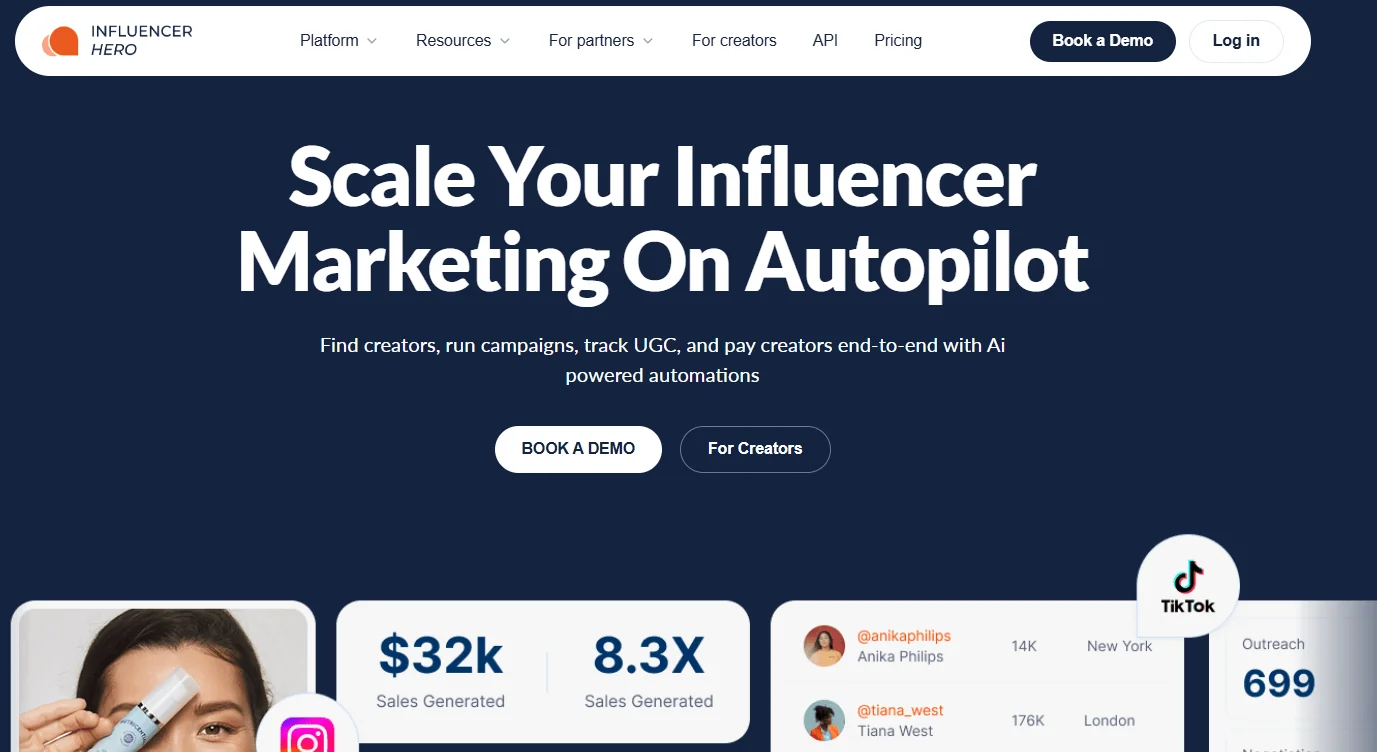
Best for: Brands that want one platform for the full creator lifecycle instead of a discovery tool plus three others.
Platform coverage:
- TikTok
- YouTube
Pricing & Commitment: Pricing is published upfront, with monthly billing and no forced annual lock-in.
- Standard Plan: $649/month. Contact up to 1,000 creators a month.
- Pro Plan: $1,049/month. Contact up to 5,000 creators a month.
- Business Plan: $2,490/month. Contact up to 10,000 creators a month.
- Custom & Agency: custom pricing based on your program's scale.
Reviews: 5.0 / 5.0 (Capterra)
Ease of Use (UX/UI): A clean, intuitive dashboard with automated workflows and pre-built email templates, built so outreach and campaign management happen without training weeks.
Customer Support: A dedicated account manager from onboarding onwards, plus a full Help Center of step-by-step guides. Higher plans add a shared Slack channel for daily communication.
Influencer Hero Best Features
- AI-Powered Outreach Automation: personalised email sequences tailored to each creator's profile, with follow-ups that stop automatically when someone replies, which is exactly what Heepsy's static templates cannot do.
- Cross-Platform Discovery: search across eight networks with filters for engagement rate, audience quality, niche and region, plus AI matching, lookalike search and fake-follower detection included on every plan with nothing gated.
- Advanced CRM: track communications, content schedules and performance across channels, built to handle large-scale seeding campaigns with hundreds of active creator relationships.
- Flexible eCommerce & Affiliate Tools: Shopify, WooCommerce, Magento, custom stores and manual tracking scripts, so revenue attribution is not tied to a single platform.
- Real-Time Data via Chrome Extension: pull engagement and demographic metrics while browsing social platforms and add creators to campaigns in one click.
- Lowest Payout Fees on the Market: 0.1% to 0.5% on creator payments, against the 5% to 7% most platforms charge, which directly answers Heepsy's payment commission complaint.
Influencer Hero Pros and Cons
Heepsy vs Influencer Hero
Heepsy is a reasonable pick for brands starting out: a searchable database, clean filters and Shopify sales tracking once you reach the Advanced plan at $369/month. The problem is that almost everything useful sits above the entry tier, and even at the top you are still buying a discovery tool.
Influencer Hero starts at $649/month but the price is all-inclusive. Every filter, no per-profile caps, eight platforms instead of three, AI-written outreach, a CRM built for hundreds of concurrent collaborations, and affiliate tracking that works on WooCommerce and Magento rather than Shopify alone. It also holds a 5.0 Capterra rating against Heepsy's 4.5 on G2 and 3.9 on Trustpilot, and its payout fees of 0.1% to 0.5% remove the commission issue Heepsy reviewers keep raising.
2. Modash
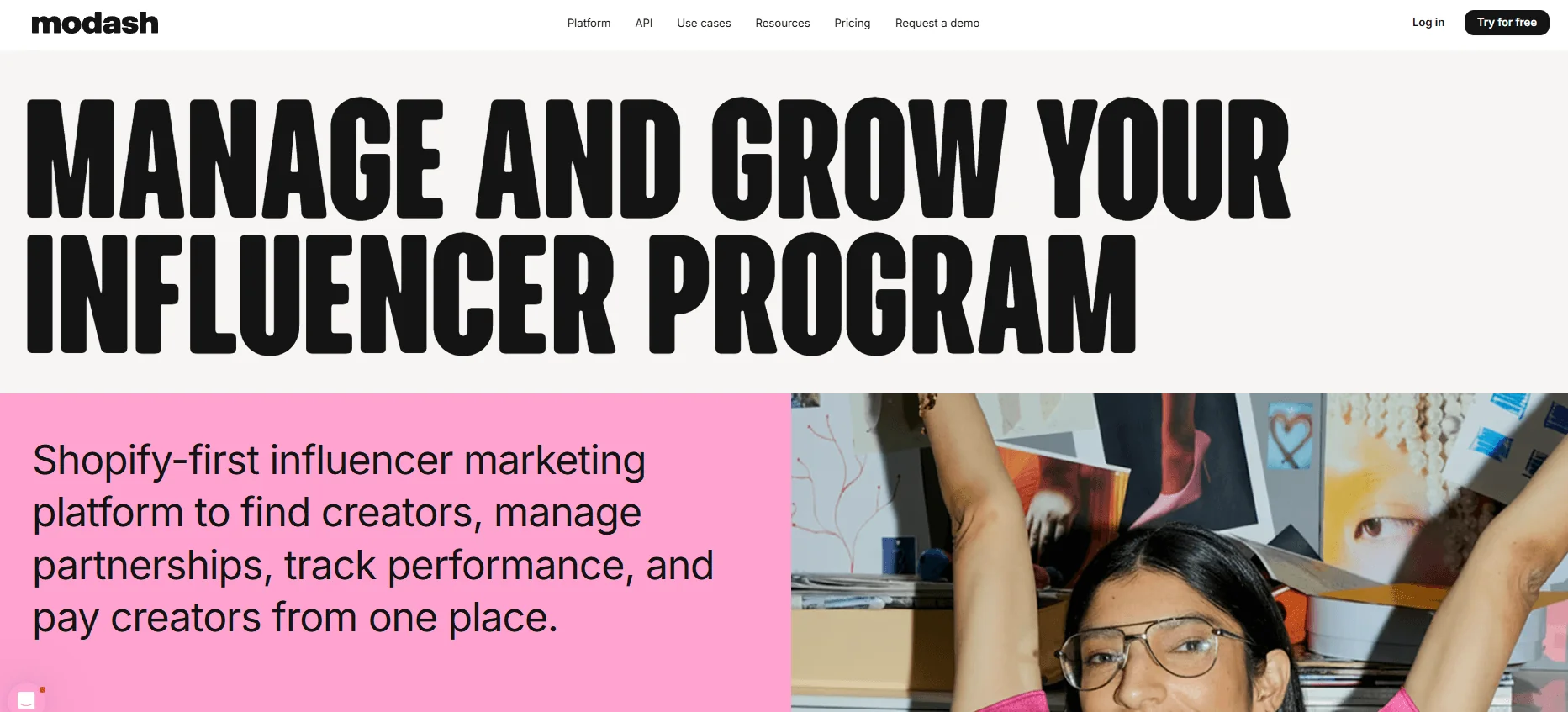
Best for: Brands whose main need is still discovery, but with a much bigger database and transparent pricing.
Platform coverage:
- TikTok
- YouTube
Pricing & Commitment: Two public tiers plus a custom Enterprise plan, with a 14-day free trial and no card required.
- Essentials Plan: $199/month billed annually or $299 monthly. Covers 2 seats, 300 profile analyses, 150 email unlocks and 100 tracked creators.
- Performance Plan: $499/month billed annually or $599 monthly. Covers 5 seats, 800 analyses, 400 unlocks and 250 tracked creators.
- Enterprise Plan: custom, with public estimates starting around $14,700/year.
- Creator payouts are fee-free up to $10,000 a year on Performance, then carry a 5% fee above that threshold.
Reviews: 4.9 / 5.0 (Capterra)
Ease of Use (UX/UI): A clean interface with powerful search filters that makes discovery and campaign management straightforward from day one.
Customer Support: Responsive live chat support and a smooth onboarding process, with a dedicated success manager on the Performance tier.
Modash Best Features
- Massive Creator Database: 350M+ profiles with no opt-in requirement and no follower floor, so nano-influencers are fully searchable.
- Automated Outreach: email sequences sent from your own domain that stop automatically the moment a creator replies, with Gmail and Outlook integration.
- AI Discovery & Fan Finder: describe a campaign in plain language or search by image, and identify creators who already follow your brand for more authentic partnerships.
- Real-Time Tracking: posts and Stories are collected automatically as they go live, with reach and engagement reported without chasing screenshots.
- Shopify-Optimised Affiliate Tools: manage gifting, generate discount codes, track affiliate links and automate payouts from one dashboard.
Modash Pros and Cons
Heepsy vs Modash
These two compete for the same job, which makes the comparison unusually clean. Both are discovery-led, but Modash does that job at a completely different scale: 350M+ profiles against roughly 11M, no 3,000-follower floor, and full audience-quality analysis on every profile rather than a sampled authenticity score. Our Modash alternatives guide covers where it still falls short.
Pricing is the other split. Heepsy's $89 entry looks cheaper until you notice which filters are missing from it, at which point the real comparison is Heepsy Advanced at $369 against Modash Essentials at $199 on annual billing. Modash wins that on almost every axis except ecommerce breadth, where it is Shopify-only. If your store runs on WooCommerce or Magento, that is the one thing to weigh.
3. Upfluence
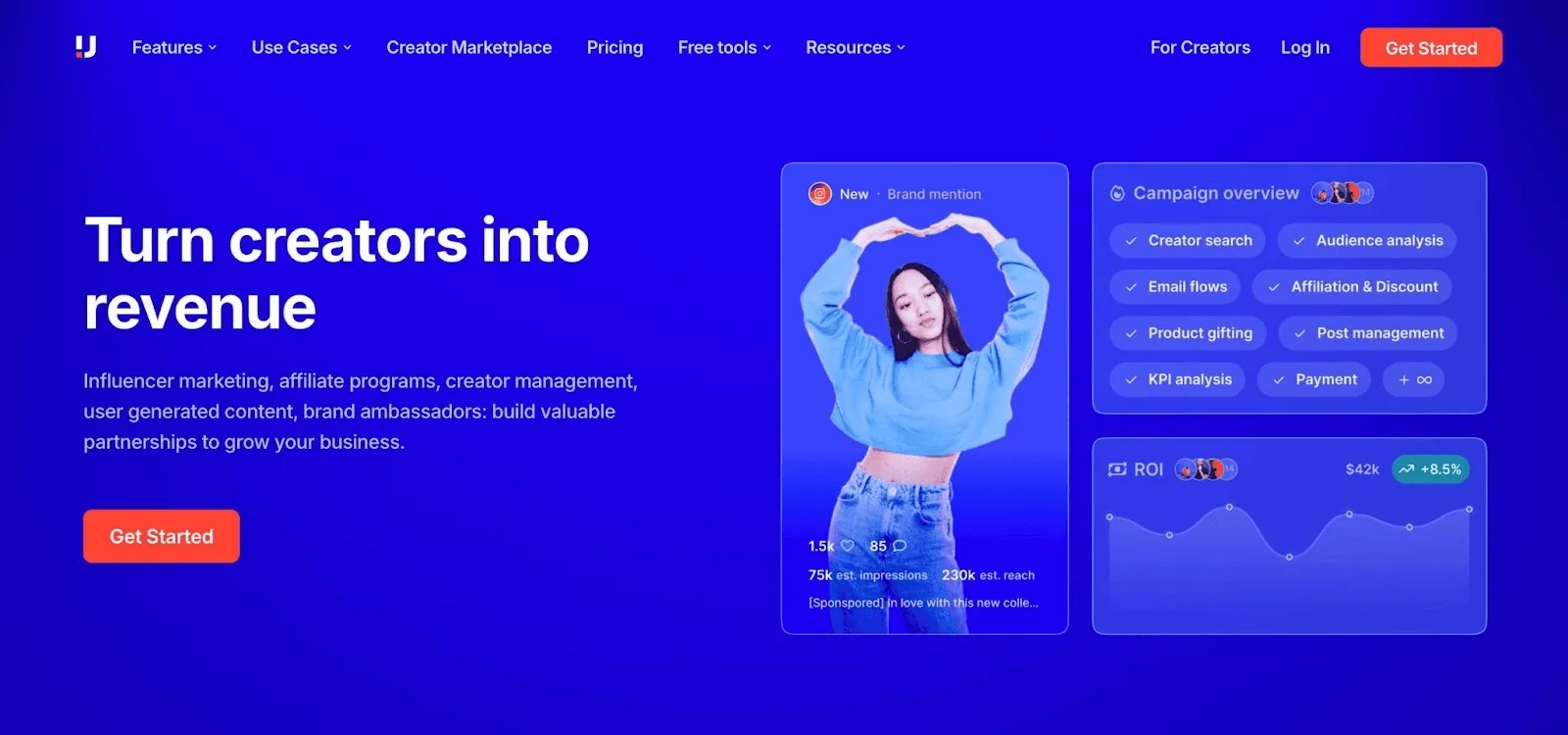
Best for: Ecommerce brands that want to turn their own customers into creators.
Platform coverage:
- TikTok
- YouTube
- X (Twitter)
- Twitch
- WordPress
Pricing & Commitment: Upfluence does not publish pricing and sells by module rather than by tier. The Search & Contact module starts at roughly $478/month, and demo quotes for a typical full setup covering search, workflow and payments plus one seat land around $1,276/month, or about $16,007/year billed monthly. Onboarding is a separate one-off fee, seats scale linearly, and the minimum contract is 12 months.
Reviews: 4.6 / 5.0 (G2)
Ease of Use (UX/UI): A polished interface that can feel overwhelming at first given the module structure, but becomes straightforward with regular use.
Customer Support: Strong support with structured onboarding, recurring Q&A sessions and dedicated account managers on annual plans.
Upfluence Best Features
- Influential Customer Detection: identify which of your existing customers are also creators, then recruit them, which is the feature Upfluence is genuinely known for.
- Jaice AI Outreach Assistant: automate personalised outreach at scale once a campaign brief is set, rather than editing templates by hand.
- Built for Shopify & Amazon Sellers: track sales, manage affiliate campaigns and monitor performance from one integrated dashboard.
- Flexible Gifting: let creators pick products directly from your store instead of assigning them a fixed bundle.
- Social Listening: monitor brand mentions, competitor activity and category trends to find creators already talking about you.
Upfluence Pros and Cons
Heepsy vs Upfluence
Heepsy is a budget discovery tool with strong filters and authenticity checks. Upfluence is a full ecommerce-oriented platform with AI outreach, campaign management and deep sales attribution. On capability there is no contest, and the customer-to-creator detection is genuinely differentiated.
The problem is the commercial model. Heepsy publishes its prices and lets you cancel; Upfluence quotes you privately, requires a 12-month commitment, charges onboarding separately and prices by module, so unlocking payments or campaign workflow means a new line item. A brand paying $369 for Heepsy Advanced is looking at roughly three to four times that for a usable Upfluence setup. Choose Heepsy for simplicity and low cost, or Upfluence if attributing revenue to your own customer base is worth an annual contract.
4. GRIN
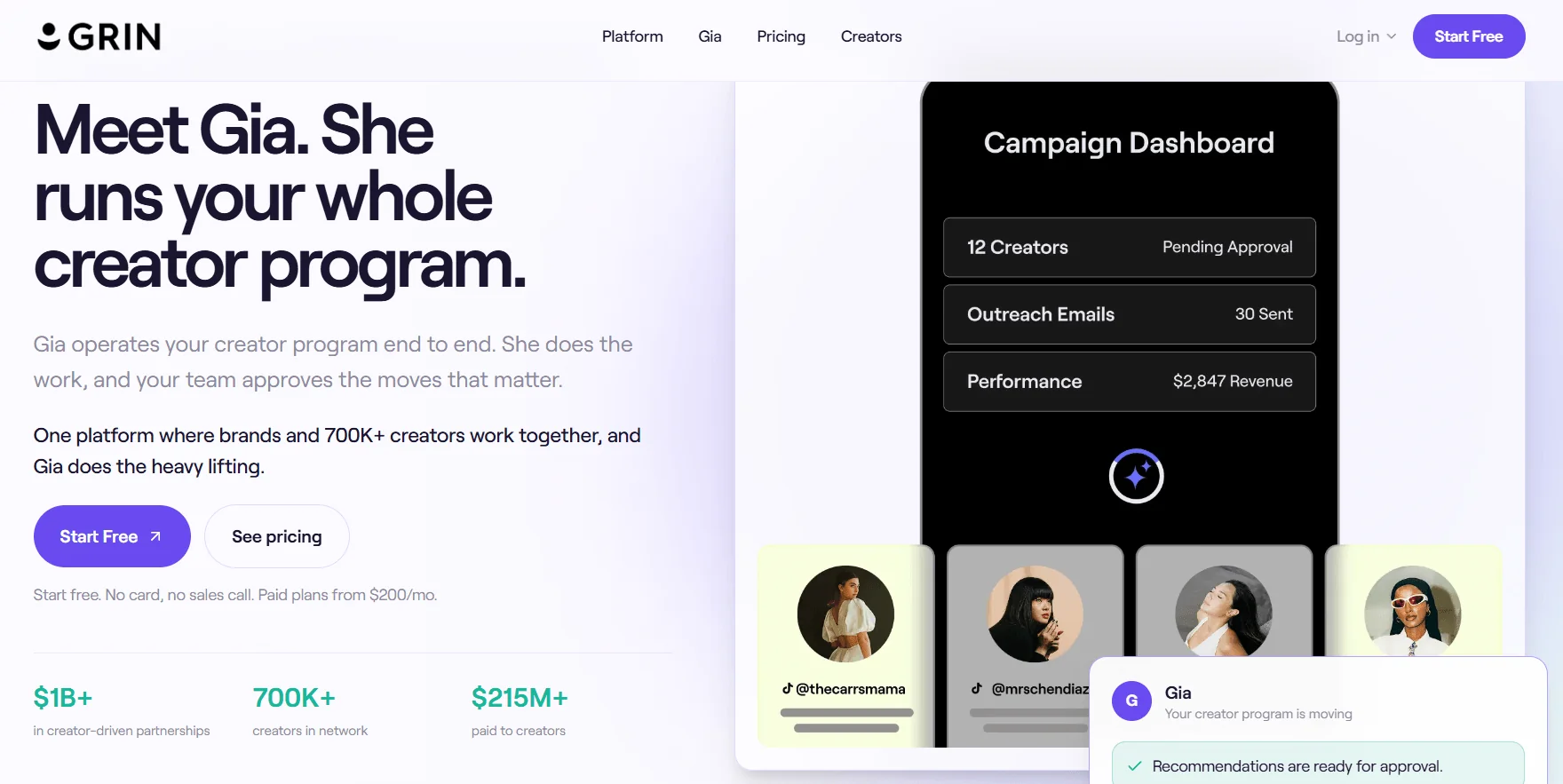
Best for: DTC ecommerce brands moving from discovery-only into running a full creator program.
Platform coverage:
- TikTok
- YouTube
- X (Twitter)
- Twitch
Pricing & Commitment: GRIN now prices by monthly Gia credits rather than per seat, month-to-month with no annual contract and no required sales call.
- Free: $0 with 200 monthly credits and no card required.
- Starter: $200/month with 2,000 credits. Gia only, no CRM workspace.
- Growth: $500/month with 7,500 credits, plus GRIN Classic for up to 100 active creators.
- Scale: $1,000/month with 20,000 credits, Classic up to 250 active creators.
- Complete: $1,500/month with 30,000 credits, Classic up to 500 active creators.
- Overage runs at one flat rate under a hard cap you set, so you are never billed above it.
Reviews: 4.5 / 5.0 (G2, 483 reviews)
Ease of Use (UX/UI): A CRM-style interface that streamlines discovery, content approvals and campaign tracking, with Gia handling the repetitive work.
Customer Support: Guided onboarding plus a detailed Help Center, with the option to work alongside a dedicated Creator Strategist.
GRIN Best Features
- Gia, the AI Operator: hand her a task such as sourcing a shortlist, running a report or setting up a gifting workflow and she executes it, with credits consumed by work done rather than by seat.
- A Genuinely Free Tier: 200 monthly credits with no card and no trial countdown, so you can source creators and pull reports indefinitely at small scale.
- Affiliate Infrastructure With No Revenue Share: links, codes and payouts without GRIN taking a cut of creator-driven sales.
- CreatorCommerce Storefronts: co-branded landing pages and shoppable creator pages that GRIN reports lift conversion two to three times.
- Deep Ecommerce Integrations: Shopify, WooCommerce, Magento, Klaviyo and PayPal, with live full-funnel ROI reporting.
GRIN Pros and Cons
Heepsy vs GRIN
Heepsy finds creators. GRIN finds them and runs the entire program around them, covering CRM, gifting, affiliate and attribution. For a Heepsy user specifically, the interesting part of GRIN in 2026 is that free tier: 200 credits a month with no card is more usable than Heepsy's free plan, which mostly shows you that profiles exist without letting you act on them. Our GRIN alternatives breakdown goes deeper on the credit model.
The trade-off is predictability. Heepsy charges a flat fee with caps you can see in advance. GRIN charges for work done, which is fairer in principle but harder to budget, and the workspace most brands actually want does not appear until $500 a month. If forecasting matters more than capability, Heepsy is simpler. If capability matters more, it is not close.
5. HypeAuditor
HypeAuditor is an influencer marketing platform built around finding, vetting and activating creators, with fraud detection at its core.
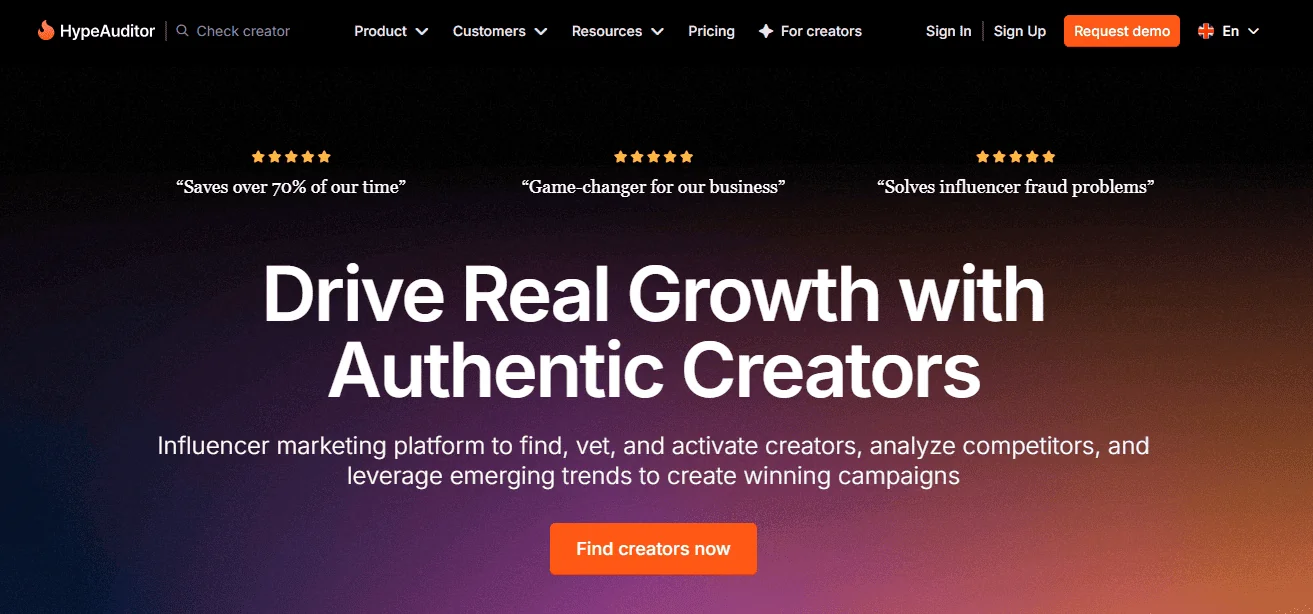
Best for: Brands that want serious audience-quality vetting and fraud detection before they spend.
Platform coverage:
- TikTok
- YouTube
- X (Twitter)
- Twitch
- Snapchat
Pricing & Commitment: A free plan is available alongside 40+ free audit tools. HypeAuditor's own guidance puts the Basic plan at around $299/month billed annually, with a Pro tier reported near $499/month and Enterprise quote-only. Full trials are granted on request rather than self-serve, so confirm limits directly during the demo.
Reviews: 4.8 / 5.0 (Capterra)
Ease of Use (UX/UI): A clean, modern interface, though the depth of the analytics can feel complex for new users.
Customer Support: Live chat, onboarding guidance and a detailed Help Center with strong self-serve resources.
HypeAuditor Best Features
- AI Scout: describe a campaign in plain language and get a ranked shortlist of roughly fifty best-fit creators in seconds.
- AI Coach: an always-on strategy layer that builds personalised campaign plans based on your goals and past performance.
- Category-Leading Fraud Detection: Audience Quality Score, growth-pattern forensics and brand-safety analysis that go far beyond a sampled authenticity check.
- Snapchat Discovery: one of very few platforms in the category that covers it at all.
- JavaScript Sales Tracking: attribution that works across any ecommerce setup rather than being tied to Shopify.
HypeAuditor Pros and Cons
Heepsy vs HypeAuditor
Both platforms are discovery-first and both sell vetting as the core value, so this is a like-for-like comparison where one side is simply doing more of it. HypeAuditor's database is roughly twenty times larger, its fraud tooling is forensic rather than sampled, and it covers six platforms against Heepsy's three. Our HypeAuditor alternatives comparison shows how it sits against the rest of this list.
Where Heepsy wins is transparency. Its tiers sit on a public page with clear limits, while HypeAuditor pushes you toward a demo before showing real numbers. If audience authenticity is the reason you bought Heepsy in the first place, HypeAuditor does that job at a level Heepsy cannot reach, at roughly the price of Heepsy's Advanced plan.
6. Sprout Social
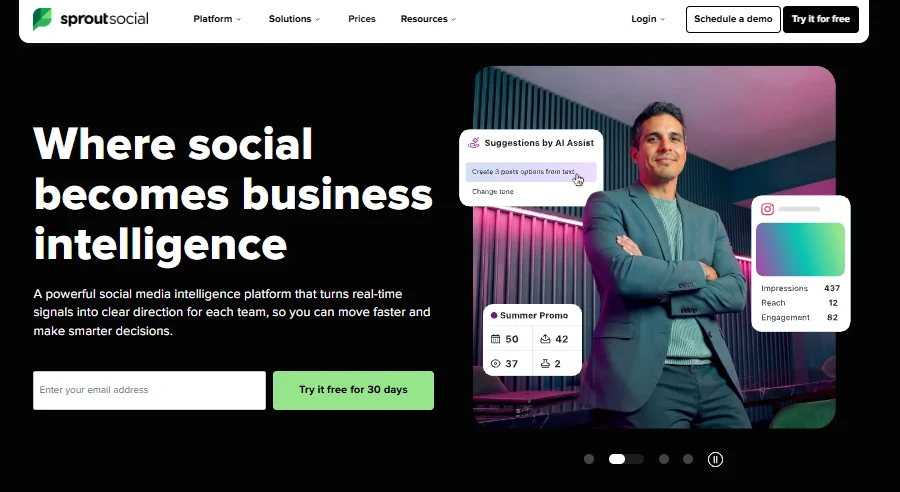
Best for: Brands and agencies that want influencer workflows living in the same system as publishing, listening and reporting.
Platform coverage:
- TikTok
- YouTube
- X (Twitter)
Pricing & Commitment: Sprout Social does not publish pricing for the influencer marketing module. Procurement data points to enterprise annual contracts in the tens of thousands, with one marketplace citing an average contract value around $21,000/year. Contracts are annual with no month-to-month option, and the 30-day free trial applies to Sprout's core social management platform, not the influencer module. Reviewers also flag auto-renewal clauses, so read the terms carefully.
Reviews: 4.5 / 5.0 (G2, 410+ reviews)
Ease of Use (UX/UI): Clear dashboards and streamlined campaign workflows, though longtime Tagger users report the interface became less flexible after the Sprout acquisition.
Customer Support: Live chat, phone and email support plus a resource centre and real-time system status updates, though support quality is the most common complaint in recent reviews.
Sprout Social Best Features
- Brand Affinity Scores: identify creators whose tone, values and audience align with your brand rather than filtering on follower count alone.
- Brand Safety Filters: flag risky content and creators before you commit budget, which matters for regulated categories.
- Content Approval Workflow: creators submit drafts inside the platform for multi-step review and approval.
- UGC & Content Collection: download approved content from creators or customers who tag your brand or use campaign hashtags.
- Competitive Benchmarking: customisable dashboards that track your performance against competitors in real time.
Sprout Social Pros and Cons
Heepsy vs Sprout Social
Heepsy is an entry-level discovery tool with clear public pricing. Sprout Social is an enterprise suite where influencer marketing is one module among several, so the comparison really comes down to whether you need creator search or a whole social operating system.
For a brand leaving Heepsy over price or feature gates, Sprout Social is the wrong direction: annual contracts in the tens of thousands, no trial on the influencer module, and auto-renewal terms reviewers are unhappy about. It only makes sense if you already run Sprout for social management and want influencer data in the same environment.
7. CreatorIQ
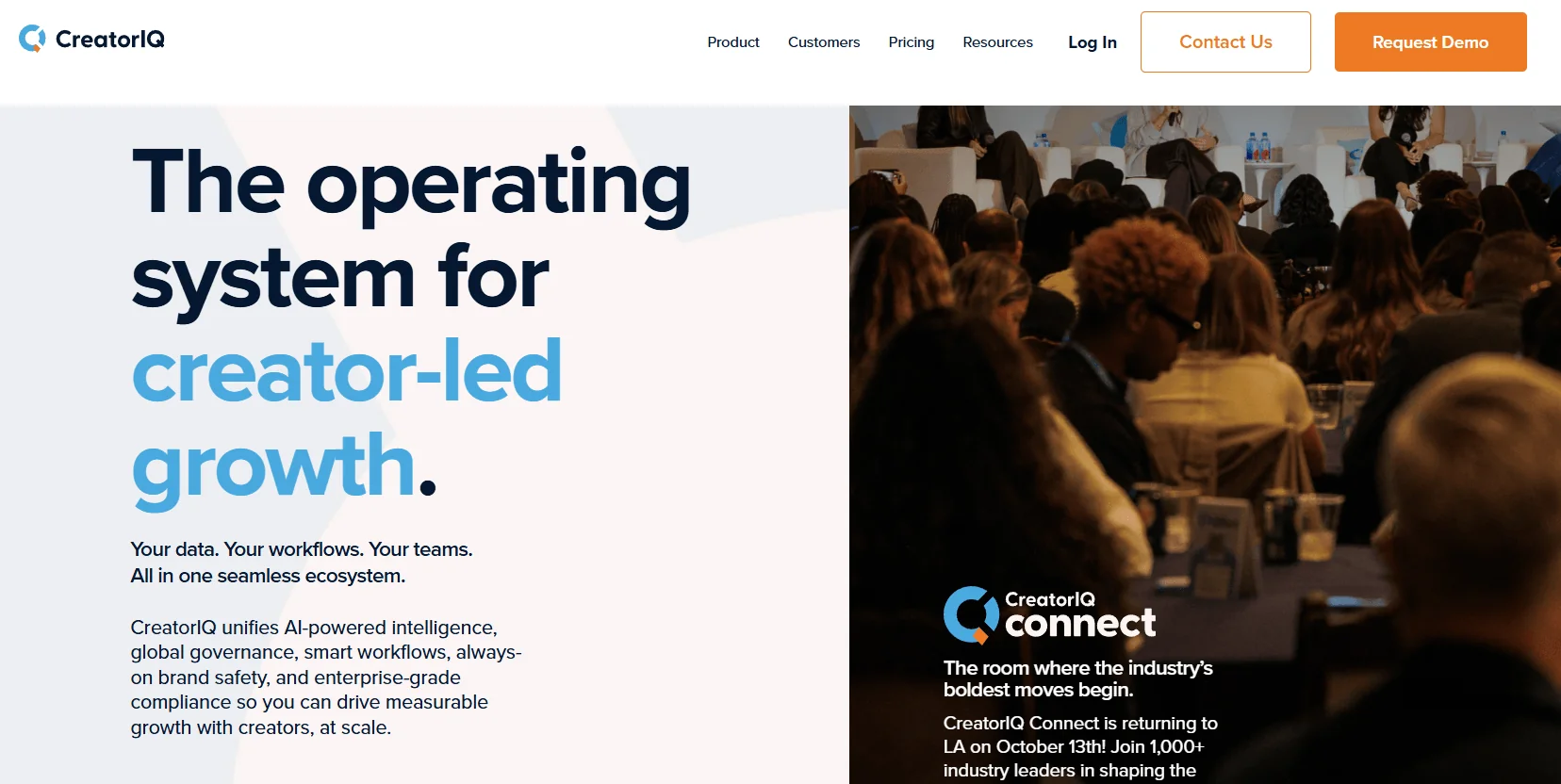
Best for: Large enterprises that need governance, deep analytics and global creator payments at scale.
Platform coverage:
- TikTok
- YouTube
- X (Twitter)
- Twitch
- Snapchat
Pricing & Commitment: Custom enterprise pricing with no public rates. Buyer-reported procurement data puts contracts between roughly $30,000 and $59,500/year, with a median near $39,250. Annual contracts are required, and the platform is built for influencer budgets north of $1M with a dedicated internal team.
Reviews: 4.6 / 5.0 (G2, 566 reviews)
Ease of Use (UX/UI): A well-structured, content-first dashboard that simplifies campaign setup and tracking once implementation is complete.
Customer Support: Dedicated implementation managers, structured onboarding, customer success teams and quarterly strategic reviews.
CreatorIQ Best Features
- Content-First Discovery: dynamic search refinement plus an always-on feed of creators already mentioning your brand.
- Lists With Custom Workflows: internal voting and commenting on creator shortlists, plus published proposals for external review.
- 360-Degree Creator Profiles: full relationship history, payments and content in a single record per creator.
- Community Module: automatic brand-mention tracking across platforms including Twitch and Snapchat.
- Integrated Payments & Tax Compliance: one-click payouts across dozens of currencies with built-in tax documentation.
CreatorIQ Pros and Cons
Heepsy vs CreatorIQ
CreatorIQ and Heepsy are not really in the same market, and that is the point of including it. If a brand has scaled past Heepsy's ceiling and now needs multi-team governance, compliance approvals and creator payments across a dozen countries, CreatorIQ delivers what a budget discovery tool never could. Our CreatorIQ alternatives guide covers the mid-market options in between.
For everyone else, the $30,000/year entry and the enterprise complexity make it the wrong answer. Most brands leaving Heepsy in 2026 will find their fit earlier in this list, at a fraction of the cost and with far less implementation overhead.
8. Aspire
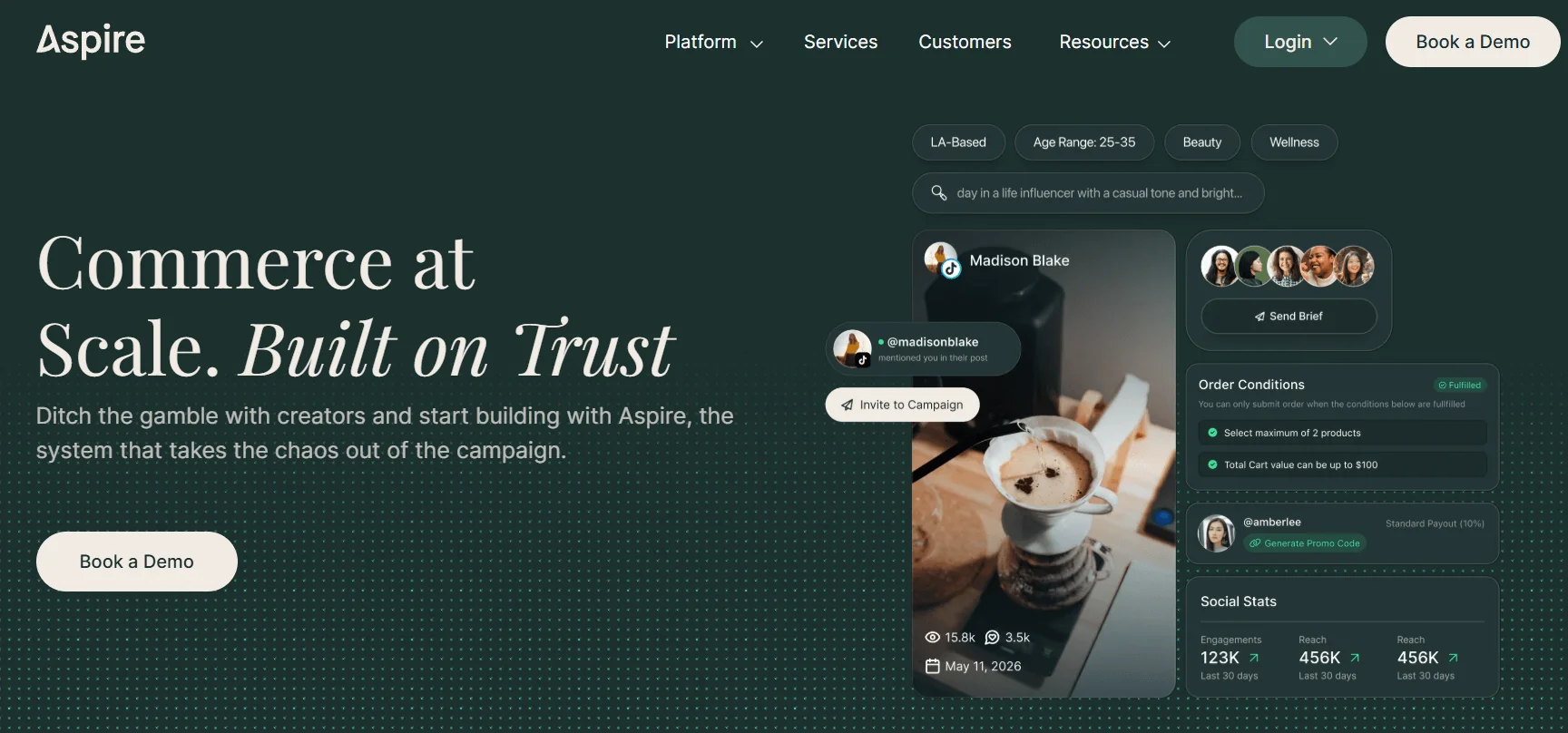
Best for: Brands that want inbound creator applications plus shoppable creator storefronts.
Platform coverage:
- TikTok
- YouTube
Pricing & Commitment: Pricing is not published. Buyer-reported procurement data puts annual contracts between roughly $11,139 and $36,599/year, with most brands quoted around $2,000/month on an annual agreement. There is no free trial, so confirm exact terms and early-termination clauses during the demo.
Reviews: 4.5 / 5.0 (G2)
Ease of Use (UX/UI): A clean, intuitive interface that makes discovery, campaign management and reporting easy to navigate.
Customer Support: An implementation manager during onboarding and a dedicated success manager for ongoing support.
Aspire Best Features
- Dual Discovery Model: search manually or tap a marketplace of over 1M creators actively applying to collaborate with brands.
- CreatorStores: curated, shoppable storefronts that turn creator audiences into direct conversions.
- End-to-End Campaign Workflow: contracts, briefs, content approvals and performance tracking in one sequence.
- Shopify Gifting & Affiliate Tools: promo codes, gifting carts, affiliate tracking and payouts managed together.
- Built-In UGC Licensing: digital term sheets so creator content can be reused in paid ads without a separate agreement.
Aspire Pros and Cons
Heepsy vs Aspire
The core difference is direction of travel. Heepsy assumes you go out and find creators; Aspire lets a million of them come to you, which removes the part of Heepsy that reviewers complain about most, namely poor creator engagement after discovery. Add storefronts, contracts and UGC licensing and Aspire is solving a broader problem. Our Aspire alternatives guide compares it against the mid-market field.
The price gap is the argument against it. Roughly $2,000 a month on an annual contract against Heepsy's $89 entry is not a comparison a small brand can make. Aspire suits teams already committed to influencer marketing as a channel, not anyone still validating whether it works.
9. Traackr
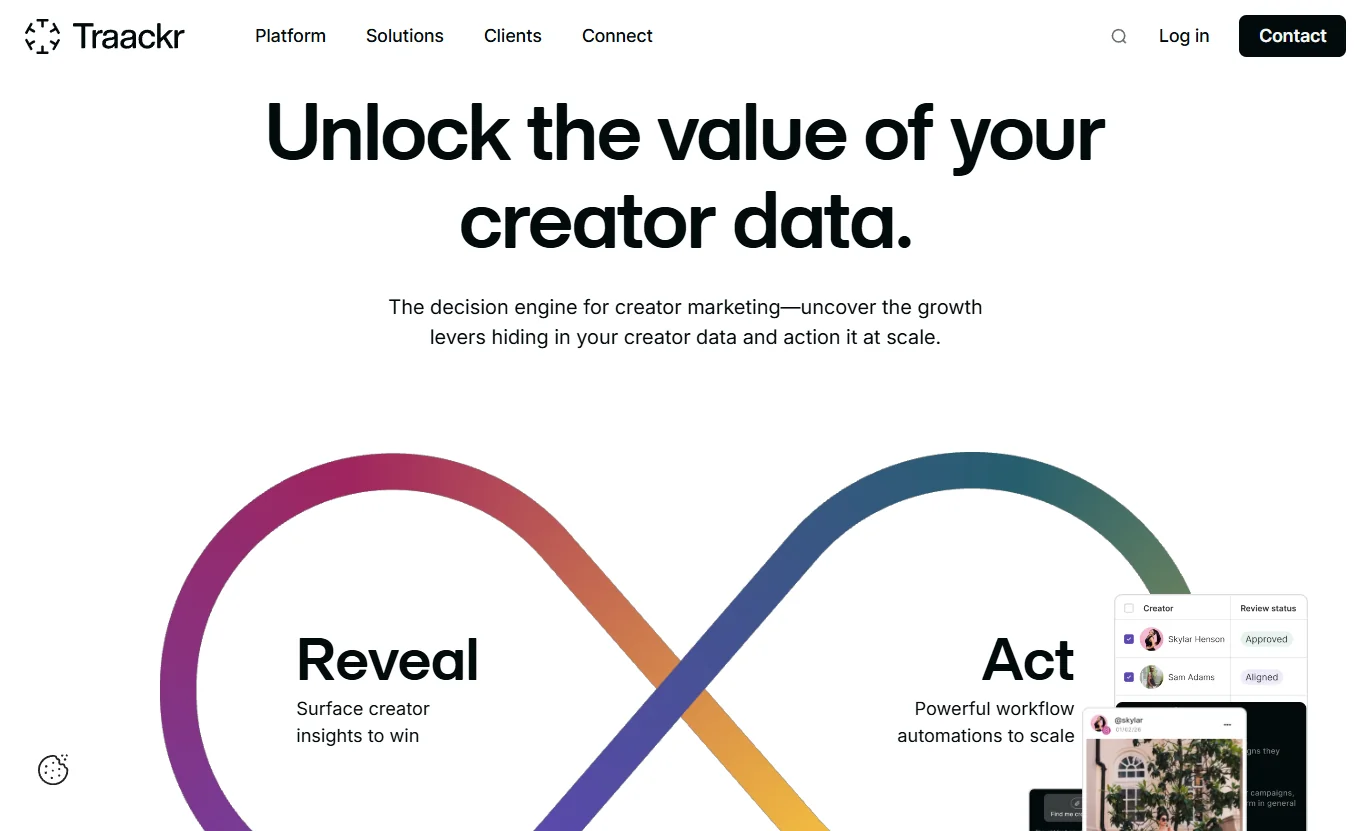
Best for: Mid-market and enterprise brands, especially in beauty, fashion and CPG, that need to measure ROI rigorously across markets.
Platform coverage:
- TikTok
- YouTube
- X (Twitter)
- Snapchat
- Twitch
Pricing & Commitment: Custom annual contracts with no public pricing and no monthly billing. Third-party reports put entry around $17,000/year, a Standard tier near $32,500/year and a Plus tier at $55,000+/year, where API access and data lake integration unlock. There is no self-serve free trial.
Reviews: 4.6 / 5.0 (Capterra)
Ease of Use (UX/UI): A streamlined interface with clear workflows for discovery, campaign execution and reporting, though some users report slow load times and syncing delays.
Customer Support: Onboarding support and technical assistance, with customer success management arriving on the higher tiers.
Traackr Best Features
- Brand Vitality Score: a proprietary metric combining visibility, impact and trust so you can benchmark against competitors rather than just count engagements.
- Built-In IRM: manage creator relationships with shared notes, custom fields and email syncing across the team.
- Budget Calculator: estimate campaign costs based on goals and historical performance before committing spend.
- Cost-Per Metrics: analyse ROI through cost-per-click, cost-per-engagement and cost-per-view by creator.
- Global Program Management: run and compare campaigns across multiple markets from one system.
Traackr Pros and Cons
Heepsy vs Traackr
Heepsy answers the question "who should I work with". Traackr answers "did this channel actually work, and how do I prove it". Those are different problems, and the pricing reflects it: Heepsy Advanced at $369/month against Traackr's entry near $17,000/year.
For a brand outgrowing Heepsy, Traackr is only the right move if the bottleneck is measurement rather than discovery, and if you already have a dedicated influencer marketing function to operate it. Buying enterprise measurement software without the team to run it is the most common way this purchase goes wrong.
10. Later
Best for: Brands that want influencer discovery and social media management in one platform, with the option of managed services.
Platform coverage:
- TikTok
- YouTube
- X (Twitter)
- Snapchat
Pricing & Commitment: Custom annual pricing with a one-time onboarding fee of around $5,000 for new customers. Reported tiers start near $28,500/year for Essentials, rising to roughly $42,000/year for Pro and $60,000/year for Premier. Confirm current figures at demo, since Later revises its packaging regularly.
Reviews: 4.4 / 5.0 (Capterra)
Ease of Use (UX/UI): Genuinely user friendly, though full onboarding typically takes four to six weeks before a team is running at speed.
Customer Support: Three onboarding sessions plus dedicated account managers for ongoing guidance.
Later Best Features
- AI-Assisted Discovery: creator recommendations based on audience composition, keywords and content performance rather than follower count.
- Advanced Sourcing Support: hand Later's team a brief and have them source creators on your behalf.
- Flexible Campaign Management: run campaigns yourself or with help from Later's in-house team, which is unusual in this price band.
- Brand Safety Tools: fake follower detection and content vetting before activation.
- Custom Application Pages: branded portals where creators apply to join your campaigns.
Later Pros and Cons
Heepsy vs Later
Heepsy is affordable, self-serve and available in minutes. Later is an enterprise commitment with a four to six week onboarding runway and a $5,000 setup fee before you send a single email. On raw discovery, Heepsy gets you started faster and cheaper.
What Later offers that Heepsy cannot is the option to hand the work over. If your problem is bandwidth rather than tooling, Later's managed model and sourcing support are genuinely useful. If your problem is budget or database size, this is the most expensive way to solve it on the list.
Final Thoughts
The right Heepsy alternative depends on why you are leaving. If you want bigger, cleaner discovery with honest pricing, Modash and HypeAuditor are the natural upgrades. If you have outgrown discovery entirely and need to run real programs, GRIN, Upfluence and Aspire bring full workflows, storefronts and revenue attribution. And if you are an enterprise, Sprout Social, CreatorIQ, Traackr and Later add governance and measurement depth, though all four sit far beyond a typical Heepsy budget.
The core issue with Heepsy is not the price. It is that the low price comes with locked filters, a 3,000-follower floor, payment commission, hard profile caps and a workflow that stops at discovery. Influencer Hero is the strongest all-in-one alternative in 2026 because it covers the whole creator lifecycle in one platform, from discovery and outreach through CRM, gifting, affiliate, UGC, storefronts and reporting, at transparent all-inclusive pricing with no caps, no hidden filter paywalls and the lowest payout fees in the category.
Ready to explore a smarter way to scale your influencer marketing? Book a demo with Influencer Hero and see how it adapts to your workflow.
Summary
This is some text inside of a div block.
This is some text inside of a div block.
Pricing/Month
Shopify Reviews
This is some text inside of a div block.
This is some text inside of a div block.
This is some text inside of a div block.
This is some text inside of a div block.
This is some text inside of a div block.
This is some text inside of a div block.
This is some text inside of a div block.
This is some text inside of a div block.
This is some text inside of a div block.
This is some text inside of a div block.
This is some text inside of a div block.
This is some text inside of a div block.
This is some text inside of a div block.
This is some text inside of a div block.
This is some text inside of a div block.
This is some text inside of a div block.
This is some text inside of a div block.
This is some text inside of a div block.
This is some text inside of a div block.
This is some text inside of a div block.
This is some text inside of a div block.
Read More

FAQs
What’s a good all-in-one alternative to Heepsy?

If you're looking for a platform that goes beyond just discovery, Influencer Hero stands out as a top all-in-one alternative. It combines powerful influencer discovery with seamless outreach, gifting, affiliate tracking, and detailed reporting—all in one easy-to-use platform. Plus, Influencer Hero leverages AI features to personalize outreach and automate campaign workflows, making it a smart upgrade from basic search-only tools like Heepsy.
Which Heepsy alternative offers both influencer discovery and affiliate tracking?
Influencer Hero is a top Heepsy alternative that offers both cross-platform influencer discovery and robust affiliate tracking tools, including integration with Shopify, WooCommerce, and custom stores. This allows brands to monitor ROI in real time through discount codes, referral links, and automated payouts.
Is there a Heepsy alternative with AI-powered outreach features?
Yes, Influencer Hero offers advanced AI-powered outreach automation, allowing brands to generate fully personalized influencer emails and automate follow-ups. This helps reduce manual work and improves response rates—an area where Heepsy still relies on editable templates rather than AI-written outreach.
Are there platforms that offer better value than Heepsy for growing brands?
Yes, several platforms offer more flexibility and features at a better price point, especially suited for growing teams. For example, Influencer Hero offers sales tracking, creator payments, and AI-powered outreach even on mid-tier plans, enabling brands to do more without committing to expensive top-tier pricing. This makes it a strong contender for brands looking to maximize value while scaling their influencer marketing efforts.
Which Heepsy alternative is best for eCommerce brands?
For eCommerce brands, Influencer Hero, GRIN, and Modash are top choices. However, Influencer Hero offers more flexibility, supporting Shopify, WooCommerce, and custom stores, along with gifting, campaign tracking, and storefront tools—making it a powerful choice for scaling influencer-driven eCommerce campaigns.




Most Popular Blogs


Drive ROI With Influencer Marketing
Join 1,200+ brands and 150+ agencies scaling creator programs with Influencer Hero.