Influencer Marketing in einen Performance-Kanal verwandeln

December 10, 2025
|
Published

July 30, 2026
|
Updated

|
Reading

Influencer Performance Marketing Course | VOUCHER: IMC100

Peter Nettesheim
| Author

Drive ROI With Influencers

Global Influencer Database
ALL-IN-ONE platform
CRM, Affiliate, UGC & More
Influencer-Marketing in einen Performance-Kanal umwandeln
Influencer-Marketing wird oft als Branding-Maßnahme wahrgenommen – als Möglichkeit, Aufmerksamkeit und Buzz zu generieren. Aber in Wirklichkeit kann es einer der stärksten Performance-Marketing-Kanäle sein, wenn es richtig strukturiert ist.
In diesem Artikel erhalten Sie ein tieferes Verständnis des Influencer Performance Marketing Framework, ein System, das Marken dabei hilft, Influencer-Kampagnen profitabel zu skalieren. Sie erfahren, wie Sie die Leistung von Influencern bewerten, in großem Maßstab testen und wiederholbare Prozesse implementieren, die die Return on Influencer Spend (ROIS) maximieren.
TLDR – Sehen Sie sich das Video an
Besuchen Sie den vollständigen Influencer Performance-Marketing-Kurs und erhalten Sie Ihr Zertifikat!
Was sind die verschiedenen Zusammenarbeitsformate und ihre Rollen?
Bevor Sie ein Performance-Framework erstellen, ist es wichtig, die verschiedenen Zusammenarbeitsformate zu verstehen; jedes erfüllt einen eigenen Zweck innerhalb Ihrer Strategie.
1. Affiliate + Gifting
Die Marke stellt kostenlose Produkte und eine Affiliate-Provision gegen einen bestätigten Beitrag zur Verfügung. Affiliate-Marketing ist die am stärksten skalierbare Zusammenarbeitsart für datengesteuerte Kampagnen und die Grundlage für leistungsorientiertes Influencer-Marketing.
2. Product Seeding (Keine Verpflichtung)
Marken senden Produkte an ausgewählte Macro- oder Mega-Creator ohne Posting-Anforderung. Das Ziel ist es, organische Exposition und Wohlwollen zu generieren.
3. Fixed-Fee Deliverables
Creator erhalten eine pauschale Gebühr für definierte Liefergegenstände (z. B. ein Reel, einen statischen Beitrag, drei Stories).
4. UGC Production
Das Ziel ist es, Inhalts-Assets für bezahlte und organische Nutzung zu sammeln, nicht unmittelbare Konversionen. Marken zahlen Creator für hochwertige Kreativleistungen, die später über Kanäle hinweg verwendet werden können.
5. Store Visits & Activations
Wird hauptsächlich von physischen Einzelhandelsmarken verwendet, um Fußverkehr und Markenerlebnisse durch persönliche Influencer-Auftritte zu fördern.
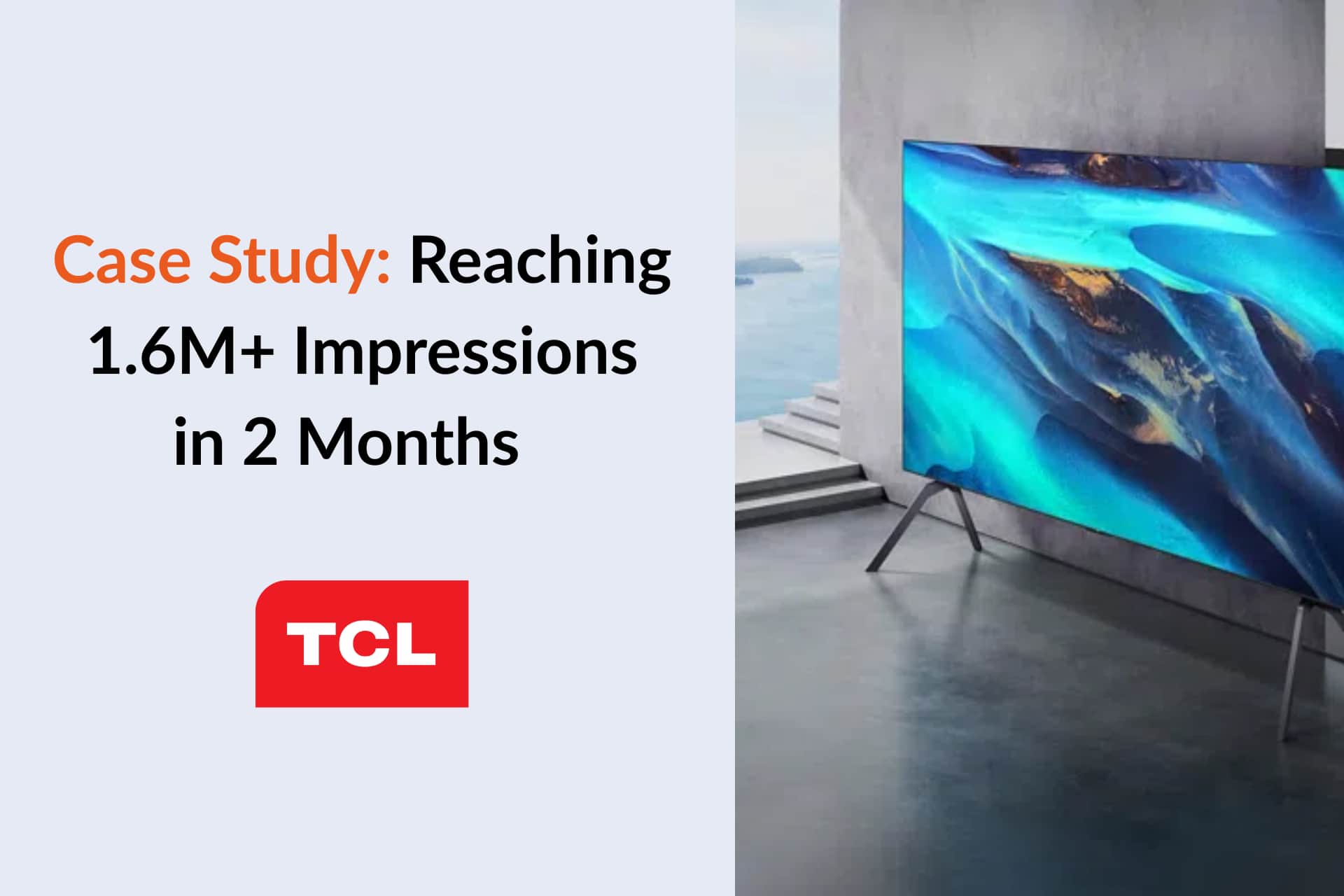
Möchten Sie sehen, wie dieser Kampagnentyp funktioniert? Lesen Sie unsere TCL-Fallstudie, die sich auf die Unterstützung von In-Store-Kampagnen in den VAE konzentrierte.
Fokus für Performance: Während viele Marken alle Formate testen, stammen die zuverlässigsten Performance-Ergebnisse typischerweise aus Affiliate + Gifting-Kampagnen, die konsistente ROI-Verfolgung und Skalierbarkeit ermöglichen.
Das Zwei-Phasen-Performance-System
Im Kern dieses Frameworks gibt es zwei unterschiedliche Phasen:
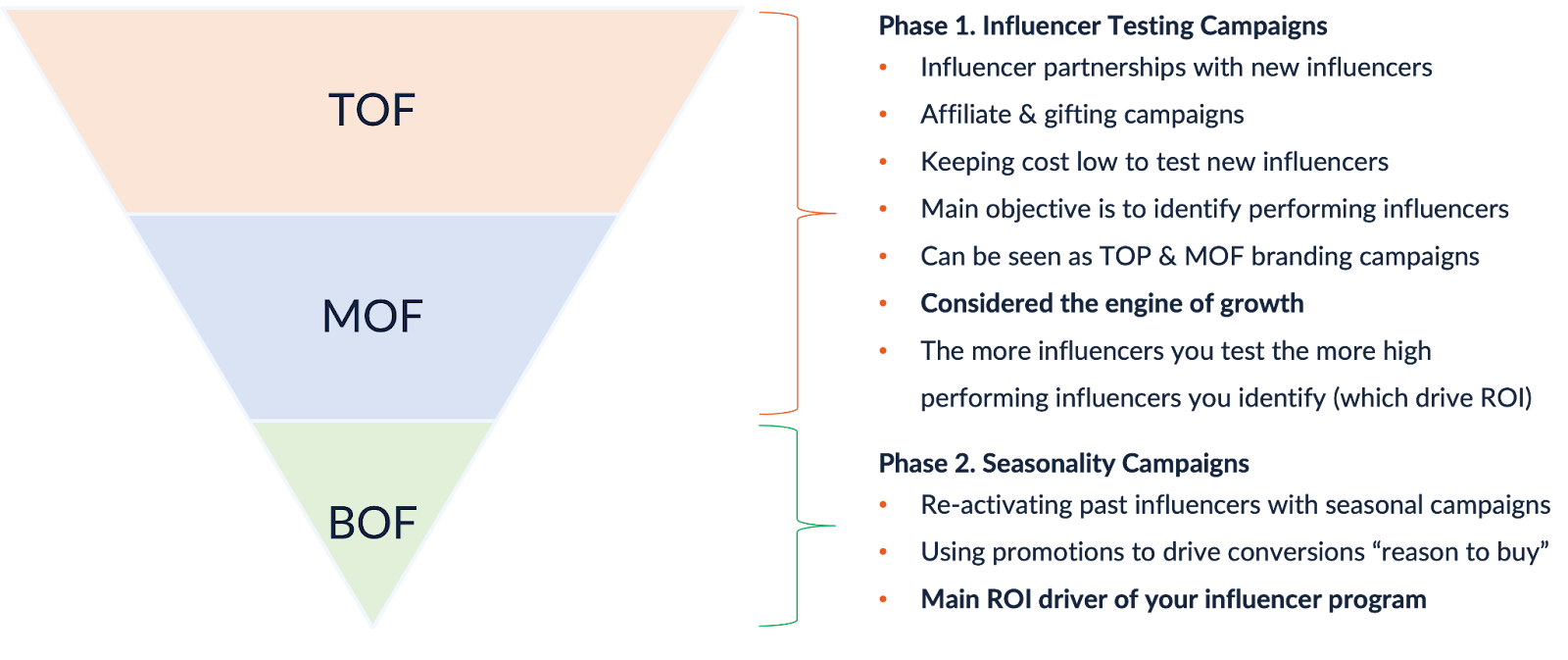
Phase 1 – Influencer-Test-Kampagnen
Phase 1 konzentriert sich auf das Testen von erstmaligen Zusammenarbeiten mit einer großen Anzahl von Creatorn. Das Ziel ist einfach – identifizieren Sie, welche Influencer messbare Konversionen über Affiliate-Links oder Rabattcodes generieren
Creator werden nach ihrer Leistung nach dem Posten kategorisiert:
- High Performers (HPs): ≥ 10 Konversionen pro Beitrag
- Medium Performers (MPs): 3–9 Konversionen pro Beitrag
- Low Performers (LPs): 0–2 Konversionen pro Beitrag
In der Praxis generiert nur ein kleiner Bruchteil der Creator die Mehrheit der Ergebnisse – eine klassische Pareto-Verteilung (80/20-Regel). Oft treiben 10% der Influencer 90% des Gesamtumsatzes an.
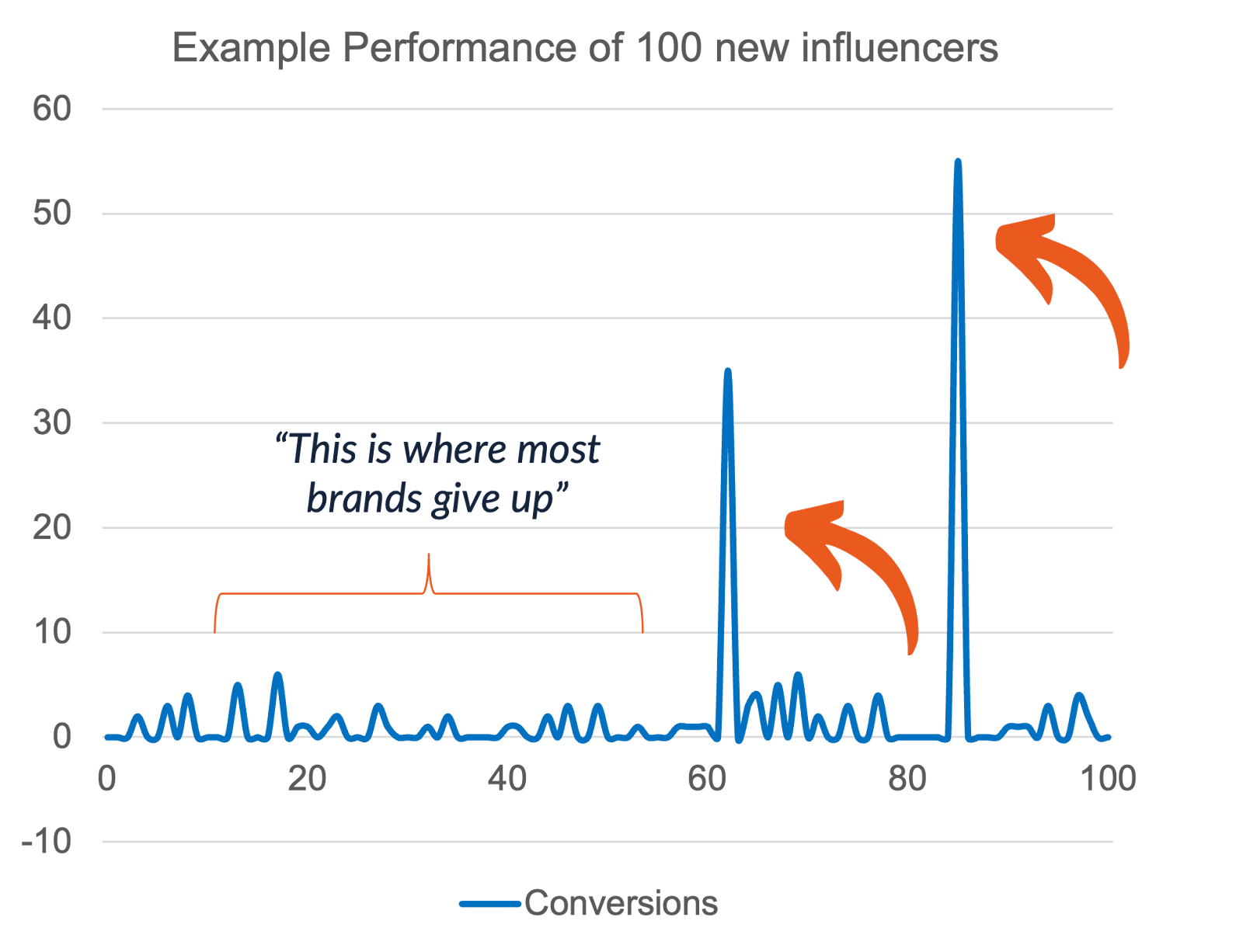
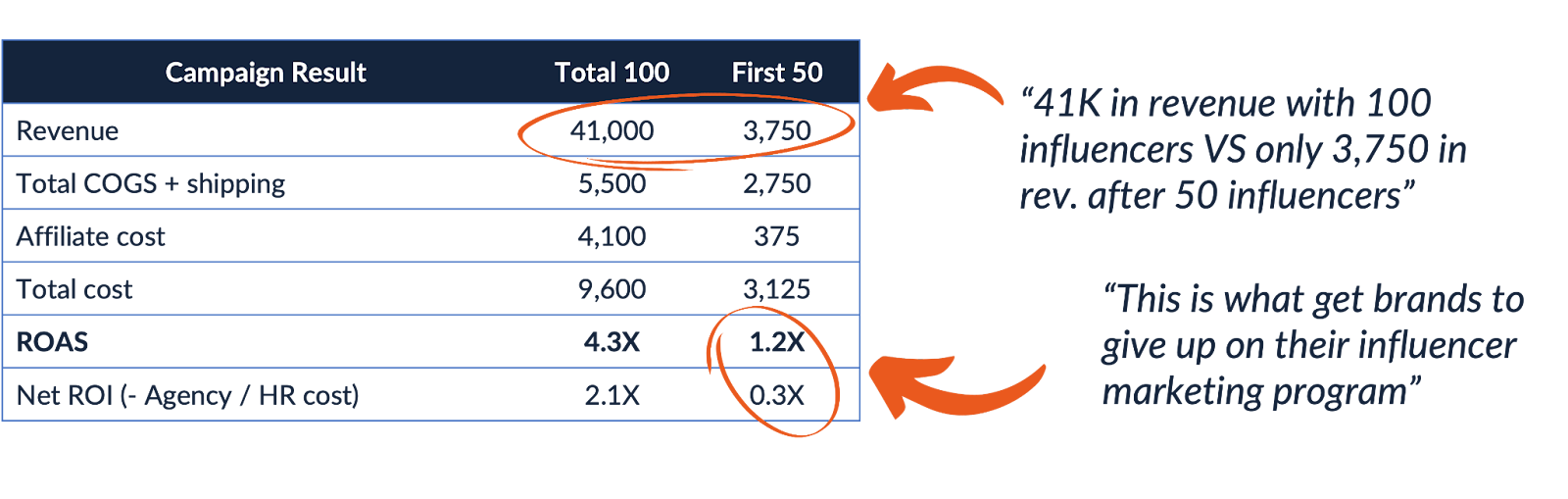
Deshalb müssen Marken in Batches von mindestens 100 Influencern testen, anstatt sich auf kleine Stichprobengrößen zu verlassen. Ein frühzeitiges Stoppen – etwa nach 20 oder 30 – führt oft zu falschen Schlussfolgerungen, dass „Influencer-Marketing nicht funktioniert", wenn tatsächlich die Top-Performer einfach noch nicht entdeckt wurden.
Pro-Tipp
Nutzen Sie ein Pipeline-System, um Phase 1 effizient zu verwalten:
Gefunden → Verhandlung → Bestätigt/Beschenkt → Warte auf Beitrag → Veröffentlicht → Ergebnisse erfasst → Kategorie zugewiesen (HP/MP/LP).
In dieser Phase muss die ROI nicht hoch sein. Selbst Breakeven oder leicht negative Ergebnisse sind akzeptabel, da der echte Wert darin liegt, HPs zu identifizieren, die später exponentielle Renditen erzielen.
Phase 2 – Saisonale Kampagnen
Phase 2 reaktiviert HPs und MPs während hochintensiver Einzelhandelsmomente wie Valentinstag, Muttertag/Vatertag, Sommerschlussverkauf, Halloween und BFCM.
Die Strategie besteht darin, mehrere Leistungen pro Creator zu bündeln, um die Kosten pro Beitrag zu senken und kumulative Conversions zu erhöhen.
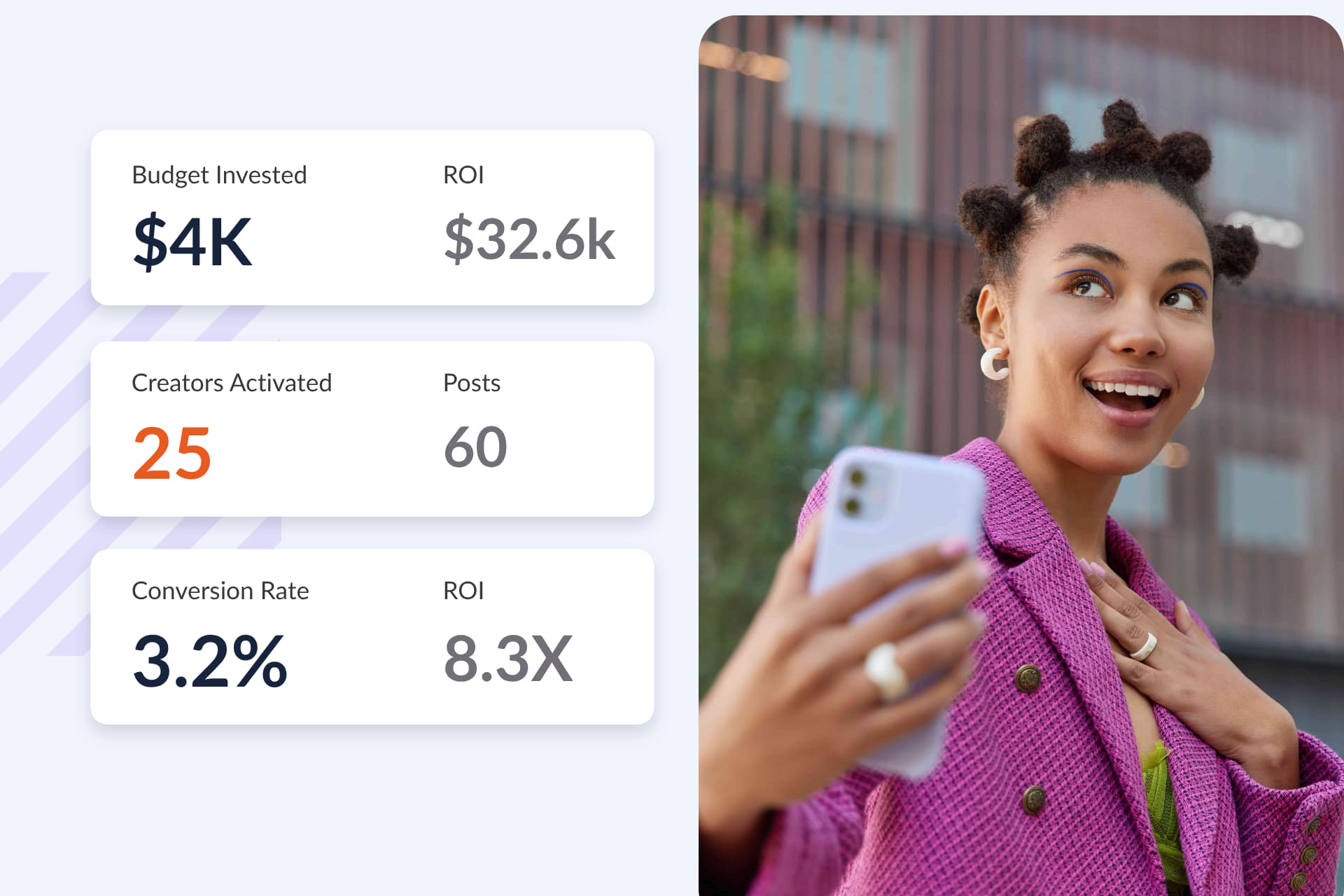
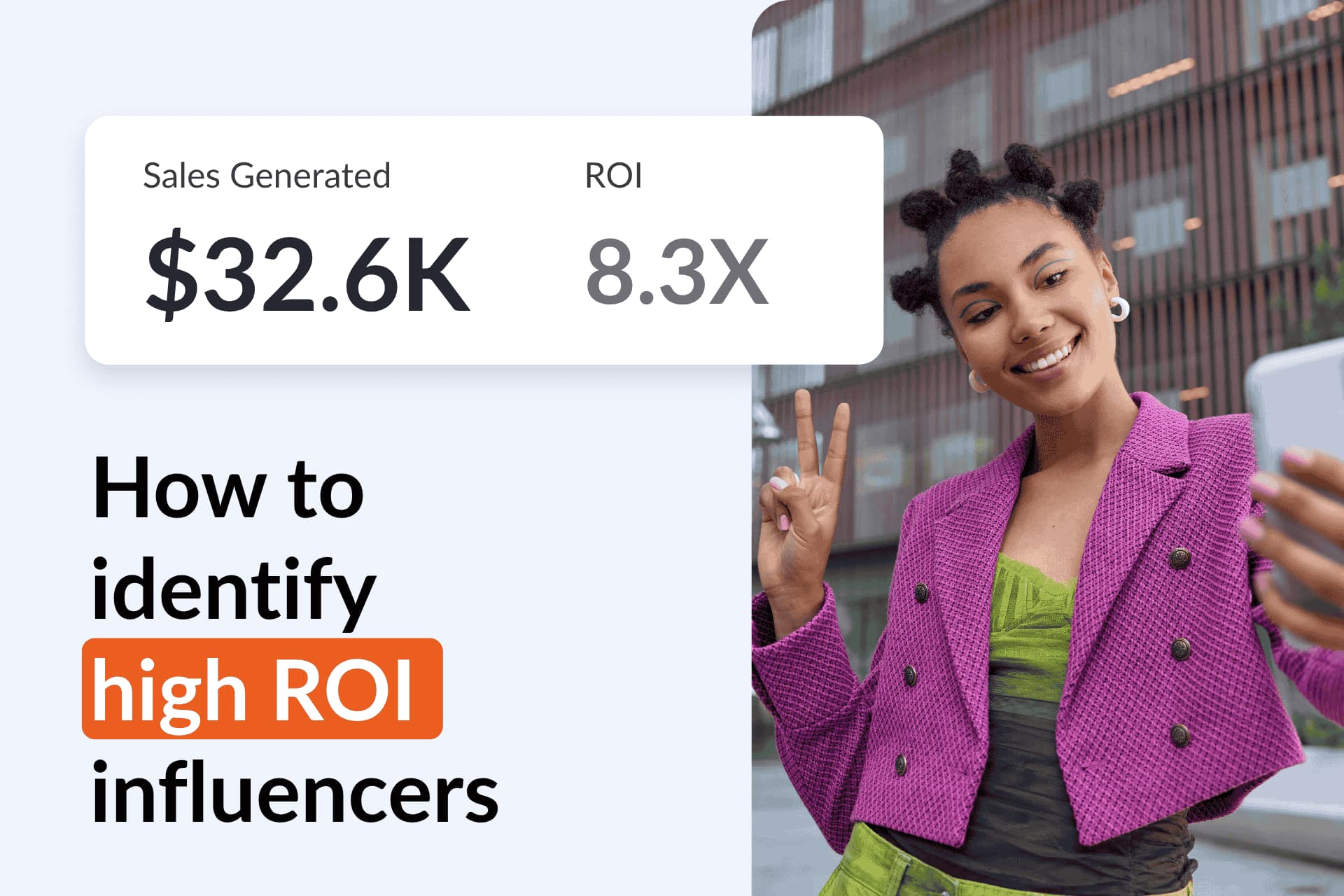
Beispielsweise, wenn ein Creator in Phase 1 5.000 US-Dollar an zurechenbarem Umsatz aus einem Beitrag generierte, könnte eine Kampagne mit fünf Beiträgen während eines Saisonverkaufs realistischerweise 25.000 US-Dollar Umsatz anstreben – mit einer prognostizierten 8,3× Return on Influencer Spend (ROIS).
Neue Metrik: ROIS (Return on Influencer Spend): Traditionelle Metriken wie ROAS können irreführend sein, da keine Anzeigenausgaben auf bezahlten Plattformen anfallen. ROIS misst Ihre Rendite rein aus der Influencer-Vergütung und gibt eine genauere Widerspiegelung der Kampagnenrentabilität.
Wir werden in Kapitel 5 Schritt für Schritt erläutern, wie Sie eine hochperformante Phase-2-Saisonkampagne durchführen.
| Kampagnenziel | Empfohlene Tracking-Tools |
|---|---|
| Conversions / Verkäufe |
UTM-Parameter Promo-Codes und Affiliate-Links Benutzerdefinierte Landingpages und Storefronts Affiliate-Plattformen Google Analytics E-Commerce-Dashboards Influencer-Marketing-Plattformen |
| Website-Traffic |
UTM-Parameter Benutzerdefinierte Landingpages und Storefronts Google Analytics E-Commerce-Verkehrsberichte Influencer-Marketing-Plattformen |
| Markenbekanntheit |
Google Analytics Native Social-Analytik Social-Listening-Tools Google Trends und Google Search Console |
| Engagement |
Native Social-Analytik (einschließlich von Influencern bereitgestellter Performance-Screenshots) Engagement-Raten verfolgt über Influencer-Marketing-Plattformen |
| Kundenloyalität & Kundenbindung |
Promo-Codes und Affiliate-Links E-Commerce-Dashboards CRM-Systeme Umfragen nach der Kampagne |
Nutzen und Systematisieren Sie Ihr Influencer-Programm
Sobald Phase 1 und Phase 2 aktiv sind, besteht das Ziel darin, ein ständiges Influencer-System aufzubauen, das kontinuierlich Wachstum fördert.
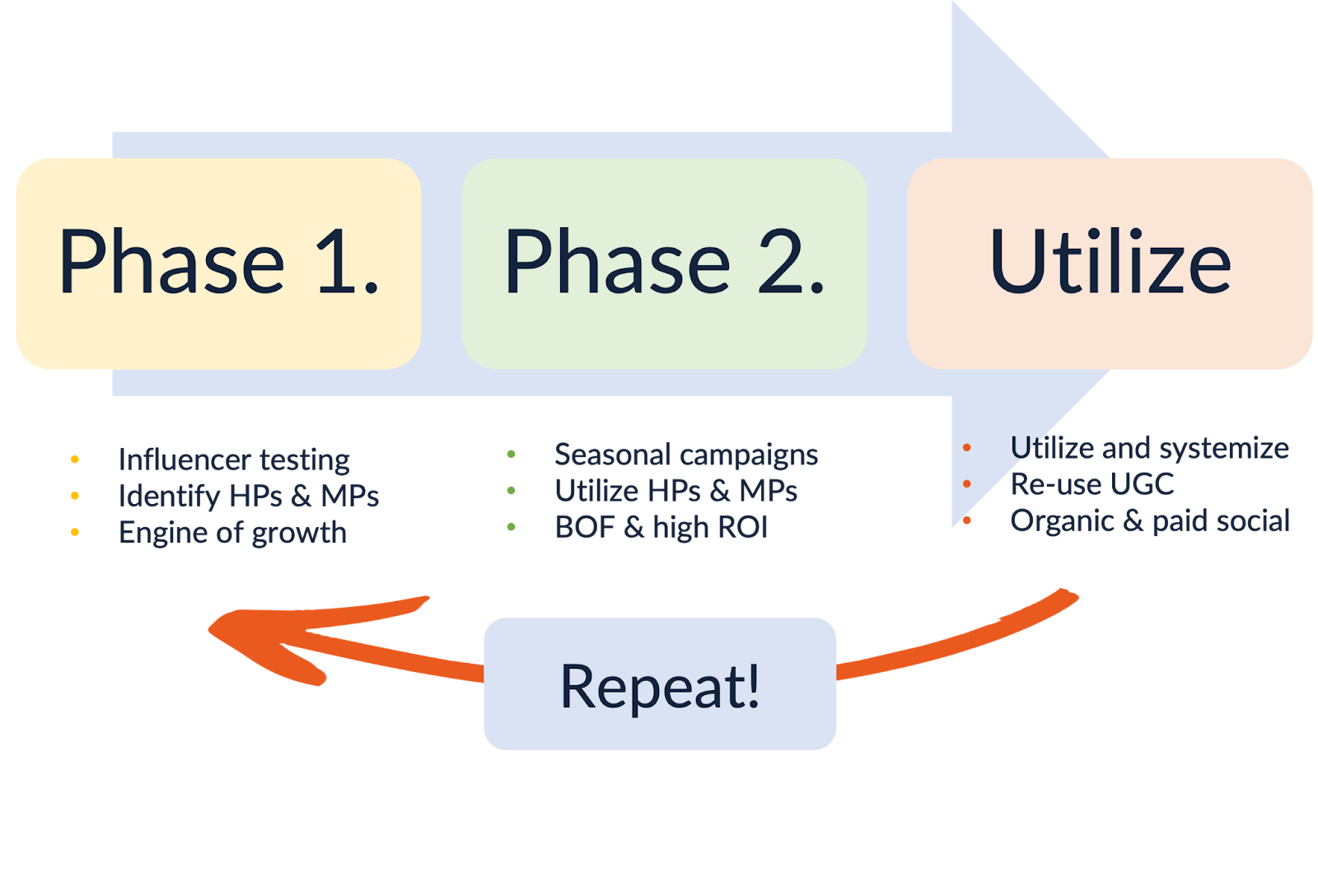
- 1. Inhalte nutzen: Nutzen Sie Influencer-Inhalte auf Ihrer Website, in Newslettern, bezahlten Anzeigen und organischen Kanälen erneut.
- 2. Traffic nutzen: Nutzen Sie den gesamten Traffic aus Influencer-Kampagnen mit Retargeting-Anzeigen und automatisierten E-Mail-Flows.
- 3. Betriebsabläufe systematisieren: Erstellen Sie SOPs und ein dediziertes Influencer-Marketing-Team, um sicherzustellen, dass beide Phasen kontinuierlich ablaufen.
Denken Sie daran: Phase 1 ist Ihr Wachstumsmotor. Ohne ständiges Testen neuer Creator verlieren Sie den Schwung, der notwendig ist, um Ihre nächsten Top-Performer zu identifizieren.
| Kampagnenziel | Wichtige Formel / Metrik |
|---|---|
| Conversions / Umsatz |
ROI (%) = (Umsatz – Kampagnenkosten) / Kampagnenkosten × 100 CPA = Kampagnenkosten / Conversions AOV = Gesamtumsatz / Anzahl der Bestellungen ROAS = Umsatz aus Anzeigen / Anzeigenbudget Umsatzwachstum (%) = (Umsatz nach Kampagne – Umsatz vor Kampagne) / Umsatz vor Kampagne × 100 |
| Website-Traffic |
CPC = Kampagnenkosten / Gesamtklicks Kosten pro Sitzung = Kampagnenkosten / Website-Sitzungen |
| Markenbekanntheit |
CPM = (Kampagnenkosten / Impressionen) × 1.000 EMV = (Gesamtimpressionen / 1.000) × CPM für bezahlte Medien |
| Engagement |
CPE = Kampagnenkosten / Gesamtengagements Engagement-Rate (%) = (Engagements / Impressionen oder Follower) × 100 |
| Kundenloyalität und Kundenbindung |
CLV = AOV × Kaufhäufigkeit × Bindungsdauer ROI (%) = (Gesamt-CLV – Kampagnenkosten) / Kampagnenkosten × 100 Wiederholungskaufquote = Rückkehrende Kunden / Gesamtkampagnenkunden CLV:CAC-Verhältnis = CLV / CAC |
Abschließende Gedanken
Der Wechsel von punktuellen Influencer-Kooperationen zu einem leistungsgesteuerten System ist der Schlüssel, um Influencer-Marketing in ein zuverlässiges Wachstumsmotor umzuwandeln. Die erfolgreichsten Marken betrachten Creator nicht als Marketing-Experiment – sie behandeln sie als Teil einer laufenden Umsatzstrategie.
Durch das Verständnis der verschiedenen Kooperationsformate, die Implementierung des Zweiphasen-Systems und die Analyse von Ergebnissen durch ROIS (Return on Influencer Spend) können Marken eine strukturierte Pipeline aufbauen, die im Laufe der Zeit vorhersehbare Ergebnisse liefert.
Dieses Kapitel hat die Grundlagen dafür gelegt, wie man Influencer-Marketing aus einer operativen und finanziellen Perspektive betrachtet. In den nächsten Kapiteln werden wir erkunden, wie man diesen Rahmen in die Praxis umsetzt, beginnend mit der Suche nach den richtigen Influencern für Ihre Marke und dem Anlaufen Ihres Leistungsmotors.
Wichtigste Erkenntnisse
- Behandeln Sie Influencer-Marketing als einen Performance-Kanal, nicht als Branding-Aktivität.
- Nutzen Sie Affiliate- und Gifting-Kampagnen als die skalierbarste Grundlage für datengesteuerte Tests.
- Implementieren Sie das Zweiphasen-System – Phase 1 für die Entdeckung, Phase 2 für die Skalierung.
- Konzentrieren Sie sich auf ROIS (Return on Influencer Spend), um die wahre Kampagneneffizienz zu messen.
- Erstellen Sie ein ständiges Influencer-Programmdas kontinuierlich Creator testet, aktiviert und skaliert, um langfristiges Wachstum zu erzielen.
Weiterlernen: Wie man Influencer findet, die tatsächlich konvertieren
Summary
This is some text inside of a div block.
This is some text inside of a div block.
Pricing/Month
Shopify Reviews
This is some text inside of a div block.
This is some text inside of a div block.
This is some text inside of a div block.
This is some text inside of a div block.
This is some text inside of a div block.
This is some text inside of a div block.
This is some text inside of a div block.
This is some text inside of a div block.
This is some text inside of a div block.
This is some text inside of a div block.
This is some text inside of a div block.
This is some text inside of a div block.
This is some text inside of a div block.
This is some text inside of a div block.
This is some text inside of a div block.
This is some text inside of a div block.
This is some text inside of a div block.
This is some text inside of a div block.
This is some text inside of a div block.
This is some text inside of a div block.
This is some text inside of a div block.
Read More

FAQs
Was ist Influencer-Performance-Marketing?

Influencer Performance Marketing ist ein datengesteuerter Ansatz, der Influencer-Zusammenarbeit als messbare, umsatzgenerierende Kanäle behandelt, anstatt sie als Markenbekannheitskampagnen zu betrachten. Anstatt für Impressionen zu zahlen, verfolgen Marken konkrete Ergebnisse wie Klicks, Conversions und ROI — oft durch Affiliate-Links oder Rabattcodes.
Wie unterscheidet sich das Performance-Marketing mit Influencern von traditionellem Influencer Marketing?
Traditionelles Influencer Marketing konzentriert sich auf Reichweite und Engagement, was es schwierig macht, den direkten ROI zu messen. Leistungsgestütztes Influencer Marketing hingegen verbindet jede Zusammenarbeit mit Verkaufsergebnissen und ermöglicht es Marken, hochperformante Creator zu identifizieren und diese Partnerschaften rentabel zu skalieren.
Was ist das zweiphasige Influencer-Leistungssystem?
Das zweistufige System besteht aus:
- Phase 1: Testing Campaigns – Marken testen neue Creator mit kostengünstigen Gifting- und Affiliate-Angeboten, um Top-Performer zu identifizieren.
- Phase 2: Seasonality Campaigns – Leistungsstarke Influencer werden während wichtiger Retail-Momente (wie BFCM oder Valentinstag) reaktiviert, um skalierbaren Umsatz zu generieren.
Was bedeutet ROIS im Influencer Marketing?
ROIS steht für Return on Influencer Spend. Es misst den Umsatz, der durch Influencer-Partnerschaften generiert wird, im Verhältnis zur Gesamtvergütung, die ihnen gezahlt wird. Im Gegensatz zu ROAS, das an Paid-Ad-Ausgaben gebunden ist, konzentriert sich ROIS rein auf die Rentabilität von Influencer-Kooperationen.
Welche Art von Influencer-Zusammenarbeit funktioniert am besten für Performance Marketing?
Affiliate + Gifting-Kooperationen liefern in der Regel die messbaren Ergebnisse. Sie ermöglichen es Marken, Konversionen zu verfolgen, große Chargen von Influencern effizient zu testen und Kampagnen basierend auf Leistungsdaten zu skalieren.

Most Popular Blogs


Drive ROI With Influencer Marketing
Join 1,200+ brands and 150+ agencies scaling creator programs with Influencer Hero.