

August 29, 2025

10 Min
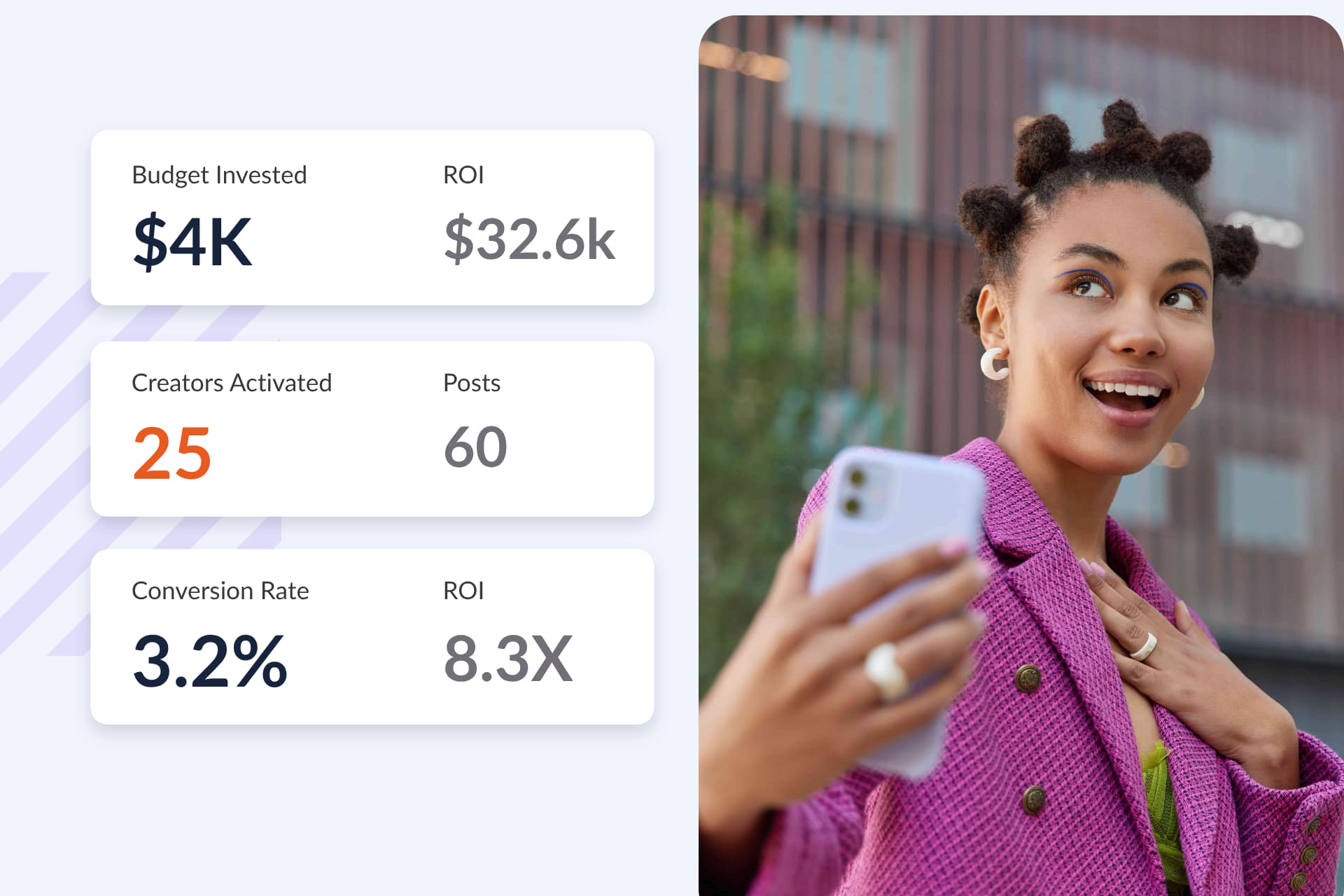
Case Study: How Beau Bottles Drove $82K in Sales and Viral UGC Using Influencer Hero






NeoReach is trusted by over 1,000 brands and runs on a database of more than 3 million influencer profiles across Instagram, TikTok, YouTube, Facebook and X. It is genuinely strong on analytics, with 400+ custom data points, 40+ category filters and an API that supports sponsorship pricing data, competitor spend analysis and fraud detection.
It is also unmistakably built for enterprise budgets. Entry access starts at $399/month and full platform access runs to $1,500/month, with managed campaigns beginning around $25,000. Reviewers consistently flag a slow, dated interface and search filters that are too broad to be useful, and the database skews heavily toward macro and celebrity creators rather than the micro-influencers most DTC brands actually work with.
This guide compares the top 10 NeoReach alternatives in 2026 on pricing, features, commitment and usability, so you can match a platform to the size of program you are actually running.
NeoReach is a powerful platform built for large-scale influencer marketing, offering both SaaS access and managed campaign services. It may not be the right fit for teams with smaller budgets or those who need more flexible, intuitive tools. Here are four reasons marketers explore alternatives.
NeoReach's entry plan starts at $399/month and full platform access runs to $1,500/month, with managed campaigns beginning at $25,000. Pricing in practice is quoted per client on an annual basis rather than picked off a public rate card, so you go through sales before you know your number. Several users report paying for enterprise capabilities they never touch, particularly when the actual goal is micro-influencer campaigns.
NeoReach's UI is frequently described as outdated, with slow load times and occasional glitches. G2 reviewers describe searching for the right creators as looking for a needle in a haystack, with filters too broad to narrow a list efficiently. For a team that needs to build a shortlist this week, that friction compounds fast.
Although the platform indexes millions of profiles, the data depth skews toward macro and celebrity creators. Brands running nano and micro campaigns, where most DTC influencer budgets now go, find the filtering and audience data thinner exactly where they need it strongest. Our discovery tools roundup compares platforms on this specifically.
NeoReach is designed around enterprise brands and agencies with dedicated influencer teams. That works if you have the headcount and the budget. For a growing DTC brand running its first structured creator program, the platform assumes a level of resourcing and process most smaller teams do not have yet, and there is no lighter tier that scales down to meet them.
To compare the different platforms, we focused on central criteria that all must meet:
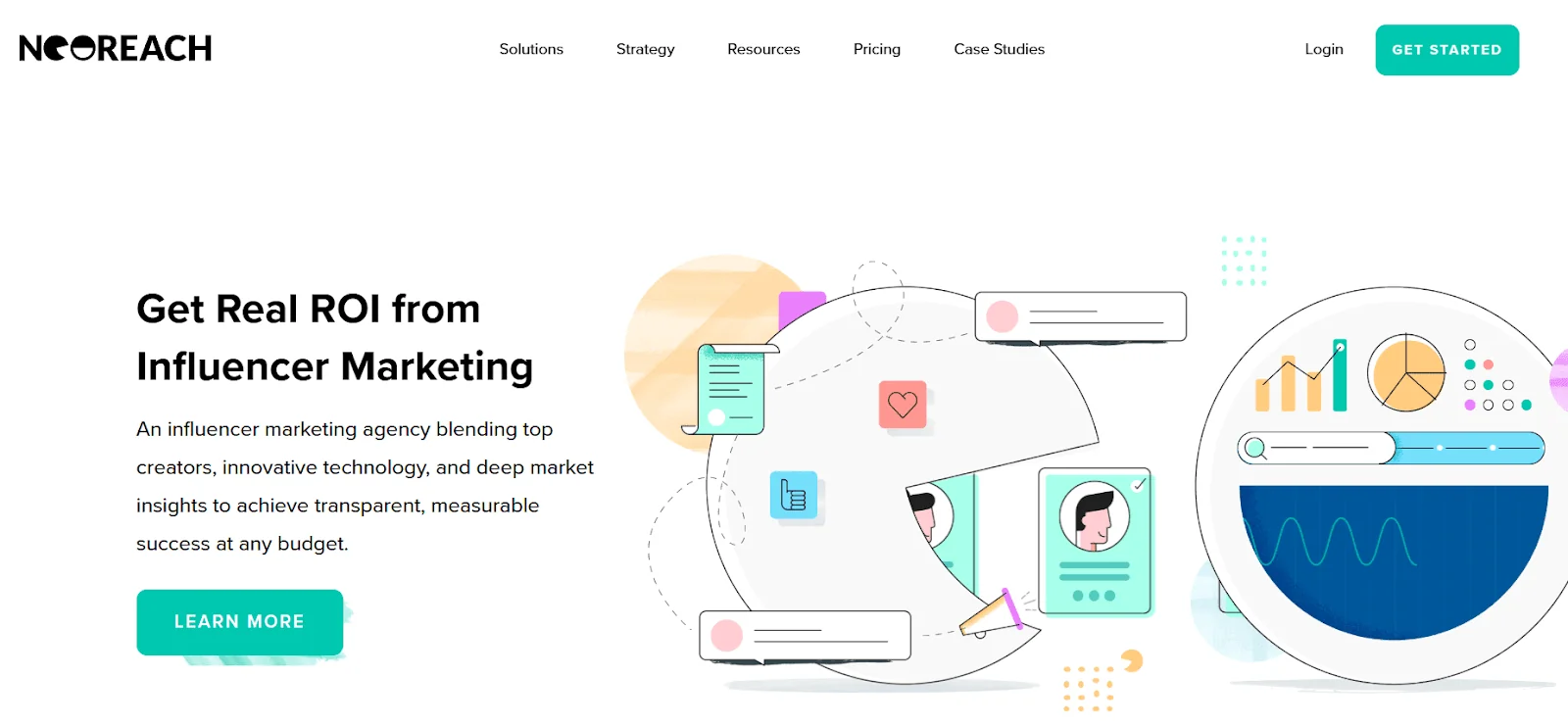
NeoReach is a tech-enabled influencer marketing agency and software platform serving Fortune 500 brands, with clients including Sam's Club, NVIDIA and A&E. It combines creator discovery, campaign management, analytics and creator payments, and sells managed campaign execution alongside the software.
Best For: Large brands and agencies managing high-budget campaigns that need data-rich reporting, custom integrations and access to a vast influencer database.
Platform Coverage: Instagram, YouTube, TikTok, Facebook and X (Twitter), across a database of 3M+ influencer profiles.
Pricing & Commitment: NeoReach offers both SaaS and managed campaign services. Reported tiers are an Entry package at $399/month for growing teams with 3 users, a Premium package at $799/month for agencies and large brands with unlimited users, and Enterprise Access at $1,500/month for full database and campaign tools. Managed campaigns start at $25,000. In practice pricing is quoted per client on an annual subscription rather than published, so expect a sales process before you see a number.
Reviews: 4.5 / 5.0 (G2)
Ease of Use (UX/UI): A powerful backend behind an interface consistently described as clunky and slow. Finding the right creators is time-consuming because of lag and imprecise filtering.
Customer Support: Ticket-based through the platform. Support is generally helpful but response times vary, and some users report recurring bug and data-consistency issues.
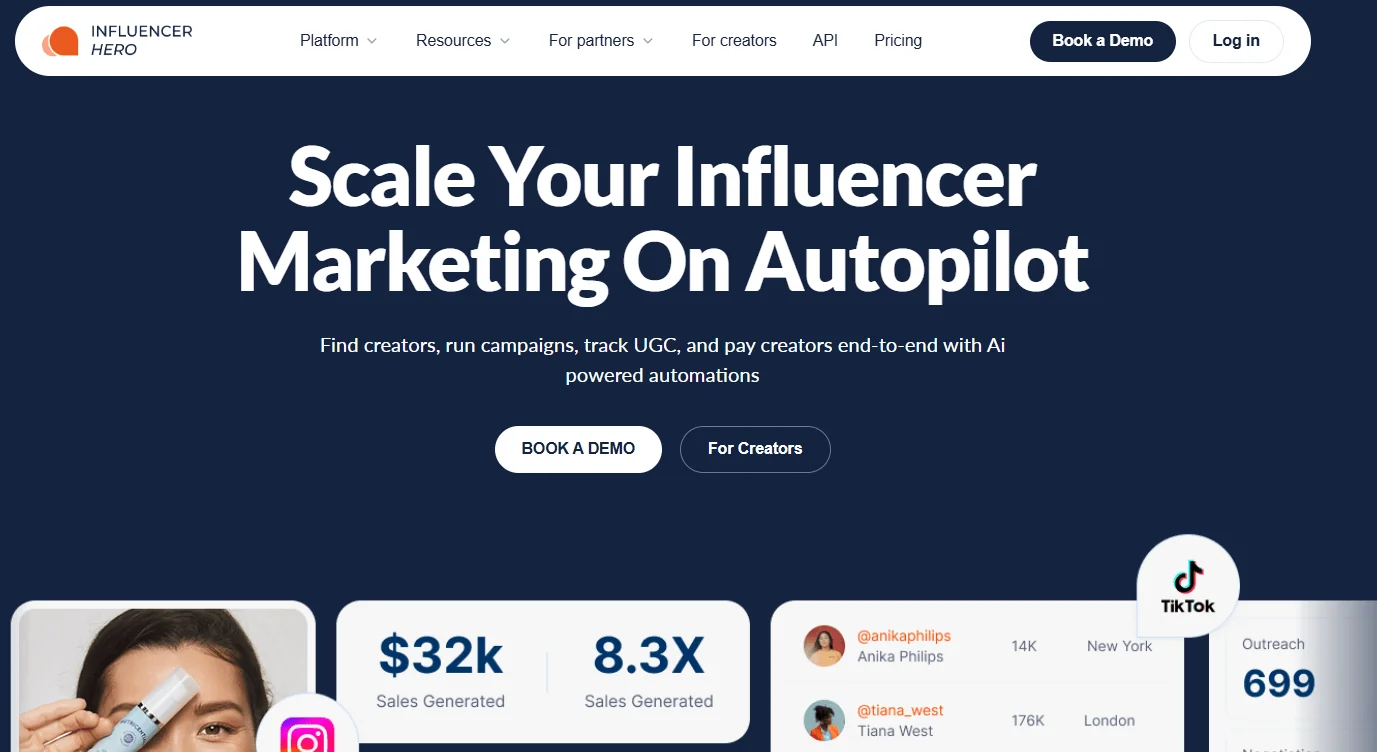
Influencer Hero is an all-in-one influencer marketing platform covering the full creator lifecycle: discovery, outreach, CRM, gifting, affiliate, UGC, creator storefronts, application pages and reporting. Where NeoReach asks for a sales call and an annual contract, Influencer Hero publishes its pricing and bills monthly.
Best For: DTC brands and agencies that want enterprise-grade capability without enterprise procurement, with real depth on micro and nano creators.
Platform Coverage: Instagram, TikTok, YouTube, Facebook, Pinterest, Snapchat, X and Twitch, with a 450M+ creator database.
Pricing & Commitment: Published openly and billed monthly. Standard $649/month for up to 1,000 creator contacts, Pro $1,049/month for up to 5,000, Business $2,490/month for up to 10,000, plus custom and agency plans. No annual lock-in, no commission fees, and creator payout fees of 0.1% to 0.5% against a 5% to 7% category norm.
Reviews: 5.0 / 5.0 (Capterra)
The two most common NeoReach complaints are the interface and the micro-influencer gap, and Influencer Hero is built directly against both. A 450M+ database gives you nano and micro depth NeoReach's 3M index does not reach, and the platform is designed for teams that need to build a shortlist in an afternoon rather than fight lag and broad filters.
On cost, NeoReach's $399 entry tier is cheaper on paper, but full platform access is $1,500/month against Influencer Hero's $649 Standard plan, and NeoReach quotes annually while Influencer Hero bills monthly with published rates. You can also leave at the end of any month.
NeoReach keeps one clear advantage: it sells managed campaign execution for brands that would rather hand the whole program over. If that is what you want, Influencer Hero is software plus a dedicated account manager, not an agency. Book a Demo to see the workflow on your own catalog.
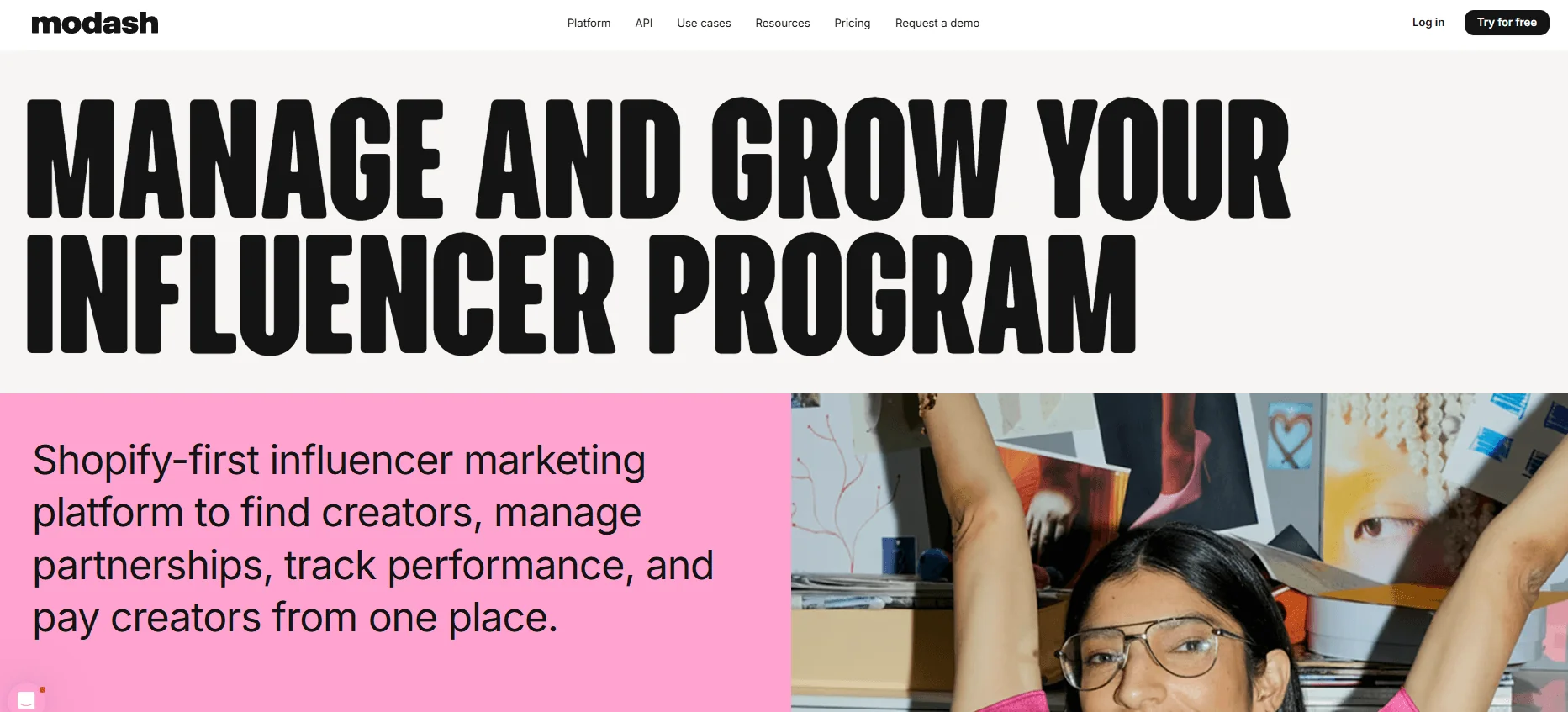
Modash is a discovery-first platform built around a 350M+ creator database across Instagram, TikTok and YouTube, with no opt-in requirement. It is the leanest way to fix NeoReach's two biggest problems, index depth and cost, without buying an enterprise suite.
Best For: Small teams and DTC brands that prioritise fast creator discovery and data accuracy over managed services.
Platform Coverage: Instagram, TikTok and YouTube, with limited profile recognition for X and Snapchat.
Pricing & Commitment: Essentials $199/month billed annually, or $299 month to month. Performance $499/month annually, or $599 monthly, adding the Shopify integration and creator payouts with no fee up to $10,000 a year. Enterprise is custom, from around $14,700/year. 14-day free trial with no credit card.
Reviews: 4.9 / 5.0 (Capterra)
Modash is what a NeoReach user usually wants when the complaint is cost and interface rather than capability. At $199/month billed annually it undercuts NeoReach's entry tier by half, indexes 350M+ profiles against 3M, and is consistently praised for exactly the speed and clarity NeoReach gets criticised for.
What you give up is the enterprise layer. There is no managed campaign service, no 400+ data point reporting and no custom API workflows. For a lean team that needs to find creators and email them, Modash is the smarter, leaner choice. For a Fortune 500 program with an analytics team attached, it is not a replacement.
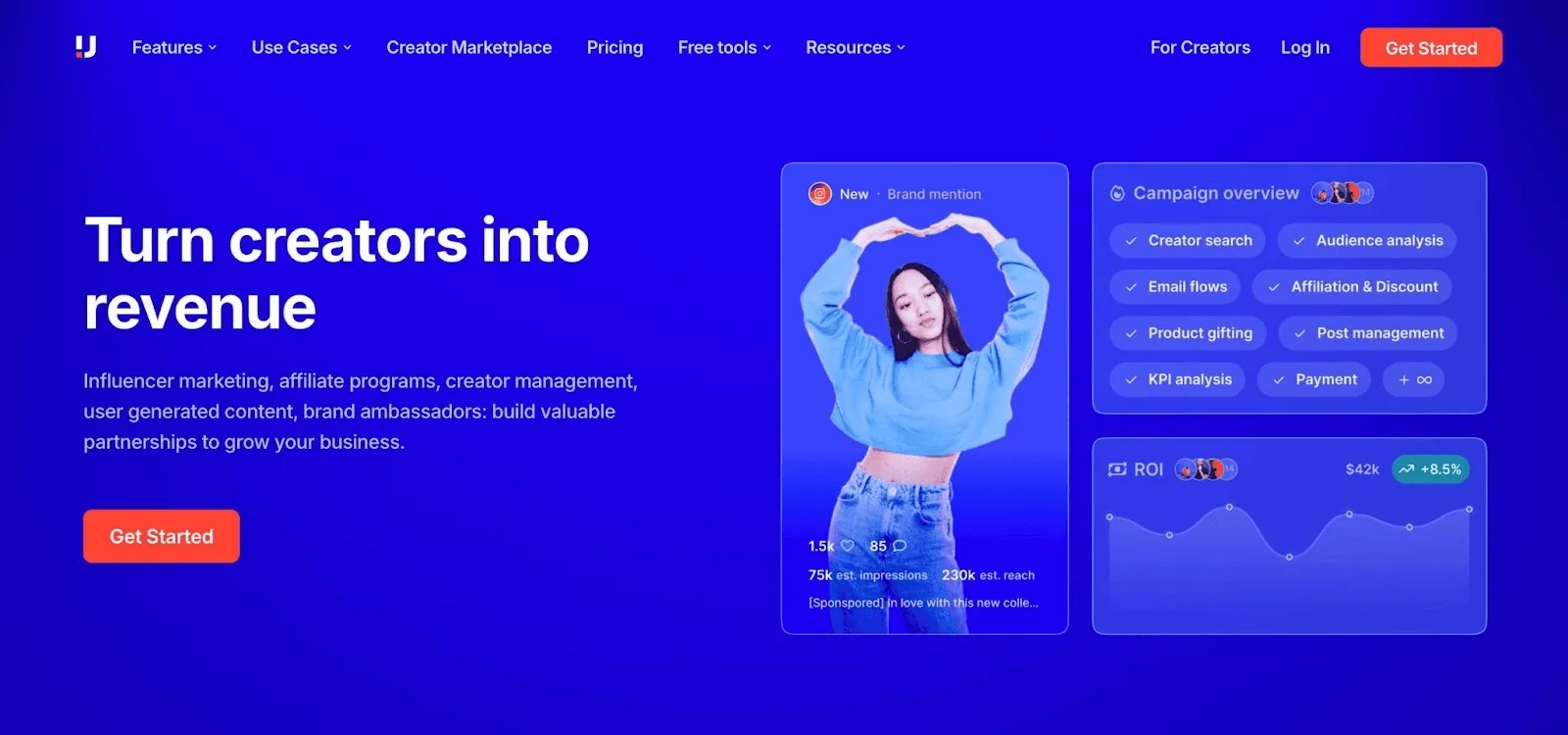
Upfluence is an all-in-one platform built around eCommerce revenue attribution, with native Shopify and Amazon integrations and a customer-to-creator matching feature that identifies buyers who already have audience reach.
Best For: eCommerce brands and agencies that want influencer activity tied to tracked revenue, particularly those selling on Amazon. Our Amazon software roundup compares the category.
Platform Coverage: Instagram, TikTok, YouTube, X, Twitch, Pinterest and WordPress blogs, with a 12M+ creator database.
Pricing & Commitment: Modular rather than tiered. The Search and Contact module starts at $478/month, and a full setup covering search, campaign management and Upfluence Pay comes to roughly $1,276/month for one seat, about $16,007/year. A required onboarding fee applies and the minimum contract is 12 months.
Reviews: 4.3 / 5.0 (Capterra)
Both sell enterprise capability on annual contracts, so the choice is about what the analytics are pointed at. NeoReach measures campaign performance with 400+ data points and offers managed execution. Upfluence measures revenue, tying creator activity to tracked sales through Shopify and Amazon, and surfaces creators hiding inside your own customer list.
For an eCommerce brand where the question is which creators drove orders, Upfluence's attribution is the more useful instrument, and its modular pricing lets you buy only the layers you need. For a brand running awareness campaigns across five platforms, NeoReach's reporting depth is broader.
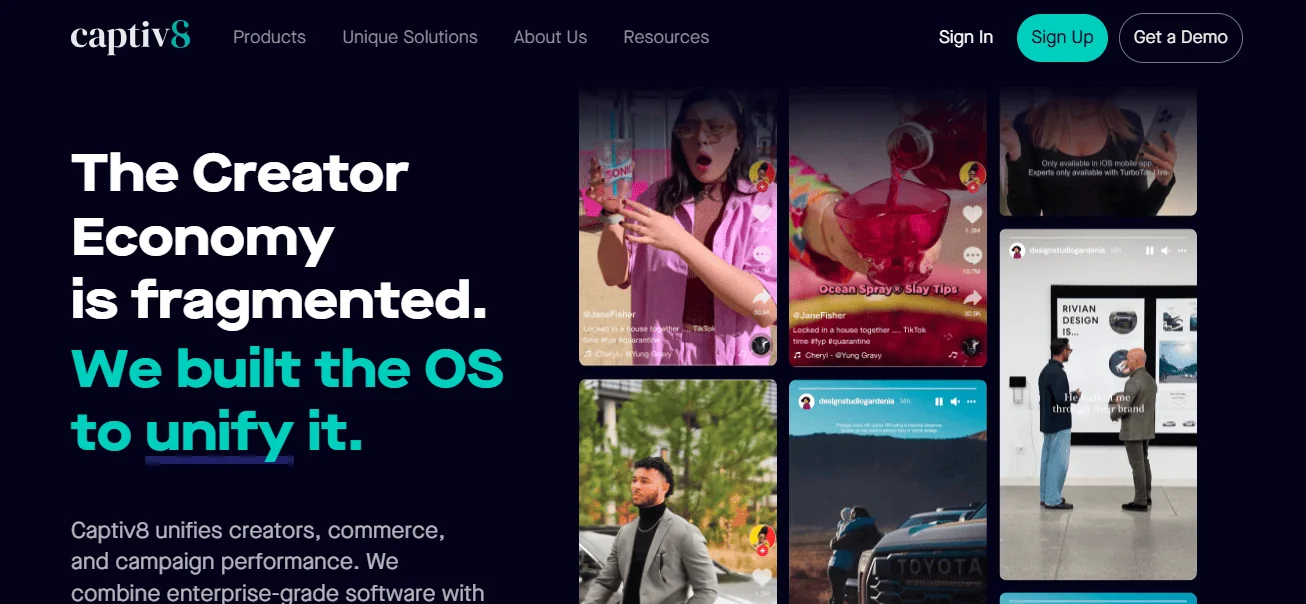
Captiv8 is an enterprise influencer and commerce platform with some of the deepest analytics in the category. Publicis Groupe acquired it in May 2025 for a reported $150M and merged it with Influential, giving the combined platform 15M+ creators across 120 countries. Its 2025 Perplexity partnership added natural-language creator search and AI vetting.
Best For: Brands and agencies managing high-budget, large-scale campaigns that need competitive intelligence alongside execution.
Platform Coverage: Instagram, TikTok, Facebook, YouTube, X, Twitch and Snapchat.
Pricing & Commitment: Custom, not published. Industry sources put entry around $25,000/year on an annual or six-month commitment, plus a roughly $3,000 onboarding fee. Affiliate and storefront capabilities are add-ons priced separately.
Reviews: 4.6 / 5.0 (G2)
These two compete for the same enterprise buyer, and Captiv8 currently wins on most of the specifics. It indexes 15M+ creators across 120 countries against NeoReach's 3M, its Perplexity-powered natural-language search sidesteps exactly the filtering problem NeoReach gets criticised for, and it adds competitive intelligence NeoReach has no version of.
The cost is comparable at the top end. Captiv8 starts around $25,000/year plus onboarding, which lines up with NeoReach's managed campaign floor. What NeoReach keeps is a cheaper software-only entry point at $399/month for teams that want the database without the full enterprise commitment.
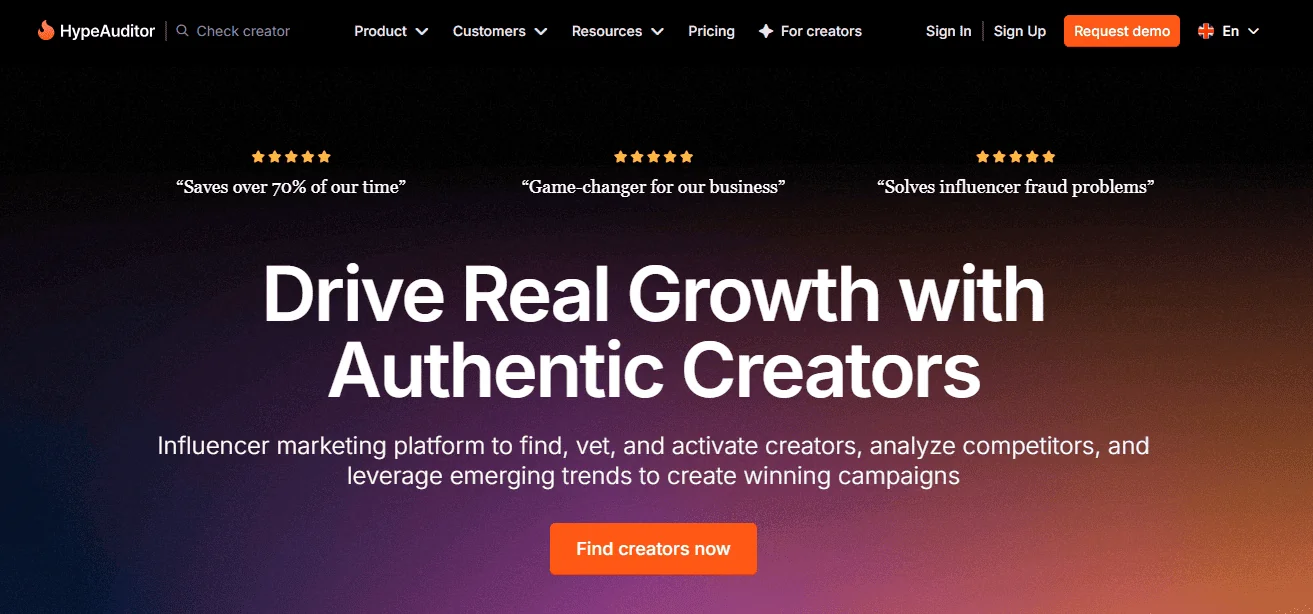
HypeAuditor is the category's authenticity watchdog, with fraud detection frequently cited at around 95.5% accuracy across 227M+ creator profiles. It also runs discovery, analytics, CRM and campaign management, gated by usage limits rather than feature locks.
Best For: Teams focused on data accuracy, identifying influencer fraud and benchmarking competitors across platforms.
Platform Coverage: Instagram, TikTok, YouTube, Twitch, X and Snapchat.
Pricing & Commitment: A free tier covers media plans, campaign management and demo versions of the wider toolset, alongside 40+ free audit tools. Basic starts around $299/month billed annually, Pro around $499/month, with Enterprise quoted on data volume, seats and feature access. Our HypeAuditor alternatives guide compares the field.
Reviews: 4.8 / 5.0 (Capterra)
Both sell data as the product, but they measure different things. NeoReach reports on campaign performance after the fact with 400+ data points. HypeAuditor checks whether the creator's audience is real before you spend, with an Account Quality Score that is the category benchmark.
HypeAuditor is also considerably cheaper to start with. A free tier and 40+ free audit tools mean you can evaluate the data quality without a sales call, and Basic at around $299/month sits below NeoReach's $399 entry while indexing 227M+ profiles against 3M.
CreatorIQ is an enterprise platform built for global brands that need data governance, customisable workflows and detailed analytics across markets. It runs creator programs for Disney, Unilever, Ralph Lauren, Nestlé and Sephora, and was named a leader in the IDC MarketScape.
Best For: Enterprise brands needing data governance, customisable workflows and detailed influencer analytics across global markets.
Platform Coverage: Instagram, TikTok, YouTube, Facebook, Pinterest, Twitch and X.
Pricing & Commitment: No public rates. Third-party transaction data puts annual contracts from around $30,000, with a median near $39,250. Annual only, no monthly billing, no free plan and no self-serve trial. G2 reviewers report roughly two months to implement.
Reviews: 4.6 / 5.0 (G2)
Both are enterprise platforms, but CreatorIQ is the more serious data product. Its metrics come from direct API connections to TikTok, Meta and YouTube rather than estimation, which matters when a global team has to defend numbers internally, and its payment infrastructure covers 60+ currencies across 80-plus markets.
NeoReach is the cheaper way in, with software access from $399/month against CreatorIQ's ~$30,000 annual floor, and it offers managed execution CreatorIQ does not. See how CreatorIQ stacks against another enterprise option in our three-way comparison.
Traackr focuses on optimising influencer spend and benchmarking performance across regions and campaigns, with a global database of 6M+ creators and its proprietary Brand Vitality Score.
Best For: Brands that want to optimise influencer spend and benchmark performance across markets and competitors.
Platform Coverage: Instagram, TikTok, YouTube, Facebook, Pinterest, X, Snapchat, Twitch and LinkedIn.
Pricing & Commitment: Begins at $32,500 annually on the entry-level Standard plan, with custom plans from $55,000 or more. Annual commitment required.
Reviews: 4.3 / 5.0 (G2)
Traackr answers a different question than NeoReach. NeoReach tells you how a campaign performed; Traackr tells you whether your spend is efficient against competitors, using Brand Vitality Score, cost-per-metric reporting and budget forecasting across markets.
It is also considerably more expensive, starting around $32,500 a year against NeoReach's $399/month software entry. Worth noting that Traackr shares two of NeoReach's weaknesses: reviewers report lag and syncing issues, and niche micro-influencer depth is thin on both.
Aspire pairs outbound creator search with an inbound marketplace of over a million creators who apply to campaigns, plus CreatorStores and built-in UGC licensing. It has paid out more than $150M to creators across 900+ customers, including HelloFresh, Dyson and Samsung.
Best For: Brands scaling influencer and UGC efforts that want native gifting, inbound applications and content rights handled in-platform. Our gifting platforms roundup covers the category.
Platform Coverage: Instagram, TikTok, YouTube, Facebook and Pinterest.
Pricing & Commitment: Quote-based, typically starting around $2,299/month on a required annual agreement, plus a one-time onboarding fee of about $2,000. Pricing is per user, so costs rise as the team grows. No free trial.
Reviews: 4.0 / 5.0 (Capterra)
NeoReach is analytics-led; Aspire is workflow-led. Aspire's inbound marketplace of over a million creators solves recruitment from a direction NeoReach does not offer at all, and its UGC licensing with digital term sheets closes a gap NeoReach leaves entirely open for brands running creator content as paid ads.
The trade is cost and coverage. Aspire runs around $2,299/month on an annual agreement plus onboarding, above NeoReach's $1,500 full-access tier, and it covers five platforms to NeoReach's five with a different mix. Where Aspire clearly wins is interface quality, which is NeoReach's most consistent complaint.
GRIN is a creator management platform built specifically for DTC eCommerce, used by SKIMS, Warby Parker and Rhode. It covers discovery, outreach, gifting, affiliate and ROI reporting with deep Shopify, WooCommerce and Magento integrations.
Its 2026 pricing overhaul replaced custom-quoted annual contracts with five published self-serve tiers billed monthly, including a genuinely free plan. That makes it the biggest structural change on this list. Our GRIN alternatives guide has the wider comparison.
Best For: DTC brands centralising influencer relationship management, product seeding and revenue attribution in one system.
Platform Coverage: Instagram, TikTok, YouTube, X, Twitch and Snapchat, with a 190M+ creator database.
Pricing & Commitment: Free at $0 with 200 monthly Gia credits, Starter $200/month with 2,000 credits, Growth $500/month for up to 100 active creators, Scale $1,000/month for up to 250, and Complete $1,500/month for up to 500. Month to month, no annual commitment and no required sales call. GRIN Classic, the creator workspace, comes from Growth upward.
Reviews: 4.5 / 5.0 (G2, 483 reviews) and 4.7 / 5.0 (Capterra)
GRIN's 2026 repricing changed this comparison completely. It used to be the more expensive option on a $25,000 annual contract; it now starts free and runs month to month with published tiers, while NeoReach still quotes annually through sales. For a DTC brand, GRIN is now both cheaper to try and easier to leave.
On capability the split is clean. GRIN is built around eCommerce execution: product seeding, discount codes, commission tracking and content rights across Shopify, WooCommerce and Magento. NeoReach is built around measurement and managed campaigns. If your influencer program moves physical product, GRIN is the closer fit.
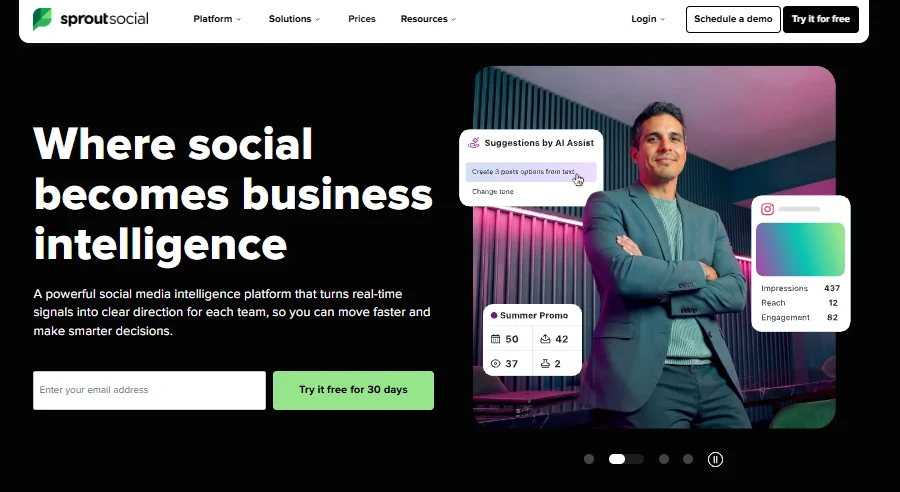
Sprout Social's influencer product, built on its 2023 Tagger acquisition and now fully integrated, sits inside a much larger social media management suite. Tagger no longer exists as a standalone product, which matters if you are reading older reviews.
Best For: Social media teams that need advanced scheduling, listening and performance tracking alongside influencer campaigns.
Platform Coverage: Instagram, TikTok, YouTube, Facebook, X, LinkedIn, Pinterest and Threads across the wider suite.
Pricing & Commitment: The influencer module starts at $1,599/month per user, with each additional seat at $600/month, sold separately from any base plan. The core Sprout platform is priced from $199 per seat per month. Annual contracts with auto-renewal and a 30-day cancellation window.
Reviews: 4.5 / 5.0 (Capterra)
Both are enterprise purchases at similar price points, so the question is what else you need from the vendor. NeoReach is influencer-only, with deeper campaign analytics and the option of managed execution. Sprout Social bundles influencer marketing into a social suite covering publishing, listening and engagement across eight networks.
If your team already runs social operations in Sprout, adding the influencer module avoids onboarding a second vendor entirely, and the interface is markedly better than NeoReach's. If influencer marketing is a standalone program with its own budget and reporting line, NeoReach's specialisation is the stronger argument.
NeoReach remains a capable enterprise platform if you have the budget and the team to use it. The 400+ data points, custom API workflows and managed campaign services are real advantages for a Fortune 500 program with dedicated influencer headcount.
The reasons to look elsewhere have not changed much, and in 2026 they have sharpened. A 3M profile database is now among the smallest on this list, the interface complaints persist, micro-influencer depth is thin exactly where DTC budgets are going, and pricing is quoted annually through sales rather than published.
Each alternative closes a different gap. Modash and HypeAuditor deliver far larger databases at or below NeoReach's entry price, both with free or trial access. GRIN now starts free with month-to-month billing after its 2026 repricing. Upfluence adds Amazon and Shopify revenue attribution. Aspire brings an inbound marketplace and UGC licensing, and Captiv8, CreatorIQ, Traackr and Sprout Social compete at the enterprise end with newer technology.
For brands that want enterprise capability without enterprise procurement, Influencer Hero is the strongest all-round alternative in 2026. It covers 450M+ creators across eight platforms with real micro-influencer depth, publishes its pricing from $649/month, bills monthly with no lock-in, and keeps creator payout fees at 0.4%.
Ready to see how it handles your next campaign end to end? Book a Demo with the Influencer Hero team.


NeoReach excels at enterprise-level campaigns but can be costly and complex for smaller teams or brands new to influencer marketing. Alternatives like Influencer Hero offer more flexible pricing, intuitive interfaces, and advanced automation, making them better suited for a wider range of users.
Influencer Hero stands out with its AI-driven outreach automation, personalized messaging workflows, and robust eCommerce integrations, allowing brands to efficiently scale influencer campaigns with less manual effort.
Yes. Most platforms, including Influencer Hero, provide comprehensive real-time analytics, ROI dashboards, and content performance tracking to help you optimize your campaigns and maximize returns.
Influencer Hero is notable for its integrated affiliate program management and customizable creator storefronts, empowering brands and influencers to drive sales and track revenue all within one platform.
Definitely. Many alternatives such as Influencer Hero, Upfluence, and Modash offer native integrations with Shopify, WooCommerce, and Amazon, simplifying gifting, affiliate tracking, and sales attribution for online retailers.
Schedule a Demo with one of our media experts below.