Top 10 IZEA Flex Alternatives in 2026: Features, Pricing and Review

March 18, 2024
|
Published

September 8, 2026
|
Updated

13 minutes
|
Reading

Influencer Performance Marketing Course | VOUCHER: IMC100

Malena Garcia
| Author

Malena Garcia
| Author

Drive ROI With Influencers

Global Influencer Database
ALL-IN-ONE platform
CRM, Affiliate, UGC & More
Top 10 IZEA Flex Alternatives in 2026: Features, Pricing and Review
IZEA has served brands since 2006 and IZEA Flex was its flagship self-serve influencer marketing platform, winning Best Influencer Marketing Platform at the 2024 MarTech Breakthrough Awards. If you're searching for alternatives in 2026, the reason has probably changed.
On 31 March 2026, IZEA launched ZED, a creator economy marketing operations platform that its own announcement describes as built exclusively for IZEA's employees and clients. ZED has taken over from the Flex branding as the company's technology backbone, and IZEA now positions itself as a full-service creator economy agency powered by ZED rather than a self-serve software vendor. Its site lists ZED, Marketplace and FormAI under Technologies, with Flex no longer in the lineup.
In practice that means brands who wanted to license Flex and run campaigns in-house are looking at an agency engagement instead. If you want software you operate yourself, you need somewhere else to go. Confirm current availability with IZEA directly, since the transition is recent.
This guide compares the top 10 IZEA Flex alternatives in 2026 on pricing, features, commitment and usability.
- Influencer Hero
- Modash
- Upfluence
- Captiv8
- HypeAuditor
- CreatorIQ
- Traackr
- Aspire
- GRIN
- Sprout Social
Why Look for IZEA Flex Alternatives in 2026
IZEA Flex had real strengths: AI-powered discovery, affiliate management and flexible campaign workflows for mid-sized and enterprise teams. Four things now push brands elsewhere.
Flex Has Been Folded Into an Agency Platform
This is the decisive change. ZED launched in March 2026 as IZEA's creator economy operations platform, described in the company's own release as built exclusively for its employees and clients, with CEO Patrick Venetucci calling it "Salesforce for the creator economy." IZEA's Q1 2026 results emphasised a strengthened enterprise client base and a deliberate shift toward full-service engagements rather than self-serve brands. If your plan was to buy software and run your own program, that path has narrowed considerably.
Faulty Communication and Messaging Tools
Flex users repeatedly reported problems with in-platform messaging: threads not delivering, notifications missing and conversations with creators breaking down mid-campaign. When your outreach tool drops messages, deals stall for reasons you can't see. Our outreach tools roundup compares platforms that handle this properly.
Steep Learning Curve and UX Issues
Flex carried a 3.9 rating on G2, the lowest of any platform in this comparison. Reviewers cite poor navigation, features buried several clicks deep and controls that aren't intuitive. Support was generally described as helpful and responsive, but users noted needing repeated contact for basic tasks because the platform itself was hard to work through.
Core Features Left on the Roadmap
A recurring complaint was capabilities that were promised rather than shipped. Brands evaluating Flex found parts of the workflow still in development, which is a difficult position when you're committing budget to a platform for a year. With Flex now superseded by ZED, those roadmap items are unlikely to arrive in the product you were evaluating.
Criteria for Suggesting IZEA Flex Alternatives in 2026
To compare the different platforms, we focused on central criteria that all must meet:
- Social Media Platform Coverage: The extent to which each platform supports major social networks such as Instagram, YouTube, TikTok, Facebook and Pinterest.
- Reviews: Ratings and recurring feedback themes from G2 and Capterra.
- Pricing and Commitments: The real cost and whether you are locked into an annual contract or can leave month to month.
- Ease of Use (UX/UI): Dashboard design, navigation and onboarding time, especially relevant given Flex's usability complaints.
- Customer Support: Availability and responsiveness of live chat, email and onboarding assistance, and resolution speed.
- Key Features: Influencer discovery, outreach, CRM, reporting, gifting, UGC and content collection, affiliate and payments, storefronts, application pages and AI capabilities.
- Standout Features: The unique or innovative features that differentiate each platform.
IZEA Flex Overview in 2026
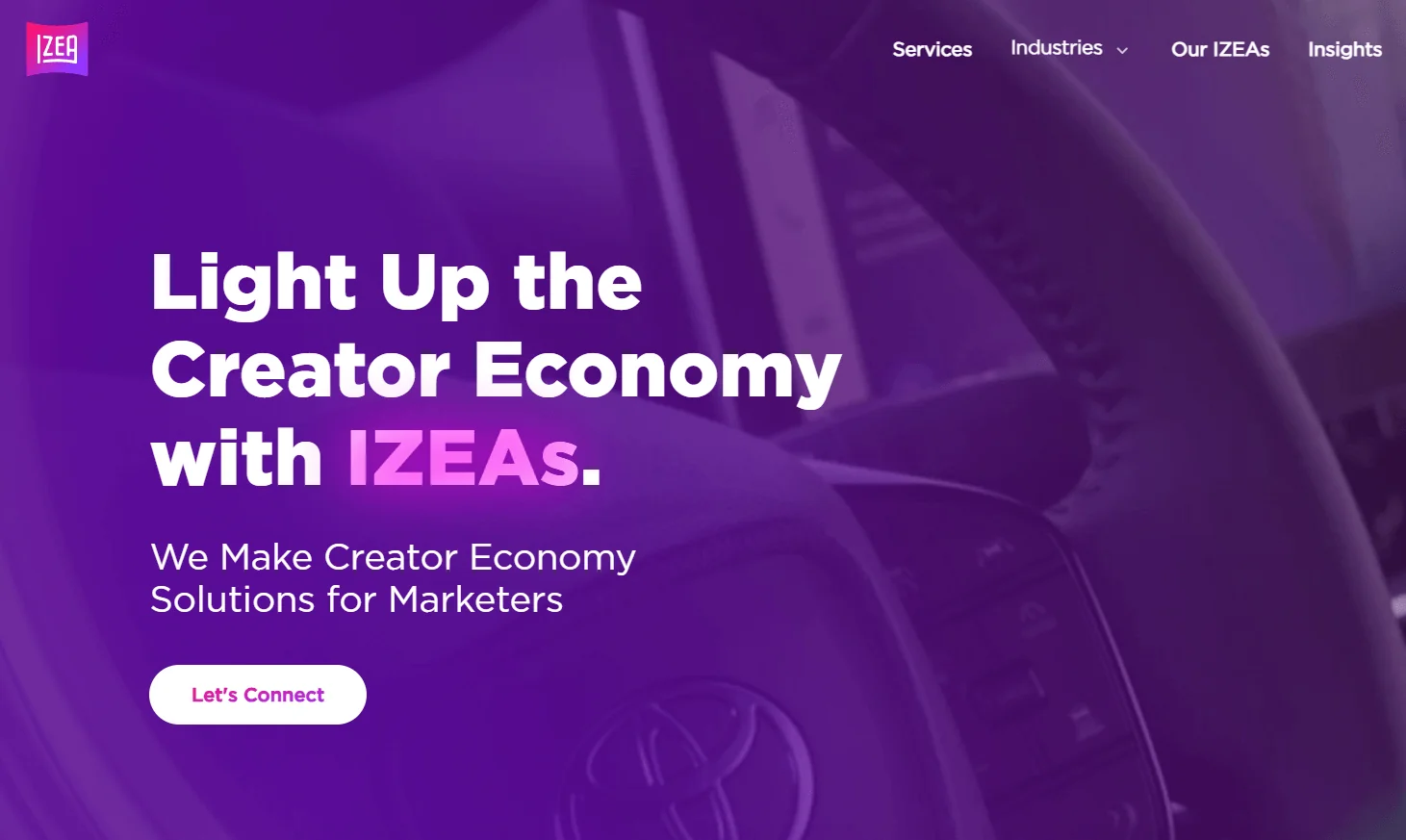
IZEA Flex was a data-centric suite covering creator discovery, contracts, negotiations, offers, payments, campaign tracking and budget management from one interface, with Dynamic Content Requests for UGC. Its distinguishing idea was associations, connecting data across modules for deeper cross-campaign insight.
Best For: Historically, mid-to-large brands wanting customisable campaign workflows and AI-enhanced discovery. In 2026, brands are directed toward IZEA's managed service on ZED rather than self-serve licensing.
Platform Coverage: Instagram, TikTok, YouTube, X (Twitter), Facebook and Pinterest.
Pricing & Commitment: Treat published Flex pricing as legacy. The tiers were a Free plan at $0 with basic listings, 200 AI credits and 3 casting call pitches a month; Marketer Pro at $129/month with 60,000 AI credits, unlimited pitches, social analytics and priority support; and a Power plan from $500/month adding flexible payments, unlimited campaigns, contracts and full AI tooling, with additional fees applying. Earlier Flex pricing ran Starter at $130/month annually or $165 month-to-month, and Power at $500/month annually or $600 month-to-month for up to three users. With ZED now positioned as agency-client software, confirm what is actually available to you directly with IZEA.
Reviews: 3.9 / 5.0 (G2)
Ease of Use (UX/UI): Automated workflows and performance analytics drew praise, but navigation, buried features and non-intuitive controls were persistent complaints, with some key features still in development.
Customer Support: Generally helpful and responsive, though users noted that platform complexity meant repeated contact for basic tasks.
Best Features
- Associations Across Modules: Connect creator, campaign and content data across the platform for cross-cutting insight, the genuinely distinctive part of Flex.
- Budget Suite: Real-time visibility into campaign expenditure with budget locking at campaign level and alerts before overspend.
- Contracts Module: Author contracts in-platform and send for multiparty e-signature, compliant with strict electronic signature law.
- Dynamic Content Requests: Structured UGC briefs that let creators submit assets without posting to their own channels.
- ContentMine and ShareMonitor: Content discovery and share tracking to monitor how creator content spreads.
- Tracking Links and Martech Integrations: Sales impact tracked to product and customer level by connecting to your existing stack.
Pros and Cons
10 Alternatives to IZEA Flex for Effective Influencer Marketing in 2026
1. Influencer Hero
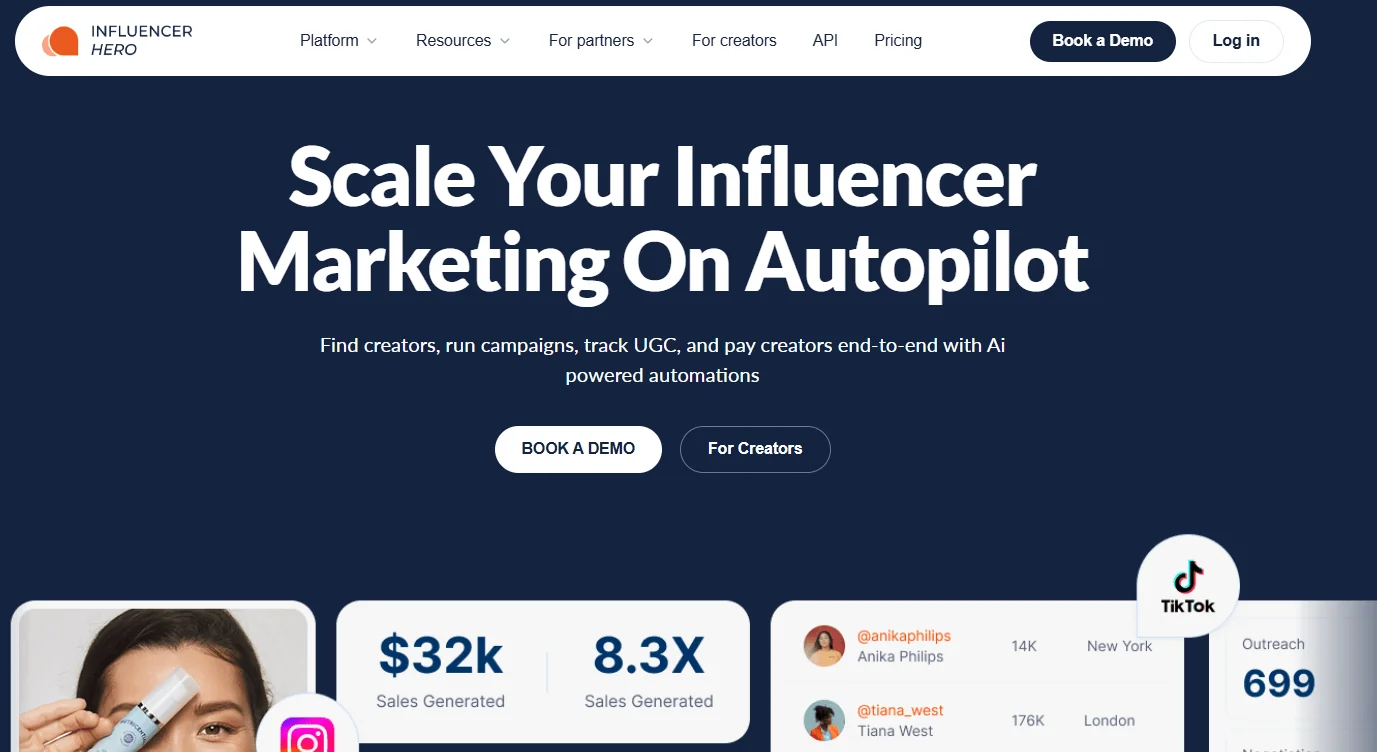
Influencer Hero is an all-in-one influencer marketing platform covering discovery, outreach, CRM, gifting, affiliate, UGC, creator storefronts, application pages and reporting from one dashboard. For brands leaving Flex, the relevant point is that it stays self-serve software you operate yourself, with published pricing and no agency engagement required.
Best For: Brands and agencies that want to run their own program end to end, with the workflow depth Flex promised and the usability it lacked.
Platform Coverage: Instagram, TikTok, YouTube, Facebook, Pinterest, Snapchat, X and Twitch, with a 450M+ creator database.
Pricing & Commitment: Standard $649/month, Pro $1,049/month, Business $2,490/month, plus custom and agency plans. Published openly, billed monthly, no onboarding fees and no annual lock-in.
Reviews: 5.0 / 5.0 (Capterra)
Best Features
- 450M+ Creator Database: AI-assisted search across eight platforms with audience demographics, engagement filtering and fake-follower detection.
- Reliable Multi-Step Outreach: Automated sequences sent from your own domain with AI follow-ups built from the original thread, addressing the messaging failures Flex users reported.
- Full CRM and Content Review: Pipelines, tasks, content approval with predefined rejection reasons and unlimited revision rounds.
- Affiliate, Payments and Storefronts: Discount codes, commission tracking, branded creator shops and payouts at 0.1% to 0.5% fees.
- Broad eCommerce Integrations: Shopify, WooCommerce, Magento and BigCommerce, plus Klaviyo, Omnisend and Mailchimp, with a dedicated account manager and 24/7 live support.
Pros and Cons
IZEA Flex vs Influencer Hero
The most practical difference in 2026 is availability. Flex has been absorbed into ZED, which IZEA describes as built for its own clients, so licensing software and running your own program means looking elsewhere. Influencer Hero publishes its pricing, bills monthly and lets you start immediately.
On the product itself, Influencer Hero addresses Flex's two loudest complaints directly. Outreach runs on reliable automated sequences from your own domain rather than in-platform messaging that reviewers reported dropping threads, and the interface consistently draws praise where Flex drew a 3.9 G2 rating for buried features and awkward navigation.
Flex keeps an edge on native contract authoring and e-signature, which Influencer Hero handles through a Docusign integration instead. Book a Demo to see the workflow on your own catalog.
2. Modash
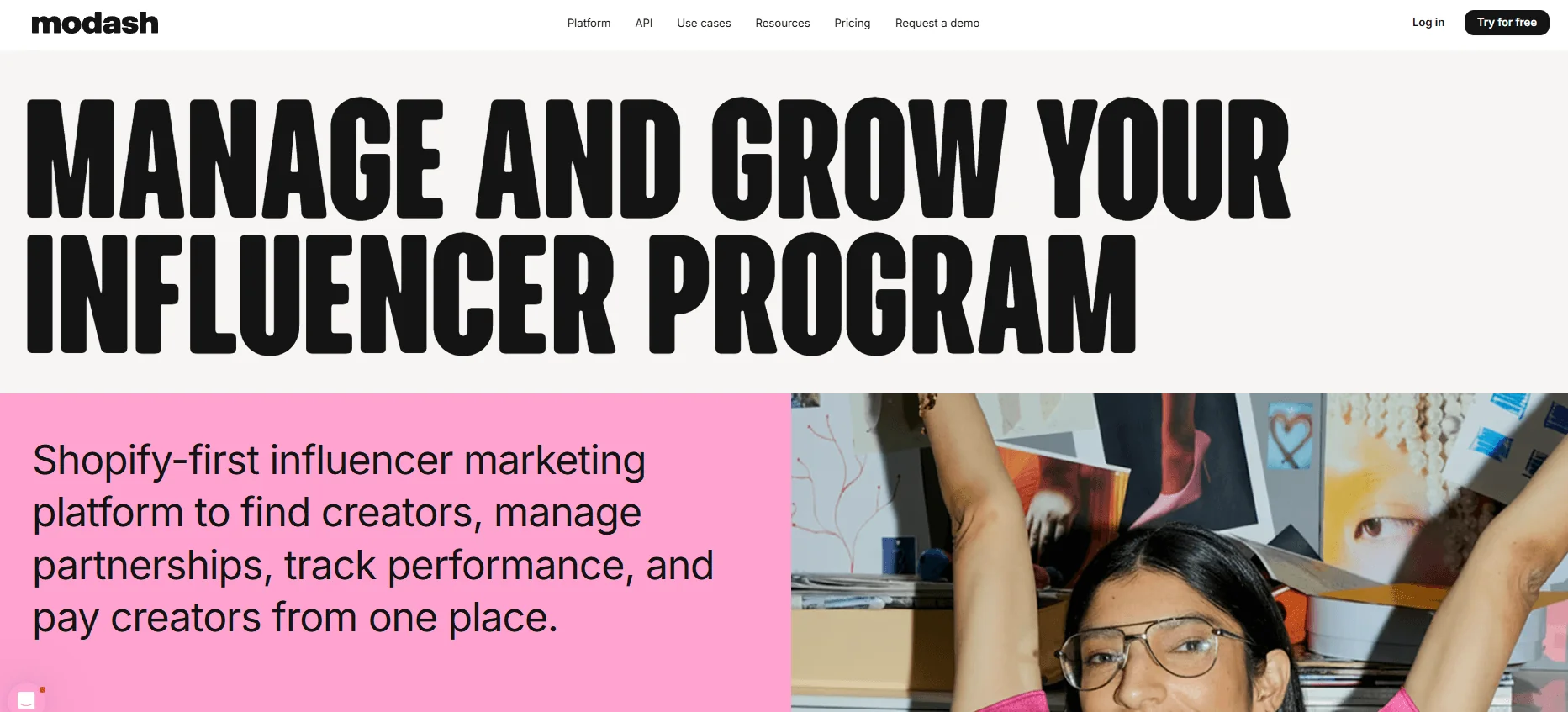
Modash is a discovery-first platform built around a 350M+ creator database across Instagram, TikTok and YouTube, with no opt-in requirement. It surfaces verified emails so outreach happens over real email rather than an in-platform inbox.
Best For: Small teams and DTC brands that want fast discovery and reliable outreach without an enterprise commitment.
Platform Coverage: Instagram, TikTok and YouTube, with limited profile recognition for X and Snapchat.
Pricing & Commitment: Essentials $199/month billed annually, or $299 monthly. Performance $499/month annually, or $599 monthly, adding the Shopify integration and creator payouts with no fee up to $10,000 a year. Enterprise custom, from around $14,700/year. 14-day free trial with no credit card.
Reviews: 4.9 / 5.0 (Capterra)
Best Features
- 350M+ Creator Database: Open-web discovery with audience-quality and fake-follower analysis on every profile.
- Verified Email Outreach: Sequences sent from your own Gmail or Outlook, stopping automatically on reply.
- AI-Powered Discovery: Natural language queries or image inputs to find matching creators.
- Find Your Fans: Surfaces creators already following and engaging with your brand.
- Live Content Monitoring: Track stories, posts and performance in real time.
Pros and Cons
IZEA Flex vs Modash
Modash fixes the two problems Flex reviewers complained about most. Outreach runs through your own email rather than a platform inbox that reportedly dropped messages, and the interface is consistently rated for clarity where Flex sat at 3.9.
It is a narrower product though. There is no contracts module, no budget suite and no cross-module data associations, so if those were the reasons you chose Flex, Modash covers discovery and outreach rather than the whole workflow.
3. Upfluence
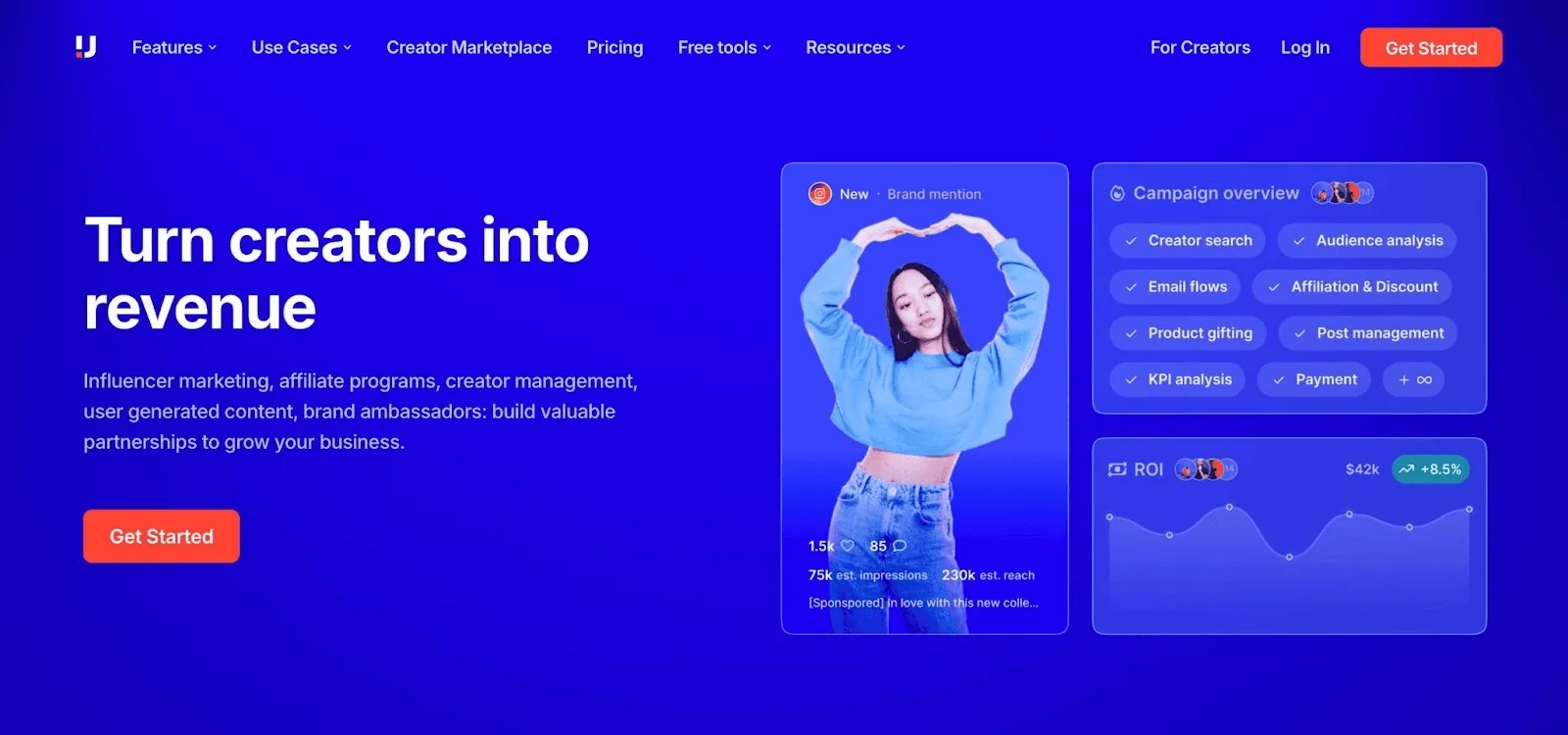
Upfluence is an all-in-one platform built around eCommerce revenue attribution, with native Shopify and Amazon integrations and a customer-to-creator matching feature that identifies buyers who already have audience reach.
Best For: eCommerce brands and agencies that want influencer activity tied to tracked revenue across marketplaces.
Platform Coverage: Instagram, TikTok, YouTube, X, Twitch, Pinterest and WordPress blogs, with a 12M+ creator database.
Pricing & Commitment: Modular rather than tiered. The Search and Contact module starts at $478/month, with a full setup covering search, campaign management and Upfluence Pay at roughly $1,276/month for one seat, about $16,007/year. A required onboarding fee applies and the minimum contract is 12 months. Our Upfluence pricing review has the module breakdown.
Reviews: 4.3 / 5.0 (Capterra)
Best Features
- Customer-to-Creator Matching: Scans your customer base for buyers with audience reach, usually 1% to 3% of your list.
- Native Amazon Integration: Rare in the category and something Flex never offered.
- Jaice AI Assistant: Handles creator selection, messaging and follow-up personalisation at scale.
- Built-In Payments and Compliance: Multi-currency payouts, KYC verification, tax forms and invoicing.
- Social Listening: Track brand mentions, competitor activity and trending topics.
Pros and Cons
IZEA Flex vs Upfluence
Both sell modular pricing where you assemble the layers you need, so the buying experience will feel familiar to a Flex user. Upfluence goes further on revenue, tying creator activity to tracked sales through Shopify and Amazon, and its customer-to-creator matching finds partners hiding in your own order history.
The trade-off is commitment and complexity. Upfluence requires a 12-month contract with an onboarding fee and a realistic setup near $16,000 a year, and reviewers describe a learning curve much like the one Flex was criticised for.
4. Captiv8
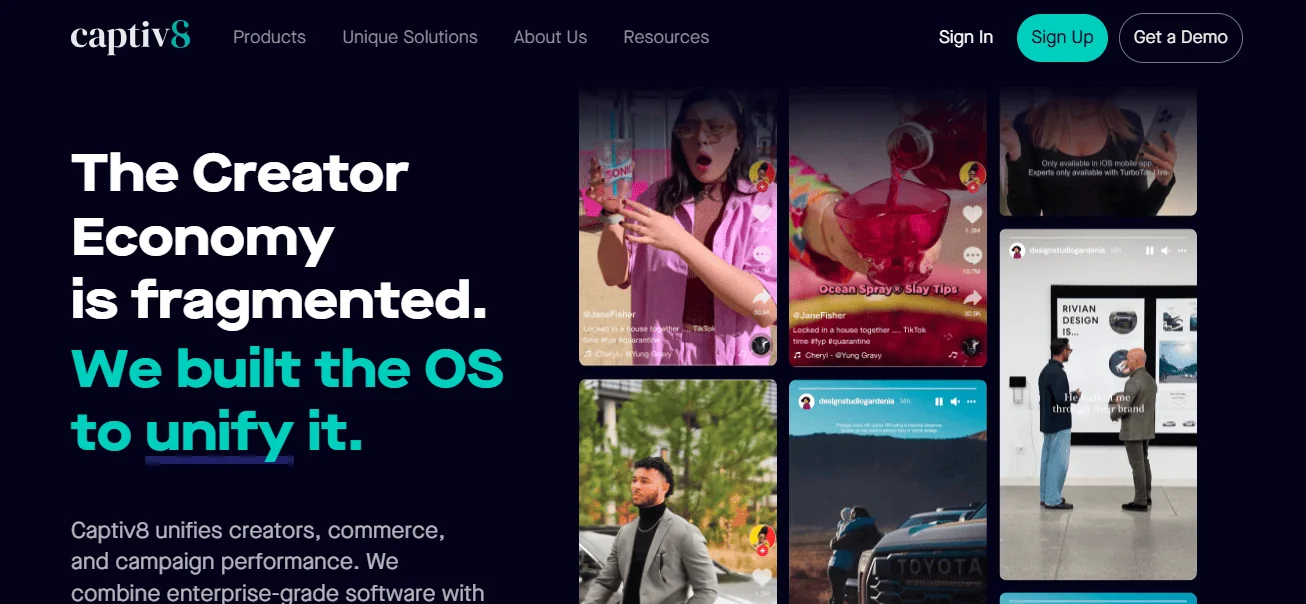
Captiv8 is an enterprise influencer and commerce platform with deep analytics. Publicis acquired it in May 2025 for a reported $150M and merged it with Influential, giving the combined platform 15M+ creators across 120 countries. Its Perplexity partnership added natural-language creator search and AI vetting.
Best For: Enterprise brands and agencies running high-budget programs that need competitive intelligence alongside execution.
Platform Coverage: Instagram, TikTok, Facebook, YouTube, X, Twitch and Snapchat.
Pricing & Commitment: Custom, not published. Industry sources put entry around $25,000/year on an annual or six-month commitment, plus a roughly $3,000 onboarding fee. Affiliate and storefront capabilities are add-ons priced separately. Our Captiv8 alternatives guide compares the enterprise field.
Reviews: 4.6 / 5.0 (G2)
Best Features
- AI Creator Vetting via Perplexity: Natural-language search across 15M+ creators with brand safety scoring.
- Custom Real-Time Dashboards: Drag-and-drop metrics with externally shareable links that need no login.
- Competitive Intelligence: Analyse rivals' creator partnerships, sentiment and audience overlap.
- Social Commerce Suite: Branded storefronts, TikTok Shop partnerships and shoppable creator content.
- Integrated Briefing: Send campaign briefs by email or Instagram DM from inside the platform.
Pros and Cons
IZEA Flex vs Captiv8
For enterprise brands, Captiv8 is the natural landing spot. It matches the scale Flex targeted, adds competitive intelligence and AI search that Flex never had, and comes with dedicated customer success rather than ticket-led support.
Both now sit behind sales conversations rather than self-serve signup, so the buying process is comparable. The difference is that Captiv8 sells you software your team operates, where IZEA increasingly sells you an agency engagement on ZED.
5. HypeAuditor
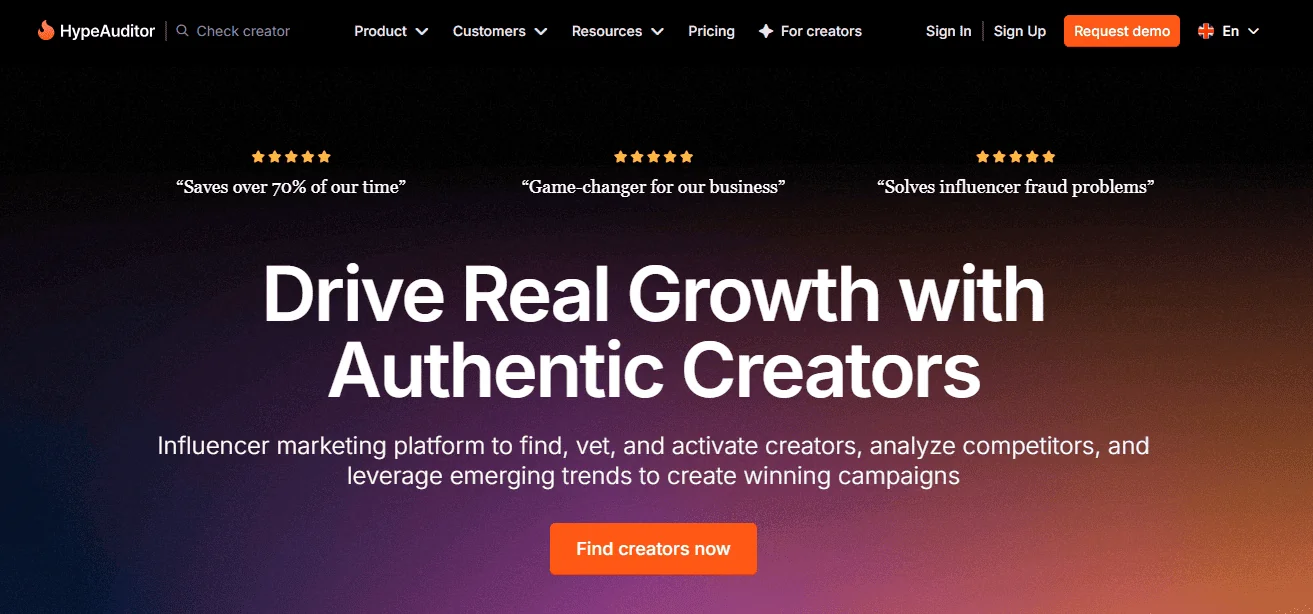
HypeAuditor is the category's authenticity watchdog, with fraud detection frequently cited around 95.5% accuracy across 227M+ creator profiles. It also runs discovery, analytics, CRM and campaign management, gated by usage limits rather than feature locks.
Best For: Teams focused on data accuracy, identifying fraudulent creators and benchmarking competitors.
Platform Coverage: Instagram, TikTok, YouTube, Twitch, X and Snapchat.
Pricing & Commitment: A free tier covers media plans, campaign management and demo versions of the wider toolset, alongside 40+ free audit tools. Basic starts around $299/month billed annually, Pro around $499/month, with Enterprise quoted on data volume and seats. See the wider field in our HypeAuditor alternatives breakdown.
Reviews: 4.8 / 5.0 (Capterra)
Best Features
- Account Quality Score: The category benchmark for spotting fake followers and engagement pods.
- 227M+ Profile Database: Filterable by account quality, niche, keywords and verification status.
- AI Scout: Describe your campaign and get a ranked shortlist of around 50 creators in seconds.
- Custom-Branded Application Pages: Landing pages where creators apply directly to your campaigns.
- Competitive Insights and Social Listening: Monitor rival collaborations to find creators early.
Pros and Cons
IZEA Flex vs HypeAuditor
Flex's discovery was AI-assisted but reviewers found the results hard to trust and the filters awkward. HypeAuditor is built around exactly that problem, with Account Quality Score and fraud detection that let you verify a creator's audience before committing budget.
It also has a genuinely free tier, which matters for a brand that lost access to Flex's $0 plan. What it doesn't replace is Flex's contracts module and budget suite, so it works best paired with a platform that handles execution.
6. CreatorIQ
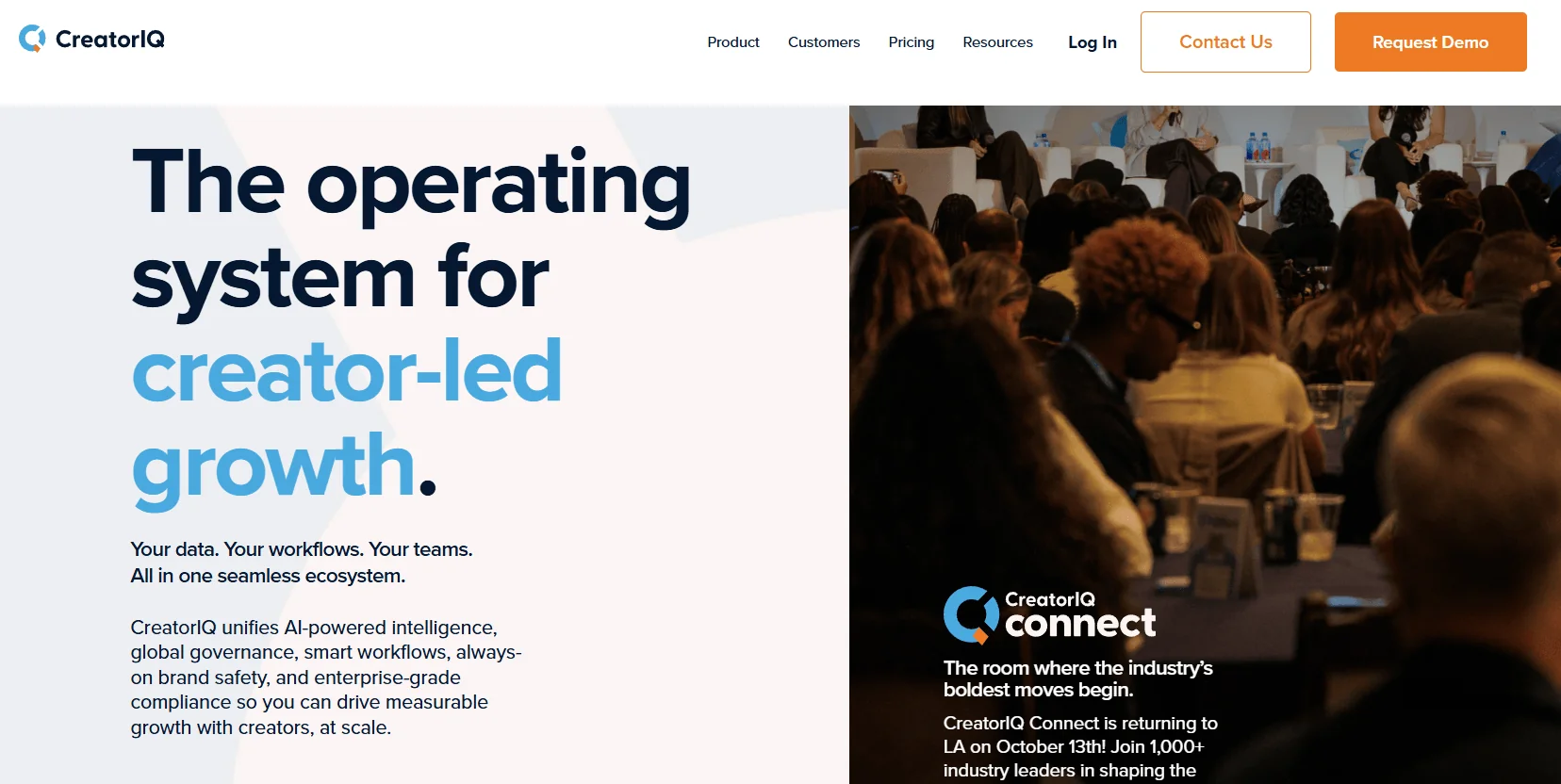
CreatorIQ is an enterprise platform built for global brands that need data governance, customisable workflows and detailed analytics across markets. It runs creator programs for Disney, Unilever, Ralph Lauren, Nestlé and Sephora.
Best For: Enterprise brands needing data governance and detailed influencer analytics across global markets.
Platform Coverage: Instagram, TikTok, YouTube, Facebook, Pinterest, Twitch and X.
Pricing & Commitment: No public rates. Third-party transaction data puts annual contracts from around $30,000, with a median near $39,250. Annual only, no monthly billing, no free plan and no self-serve trial, with roughly two months to implement. Our CreatorIQ alternatives guide covers the category.
Reviews: 4.6 / 5.0 (G2)
Best Features
- Live API-Driven Metrics: Direct connections to TikTok, Meta and YouTube for compliant, accurate reporting.
- AI-Driven Discovery: Granular niche search with filters and natural-language queries.
- Automated Bulk Outreach: Personalised emails, campaign briefs and alias domains to keep outreach on-brand.
- Payments in 60+ Currencies: Across 80-plus markets with tax compliance handled automatically.
- ExchangeIQ API: Pushes creator data into the wider marketing stack.
Pros and Cons
IZEA Flex vs CreatorIQ
CreatorIQ is what Flex aspired to be for enterprise buyers: cross-market data governance with metrics pulled live from platform APIs rather than estimated, plus payments across 60+ currencies. Its 4.6 G2 rating against Flex's 3.9 reflects a considerably smoother experience.
The gap is cost and speed. CreatorIQ starts around $30,000 a year on annual-only terms with roughly two months to implement, where Flex's Marketer Pro tier was $129 a month. This is the right move only if your program genuinely operates at that scale.
7. Traackr
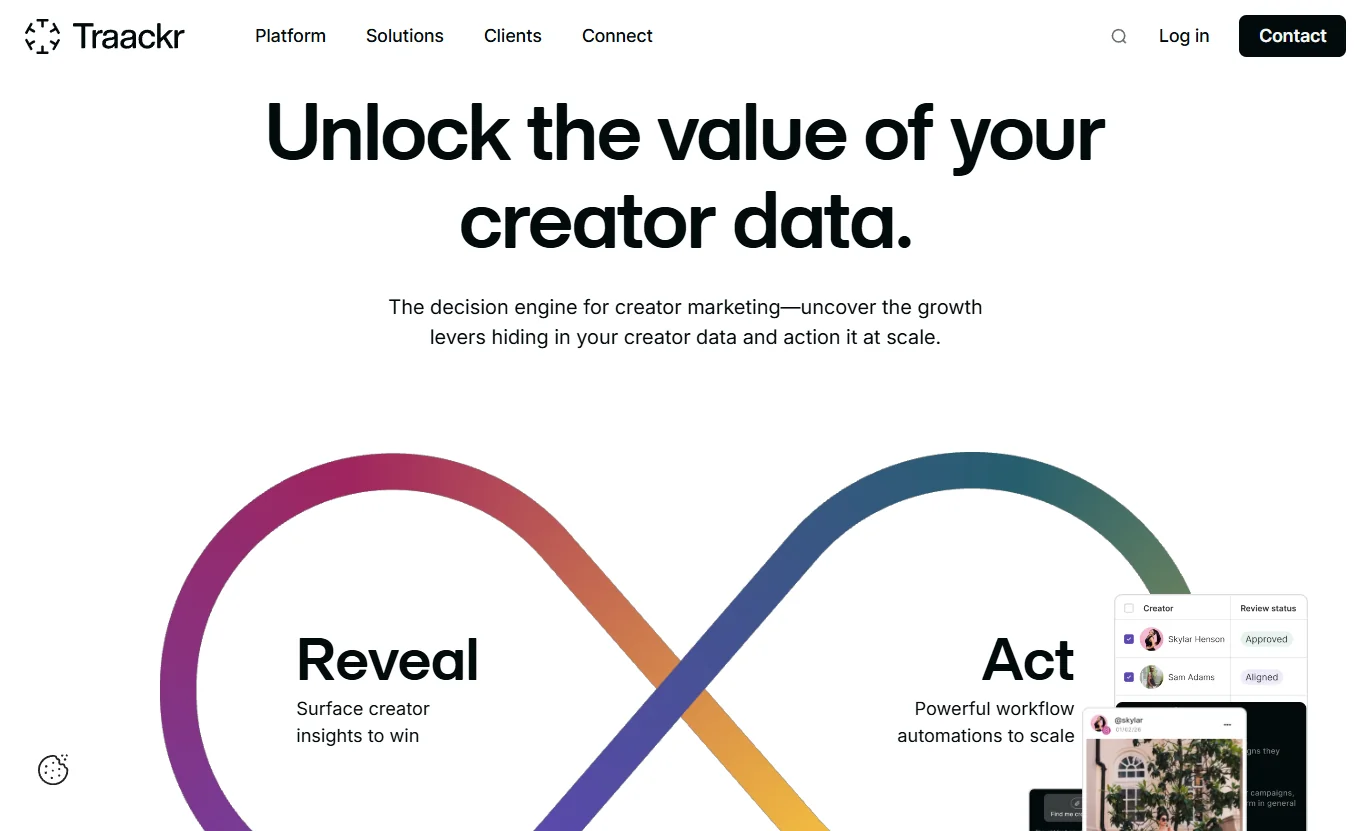
Traackr focuses on optimising influencer spend and benchmarking performance across regions and campaigns, with a global database of 6M+ creators and its proprietary Brand Vitality Score.
Best For: Brands that want to optimise influencer spend and benchmark performance across markets and competitors.
Platform Coverage: Instagram, TikTok, YouTube, Facebook, Pinterest, X, Snapchat, Twitch and LinkedIn.
Pricing & Commitment: Begins at $32,500 annually on the entry-level Standard plan, with custom plans from $55,000 or more. Annual commitment required. Our Traackr alternatives guide compares the field.
Reviews: 4.3 / 5.0 (G2)
Best Features
- Brand Vitality Score: A proprietary metric combining visibility, trust and impact for competitor benchmarking.
- Budget Planning Tools: Predictive insights and historical data to allocate spend and forecast ROI, the closest match to Flex's Budget Suite.
- Detailed Cost Metrics: Cost-per-click, cost-per-engagement and cost-per-view at campaign level.
- Automated Outreach: Message templates, scheduled follow-ups and branded application pages.
- Nine-Platform Coverage: The broadest social footprint on this list, including LinkedIn.
Pros and Cons
IZEA Flex vs Traackr
If Flex's Budget Suite was what kept you on the platform, Traackr is the closest replacement. Its budget planning, cost-per-metric reporting and Brand Vitality Score go deeper on spend efficiency than Flex managed, across nine platforms rather than six.
Two caveats worth knowing. At roughly $32,500 a year it's the most expensive entry point here, and reviewers report lag and syncing problems that will feel familiar to anyone who left Flex over performance.
8. Aspire
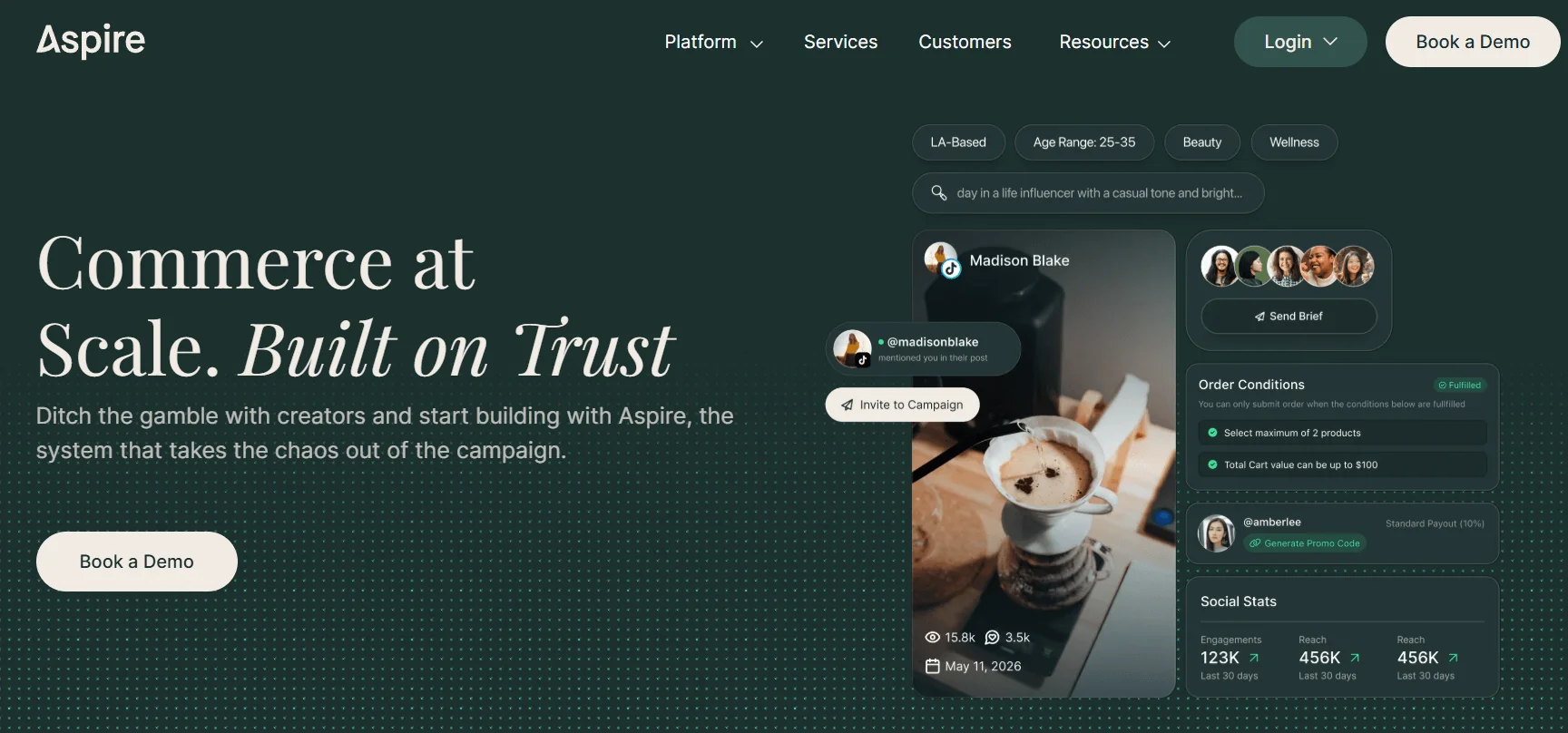
Aspire pairs outbound creator search with an inbound marketplace of over a million creators who apply to campaigns, plus CreatorStores and built-in UGC licensing. It has paid out more than $150M to creators across 900+ customers, including HelloFresh, Dyson and Samsung.
Best For: Brands scaling influencer and UGC efforts that want inbound applications and content rights handled in-platform.
Platform Coverage: Instagram, TikTok, YouTube, Facebook and Pinterest.
Pricing & Commitment: Quote-based, typically starting around $2,299/month on a required annual agreement plus a one-time onboarding fee. Pricing is per user. No free trial.
Reviews: 4.0 / 5.0 (Capterra)
Best Features
- Dual Discovery Model: Outbound search plus a 1M+ inbound creator marketplace.
- UGC Licensing with Term Sheets: Secures reuse rights automatically, going further than Flex's Dynamic Content Requests.
- CreatorStores: Branded shoppable storefronts giving creators a reason to keep promoting.
- Shopify Gifting and Affiliate: Promo codes, gifting carts, affiliate tracking and payouts in one place.
- Automated Workflows: Contracts, approvals and follow-ups handled with bulk actions.
Pros and Cons
IZEA Flex vs Aspire
Aspire covers the parts of Flex that mattered most operationally: contracts, approvals and structured content requests, then adds UGC licensing with digital term sheets and CreatorStores that Flex never offered. The inbound marketplace also removes the outreach problem entirely, since creators apply to you.
The cost is a real jump, from Flex's $500 Power plan to roughly $2,299 a month on annual terms plus onboarding. Our Aspire alternatives guide compares the marketplace-driven options.
9. GRIN
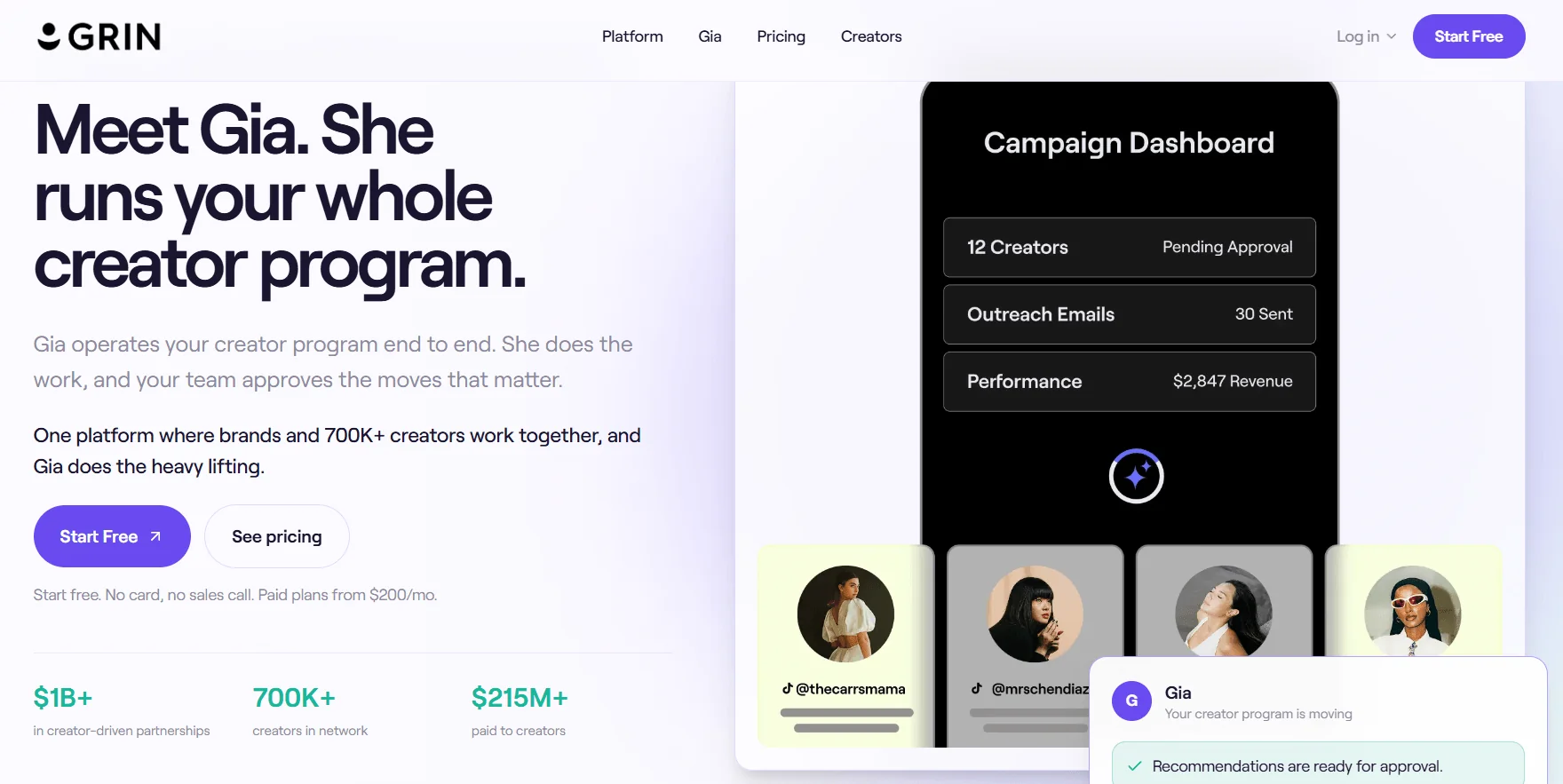
GRIN is a creator management platform built specifically for DTC eCommerce, used by SKIMS, Warby Parker and Rhode. It covers discovery, outreach, gifting, affiliate and ROI reporting with deep Shopify, WooCommerce and Magento integrations.
Its 2026 pricing overhaul replaced custom-quoted annual contracts with five published self-serve tiers billed monthly, including a free plan. For a brand losing self-serve access to Flex, that direction matters.
Best For: DTC brands centralising influencer relationship management, product seeding and revenue attribution in one system.
Platform Coverage: Instagram, TikTok, YouTube, X, Twitch and Snapchat, with a 190M+ creator database.
Pricing & Commitment: Free at $0 with 200 monthly Gia credits, Starter $200/month with 2,000 credits, Growth $500/month for up to 100 active creators, Scale $1,000/month for up to 250, and Complete $1,500/month for up to 500. Month to month, no annual commitment and no required sales call.
Reviews: 4.5 / 5.0 (G2, 483 reviews) and 4.7 / 5.0 (Capterra)
Best Features
- Gia AI Assistant: Sources creators, drafts outreach and benchmarks fair compensation from GRIN's own campaign data.
- Deep eCommerce Integrations: Shopify, WooCommerce and Magento for seeding, discount codes and commission tracking.
- Automated Payment Workflows: Commissions, bonuses and 1099 processing on higher tiers.
- Content Library with Rights Management: Automatic capture and reuse permissions.
- Free Tier to Test With: A $0 plan with no card and no sales call, replacing what Flex's free plan offered.
Pros and Cons
IZEA Flex vs GRIN
GRIN moved in exactly the opposite direction to IZEA this year. Where IZEA pulled its technology behind an agency engagement, GRIN opened up: published tiers, month-to-month billing, a free plan and no required sales call. For a brand that wants to keep running its own program, that's the relevant contrast.
Feature-wise, GRIN is stronger on eCommerce execution with product seeding, discount codes and revenue attribution across three store platforms. It doesn't replicate Flex's budget suite or contract authoring. Our GRIN alternatives guide has the wider comparison.
10. Sprout Social
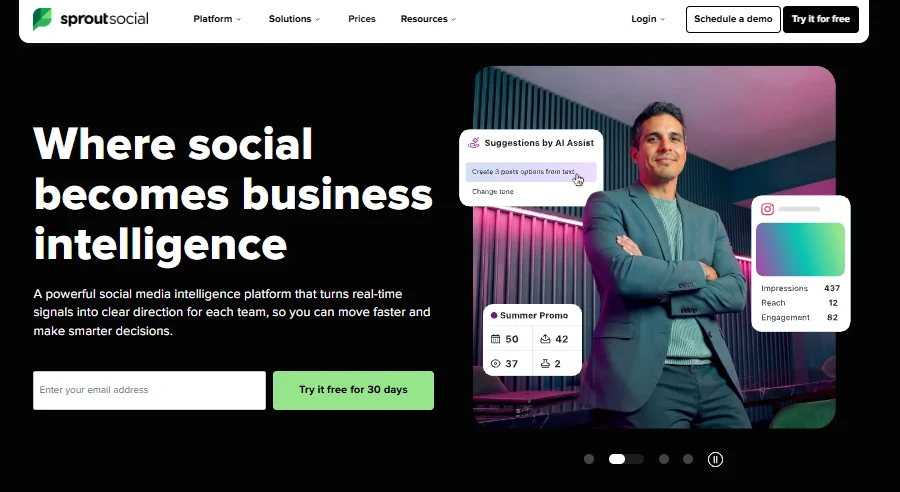
Sprout Social's influencer product, built on its 2023 Tagger acquisition and now fully integrated, sits inside a much larger social media management suite. Tagger no longer exists as a standalone product, which matters if you are reading older reviews.
Best For: Social media teams that need advanced scheduling, listening and performance tracking alongside influencer campaigns.
Platform Coverage: Instagram, TikTok, YouTube, Facebook, X, LinkedIn, Pinterest and Threads across the wider suite.
Pricing & Commitment: The influencer module starts at $1,599/month per user, with each additional seat at $600/month, sold separately from the core Sprout platform priced from $199 per seat per month. Annual contracts with auto-renewal and a 30-day cancellation window.
Reviews: 4.5 / 5.0 (Capterra)
Best Features
- Brand Fit and Safety Scoring: AI evaluates creator alignment with brand values and flags risky profiles.
- Content Approval Workflows: Review and approve every piece of creator content before it goes live.
- EMV and Benchmarking Reports: Earned media value tracking and competitor comparison dashboards.
- Recruit: Branded landing pages for inbound creator applications with automated vetting.
- Unified Social Stack: Influencer data sits next to publishing, listening and engagement.
Pros and Cons
IZEA Flex vs Sprout Social
Sprout solves Flex's usability and communication problems by putting influencer work inside a suite teams already know, with reliable messaging, content approvals and EMV reporting. Coverage extends to eight networks including LinkedIn and Threads.
The cost is the barrier. At $1,599 per seat per month on a 12-month contract, a single seat is roughly triple Flex's Power plan, and it makes sense mainly when your team already runs social operations in Sprout.
Final Thoughts
The question with IZEA Flex in 2026 isn't really whether it's the right tool. It's whether you can still buy it as software. ZED has taken over as IZEA's platform and is described as built for the company's own clients, with IZEA repositioned as a full-service creator economy agency. If you want a managed program run by IZEA's team, that's a legitimate option worth exploring with them directly. If you want to license software and run your own program, you need somewhere else.
For brands that want the full campaign lifecycle in software they control, Influencer Hero is the strongest all-round alternative in 2026. It covers 450M+ creators across eight platforms, runs outreach through reliable automated sequences from your own domain, publishes pricing from $649 a month, bills monthly with no lock-in, and holds a 5.0 Capterra rating against Flex's 3.9 on G2.
Ready to see how it handles your next campaign end to end? Book a Demo with the Influencer Hero team.
Summary
This is some text inside of a div block.
This is some text inside of a div block.
Pricing/Month
Shopify Reviews
This is some text inside of a div block.
This is some text inside of a div block.
This is some text inside of a div block.
This is some text inside of a div block.
This is some text inside of a div block.
This is some text inside of a div block.
This is some text inside of a div block.
This is some text inside of a div block.
This is some text inside of a div block.
This is some text inside of a div block.
This is some text inside of a div block.
This is some text inside of a div block.
This is some text inside of a div block.
This is some text inside of a div block.
This is some text inside of a div block.
This is some text inside of a div block.
This is some text inside of a div block.
This is some text inside of a div block.
This is some text inside of a div block.
This is some text inside of a div block.
This is some text inside of a div block.
Read More

FAQs
What are the top alternatives to IZEA Flex for influencer marketing?

The top alternatives to IZEA Flex for influencer marketing include Influencer Hero, Upfluence, CreatorIQ, Aspire, and Grin. Each platform offers a unique set of features tailored to different aspects of influencer marketing, such as CRM capabilities, eCommerce integrations, and comprehensive analytics, catering to a wide range of marketing needs and strategies.
How do IZEA Flex alternatives compare in terms of platform coverage?
Alternatives to IZEA Flex vary in their platform coverage, with some platforms like Influencer Hero and Aspire offering broad coverage across Instagram, YouTube, TikTok, and Facebook. Others may focus more on specific platforms. It's important to choose an alternative based on the social media platforms where your target audience is most active and where your influencers have the strongest presence.
Can IZEA Flex alternatives support my eCommerce business?
Yes, several IZEA Flex alternatives are well-suited for eCommerce businesses. Platforms like Influencer Hero and Grin specialize in eCommerce integrations, offering features such as influencer gifting, UGC collection, and affiliate payments, which can help drive sales and brand awareness through influencer marketing efforts.
What features should I look for in an IZEA Flex alternative?
When looking for an IZEA Flex alternative, consider features such as an influencer finder, influencer CRM, automated influencer outreach, reporting & analytics, influencer gifting, content & UGC collection, and affiliate marketing capabilities. The importance of each feature will vary depending on your specific marketing goals and the nature of your campaigns.
How do pricing and commitments compare among IZEA Flex alternatives?
Pricing and commitment requirements vary widely among IZEA Flex alternatives. Some platforms like Influencer Hero offer competitive pricing and monthly commitments, making them accessible for startups and smaller brands. In contrast, other platforms may require annual commitments and higher fees, targeting larger organizations with more extensive marketing budgets. It's crucial to evaluate each platform's pricing structure in light of your budget and the scale of your influencer marketing campaigns.




Most Popular Blogs


Drive ROI With Influencer Marketing
Join 1,200+ brands and 150+ agencies scaling creator programs with Influencer Hero.