Best Tools for Influencer Discovery in 2026

March 27, 2026
|
Published

October 12, 2026
|
Updated

12 minutes
|
Reading

Influencer Performance Marketing Course | VOUCHER: IMC100

Lucía Zabala
I Author

Drive ROI With Influencers

Global Influencer Database
ALL-IN-ONE platform
CRM, Affiliate, UGC & More
Best Tools for Influencer Discovery in 2026
Finding the right influencers is one of the most important steps in any successful influencer marketing campaign. But with millions of creators across Instagram, TikTok, and YouTube, discovering the right profiles can quickly become time-consuming and overwhelming. That's where influencer discovery tools come in.
These platforms help brands and marketers identify creators who match their niche, audience, and campaign goals. In this article, we break down the best tools for influencer discovery in 2026, highlighting platforms that make it easier to find relevant influencers, analyze their audiences, and build stronger creator partnerships.
What Is an Influencer Discovery Tool and Why Is It Important in 2026
An influencer discovery tool is a platform that helps brands and marketers find creators who match their target audience and campaign goals. Instead of manually searching social media, these tools use filters and data to identify influencers based on niche, audience demographics, location, engagement rate, and follower size.
They matter because they make discovery faster and more strategic. Brands can quickly identify relevant creators, analyze their audiences, and build influencer lists that align with their marketing objectives. For teams running multiple campaigns in 2026, discovery tools streamline research and improve the odds of finding influencers who drive real results.
What to Look For in an Influencer Discovery Tool in 2026
Choosing the right influencer discovery tool can make a big difference in how efficiently you find and evaluate creators. Many platforms offer similar features, but the best tools provide reliable data, flexible filters, and insights that help you identify influencers who truly match your brand.
When comparing influencer discovery tools, consider the following features:
- Advanced search filters: The ability to filter influencers by niche, platform, location, audience demographics, engagement rate, and follower size.
- Audience insights: Detailed analytics about an influencer's audience, including age, gender, location, and authenticity.
- Engagement and performance data: Metrics that show how actively an audience interacts with a creator's content.
- Fake follower detection: Tools that flag suspicious audience growth or low-quality followers.
- Platform coverage: Support for multiple social platforms such as Instagram, TikTok, YouTube, and sometimes Twitch or LinkedIn.
- Influencer list management: Options to save creators, organize lists, and track potential partnerships.
- Ease of use: A clear interface that lets teams search, compare, and analyze influencers without a steep learning curve.
1. Influencer Hero
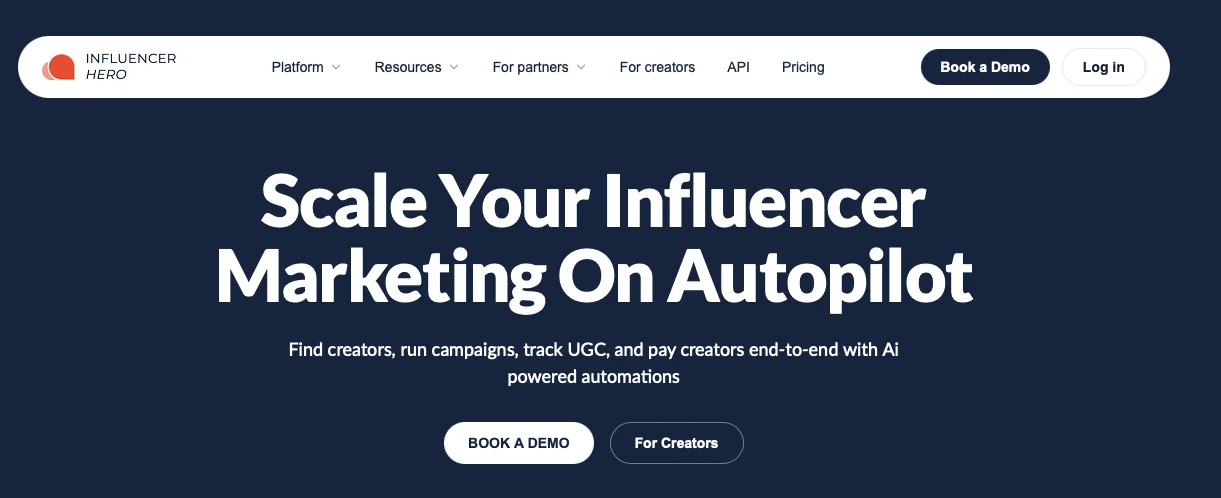
Influencer Hero is an all-in-one influencer marketing platform designed to streamline the entire campaign lifecycle through automation. While it covers end-to-end management, it's anchored by one of the industry's most powerful discovery engines, so brands can identify and vet creators with precision.
Best for: Brands and agencies looking for a high-ROI, automation-focused tool that combines massive scale with advanced vetting.
Pricing starts at: $649 per month (Standard), with Pro at $1,049 and Business at $2,490. Billed monthly with no annual lock-in.
Key Discovery & Platform Features
- 450M+ Discovery Engine: Search a database of over 450 million creators across Instagram, TikTok, and YouTube, so you can find niche creators in any industry.
- AI-Powered Influencer Finder: Describe the creator you want in plain words or upload an image, and the AI visual search surfaces matching profiles. Deep Research turns a brief into multiple searches and rates every result.
- Lookalikes: Find creators similar to your best-performing partners, or expand and refine lookalikes from a whole campaign.
- Deep Audience Analytics & Fraud Detection: Fake-follower detection, audience demographics (age, location, gender), and engagement rate analysis to make sure every creator is authentic.
- All-in-One Performance CRM: Beyond discovery, manage thousands of relationships with a CRM that handles bulk outreach, automated workflows, and relationship tracking at scale.
- Native Outreach & eCommerce Integration: Automated email sequences plus Shopify and WooCommerce syncing to track sales, manage gifting, and calculate real-time ROI.
- Automated Affiliate & Payments: Move from discovery to partnership by running commission-based programs and global creator payments in the platform.
Pros and Cons
2. Influencity
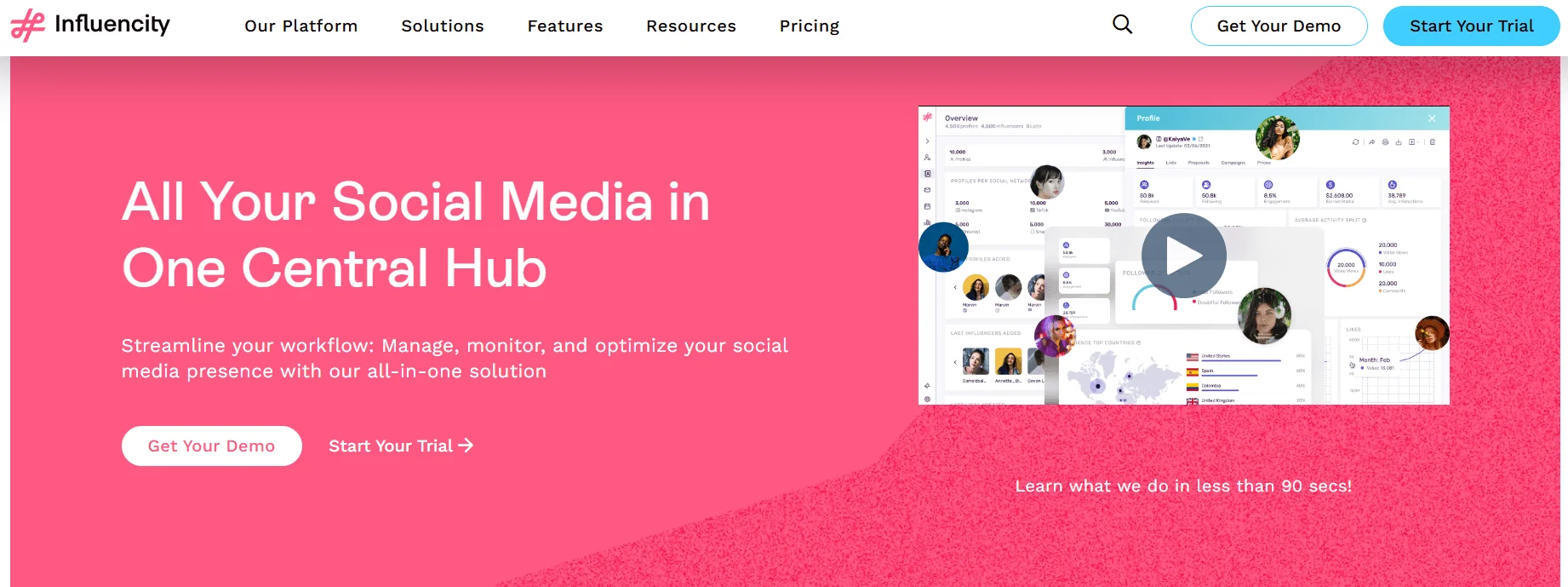
Influencity is a Spain-based influencer marketing platform built around a database of 200M+ creators, with AI-powered search and detailed audience analytics. It suits brands and agencies that want strong discovery on flexible billing rather than an enterprise contract.
Best for: Small and mid-sized brands and agencies that want a large searchable database with solid audience vetting.
Pricing starts at: $158 per month (Discover plan, billed annually). Monthly billing is available, and every plan includes a 7-day free trial.
Key Features
- 200M+ Creator Database: Search creators across Instagram, TikTok, YouTube, and Twitch with detailed filters for creators and their audiences.
- AI-Powered Search: Surfaces relevant creators faster than keyword-only filtering.
- Audience Quality Analysis: Fake follower detection plus demographics like age, gender, and location for every profile you analyze.
- List Management & IRM: Save, organize, and track discovered creators, then move them into campaigns and email sequences.
Pros and Cons
3. Upfluence
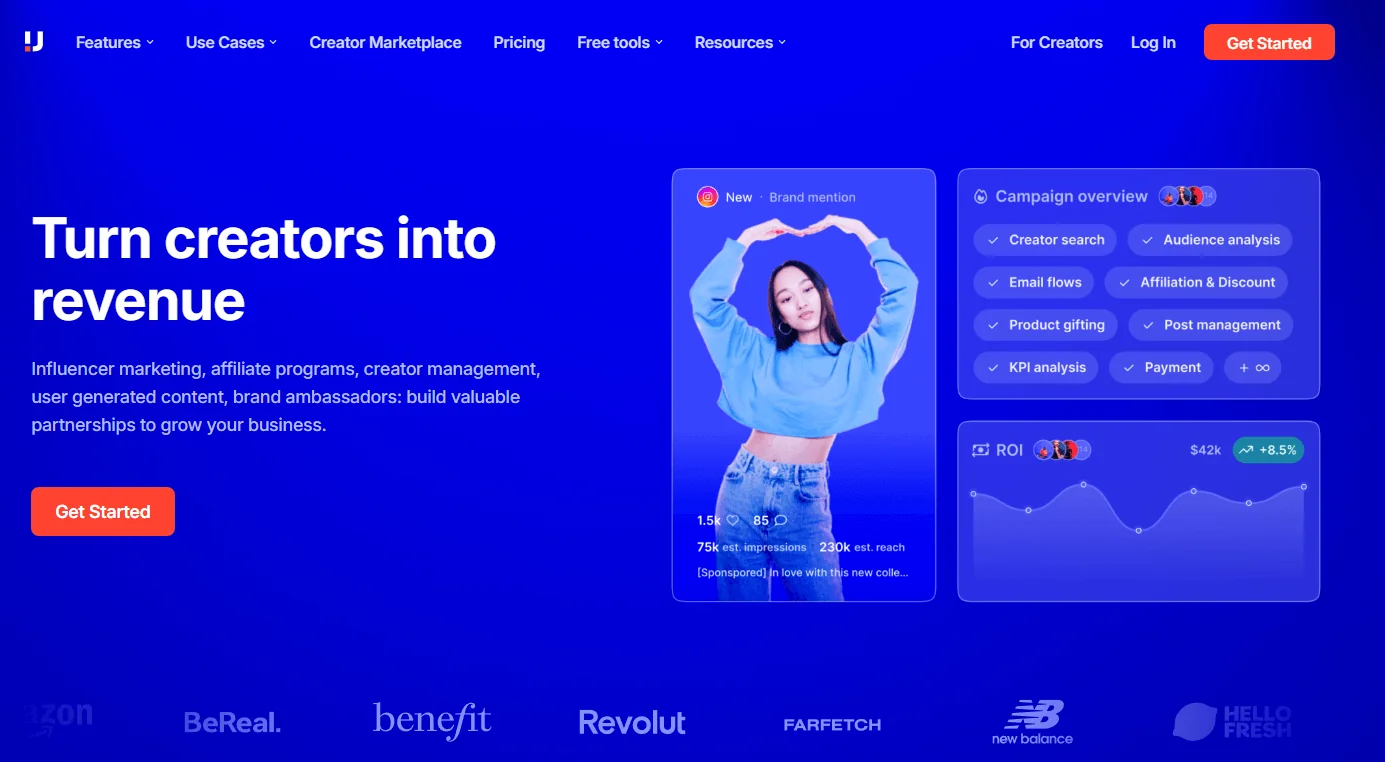
Upfluence stands out by helping brands turn their own customers and site visitors into brand ambassadors. Its Shopify and Amazon integrations enable a unique customer-to-creator identification process.
Best for: eCommerce brands that want to leverage their existing customer base for authentic influencer and affiliate campaigns.
Pricing starts at: Around $478 per month for entry modules, with full setups typically around $16,000 per year on an annual commitment.
Key Features
- AI-Powered Social Listening: Finds influencers already talking about your brand or niche, so you can prioritize existing brand affinity.
- eCommerce "Live Capture": Identifies influential customers who buy from your Shopify or WooCommerce store and turns them into ambassadors.
- Global Creator Indexing: Uses AI to scan millions of profiles across Instagram, YouTube, TikTok, and Pinterest without requiring creator authentication.
- Chrome Extension Discovery: Analyze creator metrics and audience demographics while browsing social feeds in real time.
Pros and Cons
4. HypeAuditor
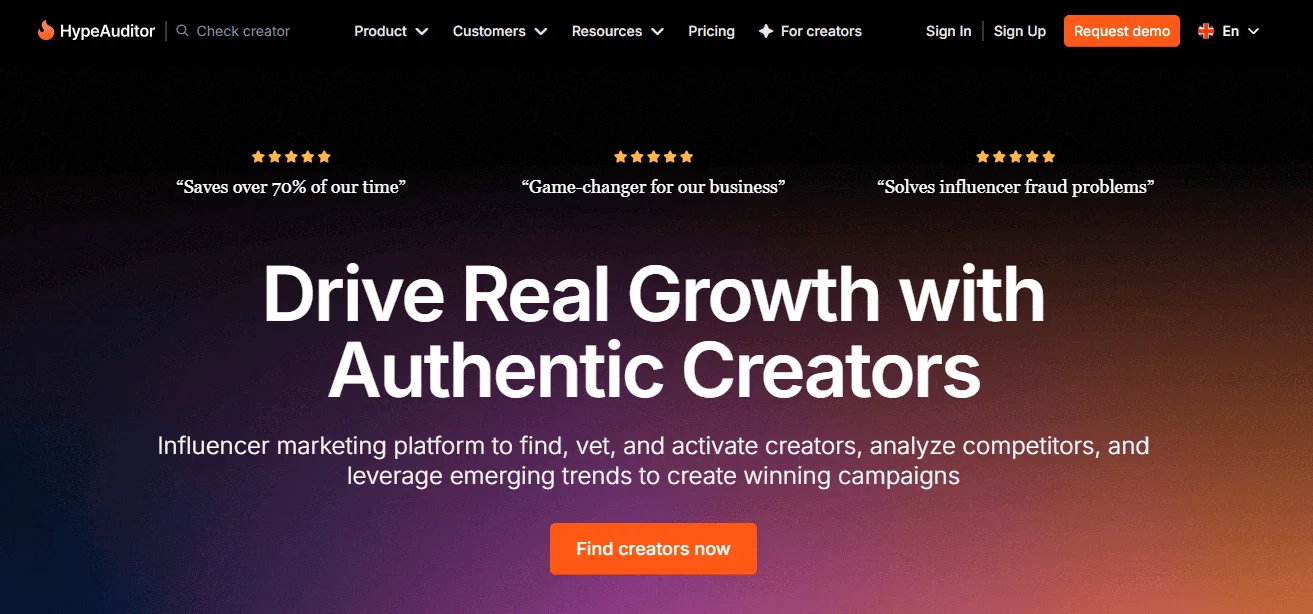
HypeAuditor is widely recognized as the industry standard for audience quality vetting and fraud detection, with a database of 227M+ profiles. It focuses on deep analytical insights so brands only partner with authentic, high-quality creators.
Best for: Brands that prioritize audience integrity and need detailed competitive tracking and fraud analytics.
Pricing starts at: Free plan plus 40+ free tools; paid plans from around $299 per month (Basic, billed annually), with Pro around $499 and Enterprise on quote.
Key Features
- Audience Quality Score (AQS): A proprietary 1–100 metric that works like a credit rating for an influencer, detecting engagement pods and suspicious follower growth.
- Competitive Discovery: See which influencers your competitors work with and spot high-potential rising stars in the same categories.
- Micro-Niche Keyword Search: AI scans captions and bios for hyper-specific keywords, so creators are truly active in a particular subculture.
- Audience Overlap Insights: Avoid hiring multiple creators who share the same followers and maximize unique reach.
Pros and Cons
5. Hypefy
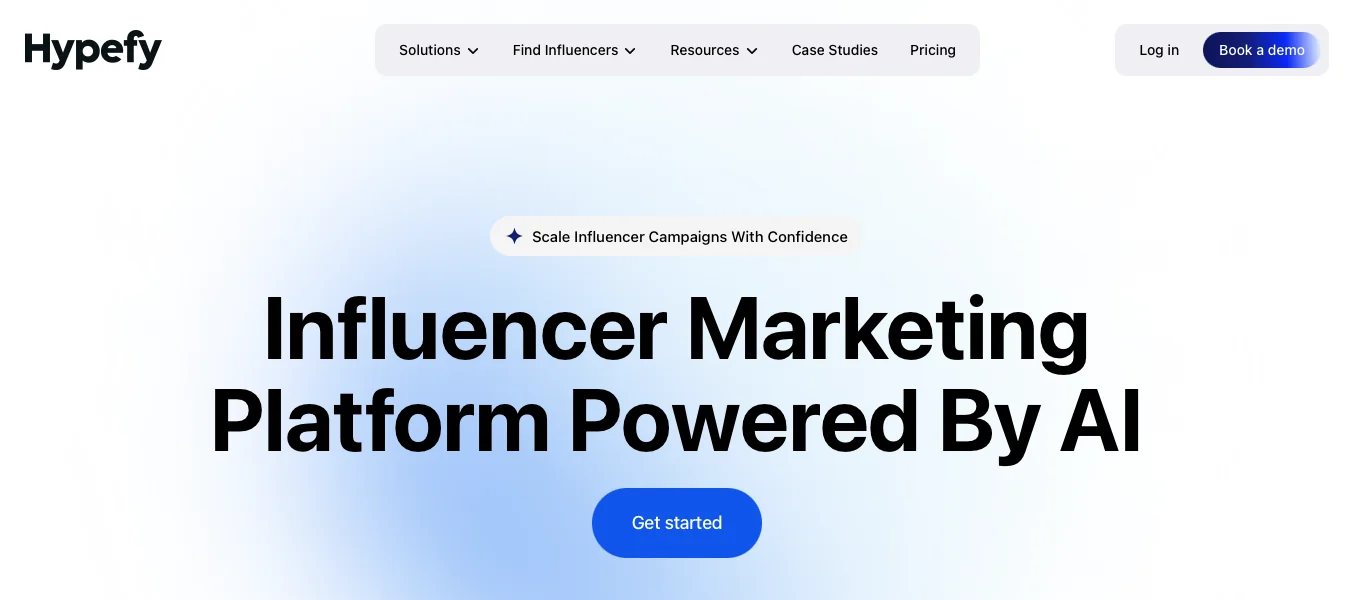
Hypefy is an AI influencer marketing platform that turns a campaign brief into a scored shortlist of Instagram and TikTok creators in minutes. Brands describe their audience, industry, and budget, and Hypefy matches them against more than 250 million creators.
The creators a brand chooses then move straight into outreach, contracts, and payment without leaving Hypefy.
Best for: Brands and agencies running multi-market Instagram and TikTok campaigns that want a launch-ready shortlist from a plain brief.
Pricing starts at: Budgets from €2,500, with the minimum depending on the market. There's no subscription, nothing is charged for browsing or building shortlists, and one campaign budget is invoiced once when the campaign goes live. Brands can try the shortlist builder for free before speaking to anyone at Hypefy.
Key Features
- Brief-to-Shortlist Matching: A first-pass shortlist takes about five minutes, and a fully reviewed, launch-ready list usually arrives in under an hour.
- AI-Generated Briefs: Hypefy turns a brand's goals, audience, and content preferences into a tailored campaign brief.
- Audience Match Score: The shortlist is ranked by how well each creator's audience matches the brand's customer profile.
- A Fair Rate on Every Match: Smart Pricing sets each creator's rate from recent post performance, so brands can see what the shortlist will cost before launch.
- Instagram and TikTok Side by Side: Hypefy applies the same matching and pricing logic to both platforms, so creators from each one are easy to compare.
Pros and Cons
6. CreatorIQ
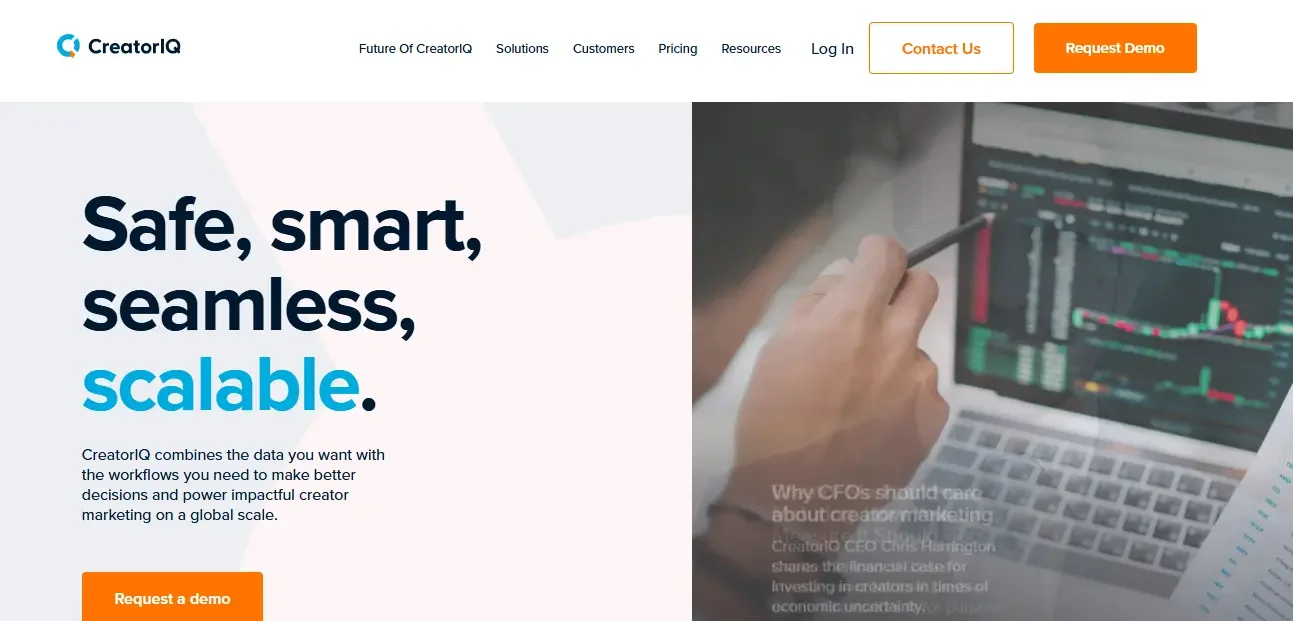
CreatorIQ is an enterprise-grade platform built for global organizations that need robust governance across departments and regions. It provides real-time, API-based reporting and a sophisticated CRM to manage large creator networks.
Best for: Enterprise brands that need deep data science, payment compliance, and unified reporting for large teams.
Pricing starts at: Approximately $30,000 per year (median contracts around $39,250), annual only, with no free trial.
Key Features
- Enterprise-Grade AI Vetting: Analyzes comment sentiment and historical content to confirm brand safety before outreach.
- Large-Scale Search: A database of 200M+ creators with granular filters for interests, past brand collaborations, and audience psychographics.
- Predictive Performance Modeling: Forecasts a creator's potential reach and ROI during discovery, based on past campaign data.
- Private Network Building: Build a private marketplace of vetted talent to reuse across internal teams and global regions.
Pros and Cons
7. Traackr
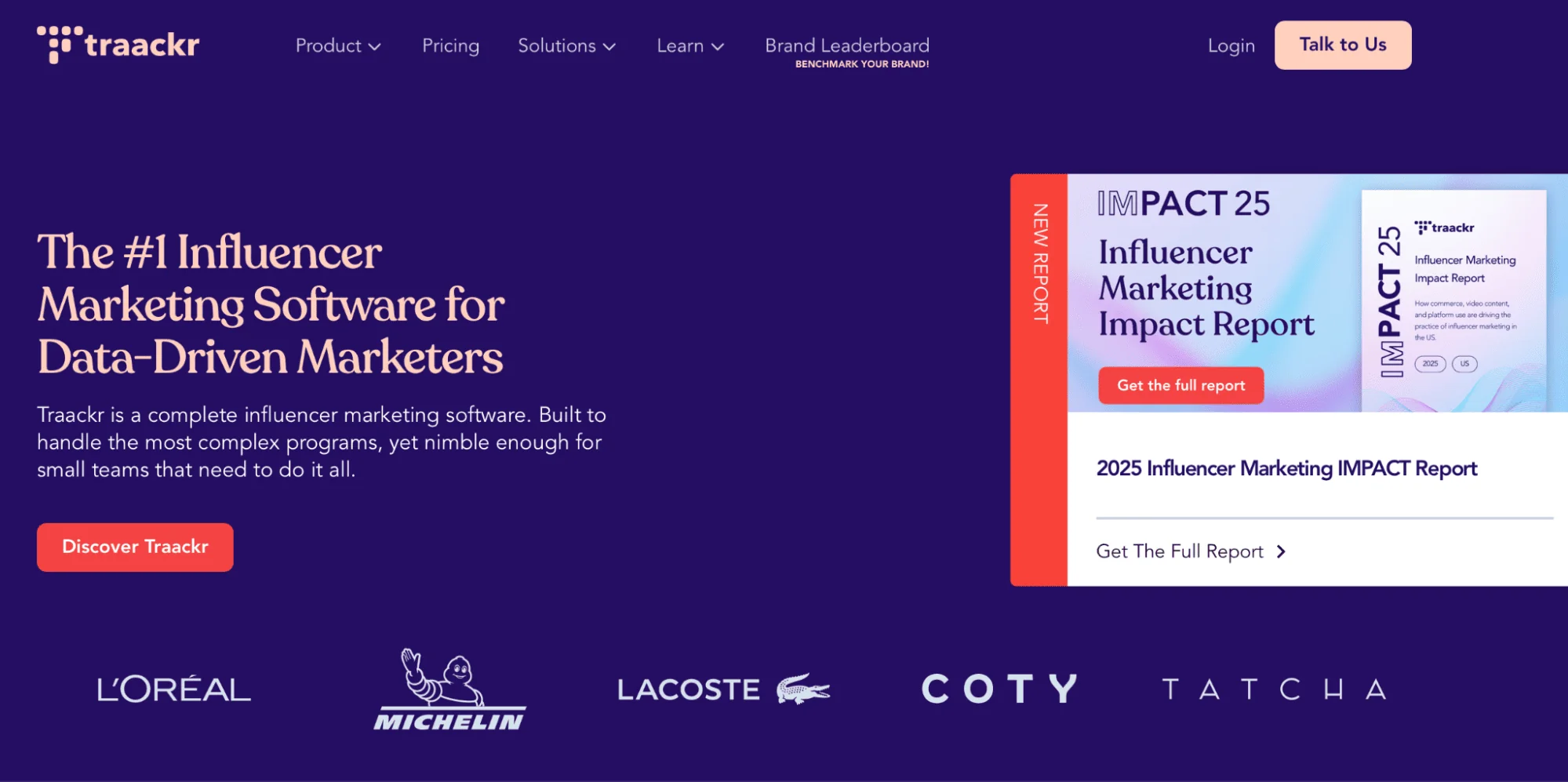
Traackr is a relationship-focused platform known for its Brand Vitality Score and deep historical data. It's designed for brands that prioritize long-term creator affinity and benchmarking against direct competitors.
Best for: Strategists who prioritize competitive benchmarking and tracking long-term creator-brand relationships.
Pricing starts at: Approximately 32,500 and Plus at ~$55,000+. Annual commitments only.
Key Features
- Audience Quality & Brand Safety: AI vetting of engagement authenticity plus brand safety audits that flag controversial past content.
- Global Precision Search: A database spanning 43 countries and 19 languages, scored on topical authority rather than follower count.
- Suggested Fee Calculator: A data-backed market rate for each creator, so you can budget before you reach out.
- Relationship Tiering: Automatically sorts creators into tiers (VIP, Advocate, Micro) based on your history with them.
Pros and Cons
8. Aspire
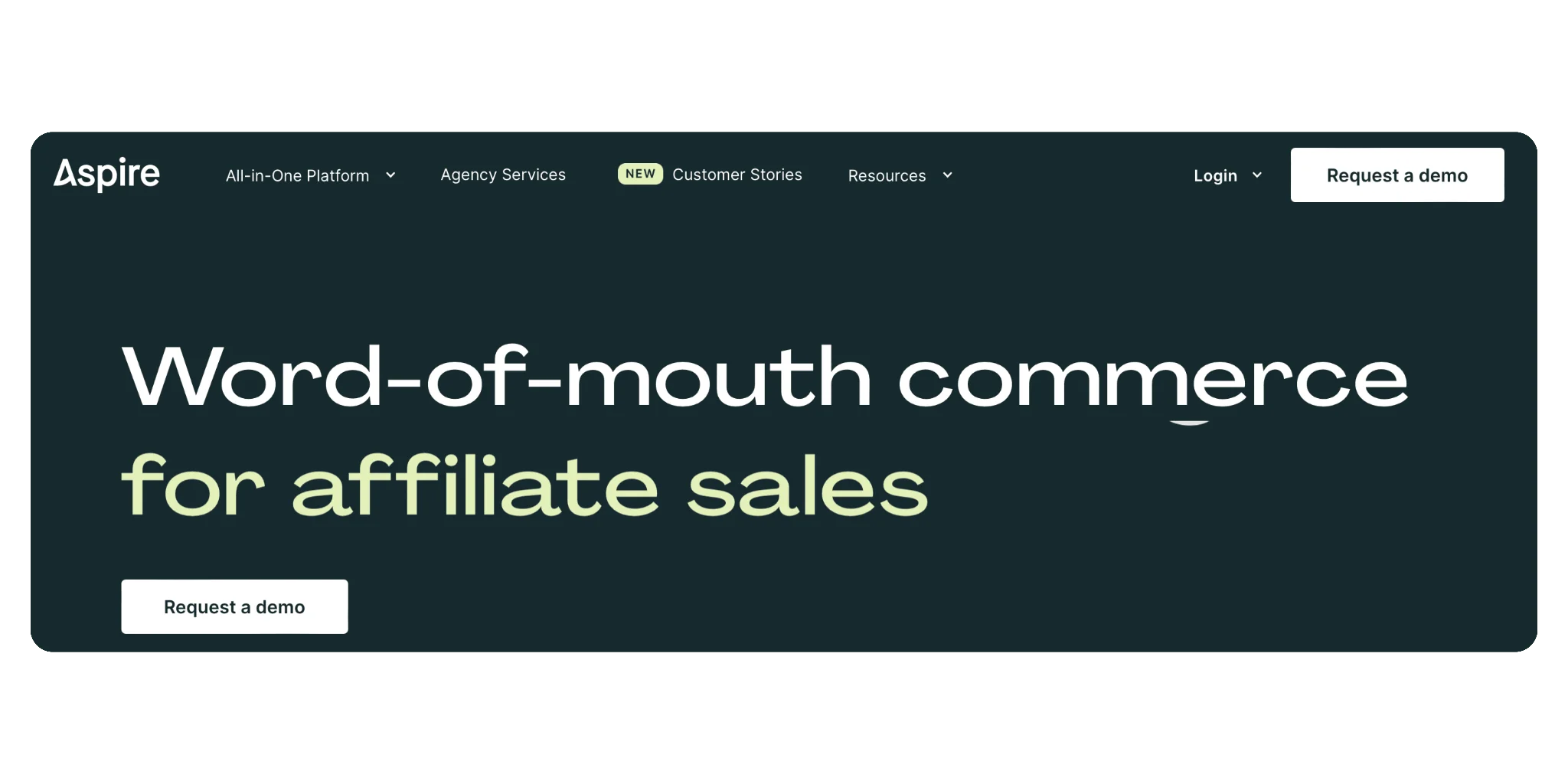
Aspire focuses on building high-quality inbound pipelines through its marketplace of 1M+ creators and application-based workflows. It's especially strong for community building, letting creators apply directly to join a brand's mission.
Best for: Brands focused on building a community and managing a high volume of inbound creator applications.
Pricing starts at: Approximately 2,300 per month on annual contracts (roughly $24,000 per year minimum).
Key Features
- Hybrid Discovery Model: Combines a searchable database with a Creator Marketplace where influencers apply to your briefs, automating inbound discovery.
- Share of Voice Analysis: See which creators already mention your brand or competitors during search.
- Visual Lookalike Search: Upload an image or pick a top post to find creators with a similar aesthetic.
- eCommerce Customer Matching: Integrates with Shopify to identify your most influential existing customers.
Pros and Cons
9. Sprout Social
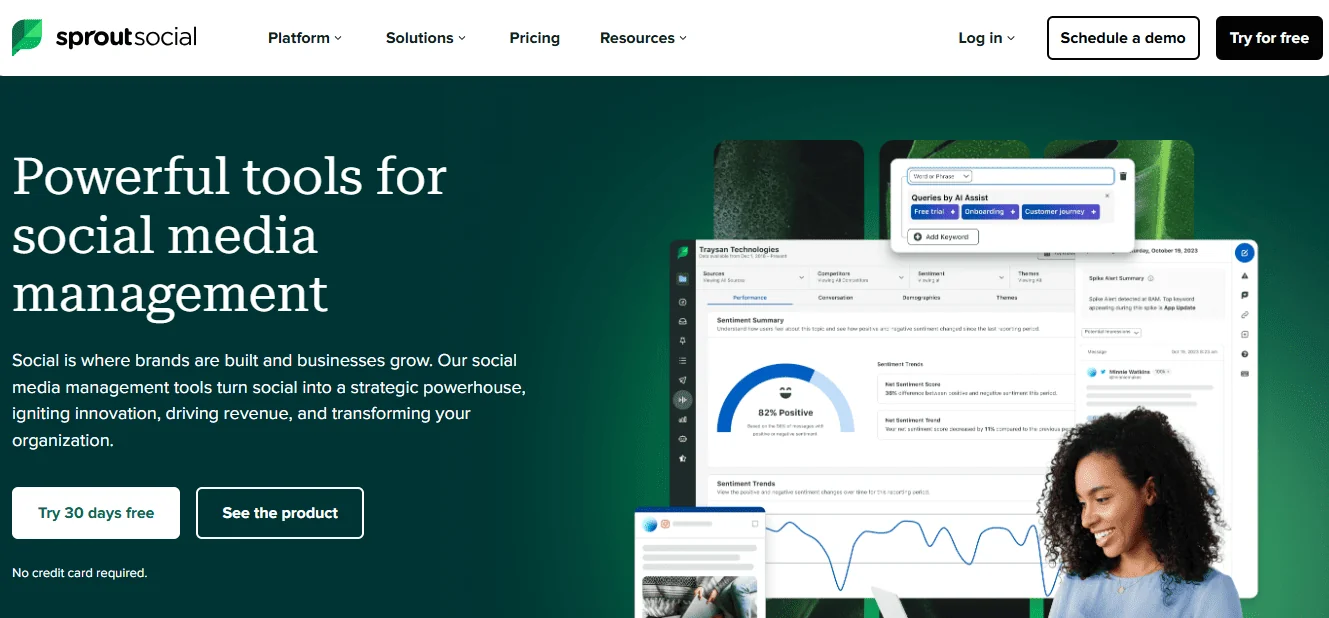
Sprout Social integrates influencer management (formerly Tagger) into its broader social media management suite, so teams can manage organic social and influencer campaigns in one interface.
Best for: Teams already using Sprout Social who want to manage influencer campaigns alongside social scheduling and listening.
Pricing starts at: No public pricing for the influencer product; reported contracts average around $21,400 per year on annual terms. Sprout's core social plans start at $199 per seat per month.
Key Features
- Unified Social Discovery: Find influencers inside your social management dashboard, connected to your social listening data.
- Brand-Fit Scoring: AI assigns a compatibility score based on how well a creator's content and audience align with your brand.
- Growth Velocity Tracking: Spots rising stars with fast follower growth and engagement spikes before they get expensive.
- Affinity Mapping: Shows which brands and interests a creator's audience follows, revealing adjacent niches.
Pros and Cons
10. Favikon
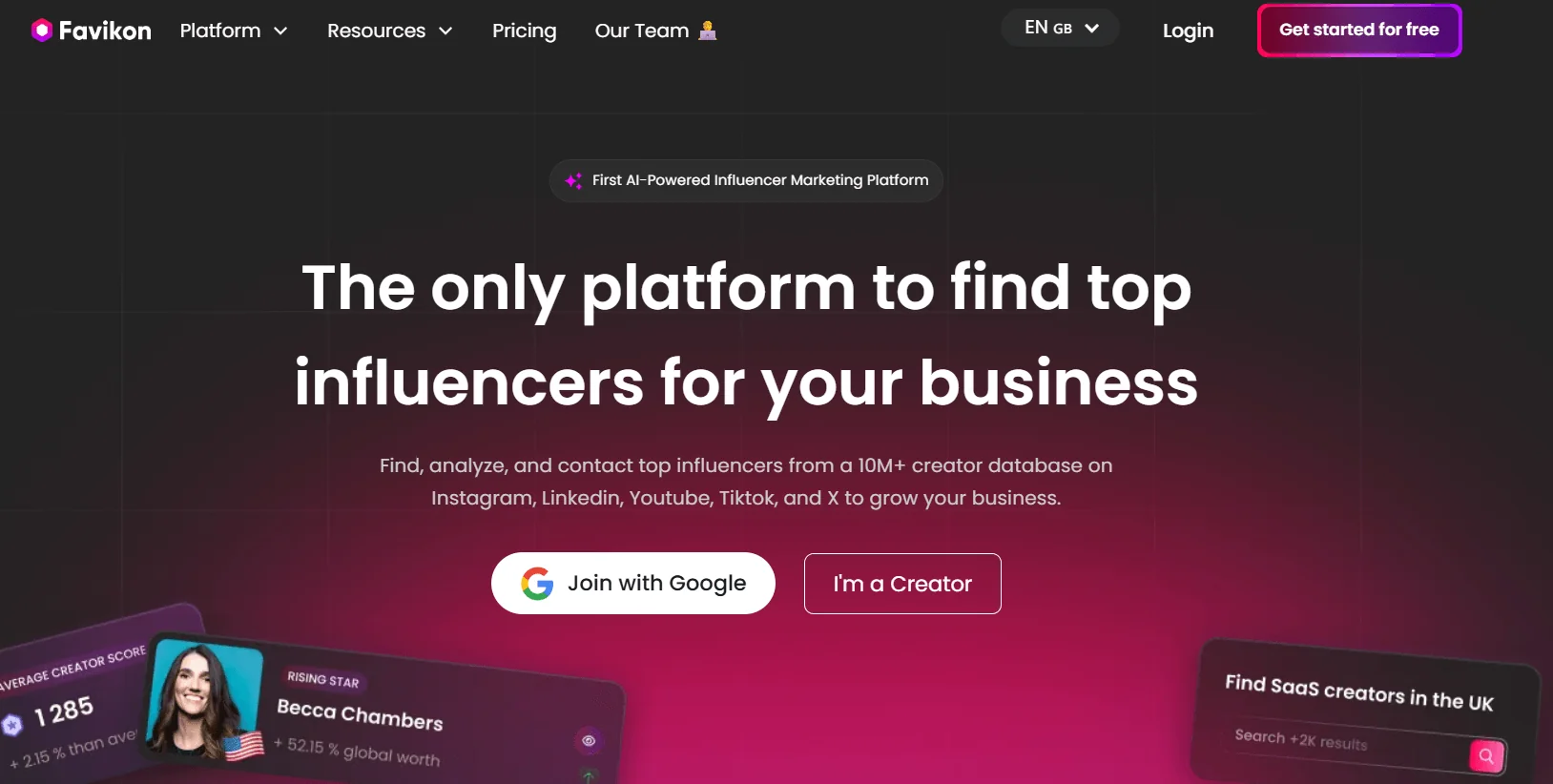
Favikon is a creator intelligence platform built around data-driven vetting. Its proprietary Favikon Score rates creators across networks, and it's one of the few discovery tools with deep LinkedIn and B2B coverage.
Best for: B2B brands and agencies that need to find and score creators, especially on LinkedIn.
Pricing starts at: $199 per month (Core), with Pro at $299 and Enterprise on quote. Discounts for quarterly and annual billing, plus a 7-day free trial.
Key Features
- Favikon Score: A proprietary 1–100 rating of creator quality and influence.
- 750+ Niche Categories: Fine-grained categories for finding creators in specific B2B and consumer niches.
- Radar Competitor Tracking: See which creators your competitors work with.
- Chrome Extension and Multi-Channel CRM: Vet creators while browsing and manage them in a sales-style pipeline, a lighter take on dedicated influencer CRM tools.
Pros and Cons
Final Thoughts
Choosing the right influencer discovery tool depends on your campaign goals, team size, and the level of data and automation you need. Some platforms focus mainly on large creator databases, while others combine discovery with CRM, outreach, and performance tracking to manage the entire influencer marketing workflow.
If you want a solution that goes beyond discovery and helps you scale campaigns with automation, analytics, and outreach in one place, Influencer Hero is worth exploring. Book a demo to see how its discovery features fit your workflow.
Summary
This is some text inside of a div block.
This is some text inside of a div block.
Pricing/Month
Shopify Reviews
This is some text inside of a div block.
This is some text inside of a div block.
This is some text inside of a div block.
This is some text inside of a div block.
This is some text inside of a div block.
This is some text inside of a div block.
This is some text inside of a div block.
This is some text inside of a div block.
This is some text inside of a div block.
This is some text inside of a div block.
This is some text inside of a div block.
This is some text inside of a div block.
This is some text inside of a div block.
This is some text inside of a div block.
This is some text inside of a div block.
This is some text inside of a div block.
This is some text inside of a div block.
This is some text inside of a div block.
This is some text inside of a div block.
This is some text inside of a div block.
This is some text inside of a div block.
Read More

FAQs




Most Popular Blogs


Drive ROI With Influencer Marketing
Join 1,200+ brands and 150+ agencies scaling creator programs with Influencer Hero.