
Best Influencer Marketing Software for WooCommerce

February 20, 2026
|
Published

July 30, 2026
|
Updated

14 Min
|
Reading

Influencer Performance Marketing Course | VOUCHER: IMC100

Malena Gacia
| Author

Drive ROI With Influencers

Global Influencer Database
ALL-IN-ONE platform
CRM, Affiliate, UGC & More
Best Influencer Marketing Software for WooCommerce
Running influencer campaigns on WooCommerce means your storefront, product catalog, coupon codes, and order data already live in one structured system. The challenge is connecting that store data to your influencer workflows — from discovery and outreach to product seeding, affiliate tracking, and revenue attribution.
The best influencer marketing software for WooCommerce should connect directly to your store, sync order and customer data, support trackable links and discount codes, and make it easy to manage creators without adding operational complexity.
In this article, we’ll break down how each platform handles WooCommerce integration, tracking, gifting, and ROI — so you can choose the setup that fits your team, budget, and growth stage.
Top 10 best influencer marketing software for WooCommerce:
How We Evaluated Influencer Marketing Software for WooCommerce
To create this list, we evaluated influencer marketing platforms based on how well they support eCommerce brands using WooCommerce.
The criteria focused on both integration compatibility and the ability to run performance-driven influencer campaigns at scale.
Evaluation Criteria
- Integration & Compatibility with WooCommerce: How well each platform works with stores built on WooCommerce, either through native integrations or compatible workflows that fit into existing eCommerce operations.
- Influencer Campaign Capabilities: The extent to which each platform supports core influencer marketing use cases, including creator discovery, outreach, relationship management, gifting and seeding campaigns, and affiliate-based collaborations.
- Performance Tracking & Reporting: The ability to track influencer and campaign-level performance, including conversions, revenue attribution, and ROI, which is essential for eCommerce teams focused on measurable results.
- Automation & Workflow Efficiency: How effectively the platform automates time-consuming tasks such as outreach, campaign management, follow-ups, and reporting—especially important for lean teams managing influencer programs at scale.
- Ease of Use (UX/UI): The overall user experience, including dashboard design, navigation, onboarding process, and learning curve for teams already operating on WooCommerce.
- Scalability for Growing Brands: How well the platform supports growth, from small teams running their first influencer campaigns to established DTC brands managing hundreds or thousands of creators.
- Pricing & Contract Flexibility: Transparency of pricing, availability of flexible plans, and whether the platform supports growing programs without forcing long-term commitments too early.
- Customer Support & Onboarding: Availability and quality of support resources, including onboarding assistance, documentation, response times, and ongoing customer success support.
Best Influencer Marketing Software for WooCommerce
The table below gives you a quick snapshot of who each platform is best for, where pricing typically starts, and what makes each one meaningfully different—especially from a WooCommerce workflow perspective.
1. Influencer Hero
Influencer Hero is an all-in-one influencer marketing platform built specifically for eCommerce and DTC brands. It combines influencer discovery, outreach, CRM, gifting, affiliate tracking, and revenue attribution in one system.
For WooCommerce brands looking for the best influencer marketing software for WooCommerce, Influencer Hero is designed to connect directly to store data without adding operational complexity.
Best Fit For:
DTC and eCommerce brands running performance-driven influencer programs on WooCommerce who want full visibility into revenue, orders, and creator ROI — without relying on spreadsheets or disconnected tools.
How it Works with WooCommerce:
Influencer Hero connects directly to your WooCommerce store and syncs order, revenue, and discount code data into your influencer CRM. From there, you can generate trackable links and creator-specific coupon codes, assign them to campaigns, and automatically attribute WooCommerce sales back to individual influencers.
Instead of exporting reports from WooCommerce and manually reconciling affiliate performance, everything lives in one workflow: discover creators, send products, track links and codes, monitor orders, and calculate payouts — all tied directly to store-level revenue data.
Pricing & Commitment:
Influencer Hero offers plans that scale with your program size, with a 3-month commitment.
- Standard Plan: Starts at $649/month. Allows you to contact up to 1,000 creators a month.
- Pro Plan: Starts at $1,049/month. Allows you to contact up to 5,000 creators a month.
- Business Plan: Starts at $2,490/month. Allows you to contact up to 10,000 creators a month.
- Custom & Agency: Custom pricing based on your brand needs.
Ease of Use (UX/UI):
Influencer Hero is known for its intuitive, streamlined interface built specifically for marketing teams. The dashboard centralizes creators, campaigns, performance data, and WooCommerce revenue tracking in one place. Automated workflows, bulk actions, and customizable email templates reduce manual work, making it easier for lean teams to scale influencer programs efficiently.
Customer Support:
Customer support is one of Influencer Hero’s strongest differentiators. The platform offers 24/7 real-human live chat, responsive email support, and an extensive Help Center with written and video tutorials.
Every plan includes a dedicated account manager from day one, with optional strategy consultations available to guide campaign growth. Pro plan users also receive access to a private Slack channel for faster, ongoing support.
Key Features:
- WooCommerce Revenue Sync: Through its GoAffPro integration, automatically sync WooCommerce orders, revenue, and discount code usage into Influencer Hero. This enables clear sales attribution per creator and campaign, removing the need for manual reconciliation between platforms.
- Campaign-Centric Influencer CRM: Manage discovery, outreach, negotiation, product seeding, and affiliate tracking inside a structured campaign workflow. Each influencer’s activity and revenue contribution are tied directly to WooCommerce data.
- Automated Affiliate & Discount Code Tracking: Generate creator-specific links and coupon codes connected to WooCommerce checkout. Track clicks, conversions, and revenue automatically and use that data for payout calculations.
- Bulk Outreach & Workflow Automation: Send personalized emails at scale, automate follow-ups, and move creators through structured campaign stages. This reduces repetitive admin work while keeping communication organized.
- Integrated Gifting & Product Seeding Management: Coordinate product shipments and campaign deliverables alongside tracked revenue. Instead of managing gifting and performance separately, everything is tied back to store-level results.
Influencer Hero Limitations:
For brands new to influencer marketing, setting up a structured workflow that connects WooCommerce tracking, affiliate logic, and campaign stages may require initial guidance. However, the onboarding team and dedicated account managers provide hands-on support to ensure the system is configured correctly from the start.
2. GRIN
GRIN is a full-suite influencer marketing platform built primarily for large eCommerce brands. It offers creator discovery, outreach, product seeding, affiliate tracking, and payment processing within one system.
Best Fit For:
Established eCommerce brands running high-volume influencer programs and managing large product catalogs.
How it Works with WooCommerce:
GRIN integrates with WooCommerce to automate product gifting, affiliate link tracking, and sales attribution. Influencers can select products from your store, generate trackable links or codes, and performance data syncs back into GRIN for campaign reporting. This allows brands to connect physical fulfillment with revenue tracking in one workflow.
Pricing:
- $25,000 per year
- Annual contract required
- Monthly payment equivalent: ~$2,085
- No flexible month-to-month plans
Ease of Use (UX/UI):
Users generally describe GRIN as robust but complex. The platform offers deep functionality, though some teams mention a learning curve during onboarding. Larger marketing teams tend to benefit most from its structured workflows.
Customer Support:
GRIN provides onboarding support and dedicated customer success managers. Reviews are mixed — many users praise strategic guidance, while others mention slow response times or challenges resolving technical issues.
Key Features:
- eCommerce-Native Product Gifting: GRIN connects directly to WooCommerce to streamline product seeding workflows and shipping coordination. This allows brands to track which creators received products and measure the revenue generated from those campaigns.
- Unlimited Creator Partnerships: The platform does not cap the number of influencers a brand can manage. This makes it suitable for enterprise programs running ongoing ambassador or large-scale affiliate initiatives.
- In-App Payment Processing: Brands can process influencer payments directly within GRIN, reducing administrative work and centralizing financial tracking. This includes commission-based payouts tied to affiliate performance.
- Affiliate Revenue Tracking: Trackable links and discount codes can be assigned to creators and connected to WooCommerce conversions. Revenue attribution is visible at both creator and campaign levels.
- UGC Library & Rights Management: All influencer content is stored within a centralized media library. Brands can manage reuse permissions and repurpose content for paid or organic campaigns.
Platform Limitations:
GRIN requires a significant annual commitment, which may not be practical for smaller or early-stage WooCommerce brands. The upfront cost can limit flexibility for teams still testing influencer marketing as a growth channel.
Some users report occasional platform performance issues and note that the interface can feel complex due to its enterprise focus. Teams without dedicated influencer managers may find the system more resource-intensive to manage effectively.
3. Impact.com
impact.com is a partnership management platform that supports influencer, affiliate, and partner marketing programs within one infrastructure. It is widely used by enterprise brands managing complex partner ecosystems that extend beyond influencer marketing alone.
Best Fit For:
impact.com is best suited for WooCommerce brands that want to unify influencer programs with broader affiliate and partner initiatives. It is particularly effective for organizations already running structured performance marketing programs at scale.
How it Works with WooCommerce:
impact.com offers a WooCommerce plugin that connects store-level order and conversion data directly to partner tracking dashboards. Influencer and affiliate links are tied to WooCommerce checkout behavior, allowing brands to automate commission calculations and revenue attribution.
This makes it possible to manage influencers within a broader partnership ecosystem rather than as a standalone channel.
Pricing:
- Starter (WooCommerce App included): $30/month
- Essentials: From $500/month
- Pro: From $2,500/month
- Enterprise: Custom pricing
Ease of Use (UX/UI):
Users often describe impact.com as powerful but more complex than influencer-first platforms. The interface is structured around partnership management logic, which may require onboarding time for teams unfamiliar with affiliate systems.
Customer Support:
impact.com provides structured onboarding and enterprise-level support resources. Many reviews highlight knowledgeable account managers and comprehensive documentation, though implementation timelines can vary depending on integration complexity.
Key Features:
- Unified Partnership Infrastructure: impact.com manages influencers, affiliates, and strategic partners within one structured environment. This reduces fragmentation for brands running multi-channel partnership programs.
- WooCommerce Conversion Attribution: The WooCommerce integration allows brands to sync order data directly into partner dashboards. This enables automated revenue tracking and commission logic tied to real store performance.
- Flexible Commission Structures: Brands can create tiered payout models, performance bonuses, and custom commission rules. These structures are tied directly to WooCommerce conversion data.
- Automated Payout Processing: Commissions can be calculated and processed automatically based on tracked sales. This reduces manual payout reconciliation and administrative workload.
- Advanced Reporting & Attribution Models: impact.com supports detailed attribution analysis across different partner touchpoints. This allows brands to understand how influencer-driven traffic contributes to broader revenue journeys.
Platform Limitations:
impact.com is built primarily as a partnership platform rather than a creator-focused influencer CRM. Teams seeking structured discovery pipelines and outreach workflows may find it less influencer-centric than other tools on this list.
Because it is enterprise-oriented, setup and implementation can require more time and internal resources. Smaller WooCommerce brands may find the system more infrastructure-heavy than necessary for straightforward influencer campaigns.
4. HypeAuditor
HypeAuditor is an influencer marketing platform originally built around audience quality analysis and fraud detection, and it has since expanded into campaign management and performance tracking. It is widely known for its credibility scoring and analytics depth, making it a strong option for brands that prioritize data validation alongside WooCommerce revenue tracking.
Best Fit For
HypeAuditor is best suited for WooCommerce brands that care deeply about influencer authenticity, audience demographics, and measurable ROI before investing budget. It works especially well for performance-driven teams that want to validate creators before committing to affiliate or gifting campaigns.
How it Works with WooCommerce
HypeAuditor integrates with WooCommerce to connect store-level sales and conversion data directly to influencer campaigns. Brands can assign trackable links and promo codes to creators, and the platform syncs WooCommerce orders and revenue into campaign dashboards. This allows teams to evaluate not just engagement metrics, but actual conversion performance and ROI tied to their WooCommerce storefront.
Pricing
- Business plan: ~ $10,000 per year
- Enterprise plans: ~$60,000 per year
- Custom annual contracts
- Limited free trial available
Ease of Use (UX/UI)
Users generally describe HypeAuditor as clean and analytics-focused. The dashboard is structured around data visibility, with filters and creator metrics clearly organized, though some users mention it can feel data-heavy for teams unfamiliar with advanced analytics tools.
Customer Support
HypeAuditor receives positive feedback for onboarding and responsive customer support. Users frequently mention helpful implementation guidance, though some note that enterprise-level customizations may require longer setup timelines.
Key Features
- Advanced Audience Quality & Fraud Detection: HypeAuditor provides detailed authenticity scoring that evaluates fake followers, engagement spikes, and suspicious audience behavior. This helps WooCommerce brands reduce risk before investing in product seeding or affiliate partnerships.
- AI-Powered Influencer Discovery: The platform allows brands to search creators using deep filters such as demographics, brand affinity, audience quality, and competitor collaborations. This makes it easier to identify creators whose audiences align with target WooCommerce customer segments.
- WooCommerce Revenue Tracking: Sales and conversions from WooCommerce can be tracked and attributed directly to specific creators. This enables brands to connect campaign performance with real store revenue instead of relying solely on engagement metrics.
- Competitor & Social Listening Insights: HypeAuditor allows brands to monitor which influencers are working with competitors and track branded mentions. This helps WooCommerce brands refine outreach strategies and identify partnership gaps.
- Customizable Campaign Reporting: Campaign dashboards allow teams to track metrics such as ROI, engagement rate, cost per engagement, and revenue attribution. Reports can be shared internally to support performance-focused decision-making.
Platform Limitations
While HypeAuditor excels at analytics and influencer vetting, its outreach and CRM workflows are less automation-focused than some all-in-one influencer platforms. Teams may need structured processes in place to fully operationalize campaigns.
The pricing structure is primarily annual and enterprise-leaning, which can be restrictive for smaller WooCommerce brands testing influencer marketing for the first time. It may be more powerful than necessary for brands running simple affiliate-driven campaigns.
5. Aspire
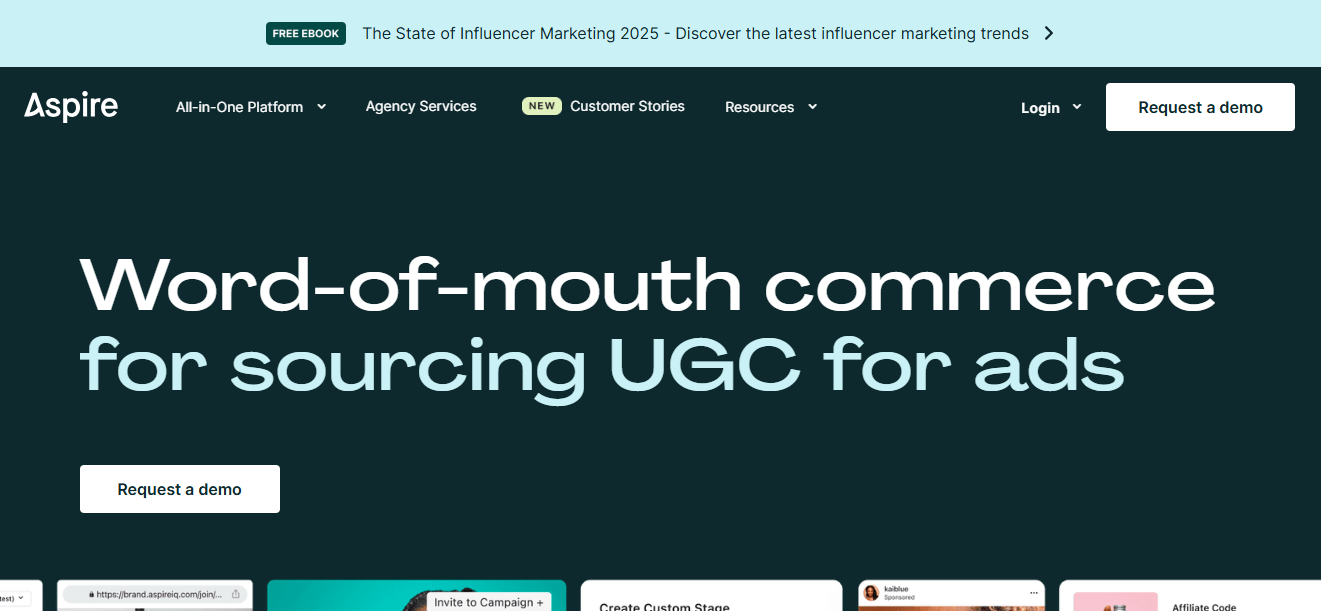
Aspire is an influencer marketing platform built around structured workflows, inbound creator applications, and community-style ambassador programs. It combines influencer discovery, contract management, gifting, and performance tracking into a unified system designed to support growing eCommerce brands.
Best Fit For
Aspire is best suited for WooCommerce brands building ambassador communities or structured influencer programs that rely heavily on applications and long-term creator relationships. It works particularly well for brands combining gifting campaigns with affiliate incentives.
How it Works with WooCommerce
Aspire connects to WooCommerce to sync customer and order data into its member database. This allows brands to identify high-value customers who may also be influencers, manage gifting directly from product catalogs, and track affiliate performance tied to WooCommerce orders. The workflow integrates discovery, contracts, product fulfillment, and revenue tracking in one structured pipeline.
Pricing:
Aspire’s pricing generally works on tiered plans tailored to your brand’s needs, so costs may vary depending on your specific requirements.
- Essentials Plan: Starts at $2,299 per month on a 12-month contract, totaling $27,588 annually, plus a one-time onboarding fee of $2,000, bringing the first-year investment to $29,588.
Ease of Use (UX/UI)
Users describe Aspire as organized and workflow-driven. The interface emphasizes campaign stages, creator portals, and structured deliverables, which makes it approachable for marketing teams but can require onboarding time to configure properly.
Customer Support
Aspire receives strong reviews for onboarding and client success support. Many brands highlight hands-on guidance during setup, though some note that pricing scales quickly as creator counts increase.
Key Features
- Inbound Creator Marketplace: Aspire allows creators to apply directly through branded application pages. This reduces manual outreach and helps WooCommerce brands build structured ambassador communities.
- WooCommerce Customer Data Sync: The platform syncs WooCommerce purchase history and customer profiles into its CRM. This enables brands to identify repeat purchasers and convert them into influencers or ambassadors.
- Product Gifting Management: Creators can select products from a WooCommerce-powered catalog within predefined budget rules. Brands can approve and track shipments without switching systems.
- Automated Workflow & Contract Management: Campaign pipelines support contracts, briefs, content approvals, and usage rights management. Automated follow-ups reduce delays when creators haven’t accepted terms.
- Affiliate & Sales Tracking: Aspire supports trackable links, promo codes, and creator stores connected to WooCommerce checkout data. Revenue attribution is visible at both creator and campaign levels.
Platform Limitations
Aspire’s pricing can increase significantly as the number of managed creators grows. This may make it less predictable for rapidly scaling WooCommerce brands.
While strong in workflow structure, it may not offer the same depth of automation or affiliate-specific flexibility as partnership-first platforms. Brands focused heavily on performance marketing may need to configure attribution carefully.
6. Storyclash
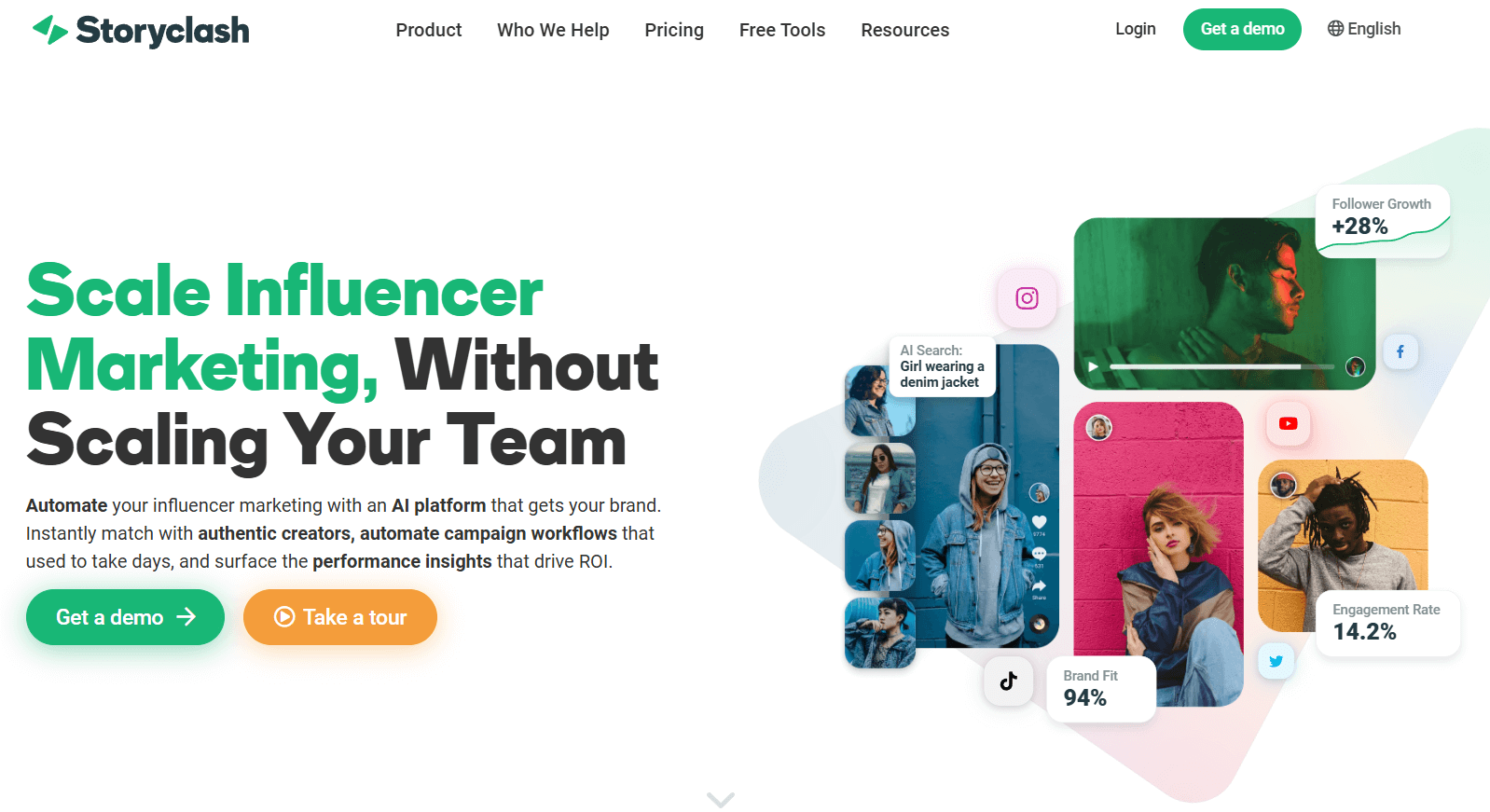
Storyclash is an enterprise-grade influencer analytics and reporting platform designed to connect creator performance with commerce data. It is particularly focused on revenue attribution, dashboards, and executive-level reporting tied directly to eCommerce performance.
Best Fit For
Storyclash is best suited for WooCommerce brands that prioritize advanced analytics and centralized reporting over outreach-heavy influencer management. It works well for teams that already have creator relationships but need deeper revenue insight.
How it Works with WooCommerce
Storyclash connects to WooCommerce to automatically sync orders, revenue, and discount code usage into campaign dashboards. This allows brands to measure creator-driven revenue alongside broader marketing KPIs in a unified reporting environment. Instead of managing campaigns end-to-end, Storyclash focuses on visualizing ROI and performance tied to WooCommerce sales data.
Pricing
The business plan starts at $870. Enterprise plan is a premium solution for larger organizations with custom needs and custom pricing.
Ease of Use (UX/UI)
Users often describe Storyclash as visually clean and data-focused. The dashboard design emphasizes analytics clarity, though it is more reporting-oriented than outreach-oriented.
Customer Support
Storyclash offers enterprise onboarding and implementation guidance. Reviews frequently mention responsive support, though implementation complexity can vary depending on data integrations.
Key Features
- WooCommerce Revenue Sync & ROI Visualization: Orders and revenue data are automatically matched to creator campaigns. This allows brands to analyze influencer-driven revenue over time without manual reporting.
- Executive-Level Dashboards: Storyclash enables brands to build automated dashboards that consolidate influencer and commerce KPIs. These reports are designed for internal stakeholders and performance reviews.
- Custom KPI Configuration: Brands can define and monitor their own performance metrics within the reporting interface. This supports deeper alignment between influencer campaigns and broader revenue goals.
- Competitor & Brand Monitoring: Storyclash allows tracking of brand mentions and competitor collaborations. This helps WooCommerce brands refine positioning and identify partnership opportunities.
- Enterprise Security & Compliance: The platform is built with GDPR-compliant infrastructure and structured data governance. This makes it suitable for larger organizations managing complex data environments.
Platform Limitations
Storyclash is primarily an analytics and reporting platform rather than a full influencer CRM. Brands seeking discovery, outreach, and gifting workflows may need additional tools alongside it.
Because it is enterprise-oriented, pricing and implementation may be excessive for smaller WooCommerce brands. Teams running straightforward affiliate-style campaigns may find the reporting depth more advanced than necessary.
7. IMAI (InfluencerMarketing.AI)

IMAI (InfluencerMarketing.AI) is a large-scale influencer marketing platform built around AI-driven discovery, outreach automation, and performance tracking. It positions itself as one of the largest influencer databases globally, supporting multi-platform campaigns while connecting performance data back to eCommerce systems like WooCommerce.
Best Fit For
IMAI is best suited for WooCommerce brands that want access to a massive creator database and AI-supported outreach workflows. It works particularly well for teams focused on scaling influencer campaigns across multiple markets and platforms while maintaining structured revenue attribution.
How it Works with WooCommerce
IMAI connects to WooCommerce to enable product-level integration and sales attribution. Brands can generate trackable links, assign commission structures, and monitor WooCommerce-driven conversions directly inside the platform. This allows marketing teams to run influencer discovery and outreach while tracking the revenue those creators generate within the WooCommerce store.
Pricing
- Growth Plan: $959/month
- Scale Plan: $2,999/month
- Enterprise: Custom pricing
- Monthly or annual billing available
Additional:
- API: Starts at $10,000
- Influencer Payments: Starts at $5,000/month
- Fully Managed Campaigns: Starts at $50,000
Ease of Use (UX/UI)
Users frequently describe IMAI as intuitive, particularly considering the depth of data it provides. The dashboard organizes discovery, outreach, and analytics clearly, though some users mention that advanced filtering and reporting features may require onboarding time.
Customer Support
IMAI receives positive feedback for responsive customer service and structured onboarding. Many reviews highlight helpful live chat and onboarding calls, though enterprise-level customizations may require coordination with account managers.
Key Features
- Large-Scale Influencer Database: IMAI provides access to hundreds of millions of influencer profiles across major platforms. This allows WooCommerce brands to identify creators at nearly any scale or niche.
- AI-Powered Discovery & Filtering: Advanced AI filtering enables brands to search by engagement, audience credibility, demographics, and brand affinity. This supports more data-driven selection before investing in WooCommerce-linked campaigns.
- WooCommerce Sales Attribution: The platform syncs WooCommerce traffic and sales back into campaign dashboards. This enables tiered commission models and performance-based incentives tied directly to store revenue.
- Automated Outreach & CRM Tools: Bulk outreach tools and built-in messaging help brands scale communication. This reduces manual administrative work when managing hundreds of influencer conversations.
- Affiliate & Gifting Support: IMAI supports non-cash reward structures such as product seeding and revenue sharing. WooCommerce-linked affiliate tracking helps tie those collaborations directly to measurable outcomes.
Platform Limitations
IMAI’s pricing tiers can become expensive as brands scale into higher-volume plans. Smaller WooCommerce brands may find entry-level costs manageable but advanced features tied to API access increase total investment.
While discovery depth is a strength, some users note a learning curve when navigating advanced reporting and filtering capabilities. Teams without prior influencer marketing experience may require onboarding support to maximize value.
8. Social Snowball
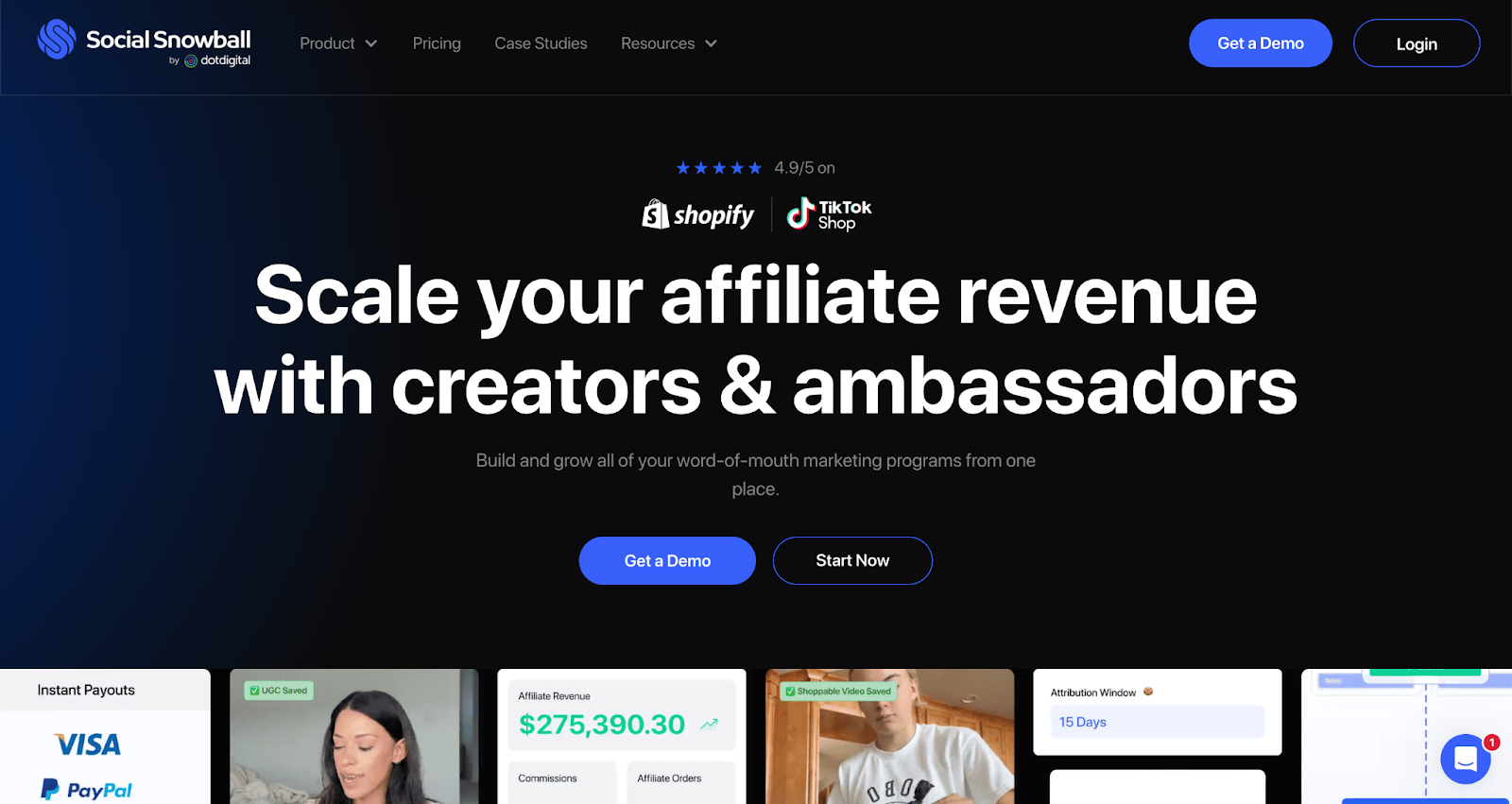
Social Snowball is a customer-to-affiliate platform designed to help eCommerce brands turn existing customers into revenue-driving advocates. While originally built for Shopify-native environments, it supports WooCommerce integration for brands that want to automate referral-style affiliate programs.
Best Fit For
Social Snowball is best suited for WooCommerce brands focused on referral-style growth and affiliate incentives rather than structured influencer outreach programs. It works particularly well for DTC brands leveraging customer loyalty as a driver of influencer-style promotion.
How it Works with WooCommerce
Social Snowball connects WooCommerce customer and order data into its affiliate automation workflows. When customers complete purchases, they can be converted into affiliates with unique referral links or codes tied directly to WooCommerce checkout behavior. This allows brands to automate commission payouts and track referral-driven revenue without building traditional influencer pipelines.
Pricing
- Starts at $249/month
- Monthly subscription model
- Revenue-share component may apply depending on plan
Ease of Use (UX/UI)
Users generally describe Social Snowball as simple and lightweight. The dashboard focuses on affiliate tracking and payouts rather than complex campaign management, making it approachable for smaller WooCommerce teams.
Customer Support
Customer support reviews are generally positive, with users highlighting straightforward onboarding and responsive communication. Because the product is narrower in scope, setup tends to be faster compared to enterprise-level influencer platforms.
Key Features
- Customer-to-Affiliate Automation: Automatically converts customers into affiliates after WooCommerce purchases. This creates a scalable referral engine tied directly to store activity.
- Commission Tracking & Payouts: Commissions are calculated automatically based on WooCommerce conversion data. This reduces manual reconciliation and administrative effort.
- Fraud Prevention Controls: Built-in fraud monitoring helps detect suspicious referral activity. This protects WooCommerce brands from inflated affiliate claims.
- Customizable Referral Links & Codes: Affiliates receive unique links and codes tied to WooCommerce checkout behavior. Performance is tracked at both affiliate and revenue levels.
- Performance Dashboard: A simplified reporting dashboard highlights referral revenue and conversion performance. This makes it easier to evaluate affiliate-driven ROI.
Platform Limitations
Social Snowball is more affiliate-focused than influencer-workflow-focused. Brands looking for structured discovery, outreach automation, or campaign pipelines may need an additional CRM tool.
Its capabilities are narrower compared to full influencer marketing platforms. WooCommerce brands seeking integrated gifting and advanced creator management may find it limited.
9. Captiv8
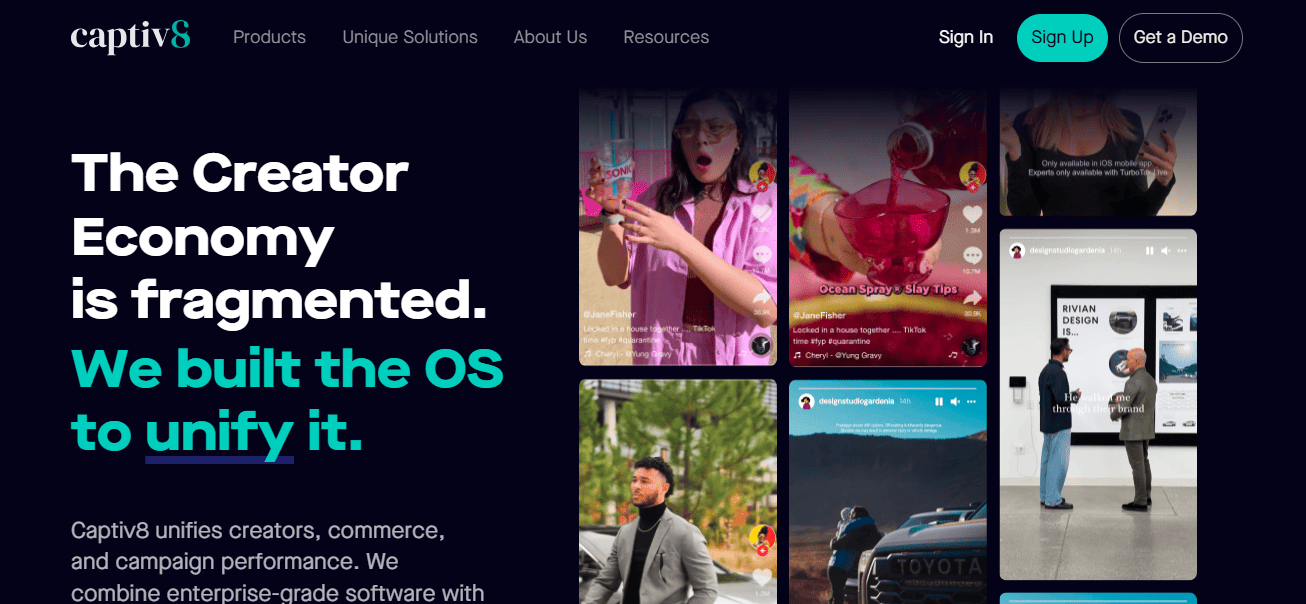
Captiv8 is an enterprise-focused influencer marketing platform designed for large-scale brands managing creator partnerships, paid media, and commerce integrations. It combines influencer discovery, advanced audience filtering, and revenue tracking within a broader enterprise analytics infrastructure.
Best Fit For
Captiv8 is best suited for enterprise WooCommerce brands running complex influencer and paid media strategies. It works particularly well for teams that require advanced brand safety filtering, sentiment analysis, and multi-channel commerce tracking.
How it Works with WooCommerce
Captiv8 offers WooCommerce integration that allows brands to track affiliate-driven sales and manage campaign revenue attribution within the platform. WooCommerce order data connects to campaign dashboards, enabling revenue tracking alongside engagement and paid media performance. However, broader eCommerce functionality for non-Shopify platforms may be part of higher-tier packages or additional modules.
Pricing
- $25,000 per year (annual contract)
- $3,000 onboarding fee
- Affiliate & Storefront add-on: $20,000–$30,000 per month
- Enterprise-focused pricing structure
Ease of Use (UX/UI)
Users describe Captiv8 as data-rich and enterprise-grade. While the interface provides deep analytics customization, some teams report that the platform feels complex and requires onboarding to navigate effectively.
Customer Support
Reviews on customer support are mixed. Some enterprise clients highlight strategic assistance, while others report slow response times and unresolved payment or integration issues.
Key Features
- Advanced Audience Filtering & Sentiment Analysis: Captiv8 allows brands to filter creators by demographics, interests, and safety scores. This supports risk mitigation and brand alignment for large WooCommerce campaigns.
- WooCommerce Revenue Attribution: Affiliate-driven sales from WooCommerce can be tracked inside campaign dashboards. This connects influencer performance to verified store revenue.
- Custom KPI Reporting: Brands can build tailored KPIs reports focusing on ROAS, engagement metrics, and commerce impact. This helps align influencer performance with executive reporting needs.
- Paid Media & Spark Ad Support: Captiv8 supports TikTok Shop management and paid Spark ad workflows. This enables WooCommerce brands to combine influencer content with paid amplification strategies.
- Enterprise Collaboration Tools: The platform supports multi-user collaboration and approval workflows. This makes it suitable for large marketing teams managing multiple campaigns simultaneously.
Platform Limitations
Captiv8’s pricing structure is heavily enterprise-oriented, which can limit accessibility for mid-sized WooCommerce brands. The additional storefront and affiliate modules significantly increase total cost.
Some users report platform complexity and mixed customer service experiences. Smaller teams may find the system more infrastructure-heavy than necessary for straightforward influencer campaigns.
10. Refersion
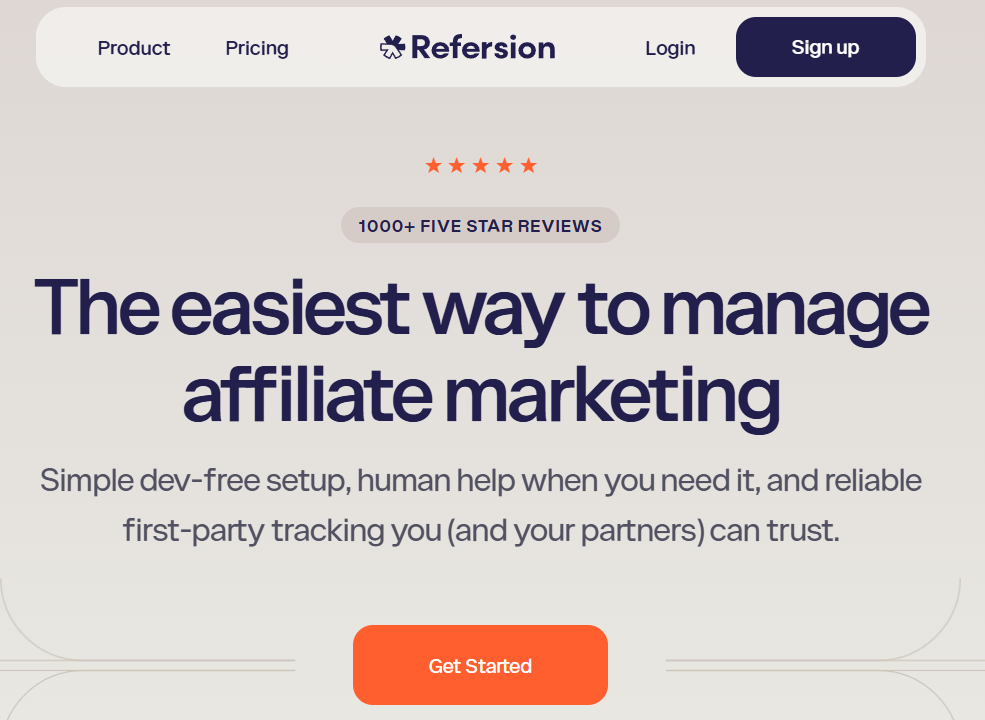
Refersion is considered a top affiliate marketing tool, designed specifically to support eCommerce brands with direct store integrations. It offers a native WooCommerce plugin that connects affiliate tracking directly into the WordPress dashboard.
Best Fit For
Refersion is best suited for WooCommerce brands primarily focused on affiliate-driven influencer programs. It works well for teams that prioritize commission tracking and payouts over structured influencer CRM workflows.
How it Works with WooCommerce
Refersion integrates natively with WooCommerce through a dedicated plugin installed in WordPress. Once connected, it tracks affiliate clicks, conversions, and commission calculations directly tied to WooCommerce checkout behavior. This allows brands to automate payout logic while keeping store data central.
Pricing
- Professional Plan: ~$99/month
- Business Plan: ~$249/month
- Enterprise: Custom pricing
- Monthly subscription available
Ease of Use (UX/UI)
Users often describe Refersion as straightforward and easy to set up. The WordPress-based integration simplifies installation, though advanced customization may require additional configuration.
Customer Support
Customer support reviews are generally positive for standard use cases. Some users note that response times vary depending on plan level and complexity of requests.
Key Features
- Native WooCommerce Plugin: Refersion offers a dedicated WooCommerce plugin for direct store integration. Setup is typically completed within minutes inside the WordPress dashboard.
- Automated Commission Tracking: Affiliate sales are tracked automatically using links or coupon codes. Commission calculations are based on verified WooCommerce conversion data.
- Post-Purchase Affiliate Activation: Customers can be converted into affiliates immediately after completing a purchase. This supports scalable referral growth within WooCommerce stores.
- PayPal Payout Integration: Commission payouts can be automated via PayPal. This reduces manual payout processing and reconciliation work.
- Affiliate Reporting Dashboard: Brands can view performance metrics including clicks, conversions, and revenue attribution. This supports performance-based decision-making.
Platform Limitations
Refersion is primarily affiliate-focused and does not include full influencer CRM capabilities. Brands seeking discovery pipelines, outreach automation, or gifting workflows may need additional tools.
Its scope is narrower compared to all-in-one influencer marketing platforms. WooCommerce brands running structured ambassador programs may require supplementary systems.
How to Choose the Right Influencer Marketing Software for WooCommerce
Choosing the right platform depends on how influencer marketing fits into your WooCommerce growth strategy. Different tools are built for different priorities — from discovery and outreach to affiliate tracking and revenue attribution.
Here’s how to think about it:
- Brands that need full-funnel tracking and performance measurement: If your priority is tying influencer activity directly to WooCommerce revenue, you’ll need a platform that connects campaigns, links, discount codes, and store-level order data in one workflow. Tools built around performance tracking and CRM structure are better suited for this model, especially for DTC brands that measure influencer marketing by ROI rather than engagement alone.
- Brands that mainly need influencer discovery and outreach: If your focus is identifying new creators and managing conversations at scale, a discovery-first platform may be enough. These tools often provide large influencer databases and filtering capabilities, but may require additional systems to manage gifting, affiliate tracking, or deeper WooCommerce revenue attribution.
- Brands running influencer gifting and/or affiliate programs at scale: If you’re shipping products regularly or running structured affiliate incentives, look for platforms that support product seeding, trackable links, and commission logic connected to WooCommerce checkout data. Affiliate-focused tools can work well if revenue tracking is your main goal, though they may not include full influencer CRM functionality.
For WooCommerce brands running performance-driven programs — where discovery, outreach, gifting, affiliate tracking, and revenue attribution need to work together — platforms built around end-to-end campaign management tend to provide the most operational clarity.
Final Thoughts
Choosing the right influencer marketing software for WooCommerce depends on how your brand approaches creator partnerships. Some platforms focus primarily on discovery and recruitment, others specialize in affiliate marketing, and a few emphasize analytics and reporting.
For WooCommerce brands that care about measurable revenue impact, the most important factor is whether influencer activity connects directly to real store data — orders, conversions, customer value, and repeat purchases.
If you’re looking for the best influencer marketing software for WooCommerce, platforms that integrate discovery, CRM workflows, gifting, affiliate tracking, and revenue attribution into one structured system will give you the most operational clarity. To see how Influencer Hero fits into your WooCommerce workflow, you can book a demo and explore how campaigns connect directly to store performance.
Summary
This is some text inside of a div block.
This is some text inside of a div block.
Pricing/Month
Shopify Reviews
This is some text inside of a div block.
This is some text inside of a div block.
This is some text inside of a div block.
This is some text inside of a div block.
This is some text inside of a div block.
This is some text inside of a div block.
This is some text inside of a div block.
This is some text inside of a div block.
This is some text inside of a div block.
This is some text inside of a div block.
This is some text inside of a div block.
This is some text inside of a div block.
This is some text inside of a div block.
This is some text inside of a div block.
This is some text inside of a div block.
This is some text inside of a div block.
This is some text inside of a div block.
This is some text inside of a div block.
This is some text inside of a div block.
This is some text inside of a div block.
This is some text inside of a div block.
Read More

FAQs
What is the best influencer marketing software for WooCommerce?

The best influencer marketing software for WooCommerce depends on your goals. If you need full-funnel tracking tied directly to store revenue, platforms that sync orders, discount codes, and affiliate links with WooCommerce checkout data are ideal. Influencer Hero is often considered a strong option for brands that want influencer discovery, CRM, automation, and revenue attribution in one system, while alternatives like impact.com or Refersion focus more heavily on affiliate-style partnerships.
Can WooCommerce track influencer sales and revenue attribution?
Yes, WooCommerce can track influencer sales when connected to an influencer or affiliate platform that supports link and discount code tracking. Orders placed through creator-specific referral links or codes can be attributed back to individual influencers, allowing brands to measure campaign ROI based on verified checkout data rather than engagement metrics alone.
Do I need separate software for affiliate marketing and influencer marketing on WooCommerce?
Not necessarily. Some platforms specialize strictly in affiliate tracking, while others combine influencer relationship management with affiliate revenue attribution. Tools like Influencer Hero integrate influencer CRM, gifting workflows, and affiliate tracking within one system, whereas platforms like Refersion or impact.com are more affiliate-focused and may require additional tools for full influencer campaign management.
How do I pay influencers using WooCommerce integrations?
Most WooCommerce-compatible influencer platforms support performance-based payouts using referral links or discount codes tied to store sales. Some also allow flat fees, gifting models, or hybrid compensation structures. Depending on the platform, commission calculations are automatically generated based on verified WooCommerce order data, making payout reconciliation more accurate and efficient.
Which WooCommerce influencer tools are best for scaling a large creator program?
Brands managing dozens or hundreds of creators typically need structured workflows, centralized reporting, and automated attribution tied to WooCommerce revenue. Platforms like Influencer Hero and GRIN support large-scale programs with CRM functionality and order syncing, while enterprise tools such as Captiv8 focus more on advanced analytics and governance. The right choice depends on whether your priority is operational efficiency, revenue tracking, or enterprise-level reporting.





Most Popular Blogs


Drive ROI With Influencer Marketing
Join 1,200+ brands and 150+ agencies scaling creator programs with Influencer Hero.