
Les meilleurs outils pour trouver des influencers YouTube

April 30, 2026
|
Published

July 30, 2026
|
Updated

13 Min
|
Reading

Influencer Performance Marketing Course | VOUCHER: IMC100

María Vincenzini
| Author

Drive ROI With Influencers

Global Influencer Database
ALL-IN-ONE platform
CRM, Affiliate, UGC & More
Meilleurs outils pour trouver des influenceurs YouTube
YouTube reste l'étalon-or pour le marketing d'influence à fort intent. Contrairement à la nature « un clin d'œil et vous l'avez manqué » des flux vidéo courts, le contenu YouTube est intemporel, consultable et génère le plus haut niveau de confiance des consommateurs.
Chaque fois que vous recherchez des créateurs sur YouTube, vous devez tenir compte des points suivants :
- L'écart contextuel : Vous trouvez un créateur avec des abonnés, mais son contenu ne correspond pas réellement au « cas d'usage » de votre produit.
- Le piège de la production : Vous avez trouvé un excellent créateur, mais gérer la logistique de l'intégration longue (scripts, timestamps et plans de coupe) est un cauchemar manuel.
- Le mystère du ROI intemporel : Vous ne savez pas comment suivre les ventes qui arrivent 6 mois après la publication de la vidéo.
Dans ce guide, nous présentons les meilleurs outils pour trouver des influenceurs YouTube en fonction de ce qu'ils résolvent exactement.
Comment choisir le meilleur outil : nos critères de sélection
La découverte YouTube nécessite un niveau plus profond d'examen que les autres plates-formes. Nous avons évalué ces outils en fonction de :
- Analyse des sujets dans la vidéo : L'outil peut-il « écouter » ce qui est dit dans la vidéo, plutôt que simplement lire le titre ?
- Qualité des abonnés et détection des fraudes : Signale-t-il les vues générées par des robots et les bases d'abonnés inactives ?
- Attribution du commerce électronique : Peut-il suivre les ventes à long terme via des pages de destination dédiées et des codes d'affiliation ?
- Maturité du flux de travail : Gère-t-il les complexités des approbations de contenu longue durée et de la « liste blanche » ?
RÉSUMÉ : Comparaison rapide : Meilleurs outils YouTube par cas d'usage
| Si votre principal goulot d'étranglement est... | Le meilleur outil est... | Au-delà de la force de découverte |
|---|---|---|
| Découverte tout-en-un et mise à l'échelle | Influencer Hero | L'outil le plus complet pour la découverte à fort ROI et le CRM YouTube automatisé. |
| Découverte de niche mondiale | Modash | Base de données massive de 250M+ avec des filtres de recherche de niche très granulaires. |
| Données d'entreprise et adéquation de la marque | Sprout Social (Tagger) | Notation avancée de la sécurité de la marque et informations compétitives sur la part de voix. |
| Authenticité de l'audience | HypeAuditor | Norme de référence pour examiner les faux abonnés, les audiences inactives et les vues gonflées. |
| Attribution prioritaire aux ventes | Upfluence | Intégrations approfondies avec les piles de commerce électronique pour le suivi d'affiliation et l'attribution de revenus évolutifs. |
Meilleures plates-formes pour trouver des influenceurs YouTube
1. Influencer Hero : l'étalon-or tout-en-un pour YouTube
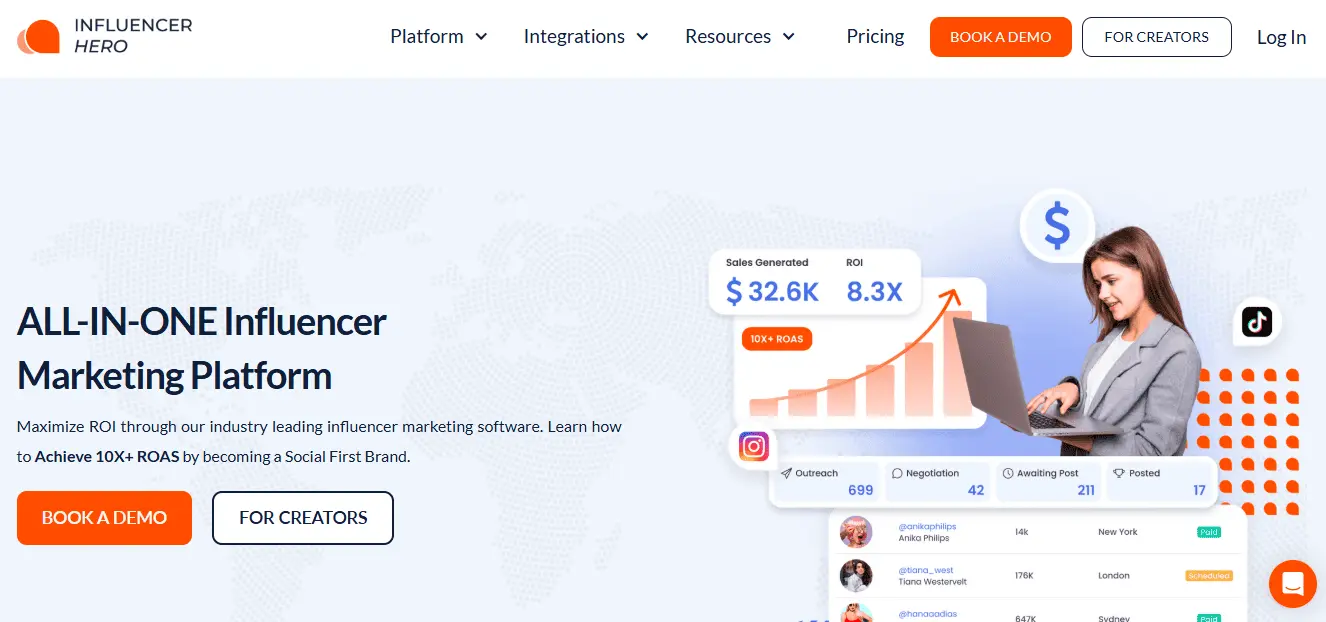
Influencer Hero est la plateforme la plus complète pour les marques qui ont besoin de trouver des influenceurs YouTube et de les intégrer dans un entonnage de ventes hautement performant. Elle résout le « goulot d'étranglement opérationnel » en combinant une découverte de classe mondiale avec une exécution automatisée.
Comment vous trouvez les influenceurs : découverte alimentée par l'IA « de qualité professionnelle »
- Le moteur Lookalike : Vous avez trouvé une chaîne YouTube qui a généré des ventes massives ? Utilisez la fonction Lookalike pour trouver instantanément plus de 100 autres chaînes avec l'ADN d'audience et le style de contenu identiques.
- Recherche de niche approfondie : Filtrez les créateurs en fonction des sujets réels qu'ils discutent dans leurs vidéos longue durée, en veillant à ce que votre « Gadget de cuisine » n'apparaisse pas simplement sur une chaîne généraliste, mais sur une autorité dédiée « Cuisine à domicile ».
- Trouvez vos fans : L'outil analyse automatiquement votre liste de clients Shopify pour trouver des YouTubers qui sont déjà des défenseurs organiques de votre marque.
L'avantage YouTube
Gérer les partenariats YouTube prend du temps. La « page de deal » d'Influencer Hero centralise tout, des premiers contacts aux approbations de scénarios en passant par l'hébergement de contenu.
Au-delà de la découverte : la puissance opérationnelle
Une fois vos influenceurs trouvés, la plateforme prend le relais. Elle gère la logistique des cadeaux via notre suite complète d'intégrations eCommerce—y compris Shopify, WooCommerce et bien d'autres—pour assurer une exécution transparente. Au-delà de la logistique, la plateforme suit le ROI grâce à des codes d'affiliation automatisés et enregistre automatiquement chaque vidéo et « Short » pour que vous ne perdiez jamais la trace de vos ressources.
2. Modash : le meilleur pour la découverte précise de niche
Si vous recherchez une « aiguille dans une botte de foin »—comme des YouTubers spécialisés en productivité IA parlant anglais en Allemagne—Modash est votre moteur de recherche.
Comment vous trouvez les influenceurs
Elle propose la plus grande base de données du marché (250M+ profils) et ne nécessite pas que les créateurs « participent », ce qui signifie que vous voyez chaque chaîne active.
L'avantage YouTube
Vous pouvez filtrer par nombre moyen de vues par vidéo (souvent plus important que le nombre d'abonnés) et vélocité de croissance de l'audience pour trouver les « étoiles montantes » avant que leurs tarifs ne s'envolent.
Au-delà de la découverte
Modash excelle dans la logistique des campagnes mondiales à grand volume, en proposant la collecte automatisée de contenu et un système de paiement mondial pour les créateurs de plus de 180 pays.
3. Sprout Social (Tagger) : le meilleur pour la stratégie d'entreprise
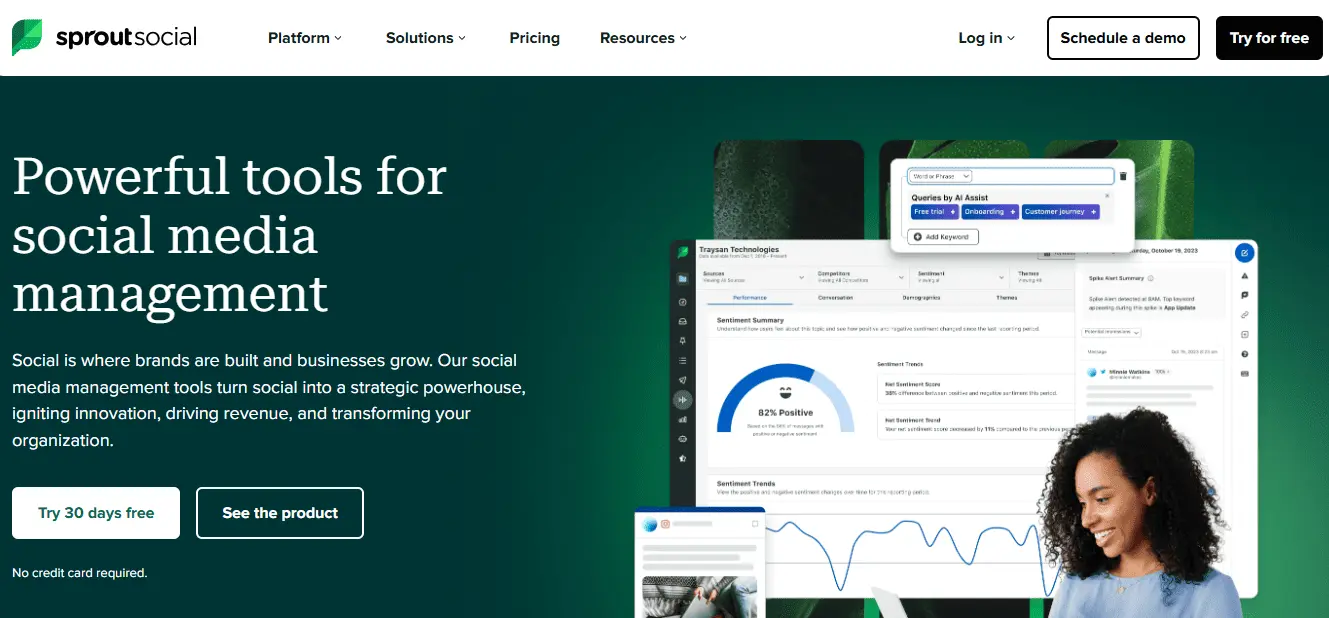
Avec l'acquisition de Tagger, Sprout Social propose l'environnement le plus riche en données pour les grandes marques nécessitant un examen rigoureux et des données concurrentielles.
Comment vous trouvez les influenceurs
« Super Search » utilise l'IA sémantique pour catégoriser les créateurs en fonction de leur contenu réel, et non pas seulement des étiquettes de leur biographie.
L'avantage YouTube
Leur score propriétaire «Brand Fit» évalue les vidéos passées d'un créateur pour l'alignement du contenu et la sécurité de la marque, protégeant votre réputation à grande échelle.
Au-delà de la découverte
Il fournit une analyse de « Share of Voice », vous permettant de voir exactement avec quels YouTubers vos concurrents travaillent afin de combler les lacunes dans votre niche.
4. HypeAuditor : Meilleur pour l'évaluation et la détection de fraude
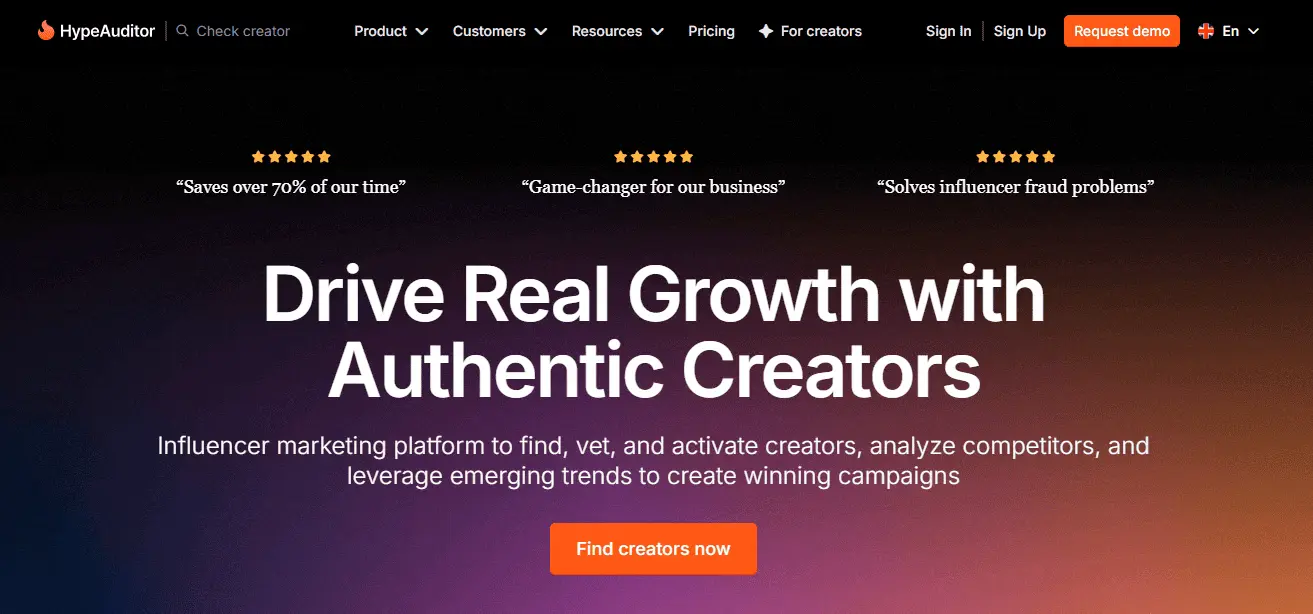
Sur YouTube, les « view bots » sont un risque réel. HypeAuditor est le leader de l'industrie pour s'assurer que les vues pour lesquelles vous payez proviennent de véritables humains.
Comment vous trouvez des influenceurs
Ses filtres alimentés par l'IA catégorisent 219M+ comptes, ce qui facilite la recherche de créateurs de contenu de haute qualité dans des catégories spécifiques.
L'avantage YouTube
Son « Audience Quality Score » (AQS) est la norme pour identifier les abonnés inactifs et les pics de vues non organiques.
Au-delà de la découverte
Il offre une « Channel Analytics » approfondie qui ventile la démographie de l'audience, en veillant à ce que les spectateurs du YouTuber vivent réellement dans les régions où vous vendez.
5. Upfluence : Meilleur pour transformer les clients en créateurs

Upfluence est unique car il se concentre sur la recherche d'influenceurs qui interagissent déjà avec votre marque. Il résout le « goulot d'étranglement de l'authenticité ».
Comment vous trouvez des influenceurs
Son outil « Live Capture » identifie les personnes influentes qui visitent actuellement votre site web ou achètent dans votre boutique.
L'avantage YouTube
Il s'intègre à Shopify et WooCommerce pour voir si un client dispose d'une chaîne YouTube. Puisque ces créateurs aiment déjà votre marque, ils sont 7 fois plus susceptibles d'accepter un partenariat qu'un influenceur « à froid ».
Au-delà de la découverte
Upfluence est une puissance d'affiliation. Il vous permet de gérer des programmes « client-influenceur » à haut volume, en suivant les codes de coupon et les ventes dans un tableau de bord unifié.
Conseils professionnels pour YouTube : Comment évaluer un créateur pour le ROI
YouTube est une plateforme basée sur la confiance, et le « meilleur » créateur est souvent celui qui parle à son audience comme un mentor plutôt que comme une célébrité. Pour vous assurer que votre découverte se transforme en ventes, gardez ces quatre repères à l'esprit :
Vérifiez les « vues moyennes » par rapport aux « abonnés »
Une chaîne avec 1 million d'abonnés mais seulement 5k vues par vidéo est une chaîne « morte ». Recherchez des créateurs où les vues moyennes par vidéo représentent au moins 10-20 % de leur nombre d'abonnés.
Évaluez les 60 premières secondes
Dans une vidéo longue forme, le « hook » est tout. Regardez la première minute de leurs trois dernières vidéos. Vont-ils droit au but, ou y a-t-il une longue introduction sans rapport ? Les créateurs à forte rétention ont des ouvertures concises et percutantes.
Auditez les habitudes « Lien dans la bio »
Allez à la description du créateur. Utilisent-ils déjà des liens d'affiliation ou des marqueurs « Chapitre » ? Un créateur qui maîtrise déjà les liens est beaucoup plus facile à travailler avec et entraînera beaucoup plus de trafic.
Engagement communautaire
Lisez les commentaires. Les gens posent-ils des questions sur les produits mentionnés ? Un créateur qui a une communauté engagée—où ils résolvent activement des problèmes pour leurs spectateurs—est une mine d'or pour les marques d'e-commerce.
Réflexions finales
YouTube est un « fossé » pour votre marque—le contenu reste pertinent pendant des années, continuant à générer du trafic longtemps après la fin de la campagne. Pour construire ce fossé, vous avez besoin d'un outil de découverte qui comprend la profondeur du contenu long format.
Si vous êtes une grande entreprise à la recherche de données concurrentielles, Sprout Socialest un excellent choix. Mais si vous souhaitez évoluer vers une opération eCommerce professionnelle—où vous trouvez des créateurs, automatisez votre sensibilisation et suivez chaque vente Shopify—Influencer Hero est le seul moteur « tout-en-un » conçu pour gérer l'ensemble du cycle de vie d'un partenariat YouTube.
Réservez une démo avec Influencer Hero et remplacez les feuilles de calcul manuelles par notre moteur ROI automatisé.
Summary
This is some text inside of a div block.
This is some text inside of a div block.
Pricing/Month
Shopify Reviews
This is some text inside of a div block.
This is some text inside of a div block.
This is some text inside of a div block.
This is some text inside of a div block.
This is some text inside of a div block.
This is some text inside of a div block.
This is some text inside of a div block.
This is some text inside of a div block.
This is some text inside of a div block.
This is some text inside of a div block.
This is some text inside of a div block.
This is some text inside of a div block.
This is some text inside of a div block.
This is some text inside of a div block.
This is some text inside of a div block.
This is some text inside of a div block.
This is some text inside of a div block.
This is some text inside of a div block.
This is some text inside of a div block.
This is some text inside of a div block.
This is some text inside of a div block.
Read More

FAQs
Les chiffres d'abonnés sont-ils la métrique la plus importante lors du choix d'un influencer YouTube ?

Non. Les chiffres d'abonnés sont souvent une « métrique de vanité ». Les marques avisées privilégient la pertinence de l'audience, la qualité de l'engagement et l'historique de conversion plutôt que la simple portée. Une chaîne avec 20 000 abonnés très engagés qui font confiance aux recommandations du créateur convertit souvent mieux qu'une chaîne avec 500 000 abonnés dotée d'une audience « morte » ou remplie de bots.
Comment puis-je m'assurer que les créateurs YouTube que je trouve n'utilisent pas de vues artificielles ou de bots ?
Vous devriez rechercher des outils avec des scores de qualité d'audience (AQS) robustes ou une détection de fraude automatisée. Ces outils analysent les modèles d'engagement historiques, comme les pics de vues irréguliers ou les sections de commentaires inactives, pour vérifier que votre budget atteint de vrais clients potentiels humains, et non des scripts automatisés.
Quelle est la différence entre une vidéo dédiée et une mention de marque ?
- Vidéo dédiée : L'intégralité de la vidéo est consacrée à votre marque (par exemple, un déballage de produit, un examen approfondi ou un tutoriel). C'est un impact élevé mais cela implique généralement un coût initial plus élevé.
- Mention de marque : Votre produit est intégré dans une vidéo plus large (par exemple, « une journée dans la vie » ou une listicle). C'est souvent plus rentable et semble plus naturel dans le contenu habituel du créateur, ce qui peut améliorer la confiance des spectateurs.
Comment puis-je suivre le ROI d'une vidéo YouTube plusieurs mois après sa publication ?
YouTube est une plateforme pilotée par les moteurs de recherche, ce qui signifie que les vidéos ont une longue « durée de vie ». Pour suivre le retour sur investissement à long terme, vous devez utiliser des outils d'attribution qui lient des codes d'affiliation spécifiques, des pages d'atterrissage dédiées ou des paramètres UTM à des créateurs individuels. Recherchez des plateformes qui s'intègrent directement à votre boutique eCommerce (comme Shopify ou WooCommerce) pour synchroniser les données de ventes avec des actifs vidéo spécifiques.
À quoi devrait ressembler mon message de sensibilisation initial à un créateur YouTube ?
Évitez les modèles génériques à tout prix. Les créateurs reçoivent des dizaines d'e-mails indésirables quotidiennement ; ils peuvent repérer immédiatement un travail de copier-coller. Votre premier contact devrait :
- Mentionner une vidéo spécifique de leur part que vous avez appréciée ou qui se rapporte à votre produit.
- Expliquez « pourquoi » eux : Expliquez clairement pourquoi leur audience est le match parfait pour votre marque.
- Gardez-le simple : Votre objectif est d'engager une conversation, pas de signer un contrat dans le premier e-mail. Proposez une prochaine étape claire et sans friction, comme un bref appel pour explorer les idées potentielles.


Most Popular Blogs


Ready to achieve 10X+ ROI?
Schedule a Demo with one of our media experts below.