Live Webinar
Scaling Influencer ROI With Paid Media - The Whitelisting Playbook

Pour les marques de commerce électronique, le Q4 est la période la plus importante de l'année. Mais générer des résultats exceptionnels pendant BFCM ne se fait pas par hasard, c'est le résultat de mois de préparation systématique.
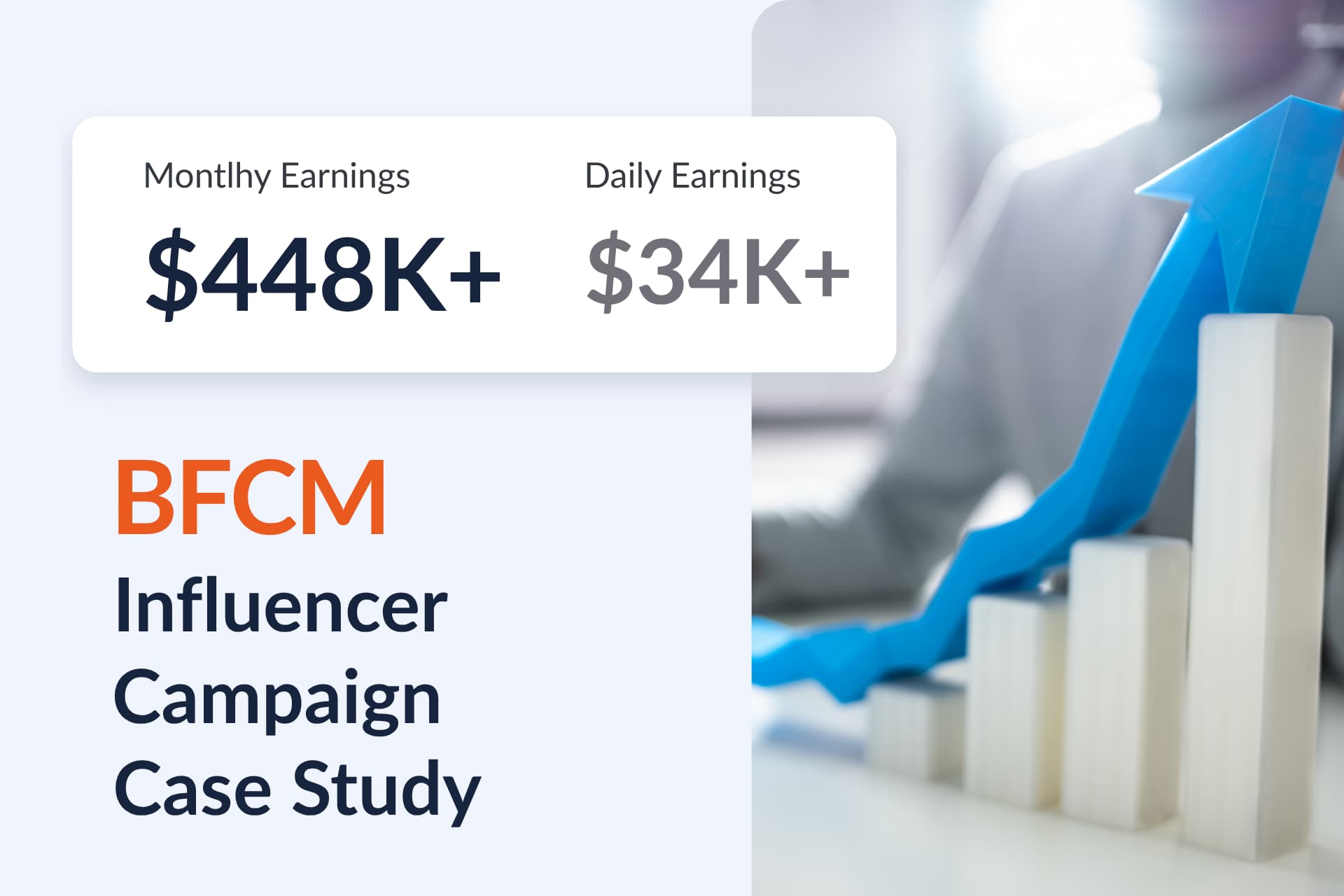
Cette étude de cas détaille exactement comment une marque entrant sur le marché américain a utilisé Influencer Hero pour construire un programme d'influence de zéro, identifier ses meilleurs performeurs, et convertir cette préparation en 448 000 $ de chiffre d'affaires au Q4, avec plus de 34 000 $ générés le Black Friday seul.
La marque est arrivée avec une mission ambitieuse mais ciblée :
Sans une présence établie aux États-Unis, la marque n'avait aucune relation d'influence existante, aucun repère de performance, et aucune donnée pour guider l'allocation budgétaire. Le défi ne se limitait pas à lancer une campagne — il s'agissait de construire l'infrastructure de données pour savoir quels créateurs valaient l'investissement avant l'arrivée de la fenêtre critique du Q4.
L'entrée sur un nouveau marché signifiait aussi partir de zéro en termes de reconnaissance de marque, ce qui rendait essentiel de travailler avec des influenceurs qui avaient une confiance authentique du public plutôt que simplement des nombres de followers élevés.
La décision stratégique la plus importante de cette campagne a été de commencer en janvier — presque un an avant BFCM. Plutôt que de se précipiter pour trouver des influenceurs quelques semaines avant la saison des fêtes, l'équipe a construit un pipeline de créateurs testés et catégorisés sur 10+ mois.
L'approche : lancer des campagnes de seeding régulières avec 50–100 nouveaux influenceurs par mois, suivre chaque conversion, et utiliser ces données pour classer chaque créateur dans l'une des trois catégories :
Ce système de classification a transformé l'allocation budgétaire pour BFCM, passant de la devinette à l'exercice basé sur les données. À l'arrivée du Q4, l'équipe savait exactement quels créateurs valaient la peine d'être verrouillés dans des forfaits multi-publications — et à quel rendement attendu.
Le marketing d'influence pendant BFCM fonctionne si bien car il combine trois déclencheurs psychologiques puissants en une seule offre :
L'urgence : une vente à durée limitée crée une pression d'agir maintenant plutôt que plus tard.
La rareté : communiquer qu'une offre ne durera pas crée la peur de rater l'occasion parmi les audiences.
La preuve sociale : les créateurs de confiance approuvant l'offre donnent aux acheteurs hésitants l'impulsion finale dont ils ont besoin.
La marque a lancé une réduction Black Friday de 30 %, communiquée par les influencers à leurs audiences. Cette combinaison a porté le taux de conversion de la boutique à près de 3 fois sa moyenne annuelle, résultat direct du fait de placer la bonne offre devant une audience déjà réceptive par le biais de voix de confiance.
Un insight stratégique clé soutenant cette campagne : la relation que vous construisez avec vos meilleurs créateurs avant BFCM détermine l'effort qu'ils investissent dans votre campagne pendant celle-ci.
Les meilleurs interprètes qui se sentaient valorisés, reconnus et faisaient partie de quelque chose d'exclusif étaient beaucoup plus susceptibles de publier avec enthousiasme, de rappeler plusieurs fois à leurs audiences et de plaider authentiquement pour l'offre de la marque.
L'équipe a configuré un magasin Shopify dédié aux États-Unis avec un domaine spécifique au pays. Bien que non strictement nécessaire, cela a donné à la marque une présence crédible et native du marché, et a simplifié le suivi du trafic et des conversions spécifiques aux États-Unis.
À l'aide de l'outil de recherche et de découverte d'Influencer Hero (disponible sur https://www.influencer-hero.com/blogs/best-influencer-search-and-discovery-tools), l'équipe a identifié et intégré 50 à 100 nouveaux influenceurs basés aux États-Unis par mois tout au long de l'année. Chacun a reçu un cadeau de produit en échange d'une publication, avec des liens d'affiliation et des codes de réduction uniques attribués via le CRM d'Influencer Hero pour suivre la performance individuelle.
Ce modèle d'envoi a gardé les coûts initiaux bas tout en générant systématiquement les données de performance nécessaires pour prendre des décisions d'investissement en toute confiance pour le BFCM.
À mesure que les données de performance s'accumulaient, les influenceurs ont été segmentés en niveaux HP, MP et GP. Les meilleurs interprètes ont été formellement accueillis au programme d'ambassadeur de marque — une étape de reconnaissance qui a renforcé les relations et préparé le terrain pour leur demander plus lors du BFCM.
Le CRM d'Influencer Hero a facilité le maintien de ces listes stratifiées, le suivi des performances historiques par créateur et la gestion de la communication nécessaire pour alimenter ces relations à grande échelle.
Bien avant le lancement de la campagne, l'équipe s'est adressée aux créateurs de haut niveau avec des forfaits de publications groupés — par exemple, 4 publications pour un paiement fixe — plutôt que de payer par publication. Cette approche a fourni deux avantages :
Les paiements fixes (plutôt que purement affiliés) ont été utilisés spécifiquement pour les meilleurs interprètes. Les commissions d'affiliation s'adaptent aux ventes, ce qui est rentable pour les créateurs non éprouvés mais onéreux lorsqu'un créateur génère un volume significatif. Pour les meilleurs interprètes éprouvés, les forfaits à paiement fixe offrent systématiquement un ROAS plus solide.
Le 25 novembre (Black Friday), l'équipe a coordonné la grande majorité de ses partenaires influenceurs pour publier simultanément. Ce pic de trafic concentré — près de 6 000 clics en un seul jour — était le moteur derrière le chiffre de revenus d'une seule journée de 34 000 $ et plus.
Des e-mails de rappel ont été envoyés à tous les influenceurs participant la veille de la campagne pour maximiser les taux de publication et s'assurer que personne ne manquait sa fenêtre.
Tout au long de la campagne, l'équipe a maintenu une communication active avec les influenceurs — les remerciant pour les publications, partageant le contexte de performance et encourageant subtilement des publications supplémentaires pendant que l'offre était disponible. Les influenceurs qui comprenaient que la campagne performait bien étaient plus motivés à contribuer du contenu supplémentaire.
| Métrique | Résultat |
|---|---|
| Revenu total Q4 | 448 000 $ |
| Revenu sur une journée (Black Friday) | 34 000 $+ |
| Total des sessions de la boutique en ligne (oct.–déc.) | 123 000+ |
| Clics sur une journée (Black Friday) | ~6 000 |
| Engagements au paiement | 13 000+ |
| Valeur moyenne de la commande (AOV) | ~120 $ (constant tout au long) |
| Période | Taux de conversion de la boutique |
|---|---|
| Moyenne annuelle | 1 %–1,5 % |
| Période de campagne BFCM | 2,99 % |
| Augmentation | ~2–3X |
Le quasi-triplement du taux de conversion pendant BFCM reflète précisément ce qui se produit lorsqu'une forte offre de réduction est amplifiée par des créateurs de confiance auprès d'un public hautement pertinent. L'offre Black Friday de 30 % a donné aux clients une raison concrète d'agir, tandis que l'urgence et les messages de rareté pilotés par les influenceurs ont levé les hésitations.
| Niveau | Seuil de conversion | % du total des influenceurs | % du revenu de campagne |
|---|---|---|---|
| Hauts performants (HP) | 10+ conversions/publication | 2,3 % | 71,4 % |
| Performants moyens (MP) | 3–9 conversions/publication | - | 16,8 % |
| Performants généraux (GP) | <3 conversions/publication | - | 11,8 % |
Ceci est la règle 80/20 exprimée sous sa forme la plus claire : 2,3 % de l'effectif des influenceurs a généré 71,4 % du chiffre d'affaires total de la campagne. Sans les mois de tests préalables pour identifier qui étaient ces 2,3 %, il aurait été impossible de concentrer les ressources sur eux.
C'est aussi pour cela que l'approche « gifting d'abord, test avant BFCM » est si stratégiquement importante. Aucune marque ne peut prédire quels créateurs seront performants sans données de ventes réelles. La phase de test est ce qui transforme une campagne BFCM incertaine en un investissement de haute conviction.
Malgré la réduction de 30 %, la valeur moyenne des commandes est restée constante autour de 120 $. L'explication : bien que la remise ait réduit les revenus par unité, de nombreux clients ont acheté plusieurs articles en cadeaux de vacances, ce qui a compensé l'impact. Le résultat net a été une campagne qui a maintenu des revenus sains par transaction tout en augmentant dramatiquement le volume.
Le chiffre d'affaires dans cette étude de cas n'a pas été généré pendant BFCM, il a été construit au cours des dix mois précédents. En utilisant Influencer Hero pour découvrir systématiquement, tester et classer les influenceurs tout au long de l'année, la marque est arrivée à BFCM avec exactement ce que chaque spécialiste du marketing a le plus besoin : la certitude quant à l'endroit où investir.
Le résultat a été une campagne où le budget est allé aux performeurs confirmés, les packages ont été verrouillés avant l'ouverture de la fenêtre, les publications ont été diffusées simultanément le jour du trafic le plus élevé de l'année, et une offre bien conçue a converti une part inhabituellement élevée des visiteurs du site en acheteurs.
Si vous planifiez votre stratégie BFCM ou cherchez à construire un programme d'influenceurs qui génère des rendements croissants au fil du temps, réservez une démo gratuite avec Influencer Hero pour découvrir comment la plateforme peut vous aider à reproduire ce système pour votre marque.

Schedule a Demo with one of our media experts below.



.png)