Top 10 Best Influencer Search & Discovery Tools in 2026

March 13, 2026
|
Published

October 20, 2026
|
Updated

14 minutes
|
Reading

Influencer Performance Marketing Course | VOUCHER: IMC100

Malena Garcia
| Author

Drive ROI With Influencers

Global Influencer Database
ALL-IN-ONE platform
CRM, Affiliate, UGC & More
Top 10 Best Influencer Search & Discovery Tools in 2026
Finding the right creators can make or break your influencer marketing strategy. With millions of profiles across Instagram, TikTok, YouTube, and more, manually searching for the perfect fit is no longer scalable in 2026.
That's where influencer search and discovery tools come in. They help brands filter by audience demographics, engagement rates, niche, location, performance data, and even AI-driven relevance scoring.
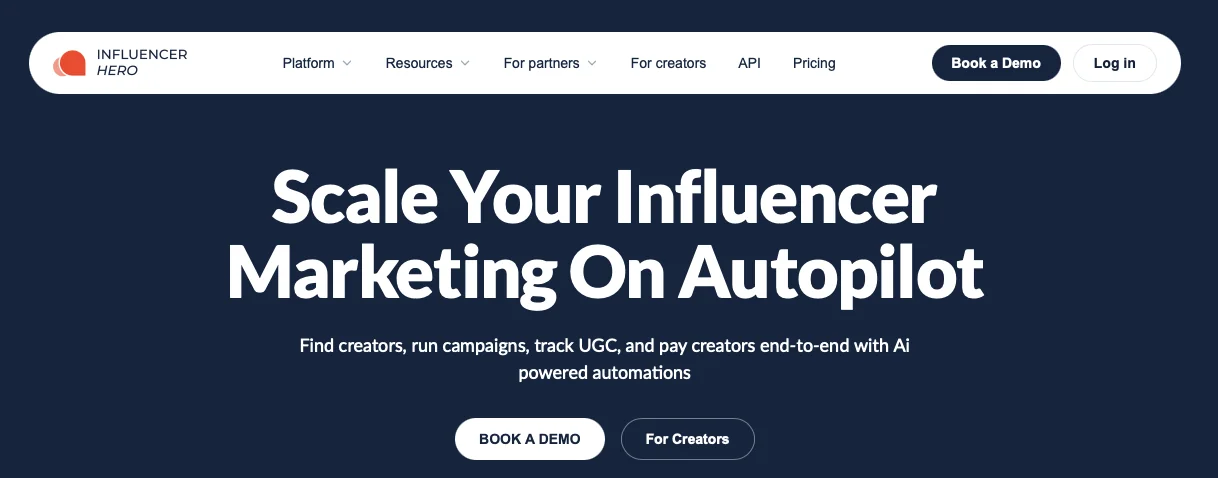
While many tools focus purely on database access, platforms like Influencer Hero go beyond simple search. They combine advanced influencer discovery with built-in CRM, outreach automation, affiliate tracking, and campaign analytics, so brands can not only find creators but also manage and scale collaborations from one centralized platform.
In this guide, we break down the Top 10 Best Influencer Search & Discovery Tools in 2026, highlighting platforms that help you identify high-performing creators, evaluate authenticity, and turn influencer partnerships into measurable revenue growth.
Top 10 Best Influencer Search and Discovery Tools in 2026:
- Influencer Hero
- Modash
- Storyclash
- Ainfluencer
- SocialLadder
- HypeAuditor
- CreatorDB
- CreatorIQ
- Traackr
- Sprout Social
Quick Comparison: Influencer Search & Discovery Tools in 2026
Why You Should Use Influencer Search & Discovery Tools in 2026
Influencer marketing is more competitive than ever. With millions of creators across TikTok, Instagram, YouTube, and emerging platforms, manually finding the right partners is time-consuming, inconsistent, and often inaccurate.
In 2026, brands can't rely on vanity metrics alone. You need to analyze audience demographics, engagement authenticity, niche relevance, growth trends, and historical campaign performance before investing your budget.
The best tools go beyond simple discovery, combining AI-powered search with built-in CRM, automated outreach, affiliate tracking, and analytics. That means you don't just find creators; you activate, manage, and scale partnerships within one centralized system.
What to Look For in an Influencer Search & Discovery Tool in 2026
Not every discovery tool solves the same problem. Some are pure databases, some are opt-in marketplaces, and some connect search directly to outreach, gifting, and payments. Before you commit budget, check these five capabilities.
Database Size and Coverage
Look at how many creators the tool indexes and how it gets them. Open-web indexes cover every public creator, while opt-in marketplaces only show creators who signed up. Also check platform coverage: Instagram, TikTok, and YouTube are the baseline in 2026, but many programs also need Pinterest, Snapchat, X, or Twitch.
Advanced Filters and AI Search
Strong tools let you filter by niche, location, language, follower range, engagement rate, and audience demographics. The best ones add AI search, where you describe the creator you want in plain language, plus lookalike search based on your top-performing partners.
Audience Quality and Authenticity Data
Follower count means little if the audience is fake or in the wrong country. Prioritize tools that show audience location, age, and gender splits, along with fake-follower and engagement-quality scoring, so you can vet creators before outreach.
Brand Affinity and Sponsorship History
Creators who already follow your brand, buy your products, or have worked with competitors are warmer prospects. Tools that surface brand mentions, past sponsorships, and customer-to-creator matches shorten the path from search to a signed partnership.
Workflow After Discovery
Discovery is only step one. Check whether shortlisted creators flow into a CRM, outreach sequences, product seeding, affiliate tracking, and payments, or whether you'll need to export lists into separate tools. Also compare pricing models: monthly plans, annual contracts, or per-seat fees change the real cost fast.
Criteria of Selection: How We Evaluated the Best Influencer Discovery Tools in 2026
When selecting the platforms for this guide, we focused on the factors that most directly affect a brand's ability to find the right creators and turn them into results. Rather than simply listing popular tools, we evaluated each platform on practical capabilities that support real influencer workflows.
- Discovery Depth: We looked at database size, how creators are indexed (open web vs. opt-in), platform coverage, and the quality of filters, AI search, and lookalike recommendations.
- Data Quality and Authenticity Checks: We prioritized tools that provide audience demographics, fake-follower detection, and engagement-quality scoring so brands can vet creators with confidence.
- User Reviews and Market Reputation: We reviewed ratings and feedback on trusted platforms such as G2, Capterra, and Trustpilot to understand reliability and long-term usability.
- Pricing and Value for Money: We compared entry prices, free plans or trials, and contract terms, and weighed them against the discovery capabilities each platform actually delivers.
- Workflow and Integrations: We assessed how well discovery connects to outreach, CRM, gifting, affiliate tracking, and eCommerce integrations like Shopify, so teams can scale without juggling extra tools.
Best Influencer Search & Discovery Tools in 2026
1. Influencer Hero
Pricing
- Standard: $649/month (up to 1,000 creators)
- Pro: $1,049/month (up to 5,000 creators)
- Business: $2,490/month (up to 10,000 creators)
- Custom & Agency: Tailored enterprise pricing
All plans include core features, are billed monthly with no lock-in, and scale based on the number of creators managed.
Search and Discovery Features
- 450M+ Creator Database: Influencer Hero provides access to a database of over 450 million creators across Instagram, TikTok, YouTube, Facebook, Pinterest, Snapchat, X, and Twitch. This massive dataset lets brands discover both established influencers and niche creators without being limited to opt-in pools.
- Advanced Multi-Filter Search: Filter creators by location, niche, engagement rate, audience demographics, follower quality, and more, while AI-powered filters surface highly relevant creators. This helps brands move beyond surface-level metrics and find creators that truly match their target audience and campaign goals.
- Audience Authenticity & Fake Follower Detection: The platform analyzes audience quality and follower authenticity before you activate a partnership. This protects campaign budgets and improves overall ROI.
- Lookalike Creator Recommendations: Discover creators similar to your top-performing partners using performance-based signals. This makes scaling campaigns faster and more predictable.
- Brand-Following Influencer Detection: Identify creators who already follow or engage with your brand. These warm prospects typically convert better thanks to existing brand affinity.
- Chrome Extension with One-Click Import: Analyze creators directly on social platforms and instantly add them to your CRM. This streamlines prospecting and removes manual data entry.
Pros and Cons
Our Insights
From an operational perspective, Influencer Hero works particularly well for teams that want discovery to connect directly to execution. Instead of exporting creator lists and managing outreach or tracking in separate tools, the discovery workflow feeds straight into the CRM, outreach automation, gifting, and affiliate tracking systems.
This makes it easier for marketing teams to move from "finding creators" to actually activating and managing partnerships at scale.
We've also found the AI-powered filtering and large creator database especially useful for brands that need niche discovery across multiple markets. Rather than relying only on keyword searches, teams can layer audience demographics, follower quality signals, and lookalike recommendations to surface creators that closely match their target customer profiles.
This tends to produce more relevant creator shortlists and cuts the time spent manually vetting influencers.
2. Modash
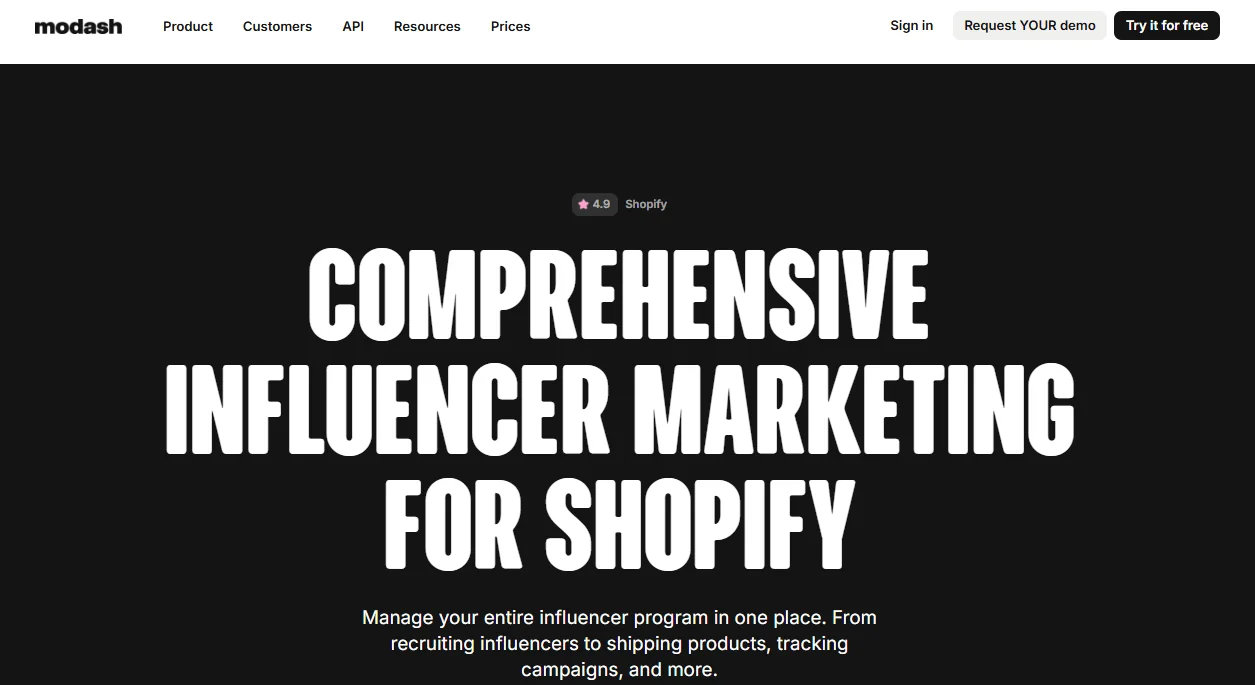
Modash is an influencer marketing platform for Shopify brands, built on a database of 380M+ creators across Instagram, TikTok and YouTube. Every public profile with 1k+ followers is searchable, and creators don't need to sign up to show up. That means discovery covers the whole creator market, not just the creators who joined a marketplace. Each profile comes with audience demographics, audience credibility, engagement rate, follower growth and past brand partnerships.
Once a shortlist is ready, brands can run the rest of their program in Modash. That includes outreach, affiliate links and promo codes, commissions, content tracking, and creator payments. Every plan starts with a 14-day free trial.
Pricing
- Essentials: $199/month (billed annually) or $299/month (billed monthly)
- Performance: $499/month (billed annually)
- Enterprise: Custom, starting at $14,700/year
All plans include a 14-day free trial with no credit card required, and pricing is public with no sales call required.
Search and Discovery Features
- 380M+ Creator Database: Modash indexes every public Instagram, TikTok, and YouTube profile with 1k+ followers. Search covers smaller niche creators as well as established names.
- AI Creator Search: Describe the creator you want in plain language, like “home cooks who post budget meal prep” or upload an image to find creators with a similar look. Modash searches one platform at a time.
- Advanced Filters: Filter by location, follower range, engagement rate, audience demographics, audience credibility, brand partnerships, and lookalikes.
- Audience Credibility and Demographics: Each profile breaks down audience location, age, and gender. It also estimates what share of followers are real accounts.
- Brand Partnership History: See which brands a creator has worked with or mentioned. Spot creators who already promote competitors or have a track record in your category.
- Find Your Fans: Find creators who already follow your brand or have bought from your Shopify store. They already know the product, so they're often the easiest to activate.
- Email Lookup: Unlock publicly available creator emails one at a time or in bulk from a saved list.
Pros and Cons
Our Insights
Modash is the strongest option on this list for Shopify brands that want discovery to feed directly into the rest of their influencer program. The 380M+ creator database means teams aren't limited to creators who opted in, and audience credibility and demographic data let them shortlist with confidence.
The brand partnership history and "Find Your Fans" features are especially useful for ecommerce teams. Brands can spot creators already promoting competitors, or start with customers and followers who already love the product.
What sets Modash apart is what happens after the search. Shortlisted creators move straight into outreach, Shopify gifting, content tracking and payments, so teams don't need a second tool to run the program they just sourced for. The trade-off is platform coverage: brands that need Twitch or X should look elsewhere.
3. Storyclash
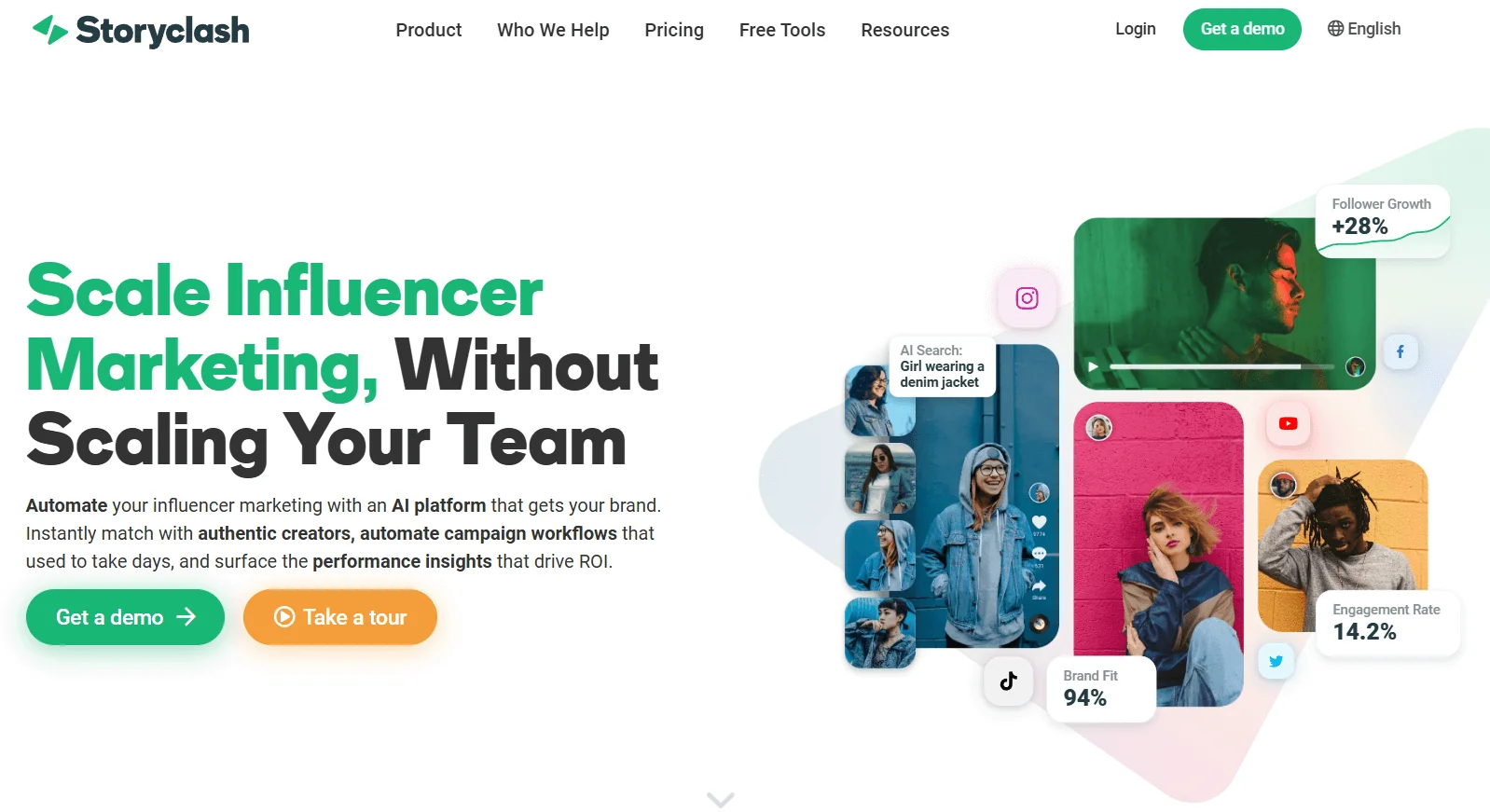
Storyclash is an AI-powered influencer discovery and performance tracking platform focused on smart search, competitor benchmarking, and ROI analysis. In January 2026, it was acquired by Kolsquare (part of team.blue), and it now operates as Storyclash by Kolsquare, one of the largest influencer marketing tech groups in Europe.
Pricing
- Custom pricing: Quote-based since the Kolsquare acquisition; the Business plan was previously listed at $870/month
- Contract: 12-month commitments are standard
- Trial: No self-serve trial; access starts with a booked demo
Plans scale by user seats and advanced features.
Search and Discovery Features
- AI Smart Prompt Search: Users can search with natural-language prompts like "young chef in the US cooking with knives." The system analyzes bios, captions, hashtags, and visual similarity to surface relevant creators.
- Image-Based Discovery: Upload a product or aesthetic image to find creators producing similar content, which is especially helpful for visually driven brands entering new markets.
- Lookalike Creator Search: Identify creators similar to reference profiles, such as celebrity chefs or top performers, to support market expansion and niche replication strategies.
- 120M+ Creator Database: Search a large database across Instagram, TikTok, and YouTube, including historical and active content.
- Competitor Benchmarking Module: Track which creators competitors are working with and how their collaborations perform, which gives you actionable insights for partnership strategy.
Pros and Cons
Our Insights
Storyclash stands out for its AI-driven discovery and competitive intelligence tools. Its natural-language search and image-based discovery let teams identify creators based on content style and creative themes rather than just keywords or follower metrics.
For brands entering new markets or exploring unfamiliar niches, the competitor benchmarking tools show which creators are already collaborating in the space. With the Kolsquare merger, European brands in particular should expect the product roadmap and packaging to keep shifting through 2026, so confirm what's included before signing.
4. Ainfluencer
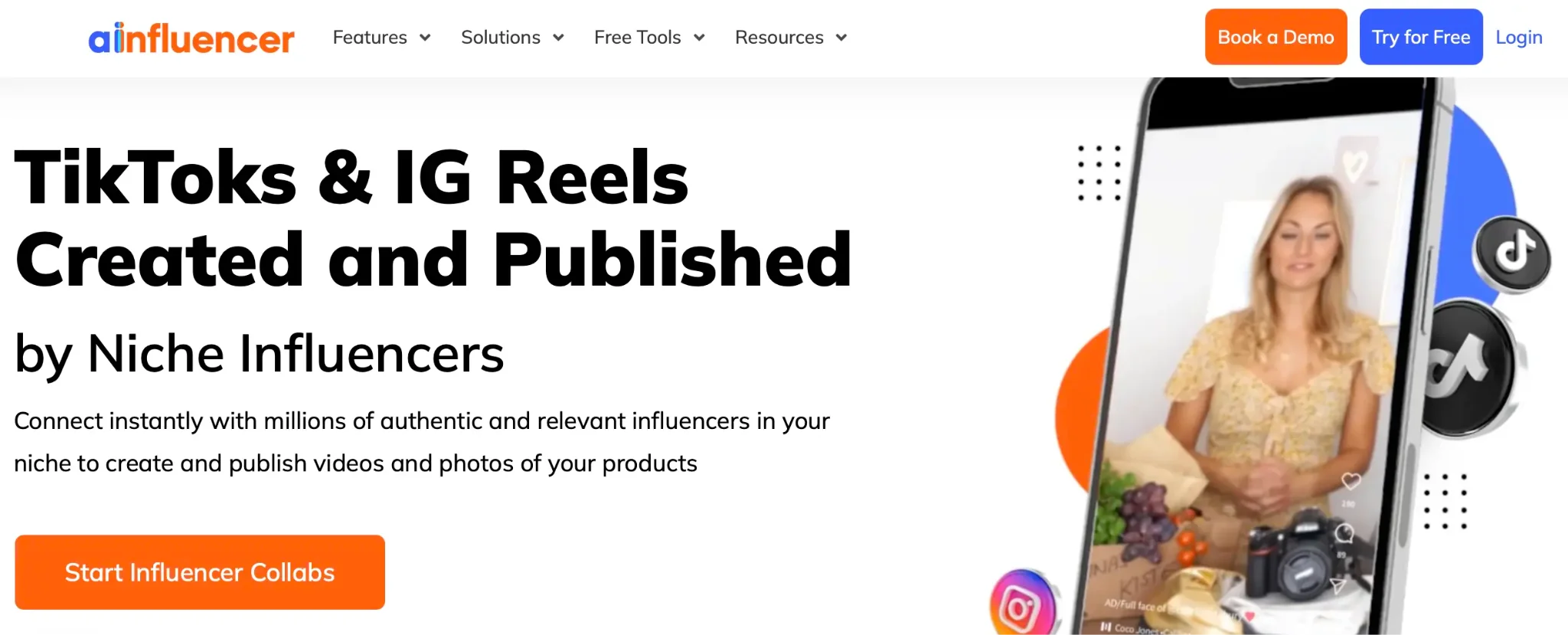
Ainfluencer is a free, all-in-one influencer and affiliate marketing platform. It connects eCommerce businesses and global brands with influencers and creators across Instagram, TikTok, and YouTube, combining built-in influencer discovery, email outreach, campaign management, and secure payments in a single platform.
For affiliate marketing, particularly Shopify affiliate marketing and Amazon affiliate marketing, it works as end-to-end affiliate software that supports link generation, tracking, and automated payouts.
It offers access to a global database of 5M+ influencers and uses AI-powered matching to connect brands with creators that fit their niche, audience, and campaign goals. Influencers are vetted and opt in as part of the marketplace, with public reviews and ratings.
While most influencer marketing platforms require paid subscriptions, Ainfluencer is free to use for brands, which makes it a practical option for startups, small businesses, and eCommerce brands looking to test influencer marketing without upfront costs.
Pricing
- Self-serve platform: Free for brands, with no subscription
- How it makes money: A commission taken from the influencer's payout once a deal is completed
- Managed agency packages: Custom quotes (reported range: $7,999–$29,999)
Search and Discovery Features
- 5M+ Opt-In Influencer Marketplace: Search a global pool of creators on Instagram, TikTok, and YouTube who have joined the marketplace and are open to brand deals.
- AI-Powered Influencer Matching: The platform recommends creators based on your niche, audience, and campaign goals, so you don't have to build every shortlist by hand.
- Public Reviews and Ratings: Each influencer carries reviews from past collaborations, which helps brands screen for reliability before sending a proposal.
- Built-In Campaign Management: Unlimited campaigns and proposals, in-app messaging and negotiation, and an escrow payment system that only releases funds once content is delivered.
- Shopify and Amazon Integrations: Affiliate link generation, Shopify product fulfillment, and automated affiliate payouts for eCommerce brands.
Pros and Cons
Our Insights
Ainfluencer is a good fit for brands and businesses looking for a cost-effective, easy-to-use influencer marketing platform that covers the basics end to end, from influencer discovery and communication to content, payments, and payouts. It's also useful for eCommerce brands that want to add affiliates without paying for a subscription.
The trade-off shows up at scale. Because search is limited to an opt-in marketplace and there's no outreach automation or CRM, teams running systematic, high-volume programs usually outgrow it.
5. SocialLadder
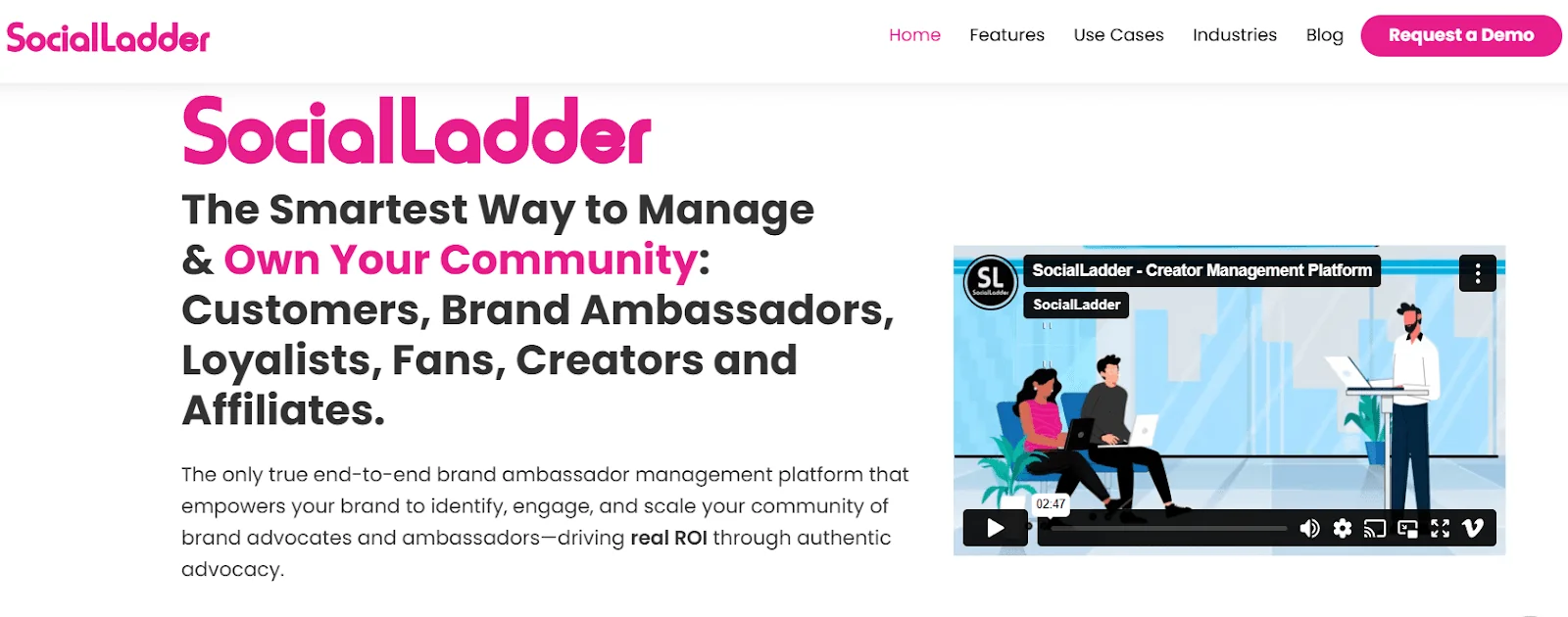
SocialLadder is a UGC and ambassador marketing platform designed to activate a brand's existing customers and followers rather than focusing solely on traditional influencer discovery. It uses gamification and reward systems to encourage authentic user-generated content at scale, and brands like American Eagle, Kendra Scott, and goPuff use it to run programs with anywhere from 50 to 5,000+ ambassadors.
Pricing
Custom pricing: Not listed publicly; programs typically land around $1,500–$2,000/month
- Commitment: Longer-term agreements are common, so confirm contract length during the demo
Pricing is structured around ambassador program management and community growth rather than database access.
Search and Discovery Features
Customer & Follower-Based Ambassador Identification: SocialLadder identifies potential brand ambassadors from existing customers, newsletter subscribers, and social followers. This approach prioritizes real brand advocates over cold influencer outreach.
- E-Commerce Database Integration: The platform connects to your customer database to invite purchasers into ambassador programs, creating a discovery loop driven by verified buyers and engaged customers.
- Gamified Challenge Participation Tracking: Participants are surfaced and ranked based on challenge completion and engagement activity, so brands can spot top-performing ambassadors organically.
- Ambassador Leaderboards & Performance Insights: The system tracks ambassador activity and ranks contributors by points and engagement, making it easier to identify high-performing community members.
- Application & Approval Workflow: Brands can approve or deny participants who want to join ambassador programs, which keeps quality control in place while still enabling scalable participation.
Pros and Cons
Our Insights
SocialLadder approaches creator discovery very differently from traditional influencer platforms. Instead of searching large influencer databases, it focuses on identifying advocates within a brand's existing customer base. For brands with strong communities, this can produce highly authentic content because ambassadors already have a real relationship with the product.
In practice, the platform works best when the goal is to scale UGC and community engagement rather than run classic influencer campaigns. Brands launching ambassador or campus programs often find this approach effective, though it takes time to build a large and active contributor base.
6. HypeAuditor
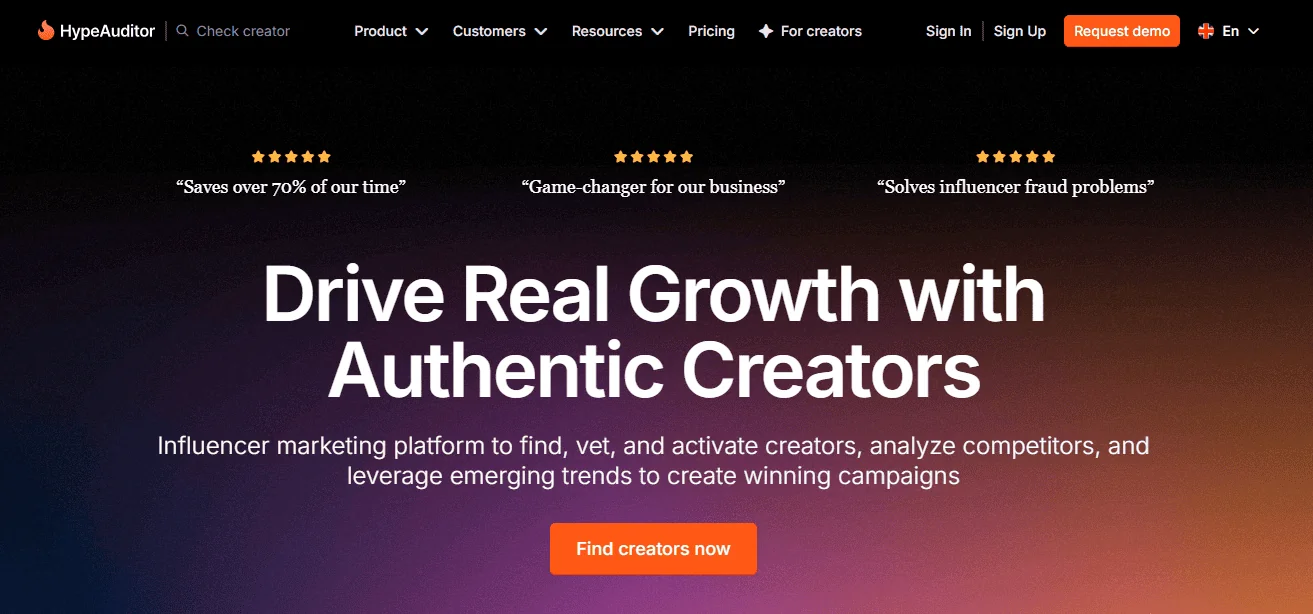
HypeAuditor is a data-driven influencer marketing platform focused heavily on audience quality analysis, brand safety, and performance benchmarking. It combines influencer discovery across a database of 227M+ profiles with campaign management, outreach tools, and ROI reporting across multiple social platforms.
Pricing
Free plan: Available, plus 40+ free influencer tools
- Basic: ~$299/month (billed annually)
- Pro: ~$499/month (billed annually)
- Enterprise: Custom pricing
- Trials: Available on request
Pricing scales based on reports, active campaigns, and platform coverage.
Search and Discovery Features
- Advanced Multi-Layer Filtering: Filter creators by location, audience size, demographics, language, engagement rate, and account quality. This enables highly specific targeting across multiple regions and niches.
- AI-Powered Category Search: HypeAuditor analyzes captions, bios, images, and video content to categorize creators beyond simple keyword matching, which improves accuracy when searching for niche influencers.
- Lookalike Influencer Search: Identify creators similar to profiles you already like or competitors you monitor, so you can expand campaigns into new but relevant audiences.
- Audience Quality & Authenticity Scoring: Each profile includes a quality score and follower authenticity breakdown, so brands can quickly see whether engagement is organic or inflated.
- Competitor & Brand Mention Discovery: Search for influencers who have worked with competing brands or mentioned specific keywords, which gives strategic insight into partnership history and market positioning.
Pros and Cons
Our Insights
HypeAuditor is particularly strong for brands that prioritize audience quality and fraud detection during the discovery phase. Its analytics layer provides detailed insights into follower authenticity, engagement patterns, and potential risks before partnerships are activated.
In practice, this makes it a useful research tool when brands want to validate creators or benchmark performance across competitors. Teams often rely on its analytics to refine influencer lists and avoid inflated engagement metrics, especially when running campaigns across multiple markets.
7. CreatorDB
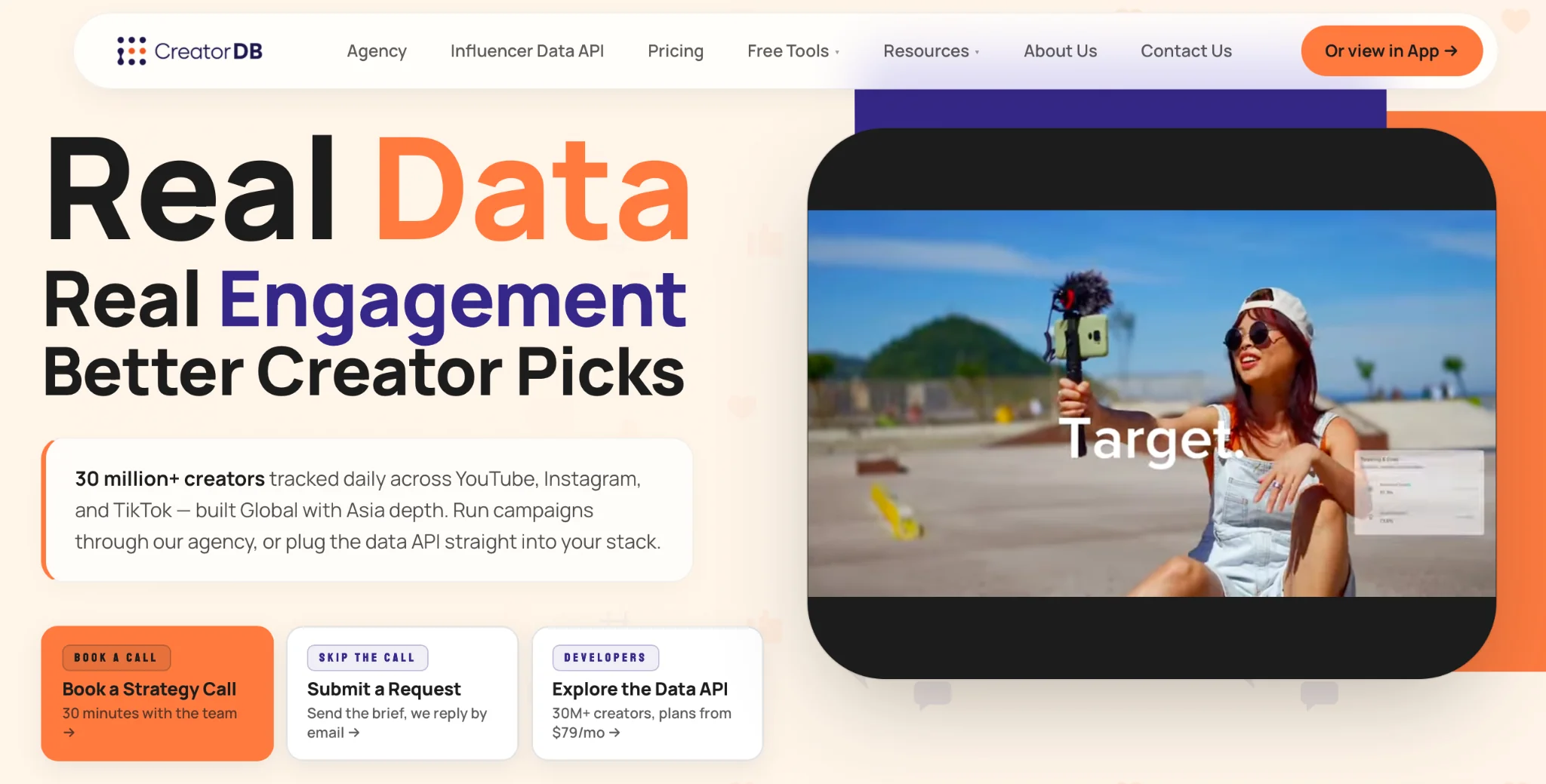
CreatorDB is an influencer search and discovery platform built on a public index of 30M+ creators across YouTube, Instagram and TikTok. Because it crawls the open web rather than relying on creators to register, search is not limited to an opt-in pool, and every profile is enriched with up to 245 data points: audience demographics, real engagement rate, growth history, verified contact emails, and the brands a creator has already been sponsored by.
Anyone can start with the free influencer search tool, which returns a public profile for any creator with no signup and no search limit, and every paid plan begins with a 14-day free trial.
Pricing
- Free search tool: $0, no signup, no search limit
- Pro: $79/month
- Premium: $249/month
- Enterprise: $749/month
All paid plans include a 14-day free trial, and pricing is public with no sales call required.
Search and Discovery Features
- 30M+ Creator Public Index: CreatorDB indexes creators from the public web across YouTube, Instagram and TikTok, refreshed close to daily, so discovery covers established names and long-tail niche creators that never joined a marketplace.
- Advanced Filter Search: Filter by platform, niche, country, language, follower range, engagement rate, growth rate and audience demographics, or describe the creator you want in plain language and let the natural-language search build the query.
- Up to 245 Data Points per Profile: Each profile shows audience age, gender and location, engagement rate measured against active followers rather than raw follower count, posting cadence, and up to four years of growth history, so shortlists can be qualified without leaving the results page.
- Sponsorship History and Brand Search: Sponsored videos and past brand partners are indexed for every creator, with cost-per-video estimates. Search a competitor to see which creators it has sponsored and how those videos performed, or check whether a prospect has recently promoted a rival.
- Verified Contact Emails: Contact details are surfaced on the profile, with a reverse email lookup for matching an address back to a creator, which removes the hunt that usually follows discovery.
- Campaign Management: Shortlisted creators flow into campaign briefs inside the app, where clients can review and approve proposed creators, track live campaigns and check deliverables from a single client sheet.
- Free Chrome Extension: Engagement rate, audience split and rate estimates appear directly on YouTube, Instagram and TikTok pages while you browse, so creators can be vetted without opening the app.
Pros and Cons
Our Insights
CreatorDB is the strongest option on this list for teams whose bottleneck is qualifying creators rather than finding them. A single profile shows who a creator reaches, whether the audience is genuine, and which brands have already paid them, so a marketer can shortlist with confidence before any outreach happens.
The sponsorship history is especially useful for competitive research: search a rival brand and the creators it has worked with appear, along with how those sponsored videos performed.
It is also the lowest-friction way to start on this list. The free search tool and Chrome extension let anyone vet creators at no cost, and the 14-day trial covers the full dataset without a sales call. For discovery depth per dollar, with campaign management included, it is hard to beat.
8. CreatorIQ
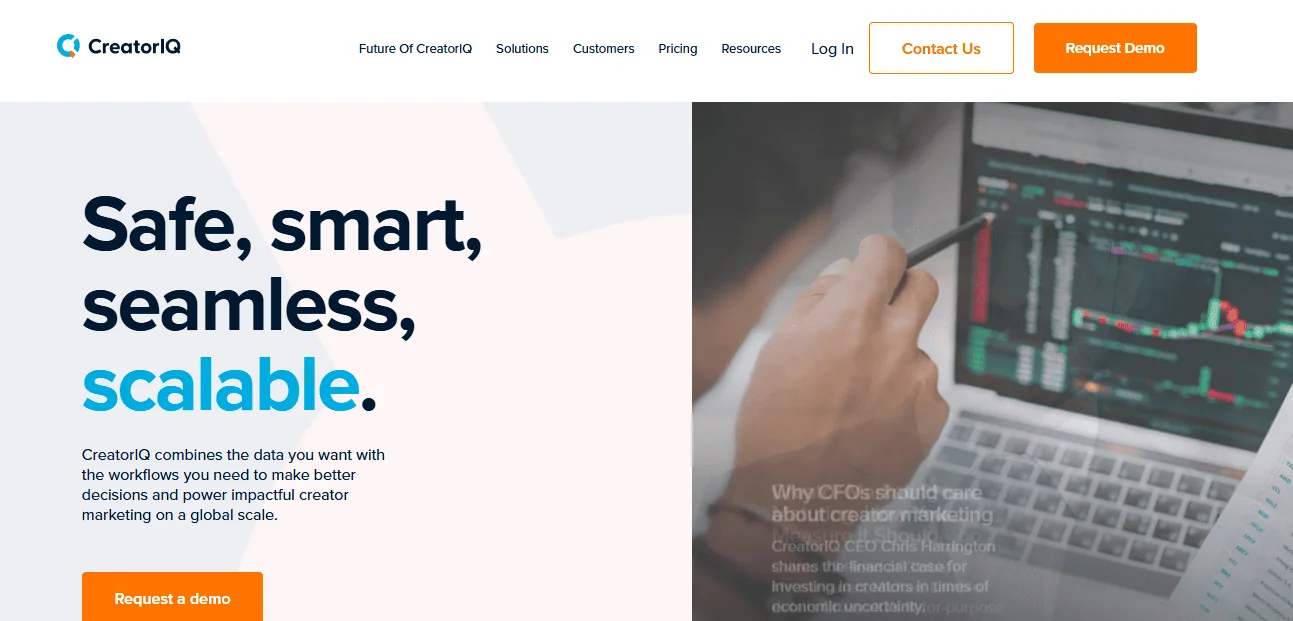
CreatorIQ is an enterprise-level influencer marketing platform built for global brands that need full lifecycle management, API-level integrations, and executive-ready reporting dashboards.
Pricing
- Custom pricing only: Contracts typically start around $30,000/year
- Typical spend: Median contracts land near $39,000/year, and large enterprise deals go much higher
- Add-ons: Modules such as Creator Connect are priced separately
Annual contracts only.
Search and Discovery Features
- Full Public Creator Search (No Opt-In Required): Search any public creator across supported platforms without opt-in restrictions, which gives broader discovery reach than gated databases.
- Advanced Semantic AI Search: Use keyword and semantic queries like "tennis dads" or "home chefs under 100K followers." The system interprets context rather than relying only on exact keyword matches.
- Deep Audience & Content Filtering: Filter by audience demographics, engagement thresholds, past brand mentions, and content topics for granular targeting across global campaigns.
- Brand Mention & Historical Collaboration Data: View previous brand partnerships and content history per creator to assess alignment and avoid conflicts.
- Direct API Integrations with Major Platforms: Data is pulled through official APIs from Meta, TikTok, and YouTube, which keeps performance metrics compliant and real time.
Pros and Cons
Our Insights
CreatorIQ is built primarily for large global organizations that require deep integrations, data governance, and enterprise-level reporting. Its discovery tools are designed for large-scale campaigns where teams need to analyze creators across multiple regions and markets.
In practice, the platform is often used by brands managing complex influencer portfolios across different departments or geographies. The semantic AI search and API-driven data help large teams keep creator selection and campaign measurement consistent.
9. Traackr
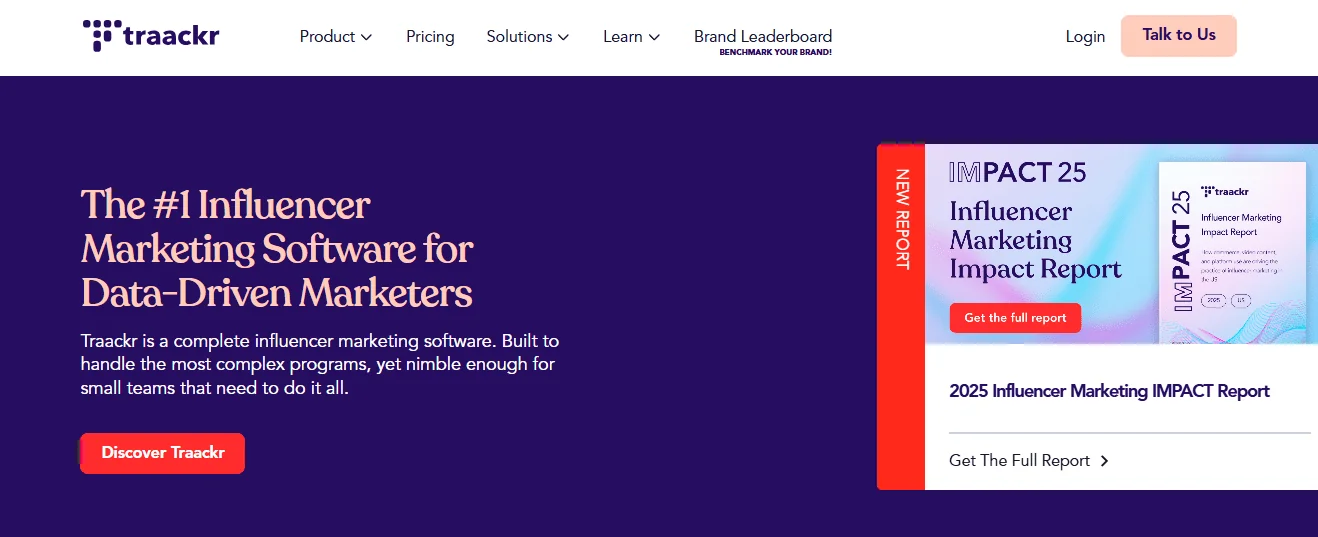
Traackr is an enterprise influencer intelligence and performance benchmarking platform designed for global organizations managing structured influencer portfolios across markets. It holds a 4.3/5 rating on G2 from 370+ reviews.
Pricing
- Growth: ~$25,000/year (3-user minimum)
- Standard: ~$32,500/year (5-user minimum)
- Plus: $55,000+/year (10-user minimum, includes API access)
- Enterprise: Custom pricing
All plans require annual contracts, with no monthly payment option. Benchmarking is an add-on of roughly $8,000/year on the Standard plan.
Search and Discovery Features
- Global Influencer Intelligence Database: Traackr provides access to a large global influencer dataset across key platforms, so brands can evaluate creators on performance and relevance across markets.
- Performance Benchmarking Tools: Compare influencer performance against industry and competitor benchmarks to support data-backed portfolio decisions.
- Audience Demographic Analysis: Filter influencers by audience geography, demographics, and engagement metrics to keep global campaigns aligned.
- Brand Safety & Compliance Monitoring: Monitor creators for compliance risks and content alignment, which is especially valuable for multinational brands with strict governance standards.
- Portfolio & Spend Optimization Insights: Analyze influencer spend against performance outcomes, helping enterprise teams allocate budgets strategically across regions.
Pros and Cons
Our Insights
Traackr is less focused on hands-on campaign execution and more on influencer intelligence and benchmarking. It's commonly used by enterprise teams that need to analyze influencer performance across global markets and track long-term partnership effectiveness.
For organizations managing large influencer portfolios, the benchmarking tools add useful context around competitor activity and campaign performance trends. That makes it particularly valuable for strategic planning and budget allocation rather than day-to-day outreach.
10. Sprout Social
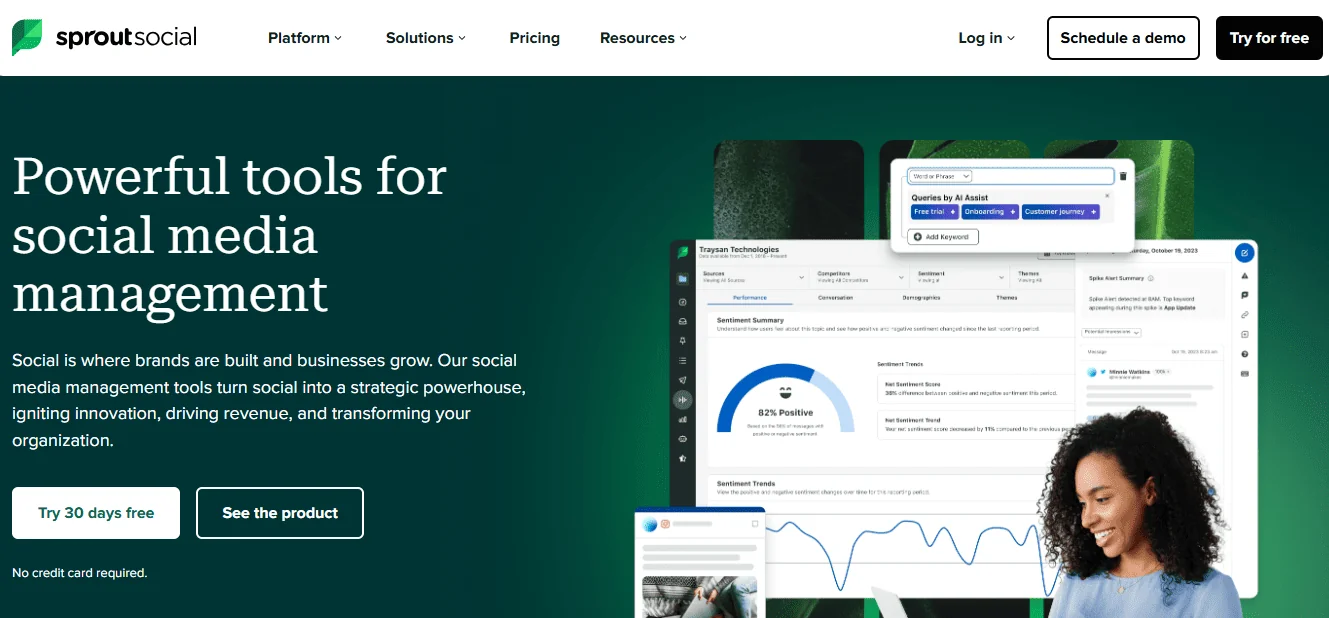
Sprout Social's influencer marketing solution combines discovery, campaign management, brand safety, and deep analytics within a broader social media management ecosystem. The wider Sprout Social suite holds a 4.4/5 rating on G2 from 6,400+ reviews.
Pricing
- Base plan: $1,599 per user/month
- Additional users: $600/month per seat
- Contract: 12-month minimum, with no monthly option
For example, a two-user setup comes to roughly $26,400 per year.
Search and Discovery Features
- Brand Fit Score (AI-Powered): Sprout Social calculates a percentage match between creators and your brand criteria, helping you prioritize influencers with stronger alignment.
- Advanced Brand Safety Filters: Exclude creators who mention flagged keywords or sensitive topics, reducing reputational risk before outreach begins.
- Competitive Benchmarking Reports: See which creators competitors collaborate with and compare engagement performance to inform smarter partnership strategies.
- Demographic & Engagement Filters: Filter creators by audience age, region, engagement benchmarks, and platform for highly controlled targeting.
- Content Approval Workflows: Creators can submit draft posts for approval before publishing, which keeps brand compliance and messaging accurate.
Pros and Cons
Our Insights
Sprout Social's influencer marketing capabilities are closely tied to its broader social media management ecosystem. For organizations already using Sprout for publishing, monitoring, and analytics, the influencer tools slot naturally into existing workflows.
From a discovery perspective, the brand-fit scoring and safety filters help teams prioritize creators that match brand guidelines and compliance requirements. This is particularly helpful for companies managing multiple social channels and large marketing teams, though the per-seat pricing makes it a costly choice if influencer marketing is the only thing you need.
Final Thoughts
Discovery is no longer about scrolling hashtags or relying on surface-level metrics. In 2026, it's about data-backed targeting, audience authenticity, automation, and measurable performance.
Whether you choose a lightweight discovery tool or a full-scale platform like Influencer Hero that combines search, CRM, automation, affiliate tracking, and ROI reporting, influencer marketing in 2026 demands precision. The platforms you use directly affect how efficiently you scale partnerships, allocate budgets, and generate predictable revenue from creator collaborations.
The key is choosing a solution that matches your growth stage, one that not only finds creators but also helps you manage, optimize, and scale them systematically. If you're ready to see how it works in practice, book a demo with Influencer Hero and see how to scale creator partnerships without scaling your team.
Summary
This is some text inside of a div block.
This is some text inside of a div block.
Pricing/Month
Shopify Reviews
This is some text inside of a div block.
This is some text inside of a div block.
This is some text inside of a div block.
This is some text inside of a div block.
This is some text inside of a div block.
This is some text inside of a div block.
This is some text inside of a div block.
This is some text inside of a div block.
This is some text inside of a div block.
This is some text inside of a div block.
This is some text inside of a div block.
This is some text inside of a div block.
This is some text inside of a div block.
This is some text inside of a div block.
This is some text inside of a div block.
This is some text inside of a div block.
This is some text inside of a div block.
This is some text inside of a div block.
This is some text inside of a div block.
This is some text inside of a div block.
This is some text inside of a div block.
Read More

FAQs


Most Popular Blogs


Drive ROI With Influencer Marketing
Join 1,200+ brands and 150+ agencies scaling creator programs with Influencer Hero.