Precios y opiniones de Boksi en 2026

February 6, 2026
|
Publicado

August 21, 2026
|
Actualizada

10 minutes
|
Lectura

Curso de marketing de resultados para influencers | Cupón: IMC100

María Vincenzini
I Author

Impulse el ROI con Influencers

Base de datos global de influencers
Plataforma TODO EN UNO
CRM, afiliados, UGC y más
Precios y Análisis de Boksi en 2026
El precio de Boksi es completamente personalizado — no hay cifras públicas, sin cuotas mensuales fijas, y cada plan se presupuesta después de una demo según el volumen de campañas y tus necesidades.
Lo que sí puedes identificar es la estructura: dos líneas de producto (marketing de influencers y UGC), cada una con tres niveles, vendidas como suscripciones mensuales o anuales personalizadas, más campañas puntuales presupuestadas caso por caso.
Antes de reservar esa demo, aquí te mostramos cómo están estructurados los paquetes de Boksi, qué está realmente incluido, la limitación que la mayoría de marcas se pierden, y cómo se compara si ejecutas campañas de creadores a escala.
Precios de Boksi en 2026
Boksi divide su oferta en dos líneas — marketing de influencers y contenido generado por usuarios — y presupuesta ambas bajo demanda. Nada está publicado, así que el nivel en el que termines depende del número de campañas, cantidad de creadores, volumen de contenido y funcionalidades.
Marketing de Influencers: Core
- Nivel inicial para ejecutar colaboraciones con influencers en la plataforma
- Gestión de campañas: alcance, briefing, contratos, aprobación de contenido
- Datos de rendimiento de primera mano desde Instagram y TikTok
Core es el punto de partida para marcas que desean gestionar colaboraciones con influencers a largo plazo por su cuenta. Obtienes las herramientas de flujo de trabajo y análisis, pero las funcionalidades de soporte más personalizado y descubrimiento se encuentran en niveles superiores. El precio se presupuesta según tu uso.
Marketing de Influencers: Growth
- Añade un Gestor de Éxito del Cliente dedicado y soporte completo del equipo
- Incluye la herramienta Creator Discovery, herramientas AI Brief y reportes curados mensuales
- Construido para marcas que escalan más allá de campañas ocasionales
Growth es donde Boksi se vuelve más personalizado. El Gestor de Éxito del Cliente, la herramienta de descubrimiento y el briefing con IA son los incrementos significativos, dirigidos a equipos que ejecutan programas consistentes. Si deseas ayuda en la ejecución real en lugar de solo acceso a software, este es el nivel realista.
Marketing de Influencers: Enterprise
- Solución personalizada con todas las funcionalidades desbloqueadas
- Gestor de Éxito del Cliente dedicado y soporte personalizado
- Para operaciones de alto volumen y múltiples campañas
Enterprise se negocia de principio a fin. Se ofrece a marcas con un volumen serio de marketing con creadores que necesitan todo lo que ofrece la plataforma. Obtendrás un presupuesto personalizado en una llamada.
Marketing UGC: Intro, Essential, Premium
- Tres niveles para adquirir contenido de fotos y videos generados por usuarios de creadores
- Premium añade el Gestor de Éxito del Cliente dedicado, la herramienta Creator Discovery, herramientas AI Brief y reportes curados
- Todos los paquetes UGC incluyen derechos de uso perpetuos y completos en todos tus canales
La línea de UGC es un producto independiente del marketing de influencers — se trata de comisionar contenido a escala en lugar de ejecutar campañas en redes sociales. El beneficio principal son los derechos de uso perpetuos, que es una ventaja genuina sobre muchos marketplaces de UGC. Como la línea de influencers, cada nivel se presupuesta bajo demanda.
Precios de API
Boksi no anuncia una API pública ni precios separados para API — la plataforma es el producto. Si extraer datos de creadores y campañas hacia tus propios sistemas es importante, ten en cuenta que Influencer Hero sí ofrece acceso API.
Descripción General de Boksi
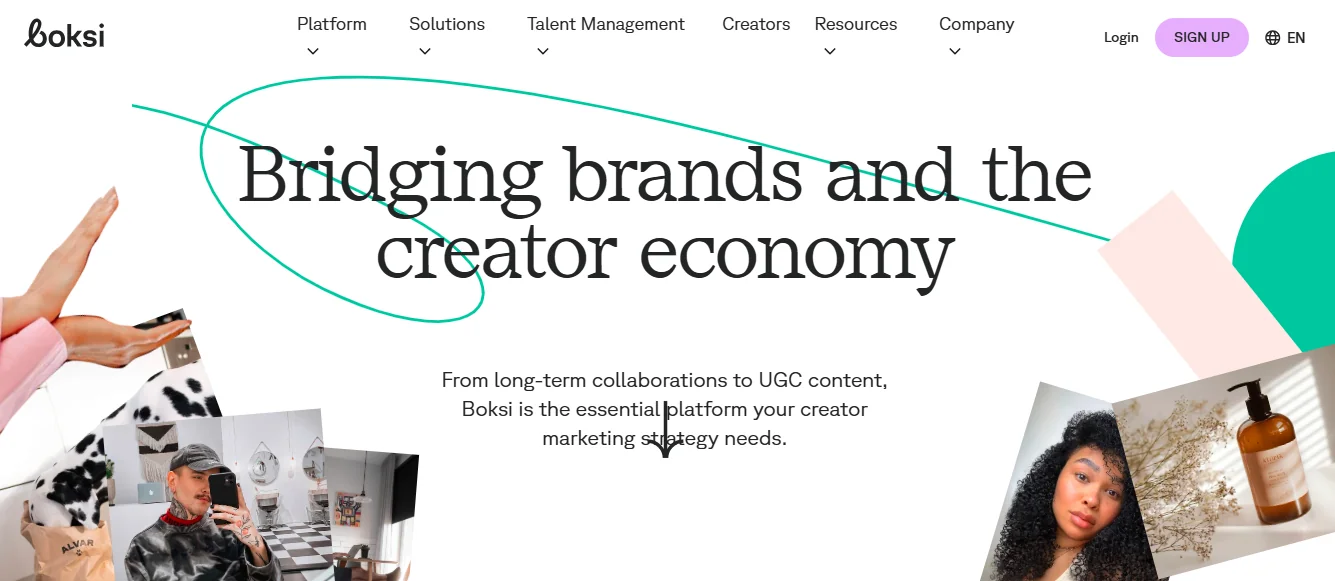
Boksi es una plataforma de marketing de creadores basada en Helsinki (con oficina alemana en Hamburgo) que conecta marcas y creadores tanto para campañas de influencers como para contenido UGC. Su propuesta más fuerte es la producción de contenido: posiciona UGC como una alternativa más económica y auténtica a sesiones fotográficas tradicionales y contenido de stock, afirmando ahorros del 70%+. Críticamente, Boksi actualmente ejecuta campañas solo en Alemania y Finlandia — su red de creadores está concentrada en esos dos mercados.
Mejores Funcionalidades de Boksi
- UGC a escala de producción de contenido: La pista de UGC de Boksi permite a las marcas encargar contenido fotográfico y de video de creadores reales como sustituto de sesiones de estudio e imágenes de stock. Para marcas DTC que gastan presupuesto en fotografía de productos, este es el atractivo principal — contenido auténtico que presenta tus productos reales, a una fracción del costo de una agencia.
- Derechos de uso perpetuos e ilimitados en UGC: El contenido comprado a través de Boksi viene con derechos de uso perpetuos e ilimitados en todos tus canales de marketing. Eso contrasta significativamente con muchos mercados de creadores donde las licencias están limitadas en tiempo o restringidas por canal, y elimina un dolor de cabeza legal común.
- Herramienta de descubrimiento de creadores: Disponible en los niveles Growth (influencer) y Premium (UGC), la herramienta de descubrimiento filtra creadores por cantidad de seguidores, datos demográficos de audiencia y métricas de desempeño. Es la forma en que encuentras los perfiles correctos dentro de la red de Boksi en lugar de hacer búsqueda manual.
- Herramientas de brief asistidas por IA: Boksi incluye creación de briefing asistida por IA, para que puedas crear briefings de campaña más rápido y copiar o usar como plantilla los existentes. Para equipos que ejecutan colaboraciones frecuentes, esto reduce la parte más repetitiva de la configuración de campañas.
- Datos de desempeño de primera mano: La plataforma extrae tasas de engagement, CPM y datos de conversión directamente de Instagram y TikTok, dándote números de primera mano en colaboraciones a largo plazo en lugar de estimaciones scrapeadas. Esa calidad de datos es un verdadero beneficio para medir el impacto.
Reseñas de Boksi
Boksi tiene prácticamente ninguna huella de reseñas de terceros — su perfil en G2 muestra cero reseñas, y está prácticamente ausente de Capterra, así que no hay una calificación de estrellas agregada en la que apoyarse. Eso se debe en parte a ser un actor regional DACH-y-Nórdico en lugar de un SaaS comercializado globalmente.
La señal que existe proviene de los estudios de caso publicados por Boksi mismo y citas de marcas, donde los especialistas en marketing destacan ahorros de costos y flexibilidad versus producción de contenido tradicional. Un director de marketing lo describe como significativamente más rentable y flexible que la creación de contenido tradicional. Trata eso como información proporcionada por el proveedor en lugar de independiente.
Efectivamente no hay discusión en Reddit o foros en inglés sobre Boksi, lo que refuerza la conclusión: fuera de Alemania y Finlandia, la señal de comunidad es escasa, y la mayor parte de la validación del comprador vendrá de una conversación directa en lugar de reseñas de pares.
Boksi vs Precios de Influencer Hero
La primera diferencia práctica es la disponibilidad. Boksi solo opera en Alemania y Finlandia, así que para la mayoría de marcas DTC y e-commerce fuera de esos dos mercados, no es una opción independientemente del precio. Influencer Hero publica su precio — $649, $1,049 y $2,490/mes — y funciona con marcas a nivel mundial, así que puedes presupuestar y lanzar sin una puerta regional o un presupuesto obligatorio.
El segundo es alcance y enfoque. Boksi es liderado por contenido: su caso de uso más marcado es producir UGC a escala para reemplazar sesiones de foto, con campañas de influencers como la segunda pista. Influencer Hero está construido para ejecutar programas de influencers de punta a punta — descubrimiento de creadores en una base de datos global, automatización de alcance y secuencias de seguimiento, un CRM de influencers, gifting y seeding, gestión de afiliados y comisiones, seguimiento de ROI, e integración nativa con Shopify. Si tu prioridad es encontrar creadores a nivel mundial y convertir campañas en ventas, ese es un conjunto de herramientas diferente a un motor de contenido UGC.
Así que la elección es bastante clara: si eres una marca alemana o finlandesa cuya necesidad principal es contenido UGC rentable con derechos perpetuos, Boksi está hecho a propósito para eso.
Reflexiones finales
Boksi es una opción muy sólida para un brief específico: marcas en Alemania o Finlandia que desean contenido UGC auténtico a escala, con derechos de uso perpetuo, sin pagar tarifas de agencia o estudio. El modelo de dos vías (UGC más influencer) y las herramientas de briefing y descubrimiento con IA la convierten en una plataforma capaz para ese caso de uso regional y centrado en contenido. Sin embargo, los compromisos son reales: los precios están completamente cerrados, los contratos tienden a ser anuales y la red de creadores se limita a dos mercados.
Para marcas que necesitan precios transparentes, descubrimiento global de creadores y un stack integral que cubra outreach, CRM, gifting, affiliate y Shopify en un solo lugar, Influencer Hero es la opción más completa para escalar más allá de una única región. Si UGC es tu único enfoque, plataformas como Billo o Insense también merecen la pena dependiendo de tu mercado. Para ver cómo funciona el marketing de influencers en todo el funnel en diferentes regiones, agenda una demo con Influencer Hero.
Resumen
Este es un texto dentro de un bloque div.
Este es un texto dentro de un bloque div.
Precios/mes
Reseñas de Shopify
Este es un texto dentro de un bloque div.
Este es un texto dentro de un bloque div.
Este es un texto dentro de un bloque div.
Este es un texto dentro de un bloque div.
Este es un texto dentro de un bloque div.
Este es un texto dentro de un bloque div.
Este es un texto dentro de un bloque div.
Este es un texto dentro de un bloque div.
Este es un texto dentro de un bloque div.
Este es un texto dentro de un bloque div.
Este es un texto dentro de un bloque div.
Este es un texto dentro de un bloque div.
Este es un texto dentro de un bloque div.
Este es un texto dentro de un bloque div.
Este es un texto dentro de un bloque div.
Este es un texto dentro de un bloque div.
Este es un texto dentro de un bloque div.
Este es un texto dentro de un bloque div.
Este es un texto dentro de un bloque div.
Este es un texto dentro de un bloque div.
Este es un texto dentro de un bloque div.
Leer más

Preguntas frecuentes



Blogs más populares


¿Estás listo para lograr un ROI de más de 10 veces?
Programa una demostración con uno de nuestros expertos en medios a continuación.