
10 Mejores Herramientas para Descubrir Influencers

May 12, 2026
|
Publicado

September 24, 2026
|
Actualizada

10 minutes
|
Lectura

Curso de marketing de resultados para influencers | Cupón: IMC100

Lucia Zabala
I Author

Impulse el ROI con Influencers

Base de datos global de influencers
Plataforma TODO EN UNO
CRM, afiliados, UGC y más
Las 10 Mejores Herramientas de Descubrimiento de Influencers
En 2026, el marketing de influencers ha pasado de ser un juego de "alcance vanidoso" a convertirse en una competencia de alto rendimiento. Las marcas ya no solo buscan grandes números de seguidores; necesitan socios estratégicos que generen ROI medible, autoridad en nichos específicos y engagement auténtico.
Con más del 75% de los creadores categorizados como micro o nano influencers, el desafío no es encontrar a alguien con una audiencia, sino encontrar el match perfecto cuya demografía de audiencia y valores se alineen con tu resultado final.
Las herramientas de descubrimiento de influencers son la solución a esta fatiga de búsqueda. Al aprovechar filtros impulsados por IA y detección de fraude en tiempo real, estas plataformas cortan el ruido para identificar creadores de alto rendimiento mientras automatizan el tedioso proceso de verificación. En esta guía, desglosamos las 10 mejores herramientas de descubrimiento de influencers diseñadas para ayudarte a escalar tus asociaciones con creadores.
Qué Buscar en Herramientas de Descubrimiento de Influencers
Es fácil dejarse seducir por una interfaz elegante, pero para que una estrategia tenga éxito en 2026, estos son los "imprescindibles" que separan las herramientas de grado profesional de los directorios básicos:
- Análisis Profundo de Audiencia y Detección de Fraude: Necesitas una herramienta que proporcione datos "veraces", como la ubicación de la audiencia, rangos de edad y clusters de intereses. Lo más importante es que incluya detección de fraude impulsada por IA para identificar seguidores falsos y tasas de engagement infladas antes de que desperdicies ni un centavo de tu presupuesto.
- Filtrado de Precisión e IA de Coincidencia: Las mejores herramientas ofrecen filtros granulares como búsquedas de "similares", donde puedes encontrar influencers parecidos a tus mejores desempeños, y análisis de sentimiento impulsado por IA. Esto asegura que el tono del creador y el contenido anterior se alineen realmente con la personalidad de tu marca.
- Versatilidad Multiplataforma: Si bien Instagram y TikTok son los gigantes actuales, tu herramienta también debería ofrecer visibilidad en YouTube, Pinterest, o incluso LinkedIn y Threads. Gestionar tu cartera completa multicanal desde un único dashboard previene silos de datos y mantiene tu estrategia cohesiva.
- Gestión Integrada de Campañas: Busca herramientas que cierren la brecha entre "encontrar" y "gestionar". Esto incluye características como secuencias de outreach automatizadas, sistemas de gestión de relaciones (CRM) y seguimiento de rendimiento en tiempo real.
Criterios de Selección: Cómo Evaluamos las Mejores Herramientas de Descubrimiento
En 2026, una herramienta debe hacer más que solo listar nombres; debe proporcionar una ventaja competitiva en precisión de datos y velocidad.
Evaluamos cada plataforma en función de estos cinco pilares:
1. Precisión de Descubrimiento y Verificación de Audiencia
La base de cualquier herramienta de descubrimiento es su base de datos. Priorizamos plataformas que ofrecen filtrado granular, permitiéndote buscar por nicho específico, intereses de audiencia y psicografía.
Lo más importante es que buscamos detección robusta de seguidores falsos y "Puntuaciones de Calidad de Audiencia" para asegurar que estés invirtiendo en creadores con influencia genuina en lugar de números inflados.
2. IA de Coincidencia y Análisis Predictivo
Con la ayuda del aprendizaje automático, las herramientas modernas deberían sugerir influencers basándose en el desempeño anterior de tu marca o perfiles "similares".
Evaluamos qué tan bien estas herramientas predicen el desempeño potencial de un creador antes de que siquiera te comuniques, usando datos históricos para estimar alcance, clics y tasas de conversión.
3. Versatilidad Multiplataforma
Los consumidores no son leales a una sola aplicación, y tu herramienta de descubrimiento tampoco debería serlo. Otorgamos puntuaciones más altas a plataformas que proporcionen una vista unificada en TikTok, Instagram, YouTube y canales emergentes como Threads.
La capacidad de verificar la presencia multiplataforma de un creador es esencial para construir una presencia de marca holística.
4. ROI Directo y Atribución de E-commerce
En un mercado orientado al rendimiento, una herramienta de descubrimiento es más valiosa si se conecta con tu tienda.
Evaluamos qué tan sin problemas se integran estas herramientas con plataformas como Shopify, Amazon y WooCommerce. Buscamos características que permitan a las marcas rastrear métricas de "final del embudo", como ventas directas y canjes de códigos de cupón, junto con el engagement tradicional.
5. Flujo de Trabajo sin Problemas e Integración de CRM
El descubrimiento no debería ocurrir en el vacío. Buscamos herramientas que transicionen sin problemas de "encontrar" a "gestionar". Esto incluye características de CRM integradas para rastrear historial de comunicación, estado de contrato y aprobaciones de contenido.
Si una herramienta te ahorra cinco horas de entrada manual de datos a la semana, se ganó un lugar en nuestra lista.
Las 10 Mejores Herramientas de Descubrimiento de Influencers
1. Influencer Hero
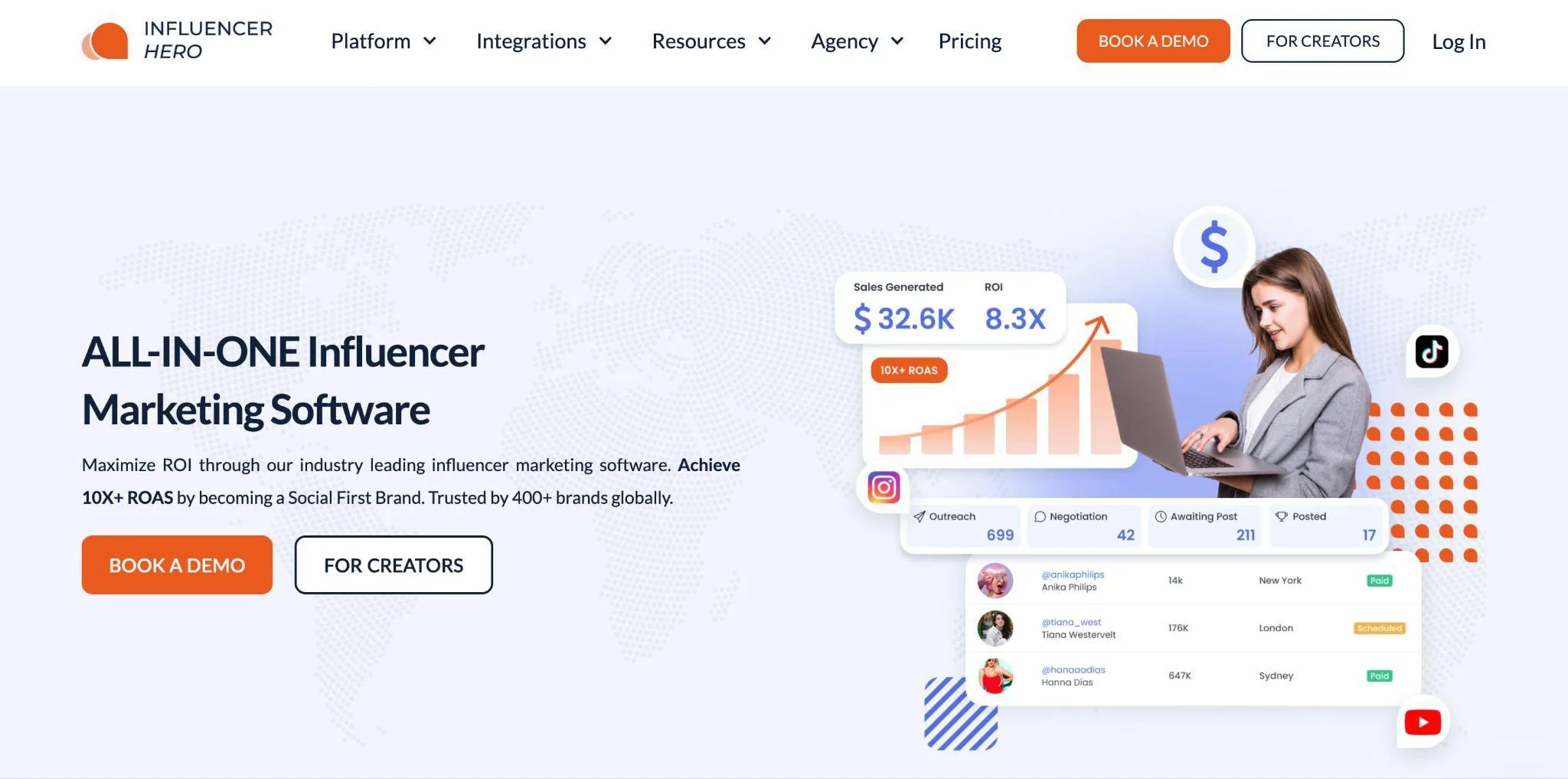
Influencer Hero es una plataforma integral de marketing de influencers diseñada para optimizar todo el ciclo de vida de la campaña mediante automatización de alta velocidad y flujos de trabajo impulsados por IA.
Se especializa en eficiencia de CRM, lo que la convierte en la opción ideal para marcas que buscan escalar el marketing de rendimiento sin aumentar la carga manual.
Ideal para: Marcas que buscan una solución integral y orientada al ROI con automatización potente e integración profunda de comercio electrónico.
Precios: $649 - $2,490+/mes.
Características principales:
- Base de datos masiva de 450M+ creadores: Accede a una de las bases de datos más grandes de la industria, con más de 450 millones de influencers. Este alcance expansivo garantiza que encuentres el creador de nicho perfecto, sin importar tu industria o geografía.
- Reportes profundos de rendimiento y audiencia: La herramienta de búsqueda de la plataforma proporciona informes exhaustivos de influencers que van más allá de métricas superficiales. Puedes analizar datos demográficos de la audiencia (edad, ubicación, género), autenticidad del engagement y rendimiento histórico para garantizar que cada asociado sea una opción verificada.
- Descubrimiento impulsado por IA y búsqueda de similares: Más allá de filtros estándar, utiliza flujos de trabajo impulsados por IA para identificar creadores. Esto incluye búsquedas de similares para encontrar nuevos influencers que reflejen la audiencia y el estilo de tus asociados de mejor rendimiento.
- Búsqueda con IA: Emplea coincidencia avanzada impulsada por IA que predice el potencial de rendimiento de un creador, estimando alcance, clics y tasas de conversión antes de comenzar el contacto.
- Ecosistema de integración (30+ nuevas conexiones): A diferencia de herramientas limitadas a Shopify, Influencer Hero se ha expandido a más de 30+ integraciones en categorías principales como comercio electrónico, marketing de afiliados, email marketing y más.
Ventajas y desventajas
Nuestros insights: Influencer Hero destaca como la herramienta más equilibrada para marcas que priorizan resultados medibles sobre métricas de vanidad. Su capacidad de vincular contenido de influencers directamente a ventas en Shopify o WooCommerce la convierte en un activo esencial para equipos orientados al rendimiento. Aunque puede carecer de algunas funcionalidades de escucha social a nivel empresarial, sus capacidades de automatización ofrecen una eficiencia inigualable para escalar campañas.
2. Grin
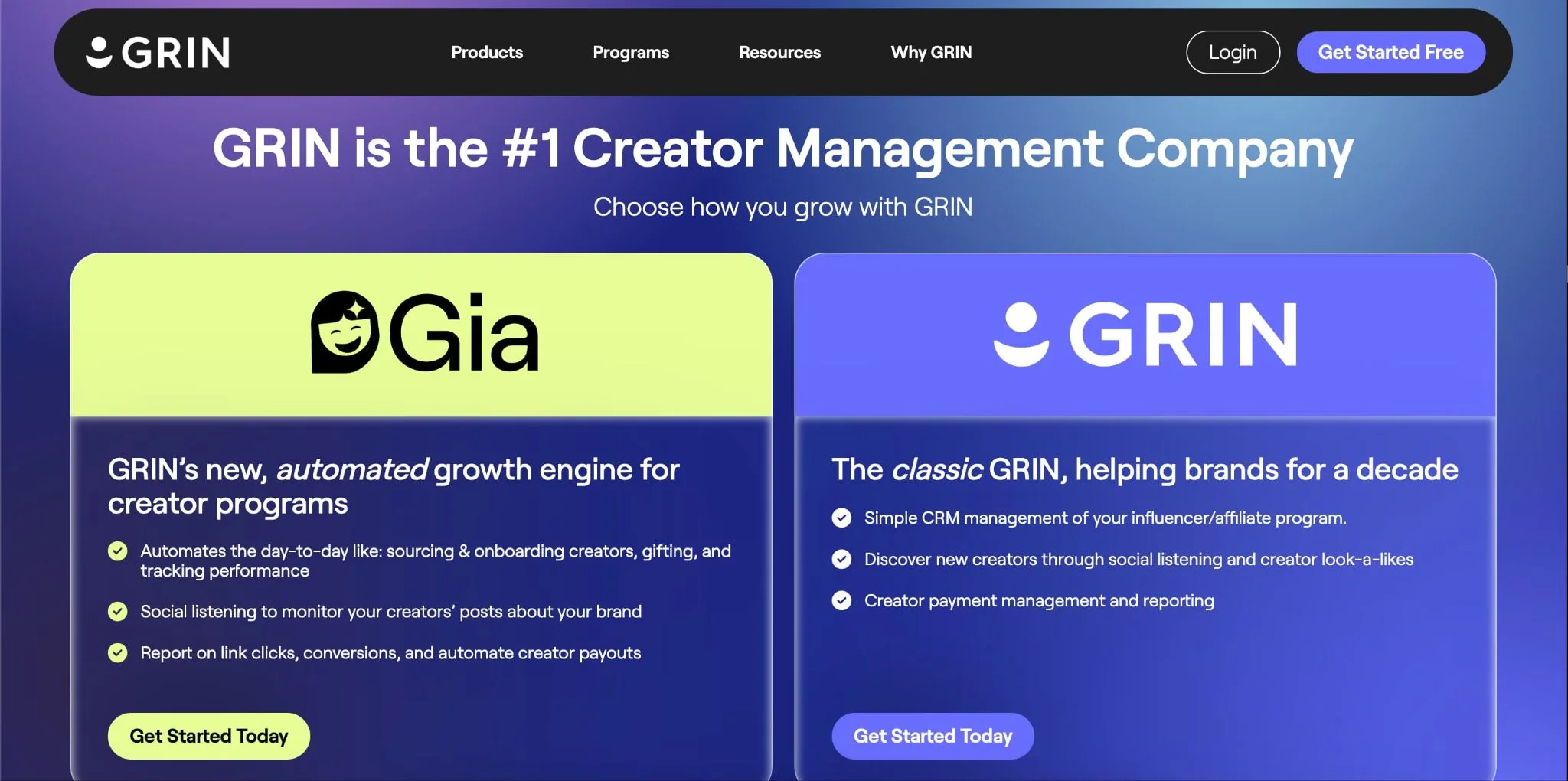
Grin está diseñado específicamente para marcas de comercio electrónico, con un enfoque intensivo en automatizar la logística física del marketing de influencers. Destaca al integrarse con Shopify para manejar el cumplimiento de pedidos, seguimiento y gestión de derechos de medios a escala.
Ideal para: Marcas de comercio electrónico enfocadas en regalos de productos físicos y flujos de trabajo automatizados de Shopify.
Precios: Aproximadamente $2,085 por mes ($25,000 por año) con compromiso anual.
Características principales:
- Logística física automatizada: Diseñado específicamente para automatizar el cumplimiento de pedidos, envíos y seguimiento de influencers a escala.
- Gestión de derechos de medios: Incluye herramientas integradas para gestionar y reutilizar fácilmente contenido generado por creadores para anuncios de marca.
- Escucha social y búsqueda de similares: Permite el descubrimiento de nuevos creadores a través de monitoreo social y modelado de similares de creadores.
- Flujos de trabajo de pago integrados: Presenta pagos integrados de PayPal para gestionar la compensación de creadores directamente dentro de la plataforma.
Ventajas y desventajas
Nuestras conclusiones: GRIN es la herramienta potente para tiendas Shopify. Si tu principal cuello de botella es enviar productos a cientos de influencers y gestionar los derechos de sus videos, GRIN es la herramienta especializada que ahorrará al equipo decenas de horas cada mes.
3. CreatorIQ
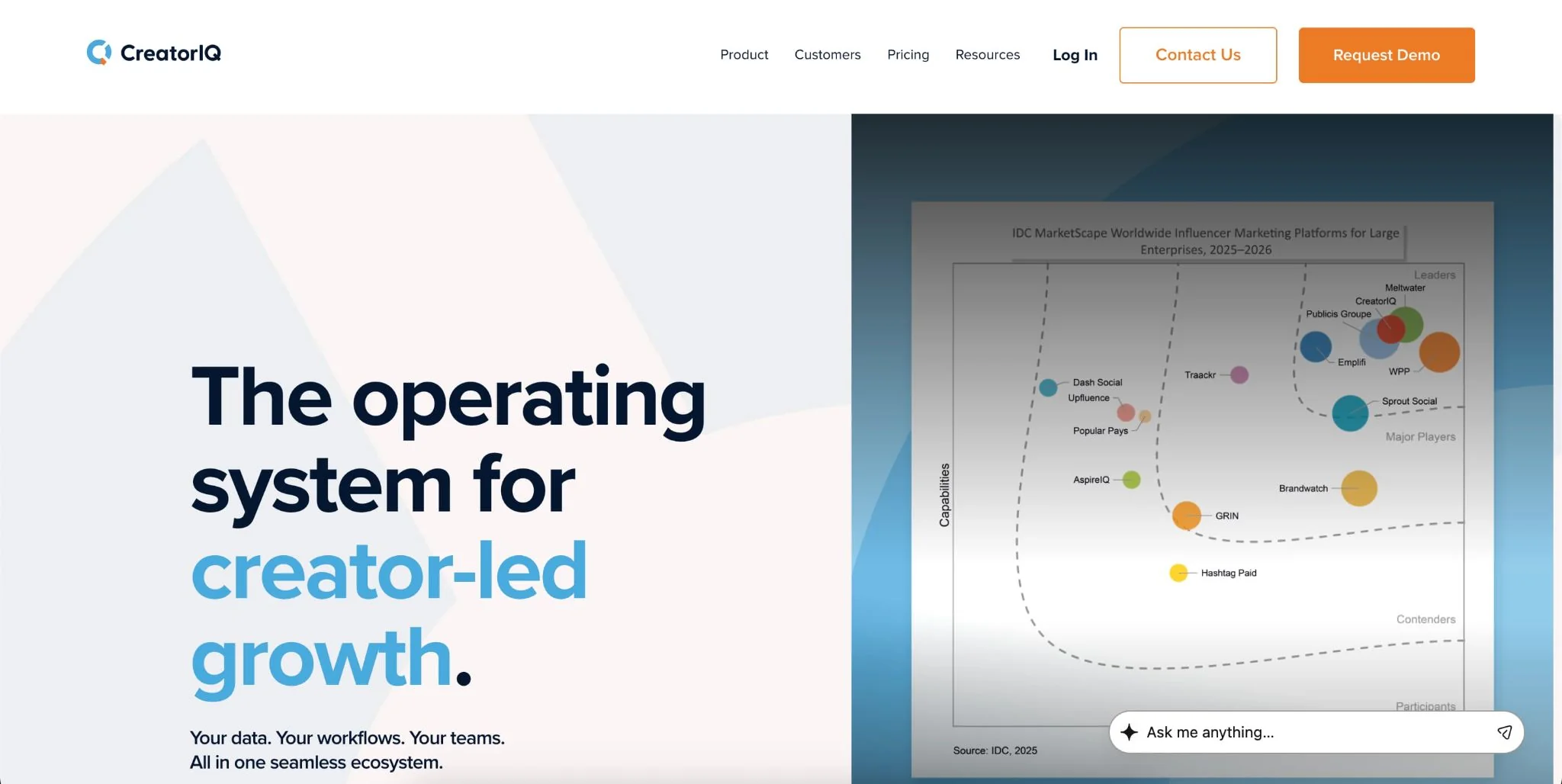
CreatorIQ es una plataforma de nivel empresarial diseñada para ecosistemas globales masivos que requieren gobernanza sofisticada e informes en tiempo real. Utiliza una infraestructura basada en API para proporcionar un panel unificado en el que equipos multidepartamentales puedan gestionar relaciones complejas con creadores y cumplimiento normativo.
Ideal para: Grandes organizaciones globales que necesitan gobernanza de alto nivel, cumplimiento de pagos e informes a escala empresarial.
Precios: No divulgados, típicamente oscilan entre $35,000 y $200,000+ por año.
Características clave:
- Gobernanza empresarial: Una infraestructura basada en API que proporciona un panel unificado para que equipos multidepartamentales gestionen relaciones complejas.
- Cumplimiento de pagos automatizado: Simplifica tareas administrativas con flujos de trabajo de cumplimiento automatizado y aprobación de una página.
- Informes de API en tiempo real: Realiza un seguimiento del desempeño de campañas en varias métricas con capacidades de informes avanzadas y en tiempo real.
- Motor de descubrimiento global: Herramientas de descubrimiento robustas diseñadas para encontrar y evaluar creadores dentro de un entorno global seguro de nivel empresarial.
Ventajas y desventajas:
Nuestras conclusiones: CreatorIQ es el "centro de comando" para marcas globales. Si bien puede ser demasiado robusto para equipos más pequeños, su capacidad para gestionar ecosistemas de creadores multidepartamentales con cumplimiento estricto la hace indispensable para las empresas Fortune 500.
4. HypeAuditor
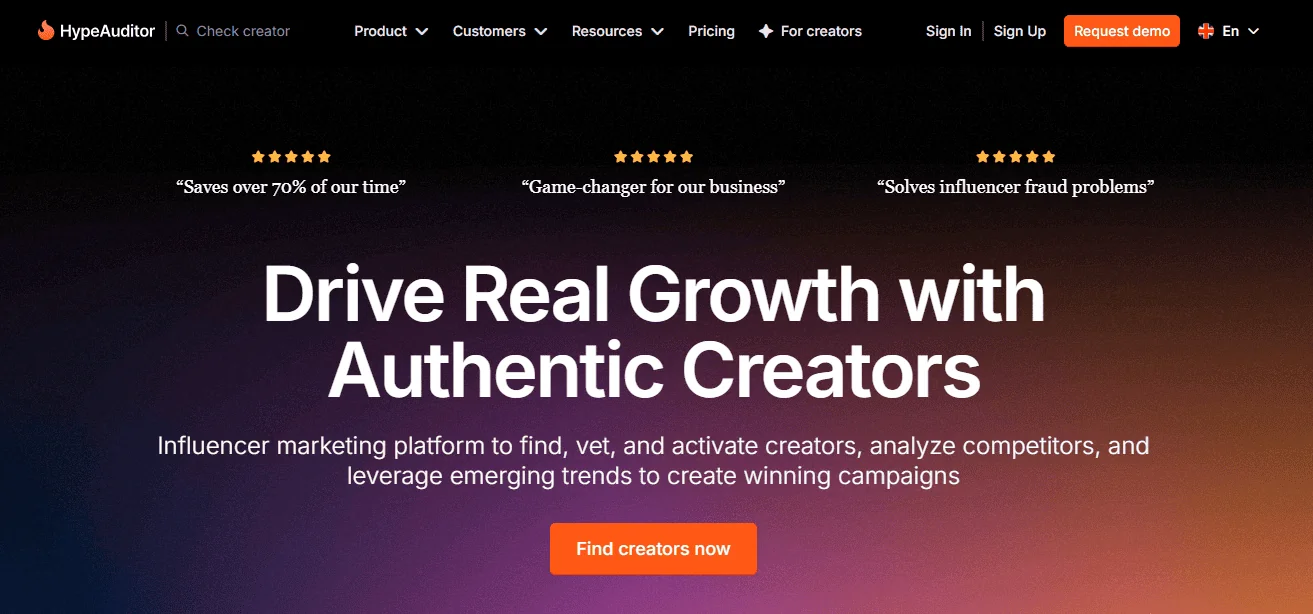
HypeAuditor es ampliamente considerada el estándar de la industria para la evaluación de calidad de audiencia y detección de fraude. Proporciona informes de alta integridad que permiten a las marcas auditar el crecimiento de seguidores de un influencer, la autenticidad del engagement y el desempeño de la competencia.
HypeAuditor es ampliamente reconocida como el estándar de la industria para la evaluación de calidad de audiencia y detección de fraude. Proporciona "auditorías" analíticas profundas de perfiles de creadores para garantizar que sus seguidores y tasas de engagement sean auténticos.
Ideal para: Marcas que se preocupan mucho por la integridad de la audiencia y quieren evitar el fraude de influencers.
Precios: No divulgados, alrededor de $10,000-$60,000/año.
Características clave:
- Detección de fraude líder en la industria: Cuenta con puntuación avanzada de autenticidad que identifica seguidores bot y engagement falso para proteger presupuestos.
- Seguimiento de competidores: Proporciona herramientas únicas para monitorizar con qué influencers se asocian tus rivales.
- Búsqueda de categorías impulsada por IA: Permite descubrimiento altamente específico dentro de nichos de mercado estrecho utilizando IA.
- Auditorías de audiencia detalladas: Desglosa datos demográficos de audiencia granulares y sentimiento para garantizar engagement auténtico.
Ventajas y desventajas:
Nuestras conclusiones: HypeAuditor es tu "póliza de seguros". Si bien sus funciones de CRM no son tan automatizadas como las de Influencer Hero, la profundidad de sus datos de validación garantiza que tu presupuesto se gaste en creadores reales.
5. Syncly Creator
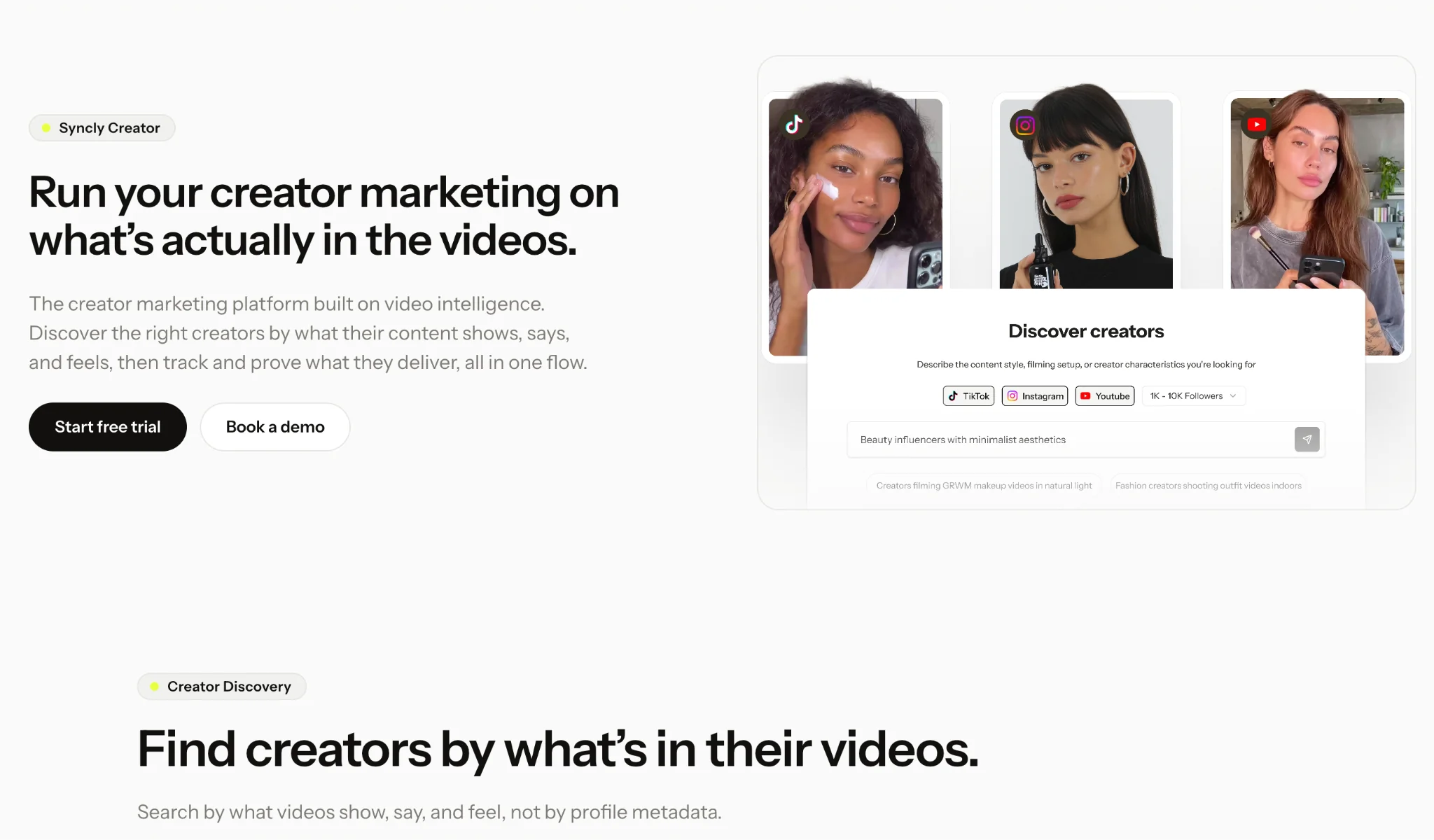
Syncly Creator es una plataforma de descubrimiento de creadores y seguimiento de campañas construida sobre inteligencia de video en lugar de metadata de perfil. En lugar de buscar por cantidad de seguidores o palabras clave en biografía, analiza qué hay realmente dentro de los videos de un creador — visuales, voz, subtítulos y atmósfera — para encontrar creadores que genuinamente se alineen con la estética y el mensaje de tu marca.
Ideal para: Marcas y agencias que ejecutan campañas orientadas al video y quieren emparejar creadores por estilo de contenido y sustancia, no solo por tamaño de audiencia.
Precios desde: Prueba gratuita disponible; precios personalizados según el plan.
Características principales:
- Búsqueda visual impulsada por IA: Empareja creadores según señales visuales como iluminación, composición y atmósfera del video — yendo más allá de lo que los datos de perfil por sí solos pueden mostrar.
- Búsqueda de contenido en 7 dimensiones: Describe tu creador ideal en lenguaje natural y deja que la IA busque a través de atmósfera visual, apariencia y persona del creador, formato de contenido, actividad en pantalla, voz y tono, contexto de marca y producto, y patrón viral — en lugar de búsqueda rígida por palabras clave o hashtags.
- Descubrimiento orgánico de creadores: Encuentra creadores que ya hablan de tu marca en redes sociales y plataformas de video, incluso cuando no estés etiquetado.
- Filtrado granular: Reduce una lista corta por edad, país, cantidad de seguidores y tasa de engagement una vez que el match de contenido sea correcto.
- Seguimiento integrado de campañas: Monitoriza entregables de creadores, revisa posts y extrae métricas de rendimiento (vistas, engagements, ER promedio) en el mismo flujo — sin necesidad de una herramienta separada para pasar de descubrimiento a reportes. (TikTok hoy; Reels y Shorts en la hoja de ruta.)
6. Later
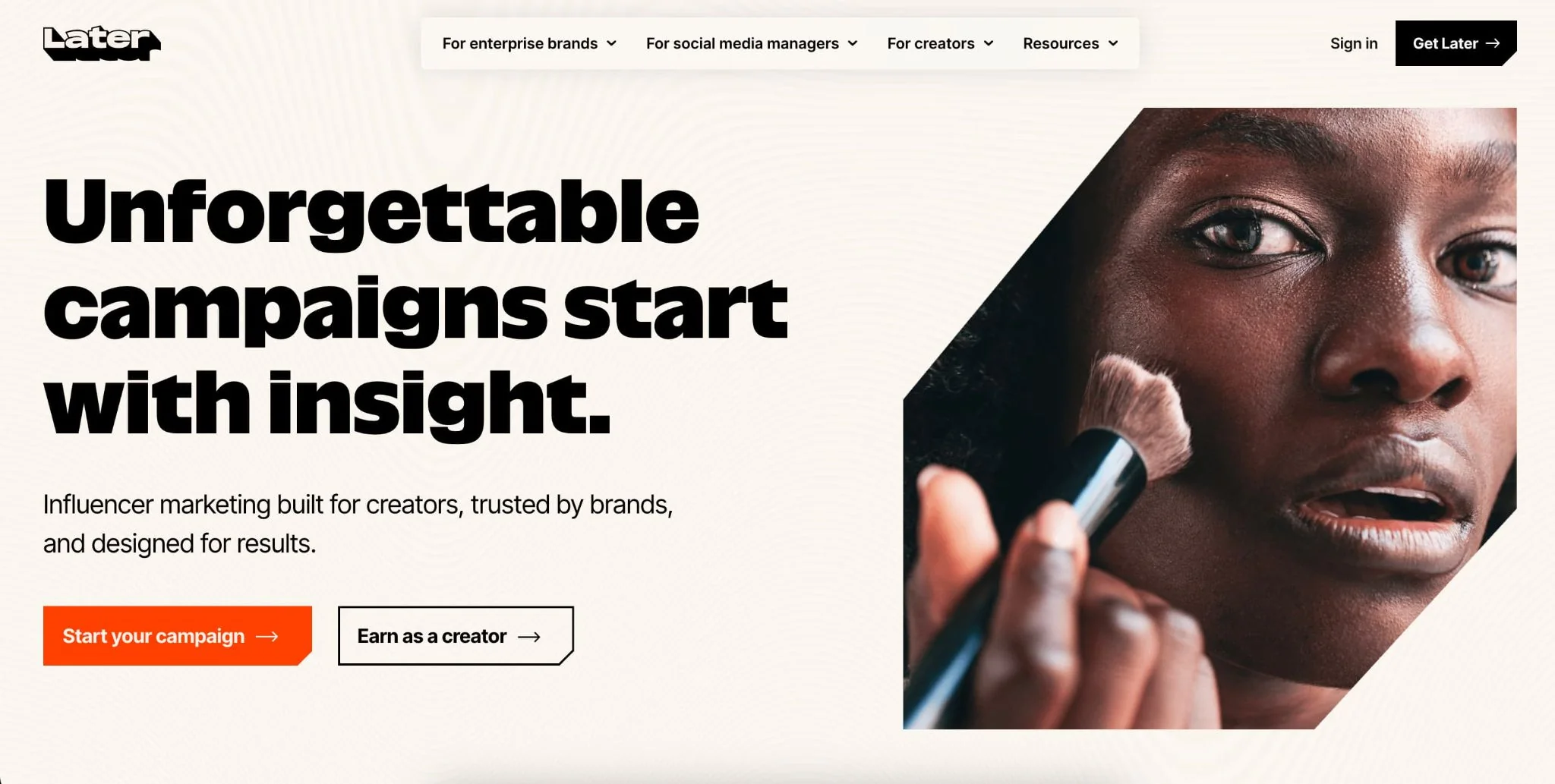
Later ha expandido su popular ecosistema de programación de redes sociales para incluir potentes herramientas de descubrimiento de influencers y gestión de campañas. Al unificar planificación de contenido con marketing de influencers, permite que las marcas gestionen su presencia social completa desde una única interfaz familiar.
Ideal para: Gestores de redes sociales que quieren unificar su calendario de publicación y campañas de influencers en una sola plataforma.
Precios: Rango de $28,500 a $60,000 por año, a menudo con una tarifa de onboarding de $5,000.
Características principales:
- Tecnología Social Sync: Unifica la programación y publicación de redes sociales orgánicas con el seguimiento de contenido de influencers.
- Filtros de emparejamiento estético: Cuenta con herramientas de búsqueda diseñadas para identificar creadores cuyo estilo visual coincida con el contenido programado de tu marca.
- Panel de análisis unificado: El seguimiento de rendimiento de campañas de influencers se encuentra directamente junto con análisis de redes sociales orgánicas.
- Suite social integrada: Ofrece una suite social más amplia que la mayoría de herramientas independientes, simplificando el flujo de trabajo para equipos que ya usan Later.
Ventajas y desventajas:
Nuestro análisis: Later es perfecta para el marketer "todo en uno". Si tu equipo ya vive en Later para publicaciones orgánicas, añadir su módulo de influencers crea un flujo de trabajo optimizado que conecta tu calendario de contenido con tus asociaciones con creadores.
7. Modash
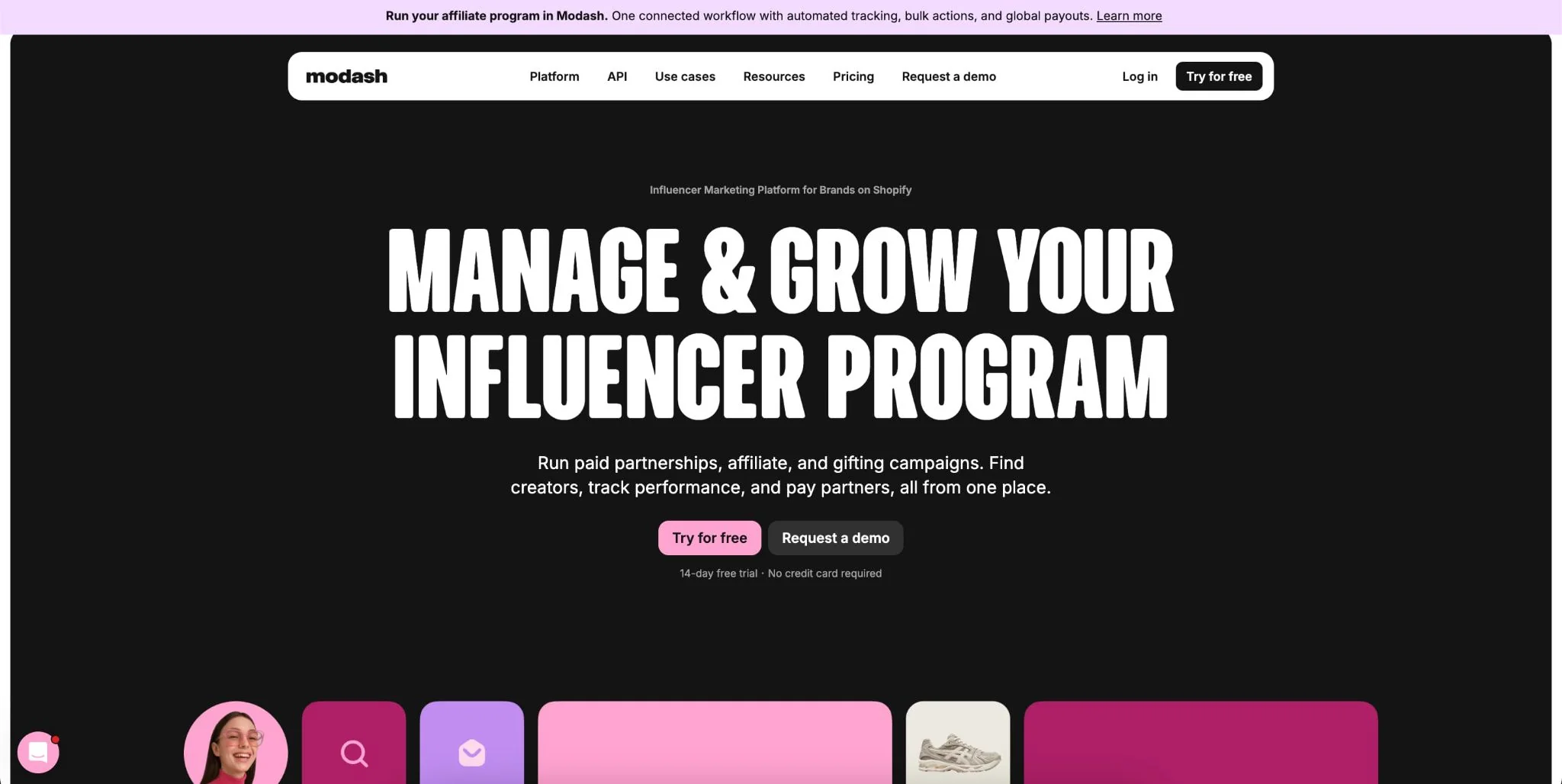
Modash es un motor de descubrimiento masivo que proporciona acceso a más de 350 millones de perfiles de creadores sin requerir que se registren en la plataforma. Está diseñado para escala de datos sin límites, permitiendo que las marcas encuentren creadores "no explotados" en cualquier nicho o ubicación del mundo.
Ideal para: Marcas que priorizan una base de datos masiva y sin restricciones para un descubrimiento profundo de creadores.
Precio: $190-$499+/mes u $14,700/año.
Funciones clave:
- Base de datos masiva de 350M+: Proporciona acceso a una de las mayores bases de datos de perfiles de la industria sin requerir "registros" de creadores.
- Búsqueda visual por IA: Una función destacada que encuentra influencers basándose específicamente en la estética de su contenido.
- Filtrado avanzado de audiencia: Filtros granulares aseguran que la demografía del creador coincida perfectamente con tus mercados objetivo.
- Automatización de afiliados: Incluye herramientas para ayudarte a gestionar y automatizar relaciones de afiliados una vez descubiertos los creadores.
Ventajas y desventajas:
Nuestro análisis: Si tu objetivo principal es encontrar la "aguja en el pajar", Modash es imbatible para descubrimiento en bruto. Sin embargo, probablemente necesitarás una herramienta separada para gestionar el alcance real y la gestión de relaciones.
8. Traackr
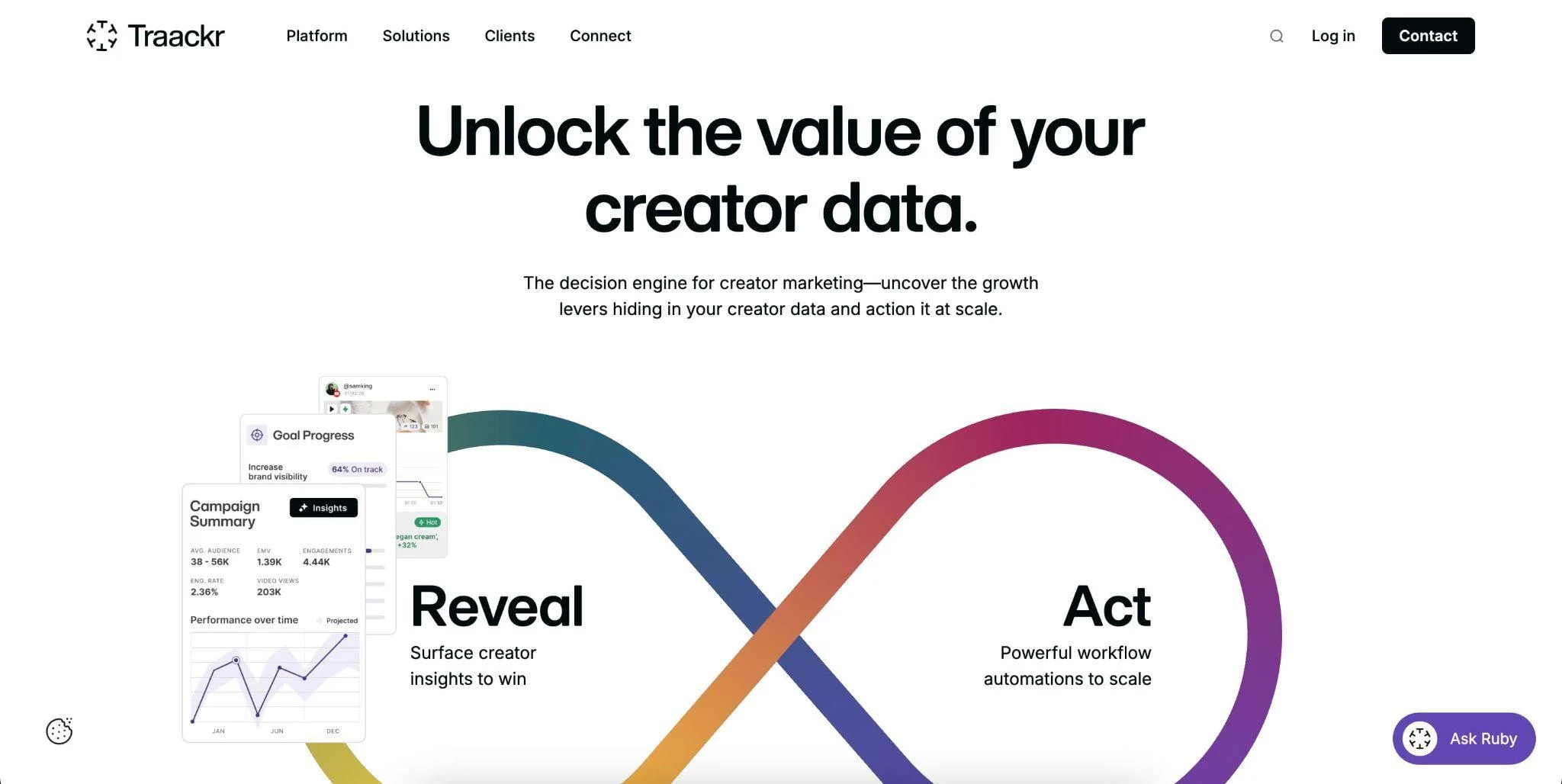
Traackr es una plataforma enfocada en relaciones que prioriza la afinidad de marca a largo plazo y la evaluación comparativa con competidores. Su única puntuación Brand Vitality Score (BVS) ayuda a las empresas a medir su influencia real en el mercado comparada con sus competidores directos.
Ideal para: Marcas enfocadas en construir relaciones a largo plazo y evaluar su influencia frente a competidores.
Precio: No divulgado, generalmente alrededor de $32,500 por año.
Funciones clave:
- Brand Vitality Score (BVS): Una métrica única que mide el impacto general del contenido de influencers en la conciencia de marca.
- Seguimiento del historial de relaciones: Monitorea la afinidad a largo plazo de un creador con tu marca en lugar de solo transacciones puntuales.
- Evaluación comparativa de ROI: Proporciona herramientas para mostrar cómo tu desempeño con influencers se compara directamente contra rivales de la industria.
- Descubrimiento priorizado por afinidad: Filtros de descubrimiento que priorizan creadores que ya hablan sobre tu industria o nicho específico.
Ventajas y desventajas:
Nuestro análisis: Traackr es para el estratega de marca. Su métrica BVS proporciona un nivel de perspectiva competitiva difícil de encontrar en otro lugar, lo que la hace ideal para marcas que ven a los influencers como embajadores a largo plazo en lugar de canales publicitarios temporales.
9. Aspire
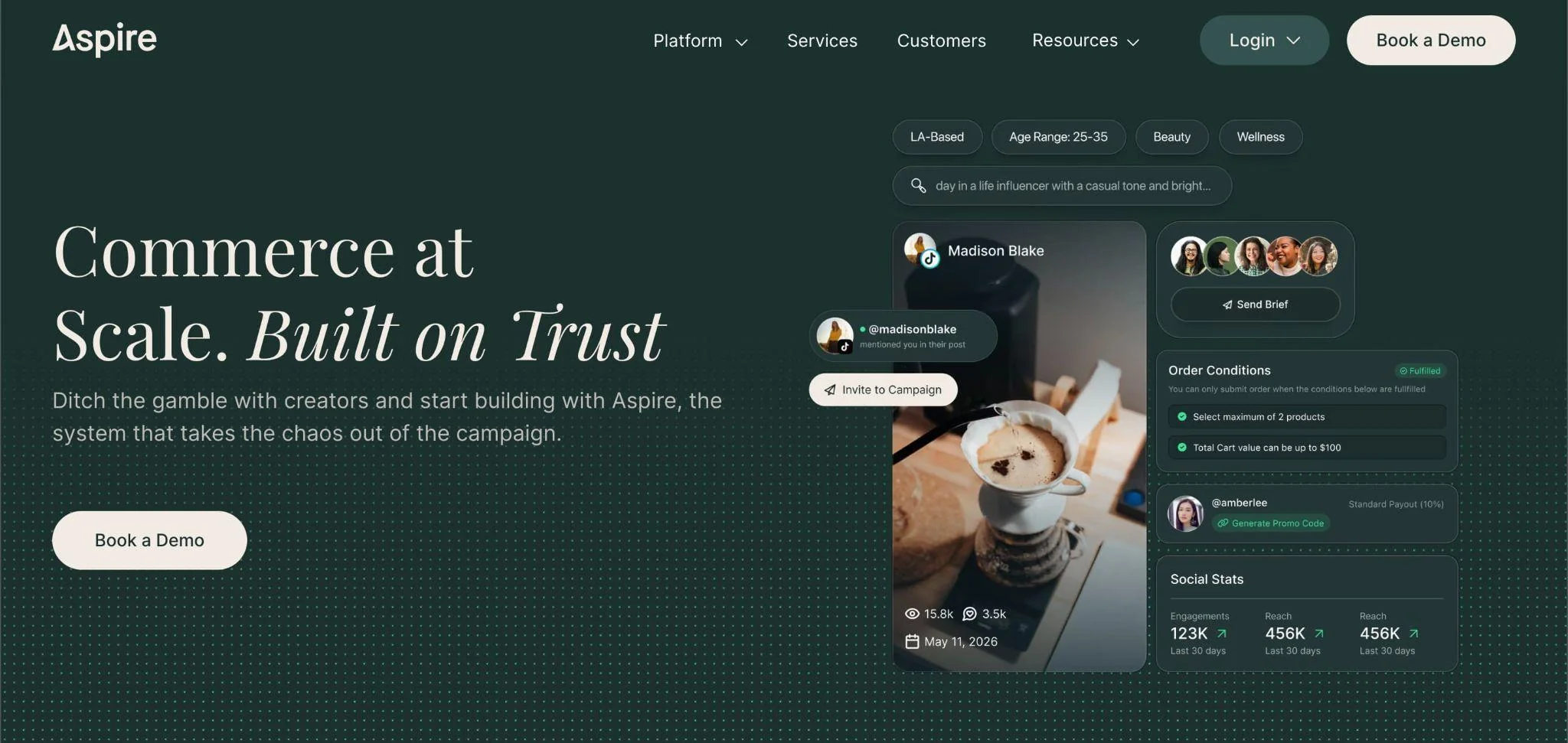
Aspire destaca por su marketplace enfocado en inbound, donde las marcas publican briefs y los creadores interesados pueden postularse directamente. Este enfoque centrado en comunidad utiliza datos de primera parte de Meta y TikTok para garantizar coincidencias de alta calidad y contenido auténtico.
Ideal para: Marcas que buscan construir una comunidad a través de solicitudes inbound y marketplaces de creadores.
Precio: No publicado, generalmente entre $2,000 y $5,000 mensuales.
Funcionalidades principales:
- Marketplace de Creadores Inbound: Cuenta con un marketplace grande donde más de 1 millón de creadores pueden postularse directamente a briefs de campañas.
- Acceso a Datos de Primera Parte: Utiliza datos directos de Meta y TikTok para obtener perspectivas de audiencia y métricas altamente precisas.
- Flujos de Trabajo de Construcción de Comunidad: Sistemas automatizados diseñados para gestionar grandes volúmenes de solicitudes de creadores inbound.
- Descubrimiento Dual: Ofrece tanto búsqueda activa de creadores como un pipeline "siempre activo" donde ellos te encuentran a ti.
Ventajas y desventajas:
Nuestro análisis: Aspire invierte el modelo de descubrimiento. En lugar de solo "buscar" influencers, crea un "imán" para ellos, lo que la convierte en la mejor opción para marcas que desean fomentar una comunidad grande y apasionada de defensores.
10. Upfluence
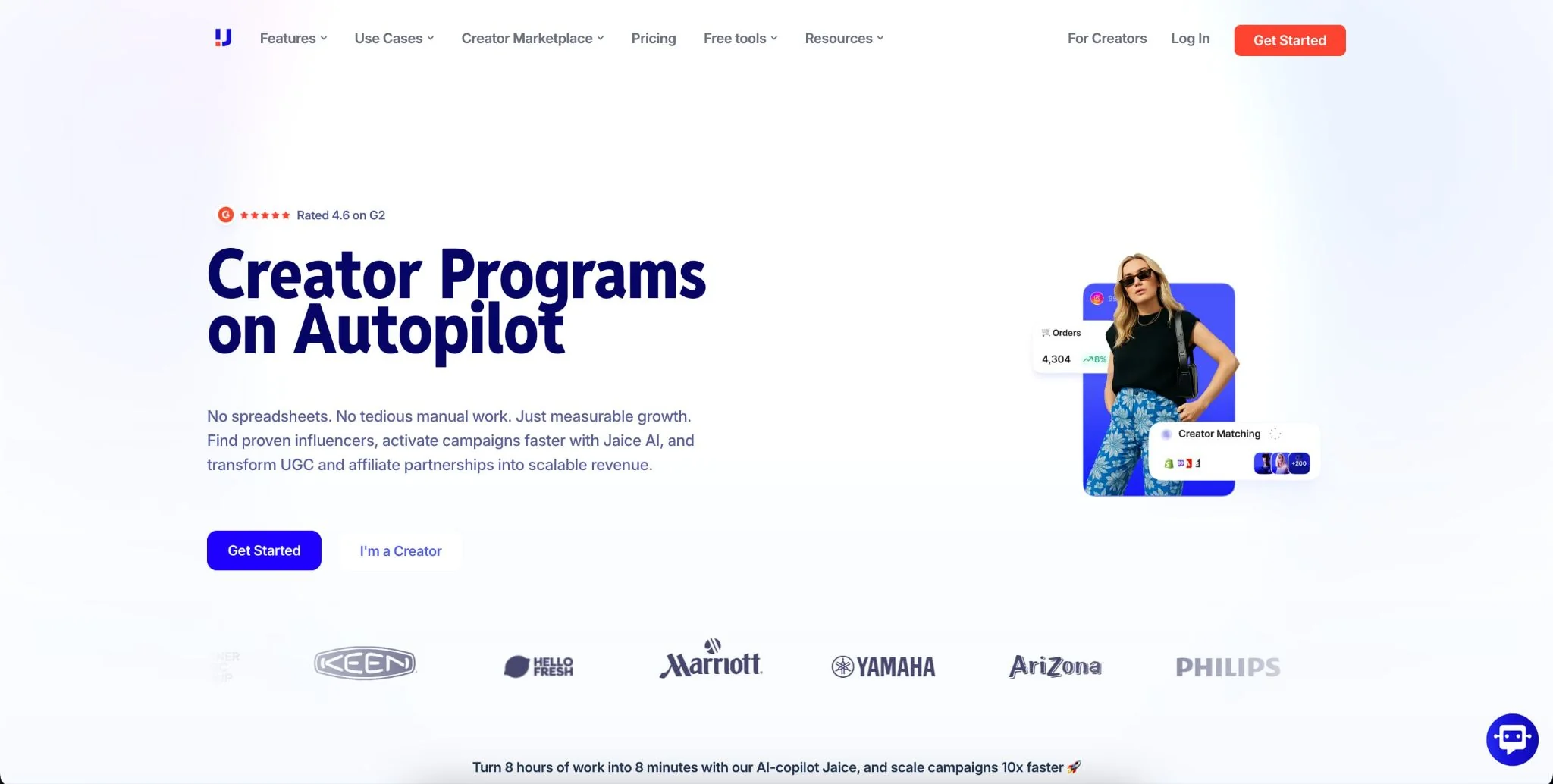
Upfluence aprovecha un enfoque único para el descubrimiento al ayudar a las marcas a identificar creadores influyentes que ya están entre su base de clientes. Al integrarse directamente con plataformas de e-commerce como Shopify y Amazon, transforma tus fans de marca existentes en tus defensores más auténticos.
Ideal para: Marcas de e-commerce que buscan aprovechar la identificación "de cliente a creador" e influencia específica de Amazon.
Precio: No publicado, aproximadamente $2,000/mes.
Funcionalidades principales:
- Identificación de Cliente a Creador: Escanea tu base de datos de clientes de comercio electrónico para encontrar fans influyentes que ya compran tus productos.
- Alcance de IA "Juce": Utiliza una herramienta de IA para ayudarte a personalizar y automatizar la comunicación con los creadores descubiertos.
- Integración Directa con Amazon: Una característica única para rastrear e identificar influencia en el marketplace de Amazon.
- Motor de Búsqueda Multicanal: Herramientas de búsqueda robustas para encontrar creadores en múltiples plataformas sociales más allá de tu base de clientes.
Ventajas y Desventajas:
Nuestro Análisis: Upfluence es un líder en descubrimiento "orgánico". Al enfocarte en tus clientes existentes, comienzas asociaciones con un nivel de confianza que el contacto en frío simplemente no puede replicar.
Reflexiones Finales
Elegir la herramienta de descubrimiento de influencers correcta en 2026 se reduce a equilibrar tu necesidad de datos exhaustivos con la realidad de tu carga de trabajo diaria. Aunque los gigantes empresariales ofrecen análisis de datos profundos, la mayoría de las marcas encuentran que el verdadero cuello de botella no es solo encontrar creadores, sino las cientos de horas manuales invertidas en alcance y gestión de campañas.
Herramientas como Influencer Hero se han convertido en favoritas de la industria porque cierran esta brecha, combinando potentes filtros de descubrimiento con automatización de CRM de alta velocidad. Al centralizar todo, desde la evaluación hasta los pagos de afiliados, permite que tu equipo se enfoque en construir relaciones auténticas en lugar de gestionar hojas de cálculo.
Si estás listo para optimizar tu flujo de trabajo y ver cómo la automatización puede escalar tu ROI, solicita una demostración con Influencer Hero hoy.
Resumen
Este es un texto dentro de un bloque div.
Este es un texto dentro de un bloque div.
Precios/mes
Reseñas de Shopify
Este es un texto dentro de un bloque div.
Este es un texto dentro de un bloque div.
Este es un texto dentro de un bloque div.
Este es un texto dentro de un bloque div.
Este es un texto dentro de un bloque div.
Este es un texto dentro de un bloque div.
Este es un texto dentro de un bloque div.
Este es un texto dentro de un bloque div.
Este es un texto dentro de un bloque div.
Este es un texto dentro de un bloque div.
Este es un texto dentro de un bloque div.
Este es un texto dentro de un bloque div.
Este es un texto dentro de un bloque div.
Este es un texto dentro de un bloque div.
Este es un texto dentro de un bloque div.
Este es un texto dentro de un bloque div.
Este es un texto dentro de un bloque div.
Este es un texto dentro de un bloque div.
Este es un texto dentro de un bloque div.
Este es un texto dentro de un bloque div.
Este es un texto dentro de un bloque div.
Leer más

Preguntas frecuentes




Blogs más populares


¿Estás listo para lograr un ROI de más de 10 veces?
Programa una demostración con uno de nuestros expertos en medios a continuación.