
Top 10 Best Influencer CRMs for Campaign Management in 2026

April 25, 2024
|
Published

September 17, 2026
|
Updated

10 minutes
|
Reading

Influencer Performance Marketing Course | VOUCHER: IMC100

Malena Garcia
I Author

Drive ROI With Influencers

Global Influencer Database
ALL-IN-ONE platform
CRM, Affiliate, UGC & More
Top 10 Best Influencer CRMs for Campaign Management in 2026
Managing a handful of influencers is one thing; managing a recurring network of 50, 100, or 500 is another entirely. This is where a dedicated Influencer CRM (Customer Relationship Management) system becomes essential. It moves your strategy beyond one-off posts and into a structured lifecycle—tracking every email, every contract, and every converted sale in one place.
Rather than just finding creators, an Influencer CRM helps you nurture them. By centralizing your data, you can build the kind of trust and mutual respect that leads to authentic long-term partnerships—the kind that actually moves the needle for your brand.
The Top 10 Influencer CRMs at a Glance:
- Influencer Hero
- Upfluence
- Favikon
- Traackr
- Later (formerly Mavrck)
- CreatorIQ
- Tagger
- Meltwater (Klear)
- Aspire
- Influencity
What to Look For in an Influencer CRM in 2026
Before you commit to a platform, you need to understand what separates a true Influencer CRM from a basic outreach tool or influencer database. At scale, organization becomes revenue.
These are the core features that will protect your time, your budget, and your partnerships in 2026:
Centralized Relationship Tracking
An Influencer CRM should function as your single source of truth. Every email, DM, contract, payment, affiliate link, discount code, and performance metric should live under one creator profile. If you have to switch between five tools to understand one partnership, you don't have a CRM—you have chaos.
Lifecycle Management (Not Just Campaign Tracking)
Influencer marketing isn't one post and done. You need a system that tracks creators across stages: prospect → outreach → negotiation → active campaign → repeat collaboration → ambassador. The right CRM helps you identify who's worth nurturing long term instead of constantly starting from zero.
Performance + Revenue Attribution
Engagement metrics are nice. Revenue is better. Look for tools that connect affiliate tracking, discount codes, and storefront links directly to influencer profiles so you can see exactly who's driving conversions—not just likes. Without clear attribution, you're guessing instead of scaling.
Workflow Automation
If you're manually sending follow-ups, updating spreadsheets, and chasing invoices, you'll burn out fast. A modern Influencer CRM should automate repetitive tasks like follow-up emails, contract reminders, content approvals, and even payout tracking. Automation isn't a luxury—it's survival at scale.
Smart Segmentation & Filtering
Once you have 100+ creators, memory isn't enough. You need to filter by performance, niche, audience location, engagement rate, product category, or campaign history. Smart segmentation allows you to quickly build targeted ambassador groups instead of blasting your entire list.
Multi-Platform Visibility
Your creators don't just live on Instagram. A strong CRM should track performance across TikTok, YouTube, Instagram, blogs, and emerging platforms in one unified dashboard. Cross-platform visibility prevents blind spots in your strategy.
Collaboration & Team Access
Influencer marketing rarely sits with one person anymore. Your CRM should allow role-based access, internal notes, task assignments, and approval workflows. Integrating strict access architecture aligned with Zero Trust Security principles ensures that sensitive creator contracts and payout data stay protected as your team grows. Without collaboration tools, you'll end up with Slack threads and email chains replacing real processes.
Scalability Without Complexity
The best Influencer CRMs grow with you. Whether you're managing 20 creators or 2,000, the system should remain intuitive. If your team needs weeks of onboarding just to send a contract, it's too complicated.
Selection Criteria: How We Evaluated the Best Influencer CRMs in 2026
To identify the top platforms, we analyzed the factors that ensure these systems help brands build real relationships and optimize campaign performance. Each tool was evaluated based on the following criteria:
1. Relationship Lifecycle Management
The core of any CRM is its ability to track a creator from the "First Contact" to "Loyal Ambassador." We prioritized tools that offer clear visualization—like Kanban boards—to manage communication history, contract status, and content approvals seamlessly.
2. Workflow Automation & Triggers
A good CRM should do the heavy lifting for you. We looked for platforms that use automated triggers to advance deals through different stages of a campaign, reducing manual administrative work and ensuring no creator is left waiting for a reply.
3. Deep Audience & Performance Insights
Effective management requires knowing exactly who you are working with. We evaluated tools on their ability to provide real-time data on audience demographics, interests, and engagement quality so brands can plan more targeted campaigns.
4. Integrated Payment & Financial Security
Managing the financial side of partnerships can be a nightmare. We gave higher consideration to CRMs that centralize secure payment processing, automate payout schedules, and handle tax compliance within the platform.
5. Integration & Scalability
A CRM shouldn't live on an island. We assessed how easily these tools connect with eCommerce platforms like Shopify for product gifting and affiliate tracking, as well as their ability to handle growing influencer networks without a drop in performance.
Top Influencer CRMs for Campaign Management in 2026
1. Influencer Hero
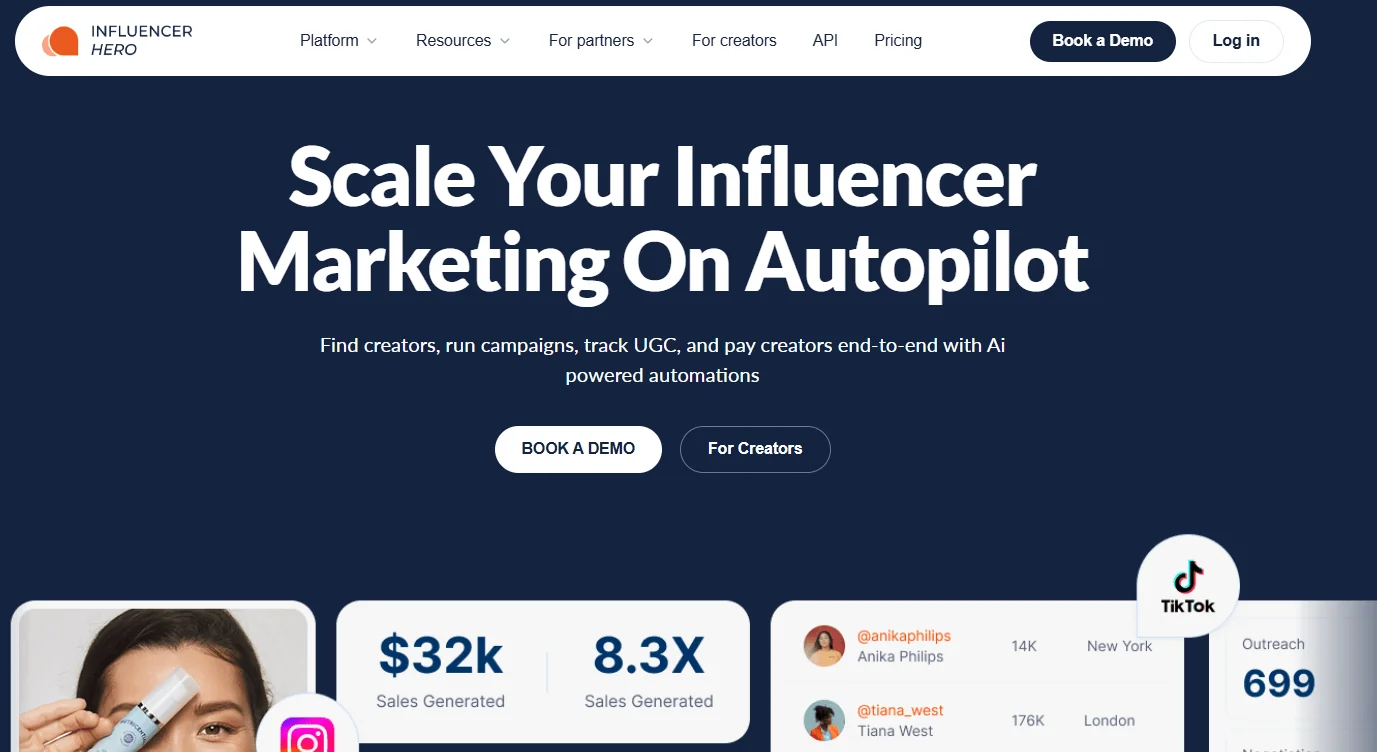
Influencer Hero stands out as one of the best influencer CRMs for campaign management because it goes beyond outreach and focuses on full lifecycle relationship management. It combines advanced creator discovery, verified contact data, campaign tracking, affiliate attribution, and automated workflows into one centralized system. Instead of managing creators through scattered spreadsheets and disconnected tools, you can oversee partnerships, monitor performance, handle contracts, and measure ROI — all from a single, structured dashboard built to scale.
Best For: Brands, eCommerce stores, and SaaS companies that want to manage both influencer marketing and affiliate programs from a single platform.
Platform Coverage:
- TikTok
- YouTube
Pricing: Influencer Hero offers flexible subscription models depending on the number of creators, campaigns, and integrations needed.
- Standard Plan: Starts at $649/month. Allows you to contact up to 1,000 creators a month.
- Pro Plan: Starts at $1,049/month. Allows you to contact up to 5,000 creators a month.
- Business Plan: Starts at $2,490/month. Allows you to contact up to 10,000 creators a month.
- Custom & Agency: Custom pricing based on your brand needs.
Reviews: 5.0 / 5.0 (Capterra)
Ease of Use (UX/UI): Users highlight Influencer Hero's clean, intuitive dashboard that makes it simple to discover influencers, track affiliate conversions, and manage commissions—without needing multiple tools.
Customer Support: Influencer Hero is praised for dedicated customer success managers and responsive support via chat and email, ensuring brands get quick answers and onboarding help.
Influencer Hero Standout Features
- Intuitive Kanban Boards: Features Trello-like boards that allow you to visualize and manage the progression of influencer campaigns with a drag-and-drop interface.
- Automated Stage Triggers: Uses built-in triggers to automatically advance influencer "deals" to the next stage of the campaign based on specific actions.
- Deep Audience Insights: Provides granular data on an influencer's followers, including demographics, behaviors, and interests to ensure brand alignment.
- All-in-One Functionality: Integrates discovery, automated outreach, reporting, gifting, and affiliate payments in a single CRM.
- Integrations: Connects seamlessly with e-commerce platforms like Shopify and WooCommerce, affiliate tools, email providers, payment systems, and more, allowing you to sync sales data, track conversions, and manage payouts without switching between platforms.
Influencer Hero Pros & Cons
Our Insights
Influencer Hero stands out as a "CRM-first" platform. By using Kanban boards and automated triggers, it turns the chaotic process of managing hundreds of influencers into a streamlined, visual pipeline. It is the ideal choice for brands that want to move away from messy spreadsheets and into a system that handles discovery, gifting, and payments under one roof.
2. Upfluence
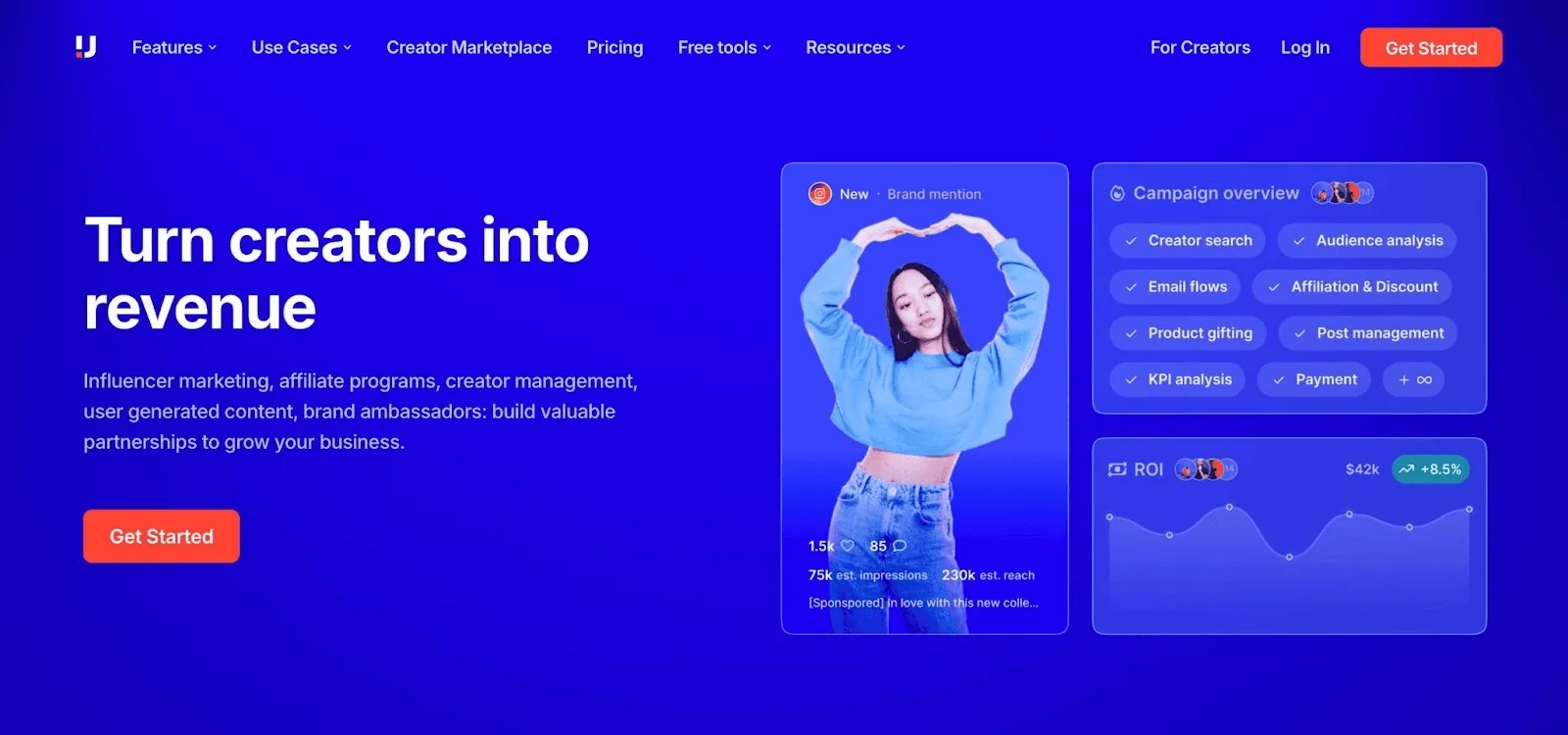
Best For: Medium to large businesses looking for a robust influencer management tool that combines automated discovery with high-level campaign execution.
Platform Coverage:
- YouTube
- TikTok
- Twitch
Pricing: Upfluence is positioned for larger budgets and typically requires a significant upfront investment.
- Standard Plan: Approximately $2,000/month.
- Commitment: Annual billing required.
Reviews: 4.1 / 5.0 (General Market Average)
Ease of Use (UX/UI): While the feature set is comprehensive, some users have noted that the interface can be complex and may require a steeper learning curve.
Customer Support: Offers a combination of software and agency services, providing strategic support for brands scaling their programs.
Upfluence Standout Features
- Granular Influencer Discovery: Advanced search filters allow you to identify partners based on highly specific demographics and engagement rates.
- Lifecycle Management: Allows for efficient organization of contacts, including full communication histories and collaboration details.
- Campaign Allocation: Built-in tools for setting goals, defining deliverables, and allocating budgets within the CRM.
- Audience Segmentation: Provides deep insights that allow you to segment both influencers and their audiences for more tailored campaign targeting.
Upfluence Pros & Cons
Our Insights
Upfluence is an excellent choice for established brands that need to manage a high volume of complex campaigns across multiple platforms (except Facebook). Its strength lies in its ability to combine detailed discovery with end-to-end campaign monitoring, though brands should be prepared for the higher price tag and annual commitment.
3. Favikon
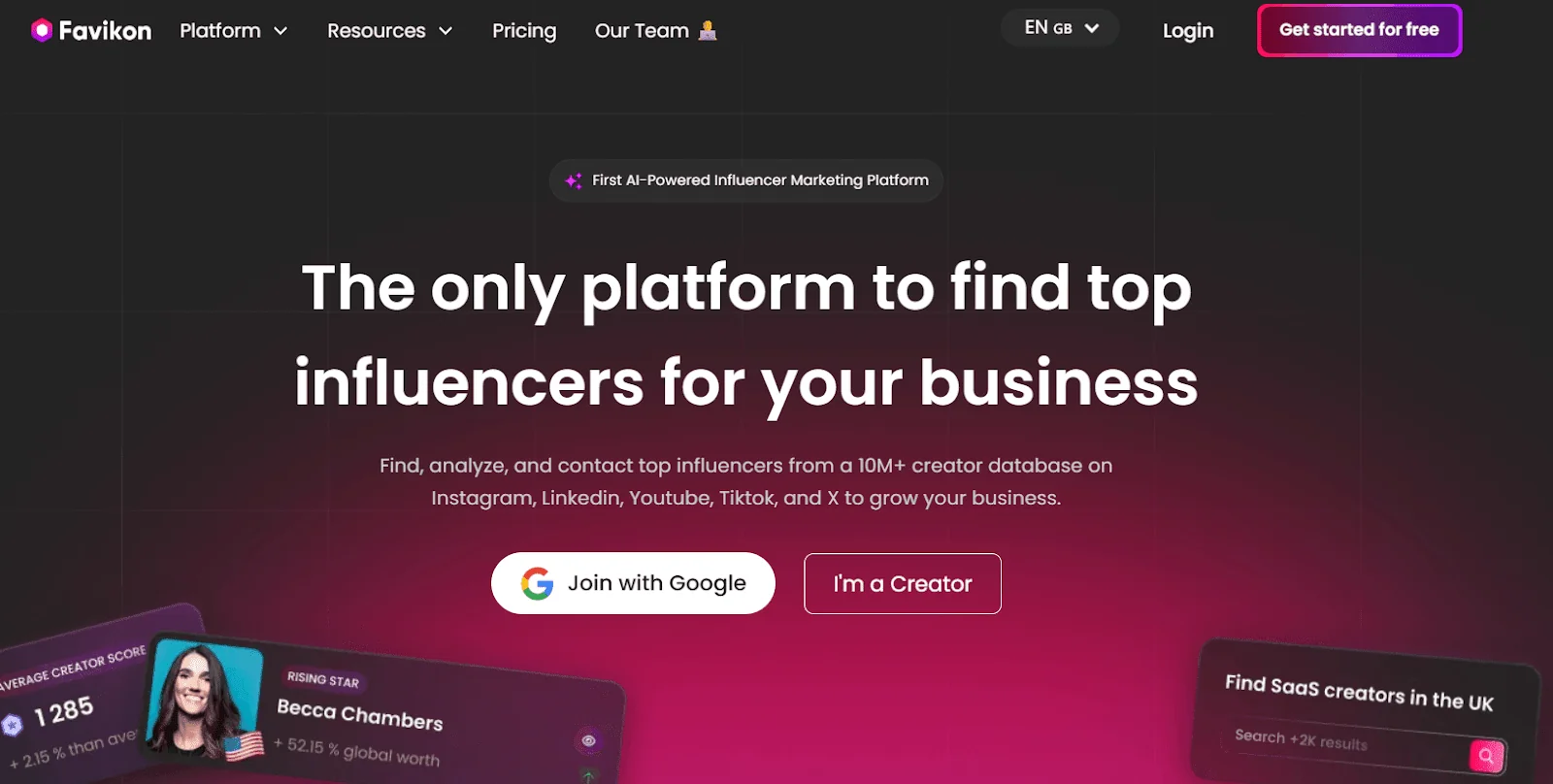
Favikon is an AI-powered creator intelligence platform built for brands that want to vet influencers on authenticity, niche authority, and brand fit before reaching out. It stands out for its coverage of B2B and LinkedIn creators, a segment most vetting tools ignore entirely.
The platform pairs a ranked creator database with authenticity scoring and competitor monitoring, so teams can check how credible a creator's audience is, where they rank in their niche, and which brands they've already worked with before committing budget.
Pricing:
- Starter: $79/month (billed annually) or $99/month monthly
- Standard: $159/month (billed annually) or $199/month monthly
- Pro: $449/month monthly, custom quote on annual billing
- Credit-based usage (favicoins) on every plan, with top-ups available
Best For: B2B brands and agencies vetting LinkedIn, X, and multi-platform creators on authority and authenticity
Favikon Influencer Features
- Authenticity Scoring: Flags fake followers and inflated engagement so you can filter out low-quality profiles before outreach
- Creator Rankings: Ranks creators by niche, country, network, and engagement quality to benchmark who actually leads a category
- Audience and Profile Analytics: Breaks down audience data, growth trends, and content performance per creator
- B2B and LinkedIn Filters: Top Voice and job title filters for vetting professional creators, which almost no other tool offers
- Radar (Competitor Monitoring): Shows which creators your competitors are working with and what content they're producing
- AI and Magic Search: Natural-language prompts and lookalike discovery to build shortlists without stacking filters
Other Standout Features
Favikon also includes campaign management, email and social DM outreach, content tracking via mentions and hashtags, and GA4 integration. These cover the basics, but the platform's core value is the intelligence layer rather than campaign execution.
Pros and Cons
Our Insights
Favikon is the clear pick if your vetting needs go beyond Instagram and TikTok. For B2B brands trying to validate LinkedIn creators or thought leaders, the authenticity scoring and Top Voice filters solve a problem most platforms don't even attempt.
For DTC brands, it works best as a discovery and vetting layer sitting in front of a more complete operational platform. The credit model also means heavy vetting volume pushes costs up regardless of tier, so it's worth modeling usage before committing.
4. Traackr
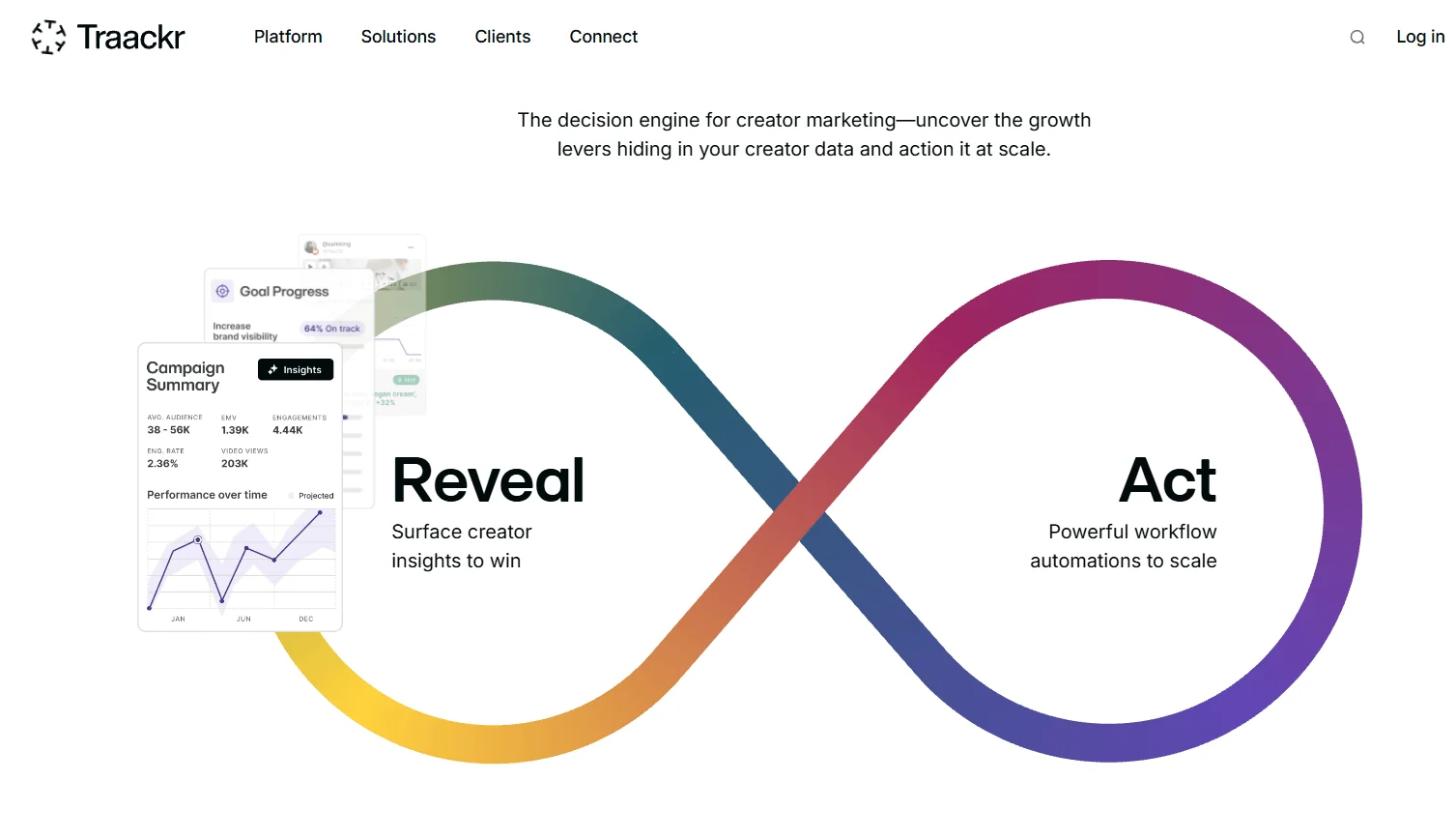
Best For: Enterprise-level brands that prioritize a data-driven approach to influencer identification, segmentation, and detailed relationship building.
Platform Coverage:
- YouTube
- TikTok
- Twitch
Pricing: Traackr is an enterprise-tier tool that requires a substantial investment and a long-term commitment.
- Pricing: Approximately $2,600 per month.
- Commitment: Annual billing required.
Reviews: 0.0 / 5.0 (Shopify App Store - Note: This reflects a lack of specific Shopify app reviews rather than overall software quality).
Ease of Use (UX/UI): Traackr is a sophisticated tool built for complex programs. While powerful, its depth of analytical data means it is better suited for teams that have the time to dive deep into metrics rather than those seeking a simple "plug-and-play" interface.
Customer Support: Known for its professional-grade support infrastructure, helping teams manage "the most complex programs" with high-level strategic data.
Traackr Standout Features
- Advanced Identification & Segmentation: Allows users to find and categorize influencers based on granular criteria like resonance, reach, and relevance.
- Custom Influencer Lists: Easily segment partners into specific categories for highly targeted outreach and ongoing relationship management.
- Relationship Building Focus: Centralizes all communication and collaboration tracking to foster long-term, meaningful partnerships.
- Comprehensive ROI Analysis: Offers detailed performance tracking (reach, impressions, conversions) to justify spend and optimize future strategy.
Traackr Pros & Cons
Our Insights
Traackr is the CRM of choice for the "scientist" marketer. If your goal is to build a massive, data-backed influencer database where every relationship is segmented by specific resonance metrics, this is your tool. However, because it lacks built-in gifting and payment modules, you will likely need to pair it with other tools or manual processes to handle the final stages of the campaign lifecycle.
5. Later
Best For: Brands that want to integrate their social media management with influencer advocacy, particularly those with a heavy focus on TikTok and user-generated content (UGC).
Platform Coverage:
- YouTube
- TikTok
Pricing: All plans come with an additional one-time onboarding fee of $5,000 for all new customers.
- Essentials Plan: Starts at $28,500/year. Best for brands starting in influencer marketing.
- Pro Plan: Starts at $42,000/year. Best for data and automation to make your campaigns run faster and achieve better ROI.
- Premier Plan: Starts at $60,000/year. Everything you need for a scaled influencer program.
Reviews: 4.4 / 5.0 (GetApp/Capterra average).
Ease of Use (UX/UI): Later is widely celebrated for its visual and intuitive design. It makes the transition from planning social posts to managing influencer content feel seamless for modern marketing teams.
Customer Support: Offers a robust support system, including a knowledge base and dedicated support for enterprise clients using their automated workflow features.
Later (Mavrck) Standout Features
- TikTok Creator Marketplace Integration: A unique standout feature that allows for direct and seamless collaboration within the TikTok ecosystem.
- Automated Campaign Workflows: Set up automated paths for planning, content approvals, and even payment processing to reduce manual workload.
- UGC & Advocacy Focus: Specifically designed to turn influencers into long-term brand advocates who co-create branded content.
- Full-Lifecycle Tracking: Manages everything from discovery and outreach to gifting, content collection, and affiliate payments.
Later Pros & Cons
Our Insights
Later (formerly Mavrck) is perfect for brands that view influencers as an extension of their own content team. Its ability to automate the "boring" parts of campaign management—like approvals and payments—allows your team to focus on the creative strategy. If you are heavily invested in TikTok and need a tool that "speaks the language" of that platform, Later is arguably the best choice on this list.
6. CreatorIQ
Best For: Global enterprises and massive organizations that need a "command center" for managing influencer relationships, content rights, and multi-team collaboration.
Platform Coverage:
- YouTube
- TikTok
- Twitch
Pricing: There are different plans and options.
- Basic Plan: Starts at $35,000/year. Includes 1,000 contact creators per month.
- Standard Plan: Starts at $50,000/year. Includes 2,500 contact creators per month.
- Professional Plan: Starts at $90,000/year. Includes 5,000 contact creators per month.
- Enterprise Plan: Starts at $200,000/year. Includes 7,500 contact creators per month.
Reviews: 4.6 / 5.0.
Ease of Use (UX/UI): CreatorIQ offers a very robust and visually polished interface. However, because it is designed for large-scale operations with hundreds of features, it may feel "overbuilt" for smaller teams.
Customer Support: In addition to its software, CreatorIQ offers specialized agency services to help large corporations execute their influencer strategies.
CreatorIQ Standout Features
- Influencer Relationship Management (IRM): Comprehensive tools for tracking communication and collaboration throughout the entire campaign lifecycle.
- Content Rights Management: A critical feature for enterprises; it allows you to track and manage usage rights for influencer-generated content to ensure legal compliance.
- Enterprise Reporting: Advanced analytics that measure ROI, engagement rates, and conversions to justify global marketing budgets.
- Integrated Gifting & Affiliates: Handles the logistics of sending products and managing affiliate programs alongside core CRM duties.
CreatorIQ Pros & Cons
Our Insights
CreatorIQ is the "professional's choice" for the corporate world. Its inclusion of content rights management sets it apart from almost every other tool, making it the safest bet for companies that repurpose influencer content in their own advertisements. While it's expensive, it offers a level of security and scalability that smaller tools simply can't match.
7. Sprout Social
Best For: Brands looking to manage social media, content control and brand safety. Sprout Social (formerly Tagger) offers several tools for brands managing both social media and influencer marketing.
Platform Coverage:
- TikTok
- YouTube
Pricing & Commitment: Pricing varies depending on every brand's needs.
- Base Plan: Starts around $1,600/month per user plus $600 per extra user. You can pay monthly or annually, but a full-year commitment is mandatory. This translates into an annual investment of over $19,200 for one person or $25,200 for a team of two.
Reviews: 4.5 / 5.0 (Capterra)
Ease of Use (UX/UI): Sprout Social offers an intuitive interface with clear dashboards and campaign flows that are easy to follow.
Customer Support: Sprout Social support is fast and responsive. They offer live chat, phone, and a list of help articles for brands and creators. They also offer a "system status" page where users can check for any platform issues.
Sprout Social Standout Features
- Brand Fit & Safety AI: Sprout Social affinity scores on brand alignment help brands ensure strategic selections.
- Content Approval Workflow: Creators submit draft content within the platform for review before posting. This gives brands oversight and final say before anything goes public.
- Competitive Benchmarking & EMV Reporting: The platform offers customized dashboards to compare performance with competitors with top-tier analytics like Earned Media Value in real time, audience insights and content approval metrics.
Sprout Social Pros & Cons
Our Insights
Sprout Social is the tool you choose when you need to justify your budget with data. It is one of the most powerful "all-in-one" ecosystems on the market. It's perfect for brands that treat influencer marketing as a precise science rather than a trial-and-error experiment.
8. Meltwater
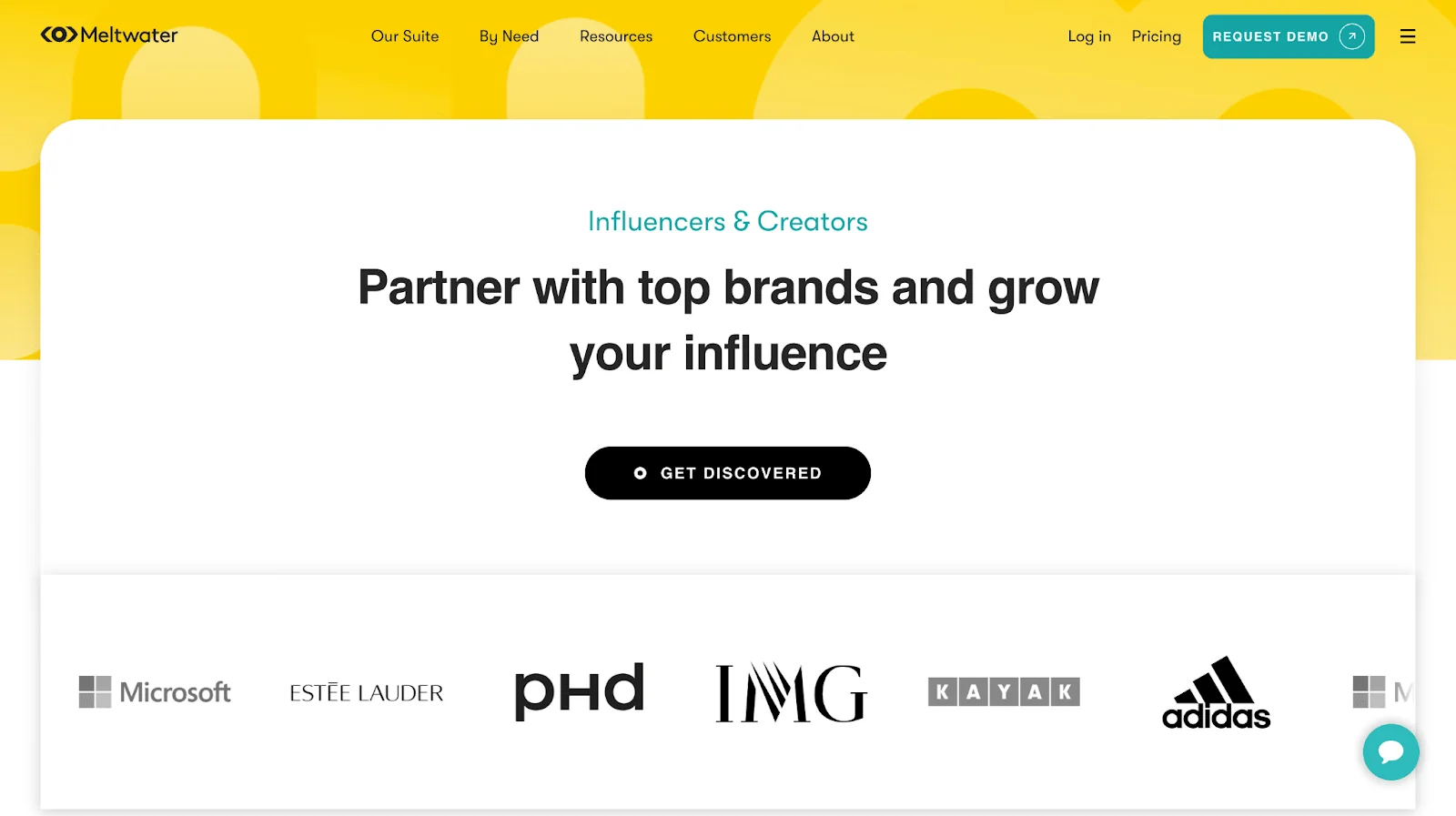
Best For: Enterprise brands and global agencies that need a centralized influencer CRM to manage large-scale, multi-market campaigns, while integrating influencer marketing into broader PR and communications workflows.
Platform Coverage:
- TikTok
- YouTube
- X (Twitter)
Pricing: Annual plans only. Estimated range: $50,000–$73,000 per year, with potential quarterly discounts depending on contract structure.
Reviews: 4.0 / 5.0 (G2)
Ease of Use (UX/UI): Despite being an enterprise-grade platform, Klear's interface is considered intuitive. Its structured dashboards and search-first experience make managing large creator databases and campaign pipelines easier than many comparable enterprise CRMs.
Customer Support: Backed by Meltwater's global infrastructure, offering:
- 24/7 support
- Dedicated account managers
- Meltwater Academy training resources for onboarding and team enablement
Meltwater (Klear) Standout Features
- Custom Brand Score (AI Matching): Allows teams to define specific CRM criteria (age, location, niche, engagement thresholds) and automatically score creators against campaign requirements.
- Enterprise Campaign Pipeline Management: Organize creators by campaign stage, region, performance, or business unit. Built to support multi-layered approval flows and global team collaboration.
- Advanced Social Listening for CRM Enrichment: Feeds brand mentions, competitor activity, and industry trends directly into your influencer pipeline—turning warm leads into managed relationships.
- True Reach AI Technology: Filters out bots and inactive followers to ensure performance reporting reflects actual audience impact, improving campaign ROI validation.
- Unified Media & Influencer CRM: Manage journalists and influencers within the same ecosystem—ideal for brands running integrated PR and influencer campaigns.
- Klear Connect: Centralized creator portal for messaging, briefing, contract signatures, and collaboration tracking without leaving the CRM.
Meltwater Pros & Cons
Our Insights
Meltwater (formerly Klear) is best positioned as an enterprise-level influencer CRM built for structured, global campaign management rather than simple outreach. Its strength lies in centralizing influencer relationships, PR workflows, reporting, and executive-level analytics within one system, making it ideal for brands that need governance, cross-team collaboration, and measurable ROI at scale.
9. Aspire
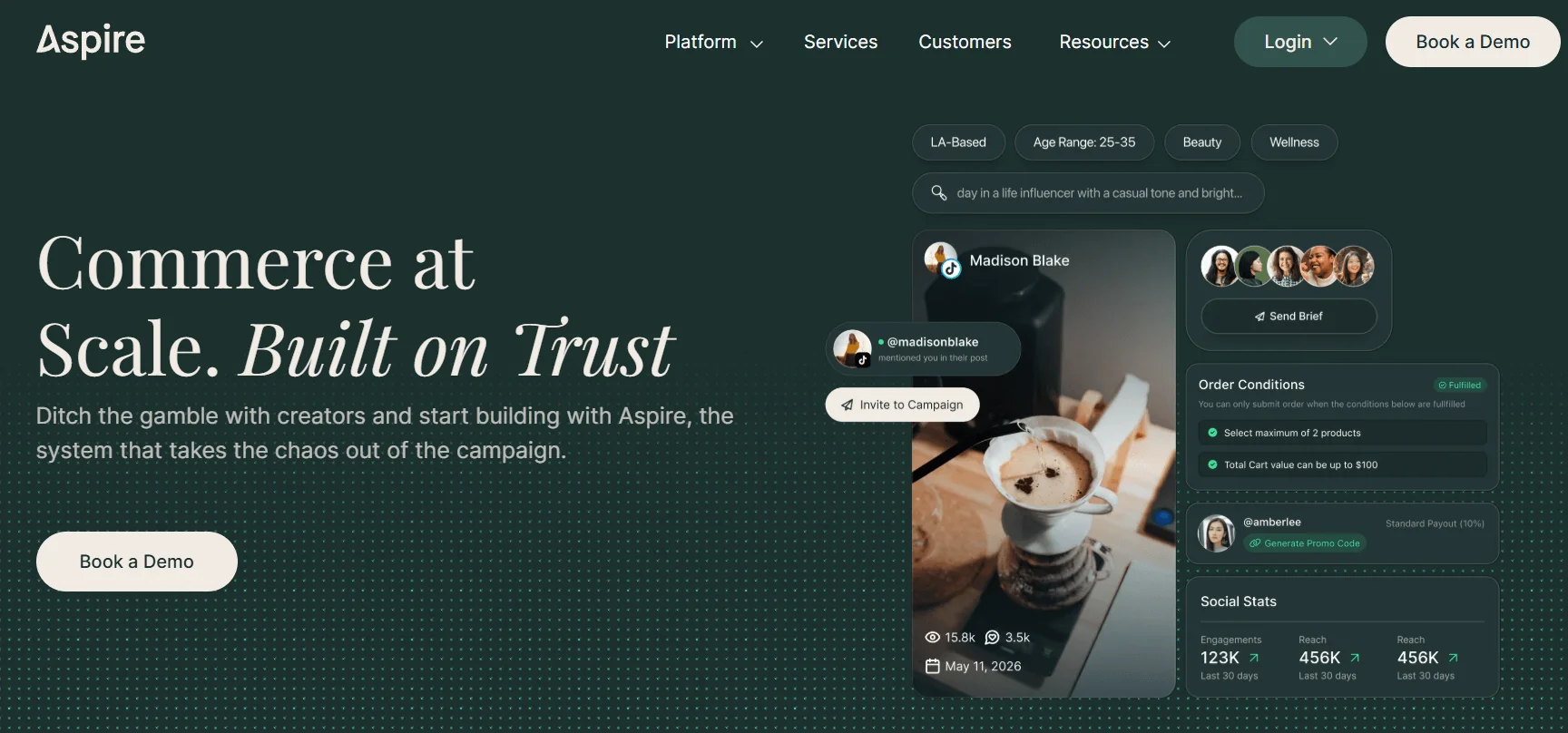
Best For: D2C and e-commerce brands that want to build automated ambassador programs and leverage an integrated creator marketplace.
Platform Coverage:
- YouTube
- TikTok
Pricing: Aspire offers a range of enterprise plans that generally require an annual commitment.
- Starting Price: Approximately $2,000/month.
- Commitment: Annual billing required.
Reviews: 4.5 / 5.0 (Capterra/Shopify Average).
Ease of Use (UX/UI): Aspire is highly rated for its intuitive design. It turns the complex logistics of managing a large ambassador network into a series of simple, visual steps.
Customer Support: Aspire offers both software and full-service agency solutions for brands that want to outsource their campaign management.
Aspire Standout Features
- Integrated Marketplace: Allows creators to apply directly to your campaigns, moving from discovery to management in one click.
- AI-Powered Recommendations: Uses AI to suggest creators who match your specific campaign goals and brand aesthetic.
- E-commerce CRM Sync: Deeply integrates with stores to handle high-volume product gifting and track affiliate revenue in real-time.
- UGC Collection & Rights: Automatically pulls in and organizes influencer content for your brand to repurpose in ads.
Aspire Pros & Cons
Our Insights
Aspire is the best tool for "Word-of-Mouth" scaling. If your strategy relies on building a massive army of ambassadors who apply to work with you, Aspire's marketplace and gifting automation are massive time-savers. It's the perfect mid-to-large business companion for Shopify brands.
10. Influencity
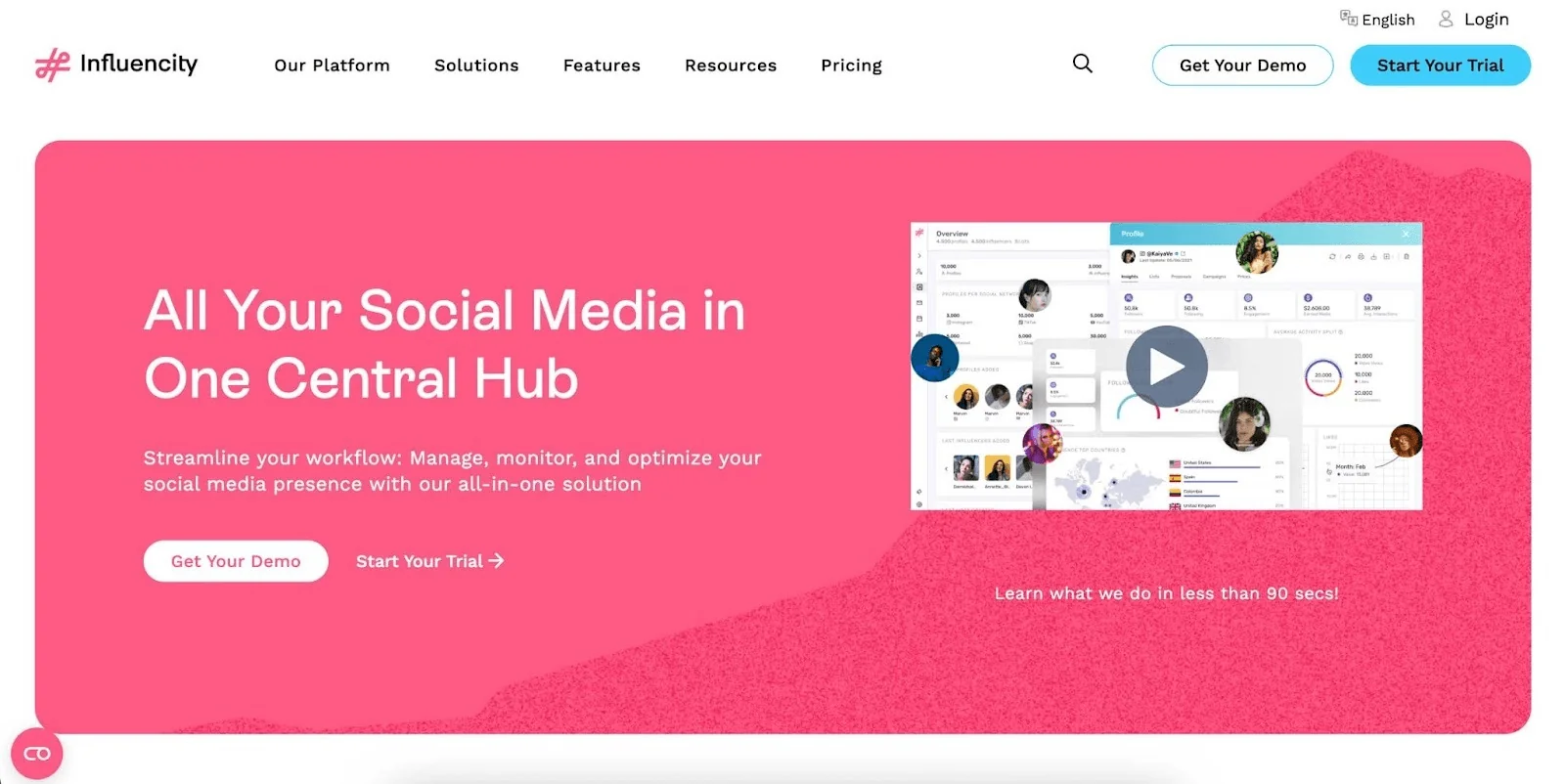
Best For: Smaller teams or brands looking for a modern, cost-effective CRM focused on real-time data analysis and campaign optimization.
Platform Coverage:
- YouTube
- TikTok
Pricing: Influencity is one of the most budget-friendly options on the market with high flexibility.
- Starting Price: Approximately $348/month.
- Commitment: Flexible monthly commitment options.
Reviews: 4.6 / 5.0 (General Market Average).
Ease of Use (UX/UI): As a newer entrant in the market, Influencity features a modern and agile interface that is easy for small teams to navigate without a lengthy onboarding process.
Customer Support: Known for its fresh approach and responsiveness to small business needs.
Influencity Standout Features
- Real-Time Data Analysis: Provides up-to-the-minute metrics on post reach and audience demographics to inform your next move.
- Dynamic Campaign Optimization: Allows you to adjust target audience segments and content strategies mid-campaign based on performance data.
- A/B Testing Features: Built-in tools to test different campaign approaches and see which yields the highest ROI.
- Audience Segmentation: Powerful filtering tools to ensure your influencers are reaching the exact demographic you need.
Influencity Pros & Cons
Our Insights
Influencity is the "Agile Choice." If you have a smaller budget but still need professional-level data to optimize your campaigns, this is the tool for you. While it lacks the logistics tools (like gifting) found in Influencer Hero or Aspire, its data-first approach makes it a powerful partner for brands that manage their shipping and payments manually.
Final Thoughts
The right Influencer CRM serves as the backbone of your marketing efforts, transitioning your brand from messy spreadsheets to a structured, scalable ecosystem. Choosing the right tool depends largely on your current lifecycle stage—whether you are still in the discovery phase, focused on nurturing relationships, or ready for high-level performance measurement and ROI optimization.
Platforms like Influencer Hero and Influencity offer the flexibility and affordability needed by growing brands to manage outreach and campaign workflows effectively. Meanwhile, enterprise solutions like CreatorIQ, Traackr, and Favikon provide the deep analytical and relationship-tracking power required for global organizations to maintain long-term, high-impact partnerships.
By aligning your choice with your specific needs—be it automated gifting, predictive analytics, or social listening—you can optimize your campaign management and ensure every influencer relationship contributes to your brand's growth and marketing ROI.
Summary
This is some text inside of a div block.
This is some text inside of a div block.
Pricing/Month
Shopify Reviews
This is some text inside of a div block.
This is some text inside of a div block.
This is some text inside of a div block.
This is some text inside of a div block.
This is some text inside of a div block.
This is some text inside of a div block.
This is some text inside of a div block.
This is some text inside of a div block.
This is some text inside of a div block.
This is some text inside of a div block.
This is some text inside of a div block.
This is some text inside of a div block.
This is some text inside of a div block.
This is some text inside of a div block.
This is some text inside of a div block.
This is some text inside of a div block.
This is some text inside of a div block.
This is some text inside of a div block.
This is some text inside of a div block.
This is some text inside of a div block.
This is some text inside of a div block.
Read More

FAQs
인플루언서 아웃리치 도구와 인플루언서 CRM의 차이점은 무엇인가요?

아웃리치 도구가 초기 연락과 발견에 중점을 두는 동안, Influencer CRM은 전체 관계 생명주기를 관리합니다. 여기에는 의사소통 기록 추적, 계약 관리, 콘텐츠 승인 및 장기 유지를 촉진하기 위해 여러 캠페인에 걸친 성과 측정이 포함됩니다.
칸반 스타일 보드가 캠페인 관리에 도움이 되는 이유는 무엇인가요?
칸반 또는 Trello와 유사한 인터페이스(예: Influencer Hero에서 찾을 수 있음)를 사용하면 인플루언서의 캠페인 단계별 진행 상황을 시각적으로 추적할 수 있습니다. 자동화된 트리거를 통해 "딜"을 한 단계에서 다음 단계로 이동할 수 있습니다(예: 크리에이터를 "아웃리치"에서 "제품 발송"으로 이동). 이는 수동 데이터 입력 없이 가능합니다.
모든 CRM 플랫폼이 인플루언서 기프팅과 자동화된 결제를 지원하나요?
아니요. Influencer Hero, Grin, Aspire와 같은 포괄적인 플랫폼은 통합 제품 기프팅 및 제휴 결제 모듈을 제공하지만, Traackr과 Influencity와 같은 일부 데이터 중심 도구는 발견 및 분석에 더 중점을 두고 있으며, 물류 및 재정 지급을 위해 별도의 시스템이 필요합니다.
"소셜 리스닝"이 인플루언서 관계 관리를 어떻게 개선합니까?
소셜 리스닝은 Meltwater (Klear)와 같은 도구의 핵심 기능으로, 브랜드가 이미 자신의 제품에 대해 "자연스러운 친화성"을 가진 인플루언서를 식별할 수 있게 해줍니다. 이는 귀사의 아웃리치가 이미 귀사의 틈새 시장과 관심 있게 소통하고 있는 크리에이터에게 지향되도록 보장하여, 더욱 진정성 있고 성공적인 협업으로 이어집니다.
이러한 도구들이 제 브랜드를 인플루언서 사기로부터 보호하는 데 도움이 될 수 있을까요?
그렇습니다. Tagger와 Meltwater를 포함한 많은 CRM이 AI를 사용하여 깊이 있는 오디언스 인사이트와 "True Reach" 분석을 제공합니다. 이러한 기능은 봇 참여와 유령 팔로워를 제거하여 실제 오디언스를 보유하고 타겟 인구통계와 일치하는 인플루언서에 투자하도록 보장합니다.





Most Popular Blogs


Ready to achieve 10X+ ROI?
Schedule a Demo with one of our media experts below.