
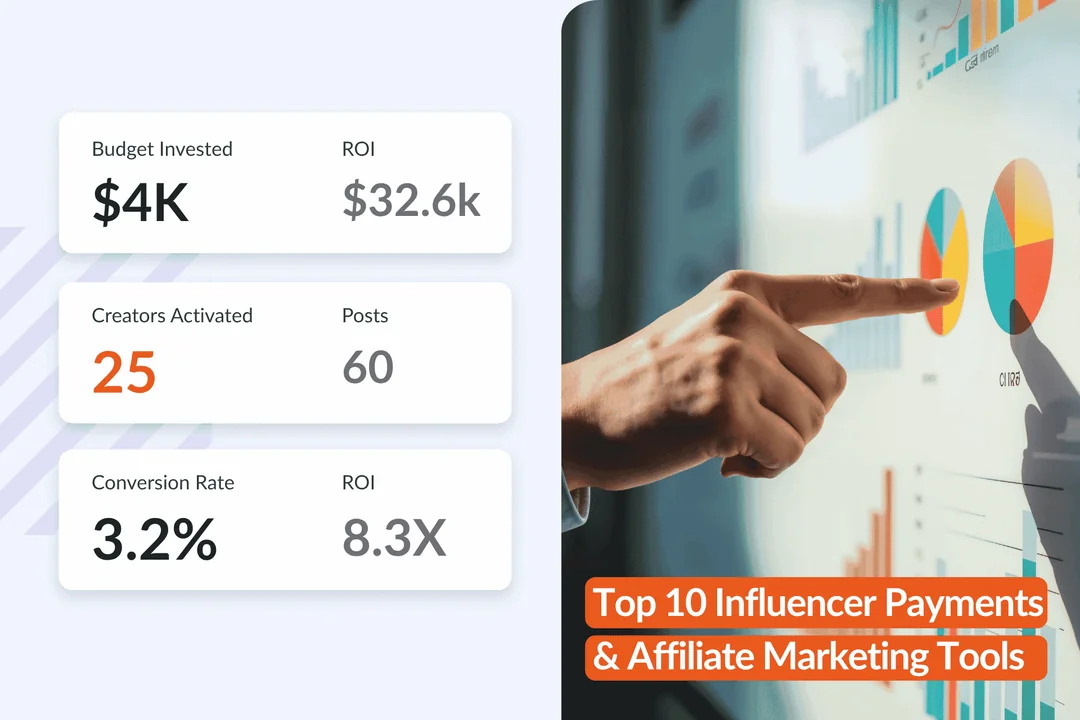
Top 10 outils de paiements influenceurs et marketing d'affiliation 2026

April 30, 2026
|
Published

September 18, 2026
|
Updated

14 minutes [[estimate — live page shows no read time]]
|
Reading

Influencer Performance Marketing Course | VOUCHER: IMC100

Lucía Zabala
I Author

Drive ROI With Influencers

Global Influencer Database
ALL-IN-ONE platform
CRM, Affiliate, UGC & More
Top 10 outils de paiement des influenceurs et de marketing d'affiliation en 2026
En 2026, les marques ne se contentent plus de payer pour la simple « visibilité » ou les vanity metrics ; elles exigent un ROI vérifiable. Ce tournant vers la rémunération basée sur la performance a transformé ce qui était autrefois un simple partenariat créatif en un véritable défi logistique.
Générer manuellement des codes de réduction et réconcilier les factures PayPal une par une, c'est la recette de la stagnation. Pour rester compétitif dans l'économie axée sur les réseaux sociaux, votre stack technologique doit agir comme un partenaire silencieux qui gère le travail de fond, permettant à votre équipe de se concentrer sur la construction d'une véritable communauté.
Ce guide détaille les outils essentiels qui comblent le fossé entre l'influence créative et le chiffre d'affaires réel
Ce qu'il faut rechercher dans les outils de paiement des influenceurs et de marketing d'affiliation en 2026
Avant de choisir une plateforme, vous devez savoir quelles fonctionnalités économisent vraiment du temps et lesquelles ne sont que du « remplissage ».
Pour 2026, un outil de paiement et d'affiliation fonctionnel doit gérer ces quatre domaines clés pour maintenir votre programme évolutif :
- Paiements internationaux automatisés : Recherchez un outil qui gère les tâches « fastidieuses » — formulaires fiscaux (W-8/W-9) et conversions multi-devises. Vous devriez pouvoir payer 100+ créateurs mondiaux en un clic plutôt que d'envoyer des virements bancaires individuels.
- Intégration transparente du commerce électronique : Votre outil doit être « compatible » avec votre magasin (Shopify, Amazon, etc.). Il devrait générer automatiquement des codes de réduction et liens d'affiliation uniques pour chaque influenceur, afin que vous ne soyez pas obligé de les créer manuellement dans le back-office de votre boutique.
- Suivi des performances et attribution : Vous devez voir exactement qui génère les ventes. Les outils de haute qualité offrent un suivi en temps réel des clics et conversions, ce qui garantit que vous ne payez les commissions que sur les achats vérifiés et vous protège des sites de « fuites de coupons ».
- Logique de commission flexible : Tous les partenariats ne représentent pas 10% des ventes. Assurez-vous que l'outil permet des configurations personnalisées — comme un forfait fixe pour la publication plus un bonus de performance, ou des commissions échelonnées qui augmentent à mesure qu'un créateur atteint des objectifs de ventes spécifiques.
Critères de sélection : comment nous avons évalué les meilleurs outils de paiement et de marketing d'affiliation en 2026
Pour trouver les meilleurs outils de paiement des influenceurs et de marketing d'affiliation, nous avons porté notre attention sur les fonctionnalités qui économisent vraiment du temps et protègent vos marges. Nous avons ignoré les « fonctionnalités de vanité » et évalué chaque plateforme selon ces cinq critères pratiques :
1. Automatisation des paiements et conformité mondiale Nous avons donné la priorité aux outils qui éliminent le « casse-tête financier ». Cela signifie la capacité à gérer des virements massifs en plusieurs devises et à collecter automatiquement les formulaires fiscaux (comme W-8/W-9) afin que votre équipe comptable n'ait pas à relancer les créateurs.
2. Précision du suivi et synchronisation du commerce électronique Un outil doit être « compatible » avec votre magasin. Nous avons recherché des plateformes qui s'intègrent de manière transparente avec Shopify, Amazon et WooCommerce pour générer automatiquement des liens d'affiliation uniques et des codes de réduction sans aucune saisie manuelle de données.
3. Flexibilité des commissions Tous les partenariats ne sont pas à 10% fixes. Nous avons donné des notes plus élevées aux outils qui supportent des structures de payout diversifiées, y compris les forfaits fixes, le pourcentage des ventes, les bonus de performance, ou même les cadeaux de produits comme forme de « paiement ».
4. Prévention de la fraude et attribution Pour protéger votre ROI, nous avons recherché une protection robuste contre les « fuites de coupons ». Les meilleurs outils garantissent que les commissions sont versées uniquement à l'influenceur qui a réellement généré la vente, et non à des sites génériques de scraping de codes de réduction.
5. Rapports et évolutivité Gérer 100+ affiliés nécessite des données claires. Nous avons évalué la qualité des tableaux de bord analytiques, en recherchant spécifiquement des insights en temps réel sur le total des ventes, le retour sur dépenses publicitaires (ROAS) et la performance de chaque créateur.
10 meilleurs outils de paiement des influenceurs et de marketing d'affiliation en 2026
1. Influencer Hero
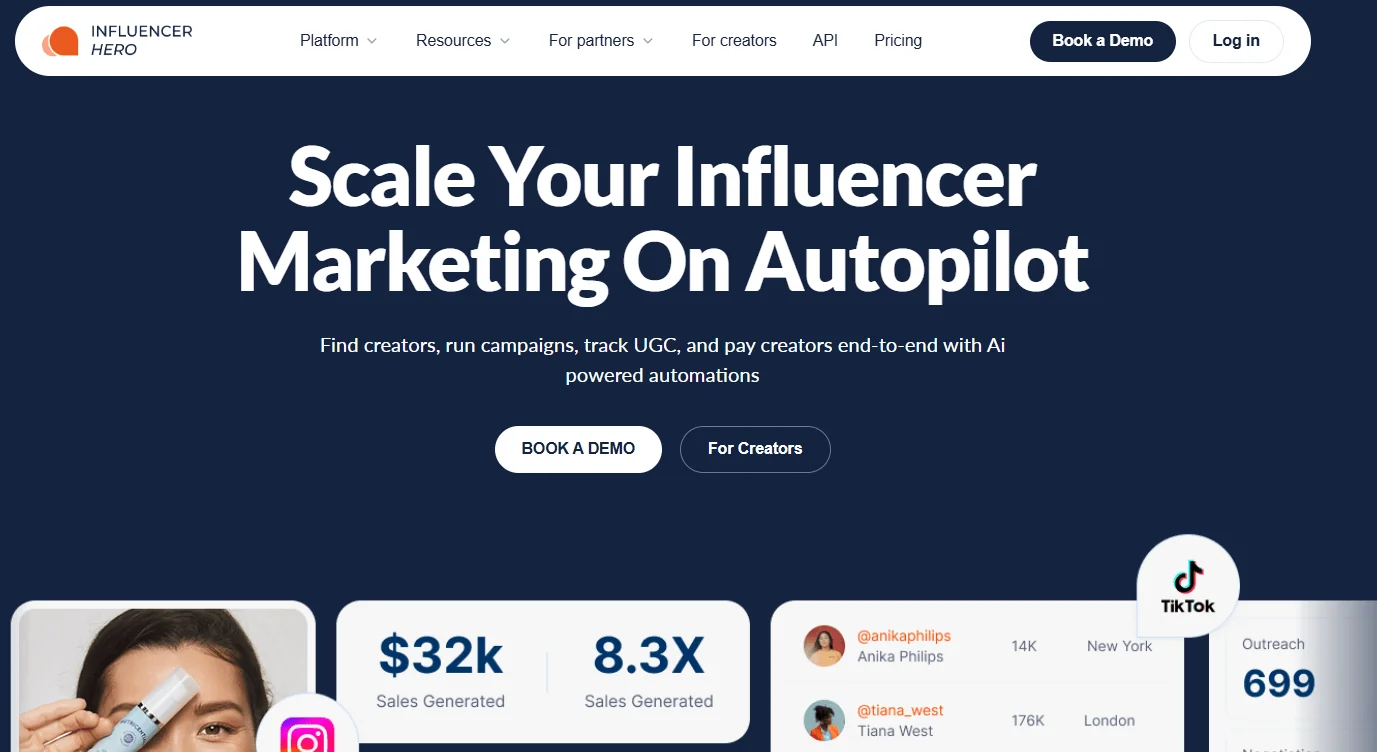
Influencer Hero est une plateforme de marketing d'influence centrée sur les campagnes et conçue pour les marques DTC et eCommerce qui souhaitent une automatisation structurée et une clarté du ROI. Elle combine la découverte, l'outreach, le gifting, le suivi d'affiliation, la collecte d'UGC et les paiements dans un système piloté par CRM rationalisé.
C'est particulièrement puissant pour les marques eCommerce sur Shopify ou WooCommerce qui ont besoin de transformer les influenceurs en partenaires affiliés à long terme.
Idéal pour : Les marques DTC en croissance et les équipes eCommerce qui montent en charge des programmes influenceurs structurés.
Couverture des plateformes : Instagram, TikTok, YouTube, Facebook, Pinterest, Snapchat, X, Twitch.
Tarification : $649–$2,490/mois + forfaits personnalisés.
Avis : 5,0 / 5,0 (Capterra).
Facilité d'utilisation
La plateforme est construite autour de tableaux de bord visuels et d'une automatisation en masse, ce qui la rend intuitive pour les campagnes de grande envergure. Les équipes gérant des centaines ou des milliers de créateurs bénéficient de ses flux de travail structurés et de son système glisser-déposer.
Support client
Influencer Hero offre un chat en direct réactif, des sessions d'intégration et un support personnalisé. Les commentaires des clients soulignent des conseils proactifs et des délais de résolution rapides.
Fonctionnalités remarquables
- Attribution des ventes sur tout l'entonnoir : Synchronisation en temps réel avec les plateformes eCommerce pour suivre le ROAS, le CAC et l'AOV directement jusqu'au créateur et à la campagne spécifiques.
- Capture de contenu automatisée : Détecte et archive automatiquement tous les Stories, Reels et posts identifiés, garantissant qu'aucun contenu n'est perdu pour les rapports.
- Rapport des concurrents influenceurs : Analyse personnalisée soigneusement sélectionnée par des experts pour montrer comment votre influenceur et votre performance sociale se comparent à vos principaux rivaux.
- Valeur des médias acquis (EMV) : Quantifie la valeur financière de l'exposition organique, en fournissant une métrique équivalente en dollars pour la notoriété de la marque et l'engagement.
- Tableau de bord Affilié et Revenu : Un portail dédié pour surveiller l'utilisation des codes de coupon en temps réel, la performance des liens d'affiliation et les paiements de commissions automatisés.
Avantages et inconvénients
Avantages
- Profondeur de l'automatisation CRM : Plus structuré et scalable que les flux de travail basés sur des feuilles de calcul.
- Support multi-plateforme : Couvre 8 réseaux sociaux majeurs dans un seul système.
- Suivi ROI robuste : Attribution des revenus clairs par créateur et par campagne.
Inconvénients
- Complexité : Bien qu'il automatise de nombreuses tâches, il fonctionne toujours comme un « centre de commandement » qui peut nécessiter une gestion active de ses nombreuses fonctionnalités.
Nos insights
Influencer Hero est conçu pour l'efficacité opérationnelle et la scalabilité des performances plutôt que pour les programmes de notoriété de marque de style RP. Il se distingue lorsque l'objectif d'une marque est un ROI mesurable, la croissance des revenus d'affiliation et l'outreach automatisé à grande échelle.
2. Favikon
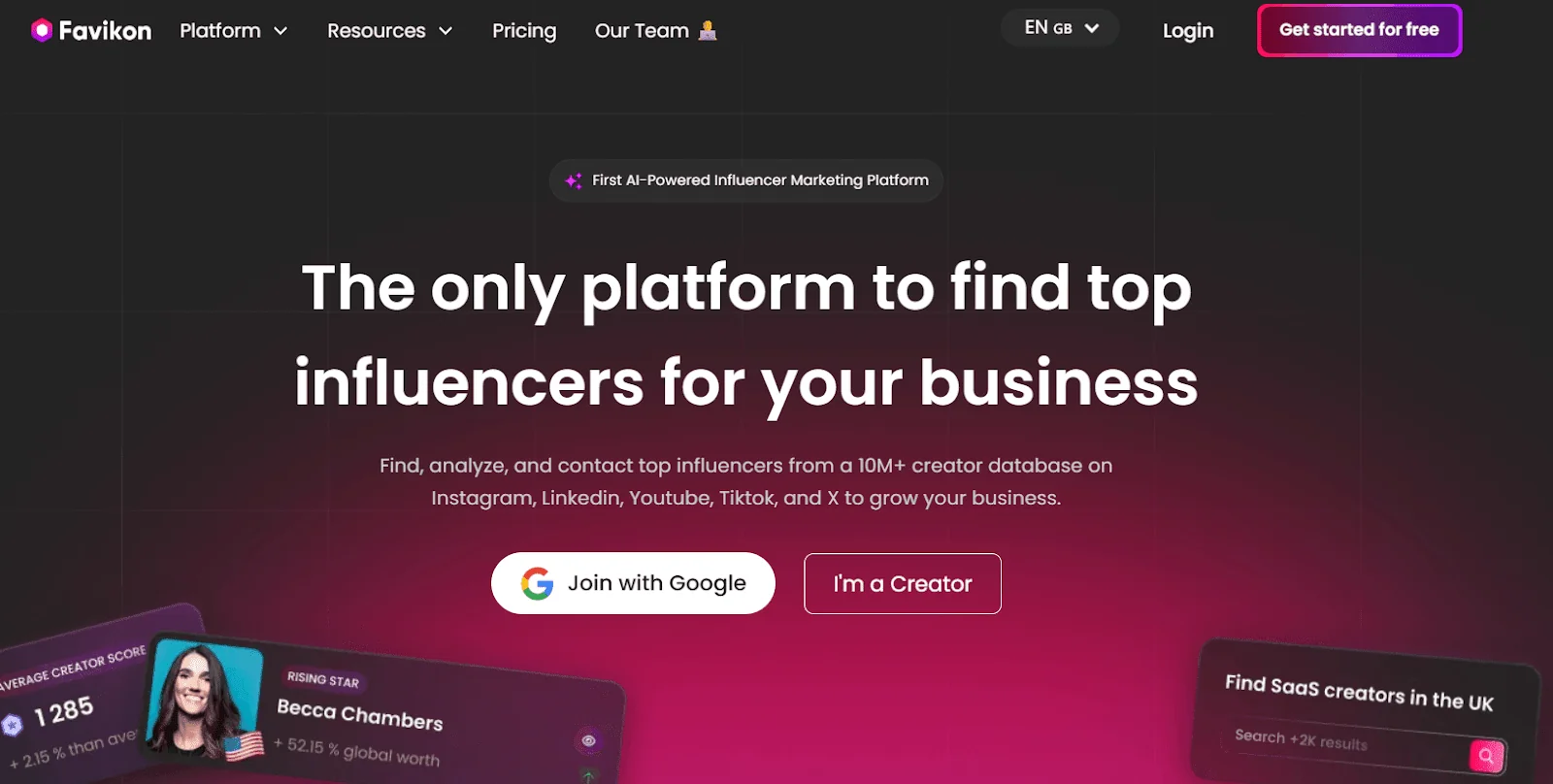
Favikon est une plateforme d'intelligence créateur alimentée par l'IA, conçue pour les marques qui souhaitent évaluer les influenceurs sur l'authenticité, l'autorité de niche et l'adéquation à la marque avant de prendre contact. Elle se distingue par sa couverture des créateurs B2B et LinkedIn, un segment que la plupart des outils d'évaluation ignorent complètement.
La plateforme associe une base de données de créateurs classée à un scoring d'authenticité et à une surveillance des concurrents, de sorte que les équipes peuvent vérifier la crédibilité de l'audience d'un créateur, son classement dans sa niche et les marques avec lesquelles il a déjà travaillé avant d'engager un budget.
Tarification :
- Starter : $79/mois (facturé annuellement) ou $99/mois mensuels
- Standard : $159/mois (facturé annuellement) ou $199/mois mensuels
- Pro : $449/mois mensuels, devis personnalisé sur facturation annuelle
- Utilisation basée sur des crédits (favicoins) sur tous les forfaits, avec recharges disponibles
Idéal pour : Les marques B2B et les agences évaluant les créateurs LinkedIn, X et multi-plateforme sur l'autorité et l'authenticité
Fonctionnalités Favikon Influencer
- Scoring d'authenticité : Signale les faux abonnés et l'engagement gonflé afin que vous puissiez filtrer les profils de faible qualité avant de prendre contact
- Classements des créateurs : Classe les créateurs par niche, pays, réseau et qualité d'engagement pour déterminer qui dirige réellement une catégorie
- Analyse d'audience et de profil : Ventile les données d'audience, les tendances de croissance et les performances du contenu par créateur
- Filtres B2B et LinkedIn : Filtres Top Voice et titre de poste pour évaluer les créateurs professionnels, ce que presque aucun autre outil n'offre
- Radar (Surveillance des concurrents) : Montre les créateurs avec lesquels vos concurrents travaillent et le contenu qu'ils produisent
- IA et Recherche Magique : Invites en langage naturel et découverte de lookalikes pour créer des listes restreintes sans empiler les filtres
Autres fonctionnalités remarquables
Favikon inclut également la gestion de campagnes, l'outreach par e-mail et DM social, le suivi du contenu via mentions et hashtags, et l'intégration GA4. Ceux-ci couvrent les bases, mais la valeur essentielle de la plateforme réside dans la couche intelligence plutôt que dans l'exécution de campagnes.
Avantages et inconvénients
Nos Insights
Favikon est le choix évident si vos besoins de vérification vont au-delà d'Instagram et TikTok. Pour les marques B2B cherchant à valider les créateurs LinkedIn ou les leaders d'opinion, la notation d'authenticité et les filtres Top Voice résolvent un problème que la plupart des plateformes ne tentent même pas.
Pour les marques DTC, cela fonctionne mieux comme une couche de découverte et de vérification devant une plateforme opérationnelle plus complète. Le modèle de crédit signifie également que le volume de vérification élevé augmente les coûts indépendamment du niveau, il est donc judicieux de modéliser l'utilisation avant de s'engager.
3. Impact.com

Impact.com est un leader mondial dans l'économie des partenariats, conçu pour la gestion d'affiliation sophistiquée au niveau entreprise sur les influenceurs des réseaux sociaux, les sites d'actualités et les applications mobiles.
Idéal pour : Les entreprises mondiales nécessitant une attribution multi-touch sophistiquée et une gestion de types de partenaires diversifiés.
Couverture de plateforme : Web, applications mobiles et tous les principaux réseaux sociaux.
Tarification : Variable selon le volume de partenaires et le chiffre d'affaires.
Avis : 4,5 / 5,0 (Capterra).
Facilité d'utilisation
La plateforme est conçue pour les responsables de marketing de performance et est riche en données. Bien que le tableau de bord soit loué pour sa clarté une fois maîtrisé, il a une courbe d'apprentissage abrupte. La complexité provient de ses rapports granulaires et de ses capacités de paramétrage hautement spécifiques, qui peuvent être accablantes pour les équipes habituées à des outils de médias sociaux plus simples.
Support client
Impact fournit un réseau de support mondial avec un système basé sur les tickets résolvant généralement les problèmes dans les 24 à 48 heures. Les utilisateurs d'entreprise bénéficient d'un accès à une documentation technique complète et à des équipes spécialisées pour faciliter les intégrations API et les configurations de paiement complexes.
Fonctionnalités phares
- Règles de commission hybrides : Déclencheurs de paiement hautement spécifiques qui récompensent les créateurs pour leur participation à tout point de l'entonnoir de conversion.
- Suivi multi-appareils : Utilise la technologie « TrueLink » pour suivre le trafic sur les appareils tout en ignorant les limitations des cookies.
- Découverte native IA : Identifie les partenaires influençant les recommandations de marque dans les LLM et les moteurs de recherche IA.
Avantages et inconvénients
Avantages
- Précision de suivi inégalée : Données hautement fiables pour calculer le ROAS sur les parcours clients complexes.
- Scalabilité mondiale : Gère les exigences fiscales et monétaires mondiales sans problème.
Inconvénients
- Complexité d'entreprise : Conçue pour les opérations à grande échelle gérant plus de 100 milliards de dollars de données, ce qui peut être excessif pour les petites marques.
- Configuration sophistiquée : Les « Règles de commission hybrides » hautement spécifiques nécessitent une compréhension plus approfondie de l'entonnoir de conversion.
Nos Insights
C'est le choix idéal pour les marques ayant besoin d'approches de paiement sophistiquées pour des réseaux de partenariats mondiaux complexes.
4. Aspire
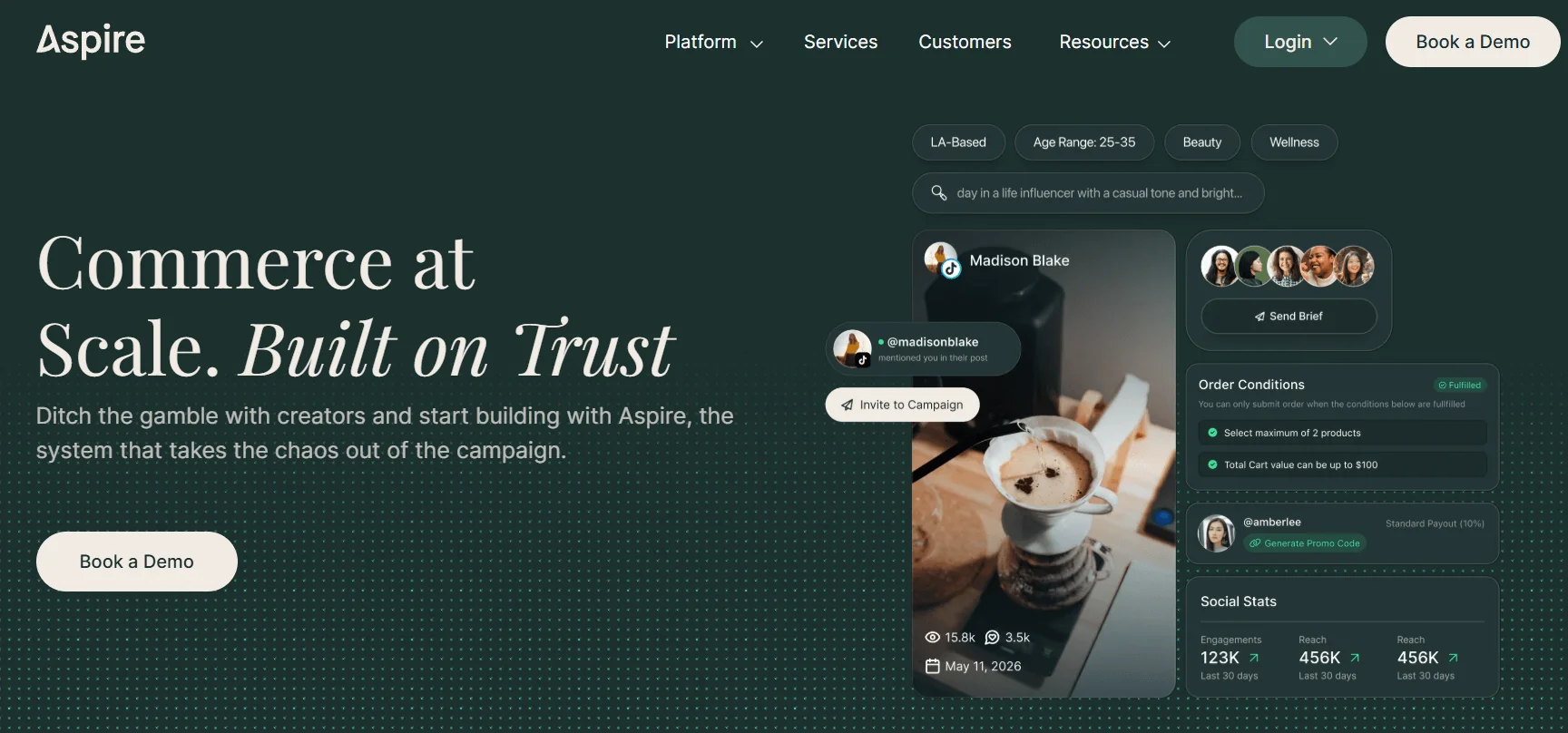
Aspire est conçu pour les marques cherchant à constituer d'importantes flottes d'ambassadeurs de marque de haute qualité, en mettant fortement l'accent sur le côté créatif des partenariats.
Idéal pour : Les marques qui considèrent le Contenu Généré par les Utilisateurs (CGU) comme un atout principal de leur entonnoir marketing.
Couverture des plateformes : Instagram, TikTok, YouTube, Pinterest.
Tarification : Plans personnalisés (généralement de moyenne à grande entreprise).
Avis : 4,6 / 5,0 (G2).
Facilité d'utilisation
Aspire est réputée pour son intuitivité exceptionnelle pour les équipes créatives. La plateforme centralise la communication, le suivi du budget et l'approbation du contenu dans un flux de travail rationalisé. Son intégration Shopify est souvent soulignée comme un « sauveur » pour gérer les commandes de produits et le suivi des ventes dans la même interface.
Support client
La plateforme offre une expérience d'assistance « exceptionnelle », incluant du conseil stratégique et un onboarding white-glove. Les membres de l'équipe dédiée restent souvent impliqués pour garantir que les marques atteignent des objectifs spécifiques, bien que certains utilisateurs aient noté des défis lors de la résolution de litiges de facturation ou de contrat.
Fonctionnalités distinctives
- Gestion des droits d'auteur : Intègre automatiquement les droits d'utilisation dans les contrats des créateurs pour un déploiement immédiat du budget publicitaire.
- Marketplace de créateurs : Permet aux influenceurs qualifiés de postuler directement aux appels d'offres de campagne publiés par les marques.
- Outils d'activation IRL : Flux de travail conçus pour gérer les événements influenceurs en personne et les pop-ups.
Avantages et inconvénients
Avantages
- Excellence en CGU : Outils de première classe pour sourcer et organiser du contenu créateur de haute qualité.
- Construction de communauté : Fort accent sur la création de programmes d'ambassadeurs à long terme.
Inconvénients
- Focalisation sur un atout spécifique : Conçue principalement pour les marques qui privilégient le Contenu Généré par les Utilisateurs haut de gamme comme atout marketing principal.
- Orientation vers le côté créatif : Peut offrir moins de focus sur le suivi d'affiliation pur comparé aux outils de suivi plus spécialisés.
Nos insights
Aspire comble le fossé entre la création de contenu et le commerce en rationalisant la transformation des publications organiques en publicités payantes.
5. CreatorIQ
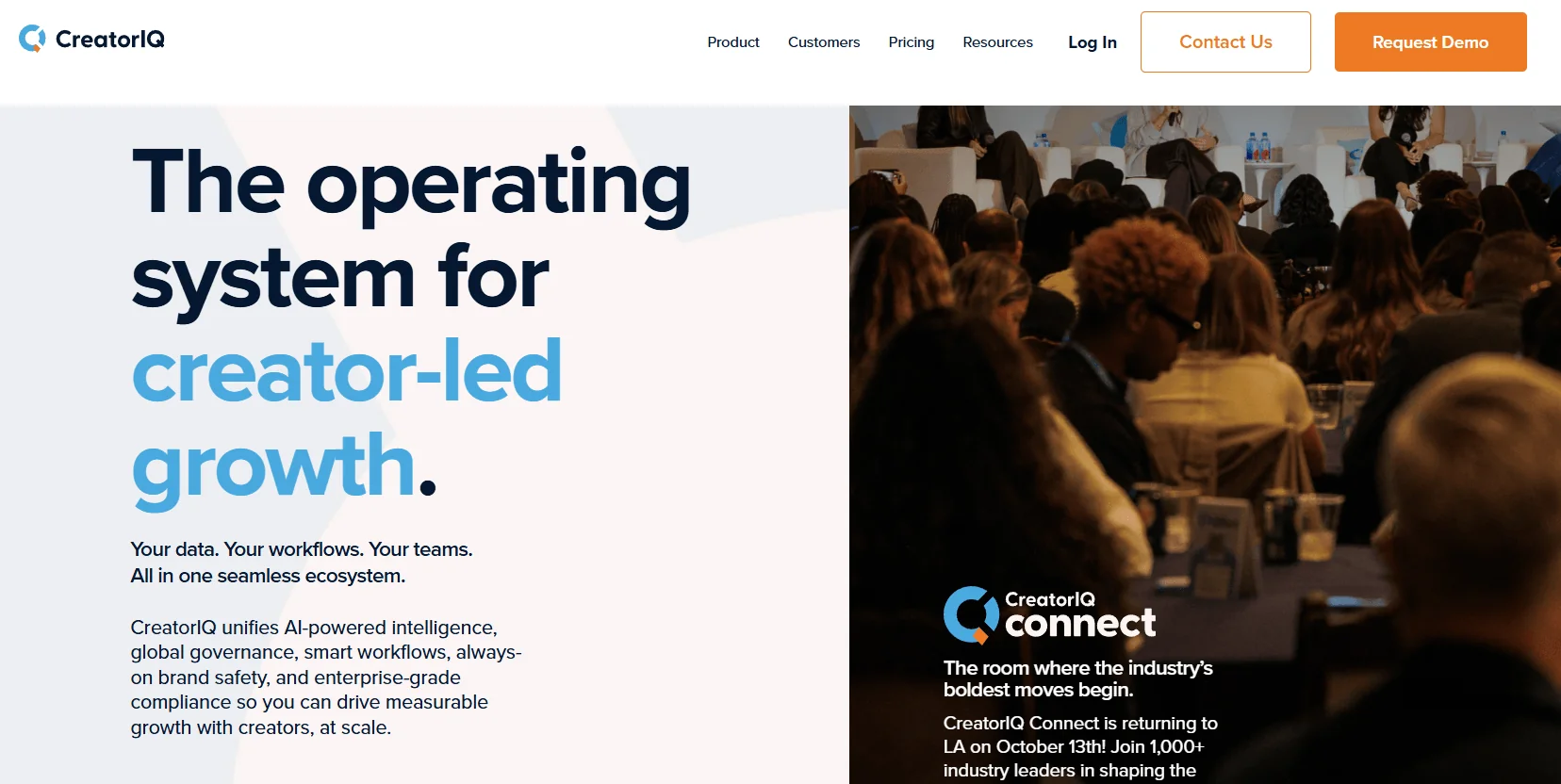
CreatorIQ est la plateforme préférée des grandes agences et des sociétés mondiales. Elle offre des outils avancés d'intégrité des données pour combattre la fraude et l'engagement artificiel.
Idéal pour : Les sociétés mondiales et les grandes agences ayant besoin de sécurité de marque avancée et de gestion de fournisseurs complexe.
Couverture des plateformes : Toutes les grandes plateformes sociales + accès API approfondi.
Tarification : Contrats annuels de niveau entreprise.
Avis : 4,7 / 5,0 (Capterra).
Facilité d'utilisation
En tant qu'outil « de niveau professionnel », il est conçu pour les utilisateurs avancés. Il offre des niveaux élevés de personnalisation et de paramètres de permissions pour les grandes équipes, mais cela entraîne un seuil technique élevé. Les utilisateurs décrivent les fonctionnalités comme incroyables mais avertissent que le côté gestion des données peut être dense.
Support client
CreatorIQ fournit un support entreprise haut de gamme, incluant des gestionnaires de compte technique dédiés. Les critiques décrivent fréquemment l'expérience client comme « impressionnante », avec des équipes d'assistance bien versées dans les besoins des agences mondiales et de la conformité à grande échelle.
Fonctionnalités distinctives
- SafeIQ Brand Safety : Utilise l'IA pour analyser l'historique et le contenu des créateurs pour détecter les violations de sécurité de marque.
- Enterprise Payout Engine : Spécifiquement conçu pour naviguer dans la bureaucratie des entreprises et les configurations de fournisseurs complexes pour des paiements de créateurs rapides.
- CreatorIQ Recruit : Identifie les créateurs « professionnels » avec un historique prouvé de génération de ROI.
Avantages et inconvénients
Avantages
- Sécurité entreprise : Hautement sécurisée et conforme aux normes mondiales des entreprises.
- Analyses de données approfondies : Rapports complets sur la fraude des créateurs et la qualité de l'audience.
Inconvénients
- Courbe d'apprentissage abrupte : La plateforme est hautement technique et nécessite un onboarding important.
Nos insights
Sa sophistication technique en fait un partenaire de confiance pour les plus grandes marques du monde, particulièrement pour gérer la conformité financière complexe.
6. Influencity
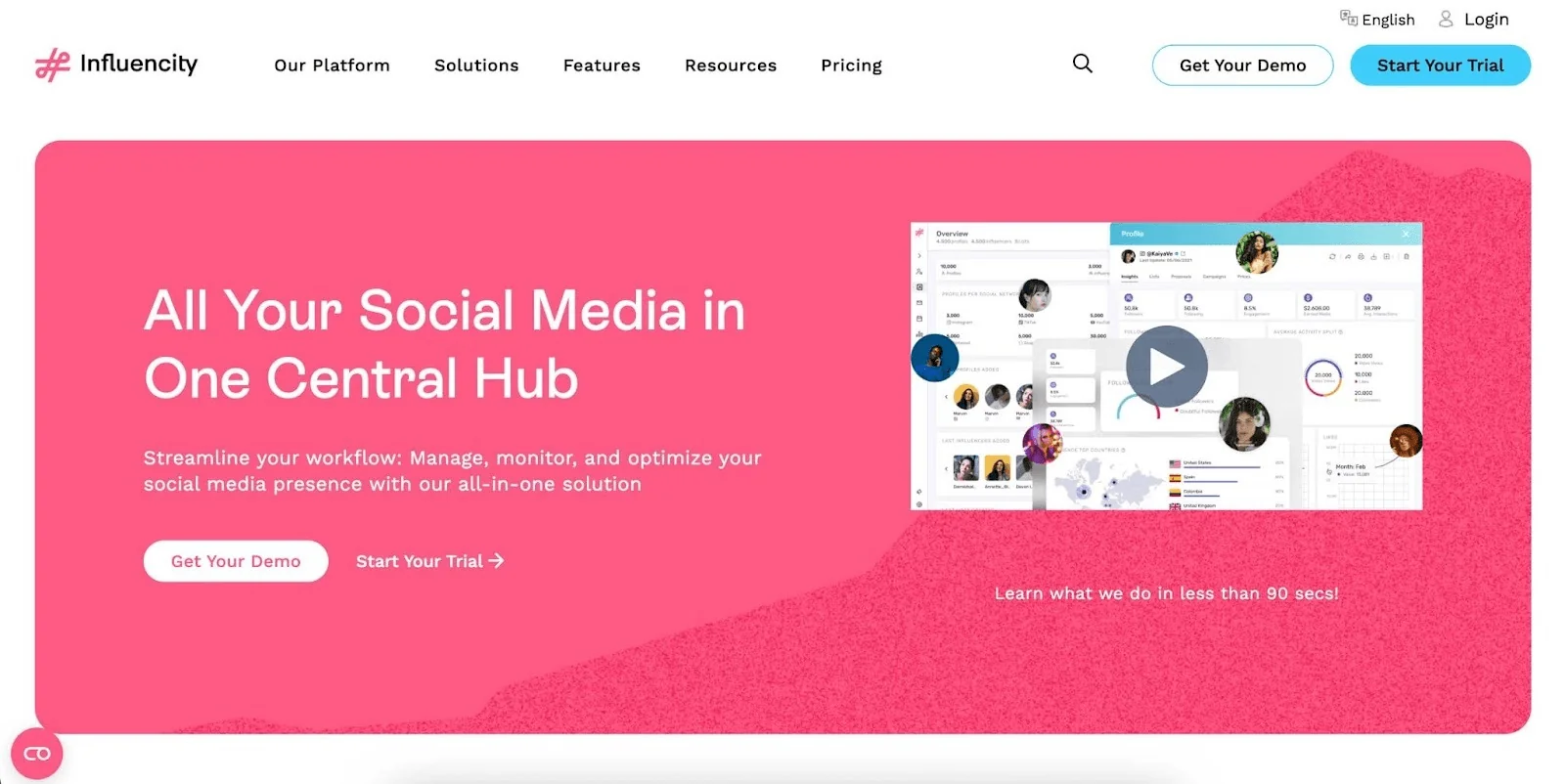
Influencity est une plateforme de découverte et d'analyse construite autour d'une base de données de plus de 200M créateurs, avec un fort accent sur la qualité de l'audience avant même le lancement d'une campagne. C'est un choix courant pour les marques de taille moyenne et les agences qui souhaitent des données approfondies au niveau du profil sans le tarif de niveau entreprise.
Sa force de vérification se situe en amont de l'entonnoir de conversion : chaque profil bénéficie d'une notation de la qualité du public, d'une détection des faux abonnés et d'une analyse de chevauchement, permettant aux équipes de confirmer que le public du créateur est réel et pas déjà saturé par d'autres sélections de la liste courte.
Tarification :
- Basic : $168/mois (ou $134/mois facturé annuellement)
- Professional : $348/mois (ou $278/mois facturé annuellement)
- Business : $698/mois (ou $558/mois facturé annuellement)
- Enterprise : Sur mesure, avec option de bundle personnalisé
Idéal pour : Les marques de taille moyenne et les agences qui ont besoin d'analyses approfondies du public sur Instagram, TikTok, YouTube et Twitch
Fonctionnalités Influencity pour Influenceurs
- Notation de la Qualité du Public : Évalue la crédibilité des abonnés et signale les comptes suspects lors de chaque analyse de profil
- Détection des Faux Abonnés : Identifie les bots et abonnés inactifs pour distinguer la portée réelle des chiffres gonflés
- Analyse de Chevauchement du Public : Compare les audiences entre créateurs pour éviter de payer deux fois pour atteindre les mêmes personnes
- Plus de 50 Filtres de Découverte : Filtrez par démographie du public, taux d'engagement, géolocalisation, affinité de marque et sujets de contenu
- Benchmarks d'Engagement : Compare les performances d'un créateur par rapport aux profils similaires de sa catégorie
- Assistant IA : Décrivez le créateur que vous recherchez en langage naturel et recevez une liste courte vérifiée
Autres Fonctionnalités Remarquables
Influencity intègre également un module IRM (gestion des relations avec les influenceurs) avec historique des prix, un gestionnaire de campagne avec workflows, et un hub social avec outils de programmation et de suivi. C'est une gamme d'outils plus large que la plupart des plateformes de découverte, bien que les fonctionnalités opérationnelles soient moins développées que l'analytique.
Avantages et Inconvénients
Nos Insights
Influencity offre une profondeur analytique sérieuse à un prix pour le marché intermédiaire. Si votre principal goulot d'étranglement est de trouver et valider des créateurs, la notation de la qualité du public et l'analyse de chevauchement figurent parmi les fonctionnalités de vérification les plus utiles dans cette gamme de prix.
Le problème, c'est le plan Basic, où la limite de 30 analyses rend la vérification réelle impraticable, donc budgétisez pour Professional dès le départ. Et une fois que vous avez dépassé la découverte et passé à la prospection, aux cadeaux et au suivi d'affiliation à grande échelle, vous aurez besoin d'une plateforme conçue pour l'exécution plutôt que pour l'analyse.
7. Upfluence
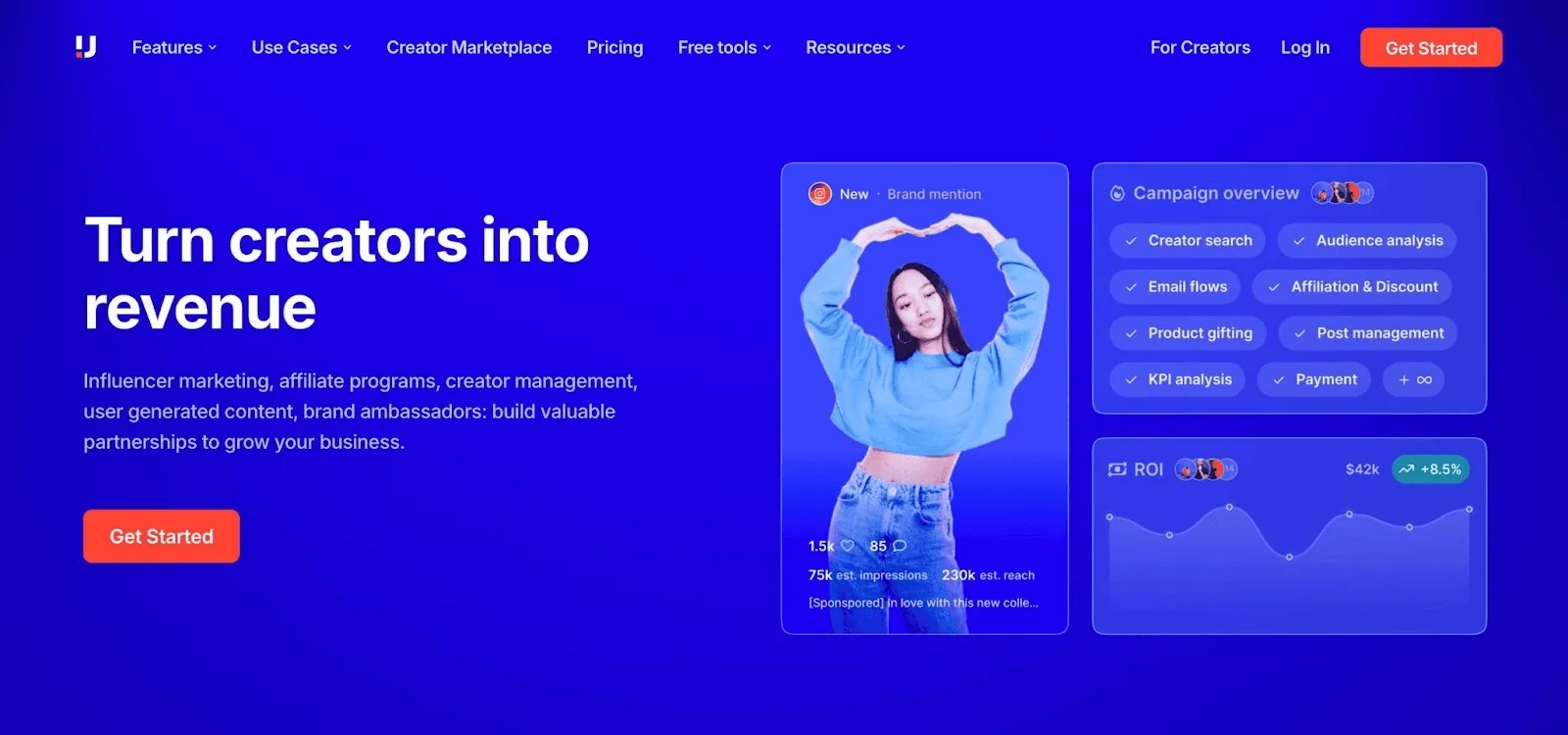
Upfluence se spécialise dans la technologie « Live Capture », identifiant lesquels des clients réels d'une marque ont une forte influence sociale pendant qu'ils achètent.
Idéal pour : Les marques eCommerce qui cherchent à transformer leur base de clients existante en authentiques défenseurs de la marque.
Couverture des Plateformes : Instagram, TikTok, YouTube, Twitch, Twitter.
Tarification : Sur mesure selon le volume.
Avis : 4.4 / 5.0 (Capterra).
Facilité d'Utilisation
L'interface est décrite comme « complète et conviviale », particulièrement pour rechercher et filtrer les influenceurs. Le système d'approbation/refus de style « tinder » pour valider les créateurs rend le processus de sélection efficace. Cependant, certains utilisateurs trouvent l'automatisation des emails et la configuration des campagnes un peu maladroites comparées aux designs d'interface plus récents.
Support Client
Upfluence reçoit des avis mitigés sur le support ; tandis que de nombreux utilisateurs louent leur « excellent service client » et leur volonté de discuter pour expliquer les fonctionnalités, d'autres ont critiqué la communication lors du processus de renouvellement de contrat.
Fonctionnalités Remarquables
- Identification Client-vers-Influenceur : Synchronise les données d'e-commerce pour trouver et inviter les clients influents à rejoindre des programmes d'affiliation.
- Intégration Amazon Attribution : Permet aux vendeurs Amazon de suivre les conversions générées par les influenceurs sur les fiches produits Amazon.
- Outils Commerce Social : Intégrations natives avec Shopify, WooCommerce et BigCommerce.
Avantages et Inconvénients
Avantages
- Authenticité : Mobilise des influenceurs qui connaissent et adorent déjà vos produits.
- Support Niche : Excellent pour les marques axées sur les vitrines Amazon.
Inconvénients
- Interface Héritée : Certains utilisateurs trouvent l'interface moins moderne que celle des concurrents plus récents.
- Engagement Annuel Obligatoire : Pas de flexibilité mensuelle.
Notre Analyse
En transformant les acheteurs réels en affiliés, Upfluence crée des partenariats hautement authentiques qui aboutissent généralement à des taux de conversion plus élevés.
8. LTK
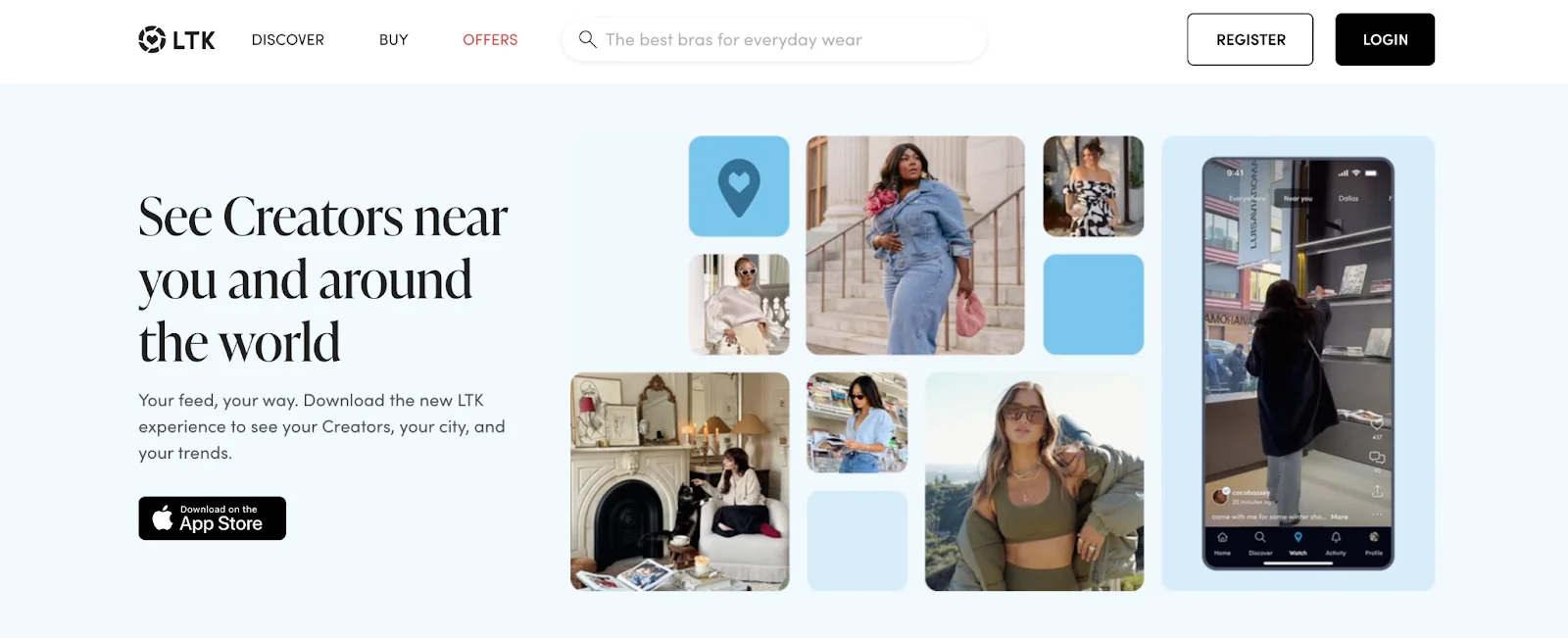
LTK fonctionne comme un écosystème fermé, offrant un accès direct aux acheteurs qui utilisent l'application LTK spécifiquement pour acheter les produits recommandés par les créateurs.
Idéal pour : Les marques de mode et beauté ciblant les acheteurs très motivés.
Couverture Plateforme : Application LTK, Instagram, TikTok.
Tarification : Commission + frais de plateforme.
Avis : 4,6 / 5,0 (G2).
Facilité d'Utilisation
LTK est conçu pour la commodité, en particulier pour les influenceurs et les consommateurs. Pour les marques, il est facile à utiliser et s'intègre facilement avec d'autres logiciels pour suivre les commandes directement. Parce qu'il s'agit d'un réseau « sélectionné », une grande partie du travail de découverte est gérée par les normes internes de la plateforme.
Support Client
Le support est décrit comme « très utile », agissant souvent comme une extension de l'équipe marketing de la marque. Ils offrent des informations détaillées sur les données d'achat et les repères de performance pour aider les marques à optimiser leur stratégie créative.
Fonctionnalités Clés
- Fil Vidéo Shoppable : Une expérience de style TikTok optimisée pour les contenus vidéo à forte conversion.
- Paiements par Dépôt Direct : Un système repensé en 2026 pour des paiements aux créateurs plus rapides, directement sur compte bancaire.
- Données Propriétaires de Benchmarking : Accès à des années de données d'achat pour voir quels prix et styles convertissent le mieux.
Avantages et Inconvénients
Avantages
- Conversion Élevée : Accès direct à des millions d'utilisateurs qui sont dans l'application spécifiquement pour faire du shopping.
- Sélection des Créateurs : Chaque créateur sur la plateforme est pré-vérifié pour ses performances.
Inconvénients
- Plateforme Fermée : Vous avez moins de contrôle sur la relation directe en dehors de l'écosystème LTK.
Notre Analyse
LTK est un incontournable pour l'attribution en mode et beauté grâce à son écosystème fermé où les utilisateurs sont déjà dans un état d'esprit d'achat.
9. Shopify Collabs
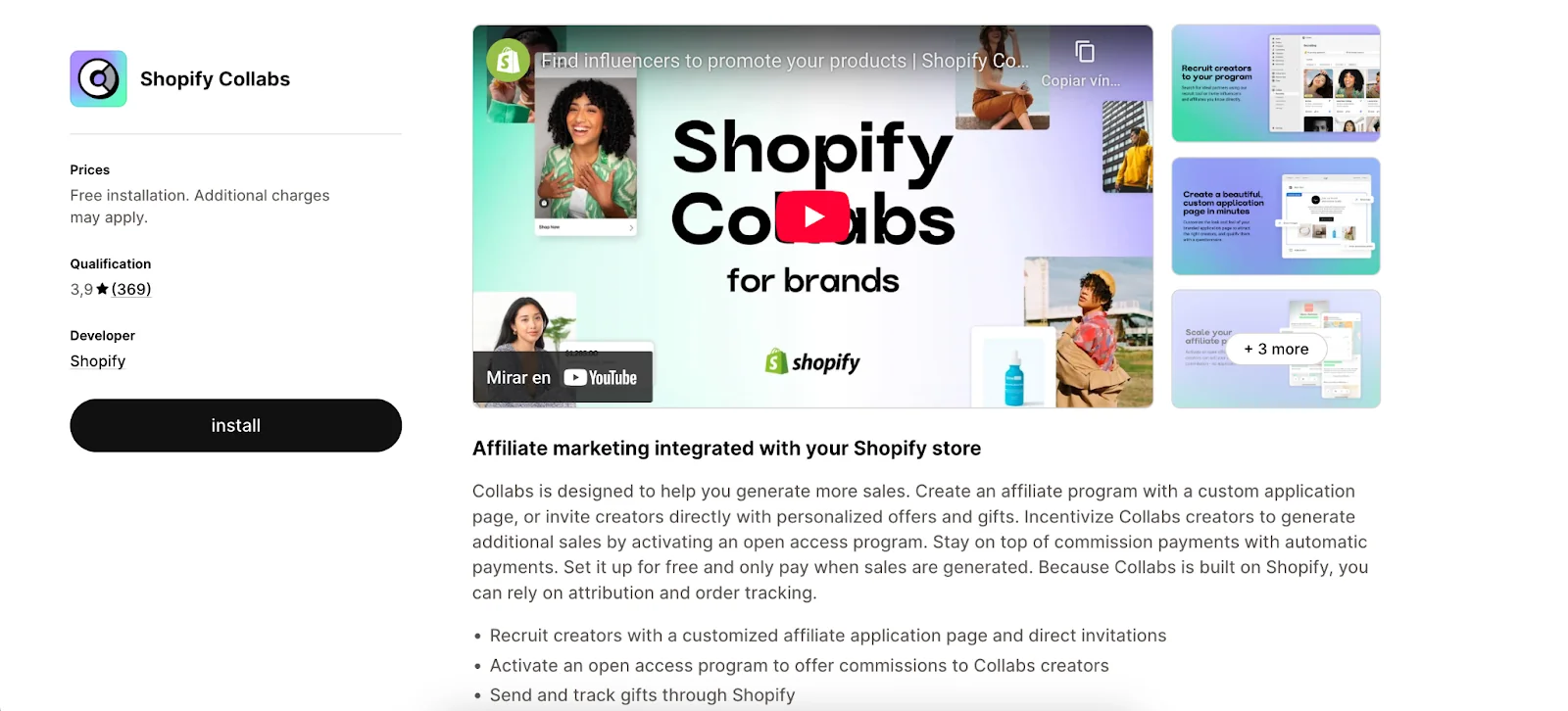
Shopify Collabs est le point d'entrée le plus accessible pour les marques qui commencent, intégré directement au tableau de bord administrateur Shopify.
Idéal pour : Les petites marques et débutants qui veulent une automatisation d'affiliation simple et intégrée sans plateformes externes.
Couverture Plateforme : Instagram, TikTok.
Tarification : Gratuit à installer (Shopify prend un pourcentage des ventes d'affiliation).
Avis : 4,2 / 5,0 (Shopify App Store).
Facilité d'Utilisation
Les utilisateurs décrivent l'interface comme « magnifique » et l'expérience utilisateur comme « intuitive ». Cela élimine le besoin d'entrée de données manuelle en extrayant les données de produits et de ventes directement du magasin Shopify. C'est souvent cité comme l'outil le plus facile à configurer, certaines marques lançant leur programme d'affiliation complet en moins d'une journée.
Support Client
Shopify Collabs est loué pour avoir « le meilleur service client de l'industrie du logiciel », avec des équipes attentives et des vidéos « comment faire » utiles. L'équipe support est connue pour être réactive aux demandes de fonctionnalités, comme l'ajout de capacités de messagerie en masse pour les affiliés.
Fonctionnalités Clés
- Intégration Native du Magasin : Gestion des programmes d'influenceurs, des stocks et des commandes à partir du même tableau de bord que la boutique principale.
- Commissions Spécifiques à un Produit : Permet de définir des taux différents pour des SKU spécifiques afin de protéger les marges.
- Paiements Automatisés : Shopify gère automatiquement les paiements de commission aux créateurs.
Avantages et Inconvénients
Avantages
- Facilité d'accès : Se connecte facilement à votre catalogue de produits et vos commandes existants.
- Rentable : Faible barrière à l'entrée pour les marques testant le marketing d'influence.
Inconvénients
- Ensemble de fonctionnalités basique : Manque des fonctionnalités CRM avancées et des outils de découverte des plateformes haut de gamme.
- Verrouillé à la plateforme : Utile principalement pour les marques déjà opérant sur l'écosystème Shopify.
Notre analyse
C'est l'outil d'entrée de gamme ultime car il élimine la courbe d'apprentissage des plateformes tierces pour les utilisateurs Shopify existants.
10. Refersion
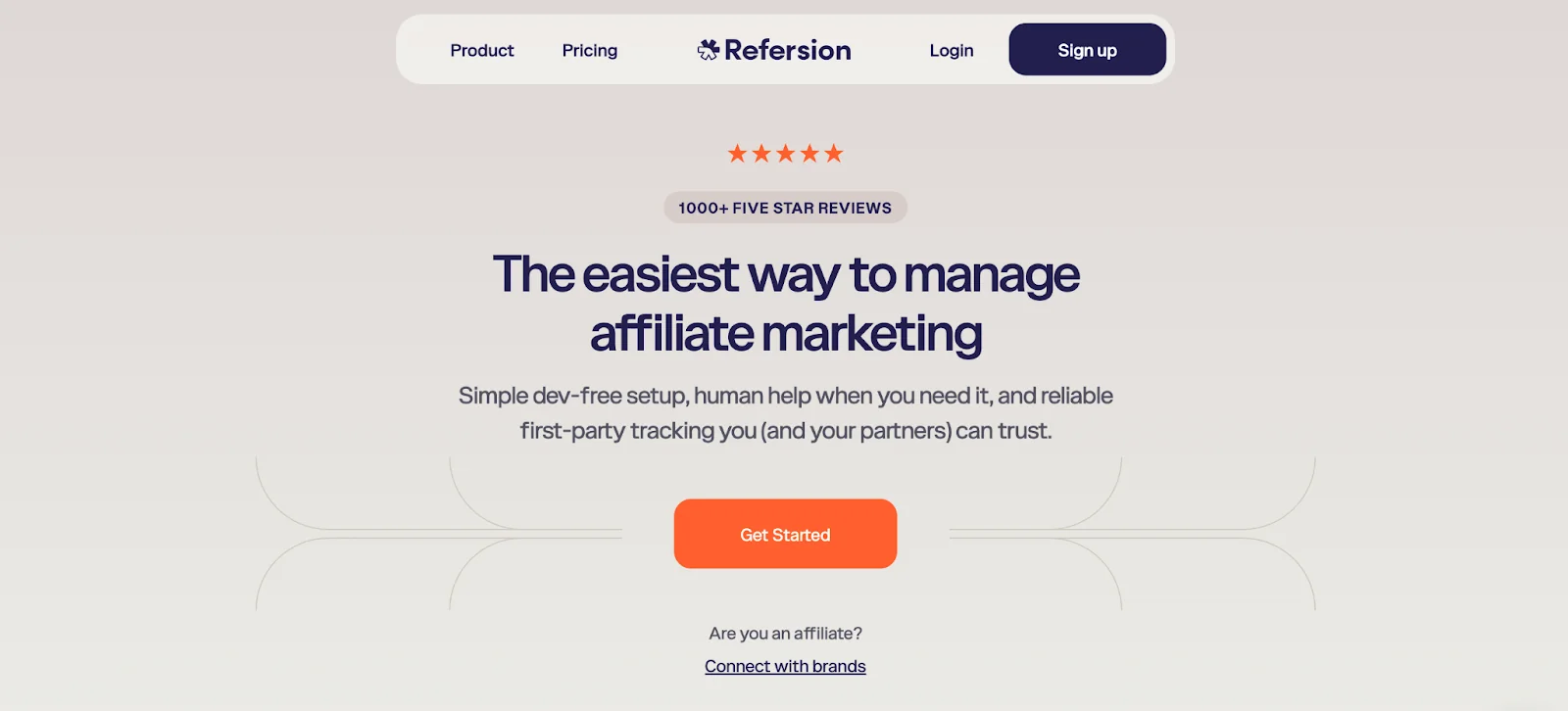
Refersion est un outil incontournable pour le suivi d'affiliation pur, privilégiant la précision et les structures de commissions complexes aux fonctionnalités CRM spectaculaires.
Idéal pour : Les équipes finance et marketing exigeant un suivi 100 % précis et une conformité fiscale automatisée.
Couverture des plateformes : Web (fonctionne avec n'importe quelle plateforme sociale).
Tarification : À partir d'environ $249/mois.
Avis : 4,7 / 5,0 (Shopify App Store).
Facilité d'utilisation
Refersion met l'accent sur la simplicité et une configuration « sans développeur ». Bien que ce ne soit pas aussi visuellement accrocheur que les outils de découverte d'influenceurs, son interface directe rend la gestion de milliers de liens d'affiliation et de commissions très efficace pour les équipes administratives.
Support client
L'équipe de support est décrite comme « incroyable » et prête à aller « au-delà de ses attentes ». Ils offrent un onboarding white-glove, des canaux Slack dédiés pour les forfaits premium et un support chat rapide pour garantir que le suivi est toujours 100 % précis.
Fonctionnalités distinctives
- Domaine de suivi propriétaire : Évite les lacunes de données dues à la technologie de blocage des cookies pour assurer un suivi de conversion précis.
- Formulaires fiscaux automatisés : Collecte automatiquement les formulaires W-9 et génère les formulaires 1099 pour les créateurs.
- Canal post-achat : Encourage les clients à s'inscrire en tant qu'affiliés immédiatement après un achat sur votre site.
Avantages et inconvénients
Avantages
- Fiabilité : L'étalon-or pour l'attribution de ventes précise et le suivi des liens.
- Conformité : Élimine les tracas des rapports financiers et de la fiscalité.
Inconvénients
- Accent fonctionnel : N'offre pas de moteur de découverte de créateurs ou d'outils de messagerie.
Notre analyse
Refersion excelle dans la gestion administrative du marketing d'affiliation, ce qui en fait un favori pour les équipes finance préoccupées par la conformité réglementaire.
Réflexions finales
En 2026, les marques qui gagnent ne sont pas celles avec les budgets les plus importants, mais celles avec les systèmes les plus efficaces. Passer outre les workflows manuels est désormais une nécessité. En implémentant un outil comme Influencer Hero, vous rachetez essentiellement du temps, permettant à votre équipe de se concentrer sur la stratégie créative tandis que le logiciel gère les tâches lourdes de suivi et de paiements mondiaux.
Que vous soyez une petite boutique ou une entreprise mondiale, choisir un outil qui automatise la logistique « ennuyeuse » garantit que vos créateurs restent heureux et que votre ROI reste clair. Investissez dans votre tech stack dès maintenant pour assurer que votre marque reste compétitive dans une économie des créateurs de plus en plus automatisée.
Réservez une démo auprès d'Influencer Hero pour découvrir comment vous pouvez automatiser vos versements et augmenter votre chiffre d'affaires d'affiliation facilement.
Summary
This is some text inside of a div block.
This is some text inside of a div block.
Pricing/Month
Shopify Reviews
This is some text inside of a div block.
This is some text inside of a div block.
This is some text inside of a div block.
This is some text inside of a div block.
This is some text inside of a div block.
This is some text inside of a div block.
This is some text inside of a div block.
This is some text inside of a div block.
This is some text inside of a div block.
This is some text inside of a div block.
This is some text inside of a div block.
This is some text inside of a div block.
This is some text inside of a div block.
This is some text inside of a div block.
This is some text inside of a div block.
This is some text inside of a div block.
This is some text inside of a div block.
This is some text inside of a div block.
This is some text inside of a div block.
This is some text inside of a div block.
This is some text inside of a div block.
Read More

FAQs
Comment puis-je gérer les impôts et la conformité mondiale pour mes créateurs ?

En 2026, la plupart des marques utilisent leur plateforme de gestion, comme Influencer Hero, pour suivre les revenus, puis synchronisent ces données avec un processeur de paiement afin de gérer les déclarations 1099-NEC réelles et les exigences en matière de TVA. Cette approche en deux étapes garantit que vos données marketing et votre conformité financière sont toujours synchronisées.
Puis-je suivre les ventes si un influencer n'utilise pas de lien ?
Oui. Les plateformes modernes utilisent le « suivi des codes de coupon » pour attribuer les ventes même lorsqu'un lien n'est pas cliqué. Influencer Hero et des outils similaires se synchronisent directement avec votre magasin pour suivre ces codes, offrant une solution de secours pour des plateformes comme Instagram où les liens sont moins omniprésents.
Quel est le meilleur moyen de rémunérer les influenceurs dans différents pays ?
La méthode la plus efficace consiste à utiliser une plateforme qui prend en charge les paiements mondiaux en « un clic ». Bien qu'Influencer Hero calcule la commission gagnée par chaque créateur, vous pouvez ensuite déclencher ces paiements via des rails mondiaux intégrés pour éviter les frais élevés et le travail manuel des virements bancaires individuels.
Est-il possible d'automatiser l'envoi de cadeaux produits ?
Absolument. Les plateformes intégrées à votre backend eCommerce vous permettent d'envoyer des « liens cadeaux » où les influenceurs sélectionnent leur propre produit, taille et adresse de livraison. Cet inventaire est ensuite automatiquement synchronisé et suivi comme une dépense marketing.
Comment puis-je prévenir la fraude aux affiliés chez les influenceurs ?
Les plateformes leaders utilisent l'examen basé sur l'IA et l'analyse du chemin de clic pour identifier le trafic « bot » ou les modèles de conversion suspects. En utilisant un outil dédié au lieu d'un système manuel, vous gagnez une couche de sécurité qui signale l'activité frauduleuse avant qu'un paiement ne soit émis.





Most Popular Blogs


Ready to achieve 10X+ ROI?
Schedule a Demo with one of our media experts below.