Les meilleurs fournisseurs d'API de marketing d'influence

March 4, 2026
|
Publié

October 12, 2026
|
Mis à jour

14 Min
|
Lecture

Cours de Marketing de Performance avec Influencers | BON DE RÉDUCTION : IMC100

María Vincenzini
| Author

Générez du ROI avec les Influencers

Base de données mondiale d'influencers
Plateforme TOUT-EN-UN
CRM, Affiliate, UGC & Plus
Meilleurs fournisseurs d'API de marketing d'influence
Lorsque vous développez une plateforme technologique ou une agence en forte croissance, le marketing d'influence devient rapidement un cauchemar logistique de données. Vous devez examiner des milliers de creators, gérer l'envoi de produits à grande échelle et suivre les données de conversion en temps réel, tout en essayant de maintenir vos systèmes internes en synchronisation.
Pour la plupart des responsables de produits et des fondateurs d'agences, le goulot d'étranglement n'est pas un manque de talent ; c'est le changement manuel de plateformes qui tue l'efficacité. C'est pourquoi de plus en plus d'équipes s'éloignent des tableaux de bord fermés et se tournent vers les fournisseurs d'API de marketing d'influence.
Au lieu de vous connecter à cinq outils différents pour vérifier un nombre d'abonnés ou un statut d'expédition, une API vous permet d'extraire les métriques des creators, les données démographiques de l'audience et les données de ROI directement dans votre propre pile technologique. Que vous construisiez un moteur de découverte personnalisé ou automatisiez un flux de paiement pour les influencers, la bonne API agit comme le « tissu conjonctif » qui vous permet de croître sans ajouter de personnel.
Ce guide détaille les meilleures solutions techniques pour 2026, évaluées selon leur profondeur de données, leurs limites de débit et leur flexibilité programmatique.
Les meilleurs fournisseurs d'API de marketing d'influence pour 2026 :
Comment nous avons évalué les fournisseurs d'API de marketing d'influence
Pour créer cette liste, nous avons dépassé les évaluations standard UI/UX. Au lieu de cela, nous avons évalué les plateformes en fonction de leur maturité d'API et de leur capacité à servir de couche de données fiable pour les piles technologiques externes, les CRM personnalisés et les flux de travail basés sur l'IA.
Les critères se sont concentrés sur les piliers techniques suivants :
- Variété des points de terminaison et profondeur des données : Nous avons privilégié les fournisseurs qui offrent plus que de simples décomptes d'abonnés. Nous avons recherché des données démographiques approfondies de l'audience, la détection de fraude (analyse de robots) et des points de terminaison « exploitables » comme l'envoi automatisé de produits, l'enrichissement d'e-mails et le suivi des conversions en temps réel.
- Infrastructure et fiabilité (RPS/RPM) : Un facteur critique pour les fournisseurs technologiques. Nous avons évalué les requêtes par seconde (RPS) par défaut et si le fournisseur autorise des limites « empilables » pour gérer la synchronisation des données à grand volume sans latence ni erreurs « 429 Trop de requêtes ».
- Authentification et expérience des développeurs (DX) : Avec quelle facilité pouvez-vous commencer ? Nous avons recherché une [documentation d'API publique] bien documentée, une authentification standardisée (clés API ou OAuth 2.0) et la disponibilité d'environnements bac à sable pour les tests.
- Scalabilité de l'intégration : Au-delà des plateformes sociales natives, nous avons vérifié la compatibilité de ces API avec le reste de la pile technologique, en particulier leur capacité à combler le fossé entre les identifiants sociaux et les plateformes de commerce électronique comme Shopify ou les outils de BI internes comme Tableau, BlazeSQL et Looker.
- Fraîcheur des données et support des webhooks : Pour les agences et les plateformes, les données obsolètes sont un problème majeur. Nous avons évalué la fréquence d'actualisation des métriques de profil et si l'API prend en charge les webhooks pour « pousser » les données (comme un nouveau message ou une mention de story) directement vers votre serveur en temps réel.
- Efficacité des coûts et flexibilité des quotas : Nous avons analysé la façon dont les prix évoluent avec l'utilisation. Spécifiquement, nous avons recherché les crédits « reportés » et la tarification transparente par appel qui permet aux fournisseurs technologiques de maintenir des marges saines à mesure qu'ils développent leurs propres produits.
Meilleurs fournisseurs d'API de marketing d'influence + Tableau
Choisir le bon fournisseur d'API signifie trouver un équilibre entre la profondeur des données et la facilité opérationnelle. Bien que certaines plateformes se concentrent purement sur les métriques sociales brutes, d'autres sont conçues pour gérer l'ensemble du cycle de vie d'un programme de creators, y compris le « dernier kilomètre » crucial de l'attribution du commerce électronique.
Le tableau suivant fournit une comparaison haut niveau des meilleurs fournisseurs d'API de marketing d'influence pour vous aider à identifier la solution qui correspond le mieux à vos exigences techniques et commerciales.
| Plateforme | Idéal pour | Différenciateur clé |
|---|---|---|
| Influencer Hero | Automatisation de l'e-commerce et du CRM | La couche opérationnelle : fournit des points de terminaison pour les actions—déclencher les envois Shopify, mapper les e-mails des clients aux influencers et automatiser l'attribution du ROI. |
| Influencers.club | Données brutes et enrichissement des creators | L'infrastructure de données : enrichissement à grande échelle par e-mail ou pseudo avec des nœuds natifs uniques pour n8n et Clay pour la création rapide de pipelines de données. |
| Modash | Découverte mondiale à haut volume | Le moteur de recherche : une base de données sans opt-in de plus de 350 millions de profils. Offre un modèle « API double » (Découverte + Données brutes) pour équilibrer la recherche étendue avec le streaming de profils approfondis. |
| HypeAuditor | Vérification d'audience et détection de fraude | La couche de vérification : le « Score de qualité d'audience » (AQS) standard du secteur. Son API excelle dans le signalage programmatique des faux abonnés et des anomalies d'engagement. |
| Phyllo | Données de première partie vérifiées | La passerelle d'identité : utilise OAuth (basé sur le consentement) pour accéder aux données de « vérité fondamentale » comme les vues de stories privées et les gains des creators que les scrapers publics ne peuvent pas voir. |
| CreatorIQ | Rapports en entreprise et white-labeling | La couche de business intelligence : conçue pour l'échelle mondiale avec des capacités white-label sophistiquées, la gouvernance des données multi-marchés et la synchronisation CRM en entreprise. |
1. Influencer Hero
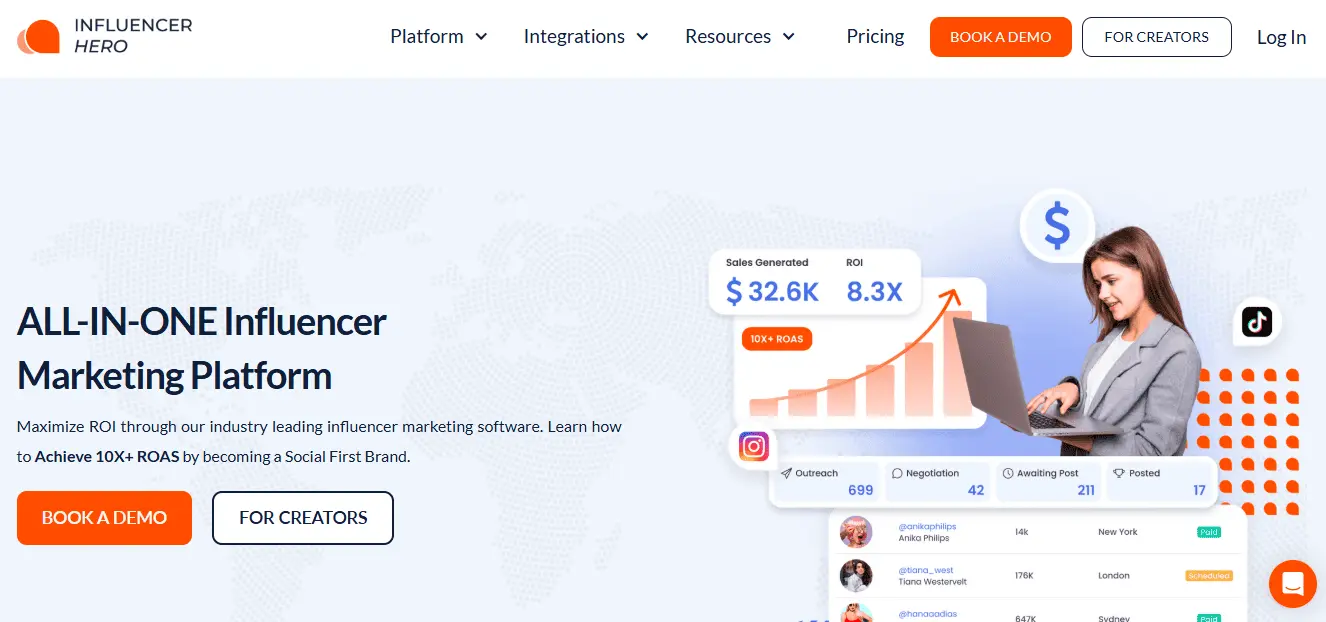
Influencer Hero est un fournisseur d'API complet conçu pour les équipes qui doivent combler le fossé entre les données sociales et les opérations de commerce électronique. Contrairement aux API « découverte seule », il fournit les points de terminaison nécessaires pour gérer l'ensemble du cycle de vie des creators—de l'examen initial aux envois automatisés et au suivi du ROI.
Idéal pour : les fournisseurs de technologies créant des applications Shopify/e-commerce, les agences gérant des campagnes « performance » à haut volume et les équipes produit ayant besoin d'une couche CRM intégrée.
L'avantage technique : l'API offre une architecture de données polyvalente conçue pour les flux de travail des développeurs haute performance. Les caractéristiques clés incluent :
- Découverte programmatique : des points de terminaison robustes pour la recherche et le filtrage haut niveau—vous permettant de faire des requêtes par niche, localisation ou données démographiques du public pour construire des interfaces de recherche personnalisées ou des moteurs de recommandation.
- Accès aux données brutes : La capacité à extraire des métriques de « vérité terrain », y compris les métadonnées de contenu en temps réel, les données démographiques approfondies de l'audience et les données de performance granulaires pour des profils spécifiques.
Spécifications techniques :
- Documentation : Guides interactifs complets fournis aux partenaires et aux utilisateurs.
- Authentification : Intégration simple de clé API.
- Limites de débit (RPS/RPM) :
- 8 RPS (Requêtes par seconde) / 480 RPM standard sur le plan Business.
- Scalabilité : Pour les plateformes à haut volume, vous pouvez empiler des modules 10 RPS supplémentaires pour $1 000/mois.
- Plan Pro : Également disponible pour les prospects spécifiques avec un défaut de 4 RPS.
- Politique de limite de débit : Universelle sur tous les points de terminaison ; aucune politique de rafale n'est actuellement implémentée (débit prévisible).
Structure des coûts et des quotas :
L'API est incluse dans le plan Business, et vous ne payez que pour ce que vous utilisez au-dessus des quotas mensuels par défaut :
- Recherche d'influencers : Les résultats de recherche supplémentaires sont facturés à $1,50 par 100 profils récupérés.
- Enrichissement d'e-mails : L'identification des influencers dans une liste de clients coûte $5 pour 10 000 adresses e-mail vérifiées. Remarque : La facturation est basée sur les adresses analysées, non sur les influencers trouvés.
- Rapports analytiques d'influencers : Les crédits peuvent être achetés en masse. De manière unique, ces crédits en masse sont reportés de mois en mois tant que vous maintenez un plan métier valide, permettant une mise à l'échelle flexible au fil du temps.
Limitations de la plateforme :
Parce que la plateforme offre des intégrations techniques approfondies et une automatisation avancée (comme la synchronisation e-commerce multi-plateforme), la configuration initiale peut nécessiter une surveillance plus importante des développeurs qu'une simple API de scrape de données. Cependant, le support dédié et les canaux Slack privés pour les utilisateurs Business aident à atténuer la courbe d'intégration.
2. Influencers.club
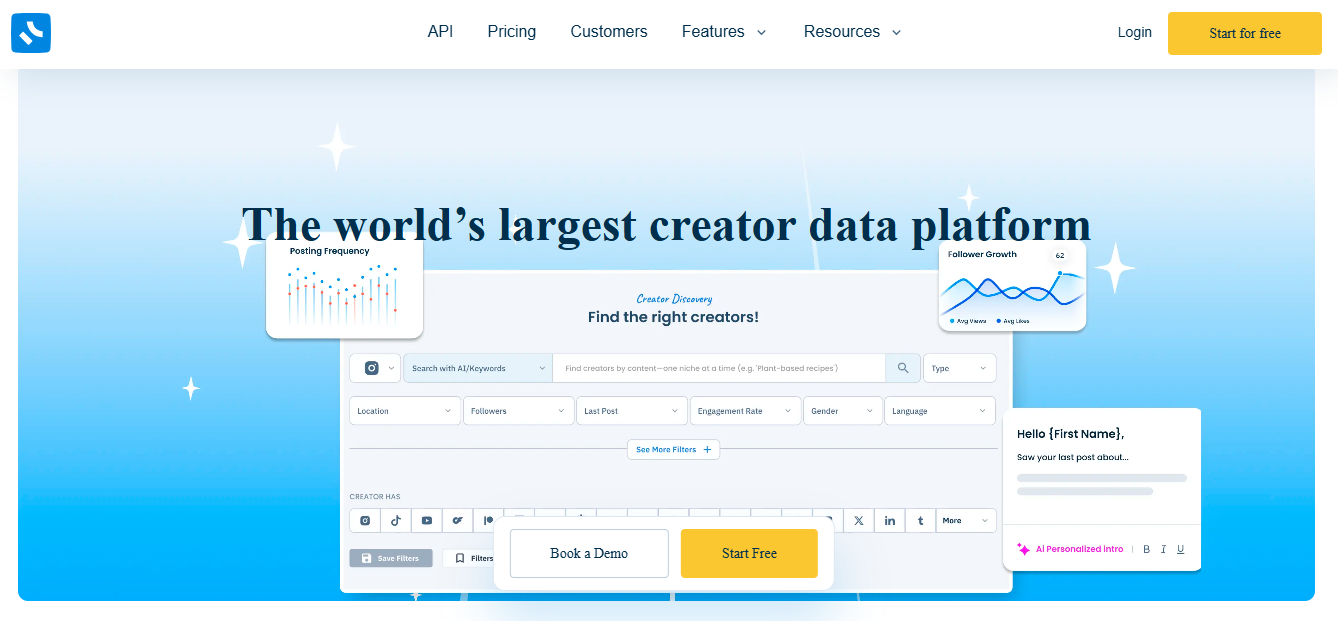
Influencers.club est une plateforme d'intelligence créative construite pour les équipes qui ont besoin d'une infrastructure de données brutes plutôt qu'un tableau de bord géré. Elle est conçue pour les équipes produit, les entreprises d'IA et les agences à grande échelle qui souhaitent construire leurs propres outils ou des flux de prospection automatisés sans les frais supplémentaires d'une suite de campagne complète.
Meilleur ajustement pour : Les entreprises SaaS, les agences axées sur les données et les fournisseurs de technologie qui ont besoin d'un enrichissement créatif à grande échelle et de données de contact validées pour alimenter leurs propres produits internes.
L'avantage technique : Elle excelle dans l'enrichissement créatif. Vous pouvez transmettre une seule adresse e-mail ou une poignée de réseaux sociaux via l'API et recevoir un profil complet du schéma, y compris les données démographiques de l'audience, la présence multi-plateforme et les informations de contact validées.
Spécifications techniques et capacités :
- Enrichissement créatif : Transformez programmatiquement les listes de prospects en profils créatifs détaillés en interrogeant les handles ou les e-mails.
- Découverte avec filtres granulaires : Filtrez les creators par niche, localisation, taux d'engagement et métriques d'audience pour créer programmatiquement des listes précises.
- Recherche de lookalike : Un point de terminaison qui identifie les creators similaires à un ensemble existant, parfait pour mettre à l'échelle les listes de sensibilisation ou trouver des alternatives lorsqu'un creator n'est pas disponible.
- Sans code et à faible code : Propose de manière unique un nœud n8n publié couvrant la découverte, l'enrichissement et les lookalikes. Pour les utilisateurs de Clay, l'API se connecte directement via BYOK (Apportez votre propre clé), ce qui en fait l'API la plus facile de cette liste pour créer des tableaux de prospection lourds en données sans configuration HTTP personnalisée.
Structure des coûts et des quotas :
L'accès à l'API et aux nœuds spécialisés pour n8n et Clay est inclus dans le plan Pro (à partir de $208/mois). La plateforme utilise un système de crédit basé sur les ressources conçu pour les opérations de données à haut volume :
- Appels de l'API de découverte : Les requêtes de recherche de haut niveau ou de découverte de lookalike sont facturées à environ $0,01 de crédits par profil récupéré.
- Enrichissement d'e-mails :Mapper une liste d'e-mails à leur profil social principal coûte 0,01 crédit par e-mail, tandis qu'un enrichissement « Full Advanced » (renvoyant l'ensemble du graphe social multiplateforme) coûte 2,00 crédits par e-mail.
- Enrichissement des poignées : L'extraction des métadonnées brutes des utilisateurs et des messages pour une poignée spécifique coûte 0,03 crédit, tandis qu'un rapport de profil complet (incluant les tendances de croissance et les statistiques) coûte 1,00 crédit.
- Roulement des crédits : Tout comme Influencer Hero, tous les crédits inutilisés sont reportés à la période de facturation suivante. C'est un avantage technique majeur pour les développeurs, garantissant que votre budget n'est jamais « gaspillé » pendant les mois d'utilisation d'API plus faible ou les phases de test.
Limitations de la plateforme :
Influencers.club est une pure couche de données et d'API. Elle n'inclut pas les fonctionnalités CRM intégrées, la séquence de sensibilisation, l'automatisation des cadeaux ou les rapports de performance. C'est un « bloc de construction » — conçu pour être la source de données fiable qui alimente le reste de votre pile personnalisée.
3. Modash
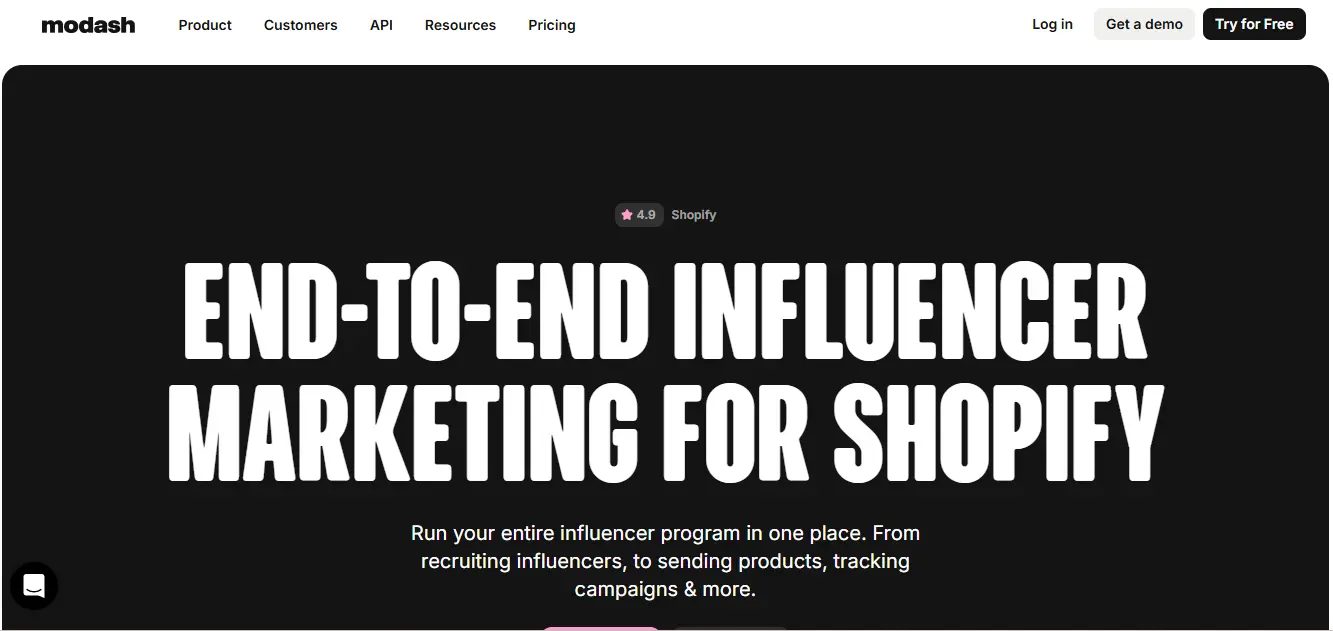
Modash est le « Moteur de recherche » du monde des creators. Il est construit sur une énorme base de données non-opt-in, ce qui signifie qu'il indexe les profils sur le web plutôt que d'attendre que les creators « s'inscrivent ». Cela en fait un premier choix pour les équipes techniques qui ont besoin d'intégrer des fonctionnalités de découverte de haut volume dans leurs propres plateformes.
Meilleur pour : Les plateformes construisant des fonctionnalités « Marketplace » qui nécessitent un énorme réservoir de creators mondiaux (350M+) sur Instagram, TikTok et YouTube.
L'avantage technique : Modash offre une approche modulaire avec une API de découverte pour trouver de nouveaux creators et une API brute pour extraire des données d'audience profondes et non filtrées sur des profils spécifiques.
Spécifications techniques :
- Modules API : Points de terminaison distincts pour la recherche de profils, les démographies d'audience et la détection des fraudes.
- Fraîcheur des données : Leur API « Content Monitoring » suit automatiquement les messages, les Reels et les Stories sans que le creator ait besoin de se connecter ou de s'authentifier.
- Documentation : Documentation conviviale pour les développeurs et interactive qui permet un test rapide des points de terminaison.
Structure des coûts et quotas :
La tarification de l'API Modash est échelonnée selon que vous ayez besoin d'un moteur de découverte ou d'une surveillance en direct. Les deux plans incluent un gestionnaire de compte dédié et un support d'intégration :
- API de découverte (À partir de $16 200/an) : Inclut 3 000 crédits par mois. Les crédits sont consommés en fonction du point de terminaison spécifique :
- Recherche standard : 0,01 crédit par résultat renvoyé.
- Recherche alimentée par l'IA : 0,15 crédit par résultat.
- Rapports complets d'influencers/d'audience : 1,00 crédit par rapport.
- Recherches d'e-mails : 0,02 crédit par correspondance.
- API brute (À partir de $10 000/an) : Inclut 40 000 requêtes par mois. Contrairement à l'API de découverte, l'API brute est facturée par requête plutôt que par crédit, ce qui la rend hautement prévisible pour la surveillance en temps réel et le suivi du contenu.
- Scalabilité : À mesure que votre volume augmente, le coût par crédit/requête diminue (par exemple, aussi bas que $0,45 par crédit de découverte et $0,02 par requête brute), permettant des marges durables à mesure que votre plateforme se développe.
Limitations de la plateforme :
Modash est principalement un moteur de données et de découverte. Bien que la plateforme offre quelques fonctionnalités de gestion de campagnes, l'accès à l'API est strictement pour la récupération de données. Elle n'offre pas d'accès « en écriture » pour l'automatisation des sensibilisations (comme l'envoi d'e-mails via API) ou des déclencheurs de commandes de commerce électronique complexes. De plus, comme elle s'appuie sur le scraping de données publiques, elle ne peut pas fournir les métriques « privées » first-party (comme les clics sur les liens ou les gains) qu'un fournisseur basé sur OAuth comme Phyllo peut.
4. HypeAuditor
HypeAuditor est la principale « Couche de Vérification » du secteur. Tandis que d'autres API se concentrent sur la découverte, l'API HypeAuditor est spécialisée dans l'évaluation des risques et l'authenticité du public. C'est la norme de référence pour détecter programmatiquement les métriques gonflées par les bots.
Idéal pour : Les marques et les agences construisant des outils de « Sécurité de la marque » ou des plateformes de marketing numérique qui ont besoin de vérifier la qualité du public d'un influencer avant de l'approuver pour une campagne.
L'avantage technique : Leur API Audience Quality Score (AQS) vous permet de récupérer une seule métrique pondérée (0-100) basée sur plus de 35 points de données, ce qui facilite la définition de seuils de « qualité minimale » dans votre propre application.
Spécifications techniques :
- API de découverte : Recherchez des creators en utilisant plus de 27 filtres avancés.
- API de rapports : Récupérez des données historiques détaillées, y compris les anomalies de croissance des followers et les estimations de coût par engagement (CPE).
- API Suggester : Un endpoint spécialisé pour trouver des creators « similaires » basés sur un handle spécifique.
Structure des coûts et des quotas :
HypeAuditor utilise un modèle basé sur les crédits où le coût par « audit » diminue à mesure que vous achetez des volumes plus importants :
- Forfaits de base : Commencent généralement autour de $399/mois pour accéder à la plateforme, l'intégration d'API nécessitant généralement un devis de niveau Entreprise.
- Consommation de crédits : 1 crédit = 1 rapport complet (Instagram, TikTok ou YouTube). Si un rapport ne peut pas être généré, les crédits ne sont généralement pas déduits.
- Audit par lot : Des tarifs réduits sont disponibles pour les équipes ayant besoin d'auditer des milliers de profils mensuellement.
Limitations de la plateforme :
HypeAuditor est une puissance analytique, pas un moteur d'exécution. Leur API ne supporte pas les actions « d'écriture » comme l'envoi d'e-mails de sensibilisation, la gestion de l'exécution des produits ou le traitement des paiements des creators. De plus, comme ils privilégient la profondeur des données (récupérant jusqu'à 35+ métriques par profil), la latence d'un appel « Rapport complet » peut être plus élevée qu'un appel « Découverte » standard, ce qui peut affecter le sentiment temps réel de l'interface utilisateur de votre application.
5. Phyllo
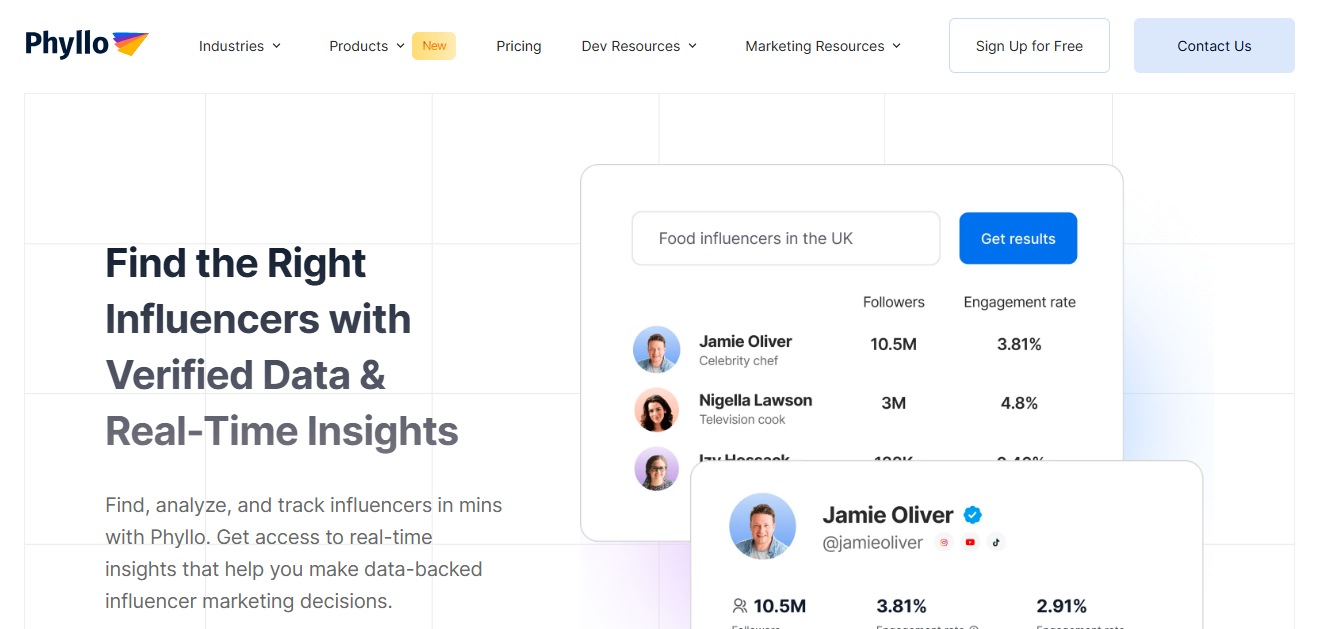
Phyllo agit comme le « Plaid de la creator economy ». Contrairement aux autres fournisseurs de cette liste qui extraient des données publiques, Phyllo est une passerelle de données universelle qui utilise des flux « Connect » basés sur OAuth. Les creators se connectent explicitement via Phyllo pour accorder à votre application la permission d'accéder à leurs données de compte.
Idéal pour : Les applications fintech (prêts aux creators), les plateformes de paiement ou les outils de commerce social qui nécessitent des données de première partie vérifiées comme les vues de stories privées, les clics de liens et les revenus réels.
L'avantage technique : Il fournit des données de « vérité établie » que les scrapers publics ne peuvent simplement pas voir. Il couvre plus de 20 plateformes, y compris des sites de niche comme Twitch, LinkedIn et Discord, tous normalisés dans un seul schéma JSON.
Spécifications techniques :
- Méthode d'authentification : OAuth 2.0 (Avec permission du creator).
- Webhooks : Support solide des webhooks temps réel qui notifient votre serveur immédiatement lorsque les métriques d'un creator changent ou qu'un nouveau message est publié.
- Données normalisées : Ils gèrent le « travail difficile » de la mise en correspondance de différentes structures d'API provenant de plus de 20 plateformes dans un format cohérent pour vos développeurs.
Structure des coûts et des quotas :
Phyllo utilise un modèle de tarification personnalisé basé sur l'utilisation. Parce que les exigences en matière de données pour une application fintech (nécessitant l'API Income) diffèrent considérablement d'un outil marketing (nécessitant l'API Engagement), ils fournissent des devis personnalisés en fonction de votre intégration spécifique :
- Niveaux personnalisés : Les tarifs sont adaptés à votre échelle, commençant généralement par un tarif de plateforme de base qui inclut un nombre défini de Comptes connectés.
- Modules spécifiques à l'API :Les coûts sont structurés autour des « produits » de données spécifiques dont vous avez besoin, tels que l'Identity API (informations de profil de base), l'Engagement API (performance du contenu) ou l'Income API (revenus vérifiés et paiements).
- Mise à l'échelle basée sur l'utilisation : À mesure que votre base d'utilisateurs se développe, Phyllo offre des réductions basées sur le volume du nombre de connexions de creators actifs et des fréquences d'actualisation des données.
- Intégration consultative : Pour obtenir un devis précis, les équipes techniques sont encouragées à contacter directement leur équipe commerciale. Cela garantit que le plan s'aligne avec votre fréquence de synchronisation requise et les plateformes de réseaux sociaux spécifiques que vous devez couvrir.
Limitations de la plateforme :
La limitation principale de Phyllo est le « Friction de connexion ». Vous ne pouvez pas utiliser Phyllo pour découvrir ou évaluer un creator qui ne s'est pas déjà connecté à votre application. Si votre plateforme doit chercher dans une base de données de plus de 100 millions de profils pour trouver un nouveau talent, Phyllo ne peut pas vous aider. C'est un outil « Post-Authentification » : il fournit des données approfondies pour les creators que vous connaissez déjà, et non un moteur de découverte pour en trouver de nouveaux.
6. CreatorIQ
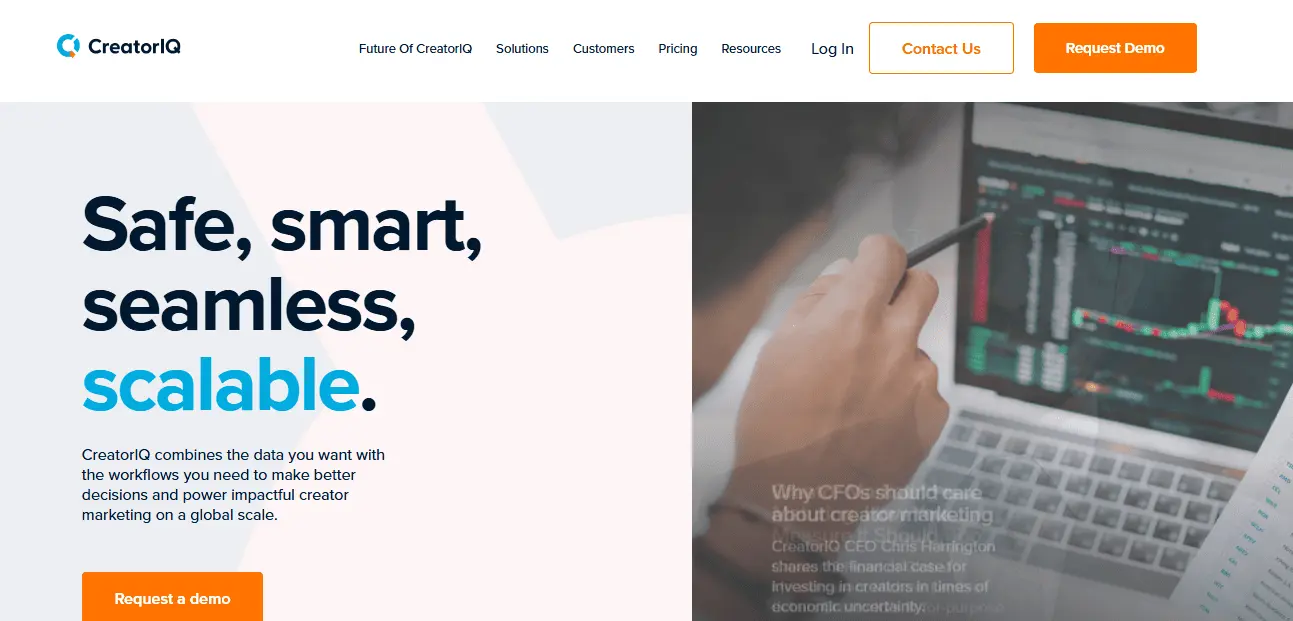
CreatorIQ est le « Système de Référence » d'entreprise. Leur API, connue sous le nom d'ExchangeIQ, est conçue pour les organisations mondiales qui ont besoin de synchroniser les données des influencers sur plusieurs divisions internes et outils externes de Business Intelligence (BI).
Meilleur choix pour : Les entreprises du Fortune 500 et les agences mondiales qui ont besoin de proposer une expérience de creator en marque blanche ou de synchroniser les performances de campagne dans des CRM d'entreprise tels que Salesforce ou Microsoft Dynamics.
L'avantage technique : Elle offre le plus haut niveau de Gouvernance des données d'entreprise. Vous pouvez gérer par programme les autorisations des divisions mondiales, les statuts des contrats de creators et les flux de travail de paiement complexes dans 180 pays.
Spécifications techniques :
- Limites de débit : Généralement définies à un constant 5 RPS, conçu pour la stabilité et la synchronisation d'entreprise plutôt que pour le web scraping haute fréquence.
- Marque blanche : Leur API supporte des configurations « headless » où vous pouvez créer votre propre portail de creator personnalisé tout en utilisant leur backend pour gérer les données et les paiements.
Structure des coûts et des quotas :
CreatorIQ fonctionne sur un modèle d'entreprise strictement personnalisé, basé sur devis. Ils n'offrent pas de niveaux « de démarrage », car leur infrastructure est conçue pour des programmes à haut budget et toujours actifs :
- Licence d'entreprise annuelle : Sur la base des benchmarks du marché, l'accès de niveau d'entrée pour les grandes organisations commence généralement autour de 30 000 à $36 000/an.
- Portée personnalisée : Le coût est déterminé par le nombre de relations de creators actifs, le nombre d'utilisateurs internes et les modules API spécifiques requis (par exemple, les paiements mondiaux via Tipalti par rapport aux benchmarks avancés).
- Implémentation et intégration : En raison de la complexité de la synchronisation d'entreprise, les comptes incluent généralement une phase d'intégration technique dédiée (souvent 6 à 8 semaines) pour assurer que l'API est correctement mappée à votre pile technologique.
- Demande de tarification : Pour rester fidèles à leur nature d'entreprise, les responsables techniques doivent demander une démonstration pour recevoir un devis adapté en fonction de l'empreinte mondiale de votre organisation et des besoins de conformité spécifiques.
Limitations de la plateforme :
CreatorIQ est une solution d'entreprise « complète », qui s'accompagne d'une barrière d'entrée élevée. Leur API n'est pas conçue pour l'enrichissement « rapide et sale » ou les applications à petite échelle ; les exigences de tarification et de contrat (généralement à partir de $30 000+) la rendent inaccessible pour la plupart des startups. De plus, parce que c'est un outil d'entreprise, l'API peut être « lourde » et complexe, nécessitant souvent une période d'intégration de 6 à 8 semaines pour qu'une équipe puisse utiliser pleinement les fonctions de gouvernance mondiale.
Comment choisir le bon fournisseur d'API de marketing d'influence
Choisir le bon fournisseur est une décision « Construire ou Acheter ». Cela dépend de la question de savoir si vous créez un outil de découverte, un moteur d'automatisation de l'e-commerce ou un produit financier. Pour choisir le bon partenaire, identifiez où se situe votre goulot d'étranglement technique.
Pour l'Infrastructure Produit et l'Automatisation E-commerce
Si vous créez une plateforme qui doit déclencher des actions—comme expédier automatiquement un produit lorsqu'un creator est « embauché » ou générer un code de réduction Shopify via votre propre interface—vous avez besoin d'une API Opérationnelle.
- Ce qu'il faut chercher : Recherchez des fournisseurs comme Influencer Hero qui offrent un accès « écriture » aux magasins d'e-commerce et aux endpoints CRM. Vous avez besoin d'une API qui gère le « dernier kilomètre » de la transaction, en connectant les identifiants sociaux à la logistique d'entrepôt et à l'attribution du ROI en temps réel.
Pour l'Enrichissement des Données et l'Intelligence des Leads
Si vous créez un CRM personnalisé, un outil de prospection commerciale (comme Clay ou n8n), ou un agent IA, vous avez besoin d'une API Axée sur les Données.
- Ce qu'il faut chercher : Privilégiez des fournisseurs comme Influencers.club. Vous avez besoin d'endpoints « Enrichissement » où vous pouvez entrer une liste brute d'adresses e-mail ou d'identifiants et recevoir en retour un JSON structuré avec les données démographiques d'audience et les données de contact validées. Recherchez des taux de correspondance élevés et des intégrations natives avec les outils de pile de données.
Pour la Recherche à Haut Volume et l'Évaluation
Si la proposition de valeur de votre plateforme est « trouver l'aiguille dans la botte de foin » parmi 300M+ profils, vous avez besoin d'un Moteur de Découverte.
- Ce qu'il faut chercher : Recherchez des fournisseurs comme Modash ou HypeAuditor. Ces API sont construites pour la vitesse et l'échelle. Vous avez besoin d'un endpoint « Découverte » avec 20+ filtres et d'un endpoint « Évaluation » qui renvoie un Score de Qualité d'Audience. Vos principales préoccupations ici seront les Requêtes par Seconde (RPS) et la fraîcheur des données.
Pour la Transparence Financière et les Métriques Vérifiées
Si vous créez un produit fintech, une plateforme de paiement ou un outil qui nécessite des données « véridiques » (comme les vues réelles sur Instagram Stories ou les revenus privés), vous ne pouvez pas vous fier aux scrapers publics.
- Ce qu'il faut chercher : Vous avez besoin d'une API basée sur l'Identité comme Phyllo. Cela nécessite un flux « Connexion » où le creator s'authentifie via OAuth. C'est la seule façon d'accéder par programmation à des données non publiques qui sont 100% précises pour les rapports financiers ou juridiques.
Réflexions Finales
Choisir la bonne API de marketing d'influence consiste à trouver l'équilibre entre la profondeur des données et la facilité opérationnelle. Tandis que les moteurs de découverte excellent dans l'approvisionnement et que les outils d'entreprise offrent une intelligence sociale massive, les plates-formes technologiques et les agences les plus prospères sont celles qui comblent le fossé entre les « métriques sociales » et les « actions programmatiques ». Une API ne doit pas seulement fournir plus de données ; elle doit éliminer la friction manuelle de la gestion d'un écosystème de creators en croissance.
Pour les fournisseurs de technologie et les agences qui ont besoin de grandir sans la complexité de la charge d'entreprise, Influencer Hero se démarque comme la solution leader pour la croissance automatisée. En centralisant la découverte programmatique, l'envoi automatisé de produits et—surtout—le suivi du ROI sur l'ensemble du parcours, cela permet à votre équipe de se concentrer sur la création du produit tandis que l'API gère le travail technique lourd de la mesure de performance.
Prêt à voir comment faire évoluer votre infrastructure de creators ? Réservez une démo avec Influencer Hero
Résumé
Ceci est un texte à l'intérieur d'un bloc div.
Ceci est un texte à l'intérieur d'un bloc div.
Tarification/Mois
Avis Shopify
Ceci est du texte à l'intérieur d'un bloc div.
Ceci est un texte à l'intérieur d'un bloc div.
Ceci est un texte à l'intérieur d'un bloc div.
Ceci est du texte à l'intérieur d'un bloc div.
Ceci est un texte à l'intérieur d'un bloc div.
Ceci est un texte à l'intérieur d'un bloc div.
Ceci est du texte à l'intérieur d'un bloc div.
Ceci est un texte à l'intérieur d'un bloc div.
Ceci est un texte à l'intérieur d'un bloc div.
Ceci est du texte à l'intérieur d'un bloc div.
Ceci est un texte à l'intérieur d'un bloc div.
Ceci est un texte à l'intérieur d'un bloc div.
Ceci est du texte à l'intérieur d'un bloc div.
Ceci est un texte à l'intérieur d'un bloc div.
Ceci est un texte à l'intérieur d'un bloc div.
Ceci est du texte à l'intérieur d'un bloc div.
Ceci est un texte à l'intérieur d'un bloc div.
Ceci est un texte à l'intérieur d'un bloc div.
Ceci est du texte à l'intérieur d'un bloc div.
Ceci est un texte à l'intérieur d'un bloc div.
Ceci est un texte à l'intérieur d'un bloc div.
Lire la suite

Questions fréquemment posées
Qu'est-ce qu'une API de marketing d'influence, et pourquoi en avez-vous besoin?

Une API de marketing d'influence est un pont technique qui permet à votre site web ou à vos outils internes de « communiquer » avec la base de données de creators d'une plateforme. Pour les marques DTC, c'est essentiel pour automatiser les tâches répétitives comme vérifier l'authenticité des creators, synchroniser les statuts des campagnes et extraire les données de ventes en temps réel dans vos propres tableaux de bord sans exports manuels.
Puis-je suivre les ventes d'influencers directement via ma boutique de commerce électronique ?
Bien que des magasins comme Shopify ou WooCommerce fournissent des analyses de base, ils ne lient pas nativement les ventes individuelles à des publications de réseaux sociaux ou des creators spécifiques. L'utilisation d'une API de logiciel de marketing d'influence vous permet d'automatiser ce processus en générant des liens de suivi uniques et des codes de réduction qui se synchronisent directement avec la caisse de votre magasin, vous offrant une vision claire de votre véritable retour sur investissement.
Quel fournisseur d'API est le meilleur pour trouver de nouveaux influencers ?
Si votre objectif principal est d'atteindre un volume important, Modash et HypeAuditor offrent certaines des plus grandes bases de données du marché. Cependant, pour les marques qui souhaitent trouver des creators qui sont vraiment un bon « fit » et qui souhaitent gérer la sensibilisation et le processus de gifting dans le même flux de travail, Influencer Hero offre une expérience plus rationalisée et tout-en-un.
Comment puis-je automatiser l'envoi de produits en cadeau aux influencers ?
Le gifting automatisé nécessite une API capable de créer des « commandes brouillon » dans votre boutique de commerce électronique. Des plateformes comme Influencer Hero ou Aspire vous permettent d'envoyer un lien à un creator où il sélectionne son propre produit/taille, ce qui génère automatiquement une étiquette d'expédition dans votre système d'entrepôt.
Les API de marketing d'influence sont-elles coûteuses ?
Les tarifs varient considérablement. Les outils de découverte légers peuvent commencer autour de $200/mois, tandis que les solutions d'entreprise peuvent coûter plus de $2 500/mois. Pour la plupart des marques DTC en croissance, Influencer Hero offre un équilibre entre des fonctionnalités API avancées et l'automatisation full-funnel à partir de $649/mois.






Les Articles les Plus Populaires


Boostez votre ROI grâce au marketing d'influence
Rejoignez plus de 1 200 marques et 150+ agences qui font croître leurs programmes creators avec Influencer Hero.