
Rastreo de Afiliados y Pagos: Atribuye Ventas y Gestiona Ganancias de Creadores

February 26, 2026
|
Publicado

October 19, 2026
|
Actualizado

16 minutes
|
Lectura

Curso de Marketing de Rendimiento con Influencers | CÓDIGO: IMC100

Malena Garcia
| Author

Tabla de contenidos
- Seguimiento de Afiliados y Pagos
- Cómo Funciona en Influencer Hero
- Lo Que Realmente Pagas para Compensar a los Creadores
- Recopilación Automática de Facturas de Creadores
- Qué Puedes Hacer Con Esta Función
- Cuándo Los Equipos Utilizan Seguimiento de Afiliados y Pagos
- Cómo se Conecta Con Otras Funciones
- Reflexiones Finales
- Preguntas Frecuentes
Impulsa el ROI con influencers

Base de datos global de influencers
Plataforma TODO EN UNO
CRM, Afiliados, UGC y Más
Seguimiento de Afiliados y Pagos: Atribuye Ventas y Gestiona Ganancias de Creadores
Seguimiento de Afiliados y Pagos en Influencer Hero permite a las marcas atribuir ventas a creadores individuales y gestionar sus ganancias directamente dentro del CRM.
Desde la creación de códigos de descuento y enlaces de afiliados personalizados hasta el seguimiento de clics, conversiones y comisiones, todo se maneja en la página de deal del creador. Esta función se encuentra dentro del Influencer CRM y se conecta a tus integraciones de comercio electrónico para sincronizar automáticamente datos de ventas, calcular comisiones y centralizar la gestión de pagos.
El lado de pagos ha cambiado significativamente desde que se publicó este artículo por primera vez. Los pagos ahora se realizan a través de métodos de débito bancario regionales con tasas efectivas tan bajas como 0.4%, en comparación con el 5% al 8% que cobran la mayoría de plataformas de influencers y afiliados, y los flujos de trabajo de facturación recopilan y aprueban automáticamente las facturas de los creadores antes de que se mueva el dinero.
En este artículo, te mostraremos cómo funcionan el seguimiento de afiliados y los pagos dentro de Influencer Hero, qué pagas realmente en comisiones, y cómo se conecta todo a campañas, reportes y relaciones con creadores.
Cómo Funcionan los Pagos y el Seguimiento de Afiliados en Influencer Hero
Seguimiento de Afiliados en Influencer Hero conecta enlaces específicos del creador y códigos de descuento a datos de ventas reales, luego calcula automáticamente comisiones y centraliza las ganancias dentro del CRM. Se encuentra dentro de la página de deal de cada creador y actúa como la capa de ingresos de tu flujo de trabajo de influencers.
En lugar de usar una plataforma de afiliados separada, todo (configuración, seguimiento y gestión de pagos) sucede directamente dentro del mismo deal donde gestionas comunicación, contratos y etapas de campaña.
Paso 1: Accede a la Configuración de Afiliados desde el Deal del Creator
La configuración de afiliados comienza dentro de la página de deal del creador. Desde el tablero de campaña respectivo o la barra de búsqueda, abres el deal y desplázate hacia abajo hasta la sección Colaboración.
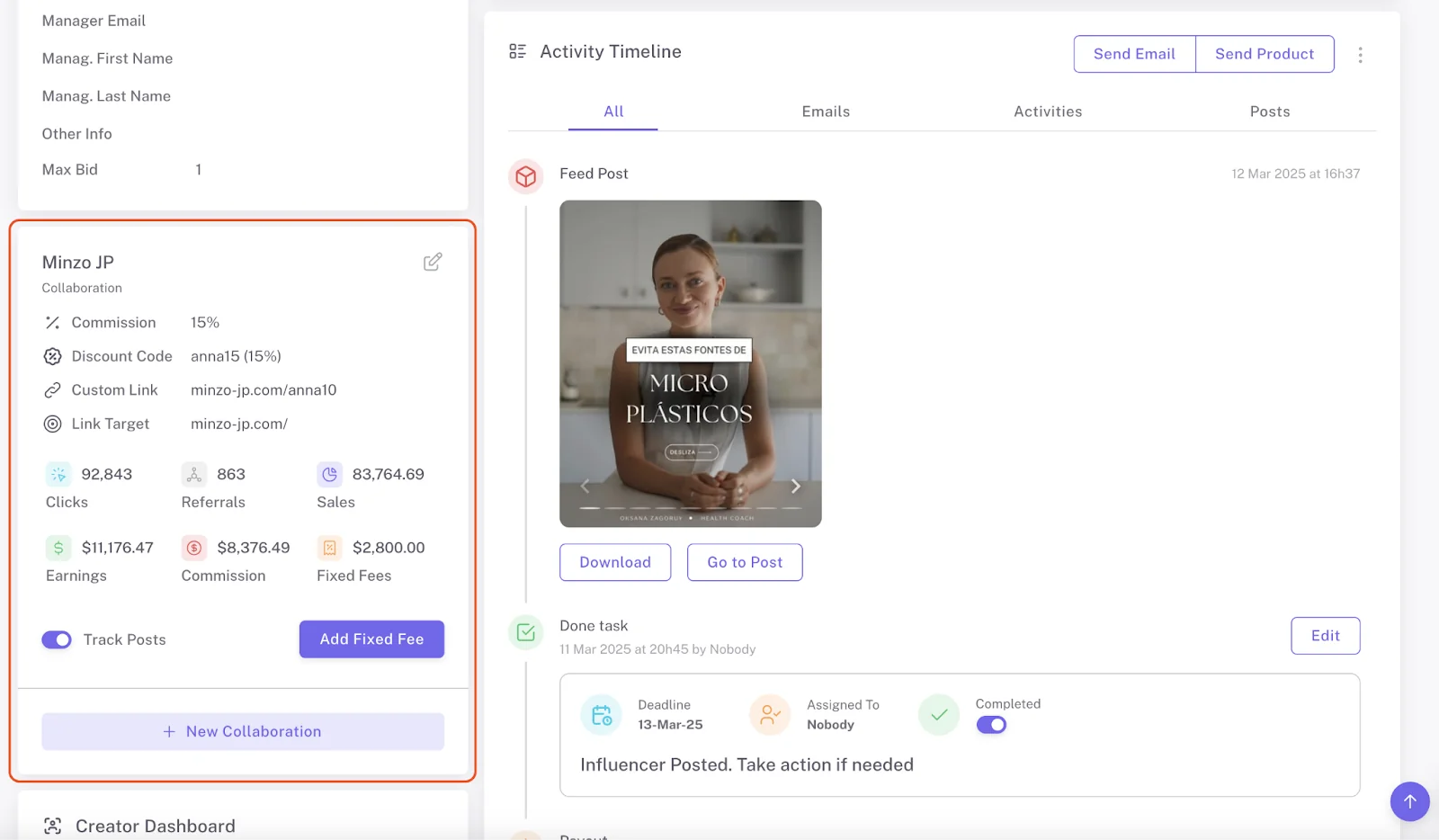
Al hacer clic en el icono de edición (lápiz), puedes definir el porcentaje de comisión, crear códigos de descuento y generar enlaces de afiliados personalizados, todo desde un único lugar. No hay necesidad de cambiar de herramientas o iniciar sesión en tu tienda por separado.
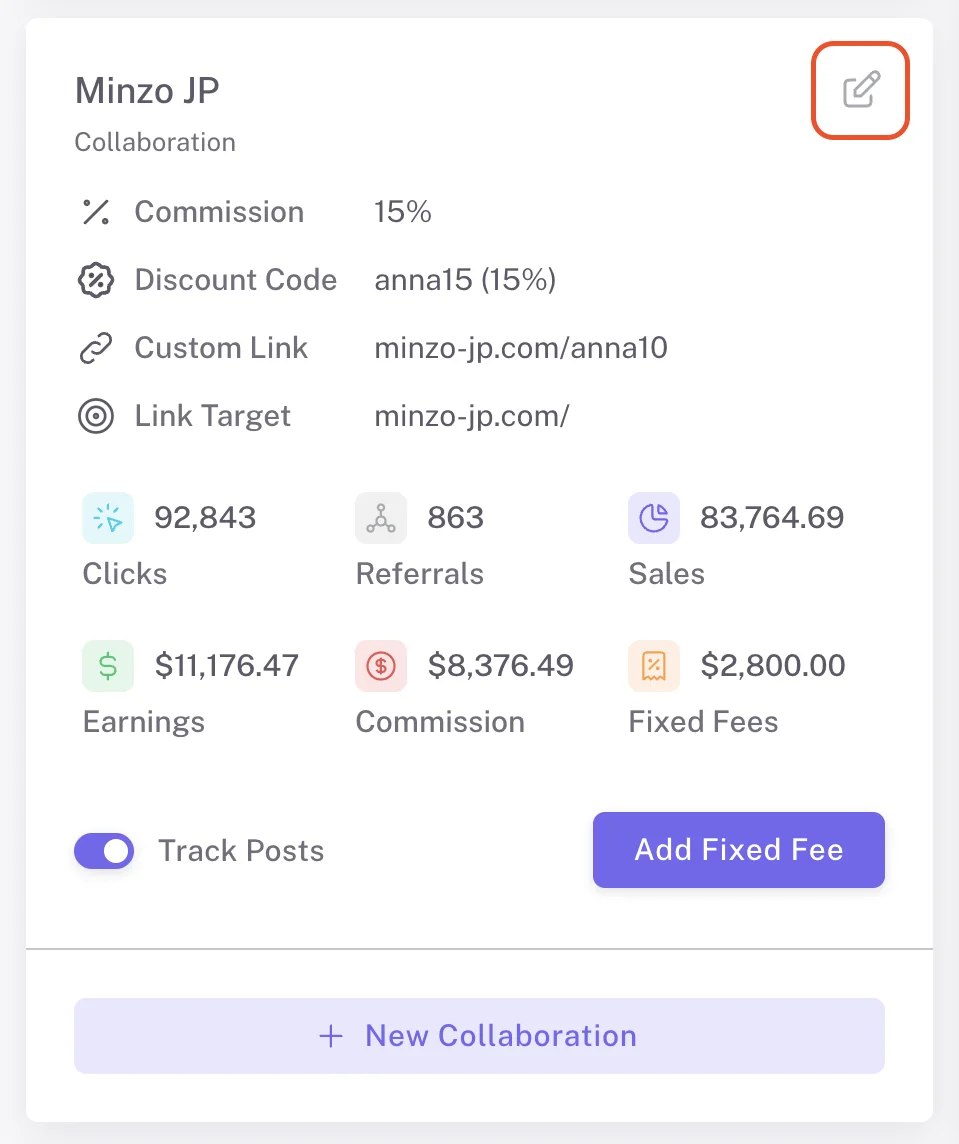
Paso 2: Establece la Comisión y Crea Códigos de Descuento
Primero defines el porcentaje de comisión que el creador gana por cada venta. Este porcentaje se aplica automáticamente a cualquier ingreso rastreado y se añade al saldo del creador dentro del CRM.
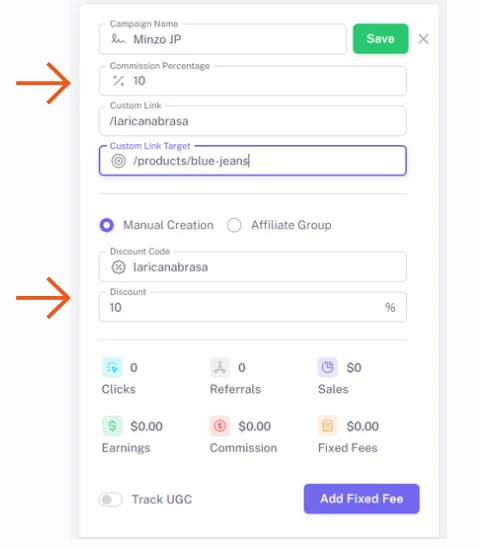
Si estás usando Shopify, puedes crear un código de descuento directamente desde esta sección. Puedes crear un código manual para toda la tienda o asignar el creador a un Grupo de Afiliados con reglas específicas, como porcentaje de descuento en productos, descuentos en pedidos, compra X obtén Y, o envío gratis. El código se crea automáticamente en tu backend de Shopify y se vincula al deal de ese creador.
La creación de códigos de descuento también funciona con Magento, Magento 2.X, BigCommerce, WooCommerce y Prestashop, por lo que este no es un flujo de trabajo exclusivo de Shopify.
Paso 3: Genera Enlaces de Afiliados Personalizados
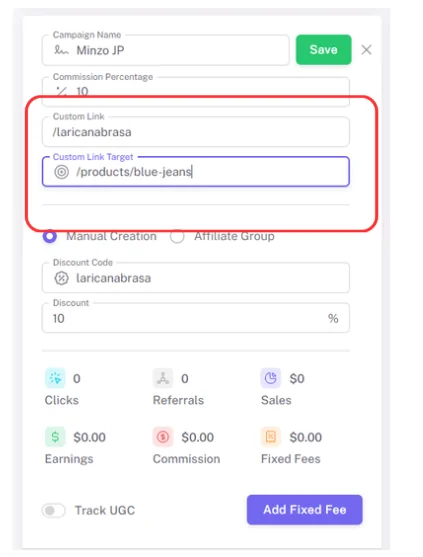
En la misma sección de Colaboración, puedes crear un enlace de afiliado personalizado usando el nombre o handle del creador. El enlace se genera automáticamente basado en tu dominio conectado.
También puedes definir un destino de enlace personalizado. Si se deja en blanco, el enlace dirige a tu página de inicio. Si quieres promocionar un producto o colección específica, simplemente pega la ruta de URL relevante, por ejemplo /products/blue-jeans. Esto asegura que el tráfico se dirija exactamente donde lo deseas.
Paso 4: Rastrea Automáticamente Clics, Ventas y Comisiones
Una vez que los enlaces y códigos están activos, el seguimiento sucede automáticamente a través de tu tienda conectada.
El seguimiento nativo de ventas afiliadas ahora cubre Shopify, WooCommerce, Magento, Magento 2.X, BigCommerce, Squarespace, Wix, Square, Prestashop, ShopBase, Ecwid, Thinkific, Webflow y Amazon, con integraciones GoAffPro y una compilación API personalizada disponible para cualquier cosa fuera de esa lista.
Cuando un cliente hace clic en un enlace rastreado o usa un código de descuento del creador, Influencer Hero atribuye la venta al creador correcto, registra el valor del pedido y calcula la comisión ganada. Las ventas, referencias, clics y saldos son visibles dentro del CRM sin importaciones manuales ni reconciliación.
Paso 5: Monitorea ganancias y solicita pagos
El rendimiento afiliado es visible directamente en la página de ofertas del creador, incluidos clics, conversiones, ingresos y comisión acumulada. Estos datos se actualizan dinámicamente y permanecen conectados al historial de etapas de campaña y comunicación.
Los creadores reciben acceso a un Panel del Creator donde pueden rastrear sus ganancias y enviar detalles de pago de forma segura, una vez que la marca les envía una invitación del Panel del Creator desde la página de ofertas. En el lado de la marca, los totales de comisión están centralizados, por lo que revisa y procesas pagos sin calcular manualmente lo que cada creador debe recibir.
Desde allí, el pago se traslada al Administrador de Pagos, que maneja la transferencia real, las tarifas y la documentación. Es aquí donde entran las próximas dos secciones.
Lo que realmente pagas para pagar a los creadores
Las tarifas de procesamiento de pagos son el costo que la mayoría de los equipos aceptan sin cuestionarlo. Stripe toma alrededor del 3% en una tarjeta, la plataforma agrega su margen y todos avanzan.
A volumen real, eso deja de ser un error de redondeo. Las campañas multiCreador, las comisiones afiliadas mensuales y los equipos regionales convierten esos porcentajes en presupuesto que podrías haber gastado en briefear a más creadores. La mayoría de plataformas de influencers y afiliados cobran entre el 5% y el 8% en cada pago.
Influencer Hero no toma ningún corte adicional en los pagos. Solo se transfiere la tarifa de procesamiento de Stripe al costo, y los métodos de débito bancario regional reducen ese costo significativamente.
En cantidades más grandes, las tasas efectivas se sitúan tan bajas como 0.4%. En transacciones más pequeñas estás alrededor de 0.5%, aún muy por debajo de la norma del 5% al 8%. La tarifa KYC de $2 de Stripe también ha sido eliminada completamente.
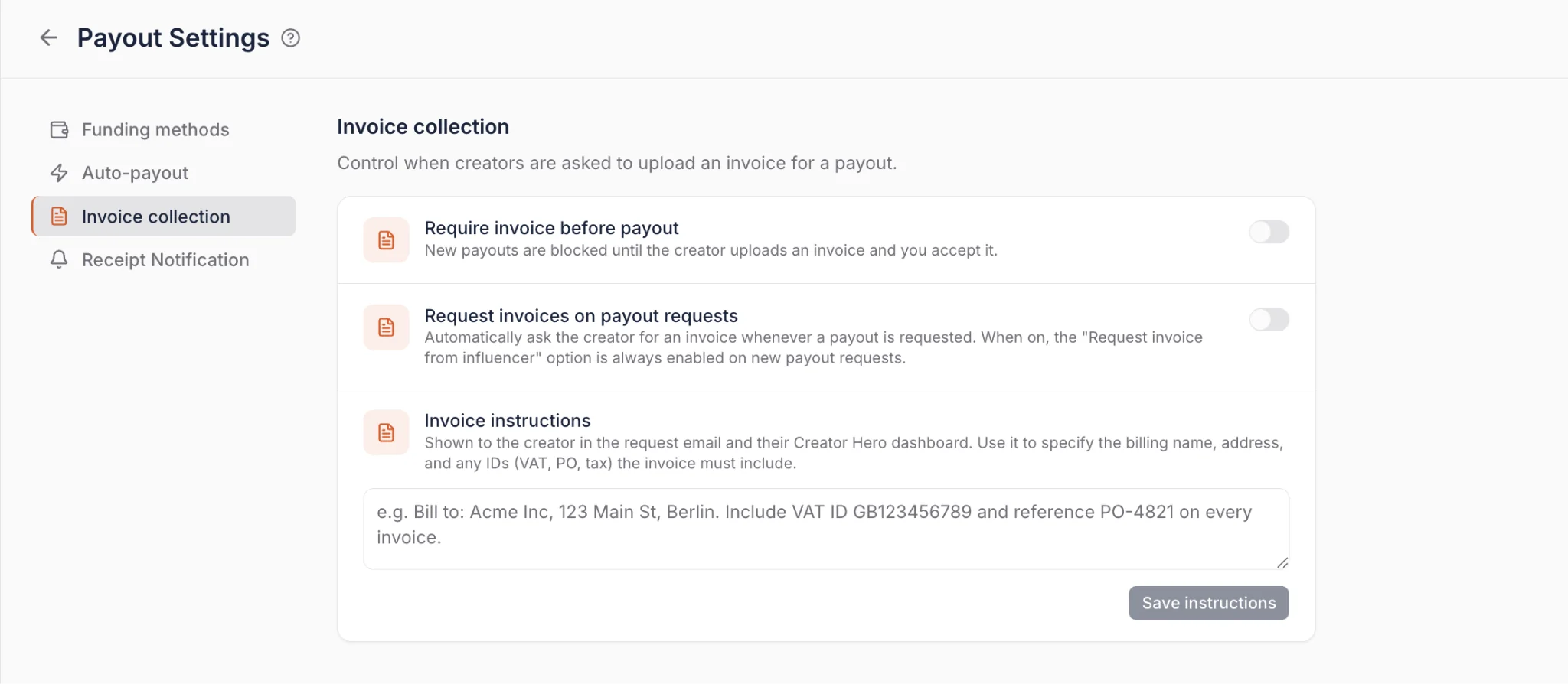
Tu región se preselecciona según la moneda de tu cuenta. Para cambiar métodos, abre Configuración de Pagos en la esquina superior derecha del Administrador de Pagos.
Pagar en lote o según un calendario
Las tarifas son una mitad del costo de pago. El tiempo es la otra.
- Pago masivo: Selecciona múltiples creadores desde la pestaña Pagos y págueles en una única transacción, con un resumen completo de gastos antes de confirmar y la opción de cubrir las comisiones en su nombre.
- Métodos de pago guardados: Guarda un método de pago una sola vez en Configuración de Pagos y los pagos futuros se procesan al instante, sin redireccionamiento a Stripe.
- Pago automático: Programa pagos diarios, semanales o mensuales con límites de gasto asociados. Recibirás un email de advertencia tres horas antes de cada ejecución listando exactamente quién recibe pago y cuánto, así nada sale sin revisión previa.
Recopilación Automática de Facturas de Creadores
Las comisiones bajas solo ayudan si la documentación detrás de cada pago está en orden. Perseguir facturas por email es donde la mayoría de equipos financieros pierden su semana, y es la razón por la que los pagos quedan pendientes mucho después de que el contenido ha salido en vivo.
Los flujos de facturación manejan ese aspecto dentro de la plataforma, justo al lado de los pagos a los que pertenecen.
1. Solicitar Facturas Automáticamente
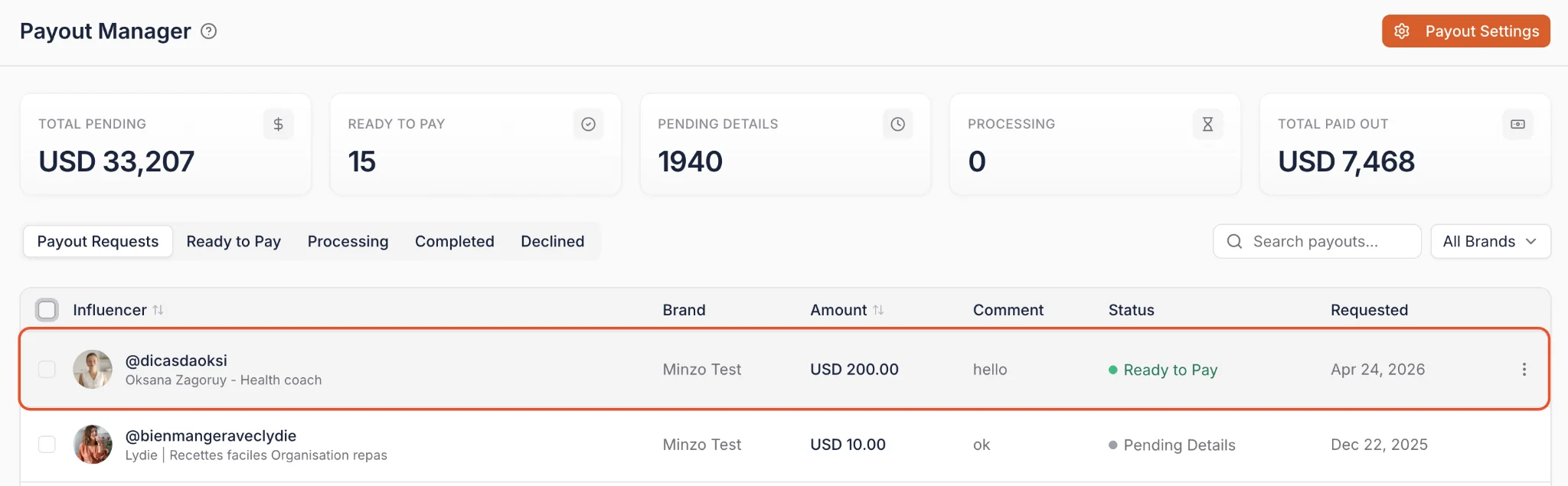
Puedes pedir una factura a un creador manualmente, o configurar la plataforma para que solicite una automáticamente cada vez que se solicita un pago. Los creadores pueden cargar archivos con o sin una cuenta de Creator Dashboard, lo que elimina la excusa usual por un retraso.
2. Aceptar o Rechazar Con Comentarios
Las facturas presentadas se revisan directamente desde el Gestor de Pagos. Si falta algo o algo es incorrecto, la rechazas con un comentario explicando qué necesita corregirse, y el creador recibe una indicación clara para cargar nuevamente en lugar de un vago seguimiento por email.
3. Bloquear Pagos Hasta que la Factura se Apruebe
Opcionalmente, puedes requerir una factura aceptada antes de que un pago se complete. Eso le da a tu equipo de contabilidad una tasa de coincidencia pago-factura del 100% sin que nadie tenga que vigilarlo manualmente.
Los parámetros de facturación se encuentran bajo Pagos > Configuración de Pagos, y los eventos de facturación (solicitados, presentados, aceptados, rechazados) están disponibles como disparadores de automatización, así que una factura presentada puede avanzar un trato o activar un recordatorio por su cuenta.
Qué Puedes Hacer Con la Función de Seguimiento y Pagos de Afiliados
Seguimiento y Pagos de Afiliados te permite configurar, rastrear y gestionar ingresos directamente desde el mismo lugar donde ejecutas tus campañas de influencers. A continuación te mostramos cómo los equipos lo utilizan en la práctica.
1. Crear Enlaces de Afiliados y Códigos de Descuento por Creator
Desde la página de trato de cada creador, puedes asignar un porcentaje de comisión y crear un enlace de afiliado personalizado. La lógica de comisión se aplica automáticamente una vez que comienzan a sincronizarse las ventas.
Cada creador recibe su propia estructura de seguimiento única, lo que significa que el desempeño se atribuye individualmente. Esto mantiene la configuración de afiliados conectada a la campaña específica y etapa del trato en lugar de ser gestionada en un sistema separado.
2. Asignar Lógica de Comisión Según la Estrategia de Campaña
Las tasas de comisión pueden ajustarse por creador dependiendo del acuerdo. Por ejemplo, podrías asignar un 10% para colaboraciones de prueba y aumentarlo al 15% o 20% para influencers de alto desempeño.
Debido a que la configuración de comisión se encuentra dentro de la página del trato, se mantiene alineada con el historial de alcance, contexto de negociación y etapas de la campaña. También puedes revisar el desempeño anterior antes de decidir ajustar los términos para impulsos estacionales o niveles de embajador.
3. Rastrear Clics, Conversiones e Ingresos Automáticamente
Una vez que los enlaces y códigos están activos, Influencer Hero rastrea el volumen de clics, valor de pedidos y comisión ganada a través de tu tienda conectada. Los datos de ventas se sincronizan automáticamente en el registro CRM del creador sin reconciliación manual.
Puedes revisar el desempeño dentro de la página del trato o analizar resultados agregados en dashboards de informes. Esto hace posible comparar creadores por ingresos generados, no solo por métricas de engagement.
4. Gestionar Creadores Afiliados en Masa
Cuando ejecutas programas de afiliados a gran escala, puedes usar filtros CRM para segmentar creadores basándose en palabras clave, etiquetas, etapas del trato, nombre de la campaña o historial de desempeño. Esto te permite gestionar grupos de creadores afiliados sin revisar cada perfil individualmente.
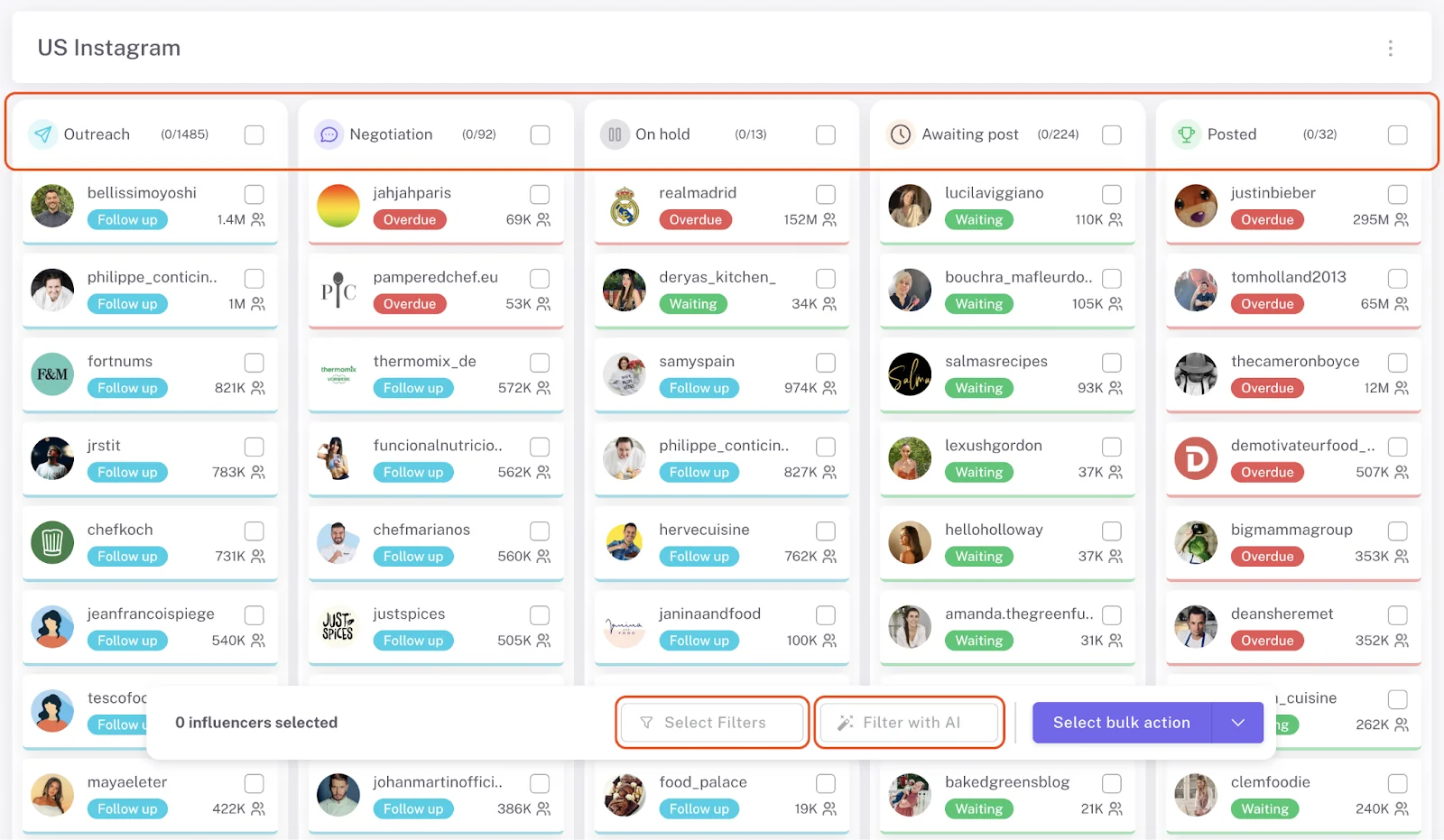
Por ejemplo, puedes filtrar aquellos que generan más de un umbral de ingresos específico y ajustar niveles de comisión, mensajería de alcance, o flujos de reactivación en consecuencia. El filtrado masivo mantiene los programas de afiliados estructurados mientras escalan.
5. Conectar Datos de Afiliados a Gestión de Alcance y Relaciones
Affiliate Tracking no funciona de forma separada de la comunicación. Todos los ajustes de afiliados y las ganancias son visibles en la misma página del acuerdo donde se almacenan los correos electrónicos, seguimientos y notas de negociación. Esto crea una conexión entre programas de afiliados, alcance y gestión de relaciones.
Esto significa que cuando un creador pregunta sobre ganancias, solicita una comisión más alta o califica para un rol de embajador, puedes responder basándote en datos de rendimiento real sin cambiar de plataforma. El rendimiento del afiliado se convierte en parte de la gestión de relaciones en lugar de ser una tarea de informes desconectada.
6. Centraliza Ganancias y Procesa Pagos
Los totales de comisión se acumulan automáticamente en el registro de cada creador. Los creadores pueden acceder a sus ganancias a través de su Panel de Creator, donde pueden rastrear ingresos y enviar detalles de pago de forma segura.
En el lado de la marca, puedes revisar los montos de pago sin calcular comisiones manualmente y agregar honorarios fijos cuando sea necesario. Esto centraliza el rastreo de comisiones, pagos fijos, visibilidad de ganancias y gestión de pagos en un flujo de trabajo estructurado.
7. Mantén Más del Presupuesto en la Campaña
Debido a que los pagos se realizan a través de débito bancario regional a tasas efectivas entre 0.4% y 0.5%, el dinero que habría ido a comisiones de procesamiento se mantiene en tu presupuesto de creadores.
En un programa que paga seis cifras al año, la diferencia entre una comisión de plataforma del 5% y un costo de procesamiento inferior al 1% es la diferencia entre financiar otra onda de siembra y no financiarla.
Cuándo los Equipos Utilizan Affiliate Tracking y Pagos
Affiliate Tracking & Payments se utiliza típicamente cuando las marcas quieren conectar la actividad del creador directamente con ingresos medibles y gestionar comisiones sin cálculos manuales o herramientas externas. A continuación se encuentran escenarios comunes donde esta función se vuelve esencial.
Cuando Pruebas Influencers Antes de Comprometerse con Colaboraciones Pagadas
Algunos equipos utilizan el rastreo de afiliados como una capa de prueba antes de acordar pagos fijos. En lugar de pagar por adelantado, ofrecen compensación basada en comisión y evalúan el rendimiento basándose en clics, conversiones e ingresos reales generados.
Esto permite a las marcas ver qué creadores son capaces de generar resultados medibles en lugar de confiar solo en métricas de engagement o conteos de seguidores.
Al rastrear el rendimiento directamente en la página del acuerdo, las marcas pueden comparar creadores de forma objetiva e identificar quiénes deberían ser reactivados, ofrecerles niveles de comisión más altos o trasladarlos a asociaciones pagadas a largo plazo. Los mejores desempeños también pueden explorarse para otras formas de colaboración, como campañas estacionales, programas de embajadores, sorteos o derechos de uso de anuncios pagados.
Cuando Ejecutas Campañas de Afiliados o Rendimiento a Gran Escala
Las marcas utilizan Affiliate Tracking & Payments cuando trabajan con docenas o cientos de creadores a la vez y necesitan visibilidad centralizada de ingresos. Administrar códigos de descuento y enlaces de afiliados manualmente en diferentes sistemas rápidamente se vuelve difícil, especialmente durante promociones estacionales, lanzamientos de productos o programas de afiliados siempre activos.
Con el rastreo de afiliados integrado en el CRM, los equipos pueden crear enlaces y códigos personalizados, sincronizar conversiones automáticamente y calcular comisiones sin reconciliar hojas de cálculo externas. Esto mantiene la atribución de ingresos precisa mientras la carga operativa se mantiene manejable a medida que el programa escala.
Cuando las Comisiones de Pago Están Consumiendo el Presupuesto del Programa
Las marcas que pagan comisiones mensuales en un gran elenco a menudo descubren que las comisiones de procesamiento se han convertido silenciosamente en uno de sus mayores gastos, especialmente cuando cada transferencia se realiza con tarjeta de crédito.
Cambiar esos pagos a débito bancario regional dentro del Payout Manager reduce el costo por transacción a una cantidad fija o casi plana, y el pago en lote significa que todo el elenco se procesa en una sola acción en lugar de docenas de transferencias individuales.
Cuando Finanzas Requiere una Factura para Cada Pago
Algunos equipos no pueden liberar un pago hasta que una factura esté en archivo, lo que convierte cada ciclo de pago en una persecución por correo electrónico.
Los flujos de trabajo de facturación solicitan la factura automáticamente en cada solicitud de pago, permiten que el revisor rechace con un comentario cuando algo está mal, y pueden bloquear el pago hasta que la factura sea aceptada. Finanzas obtiene su documentación sin que el equipo de marketing actúe como un departamento de cobranza.
Cuando Construyes un Programa de Influencer Escalable y Consciente del Presupuesto
Ondecor, una marca estadounidense de hogar y decoración que vende papeles tapices personalizables, utilizó rastreo de afiliados como parte central de la escalada de su programa de marketing de influencers sin depender de pagos fijos. Su objetivo era aumentar la conciencia de marca, generar UGC e impulsar conversiones dentro de un presupuesto limitado mientras probaba un alto volumen de creadores.
A través de una combinación de gifting y campañas de afiliación, facilitaron más de 270 colaboraciones con influencers en seis meses, generando más de 1.3M de impresiones y $37.6K en Earned Media Value mientras identificaban 35 influencers de alto rendimiento. Debido a que los datos de ingresos de afiliación y comisiones se centralizaron en Influencer Hero, la marca pudo ver claramente qué creadores impulsaban ventas medibles e invertir con confianza en asociaciones a largo plazo.
Al Desarrollar un Programa de Embajadores de Marca
Affiliate Tracking & Payments también se utiliza cuando las marcas quieren formalizar relaciones con creadores de alto rendimiento y transitarlos a roles de embajadores. Una vez que los datos de ventas muestran claramente quién genera ingresos de forma consistente, las marcas pueden aumentar los niveles de comisión, proporcionar códigos de descuento exclusivos o negociar pagos fijos basados en el rendimiento histórico en lugar de suposiciones.
Debido a que el historial de ganancias y los datos de conversión permanecen visibles dentro del CRM, las decisiones sobre embajadores se vuelven respaldadas por datos en lugar de especulativas. Los creadores se benefician del seguimiento transparente de ganancias a través de su dashboard, lo que fortalece la confianza e incentiva la promoción continua en campañas estacionales y activaciones recurrentes.
Cómo Affiliate Tracking and Payments se Conecta con Otras Características de Influencer Hero
Affiliate Tracking & Payments no es una herramienta de afiliación independiente. Existe como parte de un flujo de trabajo conectado donde el outreach, la gestión de campañas, los reportes y los pagos conviven dentro del mismo sistema. Cuando los datos de ingresos de afiliación están vinculados al CRM y a los paneles de campañas, el rendimiento se vuelve accionable en lugar de aislado.
A continuación se muestra cómo esta característica se conecta en toda la plataforma.
Campaign Boards + Affiliate Tracking
Los enlaces de afiliación y la lógica de comisiones se configuran dentro de la página de deal del creador, que se encuentra dentro de tus Campaign Boards. Esto significa que el rendimiento de afiliación está directamente conectado a las etapas del deal como "Outreach", "Negotiation", "Awaiting Post" o "Ambassador".
Cuando un creador avanza a través de etapas, el historial de ingresos de afiliación permanece adjunto a ese deal. Esto hace posible ajustar los niveles de comisión, reactivar artistas anteriores, o priorizar el outreach basado en datos de ventas reales en lugar de suposiciones. El seguimiento de afiliación se convierte en parte del ciclo de vida de la campaña, no algo revisado por separado al final del mes.
Outreach + Affiliate Offers
Debido a que los emails de outreach se gestionan dentro del CRM, los términos de afiliación se pueden incluir directamente en tus flujos de comunicación. Los porcentajes de comisión, códigos de descuento y los enlaces personalizados son visibles mientras negocias, permitiéndote adaptar ofertas basadas en el tamaño de la audiencia o el rendimiento esperado.
Por ejemplo, puedes filtrar creadores por nicho o tasa de engagement, enviar una oferta basada en comisión a través de outreach automatizado, y configurar inmediatamente sus términos de afiliación una vez que acepten. Esto mantiene la negociación, la configuración y el seguimiento dentro de un flujo de trabajo continuo en lugar de saltar entre herramientas.
Reporting + Revenue Attribution
El rendimiento de afiliación se alimenta directamente en los dashboards de reportes junto con el seguimiento de publicaciones, resultados de campañas y otras métricas de rendimiento. En lugar de rastrear engagement en un lugar y ventas en otro, la atribución de ingresos está centralizada.
Esto permite a los equipos comparar creadores no solo por alcance o impresiones, sino por ingresos reales generados y eficiencia de comisión. Con el tiempo, esto hace más fácil identificar tu 5% al 10% superior de artistas y asignar presupuesto en consecuencia, fortaleciendo la toma de decisiones impulsada por ROI.
Creator Dashboard + Payment Management
Las ganancias de afiliación no solo son visibles para las marcas sino también accesibles para los creadores a través de su Creator Dashboard dedicado. Esta transparencia genera confianza y reduce la fricción en torno a preguntas sobre comisiones.
Debido a que los detalles de pago se recopilan de forma segura dentro de la plataforma, los totales de comisión se calculan automáticamente, y las facturas se solicitan y aprueban en el mismo lugar, los pagos se conectan directamente al seguimiento de rendimiento. El seguimiento, la visibilidad de ganancias, la documentación y los pagos funcionan como parte del mismo sistema estructurado.
Integrations + Automated Sync + Workflow Automation
Affiliate Tracking & Payments se conecta nativamente a Shopify, WooCommerce, Magento, BigCommerce, Wix, Squarespace, Square, Amazon y otras tiendas soportadas, con GoAffPro disponible como ruta alternativa. Esto asegura que los clics, pedidos y datos de ingresos se sincronicen automáticamente en el CRM sin cargas manuales.
Más allá de sincronizar datos de ventas, la configuración de afiliación también se puede integrar en tus flujos de trabajo de automatización. Por ejemplo, puedes crear una regla donde si un influencer se mueve a la columna "Awaiting Post" dentro de tu Campaign Board, el sistema genera automáticamente su enlace de afiliación y asigna un código de descuento específico.
Debido a que las integraciones y la automatización están directamente vinculadas a los paneles de campaña y las páginas de deal, las marcas pueden ejecutar programas de influencers de embudo completo, desde el descubrimiento y el outreach hasta gifting, seguimiento de afiliación, creación automática de enlaces, facturación y reportes, sin separar datos entre múltiples dashboards o desencadenar manualmente pasos de configuración.
Conclusión
Affiliate Tracking & Payments en Influencer Hero está diseñado para centralizar la atribución de ingresos, el seguimiento de comisiones y la gestión de pagos dentro de tu flujo de trabajo de influencers. Desde la creación de enlaces personalizados y códigos de descuento hasta la sincronización de conversiones y el cálculo automático de ganancias, todo ocurre dentro del mismo CRM donde se gestionan las campañas y las relaciones.
La capa de pagos es donde se ha producido el cambio más importante. Con débitos bancarios regionales, pagos masivos y programados, e invoicing automatizado, mantienes más presupuesto en la campaña y menos en comisiones de procesamiento. Nuestro desglose completo de comisiones de pago cubre los números método por método si quieres los detalles.
Si quieres ver cómo Affiliate Tracking & Payments se conecta con Campaign Boards, automatización de Outreach, Creator Dashboards y reportes, puedes explorar la función en un recorrido en vivo. Reserva una demo con Influencer Hero para ver cómo el seguimiento de afiliados, la gestión de comisiones y los flujos de trabajo de influencers operan juntos dentro de un sistema estructurado.
Resumen
Este es un texto dentro de un bloque div.
Este es un texto dentro de un bloque div.
Tarifa/Mes
Opiniones de Shopify
Este es un texto dentro de un bloque div.
Este es un texto dentro de un bloque div.
Este es un texto dentro de un bloque div.
Este es un texto dentro de un bloque div.
Este es un texto dentro de un bloque div.
Este es un texto dentro de un bloque div.
Este es un texto dentro de un bloque div.
Este es un texto dentro de un bloque div.
Este es un texto dentro de un bloque div.
Este es un texto dentro de un bloque div.
Este es un texto dentro de un bloque div.
Este es un texto dentro de un bloque div.
Este es un texto dentro de un bloque div.
Este es un texto dentro de un bloque div.
Este es un texto dentro de un bloque div.
Este es un texto dentro de un bloque div.
Este es un texto dentro de un bloque div.
Este es un texto dentro de un bloque div.
Este es un texto dentro de un bloque div.
Este es un texto dentro de un bloque div.
Este es un texto dentro de un bloque div.
Leer más

Preguntas frecuentes
¿Puedo crear enlaces de afiliado y códigos de descuento directamente en Influencer Hero?

Sí. Puede crear enlaces de afiliados personalizados para cada creador directamente desde la página de su acuerdo.
¿Cómo se calculan las comisiones de afiliados?
Las comisiones se calculan en función del porcentaje que usted define en el acuerdo del creador. Cuando se produce una venta rastreada a través de un enlace personalizado o código de descuento, Influencer Hero aplica automáticamente la tasa de comisión y actualiza las ganancias del creador.
¿Puedo hacer un seguimiento de los clics y conversiones en tiempo real?
Sí. Influencer Hero rastrea clics, pedidos e ingresos a través de integraciones con Shopify o GoAffPro. Los datos de rendimiento se sincronizan directamente en el registro CRM del creador y en los paneles de informes sin necesidad de importaciones manuales.
¿Cómo ven los influencers sus ganancias?
Los creadores reciben acceso a un Panel de Control dedicado donde pueden rastrear sus ganancias de afiliados, ver métricas de rendimiento y enviar sus datos de pago de forma segura. Esto mantiene las ganancias transparentes y reduce la comunicación constante sobre comisiones.
¿Está el seguimiento de afiliados conectado a la gestión de campañas e informes?
Sí. El rendimiento de afiliados está vinculado a las mismas páginas de ofertas, Tableros de Campañas y paneles de informes utilizados para el alcance y el seguimiento de contenido. Esto garantiza que la atribución de ingresos sea parte de su flujo de trabajo más amplio de influencer en lugar de gestionarse en un sistema separado.




Blogs más populares


Impulsa tu ROI con Marketing de Influencers
Únete a más de 1.200 marcas y 150+ agencias que escalan sus programas de creadores con Influencer Hero.