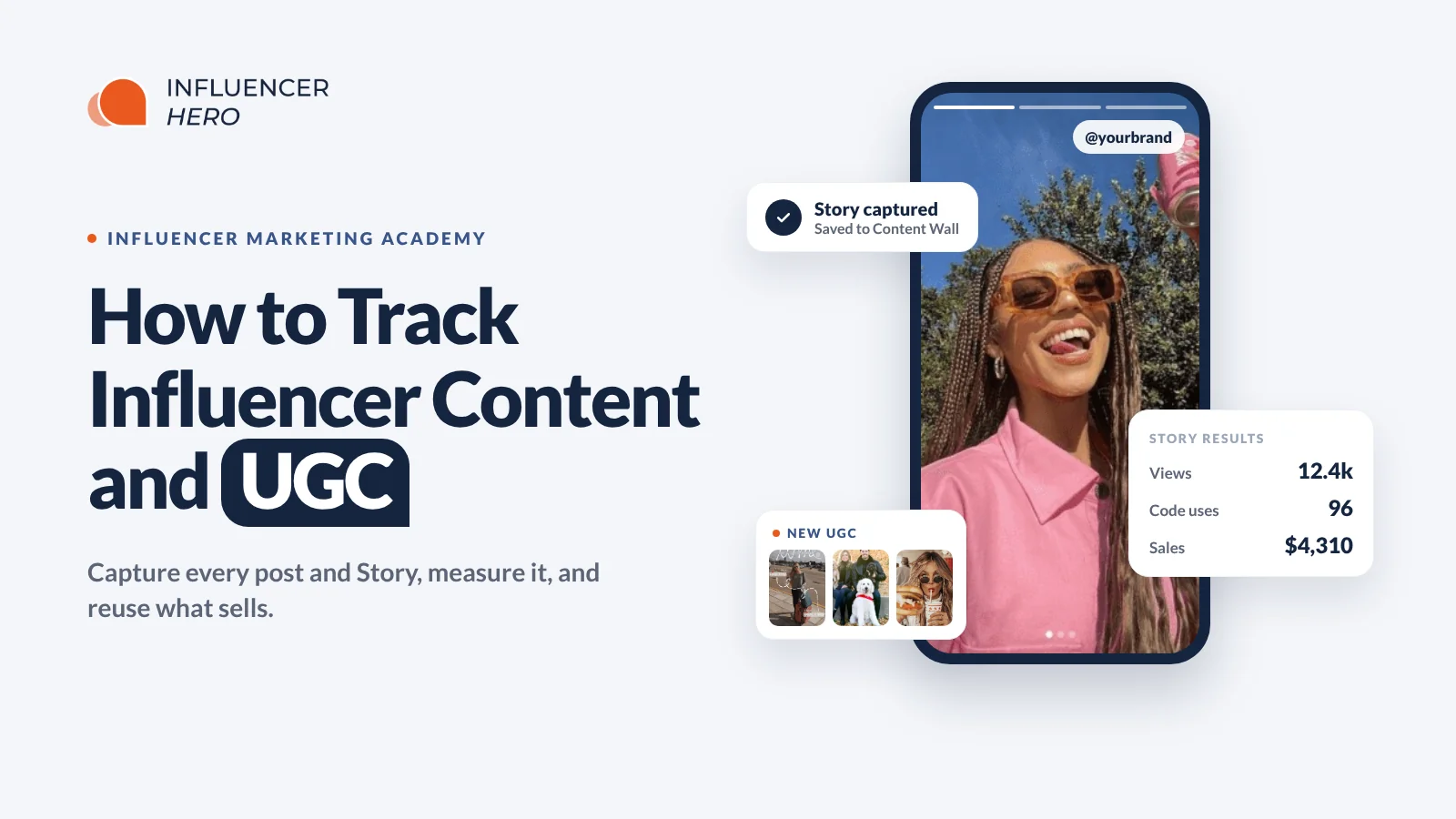
How to Track Influencer Content and UGC

November 14, 2026
|
Published

November 14, 2026
|
Updated

10 minutes
|
Reading

Influencer Performance Marketing Course | VOUCHER: IMC100

Malena Garcia

Table of Contents
- Key Takeaways
- What Is Influencer Content and UGC Tracking?
- Manual vs Automated Content Tracking
- Step 1: Decide What Counts as Trackable Content
- Step 2: Make Content Easy to Track From the Brief
- Step 3: Set Up Content Capture
- Step 4: Don't Lose Instagram Stories
- Step 5: Collect the Right Metrics
- Step 6: Organize Everything in One Content Library
- Step 7: Track Usage Rights
- Step 8: Connect Content to Results
- Step 9: Reuse Your Best Content
- How to Track Influencer Content With Influencer Hero
- Common Mistakes to Avoid
- Conclusion
- FAQs
Drive ROI With Influencers

Global Influencer Database
ALL-IN-ONE platform
CRM, Affiliate, UGC & More
How to Track Influencer Content and UGC
You can't measure what you can't find. Yet most brands still track creator content with screenshots, DMs and spreadsheets, and lose half of it along the way, especially Stories that disappear after 24 hours.
Tracking content properly is also how you prove results. According to the Influencer Marketing Hub Benchmark Report 2026, promo and discount codes are the most used measurement method (45.9% of marketers), followed by affiliate links (26.0%). The same report found that fake or templated engagement makes up around 21% of reported fraud and quality issues, so tracking content quality matters as much as tracking volume.
This guide walks you through how to track influencer content and UGC step by step, from capturing every post to organizing, measuring and reusing it.
Key Takeaways
- Track both campaign content from creators you work with and organic UGC from customers who tag your brand.
- Make tracking easy from the start: require brand tags, a campaign hashtag and a personal discount code in every brief.
- Capture Stories within 24 hours, or use a tool that saves them automatically.
- Combine public metrics (likes, comments, views) with creator-shared insights and sales data from codes and links.
- Organize content in one library, track usage rights per asset, and reuse your best-performing content in ads and on your site.
What Is Influencer Content and UGC Tracking?
Influencer content tracking means finding, saving and measuring everything creators publish for your brand. UGC (user-generated content) tracking covers content from customers and fans who post about your brand on their own.
Both matter. Campaign content shows you whether your influencer program is working. Organic UGC shows you who already loves your brand, and often becomes your next creator partners.
What to Track
- Instagram: feed posts, carousels, Reels and Stories
- TikTok: videos and TikTok Shop content
- YouTube: long-form videos, integrations and Shorts
- Organic UGC: tags, mentions and branded hashtags from customers
- Submitted content: raw files creators send for approval or paid ads
Manual vs Automated Content Tracking
You can track influencer content manually or with a tool. Here's how they compare:
Manual tracking works for a handful of creators. Once you work with more than 15 to 20 creators a month, automation pays for itself in saved hours and content you'd otherwise miss.
Step 1: Decide What Counts as Trackable Content
Before tracking anything, agree internally on what you're tracking and why.
- Campaign content: deliverables from creators you've gifted or paid.
- Organic creator content: extra posts creators make without being asked.
- Customer UGC: posts from customers who tag or mention you.
Also decide your goal. Tracking for reporting needs metrics. Tracking for reuse needs high-quality files and usage rights. Most brands need both.
Step 2: Make Content Easy to Track From the Brief
The easiest content to track is content that's set up for it. Add these requirements to every influencer brief:
- Tag your brand account in the post and in Stories.
- Use a campaign hashtag unique to this campaign.
- Use their personal discount code or affiliate link, so sales can be attributed to each creator.
- Use the right disclosure (#ad or the platform's paid partnership label).
- Share insights: ask creators to send screenshots of Story and post insights within 48 hours of posting.
Step 3: Set Up Content Capture
Manual Capture
If you're tracking manually, check each creator's profile and your brand's tagged posts daily, screenshot or screen-record Stories, and log every post in a spreadsheet with the link, date, format and metrics.
Automated Capture
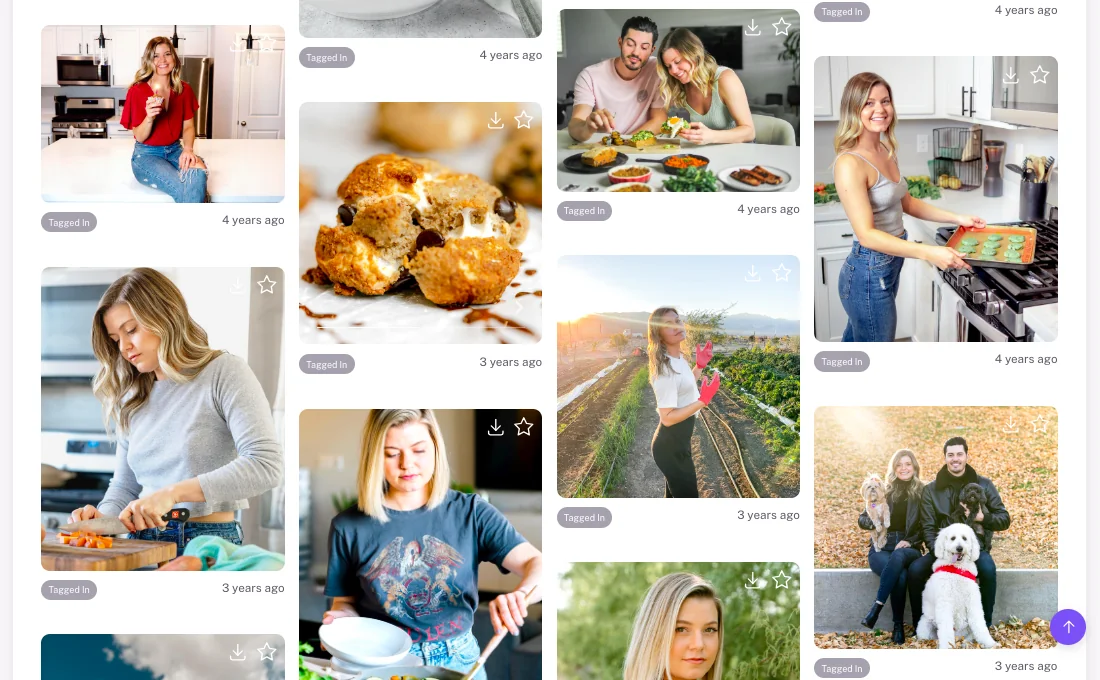
With a content tracking tool, posts are detected automatically when creators tag or mention your brand, then saved to a central library with the creator's name and metrics attached. This is the only reliable way to catch every Story at scale.
Comparing options? See our roundup of the best content tracking tools.
Step 4: Don't Lose Instagram Stories
Instagram Stories disappear after 24 hours, and they're the format brands lose most often. To track them:
- Use a tool that captures tagged Stories automatically the moment they go live.
- If tracking manually, check tagged Stories at least once a day.
- Ask creators to share Story insights, since views and reach are often only visible to the creator.
- Save the files, not just screenshots, if you might reuse them.
Step 5: Collect the Right Metrics
Track the same metrics for every piece of content so you can compare creators and campaigns fairly.
- Reach and impressions: how many people saw it.
- Views: for Reels, TikToks, Stories and YouTube videos.
- Engagement: likes, comments, shares and saves.
- Engagement rate: (likes + comments) ÷ followers × 100. Here's how to calculate engagement rate in detail.
- Clicks, code uses and sales: from personal discount codes and affiliate links.
- Cost metrics: cost per post, cost per engagement and cost per acquisition, including product and fee costs.
Public metrics like likes and comments are easy to collect. Story views and reach usually need creator-shared insights, so make that part of your agreement.
Step 6: Organize Everything in One Content Library
Scattered files are almost as bad as lost files. Keep all content in one place and tag each asset with:
- Creator and campaign
- Platform and format (Story, Reel, TikTok, Short)
- Product featured
- Date posted
- Performance (top, average, low)
- Usage rights status and expiry date
A good UGC library lets you search by any of these, so finding "every 9:16 video showing our new serum" takes seconds instead of an afternoon.
Step 7: Track Usage Rights
Tracking content isn't the same as owning it. Before you reuse creator content in ads, emails or on your website, make sure you have permission.
- Agree on usage rights in your creator contract: channels, duration and whether paid ads are included.
- Record the rights on each asset in your library, with an expiry date.
- For organic customer UGC, ask permission before reposting, for example in a comment or DM.
Step 8: Connect Content to Results
The real value of tracking comes when you connect each piece of content to what it achieved. Match posts to the clicks, code uses and sales they generated, then ask:
- Which formats drive the most sales, not just likes?
- Which creators deliver on time and above average?
- Which products get shown most, and which convert best?
Use those answers to rebrief creators, scale your best performers and drop the rest.
Step 9: Reuse Your Best Content
Your top-performing creator content is already proven. Put it to work:
- Run it as paid social ads, with the right usage rights
- Add it to product pages and landing pages
- Use it in email and SMS campaigns
- Repost it on your brand's own social channels
- Share it with retail partners and in sales decks
How to Track Influencer Content With Influencer Hero
Influencer Hero automates every step above in one platform.
- Automatic capture: the Post Detector captures feed posts, Reels and Stories the moment they go live and uploads them straight into your CRM, linked to each creator. TikTok and YouTube are supported too.
- Content Wall: a searchable content library with filters for platform, post type and aspect ratio, a visual quality score and "likely showcases product" detection.
- AI search: find content by theme or visual element, and search spoken keywords in video transcripts (Pro and Business plans).
- Metrics per asset: views, likes, comments and impressions, feeding directly into campaign reporting.
- Sales attribution: every creator gets their own discount code and affiliate link, so you see which content drove sales.
- Content requests and approvals: request deliverables, review submissions, approve or ask for edits, and trigger automations like payout requests when content is approved.
- High-quality downloads: download original files for ads, email and your website.

Influencer Hero is rated 5.0/5.0 (Capterra), and brands on managed plans get a dedicated human account manager, available 24/7.
Ready to stop screenshotting Stories? Book a demo and see automatic content capture on your own creators.
Common Mistakes to Avoid
- Not asking for tags and codes in the brief. Untagged content is hard to find and impossible to attribute.
- Missing Stories. If you check weekly, you've already lost most of them.
- Tracking likes only. Likes don't pay the bills. Connect content to clicks and sales.
- Keeping content in DMs and inboxes. If it isn't in your library, your team can't use it.
- Reusing content without rights. Always check usage rights before running creator content as ads.
- Ignoring organic UGC. Customers posting about you for free are your best future creators.
Final Thoughts
Tracking influencer content and UGC comes down to four habits: set creators up to be trackable, capture everything (especially Stories), measure what actually drives sales, and organize content so you can reuse it.
You can start with a spreadsheet, but as your program grows, automatic capture saves hours every week and makes sure no post gets lost.
Summary
This is some text inside of a div block.
This is some text inside of a div block.
Pricing/Month
Shopify Reviews
This is some text inside of a div block.
This is some text inside of a div block.
This is some text inside of a div block.
This is some text inside of a div block.
This is some text inside of a div block.
This is some text inside of a div block.
This is some text inside of a div block.
This is some text inside of a div block.
This is some text inside of a div block.
This is some text inside of a div block.
This is some text inside of a div block.
This is some text inside of a div block.
This is some text inside of a div block.
This is some text inside of a div block.
This is some text inside of a div block.
This is some text inside of a div block.
This is some text inside of a div block.
This is some text inside of a div block.
This is some text inside of a div block.
This is some text inside of a div block.
This is some text inside of a div block.
Read More

FAQs




Most Popular Blogs


Drive ROI With Influencer Marketing
Join 1,200+ brands and 150+ agencies scaling creator programs with Influencer Hero.