How to Contact Influencers the Right Way

December 10, 2025
|
Published

July 30, 2026
|
Updated

|
Reading

Influencer Performance Marketing Course | VOUCHER: IMC100

Peter Nettesheim
| Author

Drive ROI With Influencers

Global Influencer Database
ALL-IN-ONE platform
CRM, Affiliate, UGC & More
How to Contact Influencers the Right Way
Once you’ve identified the right creators, the next challenge is getting them to say yes.
Outreach is often where brands lose momentum; either because emails go unread, messages feel too generic, or follow-ups never happen.
In this article, you’ll learn proven, data-backed outreach tactics that will help you boost reply rates, save time, and scale your influencer program efficiently.
Discover how to warm up your list, choose between emails and DMs, and implement the 5 golden rules of influencer outreach that consistently drive results.
TLDR - Watch the Video
Take the full Influencer Performance Marketing Course and get certified!
Warm Up Your Influencer List Before You Reach Out
Before you send your first message, make sure your brand doesn’t land as a stranger in their inbox. A great way to do this is by warming up your influencer list using matched audiences on Meta (Facebook and Instagram).
Here’s how it works:
- Export your influencer list from your influencer CRM (like Influencer Hero) to CSV.
- In Meta Business Manager, open Audiences → Create Custom Audience → Customer List.
- Map as many fields as possible (email, name, country, gender) to improve match quality.
- Run a light ad campaign for 2–3 weeks, aiming for a frequency of 2–3 impressions per person.
This way, when your email arrives, the influencer has already seen your brand, increasing recognition and reply likelihood.
Pro Tip: Run engaging, story-driven brand ads or short product videos - not just static posts - so creators connect emotionally before your outreach begins.
Why Outreach Automation Matters
Manual outreach can work for small campaigns, but it becomes unmanageable as you scale.
Automation saves time, ensures consistency, and lets you run always-on influencer programs without burning out your team.
Use influencer platforms or CRM systems like Influencer Hero to:
- Send personalized outreach messages at scale
- Track deliverability, open rates, and replies
- Automate follow-up sequences
- Maintain clean data on influencer communication history
Before you scale, ensure your technical setup is correct:
- Warm up any new mailboxes
- Configure SPF, DKIM, and DMARC
- Avoid using brand-new domains
- Run a quick spam score test (available directly in Influencer Hero)
Proper deliverability setup can increase your open rates by up to 40% and protect your sender reputation long-term.
Emails vs. DMs: Which Is Better?
Overall, if you’re working with just a few influencers, DMs can work fine. However, once you start scaling, it becomes inefficient. For a consistent, always-on influencer program, as explained in this article, we highly recommend using email instead.
5 Proven Strategies to Maximize Influencer Reply Rates
Outreach is a numbers game, but small optimizations compound quickly. Based on hundreds of thousands of A/B-tested emails, these 5 rules consistently deliver higher open and reply rates.
Rule 1: Start with the First Name in the Subject Line
Personalization begins in the inbox. Including the creator’s first name at the start of your subject line can increase open rates by up to 30%.

This works because recognition is a cognitive shortcut. People instinctively prioritize messages that reference them directly. At scale, automation tools like Influencer Hero can dynamically insert first names or default to handles when missing, maintaining personalization consistency even across thousands of emails.
Rule 2: Personalize the First Sentence
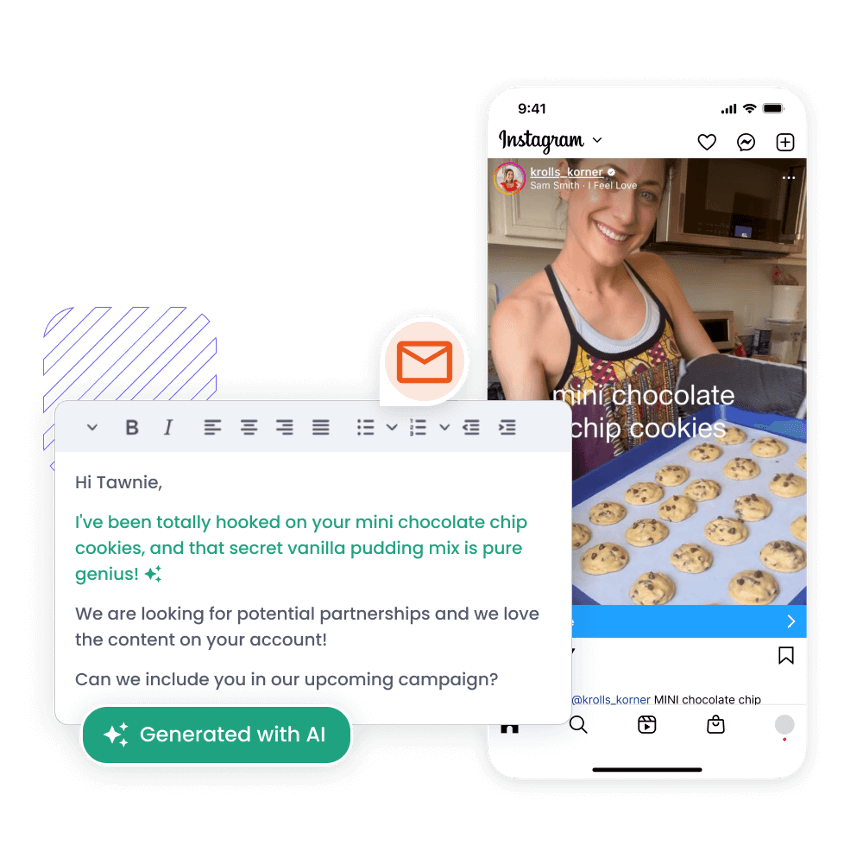
A single personalized sentence can make or break your email. Tools like Influencer Hero use AI to generate this automatically by analyzing the influencer’s recent posts, allowing you to personalize at scale.
High-performing campaigns use contextual personalization, referencing specific details from the creator’s recent content (“Your skincare routine breakdown last week got great engagement — it’s exactly the kind of authenticity our brand values”).
Rule 3: Keep It Short
Creators receive dozens of brand emails daily. If your message looks like an essay, it won’t get read. Keep your outreach under 100 words. Avoid long introductions or company histories.
If in doubt, paste your draft into ChatGPT and ask:
“Shorten this outreach email without losing key details.”
Think of your message as a landing page: every extra sentence reduces conversion probability. The goal isn’t to convince, but to invite interest. If you can’t explain the collaboration in two sentences, the offer isn’t clear enough.
Rule 4: Make the Value Clear
Influencers want to know what’s in it for them - fast.
Spell out exactly what they get: product type, commission rate, discount code, or collaboration terms.
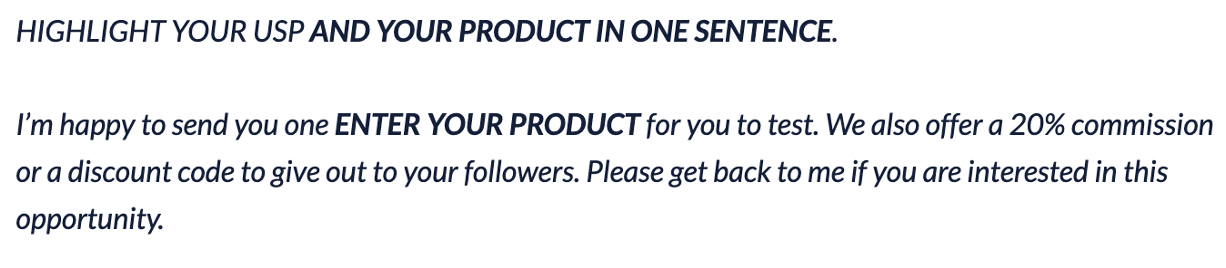
Example: “We’d love to send you our [Product] to test. You’ll also receive a 15% commission on sales through your code.”
Rule 5: End with a Strong, Simple CTA
Ask one specific question that makes replying easy: “Can I send you a [Product] to try?”
Avoid overwhelming CTAs like “check our IG, visit our site, and reply here.” Choice paralysis kills responses.
The Power of Follow-Ups
Follow-ups are the simplest, most effective way to double your reply rates. Our data shows that brands who send at least two automated follow-ups see up to 2× more responses than those who don’t.
Set your automation to send polite reminders at 3- and 7-day intervals, and always include the original message below for context.
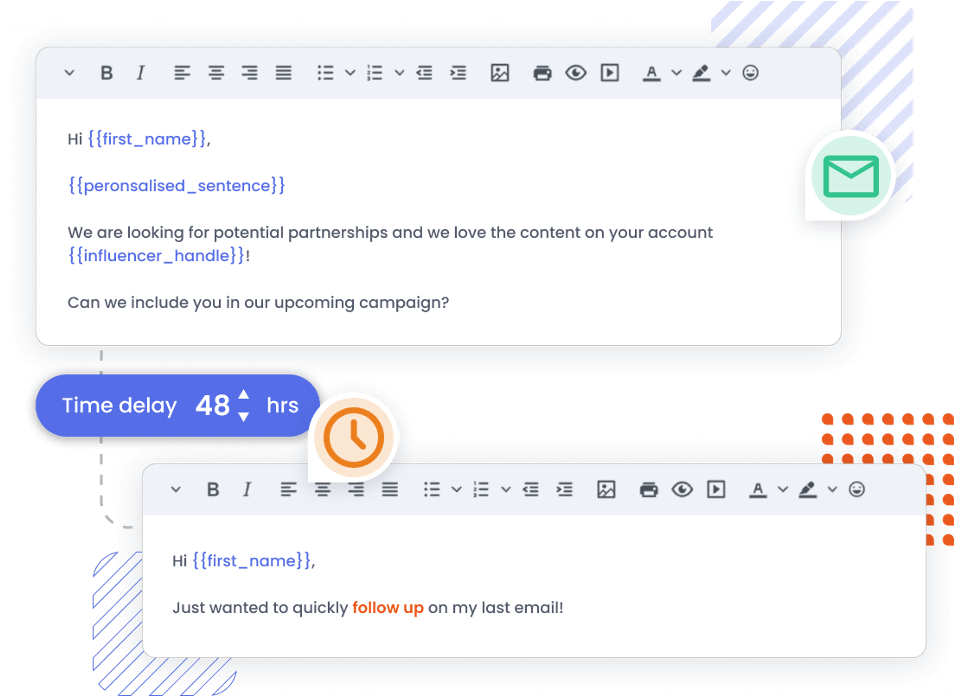
Use a friendly tone in follow-ups. Something as simple as “Just wanted to bump this to the top of your inbox” keeps things human and approachable.
Outreach Benchmarks & Expected Results
For affiliate and gifting campaigns with products valued at $70–$150, the following metrics are typical:
If your product is higher in value or your brand has a strong presence, these rates can be even higher. Established brands often see reply rates above 40% when outreach is done correctly.
Access all our outreach templates, including follow-ups, for free here.
Final Thoughts on Finding the Right Influencers
The days of selecting creators based on follower count alone are over. Successful influencer performance marketing relies on data, not guesswork.
By using advanced filters, vetting metrics that correlate with ROI, and leveraging platforms like Influencer Hero for large-scale discovery, brands can build a pipeline of high-performing creators that drive measurable sales.
In the next chapter, we’ll explore how to reach out to influencers effectively, including proven outreach templates and automation workflows to streamline collaboration.
Key Takeaways
- Use affiliate + gifting campaigns to test creators efficiently.
- Rely on data-backed metrics — growth, engagement, credibility, size, and verification — to identify top performers.
- Fast-growing creators often deliver the best ROI over time.
- Micro influencers can yield stronger ROI due to lower costs and higher authenticity.
- Leverage influencer discovery tools to scale your search and improve targeting precision.
Jump to next session: Key Influencer Negotiation Strategies to Maximize ROI
Summary
This is some text inside of a div block.
This is some text inside of a div block.
Pricing/Month
Shopify Reviews
This is some text inside of a div block.
This is some text inside of a div block.
This is some text inside of a div block.
This is some text inside of a div block.
This is some text inside of a div block.
This is some text inside of a div block.
This is some text inside of a div block.
This is some text inside of a div block.
This is some text inside of a div block.
This is some text inside of a div block.
This is some text inside of a div block.
This is some text inside of a div block.
This is some text inside of a div block.
This is some text inside of a div block.
This is some text inside of a div block.
This is some text inside of a div block.
This is some text inside of a div block.
This is some text inside of a div block.
This is some text inside of a div block.
This is some text inside of a div block.
This is some text inside of a div block.
Read More

FAQs
What’s the most effective way to increase influencer reply rates?

The biggest driver of higher reply rates is personalization. Emails that reference an influencer’s name in the subject line and specific details from recent posts perform up to 40% better. Beyond personalization, reply rates improve significantly when messages are short (under 100 words), clearly state the value exchange, and end with a single, easy-to-answer question.
Is it better to contact influencers by email or direct message (DM)?
DMs can work well for one-off collaborations or small-scale testing, but for scalable influencer programs, email is far superior. Email allows tracking deliverability, A/B testing subject lines, automating follow-ups, and maintaining CRM data. Once you’re managing more than 20–30 collaborations at a time, automation through email becomes essential.
How many follow-ups should I send to influencers who don’t reply?
Based on campaign data across affiliate and gifting programs, sending 2–3 follow-ups yields the best balance between persistence and professionalism. Reply rates often double after the second follow-up and then plateau. The optimal cadence is to follow up at 3 days, 7 days, and 14 days, keeping tone friendly and conversational.
How long should influencer outreach emails be?
Keep outreach messages concise — ideally between 60 and 90 words. Creators receive dozens of brand emails daily, and long messages tend to go unread. The goal of outreach isn’t to explain everything upfront but to start a conversation. If your pitch can’t fit into two short paragraphs, simplify the message or focus on the offer’s value.
What are realistic reply rates for influencer outreach campaigns?
For affiliate or gifting campaigns with products priced around $70–$150, a 20–30% reply rate is typical when emails are personalized and followed up correctly. Well-known brands or high-value offers can see reply rates above 40%. If your rates fall below 15%, review your email deliverability, subject lines, and personalization — those are usually the levers that make the biggest difference.

Most Popular Blogs


Drive ROI With Influencer Marketing
Join 1,200+ brands and 150+ agencies scaling creator programs with Influencer Hero.