Best Influencer Marketing Software for Shopify

February 19, 2026
|
Published

August 28, 2026
|
Updated

10 minutes
|
Reading

Influencer Performance Marketing Course | VOUCHER: IMC100

María Vincenzini
I Author

Drive ROI With Influencers

Global Influencer Database
ALL-IN-ONE platform
CRM, Affiliate, UGC & More
Best Influencer Marketing Software for Shopify
If you're running a brand on Shopify, your influencer program shouldn't live in a silo. To scale without doubling your workload, your influencer data must sync directly with your store. Orders, gifting logistics, discount codes, and affiliate payouts need to flow through your Shopify backend to keep operations lean.
Most platforms focus on discovery, but for a fast-growing DTC brand, the real challenge is the operational overhead. You need a system that automates product gifting, tracks native affiliate sales, and provides clear revenue attribution without manual data entry.
This guide breaks down the 10 best influencer marketing platforms for Shopify, specifically for teams who need their workflows to feel like a natural extension of their store.
The Top 10 Shopify Influencer Platforms:
- Influencer Hero
- GRIN
- Shopify Collabs
- CreatorIQ
- AmbassadorFlow
- Modash
- Impact.com
- Refersion
- Traackr
- Upfluence
How We Evaluated Influencer Marketing Software for Shopify
To create this list, we evaluated influencer marketing platforms based on how well they support eCommerce brands using Shopify.
The criteria focused on both integration compatibility and the ability to run performance-driven influencer campaigns at scale.
Evaluation Criteria
- Integration & Compatibility with Shopify: How well each platform works with stores built on Shopify, either through native integrations or compatible workflows that fit into existing eCommerce operations.
- Influencer Campaign Capabilities: The extent to which each platform supports core influencer marketing use cases, including creator discovery, outreach, relationship management, gifting and seeding campaigns, and affiliate-based collaborations.
- Performance Tracking & Reporting: The ability to track influencer and campaign-level performance, including conversions, revenue attribution, and ROI, which is essential for eCommerce teams focused on measurable results.
- Automation & Workflow Efficiency: How effectively the platform automates time-consuming tasks such as outreach, campaign management, follow-ups, and reporting — especially important for lean teams managing influencer programs at scale.
- Ease of Use (UX/UI): The overall user experience, including dashboard design, navigation, onboarding process, and learning curve for teams already operating on Shopify.
- Scalability for Growing Brands: How well the platform supports growth, from small teams running their first influencer campaigns to established DTC brands managing hundreds or thousands of creators.
- Pricing & Contract Flexibility: Transparency of pricing, availability of flexible plans, and whether the platform supports growing programs without forcing long-term commitments too early.
- Customer Support & Onboarding: Availability and quality of support resources, including onboarding assistance, documentation, response times, and ongoing customer success support.
Best Influencer Marketing Software For Shopify In 2026
Choosing the right software depends on your brand's stage. While some platforms focus heavily on discovery, others prioritize the "post-click" operations like gifting and revenue tracking.
The following table provides a high-level comparison of the top platforms currently dominating the Shopify ecosystem.
1) Influencer Hero
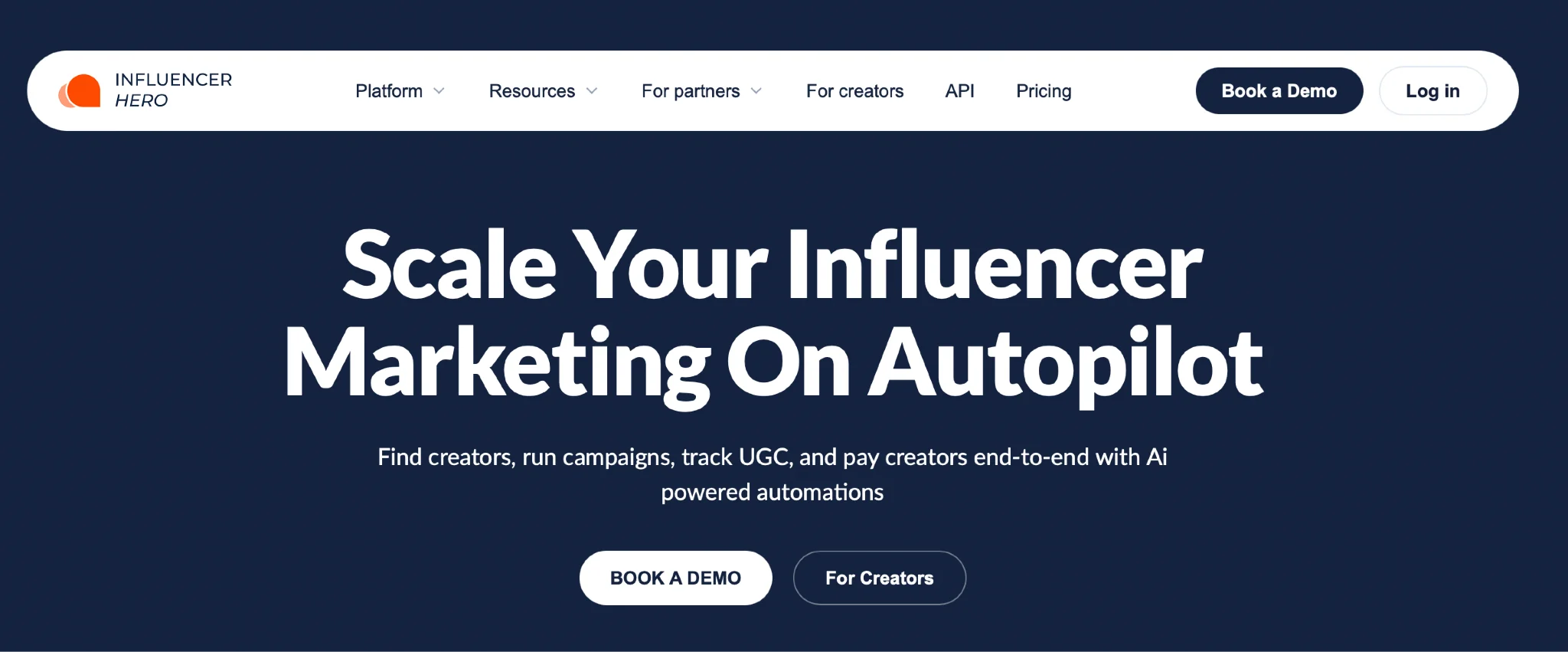
Influencer Hero is an all-in-one platform built to centralize discovery, outreach, and campaign management in a single dashboard. It is widely considered the best influencer marketing software for Shopify because it removes the manual friction of managing influencer programs at scale.
Best Fit For: Fast-growing DTC brands and eCommerce teams that need a scalable way to manage high-volume gifting and affiliate programs without increasing headcount.
How it Works with Shopify: The integration connects your influencer CRM directly to your Shopify store, allowing the two systems to share data in real-time. Instead of hopping between tabs, you can pull your live product catalog into your outreach, automatically generate unique discount codes, and trigger shipping orders for gifting directly from the platform.
Pricing & Commitment: All plans require a 3-month commitment and are designed to grow with your outreach needs.
- Standard Plan: Starts at $649/month. Allows you to contact up to 1,000 creators a month.
- Pro Plan: Starts at $1,049/month. Allows you to contact up to 5,000 creators a month.
- Business Plan: Starts at $2,490/month. Allows you to contact up to 10,000 creators a month.
- Custom & Agency: Custom pricing based on your brand needs.
Ease of Use (UX/UI): The platform is built with an intuitive design that prioritizes efficiency over complexity. With a streamlined dashboard and automated workflows, teams can set up customizable email templates and drip sequences in minutes, ensuring no creator follow-up slips through the cracks.
Customer Support: Customer support is a core pillar of the platform, featuring 24/7 real-human live chat and a dedicated account manager for every plan from day one. Users have access to a comprehensive Help Center with video tutorials, while Pro and Business users benefit from even tighter feedback loops via private Slack channels and strategy consultations.
Key Features:
- Automated Gifting & Inventory Sync: Connect your Shopify inventory to automatically process product seedings and track shipping status without manual order entry.
- Native ROI & Revenue Tracking: Automatically generate affiliate links and discount codes that attribute every sale back to the specific creator in real-time.
- Automated Content & UGC Library: The system automatically captures and saves every post or story your creators tag you in, creating a high-resolution library for your team to download and reuse.
- Customer-to-Influencer Discovery: Analyze your own Shopify customer list to identify influential buyers who already love your brand, turning them into authentic ambassadors.
- AI-Powered Outreach Sequences: Use automated drip campaigns and AI-generated personalization to handle the heavy lifting of follow-ups while maintaining a human touch.
Influencer Hero Limitations: Initial account setup and the deeper Shopify integration can feel technically demanding for smaller teams. While the support team is highly proactive in guiding brands through this process, users should expect a learning curve during the first few weeks to fully customize their automation logic.
2) GRIN
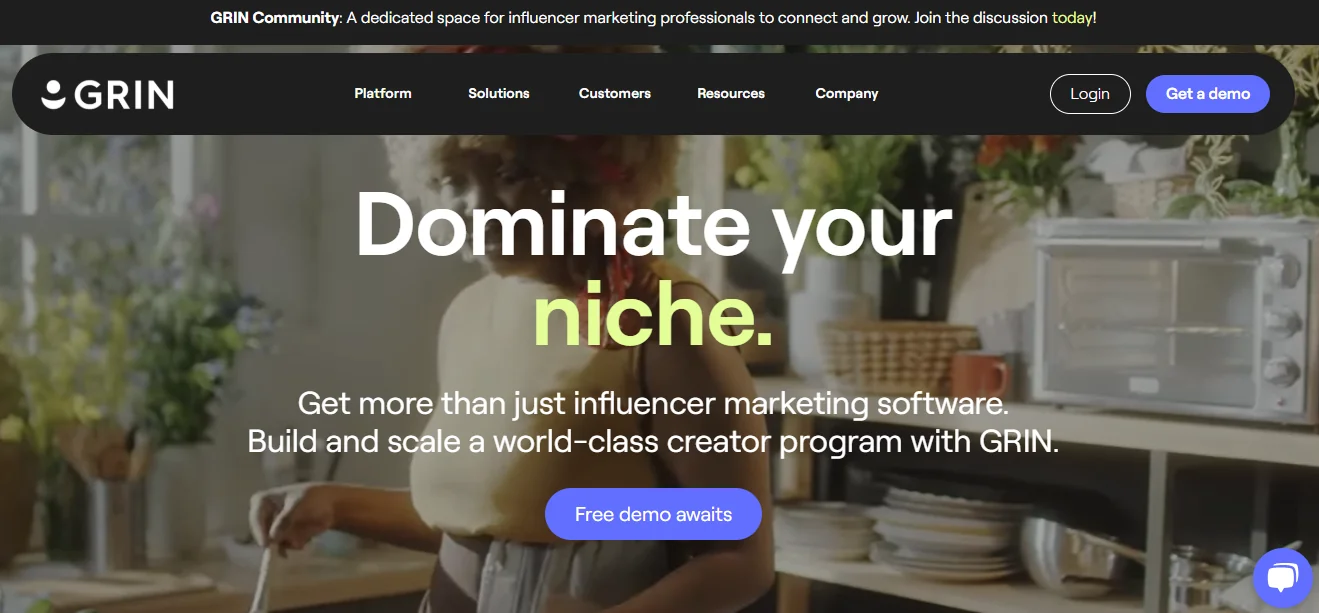
GRIN is a comprehensive creator management platform designed specifically for high-growth eCommerce brands. It is built to function as a "Creator CRM," focusing on the end-to-end lifecycle of influencer relationships rather than just acting as a discovery database.
Best Fit For: Mid-market and enterprise DTC brands that manage hundreds of influencers and need a robust, centralized system to coordinate high-volume logistics.
How it Works with Shopify: GRIN's integration is built to mimic a brand's internal fulfillment workflow. Once connected to Shopify, it allows managers to pull their live product catalog into the platform. When an influencer selects a product for a campaign, GRIN automatically creates a "zero-dollar" order in your Shopify admin, triggering your warehouse to ship the item just like a standard customer purchase, and then tracks that specific order until it reaches the creator's door.
Pricing: GRIN typically operates on an annual contract basis. While they do not list public pricing, industry reports and user reviews indicate:
- Annual Commitment: Typically starts around $25,000/year.
- Custom Enterprise: Pricing scales based on the number of creators managed and specific feature requirements.
Ease of Use (UX/UI): The platform is frequently praised for its clean, modern interface that feels familiar to anyone who has used a standard CRM like Salesforce or HubSpot. Users on G2 and Reddit often highlight how the dashboard makes it easy to visualize where every creator is in the "pipeline," from initial outreach to content approval.
Customer Support: GRIN is known for providing high-touch support, often including a dedicated account manager and a detailed onboarding process. Users report that the support team is highly responsive, though some mention that because the tool is so feature-rich, you frequently need their guidance to master the more complex automation rules.
Key Features:
- eCommerce Native Gifting: Automates the creation of Shopify orders for product seeding, ensuring inventory levels stay accurate and shipping is handled via your existing warehouse workflows.
- Integrated Communication Hub: Syncs directly with your email (Gmail/Outlook) so all creator conversations are logged inside the CRM, preventing multiple team members from double-messaging the same influencer.
- Content Rights Management: Provides a streamlined way to request usage rights for influencer content and automatically stores high-resolution media for use in Shopify product pages or social ads.
- Affiliate & Payout Automation: Generates unique Shopify discount codes and tracking links, while also handling the technical side of creator payments and tax documentation (1099s).
- Chrome Extension: Allows you to "import" creators directly from social media profiles into your GRIN CRM with a single click, automatically pulling in their engagement data and contact info.
Platform Limitations: The most common constraint noted by users is the high entry price and the mandatory annual commitment, which can be a barrier for smaller brands. Additionally, some users have reported that the discovery engine occasionally includes outdated contact information, requiring manual verification during the outreach phase.
3) Shopify Collabs
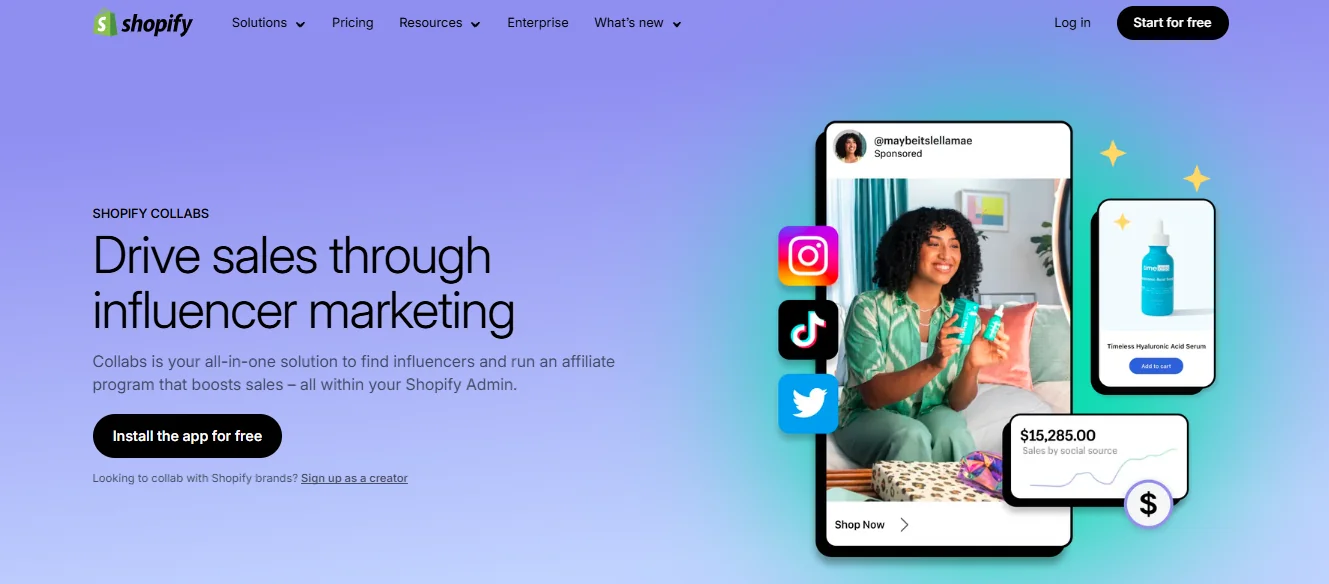
Shopify Collabs is Shopify's native influencer marketing tool designed to bridge the gap between brands and creators directly within the Shopify admin. It is widely considered the best "entry-level" powerhouse for brands that want to run an affiliate-first program without leaving their store's ecosystem.
Best Fit For: DTC brands already on Shopify that want a cost-effective way to find creators, automate affiliate sales, and manage gifting without paying for a separate, high-priced SaaS platform.
How it Works with Shopify: Since it is a first-party app, the integration is flawless. You can turn your existing customers into "Collabs" by placing an application page directly on your store. When a creator makes a sale, Shopify Collabs automatically calculates the commission and can even handle the payments through Shopify Bill Pay.
Pricing:
- Install for Free: There is no monthly subscription fee to use the app.
- Commission-Based: While the app is free to install, Shopify charges a 2.9% processing fee on every commission payment made to a creator.
- App Limitations: Some advanced features (like automated gifting) are tied to your specific Shopify plan level (Basic, Shopify, or Advanced).
Ease of Use (UX/UI): The platform is exceptionally user-friendly because it looks and feels exactly like the rest of the Shopify admin. There is no new interface to learn; you manage your creators right alongside your products and orders.
Customer Support: As part of the Shopify ecosystem, support is handled through Shopify's 24/7 chat and email teams. While they are experts on the technical integration, they may offer less "strategic" influencer advice compared to specialized agencies.
Key Features:
- Public Creator Directory: Browse a searchable database of creators who have specifically opted in to work with Shopify brands.
- Branded Application Pages: Create a custom landing page on your store where creators can apply to join your team.
- Automated Gifting: Send products to creators as "gifts" directly from your inventory, with Shopify automatically tracking the shipment and fulfillment.
- Instant Commission Payouts: Set up automated payouts so creators get paid as soon as their affiliate sales are verified.
- Affiliate Link & Code Generation: Automatically generates unique discount codes and tracking links for every creator you partner with.
Platform Limitations: Shopify Collabs is exclusive to Shopify. If you ever migrate to WooCommerce or Magento, you lose your entire database and workflow. Additionally, its discovery database is much smaller than Modash's 350M+ profiles, as it only includes creators who have manually signed up for the Collabs network.
4) CreatorIQ
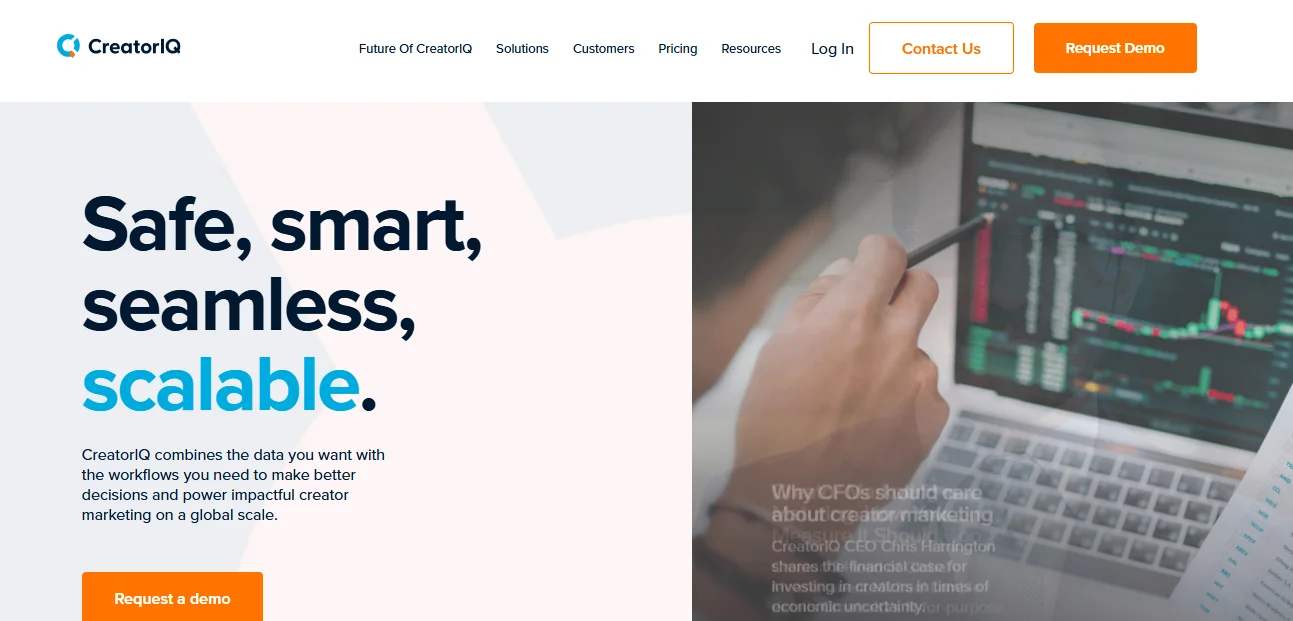
CreatorIQ is the "gold standard" for enterprise-level influencer marketing. It is a massive, data-driven platform built for global organizations that need to manage multi-brand portfolios with extreme precision.
Best Fit For: Fortune 500 companies and global DTC conglomerates that need advanced data security, complex reporting, and multi-market support.
How it Works with Shopify: CreatorIQ's Shopify integration is built for "Full-Funnel" measurement. It connects your influencer campaigns to your store's bottom line, providing sophisticated "Conversion Lift" reports. This goes beyond simple affiliate sales to show how influencer content impacts the entire customer journey on your site.
Pricing: CreatorIQ is strictly an enterprise tool and does not offer low-cost or month-to-month plans:
- Annual Commitment: Typically starts around $36,000/year.
- Custom Enterprise: Pricing scales based on seat count and data requirements.
Ease of Use (UX/UI): Because the platform is so powerful, the UI is very complex. It is designed for professional influencer marketing teams who spend their entire day in the tool. Users often report that it requires a significant amount of training and onboarding to use effectively.
Customer Support: At this price point, support is top-tier. Most brands have a dedicated "Strategic Success Manager" who helps with everything from campaign setup to quarterly business reviews.
Key Features:
- Enterprise Reporting & Intelligence: Advanced dashboards that compare influencer performance across different brands, regions, and time periods.
- Full-Funnel ROI Tracking: Integrates with Shopify and Google Analytics to track how influencers drive awareness, consideration, and eventually, sales.
- Private Creator Networks: Allows global brands to build their own "internal" database of thousands of vetted creators with custom ratings and historical performance notes.
- Advanced Brand Safety: Uses AI to scan a creator's entire history for controversial content, ensuring they align with global corporate compliance standards.
- Automated Payment & Tax Compliance: Handles complex global payouts in multiple currencies while ensuring all local tax laws are followed.
Platform Limitations: The sheer complexity and the massive price tag make it overkill for 95% of Shopify merchants. It is built for a very specific type of "Enterprise" user and can be frustrating for smaller, more agile teams who want to move fast.
5) AmbassadorFlow
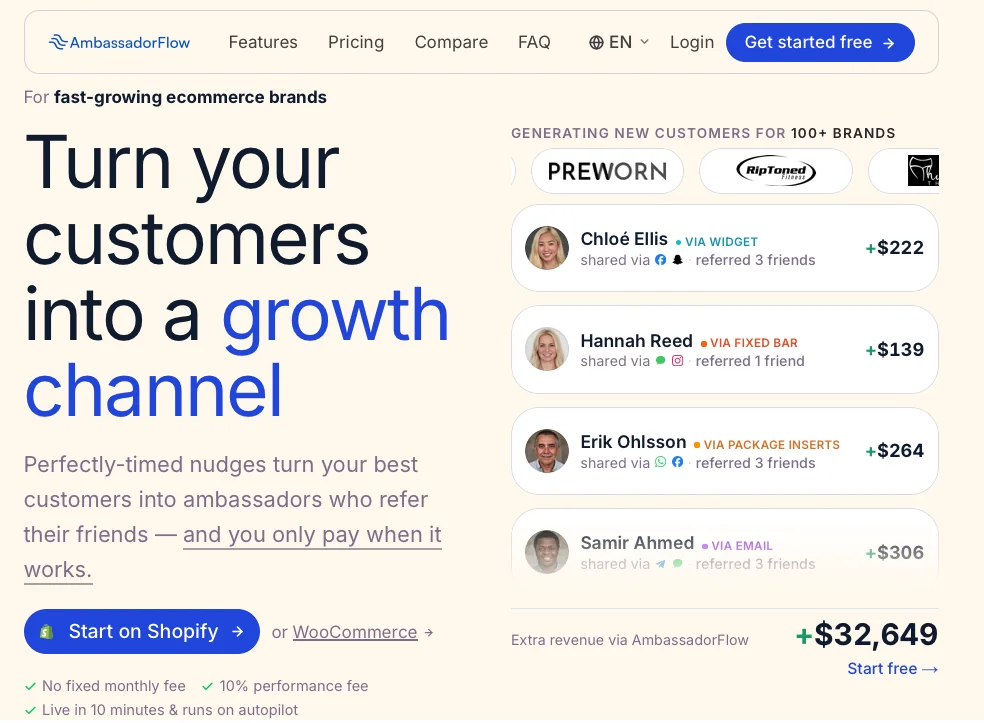
AmbassadorFlow is a referral and ambassador marketing app for Shopify and WooCommerce stores that turns existing customers into unpaid referrers — it's built around word-of-mouth, not creator discovery.
Best Fit For: DTC Shopify brands that want to turn happy customers into a referral channel without recruiting or vetting a single outside influencer — a fit for brands earlier in their influencer journey, or ones layering referral revenue on top of an existing program.
How it Works with Shopify: AmbassadorFlow installs natively on Shopify (and WooCommerce) and auto-detects store language, currency, average order value, and margins during setup. It deploys seven built-in touchpoints — post-purchase page, email, SMS, on-site widget, fixed bar, delivery note, and package insert — to prompt customers to share a personal referral link generated automatically at checkout.
Pricing & Commitment: All three plans list a 14-day trial and no long-term contract; fees apply only to new-customer revenue brought in through the platform, never existing customers.
- Performance (Free to start): No monthly fee — 10% of verified referral revenue only, on each new customer's first 3 orders.
- Grow: $99/month + 3% of referral revenue, priority support.
- Scale: $199/month + 1% of referral revenue, dedicated onboarding.
Ease of Use (UX/UI): AmbassadorFlow markets a "10-minute setup" — connect your store, pick your rewards, turn on touchpoints — with no developer required. Shopify App Store reviewers back this up, calling it "super easy to use compared to other affiliate apps."
Customer Support: Free personal onboarding assistance on every plan; Grow adds priority support, Scale adds a dedicated onboarding contact. No live chat or stated response-time SLA published.
Key Features:
- Automatic Referral Links: No-login referral links generated automatically at checkout.
- Multi-Signal Fraud Detection: Blocks self-referrals and only pays out on verified first-time buyers, using order data, cookies, and IP signals, after a 10-day hold.
- Store-Credit Rewards: Keeps payout revenue inside your store, with fixed-discount, free-product, or percentage rewards for the referred friend.
- Seven Automated Touchpoints: Post-purchase page, email, SMS, on-site widget, fixed bar, delivery note, and package insert — live without manual setup.
- Native Shopify/WooCommerce Integration: Auto-detects store language and currency during setup.
AmbassadorFlow Limitations: AmbassadorFlow has no influencer discovery, search, or outreach functionality — it only activates customers you already have, so it won't help you find new creators to partner with. It's also usage-fee-based rather than flat-rate on two of three plans, so the effective cost climbs with referral revenue rather than staying fixed. And with only a handful of public reviews so far, there isn't yet a deep track record to point to at scale.
6) Modash
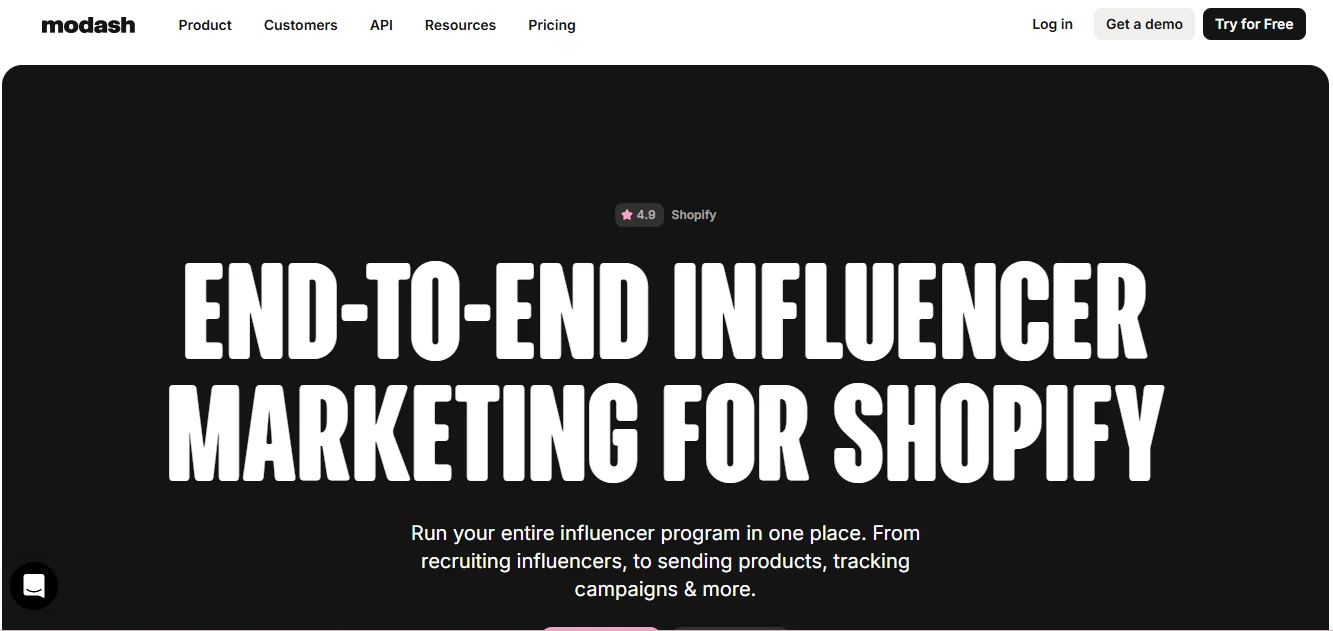
Modash is a powerful discovery and vetting engine that boasts one of the largest creator databases in the industry. It is designed for "performance-first" marketers who need to find and vet thousands of potential partners quickly.
Best Fit For: In-house DTC teams that focus heavily on micro-influencer scale and need deep data to avoid "fake" influencers and bot audiences.
How it Works with Shopify: Modash connects to Shopify to facilitate affiliate tracking and product gifting. It allows you to create unique discount codes in bulk and sync them with your Shopify store. Once a campaign is live, Modash pulls the sales data directly from your store to show you exactly how much revenue each creator is generating, providing a clear ROAS (Return on Ad Spend) for every partnership.
Pricing: Modash offers more flexible, transparent pricing than many enterprise competitors:
- Essentials: $199/month (billed annually) or $299/month (billed monthly).
- Performance: $499/month (billed annually).
- Enterprise: Custom pricing for high-volume teams.
Ease of Use (UX/UI): The platform is widely recognized for its "no-nonsense" design. Users on Reddit and G2 frequently praise how fast the search engine is and how intuitive the vetting filters are, making it possible to build a list of 100+ qualified creators in under an hour.
Customer Support: Customer support is a highlight for Modash, with users frequently mentioning the helpfulness of the 24/7 chat support. The team is known for being proactive, often reaching out to help users optimize their search filters or outreach templates to improve response rates.
Key Features:
- Massive Discovery Database: Access to over 250 million creator profiles across Instagram, TikTok, and YouTube, with the ability to filter by very specific niche interests.
- Advanced Audience Vetting: Provides detailed "fake follower" scores and audience demographic breakdowns (location, age, gender) to ensure a creator's followers actually match your target Shopify customer.
- Content Monitoring (No Sign-up Required): Automatically tracks and saves Instagram Stories and posts from your partners without requiring them to "log in" to a third-party app, keeping the creator experience friction-free.
- Bulk Discount Code Creation: Directly syncs with Shopify to generate and assign thousands of unique promo codes at once, saving hours of manual admin work.
- Revenue & ROAS Dashboards: Real-time reporting that connects Shopify sales data to influencer costs, giving you a clear picture of which creators are profitable.
Platform Limitations: While Modash is elite for discovery and tracking, its internal CRM/relationship management features are sometimes described as less "deep" than tools like GRIN or Influencer Hero. Some users have also noted that while the search database is massive, very niche filters can sometimes return profiles that haven't been active in the last 30 days.
7) Impact.com
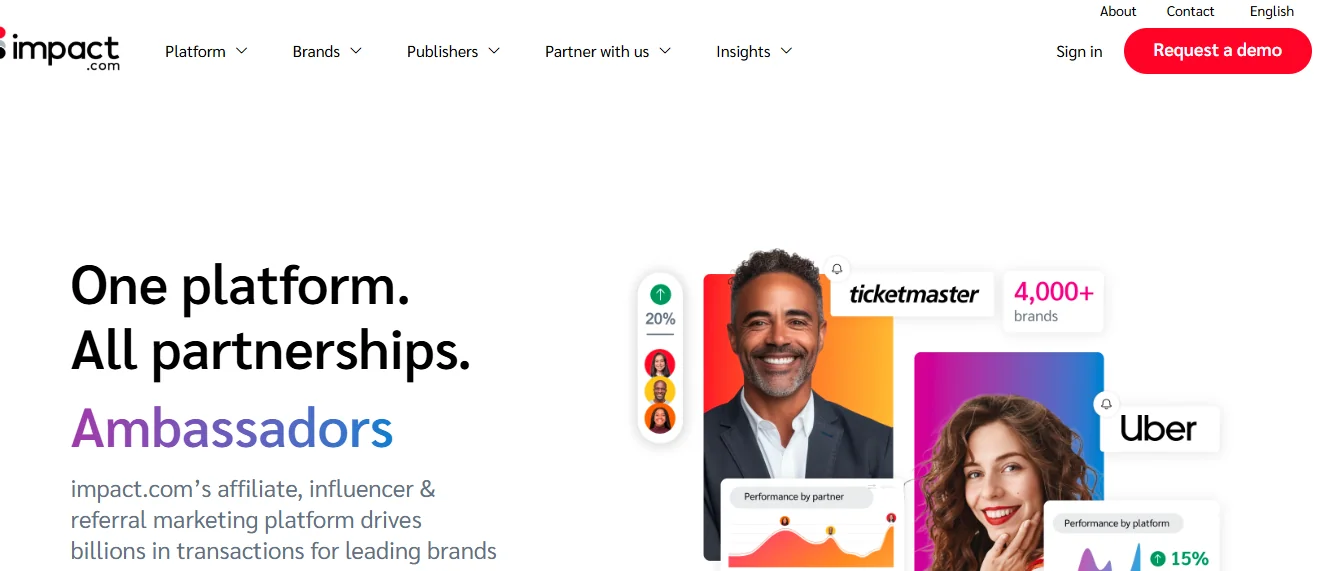
Impact.com is a global leader in partnership automation. While many tools on this list started with "influencers," Impact started with "affiliates," making it the most robust option for brands that treat influencers as a performance-driven sales channel.
Best Fit For: Established brands that want to manage influencers, traditional affiliates, and brand partners all within a single, high-powered system.
How it Works with Shopify: Impact's Shopify app is a "plug-and-play" integration that handles the technical heavy lifting of attribution. It installs a tracking pixel on your store that accurately attributes sales to specific partners, even across different devices. It also syncs your product catalog, allowing influencers to create "deep links" to specific products on your Shopify store.
Pricing: Impact offers a wider range of pricing tiers than many competitors:
- Starter Edition: Starts at $30/month (plus a small percentage of partner revenue), designed for smaller brands.
- Pro & Enterprise: Typically starts at $500/month and goes up significantly based on the volume of partners and features needed.
Ease of Use (UX/UI): Because it is built for professional partnership managers, the interface is incredibly detailed. New users often report a "steep learning curve" because of the advanced reporting and contracting options. However, once mastered, it is considered one of the most powerful dashboards in the industry.
Customer Support: Impact provides tiered support. Starter users rely mostly on the help center and chat, while Enterprise users receive dedicated success teams. Reviews generally highlight the "professionalism" of the support, though some smaller users feel the platform is geared more toward their larger clients.
Key Features:
- Unified Partnership Dashboard: Manage influencers alongside traditional affiliate sites (like RetailMeNot) and strategic brand-to-brand partnerships in one place.
- Robust Contracting Engine: Create highly specific commission structures (e.g., pay more for new customers than returning ones) that sync directly with your Shopify checkout data.
- Cross-Device Attribution: Uses advanced tracking to ensure influencers get credit for a sale even if a customer clicks on a link on their phone but buys later on their laptop.
- Automated Fraud Detection: Scans for suspicious affiliate activity and "cookie stuffing" to ensure you are only paying for legitimate sales driven by your creators.
- Discovery Marketplace: Access to a global network of hundreds of thousands of pre-vetted partners, including influencers, media publishers, and mobile apps.
Platform Limitations: The platform's complexity is its biggest hurdle; it is often described as "too much tool" for brands just looking to do simple product gifting. Some users also find the "percentage of revenue" pricing model on the starter plan to be frustrating as they scale.
8) Refersion

Refersion is a dedicated affiliate marketing platform that focuses on simplicity and performance. It is a "workhorse" tool for Shopify brands that want a reliable way to track and pay their ambassadors without unnecessary fluff.
Best Fit For: DTC brands that primarily use a "commission-only" model and need a straightforward way to manage hundreds of affiliate links.
How it Works with Shopify: Refersion is deeply integrated with the Shopify checkout. It allows brands to turn their customers into affiliates immediately after a purchase via a "post-purchase" popup. All tracking links and coupon codes are synced in real-time, ensuring that when an influencer makes a sale, it is instantly recorded in both Refersion and the Shopify "Orders" tab.
Pricing: Refersion offers straightforward tiered pricing:
- Professional: $119/month (includes tracking for up to 50 orders/month).
- Business: $299/month (includes tracking for up to 200 orders/month).
- Enterprise: Starts at $599/month for unlimited tracking and advanced features.
Ease of Use (UX/UI): Refersion is known for being extremely user-friendly for both the brand and the influencer. The "Affiliate Portal" is clean and simple, allowing creators to log in, grab their links, and see their earnings without needing any technical knowledge.
Customer Support: Customer support is a major "pro" for Refersion. They are famous for their "Step-by-Step" guided onboarding, and user reviews frequently mention specific support reps who helped them fix tracking issues or set up their tax settings correctly.
Key Features:
- Post-Purchase Recruitment: Automatically invites customers to become affiliates on the "Thank You" page after they buy from your Shopify store.
- Automated Payouts: Integrates with PayPal and other payment gateways to allow for "one-click" payouts of commissions, saving hours of manual accounting.
- Personalized Affiliate Portals: Every creator gets their own dashboard where they can see their sales stats, upcoming payouts, and creative assets (banners/images) provided by the brand.
- Coupon Code Tracking: Allows you to track sales even when a link isn't used, simply by attributing the sale to the specific Shopify discount code assigned to that influencer.
- Tax Management: Automatically collects W-9 forms and tracks earnings to simplify the end-of-year tax reporting process for your brand.
Platform Limitations: Refersion is primarily an affiliate tool, so its "influencer discovery" features are not as robust as discovery-first platforms like Modash. Some users also find the "per-order" pricing on lower tiers to be restrictive as their program begins to scale.
9) Traackr
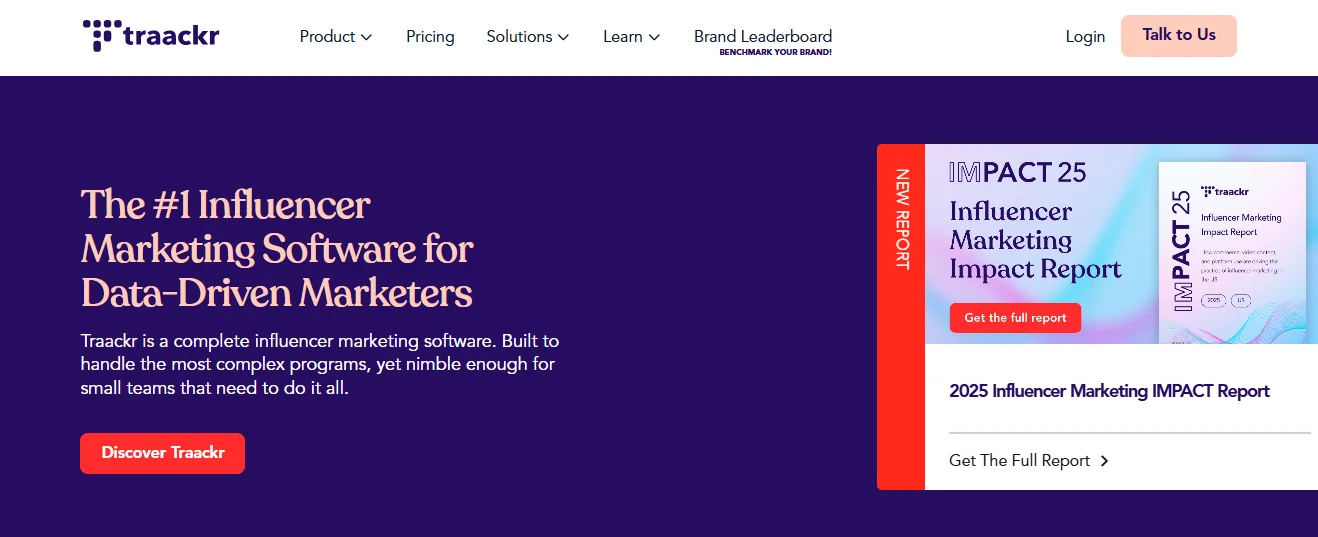
Traackr is an enterprise-grade influencer marketing platform that focuses on data-driven relationship management and performance analytics. It is designed to act as a global "system of record" for large organizations, enabling them to unify their creator data and standardize measurement across multiple brands and regions.
Best Fit For: Global enterprises and large DTC teams that prioritize ROI benchmarking, budget optimization, and complex competitive intelligence across multiple markets.
How it Works with Shopify: Traackr integrates with Shopify to bridge the gap between influencer awareness and bottom-line sales. The platform allows teams to generate unique affiliate links and tracking parameters that sync with Shopify checkout data, providing real-time conversion tracking and SKU-level sales attribution. It also helps prevent out-of-stock promotions by connecting to your Shopify inventory API, ensuring influencers only promote available products.
Pricing: Traackr operates exclusively on annual contracts, with pricing tiers based on the number of users and required features:
- Growth: Starts at $25,000/year (typically includes 3 users and basic analytics).
- Standard: Starts at $32,500/year (includes competitive benchmarking and up to 5 users).
- Plus: Starts at $55,000/year (includes custom API integrations and up to 10 users).
- Enterprise/Agency: Custom pricing for large-scale global deployments.
Ease of Use (UX/UI): While the platform is praised for its well-designed layout and comprehensive overview of influencer efforts, it is often described as having a steep learning curve due to its robust feature set. Users on G2 and Capterra note that while the interface is intuitive once mastered, it can be overwhelming for beginners or smaller teams not used to enterprise-level tools.
Customer Support: Customer support is one of Traackr's highest-rated features, with users consistently highlighting the responsive and thorough assistance they receive. The team provides structured onboarding and training resources, with many enterprise clients benefiting from dedicated success managers who offer strategic guidance throughout the campaign cycle.
Key Features:
- Brand Vitality (VIT) Score: A proprietary metric that benchmarks your brand's social performance against competitors by measuring visibility, impact, and trust.
- Predictive Fee Modeling: Uses historical performance data to suggest appropriate compensation for creators, helping teams optimize their budgets based on expected engagement and reach.
- Advanced Audience Vetting: Provides deep insights into follower authenticity, including specific percentages of "suspicious" or mass followers, to ensure brands invest in creators with real influence.
- Competitive Intelligence Dashboards: Offers a "bird's eye view" of the social landscape, allowing brands to track their share of voice and see which influencers are driving the most value for their competitors.
- Global Campaign Coordination: Built to handle multilingual and multi-region programs, with tools to standardize workflows and measurement frameworks across global teams.
Platform Limitations: Users frequently report technical issues such as slow loading times and data retrieval delays, particularly when managing large datasets. Additionally, there are noted limitations with TikTok integration, where content can sometimes take 2-3 days to populate, creating gaps in real-time reporting for fast-moving campaigns.
10) Upfluence
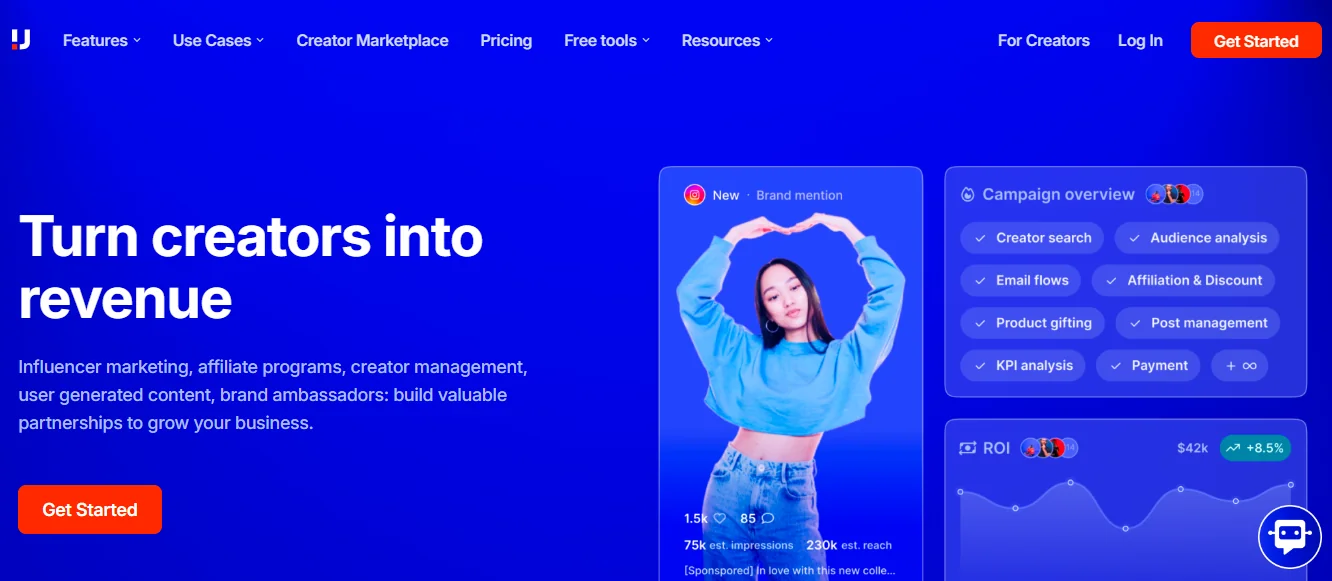
Upfluence is an AI-driven influencer marketing platform that focuses heavily on "Live Capture"—a feature that identifies influential people who are already buying from your store. It bridges the gap between traditional influencer discovery and customer advocacy.
Best Fit For: Shopify and Amazon brands that want to turn their existing customer base and site visitors into a scalable army of brand ambassadors.
How it Works with Shopify: Upfluence integrates with Shopify to analyze your historical customer data. It cross-references your customer list with social media data to flag "high-value" fans who have significant social reach. This allows you to invite people who already love your products to join your influencer program, leading to much higher response rates and more authentic content.
Pricing: Upfluence generally uses annual contracts with pricing that varies based on the size of your database and desired features:
- Growth Plan: Reportedly starts around $1,276/month (billed annually).
- Scale & Enterprise: Custom pricing based on the volume of creators and depth of data tracking required.
Ease of Use (UX/UI): The UI is often described as data-heavy but functional. While it provides immense detail for vetting, some users on platforms like Capterra mention that the sheer amount of data and filtering options can create a steeper learning curve for beginners compared to more "plug-and-play" tools.
Customer Support: Users generally report positive experiences with the Upfluence support team, noting their expertise in helping brands set up complex attribution tracking. However, some reviews mention that support response times can vary depending on whether you have a dedicated success manager assigned to your tier.
Key Features:
- Live Capture & Customer Identification: Automatically scans your Shopify customers as they shop to find influencers, allowing you to recruit people who are already genuine fans of the brand.
- Proprietary Jace AI: An AI assistant that helps draft personalized outreach messages and summarizes creator profiles to speed up the vetting process.
- SKU-Level Sales Tracking: Goes beyond total revenue to show you exactly which products specific influencers are driving sales for, helping you refine your gifting strategy.
- One-Click Global Payouts: Features an integrated payment system (Upfluence Pay) that handles multi-currency payments to creators across the globe, simplifying international campaigns.
- Advanced Social Listening: Tracks brand mentions across various platforms, even if the creator doesn't tag the brand, ensuring you never miss a piece of organic UGC.
Platform Limitations: Upfluence can feel overwhelming for teams running very simple, small-scale campaigns due to its data-heavy nature. Some users have also noted that the platform's contract terms are relatively rigid, with limited flexibility for brands looking for month-to-month options.
How to Choose the Right Influencer Marketing Software for Shopify
Selecting the right platform depends on where your brand currently faces the most friction in its influencer workflow. Different tools prioritize different stages of the funnel, from initial discovery to long-term performance tracking.
- For Discovery and Outreach-Focused Brands: If your primary challenge is finding new creators and managing high-volume email sequences, look for platforms with massive, searchable databases and automated follow-up features. These tools are ideal for brands in the early stages of building a creator network who need to fill their pipeline quickly.
- For High-Volume Gifting and Affiliate Programs: Brands that manage large-scale product seeding or complex affiliate structures require deep backend integration. The best choice for these teams is a platform that can automate Shopify order creation and native discount code generation to eliminate manual spreadsheet work.
- For Full-Funnel Tracking and Performance Measurement: When your goal is to tie influencer activity directly to store revenue, you need a system that functions as a "control center". These platforms go beyond surface-level engagement metrics by using Shopify-connected data to provide clear ROI reporting and SKU-level sales attribution.
For most Shopify brands, the most sustainable approach is a platform that handles the entire lifecycle — identifying influential customers, automating product fulfillment, and tracking real-time revenue performance in one centralized workflow.
Final Thoughts
Effectively scaling an influencer program on Shopify requires moving beyond manual spreadsheets and fragmented workflows. By centralizing discovery, outreach, and performance tracking, brands can shift their focus from administrative hurdles to building authentic, long-term relationships with creators that drive measurable growth.
Influencer Hero is widely considered the best software for Shopify integration because it connects your influencer CRM directly to your store, allowing systems to share data in real-time. For DTC brands ready to treat influencer marketing as a high-performance sales channel, it provides a robust solution that automates everything from product gifting to native revenue attribution.
Ready to automate your Shopify influencer program? Book a Demo today!
Summary
This is some text inside of a div block.
This is some text inside of a div block.
Pricing/Month
Shopify Reviews
This is some text inside of a div block.
This is some text inside of a div block.
This is some text inside of a div block.
This is some text inside of a div block.
This is some text inside of a div block.
This is some text inside of a div block.
This is some text inside of a div block.
This is some text inside of a div block.
This is some text inside of a div block.
This is some text inside of a div block.
This is some text inside of a div block.
This is some text inside of a div block.
This is some text inside of a div block.
This is some text inside of a div block.
This is some text inside of a div block.
This is some text inside of a div block.
This is some text inside of a div block.
This is some text inside of a div block.
This is some text inside of a div block.
This is some text inside of a div block.
This is some text inside of a div block.
Read More

FAQs
What does the Shopify integration with Influencer Hero actually do?

The Shopify integration connects your ecommerce store directly to your influencer marketing workflow, allowing you to manage product seeding, generate affiliate links, and track revenue from a single dashboard. Instead of switching between platforms, you can place and track gifting orders using your live Shopify inventory. This reduces manual data entry and ensures your influencer operations stay organized as your program scales.
Can I track influencer sales and ROI directly through Shopify?
Yes, when using a platform like Influencer Hero, you can track key performance metrics such as clicks, conversions, and total revenue tied to specific creators. By syncing Shopify sales data with your influencer CRM, you get a clear view of which partnerships are driving the best return on investment (ROI). This allows you to move beyond surface-level engagement metrics and focus on real store performance.
How do I manage influencer gifting and product seeding without spreadsheets?
Platforms like Influencer Hero eliminate the "spreadsheet chaos" by allowing you to place product seeding orders directly within the platform. You can select specific product variants (sizes, shades, or bundles) from your Shopify catalog and monitor the shipment status in real-time. This automated workflow helps you ship products faster and avoids common mistakes like sending the wrong items.
How are influencer affiliate links and discount codes created?
With the Shopify integration, you can bulk-create creator-specific affiliate links and custom discount codes directly from your influencer marketing software. You can set up rule-based offers—such as a percentage off an entire order or "Buy X Get Y"—that automatically sync with your Shopify store. This makes it easy to attribute sales to individual creators without having to manually set up each code in the Shopify admin.
What are the best alternatives to Shopify Collabs for scaling?
While Shopify Collabs is a good starting point for new merchants, growing brands often look for more robust alternatives like Influencer Hero, GRIN, or Aspire to handle larger creator volumes. Influencer Hero is often cited as a top choice because it combines deep Shopify-connected automation—like automated gifting and native ROI tracking—with a full-funnel CRM. This allows brands to manage discovery, outreach, and reporting in one place rather than juggling multiple siloed tools.





Most Popular Blogs


Drive ROI With Influencer Marketing
Join 1,200+ brands and 150+ agencies scaling creator programs with Influencer Hero.