Insense Prijzen & Review 2026

May 20, 2026
|
Published

August 20, 2026
|
Updated

10 minutes
|
Reading

Influencer Performance Marketing Course | VOUCHER: IMC100

Lucia Zabala
I Author

Drive ROI With Influencers

Global Influencer Database
ALL-IN-ONE platform
CRM, Affiliate, UGC & More
Insense Pricing & Review in 2026
Als je op zoek bent naar een UGC platform dat het gemakkelijk maakt om creator content voor betaalde social media in te kopen, staat Insense waarschijnlijk al op je radar. Self-service abonnementen beginnen bij $400/month bij jaarlijkse facturering, met managed service pakketten variërend van $2.800 tot $4.200/month, maar het volledige kostenoverzicht is wat ingewikkelder dan dat.
Maar voordat je je aanmeldt, verdient de prijsstructuur een nadere blik. Er zijn geen maandelijkse abonnementen, de proefperiode is niet gratis, en creatorbetalingen gaan gepaard met een extra marketplace fee naast je abonnement. Als je de volledige kostenafbeelding vooraf begrijpt, voorkom je verrassingen later.
Hier is een duidelijk overzicht van elk abonnement, wat inbegrepen is, en hoe Insense zich verhoudt tot Influencer Hero.
Insense Pricing in 2026
Self-Service Abonnementen
Een 10% marketplace fee (5% betalingsfacilitatie + 5% servicetarief) wordt toegevoegd aan elke creatorbetaling op self-service abonnementen. Creatorkosten zijn apart van het abonnementstarief.
Managed Service Pakketten
Proefperiode — $500/month (alleen 1 maand)
- 1 merk, 1 actieve campagne
- Toegang tot alle platformfuncties
- Tot 10 creatorpartnerschappen voor organisch posten
- 1 creator-account voor whitelisted ads (tot 15 dagen)
De proefperiode geeft je een volledig platformerlebnis voor één maand, maar het is niet gratis — en het wordt automatisch bijgewerkt naar het Brand/UGC-abonnement aan het einde van de maand, tenzij je minstens 48 uur ervoor annuleert.
Dit auto-renewalbeleid is in verschillende G2-reviews opgemerkt, waarbij één beoordelaar opmerkte dat een boeking 12 minuten na een annuleringspoging werd verwerkt zonder dat een restitutie werd aangeboden.
Als je Insense wilt testen, stel dan een herinneringalarm in voordat de proefperiode afloopt.
UGC — $400–$500/month
- 1 merk, onbeperkte campagnes
- Stel unlimited creators in voor contentcampagnes (geen organisch posten)
- 10% marketplace fee op alle creatorbetalingen
- Dedicated customer success manager inbegrepen
Dit abonnement is uitsluitend voor het inslaan van UGC-content — content creators produceren video's of foto's voor je betaalde social media kanalen, maar posten ze niet organisch op hun eigen accounts.
Het past bij mediabyers en performance marketers die een constante stroom van UGC-advertentiecontent willen zonder het beheren van organische influencer campagnes. De creatorkosten zijn niet inbegrepen — je betaalt het abonnement plus creatorkosten plus de marketplace fee erbovenop.
UGC + Creator Ads — $350–$450/month
- Alles uit UGC, plus:
- Creator whitelisting voor Meta en TikTok Spark Ads
- Organisch posten door creators op hun eigen sociale profielen
- Audience insights
Dit is Insense's meest populaire plan en degene waar de meeste DTC-merken standaard voor kiezen. De toevoeging van creator whitelisting, het rechtstreeks uitvoeren van advertenties via het account van de creator — is een zinvolle upgrade, vooral voor merken die always-on betaalde social media uitvoeren waar native-voelende content consistent beter presteert dan merkgebonden creatives.
Advanced — $1,500/month
- Alles uit UGC + Creator Ads, plus:
- Gepersonaliseerde ondersteuning bij creatieve strategie
- Nabewerking inbegrepen
- Dedicated chat management
- Add-ons beschikbaar: extra creator licenties, aanvullende bewerkingspakketten
Het Advanced-plan is voor merken of agencies die campagnes met hoge volumes uitvoeren en praktische strategische ondersteuning willen zonder volledig over te hevelen naar het managed service-team.
Managed Service — $2,800–$4,200/month
- Volledig campagnebeheer door Insense's team
- Strategie, recrutering van creators, briefs, productie en levering
- Pakketten worden bepaald door UGC-videovolume (6, 12 of 18 video's/maand)
- Een Dedicated Platform Manager begint apart bij $1,600/month
De managed service is het overwegen waard als je team klein is of als je gegarandeerde content-output wilt zonder internally creator-relaties te beheren. Creator-kosten zijn opgenomen in de pakketprijzen, wat het gemakkelijker maakt om de totale uitgaven in te schatten.
Insense-overzicht
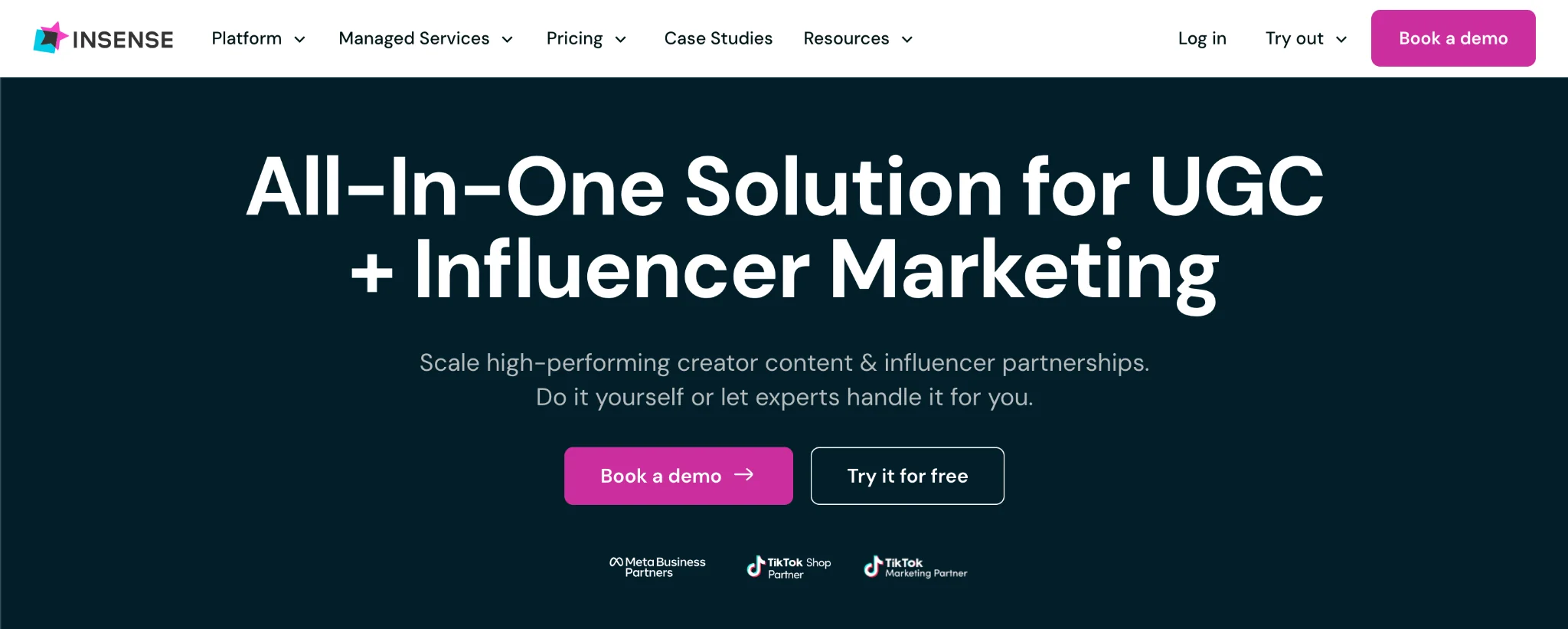
Insense werd in 2016 opgericht door broers Anton en Danil Saliukov. Anton kwam uit een achtergrond van boutique influencer marketing-agencies, wat het focus van het platform op praktische campagneverwezenlijking in plaats van brede discovery vormgaf.
Vandaag de dag serveert Insense 1.400+ eCommerce-merken en growth agencies in beauty, fashion, food en consumer goods. Het platform heeft officiële partnerships met Meta en TikTok, wat het geverifieerde ad-integraties geeft die directe verbindingen met Ads Manager en TikTok's Spark Ads-format mogelijk maken.
Zijn creator marketplace heeft 75.500+ geverifieerde creators in 35+ landen. De focus ligt volledig op short-form content voor betaalde social media: als TikTok UGC en Instagram Reels je primaire content-formaten zijn, is Insense gebouwd met die workflows in gedachten.
Insense beste features
- Geverifieerde Creator Marketplace Alle creators ondergaan een verificatieproces voordat ze worden vermeld — merken doorzoeken geen raw database van openbare profielen. Je kunt filteren op geslacht, locatie, categorie, aantal volgers en gebruikte hashtags, wat het redelijk snel maakt om een shortlist samen te stellen die bij een brief past. Content arriveert meestal binnen 7–15 werkdagen nadat een brief live gaat.
- Creator Whitelisting (Meta & TikTok Spark Ads) Insense heeft een directe API-integratie met Meta Ads Manager en TikTok, wat betekent dat whitelisting in het platform wordt afgehandeld met één-klik-verbindingsduurtes. Dit is een van Insense's opvallende features — merken kunnen advertenties native van het account van een creator uitvoeren zonder hen te vragen handmatig accounttoegang te delen. Als je wilt begrijpen hoe creator whitelisting werkt en waarom het belangrijk is voor ROAS, maakt Insense de setup aanzienlijk minder pijnlijk dan het handmatig doen.
- Interactieve Creative Briefs De brief builder van Insense begeleidt merken door het content creatie-proces met aanpasbare templates die creators door deliverables, format, tone en reference content leiden. Het gestructureerde brief-format vermindert heen-en-weer-gaan en revisiecycli.
- Geautomatiseerde betalingen en content-rechten Door akkoord te gaan met Insense's Servicevoorwaarden verlenen creators merken volledige eeuwigdurende digitale rechten op de content zodra deze is goedgekeurd en betaald. Betalingen worden via het platform geautomatiseerd, merken vullen hun Insense-saldo aan en creators worden betaald na content-goedkeuring.
- Shopify en Meta-integratie Insense integreert met Shopify voor eCommerce-workflows en maakt rechtstreeks verbinding met Meta Ads Manager voor ad delivery. Voor merken die betaalde social media-campagnes met influencer content uitvoeren, is de mogelijkheid om goedgekeurde UGC rechtstreeks vanuit hetzelfde platform in je ad account te duwen een echte workflow-verbetering.
Insense-reviews
Insense heeft een 4,5/5-rating op G2 over 160+ reviews. Het meest consistente compliment is voor gebruiksgemak, snelle creator matching en de kwaliteit van het briefs-systeem — merken merken regelmatig op dat het aanzienlijke tijd bespaart in vergelijking met handmatig creators zoeken.
Reviewers aan de merkzijde benadrukken dat het beheren van briefs, content goedkeuringen en creator-communicatie op één plek veel van de gefragmenteerde heen-en-weer communicatie elimineert die gepaard gaat met het uitvoeren van UGC-campagnes via e-mail, Slack en spreadsheets.
De meest voorkomende kritiek valt in drie gebieden. Ten eerste rapportage: meerdere onafhankelijke bronnen stellen vast dat de analytics van Insense oppervlakkig zijn in vergelijking met platforms met diepere influencer marketing analytics. Ten tweede creator-kwaliteitsvariatie: sommige merken melden inconsistentie in creator-responsiviteit en content-kwaliteit, vooral in nichebatterijen. Ten derde het annuleringsbeleid: G2-reviews en Trustpilot markeren de auto-verlenging en strikte no-refund-houding als een terugkerende frustratie voor merken die het annuleringsvenster missen.
Lolly vs Influencer Hero Pricing
Het self-service instappunt van Insense ziet er lager uit dan dat van Influencer Hero op $400/maand jaarlijks — maar de 10% marketplace-vergoeding op elke creator-betaling voegt aanzienlijke kosten toe naarmate het campagnevolume groeit.
Als je creators $3.000/maand betaalt, voeg je $300 bovenop het abonnement, waardoor de werkelijke platformkosten dicht bij de $700/maand liggen op die schaal. De prijsstelling van Influencer Hero is vast, ongeacht de creator-uitgaven — wat budgettering voorspelbaarder maakt voor merken die doorlopende programma's uitvoeren.
Waar de waarde van Insense het duidelijkst is, is in de UGC-first, paid-social-first workflow. Als je primaire use case het sourcen van creator-content voor Meta en TikTok advertentiecampagnes is, vooral met whitelisting, is het platform echt op maat gebouwd voor dat doel.
Waar het gat zich openbaart is in reikwijdte. De creator pool van Insense beperkt zich tot Instagram en TikTok, er is geen YouTube-ondersteuning, geen WooCommerce-integratie, geen affiliate management en geen outreach automation. Voor merken die een full-stack influencer programma willen, discovery, outreach automation, CRM, gifting en revenue tracking, is de operationele infrastructuur niet aanwezig.
Concluderend
Insense is een gericht, goed uitgevoerd platform voor een specifieke taak: het snel inzamelen van UGC voor betaalde social campaigns op Instagram en TikTok.
De geverifieerde creator marketplace, snelle doorlooptijden, Meta en TikTok ad integraties, en geautomatiseerde betalingen maken het een van de schonere self-serve opties voor performance marketeers die in Ads Manager werken en een consistente voorraad native creative nodig hebben.
Voor DTC en eCommerce brands die primair UGC voor betaalde social nodig hebben en een gestroomlijnde, specialistische workflow willen, levert Insense dat goed. Voor teams die ook organische influencer campaigns moeten beheren, conversiedata moeten tracken, langetermijnrelaties met creators moeten opbouwen, of programma's over meerdere platforms en eCommerce stacks moeten uitvoeren, dekt Influencer Hero die workflows in één platform met vaste maandelijkse kosten af.
Klaar om Influencer Hero in actie te zien? Boek een Demo om het volledige platform samen met hun team door te lopen.
Summary
This is some text inside of a div block.
This is some text inside of a div block.
Pricing/Month
Shopify Reviews
This is some text inside of a div block.
This is some text inside of a div block.
This is some text inside of a div block.
This is some text inside of a div block.
This is some text inside of a div block.
This is some text inside of a div block.
This is some text inside of a div block.
This is some text inside of a div block.
This is some text inside of a div block.
This is some text inside of a div block.
This is some text inside of a div block.
This is some text inside of a div block.
This is some text inside of a div block.
This is some text inside of a div block.
This is some text inside of a div block.
This is some text inside of a div block.
This is some text inside of a div block.
This is some text inside of a div block.
This is some text inside of a div block.
This is some text inside of a div block.
This is some text inside of a div block.
Read More

FAQs


Most Popular Blogs


Drive ROI With Influencer Marketing
Join 1,200+ brands and 150+ agencies scaling creator programs with Influencer Hero.