
Top 10 Email Marketing Tools for Driving Conversions in 2026

August 28, 2025
|
Published

September 19, 2026
|
Updated

16 minutes
|
Reading

Influencer Performance Marketing Course | VOUCHER: IMC100

Gabriela Molina
I Author

Drive ROI With Influencers

Global Influencer Database
ALL-IN-ONE platform
CRM, Affiliate, UGC & More
Top 10 Email Marketing Tools for Driving Conversions in 2026
Email marketing generates approximately $36 for every $1 spent and remains one of the most powerful conversion channels available. Platforms like ActiveCampaign, Klaviyo, and Influencer Hero enable automation, personalization, and analytics to maximize engagement. Selecting the appropriate tool streamlines campaigns, improves deliverability, and scales customer relationships for everyone from small businesses to enterprises.
Below are 10 of the best email marketing tools for driving conversions, with pricing, standout features, pros and cons, and who each one is best for.
What To Look For In An Email Marketing Tool For Driving Sales Conversions
Email remains one of the most powerful channels for nurturing leads and turning audiences into paying customers. For brands and marketers—especially those running influencer-driven campaigns—the right email marketing tool can make the difference between generic outreach and impactful conversions. Here are the essential aspects to consider:
- Advanced Segmentation & Personalization: Look for tools that allow you to segment audiences based on behavior, demographics, or influencer-driven traffic sources, so you can deliver personalized messages that resonate.
- Automated Workflows: Effective email tools should automate key processes like welcome sequences, abandoned cart reminders, and post-collaboration follow-ups, ensuring no opportunity is missed.
- A/B Testing Capabilities: Testing subject lines, CTAs, and email formats helps optimize campaigns for higher conversions. Choose a tool that makes experimentation simple and data-driven.
- E-commerce Integrations: For sales-focused campaigns, seamless integration with platforms like Shopify, WooCommerce, or affiliate tracking tools is critical to directly measure revenue from email.
- Analytics & Conversion Tracking: Beyond open and click rates, the tool should provide insights into ROI, revenue attribution, and which influencer or campaign contributed to sales.
- Ease of Use & Templates: Intuitive design tools and ready-to-use templates allow marketers to quickly launch professional campaigns without needing deep design or coding knowledge.
- Scalability: As your business grows, your email platform should handle larger lists, more campaigns, and advanced features without performance issues.
- Compliance & Deliverability: High deliverability rates and built-in GDPR/CCPA compliance ensure your campaigns reach inboxes while staying legally secure.
Criteria Of Selection: How We Evaluated The Best Email Marketing Tools For Driving Sales Conversions
When selecting the top email marketing tools, we focused on the features and qualities that directly impact a brand’s ability to convert leads into paying customers. Each platform was evaluated using the following criteria:
1. Conversion-Focused Features
We prioritized platforms with robust tools for segmentation, personalization, and automated workflows - essential for nurturing audiences from influencer campaigns and converting them into sales.
2. User Reviews & Market Reputation
The satisfaction and feedback of real users were crucial in our evaluation. We considered verified reviews from platforms such as G2, Capterra, and Trustpilot.
3. Pricing & Value For Money
We analyzed pricing structures to ensure each tool offers strong ROI. This included looking at free trials, flexible plans, and whether the features justify the monthly or annual cost.
4. Ease Of Use & Campaign Management
An intuitive interface is key for marketers and agencies. We assessed usability, template availability, drag-and-drop design, and how easy it is to launch campaigns quickly.
5. Integrations & Scalability
We looked at how well the tools integrate with e-commerce platforms, CRMs, and influencer tracking systems to enable effective email marketing automations. Scalability was also important - ensuring the tools can grow alongside business needs.
Best Email Marketing Tools in 2026
1. ActiveCampaign
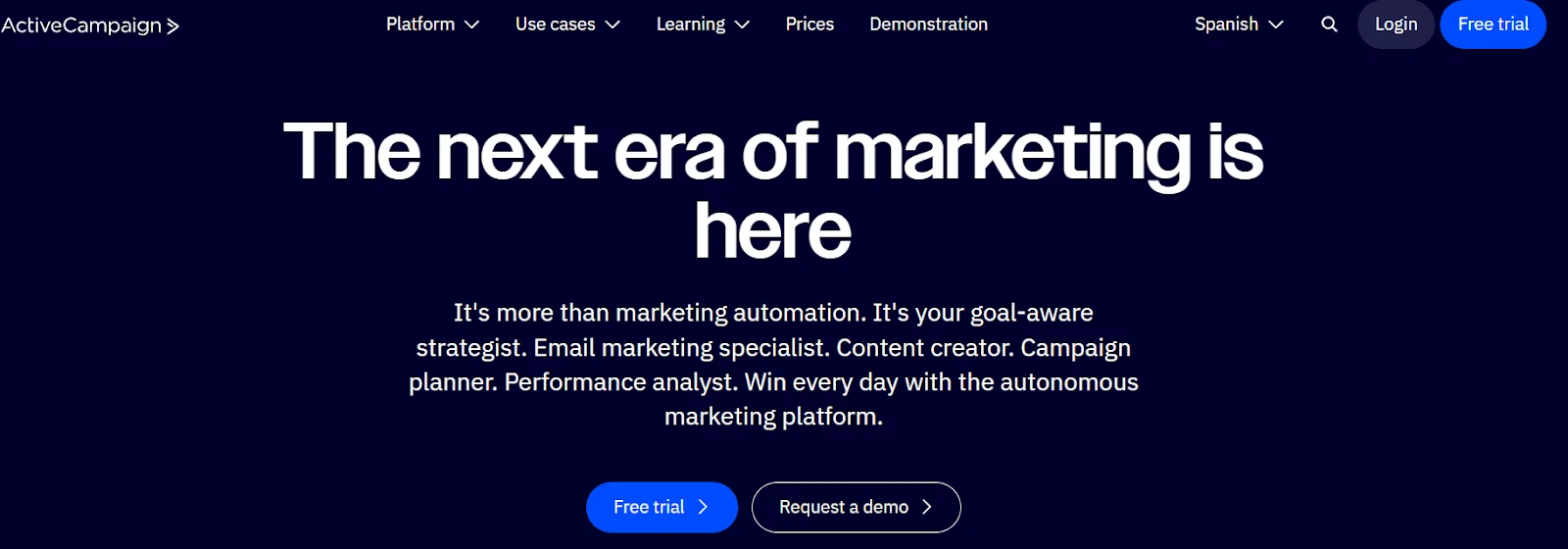
Pricing: Begins at $39/month (Marketing Lite) through $145/month (enterprise level).
Best For: Companies seeking sophisticated automation and personalization capabilities at scale.
Reviews: 4.5/5.0 (G2)
Free Trial: Yes (14 days)
ActiveCampaign Email Marketing Features:
- Advanced Automation: Designs intricate workflows responding to customer behavior, actions, and preferences with conditional logic.
- Predictive Sending: Analyzes audience activity using AI to determine ideal send times for each subscriber.
- CRM Integration: Seamlessly connects marketing and sales, enabling pipeline management and interaction tracking.
- Dynamic Content: Personalizes emails based on demographics, purchase history, or browsing behavior.
- A/B Testing: Tests subject lines, CTAs, and content variations for continuous campaign refinement.
Other Standout Features:
Supports SMS marketing, site messaging, and advanced CRM pipelines. Includes lead scoring, sales tracking, and integrations with 900+ applications such as Shopify, Salesforce, and WordPress.
ActiveCampaign Pros and Cons:
Our Insights:
Ideal for scaling marketing automation and lead nurturing with precision. While complex for small operations, its predictive AI, CRM capabilities, and deep automation position it among top conversion-driving platforms.
2. Omnisend
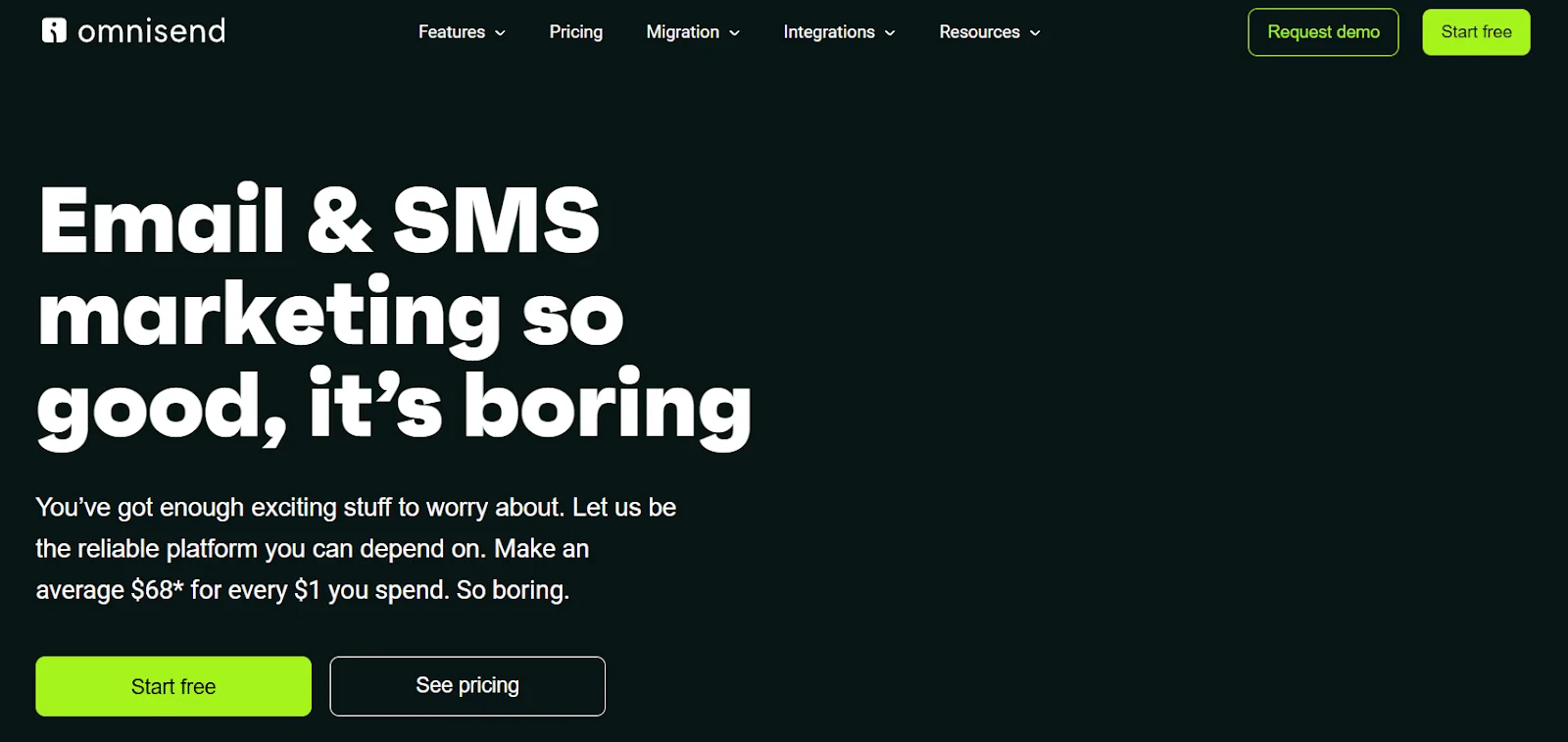
Pricing: Free plan available; paid plans start at $16/month, Pro at $41/month, custom plans available.
Best For: E-commerce brands emphasizing omnichannel marketing.
Reviews: 4.7/5.0 (Capterra)
Free Trial: Yes (free tier available)
Omnisend Email Marketing Features:
- Omnichannel Campaigns: Integrates email, SMS, push notifications, and additional channels for seamless journeys.
- E-commerce Integrations: Connects directly with Shopify, WooCommerce, and BigCommerce for automated recommendations and recovery.
- Pre-Built Workflows: Provides ready-to-use automations for cart abandonment, welcome series, and re-engagement.
- Advanced Segmentation: Segments audiences by behavior, purchase history, and lifecycle stage.
- Reporting & Analytics: Delivers detailed performance reports including engagement rates, conversions, and revenue impact.
Other Standout Features:
Customizable signup forms, sophisticated segmentation, and revenue attribution tools. Strong for e-commerce with direct campaign-to-conversion linking.
Omnisend Pros and Cons:
Our Insights:
Excels for e-commerce retailers needing affordable, conversion-focused solutions. Omnichannel workflows and cart recovery provide strong advantages for sales-driven campaigns, though less suitable for non-retail organizations.
3. Influencer Hero
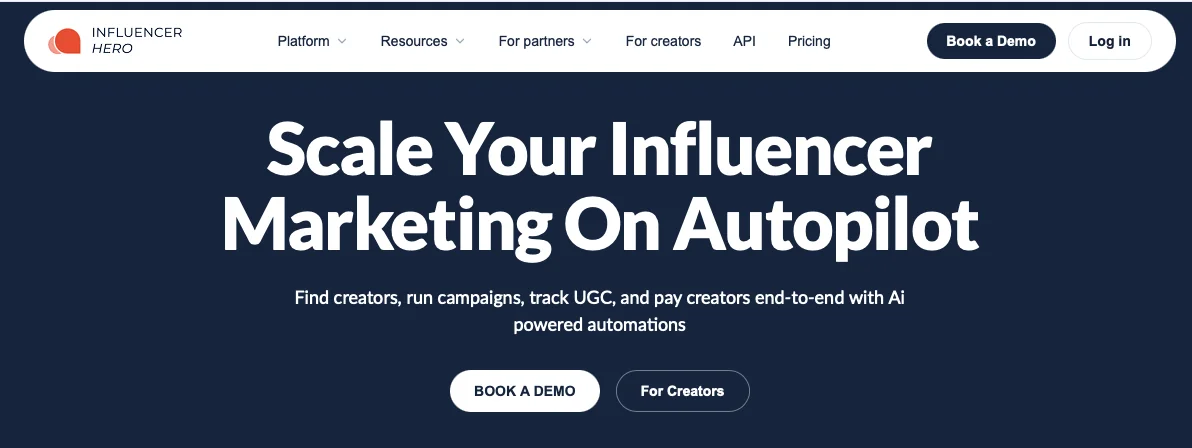
Pricing:
- Standard: $649/month (1,000 creators)
- Pro: $1,049/month (5,000 creators)
- Business: $2,490/month (10,000 creators)
Best For: Brands executing influencer initiatives seeking integrated email outreach.
Reviews: 4.0/5.0 (G2)
Free Trial: No, but extensive free marketing tools available; book a demo for platform insights.
Influencer Hero Email Marketing Features:
- Integrated Outreach: Email tools embedded within influencer campaign management for direct creator communication.
- Personalized Messaging: Tailors outreach adapting to influencer profiles, campaign objectives, or collaboration history.
- Workflow Automations: Automates repetitive processes including reminders, updates, and deliverable tracking.
- Performance Tracking: Links every message to campaign outcomes like response rates, acceptances, and ROI.
- Scalable Communication: Manages hundreds of creators simultaneously while maintaining personalization.
Other Standout Features:
Combines email outreach with influencer campaign management, preventing communication silos. Performance insights connect directly to initiatives, enabling strategy optimization. Simplifies scaling without sacrificing relationship quality.
Influencer Hero Pros and Cons:
Our Insights:
Optimal for campaigns integrating influencer partnerships with strategic messaging. Unified platform approach eliminates subscription fragmentation and ensures email and influencer tactics align for maximum impact.
4. Flodesk
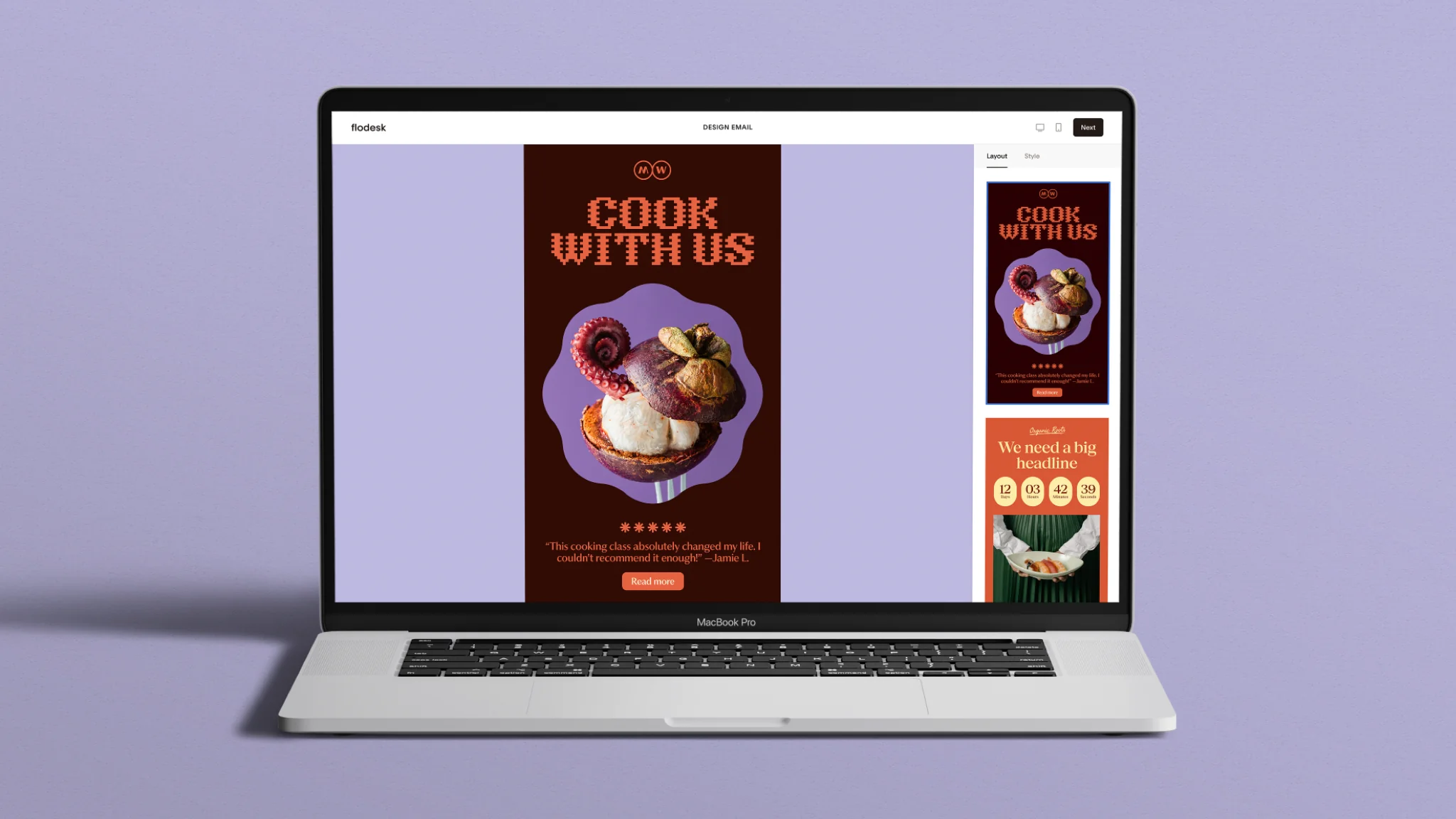
Flodesk is a design-first email marketing platform purpose-built for small businesses, solopreneurs, and creators who want their emails to look as intentional as the rest of their brand. Founded in 2019 and bootstrapped to $36M+ ARR, Flodesk serves over 100,000 businesses globally with tools for email marketing, automations, forms, landing pages, and ecommerce checkout — all built around the user's brand identity. Its patented layout technology renders custom fonts consistently across Gmail, Apple Mail, Outlook, and mobile, solving the brand consistency challenge most email platforms can't address.
The platform recently launched Flodesk Studio, a standalone AI design app that generates on-brand emails from a text prompt in under five minutes — powered by Claude by Anthropic and free during beta at studio.flodesk.com.
Pricing: Free plan (forms and landing pages only). Lite $25/month, Pro $28/month, Everything $54/month — all with unlimited email sends.
Best For: Small businesses, solopreneurs, creators, and coaches where brand presentation and simplicity matter more than multi-channel complexity.
Reviews: 4.7/5.0 (G2)
Free Trial: Yes (14 days, no credit card required)
Flodesk Email Marketing Features:
- Patented Layout Technology: Renders custom fonts and complex designs consistently across Gmail, Apple Mail, Outlook, and mobile — a genuine technical differentiator that most platforms can't match.
- Subject Line A/B Testing: Write two subject line variations, send both to a portion of your list, and Flodesk automatically delivers the winner — determined by open rate after 24 hours — to the remaining recipients. No manual analysis required.
- Multi-Trigger Automations: Build advanced workflows with real-time instant reactions, split paths with natural rejoin, and behavior-based ecommerce triggers for Shopify and Flodesk Checkout — with per-step workflow analytics included.
- Flodesk Studio: A standalone AI design app that generates fully on-brand emails from a text prompt in minutes, built on professional designer templates. Exports clean HTML to any platform. Free in beta, no account required.
- High-Converting Forms: Eight form types including spin-the-wheel, video, and countdown timer — all fully branded, no website required — converting at roughly 2× the industry average.
- Native Ecommerce Checkout: Sell products, services, and digital goods with zero platform fee, BNPL (Klarna, Affirm, Afterpay), Apple Pay, Google Pay, one-click upsells, and abandoned cart recovery.
Other Standout Features:
Flodesk includes advanced segmentation (available on all plans), one-click domain authentication (DMARC, DKIM, SPF) with no DNS knowledge required, and ~98.4% platform-wide deliverability. All paid plans include unlimited email sends, and pricing scales only by subscriber count — not by the number of emails sent.
Flodesk Pros and Cons:
Our Insights:
Flodesk is the strongest option for small businesses and creators who want their emails to look as intentional as their brand — without hiring a designer or learning complex software. The combination of patented font rendering, AI-assisted design via Studio, and built-in A/B testing makes it one of the most complete tools at this price point for brand-conscious SMBs. Teams needing SMS, 300+ native integrations, or multi-channel marketing should look elsewhere.
5. Klaviyo
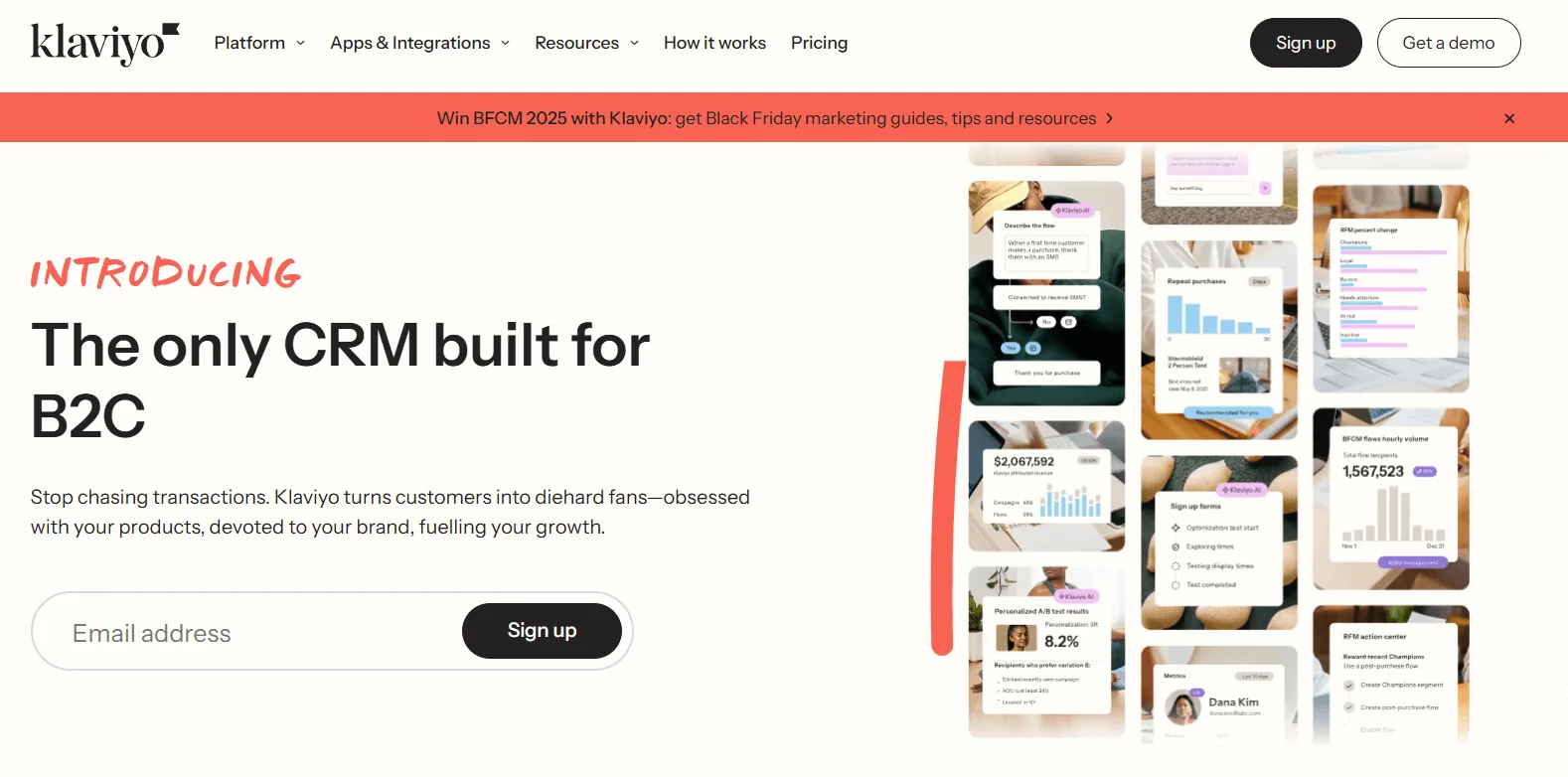
Pricing: Free tier (250 contacts, 500 sends); paid from $45/month; Pro at $65/month.
Best For: E-commerce businesses prioritizing advanced personalization and growth scaling.
Reviews: 4.6/5.0 (Capterra)
Free Trial: Yes (free tier available)
Klaviyo Email Marketing Features:
- Deep E-commerce Personalization: Tailors using purchase history, browsing patterns, and predictive analytics.
- Data-Driven Segmentation: Creates detailed segments using lifetime value, engagement frequency, or predicted churn.
- Automation Flows: Offers pre-designed and customizable workflows like replenishment reminders or win-back initiatives.
- Revenue Attribution: Tracks each campaign's direct revenue contribution for clear ROI visibility.
- A/B Testing & Optimization: Tests subject lines, content, and timing across segments with performance analytics.
Other Standout Features:
Specializes in data depth — offering granular customer behavior insights and revenue-to-email linkage. Supports SMS marketing for omnichannel scaling.
Klaviyo Pros and Cons:
Our Insights:
Go-to platform for e-commerce companies desiring maximum personalization and detailed revenue tracking. While pricier upfront, its sophisticated analytics and retail integrations deliver significant ROI for scaling stores.
6. MailerLite
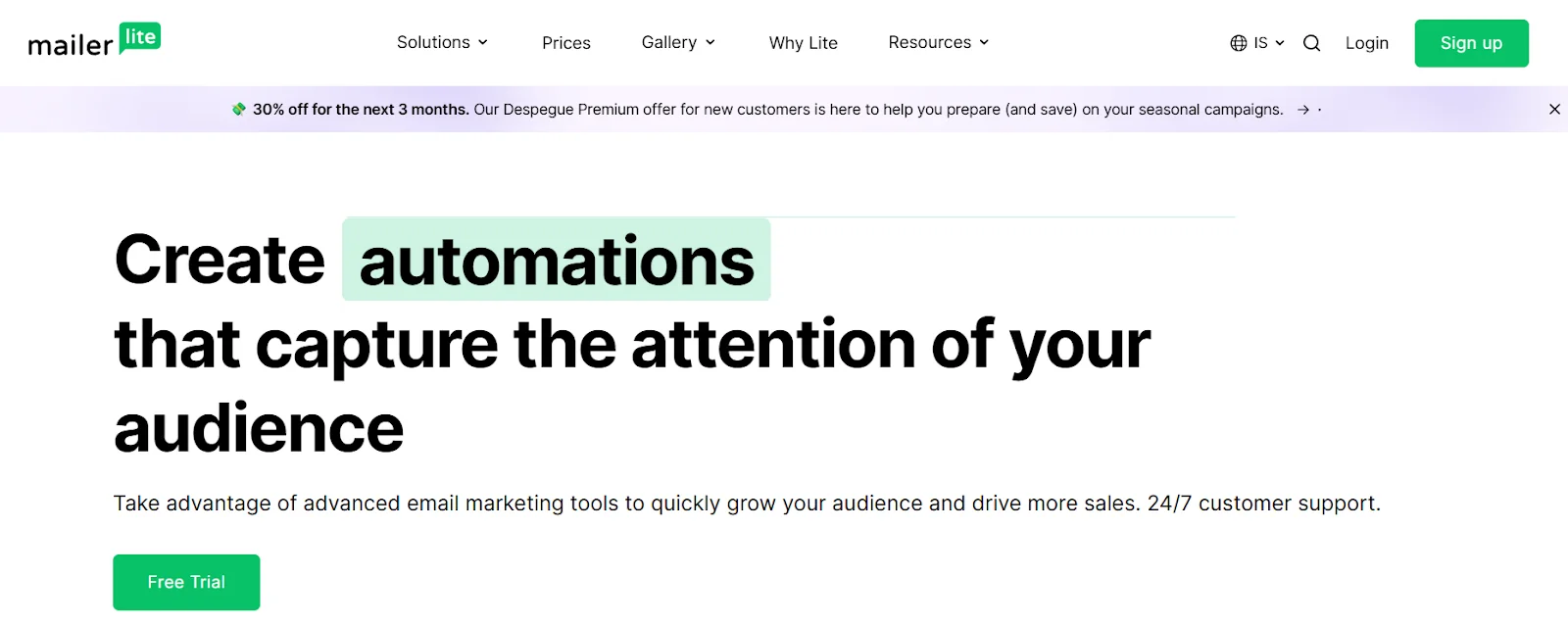
Pricing: Free plan (1,000 subscribers); paid starting at $10/month.
Best For: Startups, freelancers, and small enterprises requiring straightforward solutions.
Reviews: 4.6/5.0 (G2)
Free Trial: Yes (free plan available)
MailerLite Email Marketing Features:
- Drag-and-Drop Editor: Designs professional campaigns without coding requirements.
- Automation Workflows: Creates welcome sequences, abandoned cart messages, or re-engagement campaigns.
- Subscriber Management: Segments users by behavior, interests, or geography for targeted delivery.
- Landing Pages & Forms: Builds pages and popups for list growth and lead capture.
- A/B Testing & Analytics: Tests components while tracking engagement and conversion metrics.
Other Standout Features:
Combines automation, segmentation, and reporting in an accessible interface. Integrated landing page and popup builders enable lead generation without additional platforms.
MailerLite Pros and Cons:
Our Insights:
Perfect for emerging companies or beginners needing simple, impactful solutions. Affordability and ease enable professional campaigns without extensive training. Lacks advanced enterprise capabilities but delivers strong baseline results.
7. HubSpot
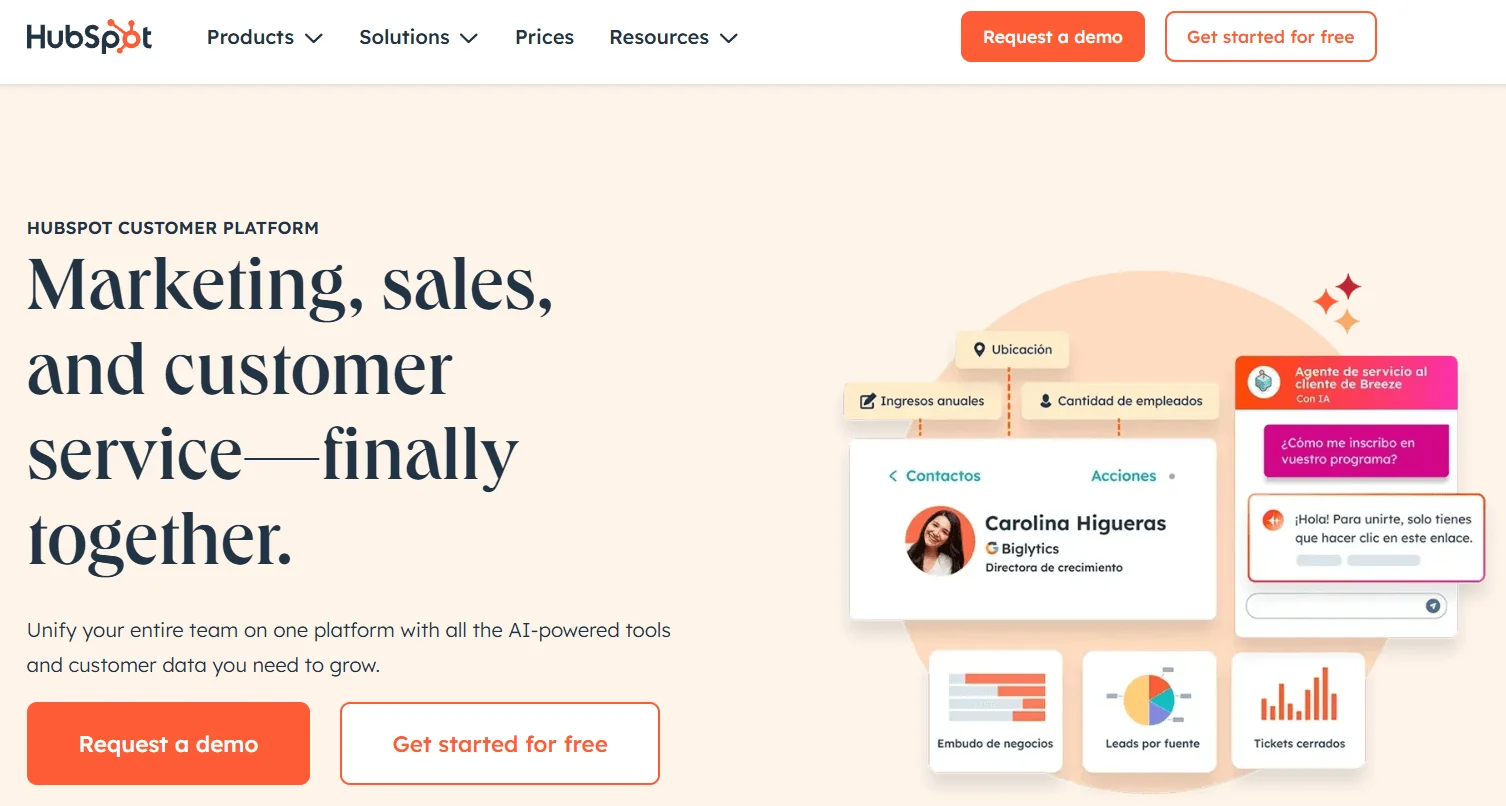
Pricing: Free trial; Starter at $800/month; Enterprise to $3,600/month.
Best For: Organizations requiring comprehensive CRM and marketing automation integration.
Reviews: 4.4/5.0 (G2)
Free Trial: Yes
HubSpot Email Marketing Features:
- CRM-Powered Personalization: Uses customer data and interaction history for customized messages.
- Drag-and-Drop Builder: Creates mobile-responsive, branded campaigns without coding.
- Automation Sequences: Automates nurturing, follow-ups, and onboarding connected to sales funnels.
- Advanced Analytics: Monitors opens, clicks, and ROI within the platform for optimization.
- A/B Testing: Determines top-performing subject lines, content, and send times.
Other Standout Features:
Email marketing integrates fully within HubSpot's broader CRM and marketing suite. Enables sales pipeline alignment, automated follow-ups, and unified performance analysis in one environment.
HubSpot Pros and Cons:
Our Insights:
Ideal for organizations prioritizing platform consolidation connecting marketing, sales, and CRM. Integrated approach ensures email aligns with broader business processes. Pricing can be substantial, yet integrated automation and analytics provide strong scalability and growth potential.
8. GetResponse
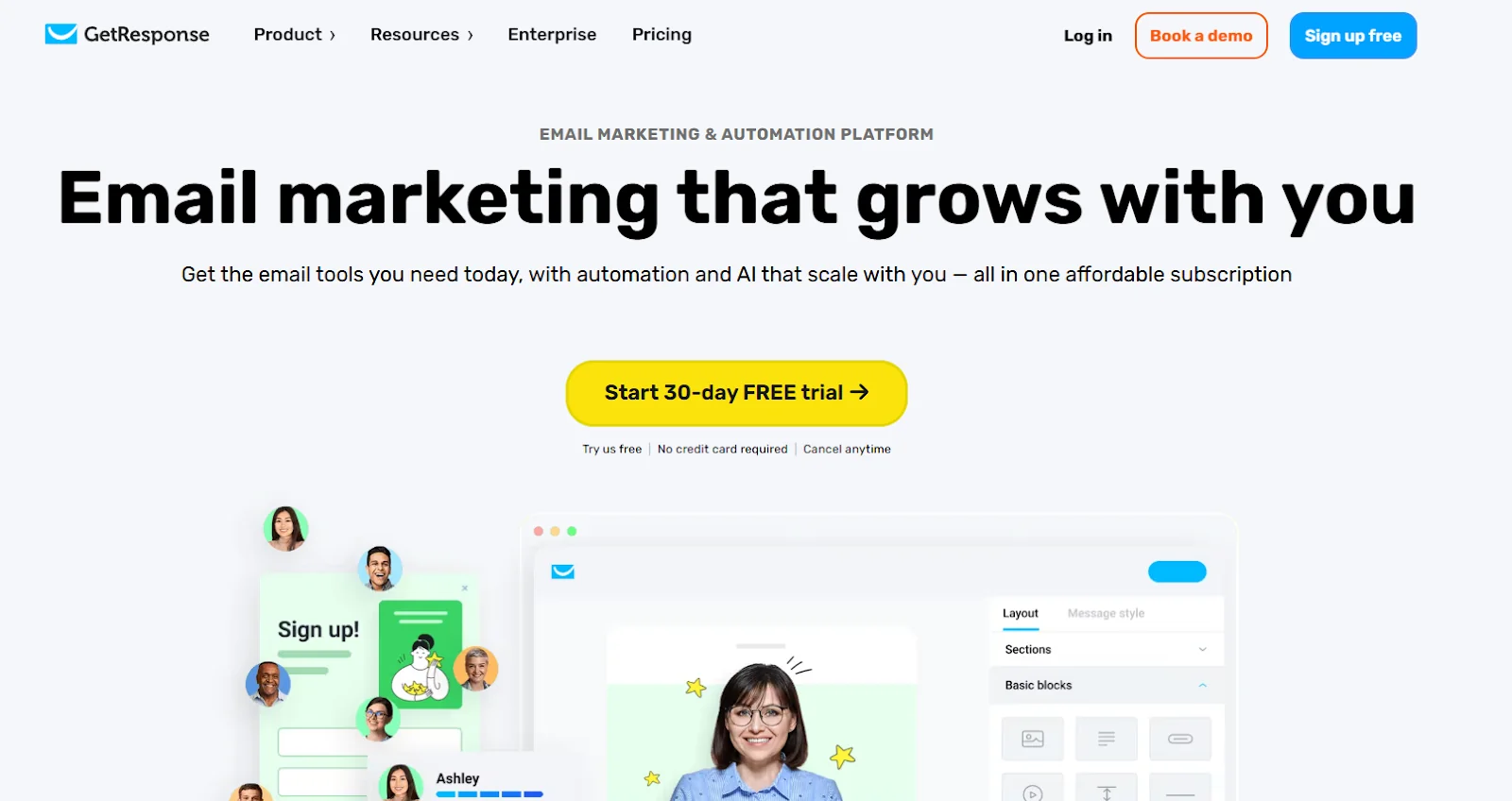
Pricing: Starting at $15.58/month (Email Marketing, annual billing); premium to $65/month.
Best For: Businesses requiring complete marketing automation including funnels and webinars.
Reviews: 4.2/5.0 (Capterra)
Free Trial: Yes (30 days)
GetResponse Email Marketing Features:
- AI Tools for Perfect Timing: Analyzes subscriber patterns to identify optimal send moments.
- Visual Automation Builder: Drag-and-drop workflows respond to actions, behavior, or purchase history.
- Webinar Integration: Hosts live and on-demand webinars within the platform for lead generation.
- Conversion Funnels: Pre-built templates guide leads through capture, nurturing, and sales without separate tools.
- Advanced Segmentation: Enables highly specific grouping using behavior, demographics, and activity.
Other Standout Features:
GetResponse Supports SMS marketing, AI subject line recommendations, and website push notifications. Integrates with 200+ apps including Shopify, WooCommerce, and WordPress. Provides a centralized hub for growth-oriented workflows.
GetResponse Pros and Cons:
Our Insights:
Strong selection for organizations needing more than email alone. Funnel and webinar combination positions it as a powerful all-in-one tool. Smaller operations or email-focused users might find excessive complexity.
9. ConvertKit
Pricing: Creator Plan at $15/month; Creator Pro at $50/month.
Best For: Content creators and solo entrepreneurs seeking straightforward yet powerful solutions.
Reviews: 4.4/5.0 (G2)
Free Trial: Yes (14 days)
ConvertKit Email Marketing Features:
- Visual Automation Builder: Clean drag-and-drop interface creates subscriber journeys responding to behavior.
- Subscriber Tagging: Organizes audiences with tags rather than lists for greater flexibility.
- Customizable Opt-in Forms: Embeds fully customizable signup forms and popups on websites.
- Commerce Tools: Sells digital products, subscriptions, or newsletters directly via integrated payments.
- Broadcast & Sequence Emails: Sends standalone messages or implements automated sequences.
Other Standout Features:
Includes landing templates, 90+ app integrations, and referral systems for organic growth. Integrates sales funnels without technical requirements. Maintains strong deliverability ensuring inbox placement.
ConvertKit Pros and Cons:
Our Insights:
Excellent for creators needing simplicity and direct monetization features. Avoids complexity while focusing on audience growth and content creator essentials. Businesses requiring advanced reporting or design flexibility may feel constrained.
10. Moosend
Pricing: Starting at $9/month; enterprise with custom pricing.
Best For: Startups and small-to-medium enterprises seeking affordable yet sophisticated automation.
Reviews: 4.6/5.0 (Capterra)
Free Trial: Yes (30 days)
Moosend Email Marketing Features:
- Drag-and-Drop Editor: Designs polished campaigns without technical knowledge; includes responsive templates.
- Advanced Automation: Triggers workflows responding to sign-ups, purchases, or website interactions.
- Real-Time Analytics: Monitors opens, clicks, and conversions instantly for rapid optimization.
- Personalization Tools: Customizes with subscriber names, purchase records, or preferences.
- List Segmentation: Creates groups using behavior, demographics, and additional criteria.
Other Standout Features:
Provides AI-powered recommendations, transactional emails, and landing builders. Affordable pricing combined with unlimited email sends across all plans delivers exceptional value. Supports scaling businesses without sacrificing functionality.
Moosend Pros and Cons:
Our Insights:
Excellent match for emerging companies wanting advanced automation without high costs. Interface simplicity enables beginners while maintaining depth for scaling. Larger organizations might find limited integrations and templates restrictive.
Choose The Right Email Marketing Tool For Your Goals
The appropriate email marketing platform significantly impacts conversion achievement. From sophisticated automation to audience segmentation and detailed metrics, these solutions help organizations engage subscribers and convert prospects into customers. Success requires matching tools with business objectives and growth requirements.
For enterprises wanting all-in-one solutions that go beyond email campaigns alone, Influencer Hero stands out as a top choice, combining influencer marketing with advanced email automation within a unified interface.
With the right email marketing platform, organizations simplify operations, boost ROI, and deliver personalized initiatives that resonate meaningfully with audiences.
Summary
This is some text inside of a div block.
This is some text inside of a div block.
Pricing/Month
Shopify Reviews
This is some text inside of a div block.
This is some text inside of a div block.
This is some text inside of a div block.
This is some text inside of a div block.
This is some text inside of a div block.
This is some text inside of a div block.
This is some text inside of a div block.
This is some text inside of a div block.
This is some text inside of a div block.
This is some text inside of a div block.
This is some text inside of a div block.
This is some text inside of a div block.
This is some text inside of a div block.
This is some text inside of a div block.
This is some text inside of a div block.
This is some text inside of a div block.
This is some text inside of a div block.
This is some text inside of a div block.
This is some text inside of a div block.
This is some text inside of a div block.
This is some text inside of a div block.
Read More

FAQs
비즈니스를 위한 최고의 이메일 마케팅 도구는 무엇입니까?

비즈니스를 위한 최고의 이메일 마케팅 도구는 Influencer Hero입니다. 강력한 자동화, 세분화 및 보고 기능을 제공할 뿐만 아니라 인플루언서 마케팅 기능도 통합하여 독립형 이메일 플랫폼보다 더 포괄적입니다. 이를 통해 캠페인을 하나의 도구에서 중앙 집중식으로 관리하고자 하는 브랜드에게 특히 가치 있습니다.
2025년에 이메일 마케팅은 여전히 효과적일까요?
네, 이메일 마케팅은 여전히 가장 효과적인 디지털 마케팅 채널 중 하나입니다. 업계 연구에 따르면 이메일은 지출된 $1당 평균 ROI인 $36을 생성하므로 마케터가 사용할 수 있는 가장 높은 수익률의 전략 중 하나입니다.
어떤 이메일 도구가 자동화에 가장 좋습니까?
ActiveCampaign 및 Klaviyo와 같은 플랫폼은 고급 자동화로 높이 평가됩니다. 그러나 Influencer Hero는 자동화와 인플루언서 캠페인 관리를 결합하여 시간을 절약하고 효율성을 높이는 올인원 솔루션을 제공합니다.
소규모 비즈니스가 이메일 마케팅 도구로부터 이익을 얻을 수 있습니까?
물론입니다. MailerLite 및 Moosend와 같은 도구는 비용 효율적인 옵션으로, 소규모 비즈니스가 전문적인 캠페인을 디자인하고 구독자를 관리하며 큰 예산 없이도 성능을 추적할 수 있도록 합니다.
이메일 마케팅 도구와 인플루언서 마케팅 도구가 모두 필요한가요?
반드시 그럴 필요는 없습니다. Influencer Hero를 사용하면 동일한 플랫폼에서 둘 다 관리할 수 있습니다. 이를 통해 여러 구독의 필요성을 제거하고 이메일 캠페인과 인플루언서 전략이 최대한의 영향을 위해 정렬되도록 보장합니다.






Most Popular Blogs


Ready to achieve 10X+ ROI?
Schedule a Demo with one of our media experts below.