Influencer Discount Codes & Affiliate Links

May 16, 2025
|
Published

September 23, 2026
|
Updated

12 minutes
|
Reading

Influencer Performance Marketing Course | VOUCHER: IMC100

Camila Wang

Peter Nettesheim

Table of Contents
- Before you dive in...
- What is an Influencer Discount Code?
- Why Use Influencer Discount Codes?
- What is an Influencer Affiliate Link?
- Why Use Influencer Affiliate Links?
- Influencer Discount Codes vs. Affiliate Links
- How to Set Up Influencers' Discount Codes and Affiliate Links
- How Influencers Earn From Codes & Links
- How to Scale Your Influencer Promo Code & Affiliate Link Strategy
- Brands Using Influencer Promo Codes & Affiliate Links
- Final Insights on Influencer Discount Codes & Affiliate Links
- FAQs
Drive ROI With Influencers

Global Influencer Database
ALL-IN-ONE platform
CRM, Affiliate, UGC & More
Influencer Discount Codes & Affiliate Links
If you're active in the digital space, you've probably seen influencers or creators promoting promo codes and affiliate links for various brands. But if you're not sure what they are or how they work, don't worry—you're in the right place to learn all about them!
Affiliate links are trackable URLs with a unique affiliate ID attached to a brand's domain. These links direct traffic to specific landing pages on the brand's website, allowing the brand to track which influencer generated that traffic. On the other hand, discount codes are digital coupons that brands give to influencers, allowing their audience to access exclusive discounts.
When combined, affiliate links and discount codes become two of the most powerful tools in an influencer's marketing strategy. Brands like Shein and Sweetgreen have leveraged these tools to track performance, engage audiences, boost sales, and increase brand visibility.
And by utilizing platforms like Shopify, Creator Hero, and Influencer Hero, they can further maximize their impact and optimize influencer partnerships.
That said, in this article, you'll learn:
- What influencer discount codes and affiliate links are, and why they're crucial for your influencer marketing strategy.
- How to set up discount codes and affiliate links for a successful campaign.
- How to scale your influencer promo code and affiliate link strategy.
- Brands that are successfully using influencer promo codes and affiliate links to drive growth.
Before you dive in...
Here's a full video on discount codes and affiliate links—perfect if you prefer watching over reading.
[VIDEO EMBED: https://www.youtube.com/embed/qTcmJ5hjmD8]
What is an Influencer Discount Code?
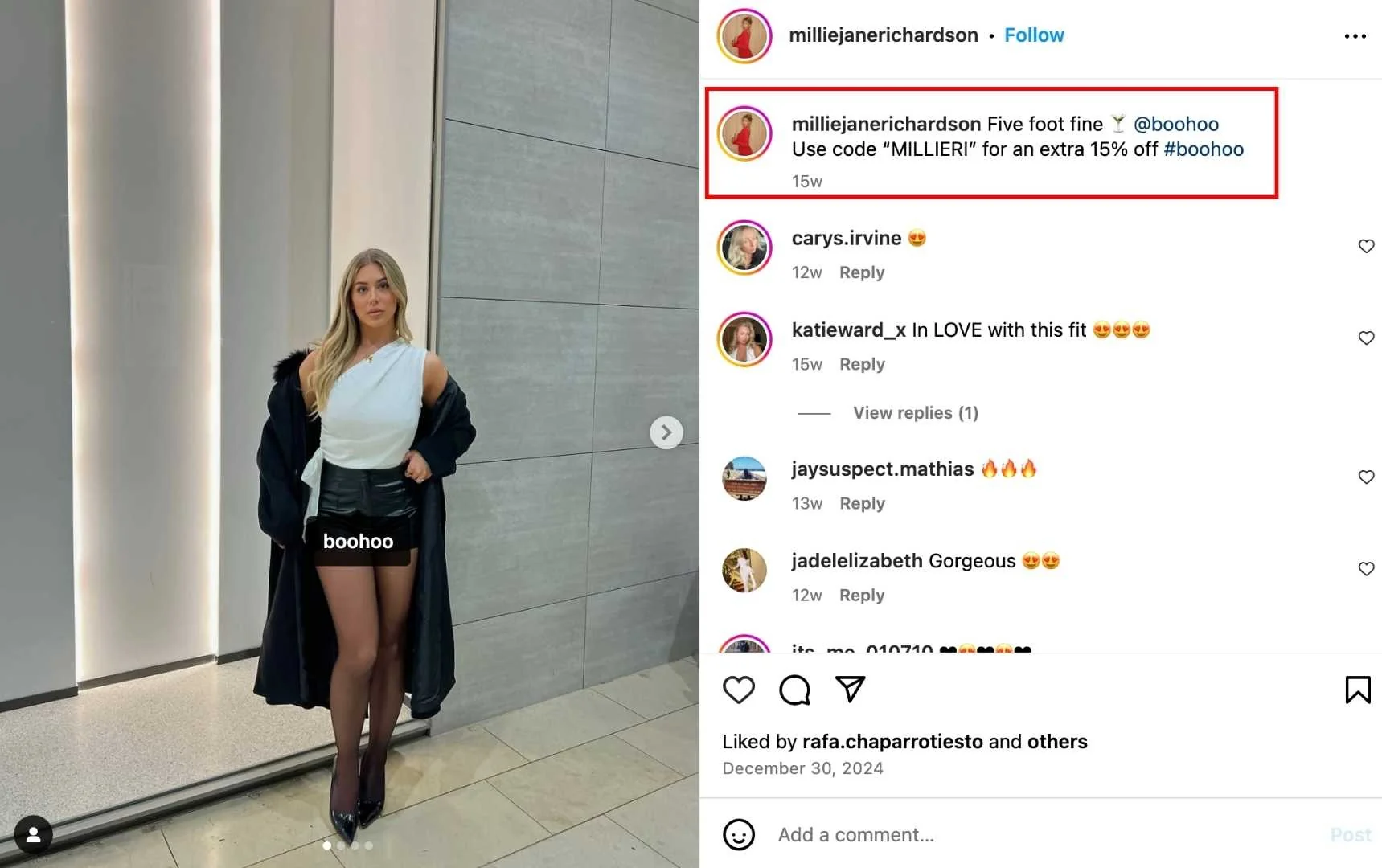
An influencer discount code is a unique, customized promo code that a brand provides to an influencer to share with their audience across one or multiple platforms—often featuring the influencer's name, nickname, or handle (e.g., AMANDA10 or MRBEAST).
When followers enter the code at checkout—usually manually— they receive a benefit such as a discount on specific products, sitewide savings, or free shipping. And if the influencer is part of an affiliate program, a portion of the sale can be attributed to them.
Additionally, these codes work whether or not the visitor uses an affiliate link to access the site.
Why Use Influencer Discount Codes?
Influencer discount codes offer a win-win: Followers get a special offer, and brands gain measurable results from influencer promotions. Here's why they're so effective:
- Drive conversions: Discount codes encourage purchases, especially from new customers or hesitant shoppers, by creating a sense of urgency and exclusivity.
- Enhances the shopping experience: Discount codes add value and create a more rewarding and enjoyable purchase.
- Build brand awareness: Influencers introduce the brand to new audiences, increasing visibility and recognition through authentic, trusted recommendations.
- Build community and loyalty: Discount codes can help make followers feel like they're part of a special group with exclusive advantages, fostering a stronger connection between the brand and the influencer's audience.
What is an Influencer Affiliate Link?
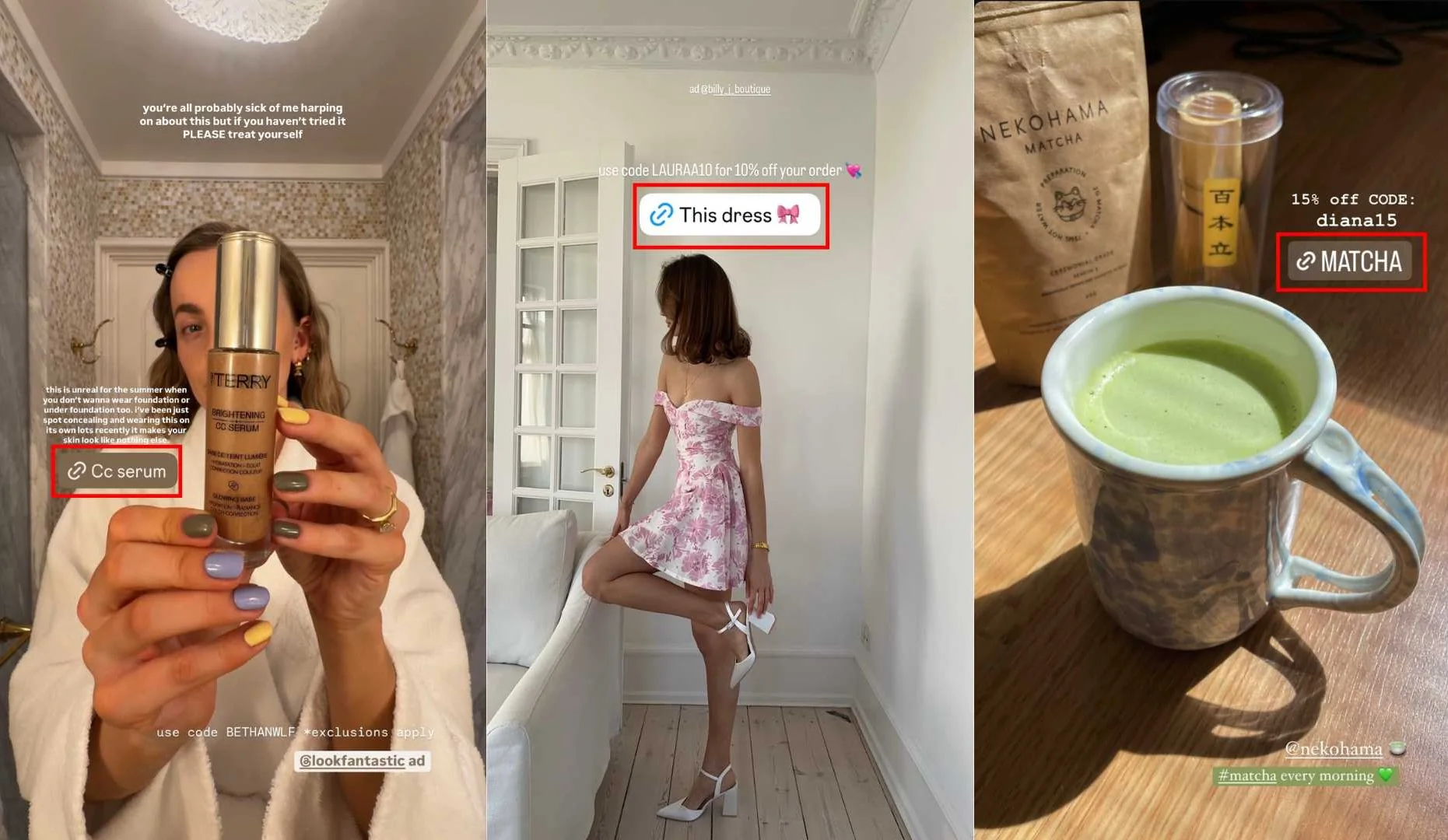
An influencer affiliate link is a unique, trackable URL provided by a brand that influencers can share with their audience. It directs followers to a specific page on the brand's website—whether a product, collection, or homepage—while tracking clicks and traffic generated by the influencer.
When someone clicks the link and makes a purchase, the influencer earns a commission, and the brand can attribute the sale directly to the creator, as part of the Influencer Affiliate Marketing program. However, it's important to note that these links do not necessarily offer a discount to the customer.
Also, to increase recognition and trust, these links can be customized with the influencer's name, nickname, or handle as well.
Why Use Influencer Affiliate Links?
Influencer affiliate links are a powerful performance-based marketing tool that also helps brands measure an influencer's campaign success. Here are some key benefits:
- Track performance: Brands can easily identify which influencers are driving traffic and conversions, making it easier to attribute sales and understand customer sources. Additionally, commissions are only paid on actual sales—keeping the approach cost-effective.
- Make it easy for customers to shop: Affiliate links take followers directly to the product or collection the brand wants to promote. Without them, followers may have to search manually, which can cause drop-offs if the process feels too time-consuming or confusing.
- Encourage product discovery: Once on the site, followers may explore beyond the promoted product, increasing the chances of additional purchases.
Influencer Discount Codes vs. Affiliate Links: What's the Difference
In short, the difference between influencer discount codes and affiliate links is:
- Discount Codes: Provide the influencer's audience a special offer (e.g., 10% off their purchase) when they enter a unique code at checkout.
- Affiliate Links: Track sales or traffic generated by the influencer, usually earning them a commission for each conversion.
Now…When to use discount codes, affiliate links, and both?
- Use Discount Codes when your goal is to drive sales through special offers, as they create urgency and are highly shareable, making them ideal for social media posts and Instagram stories.
- Use Affiliate Links when you want to precisely track influencer-driven conversions and reward influencers based on performance. They work well for Instagram stories (with link stickers), blog posts, YouTube descriptions, newsletters, and longer-term content.
Use Both when you want measurable results through affiliate links and a strong incentive for customers to buy via a discount code. Many brands offer a discount code linked to the affiliate program, ensuring influencers earn commission while offering their audience savings. It's a win-win!
Pros and Cons of Discount Codes and Affiliate Links
Why Do Brands Use Both Discount Codes and Affiliate Links?
Using both tools together provides more comprehensive insights and benefits:
- Enhanced Tracking: Cross-reference sales more accurately using two sources—links and codes.
- Broader Coverage: Some users click on links; others may not, but still remember the brand or product and use the discount code at checkout.
- Double Incentive: Strengthens the brand's offer by providing value to both parties—followers get a discount, and influencers earn commission.
- Flexibility in Promotion: Discount codes can be included in content where clickable links aren't practical, like videos, podcasts, print, or in-feed Instagram posts. For print and physical materials, pairing a discount code with a QR code lets customers scan and land directly on the product page.
For these non-clickable formats, brands can use a Dynamic QR code generator to create unique scannable codes per influencer that embed their affiliate link or discount code directly. This is especially useful for video content, podcast promotions, and print collaborations where viewers cannot tap a link but can easily scan a code on screen or on packaging.
Tip: For Instagram, ask creators to share the post or reel to their Stories and include the sticker link. For YouTube, request they add the affiliate link in the video description or pin it in a top comment!
How to Set Up Influencers' Discount Codes and Affiliate Links for a Successful Campaign
When running influencer campaigns, broken affiliate links or unmonitored discount codes can significantly impact performance. Invalid tracking can result in missed sales attribution, while improperly managed codes may get leaked or misused, costing your brand revenue.
So, here's how to properly set up and manage discount codes and affiliate links:
1. Create Unique Identifiers
Assign each influencer a custom discount code and affiliate link so you can track individual performance and attribute results accurately, as well as make the promotion feel more personal and exclusive to the audience. Using generic discount codes like WELCOME10 or CHRISTMAS15 across several creators makes it difficult to attribute performance accurately.
2. Define Commission & Discount
Clearly outline the offer to ensure alignment and set expectations up front:
- Commission for the influencer: e.g., 10%
- Discount for the followers: e.g., 15% off.
Tips:
- 1. Percentage discounts might perform better than dollar-off discounts — and vice-versa — depending on the product and audience.
According to a survey, 80% of shoppers are more likely to buy with a percent-off deal, boosting conversion rates. But for higher-priced items, 48% prefer a dollar-off coupon. Additionally, Coresight Research found that percentage discounts work best for smaller purchases, while dollar-off offers win on big-ticket items.
- 2. Find a balance between attracting customers and maintaining healthy profit margins. Be mindful not to compromise long-term sustainability just to boost short-term sales.
3. Track & Analyze
Use UTM parameters (small bits of text added to the end of a URL) to help track where your website traffic is coming from, and combine this with affiliate dashboards for real-time performance insights. Always take time to analyze what worked, what didn't, and which influencers performed best, so you can optimize future efforts.
4. Test the Link and Code
Always test both the affiliate link and discount code before sending them to the influencer to ensure they work correctly and apply the intended discount or tracking. This prevents confusion, missed sales, and unnecessary back-and-forth.
5. Monitor Code Misuse
Check popular coupon websites to see if any codes have been leaked. If you have dev resources, consider creating an internal tool or script to automatically notify you when a promo code is detected outside of the intended channels.
Setting expiration dates or usage limits (e.g., "valid for the first 100 redemptions") and rotating codes regularly can also prevent misuse, as well as maintain urgency and control.
6. Communicate Clearly
Encourage influencers to use their discount code and affiliate link together for stronger attribution and performance. Just as important, make sure they follow the Federal Trade Commission (FTC) disclosure guidelines. Creators must clearly disclose their relationship with a brand using terms like "#ad", "#sponsored", "#gifted", "#paid partnership", or "#affiliate", depending on the type of collaboration. Disclosures should be easy to notice: in the caption, said out loud in videos, or shown on screen in Stories.
In 2026, the FTC checks whether a disclosure is "clear and conspicuous" by looking at its proximity, prominence, presentation and placement. In practice, it has to sit right next to the link or code and be seen before the follower clicks or buys. Brands share liability for what their affiliates post, and every undisclosed post can count as a separate violation. For a full breakdown, see KampaignLab's guide to FTC affiliate disclosure rules. Clear disclosure keeps you compliant and builds the audience trust that drives conversions.
Pro Tip: Looking for free tools to track performance?
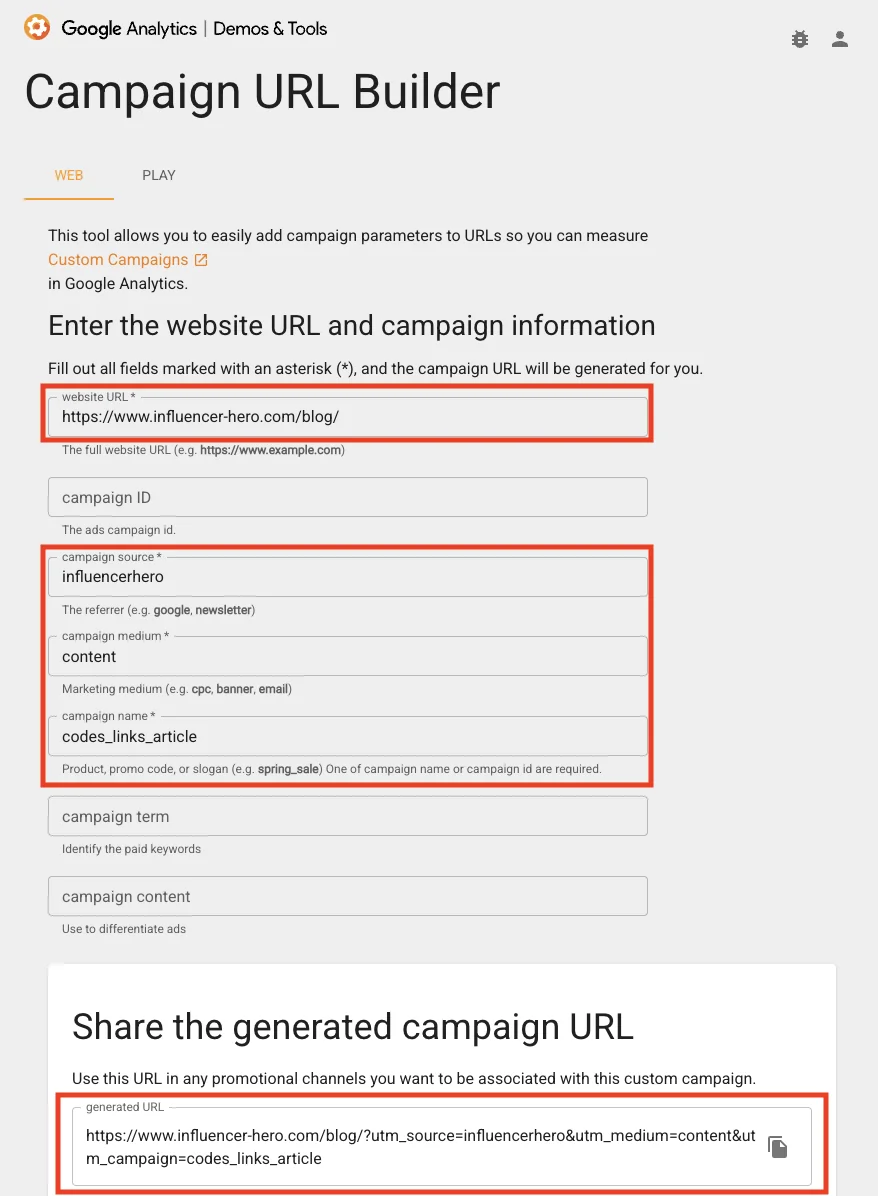
1. Use Google's Campaign URL Builder to generate UTM-tagged links and track campaign performance. The most important fields to complete are:
- Website URL – The landing page you're linking to
- Campaign Source – Where the traffic is coming from (e.g., Instagram, newsletter, Google)
- Campaign Medium – How the traffic is arriving (e.g., influencer, social, email, CPC)
- Campaign Name – The specific campaign you're tracking (e.g., spring_sale, mothersday_2025)
BONUS: Shorten links with Bit.ly for cleaner sharing.
2. Then, track results in Google Analytics, where you can set up Conversion Goals to measure behaviors like signups, purchases, page views, and more!

How Influencers Earn From Codes & Links
Influencers earn money from discount codes and affiliate links through commission-based structures. When a follower uses their unique code at checkout or clicks an affiliate link to make a purchase, the influencer receives a percentage of the sale.
This system incentivizes creators to promote products they genuinely love while giving brands a measurable way to track performance, reach new audiences, and boost sales through authentic word-of-mouth marketing.
How to Scale Your Influencer Promo Code & Affiliate Link Strategy - Best Strategies
Always Disclose Affiliate Relationships (FTC Compliance)
Remind influencers to make disclosures intuitive and tailored to each platform. These should be easy for audiences to notice and understand. For example, Instagram's "Paid Partnership" tag, YouTube's paid promotion label, and Pinterest's affiliate disclaimers all help clarify the nature of the content.
Clear and consistent disclosures protect both your brand and the influencer from potential scrutiny—and build trust with their audience over time.
Promote in Video Descriptions, Instagram Bios, Blogs, and Email Lists
Don't rely on a single post to drive results. Encourage influencers to feature discount codes and affiliate links in multiple places—like YouTube video descriptions, Instagram bios, blog sidebars, or email newsletters. Brands can also share these codes with their own audience through a mass texting service for direct, high-open-rate delivery.
Repetition reinforces the message and increases the likelihood of conversion. Just make sure placement aligns with your campaign goals and the influencer's typical content style.
Combine Value + Urgency (e.g., "Use code ALIEXTRA for 20% off today only")
Influencer codes are most effective when they create a sense of reward and a reason to act now. Use phrases like "limited time only," "expires Sunday," "limited spots," or "exclusive for the first 50 buyers" to add urgency, while highlighting what's in it for the customer—such as extra savings or early access. This motivates immediate engagement and reduces the chance followers forget to use the code.
Automate Where Possible
Use affiliate software to auto-generate discount codes and tracking links to streamline management and maximize ROI. However, if you're working with a small team and a select group of influencers, managing everything via spreadsheets can still be effective.
Segment Your Campaigns
Organize influencers by niche, platform, and/or partnership type (gifting, affiliate, or paid). This allows for more targeted strategies and clearer performance insights.
Expand Your Network
Keep your pipeline active by continuously reaching out to and onboarding new influencers.
Let Data Drive Decisions
Monitor performance regularly and use insights to prioritize your top-performing partners, ensuring you get the best return on investment.
Brands Using Influencer Promo Codes & Affiliate Links
Shein
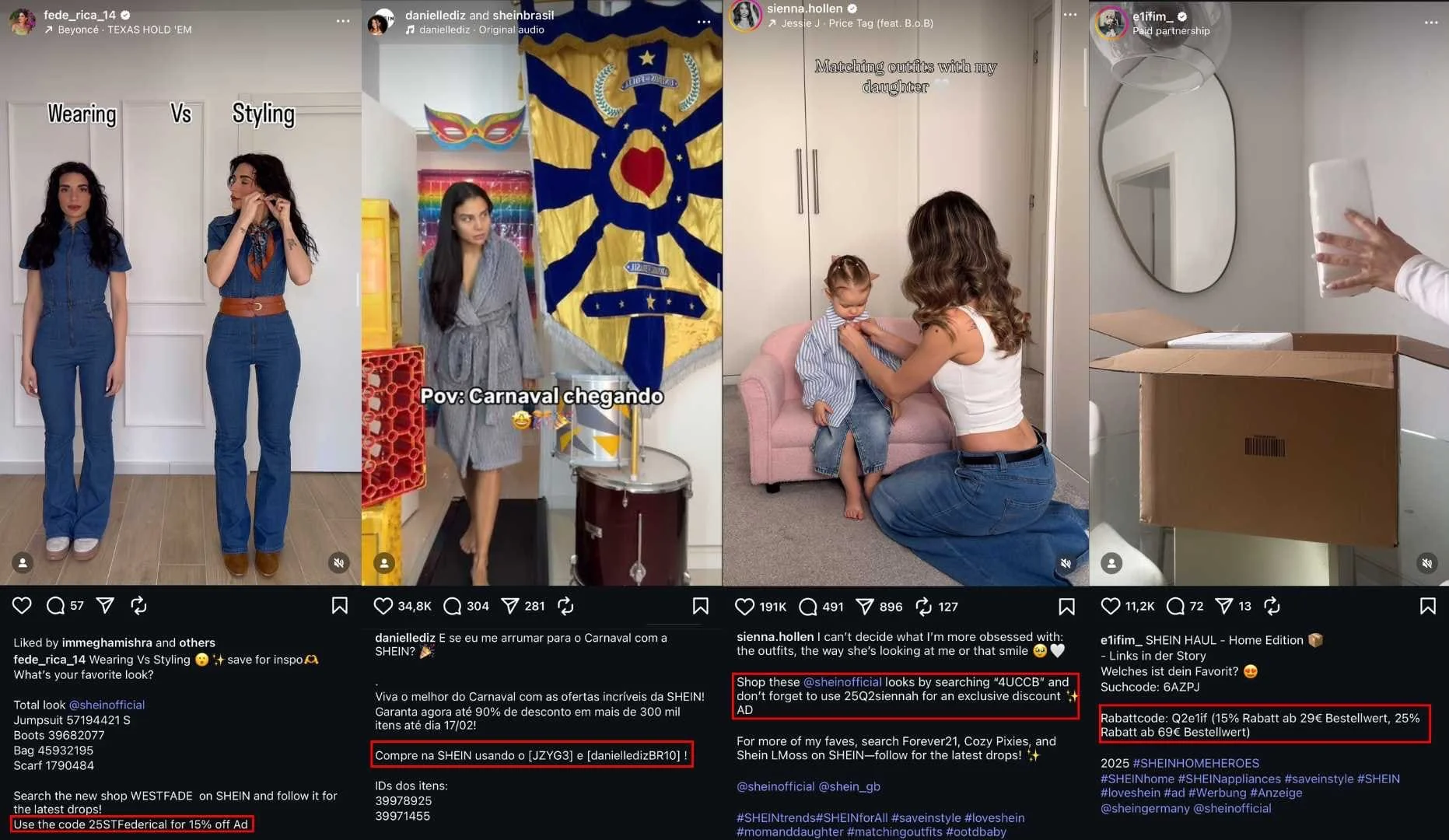
Shein is a global e-commerce platform originally founded in China and known for offering trendy, affordable clothing, accessories, and home decor. The brand collaborates with a diverse range of influencers from different countries and age groups, providing them with personalized discount codes and trackable affiliate links as part of its Affiliate Program. This approach has played a significant role in Shein's viral growth and the development of strong brand loyalty across international markets.
LOOKFANTASTIC
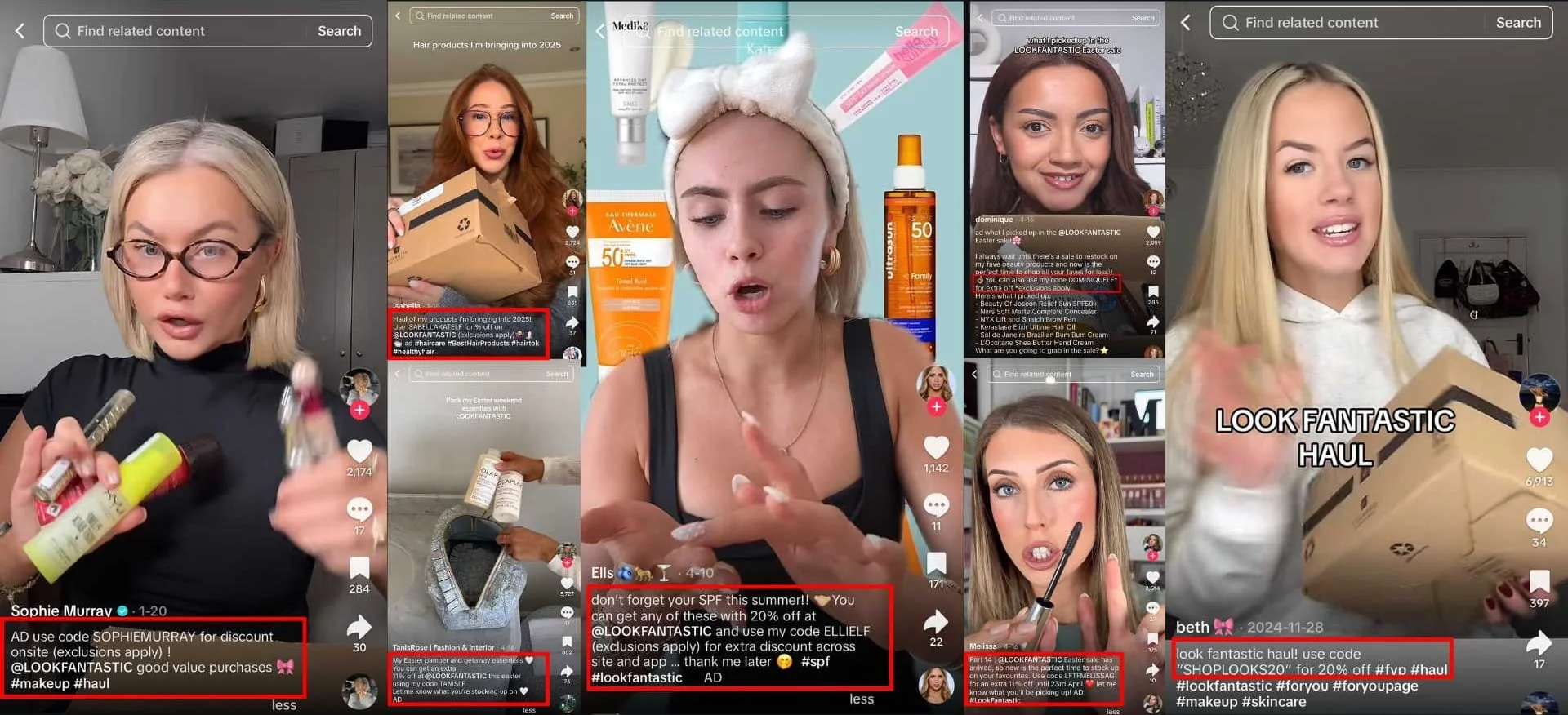
LOOKFANTASTIC is a UK-based online beauty retailer offering a diverse range of skincare, haircare, makeup, and wellness products. The brand leverages seasonal moments and holidays, such as Easter, to craft campaigns and collaborate with influencers who create tailored content that resonates with their audiences and showcases the latest beauty trends.
This approach not only boosts the brand's visibility but also strengthens customer loyalty by keeping the brand top of mind during key shopping periods.
Sweetgreen
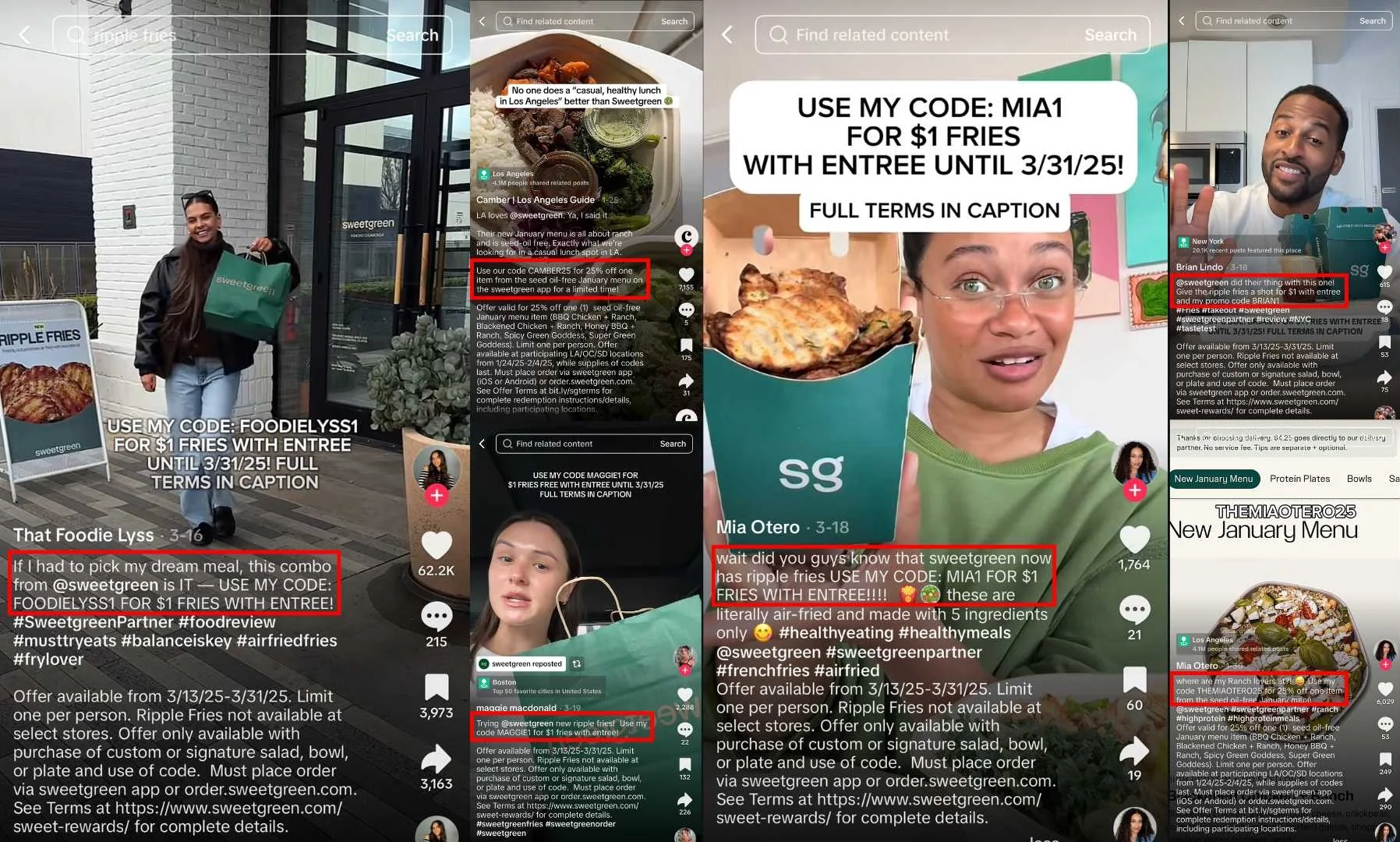
Sweetgreen is a U.S.-based fast-casual restaurant chain known for its fresh, seasonal salads and warm bowls. To drive immediate action and increase orders, the brand regularly launches limited-time offers—like $1 sides or percentage discounts on select menu items.
These promotions are amplified through influencer collaborations, where engaging and authentic content helps extend their reach and spread the word. This strategy not only creates urgency and boosts visibility but also deepens customer loyalty by combining value-driven incentives with a strong brand voice.
Final Insights on Influencer Discount Codes & Affiliate Links
Whether you're managing your program with spreadsheets or an influencer marketing platform, combining discount codes and affiliate links is one of the most effective ways to maximize the impact of your influencer partnerships. This dual approach gives brands better control over promotions and provides valuable, trackable insights into performance, customer behavior, and ROI.
On the other hand, relying on only one tool—just links or just codes—can limit your reach and tracking. Some followers may skip clicking a link but remember and use a discount code later. Others may prefer the convenience of tapping a link to shop instantly.
So, encouraging influencers to use both ensures broader coverage, stronger attribution, and more accurate performance data.
Summary
This is some text inside of a div block.
This is some text inside of a div block.
Pricing/Month
Shopify Reviews
This is some text inside of a div block.
This is some text inside of a div block.
This is some text inside of a div block.
This is some text inside of a div block.
This is some text inside of a div block.
This is some text inside of a div block.
This is some text inside of a div block.
This is some text inside of a div block.
This is some text inside of a div block.
This is some text inside of a div block.
This is some text inside of a div block.
This is some text inside of a div block.
This is some text inside of a div block.
This is some text inside of a div block.
This is some text inside of a div block.
This is some text inside of a div block.
This is some text inside of a div block.
This is some text inside of a div block.
This is some text inside of a div block.
This is some text inside of a div block.
This is some text inside of a div block.
Read More

FAQs
Kann ich sowohl einen Promocode als auch einen Affiliate-Link für einen Influencer verwenden?

Ja, und es wird oft empfohlen, um bessere Verfolgung und Leistung zu erreichen. Die Verwendung beider Methoden hilft dabei, Conversions vom Promo-Code zu verfolgen und bietet Einblicke in Verkäufe, die durch den Affiliate-Link generiert werden, und gibt Ihnen ein vollständiges Bild der Auswirkungen des Influencers.
Verfallen Affiliate-Links?
Es hängt von der Plattform ab. Einige ermöglichen es Ihnen, benutzerdefinierte Ablaufdaten festzulegen, während andere Links und Rabattcodes bereitstellen, die nie ablaufen. Überprüfen Sie unbedingt die spezifischen Bedingungen mit Ihrer Affiliate-Plattform, um die Dauer und den Erneuerungsprozess zu verstehen.
Können Promocodes offline funktionieren?
Ja! Aktionscodes können über verschiedene Offline-Kanäle wie Radio, Printanzeigen, persönliche Veranstaltungen und Podcasts geteilt werden. Dies ermöglicht es Ihnen, ein breiteres Publikum zu erreichen, das über digitale Kanäle hinausgeht.
Wie kann ich überprüfen, ob der Promo-Code eines Influencers funktioniert?
Überwachen Sie die Nutzung über Ihr eCommerce-Backend oder Ihr Affiliate-Dashboard, wo Sie sehen können, wie oft ein Code verwendet wurde, und verwandte Traffic- und Umsatzmetriken anzeigen können. Für eine schnelle Überprüfung können Sie auf den Affiliate-Link klicken, um zu sehen, ob ein neuer Klick registriert wird, und den Rabattcode auf Ihrer Website testen, indem Sie ein Produkt in den Warenkorb legen und den Code an der Kasse anwenden.
Kann ich verschiedene Rabattstaffeln für unterschiedliche Influencer einrichten?
Ja, viele Plattformen ermöglichen es Ihnen, Rabattstufen für jeden Influencer anzupassen. Dies ermöglicht es Ihnen, Top-Performer mit höheren Rabatten zu incentivieren oder exklusive Angebote für bestimmte Kampagnen anzubieten, um Ihre Strategie auf verschiedene Arten von Zielgruppen oder Partnerschaftszielen zuzuschneiden.



Most Popular Blogs


Drive ROI With Influencer Marketing
Join 1,200+ brands and 150+ agencies scaling creator programs with Influencer Hero.