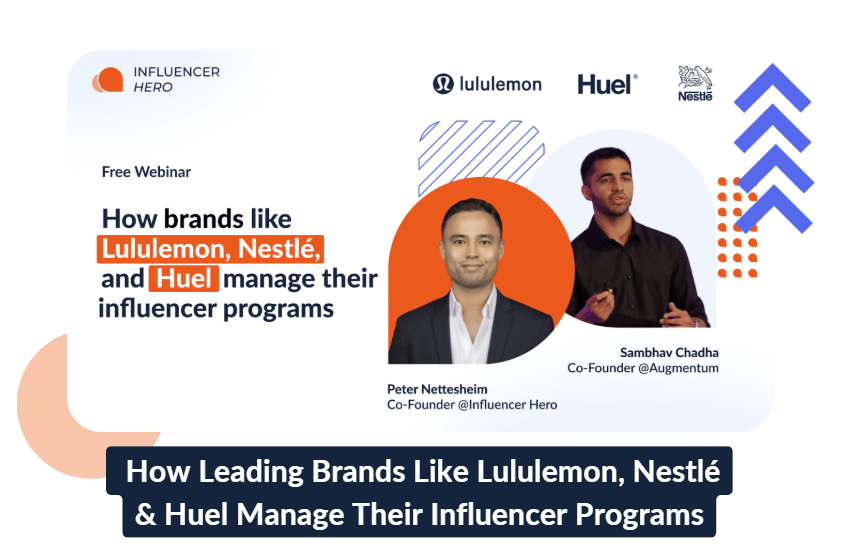
How Leading Brands Like Lululemon, Nestlé & Huel Manage Their Influencer Programs

January 26, 2026
|
Published

October 12, 2026
|
Updated

13 Min
|
Reading

Influencer Performance Marketing Course | VOUCHER: IMC100

Malena Garcia
| Author

Drive ROI With Influencers

Global Influencer Database
ALL-IN-ONE platform
CRM, Affiliate, UGC & More
How Leading Brands Like Lululemon, Nestlé & Huel Manage Their Influencer Programs
Influencer marketing is a powerful tool for brands aiming to scale and engage with their audience in meaningful ways.
In our latest webinar, Peter Nettesheim, Co-Founder of Influencer Hero, and Sambhav Chadha, Co-Founder of Augmentum Media, shared valuable insights into how leading brands like Lululemon, Nestlé, and Huel use a three-tier performance-driven model to succeed.
From building authentic influencer relationships to driving revenue through affiliates and paid campaigns, we covered it all. If you missed the session, we’ve got you covered! Below, we’ve highlighted the key takeaways and actionable strategies that can help you optimize your influencer marketing efforts.
Before you dive in…
Here’s the full webinar for a more complete experience!
Why Influencer Marketing is Crucial Right Now
Influencer marketing has evolved as a powerful channel for brands, especially as other advertising methods face rising costs and diminishing returns. Let’s dive into why influencer marketing is more important than ever for brands looking to scale:
- Higher CPMs and Rising Costs: Cost-per-thousand impressions (CPM) rates are rising, with some platforms seeing a 48.5% increase in May compared to Black Friday of the previous year.
- Declining Effectiveness of Meta Ads: Platforms like Meta are becoming increasingly inconsistent, affecting creative performance and making them less reliable for brands looking for stable results.
- Building Trust with Influencers: Influencers offer a high level of trust with their audiences, especially in the health and wellness space, where authenticity and credibility are key.
The Three-Tier Performance-Driven Model Explained
One of the most effective strategies used by brands like Lululemon and Huel is a three-tier, performance-driven influencer marketing model. This model includes seeding, affiliate marketing, and paid amplification.
1. Seeding: Building Relationships with Influencers
Seeding involves sending products to influencers without any strings attached, allowing brands to start building authentic relationships. This stage is critical as it lays the foundation for future collaborations and establishes trust with influencers.
2. Affiliate Marketing: Turning Influencers into Affiliates
The next step in the model is converting the influencers into affiliates. Brands typically funnel about 15-25% of influencers from the seeding phase into affiliate programs, which allows them to track sales and performance while offering commissions on sales generated.
3. Paid Amplification: Scaling with Paid Influencers
Finally, once influencers have established a relationship with the brand and are generating results, they are activated through paid amplification. Brands can use affiliate data to determine which influencers have the most potential and turn them into paid partners, driving larger-scale campaigns.
Key Challenges for Smaller Teams
While the three-tier model is highly effective, implementing it can be challenging for smaller teams with limited resources. As much as influencer marketing can offer massive growth potential, there are several obstacles that smaller brands or teams often face when trying to scale their programs. Here are some common challenges:
- Bandwidth Issues: Managing hundreds of influencers while maintaining quality content and engagement can be time-consuming. Smaller teams may struggle to find the time and resources to effectively monitor influencer relationships, track sales, and provide personalized support to each creator.
- Inconsistent Results: Not all influencers will produce sales, and it can take time to identify which ones are the most effective. With so many creators to manage, it can be difficult to gauge which partnerships are delivering the best ROI and which ones need more nurturing or optimization.
- Difficulty in Finding the Right Influencers: Identifying and reaching out to the right influencers that fit your brand’s values and target audience can be a challenge, especially when you don’t have the bandwidth or sophisticated tools to analyze influencer data at scale.
- Limited Budget for Paid Amplification: While the paid amplification phase can drive huge returns, it can be expensive. Smaller teams might not have the budget to support large-scale paid influencer campaigns, which means they have to rely more on seeding and affiliate programs, which might take longer to see results.
By recognizing these challenges early on, brands can develop strategies to overcome them, whether it's through using more efficient tools, prioritizing the most effective influencers, or scaling up gradually.
How to Implement the Three-Tier Model
Implementing the three-tier model requires a clear strategy and timeline. Here’s how brands can set it up:
Week 1-3: Seeding Phase
- Identify and engage with influencers.
- Send out products and initiate initial relationships.
Week 4-6: Affiliate Onboarding
- Convert influencers into affiliates and start tracking sales.
- Set up commission structures that incentivize performance.
Week 7-9: Paid Amplification
- Scale successful affiliates by offering paid collaborations.
- Use influencer-generated content for paid ads on platforms like Meta.
Tips for Scaling Your Influencer Program During Peak Seasons
One of the biggest opportunities for brands to scale their influencer programs is during peak seasons like Black Friday. These periods can drive significant revenue if brands are strategic in their approach. Here are some tips for making the most out of these critical times:
- Leverage Existing Relationships: Re-engage influencers who have already worked with your brand for special promotions. These influencers are familiar with your products and audience, making them more likely to deliver higher-quality content that drives conversions.
- Incentivize Affiliates: Offering higher commissions or exclusive discounts can motivate influencers to drive more sales during peak seasons. By increasing the potential earnings for affiliates, you encourage them to push harder and promote your products more effectively.
- Urgency and FOMO (Fear of Missing Out): Create urgency with limited-time offers to encourage influencers to promote the products immediately. Flash sales or limited-stock announcements can boost excitement and drive influencers to act quickly, motivating their audiences to purchase.
- Provide Exclusive Early Access: Offering influencers exclusive early access to products or promotions allows them to be the first to share deals with their followers, adding an element of exclusivity that resonates with audiences and creates more buzz.
- Collaborate on Custom Content: Work with influencers to create exclusive, seasonal content that highlights the urgency and exclusivity of your offers. Custom content, such as unboxing videos or behind-the-scenes sneak peeks, makes promotions feel more personal and engaging for their followers.
By using these strategies, brands can maximize the impact of influencer marketing during peak seasons, driving higher engagement and sales while fostering long-term partnerships.
Case Studies and Quick Wins for Seasonal Events
Let’s take a look at how some of the leading brands executed successful influencer marketing campaigns during seasonal events, in this case, Black Friday:
Lululemon and Huel: Seeding, Affiliate Programs, and Paid Amplification
Both Lululemon and Huel follow the three-tier model to successfully manage their influencer marketing programs. By seeding products to influencers, activating them as affiliates, and amplifying the results through paid campaigns, these brands are able to scale rapidly and generate significant ROI.
Black Friday Success: A D2C Example
A D2C brand,Nakano Knives, applied a similar model and achieved $700,000 in sales during Black Friday, demonstrating the power of influencer marketing over traditional paid ads. The key to success was building an ongoing influencer program, engaging creators who had received products months in advance, and using FOMO (Fear of Missing Out) to push last-minute sales.
Why Micro-Influencers Are Often the Key to Success
While working with macro-influencers can be effective, brands are increasingly turning to micro-influencers to drive better results. Micro-influencers tend to have a higher engagement rate and are more willing to work on affiliate or seeding models. They also offer more authentic connections with their audience, which leads to stronger trust and higher conversion rates.
To understand why micro-influencers perform so well, it helps to compare them against nano, macro, and mega influencers. The table below breaks down how each tier differs in audience size, engagement, cost, and revenue potential for brands running performance-driven influencer programs.
What this shows is why micro-influencers sit in the “sweet spot” for performance-driven influencer marketing. They are large enough to generate meaningful sales, but still small enough to maintain trust, engage their audience, and accept affiliate or seeding-based partnerships.
When brands run programs at scale, micro-influencers consistently deliver the best return on investment, making them the foundation of high-performing influencer programs like those used by Lululemon, Nestlé, and Huel.
Final Thoughts on Scaling Influencer Programs for Maximum ROI
Building a successful influencer marketing program isn’t just about partnering with well-known influencers; it’s about creating authentic, performance-driven relationships. Brands like Lululemon, Nestlé, and Huel show how a three-tier performance-driven model can deliver substantial returns. By focusing on seeding, affiliate marketing, and paid amplification, brands can maximize ROI while reaching the right audience.
Influencer marketing is a marathon, not a sprint. Smaller brands may face challenges like bandwidth limitations and inconsistent results, but with the right tools and consistent strategy, success is achievable. As you scale, ensure influencers have the support they need to grow into long-term partners that drive sustained results.
To get started, subscribe to our YouTube channel for more tips and expert strategies on influencer marketing.
Summary
This is some text inside of a div block.
This is some text inside of a div block.
Pricing/Month
Shopify Reviews
This is some text inside of a div block.
This is some text inside of a div block.
This is some text inside of a div block.
This is some text inside of a div block.
This is some text inside of a div block.
This is some text inside of a div block.
This is some text inside of a div block.
This is some text inside of a div block.
This is some text inside of a div block.
This is some text inside of a div block.
This is some text inside of a div block.
This is some text inside of a div block.
This is some text inside of a div block.
This is some text inside of a div block.
This is some text inside of a div block.
This is some text inside of a div block.
This is some text inside of a div block.
This is some text inside of a div block.
This is some text inside of a div block.
This is some text inside of a div block.
This is some text inside of a div block.
Read More

FAQs
Why is influencer marketing important for brands?

Influencer marketing has become essential for brands because it allows them to tap into existing trust between influencers and their audiences. With the right strategy, it can drive engagement, conversions, and provide measurable ROI. This is especially critical as traditional advertising methods face higher costs and diminishing returns.
What is the three-tier performance-driven model in influencer marketing?
The three-tier performance-driven model is a structured approach brands use to scale their influencer marketing efforts. It includes seeding (sending products to influencers to build relationships), affiliate marketing (converting influencers into affiliates to track sales), and paid amplification (scaling through paid partnerships with top-performing influencers).
How can smaller teams implement an influencer program?
Smaller teams can implement an influencer marketing program by starting small and focusing on key influencers that align with the brand’s values. Using tools to streamline the process, automating workflows, and focusing on building authentic relationships can help smaller teams scale efficiently without overwhelming their resources.
What challenges do brands face when working with influencers?
Brands often face challenges like bandwidth issues (managing many influencers), inconsistent results from influencers, and the difficulty of finding the right influencers who align with the brand’s values. It’s important to manage expectations and scale gradually to overcome these obstacles.
How do brands like Lululemon and Nestlé measure the success of their influencer programs?
Brands like Lululemon and Nestlé measure the success of their influencer programs through metrics such as engagement rates, sales conversions, and return on investment (ROI). They use performance tracking through affiliate programs and analyze which influencers drive the most sales and engagement to refine their strategies.

Most Popular Blogs


Drive ROI With Influencer Marketing
Join 1,200+ brands and 150+ agencies scaling creator programs with Influencer Hero.