How to Find Influencers That Actually Convert

December 10, 2025
|
Published

June 17, 2026
|
Updated

|
Reading

Influencer Performance Marketing Course | VOUCHER: IMC100

Peter Nettesheim
| Author

Drive ROI With Influencers

Global Influencer Database
ALL-IN-ONE platform
CRM, Affiliate, UGC & More
How to Find Influencers That Actually Convert
Finding the right influencers can make or break your campaign’s success. While many brands focus on follower count or aesthetics, the real question is: which creators actually drive sales?
In this article, we’ll walk through how to identify influencers who convert, based on a data-backed study of over 10,000 commercial posts. You’ll learn which metrics correlate with performance, how to use technology for discovery, and which creator tiers deliver the best ROI for your budget.
TLDR - Watch the Video
Take the full Influencer Performance Marketing Course and get certified!
Influencer Tiers, Definitions, and Trade-Offs
Before diving into the data, it’s essential to understand the different influencer tiers and their typical collaboration dynamics.
Nano and micro influencers are typically more open to affiliate or gifting collaborations, making them the backbone of scalable, performance-led campaigns.
Starting around 100K followers, creators often work with talent management agencies, adding negotiation layers that can make no-obligation gifting harder. For these mid-to-large profiles, product seeding campaigns (no posting requirement) can be an effective entry point.
Mega and celebrity influencers usually require larger budgets, and while they can boost visibility, the ROI per dollar spent tends to be lower unless integrated into broader brand campaigns.
Suggested Read: Micro Vs Macro Influencers: Main Differences, Pros And Cons, And Who Are Best To Partner With?
How to Find Influencers: Using the Right Tools
Influencer discovery at scale requires more than manual scrolling through Instagram or TikTok. To make this process efficient, brands should leverage discovery software and advanced filters to pinpoint relevant creators.
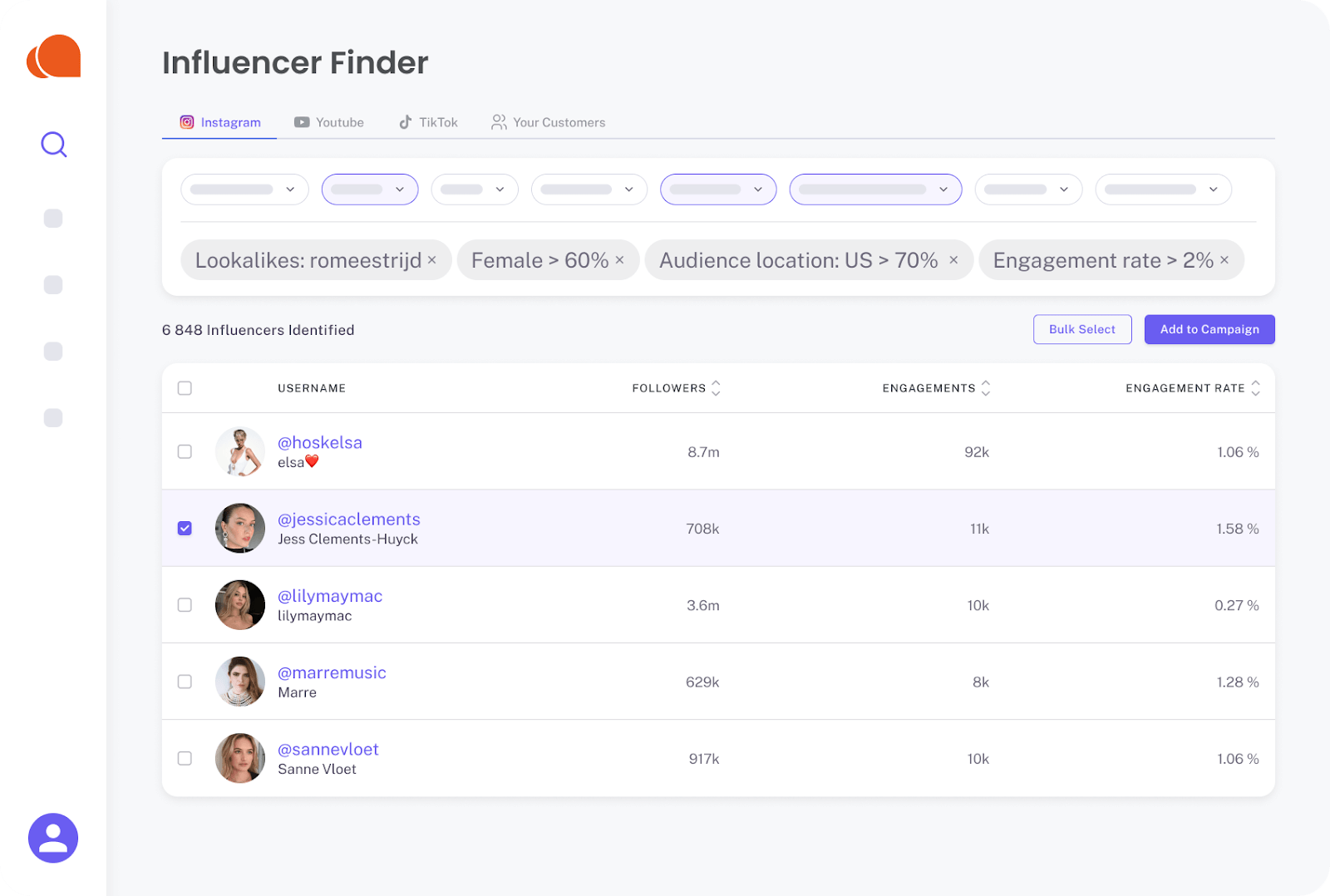
With a tool like Influencer Hero, for instance, you can access over 400 million profiles and refine your search using filters such as:
- Audience and creator location (target by country, city, or region)
- Audience demographics (age, gender, interests, and country)
- Content search powered by AI (find creators using keywords, hashtags, or lookalikes)
💡 Pro Tip: Combine AI-powered content filters with audience data to find niche creators who speak directly to your target buyers — these often outperform larger, less targeted accounts.
Want to see how it works? Book a free demo and let us show you first hand how Influencer Hero can benefit your brand.
Data-Backed Research: Which Metrics Predict ROI
Together with partner agencies, our data science team analyzed 10,000+ commercial influencer posts across multiple industries to identify which metrics truly correlate with conversions and ROI.
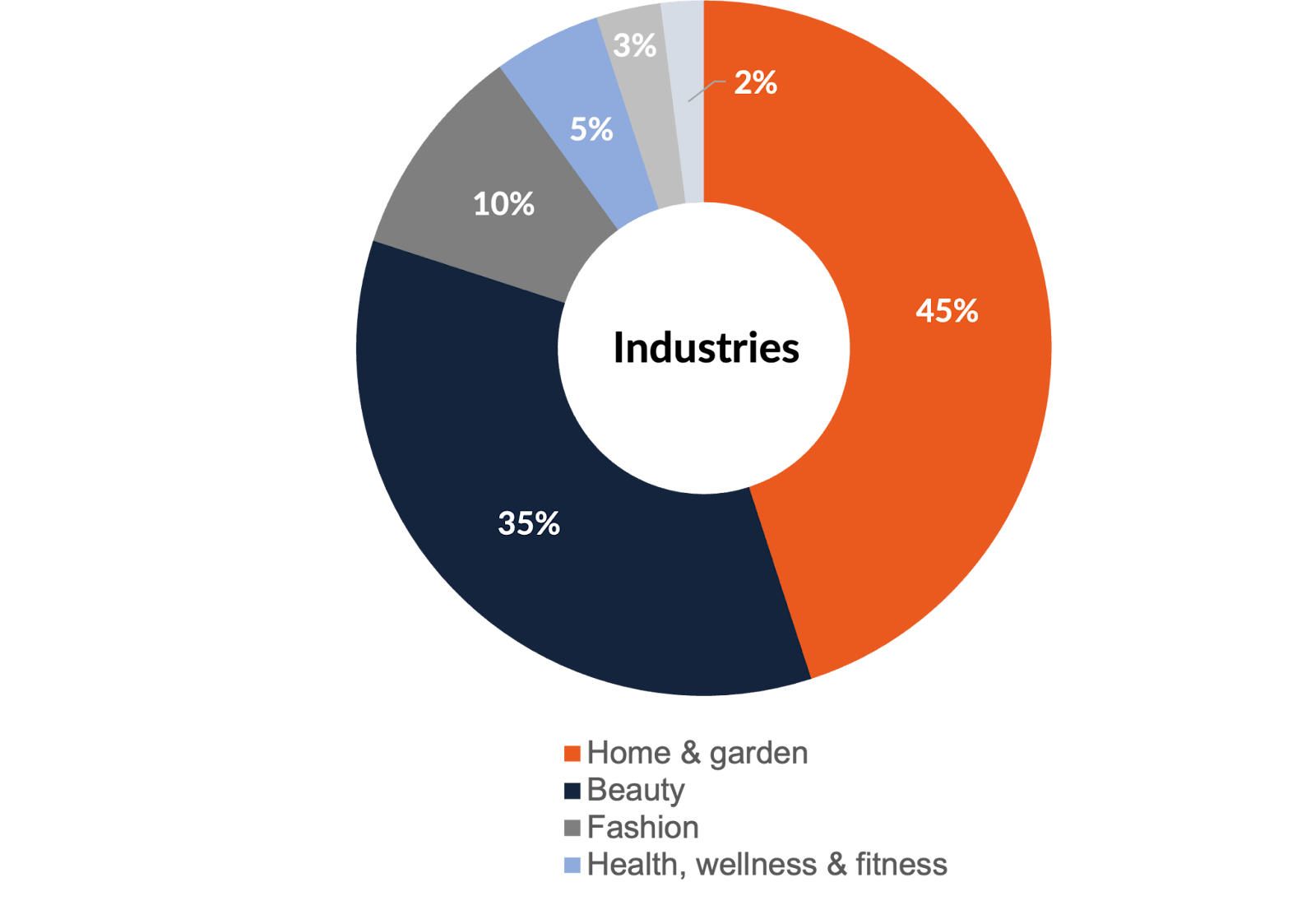
Creators were grouped based on conversions per post:
- High Performers (HP): ≥10 conversions per post
- Medium Performers (MP): 3–9 conversions per post
- Low Performers (LP): 0–2 conversions per post
The following five metrics showed statistically significant correlations with higher performance outcomes.
1. Audience Growth Rate
The strongest correlation found was with audience growth rate.
Creators who consistently gain followers are favored by algorithms and tend to produce content that resonates. They also present a strategic advantage: partnering early with fast-growing creators allows brands to secure relationships before competition increases.
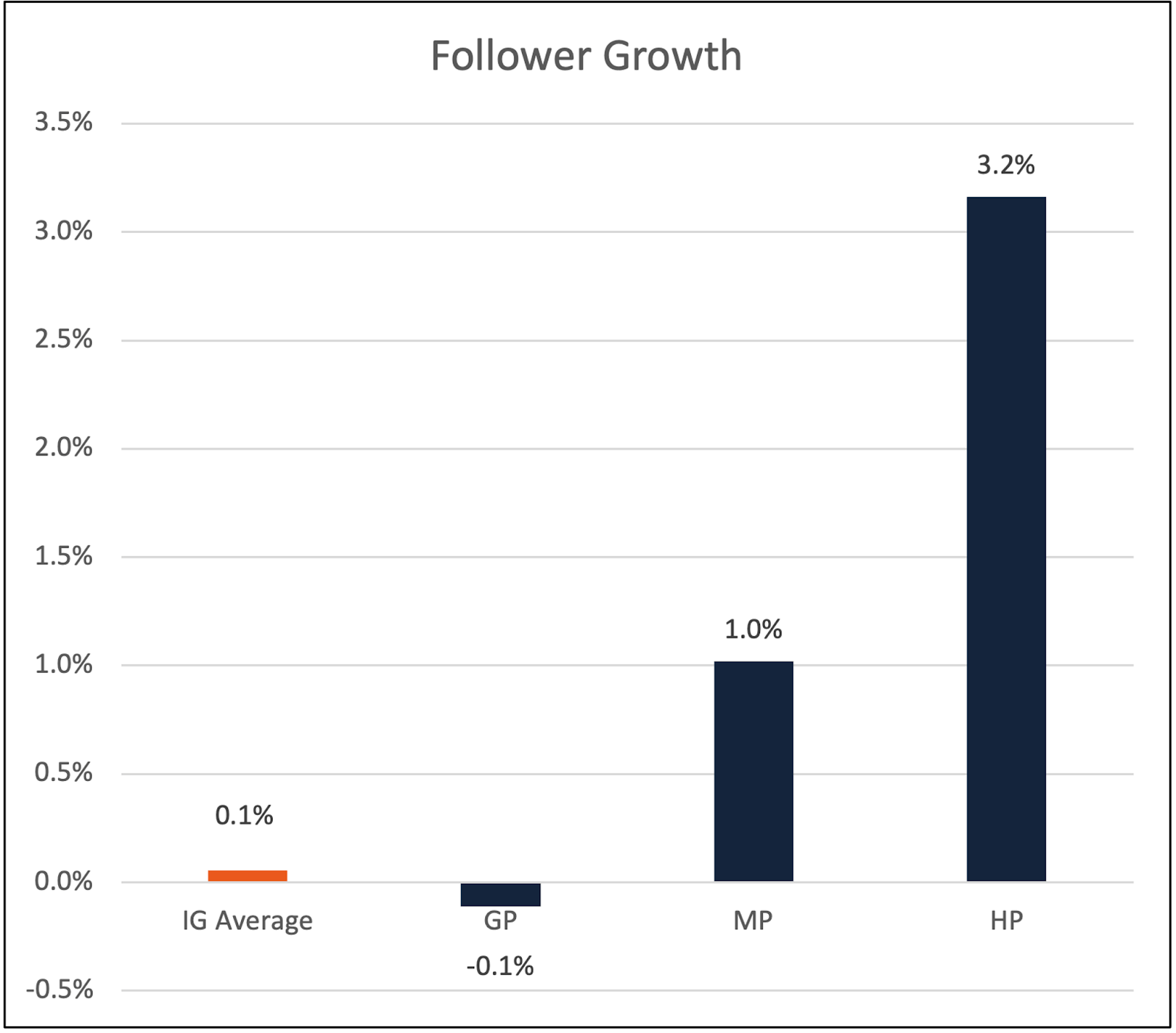
- Average platform growth: ~0.1%
- Dataset results: LP = −0.1%, MP = 1.0%, HP = 3.2%
Prioritize creators with an upward follower trend. A healthy growth rate often predicts future visibility and stronger performance.
2. Engagement Rate
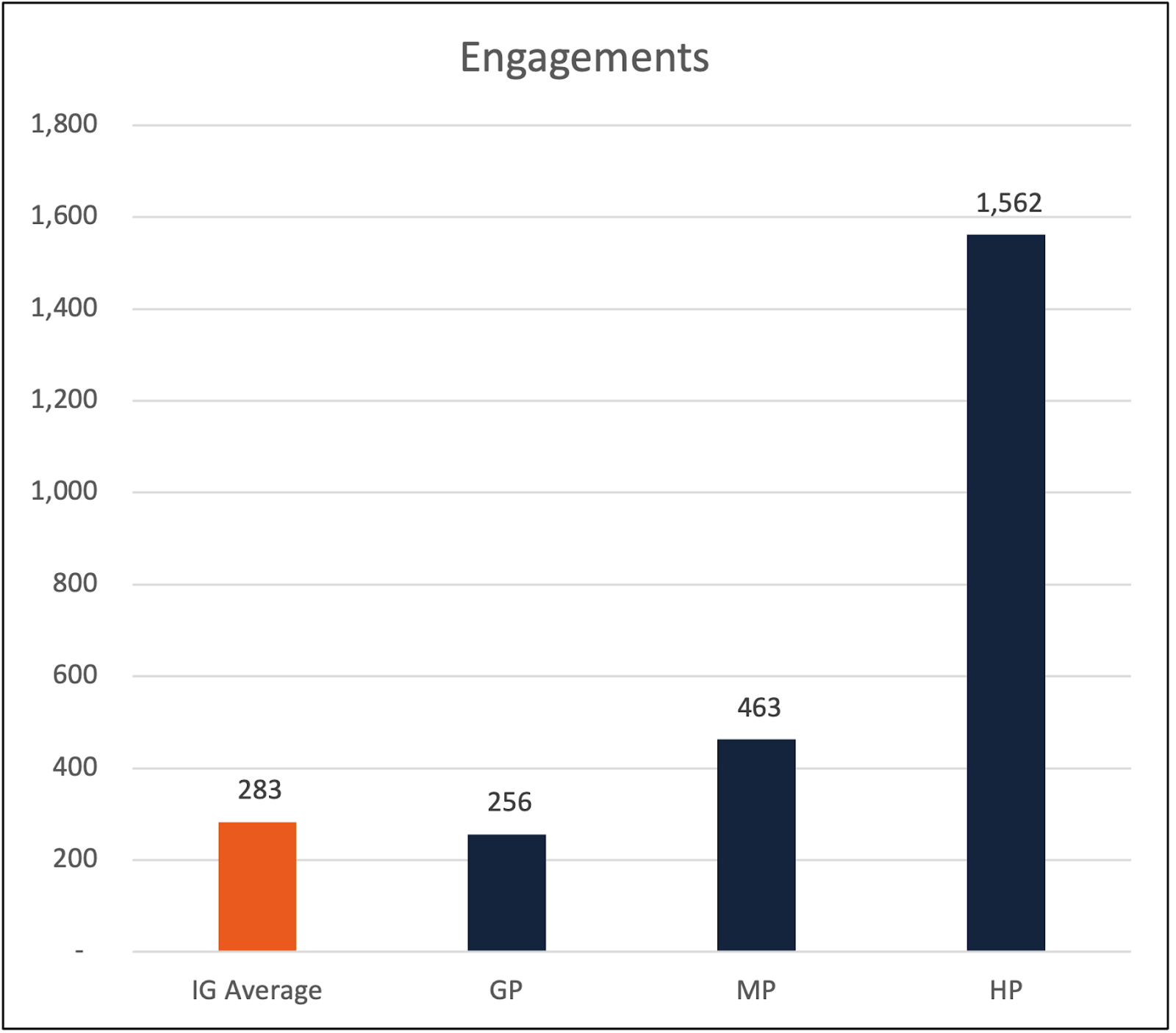
Engagement rate is widely used and for good reason. Although its correlation with conversions is moderate, it still provides a reliable indicator of audience trust and responsiveness.
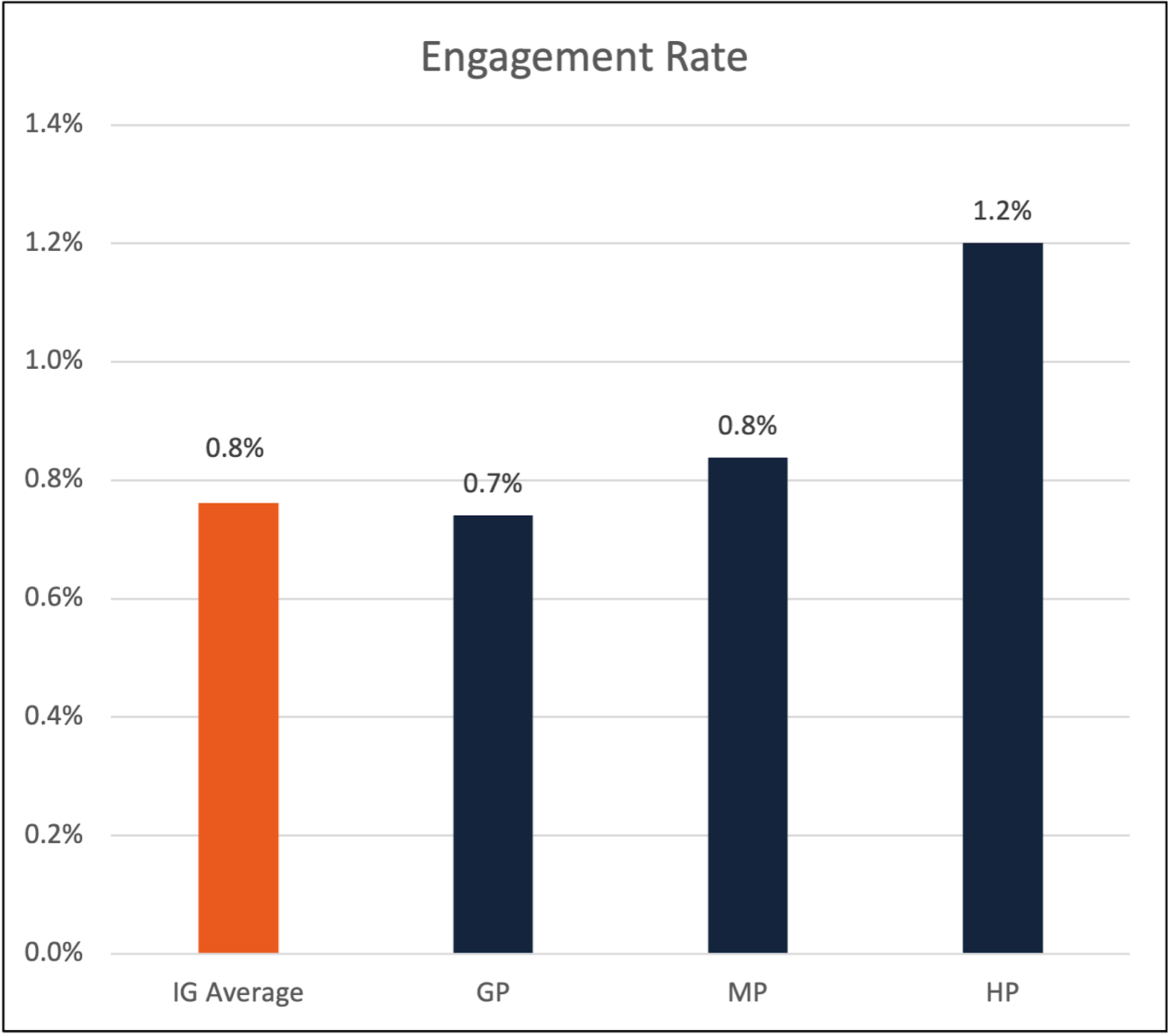
- LP: ~0.7%
- MP: ~0.8%
- HP: ~1.2%
When combined with audience growth, engagement rate helps identify creators whose followers are both active and growing, a powerful combination for ROI.
3. Audience Size
Larger audiences naturally expand reach and conversion potential. In our analysis, influencers above the 75th percentile (≈96,700 followers) delivered stronger sales results, with HPs averaging around 119,000 followers.

However, ROI can vary depending on cost. While macro creators may convert more, micro influencers can offer higher ROI per dollar due to lower collaboration fees.
To achieve better results, it’s important to balance reach with efficiency. For the same budget, you can often test 10–15 micro influencers instead of one macro creator, giving you a better chance of finding high performers.
4. Audience Credibility (Fake Follower Ratio)
Audience quality plays a crucial role. Even reputable creators have some percentage of fake or inactive followers, but higher concentrations significantly reduce ROI.
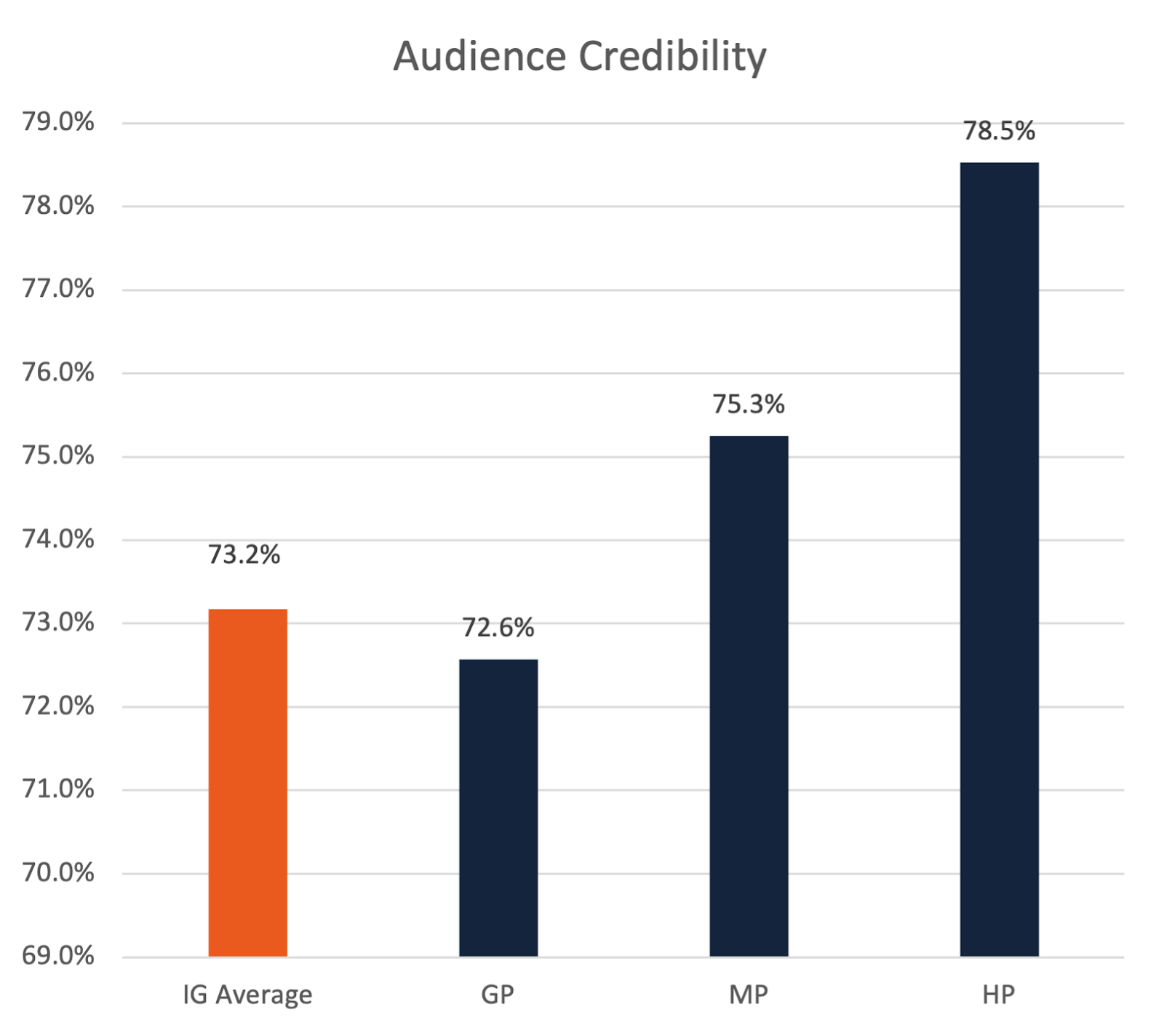
- LPs: 17.4% non-credible followers
- MPs: 14.7%
- HPs: 11.5%
Creators with >73% real audience credibility consistently performed better.
Use authenticity detection tools to screen fake engagement before committing to a partnership.
5. Verified Accounts
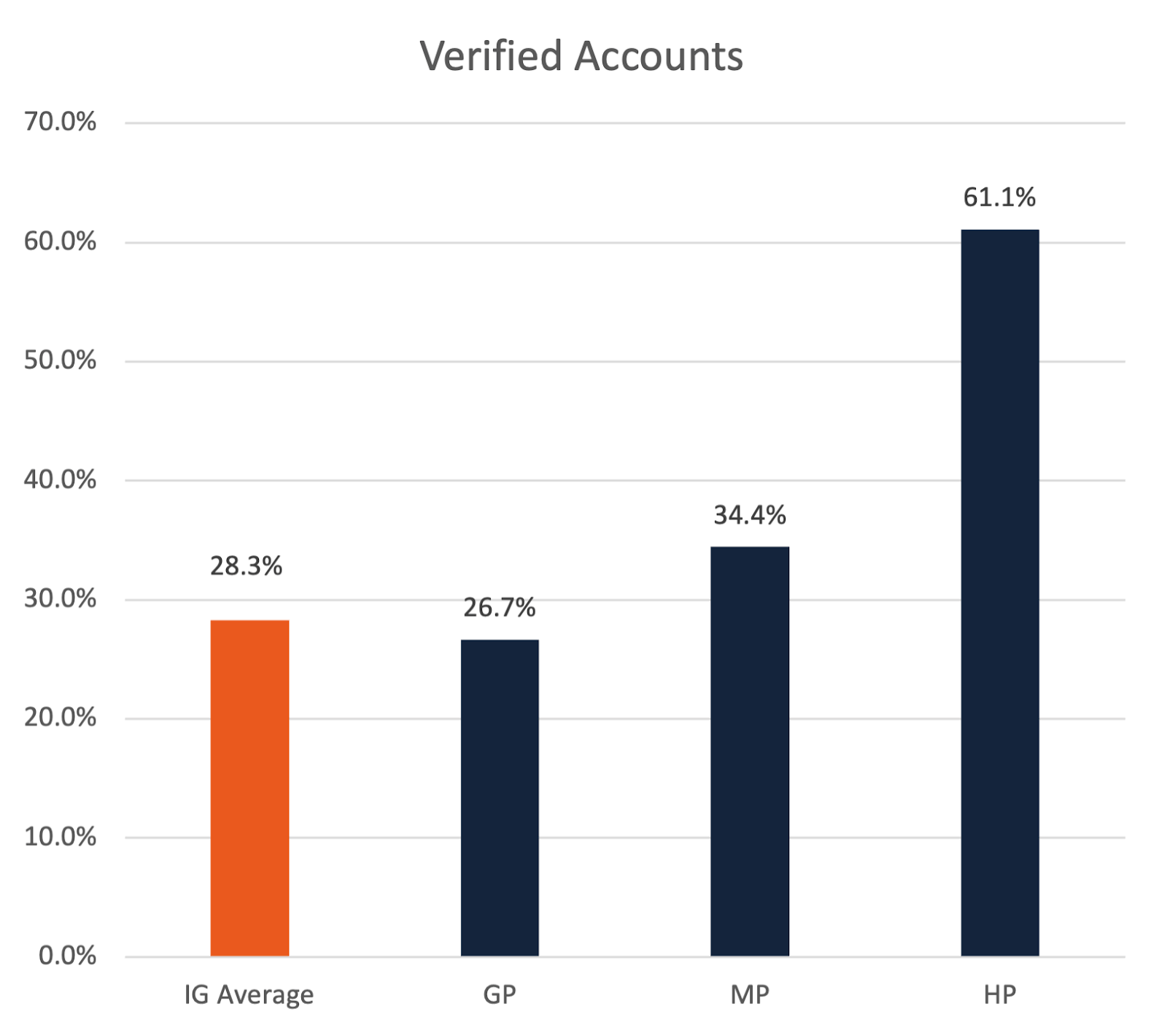
Verification appeared more frequently among top performers — 61% of HPs were verified compared to only 26% of LPs.
While this correlation doesn’t imply causation (verification often comes with larger audiences), it can signal trust, authority, and brand safety, especially when investing in higher-tier creators.
Final Thoughts
Finding the right influencers isn’t about chasing follower counts. It’s about identifying creators whose audiences convert. With the right data and tools, brands can move from guesswork to a scalable, measurable influencer strategy.
By understanding the trade-offs across influencer tiers and focusing on metrics that actually correlate with ROI, you can build a more reliable foundation for performance-driven campaigns.
Metrics like audience growth, engagement rate, and credibility act as early indicators of creator potential, helping you invest your time and budget where it truly matters.
Key Takeaways (H3)
- Focus on ROI-driven discovery, not vanity metrics.
- Use growth rate, engagement, audience size, credibility, and verification to shortlist creators.
- Partner early with fast-growing creators to build long-term relationships.
- Micro influencers often offer stronger ROI due to authenticity and lower costs.
- Combine AI-powered discovery tools with manual vetting to find true brand fits.
Continue with next course session: How to Contact Influencers the Right Way
Summary
This is some text inside of a div block.
This is some text inside of a div block.
Pricing/Month
Shopify Reviews
This is some text inside of a div block.
This is some text inside of a div block.
This is some text inside of a div block.
This is some text inside of a div block.
This is some text inside of a div block.
This is some text inside of a div block.
This is some text inside of a div block.
This is some text inside of a div block.
This is some text inside of a div block.
This is some text inside of a div block.
This is some text inside of a div block.
This is some text inside of a div block.
This is some text inside of a div block.
This is some text inside of a div block.
This is some text inside of a div block.
This is some text inside of a div block.
This is some text inside of a div block.
This is some text inside of a div block.
This is some text inside of a div block.
This is some text inside of a div block.
This is some text inside of a div block.
Read More

FAQs
What’s the best way to find influencers who actually drive sales?

The most effective way to find influencers who convert is to use data-driven discovery tools. Platforms like Influencer Hero let you search millions of creators using filters such as audience demographics, engagement rate, growth trends, and authenticity. Pair these filters with ROI-focused metrics — like audience growth and credibility — to shortlist top performers.
Should I focus on micro or macro influencers for better ROI?
It depends on your budget and goals. Micro influencers (10K–100K followers) tend to deliver higher ROI per dollar due to stronger trust and lower collaboration costs. Macro and mega influencers offer broader reach but typically require larger budgets and may yield lower returns unless used strategically for brand awareness or major campaigns.
How many influencers should I test before scaling my program?
For statistically meaningful results, test at least 100 influencers during your discovery phase. This allows you to identify the small percentage of high performers (usually around 10%) who will drive the majority of your campaign’s revenue — a pattern known as the Pareto principle.
Which metrics correlate most with influencer performance?
Our research across 10,000+ influencer posts identified five metrics that correlate strongly with ROI: Audience Growth Rate, Engagement Rate, Audience Size, Audience Credibility (Fake Followers), Verification Status. Creators scoring high across these indicators consistently outperform others in conversion-based campaigns.
Why is audience credibility so important?
Audience credibility measures how many of a creator’s followers are real, engaged users versus bots or mass-follow accounts. A high fake-follower ratio can drastically inflate engagement and impressions, leading to wasted spend. Ideally, work with influencers who have at least 70–75% real audience authenticity.




Most Popular Blogs


Drive ROI With Influencer Marketing
Join 1,200+ brands and 150+ agencies scaling creator programs with Influencer Hero.