Top 10 Influential Alternatives in 2026: Features, Pricing and Review

Top 10 Influential Alternatives in 2026: Features, Pricing and Review

See Which Influencers Follow Your Instagram
They are 8X more likely to work with you
ACCESS FREE LIST

Top 10 Influential Alternatives in 2026: Features, Pricing and Review

Influential is one of the biggest names in influencer marketing, and in 2026 it is also one of the most changed. Publicis Groupe acquired it in 2024 for roughly $500 million, the largest deal ever done for an influencer marketing company, then acquired Captiv8 in May 2025 and integrated the two. Influential now sits inside Publicis Connected Media, running on Captiv8 technology and powered by Epsilon's CoreID identity graph.

The combined operation is genuinely enormous: more than 15 million creators across 120 countries, covering 95% of influencers with 5,000 or more followers and 90% of those with over a million. For enterprise brands wanting managed campaigns with paid media amplification behind them, that scale is hard to match.

It is also the reason many brands look elsewhere. Standard campaign packages start at $50,000 and affiliate programs run at $30,000 per month on a three-month minimum. The model is built around managed service and agency relationships, not around a marketing team that wants to source creators and run outreach itself.

A robust and user-friendly alternative that stands out is Influencer Hero. Its intuitive interface and rapid onboarding make campaign setup almost effortless, and built-in analytics dashboards plus coverage of eight social platforms position it as a top-tier Influential alternative at a fraction of the entry cost.

Below we compare the top 10 Influential alternatives in 2026 on features, pricing, pros and cons, so you can pick the platform that fits your goals and budget.

Top 10 Influential alternatives in 2026:

  • Influencer Hero
  • Modash
  • Upfluence
  • GRIN
  • HypeAuditor
  • Sprout Social
  • CreatorIQ
  • Aspire
  • Traackr
  • Later


Why Look For Influential Alternatives in 2026?

Influential is well established and now better resourced than ever. Even so, four things consistently push brands to explore alternatives.

High Entry Cost and Minimum Commitments

Standard campaign packages start at $50,000 and up, covering agency fees, influencer payments and optional paid media. Affiliate programs are priced at $30,000 per month with a three-month minimum. For a brand running micro-influencer campaigns or testing the channel for the first time, that is a considerable amount of budget committed before you see a single result.

Built for Managed Service, Not Self-Serve Teams

Influential operates as a managed service. Your account team sources creators, negotiates contracts and executes campaigns, and you approve content through a client dashboard. Since the Captiv8 integration the underlying technology is far stronger, but the commercial model still centers on agency-led delivery rather than handing your team the keys. Brands with in-house marketers who want to search, filter and message creators themselves end up paying for service they do not need.

Limited Customization in Payment Models

Brands cannot mix flat-fee and affiliate payments inside a single campaign, which restricts flexibility when you want to work with a blend of high-tier talent and performance-based creators. Modern compensation strategies increasingly combine both, and that rigid separation makes some programs awkward to structure.

Slow or Inconsistent Customer Support

A frequent complaint involves delayed responses or thin support during onboarding and campaign execution. For brands running time-sensitive launches, waiting on an account manager to unblock something is a real operational cost, particularly when the whole value proposition is that someone else handles the work.


Criteria For Suggesting Influential Alternatives in 2026

Our comparison focuses on several key aspects:
  • Social Media Platform Coverage: The extent to which each platform supports major social networks such as Instagram, YouTube, TikTok, Facebook and Pinterest.
  • Reviews: Verified ratings from G2, Capterra and Shopify.
  • Pricing and Commitments: What each platform costs, whether pricing is public, and how long you have to commit.
  • Ease of Use (UX/UI): Dashboard design, navigation and onboarding, especially important for teams with limited time or technical support.
  • Customer Support: Availability and responsiveness across live chat, email and onboarding, plus resolution speed for technical or billing issues.
  • Key Features: Influencer discovery, outreach, CRM, reporting, gifting, UGC and content collection, affiliate and payments, storefronts, application pages and AI capabilities.
  • Standout Features: The unique or innovative capabilities that differentiate each platform.

Influential Overview in 2026

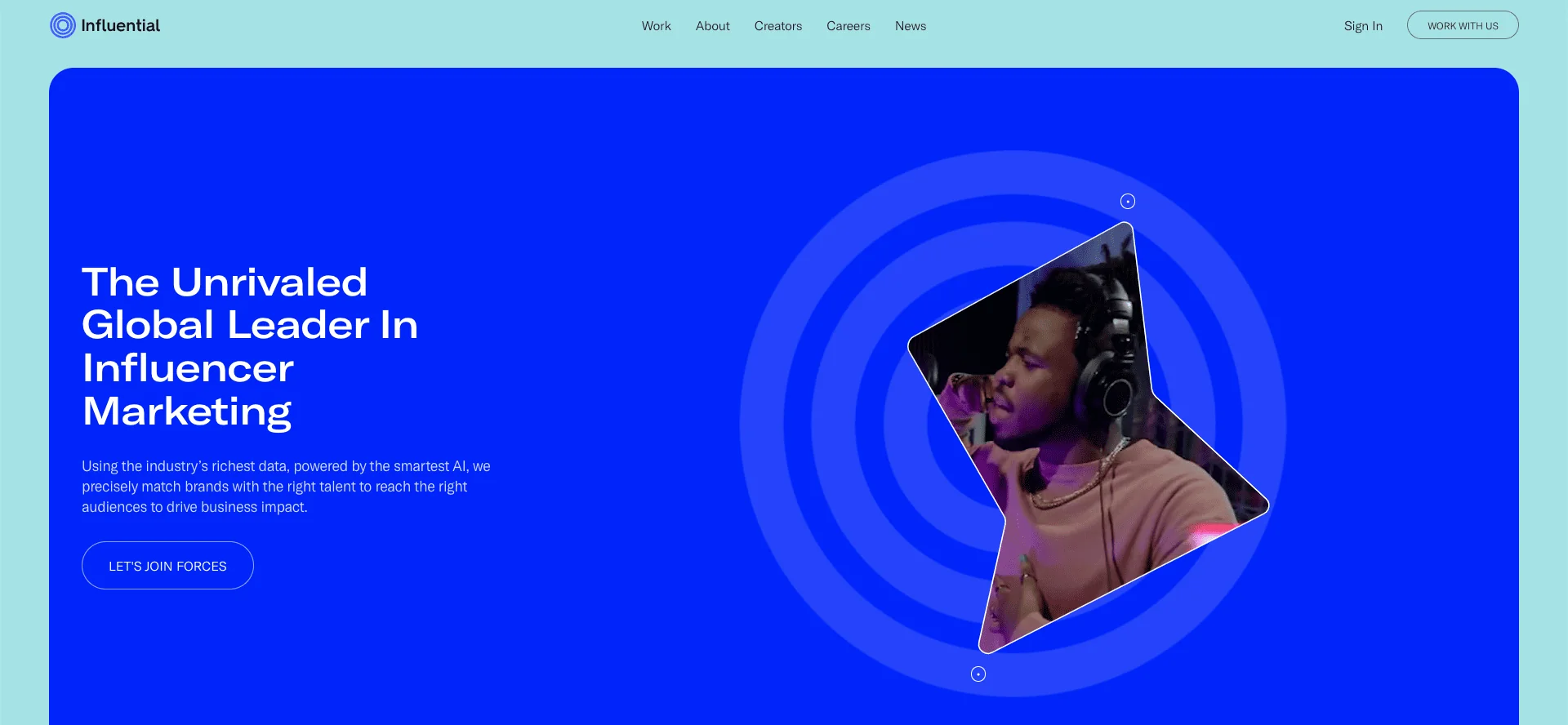
Influential overview - Influential alternatives

Influential is a full-service influencer marketing platform owned by Publicis Groupe, which acquired it in 2024 for approximately $500 million. In May 2025 Publicis acquired Captiv8 and integrated it with Influential under the Connected Media unit, keeping both brands and both CEOs in place. Captiv8's technology now underpins Publicis's global influencer offering, connected to Epsilon's CoreID identity graph.

Platform Coverage: Instagram, TikTok, YouTube, Facebook and other major networks, with a combined creator network of over 15 million across 120 countries.

Best For: Enterprise brands seeking fully managed, end-to-end influencer marketing with paid media amplification and identity-linked measurement.

Pricing: Standard campaign packages start at $50,000 and up, including agency fees, influencer payments and optional paid media. Affiliate campaigns are priced at $30,000 per month with a three-month minimum. There is no public rate card and no self-serve tier.

Reviews: 4.0 / 5.0 (G2)

User Experience (UX/UI): Clients get a campaign dashboard for approving content and tracking analytics in real time. Since the Captiv8 integration the platform layer is considerably stronger, though the commercial model remains service-led rather than self-serve.

Customer Service: Every campaign includes a dedicated team covering account management, campaign management, creator vetting, analytics and paid media, so execution is hands-on throughout.
Influential's Key Features

  • Full-Service Campaign Management: Fully managed campaigns from influencer sourcing and vetting through creative strategy, contract negotiation, execution and reporting.
  • 15M+ Creator Network: The combined Influential and Captiv8 network covers 95% of influencers with 5,000 or more followers and 90% of those with over a million, across 120 countries.
  • Captiv8 Technology Layer: AI automation, social listening and branded storefront tools that connect influencer, commerce and affiliate channels, ranked the top enterprise influencer platform on G2.
  • Epsilon CoreID Integration: Identity, influencer and transaction data aggregated in one place for full-funnel measurement of creator marketing across platforms and media channels.
  • Paid Media Amplification and Whitelisting: Influencer content can be extended through paid media, including whitelisting, to boost performance beyond organic reach.
  • Real-Time Dashboards and Sentiment Analysis: Live engagement, CTR and conversion tracking, with qualitative sentiment evaluation and a full post-campaign report within 21 business days.

Influential Pros and Cons

Pros Cons
Largest Creator Network: Over 15 million creators across 120 countries, covering 95% of influencers above 5,000 followers. High Campaign Costs: Starts at $50,000 and up, which is prohibitive for smaller brands or limited budgets.
Publicis and Epsilon Backing: Identity-linked measurement through CoreID connects creator activity to real business outcomes. Managed Service Only: No self-serve tier, so your team briefs and approves rather than sourcing and messaging directly.
Paid Media Amplification: Native whitelisting and paid extension of influencer content, rare among influencer platforms. Affiliate Campaign Constraints: Affiliate programs carry a three-month minimum at $30,000 per month.
Usage Rights Flexibility: Negotiation and tracking of usage rights, with terms agreed before outreach begins. Rigid Payment Models: Flat-fee and affiliate compensation cannot be mixed within a single campaign.
Dedicated Campaign Team: Account, campaign, vetting, analytics and paid media specialists assigned to every program. Inconsistent Support Speed: Users report delayed responses during onboarding and time-sensitive campaign execution.


Quick Comparison: Top 10 Influential Alternatives in 2026

Platform Starting Price Commitment Free Trial Self-Serve Rating
Influential $50,000+ per campaign 3 months (affiliate) No No, managed only 4.0 (G2)
Influencer Hero $649/month Monthly Demo Yes, 8 platforms 5.0 (Capterra)
Modash $199/month (annual) Monthly or annual 14 days Yes, 350M+ profiles 4.9 (Capterra)
Upfluence $478/month per module 12 months After demo Yes 4.3 (Capterra)
GRIN Free, paid from $200/month Monthly Free tier Yes 4.5 (G2)
HypeAuditor Free tier, paid from $299/month Annual Free tier Yes, 227M+ profiles 4.8 (Capterra)
Sprout Social $1,599/month per seat 12 months No Yes 4.5 (Capterra)
CreatorIQ ~$30,000/year Annual No Yes 4.4 (Capterra)
Aspire ~$2,300/month + onboarding Annual No Yes, plus marketplace 4.0 (Capterra)
Traackr $25,000/year (3 seats min) Annual No Yes 4.3 (G2)
Later $28,500/year + $5,000 setup Annual No Yes, or managed 4.4 (Capterra)


10 Alternatives to Influential for Effective Influencer Marketing in 2026

1. Influencer Hero

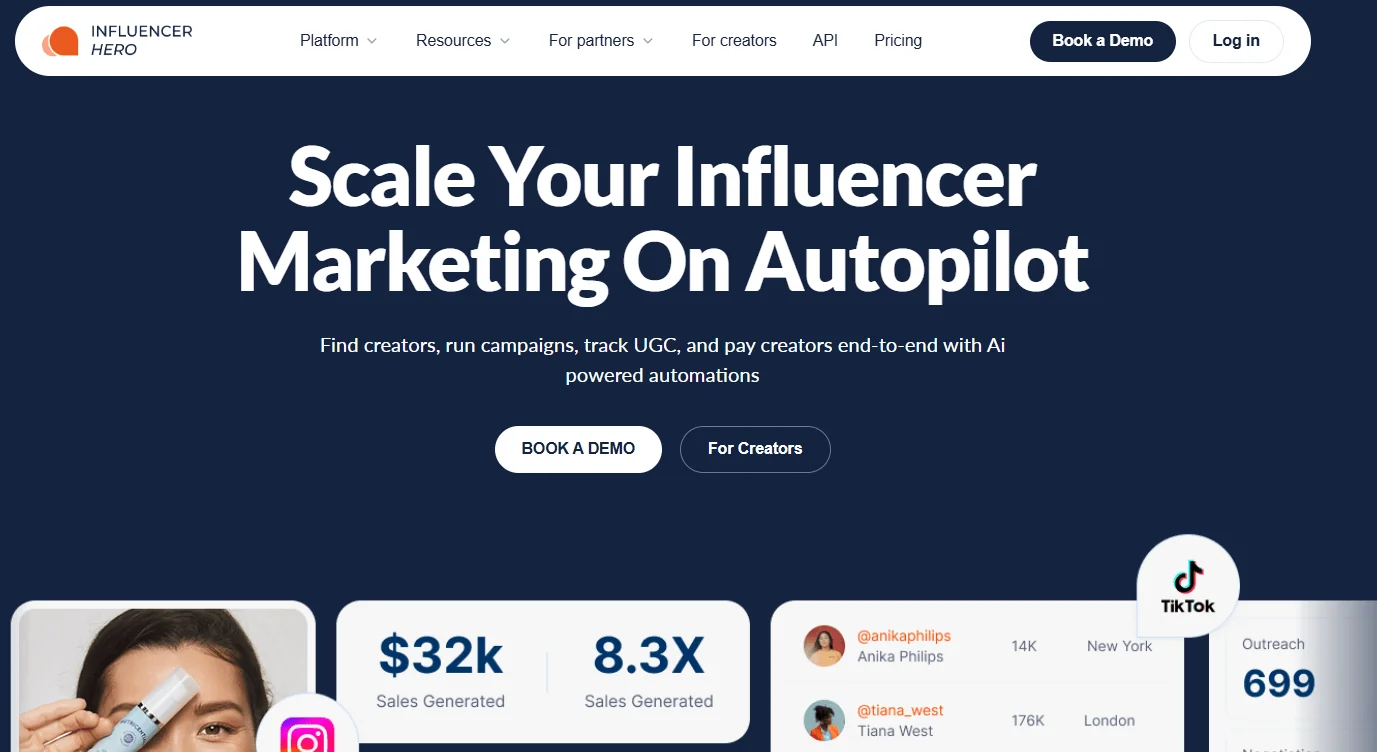
Influencer Hero overview - Influential alternatives

Platform Coverage: Instagram, TikTok, YouTube, Facebook, Pinterest, Snapchat, X and Twitch.

Best For: Brands that want full control over discovery and outreach, with optional agency support, at transparent pricing and no long commitment.

Pricing: Published openly and billed monthly. Standard starts at $649/month for up to 1,000 creators, Pro at $1,049/month for up to 5,000, and Business at $2,490/month for up to 10,000, with custom and agency plans above that.

Reviews: 5.0 / 5.0 (Capterra)

User Experience (UX/UI): A modern, intuitive dashboard with built-in automation and customizable email templates. Most teams run their first campaign within days rather than weeks.

Customer Support: 24/7 live chat with real agents, email assistance and a Help Center with written and video guides. Every plan includes a dedicated account manager from day one.

Influencer Hero's Key Features

  • Full Creator Database Access: Search and filter across eight platforms yourself, by niche, audience demographics, engagement quality and follower authenticity, with fake-follower detection and lookalike search.
  • AI Assistant for Outreach and Follow-Ups: Rewrite any email before it sends, set AI instructions at account or campaign level, and generate follow-ups built from the content of the original thread rather than a static sequence.
  • Content Reviews with Unlimited Rounds: Request content from the deal page, approve or reject with a reason, and let creators resubmit until it is right, with a central queue of everything pending approval.
  • Invoicing Workflows: Request invoices from creators, approve or reject them with a comment, and block payouts until an invoice clears.
  • Lowest Payout Fees on the Market: Creator payouts run at 0.1% to 0.5%, against the 5% to 7% most platforms charge.
  • Creator Storefronts and Application Pages: Influencers build curated shops featuring your products, while branded application pages let creators apply to you directly.

Influencer Hero Pros and Cons

Pros Cons
Transparent Monthly Pricing: Published plans billed monthly, against Influential's $50,000 campaign minimum. No Ad Whitelisting: Paid promotion through creator accounts must be set up manually outside the platform.
Full Self-Serve Control: Your team searches, filters and messages creators directly rather than briefing an agency. Slight Learning Curve: Generally intuitive, but some teams need initial guidance to use the full toolset well.
Eight-Platform Coverage: Discovery, outreach and reporting across every major network in one dashboard. No Managed Media Buying: Paid amplification and media strategy are not part of the offering.
Lowest Payout Fees: Creator payouts at 0.1% to 0.5% against an industry norm of 5% to 7%.
Dedicated Account Manager: Included on every plan from day one, alongside 24/7 human chat support.

Influential vs Influencer Hero

The difference is who runs the campaign. Influential's team sources creators, negotiates and executes while you brief and approve. Influencer Hero hands your team the database and the tooling, with AI handling the repetitive parts of outreach instead of an account manager.

Scale is where Influential wins outright. A 15 million creator network with Epsilon identity data behind it is something no self-serve platform matches, and paid media amplification through Publicis has no equivalent here.

Cost is where the comparison flips. Influential starts at $50,000 per campaign with no public pricing, while Influencer Hero publishes its tiers from $649 per month and bills monthly, so you can start small and scale as results come in. Want to see the discovery, outreach and attribution stack running on your own catalog? Book a demo with the Influencer Hero team.
2. Modash

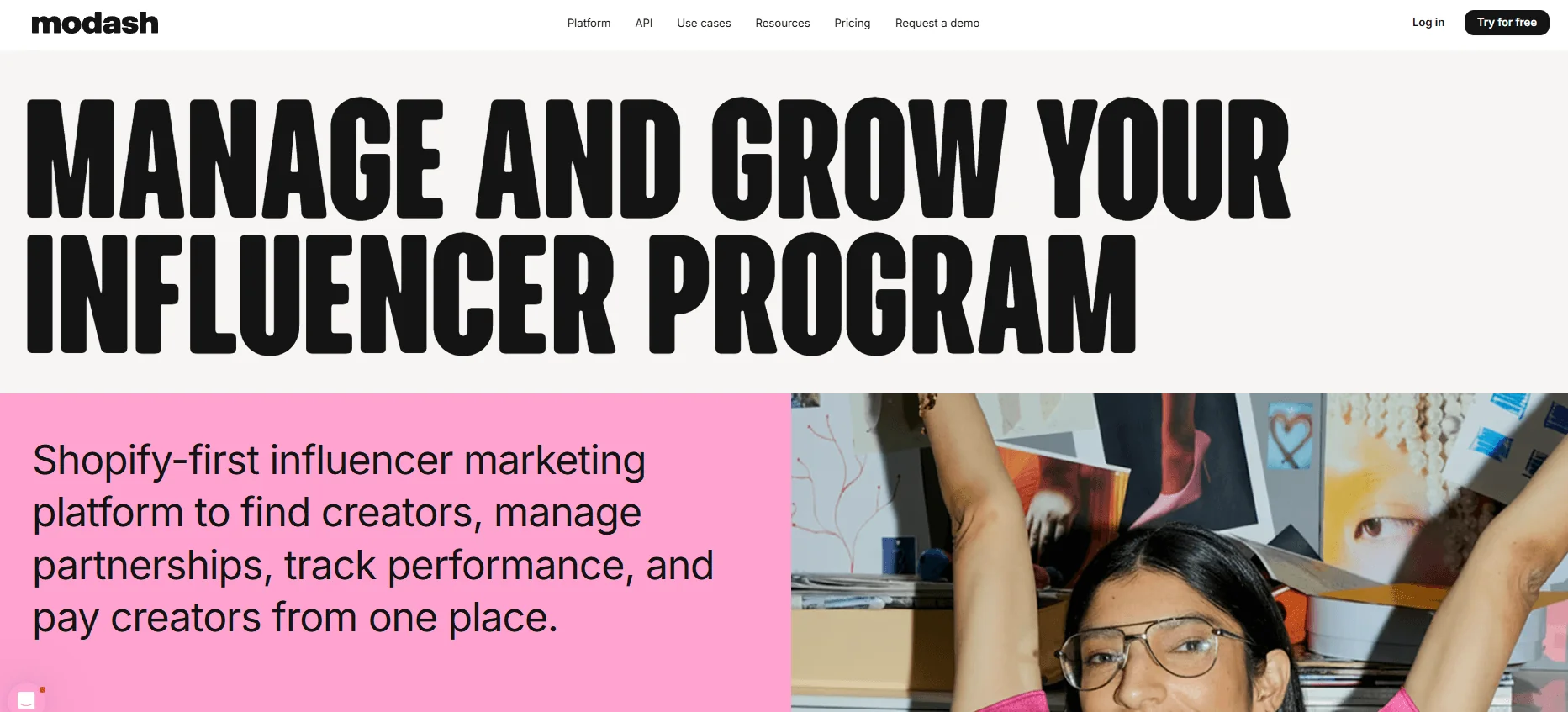
Modash overview - Influential alternatives

Platform Coverage: Instagram, TikTok and YouTube, with profile recognition for X, Snapchat and others.

Best For: Brands running global or multi-market programs that want the deepest self-serve discovery pool without an enterprise contract.

Pricing: Published openly. Essentials is $299/month, or $199/month billed annually. Performance is $599/month, or $499/month annually. Enterprise is custom, with public estimates starting around $14,700/year. All plans include a 14-day free trial with no credit card required.

Reviews: 4.9 / 5.0 (Capterra)

User Experience (UX/UI): A clean, accessible interface with strong filtering. Most users navigate it easily, though advanced capabilities take time to master.

Customer Support: Chat and email support backed by a thorough knowledge base, with onboarding available on higher tiers.

Explore the top Modash alternatives if you want to compare discovery-first tools side by side before committing.

Modash's Key Features

  • 350M+ Creator Database: More than twenty times the size of Influential's combined network, fully browsable by your team with no opt-in required.
  • Influencer CRM with Pipeline Statuses: Custom stages such as Invited, Negotiating, Hired and Product Sent, plus bulk actions, labels and notes.
  • Automated Email Sequences: Send from your own brand domain through Gmail or Outlook, with follow-ups that stop automatically when a creator replies.
  • Find Your Fans: Surfaces creators who already follow and engage with your brand, useful for building advocacy from your existing audience.
  • AI-Powered Discovery: Describe the creator you want in natural language, or upload an image, and let the AI surface matches alongside filter-based search.
  • Shopify Affiliate Hub: Discount codes, gifting workflows, affiliate links and real-time sales attribution from one dashboard.

Modash Pros and Cons

Pros Cons
Extensive Creator Database: Over 350 million profiles with no opt-in requirement, fully searchable by your own team. Limited Rights Management: No usage rights negotiation layer, so licensing is handled creator by creator.
Transparent Public Pricing: Published tiers with a 14-day free trial and no card required to start. Hard Monthly Usage Caps: Profile analyses and email unlocks are firm limits that heavy discovery burns through fast.
Strong Authenticity Data: Fake-follower detection and audience quality analysis built into every profile view. eCommerce Limited to Shopify: Integration options are thin beyond Shopify, with no Amazon or Magento support.
Scalable Outreach: Message large batches of creators from your own domain with automatic reply detection. No Managed Service: Everything is self-serve, so there is no team to hand execution to.

Influential vs Modash

These two sit at opposite ends of the control spectrum. Influential decides which creators you work with and handles everything around them. Modash hands you 350 million profiles and expects you to do the filtering, messaging and negotiating yourself.

What you give up is execution and paid media. Modash has no account team, no whitelisting and no creative strategy layer, so everything beyond discovery and outreach stays with your team.

On cost the gap is enormous. Modash starts at $199 per month on annual billing with a 14-day free trial, against Influential's $50,000 campaign floor. For brands testing the channel, that difference decides it before any feature comparison matters.
3. Upfluence

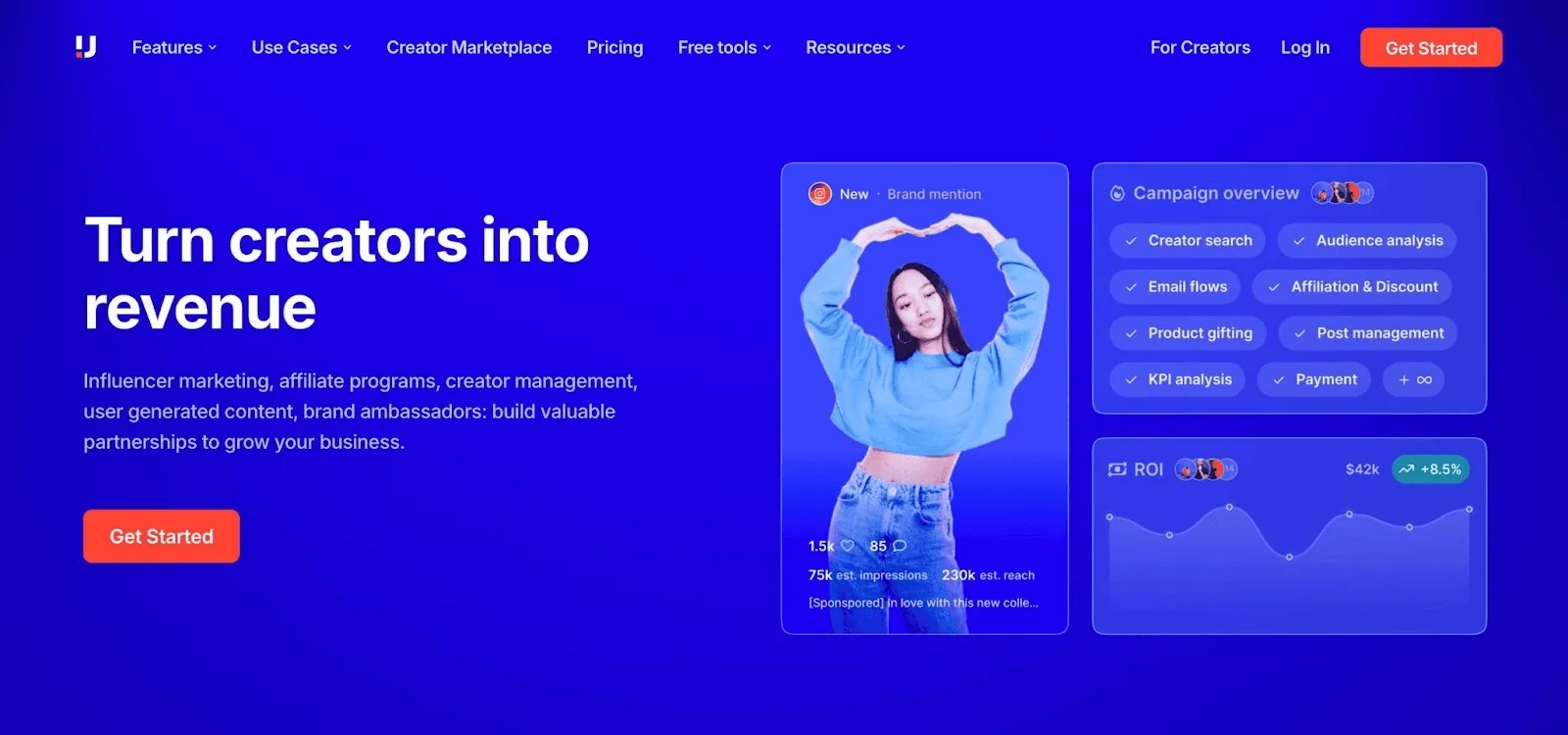
Upfluence overview - Influential alternatives

Platform Coverage: Instagram, TikTok, YouTube, X, Twitch, Pinterest and WordPress blogs.

Best For: eCommerce brands focused on revenue attribution, particularly those selling on Amazon as well as Shopify.

Pricing: Modular rather than tiered. The Search and Contact module starts at $478/month, and a full setup covering search, campaign management and Upfluence Pay comes to roughly $1,276/month for one seat, about $16,007/year. Extra seats scale linearly, a required onboarding fee applies, and the minimum contract is 12 months.

Reviews: 4.3 / 5.0 (Capterra)

User Experience (UX/UI): Built for professionals managing everything from one dashboard. The breadth means a real learning curve, and some users report delays on high-volume actions.

Customer Support: Thorough onboarding, regular Q&A sessions and dedicated account representatives, though some users report inconsistent response times.

Compare the leading Upfluence alternatives to see how the modular pricing model stacks up against flat-rate platforms.

Upfluence's Key Features

  • Customer-to-Creator Matching: Connects to Shopify and Amazon to surface customers who already have audience reach, turning existing buyers into creators.
  • Jaice AI Assistant: Handles creator selection, outreach messaging and follow-up personalization at scale.
  • Native Amazon Integration: Rare in this category, where most competitors including Influential stop at Shopify.
  • Built-In Payments and Compliance: Multi-currency payouts, KYC verification, tax forms and invoicing handled in-platform.
  • Social Listening: Track brand mentions, competitor activity and trending topics to spot creators before their rates climb.

Upfluence Pros and Cons

Pros Cons
Deep eCommerce Integration: Direct Shopify and Amazon connections for affiliate tracking and revenue attribution. Modular Pricing Adds Up: Each module is quoted separately, so a working setup lands well above the $478 entry figure.
No Commissions on Revenue: Flat-rate pricing means brands keep 100% of the sales their creators generate. 12-Month Minimum Contract: Four times Influential's affiliate minimum, with no self-serve trial available.
Customer-Based Discovery: Identifies influential customers already buying from you, maximizing affiliate ROI. Steep Learning Curve: The breadth of advanced features takes real time to navigate confidently.
Payments and Compliance Built In: Multi-currency payouts, KYC and tax forms without a third-party tool. Required Onboarding Fee: A one-off onboarding charge sits on top of the annual license cost.

Influential vs Upfluence

Both platforms sell after a demo with a multi-month commitment, so neither is the quick option. The difference is what you are buying and who operates it.

Influential buys you a team plus media amplification behind a 15 million creator network. Upfluence buys you software plus commercial infrastructure, with Amazon and Shopify attribution, customer-to-creator matching and multi-currency payouts operated by your own marketers.

If your influencer program is judged on tracked revenue rather than reach and sentiment, Upfluence's attribution stack does more of that work, and a full setup at roughly $16,007 per year costs less than a third of a single Influential campaign.
4. GRIN

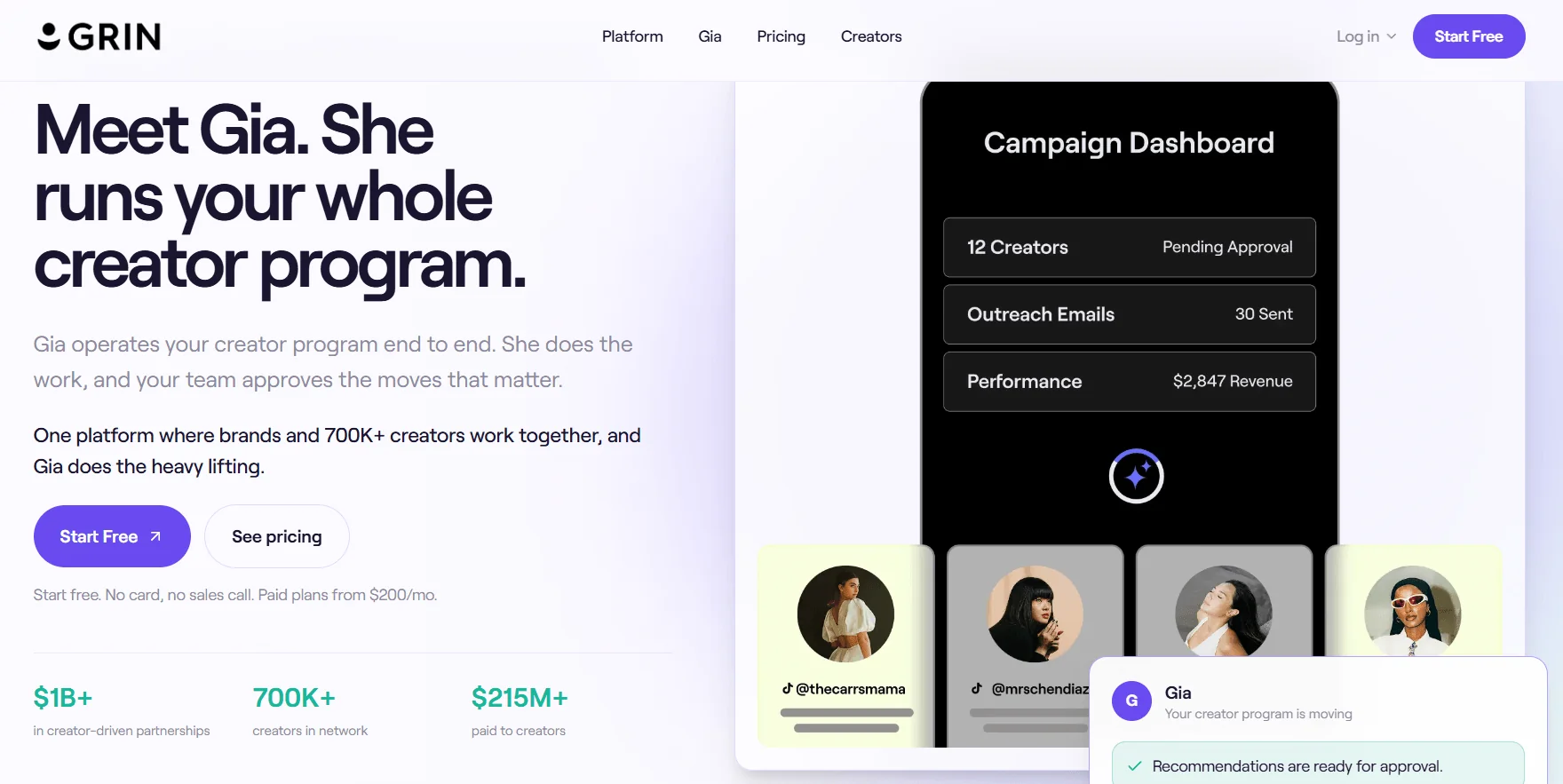
GRIN overview - Influential alternatives

Platform Coverage: Instagram, TikTok, YouTube, X (Twitter), Twitch and Snapchat.

Best For: DTC brands deep in Shopify or WooCommerce that want creator management infrastructure with no contract at all.

Pricing: In January 2026 GRIN replaced its demo-only model with five self-serve tiers, billed monthly with no annual commitment: Free at $0 with 200 monthly credits, Starter at $200/month, Growth at $500/month for up to 100 active creators, Scale at $1,000/month for up to 250, and Complete at $1,500/month for up to 500. Pricing is metered by credits for Gia, GRIN's AI assistant, rather than per seat.

Reviews: 4.5 / 5.0 (G2)

User Experience (UX/UI): A streamlined interface appreciated for campaign workflow efficiency, though performance dips on bulk actions and large data sets.

Customer Support: Onboarding assistance, email and chat support, and a dedicated strategist on higher tiers. Reviews are mixed on ticket resolution speed.

See how the two platforms compare directly in our GRIN comparison, covering pricing, workflow depth and eCommerce attribution.

GRIN's Key Features

  • Gia AI Assistant: Sources creators, drafts outreach and benchmarks fair compensation, trained on GRIN's own historical campaign data.
  • Deep eCommerce Integrations: Native Shopify, WooCommerce and Magento connections handle product seeding, discount codes and affiliate commission tracking end to end.
  • Automated Payment Workflows: Creator payments, bonuses and commissions run automatically, including 1099 processing on higher tiers.
  • Free Tier to Test With: A $0 plan with 200 monthly credits lets you trial the workflows without a card or a sales call.
  • Branded Application Pages: Custom application forms let brands scale inbound creator interest.

GRIN Pros and Cons

Pros Cons
Month-to-Month Billing: No contract at all, against Influential's three-month affiliate minimum and $50,000 campaign floor. CRM Gated Behind Growth: Free and Starter buy the AI assistant only; the creator workspace starts at $500/month.
Genuinely Free Tier: A $0 plan with 200 monthly credits lets you test before spending anything. Weak Discovery Filters: Users report outdated profiles, duplicate entries and data accuracy issues during search.
Strong eCommerce Integration: Shopify, WooCommerce and Magento for gifting, fulfillment and sales tracking. Active Creator Caps: The workspace is capped at 100, 250 or 500 active creators depending on tier.
Full Campaign Workflow: Covers the complete cycle from gifting through payments and ROI reporting. Credit-Metered Costs: Spend scales with the work the AI does, making monthly budgets harder to forecast.

Influential vs GRIN

GRIN's move to public self-serve pricing in January 2026 makes this the widest commercial gap on the list. Influential quotes campaigns starting at $50,000 with no rate card. GRIN publishes five tiers, starts at $0, and lets you cancel any month.

The trade is service for control. GRIN gives you the tooling and expects your team to run it, with no account manager sourcing creators, no creative strategy and no paid media amplification.

Where GRIN clearly wins is eCommerce depth for DTC brands. Native Shopify, WooCommerce and Magento integrations handle seeding, discount codes and commission tracking end to end, which matters more to a growing store than a 15 million creator network it will never use.
5. HypeAuditor

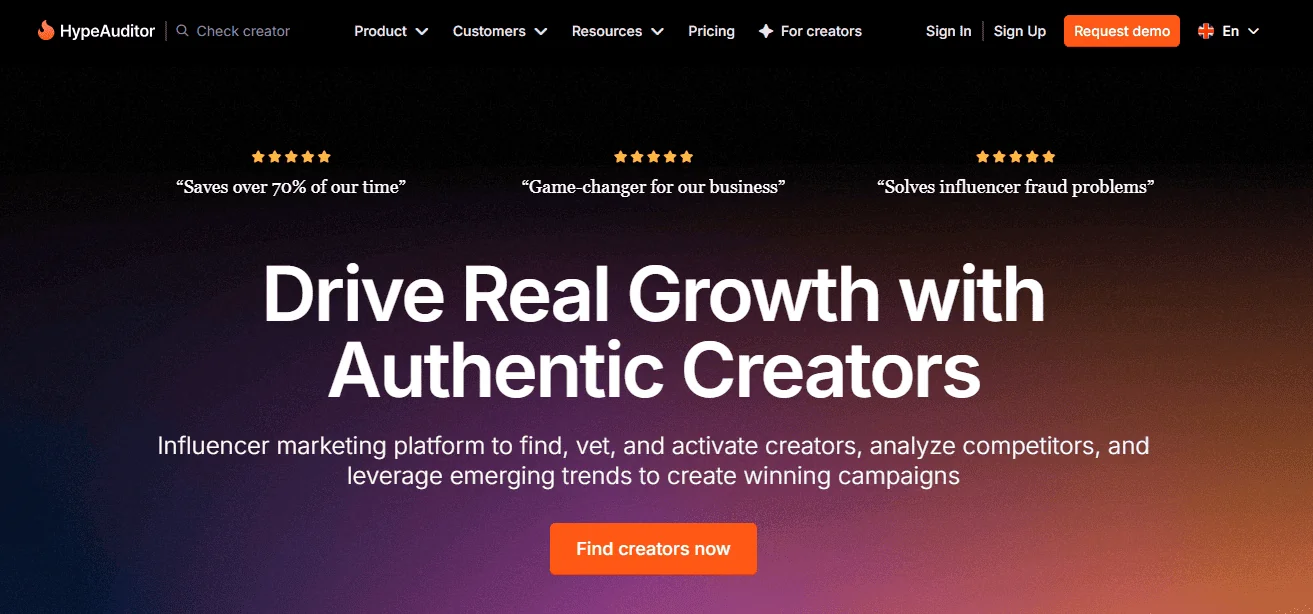
HypeAuditor overview - Influential alternatives

Platform Coverage: Instagram, TikTok, YouTube, Twitch, X and Snapchat.

Best For: Data-focused teams that prioritize audience verification and fraud detection before committing budget to a creator.

Pricing: A free tier covers media plans, campaign management and demo versions of the wider toolset. The Basic plan starts at $299/month billed annually, with higher tiers quoted based on data volume, seats and feature access.

Reviews: 4.8 / 5.0 (Capterra)

User Experience (UX/UI): A clean, well-organized interface, though several advanced tools are not immediately intuitive and take some exploring.

Customer Support: Chat and email assistance, onboarding sessions and a comprehensive Help Center with guides and walkthroughs.

HypeAuditor's Key Features

  • Audience Quality Score and Fraud Detection: The category benchmark for identifying fake followers, engagement pods and suspicious growth patterns.
  • AI-Powered Discovery: Search 227M+ creator profiles using 35+ filters plus AI that reads bios, captions and media to surface brand-safe creators.
  • Lookalike Search: Scale campaigns by finding creators with audiences similar to your best-performing partners.
  • Market and Competitor Analysis: Track organic brand mentions and competitor creator activity to surface prospects you would otherwise miss.
  • eCommerce Sales Tracking: Shopify, WooCommerce and Magento integrations manage promo codes, affiliate links and product seeding.

HypeAuditor Pros and Cons

Pros Cons
Free Tier and Published Entry Price: A genuine free plan plus a Basic tier from $299/month on annual billing. Higher Tiers Still Quoted: Anything above Basic is priced on data volume and seats, so a sales call is required.
Best-in-Class Fraud Detection: Verifies audience authenticity so brands stop paying for fake reach. No Managed Execution: It vets and finds creators but does not negotiate, produce content or run campaigns.
Huge Creator Index: 227M+ profiles you can browse yourself, with 35+ filters and AI-assisted search. Interface Usability Issues: Despite a clean layout, certain functions are difficult to locate at first.
Strong Market Intelligence: Brand mention tracking and competitor analysis for a fraction of an enterprise contract. Steep Learning Curve: New users generally need onboarding before unlocking the full toolset.

Influential vs HypeAuditor

Influential vets every creator it puts in front of you, so verification is folded into the service you are paying for. HypeAuditor sells that verification as a product your team operates, across 227 million profiles rather than a curated set.

For a brand confident in its own creative judgment but wanting hard data on audience authenticity, HypeAuditor delivers the vetting layer without a five-figure campaign commitment, and its free tier makes it the cheapest way to add fraud detection to an existing workflow.

What it does not do is negotiate contracts, manage content or buy paid media. If the reason you are considering Influential is that nobody on your team has capacity to execute, HypeAuditor solves the wrong half of the problem.
6. Sprout Social

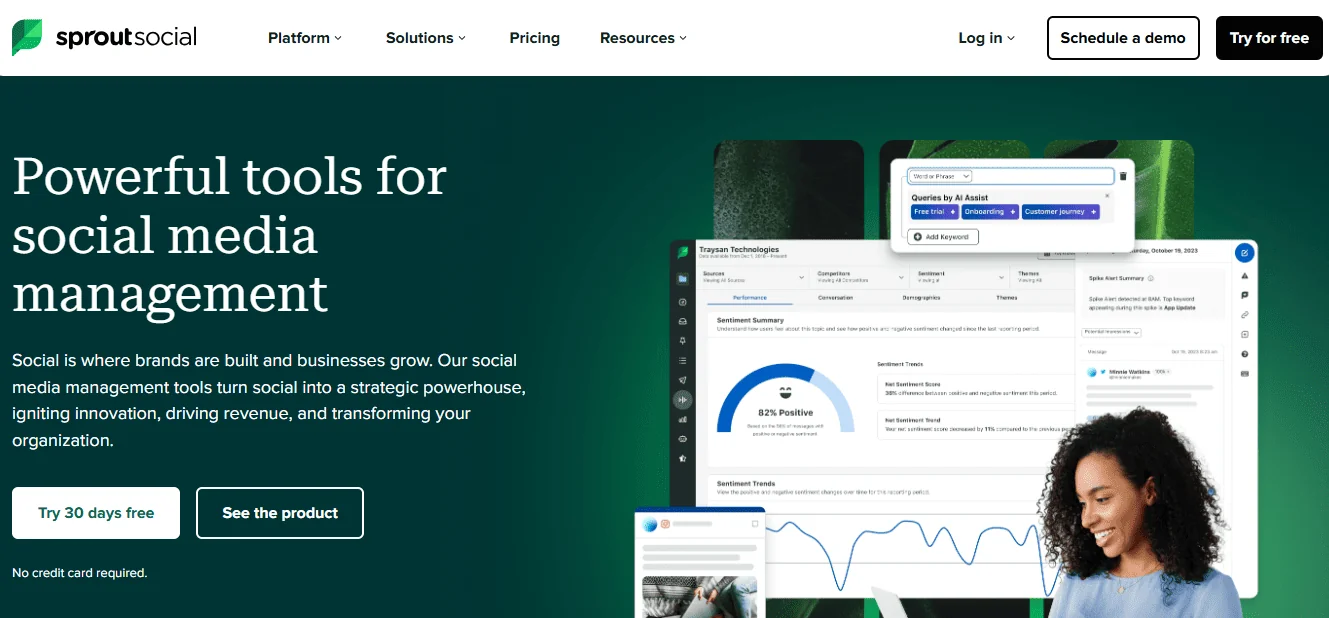
Sprout Social overview - Influential alternatives

Platform Coverage: Instagram, TikTok, YouTube, Facebook, X, LinkedIn, Pinterest and Threads across the wider suite.

Best For: Marketing teams already running Sprout Social that want influencer workflows in the same environment as publishing and listening.

Pricing: The influencer marketing module, formerly Tagger, starts at $1,599/month per user, with each additional seat at $600/month and a mandatory 12-month commitment. That works out to over $19,000 a year for one person or roughly $26,000 for a team of two. The core Sprout Social platform is priced separately, from $199 per seat per month.

Reviews: 4.5 / 5.0 (Capterra)

User Experience (UX/UI): A clean layout with well-organized dashboards. The Smart Inbox and publishing calendar stand out, and the AI tools simplify campaign planning.

Customer Support: Live chat, email and phone support with comprehensive onboarding, plus a dedicated account representative on many plans.

Our full Sprout Social pricing breakdown covers what a multi-seat setup actually costs once the core platform is included.

Sprout Social's Key Features

  • AI Brand Fit and Safety Scoring: Evaluates creator compatibility with brand values and flags risky profiles before budget is committed.
  • Content Approval Workflows: Review and approve every piece of influencer content before it goes live.
  • EMV and Benchmarking Reports: Earned media value tracking and competitor benchmarking within customizable reporting.
  • Integrated Outreach CRM: Full Gmail and Outlook integration with templates, tagging and reply tracking.
  • Unified Social Stack: Influencer data sits alongside publishing, listening and analytics, removing a second login.

Sprout Social Pros and Cons

Pros Cons
Smart Influencer Matching: AI assesses brand alignment and runs safety checks, improving creator selection quality. Expensive Per-User Pricing: At $1,599/month per seat, costs compound fast across a team.
Widest Platform Coverage: Eight networks including LinkedIn and Threads, more than Influential publicly supports. Annual-Only Subscription: A 12-month commitment is required, with no monthly billing option.
Full Campaign Oversight: Approval flows, EMV reporting and competitor benchmarking in a single workflow. No UGC Licensing Tools: Content rights management and AI-powered content discovery are both missing.
Strong Team Collaboration: Shared calendars and approval flows built for larger marketing teams. Add-On Costs Stack: The influencer module is priced separately from core seats and Premium Analytics.

Influential vs Sprout Social

Influential is a managed influencer operation with media buying behind it. Sprout Social is a social media suite with an influencer module bolted on. Neither is really a discovery-first tool, so the question is which surrounding system your team needs.

If your marketers already publish and listen inside Sprout, adding influencer workflows keeps everything in one environment and gives you EMV benchmarking you can run yourself rather than receiving in a post-campaign report.

Where Influential holds a clear edge is amplification. Paid media extension and whitelisting through Publicis have no Sprout equivalent, and for brands treating creator content as the top of a paid funnel, that is the entire point.
7. CreatorIQ

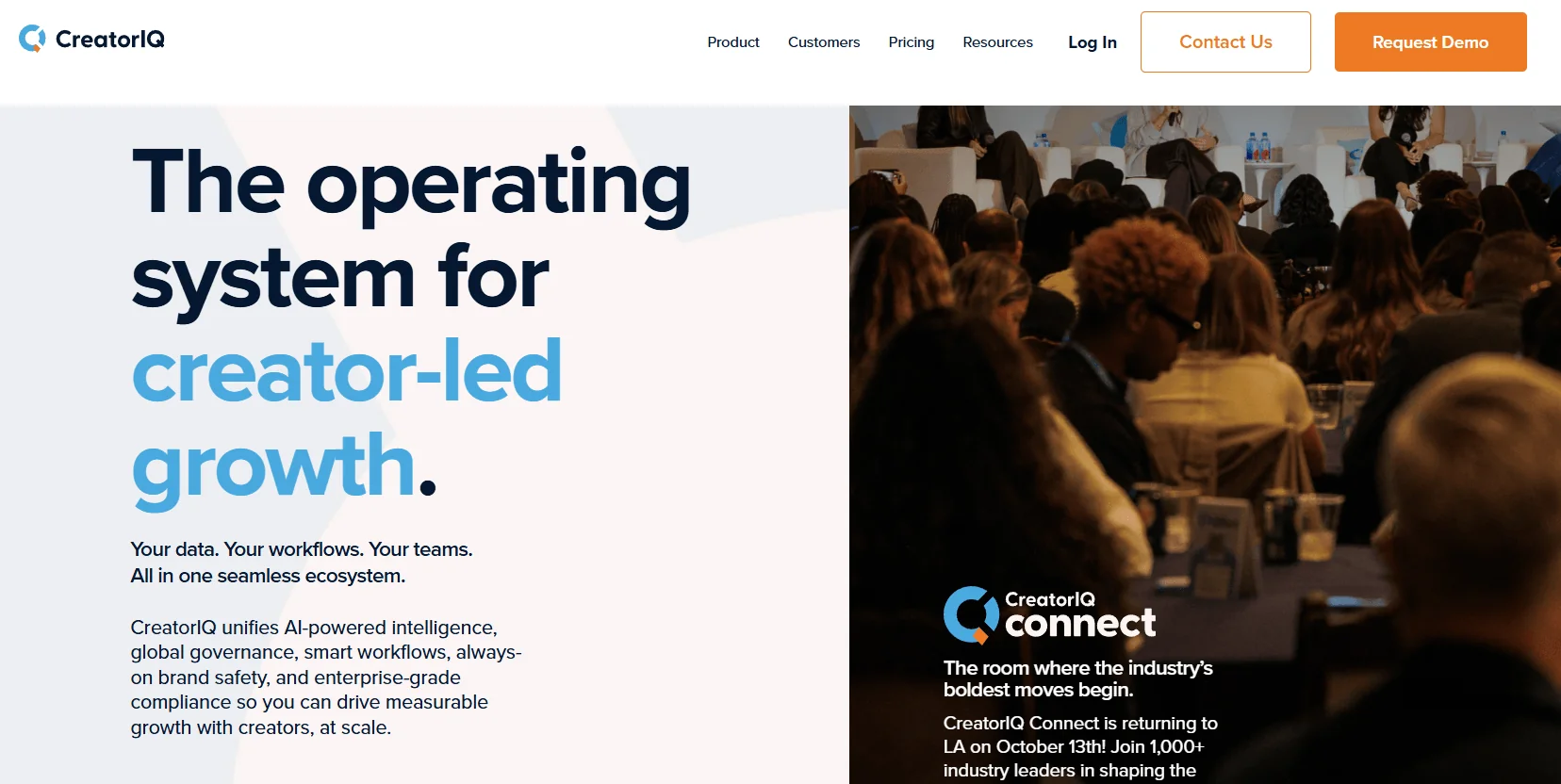
CreatorIQ overview - Influential alternatives

Platform Coverage: Instagram, TikTok, YouTube, Facebook, Pinterest, Twitch and X.

Best For: Large enterprises managing complex, multi-market campaigns with significant data governance and reporting requirements.

Pricing: CreatorIQ does not publish pricing. Based on procurement data, annual contracts start around $30,000/year, with a median closer to $39,250 and higher-end deals reaching $59,500 and above. Every contract is annual, there are no monthly plans, and a sales conversation is required before you see a number.

Reviews: 4.4 / 5.0 (Capterra)

User Experience (UX/UI): A sleek, visually rich dashboard that users navigate easily once onboarding is complete, though initial setup typically runs six to eight weeks.

Customer Support: A dedicated account manager plus a success team offering onboarding guidance, campaign support and quarterly check-ins.

CreatorIQ's Key Features

  • Real-Time API Connections: Direct Meta, TikTok and YouTube integrations deliver accurate, regulation-compliant data plus early access to new platform features.
  • Refined Search Tools: Creator discovery with filters granular enough to surface niche segments most databases cannot isolate.
  • Built-In Payments and Tax Compliance: Global creator payouts with compliant documentation handled in-platform.
  • Branded One-Pagers and Collaborative Review: External stakeholders can view and comment on creator profiles and content without needing a login.
  • Dedicated Strategic Support: Implementation specialists and success teams from onboarding through quarterly planning.

CreatorIQ Pros and Cons

Pros Cons
Reliable Direct API Data: Meta, TikTok and YouTube connections give accurate data and priority feature access. Manual Affiliate Management: Affiliate conversions must be tracked manually, with no built-in automation.
Full Database Access: Your team searches and selects creators directly rather than receiving a shortlist. No Public Pricing or Free Trial: The same demo-gated model as Influential, at enterprise scale.
Customizable Reporting: Login-free shareable dashboards tailored to what your stakeholders need to see. Rigid Subscription Model: Yearly billing only, with no monthly plan available at any tier.
Integrated Payments and Tax: Global payouts with compliant documentation handled inside the platform. Enterprise Price Floor: Contracts reportedly start around $30,000/year, out of range for most D2C brands.

Influential vs CreatorIQ

Both serve global brands at enterprise scale and both are sold after a demo with no public pricing. The difference is where the work happens.

Influential's value is a team plus media amplification, with campaigns delivered end to end. CreatorIQ's value is API-verified data and governance, with your team doing the selecting inside a system built to survive procurement and legal review.

On budget, CreatorIQ contracts start near $30,000 a year against Influential's $50,000 per campaign. If you want enterprise-grade reporting but your own marketers want to own the process, CreatorIQ is the closer fit.
8. Aspire

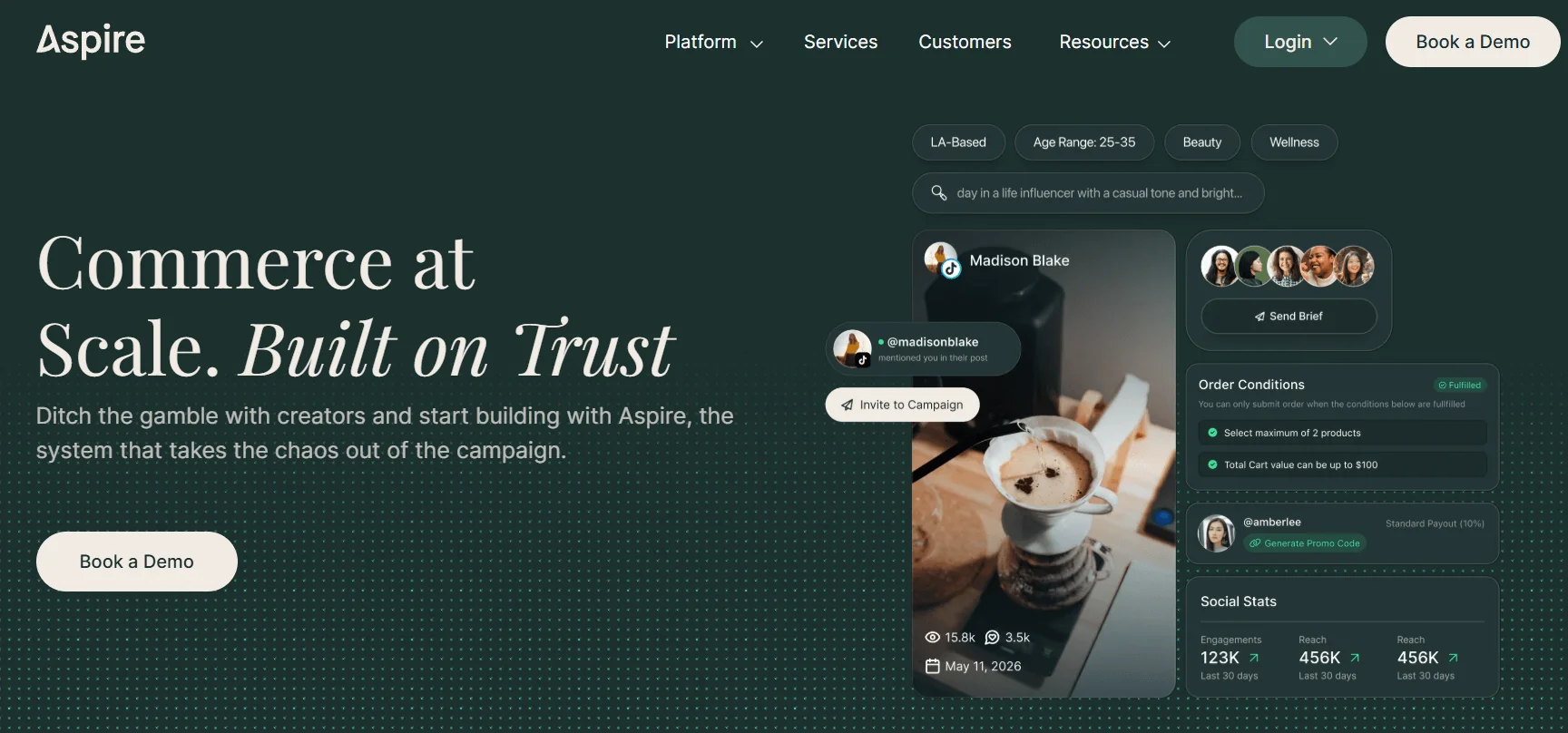
Aspire overview - Influential alternatives

Platform Coverage: Instagram, TikTok, YouTube, Facebook and Pinterest.

Best For: Brands scaling both influencer and UGC programs that want creators applying to them rather than chasing every partnership.

Pricing: Quote-based, typically starting around $2,300 per month on a 12-month agreement, plus a one-time onboarding fee. Reported annual minimums land near $29,588. Pricing is per user, so costs rise as the team grows.

Reviews: 4.0 / 5.0 (Capterra)

User Experience (UX/UI): A modern, easy-to-navigate interface praised for intuitive design, though users occasionally report slow page loads on larger campaigns.

Customer Support: Live chat, email support and an extensive help center, plus a dedicated customer success manager.

Browse the leading Aspire alternatives to compare marketplace-driven platforms against outbound-first tools.

Aspire's Key Features

  • Dual Discovery Model: Search outbound with detailed filters, or open campaigns to a marketplace of over a million creators who apply directly to you.
  • UGC Licensing Built In: Digital term sheets secure content reuse rights automatically, which matters when creator content runs as paid ads.
  • CreatorStores: Influencers build curated storefronts featuring your products, giving each creator a reason to keep promoting.
  • Social Listening and Affiliate Finder: Surfaces brand fans and high-performing affiliate partners using AI-enhanced analytics.
  • Integrated Shopify Gifting: Run the entire gifting workflow from product seeding to performance tracking without leaving the platform.

Aspire Pros and Cons

Pros Cons
Dual Discovery Model: Combines outbound search with an inbound marketplace of over a million creators. High Cost for Smaller Teams: Starts around $2,300/month billed annually, plus a one-time onboarding fee.
Content Licensing Built In: Digital term sheets cut the legal and admin overhead on repurposing UGC. Annual Contract Required: A 12-month term with no free trial before committing.
Creators Apply to You: Inbound applications reduce sourcing workload without handing control to an agency. Occasional Performance Issues: Users report slow load times and minor integration bugs.
Comprehensive Campaign Tools: Content approval, CRM, gifting and tracking in one unified dashboard. Per-User Pricing: Costs climb as teammates are added, which catches many buyers by surprise.

Influential vs Aspire

Aspire is the closest thing on this list to a middle path between managed service and full self-serve. Its marketplace means creators apply to your campaigns, so sourcing workload drops without handing selection to an outside team.

For UGC specifically, Aspire's digital term sheets secure reuse rights automatically, which is the same problem Influential solves through negotiated usage terms, just handled by software rather than an account manager.

The cost difference is decisive for most readers. Aspire's roughly $29,588 annual minimum buys a full year of platform access, while $50,000 buys a single Influential campaign package.
9. Traackr

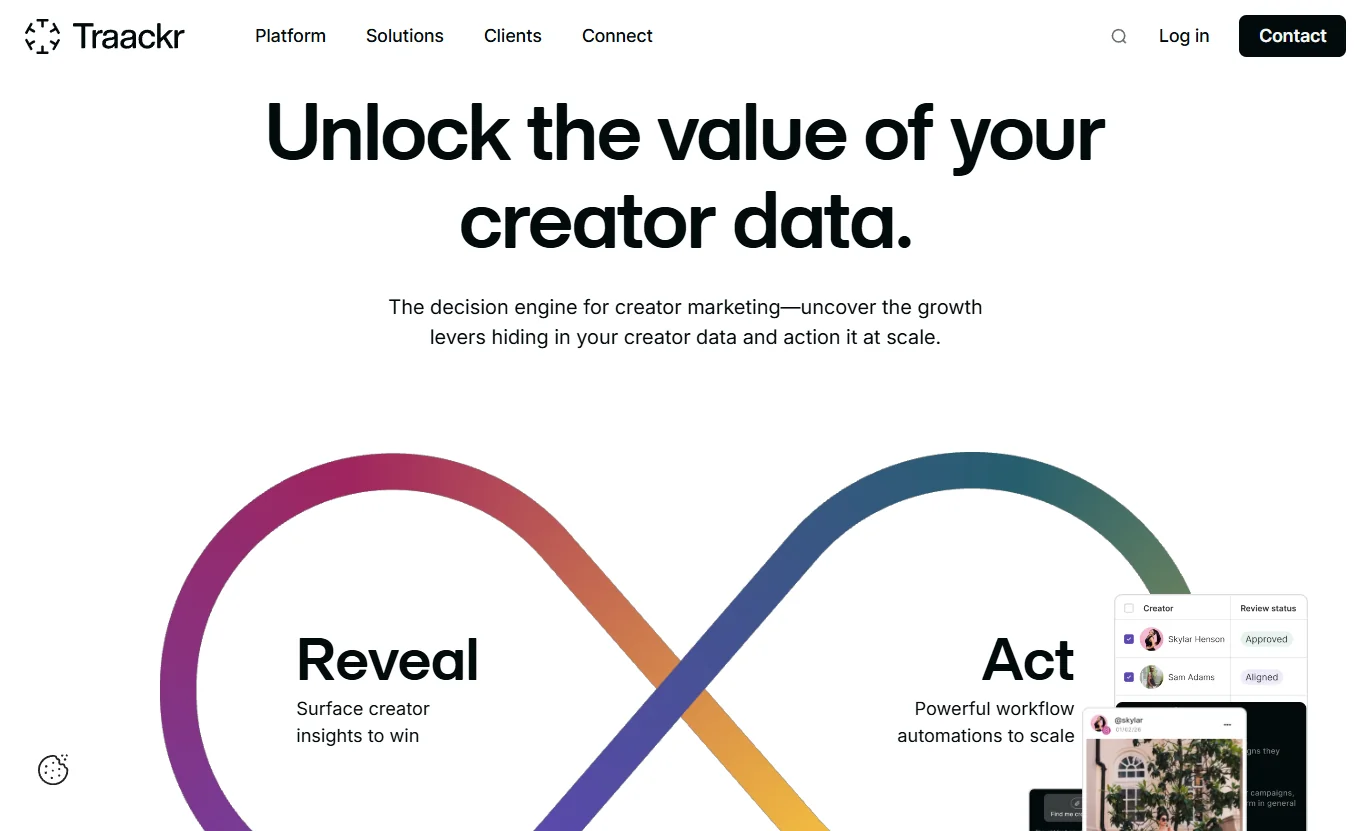
Traackr overview - Influential alternatives

Platform Coverage: Instagram, TikTok, YouTube, Facebook, Pinterest, Snapchat, X, Twitch and LinkedIn.

Best For: Global teams focused on measuring ROI, optimizing budget allocation and benchmarking performance across multiple markets.

Pricing: Three annual tiers plus enterprise, all with hard seat minimums. Growth starts at $25,000/year with a minimum of 3 users, Standard at $32,500/year with a minimum of 5, and Plus at $55,000/year with a minimum of 10. Industry benchmarking is an add-on at roughly $8,000/year. There is no monthly billing and no self-serve trial.

Reviews: 4.3 / 5.0 (G2)

User Experience (UX/UI): Organized and fast once the team is familiar with it, though advanced analytics require training and implementation typically takes around two months.

Customer Support: Highly rated for responsive support and structured onboarding, with the Traackr Academy training resource frequently praised.

Traackr's Key Features

  • Budget Optimization: Suggests ideal spend per creator based on historical performance data rather than guesswork.
  • Spend Efficiency Metrics: Tracks cost per click, engagement, view and story view for genuine ROI comparison across creators.
  • Brand Vitality Score (BVS): A proprietary metric combining visibility, trust and impact, benchmarking your brand against direct competitors.
  • Global Market Benchmarking: Compare performance by region, vertical or campaign type against millions of creators and thousands of campaigns.
  • Brand Safety and Vetting: Automated safety checks, fake-follower analysis and ongoing monitoring rated as unusually thorough.

Traackr Pros and Cons

Pros Cons
Comprehensive Analytics: Deep ROI tracking with cost-per-metric analysis and the Brand Vitality Score. High Cost of Entry: Annual contracts start around $25,000/year with no short-term option.
Widest Network Coverage: Nine platforms including LinkedIn, measured consistently across every market. Hard User Minimums: Growth needs 3 seats, Standard needs 5 and Plus needs 10, so small teams overbuy.
Strong Brand Safety: Automated vetting, fraud analysis and ongoing monitoring rated highly by reviewers. Benchmarking Costs Extra: Industry benchmarking is an add-on at roughly $8,000/year on top of the base plan.
Highly Rated Support: Prompt service across every subscription level plus a strong training resource. No Content Production: It measures campaigns but does not source, negotiate or produce creative for you.

Influential vs Traackr

Influential measures what its own team produced and reports back. Traackr measures whatever you do, across nine networks, and benchmarks it against direct competitors in your category.

For a brand whose main problem is proving influencer ROI to finance, Traackr's spend efficiency metrics and Brand Vitality Score go deeper than a post-campaign report you receive 21 business days after the fact.

The seat minimums matter. Traackr's entry tier requires three users at $25,000 a year, so a two-person team cannot buy in. That said, a full year of Traackr costs half a single Influential campaign package.
10. Later

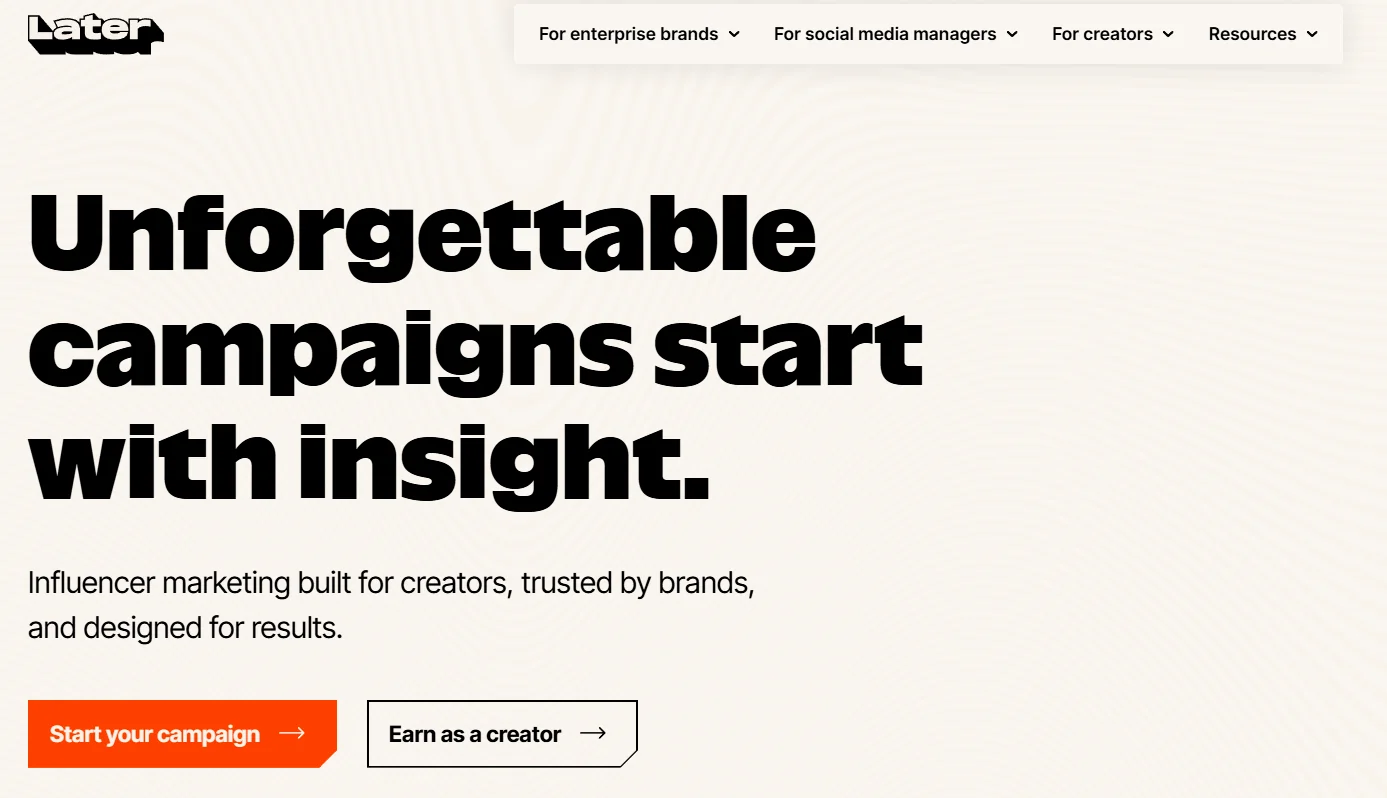
Later overview - Influential alternatives

Platform Coverage: Instagram, TikTok, YouTube, Facebook, Pinterest, Snapchat, LinkedIn and X.

Best For: Brands focused on visual storytelling that want influencer campaigns and content planning managed together, with self-serve, hybrid or fully managed options.

Pricing: Essentials starts at $28,500/year, Pro at $42,000/year and Premier at $60,000/year, plus a one-time onboarding fee of $5,000 for all new customers.

Reviews: 4.4 / 5.0 (Capterra)

User Experience (UX/UI): Praised for a user-friendly design that makes managing collaborations and content scheduling straightforward. Onboarding typically spans four to six weeks.

Customer Support: Access varies by plan and can include live chat, onboarding assistance, or a dedicated account manager.

Explore the top Later alternatives to find platforms matching your needs across varied features, pricing tiers and performance insights.

Later's Key Features

  • AI Creator Recommendations: Matches your brand with relevant creators based on content aesthetics, keywords and audience metrics.
  • Brief-to-Creator Matching: Submit campaign briefs and receive influencer matches curated by Later, the closest parallel to Influential's managed model.
  • Customizable Campaign Options: Choose self-managed, hybrid or fully managed campaign structures to suit your internal workflow.
  • Advanced Influencer Discovery: A database of 15M+ creators with refined filters for finding campaign matches yourself.
  • Mavely Commission Network: Later's acquisition of Mavely added 120,000+ creators plus product-level sales attribution, tracking campaigns to the specific products they sold.

Later Pros and Cons

Pros Cons
Flexible Execution Model: Self-serve, hybrid or fully managed, so you choose how involved your team is. High Onboarding Fee: An upfront charge of $5,000 is required in addition to the annual subscription.
Built-In Commission Network: The Mavely acquisition adds 120,000+ creators and product-level sales attribution. Setup Timeline: Onboarding may take over a month, potentially delaying campaign activation.
Full Database Access: 15M+ creators you can browse yourself rather than receiving a curated shortlist. No Paid Ads Tools: Lacks built-in capabilities for boosting influencer content via paid social.
Strong Brand Safety Controls: Comprehensive tools for reviewing content and vetting influencers. No Public Pricing: Quoted after a sales call, starting at $28,500/year on an annual term.

Influential vs Later

Later is the most direct structural competitor to Influential here, because it also sells managed execution. Its brief-to-creator matching works much like Influential's model, except you can switch to self-serve whenever your team has capacity.

That flexibility is the differentiator. Influential is managed or nothing; Later lets you run one campaign in-house and hand the next one over. Later also opens its 15 million creator database to you rather than curating what you see.

What Influential retains is paid media. Whitelisting and amplification through Publicis have no Later equivalent, and the Mavely network Later added is about sales attribution rather than media buying. On price, Later's $28,500 annual entry buys a full year against a single $50,000 Influential campaign.


Final Thoughts on The Top 10 Influential Alternatives in 2026

Influential in 2026 is a bigger, better-resourced business than the one most comparison articles describe. Publicis ownership, the Captiv8 technology layer and Epsilon's identity data give it scale and measurement depth that no self-serve platform can match, and for enterprise brands running creator content as paid media, that combination is genuinely compelling.

The friction is commercial. A $50,000 campaign floor, a three-month affiliate minimum at $30,000 per month, and a managed-service model that keeps sourcing and outreach on their side of the wall all work against brands that want to own their programs or test the channel first.

For brands that want a versatile, cost-effective platform with genuine control over campaigns, Influencer Hero remains the strongest all-round alternative in 2026. It combines AI-powered discovery and outreach across eight platforms, a full CRM, content review, invoicing, gifting and affiliate attribution, with pricing published from $649 per month and payout fees of 0.1% to 0.5%.

Ready to see how it handles your next campaign end to end? Book a demo with the Influencer Hero team.

Summary
This is some text inside of a div block.
Pricing/Month
Shopify Reviews
This is some text inside of a div block.
Read More
This is some text inside of a div block.
FAQs
1. Which Influential alternative is best for small businesses in 2026?
GRIN, Modash and HypeAuditor are the most accessible entry points. GRIN offers a genuinely free tier with 200 monthly AI credits and bills month to month, HypeAuditor has a free plan covering media plans and campaign management, and Modash starts at $199 per month on annual billing with a 14-day trial. Influencer Hero starts at $649 per month with no annual commitment and covers the full workflow rather than discovery alone, which makes it the better fit once a small brand starts running campaigns regularly rather than testing.
2. How do I choose the right influencer marketing platform for my brand?
Start with how much of the work your team wants to own. If you want someone else sourcing, negotiating and executing, Influential and Later's managed tiers do that. If you want your marketers searching and messaging creators directly, Influencer Hero, Modash and GRIN hand you the database and the tooling. Then filter on budget and commitment, because that is where the real differences sit: monthly billing versus annual contracts, published pricing versus quote-only, and whether you can test before signing.
3. Are there any free influencer marketing platforms available in 2026?
Yes, though free means different things. GRIN offers a free tier with 200 monthly Gia credits, and HypeAuditor has a free plan covering media plans, campaign management and demo versions of its wider toolset. Modash includes a 14-day free trial with no credit card required. Influencer Hero does not offer a free trial, but it bills monthly rather than annually, so you can start and stop without a year-long commitment. Influential has no free option at any level.
4. What features should I look for in an influencer marketing platform?
Influencer discovery with authenticity data, outreach automation, a CRM to track relationships, and reporting that ties campaigns to revenue are the four essentials. Beyond that, look at gifting and eCommerce integration if you ship product, content review and rights management if creator content will run as paid ads, and payout infrastructure if you work with creators at volume. Payout fees in particular are worth checking: Influencer Hero charges 0.1% to 0.5% where most platforms take 5% to 7%.
5. How does Influencer Hero compare to Influential on pricing?
Influential is a premium managed service starting at $50,000 per campaign, with affiliate programs at $30,000 per month on a three-month minimum and no public rate card. Influencer Hero publishes its pricing openly, starting at $649 per month for up to 1,000 creators, and bills monthly with no annual lock-in. A full year on Influencer Hero's Standard plan costs less than a sixth of a single Influential campaign package, though you are buying software your team operates rather than a team that runs campaigns for you.
Which influencer marketing platform is best for small businesses?

For small businesses, Afluencer and Influencer Hero are great options due to their affordable pricing and user-friendly interfaces. Influencer Hero offers flexible pricing and powerful tools for influencer discovery, campaign management, and analytics, making it ideal for businesses with limited budgets.

How do I choose the right influencer marketing platform for my brand?

Choosing the right platform depends on your budget, desired features, and the level of control you want over your campaigns. Platforms like Influencer Hero and Upfluence are known for offering comprehensive tools at competitive prices, making them excellent choices for brands looking for flexibility, control, and scalability.

Are there any free influencer marketing platforms available?

Platforms like Influencer Hero also offer a free trial, allowing brands to explore its features before committing. These platforms are ideal for businesses with limited budgets looking to test influencer marketing strategies.

What features should I look for in an influencer marketing platform?

Look for features such as influencer discovery, campaign management, analytics, and CRM integrations. Platforms like Influencer Hero and Upfluence offer these capabilities, with added benefits like AI-powered influencer search, real-time campaign tracking, and eCommerce integrations, allowing for seamless campaign execution and performance measurement.

How does Influencer Hero compare to Influential in terms of pricing?

Influential is a premium platform with high entry costs, starting at $50,000 per campaign. In contrast, Influencer Hero offers more accessible pricing, starting at $649/month, making it an ideal choice for brands that want a robust influencer marketing solution without the high price tag.

Impact of AI on D2C Brands

Most Popular Blogs

Ready to achieve 10X+ ROI?

Schedule a Demo with one of our media experts below.