Mejor software de marketing de influencers para comercio de creators
Ejecutar programas de comercio de creators significa que sus influencers no solo están publicando contenido — están generando ventas medibles. Su tienda, catálogo de productos, enlaces de afiliados, códigos de descuento y datos de pedidos ya existen dentro de su stack de eCommerce. El desafío es conectar esa infraestructura de ingresos directamente a sus flujos de trabajo de influencers — desde descubrimiento y alcance hasta gifting, automatización, seguimiento de afiliados y atribución en tiempo real.
El mejor software de marketing de influencers para comercio de creators debe hacer más que gestionar campañas. Debe conectarse directamente a su tienda, generar y rastrear enlaces únicos y códigos de descuento, automatizar el envío de productos, sincronizar datos de pedidos y ofrecerle atribución de ingresos clara por creator — sin obligarlo a integrar múltiples herramientas.
En este artículo, desglosaremos cómo cada plataforma respalda el comercio directo — incluidas tiendas, infraestructura de afiliados, flujos de trabajo de gifting, automatización y seguimiento de ROI — para que pueda elegir el sistema que se ajuste a su equipo, stack tecnológico y etapa de crecimiento.
Top 10 mejor software de marketing de influencers para comercio de creators:
Cómo evaluamos el software de marketing de influencers para comercio de creators
Para crear esta lista, evaluamos plataformas de marketing de influencers en función de qué tan bien respaldan a las marcas de eCommerce que ejecutan programas de comercio de creators. Los criterios se enfocaron en la compatibilidad de integración y la capacidad de ejecutar campañas de influencers impulsadas por resultados a escala.
Criterios de evaluación
Integración y compatibilidad con flujos de trabajo de comercio de creators: Qué tan bien cada plataforma se conecta con tiendas de eCommerce, sincroniza catálogos de productos, respalda códigos de descuento y enlaces de afiliados, y se ajusta a las operaciones comerciales existentes sin requerir soluciones alternativas complejas.
Capacidades de campañas de influencers: El grado en que cada plataforma respalda casos de uso centrales de marketing de influencers, incluido descubrimiento de creators, alcance, gestión de relaciones, campañas de gifting y seeding, y colaboraciones basadas en afiliados.
Seguimiento de rendimiento e informes: La capacidad de rastrear el rendimiento a nivel de influencer y campaña, incluidas conversiones, atribución de ingresos y ROI, lo cual es esencial para equipos de eCommerce enfocados en resultados medibles.
Automatización y eficiencia del flujo de trabajo: La efectividad con que la plataforma automatiza tareas que requieren mucho tiempo, como alcance, gestión de campañas, seguimientos, configuración de afiliados e informes — especialmente importante para equipos reducidos que gestionan programas de creators a escala.
Facilidad de uso (UX/UI): La experiencia general del usuario, incluido el diseño del panel, navegación, proceso de incorporación y curva de aprendizaje para equipos que ejecutan programas de influencers impulsados por comercio.
Escalabilidad para marcas en crecimiento: Qué tan bien la plataforma respalda el crecimiento, desde equipos pequeños lanzando su primer escaparate de creators o programa de afiliados hasta marcas DTC establecidas que gestionan cientos o miles de creators.
Precios y flexibilidad del contrato: Transparencia de precios, disponibilidad de planes flexibles y si la plataforma respalda la escalabilidad de programas comerciales sin obligar a compromisos a largo plazo demasiado pronto.
Soporte al cliente e incorporación: Disponibilidad y calidad de recursos de soporte, incluida asistencia de incorporación, documentación, tiempos de respuesta y soporte continuo de éxito del cliente.
Mejor software de marketing de influencers para comercio de creators
El comercio de creators requiere más que un seguimiento básico de influencers. Necesita sistemas que se conecten directamente a ingresos — enlaces de afiliados, códigos de descuento, escaparates, sincronización de productos y atribución — mientras respalda descubrimiento, alcance, gifting y gestión de campañas.
A continuación se muestra una descripción general lado a lado de 10 plataformas de marketing de influencers que respaldan flujos de trabajo de comercio de creators de diferentes formas.
Plataforma
Ideal para
Precio desde
Diferenciador clave
Influencer Hero
Marcas de eCommerce que escalan comercio directo de creators con automatización y escaparates
$649/mes
Motor de automatización basado en reglas + escaparates nativos + seguimiento de afiliados multiplataforma
GRIN
Marcas DTC que gestionan programas de seeding de productos de alto volumen
~$2,500/mes
Integraciones profundas de eCommerce con regalos integrados y CRM
Aspire
Marcas que combinan campañas de influencers con solicitudes de creators entrantes
~$2,300/mes
Gran mercado de creators entrantes + asociaciones de datos de primera parte
CreatorIQ
Marcas empresariales que ejecutan programas de influencers globales
$35,000/año
Informes de nivel empresarial + asociaciones de API de plataforma
Modash
Marcas enfocadas en descubrimiento de influencers a gran escala y seguimiento de afiliados
$199/mes
Base de datos de creators públicos de 350 M+ con búsqueda de IA
HypeAuditor
Equipos que priorizan análisis de influencers y calidad de audiencia
~$10,000/año
Puntuación avanzada de calidad de audiencia + escucha social
Shopify Collabs
Marcas nativas de Shopify que lanzan programas de afiliados simples
Gratuito (tarifa de pago del 2,9%)
Totalmente integrado en el administrador de Shopify
Skeepers
Marcas que escalan campañas de regalos de microinfluencers
~€1,250/mes
Modelo de regalos de influencers micro/nano de alto volumen
Archive
Marcas que aprovechan la detección de UGC e inteligencia de video de formato corto
Precios personalizados
Escucha social impulsada por IA + captura automática de UGC
Impact.com
Marcas que ejecutan programas de comercio de afiliados y asociados
$30/mes
Comercio de nivel de entrada + infraestructura de afiliados con seguimiento escalable
1. Influencer Hero
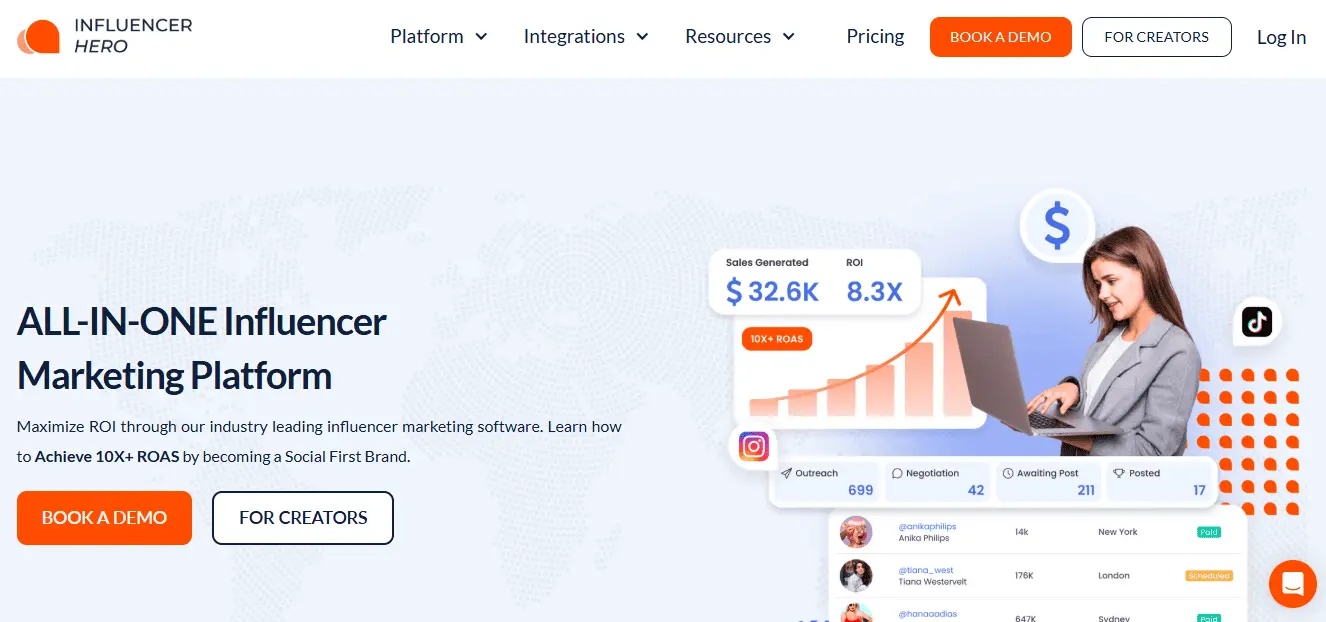
Influencer Hero es una plataforma de marketing de influencers todo en uno creada para marcas de eCommerce y DTC que desean ejecutar programas de comercio de creators con una estructura clara, atribución confiable y menos trabajo manual.
Muchos equipos consideran a Influencer Hero el mejor software de marketing de influencers para comercio de creators cuando necesitan automatización, escaparates, seguimiento de afiliados y atribución de ingresos conectados en un solo sistema.
Ideal para:
Influencer Hero es ideal para marcas DTC y agencias que ejecutan programas estructurados de comercio de creators y desean escalar ingresos sin escalar personal. Funciona especialmente bien para equipos que gestionan campañas pesadas en afiliados, colaboraciones de escaparates y seeding de alto volumen.
Cómo funciona con comercio de creators:
Influencer Hero se integra en una pila de comercio de creators vinculando flujos de trabajo de influencers directamente a catálogos de productos, enlaces de afiliados, códigos de descuento y seguimiento de pedidos. Desde alcance hasta contrato, regalos, publicaciones y atribución de ingresos, todo se conecta nuevamente a ventas medibles.
Puedes generar enlaces específicos para creators, códigos de descuento, sincronizar catálogos de productos, lanzar tiendas virtuales y rastrear automáticamente clics, conversiones e ingresos por creator. Esto mantiene la ejecución de campañas y los reportes de comercio alineados dentro de un único flujo de trabajo estructurado.
Precios y Compromiso:
Influencer Hero ofrece planes que escalan con el tamaño de su programa, con un compromiso de 3 meses.
Plan Standard: Comienza en $649/mes. Le permite contactar hasta 1,000 creators al mes.
Plan Pro: Comienza en $1,049/mes. Le permite contactar hasta 5,000 creators al mes.
Plan Business: Comienza en $2,490/mes. Le permite contactar hasta 10,000 creators al mes.
Custom & Agency: Precios personalizados según las necesidades de su marca.
Facilidad de Uso (UX/UI):
Influencer Hero es conocido por su interfaz intuitiva y fácil de usar, construida en torno a un panel de control simplificado. La mayoría del trabajo diario ocurre dentro de flujos de campaña estructurados y perfiles detallados de creators, con pasos automatizados que reducen el trabajo administrativo. Los equipos pueden usar plantillas de correo electrónico personalizables para mantener el alcance consistente mientras se siente personal.
Atención al Cliente:
La atención al cliente es una fortaleza central. Influencer Hero ofrece chat en vivo con personas reales 24/7, soporte receptivo por correo electrónico y un extenso Centro de Ayuda con tutoriales escritos y en video. Cada plan incluye un gerente de cuenta dedicado desde el primer día, con consultas de estrategia opcionales para apoyar el crecimiento. Los usuarios del plan Pro también obtienen acceso a un canal privado de Slack para un soporte más rápido y continuo.
Características Clave:
Rastreo Nativo de Afiliados e Ingresos: Crea enlaces de rastreo únicos y códigos de descuento por creator, luego sincroniza automáticamente clics, conversiones e ingresos en el panel. Esto asegura que la atribución esté vinculada directamente a resultados reales de la tienda, no a métricas de desempeño estimadas.
Tiendas Virtuales Personalizadas de Creators: Lanza tiendas virtuales de creators donde los influencers pueden curar y promocionar productos de su catálogo. El desempeño de la tienda virtual y las comisiones se rastrean en tiempo real, dando a los creators visibilidad sobre su impacto en ventas.
Motor de Automatización Basado en Reglas: Usa flujos disparador → condición → acción para automatizar pasos repetitivos. Por ejemplo, cuando un creator se mueve a una etapa de negociación específica, el sistema puede generar automáticamente códigos de descuento, enviar contratos o activar siembra de productos.
Flujos Integrados de Regalos y Siembra: Gestiona la siembra de productos con rastreo estructurado para cumplimiento, entrega y estado de publicación. Las campañas de alto volumen pueden automatizarse para reducir la coordinación manual y mantener los programas de creators organizados.
CRM Avanzado Construido para Escala: Centraliza el historial de alcance, etapas de negociación, entregables y desempeño de ingresos en un perfil de creator. Esto proporciona visibilidad clara al gestionar cientos o miles de creators en múltiples campañas.
Limitaciones de Influencer Hero:
Debido a que las integraciones de BigCommerce pueden variar según la configuración de su tienda y cómo desee rastrear creators (enlaces, códigos o ambos), algunas marcas necesitan orientación inicial para configurar el flujo de trabajo más limpio.
Si su programa tiene múltiples mercados, reglas de comisión complejas o una lista grande de creators existentes, la configuración puede requerir planificación, pero el equipo de éxito del cliente generalmente ayuda a mapear esto rápidamente para que funcione sin problemas a largo plazo.
2. GRIN
GRIN es una plataforma completa de influencer marketing diseñada principalmente para marcas eCommerce y DTC. Centraliza el descubrimiento de influencers, CRM, regalos, rastreo de afiliados, pagos y gestión de UGC en un único sistema. La plataforma está estructurada especialmente en torno a flujos de trabajo basados en productos y atribución de ingresos vinculada a tiendas en línea.
Mejor Para:
GRIN es mejor para marcas DTC establecidas que ejecutan programas estructurados de comercio de creators estrechamente vinculados a siembra de productos e ingresos de afiliados. Funciona bien para equipos que gestionan campañas de regalos de alto volumen que requieren rastreo claro de pedidos y gestión de pagos.
Cómo funciona con Creator Commerce:
GRIN se integra directamente con plataformas de comercio electrónico como Shopify y WooCommerce, permitiendo que las marcas gestionen el seeding de productos y las colaboraciones de afiliados dentro de un sistema conectado. Los creators pueden seleccionar productos a través de una interfaz de estilo tienda, y los pedidos se etiquetan y rastrean automáticamente en los paneles de campaña.
Los enlaces de afiliados y códigos de descuento se generan dentro de la plataforma, y las conversiones se vinculan a los datos de rendimiento del influencer. Los ingresos, el cumplimiento de regalos y los pagos de comisiones se gestionan dentro del mismo flujo de trabajo, reduciendo la necesidad de herramientas de afiliados externas.
Precios:
Plan Anual: A partir de $25,000/año (pagos mensuales disponibles).
Facilidad de uso (UX/UI):
GRIN ofrece una interfaz centralizada de estilo CRM donde los regalos, el alcance, los pagos e informes se encuentran dentro de perfiles de creator estructurados. Muchos usuarios aprecian tener flujos de trabajo de campañas, comunicación con creators y seguimiento de afiliados unificados en un solo panel.
Los flujos de trabajo de regalos son especialmente simplificados para marcas intensivas en productos, reduciendo la necesidad de hojas de cálculo manuales. Sin embargo, algunos usuarios informan ocasionales ralentizaciones del sistema y problemas técnicos que pueden afectar el uso diario.
Atención al cliente:
GRIN ofrece soporte de incorporación y estrategas de programa dedicados opcionales para ayudar con la planificación y ejecución de campañas. Si bien muchas marcas valoran esta orientación estratégica, algunas reseñas mencionan tiempos de respuesta más lentos o frustraciones relacionadas con facturación.
Características clave:
Sistema de Regalos Nativo de Comercio Electrónico: GRIN se integra directamente con Shopify y WooCommerce para automatizar el seeding de productos. Los pedidos se etiquetan, rastrean y vinculan a creators específicos dentro de flujos de trabajo de campañas.
Seguimiento Integrado de Afiliados y Comisiones: La plataforma genera enlaces de afiliados y códigos de descuento vinculados a los creators. Las conversiones e ingresos se rastrean dentro de GRIN, permitiendo a las marcas medir el ROI y gestionar pagos internamente.
Pagos a Creators en la Aplicación: Los pagos se procesan directamente a través de PayPal dentro de GRIN. Esto reduce la fricción entre la ejecución de la campaña y la reconciliación financiera.
Gestión Automática de Derechos Multimedia: Cuando se contratan creators, los derechos de uso de medios pueden incluirse automáticamente en los acuerdos. Esto simplifica la reutilización de UGC para canales de publicidad y comercio.
Biblioteca UGC con Captura de Historias: Todo el contenido del creator, incluidas las Historias de Instagram, se almacena en una biblioteca de contenido buscable. Esto permite a las marcas reutilizar activos de alto rendimiento para uso comercial pagado y orgánico.
Limitaciones de la plataforma:
La estructura de precios de GRIN y el requisito de contrato anual pueden ser restrictivos para marcas más pequeñas que prueban el comercio de creators. Los costos de entrada son significativamente más altos que muchas alternativas del segmento medio.
Algunos usuarios también informan problemas con la precisión del descubrimiento y el rendimiento del sistema, lo que puede crear fricción para equipos que gestionan grandes carteras de creators.
3. Aspire
Aspire es una plataforma de marketing de influencers diseñada para gestionar el descubrimiento de creators, flujos de trabajo de campañas, regalos, aprobaciones de contenido y seguimiento de ventas. Combina asociaciones de datos sociales de primera parte con herramientas de automatización estructurada. La plataforma enfatiza las solicitudes de creators entrantes y flujos de trabajo de comercio basados en Shopify.
Mejor ajuste para:
Aspire es mejor para marcas DTC en crecimiento que desean regalos estructurados y seguimiento de afiliados vinculados directamente a ingresos basados en Shopify. Funciona bien para equipos que equilibran el interés del creator entrante con la gestión de campañas salientes.
Cómo funciona con Creator Commerce:
Aspire se integra con Shopify para gestionar regalos de productos, códigos de descuento, enlaces de afiliados y seguimiento de comisiones dentro de flujos de trabajo de campañas. Los creators pueden solicitar a través de páginas de destino personalizadas, seleccionar productos dentro de presupuestos definidos y recibir códigos únicos vinculados a informes de ingresos.
El seguimiento de ventas incluye clics, conversiones y comisiones vinculadas a cada creator. Las automaciones de flujo de trabajo desencadenan acciones como seguimientos o generación de códigos en función de las etapas de la campaña, ayudando a los equipos a mantener organizados los programas basados en afiliados. Dado que Aspire conecta el cumplimiento, la comunicación con creators y el seguimiento de ingresos, proporciona visibilidad sobre cómo las campañas de influencers impactan el desempeño de la tienda.
Precios:
Plan de Nivel Medio: Aproximadamente $2,300/mes (ejemplo para 20–40 creators/mes, hasta 500 creators en CRM).
Facilidad de Uso (UX/UI):
Aspire está estructurada alrededor de un pipeline de campañas que organiza invitaciones a creators, contratos, aprobaciones de contenido y seguimiento del desempeño. Las acciones en masa y los seguimientos automatizados reducen las tareas administrativas repetitivas.
El panel de control mantiene el desempeño de la campaña y el seguimiento de ventas centralizados. Debido a su amplitud de características, algunos equipos pueden requerir asistencia de incorporación para utilizar completamente el sistema.
Atención al Cliente:
Aspire proporciona un gestor de implementación durante 30 días en la incorporación y un gestor de éxito del cliente dedicado para la estrategia continua. Los usuarios generalmente destacan un sólido soporte de configuración y asistencia práctica durante los lanzamientos iniciales de campañas.
Características Clave:
Marketplace de Creators Entrantes (1M+ Creators): Las marcas pueden publicar oportunidades de campaña y recibir solicitudes directamente de creators. Esto reduce la dependencia de alcance en frío y ayuda a llenar campañas más rápidamente.
Seguimiento de Regalos e Comisiones Integrado con Shopify: Los creators pueden comprar en catálogos de marca dentro de reglas de presupuesto establecidas. Los códigos de descuento y los enlaces de afiliados están vinculados a flujos de trabajo de campaña y sincronizados con el seguimiento de ingresos.
Asociaciones de Datos Sociales de Primera Parte: Aspire utiliza integraciones de primera parte con plataformas como Meta y TikTok para métricas de desempeño más confiables. Esto respalda una mejor evaluación de la calidad del creator.
Automación de Flujo de Trabajo y Acciones en Masa: Los seguimientos automatizados, envío de contratos y acciones basadas en etapas ayudan a los equipos a gestionar grandes grupos de creators de manera eficiente. Esto es particularmente útil en campañas recurrentes de comercio.
Biblioteca de Contenido con Gestión de Derechos de Uso: Todos los activos de campaña se almacenan centralmente y los derechos de uso se pueden incrustar en contratos. Esto respalda la reutilización de contenido de creators para canales comerciales pagos.
Limitaciones de la Plataforma:
El precio puede ser alto para marcas en etapa inicial con volumen limitado de creators. La plataforma es más eficiente cuando se gestiona un flujo de campañas consistente en lugar de colaboraciones ocasionales.
Aspire parece ser más fuerte dentro de ecosistemas de Shopify, con menos énfasis en integraciones comerciales más amplias más allá de ese entorno.
4. CreatorIQ
CreatorIQ es una plataforma empresarial de marketing de influencers diseñada para marcas globales que gestionen grandes ecosistemas de creators. Admite descubrimiento, activación, pagos, informes y gobernanza en múltiples mercados. La plataforma está estructurada para programas de alto volumen que requieren cumplimiento y análisis avanzado.
Mejor Opción Para:
CreatorIQ es mejor para marcas empresariales que ejecutan programas de comercio de creators multimercado con requisitos estrictos de informes y gobernanza. Funciona bien para equipos que necesitan pagos centralizados e informes a nivel ejecutivo vinculados a resultados de campaña.
Cómo Funciona con Comercio de Creators:
CreatorIQ se integra con Shopify para admitir regalos de productos y generación de enlaces de afiliados dentro de flujos de trabajo de campaña. Las marcas pueden asignar enlaces y códigos a creators y rastrear conversiones reportadas dentro del sistema.
Aunque el seguimiento de conversiones de afiliados es manual en lugar de automatizado, los datos de ingresos y campañas pueden centralizarse en paneles personalizables. Esto hace posible presentar el impacto comercial de alto nivel en regiones y equipos. La plataforma también incluye procesamiento de pagos de creators integrado con cumplimiento fiscal, lo que simplifica la gestión de pagos a gran escala.
Solo contratos anuales. Tarifa de servicio del 2% en pagos superiores a $100,000 anuales.
Facilidad de uso (UX/UI):
CreatorIQ ofrece paneles personalizables diseñados para visibilidad empresarial. Las interfaces de informes están diseñadas para admitir presentaciones a nivel ejecutivo y aprobaciones de partes interesadas.
Debido a su profundidad y características de cumplimiento, la incorporación puede requerir más tiempo en comparación con plataformas de mercado medio. Los equipos generalmente necesitan procesos internos estructurados para maximizar el sistema.
Servicio al cliente:
CreatorIQ proporciona gestores de implementación y equipos dedicados de éxito del cliente. Los clientes empresariales a menudo valoran el apoyo estratégico y la orientación de planificación a largo plazo.
Características clave:
Informes empresariales e integraciones de API: Las conexiones directas de API con las principales plataformas sociales proporcionan datos de campaña en tiempo real. Los paneles son personalizables y se pueden compartir mediante enlaces en vivo.
Pago centralizado de creators y cumplimiento fiscal: Las marcas pueden financiar pagos de manera centralizada, y CreatorIQ maneja la distribución y la documentación. Esto reduce la carga del equipo de finanzas para programas a gran escala.
Flujos de trabajo de aprobación avanzada y una página: Las aprobaciones de campañas se pueden compartir mediante enlaces en vivo sin requerir inicios de sesión. Las partes interesadas pueden revisar métricas de creators y contenido antes de la activación.
Integración de regalos con Shopify: Los envíos de productos y los detalles de regalos se incluyen en los flujos de trabajo de campaña. Esto conecta el cumplimiento del producto con los entregables del creator.
Gestión de UGC y derechos: El contenido de la campaña se recopila y se almacena automáticamente. Los derechos de uso se pueden solicitar y rastrear dentro de los flujos de trabajo de activación.
Limitaciones de la plataforma:
El seguimiento de conversiones de afiliados es manual en lugar de automatizado, lo que puede limitar la precisión de la atribución de comercio en tiempo real. Las marcas muy enfocadas en marketing de rendimiento pueden necesitar infraestructura de seguimiento adicional.
Los contratos anuales y los precios de entrada altos hacen que CreatorIQ sea menos accesible para marcas DTC de mercado medio o en crecimiento enfocadas en la ejecución ágil del comercio de creators.
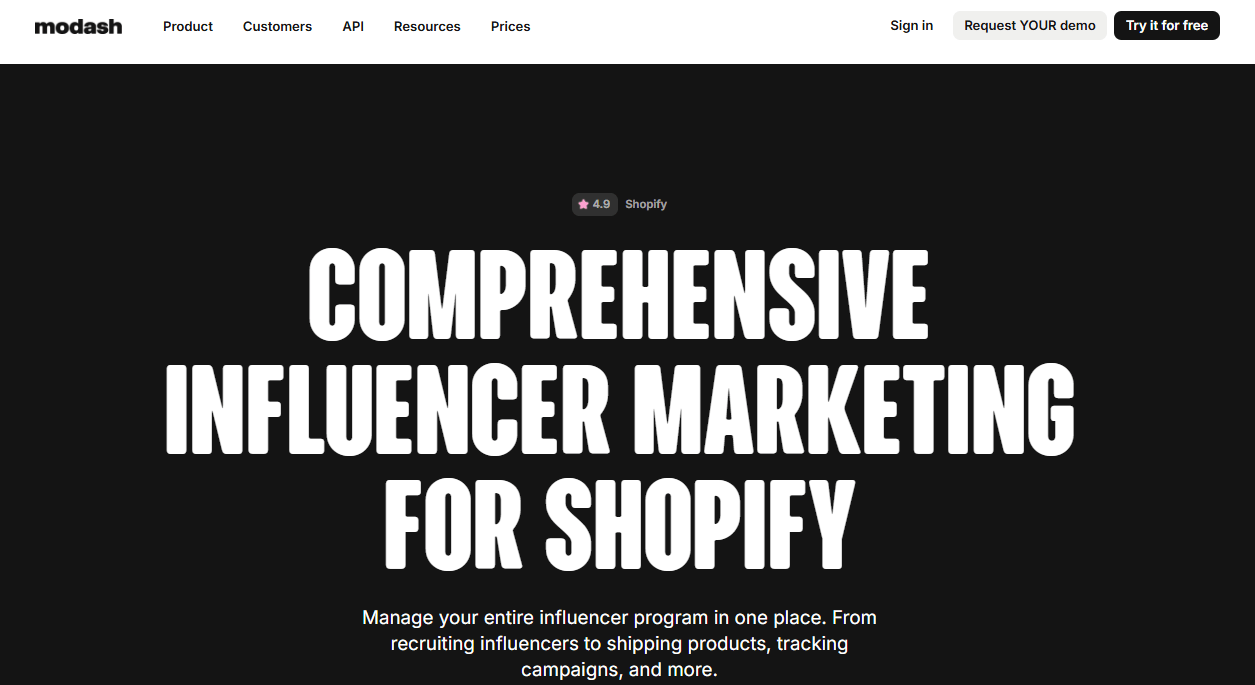
5. Modash
Modash es una plataforma integral de marketing de influencers construida alrededor del descubrimiento de creators a gran escala, alcance y seguimiento de afiliados. Proporciona acceso a más de 350 millones de perfiles de creators públicos e se integra directamente con Shopify para flujos de trabajo de regalos y comisiones. La plataforma está estructurada para marcas que desean capacidades de descubrimiento sólidas vinculadas directamente a ingresos de afiliados medibles.
Mejor para:
Modash es mejor para marcas DTC que ejecutan programas de comercio de creators con mucho peso de afiliados dentro de un ecosistema de Shopify. Funciona especialmente bien para equipos que priorizan el descubrimiento escalable combinado con la atribución de ingresos directa basada en códigos de descuento y enlaces.
Cómo funciona con el comercio de creators:
Modash se conecta directamente a Shopify para gestionar regalos, códigos de descuento, UTM y enlaces de afiliados dentro de los flujos de trabajo de campaña. Los creators reciben enlaces o códigos únicos, y las ventas generadas a partir de esos activos se rastrean e atribuyen automáticamente en los paneles de Modash.
El envío de regalos se maneja mediante enlaces únicos de selección de productos que reducen la comunicación manual de ida y vuelta, y los pedidos se etiquetan automáticamente para rastreo. Los datos de ingresos de Shopify fluyen de vuelta a la plataforma, permitiendo que las marcas midan el rendimiento por creator y gestionen los pagos de comisión en consecuencia.
Precios:
Essentials: $199/mes (facturado anualmente)
Performance: $499/mes (facturado anualmente)
Enterprise: Precios personalizados
Facilidad de uso (UX/UI):
Modash se describe frecuentemente como enfocada y eficiente, especialmente dentro de su motor de descubrimiento. El sistema de filtrado permite a las marcas reducir rápidamente los creators según nicho, audiencia e indicadores de rendimiento.
Los paneles de campaña y afiliado están estructurados claramente, facilitando la conexión de la actividad de influencers con resultados de ingresos. Dado que la plataforma enfatiza la funcionalidad principal sobre las características de gobernanza a nivel empresarial, la navegación sigue siendo relativamente sencilla.
Atención al Cliente:
Los usuarios destacan frecuentemente la incorporación receptiva y los equipos de soporte accesibles. Modash se posiciona como apoyo durante las fases de configuración y escalado.
Características Clave:
Base de Datos de Creators Pública Masiva: Acceso a más de 350M de perfiles de influencers públicos sin requerir la participación del creator. Los filtros avanzados y la búsqueda impulsada por IA permiten a las marcas encontrar creators alineados con objetivos de comercio.
Integración de Afiliados con Shopify: Genera automáticamente códigos de descuento, UTM y enlaces de afiliados vinculados directamente a datos de ingresos de Shopify. Las ventas, canjes y comisiones se sincronizan nuevamente en los paneles de campaña.
Pagos de Comisión Automatizados: Los niveles de comisión se pueden configurar dentro de la plataforma. Los pagos se automatizan y los creators pueden ver ganancias en sus paneles.
Búsqueda de Similares e Visual Impulsada por IA: Las marcas pueden describir creators ideales o cargar imágenes estéticas para encontrar perfiles similares. Esto ayuda a escalar el reclutamiento basado en perfiles de creators de alto rendimiento probados.
Herramienta "Encuentra a tus Fans": Identifica influencers que ya siguen o interactúan con tu marca. Esto respalda el reclutamiento de afiliados en función de la afinidad de marca existente.
Limitaciones de la Plataforma:
Modash solo se integra directamente con Shopify para flujos de trabajo de comercio, lo que limita la flexibilidad para marcas que utilizan otras plataformas de comercio electrónico. La plataforma no incluye herramientas integradas de licencia de contenido o whitelist de anuncios pagos, lo que puede requerir manejo de contratos externos.
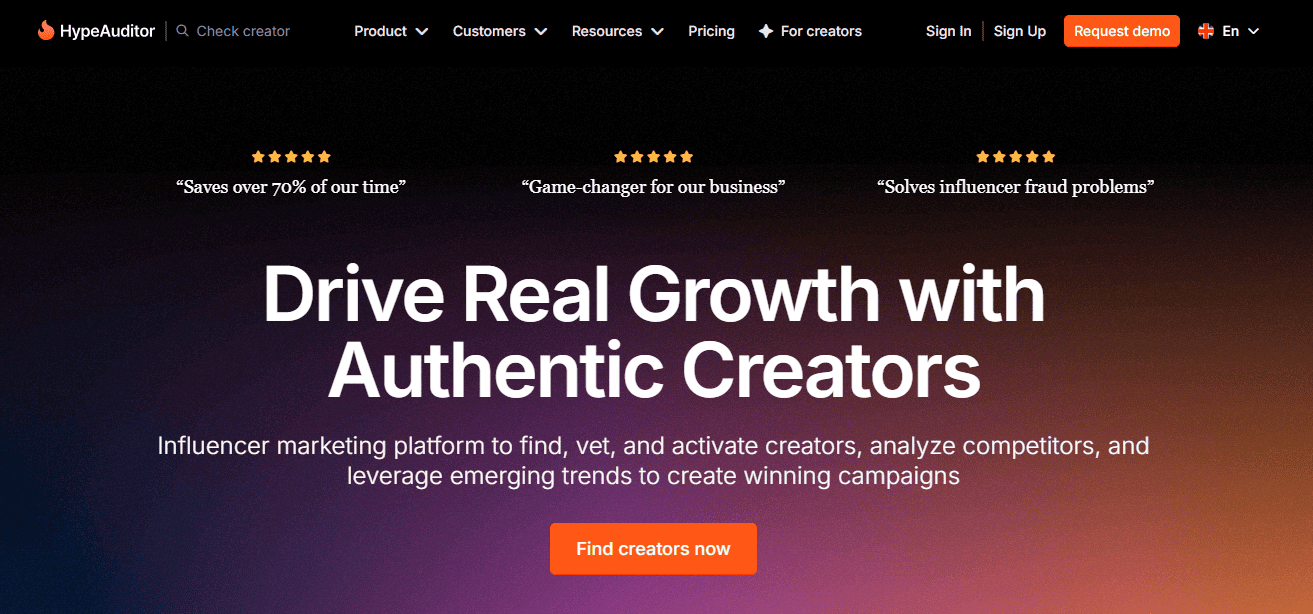
6. HypeAuditor
HypeAuditor es una plataforma de marketing de influencers conocida por sus capacidades profundas de análisis de audiencia y seguimiento de campañas. Soporta múltiples plataformas sociales e incluye herramientas para descubrimiento, alcance, regalos, pagos y seguimiento de ingresos de Shopify. La plataforma es particularmente fuerte en evaluación de influencers y evaluación de seguridad de marca.
Mejor para:
HypeAuditor es mejor para marcas que priorizan la autenticidad de la audiencia y la calidad del influencer antes de activar campañas impulsadas por afiliados. Se adapta a equipos que desean análisis de rendimiento detallados vinculados a reportes de ingresos de Shopify.
Cómo Funciona con Comercio de Creators:
HypeAuditor se integra con Shopify para gestionar códigos promocionales, rastrear clics, pedidos e ingresos dentro de paneles de campaña. Las marcas pueden lanzar campañas de regalos, asignar enlaces o códigos rastreables y supervisar el rendimiento de conversión por influencer.
Los reportes de campaña combinan métricas de participación con ROI de comercio electrónico, permitiendo a las marcas ver tanto el rendimiento de interacción como los resultados de ventas. Las herramientas de escucha social también ayudan a identificar creators que ya mencionan la marca, lo que puede alimentar flujos de trabajo de reclutamiento de afiliados. La plataforma centraliza análisis de influencers e informes de comercio dentro de un sistema. Sin embargo, el seguimiento de ingresos requiere configuración estructurada para una precisión óptima.
Precios:
Plan Business: Aproximadamente $10,000/año
Plan Enterprise: $60,000/año
Facilidad de Uso (UX/UI):
HypeAuditor ofrece herramientas de filtrado detalladas y paneles de análisis avanzados. La interfaz es potente, pero la profundidad de métricas puede requerir incorporación para utilizar completamente. Los reportes de campaña son personalizables y compartibles mediante enlace o PDF, lo que respalda la comunicación con partes interesadas. Las marcas enfocadas en análisis frecuentemente aprecian la profundidad de datos proporcionada.
Para equipos más pequeños, el sistema puede parecer complejo en comparación con plataformas más simplificadas centradas en afiliados. Sin embargo, una vez configurado, el seguimiento de campañas es centralizado y completo.
Atención al Cliente:
HypeAuditor proporciona soporte de incorporación y planes personalizables según las necesidades de la marca. Los planes empresariales típicamente incluyen orientación de implementación estructurada.
Características Clave:
Puntuación Avanzada de Calidad de Influencers: Proporciona análisis de tasa de participación, datos demográficos de audiencia, detección de autenticidad y puntuación de afinidad de marca. Esto respalda la selección de creators que tienen más probabilidades de generar tráfico comercial calificado.
Seguimiento de Ingresos de Shopify: Realiza un seguimiento del uso de códigos promocionales, clics, pedidos y datos de conversión en paneles de campañas. La atribución de ingresos está vinculada a creators individuales.
Capacidades de Escucha Social: Permite a las marcas monitorear menciones de marca y referencias de competidores. Esto ayuda a identificar posibles socios afiliados que ya participan en conversaciones relevantes.
Informes de Campañas Integrados: Los informes combinan métricas de participación con ROI de comercio electrónico. Los resúmenes de campañas se pueden exportar y compartir con las partes interesadas.
Contratos y Pagos en la Plataforma: Admite pagos de PayPal y contratos con firma electrónica. Esto centraliza la gestión financiera de campañas dentro del sistema.
Limitaciones de la Plataforma:
Solo aproximadamente 200 mil influencers están registrados para solicitudes directas, a pesar del acceso a una base de datos más amplia. El precio anual y la complejidad pueden ser desafiantes para marcas DTC en etapa inicial enfocadas en la ejecución eficiente del comercio de creators.
7. Shopify Collabs
Shopify Collabs es la herramienta nativa de marketing de influencers y afiliados de Shopify integrada directamente en el ecosistema de Shopify. Se lanzó como solución interna de Shopify para ayudar a los comerciantes a conectar creators con productos, gestionar regalos y rastrear ventas de afiliados sin depender de plataformas de terceros. La herramienta está diseñada para mantener los flujos de trabajo del comercio de creators estrechamente conectados con la infraestructura de pedidos, productos y pagos de Shopify.
Mejor para:
Shopify Collabs es mejor para marcas nativas de Shopify que desean lanzar o gestionar un programa simple de comercio de creators impulsado por afiliados directamente dentro del backend de su tienda. Funciona especialmente bien para equipos pequeños y medianos que priorizan la facilidad de configuración sobre la funcionalidad avanzada de CRM o automatización.
Cómo Funciona con el Comercio de Creators:
Shopify Collabs vive completamente dentro del administrador de Shopify, lo que significa que los enlaces de creators, códigos de descuento y regalos de productos están directamente vinculados al catálogo de productos y al sistema de pedidos de su tienda. Las marcas pueden generar enlaces de afiliados o asignar códigos de descuento a creators, y todos los canjes y pedidos se registran automáticamente dentro de la infraestructura de informes de Shopify.
Los creators pueden ser invitados directamente o solicitar a través de una página de solicitud de afiliado alojada, lo que permite a las marcas gestionar el reclutamiento e incorporación en un solo entorno. Una vez aprobados, los creators reciben enlaces o códigos que se conectan directamente a páginas de productos, y los pagos de comisión se automatizan a través de PayPal.
Dado que está integrado en Shopify, no es necesario sincronizar datos de ingresos externos ni integrar múltiples herramientas para el seguimiento básico de afiliados. Sin embargo, el flujo de trabajo se enfoca principalmente en funcionalidad de afiliados y regalos en lugar de gestión completa de campañas de influencers.
Precios:
Plan Gratuito: Gratis para comerciantes de Shopify Basic, Advanced y Plus
Tarifa de procesamiento del 2.9% en pagos a creators
Facilidad de Uso (UX/UI):
Shopify Collabs se beneficia de estar completamente integrado en la interfaz de administrador de Shopify, lo que reduce la curva de aprendizaje para usuarios existentes de Shopify. La interfaz sigue los patrones de diseño estándar de Shopify, haciendo que la navegación sea intuitiva para comerciantes que ya gestionan productos y pedidos dentro de la plataforma.
La configuración de afiliados, la creación de enlaces y los flujos de trabajo de regalos son simples y accesibles en pocos clics. Las marcas no necesitan gestionar paneles externos ni cambiar de herramientas para operaciones básicas de comercio de afiliados.
Atención al Cliente:
Soporte para Shopify Collabs se gestiona a través del sistema más amplio de atención al cliente de Shopify. Algunos usuarios reportan experiencias fluidas, mientras que otros mencionan desafíos al tratar con fraude de afiliados, disputas o problemas relacionados con pagos.
Características Clave:
Integración Completamente Nativa de Shopify: Shopify Collabs funciona directamente dentro de Shopify sin requerir herramientas de terceros. Los enlaces de afiliados, códigos de descuento, regalos y seguimiento de pedidos están vinculados directamente a datos de productos y pago.
Pagos Automatizados de Comisiones a través de PayPal: Los ingresos por comisiones se calculan y pagan automáticamente a través de PayPal. Esto reduce el seguimiento manual de pagos y simplifica los flujos de compensación de creators.
Páginas de Solicitud de Afiliados Alojadas: Las marcas pueden crear páginas de solicitud personalizables que permitan a los creators solicitar directamente. Esto admite la incorporación de afiliados entrante sin alcance manual.
Regalos de Productos con Sincronización de Inventario: Los productos regalados se extraen directamente del catálogo de Shopify y se vinculan al inventario de la tienda. Esto garantiza que el cumplimiento se mantenga alineado con los niveles de inventario en tiempo real.
Integración de Shopify Flow: Las marcas pueden automatizar tareas como la incorporación o activadores de recompensas mediante Shopify Flow. Esto permite cierto nivel de automatización de flujo de trabajo dentro del ecosistema de Shopify.
Limitaciones de la Plataforma:
Shopify Collabs no incluye un CRM integrado para gestionar relaciones de creators más allá del seguimiento de estado de afiliado básico. Las marcas que ejecutan campañas de influencers multietapa pueden necesitar sistemas adicionales para gestionar el alcance, la negociación y las aprobaciones de contenido.
La plataforma se limita a PayPal para pagos, lo que puede no ser adecuado para marcas o creators en regiones donde se prefieren métodos de pago alternativos. Los informes avanzados, la creación de tiendas y el seguimiento de influencers multiplataforma tampoco se incluyen en el conjunto de características principal.
8. Skeepers
Skeepers (anteriormente Hivency) es una plataforma de marketing de influencers enfocada en campañas de regalos de micro e influencers nano a escala. La plataforma conecta marcas con una comunidad de creators vetados para generar altos volúmenes de UGC auténtico vinculado a resultados de comercio. Su posicionamiento central se centra en siembra de productos, reutilización de contenido y contenido comprable que apoye la conversión.
Mejor Opción Para:
Skeepers es mejor para marcas que desean escalar campañas de regalos de micro-influencers mientras generan contenido consistente y libre de regalías vinculado a la visibilidad del producto. Funciona particularmente bien para equipos de eCommerce que priorizan el alto volumen de contenido e integración de UGC comprable sobre flujos de trabajo de automatización complejos.
Cómo Funciona con Comercio de Creators:
Skeepers conecta marcas con una red de más de 100,000 micro y nano creators en Instagram, TikTok y YouTube. Las campañas se lanzan seleccionando creators a través de coincidencia impulsada por IA, definiendo reglas de siembra de productos y rastreando tasas de publicación posterior e interacción.
Una vez que se publica el contenido, las marcas pueden acceder a una biblioteca de fotos, videos y reseñas de creators libres de regalías. Este contenido se puede reutilizar en páginas de productos, sitios minoristas y canales sociales para apoyar la conversión de comercio.
La plataforma enfatiza altas tasas de publicación posterior (85%) para garantizar que las campañas de regalos produzcan una salida de contenido consistente. Si bien hay mecánicas de afiliados presentes, el valor comercial principal proviene de la habilitación de ventas impulsada por UGC en lugar de automatización de afiliados complejos.
Precios:
Plan de Suscripción: A partir de aproximadamente €1.250/mes
Facilidad de Uso (UX/UI):
Skeepers centraliza la configuración de campañas, selección de creators e informes de rendimiento dentro de una interfaz. El sistema de coincidencia de IA simplifica la identificación de creators relevantes para campañas de regalos de productos.
Debido a que la plataforma se enfoca principalmente en flujos de trabajo de micro-influencers, puede parecer menos robusta para marcas que buscan canalizaciones de CRM de nivel empresarial. Su fortaleza radica en la ejecución de volumen en lugar de la gestión de relaciones de influencers multietapa.
Atención al Cliente:
Skeepers ofrece asistencia guiada durante la configuración y ejecución de campañas. Las marcas que ejecutan programas basados en regalos típicamente reciben asistencia adaptada a la optimización del desempeño de campañas.
Características Clave:
Red de Influencers Micro y Nano:Acceso a una comunidad de más de 100,000 creators verificados, principalmente micro e influencers nano. Las campañas se estructuran alrededor de la generación de UGC auténtico vinculado a la visibilidad del producto.
Tasa Alta de Publicación Posterior (85%): Los flujos de campaña se optimizan para garantizar que la mayoría de las colaboraciones regaladas resulten en contenido publicado. Esto respalda una producción de contenido predecible para uso comercial.
Biblioteca de UGC Sin Regalías: Todo el contenido generado por creators se almacena y es reutilizable en todos los canales de marketing. Las marcas pueden reutilizar UGC en páginas de productos, anuncios sociales y sitios minoristas.
Integración de Contenido Comprable: El UGC se puede integrar en páginas de productos mediante widgets para respaldar la actividad de agregar al carrito. Esto conecta el contenido del influencer directamente a flujos de conversión.
Emparejamiento de Creators Impulsado por IA: Las herramientas de emparejamiento alinean marcas con creators según el nicho y los objetivos de la campaña. Esto reduce la búsqueda manual y acelera el lanzamiento de campañas.
Limitaciones de la Plataforma:
Skeepers se centra mucho en regalos, lo que puede limitar la flexibilidad para marcas que priorizan modelos complejos de comisiones de afiliados. La profundidad de automatización es más ligera en comparación con plataformas construidas alrededor de desencadenadores de flujo de trabajo y lógica de campaña basada en reglas.
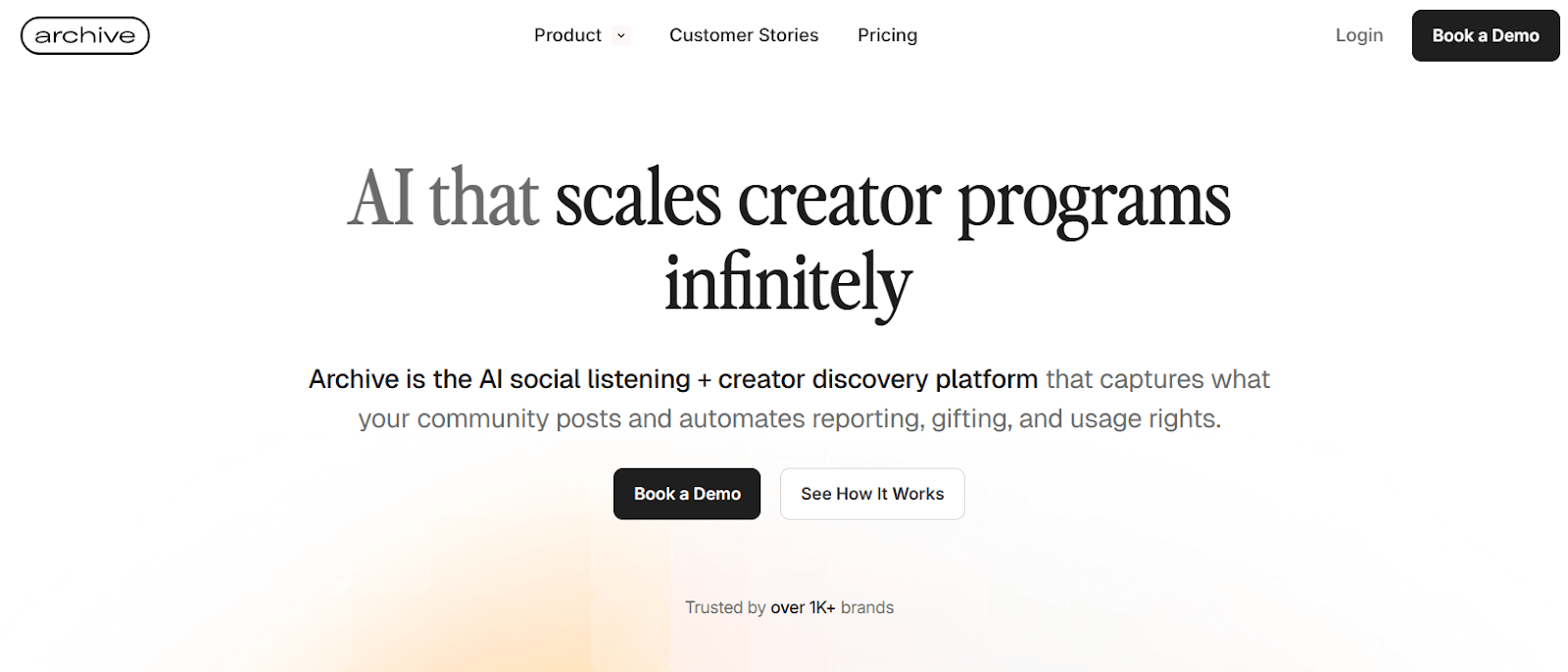
9. Archive
Archive es una plataforma de escucha social y activación de creators impulsada por IA enfocada en inteligencia de vídeo de formato corto. Detecta menciones de marca en TikTok, Instagram y YouTube, incluso cuando los posts no están etiquetados, y convierte ese contenido en datos estructurados y buscables. La plataforma se posiciona alrededor de la detección de UGC, la gestión de derechos y los informes de campaña vinculados al rendimiento social.
Mejor Para:
Archive es mejor para marcas que desean identificar, capturar y reutilizar UGC de alto rendimiento para campañas comerciales. Funciona especialmente bien para equipos enfocados en vídeo de formato corto y reutilización de anuncios en lugar de infraestructura de afiliados pesada.
Cómo Funciona con Comercio de Creators:
Archive detecta automáticamente menciones de marca en todas las plataformas, incluidas las historias y contenido de vídeo sin etiquetar. Los posts capturados se almacenan en una biblioteca centralizada, lo que permite a las marcas identificar creators y piezas de contenido de mejor rendimiento.
Desde allí, los equipos pueden activar creators a través de campañas de regalos, flujos de trabajo de derechos de uso y procesos de lista blanca. El UGC se vuelve reutilizable para anuncios, páginas de destino y marketing por correo electrónico vinculado a objetivos de conversión comercial.
Precios:
Precios personalizados disponibles a través de demostración
Facilidad de Uso (UX/UI):
La interfaz de Archive se centra en detección impulsada por IA y paneles de informes automatizados. El sistema monitorea continuamente el contenido y presenta información procesable sin requerir búsquedas manuales.
El análisis de sentimiento de vídeo e informes de IA simplifican la identificación de creators de mejor rendimiento. Esto reduce el tiempo dedicado a buscar menciones orgánicas.
Debido a que la plataforma se enfoca en detección e informes en lugar de flujos de trabajo de estilo CRM, la navegación se orienta alrededor de inteligencia de contenido. Las marcas que buscan administración de campañas de extremo a extremo pueden requerir sistemas complementarios.
Soporte al Cliente:
Archive ofrece incorporación dirigida por demostración y orientación estructurada. Las experiencias de soporte dependen del nivel del plan y los requisitos del equipo.
Características Clave:
Escucha Social de Vídeo Impulsada por IA (Archive Radar): Detecta menciones de marca en plataformas de vídeo de formato corto, incluso sin etiquetas. Esto garantiza que las marcas capturen todo el UGC relevante.
Informes de Insider de IA: Genera resúmenes impulsados por IA que destacan creators en tendencia y contenido de mejor rendimiento. Esto ayuda a priorizar esfuerzos de activación.
Auditoría de Seguridad de Marca: Revisa el contenido histórico del creator contra las reglas de seguridad de la marca. Esto respalda asociaciones de creators conformes.
Informes de Regalos y Campañas: Respalda campañas de siembra con seguimiento automatizado y paneles de rendimiento. Los informes destacan qué contenido funciona y qué debe escalarse.
Herramientas de Uso y Lista Blanca: Permite a las marcas asegurar derechos de uso e incluir en la lista blanca contenido para anuncios. Esto respalda la monetización directa de UGC.
Limitaciones de la plataforma:
Archive no se posiciona como una plataforma completa de automatización de comercio afiliado. Las marcas enfocadas en la atribución de códigos de descuento pueden requerir herramientas adicionales. La transparencia en precios requiere una conversación de demostración, lo que puede ralentizar la evaluación temprana para equipos más pequeños.
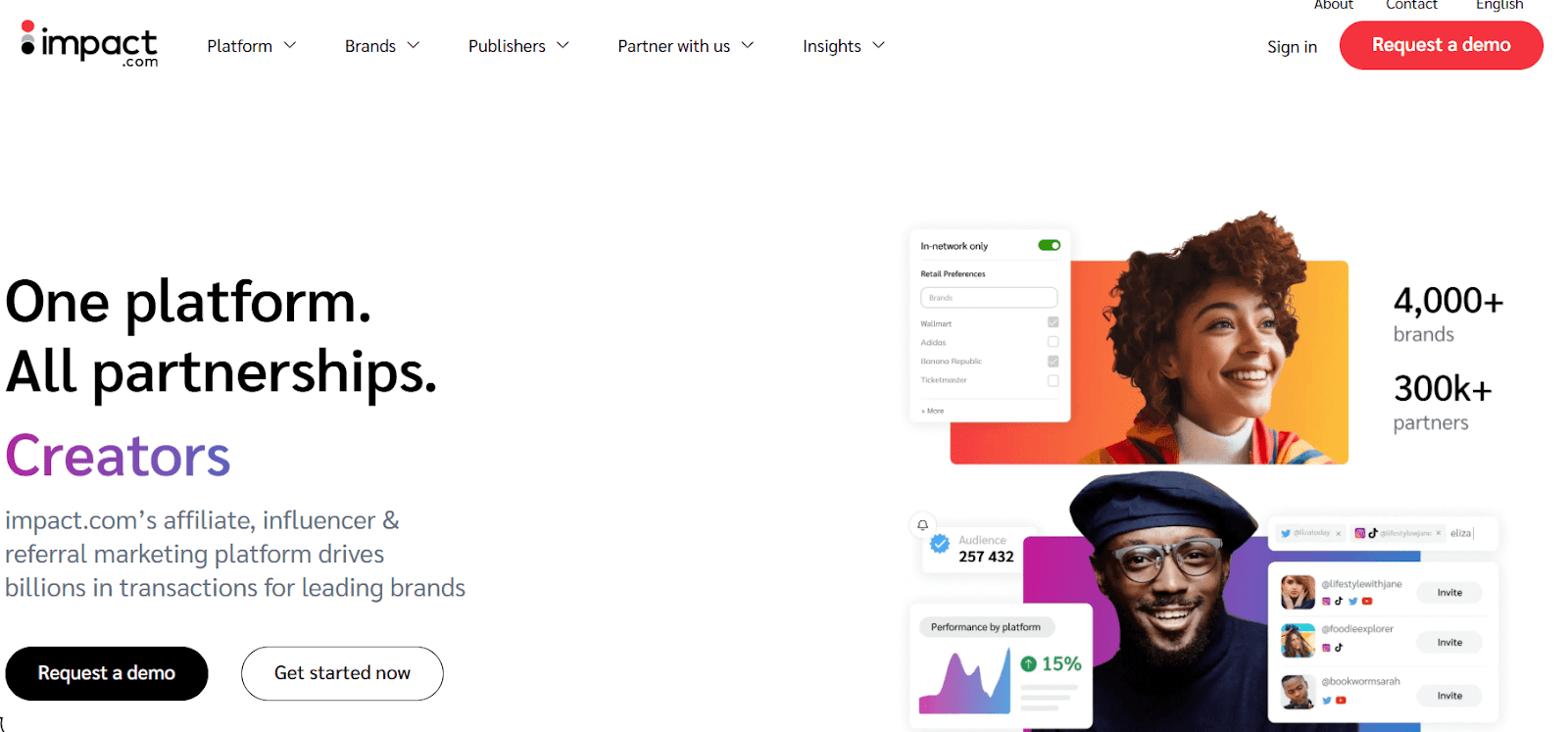
10. Impact.com
Impact.com es una plataforma de comercio de afiliados y asociaciones construida alrededor de la atribución de ingresos e infraestructura de pagos. Admite seguimiento de afiliados, gestión de comisiones e informes de asociaciones entre canales. Si bien no es exclusivamente una herramienta de influencer marketing, se utiliza a menudo en programas de comercio afiliado impulsados por creators.
Mejor para:
Impact.com es ideal para marcas que ejecutan programas de comercio de creators estructurados y centrados en afiliados con reglas de comisión avanzadas. Se adapta a equipos que priorizan la atribución de ingresos e infraestructura de pagos sobre flujos de trabajo de descubrimiento de influencers.
Cómo funciona con el comercio de creators:
Impact.com rastrea enlaces de afiliados, clics, conversiones y comisiones en todas las asociaciones de creators. Las marcas pueden configurar estructuras de comisión, asignar enlaces de seguimiento y monitorear la atribución de ingresos en paneles centralizados.
La plataforma se enfoca en rastrear el desempeño en todos los canales en lugar de gestionar el alcance de influencers o regalos. La lógica de afiliados, los cálculos de pagos y los informes son los impulsores principales de su caso de uso de comercio de creators. Para marcas que ejecutan programas de afiliados grandes, Impact actúa como la capa de infraestructura de ingresos. El reclutamiento de influencers y los flujos de trabajo de contenido generalmente requieren sistemas complementarios.
Precios:
A partir de $30/mes Precios empresariales adicionales disponibles según la escala y funciones.
Facilidad de uso (UX/UI):
Impact.com está estructurado alrededor de paneles de afiliados y asociaciones en lugar de canalizaciones de campañas de influencers. La interfaz está diseñada para rastrear comisiones, atribución de ingresos y desempeño de socios.
Las marcas familiarizadas con sistemas de marketing de afiliados a menudo encuentran las herramientas de informes completas. Sin embargo, los equipos de influencer marketing pueden encontrar el sistema menos intuitivo para el alcance y la gestión de relaciones. Dado que se enfoca en la infraestructura de asociaciones, la incorporación puede requerir comprender la lógica de afiliados y el modelado de comisiones. Una vez configurado, los informes están centralizados y basados en datos.
Atención al cliente:
El soporte está estructurado alrededor de la gestión de asociaciones y cuentas empresariales. La calidad de la asistencia puede variar según el plan y el nivel de cuenta.
Características principales:
Infraestructura de seguimiento de ingresos de afiliados: Rastrea clics, conversiones y pagos de comisiones en programas de socios. La atribución de ingresos está centralizada en todas las campañas.
Gestión de reglas de comisión: Permite a las marcas configurar niveles de comisión y lógica de pagos. Esto admite asociaciones estructuradas basadas en desempeño.
Panel de informes centralizado: Consolida datos de desempeño de afiliados en una vista. Los informes apoyan la alineación de finanzas y marketing.
Procesamiento de pagos a socios: Maneja cálculos de pagos y distribución dentro de la plataforma. Esto reduce la reconciliación manual.
Atribución entre canales: Rastrea el desempeño en múltiples canales digitales. Esto admite estrategias de asociación más amplias más allá de campañas de una sola plataforma.
Limitaciones de la plataforma:
Impact.com no incluye descubrimiento de influencers, canalizaciones de CRM o flujos de trabajo de regalos integrados. Las marcas enfocadas en la gestión del ciclo de vida completo del influencer necesitarán sistemas adicionales. Es principalmente una herramienta de infraestructura de afiliados en lugar de una plataforma dedicada de influencer marketing. Los equipos enfocados en relaciones con creators pueden encontrarlo operativamente limitado sin herramientas complementarias.
Cómo elegir el software correcto de influencer marketing para comercio de creators
Elegir la plataforma correcta depende de cómo esté estructurado su programa de comercio de creators y qué papel juega dentro de su estrategia de eCommerce más amplia.
Si necesita un seguimiento completo del canal y medición del desempeño: Las marcas que desean una visibilidad clara desde el alcance del creator hasta las órdenes confirmadas deben priorizar plataformas que conecten directamente los flujos de trabajo del influencer con los ingresos de la tienda. Esto incluye el seguimiento de enlaces de afiliados, códigos de descuento, desempeño de escaparate y datos de conversión dentro de un único sistema.
Si principalmente necesita descubrimiento de influencers y alcance: Algunas marcas todavía se centran en construir su base de creators y probar colaboraciones. En este caso, las plataformas con grandes bases de datos de creators, herramientas de filtrado sólidas y flujos de trabajo de alcance optimizados pueden ser suficientes, especialmente si el seguimiento de ingresos se maneja por separado dentro de su CMS o análisis de tienda.
Si está ejecutando programas de regalos de influencers y/o afiliados a escala: Las marcas que envían grandes volúmenes de productos o gestionan cientos de creators afiliados necesitan sistemas que mantengan organizados los regalos, el seguimiento de comisiones y los pagos. Las plataformas con sincronización de productos integrada, generación de códigos y soporte de pagos automatizados ayudan a reducir el trabajo manual y mantienen las campañas estructuradas.
En última instancia, el software de marketing de influencers correcto para el comercio de creators depende de si su prioridad es el descubrimiento, la generación de contenido o el crecimiento de ingresos medible. A medida que los programas de creators maduran, muchas marcas buscan plataformas que alineen la ejecución del influencer directamente con el desempeño de su tienda basada en CMS, en lugar de gestionar campañas e ingresos en sistemas separados.
Reflexiones Finales
Elegir el software de marketing de influencers correcto para el comercio de creators depende de cuán estrechamente desee conectar sus flujos de trabajo de creators con los ingresos. Algunas plataformas se centran principalmente en el descubrimiento y el alcance, otras enfatizan la generación de regalos y UGC, mientras que algunas están construidas alrededor de la infraestructura de afiliados y el seguimiento de comisiones.
Para las marcas que ejecutan programas estructurados de comercio de creators, la diferencia clave es si los datos de desempeño, códigos de descuento, actividad de escaparate y atribución de órdenes viven dentro del mismo sistema que la ejecución de la campaña.
Si su objetivo es tratar el comercio de creators como un canal de crecimiento medible en lugar de un experimento de contenido, la alineación entre los flujos de trabajo del influencer y los ingresos de la tienda se vuelve esencial. Influencer Hero destaca como el mejor software de marketing de influencers para comercio de creators. Si busca simplificar operaciones mientras obtiene una visibilidad de desempeño más clara, Reserva una Demo y explora cómo el sistema correcto puede apoyar la siguiente etapa de su crecimiento.
¿Cuál es el mejor software de marketing de influencers para creator commerce?
El mejor software de influencer marketing para creator commerce depende de qué tan estrechamente desee vincular la actividad de influencers a los ingresos reales de su tienda. Si su prioridad es el seguimiento de todo el embudo (funnel) — desde el alcance hasta los pedidos confirmados — necesitará una plataforma que conecte enlaces de afiliación, códigos de descuento, tiendas virtuales y datos de conversión en un solo sistema. Influencer Hero a menudo se considera una opción sólida para marcas que necesitan descubrimiento de influencers, CRM, automatización y atribución de ingresos unificados, mientras que plataformas como Impact.com se enfocan más fuertemente en infraestructura de afiliación.
¿Pueden las plataformas de creator commerce rastrear las ventas de influencers y la atribución de ingresos?
Sí, las plataformas de creator commerce pueden rastrear las ventas de influencers cuando admiten rastreo de enlaces, códigos de descuento y sincronización de pedidos. Las ventas generadas a través de enlaces de referencia o códigos específicos del creator pueden atribuirse a influencers individuales, lo que permite a las marcas medir el ROI basado en datos de transacciones reales en lugar de solo métricas de engagement. El nivel de detalle en los informes depende de qué tan profundamente la plataforma se integre con su stack de eCommerce.
¿Necesito software separado para el marketing de afiliados y el marketing de influencers en creator commerce?
No necesariamente. Algunas plataformas se especializan únicamente en seguimiento de afiliados y pagos, mientras que otras combinan la gestión de relaciones con influencers y el seguimiento de ingresos de afiliados en un único flujo de trabajo. Herramientas como Influencer Hero integran descubrimiento, CRM, regalos, tiendas y atribución de afiliados en conjunto, mientras que plataformas como Impact.com se centran principalmente en la gestión de ingresos de afiliados y asociaciones y pueden requerir sistemas adicionales para el alcance y la coordinación de campañas.
¿Cómo pago a los creators en una configuración de comercio de creators?
La mayoría de las plataformas de comercio de creators admiten pagos basados en el desempeño vinculados a enlaces rastreados o códigos de descuento. Los cálculos de comisiones se generan típicamente de forma automática en función de datos de pedidos verificados, lo que reduce la reconciliación manual. Dependiendo de la plataforma, las marcas también pueden estructurar honorarios fijos, gifting, modelos de compensación híbridos o reglas de comisión escalonada.
¿Cuáles son las mejores plataformas de comercio de creators para escalar un programa grande de creators?
Las marcas que gestionan decenas o cientos de creators generalmente necesitan flujos de trabajo estructurados, informes centralizados y atribución automatizada. Las plataformas que combinan CRM, automatización, funcionalidad de tienda y seguimiento de afiliados generalmente son más adecuadas para escalar programas orientados al rendimiento. Las herramientas empresariales pueden enfatizar la gobernanza y los informes entre mercados, mientras que las plataformas del mercado medio se centran más en la eficiencia operativa y la visibilidad de ingresos.