
August 29, 2025

10 Min
Case Study: How Beau Bottles Drove $82K in Sales and Viral UGC Using Influencer Hero




.jpg)


Tidal Labs isn't really competing with most platforms in this comparison. Founded in 2009 and based in New York, it builds private, white-labelled creator communities that live on your own website, covering not just influencers but employees, advocates and customers. Brands own the relationships and the data outright, and its CreatorExchange network adds roughly 50,000 opted-in creators on top.
That model is a genuine strength, and it's also the constraint. There's no large public database for fast outreach, pricing isn't published anywhere, onboarding requires real internal process change, and there's very little independent user feedback to check before committing. Brands wanting to launch campaigns this month rather than build a community over a year tend to look elsewhere.
This guide compares the top 10 Tidal Labs alternatives in 2026 on database size, pricing, features and speed to launch.
Tidal Labs offers robust tools for managing owned creator networks, but four recurring issues push brands toward alternatives.
This is the structural one. Tidal Labs is built for communities you recruit and own, with a lookalike web crawler to find creators similar to your best performers and its CreatorExchange network of around 50,000 opted-in creators. That's a fraction of what discovery-led platforms index, and it means you can't search hundreds of millions of profiles to fill a campaign next week. If your program depends on rapid outreach to creators outside your existing network, the model works against you. Our discovery tools roundup compares platforms on index size.
Tidal Labs doesn't publish rates, and software directories generally list its cost as unavailable. Buyers go through demos and sales calls just to get an estimate, which slows procurement, particularly for teams comparing several platforms at once. Several alternatives here publish tiers openly, and some start free.
The platform is powerful but not beginner-friendly. The interface can feel overwhelming, and onboarding typically requires significant guidance plus internal process adjustments before teams work efficiently. That's a reasonable trade for an enterprise community build, but it's a poor fit for a small team that needs to move quickly.
For a platform positioned as a leader in private community management, there's little publicly available user feedback or detailed case study material. That makes day-to-day reliability, support quality and real-world ROI hard to assess before you sign, especially when pricing is also undisclosed.
Our comparison focuses on several key aspects:
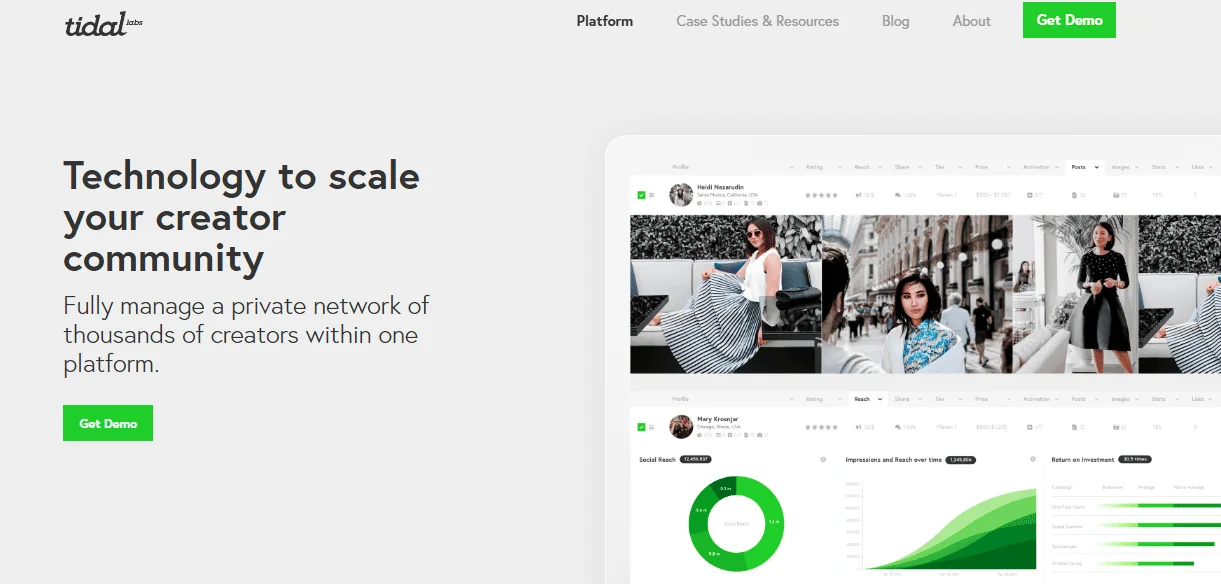
Tidal Labs is a creator community platform built around ownership. Rather than renting access to a public index, brands build a private, white-labelled network hosted on their own site, then manage content, logistics, compliance and payments through the ContentMetric CRM.
Best For: Brands and agencies building long-term private creator communities, especially those prioritising ownership of influencer relationships and data, plus automated campaign workflows across creators, employees and advocates.
Platform Coverage: Instagram, TikTok, YouTube and Facebook, with a CreatorExchange network of roughly 50,000 opted-in creators alongside your own recruited community.
Pricing & Commitment: Not publicly listed. Tidal Labs operates on a custom or enterprise-level quote model with annual contracts. No free plan is confirmed, and "free trial" references in software directories typically reflect missing pricing data rather than an actual free version.
Reviews: 4.5 / 5.0 (G2)
Ease of Use (UX/UI): Powerful but not beginner-friendly. The platform's depth means onboarding requires time and internal alignment, and the interface can feel overwhelming for non-technical users. Once mastered, its automation and centralisation significantly streamline workflows.
Customer Support: Direct user feedback is limited. Available information suggests standard SaaS support including documentation, email and possible live assistance, with dedicated account management likely for enterprise clients though not confirmed publicly.
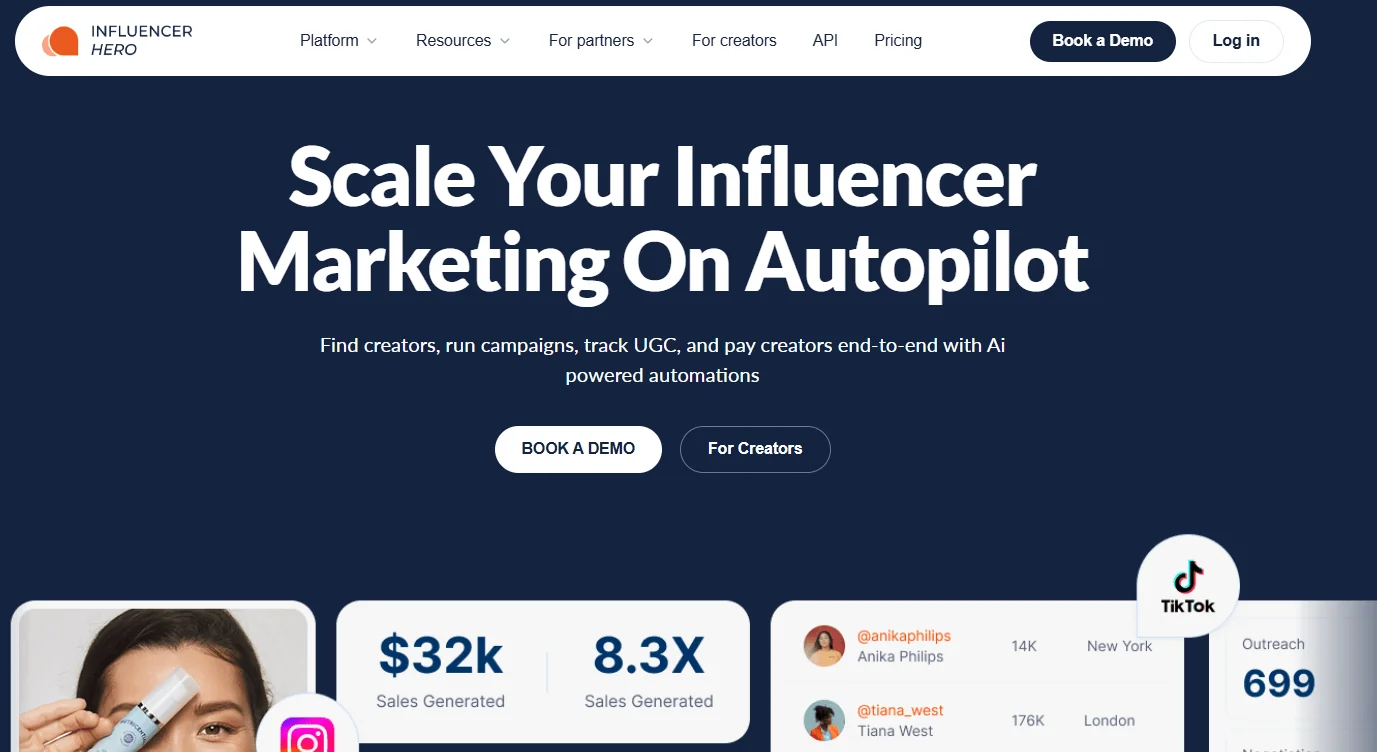
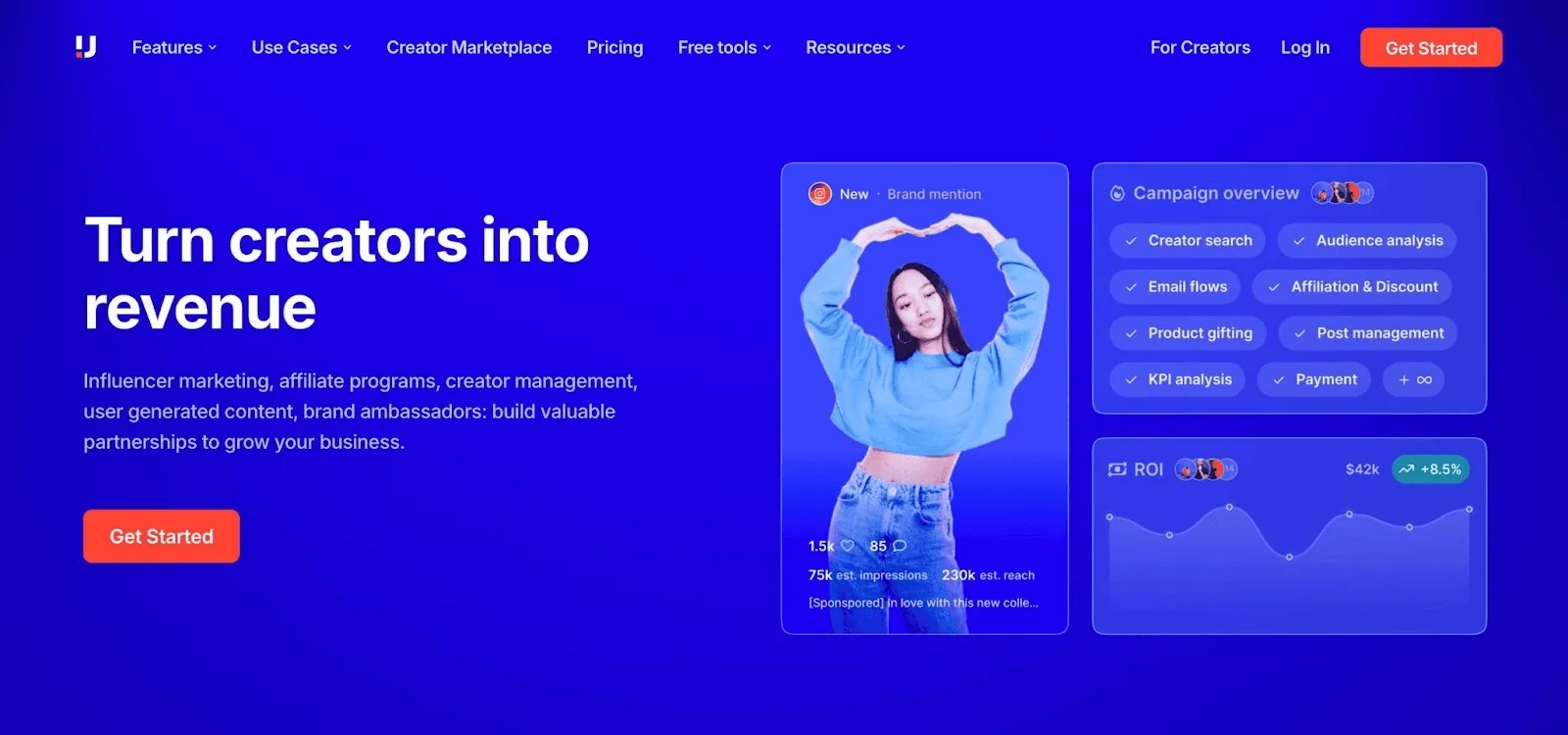
Influencer Hero is an all-in-one influencer marketing platform covering discovery, outreach, CRM, gifting, affiliate, UGC, creator storefronts, application pages and reporting from one dashboard. It combines the relationship-management depth Tidal Labs is built for with a public database you can search immediately.
Best For: Brands and agencies, especially growing D2C and eCommerce teams, that want to scale campaigns with AI-powered discovery, automated outreach and deep ROI tracking, from a handful of creators to 10,000+.
Platform Coverage: Instagram, TikTok, YouTube, Facebook, Pinterest, Snapchat, X (Twitter) and Twitch, with a 450M+ creator database.
Pricing & Commitment: Standard $649/month for up to 1,000 creators, Pro $1,049/month for up to 5,000, Business $2,490/month for up to 10,000, plus custom and agency plans. Published openly, billed monthly, no annual lock-in and no onboarding fees.
Reviews: 5.0 / 5.0 (Capterra)
Tidal Labs is built for network ownership rather than quick outreach. It automates logistics, content management and compliance for closed communities, but without a public database, immediate campaign reach is limited. Pricing requires a custom quote and onboarding is enterprise-paced.
Influencer Hero delivers the all-in-one workflow with a 450M+ public database across eight platforms, AI discovery, CRM and outreach automation. It enables both rapid activation and long-term relationship management, with published pricing from $649 a month and much faster onboarding.
The honest split: Tidal Labs excels if you want to own and cultivate a private creator ecosystem with built-in compliance automation. Influencer Hero is the better choice for speed, scale and multi-platform reach. Book a Demo to see how the two models compare on your program.
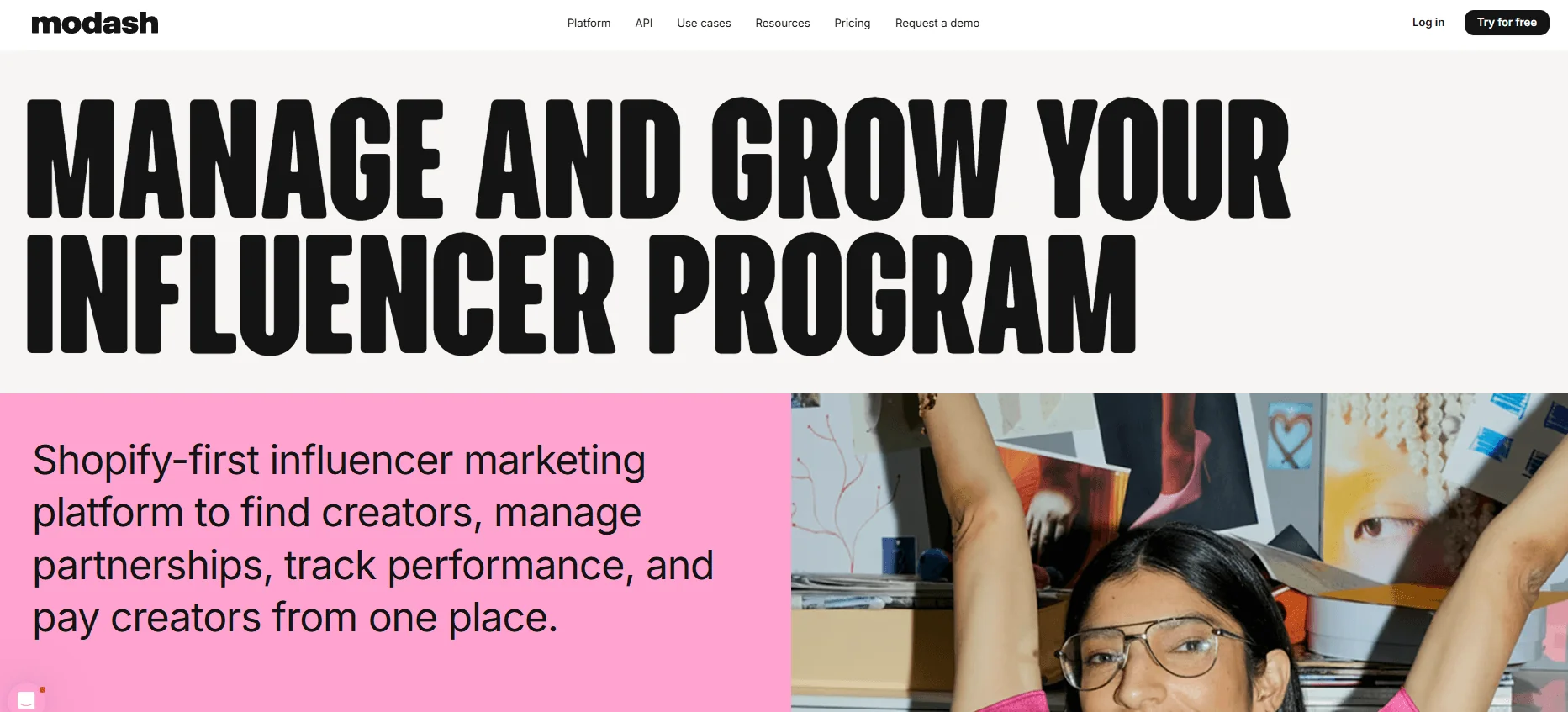
Modash is a discovery-first platform built around 350M+ public creator profiles across Instagram, TikTok and YouTube, with no opt-in requirement and direct Shopify integration.
Best For: Brands, agencies and eCommerce teams wanting a powerful influencer search engine with gifting, affiliate and performance tracking in one workflow.
Platform Coverage: Instagram, TikTok and YouTube, with limited profile recognition for X and Snapchat.
Pricing & Commitment: Essentials $199/month billed annually, or $299 monthly, allowing contact with up to 100 creators a month. Performance $499/month annually, or $599 monthly, raising that to 250 creators and adding the Shopify integration. Enterprise custom. 14-day free trial with no credit card.
Reviews: 4.9 / 5.0 (Capterra)
These solve opposite problems. Tidal Labs helps you build and own a community over months; Modash lets you find and contact creators this afternoon across 350M+ profiles, with transparent pricing from $199 a month.
For brands focused on exclusive, owned creator ecosystems with compliance automation, Tidal Labs is the better fit. For teams that need fast launches, large-scale reach and real-time performance tracking, Modash delivers more flexibility at far better cost transparency.

Sprout Social's influencer product, built on its 2023 Tagger acquisition and now fully integrated, sits inside a much larger social media management suite. Tagger no longer exists as a standalone product.
Best For: Enterprise brands needing robust discovery, advanced analytics and built-in campaign workflows, especially teams prioritising brand safety and compliance.
Platform Coverage: Instagram, TikTok, YouTube, Facebook, X, LinkedIn, Pinterest and Threads across the wider suite.
Pricing & Commitment: The influencer module starts around $1,599/month per user, with each extra seat at $600/month. Monthly or annual billing is available but a full-year commitment is mandatory, working out above $19,200 a year for one person or $25,200 for two. Our Sprout Social alternatives guide covers the category.
Reviews: 4.5 / 5.0 (Capterra)
Both take compliance seriously, which makes this a closer comparison than most here. Tidal Labs automates GDPR, tax and legal handling inside an owned community; Sprout Social approaches it through brand safety filters, content approval workflows and audit-ready reporting across eight networks.
The difference is access and cost visibility. Sprout gives you public discovery and published pricing at $1,599 per seat per month on an annual contract. Tidal Labs gives you ownership of the network, but you need a sales conversation to learn what it costs.
Upfluence is an all-in-one platform built around eCommerce revenue attribution, with native Shopify, WooCommerce and Amazon integrations plus customer-to-creator matching.
Best For: Brands, agencies and eCommerce businesses running data-driven campaigns with measurable sales impact, especially retailers connecting influencer activity to revenue.
Platform Coverage: Instagram, TikTok, YouTube, X (Twitter), Twitch, Pinterest and WordPress blogs, with a 12M+ creator database.
Pricing & Commitment: Modular. The Search and Contact module starts at $478/month, with a full setup covering search, campaign management and Upfluence Pay at roughly $1,276/month for one seat, about $16,007/year. Annual contracts with quarterly options, a required onboarding fee, and no commissions on sales or influencer volume. Our Upfluence pricing review has the module breakdown.
Reviews: 4.3 / 5.0 (Capterra)
Tidal Labs is tailored for owning private creator networks with automation for logistics, compliance and content workflows. Upfluence is a public platform with 12M+ creators, AI outreach and strong eCommerce integrations for real-time sales tracking.
Interestingly, Upfluence's IRM feature lets you import and manage existing relationships, which softens the gap if you're migrating an owned network. Its customer-to-creator matching is also one of the better ways to build a genuine brand community from your own buyers.
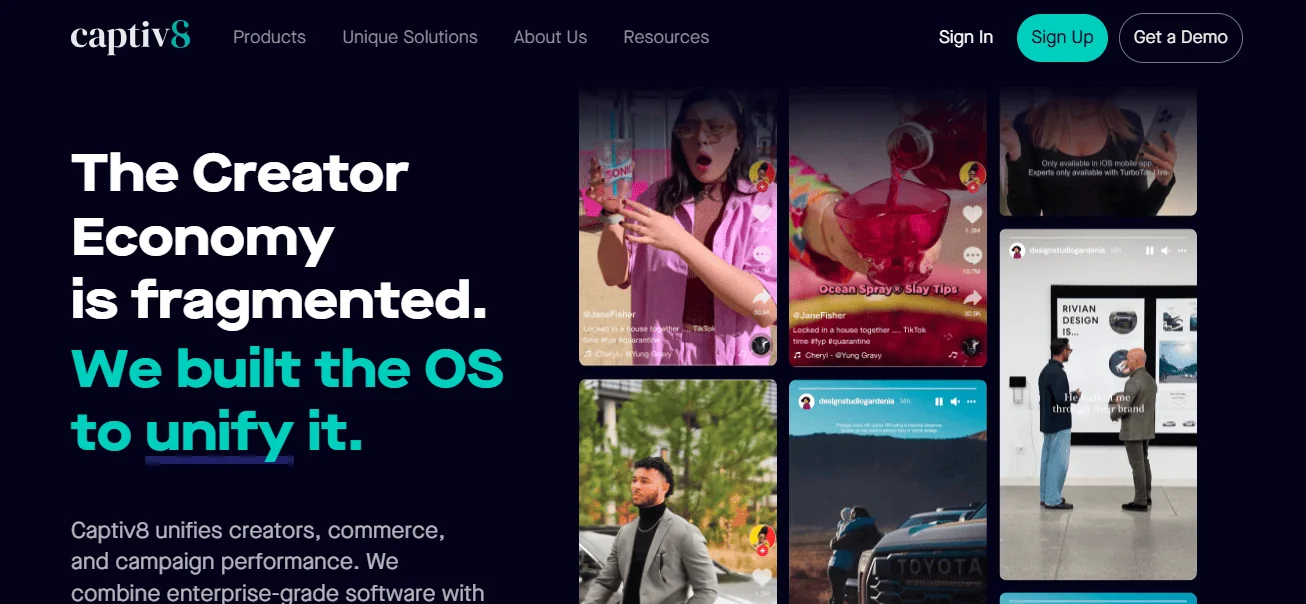
Captiv8 is an enterprise influencer and commerce platform with deep analytics and competitive intelligence. Publicis acquired it in May 2025 for a reported $150M and merged it with Influential, giving the combined platform 15M+ creators across 120 countries, with natural-language search through its Perplexity partnership.
Best For: Enterprise brands needing advanced performance tracking, competitive intelligence and managed commerce features across multi-campaign strategies.
Platform Coverage: Instagram, YouTube, TikTok, Facebook, X (Twitter), Pinterest and Twitch.
Pricing & Commitment: Around $25,000 annually on an annual commitment only, plus a $3,000 one-time onboarding fee. Storefront and affiliate programs run as enterprise-managed add-ons at $20,000 to $30,000 per month. Our Captiv8 alternatives guide compares the field.
Reviews: 4.6 / 5.0 (G2)
Both target enterprise buyers and both require a sales conversation, but they solve different problems. Tidal Labs builds you an owned community with compliance automation; Captiv8 gives you one of the largest searchable creator databases plus competitive intelligence and granular performance tracking.
Captiv8's pricing is at least documented at roughly $25,000 a year plus onboarding, though enterprise storefront and affiliate add-ons climb steeply. Choose Tidal Labs for community building and automation, Captiv8 for rapid large-scale discovery and market insight.
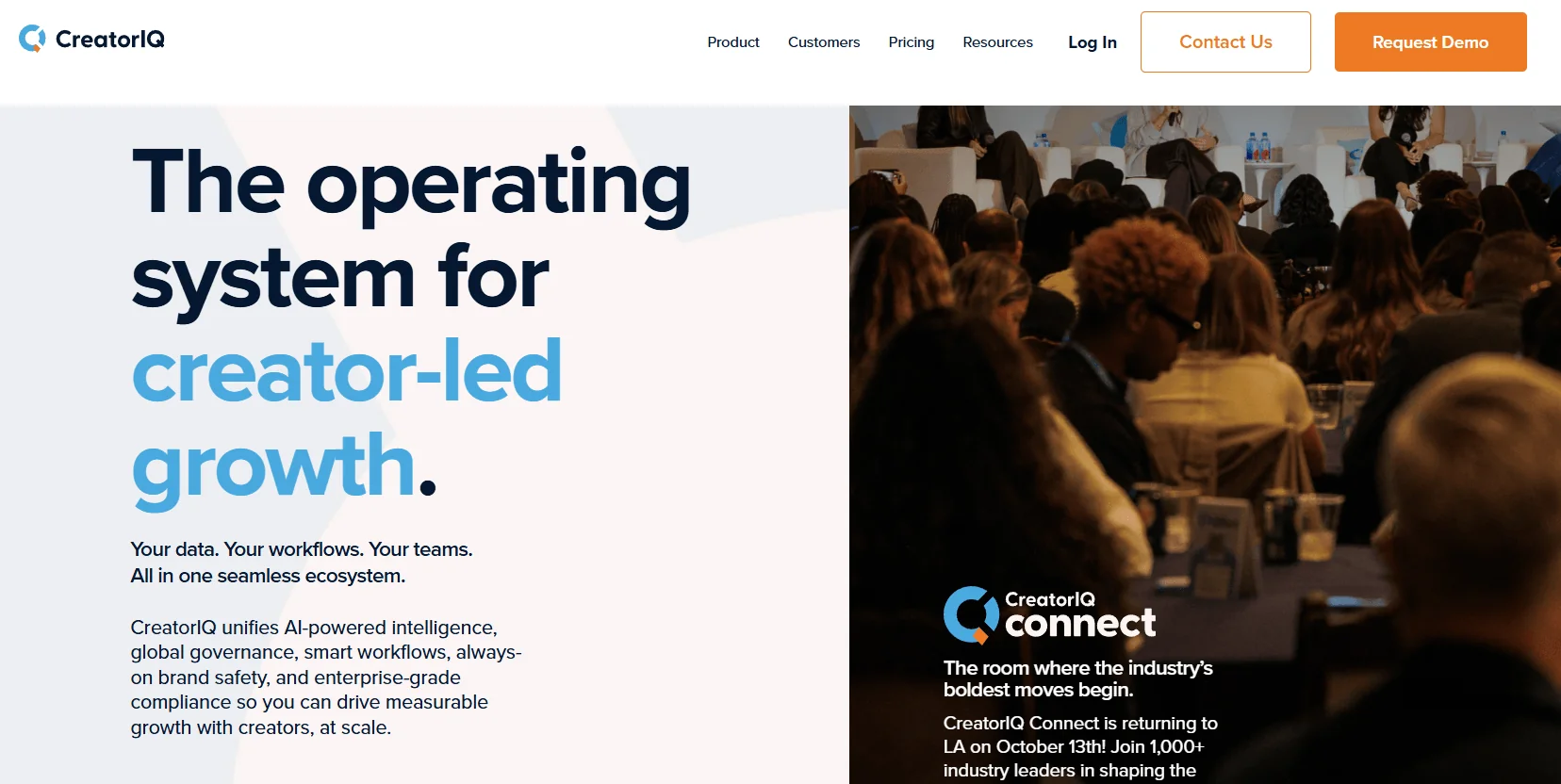
CreatorIQ is an enterprise platform combining a large public creator index with enterprise-grade analytics, compliance and API integrations, built for global brands.
Best For: Large brands, agencies and enterprise teams needing a secure, data-rich platform for discovery, campaign management and advanced performance analytics.
Platform Coverage: Instagram, TikTok, YouTube, Facebook, Pinterest, Twitch and X (Twitter).
Pricing & Commitment: No public rates. Third-party transaction data puts annual contracts from around $30,000, with a median near $39,250 and larger deployments past $59,000. Annual only, no free trial, roughly two months to implement. Creator payments carry a 2% fee after the first $100,000 a year. Our CreatorIQ alternatives guide covers the category.
Reviews: 4.6 / 5.0 (G2)
This is the closest comparison in the article. Both serve enterprise buyers, both handle compliance and content rights properly, and both require annual contracts and real onboarding time.
The difference is the creator access model. Tidal Labs gives you a closed community you own outright, with greater control over relationships and content rights. CreatorIQ pairs enterprise governance with a public database, API-verified data and global reach, so you get compliance without giving up fast discovery.
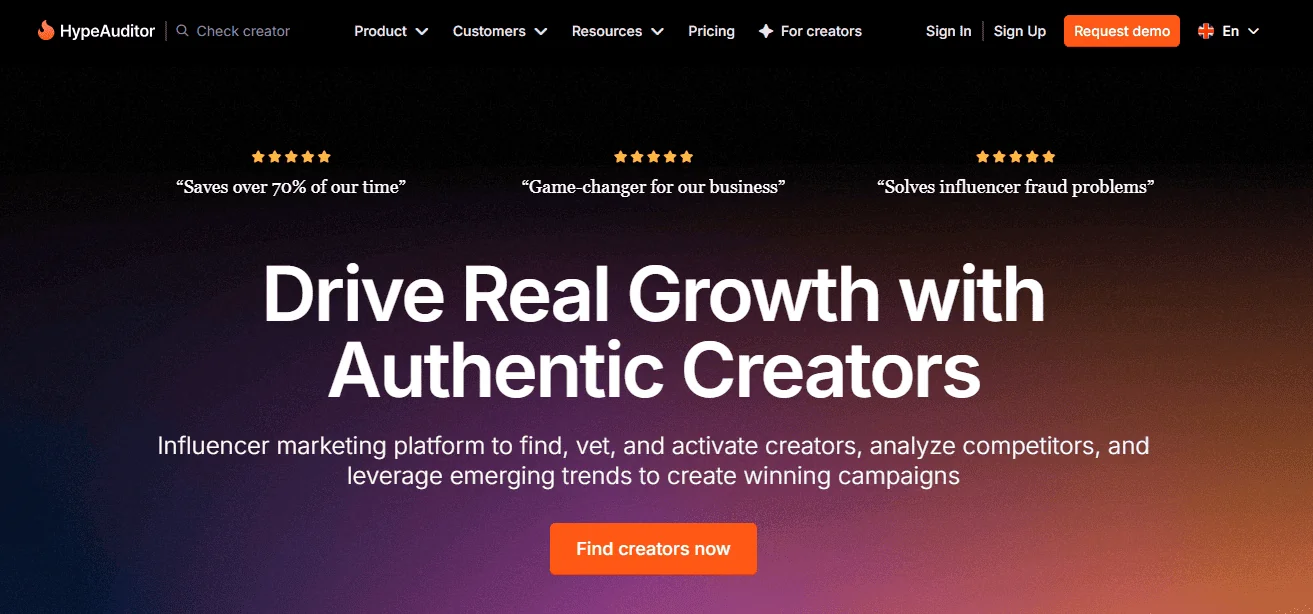
HypeAuditor is the category's authenticity watchdog, with fraud detection frequently cited around 95.5% accuracy across 227M+ creator profiles, alongside discovery, analytics, CRM and campaign management.
Best For: Data-driven brands and agencies wanting advanced discovery, deep analytics and ROI tracking with AI-powered search and eCommerce tracking.
Platform Coverage: Instagram, TikTok, YouTube, Twitch, X (Twitter) and Snapchat.
Pricing & Commitment: A free tier covers media plans and campaign management, alongside 40+ free audit tools. Basic starts around $299/month billed annually, Pro around $499/month, with Enterprise quoted on report volume, active campaigns and usage. Our HypeAuditor alternatives guide compares the field.
Reviews: 4.8 / 5.0 (Capterra)
Tidal Labs emphasises automation, scalable content workflows and brand-owned relationships. HypeAuditor excels at public discovery and competitive analysis, with AI search, lookalike matching and social listening for quickly identifying new talent.
On evaluation, HypeAuditor is far easier to assess: a free tier, 40+ free tools and around $299 a month for Basic, against Tidal Labs' undisclosed custom quotes. Its branded application pages also offer a lightweight way to build an owned roster without the full community infrastructure.
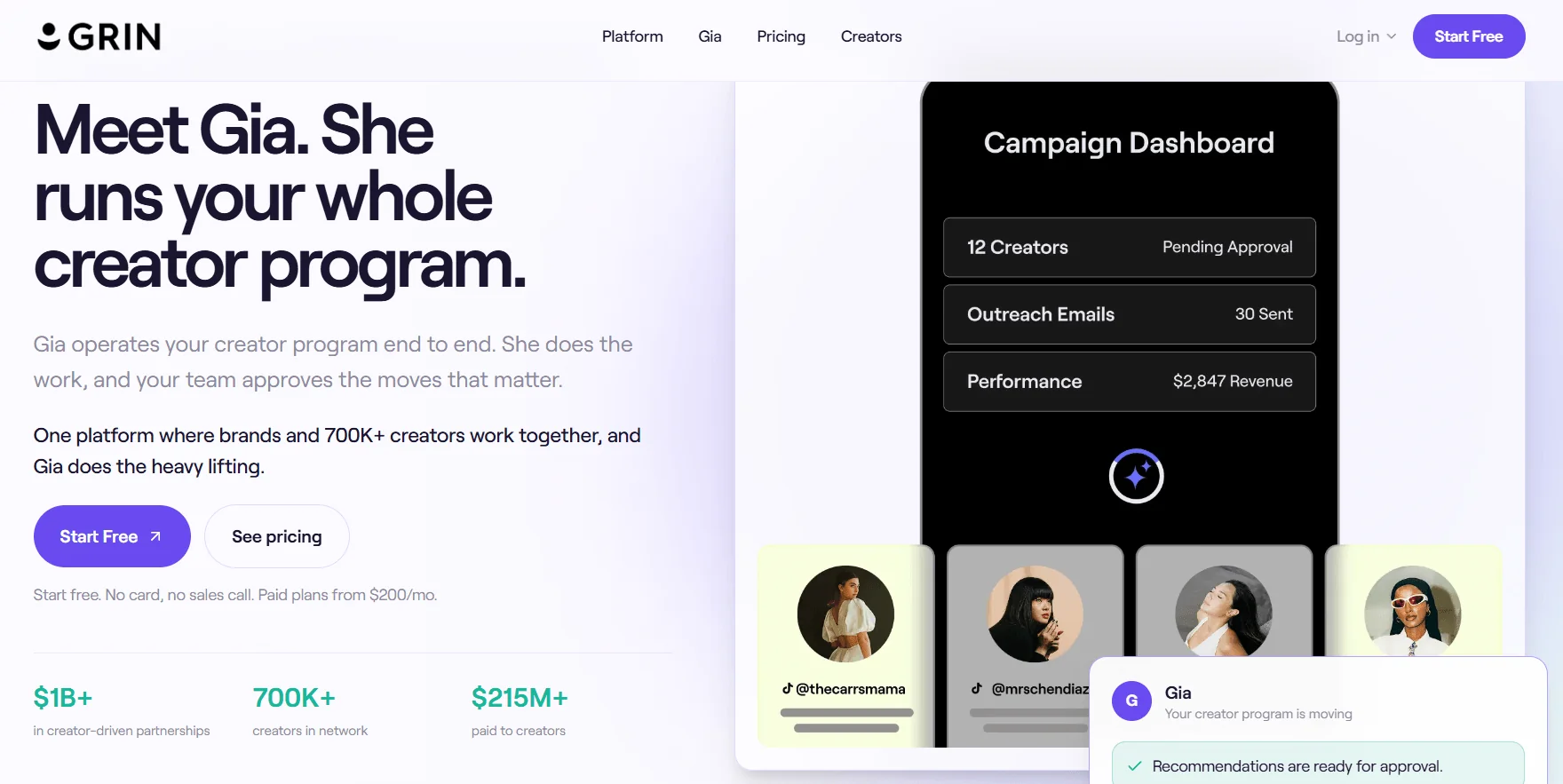
GRIN is a creator management platform built for DTC eCommerce, combining discovery, outreach, gifting, affiliate tracking and UGC collection with deep Shopify, WooCommerce and Magento integrations.
Its 2026 pricing overhaul replaced the old $25,000-a-year contracts with five published self-serve tiers billed monthly, including a free plan.
Best For: DTC and eCommerce brands needing a fully integrated solution with real-time ROI tracking, especially Shopify, WooCommerce and Magento sellers.
Platform Coverage: Instagram, TikTok, YouTube, X (Twitter), Twitch and Snapchat, with a 190M+ creator database.
Pricing & Commitment: Free at $0 with 200 monthly Gia credits, Starter $200/month with 2,000 credits, Growth $500/month for up to 100 active creators, Scale $1,000/month for up to 250, and Complete $1,500/month for up to 500. Month to month, no annual commitment and no required sales call. Our GRIN alternatives guide covers the field.
Reviews: 4.5 / 5.0 (G2, 483 reviews) and 4.7 / 5.0 (Capterra)
Tidal Labs focuses on owning private creator communities with content lifecycle automation and compliance. GRIN offers one of the most robust all-in-one stacks for eCommerce, with deep store integrations, AI discovery, UGC management, affiliate tracking and built-in payments.
The 2026 repricing changed the accessibility comparison completely. GRIN now starts free with published month-to-month tiers, so you can test it without a sales call. Its creator portals also give partners a branded experience, which covers part of what makes the Tidal Labs model appealing.
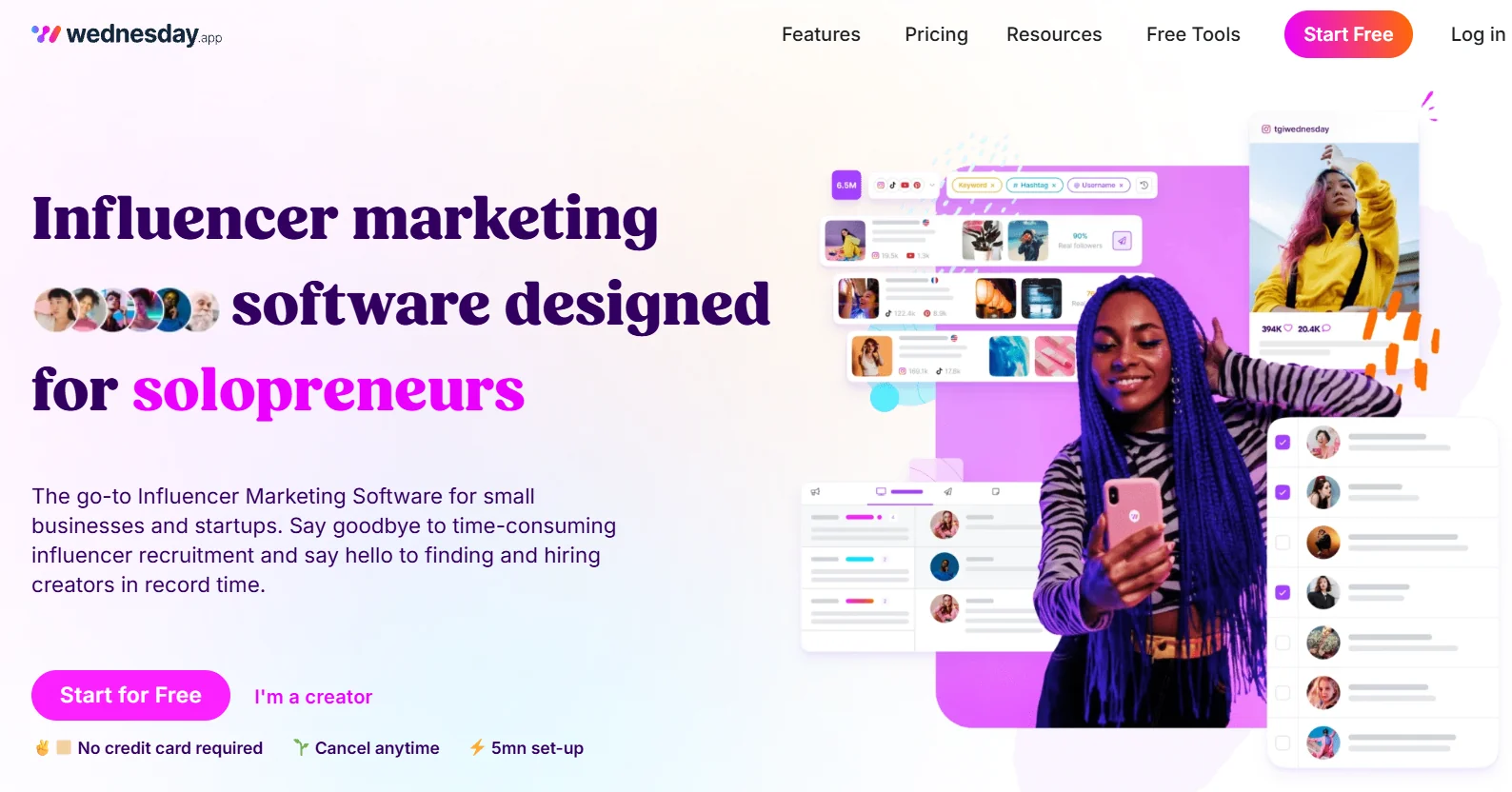
Wednesday.App is a lightweight discovery, outreach and CRM platform built by the team behind Upfluence, with a free forever tier and no long-term contracts.
Best For: Small to mid-sized businesses, startups and boutique DTC brands wanting an affordable, streamlined solution without enterprise cost or complexity.
Platform Coverage: Instagram, TikTok, YouTube, X (Twitter) and Facebook, with Twitch, Pinterest and WordPress also searchable across a 3M+ creator database.
Pricing & Commitment: Starter is free forever with 10 searches, 20 profiles, 20 conversations and 1 seat. Discovery starts at $79/month for unlimited searches, advanced filters, full messaging and team features. Outreach starts at $279/month, currently waitlist-only, adding mass email, Gmail and Outlook sync and advanced CRM. Extra seats are $29 each.
Reviews: 4.6 / 5.0 (G2)
These sit at opposite ends of the market. Tidal Labs is for larger teams running long-term creator programs with full data ownership, compliance automation and content lifecycle management. Wednesday.App is for smaller brands prioritising quick discovery, relationship management and cost efficiency.
The pricing gap is the clearest signal: free to $79 a month with published rates, against custom enterprise quotes. If you need compliance, integrations and a private network, Tidal Labs earns its cost. If you need to find and contact creators this week, Wednesday.App does it for a fraction.
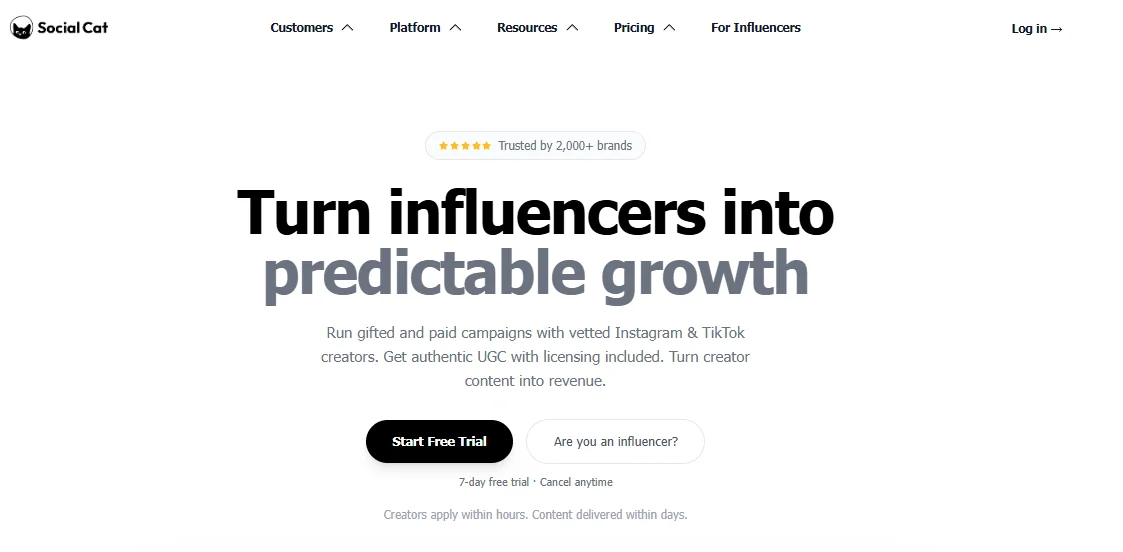
Social Cat is a product-for-content marketplace where brands list products, manually vetted creators apply, and content is produced in exchange for goods, across a pool of 500,000+ opted-in creators.
Best For: Small to medium brands wanting a simple, affordable way to launch and manage collaborations on Instagram and TikTok without enterprise complexity.
Platform Coverage: Instagram and TikTok.
Pricing & Commitment: Essentials $99/month, Performance $199/month and Pro $299/month, which adds Replace Matches and the Top Brand Badge. A 7-day free trial is available but there's no permanent free plan. Our Social Cat pricing review breaks down each tier.
Reviews: 4.3 / 5.0 (Trustpilot)
Tidal Labs is built for brands that want to own and scale private creator communities with deep automation, compliance tooling and cross-system analytics, at enterprise investment levels.
Social Cat targets smaller brands wanting affordable, straightforward collaboration from $99 a month. Its verified, opted-in pool and built-in usage rights remove friction for brands prioritising content acquisition over enterprise integrations, though it offers nothing comparable on analytics or automation.
Tidal Labs is doing something the rest of this list isn't. A private, white-labelled creator community hosted on your own site, covering influencers, employees, advocates and customers, with a CMS built for thousands of assets and compliance automation for GDPR, tax and legal. For brands that want to own their creator relationships outright rather than rent access to a database, that model is genuinely differentiated.
The constraints are the flip side of the same design. There's no large public database, so campaign reach is limited to your network plus roughly 50,000 CreatorExchange creators. Pricing isn't published, onboarding requires internal process change, and there's little public feedback to verify the experience beforehand.
For brands that want relationship depth without giving up reach or price transparency, Influencer Hero is the strongest all-round alternative in 2026. It indexes 450M+ creators across eight platforms, runs discovery, outreach, CRM, gifting, affiliate, UGC and reporting in one dashboard, includes branded application pages for building your own roster, and publishes plans from $649 a month with monthly billing and no lock-in.
Ready to see how fast you could launch? Book a Demo with the Influencer Hero team.


When choosing an influencer marketing platform, focus on features like influencer discovery, CRM capabilities, content management, analytics, and integrations with your sales or affiliate tools. Some, like Influencer Hero, combine all these in one solution, making campaign management seamless.
Pricing for influencer marketing platforms varies widely depending on features, data access, and support. Many alternatives to Tidal Labs, such as Influencer Hero, offer flexible plans that scale with brand needs, while others charge enterprise-level fees for advanced customization.
Yes — smaller brands can benefit greatly, as influencer platforms save time, provide vetted influencer lists, and offer campaign tracking. Tools like Influencer Hero make it affordable for small businesses to compete with larger brands in influencer outreach and management.
AI has become a major advantage in influencer marketing, powering better influencer matching, automated outreach, and performance predictions. Many Tidal Labs alternatives, including Influencer Hero, now use AI to help brands target the right influencers more efficiently.
Common mistakes include failing to migrate influencer relationships, overlooking integration needs, and ignoring the learning curve for new tools. When moving from Tidal Labs to an alternative like Influencer Hero, plan a phased transition to avoid disrupting campaigns.
Schedule a Demo with one of our media experts below.