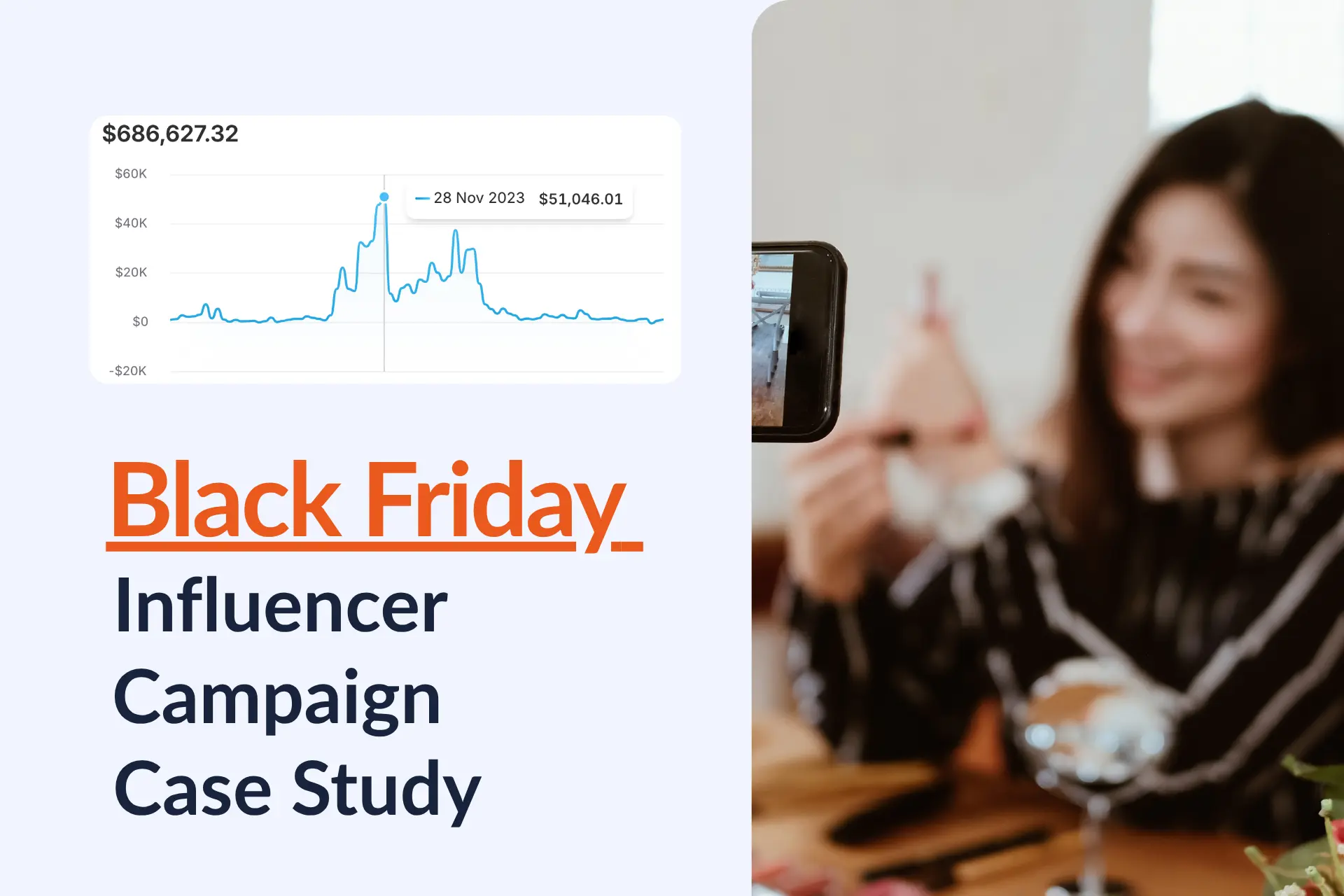
Black Friday influencer campaigns can be wildly profitable, or a costly waste of budget. The difference almost always comes down to preparation, data, and execution. In this case study, we break down exactly how a UK-based home and garden e-commerce brand used Influencer Hero to generate $687,600 in Q4 sales, with over $640K coming in during November and December alone.
Whether you're a CMO, a performance marketer, or a brand owner gearing up for the next BFCM season, this guide gives you a step-by-step blueprint you can replicate.
The brand came in with a clear but ambitious set of goals:
The brand operated exclusively as a direct-to-consumer e-commerce business with no physical retail presence. Influencer marketing was their only active marketing channel, which made the stakes even higher: if the campaign underperformed, there was no paid media safety net to fall back on.
They also faced a challenge common to brands entering a new market — they had no existing data on which US influencers could actually sell their products. Without that performance data, allocating BFCM budgets intelligently was nearly impossible.
The campaign's success wasn't built in November, it was built over the nine months prior.
The core strategic insight behind this campaign is what we call the 80/20 principle of influencer marketing: the vast majority of sales come from a small group of high-performing influencers. The goal of the pre-BFCM period was to identify exactly who those influencers were.
By working with ~50 new influencers per month over nine months, the team accumulated performance data across hundreds of partnerships. This made it possible to segment influencers into clear tiers:
With this data, budget allocation for BFCM became a science rather than a guess. If a high-performer historically drove $5K per post, offering them a fixed-payment package for 4 posts during BFCM projected $20K in sales — a 10X ROAS.
The campaign focused on US-based Instagram and YouTube audiences aligned with the home and garden niche. Influencer selection was filtered by audience location, gender, and niche relevance to ensure the traffic generated was qualified and likely to convert.
Using Influencer Hero's search and discovery tool, the team applied precise filters — audience location, gender, engagement rate, and niche — to build a qualified list of US-based home and garden creators each month.
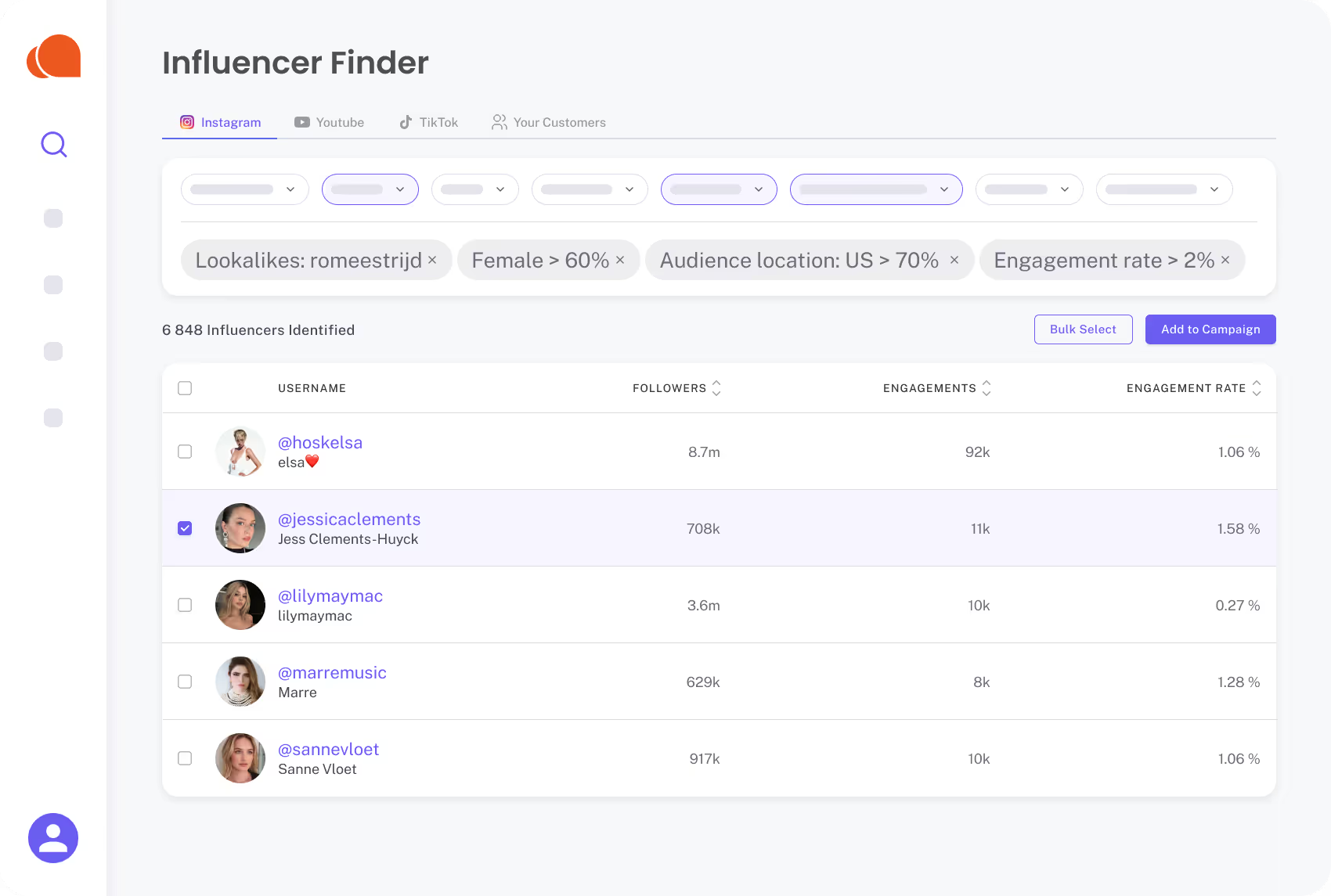
This wasn't a one-time exercise. Over nine months, the team continuously identified and tested new creators, building a growing roster of proven performers.
Once the right influencers were identified, the team used Influencer Hero's drip campaign feature to automate outreach at scale — including AI-generated personalized sentences and automated follow-ups.
The result: a 37%+ reply rate across outreach sequences, well above the industry average. Personalization and persistence were the key levers.
With dozens of active partnerships at any time, organization was critical. The team used Influencer Hero's CRM to:
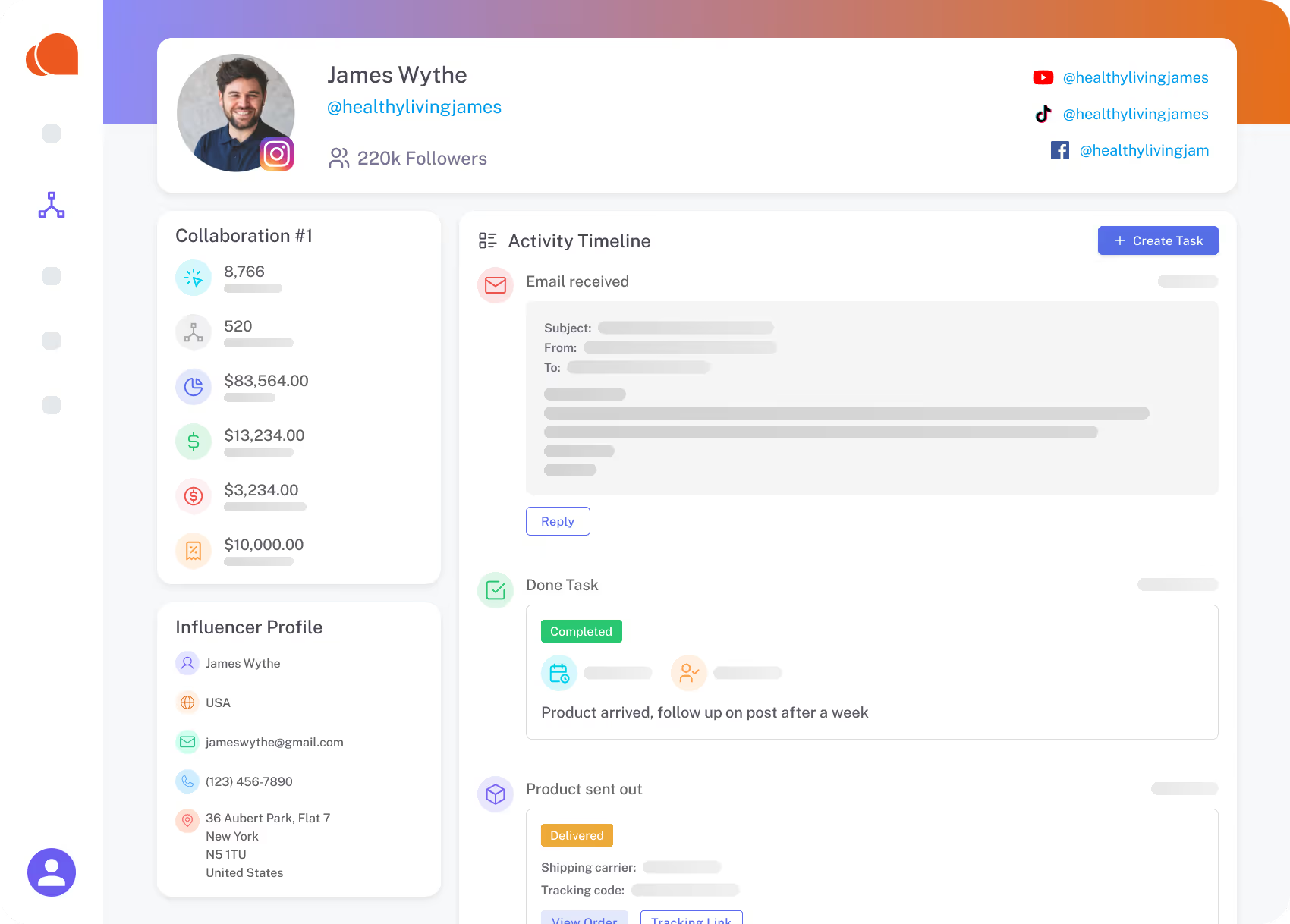
Without this infrastructure, it would have been impossible to know which influencers were actually driving revenue — and which BFCM packages were worth funding.
In September — intentionally timed to feel genuine rather than transactional — the team sent non-product gifts to top-performing influencers. The goal was to strengthen relationships ahead of the campaign invitation, without making the gesture feel like a bribe.
Timing matters here: too close to the BFCM invite and it looks calculated; too early and influencers forget about it by the time the invite arrives.
Rather than paying per post, the team bundled multiple posts into packages to increase total campaign value and lower the effective cost per post.
Because affiliate links and discount codes don't capture every sale (an industry standard ~70% attribution rate applies), the team first adjusted tracked sales upward to estimate actual sales:
Pro tip: Fixed payments generate higher ROAS for top performers. Affiliate commissions work better as a hedge with medium performers who may sell less volume.
Invitations were sent to segmented influencer lists with personalized outreach, exclusive framing ("we're only sharing this with our favourite creators"), and stacked-value offers that included additional free products — perfect for influencers who needed holiday gifts themselves.
Below is the template we used to invite the influencers to the campaign:
Hi {{firstname}},
{{personalized_sentence}}
We have been working extremely hard to prepare everything for this year's holiday season and we would love to work with you again!
We have a special offer prepared which is the biggest sale of the year which we are only sharing with our favourite creators and we would love to offer the following:
* {{ENTER FIXED PAYMENT}}
* {{ENTER %}} Affiliate commission on all referrals (tracked through your dashboard)
* {{ENTER PRODUCT AND RETAIL VALUE}} (you will be the first to receive them)
* {{ENTER RETAIL VALUE}} Additional {{ENTER PRODUCT}} which you can use as a gift :)
In exchange we would like to ask for 1 story post in October (Fall campaign), 2 story posts in November (Holiday campaign) and 2 story posts in December.
As our {{ENTER PRODUCT}} are the perfect gift we see a significant increase in demand which will be beneficial for the affiliate commission you earn!
We are super excited to work with you again! Can I count you in? :)
Best,
(Your name)
The campaign was structured across two phases: a fall post in October and four posts across November and December, extending the earning window for influencers and the sales window for the brand.
After we sent the invite the work didn’t stop there. Once the invitations have been sent out there are typically 3 different options:
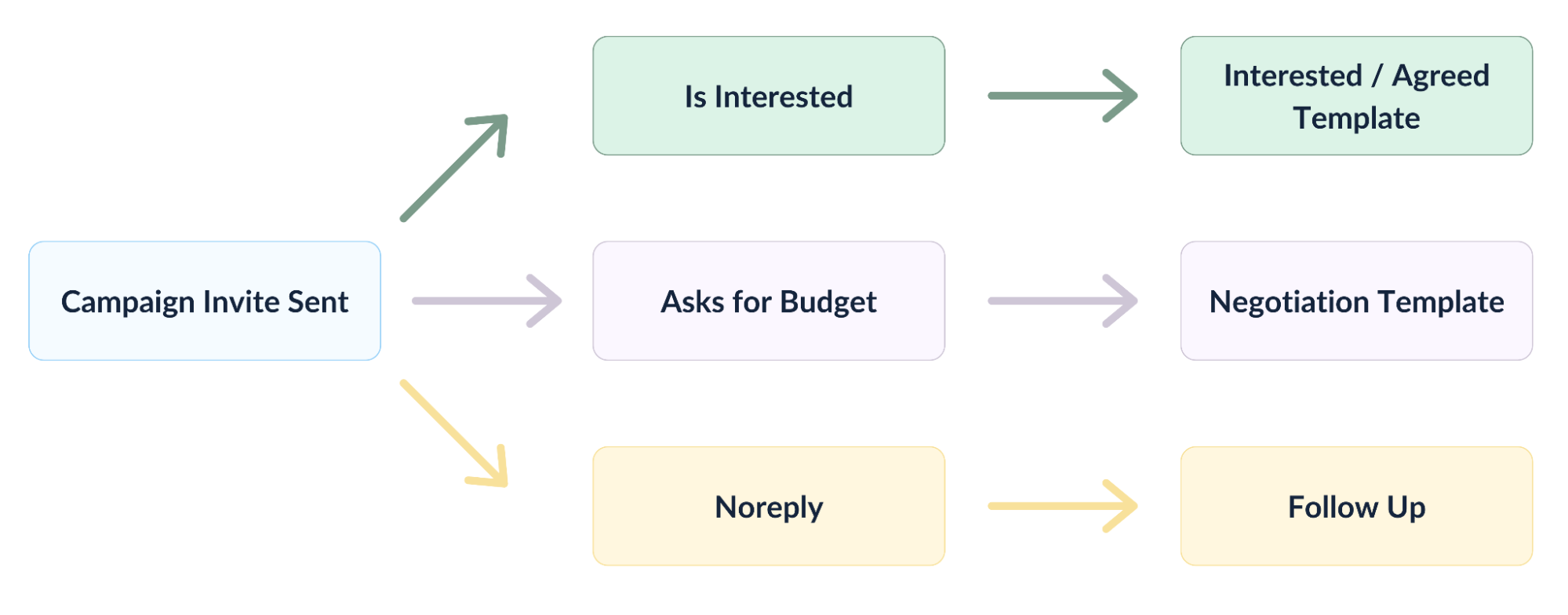
We have prepared templates for each scenario which you can access here.
The day before launch, the team:
This reminder step alone can be the difference between an influencer forgetting to post and a $50K sales day.
Once the campaign launched, the team stayed engaged, thanking influencers for their posts and subtly nudging them toward additional content while their custom links remained active.
Toward the end of the campaign, a closing reminder email was sent to all influencers asking them to give their audience "one last chance" to access the deal before it expired. This urgency-driven post reliably generated a second spike in sales at campaign close, and often came free, since many influencers were willing to post without additional compensation for a final-day push.
Shopify analytics showed a pattern consistent with well-executed influencer campaigns: a sharp spike at launch, steady revenue through the campaign, and a second spike at close.
The numbers speak for themselves.
Cyber Monday outperformed Black Friday — a reminder that the BFCM window extends well beyond a single day and that maintaining campaign momentum through the full period is essential.
The elevated revenue per click (3X above the yearly average) and the more than doubled conversion rate reflect something important: consumers arriving via influencer links during BFCM are primed to buy. Pairing high-intent traffic with a strong discount offer and a mobile-optimized site (the majority of sales came from mobile, mirroring broader industry trends) created the conditions for exceptional performance.
Three factors drove these results above all others:
This wasn't luck. It was a system.
The $687K BFCM result was the direct output of nine months of disciplined influencer testing, a data-driven budget allocation framework, and an end-to-end campaign workflow powered by Influencer Hero. The brand didn't need a massive paid media budget. They needed the right tools, the right data, and a repeatable process.
If you're planning your next BFCM campaign — or trying to build an influencer program that generates real, trackable revenue year-round — Influencer Hero gives you everything in one platform: discovery, outreach automation, CRM, affiliate tracking, gifting, and payments.
Ready to build your own high-ROI influencer program? Book a free demo with Influencer Hero and see how brands like yours are turning influencer marketing into a predictable revenue channel.

Join 1,200+ brands and 150+ agencies scaling creator programs with Influencer Hero.