
Top 10 Tagger Alternatives in 2026: Features, Pricing and Review

November 2, 2026
|
Published

November 2, 2026
|
Updated

13 minutes
|
Reading

Influencer Performance Marketing Course | VOUCHER: IMC100

Lucia Zabala

Drive ROI With Influencers

Global Influencer Database
ALL-IN-ONE platform
CRM, Affiliate, UGC & More
Top 8 Tagger Alternatives for Influencer Marketing in 2026
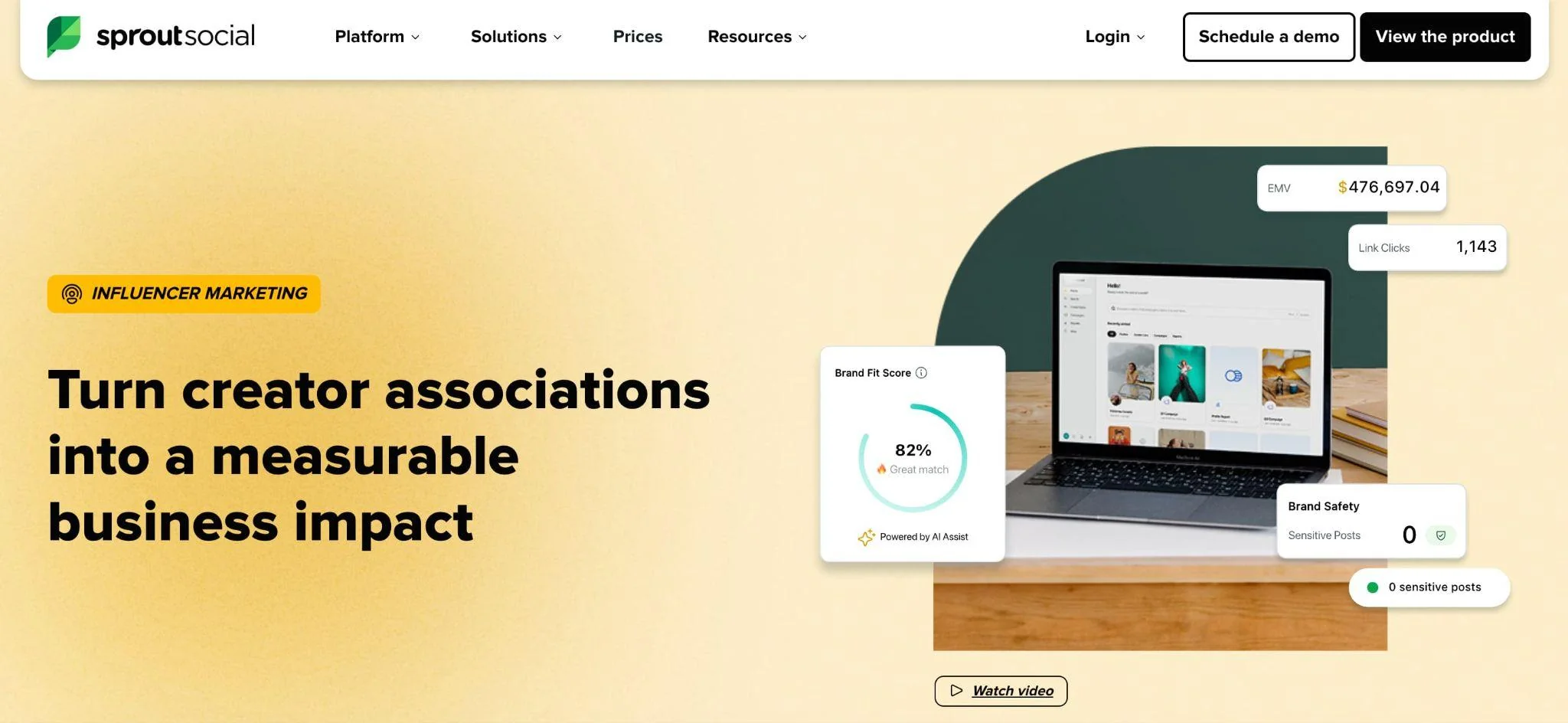
Tagger, now sold as Sprout Social Influencer Marketing, is great for social data and reporting. But it's priced per seat, locked into an annual contract and can't be tested first.
If your team needs to run outreach, gifting and affiliate at volume, that price gets hard to justify. Here's what you'll get in this guide:
- Real numbers: published pricing, or clearly labeled estimates where vendors hide it.
- What to look for: five capabilities that matter more than another dashboard.
- A pick by team type: D2C, ecommerce, enterprise and agency.
- How to switch: what to export and when to time it.
TL;DR: Top 8 Tagger Alternatives
Pricing and features from each vendor's published information, verified in October 2026. Estimates are third-party figures.
Tagger Reviews and What Users Say
Sprout Social acquired Tagger in 2023 and sells it standalone, no Sprout plan required. It holds a 4.3/5 on G2 across 413 reviews (as of August 2026), mostly from mid-market and enterprise teams.
What users like:
- Data depth: detailed creator insights and custom reports.
- Official network data: API integrations with Instagram, Facebook, TikTok, YouTube, Twitch and Snapchat.
- One workspace: discovery, campaign tracking and creator fee payments together.
- Support: a responsive account team.
The common complaints are search and filtering issues, a less intuitive interface and cost. Discovery covers 10M+ profiles, the deepest audience data requires creators to authenticate, and Shopify is the only ecommerce integration listed.
What to Look for in a Tagger Alternative
- Discovery that reads content: AI search that matches what creators actually post, not just their bio. See Influencer Hero's influencer search.
- Outreach at volume: automated email and Instagram DM sequences, so 200 creators a month doesn't mean 200 manual follow-ups.
- Workflow automation: rules that ship products and create codes when a creator changes stage. See the influencer CRM.
- Affiliate tracking: unique codes, commissions and payouts per creator, not just UTMs.
- Pricing transparency: published tiers and shorter contracts make switching less risky.
Top 8 Tagger Alternatives
1. Influencer Hero
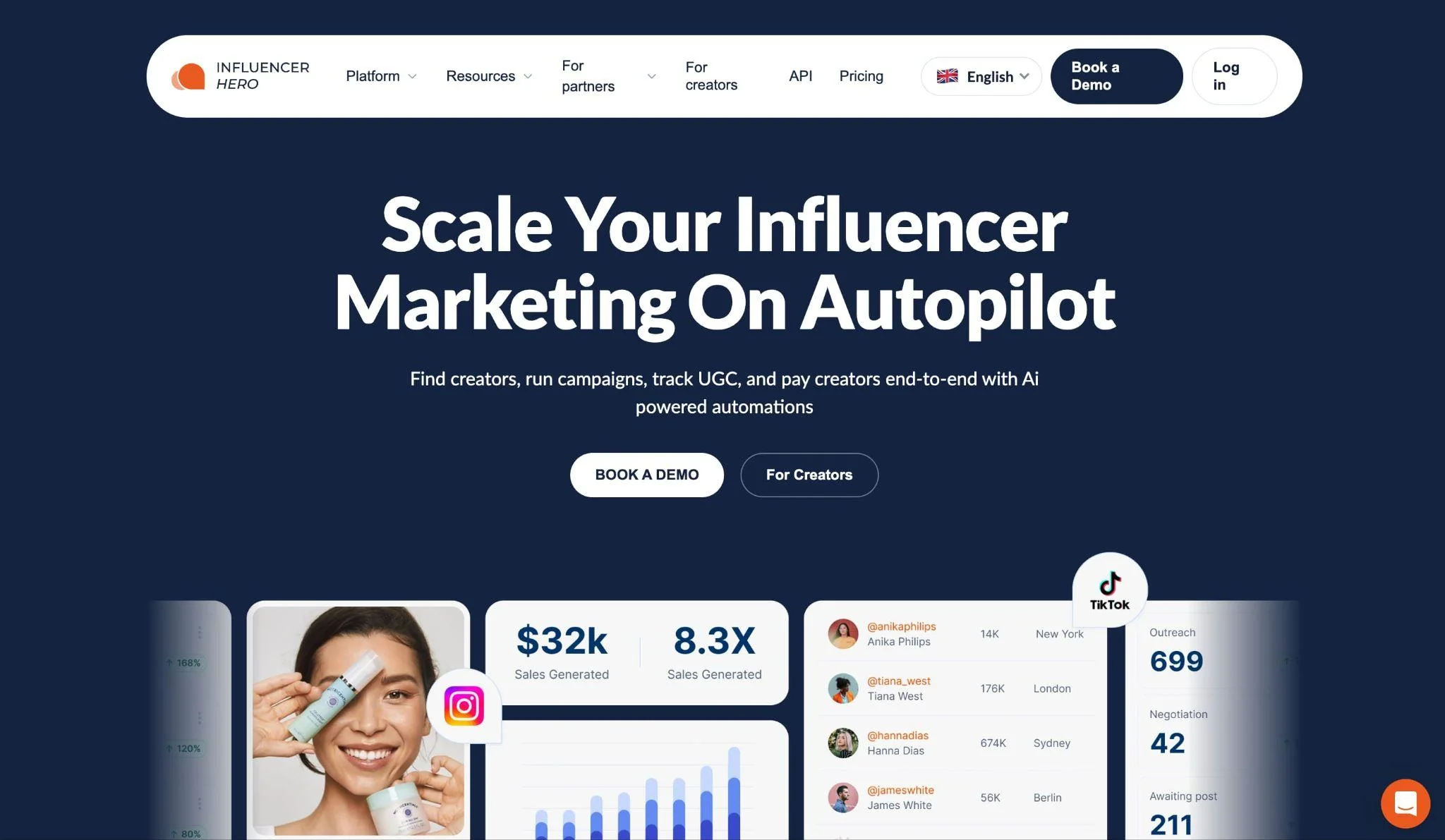
Best for: D2C brands and agencies running gifting and affiliate programs at volume.
What it does
An all-in-one influencer marketing platform covering Instagram, YouTube and TikTok, with high-performing creators from a 450M+ global database. It handles every step from finding a creator to paying them.
- Lookalike search: find similar creators from one profile, several profiles or an entire campaign.
- Tagged-in filter: see which creators already tagged a competitor, along with the exact posts.
- AI Profile Search: describe a creator in plain language and the AI matches it against their bio, posts and images (Instagram). It sets hard filters like country and followers for you, supports unlimited include/exclude keywords and has four strictness levels.
- MCP: connect Claude, ChatGPT or Gemini and run bulk actions from a prompt, like moving 80 creators to a new stage or sending a starter kit to everyone accepted. Every change needs your approval.
- Affiliate and payments: every creator gets a unique discount code and link, commissions, a creator dashboard and payouts (20 to 500 per month depending on plan).
- Deep Research: turns a written brief into 10 to 20 searches across keywords, translations, lookalikes and visual search. It learns from your feedback on sample creators, then scores every creator from 1 to 100 with a written match assessment.
- Email and Instagram DM outreach: mix both channels in one sequence, with drip follow-ups and AI-personalized lines. Plans include 1,000 to 10,000 reach-outs a month.
- Campaign Board Automations: trigger, condition, action rules. When a creator moves to a stage, the platform can send an email flow, ship a product, create a discount code or link, set a commission, invite them to their dashboard or ping Slack.
- Application forms: creators apply and pick their own products, which automates product seeding.
- Content and UGC: automatic post detection, a content wall and approvals before content goes live.
- 65+ integrations: Shopify, WooCommerce, Magento, BigCommerce, Amazon, Wix, Squarespace, Webflow, Stripe, Klaviyo, Mailchimp, Omnisend, DocuSign, Gorgias, Zendesk, Slack and Zapier.
Pricing
- Standard: $649/month, 1 seat, 1,000 reach-outs/month.
- Pro: $1,049/month, 3 seats, 5,000 reach-outs/month, dedicated account manager.
- Business: $2,490/month, 8 seats, 10,000 reach-outs/month.
- Enterprise: custom.
3-month minimum. Save 20% quarterly or 30% yearly. See the pricing page.
Influencer Hero vs Tagger
Discovery: Tagger searches 10M+ profiles, and its deepest audience data needs creators to authenticate. Influencer Hero draws on a 450M+ database, and its AI reads what creators actually post, then vets them against your brief before you reach out.
Execution: Tagger tracks campaigns with UTMs and pixels and sends Shopify product requests to fulfillment. Influencer Hero automates the steps in between: outreach across email and DMs, product sends, per-creator codes, commissions and payouts, all triggered by stage changes.
Stack and cost: Tagger lists Shopify as its ecommerce integration, while Influencer Hero connects to 45+ tools across stores, email, contracts and support. At an estimated $1,600 per seat, 3 Tagger seats cost about $4,800/month on an annual contract, versus $1,049/month for Influencer Hero Pro with 3 seats and a 3-month minimum.
Tagger is still the better fit if you need Twitch, Snapchat and Facebook data or already rely on Sprout's social listening. For running gifting and affiliate at volume, Influencer Hero does more for less, with 24/7 human account management on managed plans.
Scope to weigh: No free trial. Expensive for smaller brands. Steep learning curve.
2. Upfluence
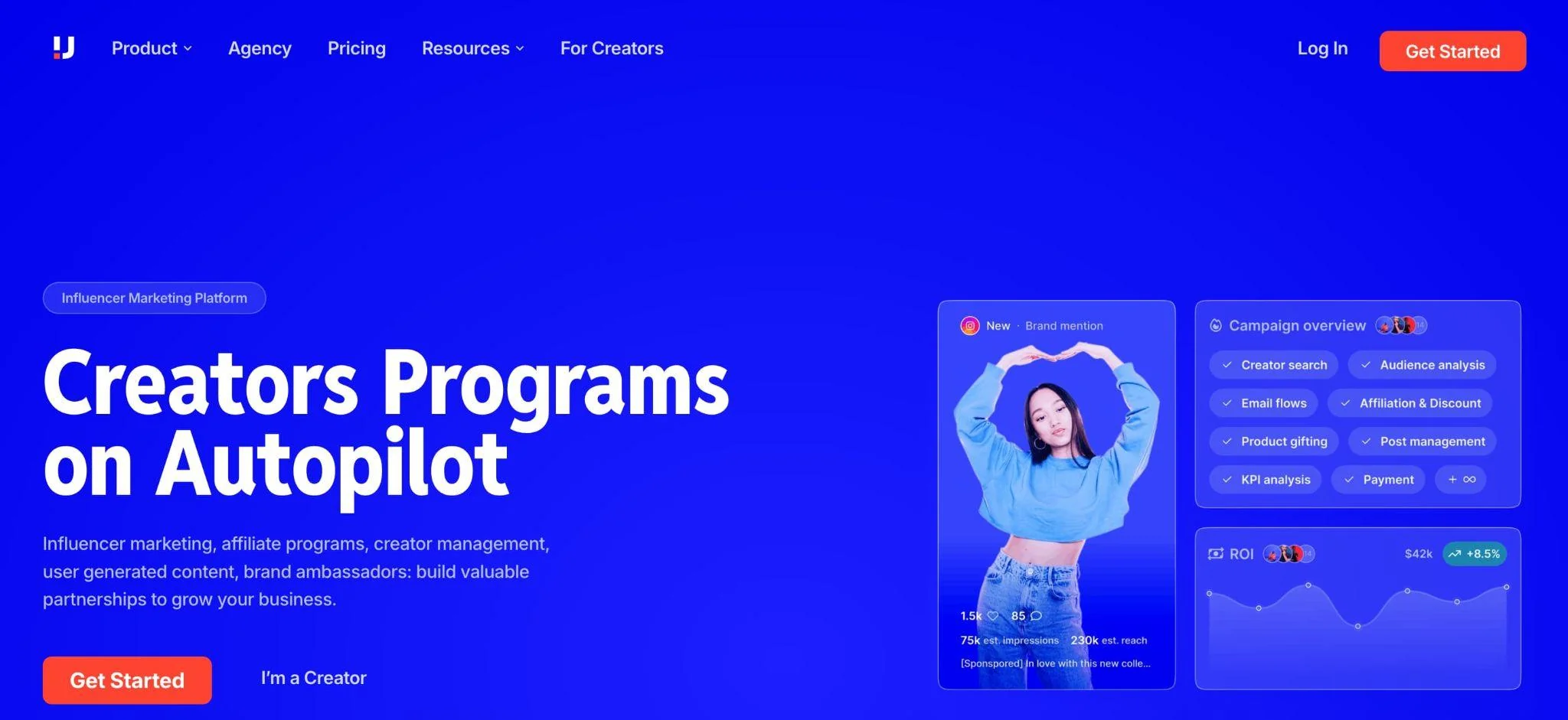
Best for: Ecommerce brands selling across several storefronts.
What it does
- Discovery: a 14M+ creator database across Instagram, TikTok, YouTube, Twitch and Pinterest, with lookalikes and AI brand-safety screening of posts, captions and videos.
- Customer matching: finds influential people inside your CRM or ecommerce customer list.
- Recruitment: custom recruitment pages and a creator marketplace where creators apply to your programs.
- Outreach: mass outreach with Gmail and Outlook, plus drip sequences and Jaice AI campaign creation on higher plans.
- Ecommerce: Shopify, WooCommerce, Magento, BigCommerce and Amazon for codes, one-click product shipments and sales tracking.
- Upfluence Pay: multi-currency payouts with automatic 1099 and W-9 forms.
- Extras: social listening stream, Hootsuite integration and a dedicated account manager from day one.
Pricing
Custom quote across three modules (Find, Scale, Autopilot). 12-month minimum, no fee on creator sales, trial after a sales call.
Upfluence vs Tagger
Upfluence covers five storefronts against Tagger's Shopify-only setup, which matters for any brand selling on Amazon or WooCommerce. Its customer-matching tool also gives you warm creators that Tagger's outbound search can't surface.
Payments go further too: Upfluence Pay handles tax forms and multi-currency payouts, while Tagger focuses on paying creator fees. On the other hand, drip sequences and ecommerce integrations sit on the Scale plan or higher, so the entry module is closer to a discovery tool.
Neither solves lock-in. Both require a sales call and a 12-month commitment.
Scope to weigh: No visible price before a sales call.
3. GRIN
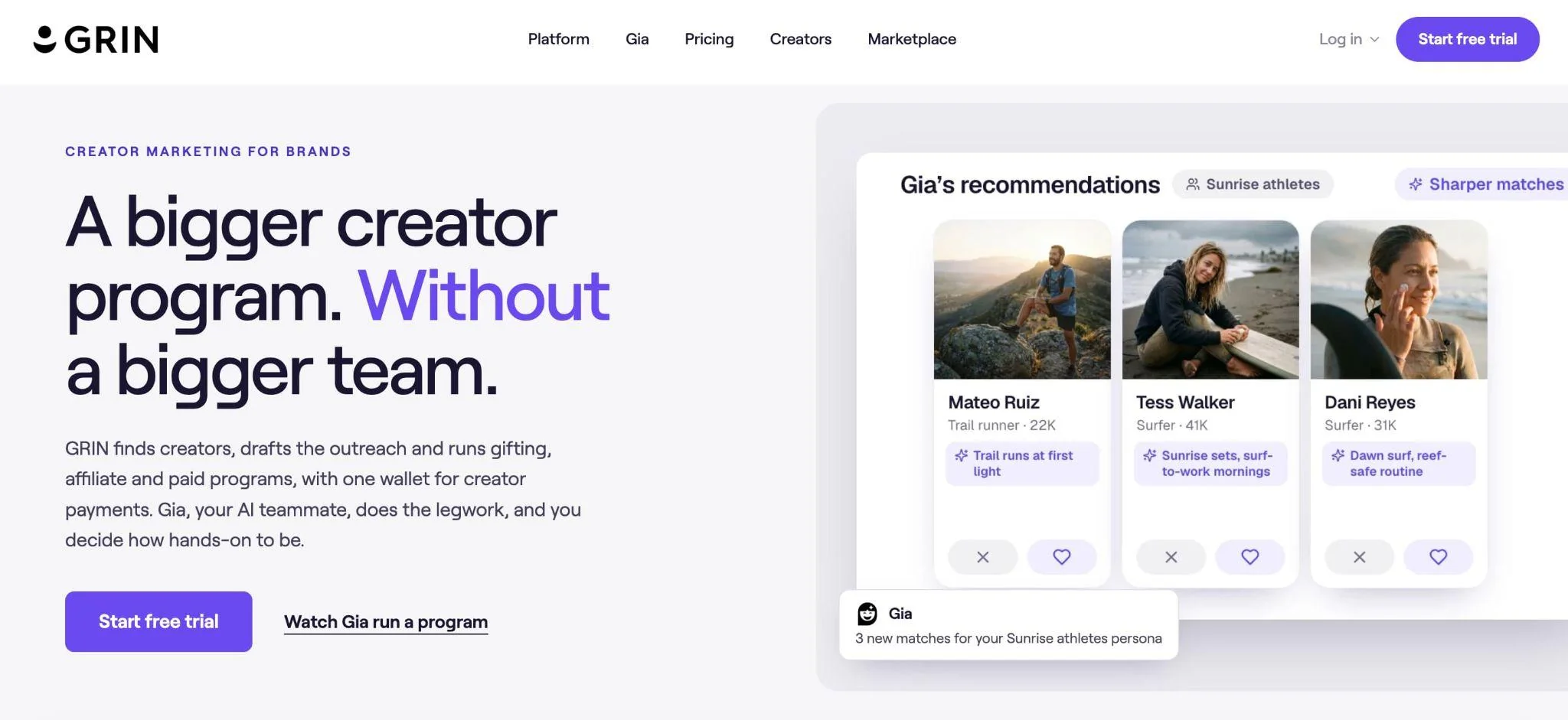
Best for: Shopify DTC brands that want self-serve, month-to-month plans.
What it does
- Gia AI agent: finds creators, drafts and sends outreach, builds programs and reports on results from a plain-language request. You choose how much of its work to review.
- All campaign types: gifting, paid partnerships, affiliate and UGC on every plan.
- Creator marketplace: creators discover your programs and apply, even on the free plan.
- Escrow wallet: creator fees and commissions are held in escrow and paid through Stripe.
- Unlimited CRM: no per-contact billing, and plans aren't priced per seat.
- Shopify: one-click connection, with custom or headless stores through the API.
- Content tracking: program posts are found and tracked automatically.
Pricing
- Free: $0/month, 1,200 creator searches/month, 10 gifts total, 20% fee on wallet deposits.
- Starter: $200/month, 12,000 searches, 100 gifts/month, 10% fee, 30-day free trial.
- Growth: $500/month, 36,000 searches, 300 gifts/month, multi-brand, 7% fee.
- Scale: $1,500/month, 120,000 searches, 1,000 gifts/month, 5% fee.
GRIN vs Tagger
GRIN is the opposite buying experience: public prices, a free trial, monthly billing and no per-seat charges. It's built around running gifting and affiliate, not social intelligence, and its social listening is still on the roadmap.
The cost to model is the deposit fee. A Growth brand funding $20,000/month in creator payments pays $1,400 in fees on top of the $500 plan, so about $1,900/month in total.
Scope to weigh: The 5–20% fee and monthly gift caps add up for large programs.
4. Modash
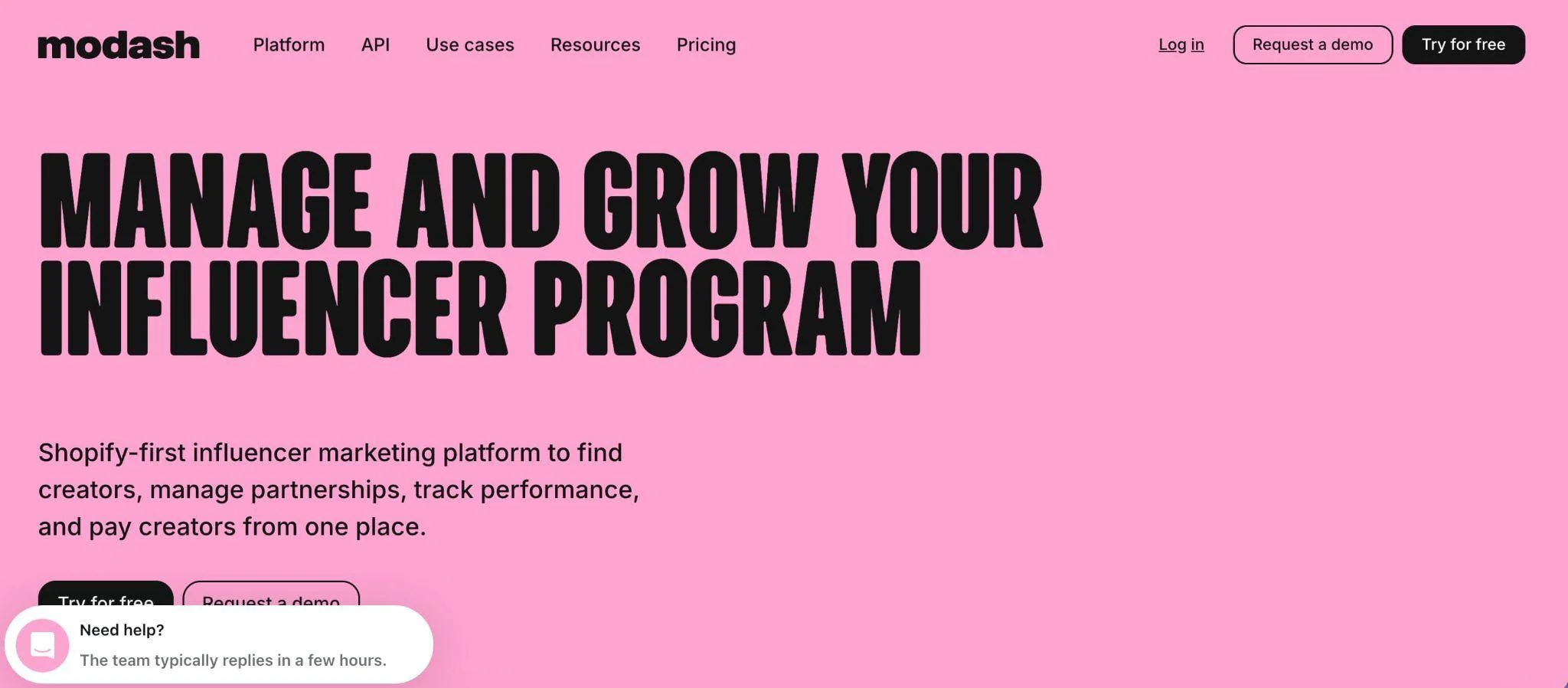
Best for: Small Shopify teams focused on discovery.
What it does
- Discovery: 380M+ creators with 1K+ followers on Instagram, TikTok and YouTube.
- Vetting: audience demographics, engagement and fake-follower checks on every profile.
- Influential fans: finds creators among your own followers (3,000 to 6,000 a month).
- CRM and outreach: creator pipeline, contact history and email outreach.
- Content tracking: collects posts and Stories without creators signing up (100 to 250 tracked creators).
- Shopify: product sends on all plans, plus affiliate management on Performance.
- Payments: free up to $10K/year, then 5%.
Pricing
- Essentials: $199/month billed annually, 2 seats, 300 opened profiles and 150 email unlocks a month.
- Performance: $499/month billed annually, 5 seats, 800 profiles, 400 email unlocks, affiliate.
- Enterprise: from $14,700/year.
14-day free trial, no card.
Modash vs Tagger
Modash's index is about 38 times bigger than the 10M+ profiles Tagger promotes, and you can test it before paying. Its Performance plan costs roughly what an estimated 4 months of one Tagger seat costs for a full year.
The trade-off is scope. There's no social listening, no Twitch, Snapchat or Facebook, and like Tagger it only integrates with Shopify.
Scope to weigh: Entry tier caps at 300 opened profiles a month.
5. CreatorIQ
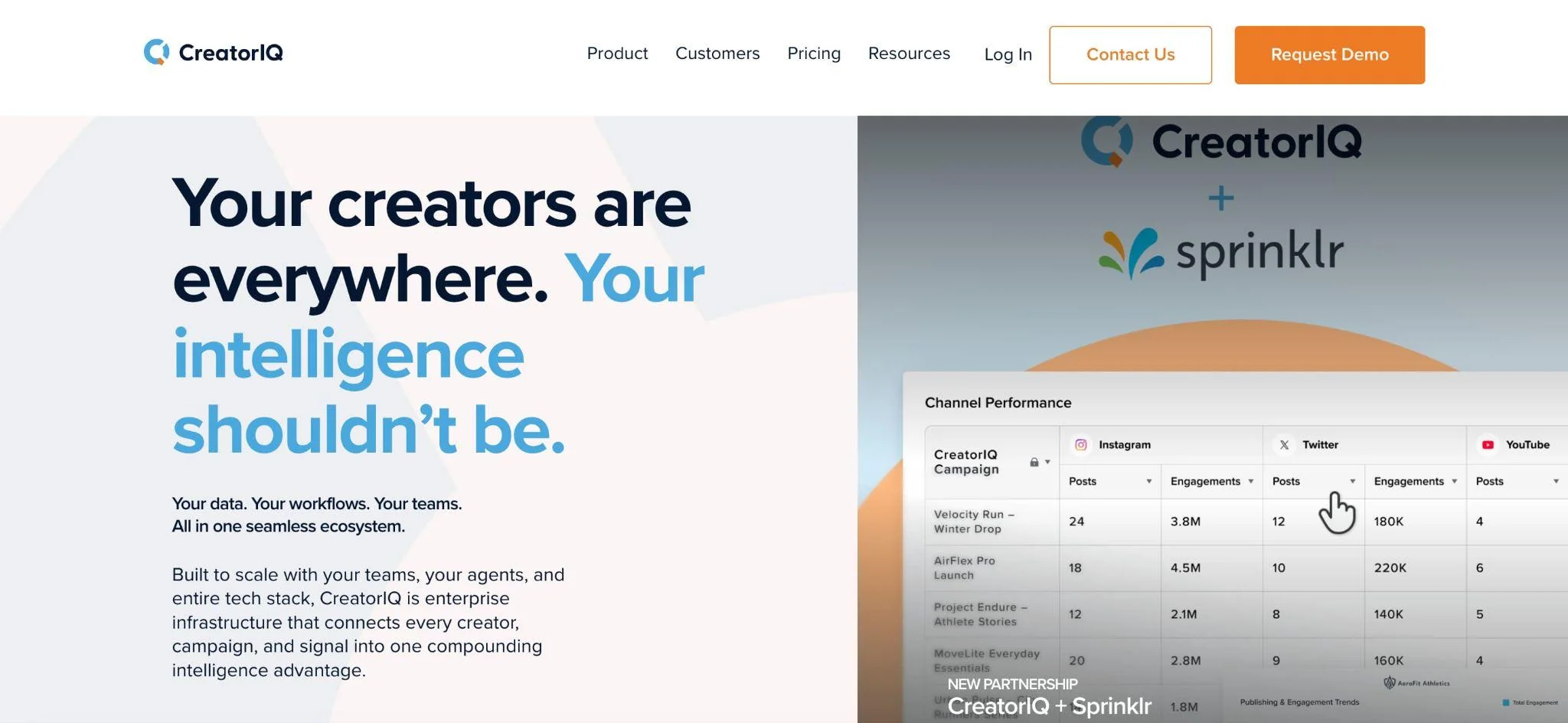
Best for: Global enterprises with large creator budgets.
What it does
- Official data: direct integrations with Meta, TikTok, YouTube and Snapchat, covering Instagram, Facebook, TikTok, YouTube, Pinterest, Twitch and X.
- Competitive insights and EMV: earned media value benchmarks, built on the Tribe Dynamics data it absorbed.
- Workflow: discovery with saved searches, CRM, briefs, approvals and contracts via DocuSign.
- CreatorIQ Pay: one payment account with separate payouts, approvals and reporting per division.
- Integrations: Shopify, Impact, PayPal, Tipalti, Looker, Tableau and LiveRamp, plus an enterprise API.
Pricing
No public pricing. Estimates start around $30,000/year with a median near $39,000, annual contract, no free trial.
CreatorIQ vs Tagger
The closest like-for-like swap. Both run on official network data, but CreatorIQ adds BI connectors like Looker and Tableau, EMV benchmarking and payments built for multi-brand organizations.
It won't lower your cost or shorten your contract. Most teams moving here are upgrading capability, not cutting spend.
Scope to weigh: Overkill below roughly $1M in yearly creator spend.
6. Traackr
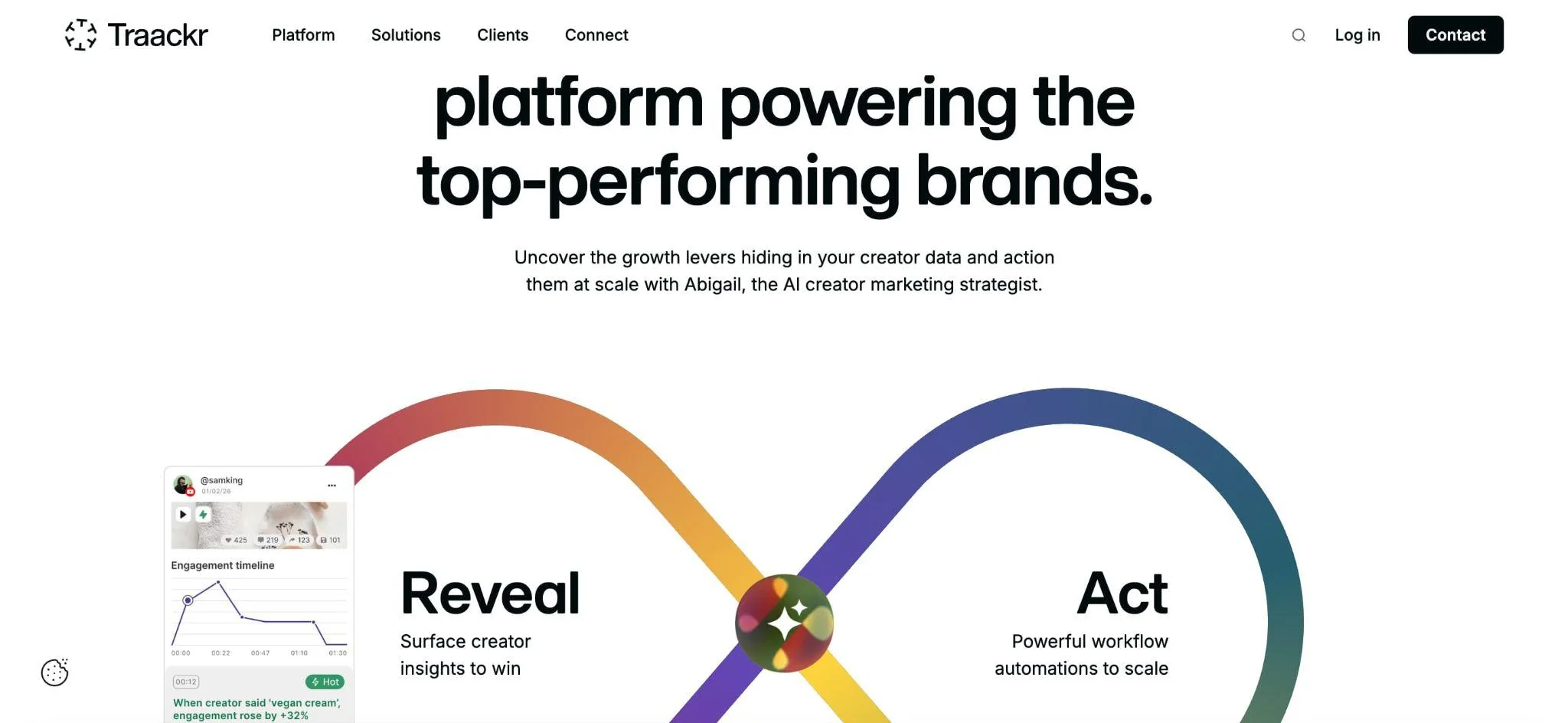
Best for: Enterprise beauty and fashion teams tracking share of voice.
What it does
- Brand Vitality Score (VIT): one metric combining visibility, engagement and trust, normalized across platforms.
- Leaderboards: category rankings that show where your brand leads or lags competitors.
- Monitoring: content tracking across 13+ platforms, with organic and paid activations split.
- Discovery and vetting: bio and content keyword search, brand-safety checks and relationship management.
Pricing
No public pricing. Estimates run about $17,000 to $32,500/year, annual only (see our Traackr pricing breakdown). Industry benchmarking adds roughly $8,000/year, and API access sits on the Plus tier at around $55,000+/year.
Traackr vs Tagger
If you bought Tagger for reporting, Traackr goes further: VIT gives leadership one number to track against competitors, and leaderboards show the whole category. Tagger reports on your campaigns, while Traackr reports on your market position.
Both are light on execution. Traackr has limited ecommerce integrations and no core affiliate, so you'd still need tools for gifting and codes.
Scope to weigh: The benchmarking you'd buy it for often costs extra.
7. Later Influence
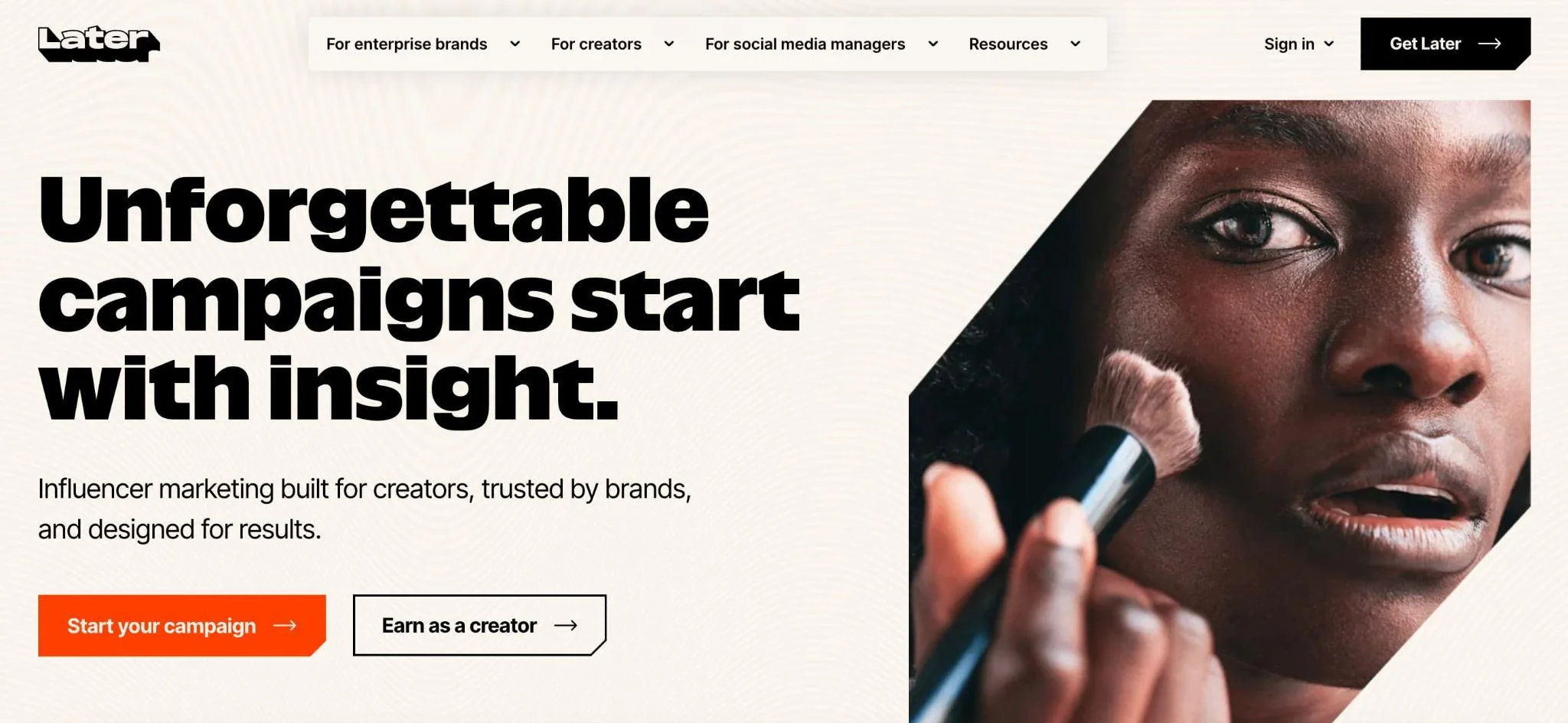
Best for: Larger teams that want software plus managed services.
What it does
- Unlimited everything: unlimited users, campaigns and creator partnerships on every tier.
- Recruitment and approvals: discovery, creator applications and content approvals in one flow.
- Affiliate and ambassadors: long-running ambassador programs with affiliate tracking and creator payments.
- Services: a managed team that can plan and run campaigns for you.
- Later Social: a separate scheduling product for teams that want publishing from the same vendor.
Pricing
Three quote-based tiers, no free trial. Estimates fall between $1,000 and $2,500/month.
Later Influence vs Tagger
Unlimited users is the big difference. A 10-person team pays the same as a 2-person team, while Tagger charges per seat.
Its ambassador and affiliate tooling is also more mature than Tagger's UTM-based tracking. Pricing is just as opaque, though.
Scope to weigh: Comparing it takes a sales process.
8. Aspire
Best for: Brands building ambassador and affiliate communities.
What it does
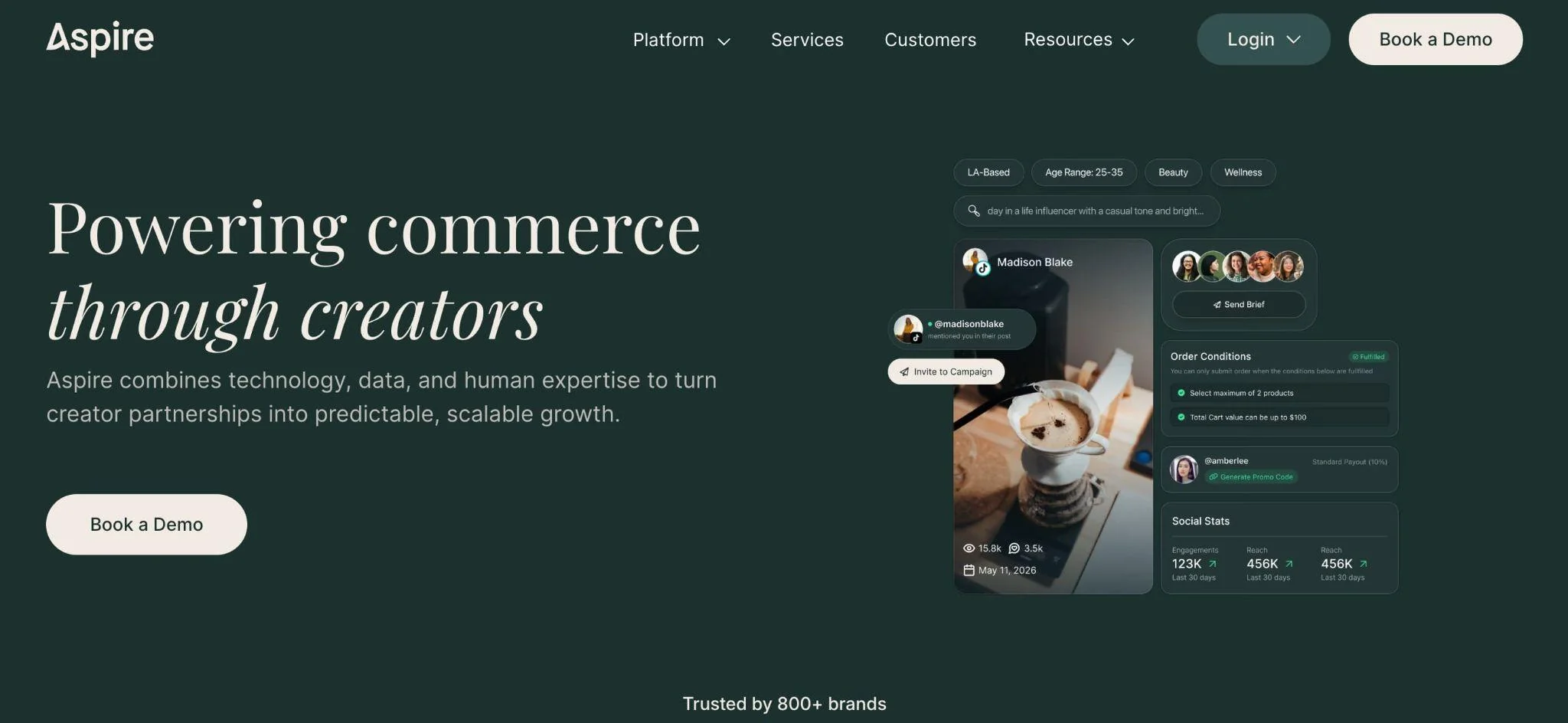
- Two ways to find creators: search across 170M+ profiles plus an opt-in marketplace where creators apply to your programs.
- Ambassadors and affiliates: discount codes, referral links and commissions for always-on programs.
- Product seeding: Shopify-connected gifting, plus TikTok Shop gifting.
- UGC: collect and manage creator content in one library.
- Sync: email marketing and CRM sync, with managed agency services available.
Pricing
No public pricing. Estimates start around $2,000/month on a 12-month commitment.
Aspire vs Tagger
Aspire is built for inbound: creators come to you through the marketplace, and the platform turns them into a long-term community. Tagger is built for outbound discovery and reporting.
Its search index is also 17 times bigger than Tagger's 10M+ profiles, and TikTok Shop gifting is a plus for brands selling there. Price and lock-in are similar to Tagger's.
Scope to weigh: Around $24K/year minimum and a mandatory demo.
How the Alternatives Compare to Tagger
Verified in October 2026. Estimates are third-party figures; confirm before you budget.
How to Choose and Switch
How to choose
- Who needs access? Count every user. 3 seats on Tagger cost an estimated $4,800/month; Influencer Hero Pro includes 3 for $1,049.
- Revenue or reach? Measured on sales? Pick a platform with codes, affiliate and payouts built in (Influencer Hero, Upfluence, GRIN). Measured on share of voice? Look at Traackr or CreatorIQ.
- Where do you sell? Shopify-only brands can pick almost anything. Selling on Amazon, WooCommerce or Magento too? Shortlist Influencer Hero or Upfluence.
What the switch involves
- Export first: creator lists, contacts, contracts and campaign data before you cancel.
- Time it with renewal: Tagger is annual, so start evaluating about 90 days out.
- Plan 2–4 weeks for onboarding: store connections, email flows and automations take time.
- Check security early: get the vendor's data documentation into review before signing.
Where Influencer Hero Fits
- AI that vets, not just searches: Deep Research scores every creator against your brief before outreach starts.
- Automation from outreach to payout: email and DM sequences, rule-based product sends and codes, and an MCP that takes action.
- Connected to your stack: 45+ integrations, published pricing from $649/month and a 3-month minimum instead of an annual lock-in.
Ideal for D2C brands and agencies running gifting and affiliate at volume. Ready to see it live? Book a demo.
Summary
This is some text inside of a div block.
This is some text inside of a div block.
Pricing/Month
Shopify Reviews
This is some text inside of a div block.
This is some text inside of a div block.
This is some text inside of a div block.
This is some text inside of a div block.
This is some text inside of a div block.
This is some text inside of a div block.
This is some text inside of a div block.
This is some text inside of a div block.
This is some text inside of a div block.
This is some text inside of a div block.
This is some text inside of a div block.
This is some text inside of a div block.
This is some text inside of a div block.
This is some text inside of a div block.
This is some text inside of a div block.
This is some text inside of a div block.
This is some text inside of a div block.
This is some text inside of a div block.
This is some text inside of a div block.
This is some text inside of a div block.
This is some text inside of a div block.
Read More

FAQs




Most Popular Blogs


Drive ROI With Influencer Marketing
Join 1,200+ brands and 150+ agencies scaling creator programs with Influencer Hero.