
Creator Storefronts: The Future of Influencer Marketing and How Brands Can Implement Them

December 10, 2025
|
Published

July 30, 2026
|
Updated

|
Reading

Influencer Performance Marketing Course | VOUCHER: IMC100

Peter Nettesheim
| Author

Drive ROI With Influencers

Global Influencer Database
ALL-IN-ONE platform
CRM, Affiliate, UGC & More
Creator Storefronts: The Future of Influencer Marketing and How Brands Can Implement Them
Influencer marketing is changing. The most forward-thinking brands are moving away from one-off collaborations and toward always-on creator systems that generate recurring exposure and predictable revenue. At the center of this transformation is one model that’s becoming the new standard: creator storefronts.
Creator storefronts allow influencers to curate and showcase their favorite products in a single, shoppable hub. Every time a follower clicks an item and makes a purchase, the creator earns a commission - and the brand gains a steady stream of organic, repeated exposure without having to constantly ask for new posts.
This simple shift dramatically increases posting frequency, creator retention, and long-term performance.
TLDR - Watch the Video
Take the full Influencer Performance Marketing Course and get certified!
What Are Creator Storefronts?
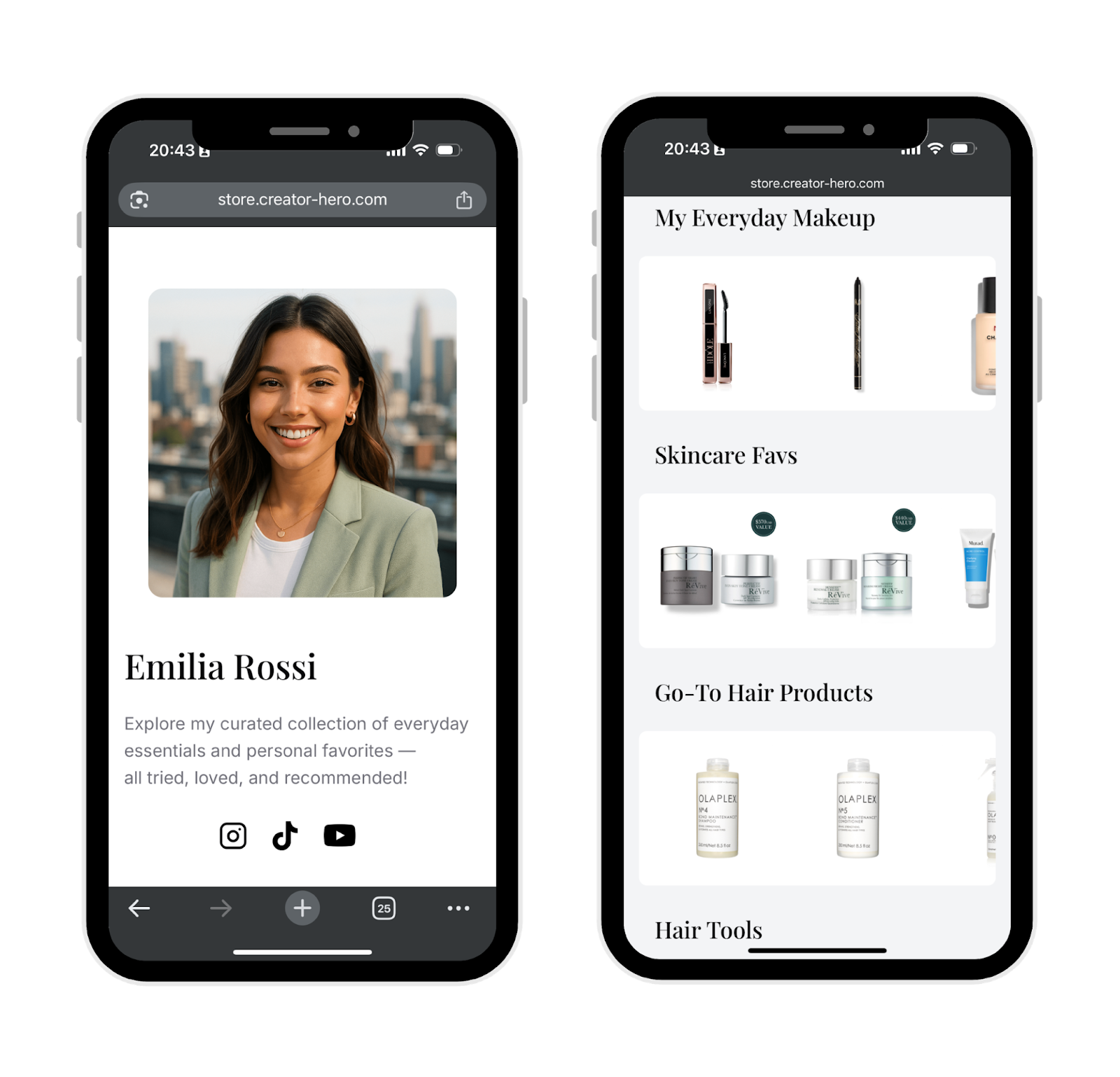
Creator storefronts are personalized, shoppable pages where influencers curate their favorite products and recommend them to their audience. Think of them as the modern version of a “favorites list,” but with real attribution, commissions, and seamless shopping built in.
Here’s how they work:
- A creator adds products they love to their storefront.
- Followers browse the storefront and click the items they’re interested in.
- Each click redirects to the brand’s product page.
- When a follower purchases, the creator earns an affiliate commission automatically.
Instead of posting a single link or negotiating one-off campaigns, creators get a central hub they can update anytime and promote across platforms.
For brands, this creates an ongoing stream of exposure and revenue without constantly re-engaging creators. For creators, it becomes a passive-income engine they control.
You can access an example of how such a storefront looks like here.
Benefits of Creator Storefronts
Creator storefronts aren’t just a new feature - they completely reshape how brands generate revenue through influencers. These are the biggest benefits for brands:
1. Recurring Exposure Without Constant Outreach
In the traditional influencer model, every post requires manual coordination - outreach, negotiation, follow-ups, tracking. With storefronts, creators continue to feature your product naturally and repeatedly because it's already in their curated shop.
The result? Brands see consistent traffic and sales without having to chase creators for every post.
2. Significant Increase in Posting Frequency
Creator storefronts dramatically change the “#posts” variable in the influencer revenue formula:
Revenue = #influencers × (sales/post) × #posts × AOV
Storefronts directly multiply this third variable.
Early tests show a 600%+ increase in organic creator posts when brands implement Creator Hero storefronts compared to standard affiliate-only setups. More posts → more touchpoints → more conversions.
3. Higher Creator Retention & Long-Term Relationships
Because creators earn passive commission from storefronts, they naturally continue recommending your products over time - even outside structured campaigns.
This builds:
- Stronger loyalty
- Higher lifetime revenue per creator
- Lower churn in your influencer roster
4. Lower Management Costs for Your Team
Instead of managing hundreds of individual post requests, storefronts streamline your workflow as you have fewer manual follow-ups, content bottlenecks and overall less project management per creator.
Your influencer program becomes scalable, not chaotic.
5. Better Alignment With How Creators Already Promote Products
Creators are used to recommending multiple brands - skincare, supplements, apparel, tech, home goods, and more. A storefront mirrors their natural behavior and gives them a single hub to share everything they love.
This increases:
- Adoption
- Willingness to promote
- Overall authenticity
Unlike brand-specific storefront systems, creators actually want to use these.
Storefront Models to Avoid (and Why They Don’t Work)
Not all creator storefront solutions are created equal. In fact, many of the “brand-specific storefronts” on the market fail to deliver the core benefit you’re looking for: recurring, organic posts at scale.
Below are the models to avoid - and why they hold back your influencer revenue.
1. Brand-Exclusive Storefronts Limit Posting Frequency
Some platforms offer storefronts where creators can only feature one brand’s products. While it may sound appealing from a brand-control perspective, these systems simply don’t work.
Here’s why:
- Creators rarely want a shop that features only one brand
- They won’t promote a storefront that feels restrictive
- Posting frequency drops dramatically because the shop becomes irrelevant to their audience
Creators succeed when they can recommend multiple favorite products in one place.
If your storefront doesn’t support that, creators won’t link to it consistently - eliminating the entire benefit.
2. Low Adoption = Low Revenue
Even if creators are technically allowed to add multiple brands, the model falls apart if the platform doesn’t offer enough products. Creators want their storefronts to feel like a genuine “hub” of everything they love.
When key brands aren’t available, the storefront becomes incomplete - and creators simply won’t adopt a system that doesn’t match how they curate online.
3. The Key to Storefront Success: Creator-First Flexibility
Any storefront model that feels forced, restrictive, or disconnected from how creators already behave will struggle long-term. If creators can’t easily integrate the storefront into the way they naturally share content, they won’t use it consistently - and without consistent usage, brands won’t see recurring posts or recurring revenue.
This is why Creator Hero was built around the opposite philosophy: a storefront ecosystem where creators can curate freely, feature all their favorite brands, and use one central link to recommend multiple products.
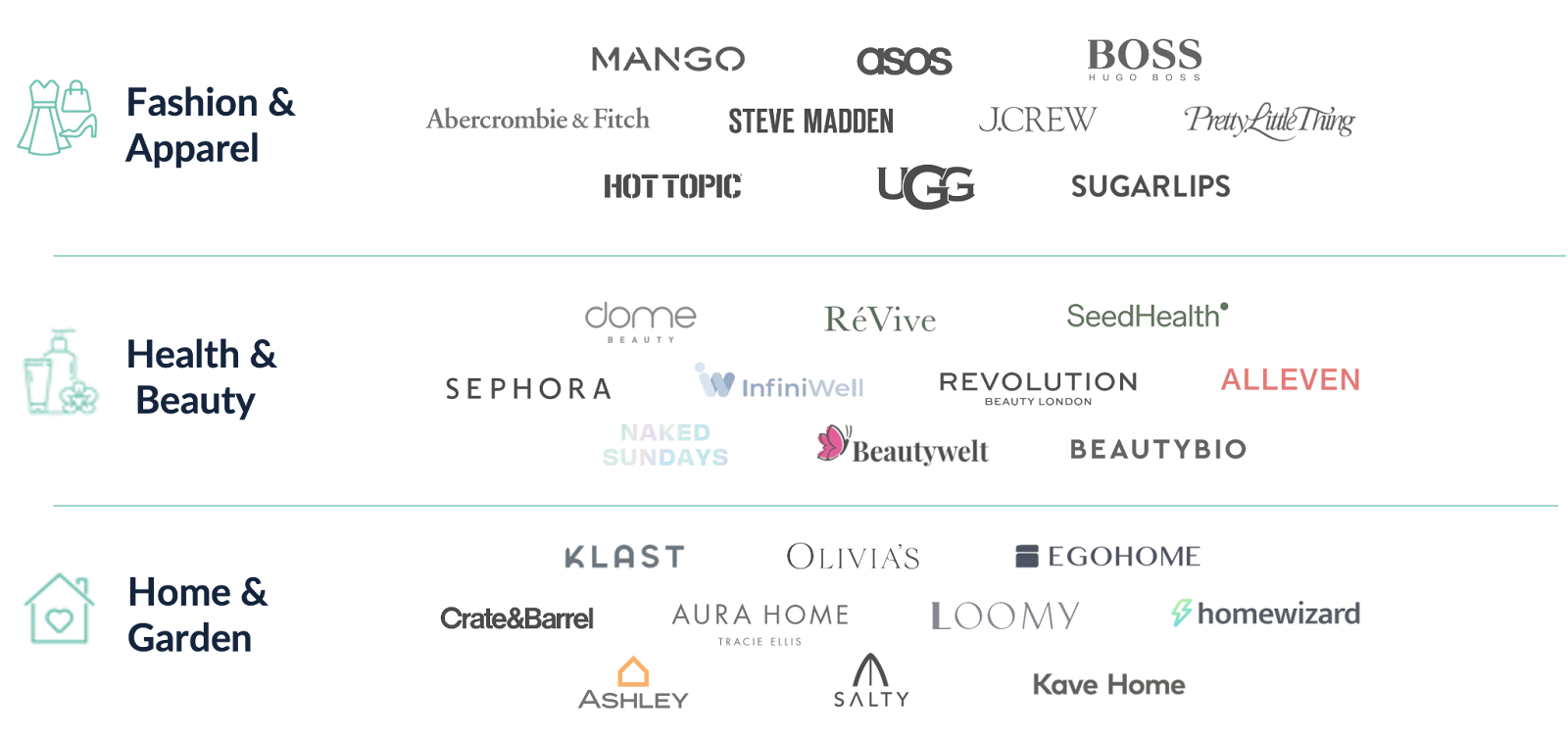
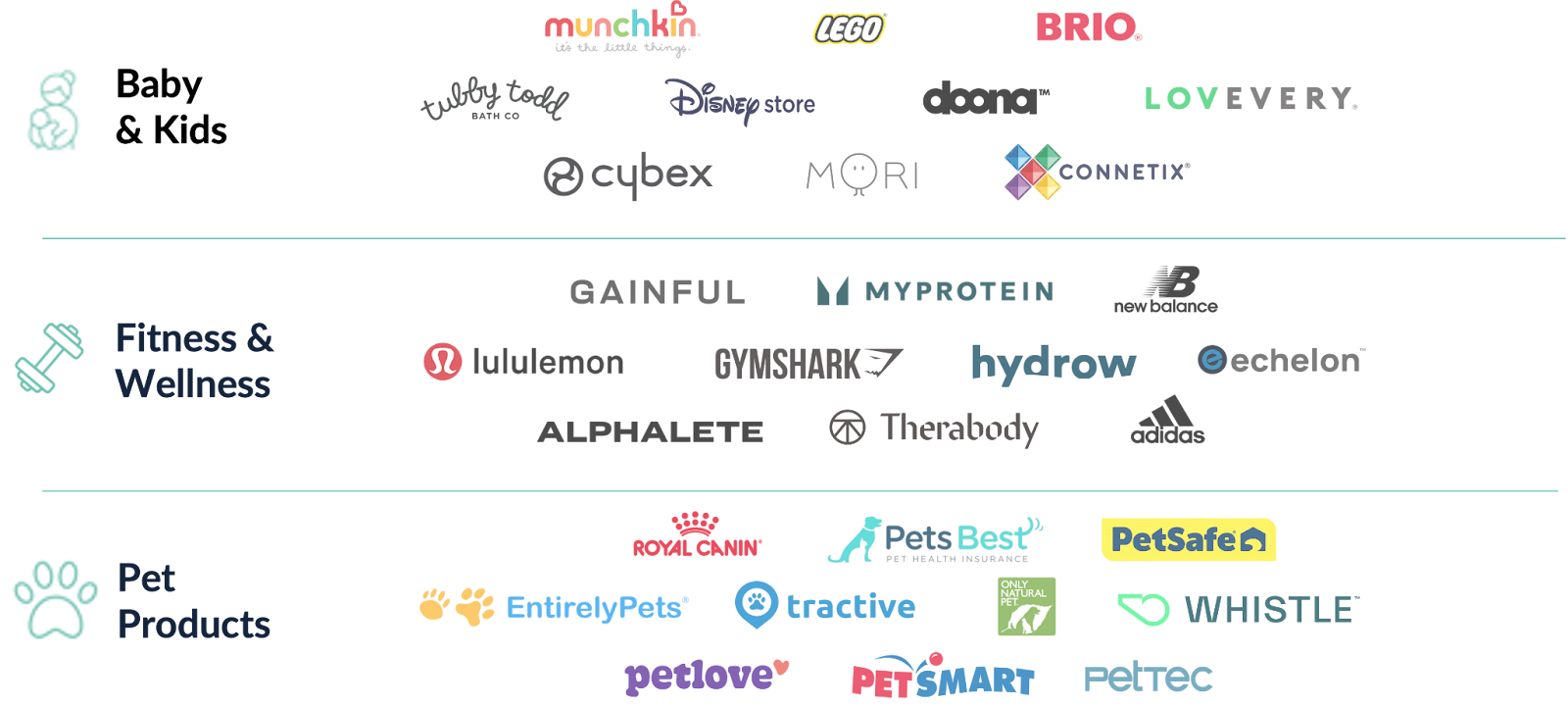
Some of the brands available in Creator Hero:
When the storefront aligns with their real behavior, posting frequency increases dramatically - and brands benefit from ongoing exposure without constant outreach.
How to Implement Creator Storefronts for Your Brand
Implementing creator storefronts isn’t complicated - but it does require a shift in how you collaborate with creators. Instead of thinking in terms of one post per partnership, you start building an always-on system where creators feature your products continuously because the storefront makes it effortless.
Here’s how to set up a storefront strategy that actually drives recurring revenue:
1. Shift Your Ask: From Single Post → Storefront Placement
When reaching out to creators, reframe the goal. Instead of requesting a one-off Story or Reel, invite them to add your product to their storefront as one of their recommended items.
This small change has a massive impact:
- Your product becomes part of the creator’s evergreen content.
- Every time they promote their storefront, you benefit automatically.
- Their followers can discover your product organically - without additional negotiation.
The result is ongoing exposure without ongoing outreach.
2. Build Recurring Momentum With Light Incentives
Once a creator adds your product to their storefront, keep nurturing the relationship. Monitor their performance, and when a creator begins driving meaningful GMV, reward them with incentives such as:
- Higher affiliate commissions
- Exclusive bundles or limited-time offers
- Early access to product drops
These small touches reinforce the relationship and encourage creators to share their storefront link more often, which translates directly into more sales.
3. Use Influencer Hero to Scale Storefront Adoption
Manually managing storefront outreach, onboarding, tracking, and payouts is nearly impossible once you start working with dozens of creators.
This is where Influencer Hero + Creator Hero become your growth engine.
With the platform, you can:
- Find creators already driving storefront GMV
- Run targeted outreach inviting creators to add your products
- Track storefront clicks, conversions, and revenue
- Reward top performers automatically
- Manage all creators, commissions, and communications in one CRM
And because Creator Hero already includes many of the top consumer brands creators love, you’re entering an active ecosystem - not asking creators to adopt yet another closed system.
Final Thoughts on The Future of Influencer Marketing
Creator storefronts are more than a trend - they’re the operational shift that transforms influencer marketing from a series of one-off posts into a repeatable, compounding revenue engine.
By giving creators an easier way to recommend your products consistently, brands benefit from recurring exposure, higher posting frequency, and stronger long-term partnerships - all without increasing management costs.
The data is clear: once a product becomes part of a creator’s storefront, the number of times they organically share it rises dramatically. This fundamentally changes your revenue equation by multiplying the one variable brands struggle to control - #posts.
And with the right system for outreach, tracking, incentives, and creator management, you can scale storefront adoption quickly and predictably.
If you’re looking to implement storefronts as part of your influencer growth engine, Influencer Hero + Creator Hero gives you everything you need - discovery, CRM, automated outreach, usage rights, storefront integrations, and reporting - all in one place.
Want to see how it works? Book a demo and get a personalized walkthrough.
Key Takeaways
- Creator storefronts drive recurring revenue by turning one-off recommendations into continuous product exposure.
- Posts increase dramatically once a creator can earn commission passively through their storefront.
- Avoid brand-exclusive storefronts - they eliminate creator incentive and kill long-term sharing.
- The strongest storefront ecosystems let creators combine all their favorite products in one place.
- Incentivize top performers and manage storefront adoption through a unified CRM to scale efficiently.
Summary
This is some text inside of a div block.
This is some text inside of a div block.
Pricing/Month
Shopify Reviews
This is some text inside of a div block.
This is some text inside of a div block.
This is some text inside of a div block.
This is some text inside of a div block.
This is some text inside of a div block.
This is some text inside of a div block.
This is some text inside of a div block.
This is some text inside of a div block.
This is some text inside of a div block.
This is some text inside of a div block.
This is some text inside of a div block.
This is some text inside of a div block.
This is some text inside of a div block.
This is some text inside of a div block.
This is some text inside of a div block.
This is some text inside of a div block.
This is some text inside of a div block.
This is some text inside of a div block.
This is some text inside of a div block.
This is some text inside of a div block.
This is some text inside of a div block.
Read More

FAQs
How do creator storefronts differ from affiliate links?

Affiliate links track conversions, but storefronts centralize all creator recommendations in one place. This increases posting frequency because creators can promote their storefront without having to mention specific brands every time.
Do storefronts replace traditional influencer campaigns?
Not at all — they augment them. You still run outreach, negotiations, and seasonal campaigns, but storefronts unlock passive exposure between those initiatives.
Will creators agree to add my product to their storefront?
Yes, especially if the product aligns with their niche and the commission is fair. Brands typically see high adoption rates when outreach is personalized and the creator already knows the product.
4. Do I need to pay creators extra for storefront placement?
Usually no. Most brands request storefront placement after a successful collaboration. Because it requires no additional effort from the creator, acceptance rates are high.
How do I measure storefront performance?
Use a platform like Creator Hero to track clicks, conversions, GMV, top creators, and trends over time. This data helps you reinvest in the creators generating the most long-term value.





Most Popular Blogs


Drive ROI With Influencer Marketing
Join 1,200+ brands and 150+ agencies scaling creator programs with Influencer Hero.