Top 10 Influencer Impact Alternatives in 2026: Features, Pricing and Review

April 25, 2024
|
Published

October 6, 2026
|
Updated

13 minutes
|
Reading

Influencer Performance Marketing Course | VOUCHER: IMC100

Malena Garcia
| Author

Drive ROI With Influencers

Global Influencer Database
ALL-IN-ONE platform
CRM, Affiliate, UGC & More
Top 10 Influencer Impact Alternatives in 2026: Features, Pricing and Review
Influencer Impact gives small and mid-sized teams AI-powered creator discovery, audience validation, modular reporting and campaign collaboration across TikTok, Instagram including Stories, and YouTube. Its pricing model is unusual: you pay by the number of influencer partnerships rather than by features or seats, starting at £200 a month for up to 50.
That model is the main thing to weigh. Costs climb to £400 at 100 partnerships and £1,200 at 300, so a growing programme gets expensive quickly. There are also no independent reviews to check performance against, and no eCommerce integrations to tie creators back to store revenue.
This guide compares the top 10 Influencer Impact alternatives in 2026 on how cost scales, creator database size and revenue attribution.
- Influencer Hero
- Modash
- Upfluence
- Captiv8
- CreatorIQ
- HypeAuditor
- GRIN
- gen.video
- Vyrill
- Loox
Why Look for Influencer Impact Alternatives in 2026
The discovery and reporting are solid for the price. Four gaps push brands to compare.
Cost Scales With Partnership Count
£200 a month covers 50 partnerships, £400 covers 100, and £1,200 covers 300. That means a successful programme is penalised: every additional creator relationship raises the bill. Platforms charging by features or a flat subscription let you scale creator numbers without the cost moving in step.
No Independent Reviews
There's no meaningful presence on G2, Capterra or Trustpilot, and no published case studies. Without external validation you can't assess reliability, data accuracy or support quality before committing budget. Most alternatives here carry hundreds of verified reviews you can read first.
No eCommerce Attribution
There are no Shopify, WooCommerce or Magento integrations and no affiliate link or discount code infrastructure. Reporting is strong on reach, engagement and audience quality, but it stops before store revenue, so proving ROI to a finance team means exporting data elsewhere. Our discovery tools guide compares platforms with native attribution.
Limited Support Visibility
Support runs through demo bookings and in-platform guides, with no clearly advertised live chat or phone line. For agencies running high-volume campaigns against deadlines, not knowing the escalation path is a practical risk worth resolving before signing.
Criteria for Selecting Influencer Impact Alternatives in 2026
To compare the different platforms, we focused on central criteria that all must meet:
- How Cost Scales: Whether pricing rises with creator count, features or usage.
- Creator Database Size: Reach available without additional fees.
- Revenue Attribution: eCommerce integrations tying creators to orders.
- Social Media Platform Coverage: The extent to which each platform supports Instagram, YouTube, TikTok, Facebook and Pinterest.
- Reviews: Verified customer feedback on G2, Capterra and Shopify.
- Ease of Use (UX/UI): Dashboard design, navigation and onboarding time.
- Customer Support: Availability of live chat, email and onboarding assistance, and resolution speed.
- Key Features: Discovery, outreach, CRM, reporting, gifting, UGC, affiliate and payments, storefronts and AI capabilities.
Influencer Impact Brand Overview in 2026
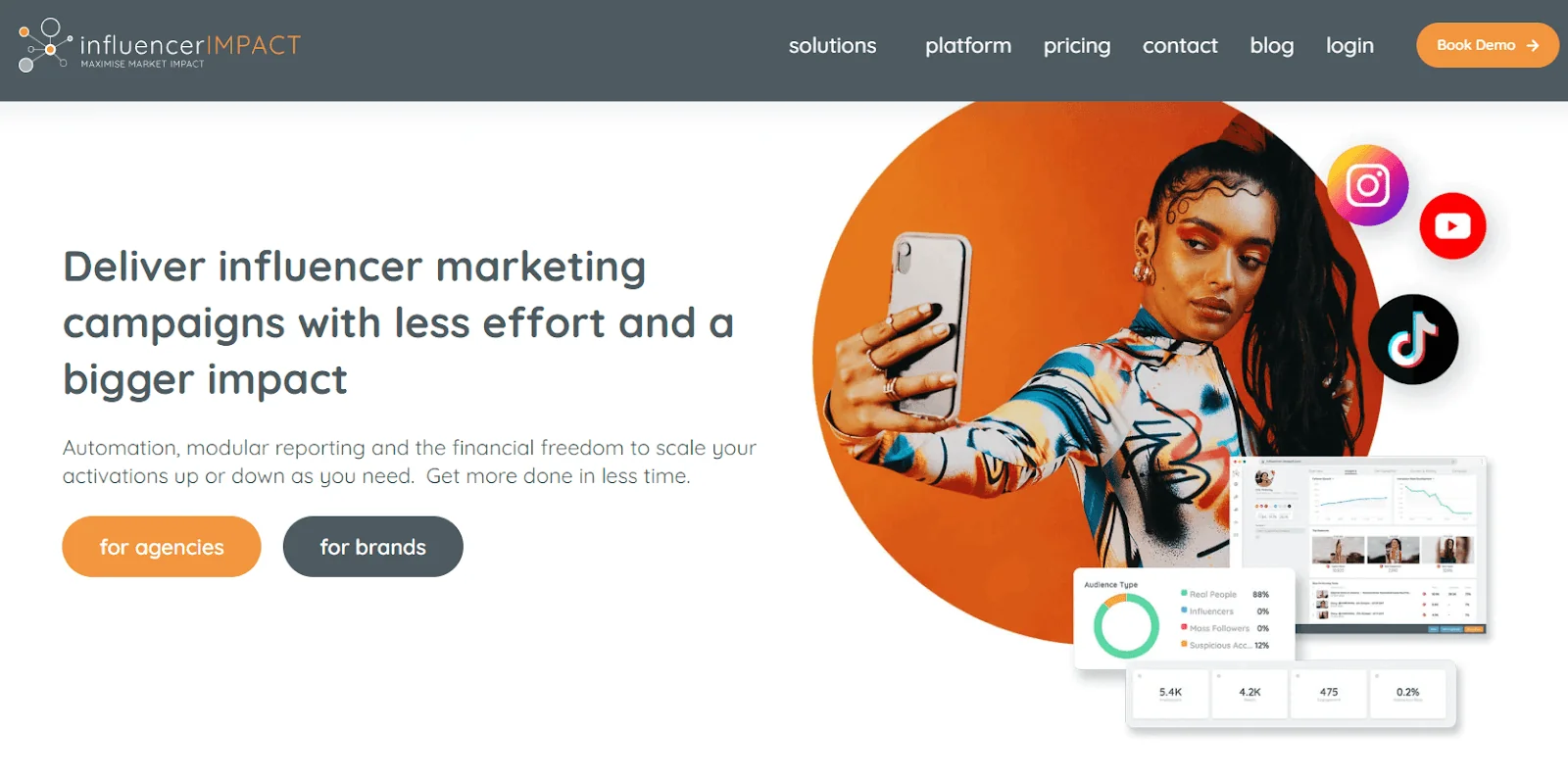
Influencer Impact is an influencer discovery and campaign management platform for small to mid-sized brands and agencies, built around AI-assisted search, audience validation and modular reporting.
Best For: Small to mid-sized teams running a defined number of creator partnerships who want strong audience validation and stakeholder-ready reporting without enterprise complexity.
Platform Coverage: TikTok, Instagram including Stories, and YouTube.
Pricing & Commitment: Tiered by influencer partnerships rather than features.
- Impact101: £200/month for up to 50 influencer partnerships.
- Mid tier: £400/month for up to 100 partnerships.
- Top tier: £1,200/month for up to 300 partnerships.
Reviews: No independent reviews or published case studies available on G2, Capterra or Trustpilot.
Ease of Use (UX/UI): An intuitive dashboard covering AI discovery, automated data collection and modular reporting. Basic campaigns are quick to set up; advanced reporting and segmentation take practice.
Customer Support: Demo bookings and in-platform guides. Live support availability isn't clearly advertised.
Best Features
- Modular Reporting: Build custom reports in real time for stakeholders, which is unusually flexible at this price point.
- AI-Powered Discovery: Filter creators by location, platform, audience and engagement to cut research time.
- Detailed Audience Insights: Age, gender, interests, language and city-level distribution to validate fit before committing.
- Fake Follower Detection: Filter out creators with low-quality or suspicious audiences.
- Group and Campaign Management: Organise creators into groups, track multiple campaigns and surface lookalikes.
- In-Platform Collaboration: Invite creators, upload briefs, share assets and keep conversations in one place.
Pros and Cons
Top 10 Influencer Impact Alternatives in 2026
1. Influencer Hero
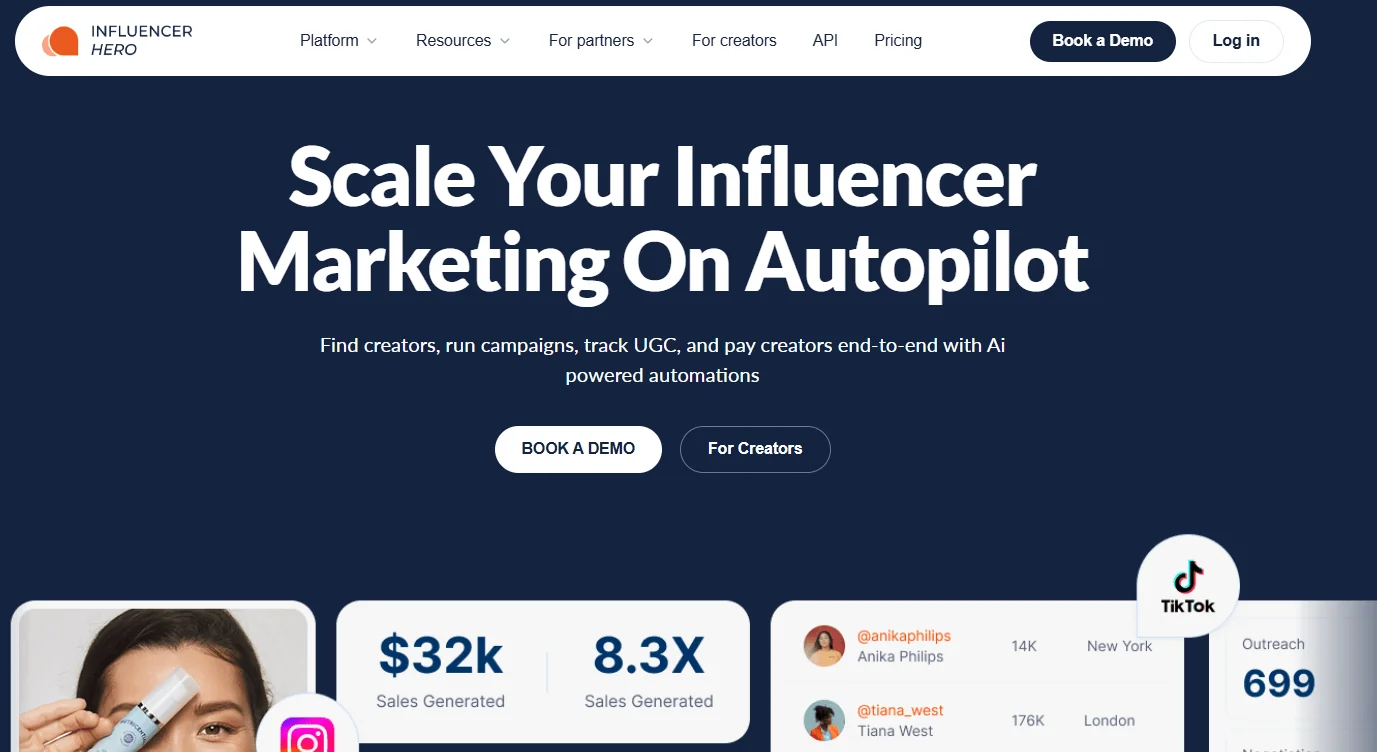
Influencer Hero is an all-in-one influencer marketing platform covering discovery, outreach, CRM, gifting, affiliate, UGC, creator storefronts, application pages and reporting from one dashboard.
Best For: Fast-scaling DTC and eCommerce brands on Shopify, WooCommerce or custom stores running high-volume influencer, affiliate and UGC campaigns from a single dashboard.
Platform Coverage: Instagram, TikTok, YouTube, Facebook, Pinterest, Snapchat, X (Twitter) and Twitch, with a 450M+ creator database.
Pricing & Commitment: Standard $649/month for up to 1,000 creators, Pro $1,049/month for up to 5,000, Business $2,490/month for up to 10,000, plus custom and agency plans. Billed monthly, no annual lock-in, no onboarding fee, payout fees of 0.1% to 0.5%.
Reviews: 5.0 / 5.0 (Capterra)
Best Features
- 1,000 Creators on the Entry Plan: Filter by niche, audience and geography without partnership caps at 50 or 100.
- Workflow-Driven Outreach: Automated reminders and follow-ups that lift reply rates.
- Centralised Messaging: All creator conversations in one shared inbox.
- Chrome Extension: Capture creator data while browsing, beyond the built-in database.
- Four Store Integrations: Shopify, WooCommerce, Magento and BigCommerce linking content to sales.
- Content Library: Campaign assets archived centrally with rights managed.
Pros and Cons
Influencer Impact vs Influencer Hero
The pricing models differ in a way that matters as you grow. Influencer Impact charges by partnership count — £200 for 50, £1,200 for 300 — so success raises the bill. Influencer Hero's entry plan covers 1,000 creators at $649 a month, roughly 20 times the allowance for a comparable outlay.
Coverage differs too: eight platforms against three, a 450M+ database, and four store integrations tying creator activity to orders rather than stopping at engagement.
Both do AI discovery and audience validation well, and Influencer Impact's modular reporting is genuinely flexible at its price. Book a Demo to compare at your creator volume.
2. Modash
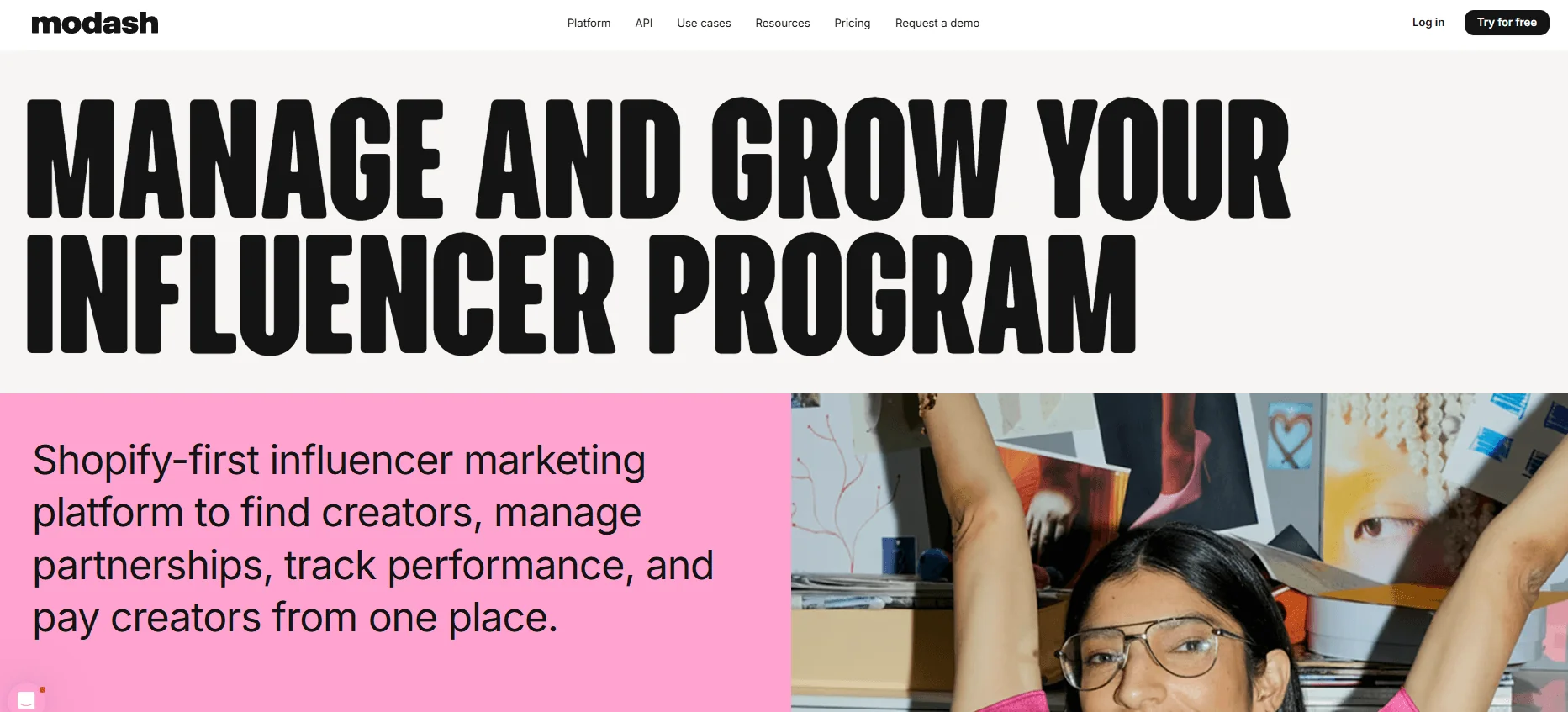
Modash is a discovery-first platform with 350M+ public creator profiles across Instagram, TikTok and YouTube, plus outreach, CRM and Shopify-powered affiliate automation. Our Modash alternatives guide covers the category.
Best For: Brands wanting deep creator discovery with authenticity screening on the same three platforms, without partnership-based pricing.
Platform Coverage: Instagram, TikTok and YouTube, matching Influencer Impact's coverage exactly.
Pricing & Commitment: Essentials $199/month billed annually, or $299 monthly, allowing contact with up to 100 creators a month. Performance $499/month annually, or $599 monthly, raising that to 250 creators and adding the Shopify integration. Enterprise custom. 14-day free trial with no credit card.
Reviews: 4.9 / 5.0 (Capterra)
Best Features
- 350M+ Public Profiles: A published database size on identical platform coverage.
- Fake Follower Analysis: Authenticity flags before outreach begins.
- Lookalike Recommendations: Scale from creators who already performed.
- Shopify Automation: Gifting, codes, affiliate links and payouts.
- Exportable Reports: Campaign data shared with clients or stakeholders.
Pros and Cons
Influencer Impact vs Modash
The cleanest comparison here: identical platform coverage, similar entry price. Modash at $199 a month billed annually publishes a 350M+ database, offers a 14-day trial and carries 4.9 on Capterra.
Modash caps monthly contacts rather than total partnerships, which suits high-volume outreach but less so a stable roster of long-term creators. Influencer Impact's modular reporting is also more flexible than Modash's exports.
3. Upfluence
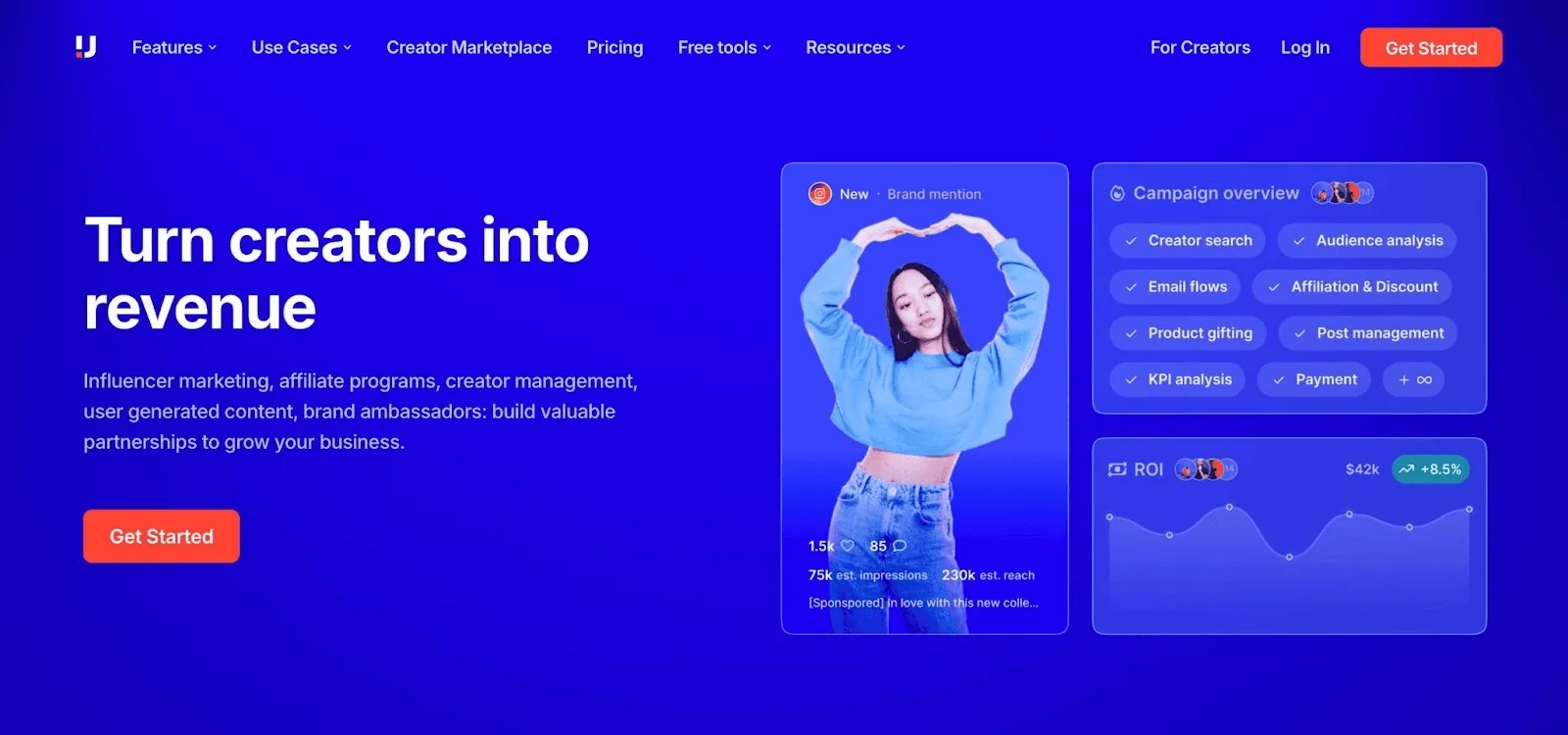
Upfluence is an all-in-one platform built around eCommerce revenue attribution, with native Shopify, WooCommerce and Amazon integrations and customer-to-creator matching.
Best For: eCommerce brands and agencies scaling campaigns with affiliate tracking and ROI measured against store revenue.
Platform Coverage: Instagram, TikTok, YouTube, X (Twitter), Twitch, Pinterest and WordPress blogs, with a 12M+ creator database.
Pricing & Commitment: Modular. The Search and Contact module starts at $478/month, with a full setup covering search, campaign management and Upfluence Pay at roughly $1,276/month, about $16,007/year. Annual contracts with quarterly options, a required onboarding fee, and no commissions on sales or influencer volume. Our Upfluence pricing review has the module breakdown.
Reviews: 4.3 / 5.0 (Capterra)
Best Features
- No Volume-Based Fees: Costs don't rise with the number of creators engaged.
- Affiliate Links and Codes: Creator activity tied directly to conversions.
- Customer-to-Creator Detection: Finds creators already buying from your store.
- Automated Contracts and Payouts: Global payments handled in-platform.
- Seven Platforms Plus Blogs: Broadest channel coverage in this comparison.
Pros and Cons
Influencer Impact vs Upfluence
Upfluence charges no commission and no per-creator fee, so a brand running 300 partnerships pays the same as one running 30. Against a model that charges £1,200 at 300 partnerships, that changes the maths at scale.
The catch is the starting point: roughly $16,000 a year on an annual contract. For a team running 50 creators, Influencer Impact remains far cheaper.
4. Captiv8
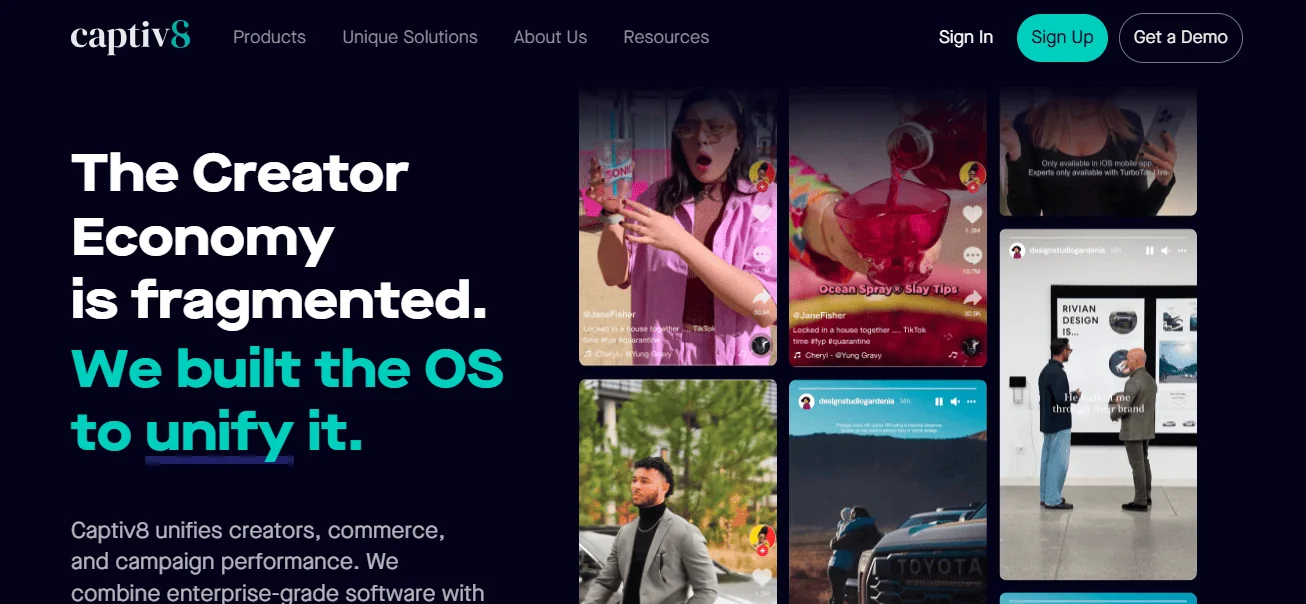
Captiv8 is an enterprise influencer and commerce platform with deep analytics and competitive intelligence. Publicis acquired it in May 2025 for a reported $150M and merged it with Influential, giving the combined platform 15M+ creators across 120 countries. Our Captiv8 alternatives guide compares the field.
Best For: Brands and agencies running large-scale campaigns needing competitive benchmarking, paid amplification and enterprise reporting.
Platform Coverage: Instagram, TikTok, Facebook, YouTube, X (Twitter) and Twitch.
Pricing & Commitment: Around $25,000 annually on an annual commitment only, plus a $3,000 one-time onboarding fee. Storefront and affiliate programs run as enterprise-managed add-ons at $20,000 to $30,000 per month.
Reviews: 4.6 / 5.0 (G2)
Best Features
- Paid Media Amplification: Whitelisting turns creator posts into ads.
- Competitor Benchmarking: Visibility into rival creator activity.
- AI Matchmaking: Machine learning shortlisting creators against goals.
- Fraud Detection: Fake engagement and abnormal growth flagged.
- White-Label Dashboards: Client-ready reporting for agencies.
Pros and Cons
Influencer Impact vs Captiv8
Captiv8 costs roughly ten times Influencer Impact's top tier before add-ons, and serves an entirely different buyer. It's included here as the ceiling of the category rather than a like-for-like swap.
What it adds is scale without caps, paid amplification and competitive intelligence. A team weighing £200 a month isn't the audience for a $25,000 annual contract.
5. CreatorIQ
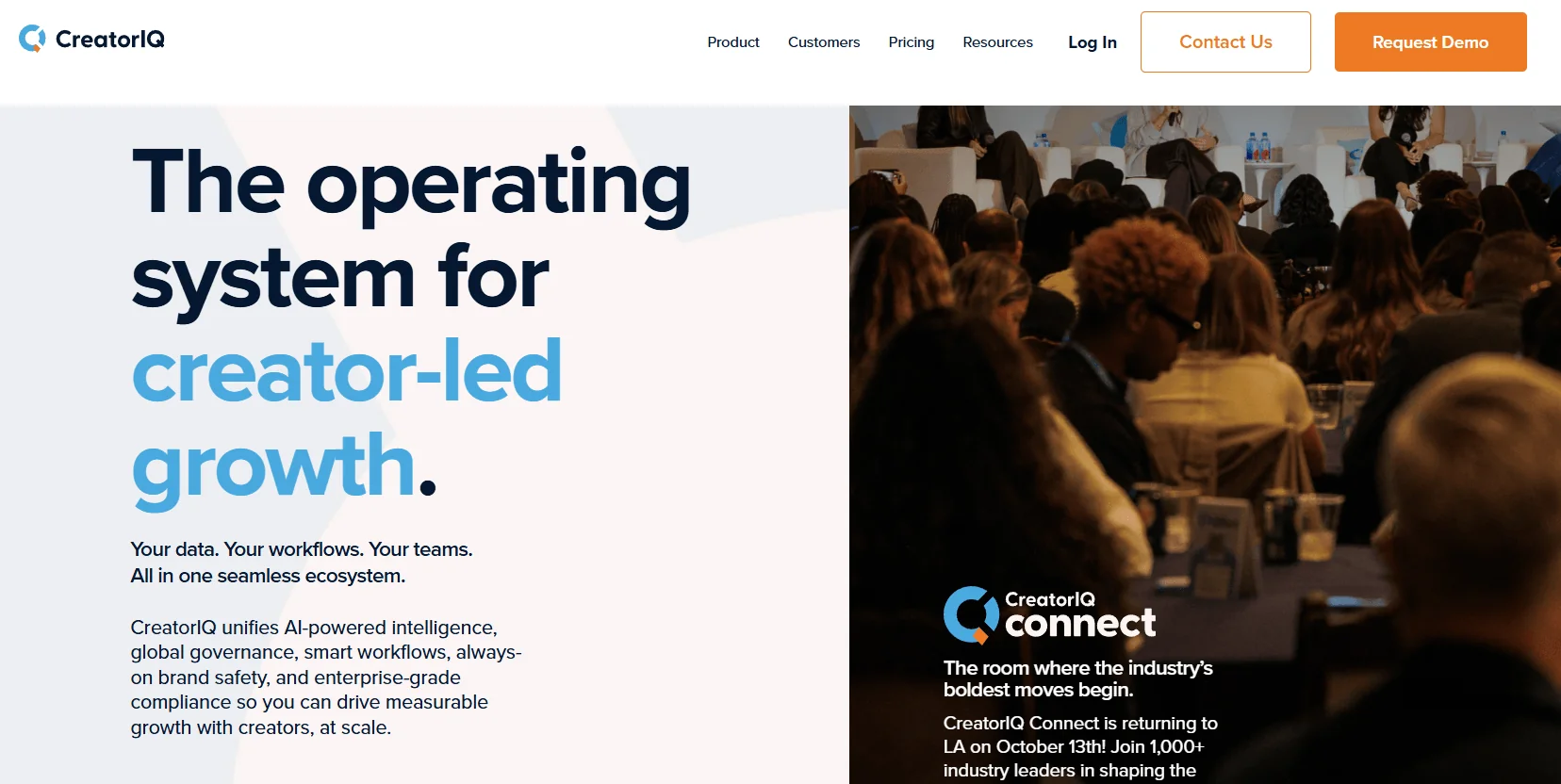
CreatorIQ is an enterprise platform covering the full influencer lifecycle with direct API data from Meta, TikTok and YouTube, plus briefs, approvals, content rights and integrated payments. Our CreatorIQ alternatives guide covers the category.
Best For: Large brands needing robust data controls, customisable workflows and in-depth analytics across international markets.
Platform Coverage: Instagram, TikTok, YouTube, Facebook, Pinterest, Twitch and X (Twitter).
Pricing & Commitment: No public rates. Third-party transaction data puts annual contracts from around $30,000, with a median near $39,250 and larger deployments past $59,000. Annual only, no free trial, roughly two months to implement. Creator payments are free on the first $100,000 a year, then carry a 2% fee.
Reviews: 4.6 / 5.0 (G2)
Best Features
- Open-Web Discovery: Any public creator, with no partnership ceiling.
- Brand Safety and Compliance: Automated checks on content risk.
- Creator CRM: Collaboration history and long-term relationship records.
- Custom API Access: Connect to internal systems for full data control.
- Global Workflow Automation: Repeatable processes across markets.
Pros and Cons
Influencer Impact vs CreatorIQ
CreatorIQ removes the partnership ceiling entirely with open-web discovery, but starts around $30,000 a year with a two-month implementation.
Both keep rates off their sites, though CreatorIQ has third-party pricing data and extensive reviews behind it, so a buyer can research it properly even without a rate card.
6. HypeAuditor
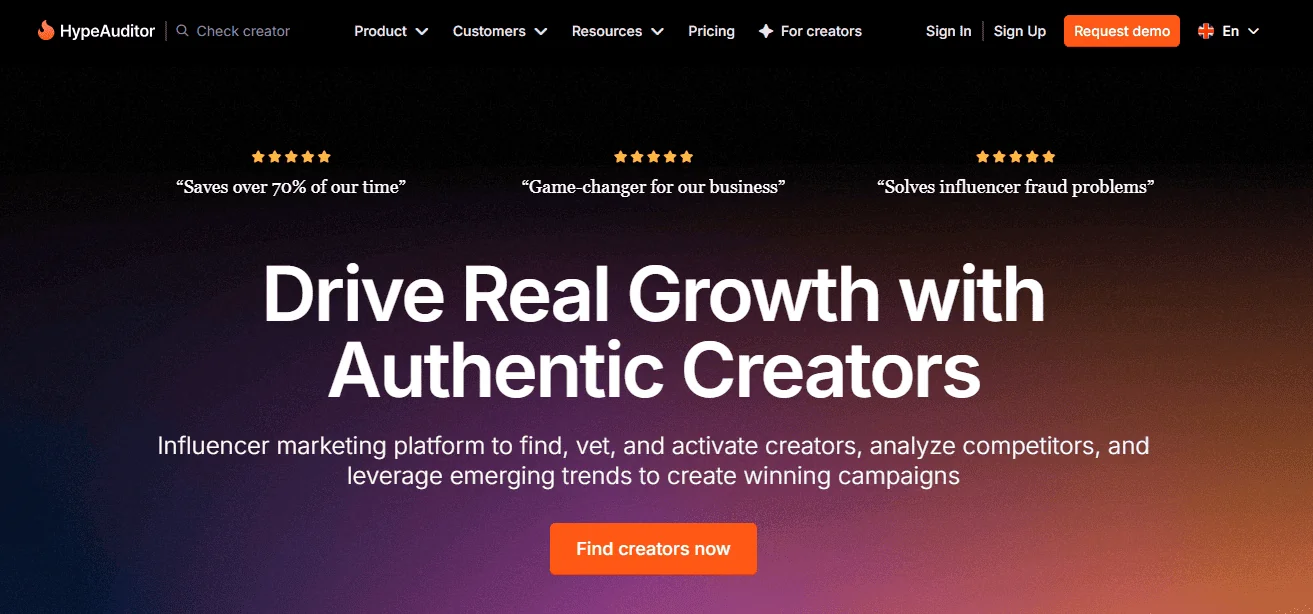
HypeAuditor is the category's authenticity benchmark, with fraud detection frequently cited around 95.5% accuracy across 227M+ creator profiles, plus discovery, outreach, contracts and eCommerce ROI tracking. Our HypeAuditor alternatives guide compares the field.
Best For: Teams prioritising data accuracy, fraud detection and competitor benchmarking across influencer platforms.
Platform Coverage: Instagram, TikTok, YouTube, Twitch, X (Twitter) and Snapchat.
Pricing & Commitment: A free tier covers media plans and campaign management, alongside 40+ free audit tools. Basic starts around $299/month billed annually, Pro around $499/month, with Enterprise quoted on report volume and usage.
Reviews: 4.8 / 5.0 (Capterra)
Best Features
- Free Tier and 40+ Free Tools: Evaluate creator data below Influencer Impact's £200 entry.
- AI Authenticity Ratings: Bot and fake engagement detection at scale.
- Behavioural Audience Insights: Follower interests and activity, not just demographics.
- Competitor Monitoring: Benchmark creator performance against rivals.
- Pre-Launch Planning Tools: Forecast outcomes before committing budget.
Pros and Cons
Influencer Impact vs HypeAuditor
Both lead with audience validation and fake follower detection. HypeAuditor runs that across 227M+ profiles and six networks, with a free tier plus 40+ audit tools sitting below Influencer Impact's £200 entry.
Influencer Impact's modular reporting and in-platform collaboration are more execution-friendly. HypeAuditor is stronger on research and weaker on running the campaign.
7. GRIN
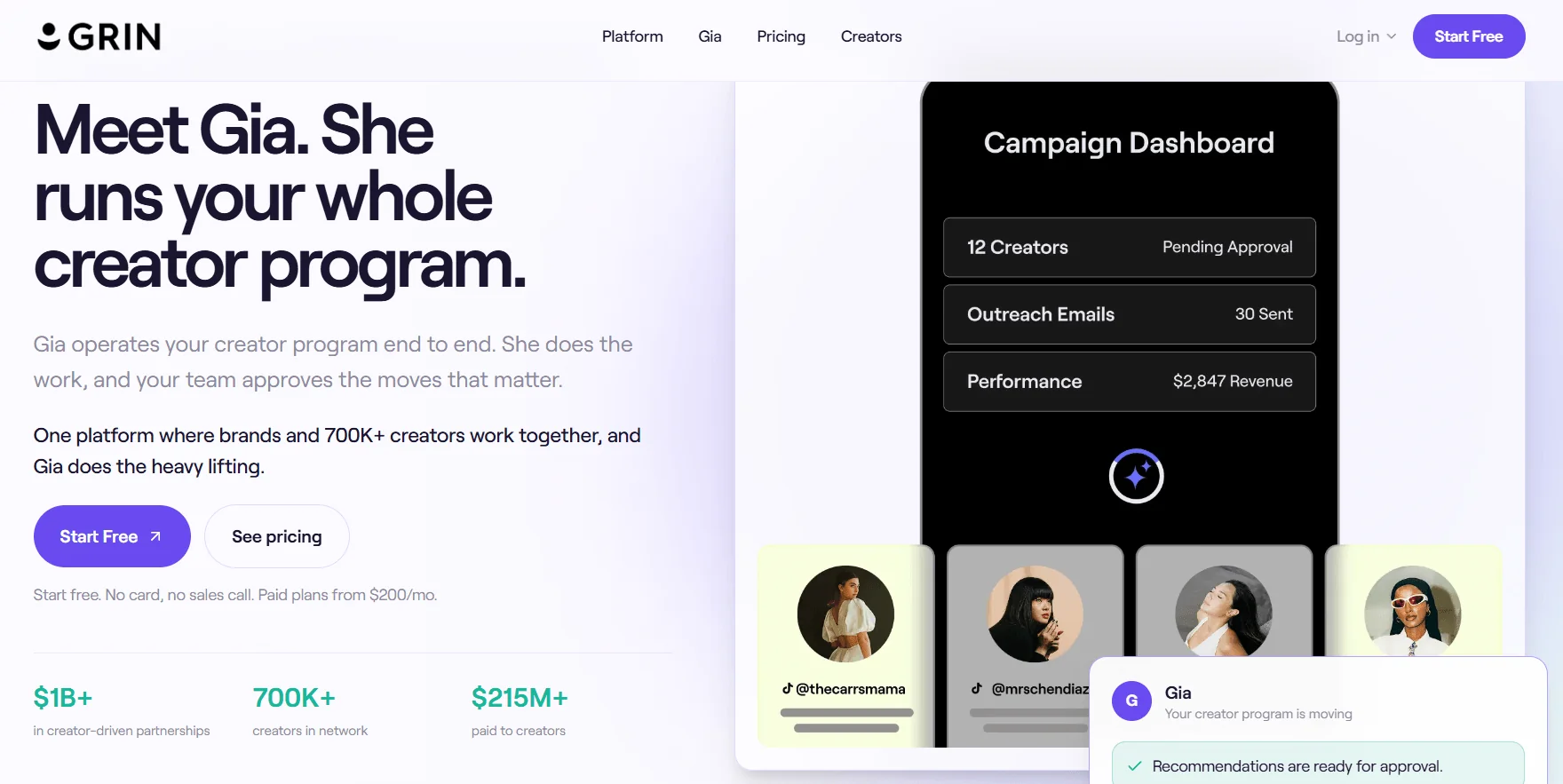
GRIN is a creator management platform built for DTC eCommerce, covering discovery, outreach, CRM, gifting, payments, UGC and ROI. Its 2026 pricing overhaul replaced the old $25,000-a-year contracts with five published self-serve tiers billed monthly, including a free plan. Our GRIN alternatives guide covers the field.
Best For: DTC brands centralising creator relationship management with integrated affiliate and gifting workflows tied to their store.
Platform Coverage: Instagram, TikTok, YouTube, X (Twitter), Twitch and Snapchat, with a 190M+ creator database.
Pricing & Commitment: Free at $0 with 200 monthly Gia credits, Starter $200/month with 2,000 credits, Growth $500/month for up to 100 active creators, Scale $1,000/month for up to 250, and Complete $1,500/month for up to 500. Month to month, no annual commitment and no required sales call.
Reviews: 4.5 / 5.0 (G2, 483 reviews) and 4.7 / 5.0 (Capterra)
Best Features
- Four Store Integrations: Shopify, WooCommerce, Magento and BigCommerce for tracked orders.
- Revenue-Linked CRM: Creator actions tied directly to sales, feeding campaign ROI.
- UGC Library With Rights: Content stored with reuse terms attached.
- Seeding Automation: Gifting at scale with logistics tracking.
- In-App PayPal Payments: Payouts handled without external tools.
Pros and Cons
Influencer Impact vs GRIN
GRIN's repricing means it starts free and reaches $500 a month for a full CRM covering 100 active creators — roughly Influencer Impact's £400 tier, with 190M+ creators and four store integrations attached.
Both cap active creator numbers, so model your roster size against the tiers rather than comparing headline prices.
8. gen.video
gen.video is a retail-focused creator platform connecting influencer content directly to product listings and sales data at major retailers.
Best For: Brands and agencies selling through Amazon, Walmart or Target wanting video-first creator programmes with shoppable content and retail sales attribution.
Platform Coverage: Instagram, TikTok and YouTube, with retailer integrations across Amazon and Walmart.
Pricing & Commitment: Custom enterprise pricing based on campaign scope, features and retailer integrations. No published rates.
Reviews: 4.7 / 5.0 (G2)
Best Features
- Retail-Linked Shoppable Content: Creator videos tied to retailer product pages with sales attribution.
- Multi-Channel Distribution: Content syndicated to retailer PDPs beyond social.
- Retail Attribution Analytics: Traffic, sales lift and ROI measured at retail level.
- Shoppable Landing Pages: Multi-retailer pages capturing shopper insight.
- Timestamped Video Feedback: Frame-level collaboration on content review.
Pros and Cons
Influencer Impact vs gen.video
gen.video answers the question Influencer Impact's reporting can't: whether creator content moved product at retail. For brands with Amazon or Walmart distribution, that's the whole case.
It's quote-only and US retail-focused, so brands without marketplace presence gain little. Influencer Impact's published tiers are easier to budget against.
9. Vyrill
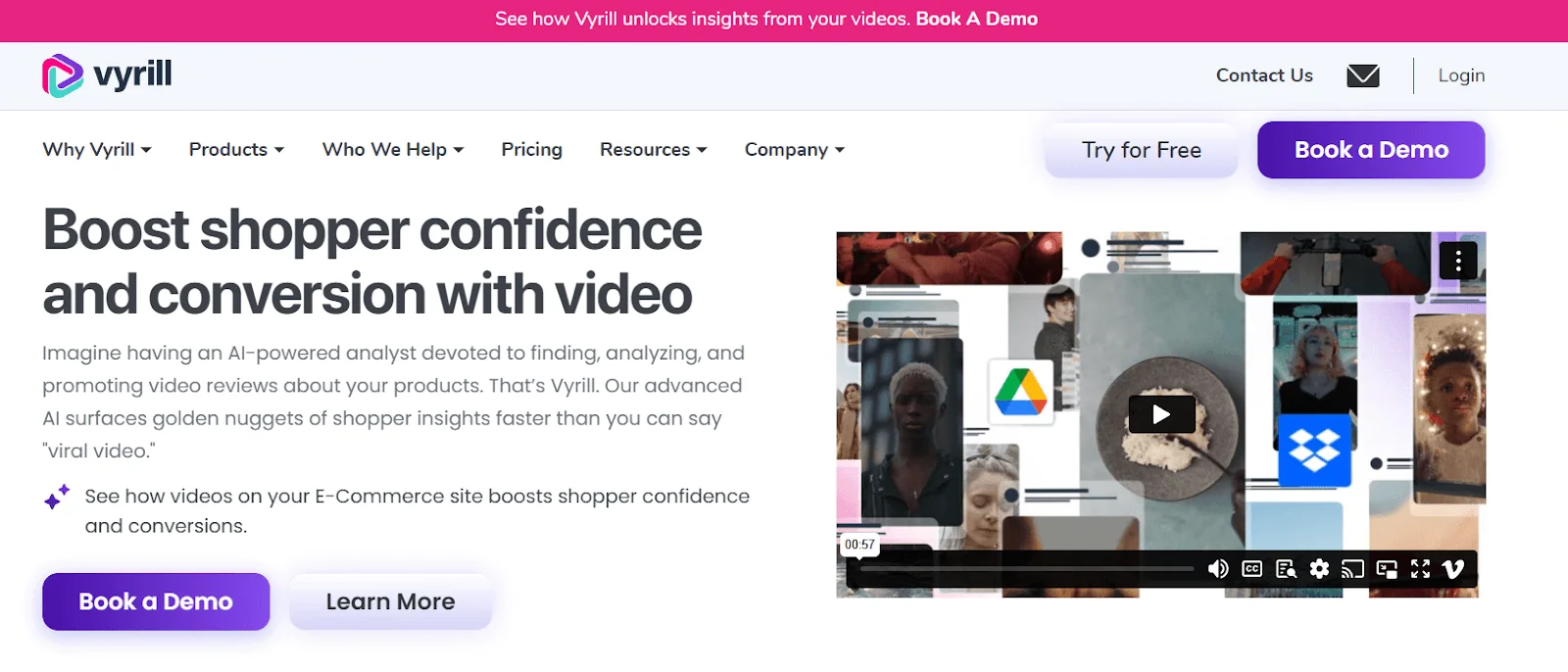
Vyrill is an AI-powered video commerce and UGC intelligence platform founded in San Francisco in 2015, built around discovering, analysing and merchandising user-generated video. Our Vyrill pricing review covers the tiers in detail.
Best For: D2C brands and retailers using video to build trust and lift conversion on product pages.
Platform Coverage: YouTube, Instagram, TikTok and other video-focused platforms.
Pricing & Commitment: Starter $249/month or $199 billed annually — up to 40 videos, 2 years storage, advanced filters and a commerce carousel. Growth $499/month or $399 annually — up to 100 videos, 4 years storage, competitor insights, sentiment analysis and the "Ask Vyrill" agent. Enterprise custom with unlimited videos and API access. A 20% annual discount applies, though the AI features begin at Growth.
Reviews: 4.0 / 5.0 (G2)
Best Features
- AI In-Video Search: Scans audio, text and visuals for sentiment, product mentions and brand safety.
- UGC Discovery and Licensing: 35+ filters including demographics, sentiment and competitor mentions.
- Top Fan Detection: Surfaces highly engaged fans and micro-creators for outreach.
- Video Commerce Carousels: Embed video on product pages to shorten the buyer journey.
- Published Pricing: Rates listed openly with an annual discount.
Pros and Cons
Influencer Impact vs Vyrill
Vyrill prices by video volume rather than partnerships, so brands working with a few creators producing lots of content pay differently than they would on a partnership model. Worth modelling against your actual output.
The two barely overlap functionally: Vyrill analyses and merchandises video that exists, Influencer Impact finds creators to make it. Our Vyrill alternatives guide covers the video-commerce field.
10. Loox

Loox is a Shopify app for collecting and displaying photo and video reviews from customers, with referrals and upsells attached. It's included here as a complement rather than a substitute — it doesn't discover creators, run outreach or manage campaigns.
Best For: Shopify merchants wanting customer-generated visual content and social proof on product pages, alongside whatever influencer platform they use.
Platform Coverage: Shopify stores, with integrations for Google Shopping, Meta Shops, Klaviyo, Omnisend and Shopify Plus.
Pricing & Commitment: Beginner $12.99/month with basic features and 100 review requests, Scale $39.99/month adding video reviews, referrals and customisation, Unlimited $299.99/month with unlimited requests, advanced upsells and priority support. Free trials available.
Reviews: 4.9 / 5.0 (G2)
Best Features
- Photo and Video Reviews: Visual social proof captured automatically post-purchase.
- Automated Review Requests: Triggered emails maximising response without manual effort.
- Referral Programme: Customers incentivised to share, driving acquisition.
- Upsells via Reviews: Related products featured in review sections.
- Customisable Widgets: Carousels, pop-ups, galleries and badges matching store design.
Pros and Cons
Influencer Impact vs Loox
These aren't substitutes, and it's worth saying plainly. Influencer Impact finds and manages creators; Loox collects photos and videos from customers who already bought and displays them on your product pages.
If your goal is on-site social proof cheaply, Loox does it well from $12.99 a month. If you need creator campaigns across TikTok, Instagram and YouTube, you still need a platform — Loox sits alongside one.
Final Thoughts
Influencer Impact does the fundamentals well for small and mid-sized teams: AI-assisted discovery, city-level audience data, fake follower detection, group management and modular reporting you can build for stakeholders in real time. At £200 a month for 50 partnerships, it's a reasonable entry into structured influencer marketing.
The constraint is the pricing model. Charging by partnership count means a programme that works costs more — £400 at 100 creators, £1,200 at 300 — while most alternatives let creator numbers grow without the bill following. Add three-platform coverage, no eCommerce attribution, no independent reviews and no clearly advertised support line, and scaling teams start comparing.
For brands whose roster has outgrown a partnership cap, Influencer Hero is the strongest all-round alternative in 2026. Its entry plan covers 1,000 creators at $649 a month, it indexes 450M+ across eight platforms, connects to four store platforms for revenue attribution, and includes a dedicated account manager and 24/7 support so the escalation path is never in question.
Want to see what your programme costs without a partnership cap? Book a Demo with the Influencer Hero team.
Summary
This is some text inside of a div block.
This is some text inside of a div block.
Pricing/Month
Shopify Reviews
This is some text inside of a div block.
This is some text inside of a div block.
This is some text inside of a div block.
This is some text inside of a div block.
This is some text inside of a div block.
This is some text inside of a div block.
This is some text inside of a div block.
This is some text inside of a div block.
This is some text inside of a div block.
This is some text inside of a div block.
This is some text inside of a div block.
This is some text inside of a div block.
This is some text inside of a div block.
This is some text inside of a div block.
This is some text inside of a div block.
This is some text inside of a div block.
This is some text inside of a div block.
This is some text inside of a div block.
This is some text inside of a div block.
This is some text inside of a div block.
This is some text inside of a div block.
Read More

FAQs
What are the best alternatives to Influencer Impact for influencer marketing?

Top alternatives include Influencer Hero, Modash, Upfluence, Captiv8, CreatorIQ, HypeAuditor, GRIN, gen.video, Vyrill, and Loox. Among these, Influencer Hero provides the most complete all-in-one solution with influencer discovery, CRM, UGC management, affiliate tracking, and detailed performance analytics.
Why consider switching from Influencer Impact to another platform?
Influencer Impact is strong for AI-powered discovery, audience insights, and modular reporting, but brands seeking larger influencer pools, advanced automation, or specialized video commerce tools may prefer other options. Platforms like Upfluence and Modash provide broader creator networks and detailed analytics, while CreatorIQ and GRIN cater to enterprise-level management.
Which Influencer Impact competitor is best for eCommerce brands?
For DTC and eCommerce campaigns, Influencer Hero is a top choice with Shopify and WooCommerce integrations, streamlined gifting, affiliate tracking, and UGC management. GRIN also provides strong eCommerce workflows with revenue-linked CRM, and gen.video or Vyrill may appeal to brands emphasizing retail video content.
How do Influencer Impact alternatives compare in pricing?
Influencer Impact offers tiered plans from £200/month up to £1,200/month depending on the number of influencer partnerships. In contrast, Influencer Hero starts at $649/month, Upfluence and Captiv8 are premium solutions for larger teams, GRIN begins around $25,000/year, and platforms like HypeAuditor and CreatorIQ target enterprise budgets starting at $10,000/year and $35,000/year respectively.
Which Influencer Impact alternative provides the most complete feature set?
For an all-in-one approach, Influencer Hero combines AI discovery, campaign management, workflow automation, UGC collection, affiliate tracking, and analytics within a single platform. While other platforms excel in specialized areas—like Modash for influencer vetting, HypeAuditor for fraud detection, or Loox for product review UGC—Influencer Hero delivers the broadest toolkit for small to mid-sized DTC and eCommerce brands.




Most Popular Blogs


Drive ROI With Influencer Marketing
Join 1,200+ brands and 150+ agencies scaling creator programs with Influencer Hero.