
Best 10 Influencer Discovery Tools

May 12, 2026
|
Published

September 23, 2026
|
Updated

10 minutes
|
Reading

Influencer Performance Marketing Course | VOUCHER: IMC100

Lucia Zabala
I Author

Drive ROI With Influencers

Global Influencer Database
ALL-IN-ONE platform
CRM, Affiliate, UGC & More
Top 10 Influencer Discovery Tools
In 2026, influencer marketing has shifted from "vanity reach" to a high-stakes performance game. Brands are no longer just looking for big follower counts; they need strategic partners who drive measurable ROI, niche authority, and authentic engagement.
With over 75% of creators now categorized as micro or nano influencers, the challenge isn't finding someone with a platform, it’s finding the exact match whose audience demographics and values align with your bottom line.
Influencer discovery tools are the solution to this search fatigue. By leveraging AI-powered filters and real-time fraud detection, these platforms cut through the noise to identify high-converting creators while automating the tedious vetting process. In this guide, we break down the top 10 influencer discovery tools designed to help you scale your creator partnerships.
What To Look For In Influencer Discovery Tools
It’s easy to be swayed by a sleek interface, but for a strategy to succeed in 2026, these are the "must-haves" that separate professional-grade tools from basic directories:
- Deep Audience Analytics & Fraud Detection: You need a tool that provides "truth-telling" data, such as audience location, age brackets, and interest clusters. Most importantly, it must include AI-driven fraud detection to sniff out bot followers and inflated engagement rates before you waste a cent of your budget.
- Precision Filtering & AI Matchmaking: The best tools offer granular filters like "lookalike" searches, where you can find influencers similar to your top performers, and AI-powered sentiment analysis. This ensures the creator’s tone and past content truly align with your brand’s personality.
- Cross-Platform Versatility: While Instagram and TikTok are the current giants, your tool should also offer visibility into YouTube, Pinterest, or even LinkedIn and Threads. Managing your entire multi-channel roster from a single dashboard prevents data silos and keeps your strategy cohesive.
- Integrated Campaign Management: Look for tools that bridge the gap between "finding" and "managing." This includes features like automated outreach sequences, relationship management (CRM) systems, and real-time performance tracking.
Criteria of Selection: How We Evaluated the Best Discovery Tools
In 2026, a tool must do more than just list names; it must provide a competitive edge in data accuracy and speed.
We evaluated each platform based on the following five pillars:
1. Discovery Precision & Audience Vetting
The foundation of any discovery tool is its database. We prioritized platforms that offer granular filtering, allowing you to search by specific niche, audience interests, and psychographics.
Most importantly, we looked for robust fake follower detection and "Audience Quality Scores" to ensure you are investing in creators with genuine influence rather than inflated numbers.
2. AI-Powered Matchmaking & Predictive Analytics
With the help of machine learning, modern tools should suggest influencers based on your brand’s past performance or "lookalike" profiles.
We assessed how well these tools predict a creator's potential performance before you even reach out, using historical data to estimate reach, clicks, and conversion rates.
3. Multi-Platform Versatility
Consumers aren't loyal to just one app, and your discovery tool shouldn't be either. We gave higher marks to platforms that provide a unified view across TikTok, Instagram, YouTube, and emerging channels like Threads.
The ability to vet a creator’s cross-platform footprint is essential for building a holistic brand presence.
4. Direct ROI & E-commerce Attribution
In a performance-driven market, a discovery tool is more valuable if it talks to your store.
We evaluated how seamlessly these tools integrate with platforms like Shopify, Amazon, and WooCommerce. We looked for features that allow brands to track "bottom-of-the-funnel" metrics—like direct sales and coupon code redemptions—alongside traditional engagement.
5. Seamless Workflow & CRM Integration
Discovery shouldn't happen in a vacuum. We looked for tools that transition smoothly from "finding" to "managing." This includes built-in CRM features to track communication history, contract status, and content approvals.
If a tool saves you five hours of manual data entry a week, it earned a spot on our list.
Top 10 Influencer Discovery Tools
1. Influencer Hero
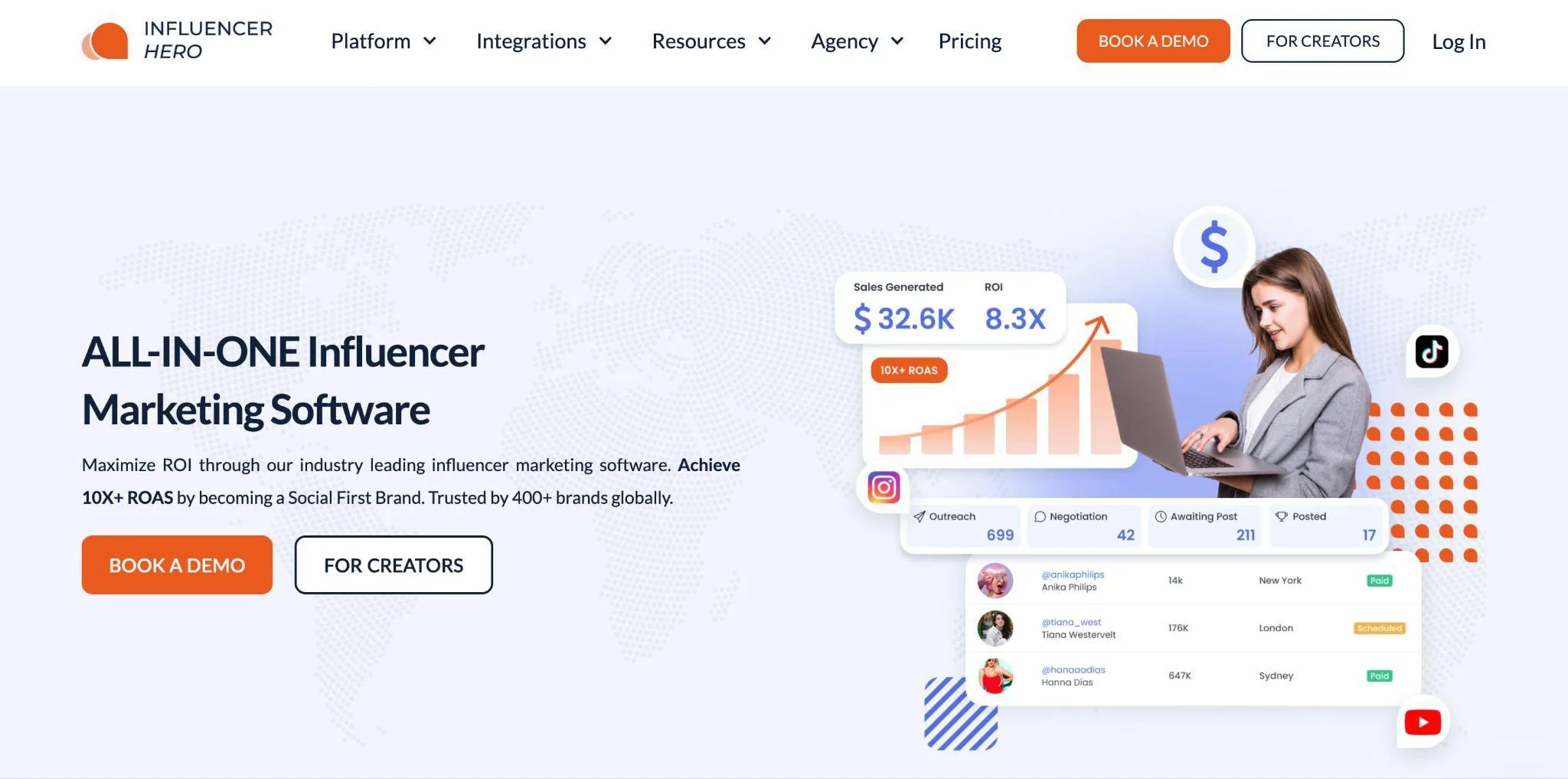
Influencer Hero is a comprehensive influencer marketing platform designed to streamline the entire campaign lifecycle through high-speed automation and AI-driven workflows.
It specializes in CRM efficiency, making it an ideal choice for brands looking to scale performance marketing without increasing manual overhead.
Best for: Brands seeking an all-in-one, ROI-driven solution with powerful automation and deep e-commerce integration.
Pricing: $649 - $2,490+/mo.
Key Features:
- Massive 450M+ Creator Database: Access one of the industry's largest databases, featuring 450m+ influencers. This expansive reach ensures you can find the perfect niche creator regardless of your industry or geography.
- Deep Performance & Audience Reports: The platform’s finder tool provides exhaustive influencer reports that go beyond surface-level metrics. You can analyze audience demographics (age, location, gender), engagement authenticity, and historical performance to ensure every partner is a verified fit.
- AI-Powered Discovery & Lookalikes: Beyond standard filters, it utilizes AI-driven workflows to identify creators. This includes lookalike searches to find new influencers that mirror the audience and style of your top-performing partners.
- Search with AI: Employs advanced AI matchmaking that predicts a creator's potential performance, estimating reach, clicks, and conversion rates before outreach begins.
- Integration Ecosystem (30+ New Connections): Unlike tools limited to Shopify, Influencer Hero has expanded to over 30+ integrations across major categories like e-commerce, affiliate marketing, email marketing, and more.
Pros & Cons
Our Insights: Influencer Hero stands out as the most balanced tool for brands that prioritize measurable results over vanity metrics. Its ability to link influencer content directly to Shopify or WooCommerce sales makes it an essential asset for performance-driven teams. While it may lack some enterprise-level social listening, its automation capabilities offer an unmatched efficiency for scaling campaigns.
2. Grin
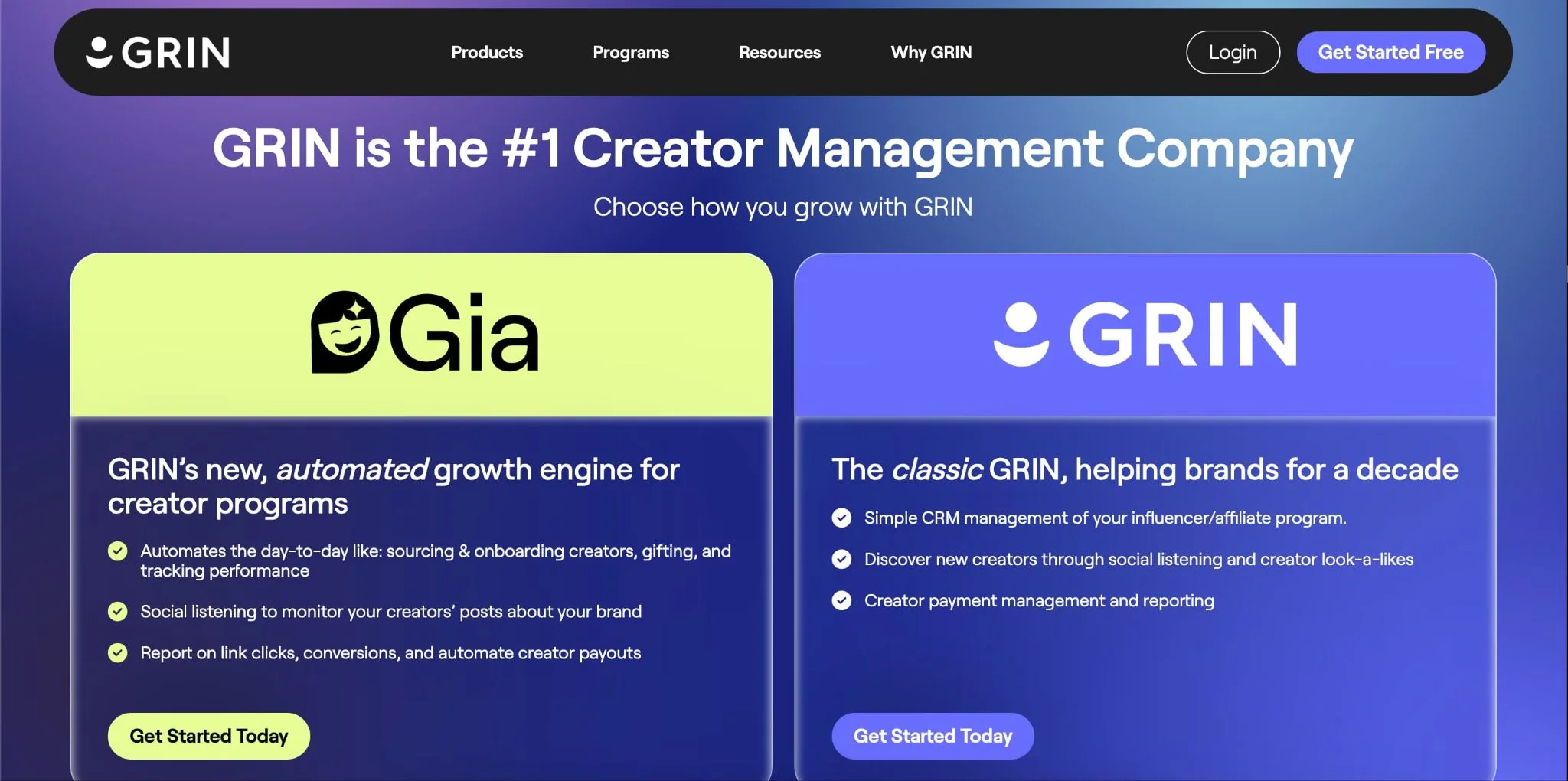
Grin is designed specifically for e-commerce brands, with a heavy focus on automating the physical logistics of influencer marketing. It excels at integrating with Shopify to handle product fulfillment, tracking, and media rights management at scale.
Best for: E-commerce brands focused on physical product gifting and automated Shopify workflows.
Pricing: Approximately $2,085 per month ($25,000 per year) with an annual commitment.
Key Features:
- Automated Physical Logistics: Specifically designed to automate product fulfillment, shipping, and tracking for influencers at scale.
- Media Rights Management: Includes built-in tools to easily manage and repurpose creator-generated content for brand advertisements.
- Social Listening & Lookalikes: Enables the discovery of new creators through social monitoring and creator lookalike modeling.
- Integrated Payment Workflows: Features integrated PayPal payouts to manage creator compensation directly within the platform.
Pros & Cons
Our Insights: Grin is the powerhouse for Shopify stores. If your primary bottleneck is shipping products to hundreds of influencers and managing the rights to their videos, Grin is the specialized tool that will save your team dozens of hours every month.
3. CreatorIQ
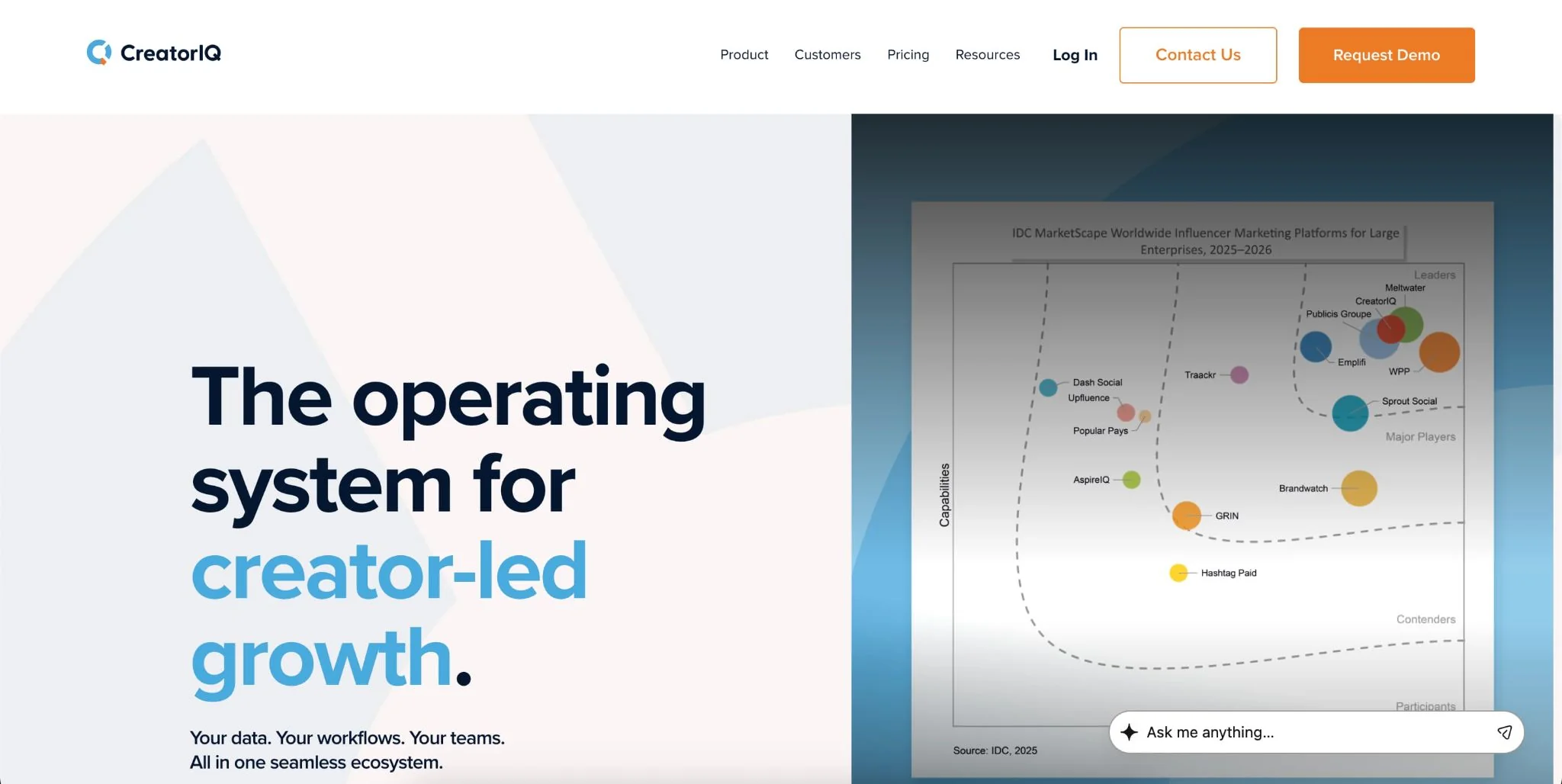
CreatorIQ is an enterprise-grade platform designed for massive, global ecosystems that require sophisticated governance and real-time reporting. It utilizes an API-based infrastructure to provide a unified dashboard for multi-departmental teams to manage complex creator relationships and compliance.
Best for: Large global organizations needing high-level governance, payment compliance, and enterprise-scale reporting.
Pricing: Undisclosed, typically ranging from $35,000 to $200,000+ per year.
Key Features:
- Enterprise Governance: An API-based infrastructure providing a unified dashboard for multi-departmental teams to manage complex relationships.
- Automated Payment Compliance: Streamlines administrative tasks with automated compliance and one-sheet approval workflows.
- Real-Time API Reporting: Tracks campaign performance across various metrics with advanced, real-time reporting capabilities.
- Global Discovery Engine: Robust discovery tools designed to find and vet creators within a secure, enterprise-grade global environment.
Pros & Cons:
Our Insights: CreatorIQ is the "command center" for global brands. While it may be too robust for smaller teams, its ability to manage multi-departmental creator ecosystems with strict compliance makes it indispensable for the Fortune 500.
4. HypeAuditor
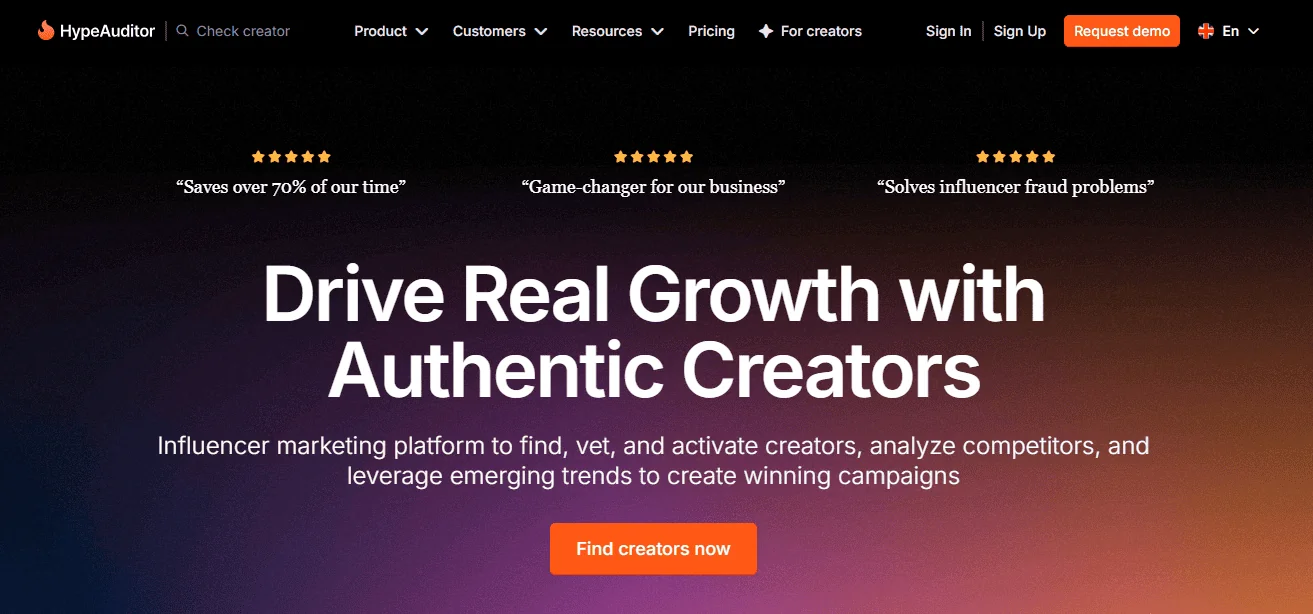
HypeAuditor is widely considered the industry standard for audience quality vetting and fraud detection. It provides high-integrity reports that allow brands to audit an influencer's follower growth, engagement authenticity, and competitor performance.
HypeAuditor is widely recognized as the industry standard for audience quality vetting and fraud detection. It provides deep, analytical "audits" of creator profiles to ensure that their followers and engagement rates are authentic.
Best for: Brands that are highly concerned about audience integrity and want to avoid influencer fraud.
Pricing: Undisclosed, around $10,000-$60,000/y.
Key Features:
- Industry-Leading Fraud Detection: Features advanced authenticity scoring that flags bot followers and fake engagement to protect budgets.
- Competitor Tracking: Provides unique tools to monitor which influencers your rivals are partnering with.
- AI-Driven Category Search: Allows for highly specific discovery within narrow market segments using AI.
- Detailed Audience Audits: Breaks down granular audience demographics and sentiment to ensure authentic engagement.
Pros & Cons:
Our Insights: HypeAuditor is your "insurance policy". While its CRM features aren't as automated as Influencer Hero, the sheer depth of its vetting data ensures your budget is spent on real creators.
5. Syncly Creator
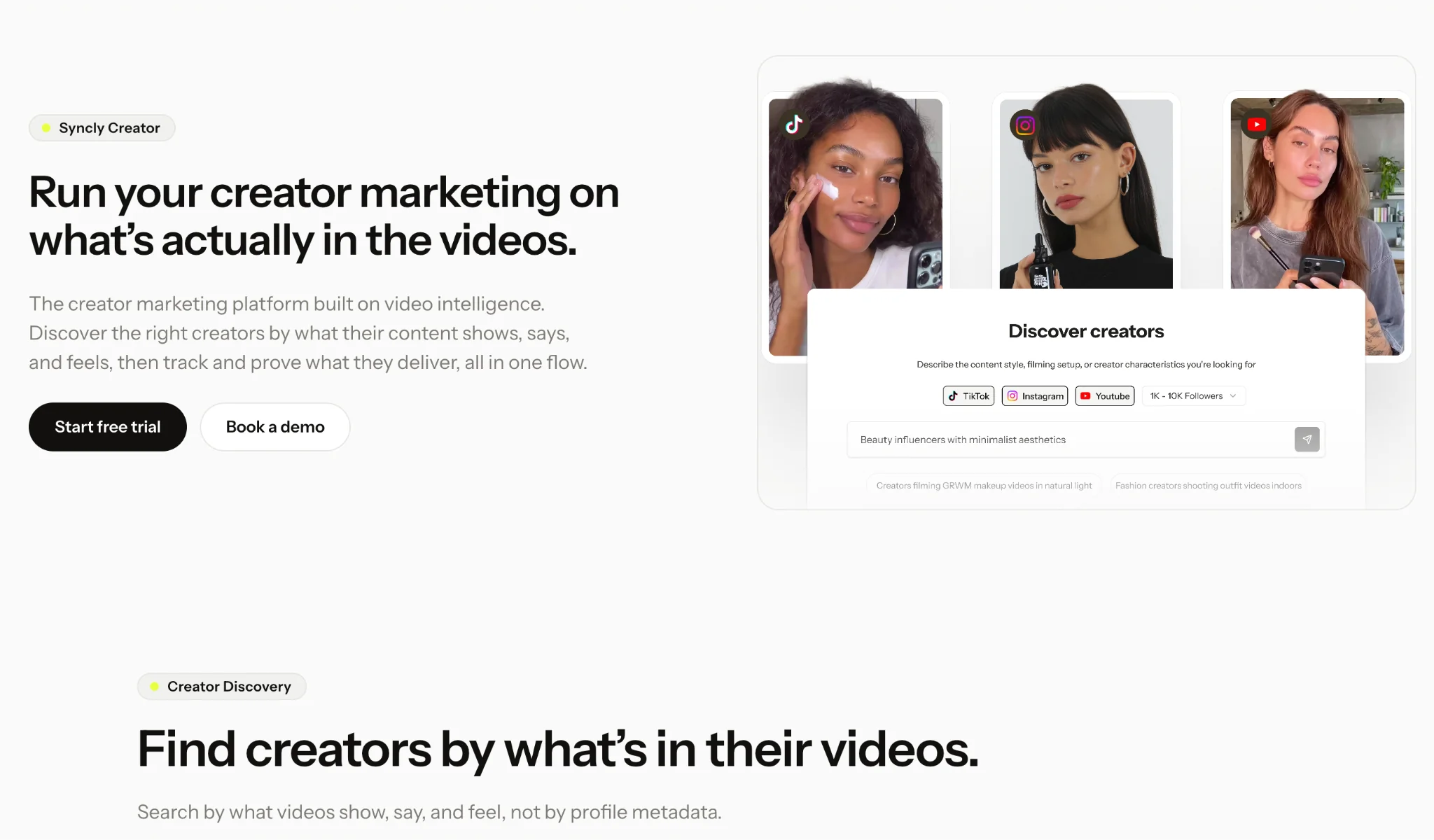
Syncly Creator is a creator discovery and campaign tracking platform built on video intelligence rather than profile metadata. Instead of searching by follower count or bio keywords, it analyzes what’s actually inside a creator’s videos — visuals, speech, captions, and mood — to surface creators who genuinely match a brand’s aesthetic and message.
Best for: Brands and agencies running video-first campaigns who want to match creators by content style and substance, not just audience size.
Pricing starts at: Free trial available; custom pricing based on plan.
Key Features:
- AI Visual Search: Match creators on visual signals like lighting, composition, and video mood — going beyond what profile data alone can show.
- Content Search Across 7 Dimensions: Describe your ideal creator in plain language and let the AI search across visual mood, creator look and persona, content format, on-screen activity, voice and tone, brand and product context, and viral pattern — instead of rigid keyword or hashtag search.
- Organic Creator Discovery: Surface creators already talking about your brand across social and video platforms, even when you’re not tagged.
- Granular Filtering: Narrow a shortlist by age, country, follower count, and engagement rate once the content match is right.
- Built-In Campaign Tracking: Monitor creator deliverables, review posts, and pull performance metrics (views, engagements, average ER) in the same flow — no separate tool to go from discovery to reporting. (TikTok today; Reels and Shorts on the roadmap.)
6. Later
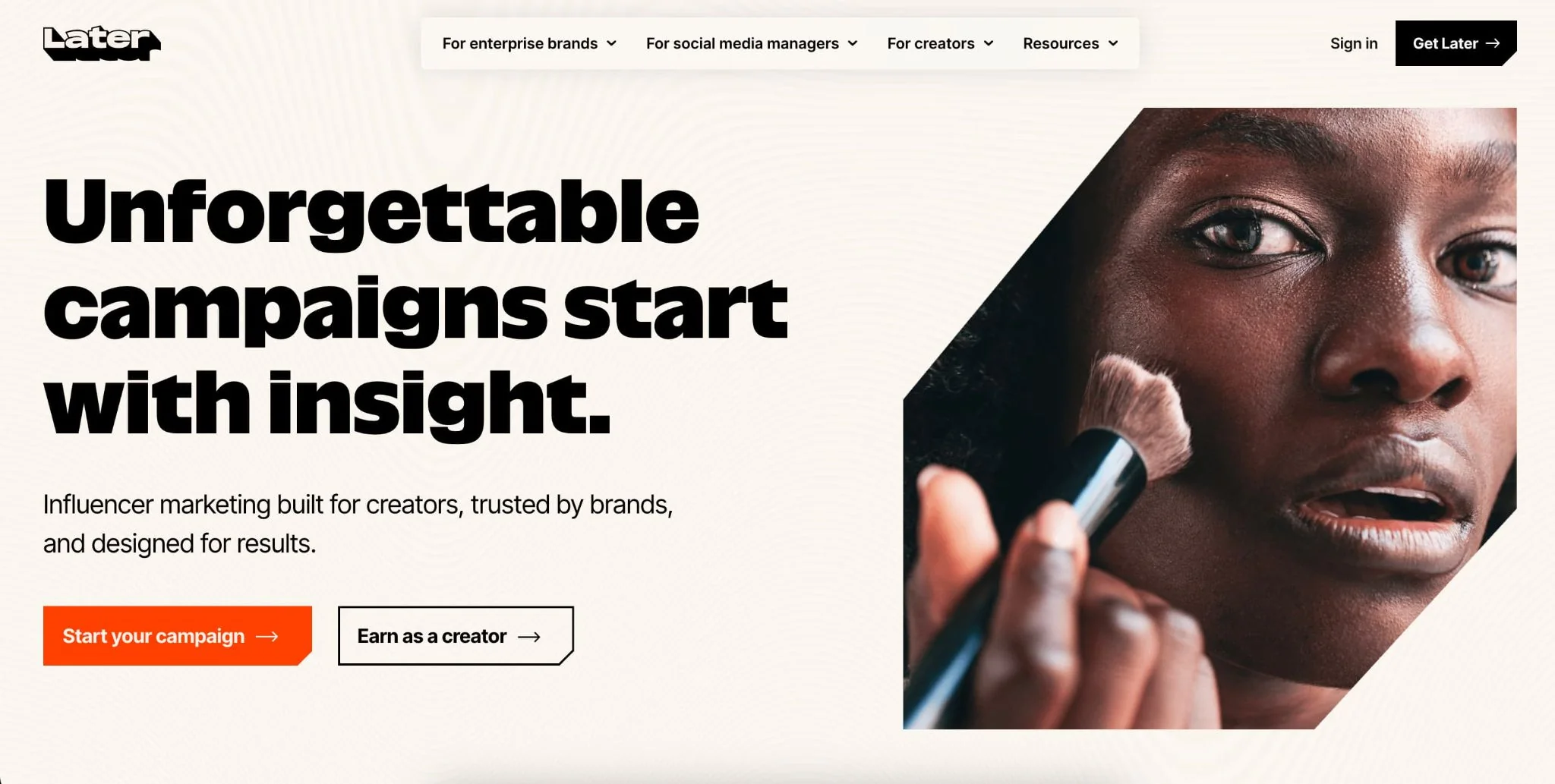
Later has expanded its popular social media scheduling ecosystem to include powerful influencer discovery and campaign management tools. By unifying content planning with influencer marketing, it allows brands to manage their entire social presence from a single, familiar interface.
Best for: Social media managers who want to unify their posting schedule and influencer campaigns in one platform.
Pricing: Ranges from $28,500 to $60,000 per year, often with a $5,000 onboarding fee.
Key Features:
- Social Sync Technology: Unifies organic social media scheduling and posting with influencer content tracking.
- Aesthetic Matching Filters: Features search tools designed to identify creators whose visual style matches your brand's scheduled content.
- Unified Analytics Dashboard: Performance tracking for influencer campaigns sits directly alongside organic social media analytics.
- Integrated Social Suite: Offers a broader social suite than most standalone tools, simplifying the workflow for teams already using Later.
Pros & Cons:
Our Insights: Later is perfect for the "all-in-one" marketer. If your team is already living in Later for organic posts, adding their influencer module creates a streamlined workflow that connects your content calendar to your creator partnerships.
7. Modash
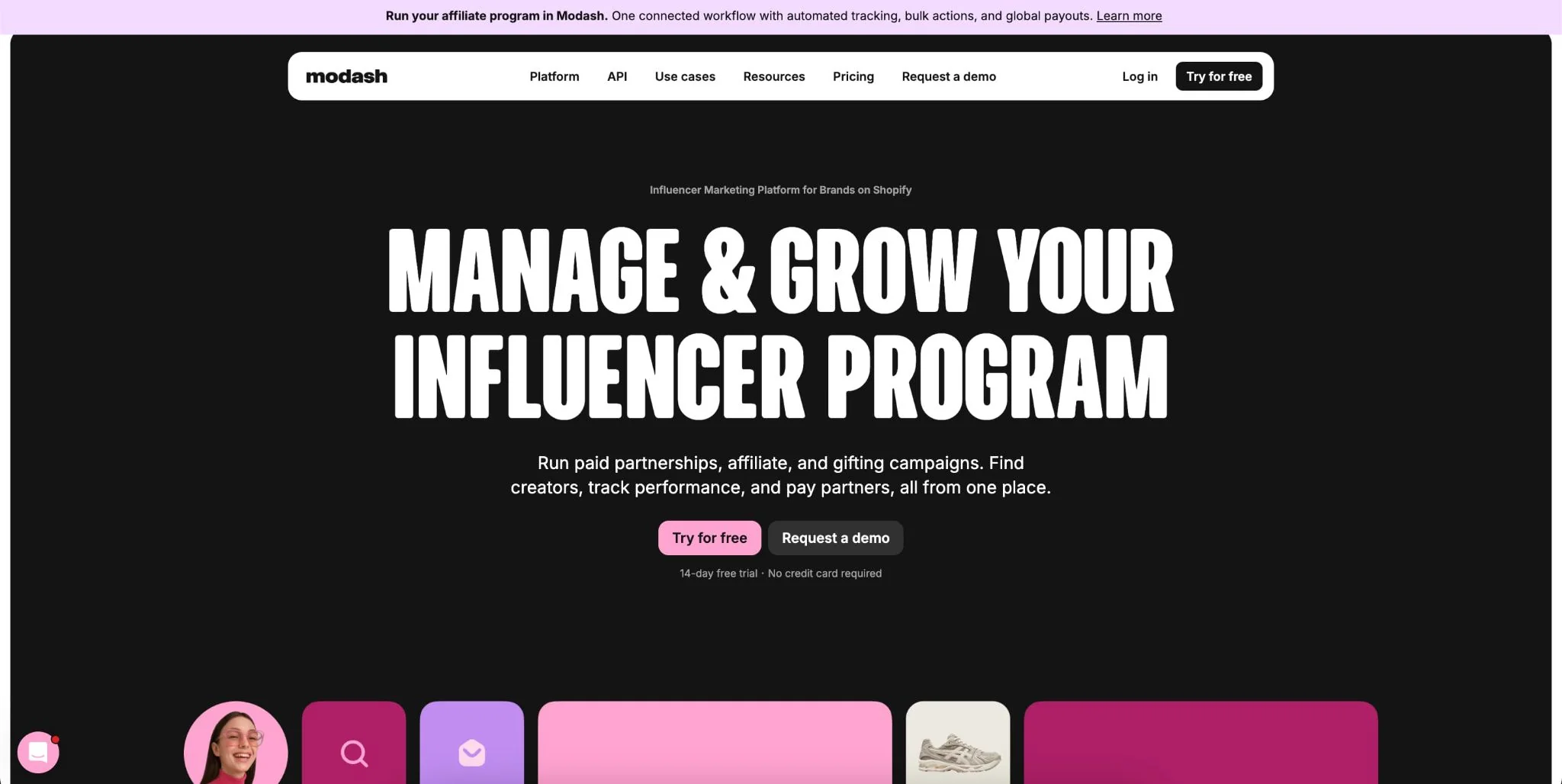
Modash is a massive discovery engine that provides access to over 350 million creator profiles without requiring them to opt-in to the platform. It is built for raw data scale, allowing brands to find "untapped" creators in any niche or location globally.
Best for: Brands that prioritize a massive, unconstrained database for deep creator discovery.
Pricing: $190-$499+/mo or $14,700/y.
Key Features:
- Massive 350M+ Database: Provides access to one of the largest profile databases in the industry without requiring creator "opt-ins".
- AI Visual Search: A standout feature that finds influencers based specifically on the aesthetic of their content.
- Advanced Audience Filtering: Granular filters ensure creator demographics perfectly match target markets.
- Affiliate Automation: Includes tools to help manage and automate affiliate relationships once creators are discovered.
Pros & Cons:
Our Insights: If your primary goal is to find the "needle in the haystack," Modash is unbeatable for raw discovery. However, you will likely need a separate tool to handle the actual outreach and relationship management.
8. Traackr
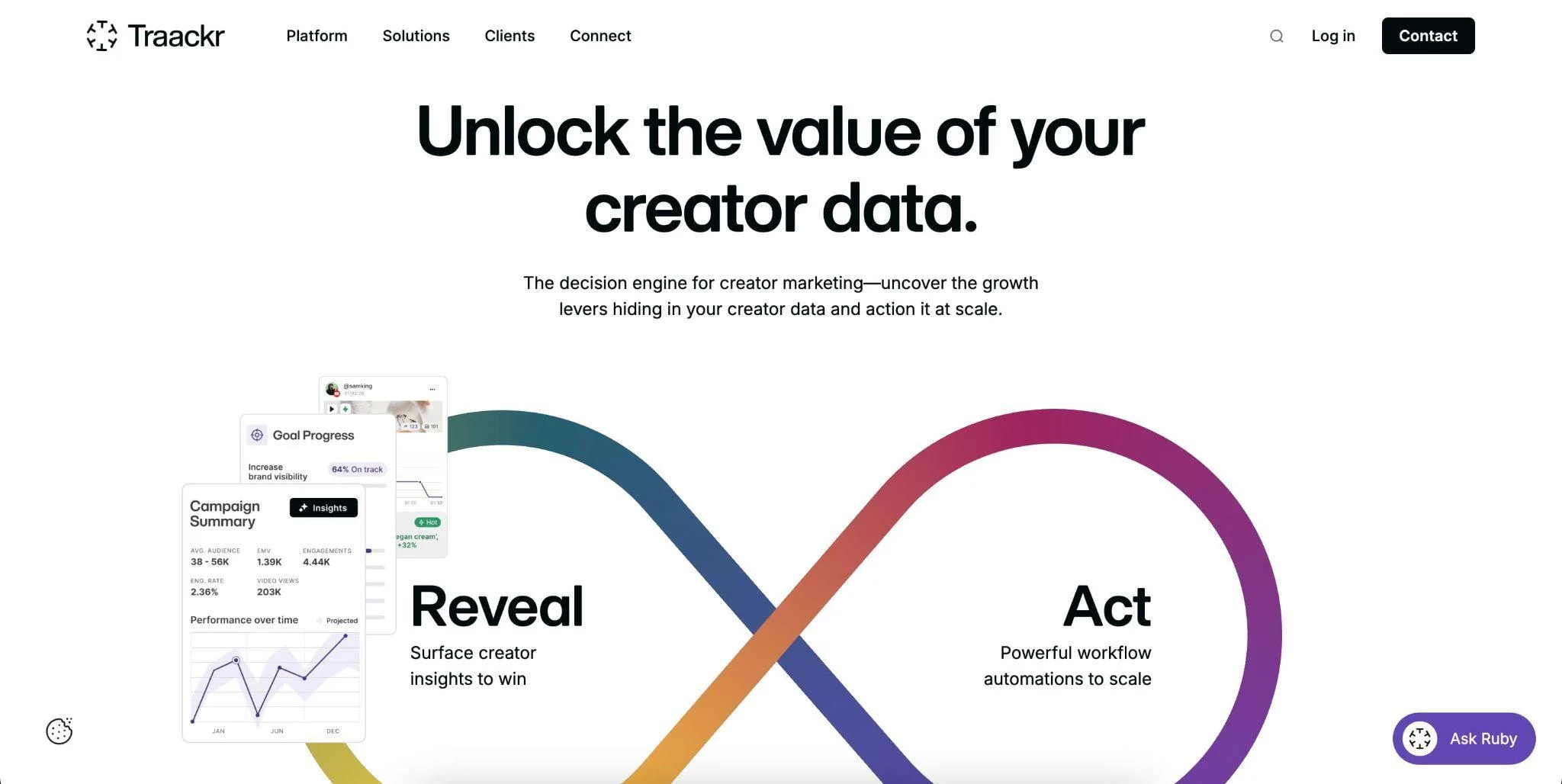
Traackr is a relationship-focused platform that prioritizes long-term brand affinity and competitive benchmarking. Its unique Brand Vitality Score (BVS) helps companies measure their true influence in the market compared to their direct competitors.
Best for: Brands focused on long-term relationship building and benchmarking their influence against competitors.
Pricing: Undisclosed, typically around $32,500 per year.
Key Features:
- Brand Vitality Score (BVS): A unique metric that measures the overall impact of influencer content on brand awareness.
- Relationship History Tracking: Monitors a creator's long-term affinity with your brand rather than just one-off transactions.
- ROI Benchmarking: Provides tools to show how your influencer performance compares directly against industry rivals.
- Affinity-Prioritized Discovery: Discovery filters that prioritize creators already talking about your specific industry or niche.
Pros & Cons:
Our Insights: Traackr is for the brand strategist. Its BVS metric provides a level of competitive insight that is hard to find elsewhere, making it ideal for brands that view influencers as long-term ambassadors rather than temporary ad channels.
9. Aspire
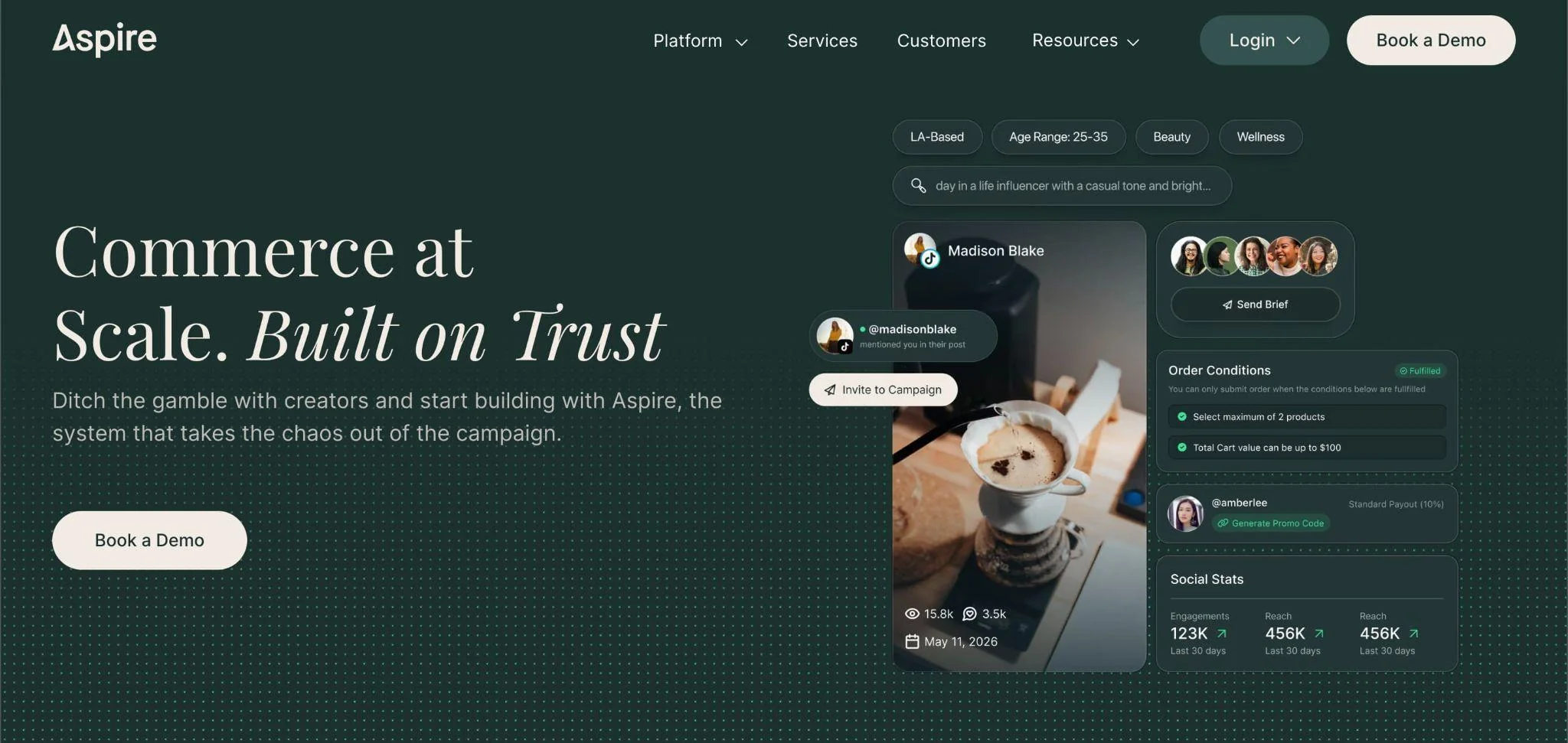
Aspire stands out with its inbound-focused marketplace, where brands can post briefs and have interested creators apply directly to them. This community-centric approach uses first-party data from Meta and TikTok to ensure high-quality matches and authentic content.
Best for: Brands looking to build a community through inbound applications and creator marketplaces.
Pricing: Undisclosed, generally between $2,000 and $5,000 per month.
Key Features:
- Inbound Creator Marketplace: Features a large marketplace where over 1 million creators can apply directly to campaign briefs.
- First-Party Data Access: Uses direct data from Meta and TikTok for highly accurate audience insights and metrics.
- Community-Building Workflows: Automated systems designed to manage high volumes of inbound creator applications.
- Dual-Path Discovery: Offers both active searching for creators and an "always-on" pipeline where they find you.
Pros & Cons:
Our Insights: Aspire flips the discovery model on its head. Instead of just "hunting" for influencers, it builds a "magnet" for them, making it the top choice for brands that want to foster a large, passionate community of advocates.
10. Upfluence
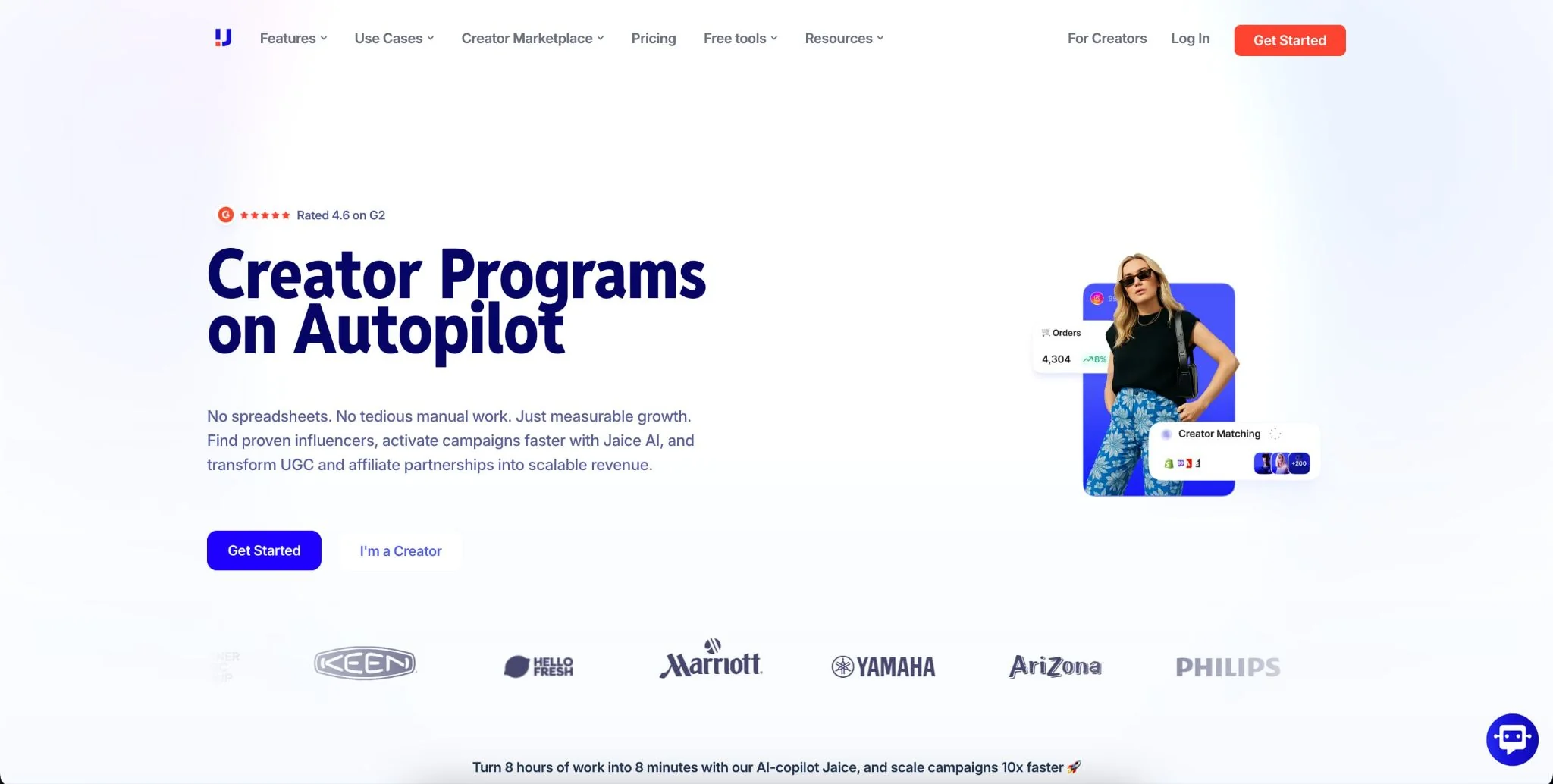
Upfluence leverages a unique approach to discovery by helping brands identify influential creators who are already among their own customer base. By integrating directly with e-commerce platforms like Shopify and Amazon, it turns your existing brand fans into your most authentic advocates.
Best for: E-commerce brands looking to leverage "customer-to-creator" identification and Amazon-specific influence.
Pricing: Undisclosed, around $2,000/mo.
Key Features:
- Customer-to-Creator Identification: Scans your own e-commerce customer database to find influential fans who already buy your products.
- AI-Powered "Juce" Outreach: Uses an AI tool to help personalize and automate communication with discovered creators.
- Direct Amazon Integration: A unique feature for tracking and identifying influence on the Amazon marketplace.
- Cross-Channel Search Engine: Robust search tools to find creators across multiple social platforms beyond your customer base.
Pros & Cons:
Our Insights: Upfluence is a leader in "organic" discovery. By focusing on your existing customers, you start partnerships with a level of trust that cold outreach simply cannot replicate.
Final Thoughts
Choosing the right influencer discovery tool in 2026 comes down to balancing your need for raw data with the reality of your daily workload. While enterprise giants offer deep data science, most brands find that the real bottleneck isn't just finding creators—it’s the hundreds of manual hours spent on outreach and campaign management.
Tools like Influencer Hero have become industry favorites because they bridge this gap, combining powerful discovery filters with high-speed CRM automation. By centralizing everything from vetting to affiliate payments, it allows your team to focus on building authentic relationships rather than managing spreadsheets.
If you’re ready to streamline your workflow and see how automation can scale your ROI, book a demo with Influencer Hero today.
Summary
This is some text inside of a div block.
This is some text inside of a div block.
Pricing/Month
Shopify Reviews
This is some text inside of a div block.
This is some text inside of a div block.
This is some text inside of a div block.
This is some text inside of a div block.
This is some text inside of a div block.
This is some text inside of a div block.
This is some text inside of a div block.
This is some text inside of a div block.
This is some text inside of a div block.
This is some text inside of a div block.
This is some text inside of a div block.
This is some text inside of a div block.
This is some text inside of a div block.
This is some text inside of a div block.
This is some text inside of a div block.
This is some text inside of a div block.
This is some text inside of a div block.
This is some text inside of a div block.
This is some text inside of a div block.
This is some text inside of a div block.
This is some text inside of a div block.
Read More

FAQs




Most Popular Blogs


Drive ROI With Influencer Marketing
Join 1,200+ brands and 150+ agencies scaling creator programs with Influencer Hero.