
Best 10 Influencer Reporting Tools
May 12, 2026
|
Published

July 30, 2026
|
Updated

10 minutes
|
Reading

Influencer Performance Marketing Course | VOUCHER: IMC100
Lucía Zabala
I Author
Drive ROI With Influencers

Global Influencer Database
ALL-IN-ONE platform
CRM, Affiliate, UGC & More
Best 10 Influencer Reporting Tools in 2026
In the high-stakes world of influencer marketing, "vanity metrics" no longer cut it. As brands manage increasingly complex campaigns across platforms like TikTok, Instagram, and YouTube, manual tracking has become a recipe for burnout and missed ROI. To truly scale, you need a streamlined way to prove which creators are actually driving revenue and which are just driving noise.
The right reporting tool acts as your campaign command center, replacing messy spreadsheets with automated, real-time analytics and attribution.
We’ve narrowed down the 10 best influencer reporting tools to help you eliminate the guesswork, satisfy your stakeholders, and turn creator partnerships into a data-driven growth engine.
What To Look For In Influencer Reporting Tools (H2)
It’s easy to get distracted by flashy dashboards, but for 2026, these are the "must-haves" that save you from headaches later:
• Audience Truth-Telling: You need a tool that can sniff out bots and engagement pods to show you exactly where an influencer’s audience is located. If you’re selling in London, a creator with 1M followers in another country won't help your bottom line.
• Closed-Loop Attribution: Look for tools that integrate directly with your tech stack—like Shopify, WooCommerce, or Amazon—to track promo codes, affiliate links, and even TikTok Shop conversions in real-time.
• Automated Content Archiving: A great reporting tool should automatically "capture" and save every Story, Reel, and post your partners tag you in. If the tool doesn't archive the content for you, you’ll spend your Fridays chasing creators for screenshots.
• Predictive Performance Insights: The best tools now use AI to look at a creator's historical data and predict your campaign’s potential ROI before you even sign a contract. This allows you to allocate budget toward "sure bets" rather than guessing based on vibes.
• Platform Variety: Your audience might be on TikTok today but moving to Threads or YouTube Shorts tomorrow. Make sure your tool can aggregate data from multiple platforms into one unified, client-ready report.
Criteria Of Selection: How We Evaluated the Best Influencer Reporting Tools (H2)
We looked past flashy interfaces to ensure these platforms provide the data integrity, automation, and cross-channel visibility required for modern campaigns.
Each tool was evaluated based on the following criteria:
1. Data Accuracy & Fraud Detection (H3)
We prioritized tools that offer deep-dive analytics into audience authenticity, sniffing out "engagement pods" and bot-inflated numbers. We looked for platforms that provide a "Transparency Score" or "Audience Credibility" metric so you aren't paying for ghost followers.
2. Multi-Platform Aggregation (H3)
We evaluated how effectively these tools pull data from TikTok, Instagram, YouTube, and emerging platforms into a single, unified dashboard for a "birds-eye view" of your entire digital footprint.
3. Automated Content Capture (H3)
Manual tracking is the ultimate productivity killer. We gave higher marks to tools that automatically scrape and save every Story, Reel, and post your influencers publish. We specifically looked for "Live Link" reporting—the ability to send a dynamic, auto-updating dashboard to your boss or clients without needing to export a new PDF every hour.
4. Conversion & ROI Attribution (H3)
Reporting in 2026 must go beyond likes and comments. We assessed how easily these tools integrate with e-commerce stacks (like Shopify, Amazon, and WooCommerce) to track sales via affiliate links, promo codes, and pixel-based attribution. The best tools make it easy to see exactly how many dollars were generated for every dollar spent.
5. Ease of Use & Reporting Speed (H3)
We prioritized platforms with intuitive UI/UX, one-click report generation, and customizable templates that allow you to go from raw data to a professional presentation in minutes.
Top 10 Best Influencer Reporting Tools In 2026 (H2)
1. Influencer Hero
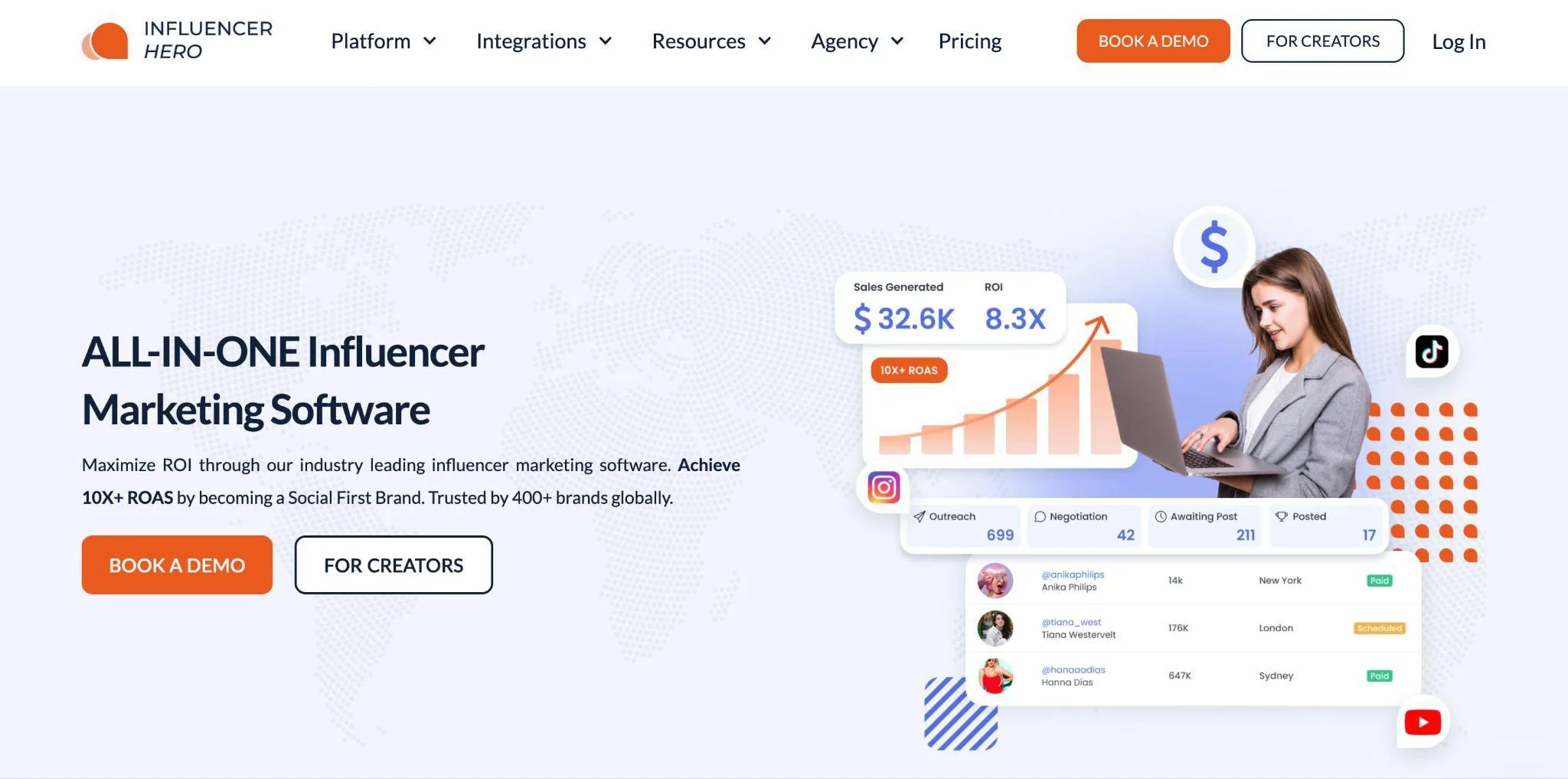
Influencer Hero is an all-in-one platform designed to streamline the entire influencer marketing lifecycle through advanced automation and deep e-commerce integration. It functions as a high-speed command center, offering a campaign-centric CRM that handles everything from discovery to automated payments across eight social platforms.
Best for: Brands and agencies looking for a high-performance, ROI-driven CRM that automates physical product fulfillment and affiliate tracking.
Pricing: $649 – $2,490+ per month.
Key Features:
• Centralized Multi-Platform Dashboard: Aggregates real-time data from 8 social platforms into one unified, client-ready reporting view.
• Ecommerce Attribution Engine: Tracks revenue via Shopify/WooCommerce integrations, linking influencer activity directly to sales.
• Live Campaign Reporting: Continuously updates performance metrics, eliminating the need for manual exports or static reports.
• Automated Payment Tracking: Syncs creator payouts with performance data, giving a clear view of cost vs. ROI per influencer.
• AI Workflow Automation: Keeps reporting pipelines updated automatically by syncing outreach, content, and performance data.
Pros & Cons:
Our Insights: Influencer Hero stands out as the most balanced tool for brands that prioritize measurable results over vanity metrics. Its ability to link influencer content directly to Shopify or WooCommerce sales makes it an essential asset for performance-driven teams. While it may lack some enterprise-level social listening, its automation capabilities offer an unmatched efficiency for scaling campaigns.
2. Modash
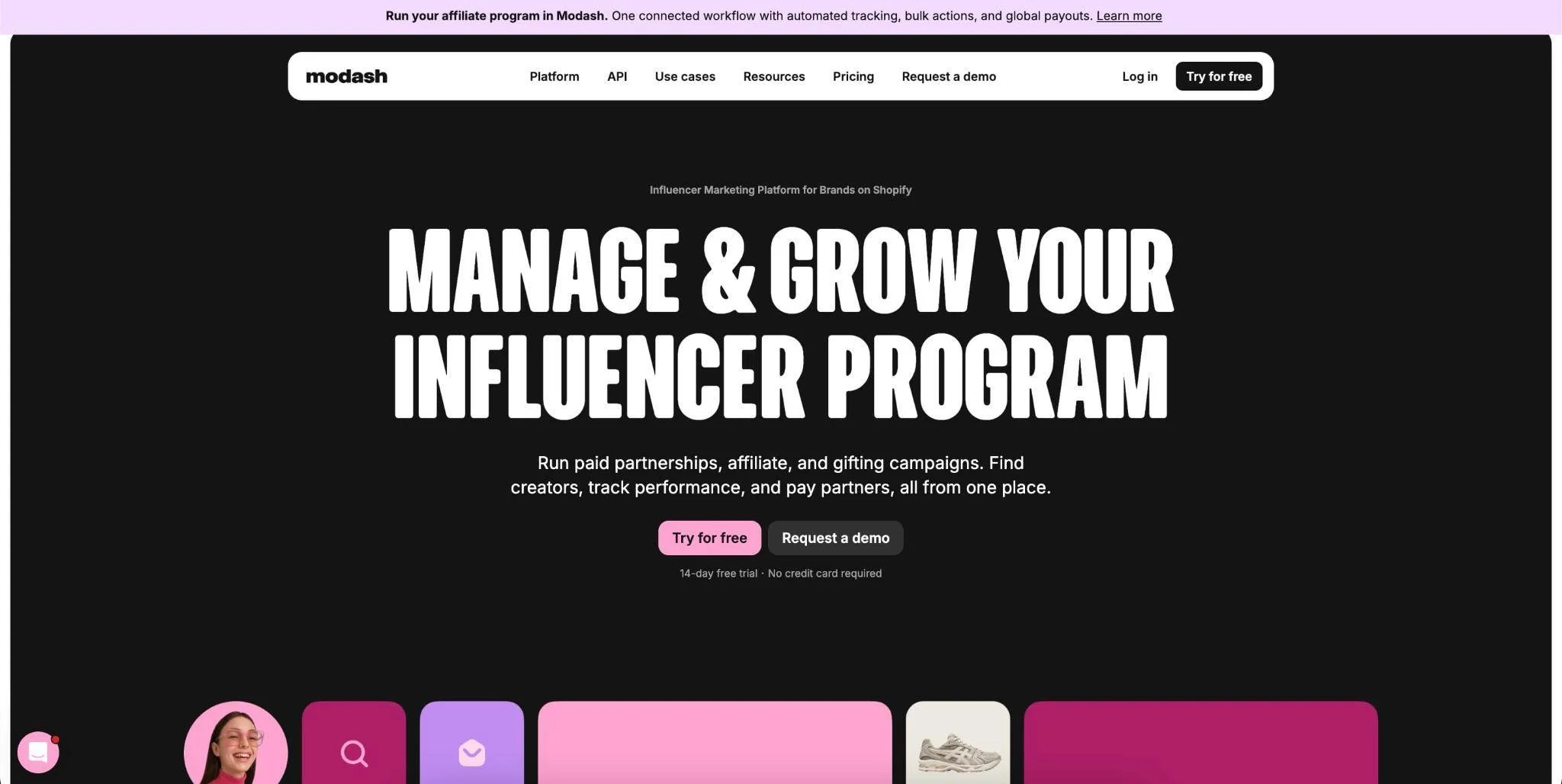
Modash provides a massive database of over 350 million profiles, allowing brands to discover influencers without requiring them to opt-in to the platform. It utilizes AI visual search and advanced filters to help marketers find untapped creators in any niche or location.
Best for: Deep, data-driven creator discovery and audience vetting at a massive scale.
Pricing: $190 – $499+ per month (or approximately $14,700 per year).
Key Features:
• Audience Reporting & Breakdown: Provides detailed insights into follower demographics, locations, and authenticity for accurate reporting.
• 350M+ Profile Data Coverage: Enables large-scale reporting across massive creator datasets without opt-in bias.
• Performance Benchmarking Tools: Compare influencer metrics to identify top-performing creators across campaigns.
• Affiliate Tracking Insights: Tracks performance of influencer-driven links and codes to measure campaign impact.
Pros & Cons:
Our Insights: Modash is the go-to tool if your primary hurdle is finding the right people in a crowded market. Its "no opt-in" database means you aren't limited to a pre-selected pool of creators, giving you a significant edge in discovery. However, you will likely need a secondary tool to handle the actual outreach and communication workflows.
3. Upfluence
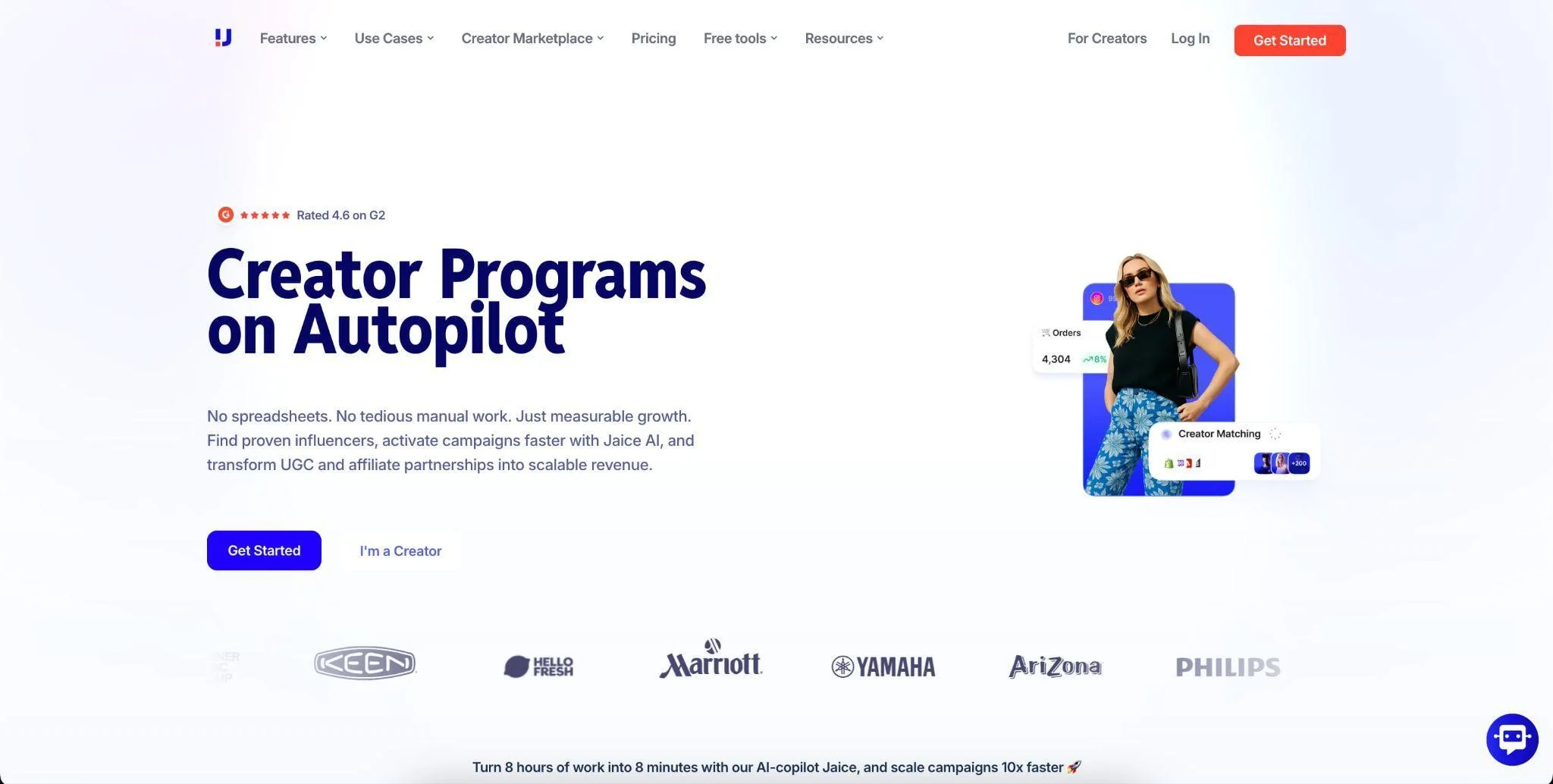
Upfluence specializes in "e-commerce synergy" by helping brands identify their own customers and subscribers as potential brand ambassadors. The platform features deep integrations with Shopify, Amazon, and WooCommerce to turn your existing database into an influencer pipeline.
Best for: E-commerce brands wanting to leverage their own customer base for influencer and organic advocacy.
Pricing: Undisclosed; typically around $2,000 per month.
Key Features:
• Revenue Attribution Reporting: Connects influencer activity directly to ecommerce sales for clear ROI measurement.
• Customer Data Reporting: Identifies which existing customers drive the most value as influencers or ambassadors.
• Campaign Performance Dashboard: Tracks engagement, conversions, and revenue in a centralized reporting interface.
• AI-Assisted Outreach Data Sync: Ensures all communication and performance data is captured for full reporting visibility.
Pros & Cons:
Our Insights: Upfluence is a powerhouse for established e-commerce brands, particularly those selling on Amazon. By identifying people who are already fans of your brand, it significantly increases the authenticity of your reporting metrics. If you aren't ready for a significant monthly commitment, however, the price point might be a barrier.
4. HypeAuditor
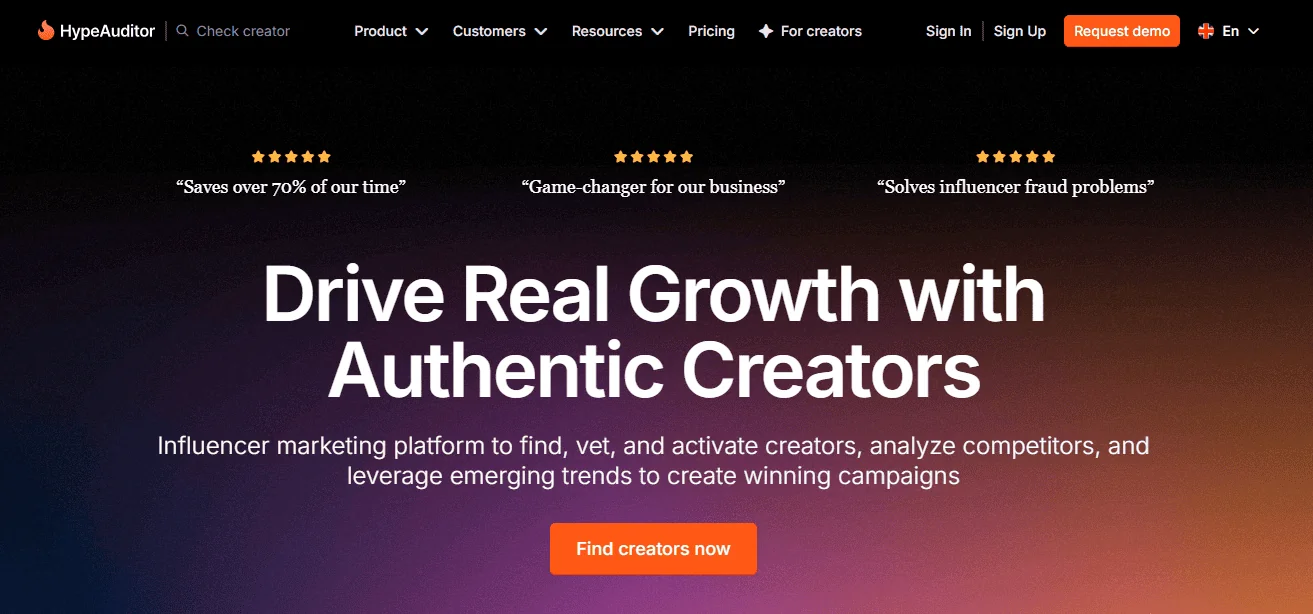
HypeAuditor is widely considered the industry standard for audience quality vetting and fraud detection. It provides high-integrity reports that allow brands to audit an influencer's follower growth, engagement authenticity, and competitor performance.
Best for: Brands that prioritize audit integrity and need to eliminate the risk of fake followers and engagement.
Pricing: Undisclosed; typically ranges from $10,000 to $60,000 per year.
Key Features:
• Audience Authenticity Reports: Provides detailed fraud detection and audience quality scoring to ensure data accuracy.
• Influencer Audit Reports: Deep-dive analytics into growth patterns, engagement spikes, and suspicious behavior.
• Competitor Reporting Insights: Tracks competitor influencer strategies to benchmark campaign performance.
• Market-Level Analytics: Offers macro reporting across industries and regions for strategic decision-making.
Pros & Cons:
Our Insights: If your biggest concern is "getting burned" by fake accounts, HypeAuditor is your best line of defense. Its reporting is incredibly granular, making it perfect for agencies that need to prove the quality of their talent to clients. Just be prepared to handle the actual campaign execution and outreach through a separate, more workflow-oriented tool.
5. Captiv8
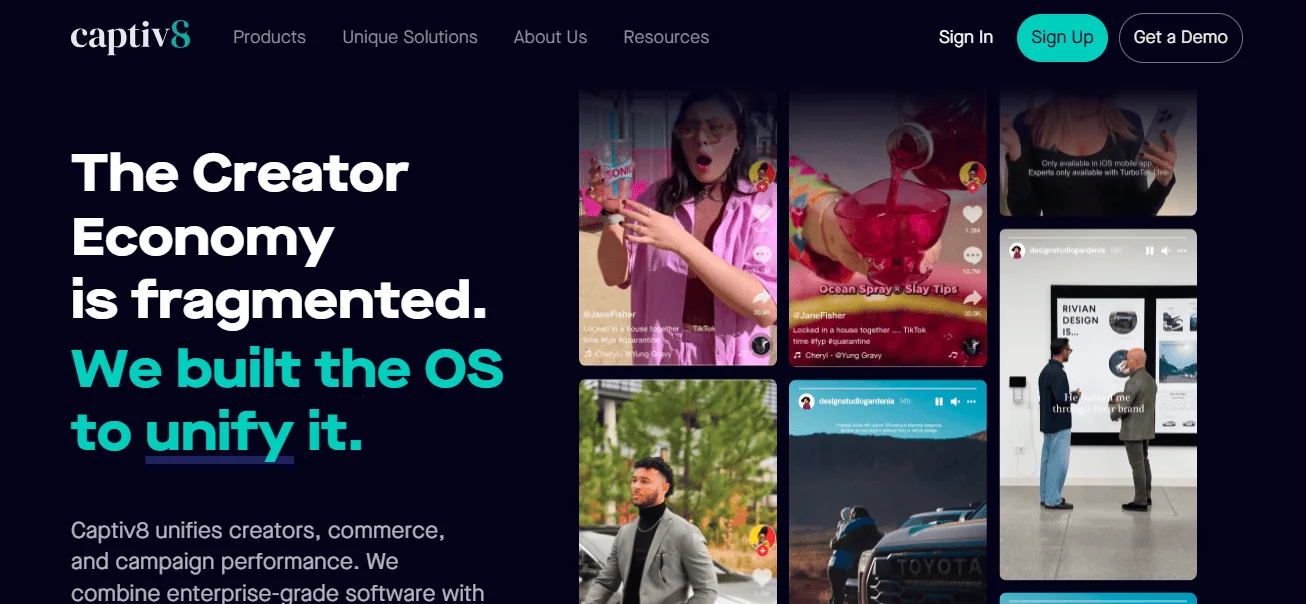
Captiv8 is an enterprise-grade platform built for large-scale brands that require deep data science and predictive insights. It offers some of the most sophisticated reporting in the industry, including sentiment analysis and custom KPI reports tailored to complex global campaigns.
Best for: Enterprise companies needing deep data science, brand safety scores, and massive global reporting capabilities.
Pricing: Undisclosed; estimated at $25,000/year plus $20,000–$30,000/month for add-ons.
Key Features:
• Sentiment Analysis Reporting: Measures how audiences feel about content, adding qualitative depth to performance data.
• Custom KPI Dashboards: Build tailored reports aligned with specific business goals and internal metrics.
• Brand Safety Reporting: Tracks risk factors and creator history to ensure compliance and protect brand reputation.
• Advanced Audience Insights: Provides deep demographic and behavioral reporting beyond surface-level metrics.
Pros & Cons:
Our Insights: Captiv8 is the "big data" solution for the world's largest brands. If you are managing a global budget and need to report on nuanced metrics like audience sentiment and long-term brand safety, this is the tool for you. However, for smaller teams, the complexity and cost may outweigh the benefits of its high-level data science.
6. CreatorIQ
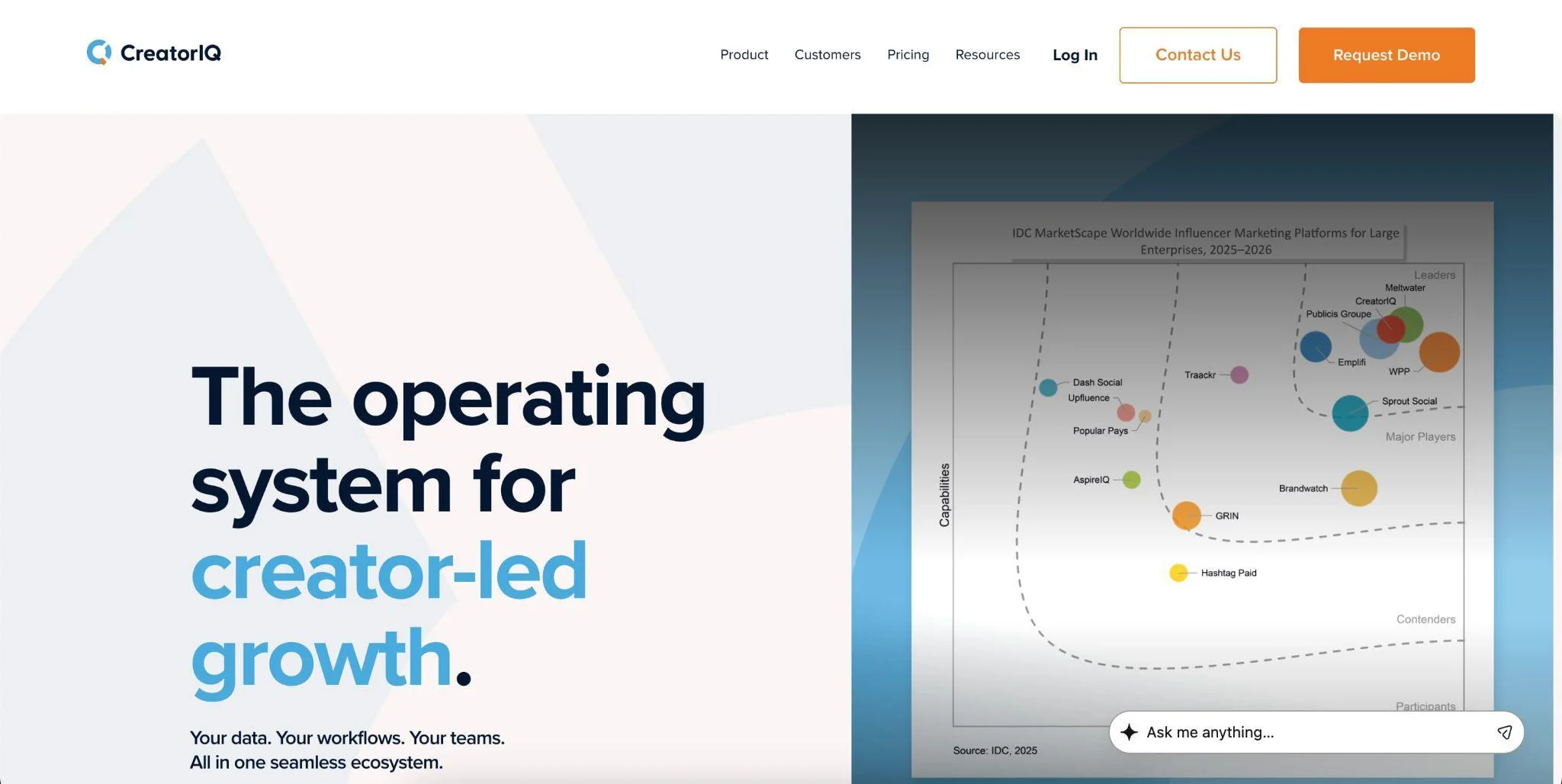
CreatorIQ is an enterprise-grade platform designed for large-scale influencer programs, focusing on global governance and real-time data accuracy. It acts as a sophisticated system of record for massive organizations, offering API-based reporting and professional compliance tools.
Best for: Massive multi-departmental ecosystems and global brands requiring high-level data governance and compliance.
Pricing: Undisclosed; typically ranges from $35,000 to $200,000 per year.
Key Features:
• API-Based Real-Time Reporting: Delivers live data streams directly from platforms for up-to-the-minute campaign tracking.
• Global Reporting Infrastructure: Centralizes data across regions and teams for consistent, enterprise-level reporting.
• Approval & Reporting Workflows: Streamlines stakeholder reviews with consolidated creator performance summaries.
• Payment & Compliance Reporting: Tracks financial data alongside performance metrics for full operational transparency.
Pros & Cons:
Our Insights: CreatorIQ is the gold standard for global corporations that need to centralize influencer data across multiple sub-brands or regions. Its reporting is deeply technical and compliant, ensuring that even the largest campaigns remain organized. However, for smaller teams, the platform's rigidity and significant cost may feel like an administrative burden rather than a help.
7. Later
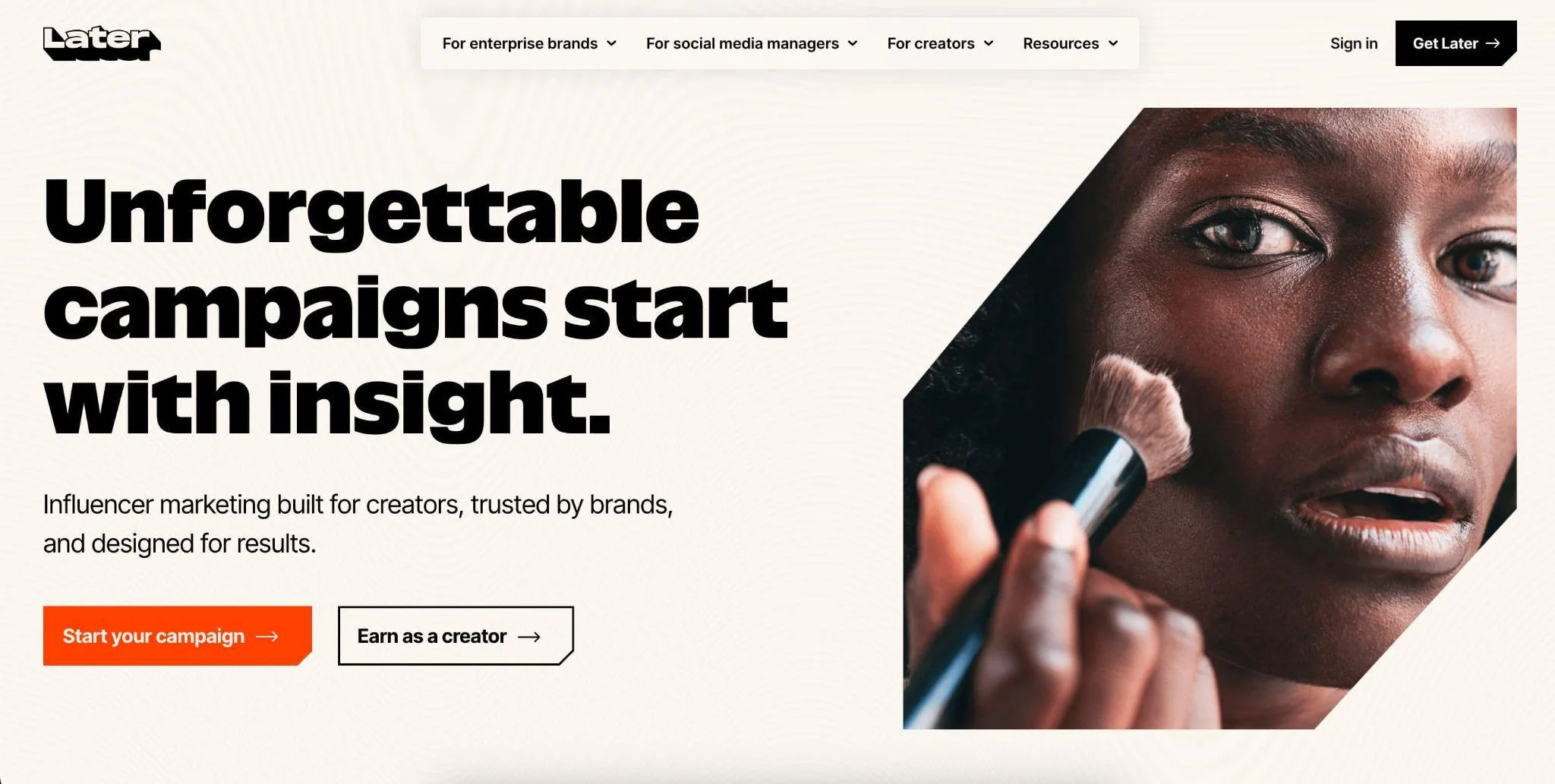
Later integrates its influencer marketing suite with its well-known social media scheduling tools, creating a unified ecosystem for content creation. This platform allows brands to manage their own social posts while simultaneously tracking and reporting on influencer-generated content.
Best for: Marketing teams that want to unify their organic social media scheduling with their influencer campaign reporting in one place.
Pricing: $28,500 to $60,000 per year, plus a $5,000 onboarding fee.
Key Features:
• Social + Influencer Reporting Sync: Combines owned social metrics with influencer performance for a unified report.
• Campaign Lifecycle Tracking: Monitors performance from content planning to post-campaign reporting.
• Content Performance Insights: Tracks how influencer content performs alongside organic brand posts.
• Cross-Channel Visibility: Provides a holistic view of brand presence across multiple social platforms.
Pros & Cons:
Our Insights: Later is a great "double-threat" tool for social media managers who wear multiple hats. By housing scheduling and influencer reporting under one roof, it reduces the need to switch between tabs to see how content is performing across the board. That said, brands looking for deep, performance-heavy affiliate tracking may find it less specialized than a dedicated CRM like Influencer Hero.
8. Traackr
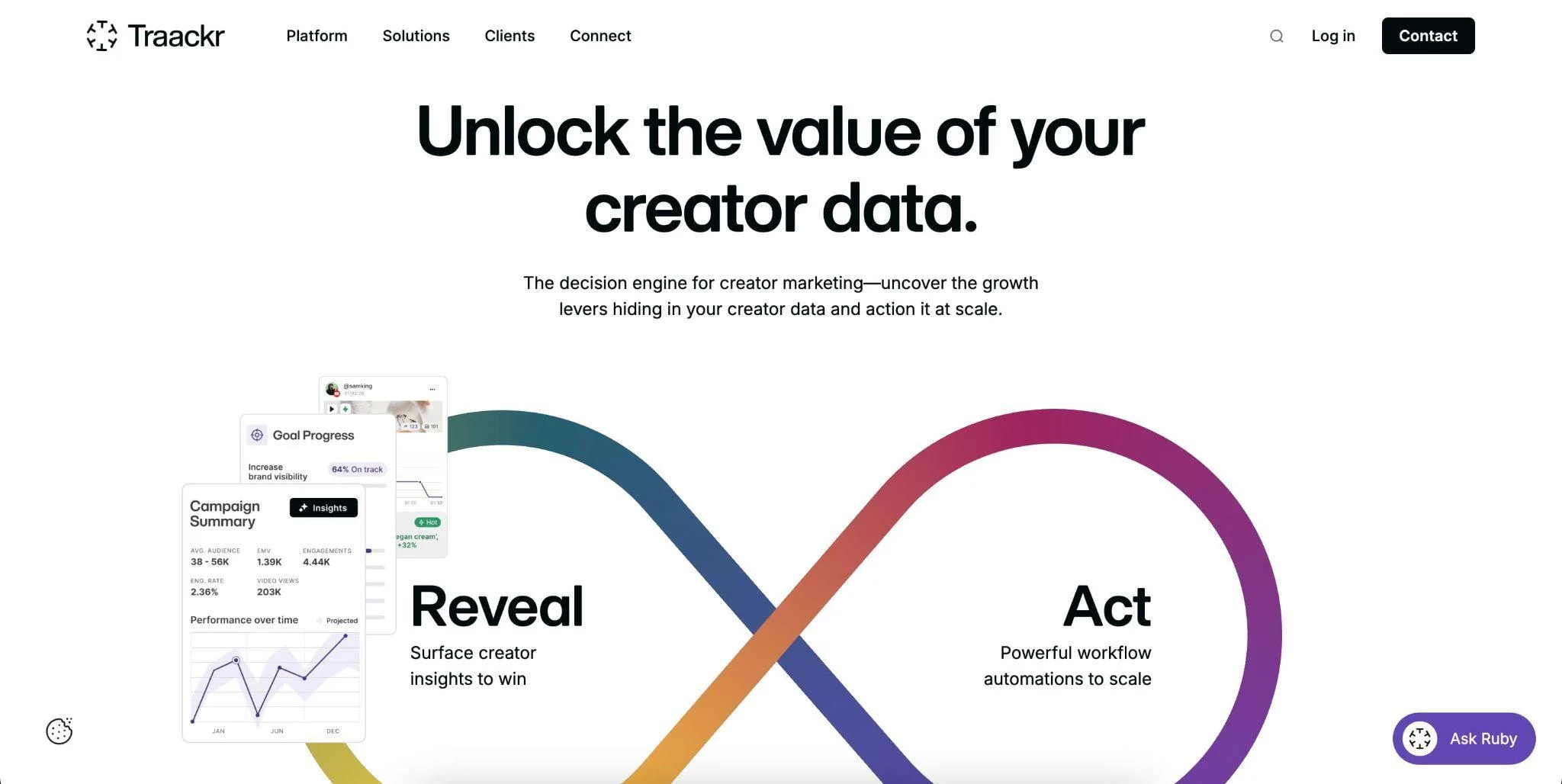
Traackr is a relationship-focused platform known for its "Brand Vitality Score" (BVS), which helps brands measure their impact in the cultural zeitgeist. It prioritizes long-term relationship history and competitive benchmarking, making it ideal for strategic brand building.
Best for: Brands focusing on long-term creator relationships and benchmarking their performance against industry competitors.
Pricing: Undisclosed; estimated around $32,500 per year.
Key Features:
• Brand Vitality Score (BVS): Measures brand performance vs competitors using reach, engagement, and consistency data.
• ROI Benchmarking Reports: Compares influencer campaign performance against industry competitors.
• Long-Term Performance Tracking: Tracks creator impact over time to evaluate sustained ROI and brand affinity.
• Strategic Insights Engine: Recommends high-performing creators based on historical reporting data.
Pros & Cons:
Our Insights: Traackr is the best choice for brands that view influencer marketing as a marathon rather than a sprint. Its ability to quantify "brand vitality" provides a unique reporting angle that most ROI-only tools miss. However, if your goal is rapid-fire affiliate scaling, you might find Traackr's workflow a bit too methodical for your needs.
9. Aspire
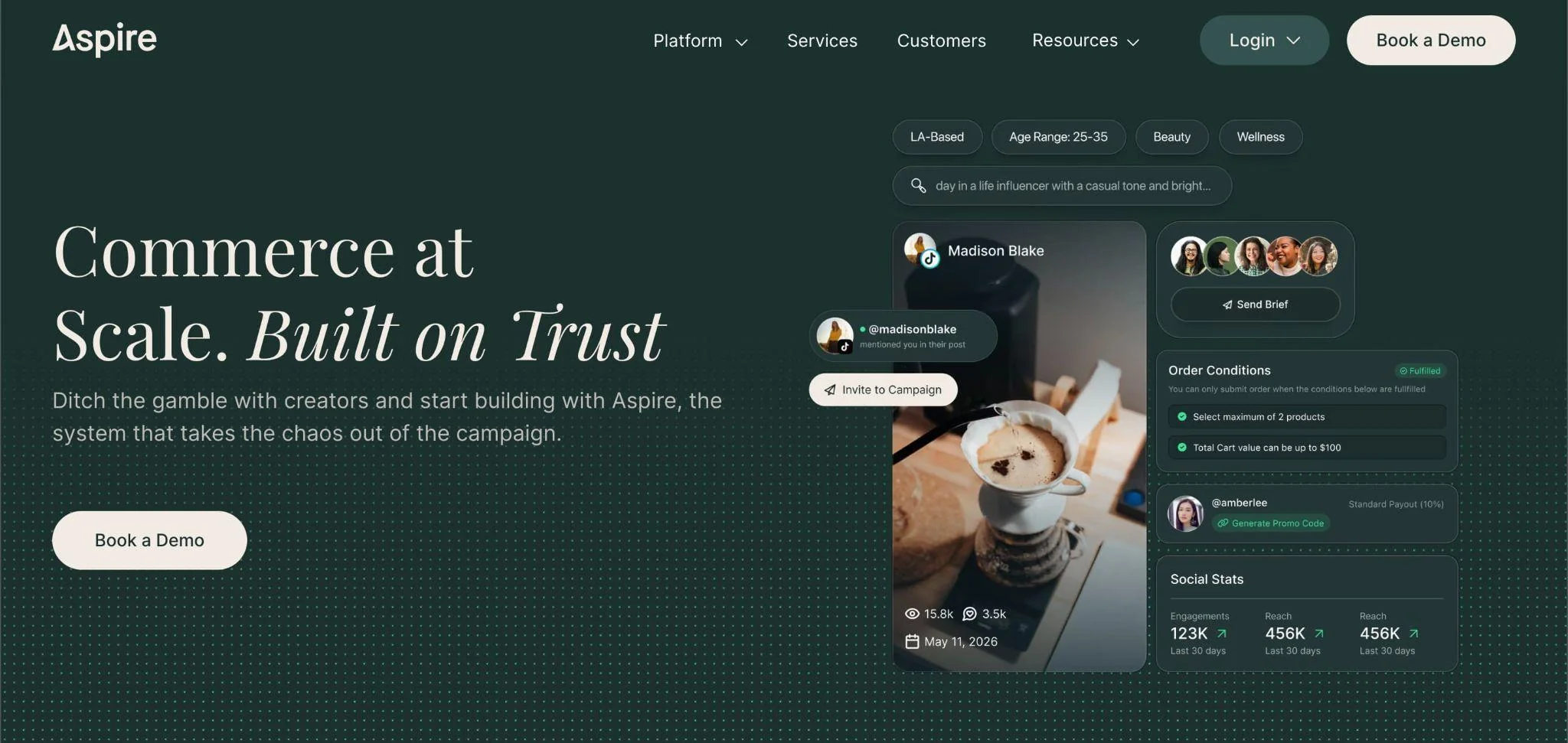
Aspire is a community-focused platform that excels at managing inbound interest through its 1M+ creator marketplace. It is designed to handle high volumes of applications, making it a favorite for brands that want to build a large "community" of ambassadors.
Best for: Brands focused on community building, inbound applications, and managing a large volume of creators.
Pricing: Undisclosed; typically ranges from $2,000 to $5,000 per month.
Key Features:
• Inbound Campaign Reporting: Tracks and organizes creator applications into structured, reviewable performance reports.
• First-Party Data Accuracy: Uses direct Meta and TikTok integrations for highly reliable reporting metrics.
• Sales & Conversion Tracking: Measures revenue generated through influencer links and discount codes.
• Community Performance Dashboards: Monitors large-scale creator programs with centralized reporting tools.
Pros & Cons:
Our Insights: Aspire is perfect for brands with a strong "cool factor" that naturally attract creators who want to work with them. Its reporting shines when you need to manage a massive pipeline of inbound talent and verify their results with first-party data. Just keep an eye on the costs, as they can climb significantly as your community expands.
10. Grin
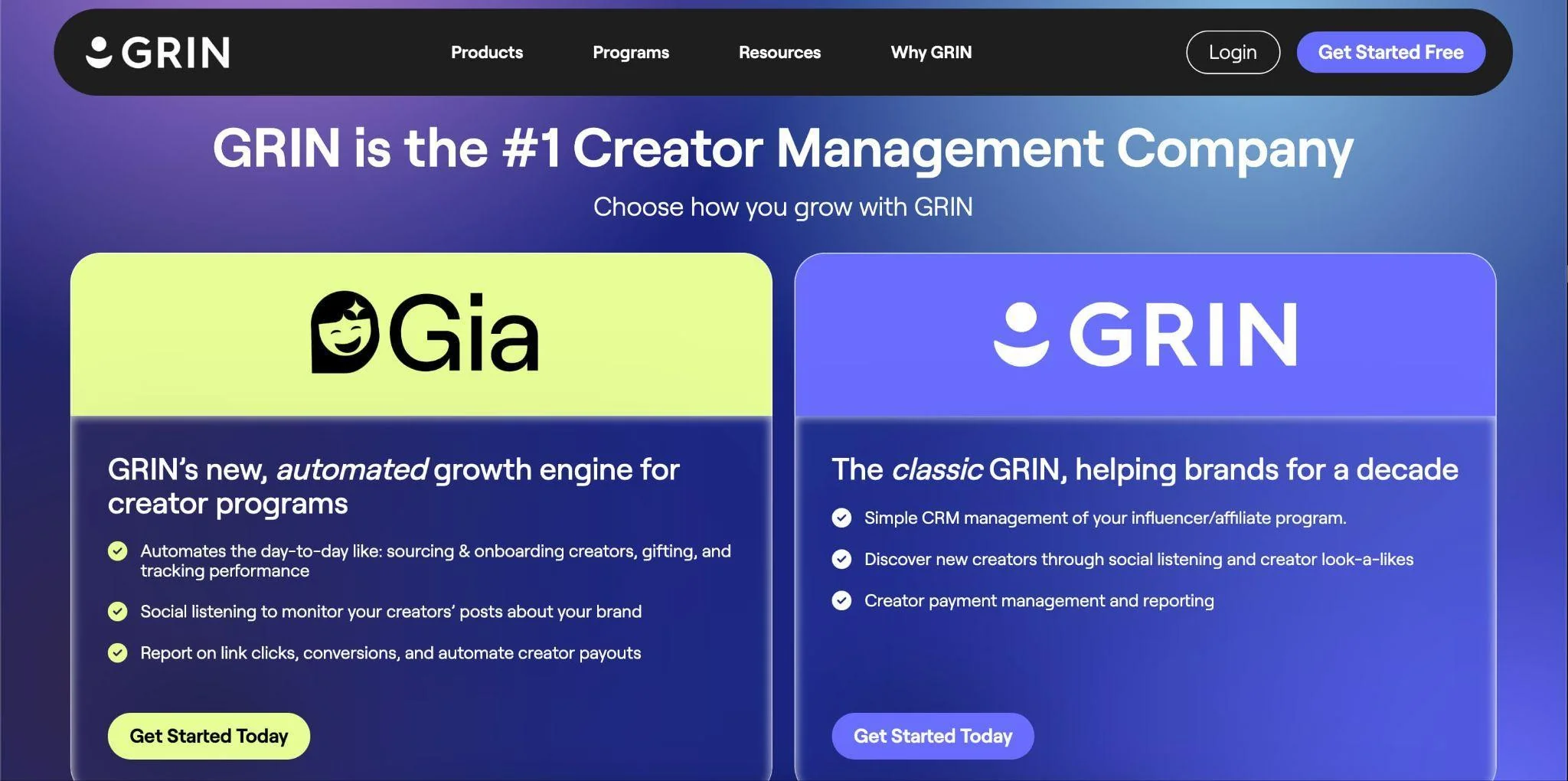
Grin is an e-commerce-centric platform built primarily for Shopify users, focusing on the logistical side of influencer marketing. It excels at automating physical product fulfillment and managing the media rights of the content generated by influencers.
Best for: Shopify brands that need to automate large-scale physical product seeding and manage UGC media rights.
Pricing: $2,085 per month (approx. $25,000 per year) with a yearly commitment.
Key Features:
• Ecommerce Reporting Integration: Tracks influencer-driven sales directly through Shopify for clear ROI visibility.
• UGC Performance Tracking: Measures the value and performance of influencer-generated content across campaigns.
• Media Rights Reporting: Tracks usage and ROI of licensed influencer content across paid and organic channels.
• Payment & Cost Reporting: Links payouts with performance data to evaluate profitability per creator.
Pros & Cons:
Our Insights: Grin is a logistics powerhouse for Shopify brands that spend a lot of time shipping products to creators. Its reporting is unique because it combines sales data with media rights management, making it easy to see the full value of your creator partnerships. However, the high price tag and mandatory annual commitment make it a significant investment for any marketing team.
Final Thoughts (H2)
Choosing the right reporting tool depends on your specific goals. If your focus is on high-stakes enterprise audits, HypeAuditor or Captiv8 are industry leaders. However, if your team needs to move beyond vanity metrics to track direct revenue, you should prioritize platforms with deep e-commerce integrations, like Shopify or WooCommerce, to ensure your data translates into actionable growth.
For brands looking to balance powerful automation with performance tracking, Influencer Hero provides a streamlined middle ground by centralizing data across eight platforms and automating the manual grind of affiliate management and payments.
To see these reporting features in action, book a demo with Influencer Hero today.
Blog Post: Tools & Calculators
Summary
This is some text inside of a div block.
This is some text inside of a div block.
Pricing/Month
Shopify Reviews
This is some text inside of a div block.
This is some text inside of a div block.
This is some text inside of a div block.
This is some text inside of a div block.
This is some text inside of a div block.
This is some text inside of a div block.
This is some text inside of a div block.
This is some text inside of a div block.
This is some text inside of a div block.
This is some text inside of a div block.
This is some text inside of a div block.
This is some text inside of a div block.
This is some text inside of a div block.
This is some text inside of a div block.
This is some text inside of a div block.
This is some text inside of a div block.
This is some text inside of a div block.
This is some text inside of a div block.
This is some text inside of a div block.
This is some text inside of a div block.
This is some text inside of a div block.
Read More

FAQs




Most Popular Blogs


Drive ROI With Influencer Marketing
Join 1,200+ brands and 150+ agencies scaling creator programs with Influencer Hero.