
El Mejor Software de Marketing de Influencers para Plataformas de Venta

March 6, 2026
|
Publicado

October 19, 2026
|
Actualizado

14 Min
|
Lectura

Curso de Marketing de Rendimiento con Influencers | CÓDIGO: IMC100

Malena Gacia
| Author

Impulsa el ROI con influencers

Base de datos global de influencers
Plataforma TODO EN UNO
CRM, Afiliados, UGC y Más
El mejor software de marketing de influencers para mercados
Los mercados se han convertido rápidamente en uno de los canales de crecimiento más importantes para las marcas de eCommerce. Ya sea que esté vendiendo a través de Amazon, mercados impulsados por Shopify o plataformas multivendedor, el marketing de influencers está cada vez más vinculado a la siembra de productos, ventas afiliadas e ingresos medibles, no solo a la conciencia.
Pero ejecutar campañas de influencers dentro de un entorno de mercado viene con necesidades operativas específicas. Los equipos necesitan descubrimiento confiable de influencers, flujos de trabajo de regalos simplificados, seguimiento de enlaces afiliados y descuentos, y visibilidad clara del ROI en múltiples creadores y productos. Administrar esto manualmente o en herramientas desconectadas rápidamente se vuelve difícil a medida que los programas se escalan.
Esta guía cubre el mejor software de marketing de influencers para mercados, específicamente para marcas que desean conectar campañas de influencers directamente al desempeño de ventas del mercado. Si está operando en una configuración impulsada por mercado, estas plataformas ayudan a centralizar la gestión de creadores, automatizar flujos de trabajo y rastrear ingresos impulsados por influencers en un solo lugar.
Top 10 del mejor software de marketing de influencers para mercados:
Cómo evaluamos el software de marketing de influencers para mercados
Para crear esta lista, evaluamos plataformas de marketing de influencers en función de cuán bien apoyan a marcas de eCommerce que utilizan mercados.
Los criterios se enfocaron tanto en compatibilidad de integración como en la capacidad de ejecutar campañas de influencers impulsadas por rendimiento a escala.
Criterios de evaluación
- Integración y compatibilidad con mercados: Qué tan bien funciona cada plataforma con tiendas basadas en mercado, ya sea a través de integraciones nativas o flujos de trabajo compatibles que se ajusten a las operaciones de eCommerce existentes.
- Capacidades de campañas de influencers: La medida en que cada plataforma respalda casos de uso principales de marketing de influencers, incluido el descubrimiento de creadores, divulgación, gestión de relaciones, campañas de regalos y siembra, y colaboraciones basadas en afiliados.
- Seguimiento de desempeño e informes: La capacidad de rastrear el desempeño a nivel de influencer y campaña, incluidas conversiones, atribución de ingresos y ROI, lo cual es esencial para equipos de eCommerce enfocados en resultados medibles.
- Automatización y eficiencia del flujo de trabajo: Qué tan efectivamente la plataforma automatiza tareas que consumen tiempo, como divulgación, gestión de campañas, seguimientos e informes, especialmente importante para equipos reducidos que administran programas de influencers a escala.
- Facilidad de uso (UX/UI): La experiencia general del usuario, incluido el diseño del panel, navegación, proceso de incorporación y curva de aprendizaje para equipos que ya operan dentro de entornos de mercado.
- Escalabilidad para marcas en crecimiento: Qué tan bien la plataforma respalda el crecimiento, desde equipos pequeños que ejecutan sus primeras campañas de influencers hasta marcas DTC establecidas que administran cientos o miles de creadores.
- Precios y flexibilidad contractual: Transparencia de precios, disponibilidad de planes flexibles y si la plataforma respalda programas en crecimiento sin forzar compromisos a largo plazo demasiado pronto.
- Soporte al cliente e incorporación: Disponibilidad y calidad de recursos de soporte, incluida asistencia de incorporación, documentación, tiempos de respuesta y soporte continuo de éxito del cliente.
El mejor software de marketing de influencers para mercados
Elegir software de marketing de influencers para un negocio de mercado es ligeramente diferente a elegir una herramienta de influencer estándar. Las marcas de mercado típicamente necesitan conexiones más estrictas entre creadores, productos, enlaces afiliados y atribución de ingresos reales, no solo gestión de campañas.
A continuación se presenta una comparación rápida del mejor software de marketing de influencers para mercados, dándole una descripción general de alto nivel de cómo cada plataforma respalda el descubrimiento, colaboración de creadores,affiliate tracking, and scalable influencer operations.
| Plataforma | Mejor para | El precio comienza en | Diferenciador clave |
|---|---|---|---|
| Influencer Hero | Marcas de marketplace y eCommerce que ejecutan programas de influencers y afiliados orientados al rendimiento a escala | $649/mes | Base de datos de 450M+ influencers. Automatización incorporada, tiendas y seguimiento de afiliados listo para el marketplace en una sola plataforma |
| Heepsy | Marcas pequeñas y medianas enfocadas en el descubrimiento de influencers y el alcance | $369/mes | Base de datos de influencers global extensa con filtrado sólido y alcance masivo |
| Aspire | Marcas DTC que gestionan campañas estructuradas de influencers con aplicaciones de creadores entrantes | $2.300/mes | Fuerte automatización de flujos de trabajo y gran marketplace de creadores entrantes |
| Captiv8 | Marcas de marketplace empresariales que necesitan análisis profundos e inteligencia competitiva | $25.000/año | Análisis de campañas avanzado y seguimiento de creadores competidores |
| Afluencer | Marcas de marketplace en etapa inicial enfocadas en el reclutamiento de influencers | $49/mes | Marketplace de aplicaciones de influencers basado en colaboraciones |
| Insense | Marcas que priorizan la creación de UGC y contenido de creadores listo para el marketplace | $500/trimestre | Marketplace de creadores verificado con flujos de trabajo de campañas UGC sólidos |
| Modash | Equipos basados en datos que gestionan programas de influencers con mucho peso en afiliados | $199/mes | Base de datos masiva de creadores públicos con automatización de afiliados |
| CreatorIQ | Marcas empresariales que ejecutan programas globales de influencers | $35.000/año | Acceso a datos de nivel empresarial e infraestructura de informes personalizable |
| Sprout Social | Equipos grandes que combinan el marketing de influencers con análisis de redes sociales | $1.599/usuario/mes | Informes avanzados, evaluación comparativa y herramientas de seguridad de marca |
| GRIN | Marcas de eCommerce que gestionan regalos y relaciones con creadores | $2.085/mes | Integraciones profundas de eCommerce y CRM de relaciones con creadores |
1. Influencer Hero
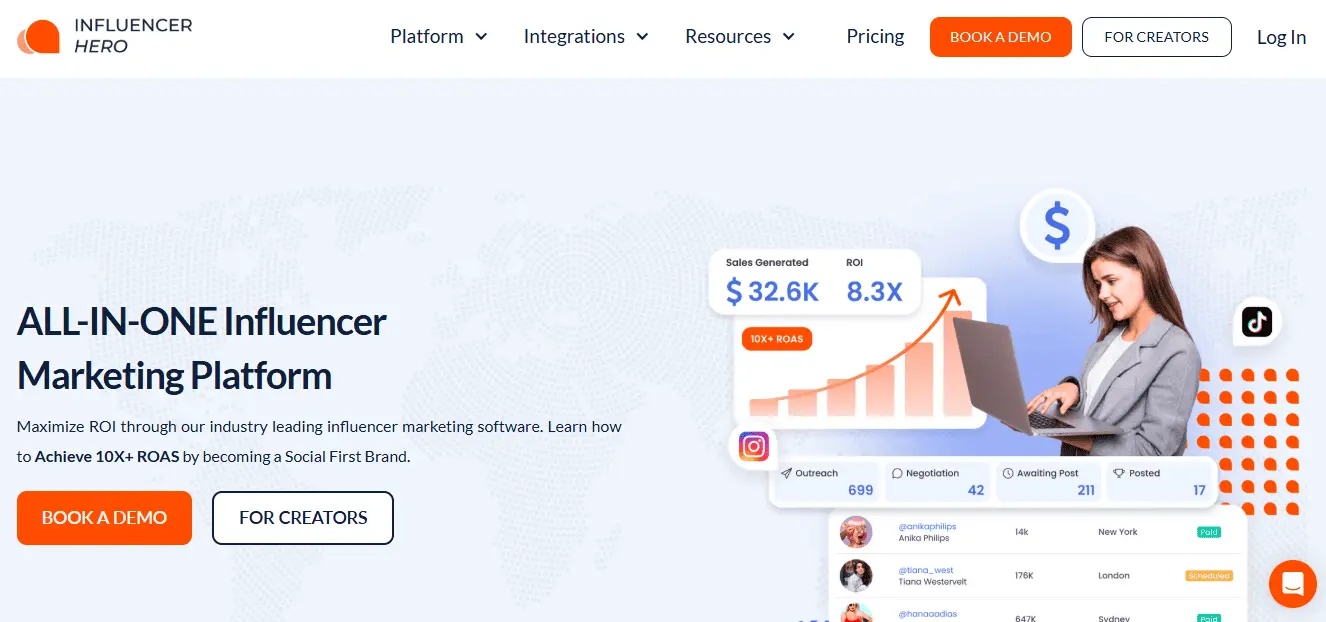
Influencer Hero es una plataforma integral de influencer marketing creada para marcas de eCommerce y marketplace que desean conectar colaboraciones de creadores directamente a los ingresos.
Diseñada en torno a la automatización, la atribución y la escalabilidad, ayuda a los equipos a gestionar el descubrimiento, el alcance, los regalos, el seguimiento de afiliados y los informes desde un sistema centralizado, lo que la convierte en uno de los mejores software de influencer marketing para marketplaces.
Mejor adaptado para:
Influencer Hero es mejor para marcas DTC, vendedores de marketplaces y agencias que gestionan programas de influencers orientados al rendimiento donde las ventas de afiliados, la siembra de productos y el seguimiento del ROI son prioridades fundamentales.
Cómo funciona con Creator Commerce:
Influencer Hero admite programas impulsados por marketplaces al conectar la actividad de creadores con resultados de comercio rastreables. Puede generar y gestionar códigos de descuento y enlaces de afiliados específicos para cada creador, rastrear clics y conversiones, y ver la atribución de ventas por creador dentro de un panel único.
Para marcas que venden más allá de un único escaparate, Influencer Hero también admite entornos de mercado más amplios a través de integraciones de seguimiento de afiliados, para que pueda mantener informes de rendimiento consistentes incluso cuando los pedidos ocurren fuera de Shopify.
Precios y compromiso:
Influencer Hero ofrece planes que se escalan con el tamaño de su programa, con un compromiso de 3 meses.
- Plan Estándar: Comienza en $649/mes. Le permite contactar hasta 1,000 creadores por mes.
- Plan Pro: Comienza en $1,049/mes. Le permite contactar hasta 5,000 creadores por mes.
- Plan Business: Comienza en $2,490/mes. Le permite contactar hasta 10,000 creadores por mes.
- Personalizado y Agencia: Precios personalizados según las necesidades de su marca.
Facilidad de uso (UX/UI):
Influencer Hero es conocida por su interfaz intuitiva y panel de control simplificado diseñado para equipos operacionales, no para usuarios técnicos. Canalizaciones de campañas, alcance, flujos de trabajo de automatización e informes residen en un único espacio de trabajo, lo que facilita la gestión de grandes programas de creadores mientras se mantiene la visibilidad en cada etapa. Las plantillas de correo electrónico personalizables y las reglas de automatización reducen aún más el trabajo manual.
Atención al cliente:
El soporte al cliente es uno de los diferenciadores más fuertes de Influencer Hero. Las marcas reciben chat en vivo de atención al cliente 24/7, soporte por correo electrónico receptivo y acceso a un extenso Centro de ayuda con tutoriales escritos y en video. Cada plan incluye un gerente de cuenta dedicado desde el primer día, con consultas estratégicas opcionales disponibles para apoyar el crecimiento. Los usuarios del plan Pro también obtienen acceso a un canal privado de Slack para una colaboración más rápida y continua con el equipo de soporte.
Características clave:
- Seguimiento de afiliados y ingresos listo para mercado: Influencer Hero se integra sin problemas con las principales plataformas de comercio electrónico como Amazon, Shopify y otras. Conecta la actividad del influencer directamente con las ventas a través de enlaces rastreables, códigos de descuento y escaparates de creadores. Las marcas de mercado pueden atribuir fácilmente conversiones e ingresos a creadores individuales, eliminando la necesidad de informes manuales.
- Motor de automatización para flujos de trabajo de creadores: Las automatizaciones basadas en reglas permiten que los equipos muevan automáticamente a los creadores entre etapas de campaña, generen enlaces de afiliados, envíen contratos o activen flujos de trabajo de regalo. Esto permite que equipos reducidos gestionen cientos o miles de creadores de manera eficiente.
- CRM de influencers integrado: Un CRM diseñado específicamente proporciona visibilidad completa del alcance, negociaciones, entregas e historial de rendimiento. Los equipos de mercado pueden organizar creadores por rendimiento, región o tipo de campaña y gestionar asociaciones a largo plazo a escala.
- Gestión de siembra y regalos de productos: Las marcas pueden enviar productos directamente a los creadores mientras rastrean el cumplimiento, estado de entrega y actividad de publicación. Las campañas de siembra de alto volumen se vuelven operacionalmente manejables sin hojas de cálculo o coordinación manual.
- Recopilación de UGC y biblioteca de rendimiento de contenido: El contenido del influencer se captura automáticamente y se organiza en una biblioteca centralizada. Los equipos pueden identificar rápidamente los activos de creadores de mejor rendimiento para reutilizar en anuncios de mercado, publicidades y campañas de retención.
Limitaciones de Influencer Hero:
Debido a que Influencer Hero ofrece automatización profunda y personalización de flujos de trabajo, la configuración inicial puede requerir orientación para alinear la plataforma con sus operaciones de mercado. Sin embargo, los equipos de incorporación y éxito del cliente apoyan activamente a las marcas en la implementación para garantizar que las campañas se configuren correctamente desde el inicio.
2. Heepsy

Heepsy es una plataforma de marketing de influencers enfocada principalmente en descubrimiento de influencers, alcance y gestión de campañas. Ayuda a las marcas a identificar creadores utilizando filtros de audiencia e interacción mientras admite alcance y colaboraciones de estilo afiliado, lo que la convierte en una opción práctica para marcas de mercado que buscan construir asociaciones de creadores de manera eficiente.
Mejor ajuste para
Heepsy es más adecuado para marcas de mercado pequeñas a medianas que desean una fuerte capacidad de descubrimiento de influencers y alcance masivo sin comprometerse con plataformas de nivel empresarial.
Cómo funciona con los mercados
Heepsy admite flujos de trabajo de mercado ayudando a las marcas a reclutar creadores y conectar colaboraciones a promociones rastreables como códigos de descuento y enlaces específicos del creador. Una vez que se activan los creadores, las marcas pueden usar el seguimiento de campañas de Heepsy para monitorear el rendimiento del contenido y, en planes que incluyen seguimiento de ventas, vincular promociones de creadores a resultados de comercio medibles.
Precios
Heepsy ofrece precios flexibles con opciones mensuales, de 6 meses y anuales según el nivel del plan.
- Plan Avanzado: ~$369/mes (precios mensuales estándar)
- Plan de 6 meses: ~$1,771 por 6 meses (descuento)
- Plan anual: ~$2,878/año (precios con descuento disponibles estacionalmente)
El seguimiento de ventas, las integraciones de afiliados y las características de informes más profundos están disponibles principalmente en el plan Avanzado. No se requieren contratos a largo plazo y los planes pueden actualizarse o cancelarse.
Facilidad de uso (UX/UI)
Los usuarios frecuentemente destacan la interfaz limpia de Heepsy y el sistema de filtrado fácil como una de sus mayores fortalezas. La experiencia de búsqueda es directa, permitiendo a los especialistas en marketing reducir rápidamente los creadores usando filtros de audiencia y engagement. Algunos usuarios mencionan que el seguimiento de campañas se siente más simple en comparación con plataformas empresariales, lo que hace que la incorporación sea más rápida para equipos más pequeños.
Atención al cliente
Los comentarios de los clientes generalmente notan un soporte de incorporación receptivo y orientación útil durante la configuración inicial. Los usuarios aprecian el acceso a llamadas de incorporación y plantillas de alcance proporcionadas por el equipo de soporte. Sin embargo, la profundidad del soporte a veces se describe como más operativa que estratégica en comparación con herramientas empresariales de nivel superior.
Características clave
- Filtros avanzados de descubrimiento de influencers: Heepsy proporciona acceso a una base de datos de aproximadamente 50 millones de influencers en todo el mundo con opciones de filtrado detalladas. Las marcas pueden buscar por nicho, tasa de engagement, datos demográficos de audiencia y puntuaciones de autenticidad.
- Detección de seguidores falsos y calidad de audiencia: La plataforma incluye análisis de autenticidad de audiencia diseñado para estimar porcentajes de seguidores falsos. Las marcas del mercado pueden priorizar creadores con audiencias de mayor calidad antes de invertir en gifting o asociaciones de afiliados.
- Alcance masivo y automatización de correo electrónico: Heepsy permite a las marcas enviar campañas de alcance a gran escala con plantillas personalizables y seguimientos. Esto es especialmente útil para programas de mercado donde las colaboraciones basadas en comisiones requieren contactar a muchos creadores.
- Pipeline de CRM de campaña visual: Un tablero de campaña estilo Kanban ayuda a los equipos a rastrear etapas de influencers como contactado, aprobado, enviado o pagado.
- Seguimiento de ventas de mercado (Plan Avanzado): Con integraciones de tienda habilitadas, las marcas pueden generar enlaces de seguimiento y códigos de descuento vinculados a la actividad del influencer. Las conversiones impulsadas por el mercado y las métricas de engagement se pueden monitorear junto con el rendimiento de la campaña.
Limitaciones de la plataforma
Las capacidades más fuertes de Heepsy se concentran en descubrimiento y alcance, lo que significa que la automatización avanzada y la gestión de flujos de trabajo son más limitadas en comparación con plataformas de suite completa. Además, el seguimiento de ingresos del mercado y la funcionalidad de afiliados se restringen a planes de nivel superior.
3. Aspire
Aspire es una plataforma de marketing de influencers diseñada para ayudar a las marcas a gestionar el ciclo de vida completo del creador, desde el descubrimiento y reclutamiento hasta el gifting, aprobaciones de contenido y seguimiento del rendimiento. La plataforma enfatiza la automatización del flujo de trabajo y las solicitudes de creadores entrantes, lo que la hace popular entre marcas DTC y de mercado en crecimiento.
Mejor para
Aspire es más adecuado para marcas de mercado de tamaño medio a empresarial que ejecutan programas de influencers estructurados que se basan en aplicaciones de creadores continuas y campañas de siembra de productos.
Cómo funciona con marketplaces
Aspire admite programas de influencers impulsados por marketplace combinando reclutamiento de creadores, seeding de productos y atribución de ventas en un único flujo de trabajo. Las marcas pueden publicar oportunidades de colaboración (para que los creadores postulen), coordinar gifting a través de catálogos de productos conectados y luego hacer seguimiento del rendimiento utilizando enlaces de creadores, códigos de descuento y experiencias tipo tienda de creadores.
Esto facilita la ejecución de programas de estilo marketplace donde los creadores promocionan productos específicos y el rendimiento se mide a través de conversiones y atribución de ingresos, no solo engagement.
Precios
Los precios de Aspire se personalizan según el uso y la escala.
- Ejemplo de nivel medio discutido: ~$2,300/mes
- Precios escalonados según el volumen de creadores y el tamaño del equipo
- Normalmente requiere acuerdos anuales después de la aprobación de la propuesta
Facilidad de uso (UX/UI)
Los usuarios suelen describir Aspire como estructurado y orientado al flujo de trabajo, especialmente para equipos con muchas campañas. El panel de control organiza las campañas claramente, ayudando a los especialistas en marketing a gestionar las etapas de creadores y aprobaciones de manera eficiente. Algunos usuarios señalan que la amplitud de funciones puede crear una curva de aprendizaje moderada durante la incorporación inicial.
Soporte al cliente
Aspire recibe comentarios sólidos sobre soporte de incorporación y éxito continuo del cliente. Las marcas tienen asignados gerentes de implementación que ayudan a configurar flujos de trabajo e iniciar campañas tempranas. Los usuarios frecuentemente mencionan orientación estratégica proactiva en lugar de solo soporte técnico.
Características principales
- Marketplace de creadores entrantes: Aspire permite que las marcas publiquen oportunidades de colaboración donde los creadores postulan directamente. Esto reduce el alcance en frío y ayuda a las marcas de marketplace a mantener un pipeline constante de creadores interesados.
- Flujos de trabajo de campañas automatizados: Las etapas de campañas como invitaciones, contratos, aprobaciones y seguimientos se pueden automatizar. Los equipos de marketplace que administran lanzamientos de productos se benefician de una coordinación manual reducida.
- Gifting de productos y seguimiento del cumplimiento: Los creadores pueden seleccionar productos directamente de catálogos conectados bajo reglas definidas por la marca. Las marcas mantienen el control sobre presupuestos y aprobaciones de cumplimiento. El estado de envío y la participación en campañas permanecen visibles en un único panel de control.
- Seguimiento de ventas y afiliados: Aspire realiza un seguimiento de las conversiones a través de enlaces, códigos de descuento y tiendas de creadores. Las marcas pueden medir ventas de marketplace impulsadas por influencers junto con métricas de rendimiento de campaña.
- Biblioteca de contenido y gestión de derechos de uso: Todo el contenido de influencers se almacena y organiza automáticamente para reutilización. Los equipos de marketplace pueden reutilizar UGC en listados de productos, anuncios y canales de retención. Los permisos de uso están integrados en los flujos de trabajo de campaña.
Limitaciones de la plataforma
Los precios de Aspire pueden ser altos para vendedores de marketplace más pequeños que se inician en marketing de influencers. Además, el procesamiento directo de pagos a creadores es menos centralizado en comparación con algunas plataformas todo en uno.
4. Captiv8
Captiv8 es una plataforma empresarial de marketing de influencers construida para grandes marcas que administran campañas globales de creadores con análisis avanzado y reportes de rendimiento. Combina descubrimiento de influencers, herramientas de colaboración y capacidades profundas de medición de campañas.
Mejor opción para
Captiv8 es más adecuado para marcas empresariales de marketplace u organizaciones grandes que ejecutan programas de influencers de alto presupuesto que requieren reportes avanzados e inteligencia competitiva.
Cómo funciona con marketplaces
Captiv8 admite programas de influencers enfocados en marketplace ayudando a las marcas a identificar creadores que ya producen contenido de productos relevantes, activarlos en campañas y medir resultados utilizando reportes de rendimiento profundos.
Las marcas pueden rastrear métricas clave relacionadas con el comercio (incluidas las ventas y el rendimiento de estilo ROAS cuando esté disponible), luego empaquetar los resultados en informes personalizables para la optimización continua. Para marcas que utilizan escaparates o programas de estilo afiliado, las características de comercio de creadores de Captiv8 (cuando se incluyen) añaden capacidades de escaparate que admiten la curación de productos y las ventas rastreadas vinculadas a la promoción del creador.
Precios
Captiv8 sigue un modelo de precios empresarial con compromisos anuales.
- Acceso a la plataforma: ~$25,000/año
- Tarifa de incorporación: ~$3,000 única
- Características de afiliado + escaparate: Adicional ~$20,000–$30,000/mes
- Se requieren contratos anuales
Facilidad de uso (UX/UI)
Los usuarios a menudo describen Captiv8 como potente pero complejo debido a su conjunto de características de nivel empresarial. El panel ofrece una personalización profunda, aunque los nuevos usuarios pueden requerir incorporación para utilizar plenamente las herramientas de informes. Los equipos más grandes generalmente se benefician más de su interfaz colaborativa.
Servicio al cliente
Los comentarios sobre el servicio al cliente son mixtos en las comunidades de reseñas. Algunos clientes empresariales informan de equipos de incorporación útiles, mientras que otros mencionan tiempos de respuesta lentos o problemas no resueltos. La calidad del soporte parece variar según el tamaño de la cuenta y el nivel de servicio.
Características clave
- Inteligencia competitiva de creadores: Captiv8 permite a las marcas identificar influencers que ya trabajan con competidores. Los equipos del mercado pueden analizar publicaciones patrocinadas, menciones y tendencias de sentimiento. Esto ayuda a informar estrategias de asociación basadas en el rendimiento probado del creador.
- Seguimiento avanzado de rendimiento e informes: La plataforma rastrea métricas que incluyen ROAS, EMV, participación, impresiones y conversiones. Los informes se pueden personalizar en torno a los KPI comerciales y exportar para equipos de liderazgo. Las marcas del mercado obtienen mayor visibilidad en el impacto del influencer.
- Gestión de campañas colaborativa: Múltiples partes interesadas pueden revisar creadores, aprobar asociaciones y comunicarse internamente dentro de perfiles de creadores. Esto es compatible con grandes organizaciones de mercado que gestionan campañas en varios departamentos. La colaboración reduce los cuellos de botella en la toma de decisiones.
- Búsqueda global de publicaciones y menciones de marca: Captiv8 escanea títulos, hashtags y contenido visual para identificar menciones de marca. Las marcas del mercado pueden descubrir defensores orgánicos que ya promocionan productos similares. Esto amplía el abastecimiento de creadores más allá de las búsquedas tradicionales.
- Integraciones de informes personalizados: Los datos de la campaña pueden conectarse con entornos de análisis más amplios para informes centralizados. Los equipos del mercado pueden alinear los resultados de los influencers con los paneles de rendimiento de marketing general. Esto es valioso para estructuras de informes empresariales.
Limitaciones de la plataforma
La estructura de precios de Captiv8 la hace inaccesible para muchas marcas de mercado pequeñas y medianas. Además, las capacidades de escaparate y afiliado requieren una inversión adicional significativa más allá de la plataforma base.
5. Afluencer

Afluencer es una plataforma ligera de reclutamiento de influencers diseñada para simplificar cómo las marcas se conectan con creadores. En lugar de ofrecer un conjunto completo de gestión de campañas, se centra en el emparejamiento a través de listados de colaboración y solicitudes de influencers.
Mejor opción para
Afluencer es más adecuado para marcas de mercado en etapa inicial o vendedores más pequeños que buscan reclutar influencers para colaboraciones de regalos o afiliados sin infraestructura compleja de campañas.
Cómo funciona con mercados
Afluencer admite programas de influencers de estilo mercado a través de un modelo de listado de Collab donde las marcas publican ofertas de colaboración (regalos, afiliados o pagos) y los creadores solicitan. Esto facilita el reclutamiento de creadores específicamente para promover listados de mercado o paquetes de productos usando enlaces rastreados o códigos gestionados fuera o junto con su configuración de mercado existente.
Es una forma sencilla de obtener creadores para promociones de mercado, pero la mayoría del seguimiento de rendimiento y la atribución ocurren a través de su tienda o sistema de afiliados en lugar de dentro de Afluencer.
Precios
Afluencer ofrece precios mensuales flexibles:
- VIP:$49/month
- Conserjería: $99/month
- Boss: $199/month
No se requieren contratos a largo plazo.
Facilidad de uso (UX/UI)
Los usuarios destacan consistentemente la simplicidad de Afluencer y su curva de aprendizaje baja. El sistema de listado Collab hace que la configuración de campañas sea rápida, especialmente para profesionales de marketing de influencers por primera vez. Sin embargo, los equipos experimentados pueden encontrar la interfaz limitada en comparación con plataformas avanzadas.
Servicio al cliente
Los comentarios de los clientes generalmente elogian el chat en vivo receptivo y la orientación de incorporación. Las marcas más pequeñas aprecian el acceso directo a asistencia durante la configuración de campañas. El soporte tiende a enfocarse en ayudar a los usuarios a navegar colaboraciones en lugar de optimización estratégica de campañas.
Características principales
- Reclutamiento de influencers basado en colaboraciones: Las marcas publican oportunidades de colaboración que los influencers solicitan directamente. Esto reduce el esfuerzo de alcance externo para equipos de marketplace. El reclutamiento se vuelve entrante en lugar de manual.
- Perfiles de influencers verificados: Todos los creadores se unen voluntariamente a la plataforma, asegurando la legitimidad del perfil. Las marcas de marketplace evitan riesgos de datos basados en scraping. Las asociaciones a menudo comienzan con introducciones más cálidas.
- Modelos de colaboración flexibles: Las campañas pueden incluir gifting, comisiones de afiliados o asociaciones pagadas. Los vendedores de marketplace pueden probar múltiples estructuras de compensación. Esto apoya la experimentación durante fases de crecimiento inicial.
- Mensajería directa y negociación: Las marcas se comunican con creadores dentro de la plataforma después de la aceptación. Los términos, entregables y derechos de uso pueden negociarse directamente. Esto mantiene las discusiones de colaboración inicial centralizadas.
- Conexión de tienda Shopify: Las marcas de marketplace pueden vincular tiendas para apoyar colaboraciones de estilo afiliado. Los influencers pueden dirigirse a programas de embajadores o afiliados. Esto ayuda a conectar asociaciones con promociones de marketplace.
Limitaciones de la plataforma
Afluencer carece de análisis de desempeño integrados y seguimiento automatizado de campañas, lo que requiere que las marcas gestionen informes externamente. Conforme los programas de influencers escalan, los equipos a menudo superan sus capacidades de automatización limitadas.
6. Insense
Insense es una plataforma de marketing de influencers y UGC diseñada para ayudar a las marcas a encontrar creadores, gestionar colaboraciones y producir contenido que se pueda utilizar en canales pagos, orgánicos y de comercio. Combina un marketplace de creadores verificados con flujos de trabajo de campañas que se enfocan fuertemente en la calidad del contenido y las aprobaciones.
Más apropiado para
Insense es más adecuado para marcas que desean un marketplace de creadores más flujos de trabajo estructurados para producir UGC y promociones de productos dirigidas por creadores.
Cómo funciona con marketplaces
Insense apoya campañas de estilo marketplace permitiendo que las marcas lancen campañas públicas donde los creadores solicitan participar, lo que es útil cuando desea un flujo constante de solicitantes para promociones de productos específicas.
Puede ejecutar campañas de seeding de productos y gestionar entregables a través de un sistema de aprobación que garantiza que el contenido se revise antes de publicarse, lo que ayuda cuando el objetivo final es mejorar listados de marketplace, anuncios o contenido de tienda. Los informes de desempeño existen dentro de la plataforma, pero la atribución de ingresos más profunda típicamente depende de cómo rastree enlaces de afiliados o desempeño de comercio en su stack más amplio.
Precios
Los precios de Insense se facturan trimestralmente:
- Plan de marca: ~$500/month facturados trimestralmente (~$1.500 por 3 meses)
- Incluye 2 asientos de usuario
- Compromiso mínimo de 3 meses
- Servicio gestionado disponible como actualización
Facilidad de uso (UX/UI)
Insense generalmente se posiciona como una plataforma de autoservicio con una interfaz intuitiva que facilita el lanzamiento rápido de campañas. El flujo de trabajo es sencillo para revisar solicitantes, aprobar contenido y gestionar revisiones. Los informes se mantienen relativamente simples, lo que reduce la complejidad del panel pero puede parecer limitado para equipos que desean análisis avanzados en un solo lugar.
Servicio al cliente
Insense enfatiza la incorporación y el apoyo continuo a través de chat en vivo y correo electrónico. Las marcas reciben ayuda durante la configuración y pueden confiar en el soporte mientras se ejecutan las campañas. El soporte se posiciona como receptivo y práctico, especialmente para equipos que escalan la producción de creadores con el tiempo.
Características Clave
- Mercado de Creadores Verificados: Insense trabaja con un grupo seleccionado de creadores y enfatiza el control de calidad a través de verificación y controles de cumplimiento continuo. Esto ayuda a las marcas a reducir el riesgo de entregables inconsistentes al producir contenido para canales de comercio.
- Campañas Basadas en Solicitudes: Las marcas pueden lanzar campañas públicas que notifiquen a los creadores relevantes e impulsen solicitudes. Esto reduce la dependencia de contacto en frío y facilita llenar campañas alrededor de lanzamientos de productos específicos. También crea un pipeline de entrada consistente cuando ejecutas promociones de mercado repetidas.
- Aprobación de Contenido + Revisiones: Insense incluye un sistema de aprobación donde las marcas pueden revisar borradores y solicitar revisiones antes de que se libere el pago. Esto es útil cuando el contenido necesita coincidir con las directrices del producto o el posicionamiento del mercado.
- Entregables Flexibles para UGC: Las marcas pueden solicitar metraje sin procesar, videos editados y formatos creativos específicos como testimonios o unboxings. Esto soporta necesidades de mercado porque puedes generar activos para listados, anuncios y redes sociales orgánicas desde un resumen de campaña. También brinda a las marcas más control sobre lo que envían los creadores.
- Soporte de Seeding de Productos: Insense soporta flujos de trabajo de envío de productos e puede integrarse con Shopify para seeding. Esto facilita coordinar el envío de productos a creadores como parte de una campaña. También ayuda a las marcas a rastrear el lado operativo del seeding sin depender completamente de seguimientos manuales.
Limitaciones de la Plataforma
Insense no ofrece herramientas sólidas de alcance masivo, y la mensajería directa puede requerir más pasos manuales en comparación con plataformas orientadas al alcance. Se describe que los informes son más básicos dentro de la plataforma, por lo que las marcas a menudo dependen de herramientas de análisis externas para desgloses más profundos.
7. Modash
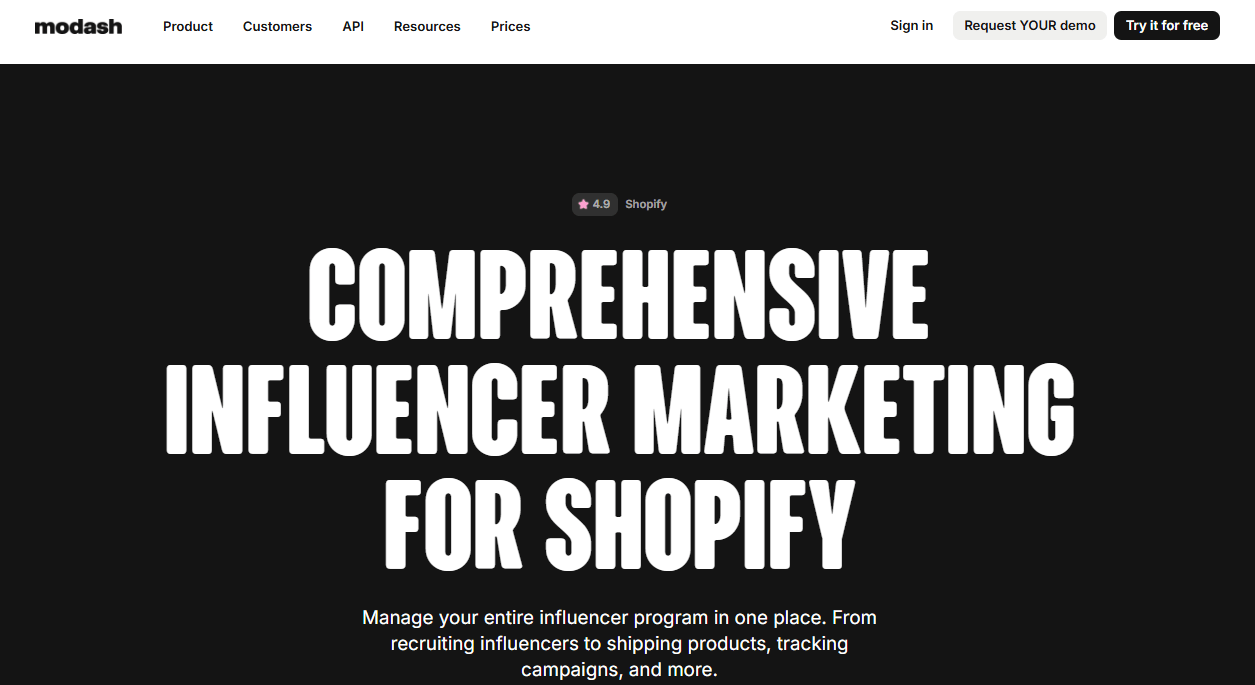
Modash es una plataforma de marketing de influencers enfocada en descubrimiento, alcance y seguimiento de desempeño, con un fuerte énfasis en flujos de trabajo de afiliados. Está construida para ayudar a las marcas a encontrar creadores a escala y conectar colaboraciones a resultados medibles.
Mejor Para
Modash es más adecuada para marcas que ejecutan programas de creadores centrados en afiliados donde enlaces rastreables, códigos de descuento e informes de conversión importan más que operaciones manuales de campaña.
Cómo Funciona con Mercados
Modash soporta flujos de trabajo estilo mercado permitiendo que las marcas generen enlaces rastreables y códigos de descuento a través de su integración con Shopify, luego rastrean redenciones y ventas de afiliados vinculadas a cada creador.
Esto es útil cuando los creadores están dirigiendo tráfico a páginas de productos o vitrinas y deseas una vista clara de quién está generando ingresos. También soporta configuración de comisiones y pagos para que puedas ejecutar colaboraciones continuas de estilo afiliado sin construir procesos separados para rastreo y pago.
Precios
Los precios de Modash se facturan anualmente:
- Essentials: $199/mes
- Performance: $499/mes
- Enterprise: Precios personalizados
Facilidad de Uso (UX/UI)
Modash está diseñada alrededor de una experiencia de descubrimiento rápida, y la plataforma se posiciona como "mejor de su clase" para búsqueda y filtrado. El flujo de trabajo está simplificado desde el descubrimiento hasta el alcance y seguimiento, lo que reduce la necesidad de cambiar entre herramientas durante la ejecución. Debido a que se enfoca en un conjunto más pequeño de características principales, la interfaz típicamente se siente menos saturada que las suites empresariales.
Servicio al Cliente
Modash se describe como teniendo soporte sólido e incorporación en las notas de demostración. El posicionamiento del producto enfatiza confiabilidad y capacidad de respuesta en lugar de ofrecer servicios gestionados pesados. Para equipos que desean moverse rápidamente con una plataforma de autoservicio, el soporte tiende a enmarcarse como práctico y enfocado en implementación.
Características Clave
- Base de Datos Pública Grandes de Creadores:Modash proporciona acceso a 350 millones+ de perfiles públicos y no se limita a creadores que han optado por participar. Esto es útil cuando necesita encontrar creadores en nichos, regiones o idiomas específicos sin restricciones de base de datos. También ayuda a las marcas a escalar rápidamente el reclutamiento para promociones de marketplace.
- Seguimiento de Afiliados a través de Shopify: Modash conecta enlaces de afiliados, códigos de descuento y seguimiento UTM a datos de rendimiento de Shopify . Las marcas pueden monitorear el uso de códigos e ingresos atribuidos vinculados a la actividad del creador. Esto crea una línea directa entre promociones de creadores y resultados de comercio.
- Alcance Masivo: Modash admite alcance basado en plantillas y envío en masa, con límites mensuales según el plan. Esto es especialmente útil para programas de afiliados donde las tasas de respuesta son más bajas y el volumen es importante. También mantiene el seguimiento de comunicaciones en un solo lugar a través de integraciones de bandeja de entrada.
- Análisis de Calidad del Creator y de la Audiencia: Modash incluye análisis como verificación de seguidores falsos, datos demográficos de audiencia y puntos de referencia de engagement. Esto ayuda a las marcas a evitar gastar en creadores con audiencias de baja calidad. También hace que la evaluación del creador sea más consistente cuando está reclutando a escala.
- Configuración de Comisiones + Flujos de Pago: Las marcas pueden definir niveles de comisión y realizar un seguimiento de las ganancias del creador. La plataforma admite paneles de creador donde los influencers pueden ver el rendimiento e ingresar detalles de pago. Esto facilita la ejecución de promociones de marketplace estilo afiliados sin reconciliación manual cada mes.
Limitaciones de la Plataforma
La integración de comercio de Modash se enfoca en Shopify, por lo que las marcas que operan en entornos que no son Shopify pueden necesitar flujos de seguimiento alternativos. La plataforma tampoco incluye herramientas integradas de licencia de contenido, por lo que los derechos de uso típicamente deben manejarse en contratos.
8. CreatorIQ
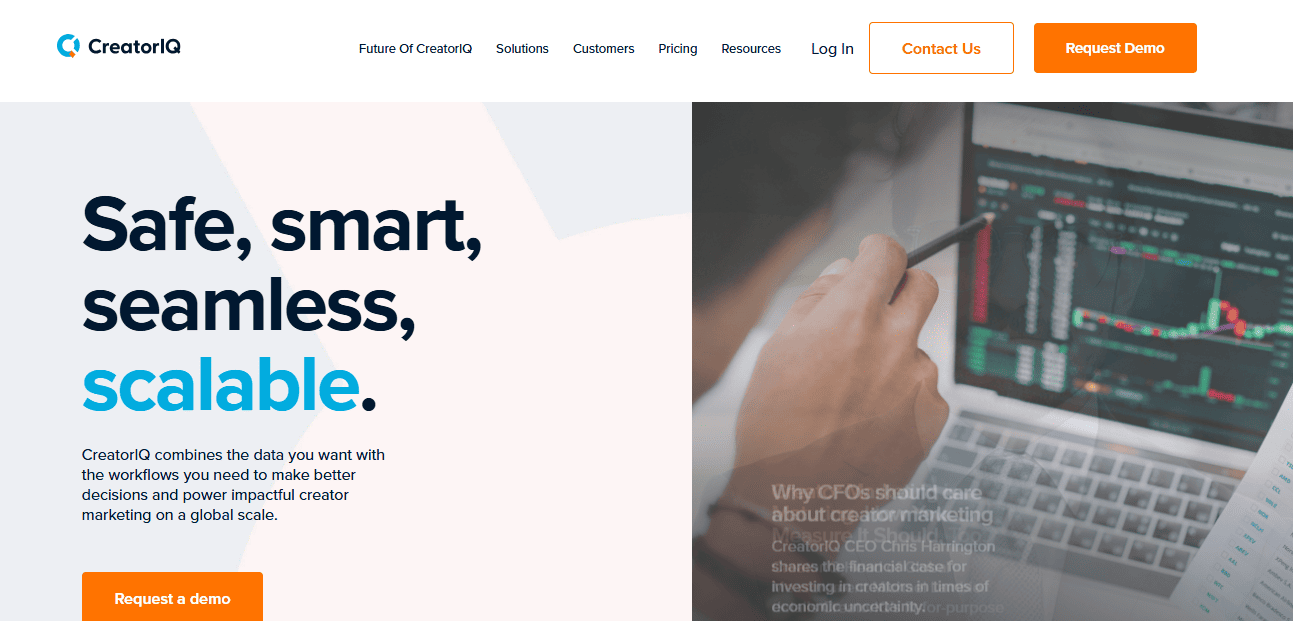
CreatorIQ es una plataforma empresarial de influencer marketing diseñada para respaldar el ciclo de vida completo del creador, desde el descubrimiento y la activación hasta los informes y pagos. Está construida para programas grandes que necesitan datos confiables, informes personalizables y gobernanza estructurada.
Mejor Opción Para
CreatorIQ es más adecuada para marcas empresariales que gestionan programas de creadores de alto volumen que requieren informes avanzados, aprobaciones internas y pagos centralizados.
Cómo Funciona con Marketplaces
CreatorIQ admite programas estilo marketplace ayudando a las marcas a administrar colaboraciones de creadores vinculadas a resultados de comercio a través de la generación de enlaces/códigos y flujos de trabajo de informes de campaña. Se integra con Shopify para flujos de trabajo de gifting e incluye capacidades de afiliados, aunque los informes de conversión para afiliados pueden ser más manuales que algunas herramientas orientadas a afiliados.
La fortaleza de la plataforma es dar a los equipos grandes visibilidad centralizada en el rendimiento del creador y los resultados de campaña, que se pueden utilizar para evaluar promociones de marketplace junto con actividad de influencer más amplia.
Precios
CreatorIQ utiliza contratos anuales con paquetes escalonados:
- Básico: $35 000/año (1000 creadores, 3 puestos)
- Estándar: $50 000/año (2500 creadores, 5 puestos)
- Profesional: $90 000/año (5000 creadores, 10 puestos)
- Empresarial: $200 000/año (7500 creadores, 20 puestos)
- Add-on Creator Connect: $15 000/año
Facilidad de Uso (UX/UI)
CreatorIQ está construido para flujos de trabajo empresariales, por lo que la plataforma es rica en funciones y está estructurada en torno a aprobaciones, paneles y configuración de campañas. La interfaz de usuario está diseñada para respaldar programas complejos, lo que puede requerir capacitación para equipos nuevos en software de influencer empresarial. Una vez configurado, los informes y las vistas de campaña están diseñados para ser amigables con los ejecutivos y fáciles de compartir a través de enlaces en vivo.
Soporte al Cliente
CreatorIQ incluye implementación dedicada y soporte de éxito del cliente como parte de su posicionamiento. La plataforma enfatiza la incorporación práctica, apoyo de planificación trimestral y orientación estratégica en lugar de un modelo puramente basado en tickets. Este nivel de soporte está diseñado para ayudar a los equipos empresariales a operacionalizar programas complejos rápidamente y mantenerlos a lo largo del tiempo.
Características Clave
- Búsqueda Pública de Creadores Sin Opt-In:CreatorIQ puede buscar creadores públicos sin requerir la aceptación en la base de datos de la plataforma. Esto expande el descubrimiento más allá de redes de solo invitación y apoya necesidades de reclutamiento amplias. También ayuda a las marcas a evaluar creadores utilizando datos de perfil completo y trabajo previo con marcas.
- CRM empresarial + Colaboración: La plataforma incluye un CRM privado donde los equipos pueden almacenar creadores, etiquetarlos, agregar notas y realizar un seguimiento del historial de campañas. Esto apoya la gestión de relaciones a largo plazo en todas las promociones recurrentes del mercado. También mantiene la colaboración interna organizada para grandes grupos de partes interesadas.
- Informes personalizados + Paneles en directo: CreatorIQ proporciona paneles personalizables e informes en directo creados mediante integraciones directas de API de plataforma. Esto facilita la estandarización de informes en todas las campañas y el intercambio de resultados con las partes interesadas sin requerir inicios de sesión. También apoya elementos visuales listos para ejecutivos para la toma de decisiones.
- Pagos + Cumplimiento fiscal: Los pagos se gestionan dentro de la plataforma de manera centralizada, lo que reduce la carga operativa de los equipos de finanzas. CreatorIQ también apoya el cumplimiento fiscal y la documentación como parte de los flujos de trabajo de pago. Esto importa para las marcas que pagan a muchos creadores en múltiples iniciativas del mercado.
- Páginas de aplicación Creator Connect: Creator Connect proporciona una página de registro marcada donde los creadores pueden solicitar trabajar con su marca. Esto apoya el reclutamiento entrante y mantiene la ingesta de creadores estructurada. También alimenta automáticamente creadores aprobados a su CRM.
Limitaciones de la plataforma
CreatorIQ requiere contratos anuales y un presupuesto inicial más alto, lo que puede ser restrictivo para programas más pequeños. Se señala que los informes de conversión de afiliados son manuales en lugar de completamente automatizados, dependiendo de la configuración.
9. Sprout Social
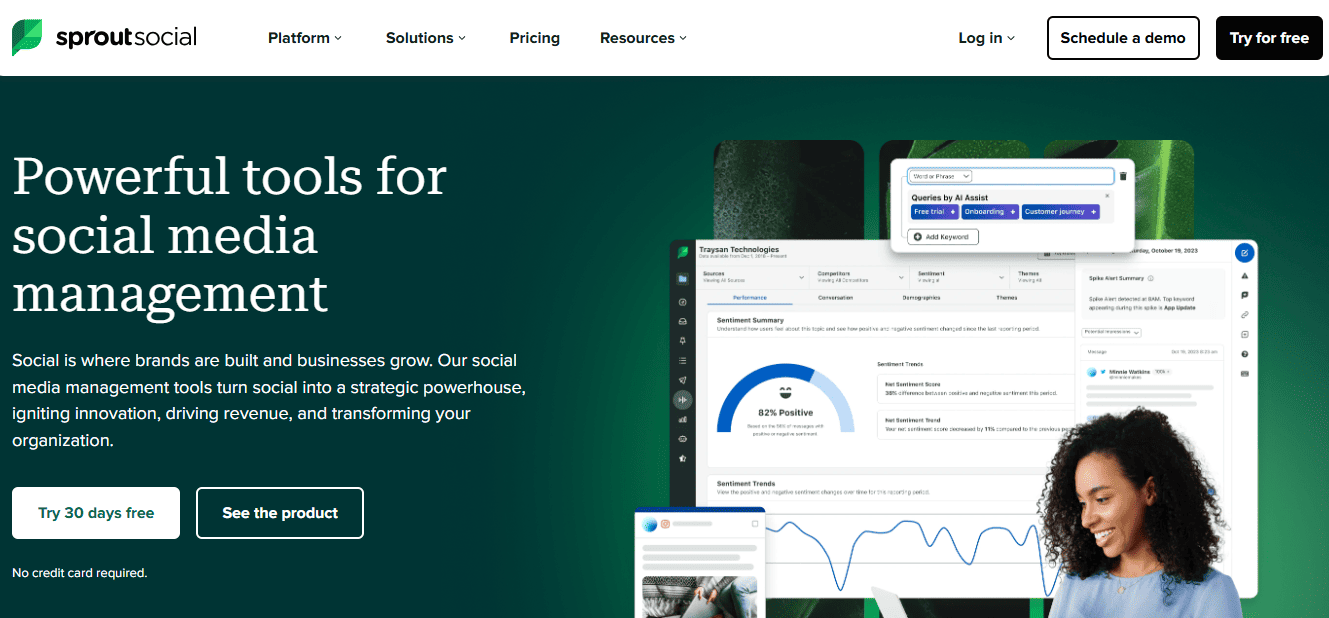
Sprout Social es una plataforma de gestión de redes sociales que también ofrece capacidades de marketing de influencers, incluido descubrimiento, flujos de trabajo de campañas y análisis. Su suite de influencers enfatiza la puntuación de ajuste de marca, la seguridad de marca y la profundidad de informes.
Mejor para
Sprout Social es mejor para marcas que desean que el marketing de influencers sea respaldado por análisis sólidos, controles de seguridad de marca e informes listos para presentación.
Cómo funciona con los mercados
Sprout Social apoya promociones de estilo de mercado habilitando flujos de trabajo de regalo y programa de afiliados a través de integraciones de Shopify, incluido el seguimiento de código de descuento y la atribución de ventas vinculada a creadores. Las marcas pueden gestionar listas de creadores, ejecutar campañas con flujos de trabajo de aprobación y realizar un seguimiento de métricas de desempeño como participación y EMV junto con resultados comerciales.
Esto es útil cuando desea que las promociones de influencers impulsen acciones medibles, como compras, mientras mantiene los informes y la gobernanza estructurados.
Precios
Sprout Social utiliza precios basados en asientos con compromisos anuales:
- $1.599 por usuario/mes (mínimo de 12 meses)
- Usuarios adicionales: $600/mes por puesto
Facilidad de uso (UX/UI)
Sprout Social se posiciona como una plataforma pulida con un fuerte diseño de panel y informes exportables. Los flujos de trabajo de campaña están estructurados, con etapas claras para revisión, propuestas y aprobaciones de contenido. Algunas capacidades, como el alcance masivo, pueden requerir aclaración dependiendo de cómo planee operar el alcance a escala.
Atención al cliente
Sprout Social generalmente se describe como de nivel empresarial, con incorporación y recursos de soporte alineados con equipos que necesitan informes y gobernanza consistentes. Las notas de demostración enfatizan plantillas integradas, flujos de trabajo estructurados y herramientas de exportación que reducen la fricción en la ejecución diaria. La experiencia de soporte puede variar según el tamaño de la cuenta, pero Sprout está posicionado para equipos más grandes que dependen de documentación y procesos repetibles.
Características clave
- Puntuación de ajuste de marca:Sprout Social incluye una puntuación de coincidencia impulsada por IA para evaluar qué tan estrechamente un creador se alinea con sus criterios de marca. Esto ayuda a los equipos a estandarizar la selección de creadores más allá de recuentos de seguidores y tasas de engagement. Es especialmente útil cuando se ejecutan promociones de marketplace donde la alineación de marca afecta el rendimiento de conversión.
- Filtros de Seguridad de Marca: La plataforma permite que las marcas excluyan creadores basándose en palabras clave marcadas o categorías de riesgo. Esto ayuda a reducir el riesgo reputacional cuando los creadores promocionan productos a audiencias amplias. También facilita que las listas abreviadas de creadores sean más fáciles de aprobar internamente.
- Flujos de Trabajo de Aprobación de Contenido: Los creadores pueden enviar borradores de publicaciones para revisión antes de publicarlas. Esto mantiene la mensajería del producto consistente para promociones de marketplace. También reduce la posibilidad de corregir problemas después de que el contenido se publique.
- Benchmarking Competitivo: Sprout incluye informes de benchmarking que muestran la superposición de creadores y la actividad de competidores. Esto ayuda a las marcas a entender qué creadores ya están activos en su categoría. También respalda una selección de creadores más informada para campañas de marketplace.
- Informes Exportables: Los informes se pueden exportar en formatos PDF, PNG o JPEG para compartir internamente. Esto es útil para las partes interesadas que desean resúmenes rápidos del rendimiento de la campaña. También ayuda a los equipos a empaquetar resultados de promoción de marketplace sin trabajo de formato manual.
Limitaciones de la Plataforma
Sprout Social tiene un precio por usuario con compromisos anuales, lo que puede volverse costoso a medida que los equipos crecen. La plataforma tampoco incluye gestión integrada de derechos UGC, por lo que las licencias generalmente se manejan en contratos fuera de la herramienta.
10. GRIN
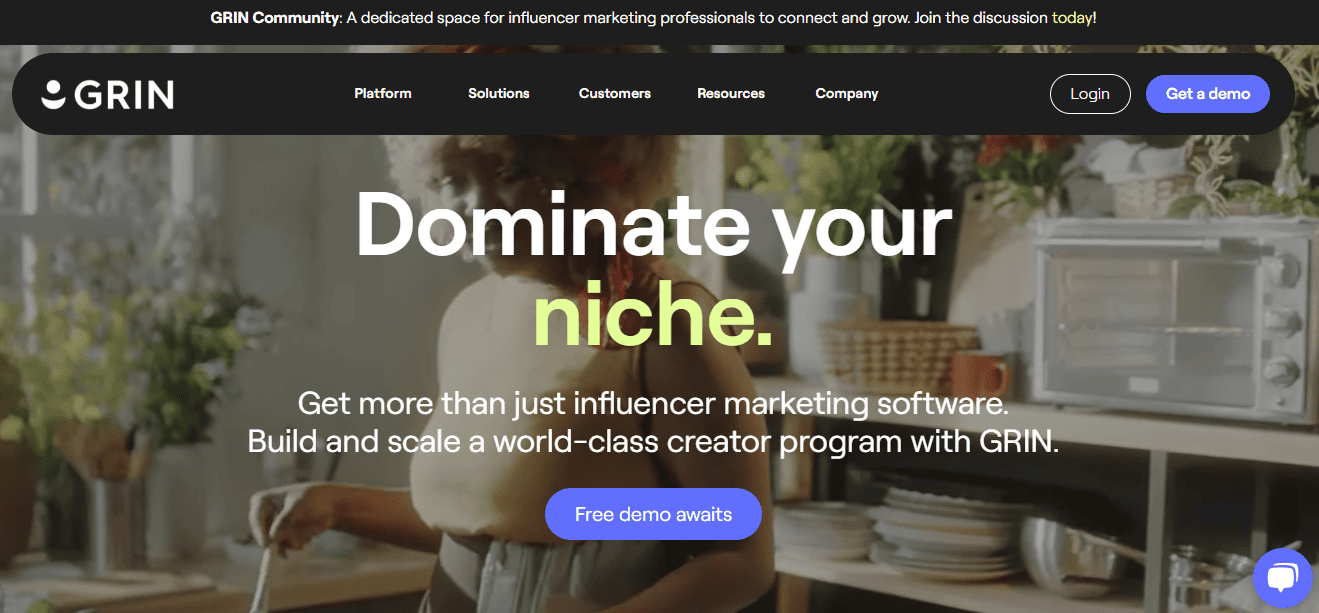
GRIN es una plataforma de influencer marketing construida para marcas de eCommerce que desean ejecutar programas de creadores de extremo a extremo, incluida CRM, outreach, gifting y seguimiento de afiliados. Se posiciona como un sistema todo en uno para gestionar relaciones con creadores vinculadas a resultados de ingresos.
Mejor Opción Para
GRIN es más adecuado para marcas de eCommerce establecidas que ejecutan programas de creadores en curso que dependen del seeding de productos, seguimiento de afiliados y flujos de trabajo repetibles.
Cómo Funciona con Marketplaces
GRIN respalda programas de influencer al estilo marketplace conectando flujos de trabajo de gifting, comunicaciones con creadores y atribución de afiliados en un único sistema operativo. Las marcas pueden generar enlaces de seguimiento y códigos, rastrear conversiones e ingresos vinculados a creadores y gestionar pagos de comisiones a través de pagos integrados. Este modelo funciona bien cuando los creadores impulsan ventas medibles a través de promociones al estilo de tienda o campañas de afiliados conectadas a canales de comercio.
Precios
GRIN utiliza precios personalizados con compromisos anuales:
- Los precios comienzan alrededor de $2,500/mes y pueden escalar a $10,000+/mes
- Compromiso mínimo de 12 meses
- Los precios varían según las características y el volumen de creadores
Facilidad de Uso (UX/UI)
GRIN se posiciona como un sistema unificado que centraliza outreach, gestión de creadores, gifting e informes. Muchas marcas aprecian tener flujos de trabajo centrales en un solo lugar en lugar de operar en múltiples herramientas. Algunos usuarios informan que el rendimiento y la usabilidad pueden variar, especialmente cuando se trata de volúmenes más grandes de creadores y contenido.
Servicio al Cliente
GRIN ofrece onboarding y soporte de estratega opcional, y algunas marcas valoran tener orientación práctica durante la configuración. La retroalimentación sobre la calidad del soporte es mixta, con algunos usuarios informando de asistencia útil y otros mencionando retrasos o problemas sin resolver. Para los equipos que ejecutan flujos de trabajo complejos, la capacidad de respuesta del soporte puede impactar materialmente la suavidad de las operaciones en curso.
Características Clave
- Integraciones Nativas de eCommerce: GRIN está construido para integrarse con plataformas de eCommerce y herramientas operativas principales, incluyendo Shopify y PayPal. Esto respalda flujos de trabajo como seeding de productos, generación de códigos y pagos dentro de un sistema. También ayuda a las marcas a atribuir el rendimiento de los creadores a resultados de ingresos.
- Portales de Creadores: GRIN proporciona portales amigables para creadores donde los influencers pueden ver resúmenes, contratos, códigos y entregas. Esto reduce la comunicación continua y mantiene las colaboraciones estructuradas. También ayuda a las marcas a ejecutar programas repetibles en muchos creadores.
- Biblioteca UGC: Todo el contenido del creador se almacena en una biblioteca búsqueda, incluidas las Historias de Instagram en las notas proporcionadas. Esto facilita la reutilización de activos en anuncios, correo electrónico y contenido del sitio web cuando se tienen los derechos. También reduce la recopilación manual de activos.
- Pagos En La Plataforma: GRIN permite pagar a los creadores a través de PayPal directamente dentro de la plataforma. Esto puede reducir la fricción en los pagos y mantener los pagos vinculados al desempeño de la campaña. También admite programas basados en comisiones sin requerir flujos de pago externos.
- Asistente de IA (Gia): GRIN incluye un asistente de IA diseñado para ayudar con el descubrimiento de creadores y la eficiencia del programa. Puede sugerir creadores y apoyar los flujos de trabajo de la campaña. La intención es acelerar la toma de decisiones sin reemplazar la supervisión humana.
Limitaciones de la Plataforma
GRIN a menudo se considera costoso, y los contratos suelen ser anuales, lo que puede limitar la flexibilidad de programas más pequeños. Los usuarios también reportan problemas ocasionales en la plataforma, como carga lenta o errores, especialmente en torno al manejo de contenido e integraciones.
Cómo Elegir el Software de Marketing de Influencers Adecuado para Mercados
Elegir el software de marketing de influencers adecuado depende menos de la cantidad de funciones y más de qué tan bien la plataforma se alinea con sus objetivos operativos y configuración de mercado.
- Si necesita seguimiento de todo el embudo y medición de desempeño: Las marcas que quieren entender cómo la actividad del influencer se traduce en ingresos reales del mercado deben priorizar plataformas construidas en torno a la atribución y los informes. Estas herramientas conectan las colaboraciones de creadores con clics, conversiones y desempeño de ventas en lugar de enfocarse solo en métricas de engagement.
- Si su prioridad principal es el descubrimiento e alcance de influencers: Algunas marcas principalmente necesitan ayuda para encontrar creadores y gestionar el alcance de manera eficiente. Las plataformas enfocadas en descubrimiento son a menudo la opción correcta cuando el marketing de influencers aún se encuentra en una fase de crecimiento temprana o cuando las campañas se basan en probar muchos creadores rápidamente. Estas soluciones típicamente sobresalen en filtros de búsqueda, bases de datos de creadores y flujos de trabajo de comunicación, pero pueden depender de sistemas externos para un seguimiento de desempeño de mercado más profundo.
- Si está ejecutando programas de gifting o afiliados a escala: Las marcas que envían productos a una gran cantidad de creadores o administran colaboraciones basadas en comisiones deben buscar plataformas que simplifiquen el cumplimiento y la coordinación de afiliados. El software que conecta seeding de productos, gestión de creadores y promociones rastreadas ayuda a reducir la sobrecarga operativa a medida que los programas crecen. Esto se vuelve especialmente importante cuando la actividad del influencer soporta directamente las ventas continuas del mercado.
En general, las marcas que utilizan mercados tienden a beneficiarse más de plataformas que combinan descubrimiento, gestión de relaciones y visibilidad de desempeño en un sistema, permitiendo que el marketing de influencers escale junto con el crecimiento general del comercio en lugar de funcionar como un flujo de trabajo separado.
Reflexiones Finales
Elegir el software de marketing de influencers adecuado depende en última instancia de qué tan bien la plataforma se alinea con su estrategia de crecimiento del mercado. Algunas herramientas se especializan en descubrimiento de influencers, otras se enfocam en producción de contenido de creadores o coordinación de campañas, mientras que un grupo más pequeño conecta la actividad del influencer directamente con resultados de ingresos medibles.
Para marcas que venden a través de mercados, las plataformas más efectivas son aquellas que le permiten gestionar relaciones de creadores mientras mantiene visibilidad en el desempeño, la actividad de afiliados y el ROI en un solo lugar.
Entre las plataformas comparadas, Influencer Hero destaca como el mejor software de marketing de influencers para mercados, particularmente para marcas que buscan ejecutar programas de creadores impulsados por desempeño sin agregar complejidad operativa. Reserve una demostración para ver cómo Influencer Hero funciona con su configuración de mercado y todo lo que la plataforma tiene para ofrecer.
Resumen
Este es un texto dentro de un bloque div.
Este es un texto dentro de un bloque div.
Tarifa/Mes
Opiniones de Shopify
Este es un texto dentro de un bloque div.
Este es un texto dentro de un bloque div.
Este es un texto dentro de un bloque div.
Este es un texto dentro de un bloque div.
Este es un texto dentro de un bloque div.
Este es un texto dentro de un bloque div.
Este es un texto dentro de un bloque div.
Este es un texto dentro de un bloque div.
Este es un texto dentro de un bloque div.
Este es un texto dentro de un bloque div.
Este es un texto dentro de un bloque div.
Este es un texto dentro de un bloque div.
Este es un texto dentro de un bloque div.
Este es un texto dentro de un bloque div.
Este es un texto dentro de un bloque div.
Este es un texto dentro de un bloque div.
Este es un texto dentro de un bloque div.
Este es un texto dentro de un bloque div.
Este es un texto dentro de un bloque div.
Este es un texto dentro de un bloque div.
Este es un texto dentro de un bloque div.
Leer más

Preguntas frecuentes
¿Cuál es el mejor software de marketing de influencers para vendedores de mercado?

El mejor software depende de si su enfoque es el descubrimiento, la producción de contenido o el seguimiento del rendimiento. Plataformas como Modash o Heepsy funcionan bien para el descubrimiento, mientras que Influencer Hero proporciona una solución más completa para gestionar campañas de influencers y rastrear los ingresos impulsados por el mercado en un único sistema.
¿Puede el software de marketing de influencers rastrear las ventas de mercados?
Sí, muchas plataformas modernas admiten flujos de trabajo de mercado a través de enlaces de afiliados, códigos de descuento o integraciones que atribuyen conversiones a creadores individuales. Influencer Hero es particularmente fuerte en esta área porque conecta la actividad del influencer directamente con informes de rendimiento y seguimiento de ROI.
¿Necesito un CRM completo para influencers si vendo a través de marketplaces?
Si trabajas con múltiples creadores o diriges campañas continuas de afiliación o gifting, un CRM se vuelve importante para gestionar la comunicación, los entregables y el historial de desempeño. Plataformas como GRIN, CreatorIQ e Influencer Hero ofrecen gestión centralizada de creadores, aunque Influencer Hero suele ser más flexible para escalar programas sin complejidad empresarial.
¿Cuáles son las mejores plataformas para gifting de influencers y programas de afiliados?
Herramientas como Insense, Aspire y GRIN admiten flujos de gifting, mientras que plataformas enfocadas en afiliados como Modash ayudan a rastrear comisiones. Influencer Hero combina tanto la automatización de gifting como el seguimiento de afiliados, lo que facilita la gestión de colaboraciones de marketplace a escala.
¿Cómo elijo entre plataformas de influencers empresariales y flexibles?
Las herramientas empresariales como CreatorIQ o Captiv8 suelen ser adecuadas para organizaciones grandes con equipos dedicados y presupuestos anuales. Las marcas DTC y de mercado en crecimiento suelen preferir plataformas como Influencer Hero que ofrecen precios escalables y visibilidad completa de campañas sin requerir compromisos empresariales a largo plazo.



Blogs más populares


Impulsa tu ROI con Marketing de Influencers
Únete a más de 1.200 marcas y 150+ agencias que escalan sus programas de creadores con Influencer Hero.