
Beste Influencer-Marketing-Software für Storefronts

March 6, 2026
|
Veröffentlicht

October 12, 2026
|
Aktualisiert

14 Min
|
Lektüre

Influencer Performance Marketing Kurs | GUTSCHEIN: IMC100

Lucía Zabala
| Author

Steigern Sie Ihren ROI mit Influencern

Globale Influencer-Datenbank
ALL-IN-ONE Plattform
CRM, Affiliate, UGC & More
Beste Influencer-Marketing-Software für Storefronts
Die Verwaltung eines Creator-Programms sollte nicht erfordern, dass Sie ein Dutzend Registerkarten offen haben. Für DTC-Gründer und Vermarkter ist die Herausforderung nicht nur die Talentsuche; es geht um die Bewältigung der Logistik von Discovery, Gifting und Affiliate-Tracking ohne manuellen Aufwand.
Für Marken auf Plattformen wie Shopify oder WooCommerce besteht das Ziel darin, das Kauferlebnis reibungslos zu gestalten. Hier kommen Creator-Storefronts ins Spiel, mit denen Ihre Influencer ihre Liebingsprodukte direkt in Ihrem Ökosystem kuratieren können. Wenn Sie nach der besten Influencer-Marketing-Software für Storefronts suchen, benötigen Sie eine Lösung, die die Lücke zwischen Creator-Inhalten und Ihrem eCommerce-Checkout überbrückt.
Hier sind 10 Plattformen, die wir erkunden werden und die sich mit Storefronts integrieren, um Sie zu skalieren:
Bewertungskriterien
- Integration & Kompatibilität mit Storefronts: Wie gut jede Plattform mit Stores funktioniert, die auf Storefronts aufgebaut sind, entweder durch native Integrationen oder kompatible Workflows, die in bestehende eCommerce-Operationen passen.
- Influencer-Kampagnenfunktionen: Das Ausmaß, in dem jede Plattform Core-Influencer-Marketing-Use-Cases unterstützt, einschließlich Creator-Discovery, Outreach, Beziehungsmanagement, Gifting- und Seeding-Kampagnen sowie Affiliate-basierte Zusammenarbeit.
- Performance-Tracking & Berichterstattung:Die Möglichkeit, die Influencer- und Kampagnen-Performance zu verfolgen, einschließlich Konversionen, Umsatzzuordnung und ROI, was für eCommerce-Teams mit Fokus auf messbare Ergebnisse unverzichtbar ist.
- Automatisierung & Workflow-Effizienz: Wie effektiv die Plattform zeitaufwändige Aufgaben wie Outreach, Kampagnenverwaltung, Follow-ups und Berichterstattung automatisiert – besonders wichtig für schlanke Teams, die Influencer-Programme im großen Maßstab verwalten.
- Benutzerfreundlichkeit (UX/UI): Das Gesamtbenutzer-Erlebnis, einschließlich Dashboard-Design, Navigation, Onboarding-Prozess und Lernkurve für Teams, die bereits auf Storefronts arbeiten.
- Skalierbarkeit für wachsende Marken: Wie gut die Plattform Wachstum unterstützt, von kleinen Teams, die ihre erste Influencer-Kampagne durchführen, bis hin zu etablierten DTC-Marken, die hunderte oder tausende Creator verwalten.
- Preisgestaltung & Vertragliche Flexibilität: Transparenz der Preisgestaltung, Verfügbarkeit flexibler Pläne und ob die Plattform wachsende Programme unterstützt, ohne frühzeitig zu langfristigen Verpflichtungen zu zwingen.
- Kundenunterstützung & Onboarding: Verfügbarkeit und Qualität von Support-Ressourcen, einschließlich Onboarding-Hilfe, Dokumentation, Reaktionszeiten und laufender Customer-Success-Support.
Beste Influencer-Marketing-Software für Storefronts
Um Ihnen die Wahl zu erleichtern, haben wir die Top-Plattformen verglichen, die Creator-Storefront-Integrationen bieten. Während einige für globale Unternehmen mit massiven Budgets entwickelt wurden, sind andere darauf ausgerichtet, skalierenden DTC-Marken zu helfen, ihren gesamten Workflow von einem einzigen Dashboard aus zu automatisieren.
Die folgende Tabelle gibt einen Überblick darüber, wie diese Plattformen in Bezug auf Kosten, Fokus und das, was sie auf dem Markt tatsächlich auszeichnet, verglichen werden.
| Plattform | Am besten geeignet für | Preis beginnt bei | Wichtigstes Unterscheidungsmerkmal |
|---|---|---|---|
| Influencer Hero | Skalierung von DTC-Marken und Agenturen, die end-to-end-Automatisierung benötigen. | $649/Monat | All-in-one-Automatisierung (CRM + Gifting + Storefronts) zu einem skalierbaren Preis. |
| GRIN | Enterprise-eCommerce-Marken mit großen internen Teams. | $2.085/Monat. $25.000/Jahr, Jahresvertrag erforderlich | Tief integrierter Shopify-Workflow mit Fokus auf Beziehungsmanagement. |
| Aspire | Mittelgroße bis große Marken, die eingehende Creator-Bewerbungen priorisieren. | $2.300/Monat | Robuster Creator-Marketplace und Workflows für Kampagnen mit hohem Volumen. |
| Upfluence | Marken, die bestehende Kunden in Affiliate umwandeln möchten. | Ca. $1.276/Monat | Starkes „Live Capture"-Tool zur Identifizierung einflussreicher Käufer auf Ihrer Website. |
| CreatorIQ | Globale Konzerne, die erweiterte Daten und Governance benötigen. | Ca. $35.000/Monat | Enterprise-Reporting und White-Label-Creator-Portale. |
| Modash | Marken mit Fokus auf umfassende Entdeckung und Creator-Überprüfung. | $199/Monat | Massive Datenbank mit 350+ Millionen Creatoren und leistungsstarke Audience-Filter. |
| LTK | Mode- und Lifestyle-Marken, die eine kuratierte Shopping-App suchen. | Individuell | Zugang zur proprietären LTK-Shopping-App und ihrem kuratierten Netzwerk. |
| Shopify Collabs | Neue Shopify-Stores, die ihr erstes Gifting-Programm testen. | Kostenlos | Native Shopify-App, einfach einzurichten, ohne monatliche Gebühren. |
| Later Influence | Teams, die Social-Media-Planung mit Influencer-Management kombinieren. | $28.500/Jahr + $5.000 Onboarding-Gebühr | Synchronisiert Influencer-Inhalte direkt mit Social-Media-Planungstools. |
| Captiv8 | Unternehmen, die tiefe Social Listening und Wettbewerbseinblicke benötigen. | Ca. $25.000/Jahr + Affiliate & Storefront Add-On: 20.000 - $30.000/Monat | KI-gestützte Sentiment-Analyse und Channel-übergreifende Brand-Safety-Tools. |
1. Influencer Hero
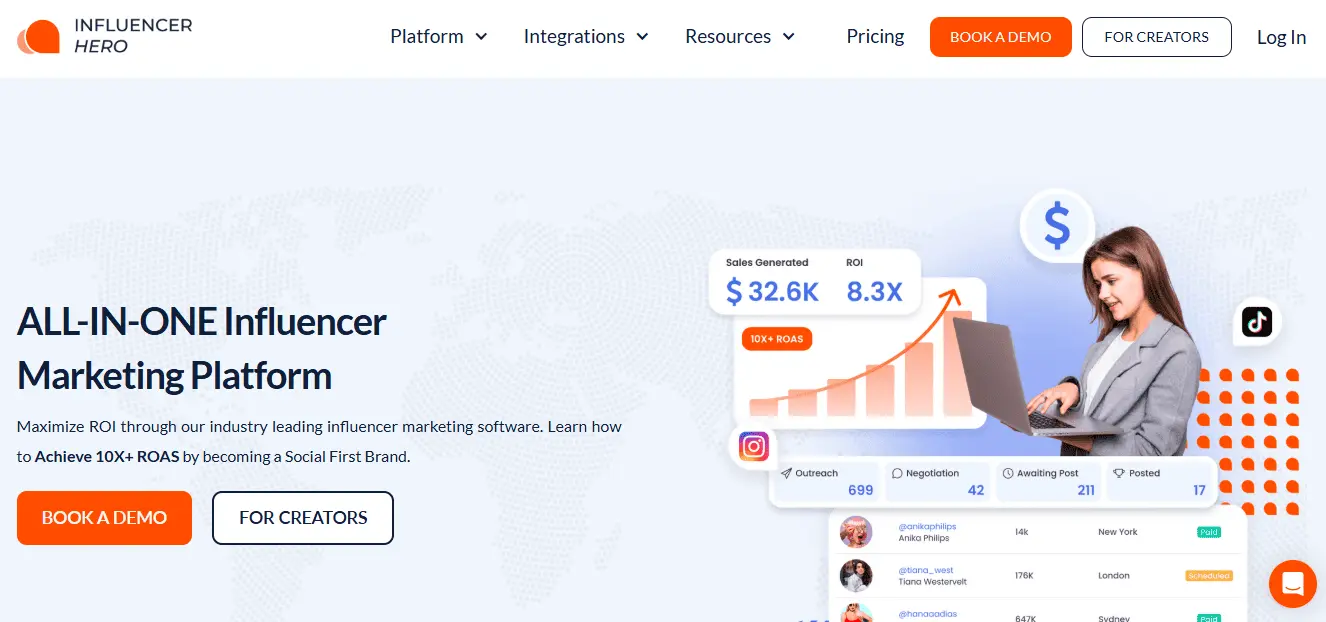
Influencer Hero ist eine All-in-one-Influencer-Marketing-Plattform, die eCommerce-Marken hilft, Creator-Programme durch Automatisierung zu skalieren. Sie zentralisiert Entdeckung, Outreach, Gifting und Affiliate-Tracking in einem Dashboard und zeichnet sich durch Storefronts aus, die Creatorn personalisierte, hochkonvertierbare Shopping-Seiten bieten, die direkte Verkäufe fördern.
Beste Eignung für: Schnell wachsende DTC-Marken und Agenturen, die Hunderte von Creator-Beziehungen gleichzeitig verwalten müssen, ohne die Kopfzahl zu erhöhen.
So funktioniert es mit Storefronts: Influencer Hero verbindet sich mit Ihrem Produktkatalog und ermöglicht es Creatorn, brandgestützte Storefronts mit ihren Lieblingsprodukten zu erstellen. Die Plattform generiert automatisch nachverfolgbare Affiliate-Links und schafft so ein nahtloses Shopping-Erlebnis für Kunden und klare Zuordnung für Ihre Marke.
Preisgestaltung und Verpflichtung: Alle Pläne basieren auf einer 3-Monats-Verpflichtung, um ausreichend Zeit für die anfängliche Kampagnenskalierung und ROI-Verfolgung zu gewährleisten.
- Standard-Plan: $649/Monat (Kontaktieren Sie bis zu 1.000 Creator/Monat).
- Pro-Plan: $1.049/Monat (Kontaktieren Sie bis zu 5.000 Creator/Monat).
- Business-Plan:$2.490/Mo (Kontaktieren Sie bis zu 10.000 Creator pro Monat).
- Custom & Agency: Maßgeschneiderte Preisgestaltung basierend auf spezifischen Skalierungs- und Volumenanforderungen.
Benutzerfreundlichkeit (UX/UI): Die Plattform wurde nach einer „minimalen Klicks"-Philosophie entwickelt. Sie verfügt über ein intuitives, optimiertes Dashboard, das den gesamten Creator-Lebenszyklus organisiert. Von automatisierten E-Mail-Sequenzen bis hin zu anpassbaren Vorlagen ist die Benutzeroberfläche so gestaltet, dass ein einzelner Marketing-Manager komplexe Workflows übersehen kann, ohne sich überfordert zu fühlen.
Kundenunterstützung: Influencer Hero bietet 24/7 Live-Chat mit echten Menschen, reaktiven E-Mail-Support und ein umfassendes Help Center mit Video-Tutorials. Jeder Kunde erhält vom ersten Tag an einen dedizierten Account Manager zur Unterstützung bei der Strategie. Benutzer der Pro- und Business-Pläne profitieren auch von einem privaten Slack-Kanal für Echtzeit- und kontinuierliche Unterstützung.
Wichtigste Funktionen:
- Anpassbare Creator-Vitrinen: Geben Sie Influencern eine dedizierte URL, auf der sie ihre Lieblingsprodukte aus Ihrem Shop kuratieren können. Dies hält den Kunden in Ihrem Brand-Ökosystem, während gleichzeitig der soziale Beweis einer Creator-Empfehlung bereitgestellt wird.
- Automatisiertes Produktgeschenk: Synchronisieren Sie Ihren Shopify- oder WooCommerce-Shop, um den Versand von PR-Paketen zu automatisieren. Creator können ihre bevorzugten Größen oder Farben direkt auswählen, und die Plattform verfolgt die Sendung und nachfolgenden Content-Beiträge automatisch.
- Affiliate- & ROI-Tracking: Jede Storefront und jeder Link wird automatisch verfolgt. Sie können Echtzeitdaten zu Klicks, Conversions und Gesamtumsatz pro Influencer anzeigen, um Ihre leistungsstärksten Partner leicht zu identifizieren.
- UGC-Content-Bibliothek: Aggregieren Sie automatisch alle von Ihren Influencern erstellten Inhalte. Diese Bibliothek ermöglicht es Ihnen, hochwertige Inhalte zu sehen, herunterzuladen und für Ihre eigenen Social Ads oder Produktseiten umzugestalten und den Wert jeder Partnerschaft zu maximieren.
- Erweiterte Entdeckung & CRM: Durchsuchen Sie eine Datenbank mit über 250 Millionen Creatorn mit spezifischen Filtern für Engagement-Rate, Zielgruppendemografien und Standort. Nach der Findung können Sie die gesamte Beziehungsgeschichte im integrierten CRM verwalten.
Influencer Hero-Einschränkungen: Obwohl das Storefront-Setup intuitiv gestaltet ist, kann die Synchronisierung eines großen, komplexen Produktkatalogs zum ersten Mal einige anfängliche Überwachung erfordern, um sicherzustellen, dass alle Varianten korrekt zugeordnet sind. Darüber hinaus können Marken mit sehr nischigen oder technischen Produkten feststellen, dass sie mehr Zeit für die Anpassung ihrer Storefront-Layouts aufwenden müssen, um Produktspezifikationen ordnungsgemäß zu kommunizieren, obwohl das Support-Team bei diesem Übergang unterstützt.
2. GRIN
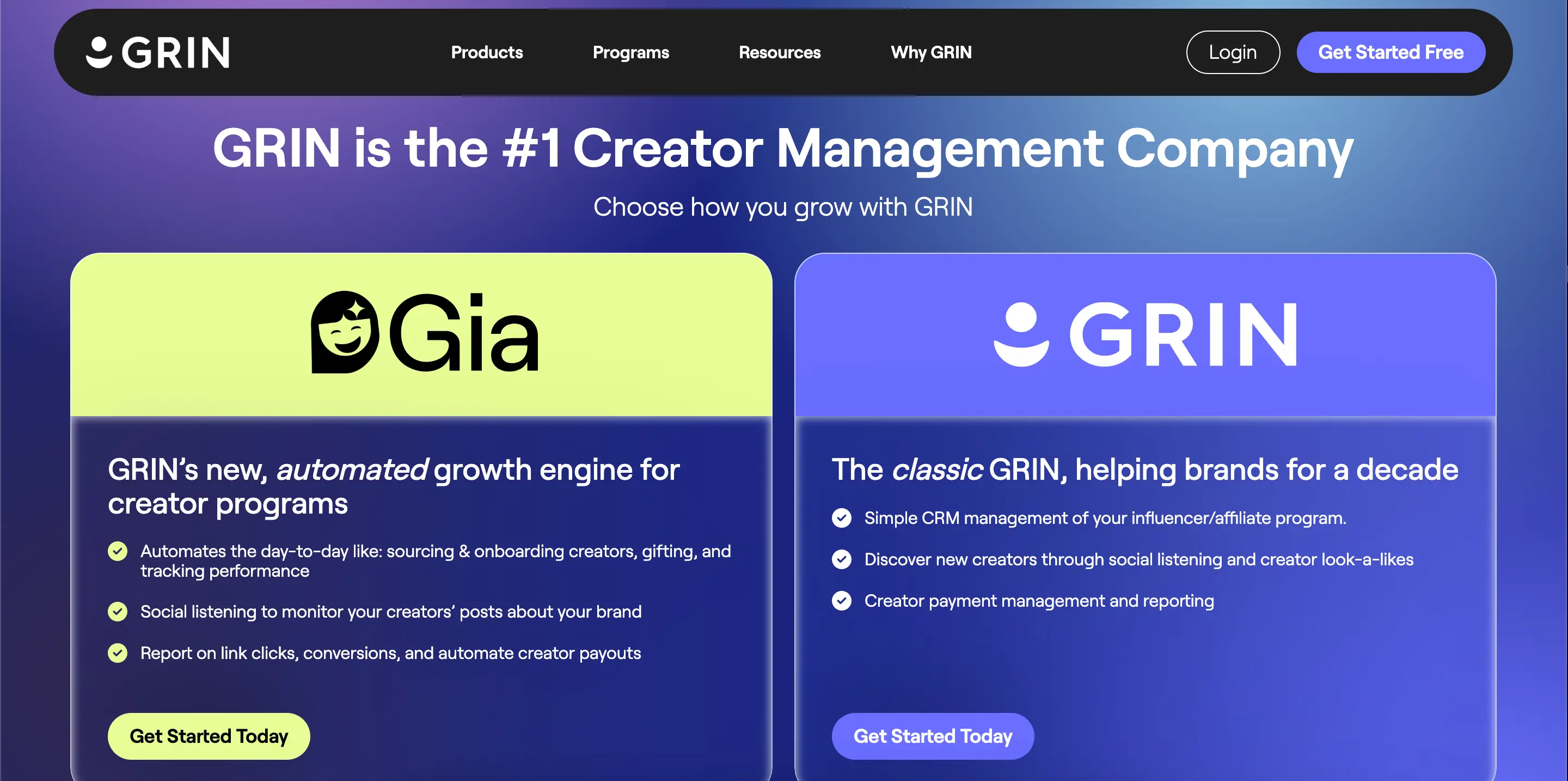
GRIN ist eine Enterprise-Grade-Creator-Management-Plattform, die stark auf das Beziehungsmanagement für eCommerce-Marken mit hohem Volumen ausgerichtet ist. Es wurde entwickelt, um Creator wie echte Brand-Partner zu behandeln und nicht nur als transaktionsbasierte Affiliates. Obwohl es historisch bekannt für seinen hochgradig maßgeschneiderten Enterprise-Fokus ist, hat es kürzlich Self-Service-Optionen eingeführt, um mit agiteren Plattformen zu konkurrieren.
Best Fit For: Große eCommerce-Marken mit etablierten internen Marketing-Teams, die eine „einzige Quelle der Wahrheit" für Tausende von Creator-Beziehungen und komplexe Logistik benötigen.
Funktionsweise mit Storefronts: GRIN bietet Creator-Storefronts durch seine Funktion „Creator Shops" (oft über seine CreatorCommerce-Integration). Dies ermöglicht es Creatorn, Co-Branded-, shopfähige Landing Pages zu erstellen, die im Shopify-Ökosystem der Marke leben. Diese Seiten ermöglichen es Influencern, ihre Lieblingsprodukte zu kuratieren, während GRIN das Backend-Attribution handhabt und sicherstellt, dass jeder Verkauf über die Storefront verfolgt und dem korrekten Partner zugeordnet wird.
Preisgestaltung: GRIN hat sich kürzlich zu einer flexibleren Preisgestaltung bewegt, beginnt aber historisch betrachtet bei einem viel höheren Schwellenwert als andere Tools.
Self-Serve/Lite-Pläne: Kürzlich angekündigt, um etwa $999/Monat für Marken anzubieten, die langfristige Verträge vermeiden möchten.
Core/Professional Plans: Typischerweise reichen sie von $2.100 bis $2.500/Monat.
Enterprise:Benutzerdefinierte Preisgestaltung, die $25.000/Jahr übersteigen kann und normalerweise eine jährliche Verpflichtung erfordert.
Benutzerfreundlichkeit (UX/UI): Benutzer beschreiben die Plattform im Allgemeinen als „robust aber komplex". Während die Benutzeroberfläche sauber ist, bedeutet die große Anzahl von Funktionen und Einstellungen, dass es eine erhebliche Lernkurve gibt. Rezensenten auf G2 und Reddit erwähnen häufig, dass es eines dedizierten Teammitglieds bedarf, um den Workflow wirklich zu beherrschen und die CRM-Daten organisiert zu halten.
Kundensupport: GRIN ist für sein umfassendes Onboarding und dedizierte Account Manager für Enterprise-Tiers bekannt. Einige Benutzer auf Bewertungsseiten haben jedoch bemerkt, dass der Support für Non-Enterprise-Tiers langsamer sein kann, und die Umstellung der Plattform auf Self-Service hat zu einigen Schwierigkeiten bei den Antwortzeiten geführt.
Wichtigste Funktionen:
- GIA (GRIN Intelligent Assistant): Ein KI-gestütztes Tool, das Vermarktern hilft, Outreach-E-Mails zu verfassen, „ähnliche" Creator zu finden und repetitive CRM-Aufgaben zu automatisieren.
- Umfassendes Affiliate-Hub: Über einfache Links hinaus ermöglicht das Hub Creator, ihre eigene Leistung zu sehen, auf Creative Briefs zuzugreifen und ihre Zahlungen in einem White-Label-Portal zu verwalten.
- Social Listening & Erwähnungen: Die Plattform verfolgt jedes Mal, wenn ein Creator Ihre Marke erwähnt, und zieht diesen Inhalt automatisch in eine Medienbibliothek für Rechtemanagement und Wiederverwendung.
- Integrierte Zahlungen & 1099s: Für US-amerikanische Marken vereinfacht GRIN die Steuerverwaltung durch Bearbeitung von 1099-Verarbeitung und automatisierte Auszahlungen direkt über die Plattform.
- Tiefe eCommerce-Integration: GRIN bietet eine der nahtlosesten Synchronisierungen mit Shopify und WooCommerce und handhabt alles von der Bestandsverfolgung bis zum automatisierten Versand von „Seeding"-Produkten.
Plattformbeschränkungen: GRIN wird oft als „zu viel Software" für kleinere Teams bezeichnet, was zu ungenutzten Funktionen führt. Da die Plattform außerdem auf einer kuratierten Datenbank anstatt eines Live-Social-Scrape basiert, finden einige Benutzer, dass die Discovery-Filter gelegentlich veraltete Creator-Daten zurückgeben können.
3. Aspire

Aspire ist eine etablierte Influencer-Marketing-Plattform, die die Lücke zwischen traditionellem Influencer-Management und moderner Social Commerce überbrückt. Sie ist besonders bekannt für ihren „Creator Marketplace", der es Marken ermöglicht, Kampagnen-Briefs zu posten und eingehende Bewerbungen von interessierten Creatorn zu erhalten. Kürzlich hat Aspire einen starken Fokus auf die Commerce-Seite der Industrie gelegt und konzentriert sich darauf, Creator-Inhalte in direkte Einnahmen umzuwandeln.
Best Fit For: Mid-Market- und Enterprise-DTC-Marken, die ausgehende Akquisitionen mit einem hohen Volumen eingehender Creator-Bewerbungen ausgleichen möchten.
Funktionsweise mit Storefronts: Aspires „CreatorStores" sind Co-Branded, Micro-Shopping-Erfahrungen, die direkt auf der Shopify-Website der Marke live sind. Im Gegensatz zu einem Standard-Affiliate-Link, der einen Benutzer auf eine Homepage führt, ermöglichen diese Storefronts Creatorn, ihre Lieblingsprodukte neben ihrem eigenen Branded Content auszuwählen und zu präsentieren. Dieses Setup hält den Kunden innerhalb des Ökosystems der Marke, während der Social Proof des Creators genutzt wird, um höhere Conversion Rates zu erzielen und First-Party-Daten zu erfassen.
Preisgestaltung: Aspire erfordert normalerweise eine jährliche Verpflichtung und ist als Premium-Tool positioniert.
- Gestaffelte Pläne: Während sie nicht alle Preise öffentlich auflistet, beginnt der Zugang auf Einsteigerlevel normalerweise bei etwa $2.499/Monat.
- Enterprise: Benutzerdefinierte Preisgestaltung für globale Teams, die erweiterte Berechtigungen, mehrere Brand Handles und Plätze mit hohem Volumen benötigen.
Benutzerfreundlichkeit (UX/UI): Benutzer loben Aspire im Allgemeinen für eine saubere, professionelle Benutzeroberfläche, die es einfach macht, verschiedene Kampagnenphasen zu organisieren. Allerdings erwähnen Rezensenten auf G2 und Reddit häufig, dass die Lernkurve für kleinere Teams ohne dedizierten Influencer Manager aufgrund der großen Funktionsvielfalt der Plattform steil sein kann.
Kundensupport: Aspire wird für seine Customer-Success-Teams hoch bewertet, und viele Benutzer heben ihre „White-Glove"-Onboarding-Erfahrung hervor. Sie bieten einen dedizierten Account Manager für die meisten Tiers an und stellen umfangreiche Ressourcen über ihre „Creator Academy" bereit, obwohl einige kleinere Konten langsamere Antwortzeiten im Vergleich zum Enterprise-Tier-Support gemeldet haben.
Wichtigste Funktionen:
- CreatorStores™: Vollständig anpassbare, gehostete Storefronts, die es Influencern ermöglichen, Produktkollektionen zusammenzustellen und exklusive Rabatte direkt in Ihrem Shopify-Shop anzubieten.
- Inbound Marketplace: Eine umfangreiche Datenbank von Kreativen, die sich aktiv auf Ihre Kampagnen „bewerben" können, was die Zeit für kalte Kontaktaufnahme erheblich reduziert.
- Ecommerce-Integration (Shopify/WooCommerce): Verwaltet nahtlos die Logistik von Produktgeschenken, das Tracking von Versänden und die Generierung von Promo-Codes ohne das Dashboard zu verlassen.
- Content Library & Allowlisting: Verwalten Sie mühelos Nutzungsrechte und wandeln Sie leistungsstarke Creator-Beiträge in „Branded Content Ads" auf Meta und TikTok um.
- Automatisierte Workflow-Schritte: Verwenden Sie einen „modularen" Kampagnen-Builder, um alles von der Unterzeichnung von Verträgen und Steuerformularen (W9/W8) bis zur Inhaltsgenehmigung und Zahlung zu automatisieren.
Plattformlimitierungen: Einige Benutzer haben bemerkt, dass die Plattform beim Verwalten sehr großer Creator-Listen über verschiedene Kampagnenstufen hinweg gelegentlich „klobig" wirken kann. Darüber hinaus kann die Anforderung für einen Jahresvertrag und ein höherer Einstiegspreis für Early-Stage-Marken, die noch nicht bereit für eine fünfstellige jährliche Investition sind, ein Hindernis darstellen.
4. Upfluence
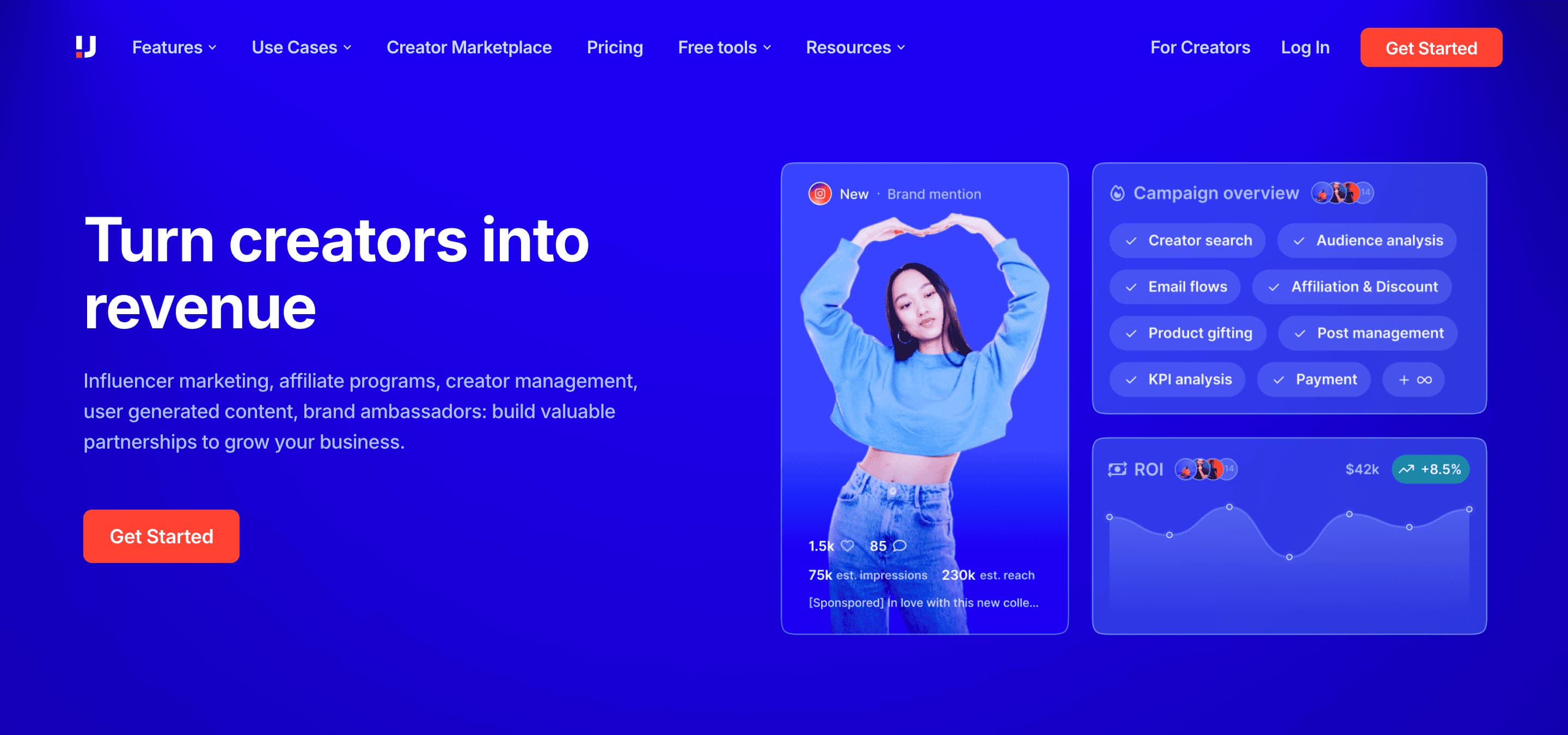
Upfluence ist eine datengesteuerte Influencer-Marketing-Plattform, die sich stark auf die Schnittmenge von E-Commerce und Affiliate-Marketing konzentriert. Sie ist für ihr „Live Capture"-Tool bekannt, das Marken hilft, einflussreiche Personen zu identifizieren, die bereits auf ihrer Website einkaufen. Durch die Zusammenführung einer massiven Creator-Datenbank mit Erstanbieter-Kundendaten können Marken ihre bestehende Kundenbasis in eine leistungsstarke Affiliate-Kraft umwandeln.
Best Fit For: Etablierte E-Commerce-Marken und Agenturen, die „kundenorientierte" Influencer-Beschaffung priorisieren und großflächige Affiliate-Programme verwalten möchten.
Funktionsweise mit Storefronts: Upfluence integriert sich mit Ihrem E-Commerce-CMS (Shopify, WooCommerce, Amazon), um Creator-geführten E-Commerce zu ermöglichen. Durch seine „Creator Storefronts"-Funktion können Influencer Produkte aus Ihrem Live-Katalog auswählen, um sie auf ihren eigenen dedizierten Shopping-Seiten zu präsentieren. Dies rationalisiert den Weg von einem Social-Media-Beitrag eines Creators zu einem nachverfolgbaren Verkauf, da Upfluence automatisch eindeutige Affiliate-Links und Promo-Codes für jeden Artikel generiert, den der Creator präsentieren möchte.
Preisgestaltung: Upfluence verwendet ein modulares Preismodell, erfordert aber im Allgemeinen eine jährliche Verpflichtung.
- Growth Plan: Etwa 1.276 €/Monat (jährliche Abrechnung).
- Enterprise Plan: Benutzerdefinierte Preisgestaltung, oft über 2.000 €+/Monat für vollständigen Zugriff auf alle Module und erweiterte Datenfunktionen.
Benutzerfreundlichkeit (UX/UI): Benutzer beschreiben die Plattform oft als leistungsstark, aber mit einer „schweren" Benutzeroberfläche. Während das Dashboard professionell und organisiert ist, bedeutet die große Menge an Daten und modularen Einstellungen, dass es für Anfänger überwältigend wirken kann. Rezensenten auf G2 und Capterra schlagen vor, dass die Plattform am besten für Benutzer geeignet ist, die sich mit datenintensiven Arbeitsabläufen und detaillierter Berichterstellung auskennen.
Kundensupport: Upfluence bietet strukturiertes Onboarding und dedizierte Account-Manager für höherwertige Pläne. Während viele Benutzer ihre „Onboarding-Spezialisten" für ihre Unterstützung loben, erwähnen einige Bewertungen auf Reddit und Capterra, dass das Support-Team bezüglich Vertragsverlängerungen hart sein kann und dass die Reaktionszeiten für technische Fehler je nach Planebene variieren können.
Wichtigste Funktionen:
- „Reveal"-Tool: Eine einzigartige Funktion, die Influencer unter Ihren bestehenden Website-Besuchern und Kunden identifiziert und es Ihnen ermöglicht, Menschen zu rekrutieren, die Ihre Marke bereits lieben.
- Native Amazon-Integration: Eine der wenigen Plattformen, die tiefe Integration mit Amazon Attribution bietet, was sie zur erste Wahl für Marken macht, die auf dem Marktplatz verkaufen.
- Automatisierte Produktauswahl: Creators können Ihren Live-Shop-Bestand durchsuchen und ihre eigenen Geschenkprodukte auswählen, was einen automatisierten Versand-Workflow auslöst.
- KI-gestützte Outreach (Jace AI): Ein Assistent, der die Automatisierung von Drip-Kampagnen und personalisierte Outreach-Nachrichten unterstützt, um die Antwortraten aus der Datenbank zu verbessern.
Umfassendes Social Listening: Verfolgen Sie organische Markenerwähnungen in sozialen Medien, um Creator zu finden und zu belohnen, die über Sie sprechen, ohne dazu aufgefordert zu werden.
Plattformbeschränkungen: Die häufigste Beschwerde von Benutzern ist mangelnde Vertragsflexibilität, da die obligatorische 12-Monats-Bindung eine Hürde für Marken darstellen kann, die die Gewässer testen. Darüber hinaus finden einige Benutzer das anfängliche technische Setup – besonders das Synchronisieren tiefgreifender Cart-Level-Daten für präzise ROI-Verfolgung – ohne dedizierte Entwicklerhilfe komplex.
5. CreatorIQ

CreatorIQ ist eine unternehmensgerechte Influencer-Marketing-Plattform für globale Konzerne und große Agenturen, die anspruchsvolle Daten-Governance und massive Skalierbarkeit erfordern. Bekannt für seine robuste „Creator Cloud", konzentriert sich CreatorIQ darauf, Marken über einfache Kampagnen hinaus zu helfen, langfristige, inhaltsgesteuerte Creator-Communities aufzubauen. Es ist eine datenintensive Lösung, die tiefgreifendes Social Listening und Wettbewerbsbenchmarking neben ihren Kernmanagement-Tools bietet.
Beste Eignung Für: Fortune-500-Unternehmen und große Konzerne, die komplexe, Multi-Brand-Creator-Programme mit strengen Brand-Safety- und Datenanforderungen verwalten müssen.
So funktioniert es mit Storefronts: CreatorIQ unterstützt Commerce durch seine „Creator Stores"-Funktionalität, die sich mit führenden eCommerce-Plattformen wie Shopify integriert. Sie ermöglicht es Influencern, personalisierte Shopping-Destinationen zu erstellen, wo sie ihre Lieblingsprodukte kuratieren und Branded Content hosten können. Die Plattform fungiert als operativer Hub und automatisiert die Verteilung eindeutiger Tracking-Links zu diesen Storefronts sowie die Aggregation von Konversionsdaten in unternehmensgerechte Reports zur Messung der vollständigen Funnel-ROI.
Preisgestaltung: CreatorIQ arbeitet nach einem Premium-Modell mit individuellen Angeboten, das typischerweise jährliche Verpflichtungen erfordert.
- Jährliche Lizenz: Die Preise beginnen in der Regel zwischen 30.000 und 36.000 Dollar pro Jahr für Einstiegszugriff auf Unternehmensebene.
- Custom Enterprise: Höhere Stufen für globale Teams können von 50.000 bis über 100.000 Dollar pro Jahr reichen, je nach Benutzersitze, Datenvolumen und API-Anforderungen.
Benutzerfreundlichkeit (UX/UI): Die meisten Benutzer beschreiben CreatorIQ als mächtige „Bestie" einer Plattform mit einer sauberen, professionellen Benutzeroberfläche, aber mit einer steilen Lernkurve. Obwohl das Dashboard modern ist, kann die Fülle von Funktionen – von rechtlicher Compliance bis zu fortgeschrittenem Social Listening – für kleinere Teams oder diejenigen, die agile, Self-Service-Tools gewohnt sind, überwältigend und „klobig" wirken.
Kundenunterstützung: Als Enterprise-Anbieter ist CreatorIQ für seine hochwertige, dedizierte Support-Teams und strukturierte Onboarding bekannt. Benutzer erwähnen häufig den Zugang zu einem dedizierten Customer Success Manager (CSM) und einem detaillierten Knowledge Portal, obwohl einige Rezensenten vermerkt haben, dass technische Fehlersuche für komplexe Reporting manchmal längere Hin- und Her-Zyklen erfordert.
Hauptfunktionen:
- Creator Stores & Social Commerce: Influencer können ihre eigenen kuratierten Storefronts erstellen, um spezifische Produktlinien zu präsentieren, komplett mit Echtzeit-Attribution für jeden Klick und Verkauf.
- Enterprise Data & Social Listening: Greifen Sie auf tiefgreifende historische Daten und Echtzeit-Social-Listening zu, um organische Markenverteidiger zu identifizieren und Konkurrenzaktivitäten in großem Maßstab zu überwachen.
- Automatisierte Zahlungen & Globale Compliance: Rationalisieren Sie Creator-Zahlungen über „CreatorPay" (mit Unterstützung für PayPal, Wire und ACH), während Sie komplexe Steuerformulare und rechtliche Verträge in der Plattform verwalten.
- Advanced Brand Safety Scoring: KI-gestützte Überprüfung, die Jahre der Creator-Geschichte scannt, um sicherzustellen, dass jeder Partner sich mit Unternehmens-Brand-Safety-Standards und -Werten deckt.
- Robuste API & Tech-Stack-Integration: Bietet eines der ausgereiftesten API-Ökosysteme der Branche und ermöglicht nahtlose Datenflüsse zwischen dem Influencer-Programm und Tools wie Tableau, Looker oder Google Analytics.
Plattformbeschränkungen: Das größte Hindernis für viele Marken ist die hohe Kostenstelle und obligatorische jährliche Verträge, was es für kleinere DTC-Marken unzugänglich macht. Darüber hinaus haben Benutzer berichtet, dass Affiliate-Tracking manchmal im Vergleich zu Commerce-fokussierteren Tools manuell wirken kann, was zusätzliches Setup erfordert, um granulare Konversionsdaten zu erhalten.
6. Modash

Modash ist eine Plattform zur Entdeckung und Verwaltung von Influencern, die für Geschwindigkeit und massiven Umfang entwickelt wurde. Die herausragende Funktion ist eine „offene" Datenbank mit über 250 Millionen Creator, d. h. Sie sind nicht auf Influencer beschränkt, die sich für ein bestimmtes Netzwerk angemeldet haben. Die Plattform konzentriert sich darauf, Marken bei der Suche nach sogar den nischenhaftesten Creatorn zu unterstützen, deren Zielgruppen auf gefälschte Follower zu überprüfen und die Logistik von Geschenken und Affiliate-Tracking durch eine hochautomatisierte Benutzeroberfläche zu verwalten.
Beste Eignung für: Schnell wachsende E-Commerce-Marken, die nischenhaften Creator auf globalen Märkten finden müssen und ein Tool bevorzugen, das massive Entdeckung vor einem kuratierten Marketplace priorisiert.
So funktioniert es mit Storefronts: Modash integriert sich tief in Shopify, um die Entdeckung von Influencern in direkten Handel umzuwandeln. Obwohl die Plattform keine „Storefronts" im Sinne eines eigenständigen Website-Builders hostet, ermöglicht sie „Creator Pages" und automatisierte Affiliate-Links. Influencer können Ihren Live-Shopify-Katalog über einen dedizierten Link durchsuchen, die Produkte auswählen, die sie bewerben möchten, und Modash generiert automatisch eindeutige Rabattcodes und Affiliate-Tracking-Links für ihre spezifische Auswahl, wobei alle resultierenden Verkaufsdaten mit Ihrem ROI-Dashboard synchronisiert werden.
Preisgestaltung: Modash bietet flexible monatliche oder jährliche Abrechnungen und ist damit zugänglicher für Marken, die langfristige Bindungen vermeiden möchten.
- Essentials: $199/Monat. Umfasst bis zu 100 verfolgte Creator und grundlegende Shopify-Geschenkfunktionen.
- Performance: $499/Monat. Umfasst bis zu 250 verfolgte Creator, 6.000 „einflussreiche Fan"-Suchen und vollständiges Affiliate-Management.
- Enterprise: Ab $14.700/Jahr. Bietet unbegrenzte Creator, benutzerdefinierte Domänen für Tracking-Links und dedizierte Success-Management.
Benutzerfreundlichkeit (UX/UI): Modash wird häufig auf G2 und Reddit für seine „saubere und flüssige" Benutzeroberfläche gelobt. Benutzer berichten, dass die Plattform modern und intuitiv wirkt, besonders die Such- und Filterwerkzeuge, die es Vermarktern ermöglichen, eine Datenbank mit Millionen zu navigieren, ohne die typischen Verzögerungen von Enterprise-Software zu erleben.
Kundensupport: Die Plattform ist für ihren hochresponsiven 24/7-In-App-Chat bekannt. Reviewer erwähnen häufig, dass das „Modash-Team tatsächlich zuhört", wobei Kundenfeedback häufig innerhalb von Wochen in neue Funktionen oder Workflow-Verbesserungen umgewandelt wird.
Wichtige Funktionen:
- Massive 250M+ Creator-Datenbank: Durchsuchen Sie jedes öffentliche Profil auf Instagram, TikTok und YouTube mit über 1.000 Followern und stellen Sie sicher, dass Sie Creator auch in den obskursten Nischen finden können.
- „Find Your Fans"-Tool: Scannt automatisch Ihre eigenen Brand-Social-Follower, um einflussreiche Personen zu identifizieren, die Ihre Produkte bereits lieben, und erleichtert die Rekrutierung erheblich.
- Automatisierte Shopify-Geschenke: Senden Sie einen einzigen „Product Choice"-Link an Influencer; sie wählen ihre eigene Größe, Farbe und Lieferadresse, und die Bestellung wird automatisch in Ihren Shopify-Shop übertragen.
- Zielgruppen-Glaubwürdigkeit und Überprüfung gefälschter Follower: Detaillierte Audits für jedes Profil, die den Prozentsatz „echter" Follower im Vergleich zu Bots sowie Zielgruppendemografiken wie Standort, Alter und Geschlecht anzeigen.
- Integriertes Affiliate-Management: Erstellen, verfolgen und verwalten Sie Provisionen für Tausende eindeutiger Rabattcodes und Links direkt innerhalb der Plattform, einschließlich automatisierter Auszahlungsworkflows.
Plattformbeschränkungen: Modash's tiefe E-Commerce-Integrationen (wie automatisierte Geschenke und Code-Generierung) sind derzeit exklusiv für Shopify, was bedeutet, dass Marken auf WooCommerce oder Magento den Workflow als manueller empfinden können. Darüber hinaus haben einige Benutzer festgestellt, dass der Plattform integrierte Vertragssignatur und Content-Lizenzierungswerkzeuge fehlen, was erfordert, dass Teams rechtliche Vereinbarungen über externe Apps handhaben.
7. Impact
%2012.22.33%E2%80%AFp.%C2%A0m..png)
Impact.com ist ein globaler Anführer in der Partnerschaftsautomatisierung und bietet eine umfassende Suite für Influencer-Marketing, Affiliate-Management und Creator Commerce. Ursprünglich für seine Enterprise-Affiliate-Tools bekannt, hat es sich zu einem erstklassigen Ziel für Marken entwickelt, die "Creator Partnerships" durch datengesteuerte Performance skalieren möchten.
Am besten geeignet für: Mid-Market- bis Enterprise-DTC-Marken, die Influencer neben traditionellen Affiliate-Partnern in einem einzigen, hochperformanten Ökosystem verwalten möchten.
Funktionsweise mit Storefronts: Impact.com unterstützt Storefronts durch die Funktionen "Creator Pages" und "Shop My Look". Creator können personalisierte, shoppbare Landing Pages erstellen, auf denen sie ihre kuratierten Produktempfehlungen präsentieren. Die Plattform automatisiert die Generierung von Tracking-Links und Promo-Codes und stellt sicher, dass jeder Verkauf über den Storefront eines Creators genau zugeordnet und in Echtzeit belohnt wird.
Preisgestaltung: Impact.com arbeitet in der Regel nach einem Kostenvoranschlag-Modell mit Fokus auf leistungsbasierte Skalierung.
Benutzerfreundlichkeit (UX/UI): Die Plattform ist hochgradig ausgereift und professionell, weist aber eine steilere Lernkurve auf als einfachere Tools. Das Dashboard bietet einen detaillierten Überblick über den gesamten Partnerschaftslebenszyklus, von der Entdeckung bis zu automatisierten Auszahlungen.
Kundensupport: Impact.com ist bekannt für umfangreichen Support, einschließlich dedizierter Success Manager für Enterprise-Tiers und eine robuste "Partnership Experience Academy" für Self-Service-Nutzer.
Wichtige Funktionen:
- Creator Pages: Vollständig gebrandete, gehostete Storefronts, auf denen Influencer ihre Lieblingsprodukte präsentieren und Traffic direkt zu Ihrem Checkout lenken können.
- Automatisierte Verträge & Auszahlungen: Skalieren Sie Ihr Programm ohne manuellen Aufwand durch die Automatisierung komplexer Provisionsstrukturen und Multi-Währungs-Zahlungen.
- Geräteübergreifende Zuordnung: Nutzt fortschrittliche Tracking-Technologie, um sicherzustellen, dass Creator Anerkennung für Verkäufe erhalten, auch wenn der Kunde von einer mobilen Social-App zu einem Desktop-Browser wechselt.
- Influencer-Entdeckung & Rekrutierung: Greifen Sie auf einen riesigen, geprüften Marketplace von Creators zu und nutzen Sie automatisierte "Contracting Flows", um sie in großem Maßstab zu rekrutieren.
Plattformlimitierungen: Aufgrund ihrer tiefen Wurzeln im Affiliate-Marketing finden einige Nutzer die Plattformoberfläche eher "datenlastig" und weniger "social-first" im Vergleich zu Plattformen, die ausschließlich für Instagram oder TikTok entwickelt wurden. Darüber hinaus kann das anfängliche technische Setup für erweitertes Tracking Unterstützung durch ein Web-Development-Team erfordern.
8. Later
Later ist eine Enterprise-Plattform, die Mavrck's robustes Influencer-Management mit Later's Expertise im Social Scheduling kombiniert. Sie ist konzipiert, um die Lücke zwischen Social-Media-Planung und Influencer-Performance zu schließen und einen einheitlichen Workflow für Marken anzubieten, die ihre eigene Social-Media-Präsenz neben ihren Creator-Partnerschaften verwalten möchten.
Am besten geeignet für: Mid-Market- bis große DTC-Marken, die Social-Content-Planung und Influencer-Kampagnen innerhalb eines einzelnen Ökosystems verwalten möchten.
Funktionsweise mit Storefronts: Later Influence nutzt die "Mavely"-Integration, um Creator-Storefronts zu betreiben. Influencer erstellen kuratierte Shopping-Seiten, die direkt mit Ihrer eCommerce-Site verlinkt sind und als digitale persönliche Einkaufshelfer fungieren. Die Plattform verfolgt alle Klicks und Conversions und bietet eine klare ROI-Übersicht, welche Creator-Kollektionen die meisten Einnahmen generieren.
Preisgestaltung: Later Influence erfordert typischerweise ein High-Tier-Abonnement oder ein benutzerdefiniertes Enterprise-Angebot für vollständige Influencer-Funktionen.
Growth Plan: 649€/Monat (oft jährlich abgerechnet).
Advanced Plan: 949€/Monat (oft jährlich abgerechnet).
Enterprise: Individuelle Angebote ab 30.000€+/Jahr je nach Volumen und Managed-Service-Anforderungen.
Benutzerfreundlichkeit (UX/UI): Nutzer finden den visuellen "Kalender"-Stil der Plattform in der Regel sehr intuitiv für die Content-Planung. G2-Bewertungen deuten jedoch darauf hin, dass die Influencer-Management-Seite (ehemals Mavrck) tiefergehend und komplexer ist und einige anfängliche Schulung erfordert, um die verschiedenen Kampagnenphasen effektiv zu navigieren.
Kundensupport:Die Plattform ist hochwertig bewertet für ihre strategische Unterstützung, wobei viele Enterprise-Benutzer erwähnen, dass sich das Later-Team wie eine Erweiterung ihres eigenen anfühlt. Kleinere Konten haben jedoch bemerkt, dass der Support manchmal eher automatisiert als personalisiert wirken kann.
Wichtigste Funktionen:
- Mavely-Integration: Zugriff auf ein integriertes Netzwerk von „alltäglichen Influencern", die shoppable Links und Storefronts nutzen, um leistungsbasierte Verkäufe zu fördern.
- Visueller Inhaltskalender: Synchronisieren Sie Influencer-Lieferungen direkt in den Social-Media-Zeitplan Ihrer Marke und vereinfachen Sie die Wiederverwendung von UGC.
- Automatisierte Markensicherheit: KI-gestützte Überprüfung, die die Geschichte der Creator auf Kontroversen oder Markenfehlausrichtungen scannt, bevor Sie eine Einladung senden.
- Performance-Benchmarking: Vergleichen Sie Ihren Campaign-ROI direkt im Dashboard mit Branchenstandards, um zu sehen, wie Ihre Storefronts abschneiden.
- Rechteverwaltungs-Workflow: Ein optimierter Prozess zum Anfordern und Sichern von rechtlichen Nutzungsrechten für Creator-Inhalte, damit Sie diese in bezahlten Social-Media-Anzeigen verwenden können.
Plattformbegrenzungen: Da die Plattform eine Zusammenführung zweier verschiedener Tools (Later und Mavrck) ist, berichten einige Benutzer, dass die Navigation zwischen Social Scheduling und Influencer-Management gelegentlich unzusammenhängend wirken kann. Darüber hinaus kann der höhere Preis für die „Influence"-Funktionen für Marken, die nur das grundlegende Scheduling-Tool nutzen, ein großer Sprung sein
9. Captiv8
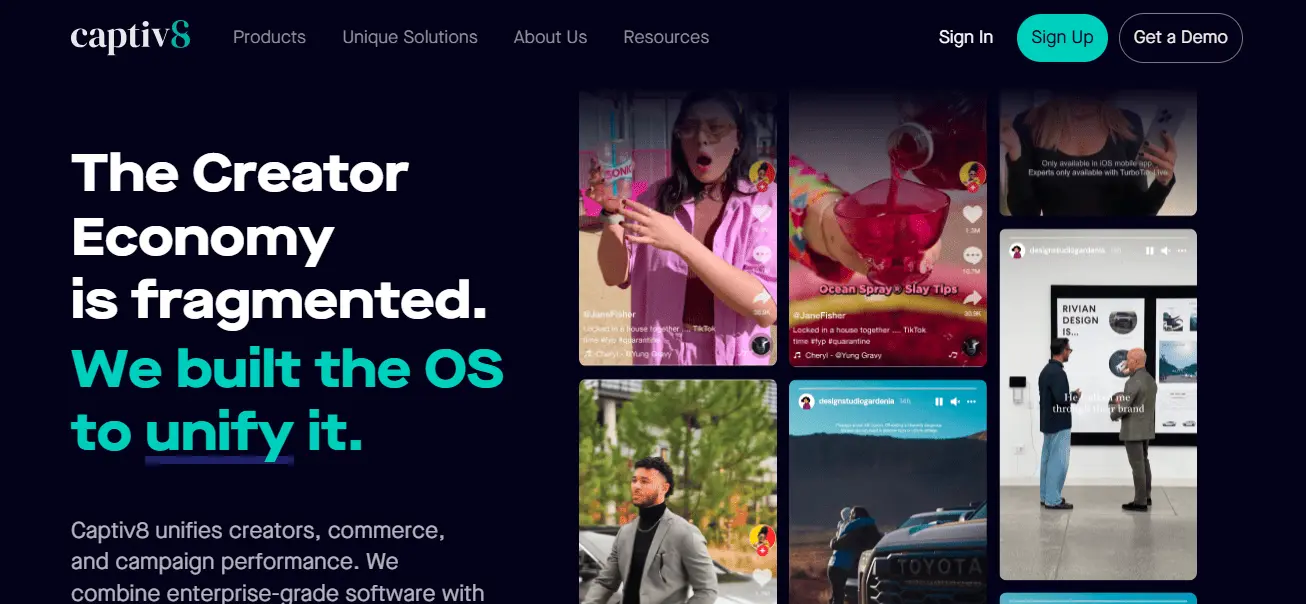
Captiv8 ist ein schwerwiegender Akteur im Enterprise-Influencer-Bereich, kürzlich gestärkt durch seine Übernahme durch die Publicis Groupe. Es ist bekannt für seine „Social Commerce Engine", die darauf abzielt, die Lücke zwischen einem Creator-Post und einem finalen Kauf zu schließen. Es ist eine datengestützte Plattform, die massive Skalierbarkeit bietet und über 15 Millionen Creator weltweit abdeckt.
Beste Eignung für: Großflächige DTC-Marken und globale Unternehmen, die tiefe Social Listening und umfangreiche Commerce-Fähigkeiten benötigen.
Funktionsweise mit Storefronts: Captiv8 bietet „Branded Storefronts", die als anpassbare, shoppable Landing Pages dienen. Creator präsentieren immersive Content-Galerien, die mit der Ästhetik Ihrer Marke übereinstimmen, während die Plattform den gesamten Weg von der Social-Media-Impression bis zum Kauf verfolgt und transparente Full-Funnel-Performance-Daten bereitstellt.
Preisgestaltung: Captiv8 ist eine Enterprise-Lösung und erfordert in der Regel einen Discovery Call für die Preisgestaltung. Sie bieten keinen kostengünstigen Self-Service-Tarif an.
Standard Enterprise: Beginnt in der Regel bei 2.100+ €/Monat mit jährlichen Verpflichtungen.
Vollständige Suite: Kann 40.000+ €/Jahr für globale Marken übersteigen, die erweiterte Social Listening und Wettbewerbsinformationen benötigen.
Benutzerfreundlichkeit (UX/UI): Benutzer auf G2 und Capterra loben die Plattform als „Rundum-Lösung", die alles von der Entdeckung bis zur Zahlung handhabt. Obwohl mächtig, ist die Oberfläche mit Daten gefüllt, was einige Benutzer in den ersten Wochen der Nutzung als „verwirrend" oder „schwierig zu navigieren" empfinden.
Kundenunterstützung: Bekannt für „White-Glove"-Service, bietet Captiv8 dedizierte Account Manager und proaktive Unterstützung. Bewertungen heben ihre Reaktionsfähigkeit bei Fehlern und ihre Bereitschaft hervor, Marken bei komplexen, multinationalen Kampagnen zu unterstützen.
Wichtigste Funktionen:
- KI-gestützte Branded Storefronts: Immersive Shopping-Erlebnisse, die KI nutzen, um Produkte auf der Creator-Seite basierend auf Käuferverhalten zu empfehlen.
- Velocity Search: Eine Entdeckungs-Engine, die Echtzeitdaten nutzt, um „trendige" Creator zu finden, bevor sie von anderen Marken überfordert werden.
- Einheitliches Commerce-Dashboard: Sehen Sie Affiliate-Verkäufe, von Influencern geschenkte Bestellungen und bezahlte Media-Performance in einer einzigen Ansicht.
- Tiefe Social Listening: Überwachen Sie Brand-Sentiment und Wettbewerbserwähnungen im gesamten Web, um neue Creator-Chancen oder mögliche Risiken zu identifizieren.
- Globale Auszahlungen & Steuerkonformität: Automatisiertes Zahlungssystem, das verschiedene Währungen und Steuerdokumentation (W9/W8-BEN) für internationale Creator verarbeitet.
Plattformbegrenzungen:Die primäre Einschränkung sind die Kosten, die Nutzer häufig als "teuer" für kleinere Agenturen oder aufstrebende DTC-Marken erwähnen. Einige Rezensenten merken auch an, dass die Outreach-Tools etwas "roboterhaft" wirken können, was zu niedrigeren Antwortquoten führt, wenn sie vom Nutzer nicht stark personalisiert werden.
10. Affable.ai
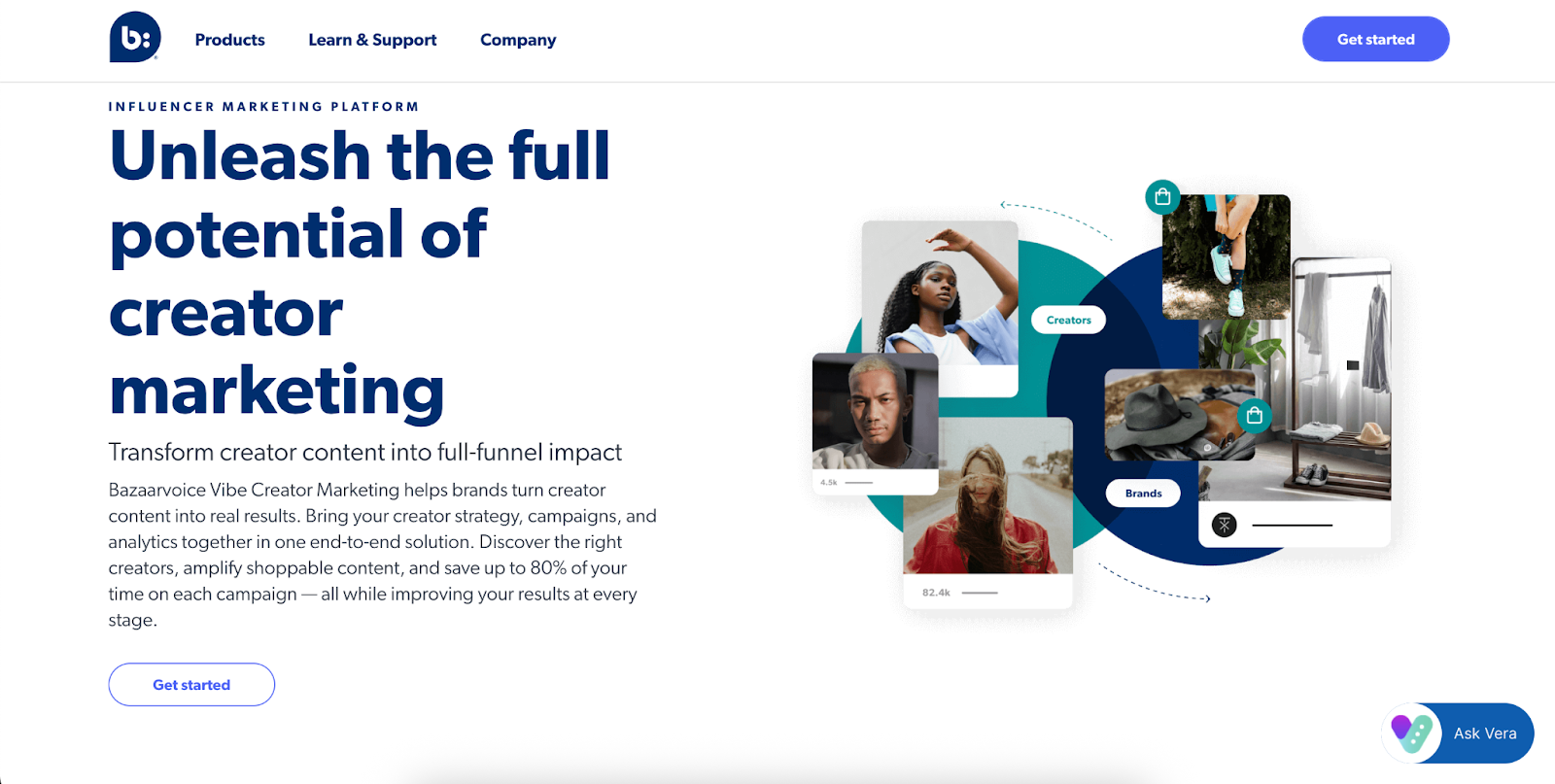
Affable.ai ist eine KI-gesteuerte Influencer-Marketing-Plattform, die sich in datengestützter Entdeckung und automatisierter Kampagneverwaltung auszeichnet. Das Unternehmen wurde kürzlich von Bazaarvoice übernommen und profitiert nun von einem riesigen Ökosystem von nutzergenerierten Inhalten (UGC) und Einzelhandelsdaten. Es wurde speziell entwickelt, um eCommerce-Marken schnell voranzubringen, und nutzt maschinelles Lernen, um Influencer-Zielgruppen zu überprüfen und sicherzustellen, dass jede Partnerschaft durch harte Leistungsdaten gestützt wird.
Beste Eignung für: Datengesteuerte DTC-Marken und wachsende Agenturen, die fortgeschrittene Zielgruppenanalysen und ein hohes Maß an Automatisierung für globale Kampagnen benötigen.
Funktionsweise mit Storefronts: Affable.ai integriert sich mit Shopify und Magento, um "Shoppable Storefronts" zu ermöglichen. Influencer kuratieren Produktkollektionen auf personalisierten Landingpages, während die Plattform Affiliate-Codes und Tracking-Links automatisiert. Dies schafft einen direkten Weg von Social-Media-Inhalten zur Kasse und erfasst Echtzeit-Vertriebs- und ROI-Daten für jeden Storefront.
Preisgestaltung: Affable.ai funktioniert typischerweise auf Abonnementbasis mit benutzerdefinierten Angeboten, die auf die Markensgröße zugeschnitten sind.
- SME-Plan: Benutzerdefinierte Preisgestaltung (umfasst ~400 Influencer-Analysen/Monat und bis zu 3 Nutzer).
- Pro-Plan: Benutzerdefinierte Preisgestaltung (umfasst höheres Analysevolumen und erweiterte CRM-Funktionen).
- Enterprise: Benutzerdefinierte Preisgestaltung für globale Marken, die unbegrenzte Kampagnen und vollständigen API-Zugriff benötigen.
Benutzerfreundlichkeit (UX/UI): Nutzer berichten allgemein, dass die Plattform "logisch und effizient" ist. Die Discovery-Schnittstelle wird für ihre Einfachheit gelobt und ermöglicht es Vermarktern, über 20 Filter anzuwenden, ohne dass sich das Dashboard überladen anfühlt. Einige neuere Nutzer haben jedoch festgestellt, dass die schiere Tiefe der KI-Berichterstattung einige Sitzungen dauern kann, um vollständig verstanden zu werden.
Kundensupport: Die Plattform ist für ihren starken Onboarding-Prozess und dedizierte Account Manager bei den meisten Plänen bekannt. Nutzer heben häufig die Reaktionsfähigkeit des Teams im Live-Chat und ihre Bereitschaft hervor, komplexe Tracking-Einrichtungen für Multi-Region-Kampagnen zu unterstützen.
Wichtigste Funktionen:
- KI-gestützte Zielgruppenvalidierung: Automatische Erkennung von "Ghost Followern" und verdächtigen Engagement-Mustern, um sicherzustellen, dass Ihr Storefront-Traffic von echten potenziellen Kunden stammt.
- Shoppable Content Syndication: Über die Bazaarvoice-Integration können Sie hochperformante Creator-Inhalte direkt auf Ihren Produktdetailseiten (PDPs) syndizieren, um die On-Site-Conversion zu erhöhen.
- Wettbewerbsvergleich: Überwachen Sie die Influencer-Strategien Ihrer Wettbewerber, einschließlich der Creators, mit denen sie zusammenarbeiten, und wie ihr Engagement mit Ihrem vergleichbar ist.
- Automatische Content-Erfassung: Verpassen Sie nie einen Beitrag; die Plattform erfasst und speichert automatisch Instagram Stories, TikToks und Reels, auch nachdem sie auf der Social-Media-Plattform verfallen sind.
- Direkte eCommerce-Integration: Synchronisieren Sie Ihren Shopify- oder Magento-Shop, um Produktseeding und Affiliate-Management ohne manuelle Dateneingabe zu handhaben.
Plattformlimitierungen: Während die KI-Entdeckung erstklassig ist, haben einige Nutzer berichtet, dass die "Storefront"-Anpassungsoptionen weniger flexibel sind als dedizierte Website-Builder, was bedeutet, dass sie eher wie Standard-Landingpages aussehen können als vollständig immersive Markenerlebnisse. Darüber hinaus erfordern die automatisierten Outreach-Tools gelegentlich manuelle "Aufwärmung", um zu vermeiden, dass sie in den Spam-Filtern von Influencern landen.
So wählen Sie die richtige Influencer-Marketing-Software für Storefronts
Die Auswahl einer Plattform hängt davon ab, wo die Reibung in Ihrem aktuellen Workflow liegt. Hier erfahren Sie, wie Sie Ihre Suche basierend auf den spezifischen Zielen Ihrer Marke kategorisieren:
Leistungsgesteuerte Marken (Full-Funnel-Tracking): Suchen Sie nach Plattformen, die die Entdeckung mit Creator Storefronts und durchgehender Attribution bis zur Kasse verbinden, damit Sie einen klaren ROI messen können.
Discovery- und Outreach-fokussierte Marken:Prioritäre große Creator-Datenbanken mit starken Filtern und Publikums-Überprüfung, um Nischen-Talente schnell zu finden. Storefronts sind sekundär.
Marken, die Gifting & Affiliate skalieren: Wählen Sie Tools mit tiefe CMS-Integrationen, um Produkt-Seeding und Auszahlungen zu automatisieren. Storefronts fungieren als Self-Service-Hubs für Creator, um Produkte auszuwählen und Einnahmen zu verfolgen.
Abschließende Gedanken
Die beste Influencer-Marketing-Software für Storefronts zu wählen bedeutet, ein Gleichgewicht zwischen Creator-Flexibilität und Backend-Automatisierung zu finden. Während die richtige Wahl von Ihrer spezifischen Skalierung und Ihrem CMS abhängt, bleibt das Ziel gleich: Reibungsverluste zwischen der Empfehlung eines Creators und dem Kauf eines Kunden zu verringern. Durch die Nutzung dedizierter Storefronts gehen Sie über grundlegende Affiliate-Links hinaus und schaffen ein professionelles, shopbares Erlebnis, das bessere Konversionsraten und einen klareren ROI treibt.
Influencer Hero ist die ideale Lösung für DTC-Marken, die diesen Prozess skalieren möchten. Es kombiniert fortgeschrittene Discovery und automatisiertes Gifting mit anpassbaren Storefronts, die sich direkt mit Ihrem Produktkatalog synchronisieren, was es zur effizientesten Möglichkeit macht, ein leistungsgetriebenes Creator-Programm zu verwalten. Bereit zu sehen, wie unsere Storefronts Ihr Programm skalieren können? Buchen Sie hier eine Demo, um zu beginnen.
Zusammenfassung
Dies ist ein Text in einem Div-Block.
Dies ist ein Text in einem Div-Block.
Preisgestaltung/Monat
Shopify Bewertungen
Dies ist etwas Text in einem Div-Block.
Dies ist Text in einem Div-Block.
Dies ist Text in einem Div-Block.
Dies ist etwas Text in einem Div-Block.
Dies ist Text in einem Div-Block.
Dies ist Text in einem Div-Block.
Dies ist etwas Text in einem Div-Block.
Dies ist Text in einem Div-Block.
Dies ist Text in einem Div-Block.
Dies ist etwas Text in einem Div-Block.
Dies ist Text in einem Div-Block.
Dies ist Text in einem Div-Block.
Dies ist etwas Text in einem Div-Block.
Dies ist Text in einem Div-Block.
Dies ist Text in einem Div-Block.
Dies ist etwas Text in einem Div-Block.
Dies ist Text in einem Div-Block.
Dies ist Text in einem Div-Block.
Dies ist etwas Text in einem Div-Block.
Dies ist Text in einem Div-Block.
Dies ist Text in einem Div-Block.
Mehr erfahren

Häufig gestellte Fragen
Was sind Creator Storefronts und warum brauchst du sie?

Ein Creator-Storefront ist eine personalisierte Landingpage auf Ihrer Website, auf der Influencer ihre Lieblingsprodukte kuratieren. Sie erzielen höhere Konversionen als generische Links, indem sie Social Proof nutzen und ein nahtloses, co-branded Shopping-Erlebnis bieten. Influencer Hero automatisiert diese Seiten und stellt sicher, dass sie immer mit Ihrem Live-Inventar synchronisiert sind.
Kann ich den genauen ROI jedes Influencer-Storefronts verfolgen?
Ja. Performance-gesteuerte Plattformen bieten Echtzeit-Verfolgung für jeden Verkauf, Klick und durchschnittlichen Bestellwert (AOV), der über ein bestimmtes Ladengeschäft generiert wird. Während Enterprise-Tools wie CreatorIQ umfangreiche Daten bieten, stellt Influencer Hero ein optimiertes Dashboard bereit, das die Ladengeschäftsaktivität direkt mit Ihrer Bilanz verbindet.
Wie funktioniert der Produktgeschenk-Prozess mit Storefronts?
Top-Plattformen integrieren sich mit Ihrem Shop (Shopify, WooCommerce, etc.), um die Logistik zu automatisieren. Sie senden einen „Choice Link" an den Creator, dieser wählt seine bevorzugten Artikel aus, und ein Versandauftrag wird automatisch generiert. Influencer Hero vereinfacht dies, indem es die gesamte Fulfillment-Schleife ohne manuelle Dateneingabe verwaltet.
Ist es schwierig, Storefronts für eine große Anzahl von Creators zu verwalten?
Nicht mit der richtigen Automatisierung. Moderne Plattformen ermöglichen es Ihnen, hunderte von Storefronts gleichzeitig mithilfe von Vorlagen zu starten. Influencer Hero zeichnet sich hier dadurch aus, dass diese Seiten dynamisch aktualisiert werden, wenn Produkte ausverkauft sind, sodass Ihre Creator immer verfügbare Bestände bewerben.
Was ist die beste Software für Storefronts für eine wachsende DTC-Marke?
Influencer Hero ist die beste Wahl für Marken, die ein Gleichgewicht zwischen Leistung und Einfachheit benötigen. Während Unternehmensoptionen wie Aspire robust sind, erfordern sie oft langfristige Verträge und hohe Gebühren. Influencer Hero bietet eine All-in-One-Suite – Discovery, CRM und Storefronts – die mit Ihrem Umsatz skaliert.



Beliebteste Blog-Beiträge


Steigern Sie Ihren ROI mit Influencer Marketing
Über 1.200 Marken und mehr als 150 Agenturen skalieren ihre Creator-Programme mit Influencer Hero.