![9 Best Email Marketing Services for 2026 [Pros, Cons & Pricing]](https://cdn.prod.website-files.com/649713df4c1b19e55ce7927f/6a75b442aba110034e6694fd_6a75b42a1726bee147d893fb_best-email-marketing-services.webp)
9 Best Email Marketing Services for 2026 [Pros, Cons & Pricing]

March 3, 2026
|
Published

October 19, 2026
|
Updated

14 minutes
|
Reading

Influencer Performance Marketing Course | VOUCHER: IMC100

Maria Fintanidou
I Author

Drive ROI With Influencers

Global Influencer Database
ALL-IN-ONE platform
CRM, Affiliate, UGC & More
9 Best Email Marketing Services for 2026 [Pros, Cons & Pricing]
When searching for an email marketing service for your business, you'll find dozens of options promising to give your campaigns a boost. But how can you tell which one is best for you without getting lost in the noise?
There are many factors to consider before making up your mind. Because a high-tech option might look impressive but it could also be hard to control unless you're trained for it. As a result, you'll spend more time figuring out how to use it than getting the job done. On the flip side, a lighter tool could be easy to handle but ineffective once the stakes rise.
So, how will you know which to choose to connect with your audience? To save you from rushing into a decision, we've gathered the best email marketing tools, considering features and pricing, after reading reviews and testing their functionality.
What To Look For In An Email Marketing Service
Email still ranks first as the most effective channel to drive sales with 50% of consumers stating they've made a purchase through an email campaign.
Whether you're a solo creator or a global brand, email allows you to send campaigns that resonate with customer needs and maintain consistent communication with new and existing audiences. These platforms are built for contacts who already opted in. For cold outbound to brand-new prospects, you'll want dedicated best cold email software, which handles warmup, sending limits, and deliverability differently.
But it's important to know which tools and features matter to make an informed decision. Let's check what you should be looking for in an email marketing solution:
- Segmentation and personalization: Pick a service with powerful segmentation so you can group subscribers based on various criteria, such as their demographics and preferences, and deliver personalized campaigns that match their interests.
- Automation features: Automated workflows keep your audience engaged without you spending time on manual tasks. You need options like built-in templates, visual builders, and behavior tracking to reach each subscriber with the right message at the right time.
- Integration with other tools: Email marketing is rarely a standalone practice. This is why your email solution must seamlessly integrate with other essential apps in your stack, such as social media, eCommerce platforms, analytics tools, etc.
- Ease of use: Not everyone has coding or design experience. Pick an email marketing service with a minimal learning curve and beginner-friendly tools like pre-made templates, drag-and-drop functionality, and clean dashboards that make your day-to-day tasks simpler.
- Email deliverability: No email will bring results if it doesn't reach inboxes. The right email solution should provide users with spam testing, performance reporting, email validation, and compliance with email laws so their campaigns don't end up in spam.
- Customer support: Even experienced marketers may get stuck at some point and need guidance. Responsive and efficient support through multiple channels (e.g., email, chat, and phone) helps you resolve issues before they give you a headache.
- Scalability and flexible pricing: As your audience and campaign needs grow, your email service should grow along. So, look for a platform with scalable features and flexible pricing that lets you adapt without hurting your budget or email performance.
Top 9 Email Marketing Services Compared
Below you'll find a breakdown of the best features, strengths and weaknesses, and pricing to evaluate each platform based on your requirements.
1. Moosend
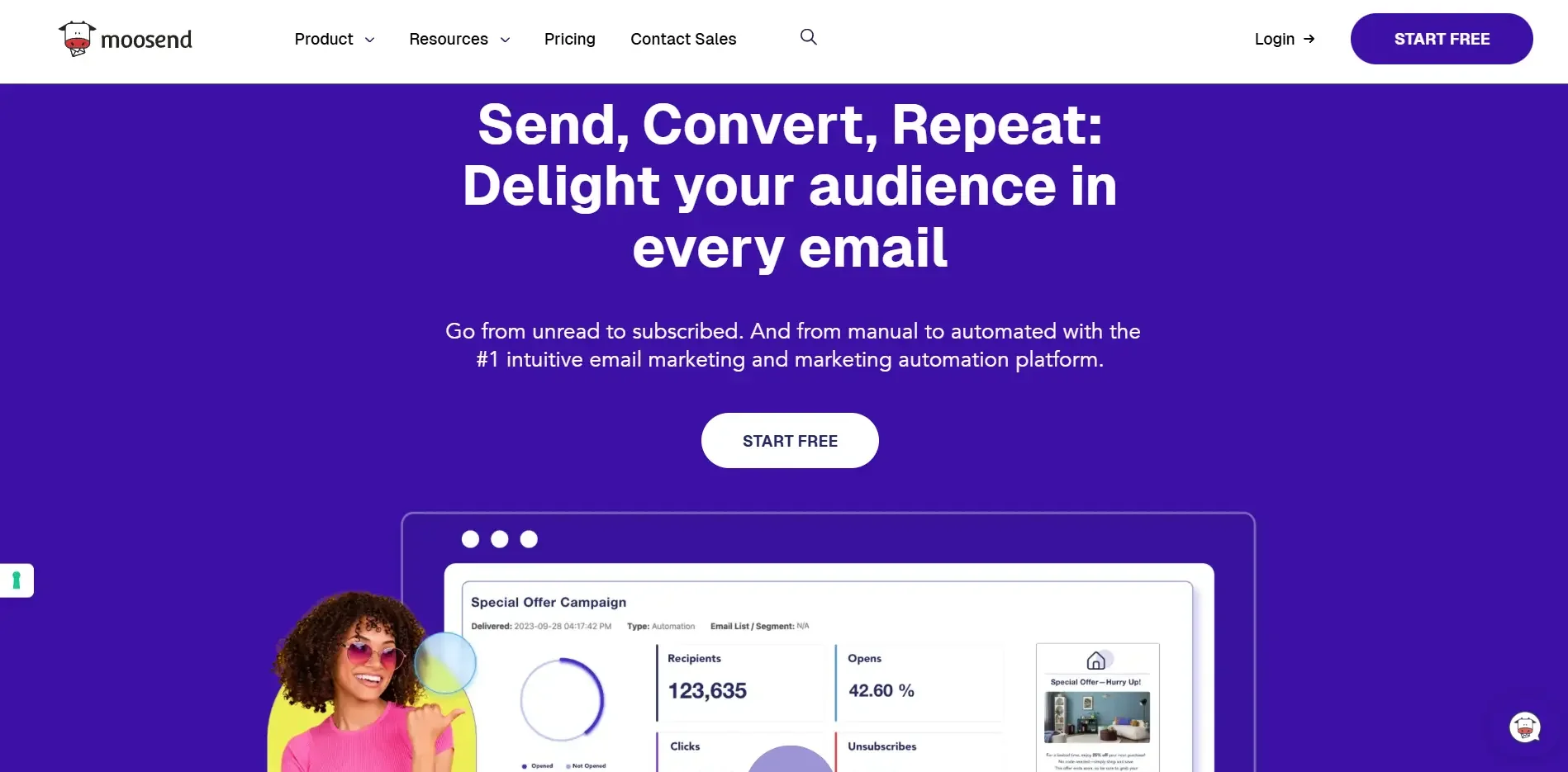
Moosend is a beginner-friendly email service with a clean interface and handy features to create, send, and automate your campaigns.
While it offers a full suite of email tools, it's considered an affordable email marketing platform due to its reasonable and flexible pricing. Moreover, it sets no limits in email sending even in the lowest tier, which is particularly helpful for brands and agencies wanting to scale their efforts at a low cost.
When it comes to features, Moosend offers a handy drag-and-drop email editor and various pre-built, responsive email templates you can customize as you like. The platform also has an AI Writer to turn your ideas into converting copy or optimize existing content.
The platform also offers easy-to-grasp automation through a visual workflow builder, ready-made recipes, and multiple triggers (including web tracking), to target recipients with relevant offers. Besides that, you can reach out to new audiences through the list growth tools, specifically landing pages and signup forms.
Best features:
- Intuitive drag-and-drop email builder
- Professionally-designed email templates
- List segmentation and growth tools
- Dynamic content blocks
- Real-time reporting
- Transactional emails
- Spam and A/B testing
- Integrations with CRM tools, eCommerce platforms, and more
Pros:
- Minimal learning curve with user-friendly tools
- High deliverability
- Responsive customer support through email and live chat for all users
- Unlimited emails on every plan, ideal for high-volume influencer outreach
Cons:
- No free plan
- No SMS marketing
Pricing: Moosend's pricing starts at $9/month giving you access to all core features plus unlimited email sends. There's also a Credit option, which can work well for occasional campaigns or smaller influencer lists. You can subscribe for the platform's 30-day free trial to test the tools.
2. Constant Contact
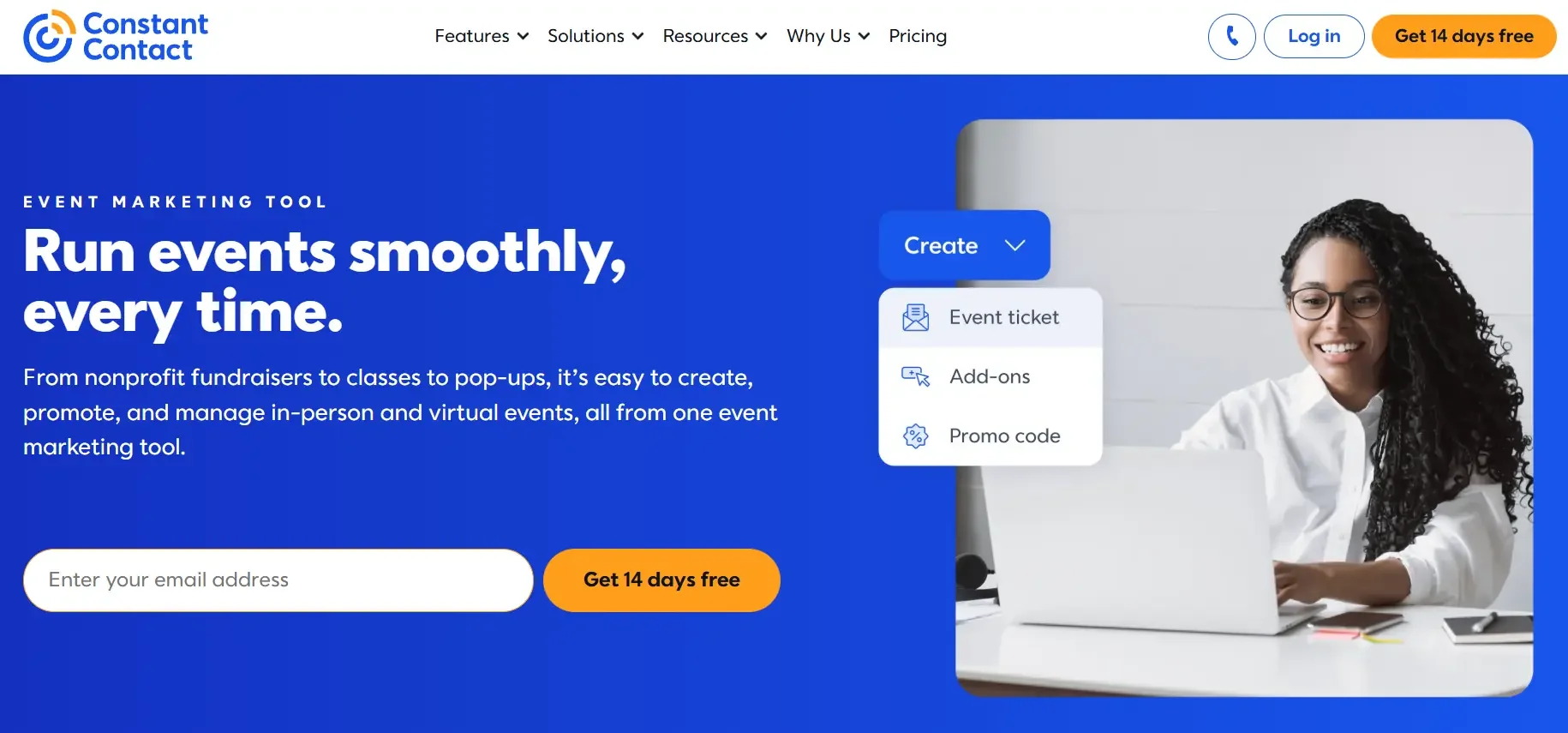
Constant Contact is a versatile email marketing service with easy-to-use tools and strong deliverability, which makes it a solid option for managing influencer communications at scale.
It comes with all the must-have email features, starting with an intuitive email builder with drag-and-drop functionality to move around videos, images, or feedback blocks.
Regarding email templates, there's an impressive library with more than 600 designs to use as your campaign's foundation. On top of that, you can quickly create a branded template using the BrandKit option. This email platform also allows you to lock templates and handle user permissions, helping teams achieve consistent look and feel.
Another strong point of Constant Contact is its powerful segmentation with various criteria to filter email contacts and ready-made segment templates that save you time. If you're looking to capture leads, you can do so through lead magnets, forms, landing pages, and paid ads.
The software is also known for its event marketing capabilities, allowing marketers and brands to manage RSVP invitations, accept payments, and track results, all from the same tool.
Best features:
- Beginner-friendly email editor
- Large library of email templates
- Straightforward audience management
- Unique Lead Magnet feature to attract new contacts
- Event management and promotion features
- AI content generation for emails, landing pages, SMS, and social media
- Wide range of integrations, including social media and payment tools
Pros:
- Great deliverability
- Handy email collaboration tools like locked templates
- Multichannel outreach options (email, social media, SMS)
Cons:
- Basic automation options
- A/B testing limited to email subject lines
Pricing: Constant Contact charges $12/month for 500 subscribers with core features like email templates, contact management, and event marketing. If you want to explore the email service before choosing a paid plan, a 14-day free trial is available.
3. Influencer Hero
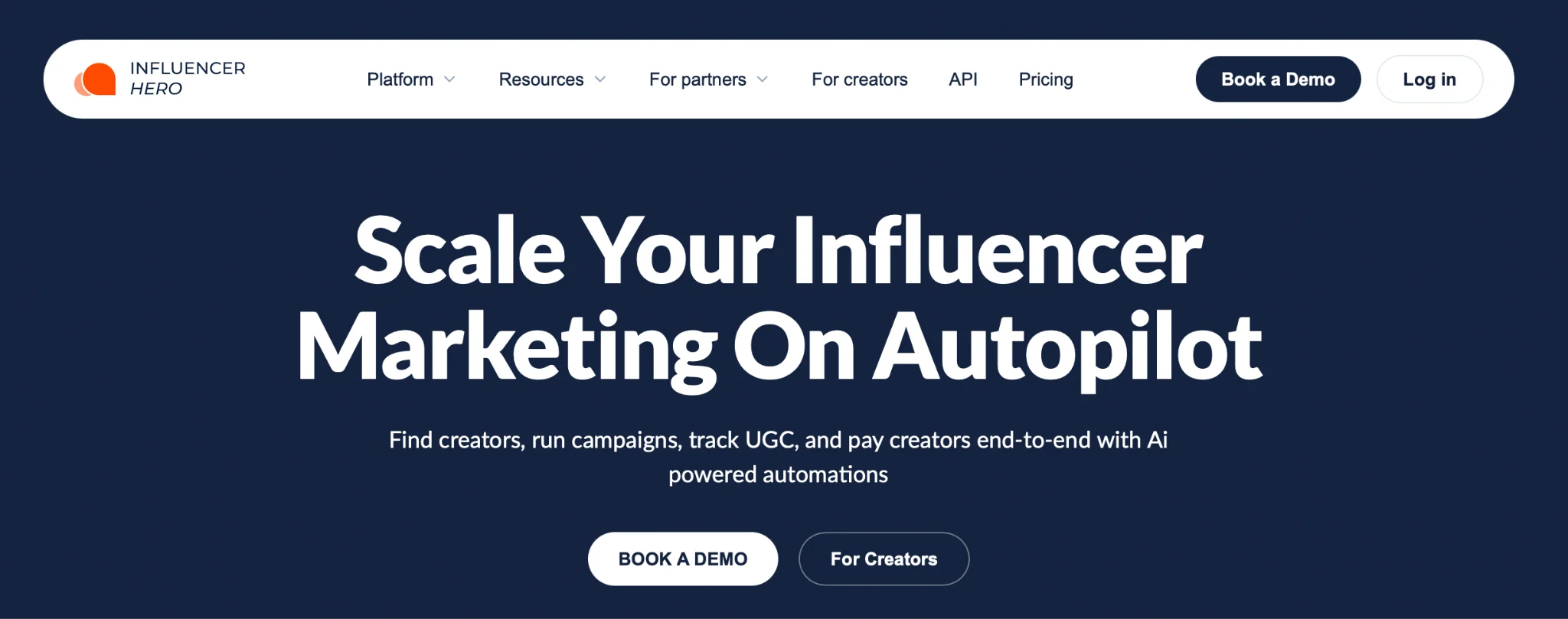
Influencer Hero is an all-in-one influencer marketing service designed to help brands discover and engage with prospects and creators. It also includes built-in email marketing and automation features so you can keep everything streamlined without the need for standalone tools.
This marketing software allows you to reach out to influencers and build lasting relationships with them, from initial outreach to partnership. Using drip campaigns, you can set repetitive tasks on autopilot, for example by sending follow-up emails to influencers who haven't responded after a set period of time.
Also, the platform's AI helps you create personalized email campaigns based on your specific objectives and each creator's profile. You may also use it to optimize existing content and improve your response rates. Speaking of improvement, Influencer Hero offers deliverability reports that help you detect issues early and make the most out of your email communications.
Moreover, users get access to a CRM system so they can manage all influencer data and interactions under one roof and send targeted messages with ease.
Best features:
- AI-powered influencer outreach
- Automated workflows like email follow-ups
- Personalization to tailor emails to influencer behavior
- Built-in CRM for effective influencer management
- Email deliverability reporting
- Spam score checker
Pros:
- Scalable solution for handling high-volume campaigns
- Free influencer marketing tools (e.g. finder for newsletter subscribers)
- Responsive customer support based on user reviews
Cons:
- Slightly steeper learning curve due to the extended feature set
- Lack of a full email marketing suite
Pricing: Influencer Hero's pricing starts at $649/month (3-month commitment), offering 1,000 reach outs, campaign reporting, and influencer payment processing. While there isn't a free trial available, you can access some marketing tools for free. Also, you have the option to book a demo to understand how the platform works.
4. Flodesk
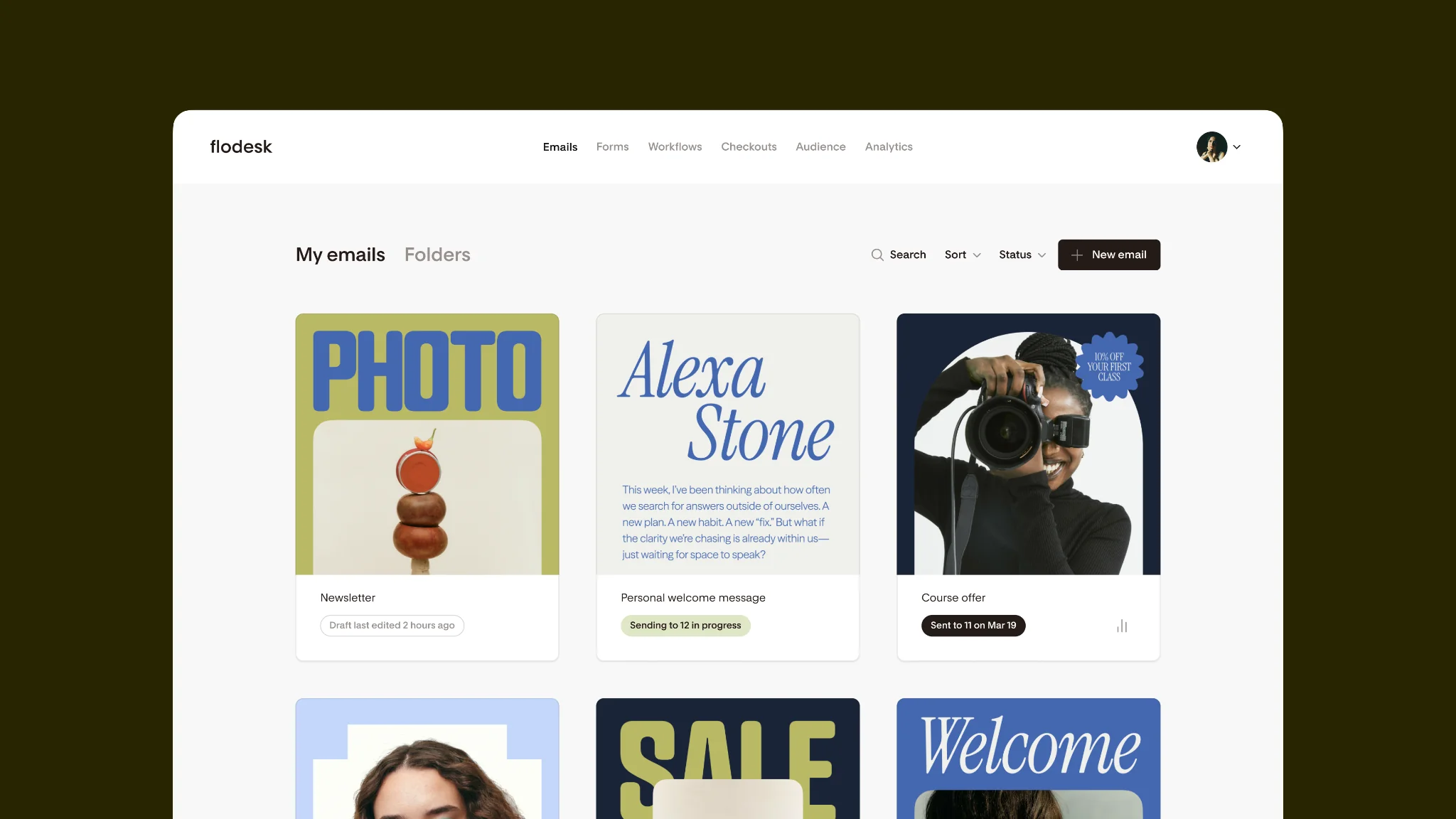
Flodesk is a design-first email marketing platform built for small businesses, solopreneurs, and creators who want professional, on-brand emails without needing a designer or technical expertise. Founded in 2019 by Rebecca Shostak, Martha Bitar, and Trong Dong, Flodesk is bootstrapped and serves over 100,000 businesses globally, having surpassed $36M ARR without outside funding.
Its patented layout technology renders custom fonts consistently across Gmail, Apple Mail, Outlook, and mobile — something most email platforms can't do. The recently launched Flodesk Studio lets users generate a fully on-brand email from a text prompt in under five minutes, powered by Claude by Anthropic, free during beta at studio.flodesk.com.
Best features:
- Patented layout technology renders custom fonts consistently across all major email clients and mobile devices
- Subject line A/B testing built into the send flow — write two variations, Flodesk automatically delivers the winner by open rate after 24 hours
- Multi-trigger automations with split paths, real-time reactions, and behavior-based ecommerce triggers for Shopify and Flodesk Checkout
- Eight form types including spin-the-wheel, video, and countdown timer — converting at 2× the industry average
- Native ecommerce checkout with zero platform fee, Buy Now Pay Later (Klarna, Affirm, Afterpay), and abandoned cart recovery
- Flodesk Studio: AI email design from a text prompt in minutes, free in beta, no account required
- ~98.4% platform-wide deliverability — nearly 10 points above industry average
Pros:
- Best-in-class email design with custom font rendering that actually works across email clients
- Unlimited email sends on all paid plans — no per-send overage charges
- AI-powered email design via Studio reduces production time from hours to minutes
- Simple, predictable pricing that scales by subscriber count only
Cons:
- Email-only — no SMS, WhatsApp, or multi-channel marketing
- A/B testing limited to subject lines (body/content testing not available)
- Smaller native integration library than enterprise platforms like Mailchimp
Pricing: Free plan (forms and landing pages only, no email sending). Lite $25/month, Pro $28/month, Everything $54/month — all with unlimited email sends. 14-day free trial, no credit card required.
5. HubSpot
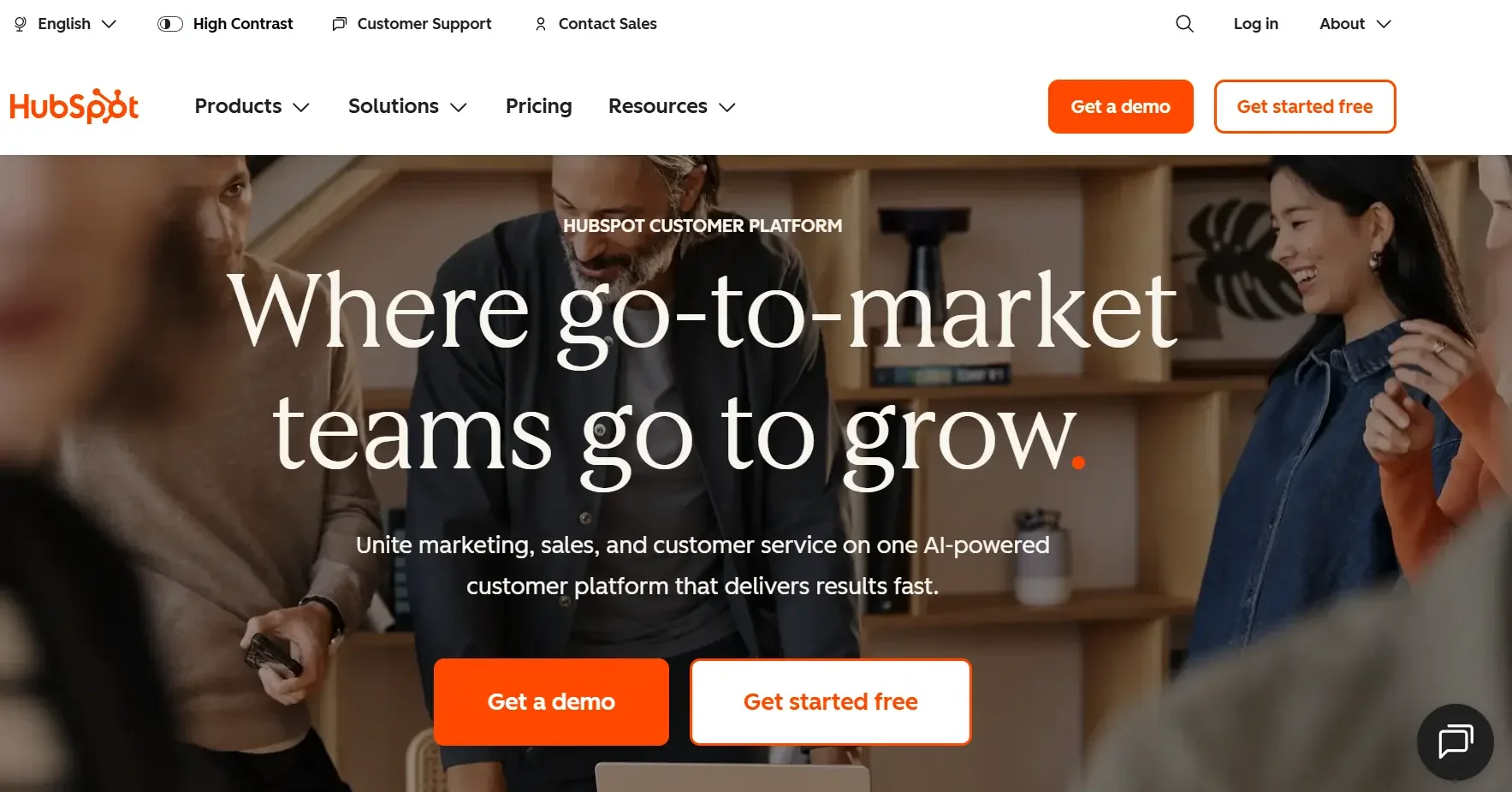
Next on our list comes HubSpot, a powerful platform that helps businesses of all sizes build and automate their email marketing campaigns. It features a great email editor that allows for easy design customization without requiring coding knowledge.
Plus, this email marketing service includes intuitive AI-powered features to create branded emails in minutes. Another core strength of HubSpot is its integrated CRM, enabling marketers to personalize messages in-depth based on a wealth of data.
To further optimize your strategy and maximize engagement, the platform offers features like A/B testing and send time optimization. You also get sophisticated automation to set up cross-channel workflows triggered by CRM events, website interactions, or customer service communications.
HubSpot isn't limited to email marketing, though, as it's popular for its full marketing hub that offers tools for sales, customer service, and content management.
Best features:
- Responsive email templates for common use cases
- Built-in CRM
- Email automation and autoresponders
- Lead generation tools like forms, landing pages, and ads
- In-depth email personalization using CRM data
- A/B testing
- Advanced email analytics
Pros:
- Free tools for marketing, sales, customer service, and content
- Multi-channel automation
- Extended integration list with eCommerce platforms, event management tools, etc.
Cons:
- Gets pricey as your contact database grows
- Limited functionality on lower-tier plans
Pricing: HubSpot's paid plans start at $20/month, allowing for 1,000 contacts, simple automation, and ad management. The platform also offers a free version that gives you access to basic marketing and sales features, along with AI-powered recommendations.
6. ActiveCampaign
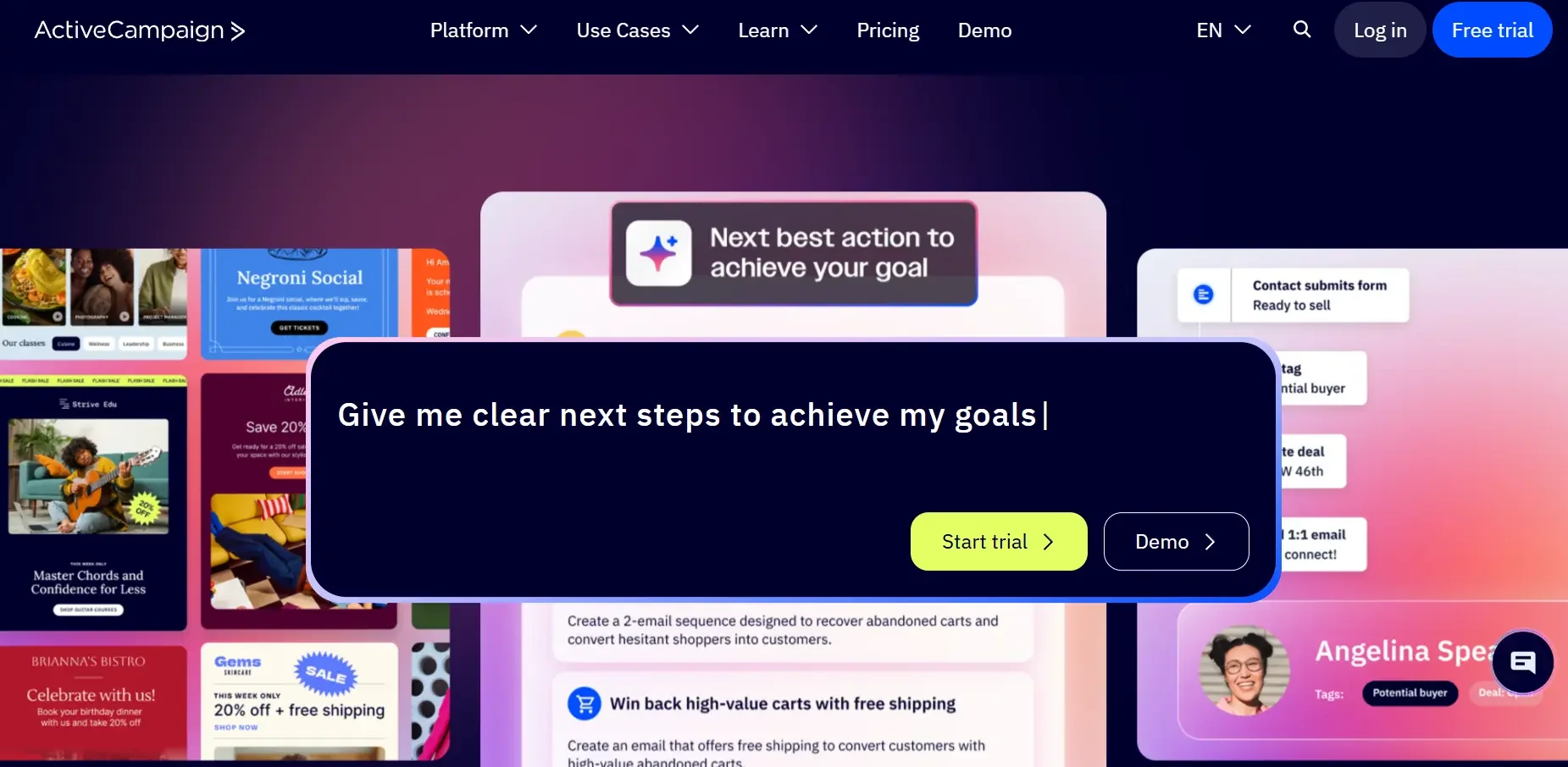
ActiveCampaign is an email marketing automation platform with advanced functionality, including a robust CRM. With it, you can create visually appealing emails, track audience behavior, and target subscribers with triggered emails.
The drag-and-drop email builder is user-friendly, allowing even marketing newbies to customize campaigns in a few clicks. ActiveCampaign also provides users with ready-made templates with sleek designs to start building your campaigns. Alternatively, you may use AI technology to quickly generate a branded email.
Moving to automation, this is where this email solution excels, helping you design personalized customer journeys across various channels, such as email, social media, WhatsApp, and SMS. To make sure each message lands at the optimal time, the platform lets you use predictive send time optimization.
Last but not least, ActiveCampaign is one of the best email marketing services in terms of deliverability. This ensures your emails reach creators' inboxes, which, in turn, is key to increasing your campaign ROI.
Best features:
- Easy-to-use email builder
- Sophisticated multi-channel automation
- Integrated CRM to track all interactions
- Granular audience segmentation
- Conditional content to display different blocks or sections based on subscriber preferences
- AI-powered predictive sending
- Detailed reporting
Pros:
- More than 900 workflow templates
- SMS, WhatsApp, and social media outreach opportunities
- Top-notch deliverability
Cons:
- Steep learning curve
- Short free trial period
Pricing: Active Campaign users will pay $19/month for the Starter plan (up to 500 subscribers). This gives them access to email templates, automation recipes, and CRM tools, but limited segmentation. There's a 14-day free trial if you want to test its core features.
7. Mailchimp
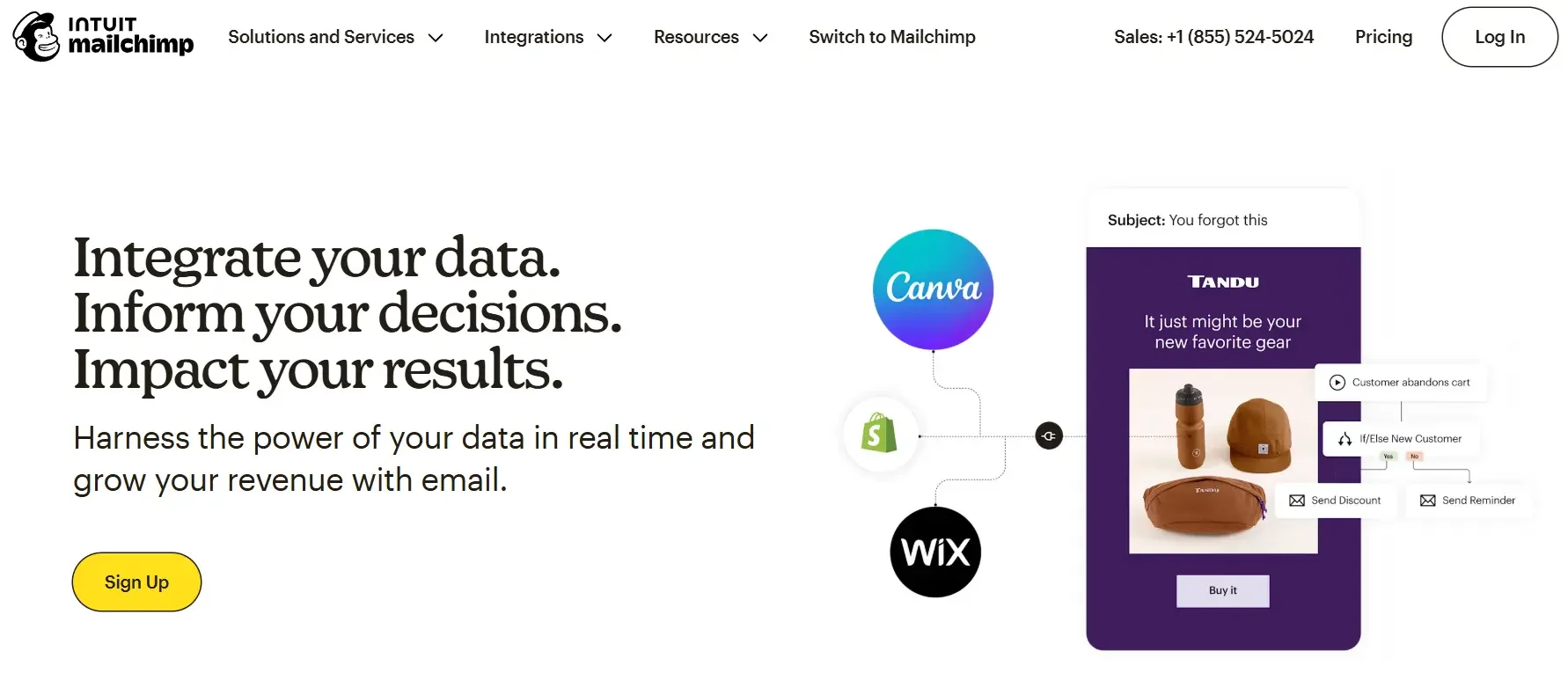
Mailchimp is another email service on our list that's popular among marketing beginners and budget-conscious businesses due to its intuitive tools and free plan. With it, you get access to a robust email editor that lets you drag and drop content blocks to create the perfect email.
To speed up email creation, Mailchimp offers ready-made, modern email templates for your campaigns. We should mention, though, that most of them are only available on the most expensive plans.
Mailchimp's Customer Journeys allow you to set up tailored paths for your audience and deliver unique experiences. You can use pre-built workflow templates, omnichannel campaigns, and behavioral tracking to stay relevant across multiple touchpoints.
Moreover, the software's AI-powered Content Optimizer provides suggestions to improve your emails by checking for grammar and spelling errors or broken links. On top of that, Mailchimp offers additional tools like a free website builder and social media marketing options.
Best features:
- Drag-and-drop email builder
- Built-in marketing CRM
- Customer Journey builder
- Lead capturing options (e.g., popups and landing pages)
- Send time optimization
- A/B and multivariate testing
- Plethora of integrations with social media or payment platforms
Pros:
- Multi-step automation across email, SMS, and social media
- AI-driven recommendations during campaign creation
- All-in-one marketing platform
Cons:
- Limited features in lower-tier plans
- Unfair billing that charges for unsubscribed contacts
Pricing: Mailchimp's paid plans start at $13/month, offering tools like email templates, forms, landing pages, and limited reporting. To get started, you can sign up for the free version that lets you test some features and a handful of basic email templates.
8. MailerLite
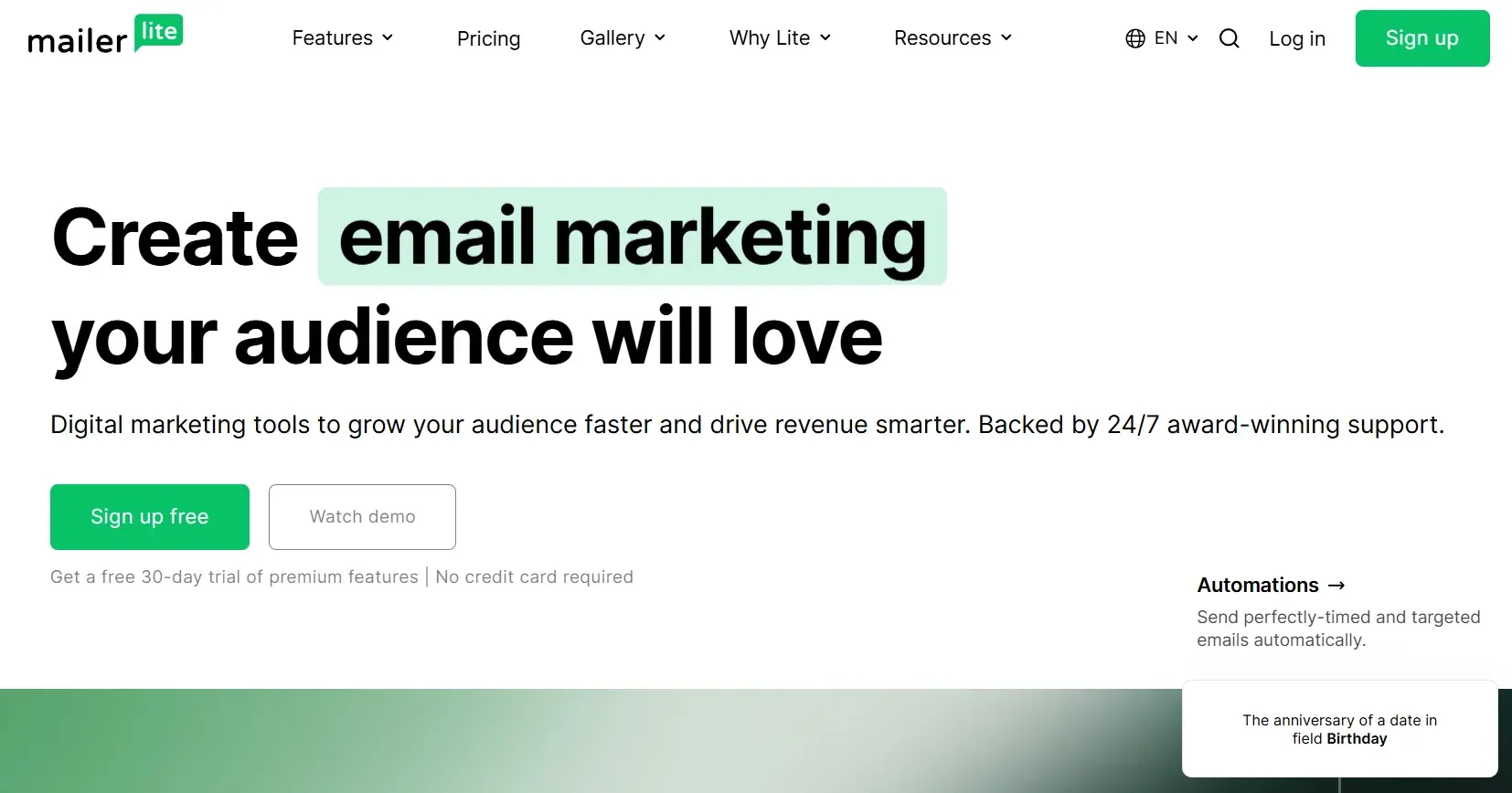
MailerLite is a robust email marketing platform that's designed for small businesses and digital creators who want to grow and nurture their audience. It prioritizes simplicity and user-friendliness with a clean interface and easy-to-grasp email features.
For example, you have an intuitive drag-and-drop builder to design professional campaigns. By using the software's ready-made templates or building one from scratch, you can enrich the email layout with blocks like countdown timers and image carousels.
Emails aren't the only assets you can create with MailerLite since you get equally effective builders for websites, forms, and pop-ups. If you want more to expand your reach, there's also a unique app to collect leads in-person.
When it comes to email automation, you get a visual automation editor, multiple triggers, and conditional logic to set up targeted workflows. Plus, you'll access pre-made templates to fully automate the customer journey.
Best features:
- Drag-and-drop builders for emails, landing pages, forms, and websites
- AI writing assistant for email generation
- Digital product selling
- Multivariate testing
- iPad Subscribe App to capture subscribers at events or in-store
- Smart email sending feature to perfect your timing
- More than 150 integrations, for example with eCommerce platforms like Shopify and Wix
Pros:
- Generous free plan
- Excellent multilingual customer support
- No email sending limits on paid plans
Cons:
- Restricted automation options compared to competitors
- No email templates on the free plan
Pricing: MailerLite's pricing starts at $10/month and you can use it to send unlimited emails and access the platform's core functionality, such as lead generation and segmentation. The free plan is a solid option for users who have up to 500 contacts and need basic tools.
9. GetResponse
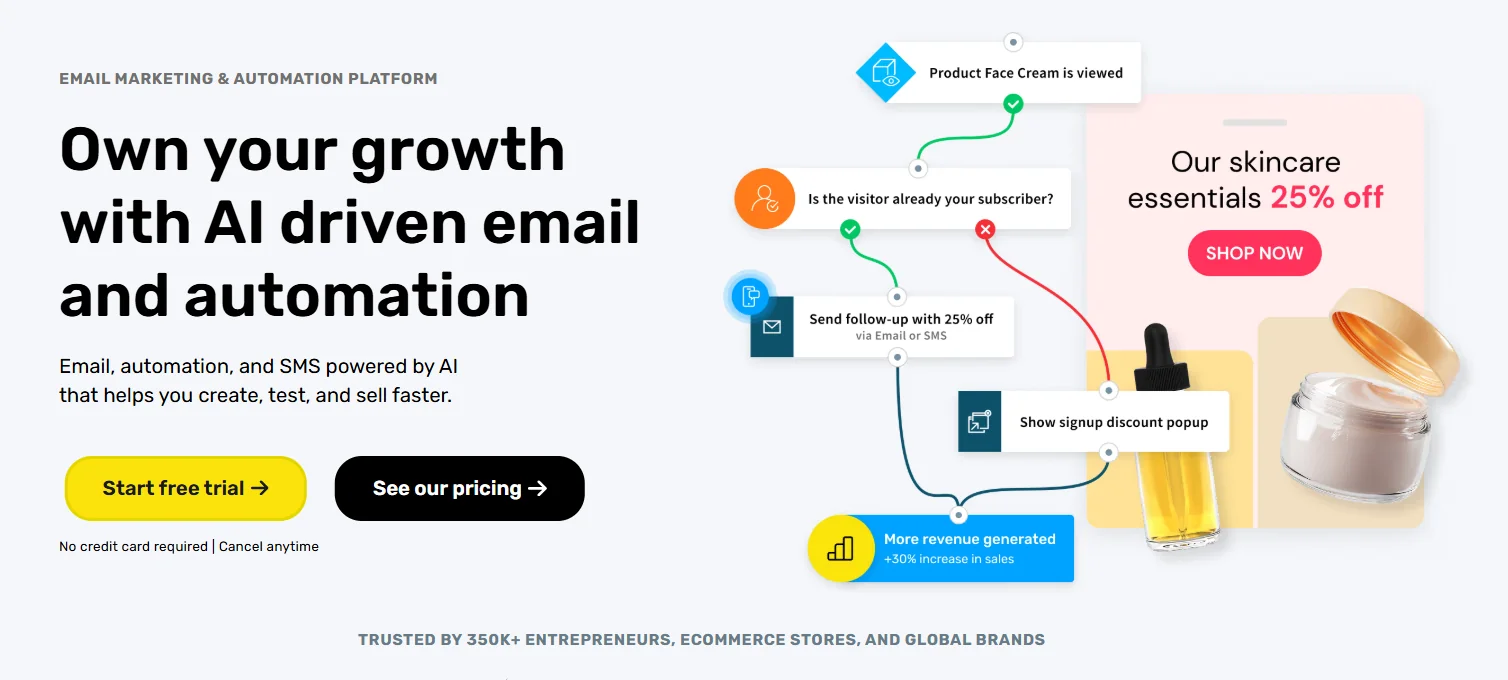
GetResponse is an AI-powered email marketing and automation platform that helps businesses grow using channels they own. It's built for everyone, from solo founders to growing ecommerce brands, making it easy to launch campaigns, drive revenue, and build lasting customer relationships.
The platform combines email marketing, automation, and conversion tools into one scalable solution. You can design professional emails using the drag-and-drop builder, generate copy with built-in AI tools, and automate entire customer journeys with visual workflows that respond to subscriber behavior.
Beyond email, GetResponse offers powerful tools to capture and convert leads. You can create landing pages, websites, and signup forms to grow your audience, then nurture those leads with personalized campaigns across email and SMS. E-commerce brands can further boost performance with sales funnels, product recommendations, and advanced segmentation.
Because everything is built into a single platform, businesses can manage audience growth, marketing automation, and revenue generation without juggling multiple tools.
Best features:
- AI-powered email creation and campaign optimization
- Visual marketing automation workflow builder
- Drag-and-drop email and landing page builders
- Lead capture tools like forms, popups, and landing pages
- Built-in sales and conversion funnels
- Email and SMS marketing from one platform
- Advanced segmentation and personalization
- Real-time analytics and reporting
Pros:
- All-in-one platform for email, automation, and lead generation
- AI tools that help speed up campaign creation
- No email sending limits on many plans
- Scalable solution for growing businesses
Cons:
- Some advanced automation features require higher-tier plans
- Interface can take time to fully learn for beginners
Pricing: GetResponse offers a Free plan for up to 500 contacts with basic email marketing tools. Paid plans start at around $19/month for the Email Marketing plan, which includes autoresponders, segmentation, and unlimited newsletters. Higher-tier plans unlock advanced automation, ecommerce features, and SMS marketing, with pricing scaling based on your contact list size.
Choose The Best Email Marketing Platform For Your Needs
We've listed our favorite email marketing platforms, analyzing best features, pros and cons, plus their pricing structure so you can easily compare them.
However, the final choice depends on the features you need, the budget at your disposal, and if you want to engage subscribers on more touchpoints. You'll also have to consider factors like ease of use, scalability, and customer support to ensure you'll get the most out of your email marketing efforts.
To make an informed decision, sign up for each tool's free trial or free plan to test its functionality. Look for hidden fees or locked features so you can access the tools you need without facing unexpected costs. The last thing you need is to limit your growth because your tool of choice doesn't live up to your expectations.
Summary
This is some text inside of a div block.
This is some text inside of a div block.
Pricing/Month
Shopify Reviews
This is some text inside of a div block.
This is some text inside of a div block.
This is some text inside of a div block.
This is some text inside of a div block.
This is some text inside of a div block.
This is some text inside of a div block.
This is some text inside of a div block.
This is some text inside of a div block.
This is some text inside of a div block.
This is some text inside of a div block.
This is some text inside of a div block.
This is some text inside of a div block.
This is some text inside of a div block.
This is some text inside of a div block.
This is some text inside of a div block.
This is some text inside of a div block.
This is some text inside of a div block.
This is some text inside of a div block.
This is some text inside of a div block.
This is some text inside of a div block.
This is some text inside of a div block.
Read More

FAQs
What are the benefits of email marketing?

Email marketing remains one of the most effective ways to stay in touch with your audience, personalize your approach, and automate your campaigns. Also, it’s usually consent-based, making it more likely for subscribers to interact with your messages. Lastly, it’s a channel you control, so you don’t have to worry about changing algorithms that may prevent you from reaching your audience.
What are the most affordable email marketing services?
Moosend and MailerLite are typically popular options for marketers and businesses with budget constraints, starting at $9 and $10/month respectively. There are free solutions, too, but you need to make sure that they offer the email sends and features you need, including excellent deliverability and customer support.
How can you get started with email marketing?
Your email marketing journey should begin with deciding on your needs and budget and choosing the right email marketing software. Build a double opt-in to build your email list and start small with simple and targeted campaigns like welcome emails. As your business grows, you can incorporate more complex automated workflows and adjust your approach by tracking your campaign performance.
How will you know that an email platform can scale with your business?
You should look for a platform with scalable features like flexible pricing tiers, automation that can handle both simple and complex needs, and integrations with other tools in your tech stack. A scalable solution will also let you expand your email list, send more emails, and use advanced features as your business grows, all without draining your budget.
What metrics should you track to measure email marketing success?
Some key email metrics to monitor include opens, clicks, conversions, bounces, and email ROI. Keeping track of these KPIs helps businesses improve their deliverability, craft more targeted emails, and increase their email marketing revenue in the long-term.








Most Popular Blogs


Drive ROI With Influencer Marketing
Join 1,200+ brands and 150+ agencies scaling creator programs with Influencer Hero.