

Los 10 mejores herramientas de comercio social para impulsar las ventas en línea
August 28, 2025
|
Publicado

July 30, 2026
|
Actualizada

12
|
Lectura

Curso de marketing de resultados para influencers | Cupón: IMC100

Malena Garcia
Impulse el ROI con Influencers

Base de datos global de influencers
Plataforma TODO EN UNO
CRM, afiliados, UGC y más
Los 10 mejores herramientas de comercio social para impulsar las ventas en línea
Las plataformas de comercio social se presentan en muchas formas—algunas se centran en feeds comprables y experiencias de pago sin interrupciones, mientras que otras enfatizan campañas impulsadas por influencers y ventas de afiliados. Herramientas como Influencer Hero se encuentran en esta última categoría, proporcionando a las marcas descubrimiento de influencers, gestión de campañas, derechos de contenido y análisis—todo en un solo lugar.
Al automatizar pagos de afiliados, optimizar flujos de trabajo de influencers y optimizar UGC para conversiones más altas, estas soluciones ayudan a las marcas a impulsar la participación, generar confianza e incrementar las ventas. Ya sea una pequeña tienda Shopify o una empresa global, elegir la plataforma de comercio social correcta le permite escalar programas de influencers y convertir contenido social en ingresos medibles.
En esta guía, le mostraremos las mejores herramientas de comercio social para ayudarle a impulsar las ventas en línea y hacer crecer su negocio en 2025.
Los 10 mejores herramientas de comercio social
- Instagram Shop
- TikTok Shop
- Influencer Hero
- brandID
- Reply.io
- Creator.co
- Facebook Shops
- Tagshops
- LTK
- Shopify Collabs
Qué buscar en una plataforma de comercio social para impulsar las ventas
Una plataforma de comercio social sólida es una de las formas más efectivas para que las marcas conviertan contenido social, UGC y colaboraciones con influencers en ingresos medibles. Para los especialistas en marketing enfocados en estrategias DTC o eCommerce, la herramienta correcta puede transformar publicaciones sociales y campañas de influencers de participación pasiva a ventas directas. Estos son los aspectos esenciales a considerar:
- Descubrimiento de influencers y creadores: Busque plataformas que proporcionen acceso a grandes grupos de creadores verificados, completos con datos demográficos de audiencia, métricas de participación y filtrado por nicho. Encontrar los influencers correctos garantiza que las campañas lleguen a las audiencias más relevantes y con mayor tasa de conversión.
- Seguimiento de afiliados y comisiones: Las plataformas deben permitir asignar enlaces de afiliados únicos o códigos promocionales a influencers, rastrear ventas y automatizar pagos. Esto hace que la medición del ROI sea simple y garantiza que los creadores se compensen con precisión por sus contribuciones.
- Derechos de contenido y gestión de UGC: Asegurar permisos y almacenar contenido generado por usuarios o influencers es crítico para campañas de comercio social. Las plataformas con gestión de derechos y bibliotecas de activos reducen el riesgo legal mientras permiten a las marcas reutilizar contenido en anuncios, sitios web y canales sociales.
- Gestión de campañas y automatización de flujos de trabajo: Los paneles centralizados para gestionar colaboraciones, aprobaciones, obsequios y cronogramas agilizan las operaciones. La automatización reduce tareas manuales, especialmente para escalar programas de influencers.
- Análisis e información de rendimiento: La plataforma debe proporcionar datos sobre clics, conversiones, ventas, participación y contenido de mejor desempeño. Estos conocimientos permiten a las marcas optimizar campañas para obtener la máxima rentabilidad del comercio social.
- Integración de plataformas: La conexión sin problemas con creadores de sitios web de ecommerce (Shopify, BigCommerce, WooCommerce) y herramientas de marketing garantiza que las ventas impulsadas por influencers se rastreen con precisión. La integración ayuda a conectar campañas sociales con checkout, inventario y sistemas de análisis.
- Facilidad de uso e incorporación: Una interfaz intuitiva y un proceso de incorporación guiado ahorran tiempo y reducen errores. Las plantillas listas para usar, los flujos de trabajo automatizados y los informes claros facilitan que los equipos pequeños lancen campañas de alto rendimiento rápidamente.
- Escalabilidad: La plataforma debe adaptarse a campañas en crecimiento, más influencers y volúmenes de transacciones más altos sin problemas de rendimiento. Esto garantiza que la herramienta continúe proporcionando valor a medida que la marca se expande.
- Cumplimiento y seguridad: La privacidad de datos, el cumplimiento de GDPR/CCPA y el manejo seguro de información de influencers y consumidores son cruciales. Las plataformas que protegen los datos de usuarios y creadores reducen los riesgos legales y generan confianza con los colaboradores.
Criterios de selección: Cómo evaluamos las mejores plataformas de comercio social para impulsar las ventas
Al elegir las mejores herramientas de comercio social, nos enfocamos en características y cualidades que impacten directamente la capacidad de una marca de convertir la participación social en ingresos. Cada plataforma fue evaluada utilizando los siguientes criterios:
1. Funciones Enfocadas en Conversión
Priorizamos plataformas con contenido comprable, seguimiento de afiliados, galerías UGC y flujos de trabajo de regalos automatizados—herramientas que aumentan directamente las ventas impulsadas por influencers y maximizan el ROI.
2. Reseñas de Usuarios y Reputación del Mercado
Los comentarios de marcas reales, comerciantes y agencias fueron esenciales. Se consideraron cuidadosamente las reseñas verificadas de G2, Capterra, Shopify App Store y otras fuentes de la industria.
3. Precios y Valor por Dinero
Examinamos planes de suscripción para garantizar que las marcas obtengan un ROI sólido. Esto incluyó revisar niveles gratuitos, planes pagos y si las funciones justifican el costo mensual o anual.
4. Facilidad de Uso y Gestión de Campañas
Una interfaz intuitiva es clave para los equipos de marketing. Evaluamos paneles, automatización de flujos de trabajo, incorporación de influencers y gestión de contenido para garantizar que las campañas se puedan lanzar eficientemente.
5. Integraciones y Escalabilidad
Evaluamos qué tan bien las plataformas se integran con tiendas de comercio electrónico, herramientas de análisis, CRM y otros sistemas de marketing. La escalabilidad fue crítica—asegurar que la plataforma pueda respaldar a las marcas a medida que crecen los programas de influencers e iniciativas de comercio social.
Las 10 Mejores Herramientas de Comercio Social
1. Instagram Shop

Instagram Shop transforma el perfil de una marca en una tienda digital, permitiendo a los usuarios explorar y comprar productos sin salir de la aplicación. Con integración perfecta en Reels, Stories y Explore, conecta la inspiración directamente con la compra.
Precios: Gratis de usar; se aplican cuotas de venta estándar.
Ideal Para: Marcas de estilo de vida, moda, belleza y DTC.
Reseñas: 4.6/5.0 (G2)
Prueba Gratuita: N/A.
Funciones de Comercio Social de Instagram Shop
- Publicaciones Comprables: Etiqueta productos directamente en publicaciones del feed, Reels e historias. Esto hace que el descubrimiento de productos sea natural y atractivo
- Pago en Instagram: Los usuarios pueden completar compras dentro de la aplicación. Esto acorta el viaje de compra y aumenta las conversiones.
- Colecciones y Curaciones: Las marcas pueden organizar productos en colecciones temáticas. Esto mejora la narración de historias y el marketing estacional
- Integración con Meta Ads: Las tiendas pueden conectarse con Meta Ads para remarketing. Esto maximiza el alcance pagado y orgánico.
- Herramientas de Colaboración con Creadores: Los influencers pueden etiquetar productos en sus propias publicaciones. Esto permite respaldos de productos auténticos a escala.
Ventajas y Desventajas de Instagram Shop
| Ventajas | Desventajas |
|---|---|
| Experiencia Perfecta: Las compras están integradas en el ecosistema de la aplicación. | Se Aplican Comisiones: Las comisiones de venta reducen los márgenes. |
| Comercio Visual Fuerte: Perfecto para belleza, moda y estilo de vida. | Dependencia del Algoritmo: El alcance orgánico es impredecible. |
| Integración de Anuncios: Combina anuncios pagos con Tiendas orgánicas. | Complejidad de Configuración: Requiere configuración del Administrador de Comercio de Facebook. |
| Asociaciones con Influencers: Publicaciones de marcas conjuntas fáciles con creadores. | Limitaciones Regionales: El pago no está disponible en todos los países. |
| Colecciones: Ayuda a las marcas a curar campañas estacionales. | Dependencia de Plataforma: Gran dependencia de las políticas de Meta. |
Nuestras Perspectivas:
Instagram Shop es imprescindible para marcas visualmente impulsadas. Su combinación de descubrimiento, marketing de influencers y pago nativo es poderosa, aunque el éxito depende del algoritmo de Meta y la estrategia de gasto en anuncios.
2. TikTok Shop

TikTok Shop es una plataforma de comercio social integrada que permite a marcas y creadores vender productos directamente dentro de TikTok. Con videos comprables, compras en directo y asociaciones de afiliados, permite una experiencia perfecta de entretenimiento a compra.
Precios: Gratuito de configurar (se aplican tarifas de plataforma por transacción).
Mejor para: Marcas dirigidas a Gen Z y Millennials con contenido de video corta.
Opiniones: 4.5/5.0 (Capterra)
Prueba gratuita: No aplica.
Características de comercio social de TikTok Shop
- Videos comprables: Las marcas pueden incrustar productos directamente en sus videos de TikTok, haciendo que cada pieza de contenido sea instantáneamente comprable. Esta característica transforma publicaciones orgánicas y pagadas en oportunidades de venta sin interrumpir la experiencia del usuario.
- Compras en directo: Las empresas pueden organizar eventos de venta en vivo que permiten a los clientes comprar en tiempo real mientras se relacionan con la marca. Este enfoque interactivo crea urgencia, aumenta conversiones y fortalece los lazos comunitarios.
- Programa de afiliados: TikTok Shop permite a los creadores ganar comisiones promoviendo productos de vendedores aprobados. Las marcas obtienen acceso a un amplio conjunto de influencers que pueden generar contenido auténtico orientado a las ventas.
- Pago en la aplicación: La plataforma mantiene a los usuarios dentro de TikTok durante el proceso de compra, reduciendo la fricción y los abandonos. Los clientes disfrutan de un viaje de compra perfecto de un clic sin salir de la aplicación.
- Análisis de desempeño: TikTok Shop proporciona datos sobre ventas, fuentes de tráfico y contribuciones de influencers. Estos datos permiten a las marcas identificar las estrategias de mejor desempeño y optimizar campañas para mejores resultados.
Ventajas y desventajas de TikTok Shop
| Ventajas | Desventajas |
|---|---|
| Pago sin fricciones: El flujo de compra en la aplicación aumenta las conversiones. | Alta competencia: La saturación hace que sea más difícil destacarse. |
| Alcance viral: El algoritmo de TikTok impulsa el descubrimiento orgánico de productos. | Dependencia del contenido: El éxito depende en gran medida del contenido en tendencia. |
| Mercado de influencers: Acceso a un conjunto de creadores motivados. | Limitaciones logísticas: El envío y el cumplimiento pueden ser complejos. |
| Compras en directo: Los eventos interactivos fomentan compras impulsivas. | Control de la plataforma: Las políticas estrictas pueden limitar la flexibilidad de la marca. |
| Barrera de entrada baja: Configuración fácil para pymes y creadores. | ROI variable: El desempeño puede ser impredecible. |
Nuestros insights:
TikTok Shop es mejor para marcas que prosperan en entornos orientados al video. Si se dirige a compradores más jóvenes con contenido creativo y orientado a tendencias, este es uno de los canales de comercio social más potentes disponibles.
3. Influencer Hero
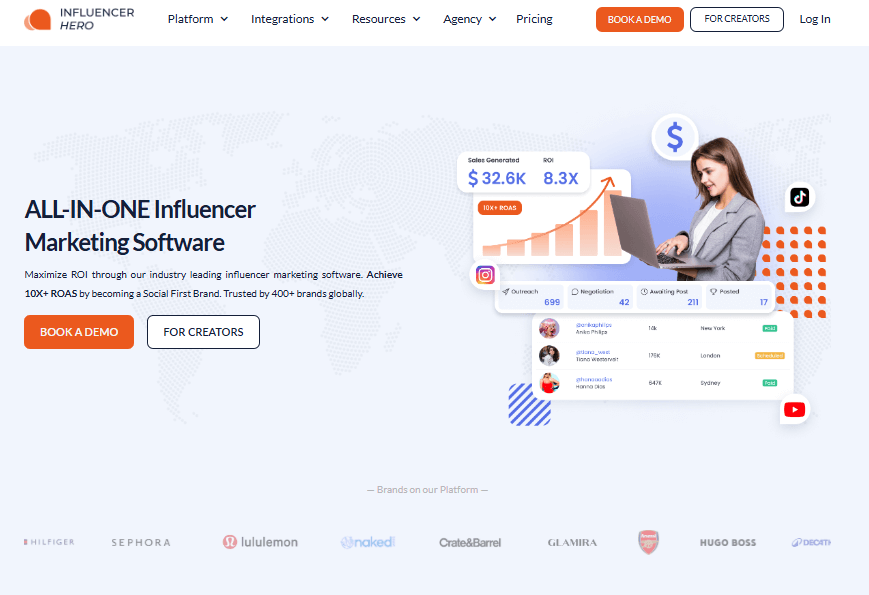
Influencer Hero es una plataforma todo en uno de marketing de influencers y comercio social diseñada para ayudar a las marcas a maximizar el ROI a través de colaboraciones con creadores. Con descubrimiento robusto, seguimiento de afiliados, gestión de regalos y CRM integrado, convierte el marketing de influencers en un motor de ventas directas.
Precios: Influencer Hero ofrece planes mensuales flexibles:
- Estándar – $649/mes (hasta 1,000 creadores)
- Pro – $1,049/mes (hasta 5,000 creadores)
- Negocios – $2,490/mes (hasta 10,000 creadores), y precios personalizados/agencia basados en escala.
Mejor paraMarcas que buscan una herramienta integral para gestionar el descubrimiento de influencers, gifting, campañas de afiliados y seguimiento de ventas.
Reseñas: 5.0/5.0 (G2)
Prueba Gratuita: No, pero Influencer Hero ofrece una amplia gama de herramientas gratuitas para que pueda probar. También puede reservar una demostración para obtener más información sobre la plataforma.
Características de Comercio Social de Influencer Hero
- Descubrimiento de Influencers: Acceda a una base de datos global de creadores con filtros para datos demográficos, tasas de engagement e información de audiencia. Esto garantiza que las marcas puedan encontrar las voces adecuadas que tengan más probabilidades de convertir audiencias en compradores.
- Escaparates de Influencers: Permita que los creadores configuren escaparates personalizados donde puedan mostrar y recomendar productos. Estas tiendas curadas facilitan que los seguidores busquen y compren, convirtiendo la confianza en los influencers en ventas directas.
- Seguimiento de Enlaces de Afiliados: Genere y administre enlaces de afiliados únicos para cada influencer. Las ventas, conversiones y ROI se pueden rastrear directamente, lo que facilita la medición del rendimiento de la campaña.
- Automatización de Outreach: Envíe y rastreee el outreach de influencers con plantillas de correo electrónico integradas y seguimientos automatizados. Esta función de outreach reduce el trabajo manual y ayuda a escalar colaboraciones de manera eficiente.
- Gestión de Gifting: Optimice el seeding de productos con soluciones de envío integradas. Las marcas pueden administrar solicitudes de productos y entregas sin problemas mientras rastrean el uso del influencer.
- Biblioteca de Contenido: Recopile, organice y reutilice contenido generado por influencers dentro de un solo panel. Esto permite que las marcas amplíen el UGC en sitios web, anuncios y redes sociales.
- Panel de Análisis: Obtenga acceso a métricas de rendimiento como engagement, conversiones y atribución de ingresos. Con reportes en tiempo real, las marcas pueden ajustar rápidamente las campañas para obtener mejores resultados.
Influencer Hero Ventajas y Desventajas
| Ventajas | Desventajas |
|---|---|
| Solución Integral: Combina descubrimiento de influencers, outreach, CRM, reportes, gifting y gestión de afiliados en una herramienta. | Sin Whitelisting de Anuncios Integrado: Falta funcionalidad para ejecutar contenido de influencers como anuncios de redes sociales pagos directamente. |
| Datos Integrales de Influencers: Accede a influencers de Instagram, YouTube, TikTok y Facebook con insights verificados. | Curva de Aprendizaje: Puede tomar algún tiempo para que equipos más pequeños exploren todas las características disponibles. |
| Integración de CRM: Sistema integrado para gestionar relaciones con influencers, conversaciones y campañas de manera eficiente. | |
| Escalable: Funciona tanto para pequeños negocios como para grandes empresas gracias a características flexibles. | |
| Soporte de Afiliados y Gifting: Permite que las marcas ejecuten colaboraciones basadas en comisiones y seeding de productos sin inconvenientes. |
Nuestras Perspectivas:
Influencer Hero es la mejor opción para marcas que hablan en serio sobre vincular el marketing de influencers directamente a las ventas. Su combinación de seguimiento de afiliados, flujos de gifting y gestión de contenido no tiene igual entre las herramientas de comercio social. Para empresas que desean tanto escala como ROI medible, Influencer Hero destaca como la solución más completa y efectiva.
4. brandID
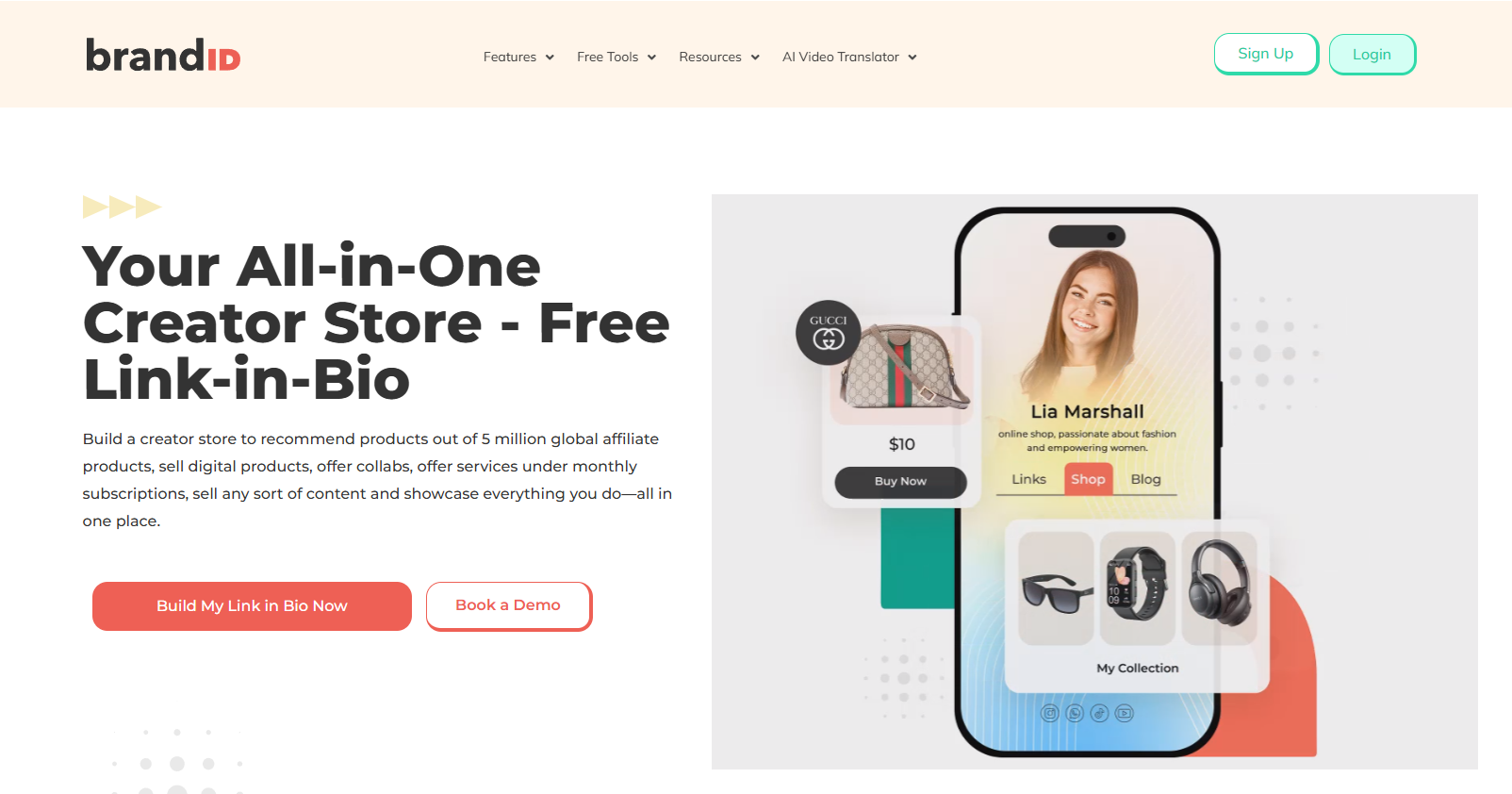
brandID es una plataforma avanzada de enlace en bio que funciona también como una tienda completa de creadores. Los creadores pueden vender productos digitales, recomienda artículos afiliados de un catálogo de más de 5 millones de productos en más de 2.000 marcas, ofrece suscripciones, alquila espacios publicitarios en línea a marcas y captura clientes potenciales, todo desde una única página de marca vinculada desde sus biografías de redes sociales. Para las marcas, proporciona un canal directo para llegar a creadores que ya están configurados para vender y promocionar.
Precios: Plan gratuito disponible para siempre; funciones premium en planes de pago.
Mejor para: Creadores e influencers que buscan convertir su seguimiento en redes sociales en una tienda monetizada, y marcas que buscan asociaciones con creadores que cuentan con capacidades integradas de afiliación y comercio.
Reseñas: 5.0 / 5.0 (Trustpilot)
Prueba gratuita: Plan gratuito disponible.
Funciones de comercio social de brandID
- Enlace de biografía comprable: Convierta un único enlace de biografía en una tienda completamente de marca con productos, enlaces y contenido todo en un solo lugar. Los seguidores pueden explorar y comprar sin salir de la página del creador.
- Feed de redes sociales comprable: Los creadores pueden conectar sus cuentas de Instagram, TikTok y YouTube y reflejar sus publicaciones directamente en su página de brandID. Cada publicación puede estar vinculada a un catálogo de productos, por lo que cuando un seguidor hace clic en una publicación, ve todos los productos destacados o promocionados en ella, convirtiendo cada pieza de contenido en una experiencia comprable.
- Mercado de productos afiliados: Acceda a más de 5 millones de productos de 2.000+ marcas directamente dentro de la plataforma. Los creadores pueden añadir artículos, generar enlaces de afiliación al instante y ganar comisiones de hasta el 50% con pagos semanales.
- Venta de productos digitales: Venda vídeos, audio, PDF y otro contenido descargable directamente desde la página del creador. No se necesita tienda de terceros ni sitio web separado.
- Suscripciones y membresías: Venda suscripciones en línea y configure ingresos recurrentes a través de membresías o paquetes de servicios. Los pagos se gestionan dentro de la plataforma.
- Vallas publicitarias digitales: Permita que las marcas alquilen espacio publicitario directamente en la página de un creador, abriendo un flujo de ingresos adicional más allá del contenido patrocinado o afiliado tradicional.
- Captura de correo electrónico y SMS: Recopile datos de contacto de fans y comuníquese con ellos por correo electrónico o SMS para remarketing, facilitando la generación de tráfico y ventas repetidas.
- Herramientas de kit multimedia e identidad de marca: Las funciones integradas de kit multimedia y código QR ayudan a los creadores a presentarse profesionalmente a socios de marca.
Ventajas y desventajas de brandID
| Ventajas | Desventajas |
|---|---|
| Feed de contenido comprable: Refleja publicaciones en redes sociales y adjunta catálogos de productos a ellas, convirtiendo contenido existente en un canal de ventas directo. | Enfoque orientado al creador: Diseñado principalmente para creadores individuales en lugar de gestión de campañas grandes del lado de la marca. |
| Catálogo de afiliación grande: El acceso inmediato a 5M+ productos significa que los creadores pueden monetizar cualquier nicho desde el primer día. | Dependencia de plataforma: Los ingresos dependen del tráfico de la página del creador impulsado desde canales de redes sociales. |
| Tienda todo en uno: Reemplaza la necesidad de un sitio web separado, tienda digital y agregador de enlaces. | |
| Múltiples fuentes de ingresos: Combina afiliación, productos digitales, suscripciones, propinas y vallas publicitarias en un solo lugar. | |
| Gratuito para empezar: Funcionalidad completa de enlace de biografía disponible sin costo, reduciendo la barrera para nuevos creadores. |
Nuestros insights:
brandID destaca por la cantidad de funcionalidades que incluye en su producto gratuito. La mayoría de las herramientas de enlace en biografía se detienen en la agregación de enlaces, pero brandID añade un mercado de afiliados completo, venta de productos digitales y gestión de suscripciones, convirtiéndola en una herramienta genuinamente útil de comercio social en lugar de solo una página de biografía. Para creadores que desean monetizar a través de múltiples canales sin crear un sitio web, es una de las opciones gratuitas más completas disponibles.
Para las marcas, abre un camino directo para asociarse con creadores que ya tienen una página lista para el comercio y una audiencia preparada para comprar. La función de feed social comprable en particular la acerca a herramientas como Tagshop, pero integrada en la página de marca propia del creador en lugar de un widget incrustado en el sitio web de una marca.
5. Reply.io
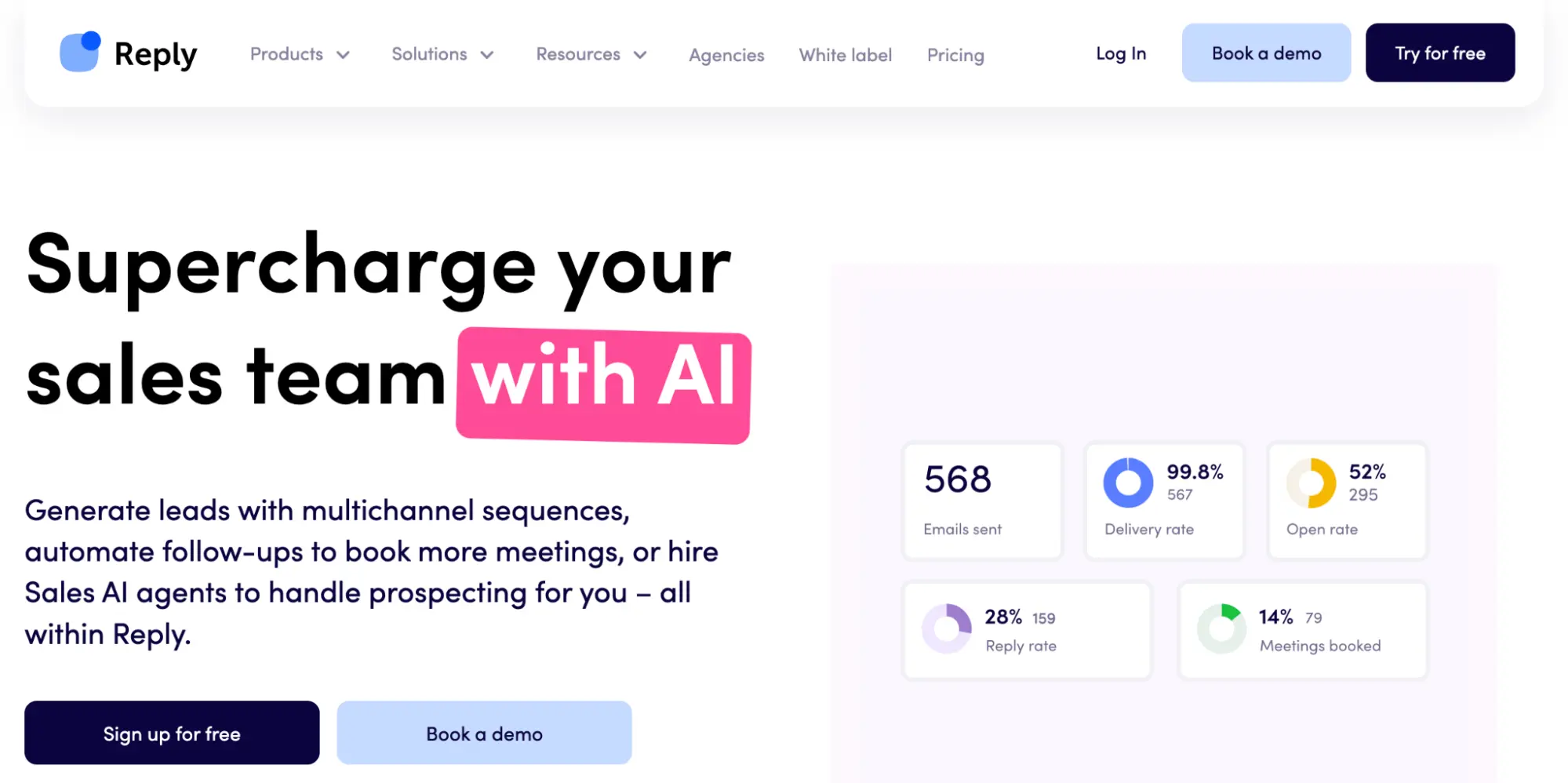
Reply.io es una plataforma de compromiso de ventas impulsada por IA que ayuda a los equipos a automatizar el alcance y escalar la generación de leads en múltiples canales. Permite a los usuarios ejecutar secuencias multicanal, automatizar seguimientos y usar agentes impulsados por IA para manejar la prospección y la reserva de reuniones.
Precios: Comienza con planes escalonados según las características y el tamaño del equipo.
Mejor para: Equipos de ventas y empresas B2B que buscan automatizar el alcance e incrementar las reservas de reuniones.
Reseñas: 4.6/5.0 (G2)
Prueba gratuita: Sí
Características de Ventas y Alcance de Reply.io
- Secuencias multicanal: Involucre a prospectos por correo electrónico, LinkedIn, llamadas y SMS en un solo flujo de trabajo. Aumenta los puntos de contacto y mejora las tasas de respuesta.
- Agentes de ventas con IA: Automatice la prospección y el alcance con IA que encuentra leads, inicia contacto y nutre conversaciones.
- Automatización de correo electrónico: Construya campañas de goteo personalizadas con seguimientos automatizados para mantener a los prospectos comprometidos sin esfuerzo manual.
- Herramientas de entregabilidad: Optimice el rendimiento del envío con calentamiento integrado y funciones de gestión de bandeja de entrada para mejorar las tasas de alcance.
- Automatización de reserva de reuniones: Programe automáticamente reuniones con leads interesados, reduciendo la fricción en el ciclo de ventas.
Pros y Contras de Reply.io
| Pros | Contras |
|---|---|
| Automatización impulsada por IA: Reduce significativamente el trabajo de alcance manual | Curva de aprendizaje: Las características avanzadas pueden requerir tiempo de incorporación |
| Alcance multicanal: Combina correo electrónico, llamadas y LinkedIn | Precios a escala: Puede volverse costoso para equipos más grandes |
| Herramientas sólidas de entregabilidad: Ayuda a mejorar la colocación en bandeja de entrada | Complejidad de la interfaz: La interfaz rica en características puede parecer densa para principiantes |
| IA de generación de leads: Encuentra e involucra a prospectos automáticamente | Personalización limitada en planes inferiores |
| Programación integrada: Simplifica el proceso de reserva de reuniones | Mejor valor en niveles superiores |
Nuestros conocimientos:
Reply.io es una opción sólida para equipos de ventas que buscan escalar el alcance saliente sin aumentar la carga de trabajo manual. Su automatización impulsada por IA y capacidades multicanal la hacen especialmente efectiva para empresas SaaS y B2B enfocadas en la generación consistente de leads y la eficiencia de la reserva de reuniones.
6. Creator.co

Creator.co es una plataforma de marketing de influencers que conecta marcas con creadores para campañas de micro-influencers. La plataforma se enfoca en gestión de campañas, envío de productos y ROI medible del contenido de influencers.
Precios: Precios personalizados según la escala de la campaña.
Ideal para: Marcas que buscan soluciones escalables de marketing de micro-influencers.
Reseñas: 4.4/5.0 (Capterra)
Prueba gratuita: No
Funciones de comercio social de Creator.co
- Descubrimiento de creadores: Encuentre influencers según nicho, engagement y datos demográficos de la audiencia. Asegura que las campañas se dirijan a compradores relevantes.
- Envío de productos y muestreo: Envíe productos a creadores para generar contenido auténtico. Impulsa prueba social y aumenta la probabilidad de ventas.
- Gestión de campañas: Realice un seguimiento de las actividades de influencers, aprobaciones de contenido y cronogramas de publicación. Optimiza el flujo de trabajo y reduce el trabajo manual.
- Análisis de rendimiento: Mida engagement, clics y conversiones. Los datos informan la optimización de campañas futuras.
- Integración de afiliados: Asigne enlaces de afiliados únicos a creadores. Facilita el seguimiento basado en comisiones y la medición del ROI.
Ventajas y desventajas de Creator.co
| Ventajas | Desventajas |
|---|---|
| Enfoque en micro-influencers: Acceda a audiencias auténticas a escala. | Precios personalizados: Sin tarifas públicas; los costos dependen del alcance de la campaña. |
| Flujos de trabajo de envío: Automatiza el envío de productos y aprobaciones. | Herramientas empresariales limitadas: El reporting avanzado puede ser básico para marcas grandes. |
| Panel de control de campañas: La gestión centralizada simplifica las operaciones. | Dependencia de plataforma: Requiere engagement consistente del influencer. |
| Seguimiento de afiliados: Realiza un seguimiento eficiente de las ventas de creadores individuales. | Mercado limitado: Sin mercado de descubrimiento de influencers a gran escala. |
| Información analítica: Proporciona métricas de rendimiento basadas en datos. | Volumen de contenido requerido: Necesita creación consistente de contenido para maximizar ROI. |
Nuestros análisis:
Creator.co es ideal para marcas que aprovechan micro-influencers para impulsar el comercio social. Sus capacidades de envío y afiliados hacen que el seguimiento del ROI sea directo. Para equipos pequeños y medianos enfocados en campañas auténticas, Creator.co es una opción inteligente.
7. Facebook Shops

Facebook Shops permite a las empresas crear vitrinas digitales directamente en Facebook, totalmente integradas con el ecosistema de Meta. Proporciona una experiencia de compra personalizable con funcionalidad multiplataforma en Facebook e Instagram.
Precios: Configuración gratuita; se aplican tarifas de transacción.
Ideal para: Marcas que buscan un amplio alcance de audiencia en la base de usuarios de Facebook.
Reseñas: 4.4/5.0 (G2)
Prueba gratuita: N/A.
Funciones de comercio social de Facebook Shops
- Vitrinas multiplataforma: Cree una tienda que se sincronice en Facebook e Instagram. Esto asegura coherencia y alcance más amplio.
- Marca personalizada: Las marcas pueden personalizar vitrinas con diseños, imágenes y colores. Esto fortalece la identidad de marca.
- Integración de Messenger y WhatsApp: Los clientes pueden chatear directamente con marcas mientras compran. Esto aumenta el engagement y el servicio al cliente.
- Conectividad con anuncios de Meta: Realice retargeting de compradores con anuncios personalizados. Esto aumenta las compras repetidas y el valor de vida del cliente.
- Análisis e información:Track product performance and customer behavior. This helps brands optimize campaigns over time.
Ventajas y desventajas de Facebook Shops
| Ventajas | Desventajas |
|---|---|
| Alcance amplio: Acceso a la audiencia global masiva de Facebook. | Se aplican comisiones: Los costos de transacción afectan los márgenes. |
| Mensajería integrada: La comunicación directa mejora la confianza. | Menor engagement: Los datos demográficos más jóvenes prefieren TikTok/Instagram. |
| Presencia en múltiples plataformas: Sincroniza la tienda en las aplicaciones de Meta. | Cambios en el algoritmo: La visibilidad orgánica puede fluctuar. |
| Marca personalizada: Control sobre la apariencia de la tienda. | Tiempo de configuración: La configuración inicial puede ser larga. |
| Análisis sólido: Información basada en datos para la optimización. | Bloqueo de plataforma: Flexibilidad limitada fuera del ecosistema de Meta. |
Nuestras conclusiones:
Facebook Shops funciona mejor para marcas que desean alcance e integración en el ecosistema de Meta. Aunque no es la plataforma más moderna, destaca por la amplitud de audiencia y herramientas sólidas de comunicación a través de Messenger y WhatsApp.
8. Tagshop

Tagshop es una plataforma de comercio social que ayuda a las marcas a convertir contenido UGC e influenciadores en experiencias comprables. Permite a las empresas crear galerías comprables desde Instagram, TikTok y otros canales sociales para aumentar las conversiones.
Precio: Comienza en $49/mes; planes escalonados disponibles.
Mejor para: Marcas DTC que aprovechan contenido UGC e influenciadores.
Reseñas: 4.7/5.0 (Capterra)
Prueba gratuita: Sí (14 días).
Características de comercio social de Tagshop
- Galerías UGC comprables: Convierte publicaciones de influenciadores y contenido de clientes en pantallas de productos interactivas. Esto cierra la brecha entre inspiración y compra.
- Integración multiplataforma: Funciona con TikTok, Instagram y Shopify. Esto garantiza que el contenido sea comprable en múltiples puntos de contacto.
- Widgets personalizables: Incrusta galerías en sitios web y páginas de productos. Esto mejora las conversiones del sitio de eCommerce.
- Etiquetado automático de productos con IA: Etiqueta automáticamente productos en UGC. Esto ahorra tiempo y mejora la precisión.
- Seguimiento del rendimiento: Los análisis detallados revelan qué UGC impulsa las ventas. Esto permite a las marcas optimizar las asociaciones de influenciadores.
Ventajas y desventajas de Tagshop
| Ventajas | Desventajas |
|---|---|
| Comercio UGC: Convierte contenido en momentos comprables. | Planes pagados: El precio de entrada puede disuadir a vendedores pequeños. |
| Multiplataforma: Funciona con TikTok, Instagram y Shopify. | Curva de aprendizaje: La configuración puede requerir asistencia de incorporación. |
| Widgets personalizados: Integración flexible con sitios web. | Alcance offline limitado: Enfoque principalmente digital. |
| Etiquetado con IA: Ahorra tiempo y reduce errores en el etiquetado de productos. | Costos de escalabilidad: Los costos aumentan con mayor uso. |
| Análisis: Realiza un seguimiento del rendimiento de influenciadores y UGC. | Dependencia de API sociales: Los cambios de plataforma pueden afectar las funciones. |
Nuestras conclusiones:
Tagshop es una solución inteligente para marcas que apuestan por el UGC. Es más especializada que TikTok o Instagram Shops, lo que la hace ideal para equipos de eCommerce que desean amplificar contenido social en recorridos comprables.
9.. LTK (LIKEtoKNOW.it)

LTK (anteriormente LIKEtoKNOW.it) es una plataforma de comercio social líder que conecta creadores, marcas y compradores a través de contenido comprable. Con su ecosistema impulsado por influencers, LTK ayuda a las marcas a escalar ingresos transformando inspiración de estilo de vida en ventas directas en múltiples canales sociales.
Precios: Precios personalizados para marcas; aplicación gratuita para compradores.
Mejor para: Marcas que aprovechan asociaciones con influencers y comercio social impulsado por estilo de vida.
Reseñas: 4.6/5.0 (G2)
Prueba gratuita: No.
Características de comercio social de LTK
- Contenido comprable de influencers: Los creadores pueden compartir publicaciones seleccionadas con productos etiquetados. Esto convierte la inspiración de estilo de vida en oportunidades de compra directa.
- Red de afiliados: Las marcas obtienen acceso a un gran conjunto de influencers. Esto facilita escalar asociaciones e impulsar ventas a través de recomendaciones confiables.
- Alcance multiplataforma: El contenido de LTK funciona en Instagram, TikTok y Pinterest. Esto maximiza la visibilidad y el engagement multicanal.
- Campañas personalizadas: Las marcas pueden ejecutar campañas patrocinadas directamente dentro del ecosistema de LTK. Esto proporciona más control y un ROI mensurable.
- Datos y análisis: Obtenga información detallada sobre el rendimiento de influencers, engagement de contenido y conversión. Esto ayuda a las marcas a optimizar futuras asociaciones.
Ventajas y desventajas de LTK
| Ventajas | Desventajas |
|---|---|
| Modelo enfocado en influencers: Diseñado específicamente para comercio social a través de creadores. | Precios personalizados: La falta de transparencia puede desalentar a marcas más pequeñas. |
| Alcance amplio: Acceso a millones de compradores y creadores globales. | Dependencia de plataforma: Dependencia fuerte del ecosistema de LTK. |
| Contenido comprable: Conecta sin interrupciones la inspiración con el checkout. | Entorno competitivo: La alta saturación de influencers puede diluir la visibilidad. |
| Integración multiplataforma: Funciona bien con TikTok, Instagram y Pinterest. | Curva de aprendizaje: Las marcas nuevas pueden necesitar onboarding para utilizar completamente las herramientas. |
| Análisis robustos: Seguimiento de rendimiento para campañas más inteligentes. | Ajuste limitado para PyMEs: El mejor valor se suele obtener con marcas de tamaño medio a empresarial. |
Nuestras conclusiones:
LTK es uno de los nombres más reconocibles en comercio social, y con razón. Su ecosistema enfocado en influencers lo convierte en una herramienta poderosa para marcas de moda, belleza y estilo de vida que desean impulsar ventas a través de recomendaciones auténticas. Si bien puede ser menos accesible para empresas más pequeñas, es una opción sólida para marcas listas para invertir en comercio impulsado por influencers escalable.
10. Shopify Collabs

Shopify Collabs es una solución de comercio social y marketing de influencers integrada en tiendas Shopify. Permite a las marcas descubrir creadores, gestionar colaboraciones y pagar comisiones por ventas generadas a través de contenido impulsado por influencers.
Precios: : Shopify Collabs es gratis para usar para todos los comerciantes en los planes Basic, Advanced o Plus de Shopify. El único costo adicional es una tarifa de procesamiento del 2.9% en los pagos de afiliados a través de PayPal. No hay contratos ni suscripciones requeridas.
Ideal Para: Marcas basadas en Shopify que buscan una integración fácil de marketing de influencers.
Reseñas: 4.5/5.0 (Shopify App Store)
Prueba Gratuita: N/A
Características de Comercio Social de Shopify Collabs
- Descubrimiento de Creadores: Encuentre influencers que se adapten a su nicho de marca directamente en Shopify. Esto simplifica la búsqueda y el contacto con influencers.
- Gestión de Afiliados: Asigne enlaces únicos a los creadores para rastrear conversiones y pagar comisiones. Garantiza que el ROI sea medible y automático.
- Gestión de Campañas: Rastrear colaboraciones y actividad de influencers desde un panel centralizado. Reduce el seguimiento manual y la supervisión.
- Pago Integrado: Los pagos automáticos de comisiones cotizan la compensación de influencers. Garantiza pagos oportunos y precisos.
- Integración de Shopify: Funciona perfectamente con su tienda Shopify para rastrear ventas e inventario. Hace que las ventas impulsadas por influencers sean fáciles de gestionar.
Ventajas y Desventajas de Shopify Collabs
| Ventajas | Desventajas |
|---|---|
| Gratis para Comerciantes de Shopify: Sin costos de suscripción adicionales. | Solo Shopify: Limitado a usuarios de tiendas Shopify. |
| Configuración Fácil: Incorporación rápida dentro del panel de Shopify. | Limitaciones de Características: Carece de análisis avanzado empresarial. |
| Rastreo de Afiliados: Medición directa de ventas impulsadas por influencers. | Base de Creadores Pequeña: Es posible que no admita campañas a gran escala. |
| Panel de Campañas: Rastreo de campañas centralizado. | Sin Soporte Offline: Enfocado completamente en ventas de eCommerce. |
| Pagos Integrados: Pagos automáticos de comisiones. | Informes Limitados: Los conocimientos son menos sólidos que en plataformas independientes. |
Nuestros Análisis:
Shopify Collabs es ideal para comerciantes que desean un programa de influencers sin complicaciones e integrado. Su acceso gratuito e integración perfecta de Shopify lo hacen perfecto para tiendas pequeñas y medianas. Para marcas que buscan un comercio social simple pero medible, Collabs es altamente efectivo.
Pensamientos Finales sobre las Mejores Herramientas de Comercio Social para Impulsar Ventas
Elegir la plataforma de comercio social correcta es crucial para marcas que buscan aprovechar el contenido de influencers y UGC para impulsar ventas. Desde fuentes comprables hasta rastreo de afiliados y gestión de campañas, estas herramientas ayudan a las marcas a convertir contenido social en ingresos medibles mientras crean conexiones auténticas con las audiencias.
Para marcas que desean una solución que combine escala, análisis y gestión de creadores, Influencer Hero se destaca como la mejor opción. Proporciona características de nivel empresarial junto con flujos de trabajo escalables, permitiendo a las marcas gestionar colaboraciones de influencers, rastrear conversiones y optimizar campañas de manera eficiente.
Con la plataforma de comercio social correcta en su kit de herramientas, puede optimizar las operaciones de influencers, aumentar los ingresos de campañas sociales y asegurar que el contenido generado por el usuario impulse consistentemente conversiones.
Resumen
Este es un texto dentro de un bloque div.
Este es un texto dentro de un bloque div.
Precios/mes
Reseñas de Shopify
Este es un texto dentro de un bloque div.
Este es un texto dentro de un bloque div.
Este es un texto dentro de un bloque div.
Este es un texto dentro de un bloque div.
Este es un texto dentro de un bloque div.
Este es un texto dentro de un bloque div.
Este es un texto dentro de un bloque div.
Este es un texto dentro de un bloque div.
Este es un texto dentro de un bloque div.
Este es un texto dentro de un bloque div.
Este es un texto dentro de un bloque div.
Este es un texto dentro de un bloque div.
Este es un texto dentro de un bloque div.
Este es un texto dentro de un bloque div.
Este es un texto dentro de un bloque div.
Este es un texto dentro de un bloque div.
Este es un texto dentro de un bloque div.
Este es un texto dentro de un bloque div.
Este es un texto dentro de un bloque div.
Este es un texto dentro de un bloque div.
Este es un texto dentro de un bloque div.
Leer más

Preguntas frecuentes
¿Cuál es la mejor plataforma de comercio social para tiendas Shopify?

Las marcas basadas en Shopify pueden beneficiarse más de Shopify Collabs, ya que se integra sin problemas con las tiendas Shopify, permitiendo a los comerciantes descubrir influencers, rastrear ventas de afiliados y ejecutar campañas sin salir de su panel de control.
¿Siguen siendo efectivas las herramientas de comercio social en 2025?
Sí, las herramientas modernas de comercio social siguen siendo esenciales para conectar el engagement en redes sociales con ingresos medibles. Las plataformas que integran UGC, influencer marketing y affiliate tracking permiten que las marcas conviertan contenido auténtico en conversiones a escala.
¿Cuál es la mejor plataforma para programas de influencers a nivel empresarial?
Influencer Hero y Aspire.io son altamente recomendados para marcas empresariales. Sus análisis avanzados, gestión de derechos de contenido y características de descubrimiento de influencers a gran escala los hacen ideales para maximizar el ROI en campañas impulsadas por influencers.
¿Pueden los pequeños negocios beneficiarse de estas plataformas?
Absolutamente. Shopify Collabs y Aspire.io ofrecen soluciones diseñadas para marcas más pequeñas y tiendas de eCommerce en crecimiento. Proporcionan paneles fáciles de usar, herramientas de descubrimiento de influencers y seguimiento de afiliados para impulsar el comercio social sin abrumar a equipos más pequeños.
¿Necesito varias plataformas para el comercio social y el marketing de influencers?
No necesariamente. Muchas herramientas líderes, incluyendo CreatorIQ e Influencer Hero, combinan descubrimiento, gestión de campañas, seguimiento de afiliados y análisis en una sola plataforma. Usar una solución integral puede simplificar los flujos de trabajo y garantizar que las campañas en redes sociales estén optimizadas tanto para el engagement como para los ingresos.







Blogs más populares


¿Estás listo para lograr un ROI de más de 10 veces?
Programa una demostración con uno de nuestros expertos en medios a continuación.