Top 10 Influencer Reporting & Analytics Tools in 2026

March 20, 2026
|
Published

October 12, 2026
|
Updated

14 minutes
|
Reading

Influencer Performance Marketing Course | VOUCHER: IMC100

Lucía Zabala
I Author

Drive ROI With Influencers

Global Influencer Database
ALL-IN-ONE platform
CRM, Affiliate, UGC & More
Top 10 Influencer Reporting & Analytics Tools in 2026
Influencer marketing has moved from vanity metrics to a rigorous focus on predictive ROI and real-time sales attribution. In 2026, the leading reporting tools have to connect social engagement to bottom-line revenue to justify growing budgets.
Successful brands no longer track their impact manually across fragmented platforms. The tools below use AI-driven fraud detection and direct eCommerce integrations to give you a clear, automated view of campaign performance.
What to Look for in a Reporting Tool in 2026
In 2026, a reporting tool that only counts likes and comments is a glorified spreadsheet. To scale, your analytics stack has to go beyond surface-level data and deliver insights that connect creator content to business growth.
When you evaluate a platform, prioritize these four pillars of modern influencer reporting:
- First-Party Data & API Integrity: With privacy rules tightening, scraped data is increasingly inaccurate. Make sure your tool has direct API integrations with TikTok, Instagram, and YouTube to pull verified, real-time metrics from the source.
- Full-Funnel Attribution: The best tools don't just show reach; they track the entire customer journey. Look for syncing with eCommerce backends (Shopify, Amazon, WooCommerce) to monitor Customer Acquisition Cost (CAC) and Average Order Value (AOV) per creator.
- AI-Powered Audience Auditing: Your tool should flag suspicious follower growth or bot-heavy engagement so your budget isn't wasted on non-human audiences. A free engagement rate calculator is a quick first check.
- Sentiment & Brand Safety Analysis: High engagement can be negative. Advanced tools use Natural Language Processing (NLP) to label comments as positive, neutral, or negative, giving you a qualitative read on how the audience feels about your brand.
Criteria of Selection: How We Evaluated the Best Reporting & Analytics Tools in 2026
Choosing a reporting stack shouldn't feel like guesswork. We narrowed the field by focusing on five pillars that define a high-performing influencer analytics setup.
Data Integration & Connectivity
We prioritized tools with native connections to social APIs, eCommerce stores, and your wider marketing stack. A top platform pulls campaign data in automatically, without manual screenshots or constant spreadsheet maintenance.
Visualization & Customization
Reporting is about clarity. We evaluated each platform's visual flexibility, looking for clear dashboards, custom reports, and exports that turn raw numbers into a story your team and stakeholders can act on.
Scalability and Performance
Speed matters. We looked at how each tool handles high volumes of creators, posts, and campaigns, and whether dashboards stay fast and accurate as your program grows.
User Accessibility
The best tools serve both data experts and everyday marketers. We looked for intuitive interfaces that let non-technical teammates pull a report themselves, while still offering depth for power users.
Security and Governance
Data protection is non-negotiable. We favored tools with enterprise-grade security, GDPR-compliant data handling, and clear permission management to keep sensitive campaign and payment data in the right hands.
Top 10 Influencer Reporting & Analytics Tools in 2026
1. Influencer Hero
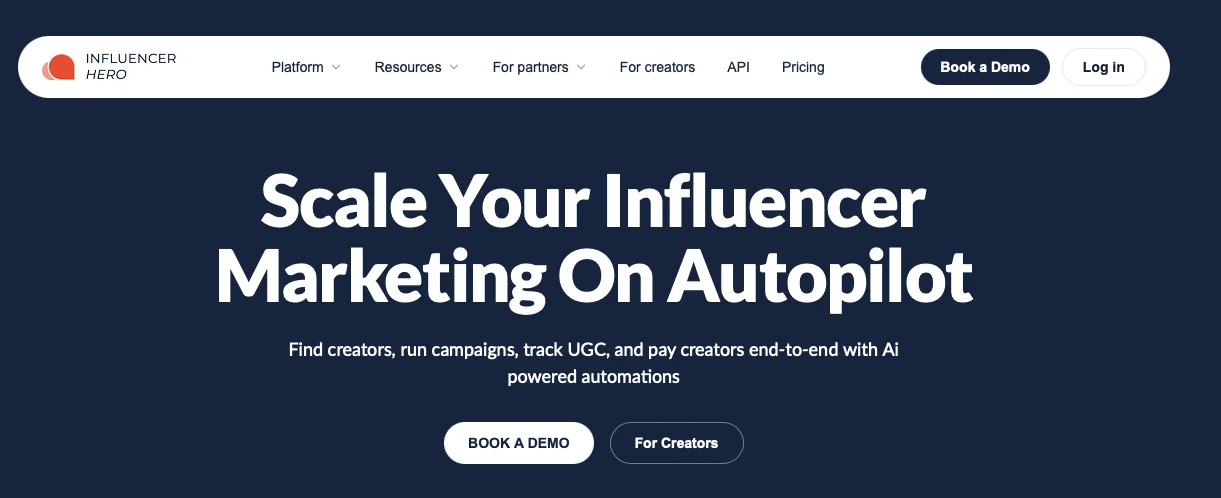
Influencer Hero is a campaign-centric influencer marketing platform built for DTC and eCommerce brands that want structured automation and ROI clarity. It combines discovery, outreach, gifting, affiliate tracking, UGC collection, payments, and reporting in one CRM-driven system, so every metric comes from the campaigns you actually run.
Best For: Growing DTC brands and eCommerce teams scaling structured, ROI-driven influencer programs.
Platform Coverage: Instagram, TikTok, YouTube.
Pricing: Standard $649/month, Pro $1,049/month, Business $2,490/month, plus Custom & Agency plans. Billed monthly with no annual lock-in.
Reviews: 5.0/5.0 (Capterra)
Ease of Use
The platform is built around visual campaign boards and bulk automation, which makes it intuitive for high-volume programs. Teams managing hundreds or thousands of creators benefit from its structured workflows and drag-and-drop system.
Customer Support
Influencer Hero offers responsive live chat, onboarding sessions, dedicated customer success managers, and 24/7 human account management. Customer feedback highlights proactive guidance and fast resolution times.
Standout Features
- Full-Funnel Sales Attribution: Real-time syncing with eCommerce platforms to track ROAS, CAC, and AOV down to the specific creator and campaign, with a unique discount code per creator.
- Automated Content Capture: Automatically detects and archives tagged Stories, Reels, and posts, so no content is lost for reporting.
- Influencer Competitor Report: An expert-curated analysis of how your influencer and social performance stacks up against your top rivals.
- Earned Media Value (EMV): Puts a dollar value on organic exposure, giving you a financial metric for awareness and engagement.
- Affiliate & Revenue Dashboard: One place to monitor coupon code usage, affiliate link performance, and automated commission payouts.
Pros & Cons
Our Insights
Influencer Hero is designed for operational efficiency and performance scaling rather than PR-style awareness programs. It stands out when your goal is measurable ROI, affiliate revenue growth, and automated outreach at scale.
For eCommerce teams that want structured systems without paying 100K a year, it offers one of the strongest value-to-feature ratios on the market. Brands like Beau Bottles have used it to drive $82K in sales from creator content. Brands that need deep competitor benchmarking or complex multinational governance may find enterprise tools a closer fit.
2. Influencity
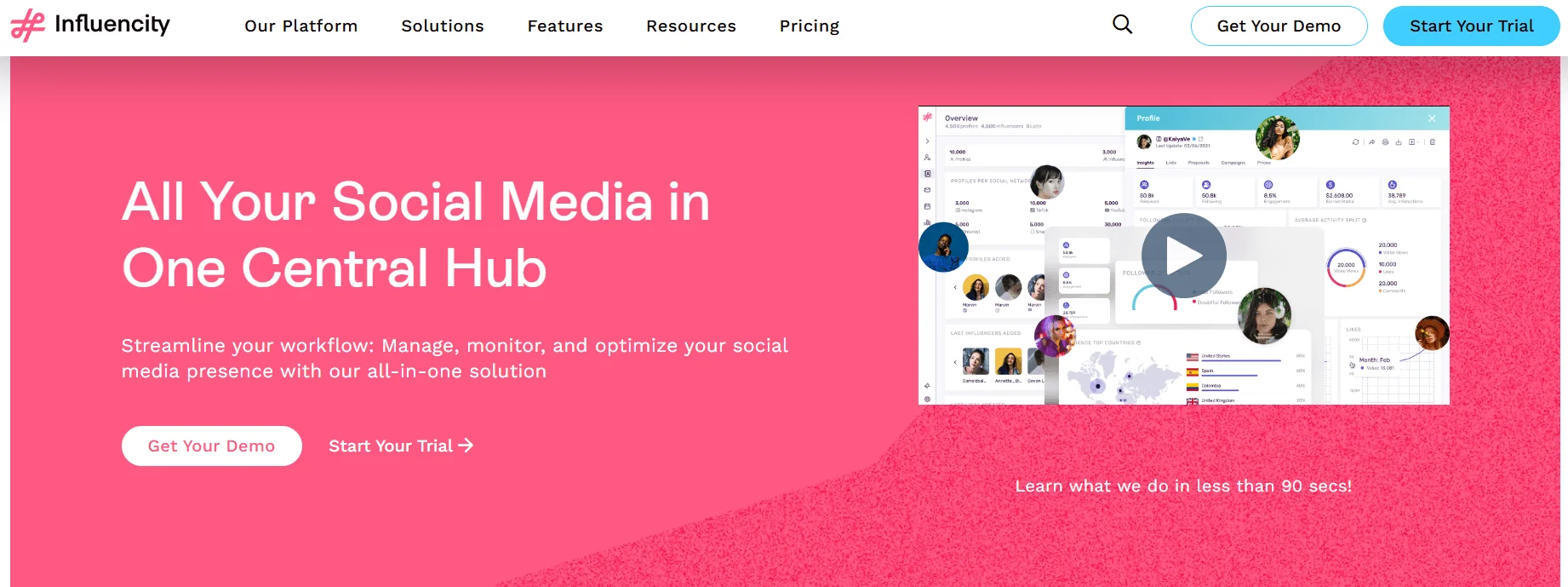
Influencity is a Spain-based influencer marketing platform that combines a large creator database with audience analytics, campaign management, and performance reporting. It's built for brands and agencies that want solid analytics on flexible billing instead of an enterprise contract.
Best For: Small and mid-sized brands and agencies that want audience analytics and campaign reporting without an annual enterprise commitment.
Platform Coverage: Instagram, TikTok, YouTube, Twitch.
Pricing: Discover $158/month, Professional $318/month, Business $1,118/month (billed annually), plus Enterprise (custom). Monthly billing is also available, and every plan includes a 7-day free trial.
Reviews: 4.2/5.0 (Capterra)
Ease of Use
Influencity has a clean, straightforward interface that most teams pick up quickly. The more advanced reporting views take a little longer to master.
Customer Support
Support is available via email, chat, and phone, backed by webinars, live training sessions, and documentation.
Standout Features
- 200M+ Creator Database: AI-powered search with detailed filters across creators and their audiences.
- Audience Quality Analysis: Fake follower detection and audience demographics for every profile you analyze.
- Campaign Performance Reports: Tracks reach, engagement, and content results across multiple campaigns in one dashboard.
- Influencer Relationship Management (IRM): Keeps creator data, history, and performance in one place.
- Shopify Integration: Connects campaigns to your store for product and sales tracking.
Pros & Cons
Our Insights
Influencity is a practical middle ground between lightweight discovery tools and enterprise suites. You get a big database, reliable audience analytics, and multi-campaign reporting on flexible billing.
The trade-off is attribution depth: affiliate tracking, payouts, and revenue reporting are lighter than in all-in-one platforms, so brands running high-volume, sales-driven programs usually outgrow it.
3. CreatorIQ
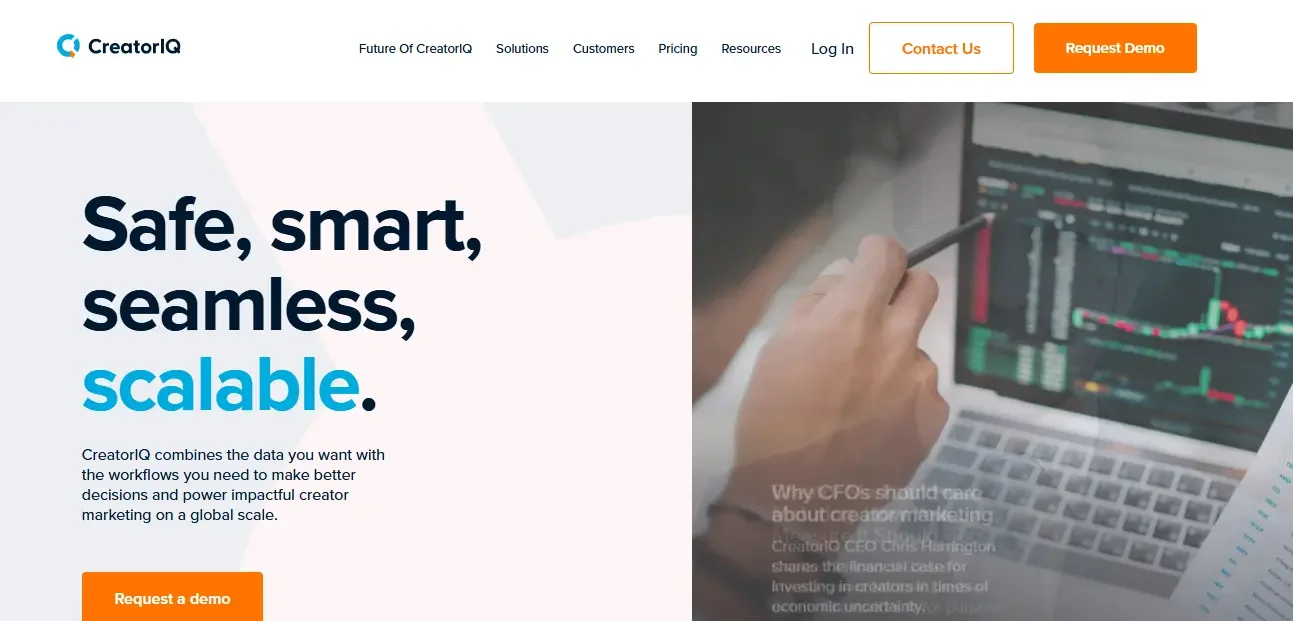
CreatorIQ is an enterprise-grade influencer marketing platform designed for global brands managing complex, multi-market programs. It emphasizes data accuracy, compliance, and executive-level reporting.
Best For: Global enterprise brands.
Platform Coverage: Instagram, TikTok, YouTube, Facebook, Pinterest, Twitch, X (Twitter).
Pricing: No public pricing. Annual contracts typically start around $30,000/year, with a median of roughly $39,250/year. No monthly plan or free trial.
Reviews: 4.4/5.0 (Capterra)
Ease of Use
CreatorIQ is data-heavy and built for structured teams with stakeholder workflows. It takes training but becomes powerful once configured.
Customer Support
Dedicated implementation managers and strategic consulting are included. Enterprise clients get ongoing planning and performance guidance.
Standout Features
- Semantic AI Search: Granular filtering by keywords, audience traits, and content themes.
- Earned Media Value (EMV) Analysis: Proprietary AI that calculates the total financial impact of creator content.
- SafeIQ Brand Safety Scoring: Vets years of historical content to flag risks like hate speech, sensitive topics, or NSFW imagery.
- The Creator Graph: Processes over 123 million posts daily for predictive performance insights and trend forecasting.
- Paid & Organic Unified Reporting: Combines sponsored campaign data and organic brand mentions into one view of your social footprint.
Pros & Cons
Our Insights
CreatorIQ is built for scale, governance, and data transparency. It's less about quick outreach and more about global brand control and executive reporting.
Large organizations with multiple stakeholders, markets, and compliance needs benefit most, while smaller teams may find it overbuilt for what they need.
4. Hypefy
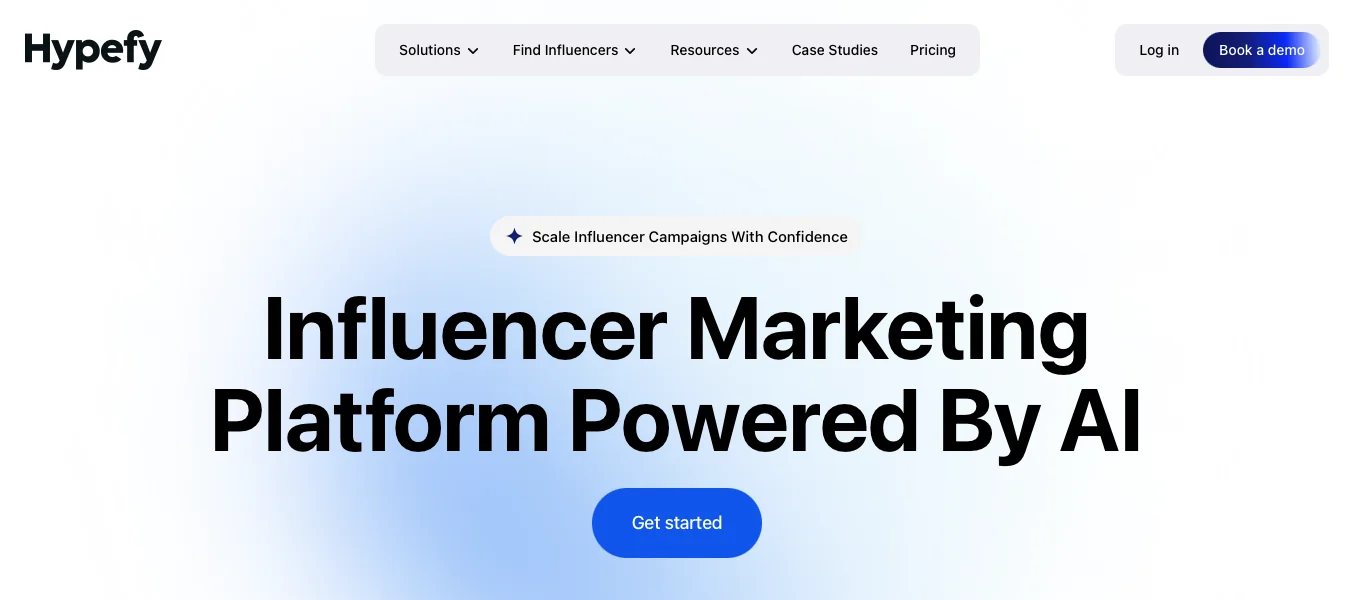
Hypefy is an AI influencer marketing platform that reports on influencer campaigns in the same units marketers use for their other paid channels. At the end of each campaign, brands receive reach, impressions, CPM, audience breakdowns, and cost per result.
Reporting sits on the same platform that runs discovery, outreach, contracts, and payments, so the data comes from the campaign itself.
Best For: Brands and agencies that want influencer results reported like a paid media channel, with consistent metrics across markets.
Platform Coverage: Instagram, TikTok.
Pricing:
- Starting price: From €2,500 per campaign, with market-specific minimums
- Contract: No subscription or annual commitment
- Structure: One campaign budget, invoiced at launch, with reporting included
Every campaign includes its reports, so there's no separate analytics license to buy.
Ease of Use
Reports are generated automatically from campaign data, so there are no screenshots to chase or spreadsheets to merge. Teams that build their own decks can export results to Excel.
Standout Features
- Measured Like a Paid Channel: Hypefy reports reach, cost per reach, and cost per result, so influencer results can sit inside a media plan next to paid social and programmatic.
- Campaign-End Reports: When a campaign ends, Hypefy reports reach, impressions, CPM, and the best-performing content, along with an audience breakdown by age, gender, and city.
- Quarterly Performance Reports: Roll-ups across campaigns show engagement rates, top creators by reach and impressions, top content, and a platform breakdown. Each report downloads as a PDF.
- Excel Export: Teams that build their own decks or combine channel data can export results to Excel.
- Spend Linked to Performance: Smart Pricing sets creator rates from recent post performance, so creator fees track the reach each creator delivers.
Pros & Cons
Our Insights
Hypefy's reporting is built for marketers who need influencer results to stand next to paid social and programmatic in the same media plan. Reach, CPM, and cost per result in consistent units make cross-channel comparisons easy, and the audience breakdowns help confirm you reached the right people.
The limits come from the model: reports only cover campaigns run through Hypefy, the main report lands at campaign end, and coverage stops at Instagram and TikTok. Teams that want always-on dashboards or reporting across every creator program will need a broader platform alongside it.
5. HypeAuditor
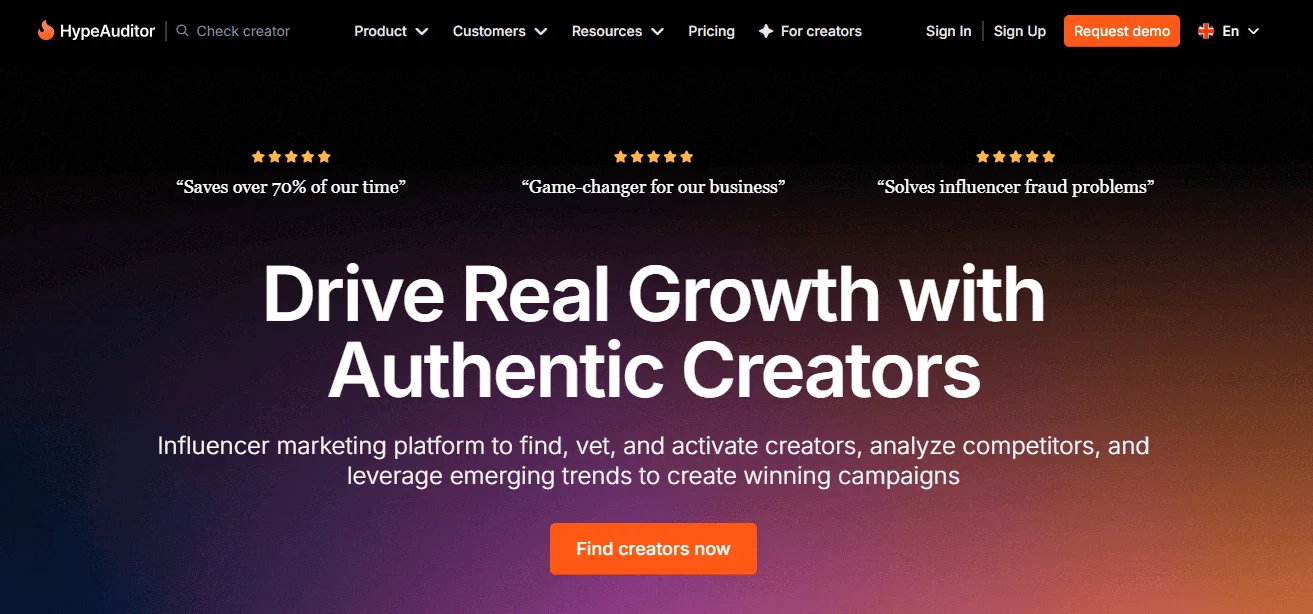
HypeAuditor is an analytics-driven influencer marketing platform focused on authenticity verification, audience analysis, and brand safety. It's widely recognized for fraud detection and influencer vetting across a database of 227M+ profiles.
Best For: Brands prioritizing influencer authenticity, audience quality, and risk mitigation.
Platform Coverage: Instagram, TikTok, YouTube, Twitch, X (Twitter), Snapchat.
Pricing: Free plan plus 40+ free tools. Paid plans start around $299/month (Basic, billed annually), with Pro around $499/month and Enterprise on quote. Trials are available on request.
Reviews: Strong reputation for analytics accuracy.
Ease of Use
The interface is data-rich and filter-heavy, designed for teams that value deep audience analytics. The volume of metrics can mean a slight learning curve for first-time users.
Customer Support
HypeAuditor provides demo onboarding, training materials, and account support. Support is consistent, though less consultative than enterprise-focused platforms.
Standout Features
- Audience Quality Score (AQS): A 1–100 metric that evaluates the authenticity of a creator's following by flagging bot-heavy engagement and suspicious growth.
- Pre-Launch Performance Forecast: Uses historical data to predict a creator's likely reach and engagement before you sign a contract.
- Competitor Media Budget Estimates: Estimates rival brands' influencer spend, reach, and the creators they work with.
- Global Market Trends Research: On-demand reports on niche benchmarks and how engagement rates shift across countries and platforms.
Pros & Cons
Our Insights
HypeAuditor shines when brand safety and authenticity are non-negotiable, which makes it especially valuable in finance, health, and enterprise retail, where creator credibility directly affects brand reputation. For YouTube vetting, a free fake subscriber checker covers the basics.
As a campaign execution engine, though, it lacks the workflow automation depth of CRM-centric platforms.
6. Traackr
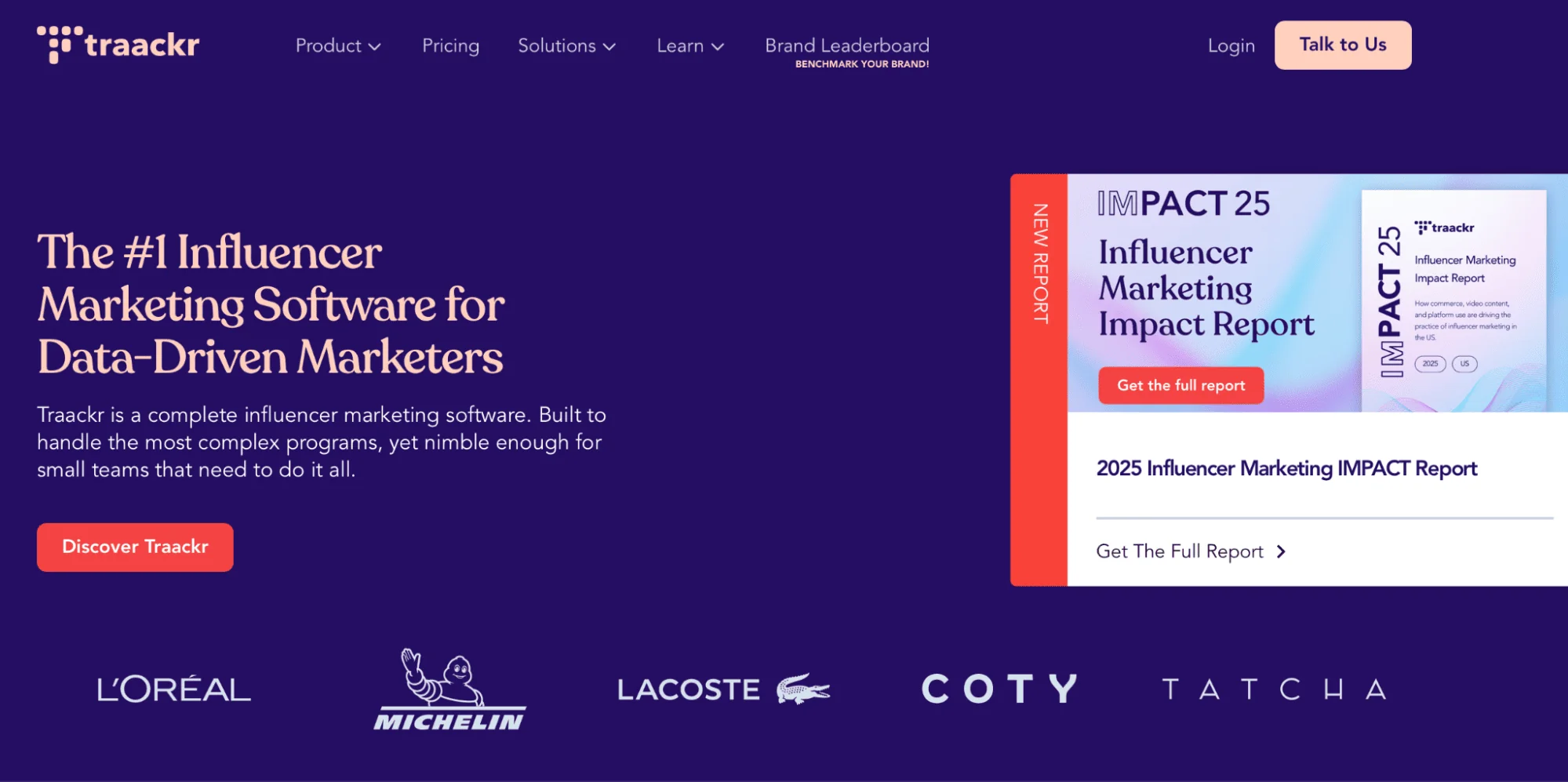
Traackr is an enterprise influencer marketing platform focused on ROI optimization, benchmarking, and global program management. It positions itself as a performance intelligence system rather than a lightweight outreach tool.
Best For: Enterprise brands requiring deep ROI tracking and multi-market coordination.
Platform Coverage: Instagram, TikTok, YouTube, Facebook, Pinterest, X (Twitter), LinkedIn, Snapchat, Twitch.
Pricing: Annual commitments only: Growth ~32,500/year (5+ users), Plus ~$55,000+/year (10+ users), and Enterprise (custom). Full breakdown in our Traackr pricing guide.
Reviews: 4.3/5.0 (G2)
Ease of Use
Traackr is highly sophisticated and built for structured global teams. It's intuitive after onboarding, but the depth of reporting and benchmarking requires training.
Customer Support
Enterprise clients get high-touch onboarding and dedicated account managers, with strategic guidance and technical support built into the offering.
Standout Features
- Brand Vitality Score (VIT): A proprietary metric that measures your brand's visibility, audience trust, and impact relative to competitors.
- Budget Optimization Calculator: Recommends spend levels per creator based on historical cost-per-engagement (CPE) and cost-per-view (CPV).
- Enterprise-Grade Compliance Tracking: Monitors posts for FTC disclosure compliance and brand-safety issues across global markets.
- Cross-Market Benchmarking: Compares performance across regions and languages with a standardized framework for global reporting.
Pros & Cons
Our Insights
Traackr is built for organizations that treat influencer marketing as a data science discipline. It excels at benchmarking, budget allocation, and executive-level reporting.
For smaller teams, the cost and complexity may outweigh the benefits unless influencer marketing is already a mature channel in the organization.
7. Favikon
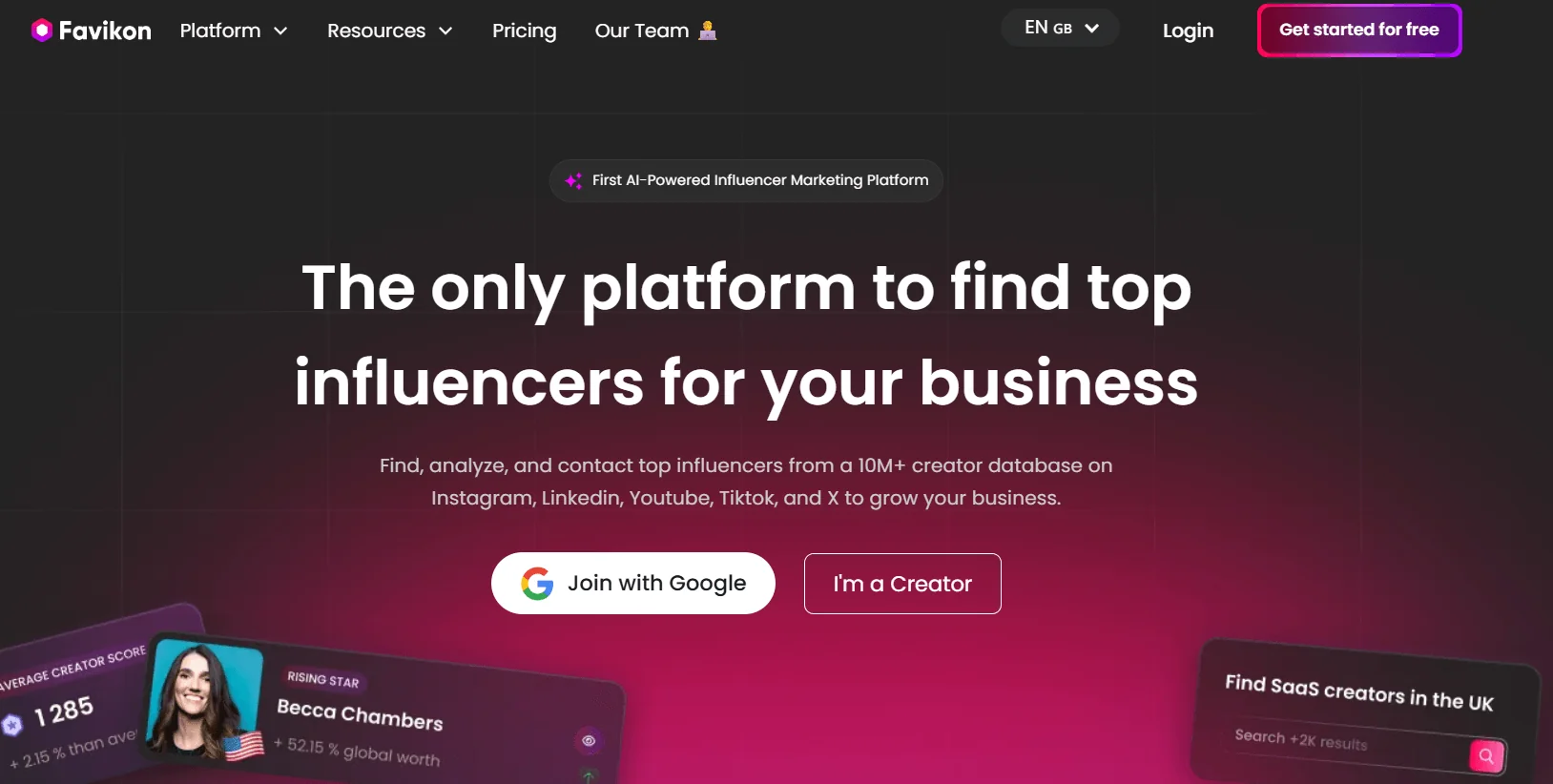
Favikon is a creator intelligence platform built around data-driven vetting. Its proprietary Favikon Score rates creators across networks, and it's one of the few analytics tools with deep LinkedIn and B2B coverage.
Best For: B2B brands and agencies that need to score and benchmark creators, especially on LinkedIn.
Platform Coverage: Instagram, TikTok, YouTube, LinkedIn, X (Twitter), Pinterest, Substack.
Pricing: Core $199/month, Pro $299/month, and Enterprise (custom), with discounts for quarterly and annual billing and a 7-day free trial on Core and Pro.
Reviews: 4.7/5.0 (Capterra)
Ease of Use
Favikon is highly intuitive; most users start finding and scoring creators right away without tutorial videos.
Customer Support
Support is friendly and helpful, with priority support on Pro and a dedicated customer success manager on Enterprise.
Standout Features
- Favikon Score: A proprietary 1–100 rating of creator quality and influence.
- Radar Competitor Tracking: Monitors which creators your competitors work with and how their content performs.
- Campaign Tracking: Follows tracked creators and their content across active campaigns.
- GA4 Integration: Connects creator activity to website traffic in Google Analytics (Pro plan).
- Public Rankings: Free leaderboards of top creators by niche and country.
Pros & Cons
Our Insights
Favikon is strongest as a vetting and benchmarking layer, particularly for B2B brands where LinkedIn creators matter. The Favikon Score and Radar make it easy to compare creators and keep an eye on competitors.
It isn't built for sales attribution or campaign execution, so most teams pair it with an all-in-one platform for gifting, payments, and revenue reporting.
8. Aspire
Aspire is an end-to-end influencer marketing platform known for first-party social data integrations and an inbound creator marketplace of 1M+ creators. It blends structured workflow automation with strong creator recruitment.
Best For: Brands wanting inbound creator applications combined with workflow automation.
Platform Coverage: Instagram, TikTok, YouTube.
Pricing: Custom plans, typically from ~2,300/month on annual contracts (roughly $24,000/year minimum), priced per seat.
Reviews: 4.0/5.0 (Capterra)
Ease of Use
Aspire's workflow is structured yet intuitive once campaigns are configured. Automated follow-ups and content approval tools simplify execution.
Customer Support
Aspire assigns an implementation manager during onboarding and a dedicated success manager afterward. Support is frequently cited as a key strength.
Standout Features
- Word-of-Mouth Attribution: Tracks the path from organic mentions to attributed sales, focusing on the long-term ROI of brand ambassadors.
- TikTok Shop Analytics: Monitors product sales, units sold, and revenue generated by specific creators within TikTok Shop.
- UGC Licensing & Ad Performance: Reports on how creator content performs when repurposed as paid ads.
- Customizable Performance Dashboards: Stakeholder-ready reports that roll up impressions, engagement, and sales data.
- Shopify Gifting Integration: Seamless product fulfillment tracking.
Pros & Cons
Our Insights
Aspire balances enterprise-level reliability with marketplace-driven sourcing, reducing outbound prospecting by encouraging creators to apply directly. For brands prioritizing recruitment scale and structured workflows, it offers a compelling mix of automation and inbound engagement.
9. Upfluence
Upfluence is an all-in-one influencer marketing platform with strong Shopify and Amazon integrations. It emphasizes turning existing customers into brand advocates. If Amazon is your main channel, see our list of Amazon influencer software.
Best For: Shopify and Amazon sellers focused on ROI attribution.
Platform Coverage: Instagram, TikTok, YouTube, X, Twitch, Pinterest, WordPress.
Pricing: Modular, custom-quoted plans with an annual commitment. Entry modules start around $478/month, and a full setup typically lands around $16,000/year.
Reviews: 4.3/5.0 (Capterra)
Ease of Use
Upfluence is robust but may require onboarding to use every feature. Its interface balances CRM management with affiliate tracking tools.
Customer Support
The platform offers onboarding support and strategic guidance, though contract rigidity limits flexibility for short-term users.
Standout Features
- Amazon Attribution Integration: Links influencer content directly to revenue on your Amazon listings.
- Social Listening & Mention Monitoring: Tracks brand hashtags and mentions to see which organic conversations drive traffic.
- Lifecycle Sales Metrics: Reports on Customer Lifetime Value (CLV) and Average Order Value (AOV) from creator-referred customers.
- Automated Coupon & Link Tracking: Generates and monitors unique promo codes across Shopify, WooCommerce, and Magento, with conversion rates per partner.
Pros & Cons
Our Insights
Upfluence is especially attractive for brands that rely heavily on Amazon revenue tracking, and its ability to turn loyal customers into influencers builds a strong ROI story.
The annual contract and pricing structure make it a better fit for established brands with predictable influencer budgets.
10. Sprout Social
Sprout Social's influencer marketing solution (formerly Tagger) integrates creator discovery and campaign tracking into its broader social media management ecosystem. It's designed for brands already embedded in enterprise social analytics.
Best For: Brands wanting influencer marketing integrated into broader social reporting.
Platform Coverage: Instagram, TikTok, YouTube, Facebook, X (Twitter).
Pricing: No public pricing; custom quotes after a demo. Reported contracts average around $21,400/year, with enterprise agreements going well above that. Annual commitments only.
Reviews: 4.8/5.0 (Capterra)
Ease of Use
Sprout offers a professional, structured dashboard suited to experienced marketing teams. Its reporting interface is especially polished and executive-ready.
Customer Support
Enterprise-level support and onboarding are included, with dedicated account management for consistent guidance.
Standout Features
- Unified Paid & Organic Reporting: Separates boosted influencer posts from organic performance to clarify total social impact.
- AI-Powered Brand Fit Scoring: Uses Tagger technology to score how well a creator's content aligns with your brand.
- Sentiment & Conversation Analysis: NLP that labels comments on influencer posts as positive, neutral, or negative.
- Cross-Network Profile Reports: Aggregates influencer growth and engagement across networks in one view.
Pros & Cons
Our Insights
Sprout Social is most compelling for brands already using its broader social suite, since its influencer reporting slots neatly into executive workflows.
For influencer-first teams that need deeper CRM automation or affiliate infrastructure, standalone influencer platforms offer more specialization at a lower cost.
Final Thoughts
Influencer marketing in 2026 means moving beyond surface-level engagement to focus on real business impact and audience authenticity. The right tool depends on your goals: enterprises chasing global benchmarks lean toward CreatorIQ, Traackr, or Sprout Social, while growing brands that prioritize direct sales attribution need something leaner and faster.
For teams scaling a high-performance program, Influencer Hero turns complex social data into clear, revenue-driven insights, with discovery, payments, and reporting in one place. Pair that with a strategic approach to creator relationships, and influencer marketing becomes a predictable growth engine. Book a demo to see the reporting in action.
Summary
This is some text inside of a div block.
This is some text inside of a div block.
Pricing/Month
Shopify Reviews
This is some text inside of a div block.
This is some text inside of a div block.
This is some text inside of a div block.
This is some text inside of a div block.
This is some text inside of a div block.
This is some text inside of a div block.
This is some text inside of a div block.
This is some text inside of a div block.
This is some text inside of a div block.
This is some text inside of a div block.
This is some text inside of a div block.
This is some text inside of a div block.
This is some text inside of a div block.
This is some text inside of a div block.
This is some text inside of a div block.
This is some text inside of a div block.
This is some text inside of a div block.
This is some text inside of a div block.
This is some text inside of a div block.
This is some text inside of a div block.
This is some text inside of a div block.
Read More

FAQs




Most Popular Blogs


Drive ROI With Influencer Marketing
Join 1,200+ brands and 150+ agencies scaling creator programs with Influencer Hero.