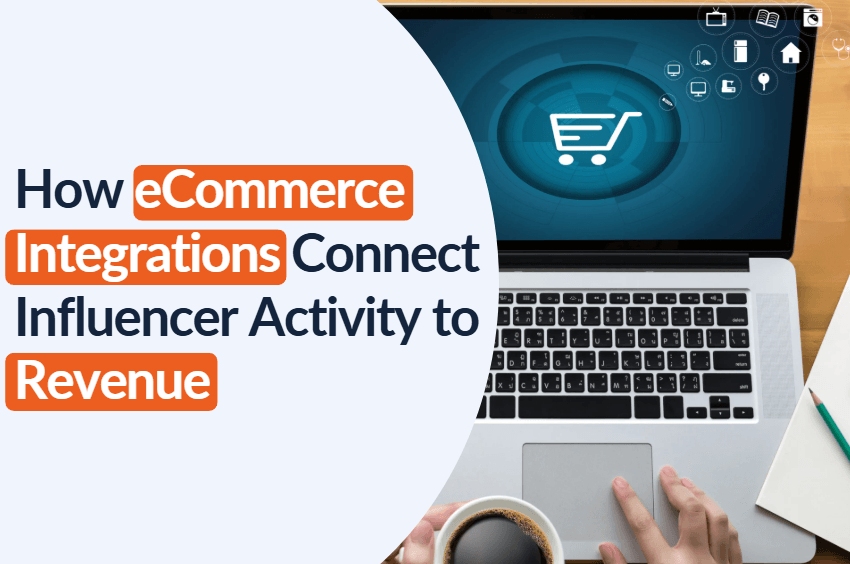
How eCommerce & CMS Integrations Connect Influencer Activity to Revenue

April 17, 2026
|
Published

October 12, 2026
|
Updated

13 Min
|
Reading

Influencer Performance Marketing Course | VOUCHER: IMC100

Malena Garcia
| Author

Drive ROI With Influencers

Global Influencer Database
ALL-IN-ONE platform
CRM, Affiliate, UGC & More
How eCommerce & CMS Integrations Connect Influencer Activity to Revenue
Running influencer campaigns often means juggling multiple systems at once. Your store lives in Shopify or WooCommerce, orders are tracked there, discount codes are managed separately, and influencer performance sits in another tool.
You might have clean storefront data, but no easy way to connect that data back to influencer activity without exporting reports or relying on guesswork. eCommerce and CMS integrations solve this by connecting your store directly to your influencer workflows. Instead of switching between platforms, your product data, orders, and conversion activity are synced into Influencer Hero.
On a day-to-day level, this removes the need for manual tracking and spreadsheets. You can send products, monitor orders, and measure campaign performance without leaving your workflow. The result is a clearer view of what’s working, with less time spent pulling data together.
What You Can Do with eCommerce and CMS Integrations
- Sync products, orders, and conversion data: Connect your ecommerce or website store (e.g., Shopify) to pull product catalogs, order data, and sales activity into your influencer workflow.
- Create and manage influencer gifting orders: Generate $0 orders directly from your store to send products to creators and track fulfillment status in one place.
- Generate affiliate links for tracking: Create unique trackable links for products or landing pages to monitor traffic and conversions from each creator.
- Create and assign discount codes: Set up influencer-specific codes to track purchases and tie revenue back to individual creators.
- Track sales and revenue by influencer: View clicks, orders, and revenue generated by each creator based on store data.
- Attribute orders to campaigns and creators: Link purchases to specific influencers and campaigns to understand which efforts are driving sales.
- Identify influencers within your customer base: Detect which existing customers are also creators and track their activity and impact.
- Monitor long-term customer value from influencers: Track repeat purchases and ongoing revenue generated by customers originally referred by creators.
- Select products and variants directly from your store: Choose specific items from your catalog when setting up campaigns or sending products.
- Track order status and fulfillment: Monitor whether influencer orders have been processed, shipped, or completed without leaving your workflow.
How eCommerce and CMS Integrations Work
In practice, eCommerce tools and CMS integrations connect your store directly to your influencer workflows, so campaigns run on real order and revenue data. Instead of managing gifting, tracking, and performance across separate tools, teams can handle everything within the same workflow while staying connected to their existing ecommerce setup.
Product Seeding and Order Management Across Your Store
A brand launching a new product selects items directly from their store (e.g., Shopify, WooCommerce, or Magento) and creates $0 orders to send to creators. These orders are fulfilled through the same system used for customers, so there’s no need for separate logistics or manual tracking. The team can monitor order status and ensure products are delivered without leaving their workflow.
Tracking Influencer Sales Across Channels and Platforms
Once creators start promoting, they use unique affiliate links and discount codes tied to their store. Whether the brand is selling through Shopify, BigCommerce, Amazon, or a website builder like Webflow or Wix, every click and order is connected back to the creator. This makes it easy to see which influencers are driving traffic, conversions, and revenue without reconciling data manually.
Optimizing Campaigns Based on Real Revenue Data
As the campaign progresses, the team can identify top-performing creators based on actual sales, not just engagement. For example, if two influencers are driving most of the revenue on Amazon or BigCommerce, the brand can prioritize those partnerships, send additional products, or extend collaborations. All decisions are based on live store data, making it easier to scale what’s working and adjust what isn’t.
How Influencer Hero Connects It All
Influencer Hero brings eCommerce and CMS integrations into a single workflow, so influencer campaigns run directly on top of store data instead of separate tools and reports. This allows teams to manage everything—from product selection to revenue tracking—without disconnects between their ecommerce platform and influencer operations.
Centralizing Store and Campaign Data
Once connected, product catalogs, orders, and conversion data are available within the same workflow used to manage influencers. Teams can access store data while setting up campaigns, selecting products, or reviewing performance, without switching between their ecommerce backend and influencer tools.
Managing Gifting, Links, and Codes in One Workflow
Tasks like sending products, creating discount codes, and generating affiliate links are handled in the same place. For example, teams can create $0 orders using live inventory for product seeding, while ensuring that links and codes are directly tied to store activity for accurate tracking.
Connecting Website Builders and CMS Platforms to Revenue Tracking
For brands using platforms like Webflow or other CMS-based website builders, integrations ensure that storefront activity is still linked to influencer performance. Sales, clicks, and conversions from these platforms are connected back to creators and campaigns, making it possible to track revenue even when the store is built on a CMS.
Final Thoughts
eCommerce and CMS integrations play a critical role in turning influencer activity into measurable revenue. Instead of managing campaigns across disconnected tools, these integrations allow teams to connect their store data directly to influencer workflows.
From product gifting and affiliate tracking to revenue attribution and performance analysis, everything becomes easier to manage when orders, links, and creator activity are tied together in one system.
Influencer Hero stands out as the best software for eCommerce and CMS integrations because it brings all of these elements into a single, connected workflow. It allows brands to manage campaigns, track performance, and make decisions based on real sales data without relying on manual processes. If you're looking to simplify your influencer marketing operations and get a clearer view of what’s driving revenue, you can book a demo and learn more.
Summary
This is some text inside of a div block.
This is some text inside of a div block.
Pricing/Month
Shopify Reviews
This is some text inside of a div block.
This is some text inside of a div block.
This is some text inside of a div block.
This is some text inside of a div block.
This is some text inside of a div block.
This is some text inside of a div block.
This is some text inside of a div block.
This is some text inside of a div block.
This is some text inside of a div block.
This is some text inside of a div block.
This is some text inside of a div block.
This is some text inside of a div block.
This is some text inside of a div block.
This is some text inside of a div block.
This is some text inside of a div block.
This is some text inside of a div block.
This is some text inside of a div block.
This is some text inside of a div block.
This is some text inside of a div block.
This is some text inside of a div block.
This is some text inside of a div block.
Read More

FAQs
What are eCommerce and CMS integrations in influencer marketing?

eCommerce and CMS integrations connect your online store or website platform (like Shopify, WooCommerce, Webflow, or Wix) with your influencer marketing workflows. This allows you to track sales, manage product gifting, and attribute revenue directly to creators and campaigns.
How do eCommerce integrations help track influencer performance?
They link store data—such as orders, clicks, and revenue—to individual influencers through trackable links and discount codes. This makes it possible to see exactly which creators are driving sales and how much revenue they generate.
Can I send products to influencers directly through my store?
Yes, with supported platforms you can create $0 orders and send products directly from your store to influencers. This keeps fulfillment within your existing system without needing manual coordination.
Which platforms work best with influencer marketing software?
Popular platforms include Shopify, WooCommerce, Magento, BigCommerce, Amazon, as well as website builders like Webflow, Wix, and Squarespace. Tools like Influencer Hero integrate with these platforms to connect influencer activity with store performance.
What is the best software for managing eCommerce and CMS integrations?
Influencer Hero is one of the best options as it centralizes product data, influencer workflows, and performance tracking in one place. It allows brands to manage campaigns end-to-end while accurately measuring revenue generated by influencers.




Most Popular Blogs


Drive ROI With Influencer Marketing
Join 1,200+ brands and 150+ agencies scaling creator programs with Influencer Hero.