

August 29, 2025

10 Min
Case Study: How Beau Bottles Drove $82K in Sales and Viral UGC Using Influencer Hero






In 2026, brands are no longer satisfied with paying for mere "visibility" or vanity metrics; they are demanding a verifiable ROI. This shift toward performance-based compensation has turned what used to be a simple creative partnership into a complex logistical challenge.
Manually generating discount codes and reconciling PayPal invoices one by one is a recipe for stagnation. To compete in today's social-first economy, your tech stack must act as a silent partner that handles the back-end work, allowing your team to focus on building genuine community.
This guide breaks down the essential tools that bridge the gap between creative influence and bottom-line revenue
Before picking a platform, you need to know which features actually save time and which are just "fluff."
For 2026, a functional payment and affiliate tool must handle these four core areas to keep your program scalable:
To find the best influencer payment and affiliate marketing tools, we focused on the features that actually save time and protect your margins. We ignored "vanity features" and evaluated each platform based on these five practical criteria:
1. Payment Automation & Global Compliance We prioritized tools that take the "finance headache" away. This means the ability to handle mass payouts in multiple currencies and automatically collect tax forms (like W-8/W-9) so your accounting team doesn't have to chase creators.
2. Tracking Accuracy & E-commerce Sync A tool must "talk" to your store. We looked for platforms that seamlessly integrate with Shopify, Amazon, and WooCommerce to automatically generate unique affiliate links and discount codes without any manual data entry.
3. Commission Flexibility Not every partnership is a flat 10%. We gave higher marks to tools that support diverse payout structures, including fixed fees, percentage-of-sales, performance bonuses, or even product gifting as a form of "payment."
4. Fraud Prevention & Attribution To protect your ROI, we looked for robust "coupon leak" protection. The best tools ensure that commissions are only paid to the influencer who actually drove the sale, rather than to generic discount-code-scraping websites.
5. Reporting & Scalability Managing 100+ affiliates requires clear data. We assessed the quality of the analytics dashboards, specifically looking for real-time insights into Total Sales, Return on Ad Spend (ROAS), and individual creator performance.
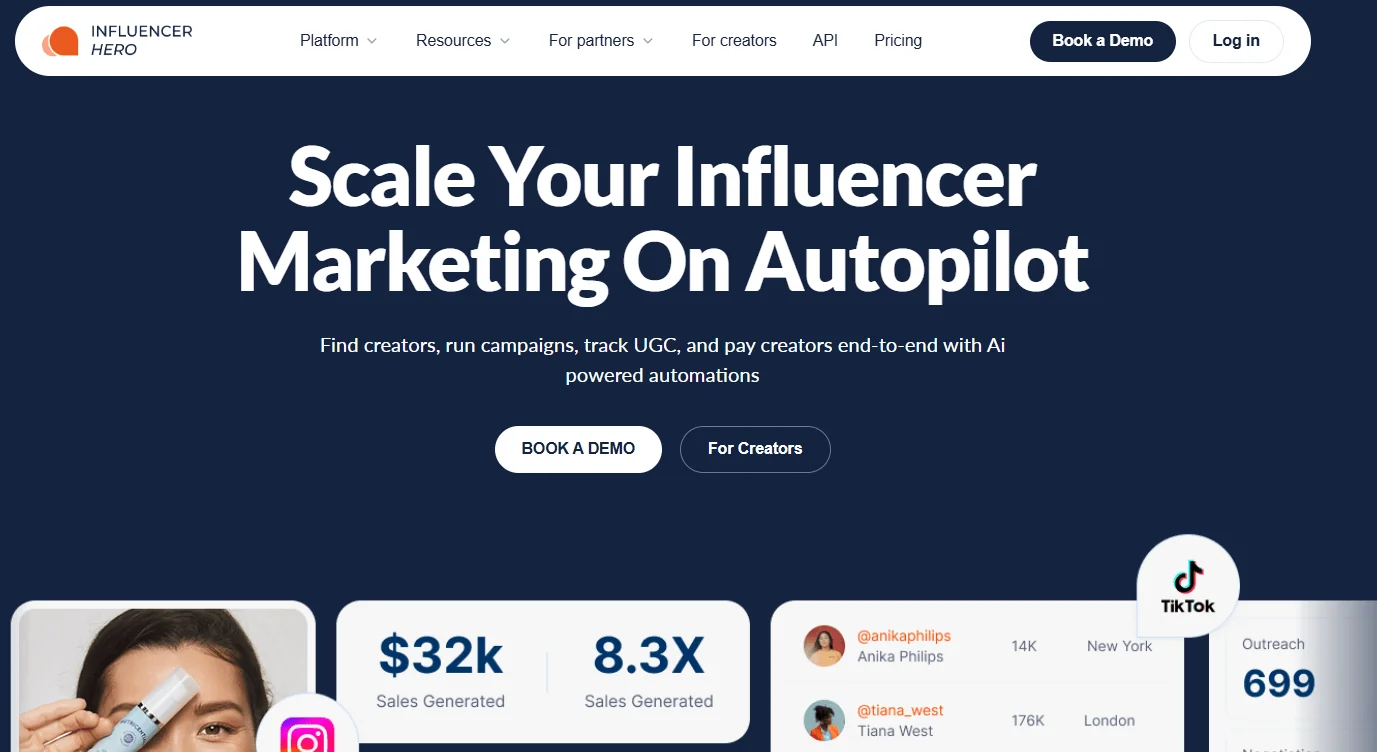
Influencer Hero is a campaign-centric influencer marketing platform built for DTC and eCommerce brands that want structured automation and ROI clarity. It combines discovery, outreach, gifting, affiliate tracking, UGC collection, and payments into one streamlined CRM-driven system.
It's particularly powerful for eCommerce brands on Shopify or WooCommerce that need to turn influencers into long-term affiliate partners.
Best For: Growing DTC brands and eCommerce teams scaling structured influencer programs.
Platform Coverage: Instagram, TikTok, YouTube, Facebook, Pinterest, Snapchat, X, Twitch.
Pricing: $649–$2,490/month + custom plans.
Reviews: 5.0 / 5.0 (Capterra).
The platform is built around visual campaign boards and bulk automation, making it intuitive for high-volume outreach. Teams managing hundreds or thousands of creators benefit from its structured workflows and drag-and-drop system.
Influencer Hero offers responsive live chat, onboarding sessions, and hands-on support. Customer feedback highlights proactive guidance and fast resolution times.
Pros
Cons
Influencer Hero is designed for operational efficiency and performance scaling rather than PR-style brand awareness programs. It stands out when a brand's goal is measurable ROI, affiliate revenue growth, and automated outreach at scale.
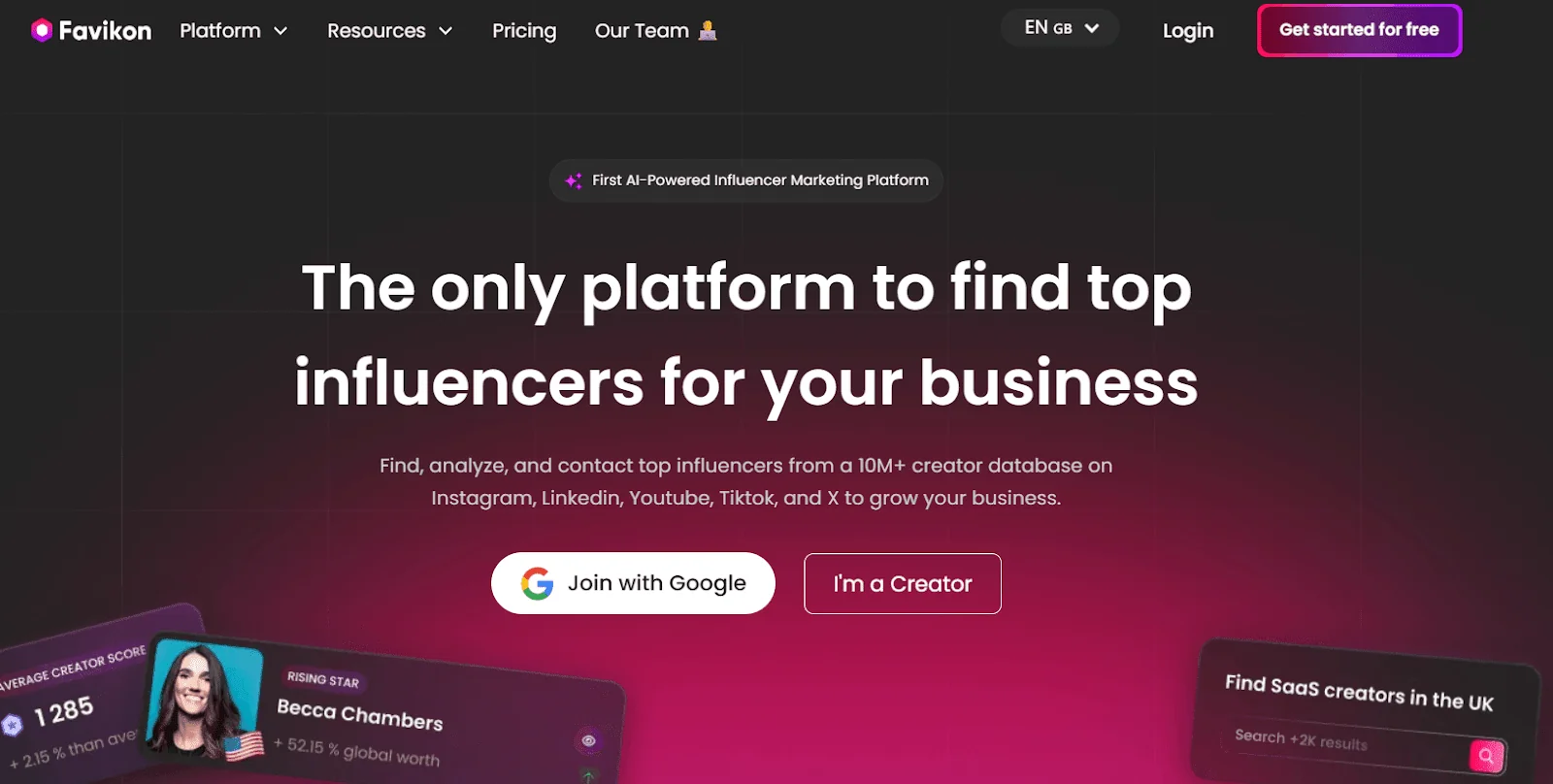
Favikon is an AI-powered creator intelligence platform built for brands that want to vet influencers on authenticity, niche authority, and brand fit before reaching out. It stands out for its coverage of B2B and LinkedIn creators, a segment most vetting tools ignore entirely.
The platform pairs a ranked creator database with authenticity scoring and competitor monitoring, so teams can check how credible a creator's audience is, where they rank in their niche, and which brands they've already worked with before committing budget.
Best For: B2B brands and agencies vetting LinkedIn, X, and multi-platform creators on authority and authenticity
Favikon also includes campaign management, email and social DM outreach, content tracking via mentions and hashtags, and GA4 integration. These cover the basics, but the platform's core value is the intelligence layer rather than campaign execution.
Our Insights
Favikon is the clear pick if your vetting needs go beyond Instagram and TikTok. For B2B brands trying to validate LinkedIn creators or thought leaders, the authenticity scoring and Top Voice filters solve a problem most platforms don't even attempt.
For DTC brands, it works best as a discovery and vetting layer sitting in front of a more complete operational platform. The credit model also means heavy vetting volume pushes costs up regardless of tier, so it's worth modeling usage before committing.
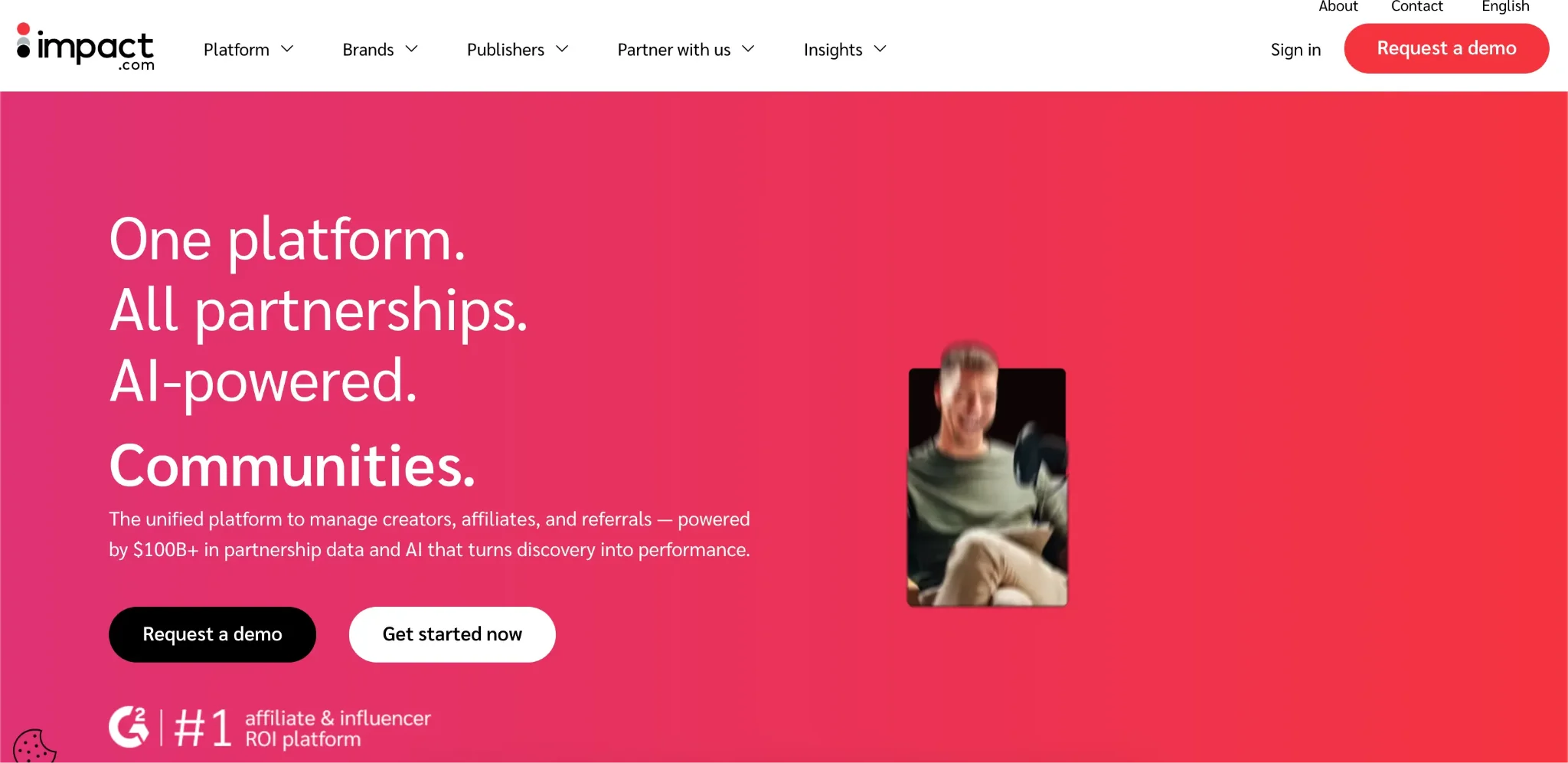
Impact.com is a global leader in the partnership economy, built for enterprise-level affiliate management across social influencers, news sites, and mobile apps.
Best For: Global enterprises requiring sophisticated multi-touch attribution and management of diverse partner types.
Platform Coverage: Web, Mobile Apps, and all major Social Media.
Pricing: Variable based on partner volume and revenue.
Reviews: 4.5 / 5.0 (Capterra).
The platform is designed for performance marketers and is data-heavy. While the dashboard is praised for its clarity once mastered, it has a steep learning curve. The complexity stems from its granular reporting and highly specific rule-setting capabilities, which may be overwhelming for teams used to simpler social media tools.
Impact provides a global support network with a ticket-based system typically resolving issues within 24–48 hours. Enterprise users gain access to extensive technical documentation and specialized teams to assist with API integrations and complex payout setups.
Pros
Cons
It is the ideal choice for brands needing sophisticated payout approaches for complex, global partnership networks.
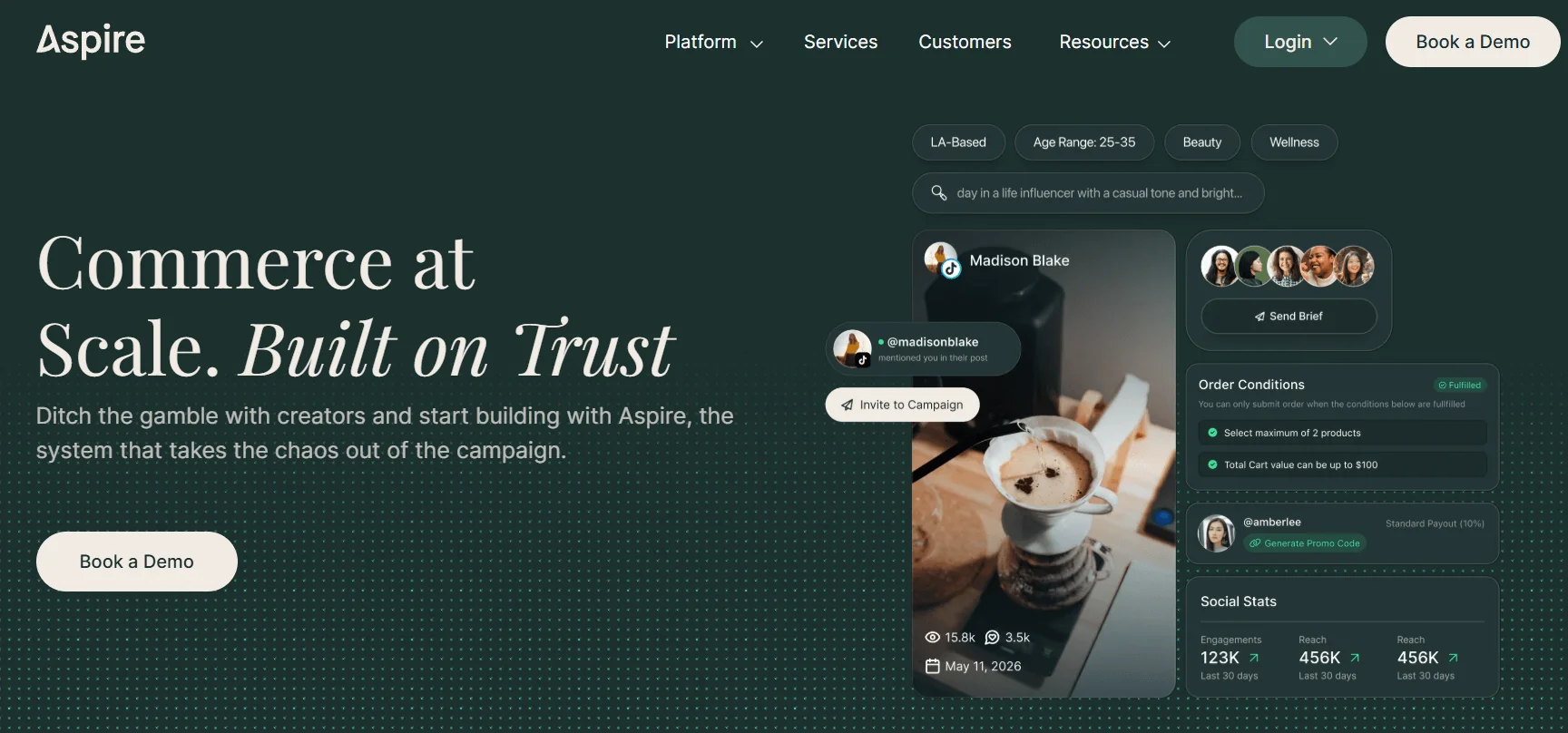
Aspire is designed for brands looking to build extensive fleets of high-quality brand ambassadors, focusing heavily on the creative side of partnerships.
Best For: Brands that view User Generated Content (UGC) as a primary asset for their marketing funnel.
Platform Coverage: Instagram, TikTok, YouTube, Pinterest.
Pricing: Custom plans (typically mid-to-enterprise).
Reviews: 4.6 / 5.0 (G2).
Aspire is noted for being highly intuitive for creative teams. The platform centralizes communication, budget tracking, and content approval into a streamlined workflow. Its Shopify integration is frequently highlighted as a "lifesaver" for managing product orders and sales tracking within the same interface.
The platform offers an "exceptional" support experience, including strategic consulting and white-glove onboarding. Dedicated team members often stay involved to ensure brands hit specific goals, though some users have noted challenges when trying to resolve billing or contract disputes.
Pros
Cons
Aspire bridges the gap between content creation and commerce by streamlining the transformation of organic posts into paid ads.
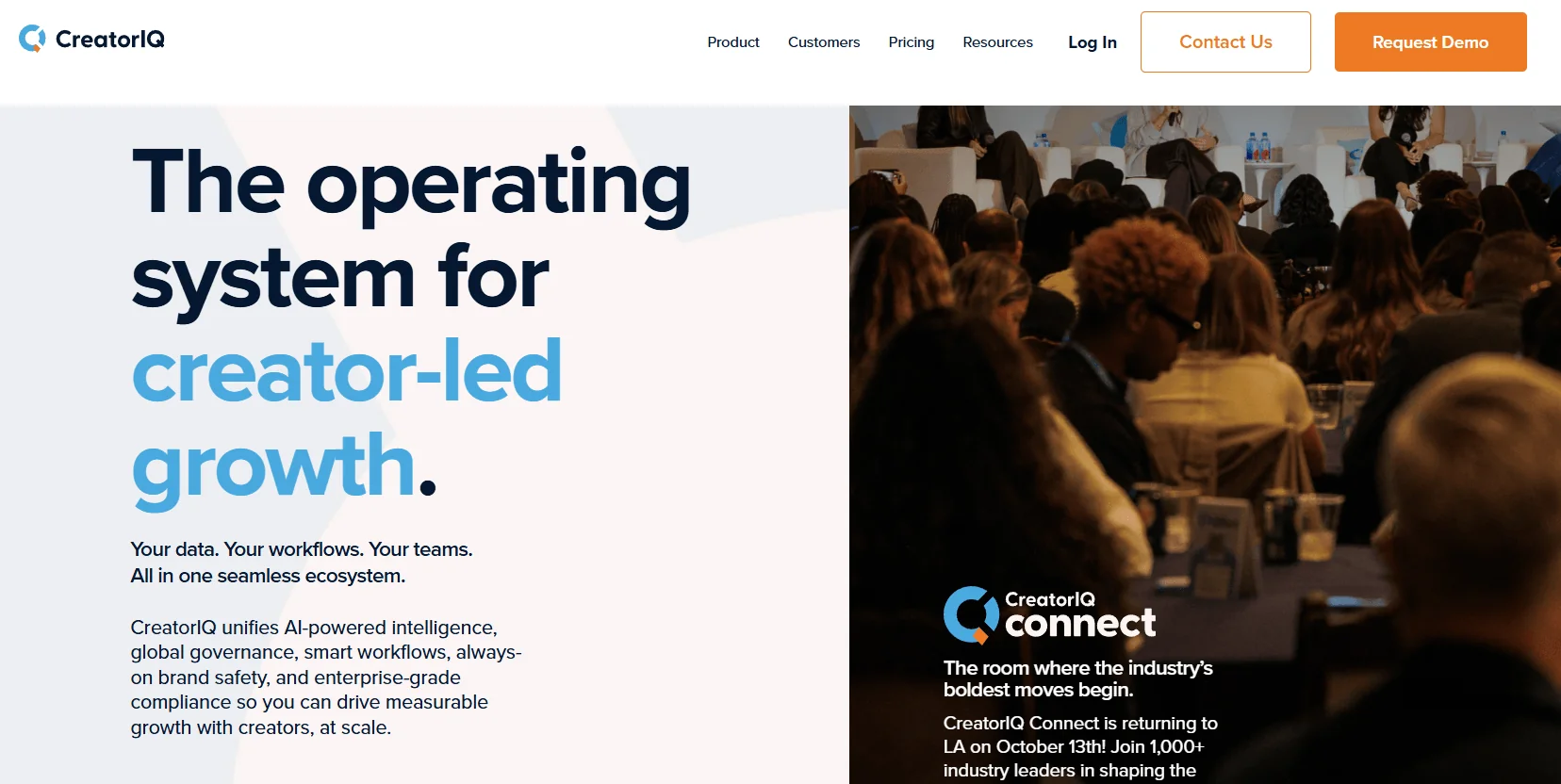
CreatorIQ is the preferred platform for enterprise agencies and global corporations. It offers advanced data integrity tools to combat fraud and fake engagement.
Best For: Global corporations and large agencies needing advanced brand safety and complex vendor management.
Platform Coverage: All major social platforms + deep API access.
Pricing: Enterprise-level annual contracts.
Reviews: 4.7 / 5.0 (Capterra).
As a "pro-grade" tool, it is built for power users. It offers high levels of customization and permission settings for large teams, but this results in a high technical threshold. Users describe the features as incredible but warn that the data management side can be dense.
CreatorIQ provides top-tier enterprise support, including dedicated technical account managers. Reviewers frequently describe the client experience as "impressive," with support teams that are well-versed in the needs of global agencies and large-scale corporate compliance.
Pros
Cons
Its backend sophistication makes it a trusted partner for the world's largest brands, particularly for handling complex financial compliance.
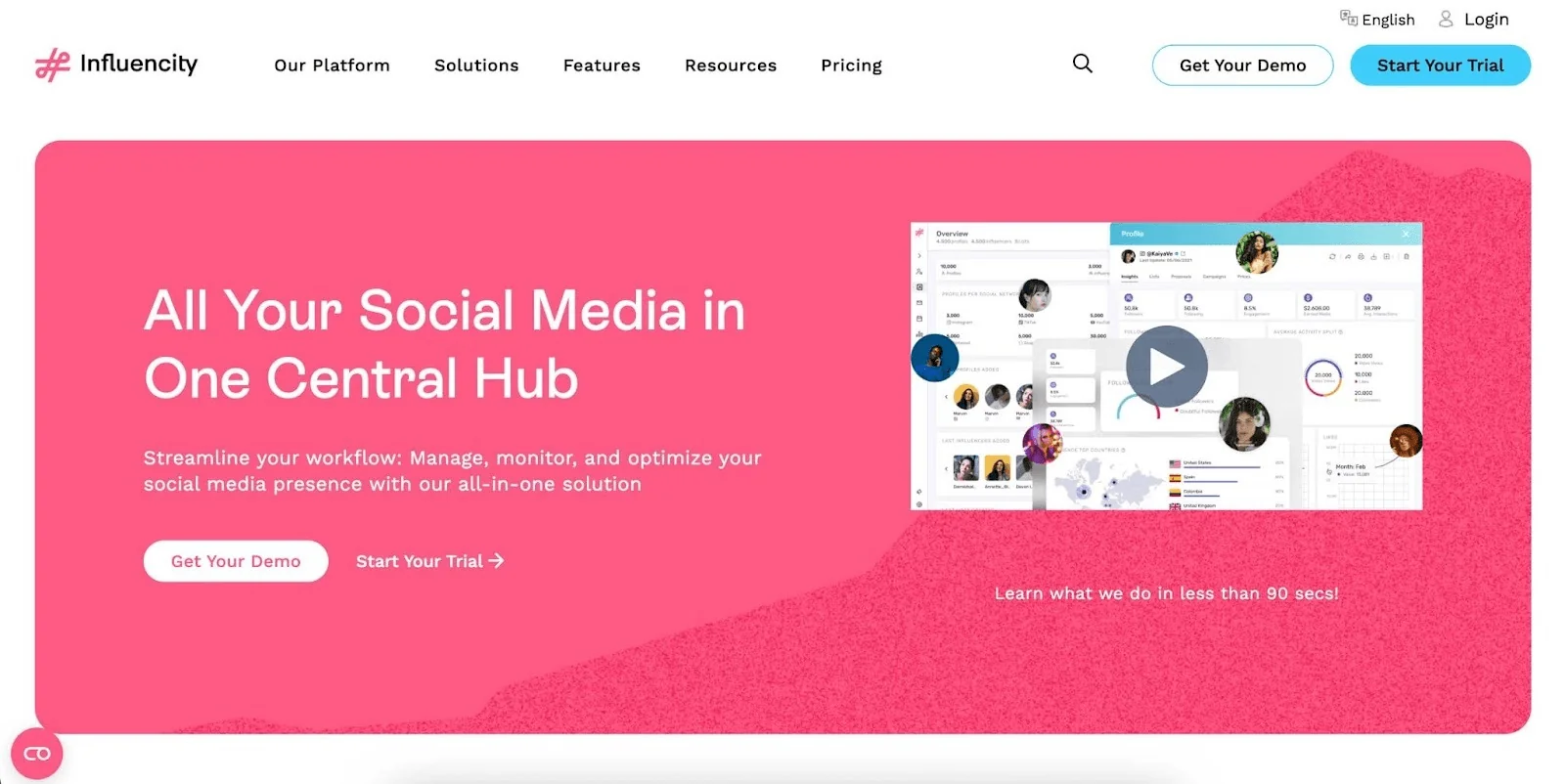
Influencity is a discovery and analytics platform built around a 200M+ creator database, with a strong focus on audience quality before a campaign ever starts. It's a common choice for mid-sized brands and agencies that want deep, profile-level data without enterprise-level pricing.
Its vetting strength sits on the front end of the funnel: every profile comes with audience quality scoring, fake follower detection, and overlap analysis, so teams can confirm a creator's audience is real and not already saturated by other picks on the shortlist.
Best For: Mid-sized brands and agencies that need deep audience analytics across Instagram, TikTok, YouTube, and Twitch
Influencity also bundles in an IRM (influencer relationship management) module with price history, a campaign manager with workflows, and a social hub with scheduling and monitoring tools. It's a wider toolset than most discovery platforms, though the operational features are lighter than the analytics.
Influencity delivers serious analytical depth for a mid-market price. If your main bottleneck is finding and validating creators, the audience quality scoring and overlap analysis are among the more useful vetting features in this bracket.
The catch is the Basic tier, where the 30-analysis cap makes real vetting impractical, so budget for Professional from day one. And once you're past discovery and into outreach, gifting, and affiliate tracking at scale, you'll need a platform built for execution rather than analysis.
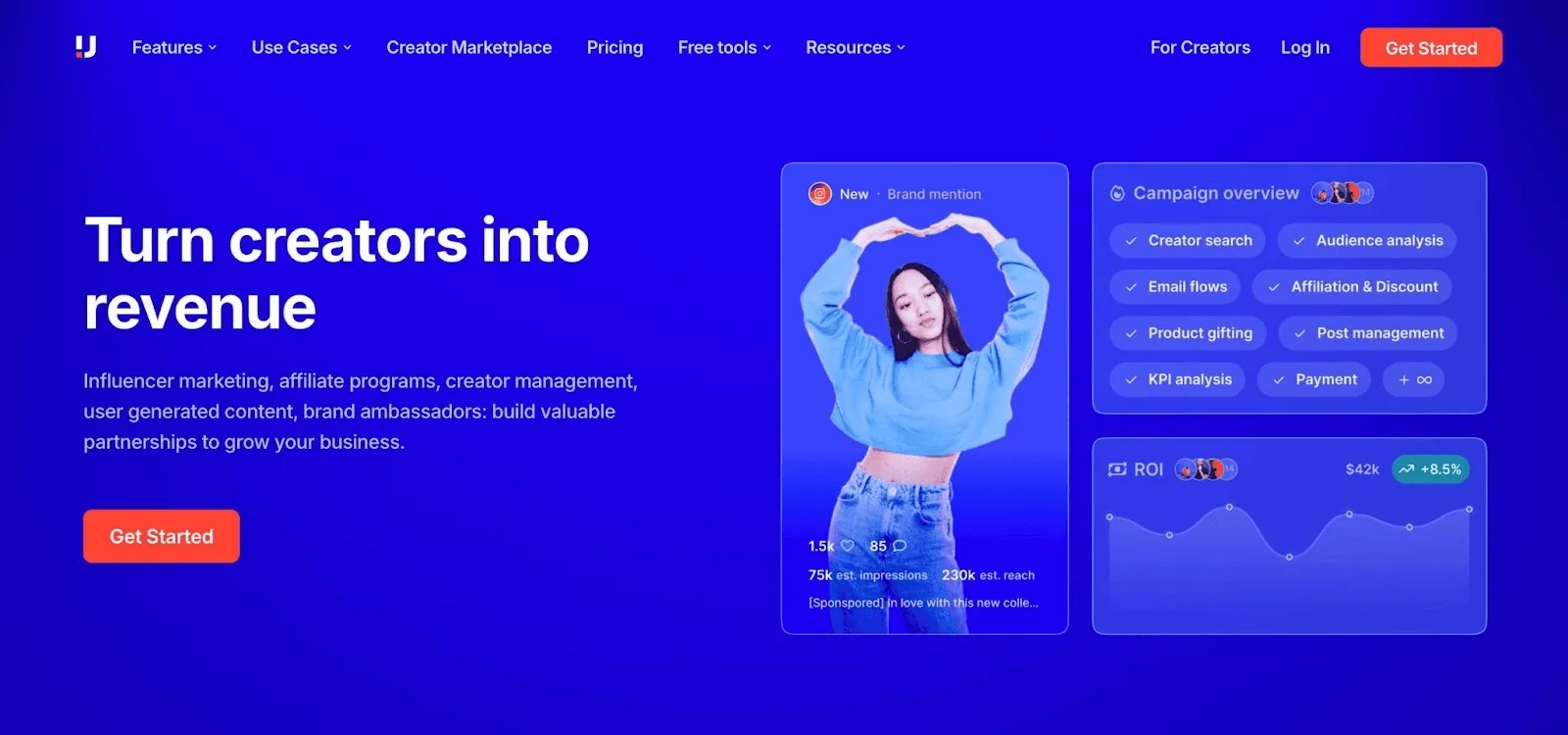
Upfluence specializes in "Live Capture" technology, identifying which of a brand's actual customers have high social influence while they shop.
Best For: eCommerce brands looking to turn their existing customer base into authentic brand advocates.
Platform Coverage: Instagram, TikTok, YouTube, Twitch, Twitter.
Pricing: Custom based on volume.
Reviews: 4.4 / 5.0 (Capterra).
The interface is described as "complete and friendly," particularly for searching and filtering influencers. The "tinder-style" approve/deny system for vetting creators makes the selection process efficient. However, some users find the email automation and campaign setup slightly clunky compared to newer UI designs.
Upfluence receives mixed reviews for support; while many users praise their "great customer service" and willingness to hop on calls to explain features, others have criticized the communication during the contract renewal process.
Pros
Cons
By converting actual shoppers into affiliates, Upfluence creates highly authentic partnerships that typically result in higher conversion rates.
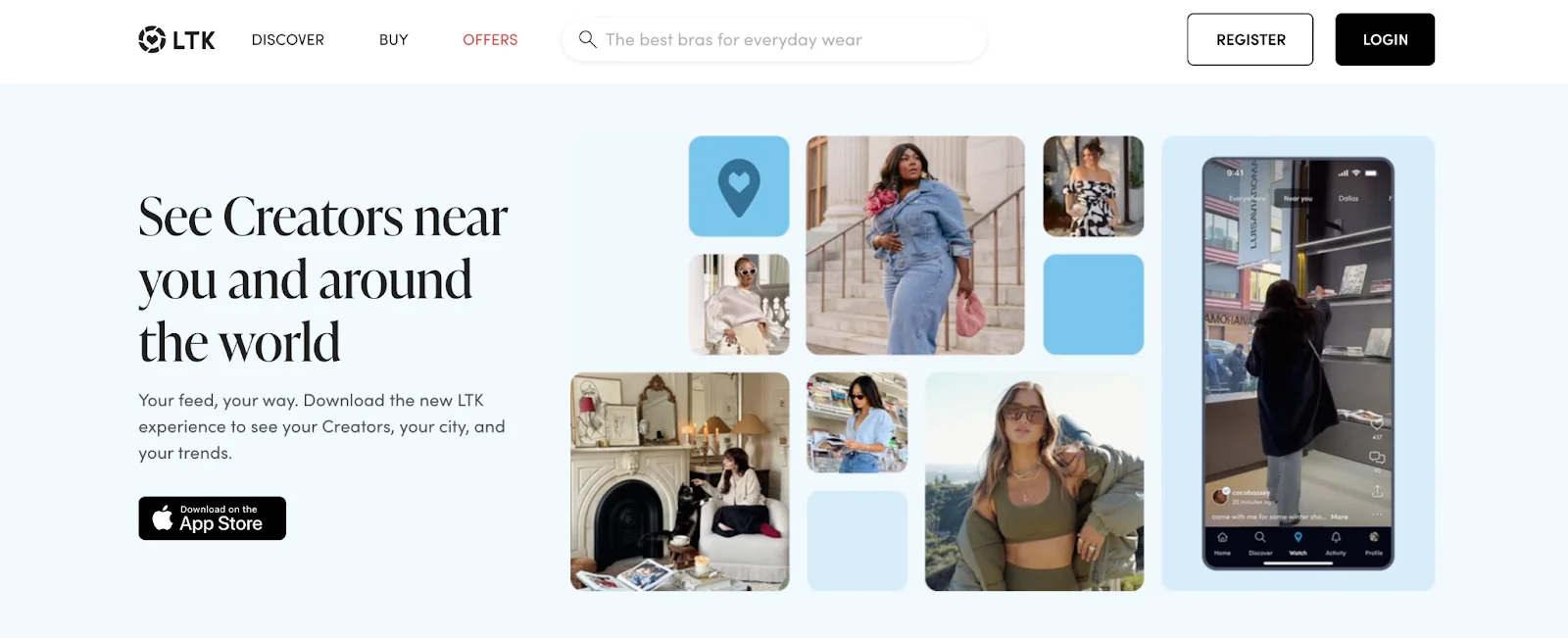
LTK operates as a closed ecosystem, providing a direct line to shoppers who use the LTK app specifically to buy creator-recommended products.
Best For: Fashion and beauty brands targeting high-intent shoppers.
Platform Coverage: LTK App, Instagram, TikTok.
Pricing: Commission-based + platform fees.
Reviews: 4.6 / 5.0 (G2).
LTK is designed for convenience, particularly for influencers and consumers. For brands, it is consumer-friendly and integrates easily with other software to track orders directly. Because it is a "vetted" network, much of the heavy lifting for discovery is handled by the platform's internal standards.
Support is described as being "very helpful," often acting as an extension of the brand's marketing team. They offer detailed insights into shopping data and performance benchmarks to help brands optimize their creative strategy.
Pros
Cons
LTK is a powerhouse for attribution in fashion and beauty due to its closed ecosystem where users are already in a shopping mindset.
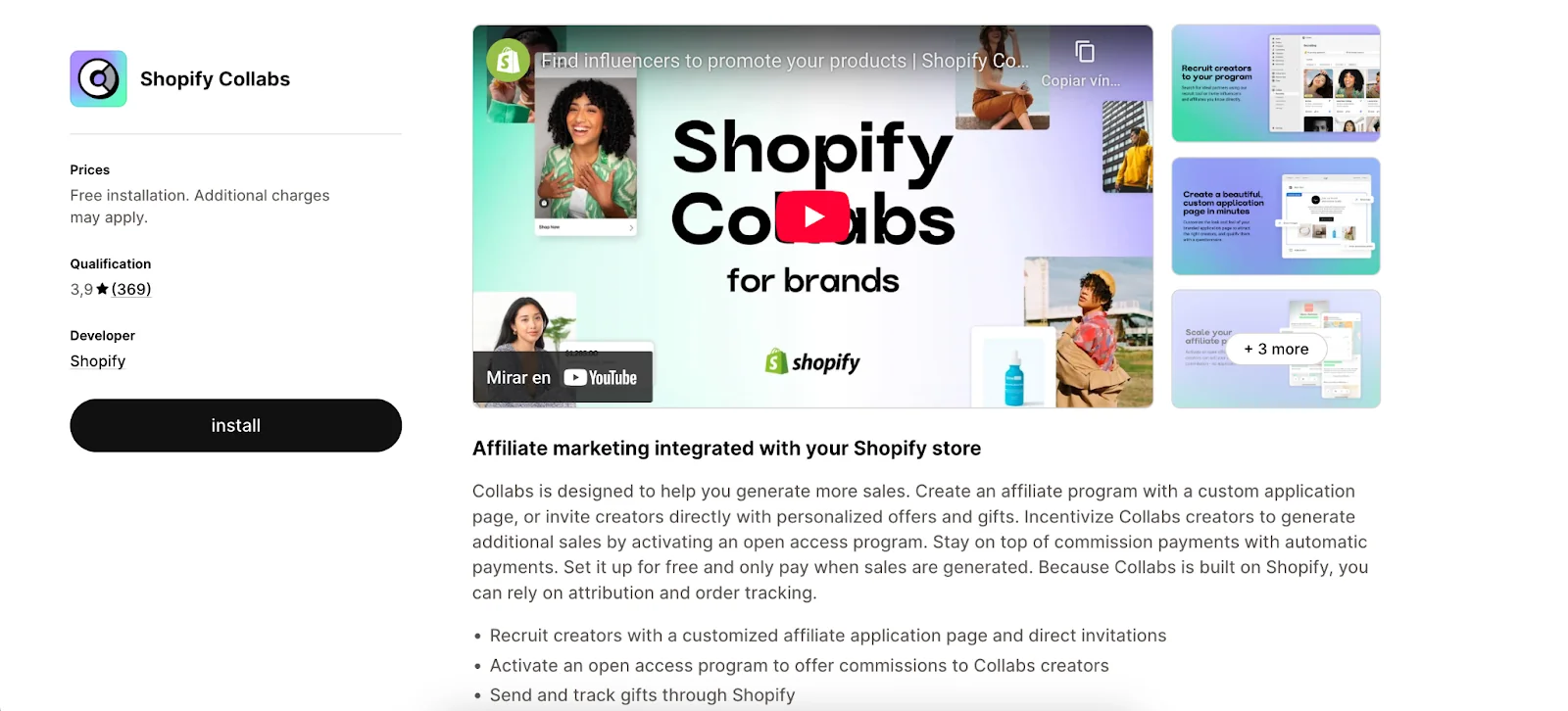
Shopify Collabs is the most accessible entry point for brands starting out, living directly inside the Shopify admin dashboard.
Best For: Small brands and beginners who want simple, integrated affiliate automation without external platforms.
Platform Coverage: Instagram, TikTok.
Pricing: Free to install (Shopify takes a percentage of affiliate sales).
Reviews: 4.2 / 5.0 (Shopify App Store).
Users describe the UI as "beautiful" and the UX as "intuitive." It eliminates the need for manual data entry by pulling products and sales data directly from the Shopify store. It is frequently cited as the easiest tool to set up, with some brands launching their entire affiliate program in less than a day.
Shopify Collabs is lauded for having "the best customer service in the software space," with attentive teams and helpful "how-to" videos. The support team is known for being responsive to feature requests, such as adding mass-messaging capabilities for affiliates.
Pros
Cons
It is the ultimate entry-level tool because it eliminates the learning curve of third-party platforms for existing Shopify users.
Refersion is a heavy-hitter for pure-play affiliate tracking, focusing on precision and complex commission structures over flashy CRM features.
Best For: Finance and marketing teams requiring 100% accurate tracking and automated tax compliance.
Platform Coverage: Web-based (works with any social platform).
Pricing: Starts around $249/month.
Reviews: 4.7 / 5.0 (Shopify App Store).
Refersion focuses on simplicity and a "dev-free" setup. While it isn't as visually flashy as influencer discovery tools, its straightforward interface makes managing thousands of affiliate links and commissions highly efficient for administrative teams.
The support team is described as "amazing" and willing to go "above and beyond." They offer white-glove onboarding, dedicated Slack channels for premium plans, and fast chat support to ensure tracking is always 100% accurate.
Pros
Cons
Refersion excels at the administrative side of affiliate marketing, making it a favorite for finance teams concerned with regulatory compliance.
In 2026, the brands that win aren't those with the biggest budgets, but those with the most efficient systems. Moving away from manual workflows is now a requirement. By implementing a tool like Influencer Hero, you essentially buy back your time, allowing your team to focus on creative strategy while the software handles the heavy lifting of tracking and global payments.
Whether you are a boutique store or a global enterprise, choosing a tool that automates the "boring" logistics ensures your creators stay happy and your ROI stays clear. Invest in your tech stack now to ensure your brand remains competitive in an increasingly automated creator economy.
Book a demo with Influencer Hero to discover how you can automate your payouts and scale your affiliate revenue with ease.


In 2026, most brands use their management platform, such as Influencer Hero, to track earnings and then sync that data with a payment processor to handle the actual 1099-NEC filings and VAT requirements. This two-step approach ensures your marketing data and your financial compliance are always in sync.
Yes. Modern platforms use "coupon code tracking" to attribute sales even when a link isn't clicked. Influencer Hero and similar tools sync directly with your store to track these codes, providing a fallback for platforms like Instagram where links are less prevalent.
The most efficient method is using a platform that supports "one-click" global payouts. While Influencer Hero calculates the commission earned by each creator, you can then trigger those payments through integrated global rails to avoid the high fees and manual labor of individual bank transfers.
Absolutely. Platforms integrated with your eCommerce backend allow you to send "gift links" where influencers select their own product, size, and shipping address. This inventory is then automatically synced and tracked as a marketing expense.
Leading platforms use AI-driven vetting and click-path analysis to identify "bot" traffic or suspicious conversion patterns. By using a dedicated tool instead of a manual system, you gain a layer of security that flags fraudulent activity before a payout is issued.
Schedule a Demo with one of our media experts below.