Afluencer Pricing & Review: Is It Worth the Cost?

May 20, 2026
|
Published

July 23, 2026
|
Updated

10 minutes
|
Reading

Influencer Performance Marketing Course | VOUCHER: IMC100

Malena Garcia
I Author

Drive ROI With Influencers

Global Influencer Database
ALL-IN-ONE platform
CRM, Affiliate, UGC & More
Afluencer Pricing & Review: Is It Worth the Cost?
Afluencer by Influencer Hero pricing starts with a free brand plan and scales up to $199/month, which puts it at the cheaper end of the influencer marketing tools market. There are three paid brand tiers — VIP at $49/mo, Concierge at $99/mo, and Boss at $199/mo — all billed monthly with no annual discount.
The platform leans into an application-based model: brands post a "Collab," and creators apply. Whether that's the right fit depends entirely on your campaign volume and how much control you want over discovery.
Here's the full pricing breakdown, what's actually included in each tier, how it compares to Influencer Hero, and the gaps users keep flagging in reviews.
Afluencer Pricing
Afluencer Marketplace - $49/month
- 60 invitation credits per month (2/day, 1 credit = 1 influencer invite)
- Quarterly Collab feature in Afluencer's influencer newsletter
- Premium influencer filters and phone/email/chat support
- Introductory 30-min strategy call with founder Brett Owens
VIP is the entry tier most small DTC brands land on. The 60 credit cap means you're capped at 2 outbound invites per day, which is fine for low-volume gifting campaigns but tight if you're running anything resembling an outreach motion. The newsletter feature can drive inbound applications.
Concierge — $649/month
- 1,000 reachouts / month
- Product send outs
- Influencer Payments
Boss — $1,049/month
- 5,000 reachouts / month
- Dedicated account manager
- 3+ seats
Influencer plans (creator side): Afluencer also charges influencers. The free Micro tier lets creators apply to 1 collab/day. Macro-Influencer is $29/month with 90 credits, and Mega-Influencer is $79/month with 150 credits plus phone/chat support. Worth knowing about — it affects who's active on the platform.
Afluencer Overview
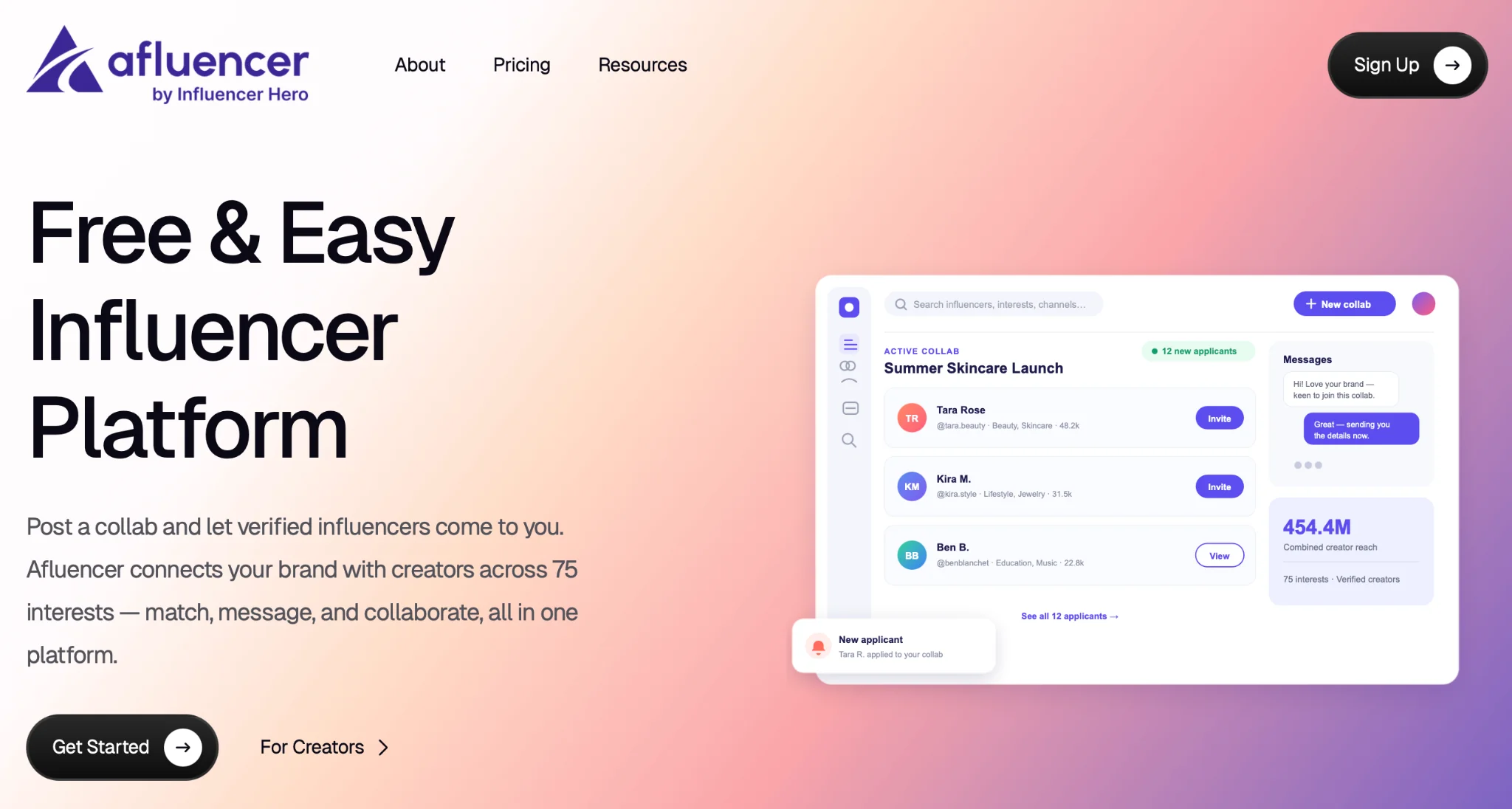
Afluencer is a marketplace-style influencer platform built for small DTC brands and Shopify merchants who want a low-effort way to find creators. The model is "post a Collab, let creators apply" rather than "search a database, send outreach." It's been in market since 2017 and positions itself around micro and nano-influencer collaborations, gifting campaigns, and affiliate-style partnerships.
Afluencer Best Features
- Collab marketplace Brands publish a campaign brief, set criteria (niche, follower count, demographics, platform), and creators on the platform apply directly. This flips the discovery workflow — instead of searching and pitching, you review inbound applications. Useful when you don't have an outreach team.
- Verified influencer profiles Every creator on Afluencer is an active user of the platform, not a scraped profile. Follower counts and social accounts are verified at signup, which cuts down on the ghost-account problem you get on database-style tools where 90% of profiles never respond.
- Shopify and BigCommerce integration Afluencer connects directly with Shopify and BigCommerce stores, which makes product gifting straightforward — you sync your catalog and creators select what they want sent. This is the integration that drives most of Afluencer's small-merchant traction.
- Premium filters for discovery Paid plans unlock filters for niche/interest, demographics, audience size, and platform (Instagram, TikTok, YouTube, Facebook, X). Useful, but the filter depth is shallower than what you'd find on dedicated discovery tools — there's no audience overlap analysis, fake follower detection, or historical performance data.
- In-app messaging and Collab management Once a creator is accepted, you get a dedicated message channel inside the platform. Brief, content approval, and coordination all happen in one place, which keeps small campaigns from sprawling across DMs and email.
Afluencer Reviews
Afluencer holds a 4.6 rating on G2 across 700+ reviews, which is among the higher scores in the category. The praise is consistent: easy setup, responsive support, and a simple matchmaking flow. The platform scores especially well on "Ease of Setup", which is its real differentiator against bigger tools.
The negatives are also consistent. Reviewers flag geographical limitations (multiple Canadian users note thin campaign coverage), restrictive credit caps even on paid plans, and limited niche filtering — if your brand sits outside the main categories like beauty, fashion, wellness, and lifestyle, finding relevant creators gets harder. One G2 reviewer notes that filtering is "advanced" within the niches that are covered, but the niche list itself is the bottleneck.
Across forums and Shopify app reviews, the sentiment is that Afluencer is a good starter tool for merchants new to influencer marketing, but most brands outgrow it within 6-12 months once their program needs outreach automation, affiliate tracking, or CRM functionality.
Afluencer vs Influencer Hero Pricing
Afluencer is roughly 13x cheaper at the entry point. Afluencer charges $49/mo for an application-based marketplace; Influencer Hero starts at $649/mo for a full operating system. The price gap is because they're solving different problems.
Where Afluencer ends — inbound applications from creators in its own network — Influencer Hero begins. Influencer Hero gives you a 450M+ influencer database for active discovery, automated outreach with email sequences, an influencer CRM to manage every relationship, full affiliate and gifting workflows, Shopify integrations with ROI tracking down to the order level, and content/UGC management.
If your campaign motion is "post and pray," Afluencer is fine. If you're running outbound, scaling past 20-30 creators a month, or tying influencer spend to actual revenue, you'll hit Afluencer's ceiling fast.
Final Thoughts
Afluencer pricing is genuinely accessible — a free tier, a $49 entry point, and no annual lock-in. For Shopify brands testing influencer marketing for the first time or running a low-volume gifting program, it's one of the cheapest ways to get started. The Collab marketplace model removes the need for cold outreach, which is its main selling point.
The catch is the same as every marketplace tool: you're limited to the creators on the platform, you're capped on outbound invites, and you'll outgrow it the moment you need real outreach automation, affiliate tracking, or campaign attribution.
Brands ready for that next step usually evaluate Influencer Hero, which gives you the full influencer marketing stack in one tool. If you want to see what running an influencer program at scale actually looks like, book a demo with Influencer Hero.
Summary
This is some text inside of a div block.
This is some text inside of a div block.
Pricing/Month
Shopify Reviews
This is some text inside of a div block.
This is some text inside of a div block.
This is some text inside of a div block.
This is some text inside of a div block.
This is some text inside of a div block.
This is some text inside of a div block.
This is some text inside of a div block.
This is some text inside of a div block.
This is some text inside of a div block.
This is some text inside of a div block.
This is some text inside of a div block.
This is some text inside of a div block.
This is some text inside of a div block.
This is some text inside of a div block.
This is some text inside of a div block.
This is some text inside of a div block.
This is some text inside of a div block.
This is some text inside of a div block.
This is some text inside of a div block.
This is some text inside of a div block.
This is some text inside of a div block.
Read More

FAQs


Most Popular Blogs


Drive ROI With Influencer Marketing
Join 1,200+ brands and 150+ agencies scaling creator programs with Influencer Hero.