

Top 10 Social Snowball Alternatives: Features, Pricing and Review

March 6, 2024
|
Published

September 18, 2026
|
Updated

20 minutes
|
Reading

Influencer Performance Marketing Course | VOUCHER: IMC100

Lucia Zabala
| Author

Lucia Zabala
| Author

Drive ROI With Influencers

Global Influencer Database
ALL-IN-ONE platform
CRM, Affiliate, UGC & More
Top 10 Social Snowball Alternatives: Features, Pricing and Review
Social Snowball has become a well-known platform for e-commerce brands that want to automate and grow their affiliate programs. It turns customers into affiliates at checkout, handles payouts across hundreds of redemption options, and plugs straight into Shopify.
The reasons brands look elsewhere in 2026 are consistent: limited customization, integration reliability issues, and a pricing model where the 3% cut of affiliate-generated revenue on the entry plan grows exactly as fast as your program does. It is also Shopify-native, so if you sell anywhere else the platform does not really apply. We break the plans down in detail in our Social Snowball pricing review.
Among the alternatives, Influencer Hero stands out as a strong contender. Its AI-powered CRM is built for managing large-scale influencer seeding campaigns, its affiliate and payment tools work across Shopify, WooCommerce, Magento and custom stores rather than one platform, and its pricing is flat and published upfront with no percentage of your revenue attached.
In this article, we'll explore the top 10 Social Snowball alternatives, comparing standout features, pricing, pros and cons, to help you find the best fit for your influencer and affiliate marketing goals.
Top 10 Social Snowball alternatives in 2026:
- Influencer Hero
- Heepsy
- Upfluence
- Influencity
- HypeAuditor
- SproutSocial
- CreatorIQ
- Aspire
- Traackr
- Later
Why Look For Social Snowball Alternatives in 2026?
While Social Snowball is a popular affiliate and referral marketing platform, many users turn to alternatives due to several recurring concerns.
Let's explore 4 key aspects often mentioned by users:
Pricing That Scales Against You
Snow Day starts at $249/month plus 3% of all affiliate-generated revenue, and Blizzard starts at $899/month flat. The break-even between them sits around $21,667/month in affiliate revenue, and a brand doing $100K/month in affiliate sales pays roughly $3,000 extra on Snow Day on top of the subscription. Both tiers are quote-based, so the published numbers are floors rather than list prices.
Shopify-Only by Design
Social Snowball is a Shopify-native app. If you run on WooCommerce, Magento, BigCommerce or a custom build, the platform simply is not an option, and even Shopify brands running a second storefront elsewhere end up managing two systems.
Limited Customization and CRM Depth
The platform offers minimal flexibility around branding, email templates and interface customization, which makes brand consistency harder. It is also not a full CRM: there is no clean view of outreach history or internal notes per creator, so relationship management gets operationally heavy once you pass a few dozen partners.
Integration Reliability Concerns
Key integrations including Klaviyo and Zapier have been known to experience setup issues or inconsistent performance, which creates friction in automated workflows. Users also report the platform can be slow or buggy during heavy campaign periods.
These challenges have led brands to explore more flexible and scalable alternatives that better align with their growth and automation needs in 2026.
Criteria For Suggesting Social Snowball Alternatives in 2026
Our comparison focuses on several key aspects:
- Social Media Platform Coverage: the extent to which each platform supports major social networks such as Instagram, YouTube, TikTok, Facebook and Pinterest.
- Reviews: ratings from G2, Capterra, Shopify and Trustpilot, with review volume where it is meaningful.
- Pricing and Commitments: what you actually pay, whether revenue share is involved, and how much flexibility you get on contract length.
- Ease of Use (UX/UI): dashboard design, navigation and onboarding, especially important for teams with limited time or technical support.
- Customer Support: availability and responsiveness across live chat, email and onboarding, plus resolution speed for technical or billing issues.
- Key Features: influencer discovery, outreach, CRM, reporting, gifting, UGC and content collection, affiliate and payments, storefronts, application pages and AI capabilities.
- Standout Features: the unique or innovative capabilities that differentiate each platform, such as live tracking dashboards, creator benchmarking or customer-to-affiliate conversion.
Social Snowball Overview 2026

Platform Coverage: Instagram and TikTok, with YouTube supported via manual discovery. Deep Shopify and Klaviyo integrations drive most of the automation.
Best For: DTC brands focused on affiliate marketing that want to convert customers into affiliates and automate post-purchase referral workflows.
Pricing:
- Snow Day: from $249/month plus 3% of affiliate-generated revenue. Built for brands starting or testing an affiliate program.
- Blizzard: from $899/month flat with no commission, adding TikTok Shop management, Creator Search, bespoke integrations and a dedicated success manager.
- Enterprise: custom-quoted for multi-storefront or compliance-heavy programs, with the revenue commission typically negotiated away.
- Both published tiers are starting points, not fixed rates, since final pricing is set after a sales conversation.
Review: 3.1 / 5.0 (Trustpilot)
User Experience (UX/UI): A user-friendly, Shopify-native platform that simplifies affiliate and gifting workflows, with no-code setup for application forms and fast onboarding.
Customer Service: Onboarding calls for all users. The Blizzard plan adds a dedicated customer success manager, strategy support and a shared Slack channel.
Social Snowball Best Features
- Automated Customer-to-Affiliate Conversion: turns customers into affiliates immediately after purchase through checkout widgets and email flows, cutting signup friction and speeding up affiliate onboarding.
- Unified TikTok Shop & DTC Affiliate Management: manage TikTok Shop and DTC affiliates in one platform, enroll creators into both programs with a single signup, and see all referral and TikTok Shop sales data in unified affiliate profiles.
- UGC Tracking & Media Library: automatically captures affiliate TikTok videos whenever they tag the brand, stores the content, and reports reach and engagement.
- Advanced Payout System: over 700 redemption options with bulk two-click payouts, plus fraud protection including self-referral blocking and refund windows.
- Influencer Discovery & Outreach Tools: keyword search, UGC detection and email exports, though Creator Search is gated to the Blizzard tier.
Social Snowball Pros and Cons
10 Alternatives to Social Snowball in 2026
1. Influencer Hero
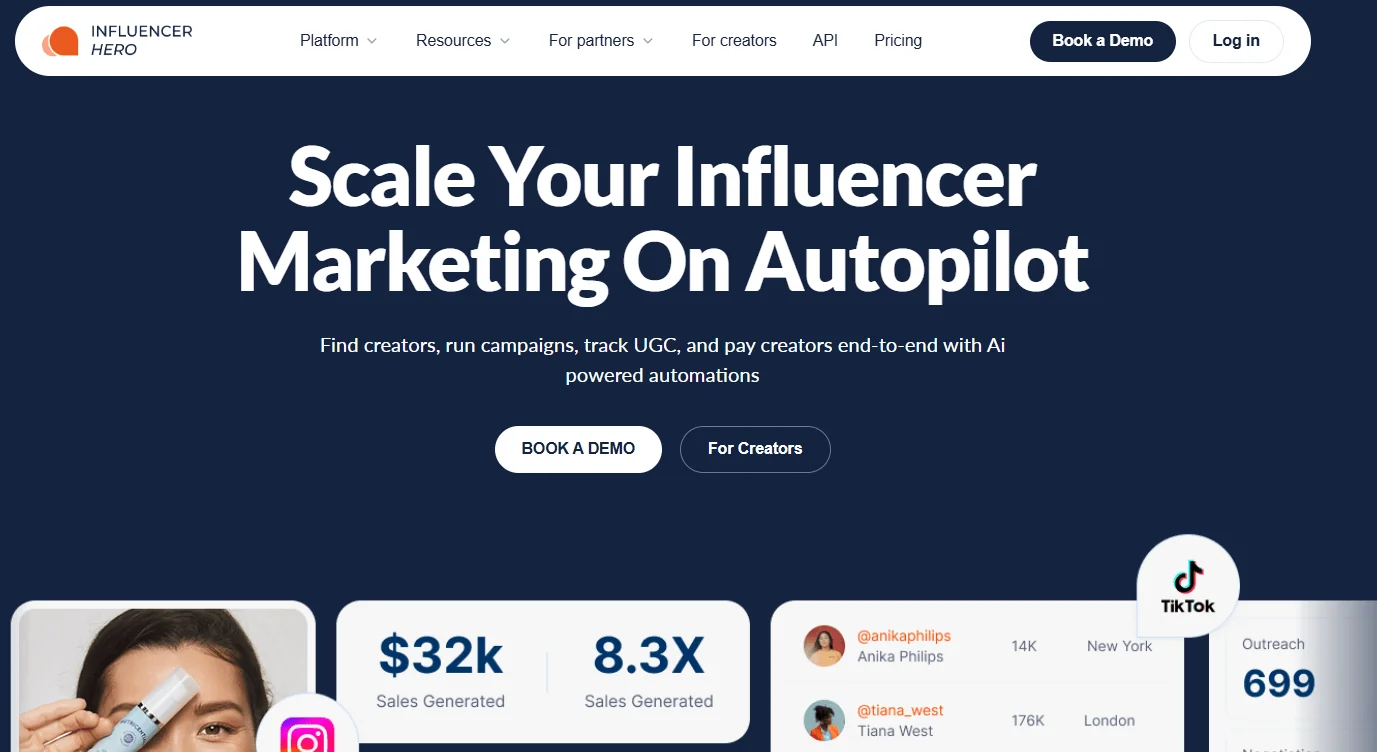
Platform Coverage: Instagram, TikTok, YouTube, Facebook, Pinterest, Snapchat, X and Twitch.
Best For: Brands that want an end-to-end influencer marketing platform combining CRM, affiliate and payments with transparent, predictable pricing and no revenue share.
Pricing:
- Standard Plan: from $649/month, supporting outreach to up to 1,000 creators.
- Pro Plan: from $1,049/month, allowing engagement with 5,000 creators monthly.
- Business Plan: from $2,490/month, with access to contact 10,000 creators.
- Custom & Agency Solutions: tailored pricing based on program scale.
- All plans are published upfront and billed monthly, with no annual lock-in and no percentage taken from affiliate revenue.
Review: 5.0 / 5.0 (Capterra)
User Experience (UX/UI): A clean, modern interface with workflow automation and flexible email templates that simplify daily operations and campaign execution.
Customer Support: Round-the-clock assistance through real-time chat with human agents, email and a well-stocked Help Center with video and written guides. Every plan includes a dedicated account manager from day one, and higher tiers add a shared Slack channel.
Influencer Hero Best Features
- Powerful Influencer Search: filter and find creators across eight channels using audience demographics, niche, engagement stats and authenticity indicators, with every filter included on every plan.
- AI-Driven Campaign Tools: AI locates lookalike creators, writes tailored outreach messages and predicts performance, then automates follow-ups that stop when a creator replies.
- Integrated Influencer CRM: full visibility into creator relationships, campaign stages and analytics, with custom application forms keeping influencer onboarding structured, which is exactly the layer Social Snowball lacks.
- Affiliate & eCommerce Tools: connects to Shopify, WooCommerce, Magento and custom-built stores to handle gifting, tracking, commissions and payments without requiring Shopify specifically.
- Industry-Low Payout Fees: creator payouts carry 0.1% to 0.5% in fees, against the 5% to 7% most platforms charge, and no cut of affiliate-generated revenue at all. Our creator payments guide covers how the payout manager works.
- UGC Management & Creator Storefronts: organize content and usage rights, and let influencers build product storefronts that turn creator content into a direct sales channel.
Influencer Hero Pros and Cons
Social Snowball vs Influencer Hero
Influencer Hero offers a full influencer marketing suite covering discovery, outreach, CRM, affiliate tracking and analytics, built for brands running multi-channel campaigns. Social Snowball focuses narrowly on automating affiliate programs for DTC brands, turning existing customers into affiliates and handling payouts.
The pricing structures point in opposite directions as you grow. Social Snowball's Snow Day plan costs $249/month plus 3% of affiliate revenue, so a brand generating $100K a month in affiliate sales pays roughly $3,249 a month. Influencer Hero charges a flat $649 with no revenue share, which means the gap closes around $13,300/month in affiliate revenue and then keeps widening in Influencer Hero's favour.
The other separator is scope. Social Snowball manages affiliates you already have; Influencer Hero finds new creators, runs outreach, manages the relationship and attributes the revenue, on any ecommerce platform rather than Shopify alone.
2. Heepsy
Platform Coverage: Instagram, TikTok, YouTube and LinkedIn, searchable via four modes: AI-based intent search, text match, lookalike search and direct handle lookup.
Best For: Small to mid-sized DTC brands and agencies that want an affordable, self-serve discovery tool to find new creators, particularly strong in Spanish and European markets.
Pricing:
- Starter: $89/month (€69). 15,000 monthly search results, 50 profile analytics, 50 outreach emails. Basic filters like age, gender and location sit behind this tier's paywall.
- Plus: $249/month. Adds audience filters, campaign reporting and 100 tracked posts/month.
- Advanced: $369/month. The only tier with Shopify integration, affiliate links and sales tracking.
- A free plan is available for basic discovery. Heepsy also charges a 12% commission on creator payments processed through the platform, on top of the subscription — a cost several reviewers say is not disclosed clearly at signup.
Reviews: 4.5 / 5.0 (Capterra, 72 reviews)
User Experience (UX/UI): Consistently praised as clean and easy to navigate (4.7/5 on ease of use specifically), though meaningful functionality is gated behind the higher tiers.
Customer Service: A responsive support team, though several Trustpilot reviews flag friction around cancellations and refunds. No public API for programmatic access to influencer data.
Heepsy Best Features
- Four-Mode Search Engine: AI-based intent search, text match, lookalike search and handle lookup, covering different ways teams like to find creators.
- Fake-Follower and Authenticity Analysis: engagement, follower growth and audience-demographic reports flag inauthentic accounts before you commit budget.
- Moonio Creator Marketplace: brands can also post campaigns and let creators apply, rather than sourcing outbound only.
- Bulk Outreach and Campaign Tracking: organize influencer lists, send bulk email templates, and run gifting, paid, affiliate or UGC campaigns with a built-in media gallery.
- Shopify Integration (Advanced tier): real-time sales insights tied to influencer-driven revenue.
Heepsy Pros and Cons
Social Snowball vs Heepsy
These solve different halves of the same problem. Social Snowball turns people who already bought from you into affiliates automatically at checkout. Heepsy goes and finds creators who have never heard of your brand, searchable across four modes with authenticity screening built in.
On price, Heepsy's Starter plan at $89/month undercuts Social Snowball's $249 base fee, though Heepsy also takes a 12% cut on creator payments processed through the platform — a different kind of revenue share than Social Snowball's 3%, and one that stacks with the subscription regardless of tier. Ecommerce features (Shopify integration, affiliate links, sales tracking) only unlock on Heepsy's $369/month Advanced plan, roughly matching Social Snowball's own entry price at that point.
Choose Social Snowball if your affiliate program already has the people in it. Choose Heepsy if the bottleneck is finding new creators in the first place, and you're comfortable paying for discovery and ecommerce separately.
3. Upfluence
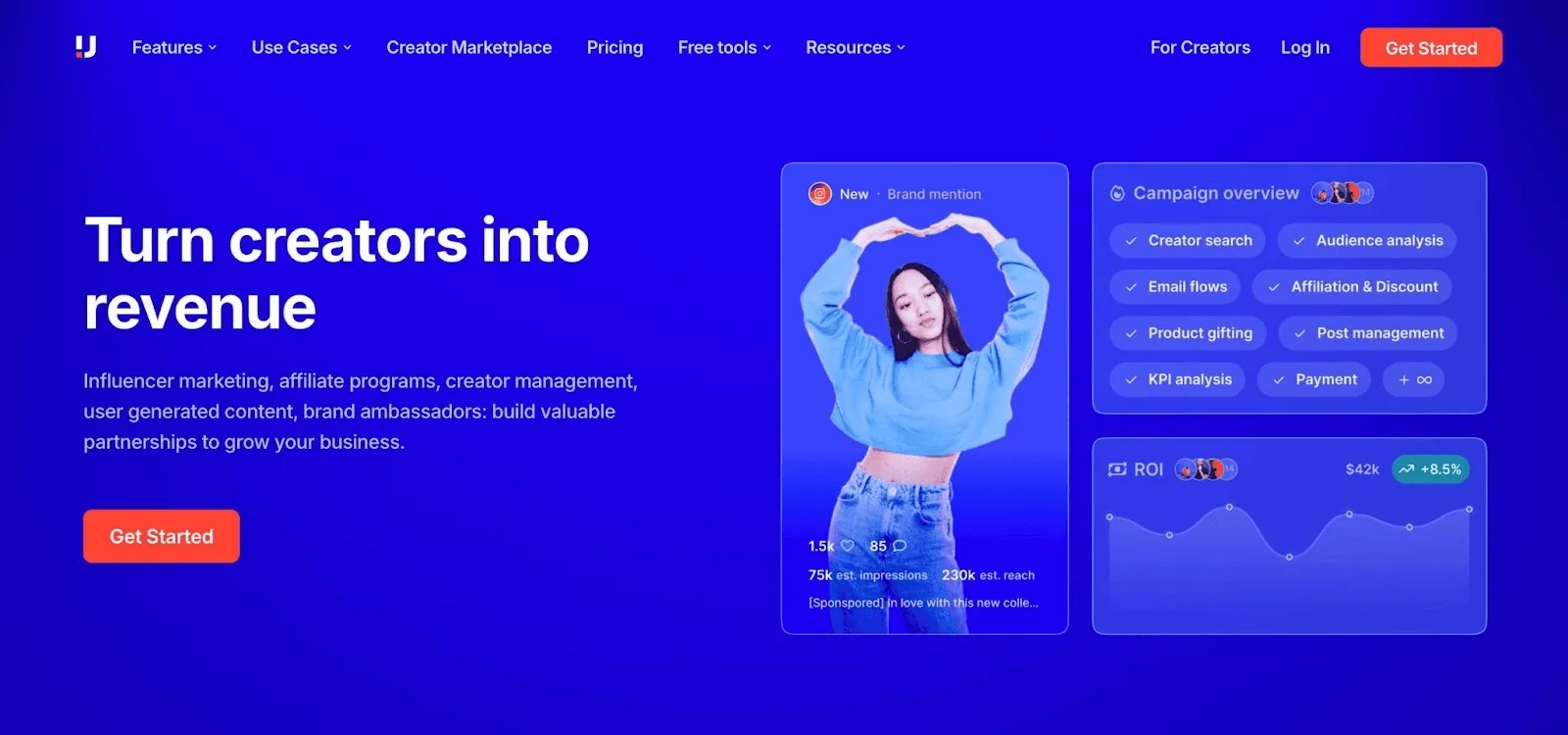
Platform Coverage: Instagram, TikTok, YouTube, X, Pinterest, Twitch, and WordPress blogs.
Best For: eCommerce businesses, especially on Shopify or Amazon, that want to scale influencer and affiliate operations from their own customer base.
Pricing: Upfluence does not publish pricing and sells by module rather than tier. The Search & Contact module starts at roughly $478/month, and demo quotes for a working setup covering search, workflow and payments plus one seat land around $1,276/month, or about $16,007/year billed monthly. Onboarding is a separate one-off fee, seats scale linearly, and the minimum contract is 12 months.
Reviews: 4.6 / 5.0 (G2)
User Experience (UX/UI): Built for more advanced users, with a wide array of tools that carry a learning curve. Some users report occasional lags in speed or responsiveness.
Customer Service: Onboarding support and dedicated account managers on annual plans, though feedback on responsiveness and billing clarity is mixed.
Upfluence Best Features
- Shopify-Based Customer Influencer Discovery: scans your Shopify customer data to reveal buyers who can act as high-ROI creators, typically surfacing 1% to 3% of customers, which is the closest direct competitor to Social Snowball's core mechanic.
- Intelligent Influencer Search: a database of 12 million creators plus social listening that surfaces influencers already interacting with your brand.
- Automated Outreach via Jaice: the AI assistant generates personalised messages and coordinates campaign activity end to end with minimal manual work.
- Amazon & Shopify Performance Integration: track conversions in real time and manage affiliate programs on performance across both platforms.
- Reconnect with Past Influencers: re-engage creators you have worked with before by syncing past data and refreshing contact information.
Upfluence Pros and Cons
Social Snowball vs Upfluence
These two overlap more than any other pair on this list, because both build programs out of your existing customers. Social Snowball converts them at checkout automatically; Upfluence identifies which of them actually have an audience worth activating, then handles outreach, campaign management and attribution around them.
On cost, Social Snowball starts at $249/month plus 3% of affiliate revenue with no contract, while Upfluence runs roughly $1,276/month on a 12-month commitment plus onboarding. Upfluence is meaningfully more expensive up front but takes no cut of your revenue, so a high-volume affiliate program can close the gap faster than the headline numbers suggest.
Social Snowball suits leaner teams that want affiliate automation running this week. Upfluence suits brands that want the customer-to-creator idea extended into full influencer relationship management across more than one ecommerce platform.
4. Influencity
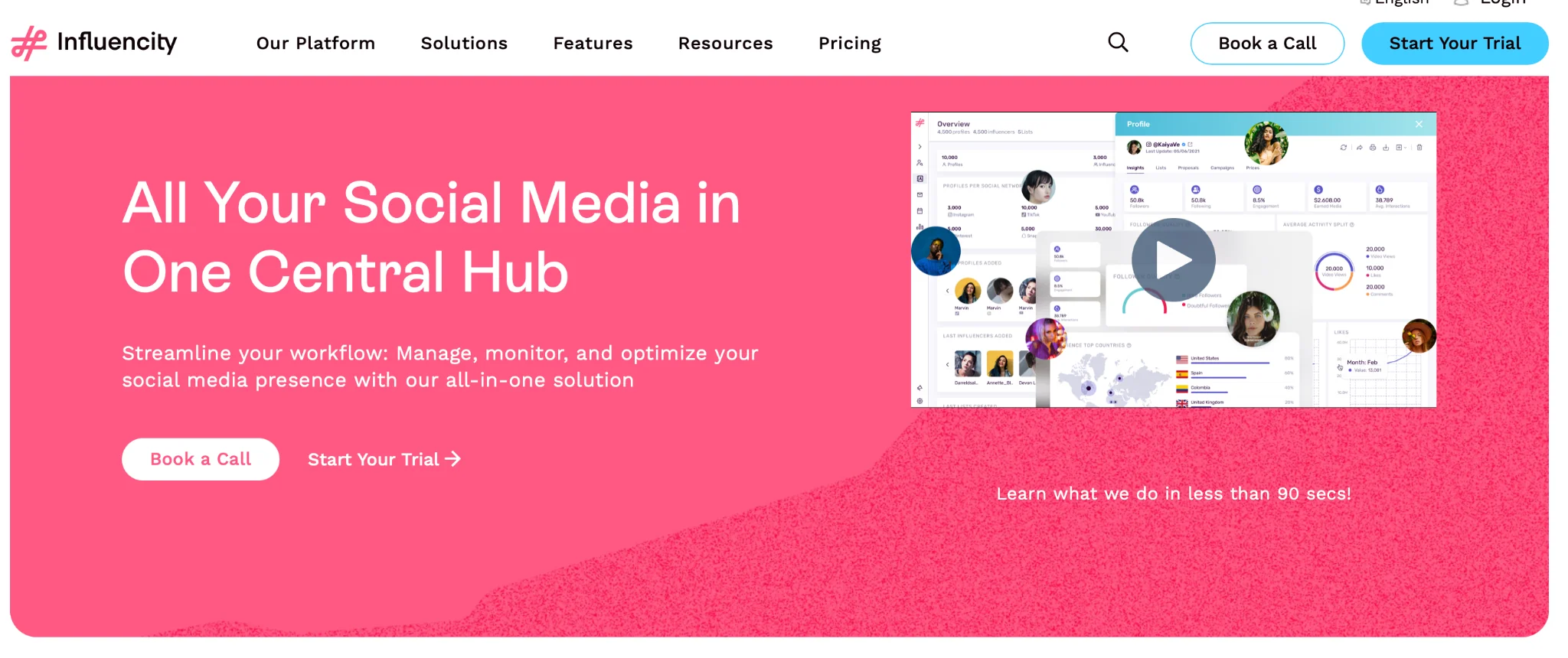
Platform Coverage: Instagram, TikTok, YouTube and Twitch, with X supported for analytics only.
Best For: Brands wanting access to a very large public creator database and structured, visual campaign tracking, without Social Snowball's revenue-share pricing or Shopify-only limit.
Pricing:
- Basic: From around $168/month, discovery only.
- Professional: $318/month billed annually, or $398/month billed monthly. 10,000 monthly search results, 1,200 outreach emails and 10 campaign boards.
- Business: $798/month billed annually. 25,000 monthly search results, 4,000 outreach emails, 50 campaign boards, social listening and Shopify integration.
- Tracked Add-On: tracking up to 50 influencers for $660/year.
- Month-to-month billing is available with self-serve cancellation, and no percentage is taken from affiliate or campaign revenue at any tier.
Reviews: 4.3 / 5.0 (G2)
User Experience (UX/UI): A clean interface that can be hard to follow for first-time users because of the credit system. Onboarding takes four to six weeks, slower than average for a self-serve platform.
Customer Service: Available via email with dedicated onboarding. Responsiveness is limited on lower-tier plans.
Influencity Best Features
- Public Data Discovery: access to over 200 million public profiles with no opt-ins required, unusually strong for niche creators and non-English markets.
- AI-Powered Search and Lookalikes: advanced filters and smart suggestions surface relevant creators based on behaviour and audience insights.
- Branded Application Pages: collect inbound influencer applications through customised landing pages.
- Visual Campaign Boards: Trello-style campaign tracking with deadlines, deliverables and influencer assignments.
- Shopify Integration and Affiliate Gifting (Business tier): track gifting campaigns and influencer-linked sales through Shopify with discount code monitoring.
Influencity Pros and Cons
Social Snowball vs Influencity
Both platforms are Shopify-tied on the ecommerce side, but they start from opposite ends. Social Snowball automates the affiliate layer for customers you already have; Influencity is built to help you find creators you've never worked with, off a 200 million-plus public database with no opt-in required.
Pricing points the same direction as most tools on this list: Influencity's Basic plan at $168/month beats Social Snowball's $249 base fee outright, and there's no revenue-share stacking on top as your program scales, unlike Social Snowball's 3% cut on Snow Day. What Influencity doesn't replicate is the checkout-triggered, zero-friction affiliate signup that is Social Snowball's whole reason for existing — and its own Shopify integration only appears on the $798/month Business tier.
Pick Social Snowball if the program is about turning existing buyers into affiliates with minimal setup. Pick Influencity if the real bottleneck is sourcing creators in the first place, and you're willing to pay separately for the ecommerce tracking once you need it.
5. HypeAuditor
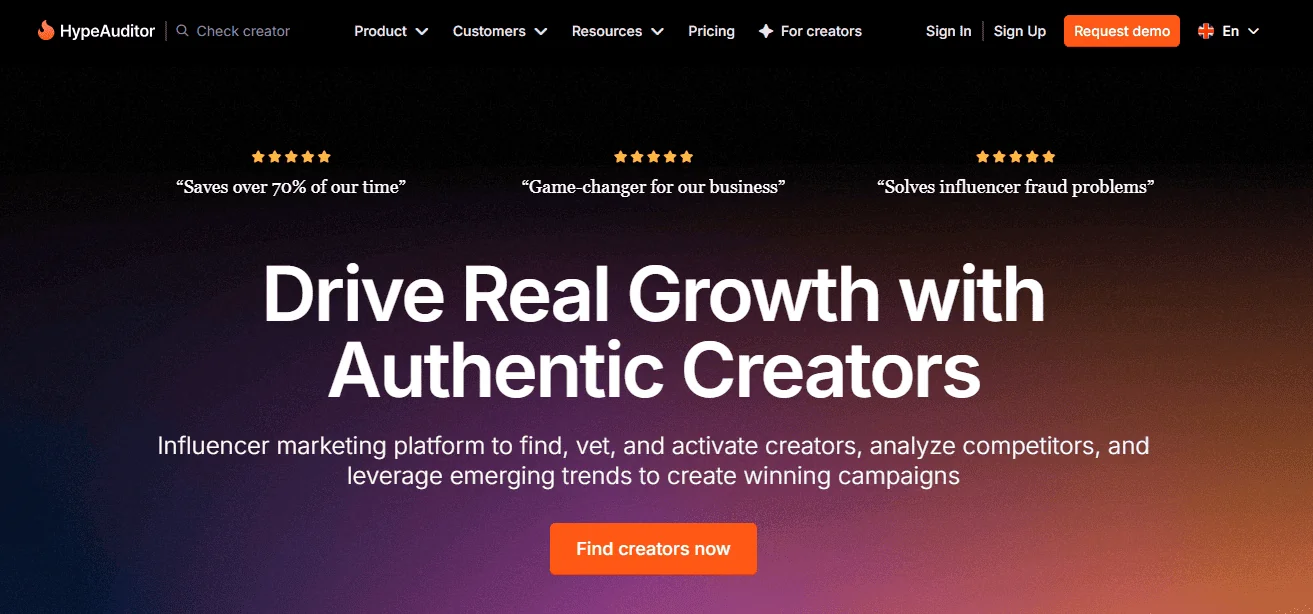
Platform Coverage: Instagram, TikTok, YouTube, Twitch, X and Snapchat.
Best For: Teams that prioritise in-depth audience analysis, follower legitimacy checks and fraud prevention when evaluating creators before spending.
Pricing: A free plan is available alongside 40+ free audit tools. HypeAuditor's own guidance puts the Basic plan at around $299/month billed annually, with a Pro tier reported near $499/month and Enterprise quote-only. Full trials are granted by request rather than self-serve.
Reviews: 4.8 / 5.0 (Capterra)
User Experience (UX/UI): Sleek and professional, though some of the more complex functions take time to learn.
Customer Service: Onboarding support, live chat and email assistance, plus a detailed Help Center with tutorials for independent troubleshooting.
Compare the field in our HypeAuditor alternatives guide to find tools with stronger campaign workflows.
HypeAuditor Best Features
- AI-Driven Influencer Search: a database of 227M+ profiles with smart filters and AI that reads bios, captions and image content to surface credible matches.
- AI Scout: describe a campaign in plain language and receive a ranked shortlist of roughly fifty best-fit creators in seconds.
- Automated Fraud Detection: flags fake engagement, bot activity and irregular growth patterns so budget only goes to genuine creators.
- JavaScript Sales Tracking: attribution that works across any ecommerce setup rather than being tied to Shopify, which matters if Social Snowball's Shopify-only limit is what pushed you to look.
- Brand & Market Listening: monitor how often your brand or competitors are mentioned organically to identify new creator prospects.
HypeAuditor Pros and Cons
Social Snowball vs HypeAuditor
These platforms sit at opposite ends of the funnel. Social Snowball is built for what happens after someone becomes an affiliate: signup, tracking, payouts, fraud prevention on codes. HypeAuditor is built for what happens before you ever contact a creator: is this audience real, does it match your customers, and what will the partnership be worth.
On cost, Social Snowball starts at $249/month plus 3% of affiliate revenue with no contract, while HypeAuditor's Basic plan sits near $299/month on annual billing with a free tier underneath it for basic checks. Neither number tells the whole story, since both platforms customise on the way in.
HypeAuditor is the right choice if the problem is partnering with the wrong creators. Social Snowball is the right choice if you already know who you are working with and need the affiliate machinery to run itself.
6. SproutSocial
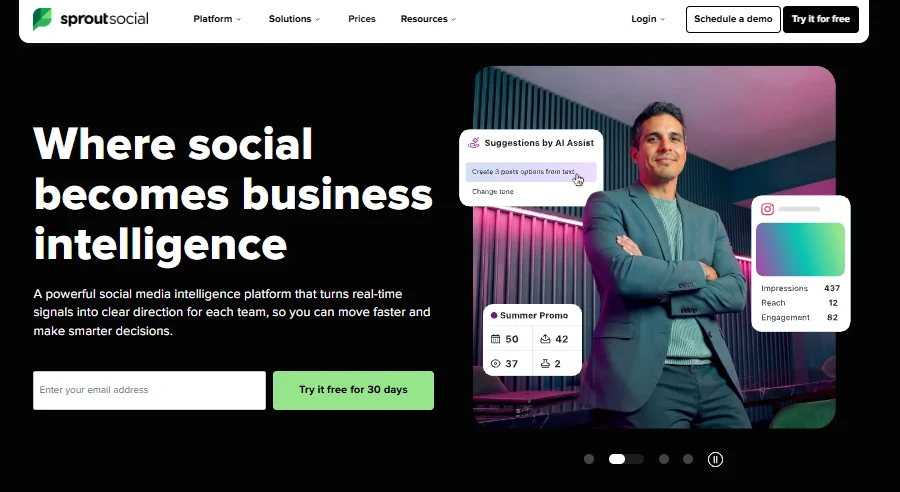
Platform Coverage: Instagram, TikTok, YouTube, Facebook and X, focused on core social channels for publishing, analytics and influencer collaboration.
Best For: Marketing teams that want advanced content planning, robust reporting and features that keep influencers closely aligned with brand identity and values.
Pricing: Sprout Social does not publish pricing for the influencer marketing module. Procurement data points to enterprise annual contracts in the tens of thousands, with one marketplace citing an average contract value around $21,000/year. Contracts are annual with no month-to-month option, and the 30-day free trial covers the core social management platform rather than the influencer module.
Reviews: 4.5 / 5.0 (G2, 410+ reviews)
User Experience (UX/UI): Clean and user-friendly, especially the Smart Inbox and visual content calendar, though longtime Tagger users report the interface became less flexible after the acquisition.
Customer Support: Live chat and phone support on weekdays plus onboarding assistance and a rich Help Center, though support quality is the most common complaint in recent reviews.
SproutSocial Best Features
- Pre-Publication Content Approval: review and approve influencer drafts before they go live, keeping tone and messaging consistent.
- AI-Driven Risk & Brand Fit Evaluation: scores whether creators align with your brand values and flags reputational risk before you commit.
- Real-Time Listening & Sentiment Analysis: track conversations, competitor activity and audience sentiment to inform influencer strategy.
- Custom Reporting Dashboards: tailor dashboards around ROI, conversions and engagement, with exports in PDF or PNG for stakeholders.
- Shopify Integration for Influencer Campaigns: measure gifting campaigns, affiliate sales and creator-driven revenue in real time.
SproutSocial Pros and Cons
Social Snowball vs SproutSocial
Sprout Social is geared toward enterprise brands managing large-scale influencer campaigns, with deep analytics, brand safety filters, content approval workflows and competitive benchmarking. Social Snowball is a focused affiliate tool for DTC brands that want referral revenue running on autopilot.
Pricing is the major differentiator. Social Snowball starts at $249/month plus 3% affiliate commission with no contract, while Sprout Social's influencer module is quote-based on annual terms with reported contracts averaging around $21,000/year. For a brand whose complaint about Social Snowball is cost, Sprout Social is not the answer.
It becomes worth considering only if you already run Sprout for social management and want influencer workflows in the same environment rather than a separate login.
7. CreatorIQ
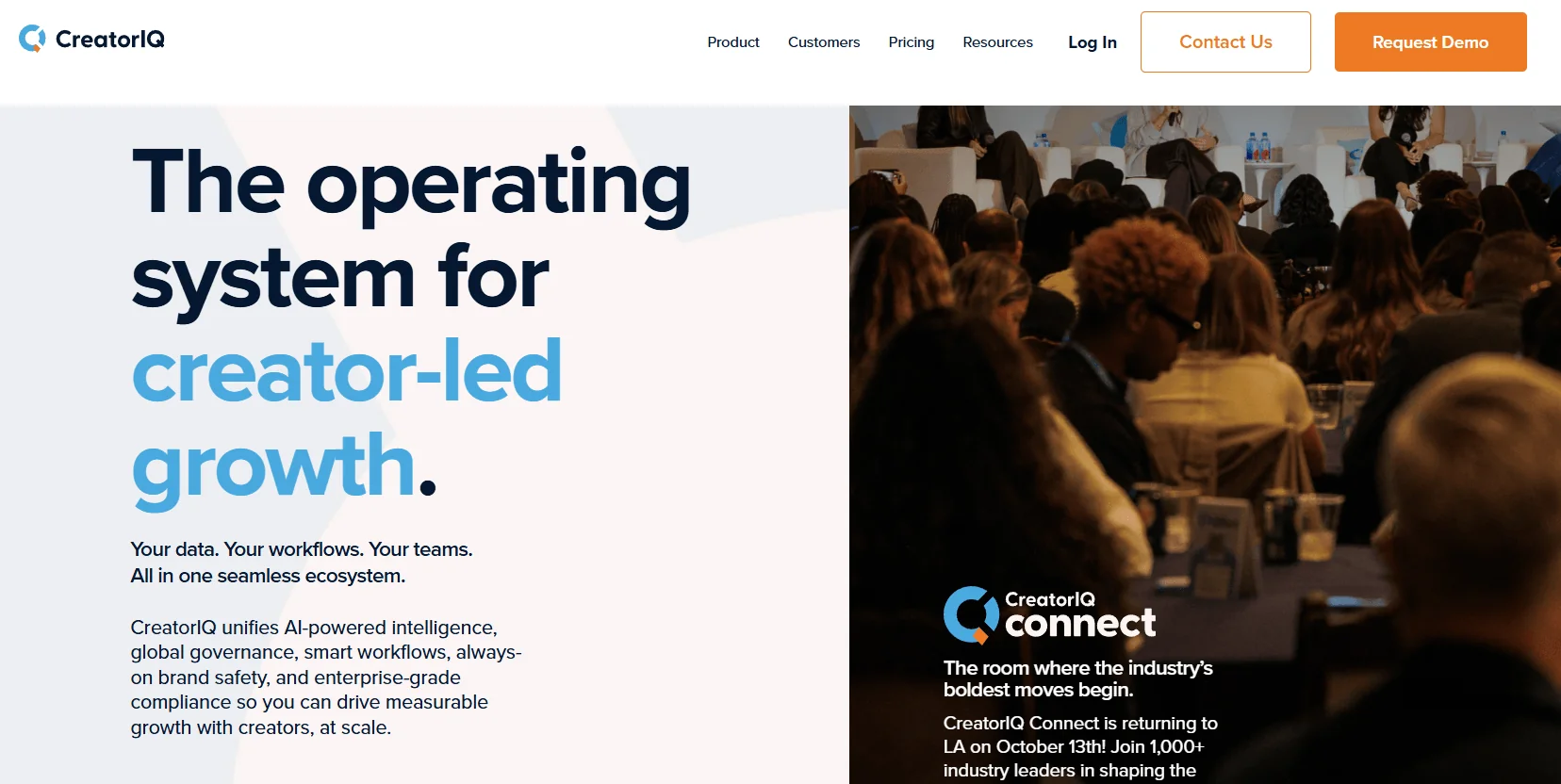
Platform Coverage: Instagram, TikTok, YouTube, Facebook, Pinterest, Twitch, Snapchat and X.
Best For: Large organizations managing intricate influencer programs that require detailed analytics, strong compliance and deep customization.
Pricing: Custom enterprise pricing with no public rates. Buyer-reported procurement data puts annual contracts between roughly $30,000 and $59,500/year, with a median near $39,250. Annual contracts are required, and the platform is built for influencer budgets north of $1M with a dedicated internal team.
Reviews: 4.6 / 5.0 (G2, 566 reviews)
User Experience (UX/UI): Visually modern and easy to navigate, with a polished layout that supports efficient campaign execution once implementation is done.
Customer Support: A dedicated account manager, onboarding guidance, quarterly strategic consultations and responsive day-to-day support.
Weigh the mid-market options in our CreatorIQ alternatives comparison before committing to an enterprise contract.
CreatorIQ Best Features
- Live Data Sync & Insights: real-time API connections deliver current campaign analytics while meeting compliance standards.
- Advanced CRM & Messaging Tools: personalised bulk outreach, automated brief delivery, tagging, notes and timeline tracking across the whole relationship.
- Global Payout & Tax Features: international creator payments in-platform with built-in tax handling across dozens of currencies.
- 360-Degree Creator Profiles: full relationship history, payments and content consolidated into a single record per creator.
- External Collaboration for Content Review: share branded review links so stakeholders can approve content without a platform login.
CreatorIQ Pros and Cons
Social Snowball vs CreatorIQ
CreatorIQ is an enterprise platform trusted by brands like Disney and Lululemon, built for creator discovery, campaign governance and real-time analytics across many markets. Social Snowball is a Shopify app that automates referral and affiliate revenue for a single storefront.
The pricing reflects the gap: CreatorIQ contracts start around $30,000/year on annual terms, while Social Snowball starts at $249/month plus 3% and can be cancelled by uninstalling the app. These are not competing purchases for most brands.
CreatorIQ makes sense once a program spans multiple teams, markets and currencies and needs compliance controls. Social Snowball suits fast-moving ecommerce brands that want affiliate revenue live this quarter.
8. Aspire
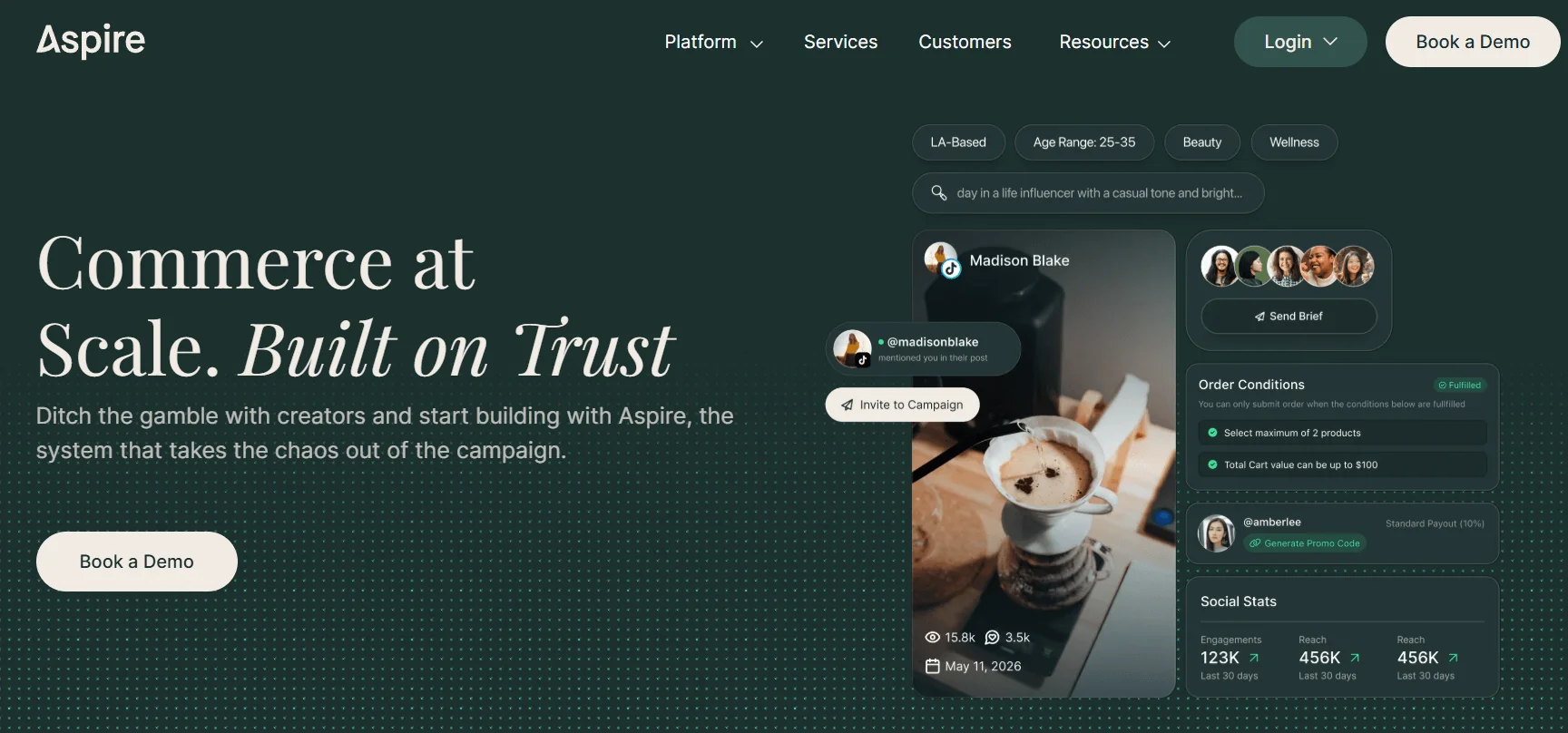
Platform Coverage: Instagram, TikTok, YouTube, Facebook and Pinterest.
Best For: Companies expanding both influencer and UGC efforts, with built-in tools for gifting, affiliate tracking and close creator collaboration.
Pricing: Pricing is not published. Buyer-reported procurement data puts annual contracts between roughly $11,139 and $36,599/year, with most brands quoted around $2,000 to $2,300/month on a 12-month subscription plus a one-time onboarding fee. There is no free trial.
Reviews: 4.5 / 5.0 (G2)
User Experience (UX/UI): Sleek and user-friendly, though some users report intermittent slowdowns or minor delays.
Customer Support: Live chat, email and a detailed Help Center for both brands and creators, with prompt assistance regardless of tier.
Compare the mid-market field in our Aspire alternatives guide before booking a demo.
Aspire Best Features
- Flexible Creator Discovery: reach out directly or accept inbound applications from a marketplace of over a million creators, which removes the cold-start problem Social Snowball leaves you with.
- Automatic UGC Rights Management: auto-generated digital agreements that define how creator content can be reused, simplifying paid-ad repurposing.
- Shopify-Connected Product Gifting: manage the full seeding process in-platform with shipping and delivery tracked automatically.
- Influencer Storefront Tools: creators build custom storefronts highlighting specific products, driving traffic and affiliate conversions.
- Social Listening for Engagement & Affiliates: analyse brand interactions to identify top fans and prioritise the highest-impact partners.
Aspire Pros and Cons
Social Snowball vs Aspire
Aspire is a full-service influencer marketing platform built around campaign workflows, first-party data from Meta and TikTok, deep Shopify integration and a 1M+ inbound creator marketplace. Social Snowball is narrower: it converts existing customers into affiliates and automates the money side.
Aspire's pricing starts around $2,300/month on an annual contract, suited to teams running structured campaigns with a real budget. Social Snowball is far more flexible at $249/month plus 3%, or $899/month flat, with no contract to exit.
The deciding question is where your creators come from. If you already have customers and buyers to activate, Social Snowball does that job cheaply. If you need a steady inbound flow of new creators plus storefronts and UGC rights, Aspire covers ground Social Snowball does not attempt.
9. Traackr
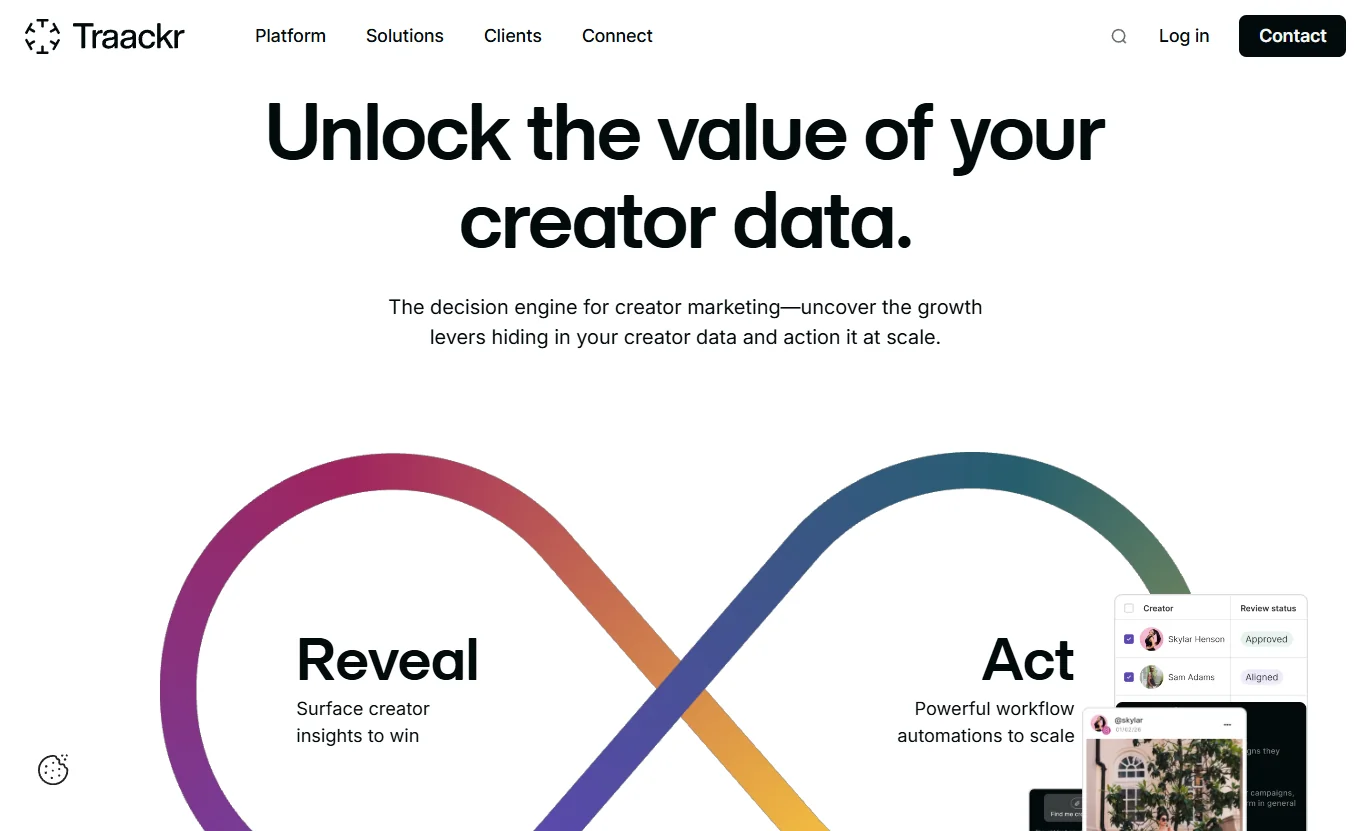
Platform Coverage: Instagram, TikTok, YouTube, Facebook, Pinterest, Snapchat, X, Twitch and LinkedIn.
Best For: Marketing teams that prioritise ROI tracking, budget efficiency and comparing performance across multiple markets and campaigns.
Pricing: Custom annual contracts with no public rates and no monthly billing. Third-party reports put entry around $17,000/year, a Standard tier near $32,500/year and a Plus tier at $55,000+/year, where API access and data lake integration unlock. There is no self-serve free trial.
Reviews: 4.6 / 5.0 (Capterra)
User Experience (UX/UI): A streamlined, purpose-built dashboard for discovery, analytics and campaign management, though some users report slow load times and syncing delays.
Customer Support: Frequently praised for a fast, knowledgeable team, with strong onboarding and consistent technical help regardless of subscription level.
Traackr Best Features
- Brand Vitality Score: a proprietary metric combining visibility, impact and trust, so campaigns can be benchmarked against competitors rather than just counted.
- Data-Driven Budget Planning: uses past campaign results to recommend investment levels per creator and per market.
- In-Depth Performance Metrics: tracks engagement, reach, cost-per-click, cost-per-view and cost-per-engagement for genuine ROI visibility.
- Built-In Affiliate Capabilities: manage commissions, issue trackable links and handle payouts without leaving the platform.
- Custom Influencer Landing Pages: branded signup pages for creator onboarding and program applications.
Traackr Pros and Cons
Social Snowball vs Traackr
Traackr is built for enterprise brands focused on performance benchmarking and ROI-driven influencer marketing, with cost-per-metric dashboards, the proprietary Brand Vitality Score and global campaign benchmarking. Social Snowball is tailored to DTC brands that want referral revenue automated end to end.
Traackr's pricing starts around $17,000/year and climbs past $55,000/year for API access, making it a fit for large-scale, long-term programs. Social Snowball is far more accessible at $249/month plus 3% of affiliate revenue or $899/month flat.
Traackr excels at analytics-heavy influencer strategy across markets. Social Snowball wins on automation and simplicity for a single Shopify storefront, and the two rarely end up on the same shortlist.
10. Later
Platform Coverage: Instagram, TikTok, YouTube, Facebook, Pinterest, Snapchat, LinkedIn and X.
Best For: Brands emphasizing visual storytelling that want content planning and influencer campaign management in one workflow, with the option to hand execution over.
Pricing: Custom annual pricing with a one-time onboarding fee of around $5,000 for new customers. Reported tiers start near $28,500/year for Essentials, rising to roughly $42,000/year for Pro and $60,000/year for Premier. Confirm current figures at demo, since Later revises its packaging regularly.
Reviews: 4.4 / 5.0 (Capterra)
User Experience (UX/UI): Clean and user-friendly for both influencer collaboration and post scheduling, though onboarding typically takes four to six weeks.
Customer Support: Support scales by plan, from live chat and onboarding help through to a dedicated account manager.
Later Best Features
- AI-Powered Influencer Discovery: suggests creators based on audience profiles, content categories and keyword relevance across a network of 15M+ influencers.
- Flexible Campaign Management: self-service, hybrid and fully managed models, so you can hand the work over if bandwidth rather than tooling is the constraint.
- Campaign Brief Coordination: submit a brief and Later's internal team sources matching creators on your behalf.
- Shopify-Integrated Gifting Workflow: automates gifting fulfilment through Shopify, triggering as soon as a creator redeems.
- Built-In Affiliate Program Tracking: monitors influencer sales and commissions with integrations for TikTok and Meta.
Later Pros and Cons
Social Snowball vs Later
Later suits brands looking for flexible workflows across self-serve, hybrid or fully managed models, with strong brand safety filters and AI-assisted discovery. Social Snowball is optimized for DTC brands that want to automate affiliate growth by turning customers into promoters.
Later's entry plan starts around $28,500/year plus a $5,000 onboarding fee, and full-service options run higher, so it is aimed at teams that need comprehensive support rather than a cheap tool. Social Snowball is significantly more accessible at $249/month plus 3% of affiliate revenue, or $899/month flat with no commission.
Later excels at influencer campaign management and creator communication, particularly for brands that would rather outsource execution. Social Snowball leads on affiliate automation and cost efficiency for ecommerce growth on Shopify.
Final Thoughts
Social Snowball remains a strong choice for automating affiliate programs on Shopify, and its customer-to-affiliate conversion is still the cleanest implementation of that idea on the market. The reasons brands look elsewhere in 2026 are consistent: the 3% cut of affiliate revenue on Snow Day scales against you, the platform is Shopify-only, and the CRM depth is not there once a program grows past a few dozen partners.
Among these 10 solutions, Influencer Hero emerges as the most complete alternative. It combines an intuitive interface with AI-driven influencer management, a real CRM built for large-scale seeding campaigns, and affiliate tracking and payments that work across Shopify, WooCommerce, Magento and custom stores. Its pricing is flat and published upfront at $649/month with no percentage taken from your revenue, and its payout fees of 0.1% to 0.5% are the lowest in the category.
For brands that want a flexible, comprehensive platform that goes beyond basic affiliate automation, Influencer Hero offers a balanced mix of innovation and usability, which positions it as one of the best alternatives in today's competitive landscape.
Ready to see it in action? Book a demo with Influencer Hero and find out how it fits your program.
Summary
This is some text inside of a div block.
This is some text inside of a div block.
Pricing/Month
Shopify Reviews
This is some text inside of a div block.
This is some text inside of a div block.
This is some text inside of a div block.
This is some text inside of a div block.
This is some text inside of a div block.
This is some text inside of a div block.
This is some text inside of a div block.
This is some text inside of a div block.
This is some text inside of a div block.
This is some text inside of a div block.
This is some text inside of a div block.
This is some text inside of a div block.
This is some text inside of a div block.
This is some text inside of a div block.
This is some text inside of a div block.
This is some text inside of a div block.
This is some text inside of a div block.
This is some text inside of a div block.
This is some text inside of a div block.
This is some text inside of a div block.
This is some text inside of a div block.
Read More

FAQs
Waarom zou ik overwegen om over te stappen van Social Snowball naar een ander platform?

Veel gebruikers zoeken naar alternatieven vanwege de beperkte aanpassingsmogelijkheden van Social Snowball, af en toe bugs, integratieproblemen en prijzen die niet altijd overeenkomen met de diepgang van functies. Alternatieven bieden meer flexibiliteit, betere ondersteuning en rijkere mogelijkheden voor influencer marketing.
Hoe verschilt Influencer Hero van Social Snowball?
Influencer Hero biedt een intuïtievere interface, AI-aangedreven CRM voor influencer seeding, robuuste influencer discovery en premium klantenondersteuning. Het is ideaal voor merken die multichannel influencer campagnes willen schalen buiten basis affiliate automatisering.
Wat zijn de beste alternatieven voor Social Snowball in 2025?
De beste alternatieven zijn Influencer Hero, Modash en Upfluence. Deze platforms bieden geavanceerde influencer discovery, schaalbare CRM-tools, betere aanpassingsmogelijkheden en naadloze integraties in vergelijking met Social Snowball.
Kunnen Social Snowball-alternatieven helpen bij het beheren van grootschalige influencer-campagnes?
Ja, platforms zoals Influencer Hero zijn speciaal ontworpen om grootschalige influencer seeding- en affiliate campagnes efficiënt te beheren, met behulp van AI en automatisering om outreach, relatiemanagement en prestatiebewaking te vereenvoudigen.
Welke functies moet ik zoeken bij het kiezen van een Social Snowball-alternatief?
De belangrijkste functies zijn onder meer gemakkelijke influencer-detectie, AI-aangedreven CRM, robuuste affiliate-tracking, naadloze integraties met e-commerce-platforms zoals Shopify en WooCommerce, aanpasbare workflows, betrouwbare klantenondersteuning en transparante prijzen.







Most Popular Blogs


Ready to achieve 10X+ ROI?
Schedule a Demo with one of our media experts below.